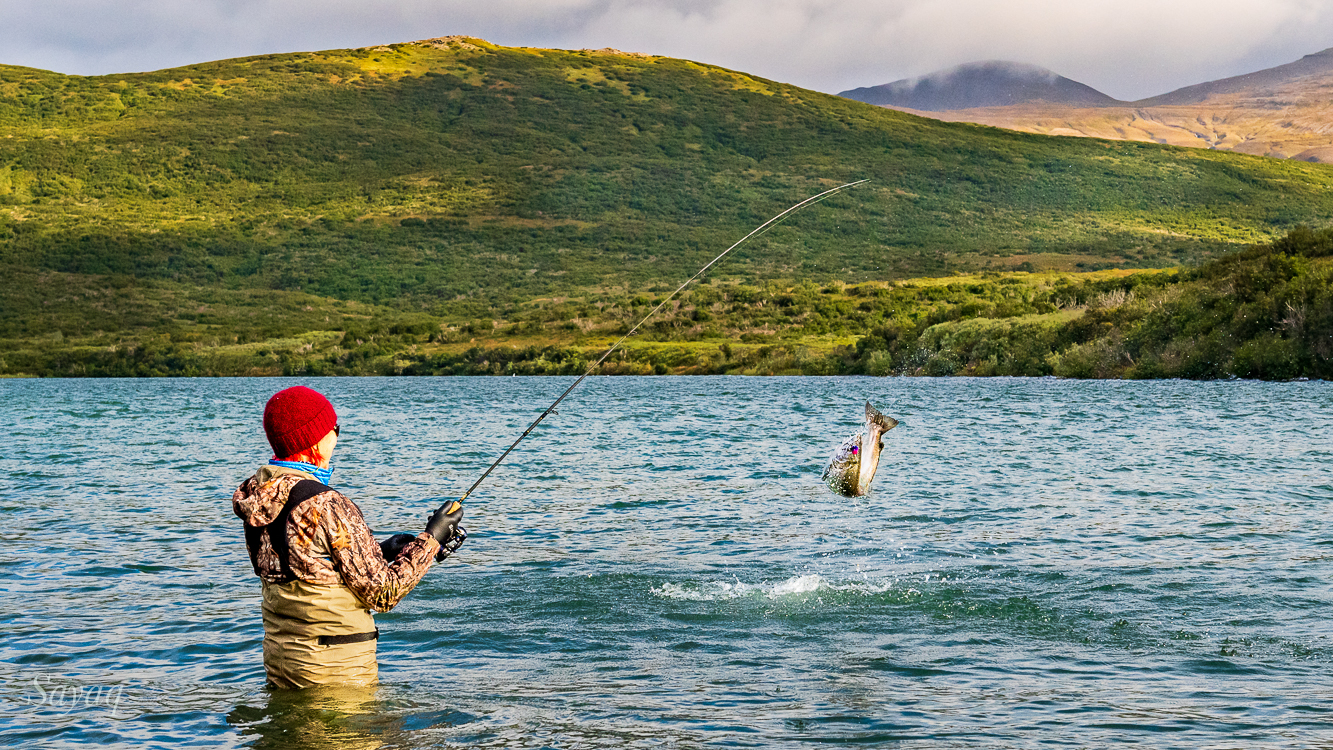
Leaper at The Bend
Reply
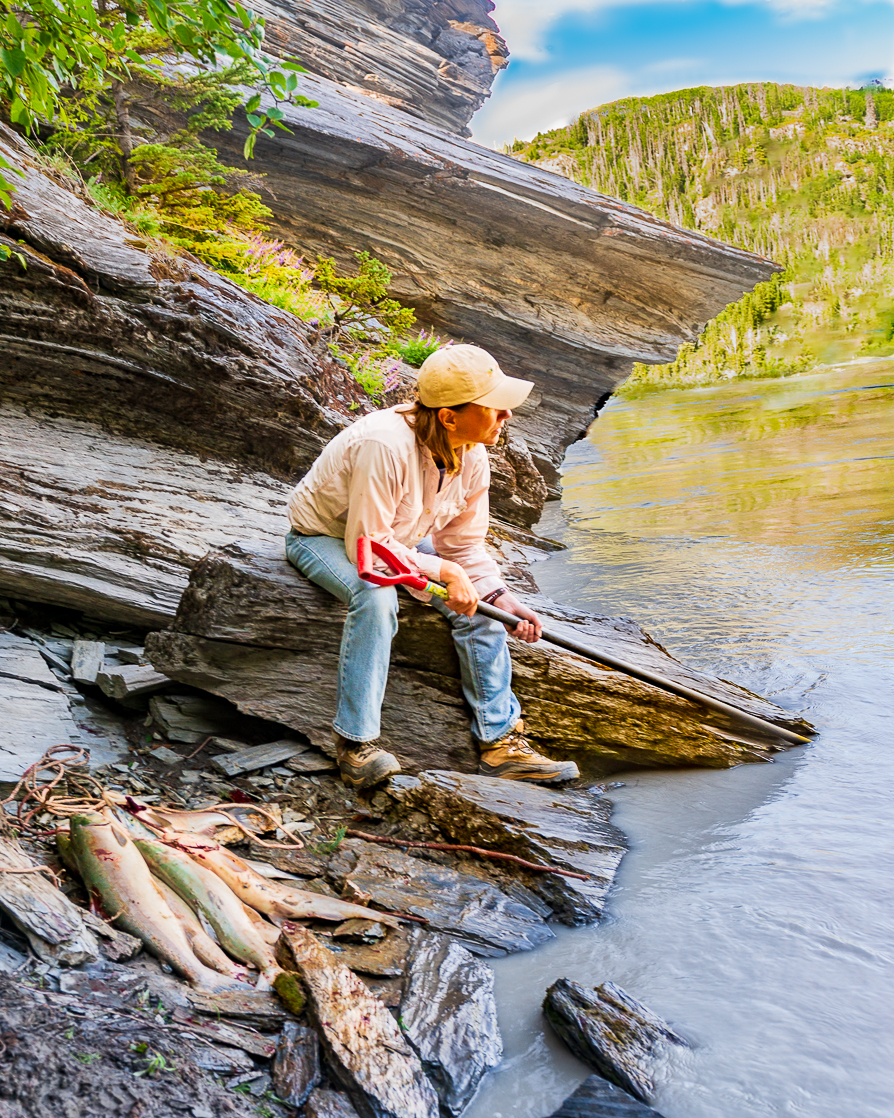
Iconic Alaska. Hike in along a canyon trail, then down a steep, more narrow trail to water’s edge. The river’s chalky, clay-colored glacial till reveals nothing. But the fish are there. Upwards of a million Sockeyes will ascend the Copper, and that’s after the commercial fishing fleet has taken a similar number from the sea near the river’s mouth. Armed with a net on a big hoop attached to a 15-foot pole, you find a fishable perch along the canyon wall and ease the net into an eddy. If you’ve timed it right, huge schools of fish are passing in front of you within feet of the shoreline. It doesn’t take long till you feel the morning’s first solid thump as a Red hits the net. If you’ve got the patience and don’t pull in right away, you might feel another thump, and then another – three fish in one scoop. And you feel a connection with people who have been fishing for salmon this way for thousands of years… grateful that there’s a place where it can still be done, not another person in sight except for the companion you’ve hiked in with. You get the feeling this isn’t going to last… which makes you appreciate it all the more. Iconic Alaska.
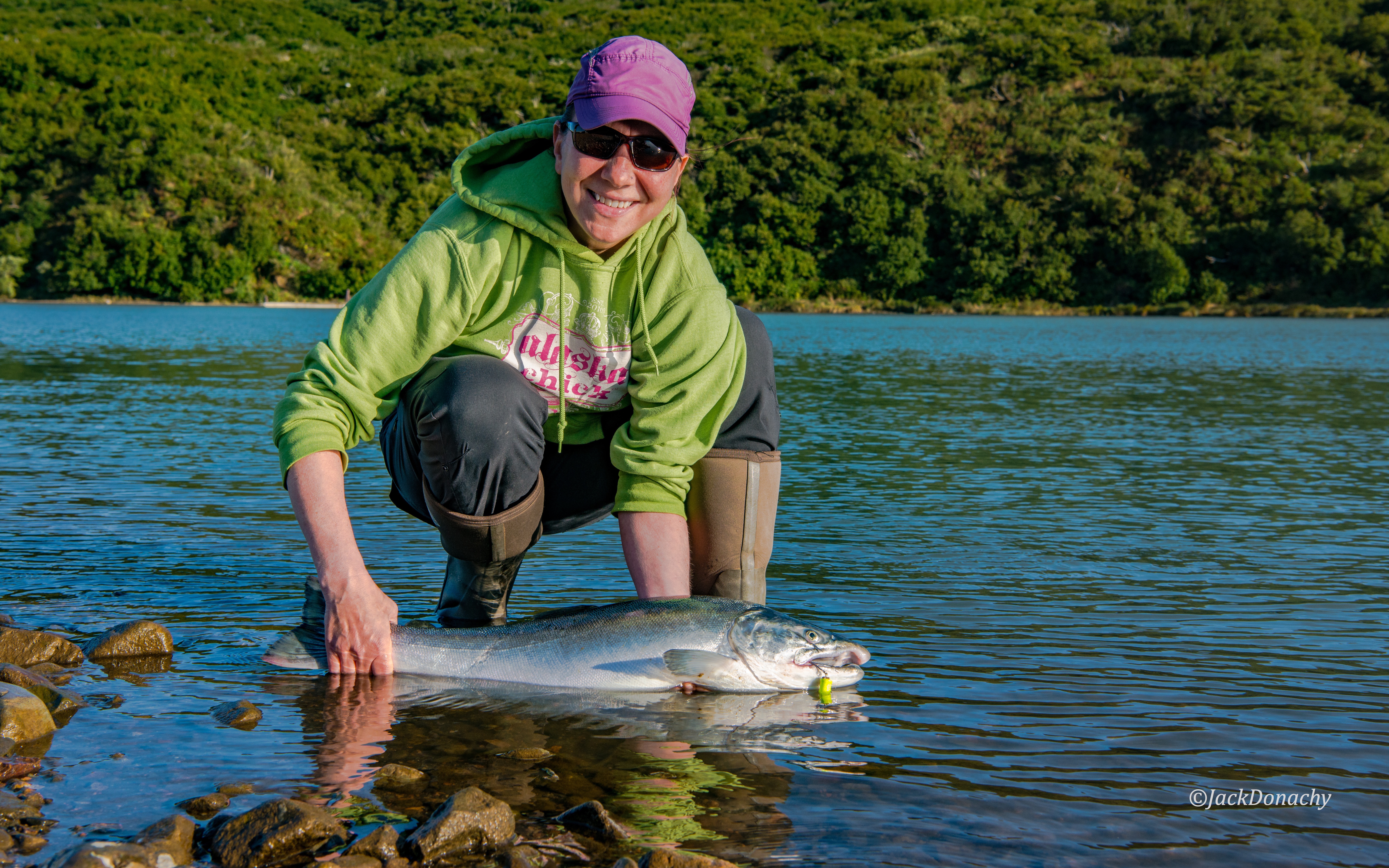
Ocean-bright and full of fight, Barbra’s 12-pound Coho today is the first and only salmon we’ve put on the bank this year… so far.
In each our previous six years in Alaska, our fish for the coming months were long ago caught, cleaned, freezer-packed or smoked and canned and put away.
Not this year.
Like a lot of salmon runs around Alaska, here on the Chignik River its been a mere trickle of fish compared to other years. In fact, for a few weeks in July fishing was closed altogether. Still, we were confident upon returning from our bike trek in Hokkaido that we’d be able to get the couple of dozen or so fish we need.
That was nearly a month ago. Admittedly, it’s not like we’ve been hitting the water every day. But the few times we’ve been out, it’s been discouraging. When lots of salmon are around, so are bears, eagles and seals, and we can generally see lots of jumpers – salmon fresh from the sea and full of energy spontaneously leaping for whatever reasons salmon spontaneously leap. But it’s been eerily quiet; the usual eagle roosts have been empty.
Even in this down year, hundreds of thousands of Sockeyes ascended the river, and there will undoubtedly be thousands of Coho as well. It felt great to finally get one. Pasta with fresh salmon is on the menu tonight.
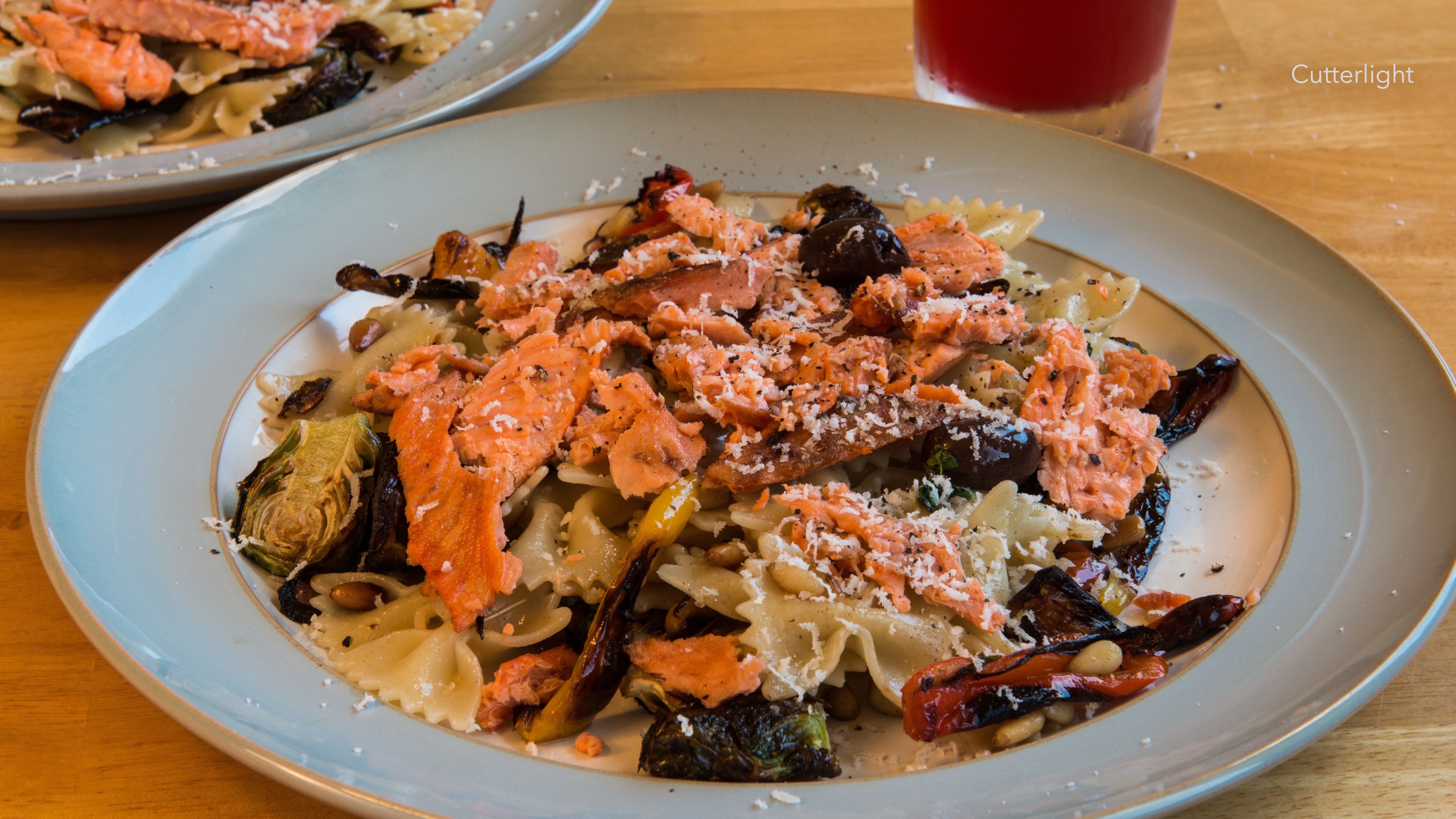
Close to the bone, salmon meat near the skeleton is lean and tasty. Salmon spines (salmon carcasses with some meat still attached) are perfect candidates for the broiler. Add some vegetables to the broiling pan and you’ve got a gourmet meal for two.
No sooner did we return back home in Chignik Lake than we began turning our attention to filling our freezer and smoker with salmon. Wild salmon are precious, and every last bit of salmon meat is delicious. I don’t always get the fillets off the bones as cleanly as I’d like. That’s where this dish comes in. While the photos depict a Sockeye salmon, other species work well, too, and of course a fillet works as well as a spine in this recipe.
1. Position your oven rack to the second level below the broiler. Place a broiling pan on the rack and turn on the broiler to preheat the pan and the oven.
2. Chop up some of your favorite vegetables. Pick ones that are hardy enough to withstand a few minutes under the broiler. Whole garlic cloves roast up soft, slightly charred and delicious in this recipe. Fruit such as pitted olives work well, too.
3. To serve two, measure out about two cups of Farfalle pasta. Other types of pasta are fine.

Mise en place: whole garlic cloves, bell peppers, Brussels sprouts, fresh oregano, sea salt, pasta and Kalamata olives. You’ll also need a good extra virgin olive oil, a broiling pan, and, of course, the salmon spine or fillet.
4. Toss the vegetables together in a bowl along with sea salt and olive oil. Fresh or dried thyme or oregano are good herb choices.
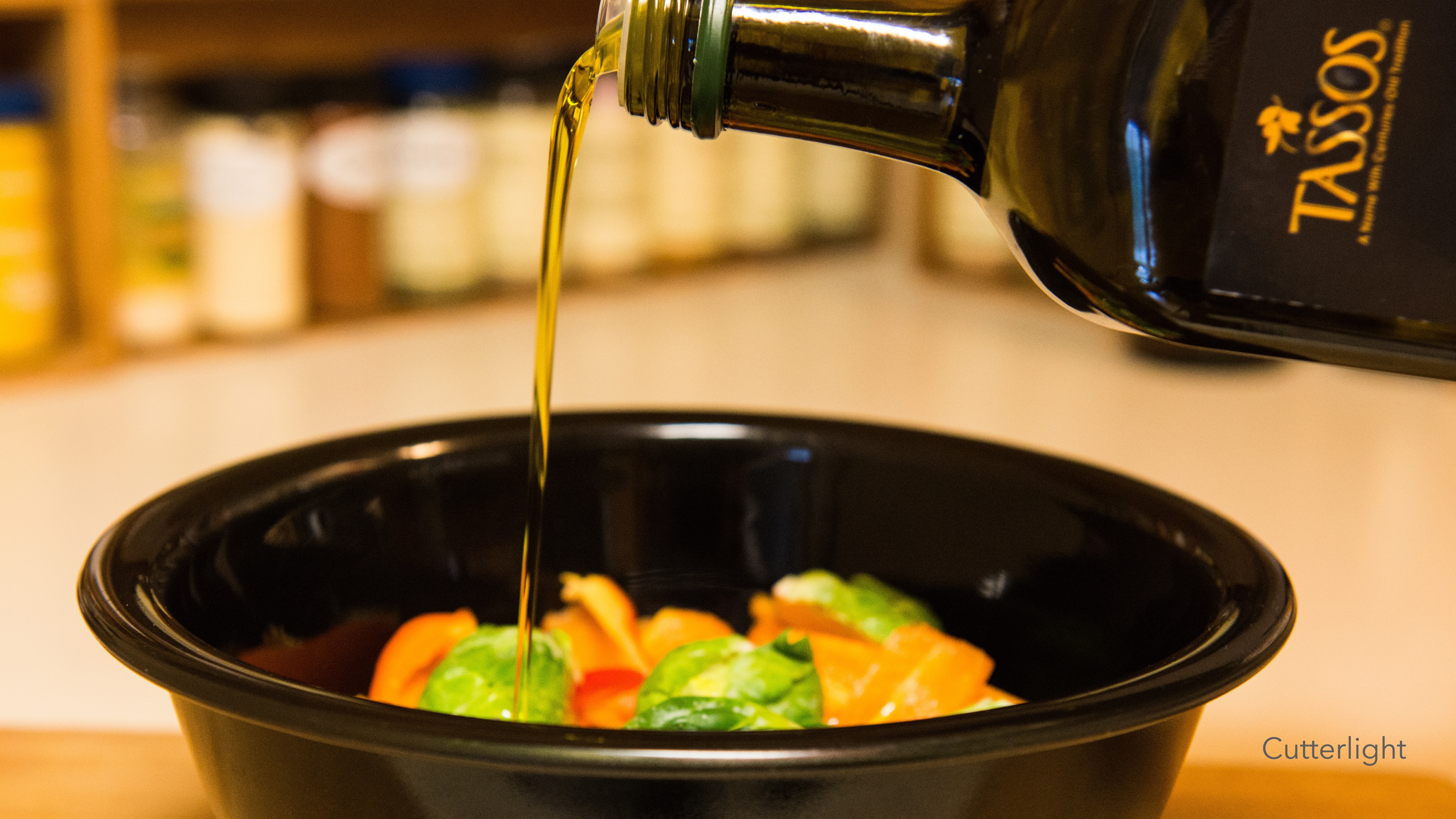
Sprinkle salt into the vegetables to taste, add a couple of tablespoons of olive oil, then mix together. As an additional option, a tablespoon or so of mirin – a light, sweet cooking wine – adds a hint of sweetness and helps the vegetables brown and char.
5. Next, rinse the salmon in cold water and dry and clean it with paper towels. There may be some dark matter running along the spine inside the skeletal cavity. That’s the kidney. If there’s a lot of this, you can use a knife or even a spoon to scrape it out. It can be further cleaned up with a stiff brush. A toothbrush works well for this.
6. Place the salmon spine on a cutting board and give it a fairly generous sprinkling of salt.

A good sea salt (we like gray sea salt) really brings out the flavor of salmon.
7. Take the preheated broiling pan out of the oven. Use a brush or spatula to coat the surface with olive oil. Arrange the salmon and the vegetables on the pan. It should be sizzling hot. Place the pan back into the oven and broil for about 8 or 9 minutes.
8. While the salmon is broiling, prepare the pasta according to the maker’s directions.

Colored bell peppers and Brussels sprouts char and caramelize beautifully under a broiler.
9. After about 8 or 9 minutes, remove the broiling pan from the oven. Transfer the salmon to a cutting board and use a fork to pull the meat off the bones. You want chunks of a good size to go on a fork along with a bite of vegetable and a bit of pasta.
10. Finally, plate up the pasta. Add the salmon and vegetables. Finish with freshly grated Parmesan cheese and a couple of grinds of freshly cracked pepper. Serve hot with a bright Willamette Valley Pinot Gris.

Fall food themes continue with this pièce de résistance fit for a king. Chinook salmon holds center stage drizzled with herbed butter and served on butternut squash ravioli. Food stylist extraordinaire Barbra came up with the idea of rolling shaved parmesan into tubes.
With plenty of sockeye salmon harvested, cleaned and packaged in our freezers, it nonetheless wasn’t a case of “coals to Newcastle” when a friend offered up a couple fat fillets of Chinook. Reds, pinks, chums and silvers – they’re all welcome at our dinner table any time. But kings… with their higher percentage of healthful fat and their decadent melt-in-your-mouth texture… kings are special. With a batch of butternut and ricotta ravioli in the freezer courtesy of Barbra, I knew just what I wanted to do with one of the fillets. This was as fine a meal as we’ve ever enjoyed. (Barbra promises the pumpkin/squash ravioli recipe will be posted soon!)
This dish goes particularly well with Brussels sprouts, a vegetable we especially appreciate out here in the Alaska bush because they ship well and have a long shelf-life in the refrigerator. Our favorite cooking method is to cut the Brussels sprouts in half lengthwise, toss them in a bowl with olive oil, sea salt and cracked pepper, and then place them cut-side down in sizzling olive oil in a frying pan. Turn the heat down (but make sure they’re still sizzling) and cover the pan. Check, and when the cut side has browned, flip the sprouts to the leafy side. Turn up the heat a little to get things really sizzling again, then turn it back down to a little below medium and cover the pan. The leaves will brown up and caramelize and a few will blacken. They’re ready to be served.
Pan-Fried Salmon with Herbed Butter on Butternut Squash Ravioli
Ingredients (serves 2)
Directions
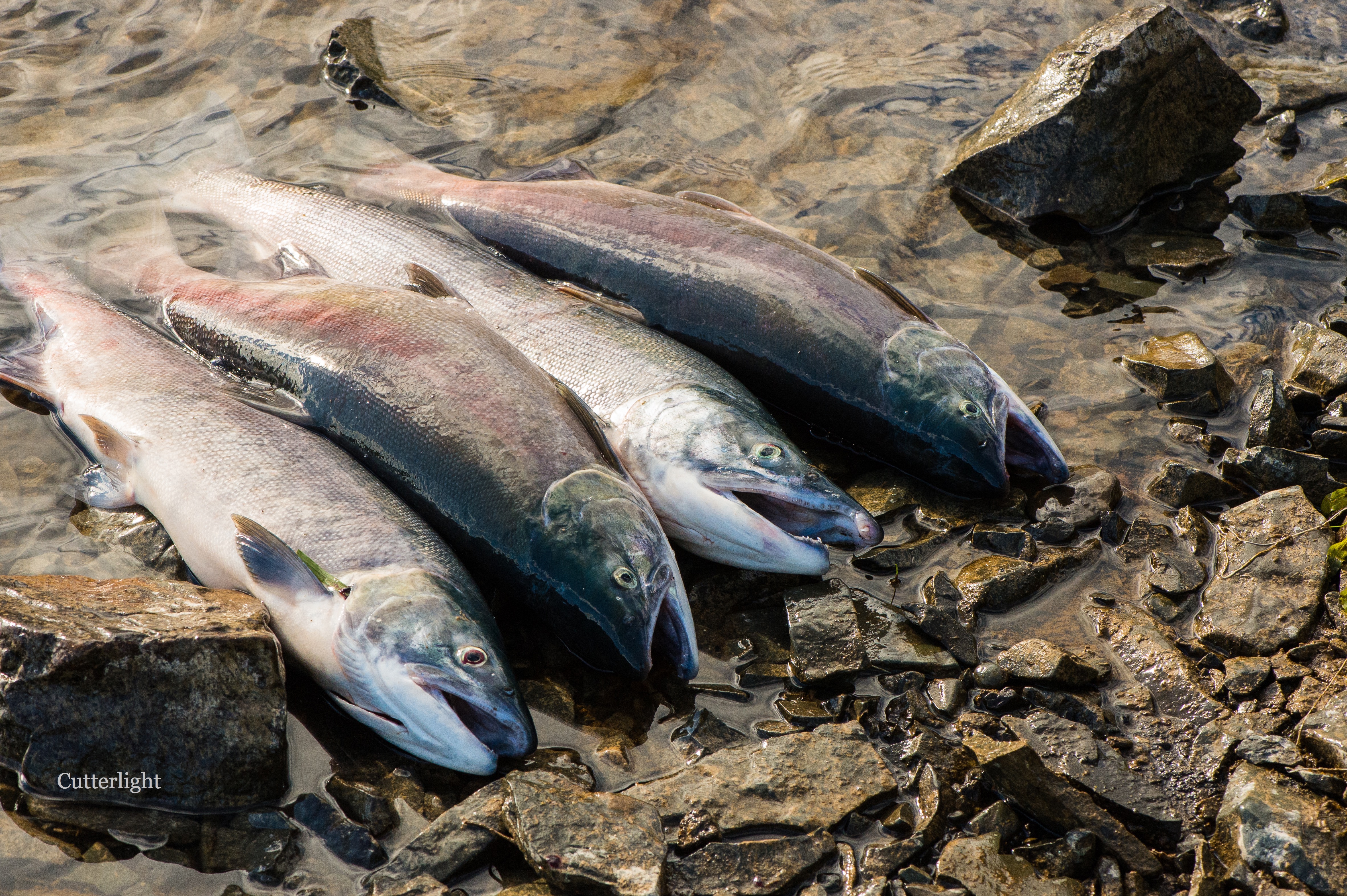
Looked out the window this morning and saw nervous water on the lake. Skipped breakfast. Three hens and a buck. I’ll cure eggs for ikura later today. Shioyaki salmon for dinner tonight. Beginning of our second week in Chignik Lake, Alaska.
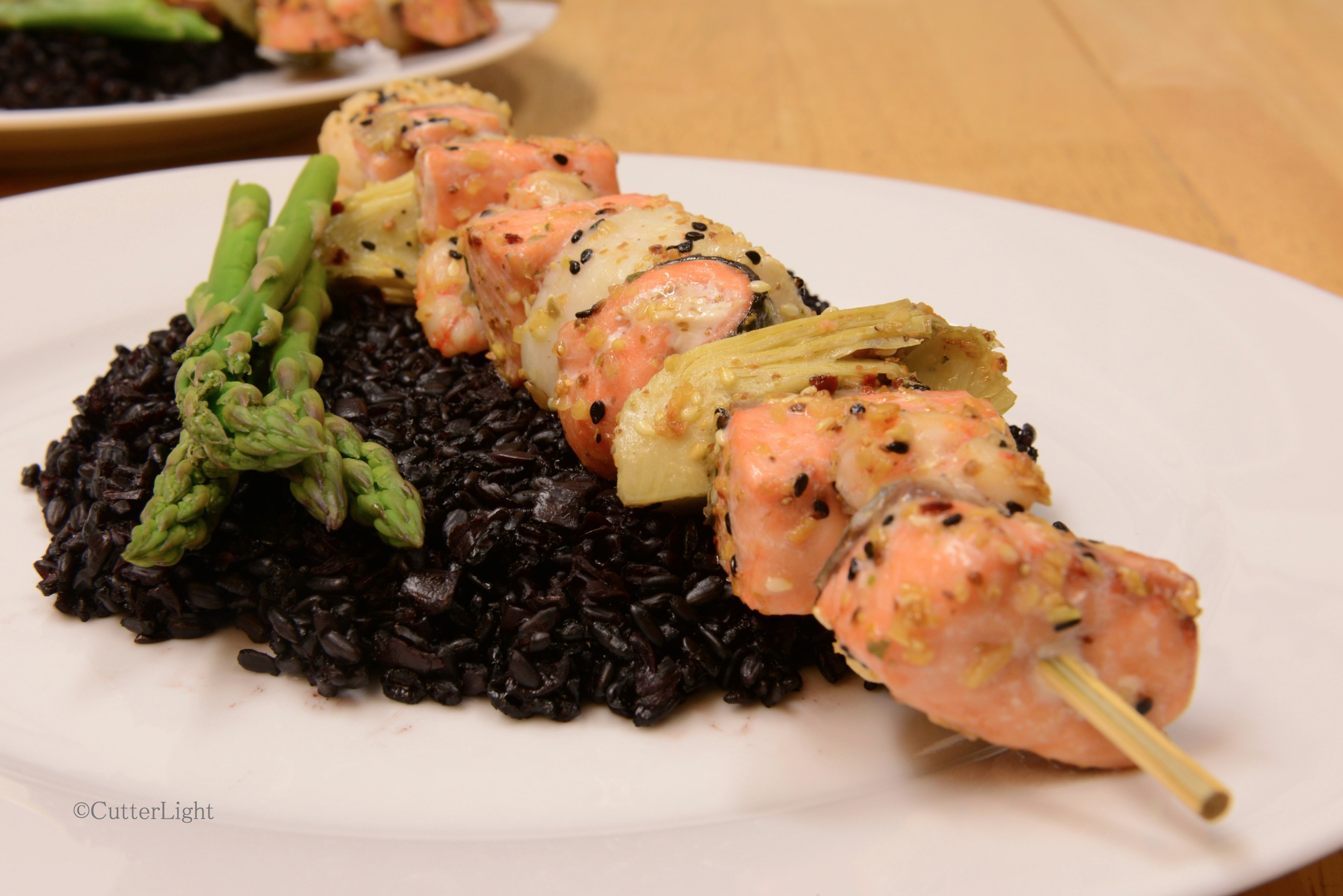
Seasoned cubes of wild Coho salmon, fat, succulent Kodiak scallops, sweet Alaska deep sea shrimp and artichoke hearts drenched in olive oil alternate on this broiled seafood kebab.
The early Persians were onto something. Skewered meats, seafoods and vegetables deftly seasoned and grilled or broiled to perfection are easy to whip up and always a hit. The variations on these Alaskan seafood kebabs are endless. We seasoned ours with a mixture of ginger, toasted sesame seeds, black sesame seeds, sea salt, sugar, garlic, pepper and a sprinkle of toasted coconut. Add a little soy sauce, too, and serve on a bed of nutrition-packed forbidden rice.
Seafood Kebobs
Ingredients
A dash or two each of
Directions:
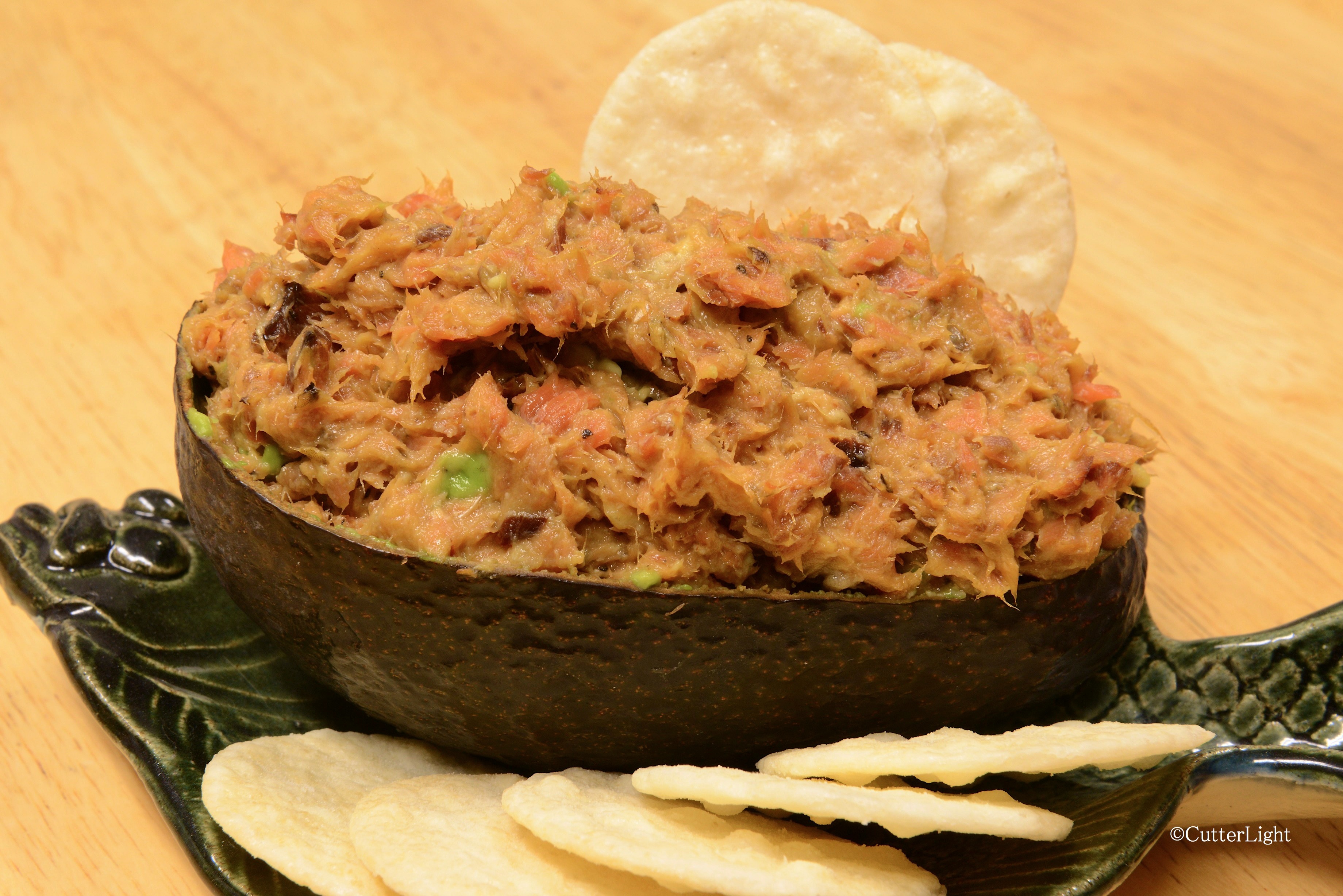
Served in avocado half-shells, this Alaskan twist on guacamole is as eye-catching as it is delicious! See the super quick and easy recipe below.
In our Arctic kitchen, homemade smoked salmon is an essential pantry staple for which there seems to be no end of uses. Mix a little in with the stuffing in deviled eggs to create salmon stuffed eggs, and you’ve never seen this standard party dish disappear so quickly. A smoked salmon and seafood frittata or smoked salmon crepes make a gourmet’s breakfast. Or stuff a Portabella cap with smoked salmon and a favorite cheese and fire up the grill for a dinner guests will savor.
Our most recent use for smoked salmon came about when Barbra returned from a trip to Anchorage with two large, perfectly ripe avocados. This turned out to be a “Why didn’t we think of this before?” dish that we pass along here.
Smoked Salmon Avocado Dip
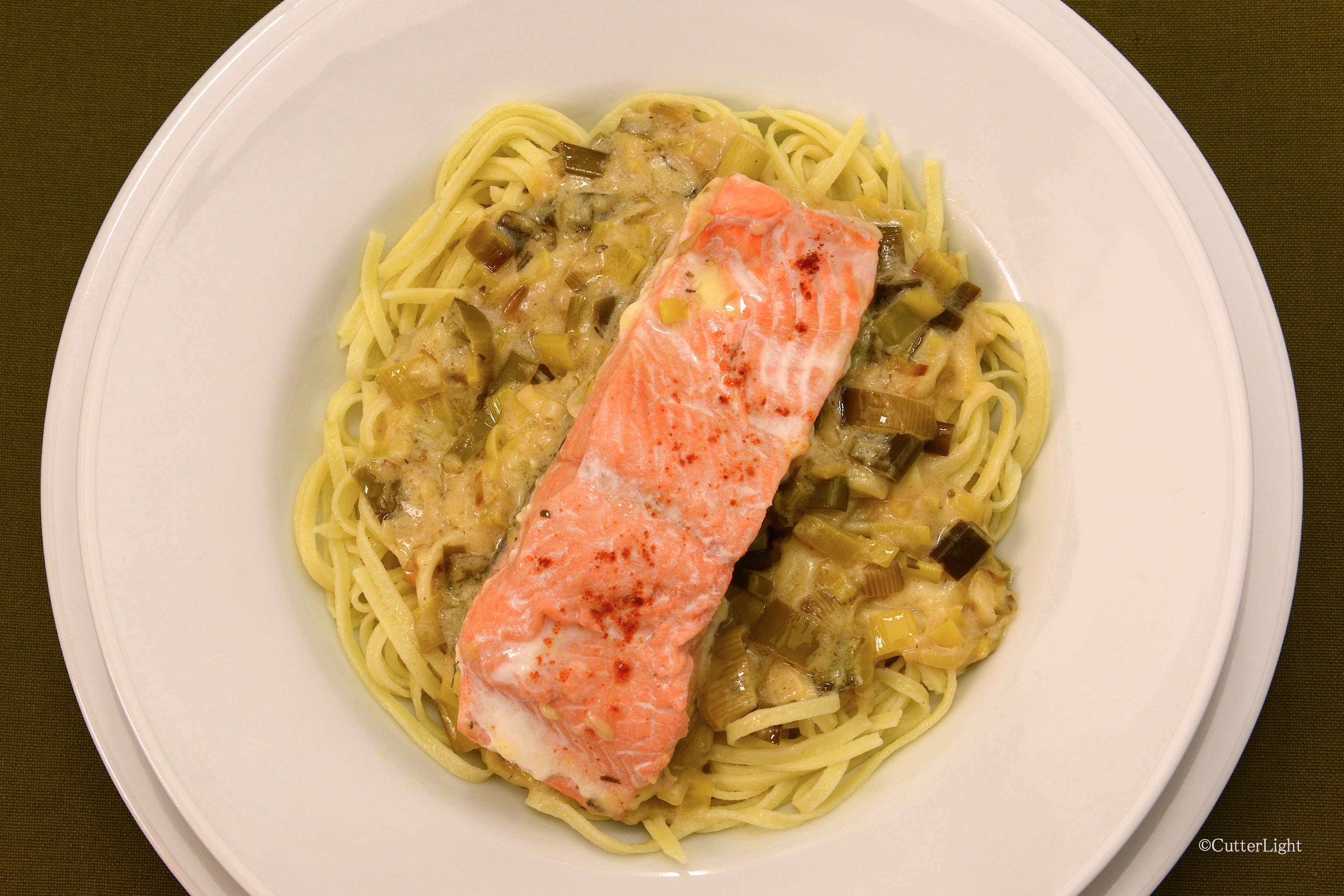
The pleasant tanginess of homemade crème fraîche, lemon and leeks harmonize with the buttery richness of wild caught Alaskan Coho salmon presented on a bed of homemade egg noodles. Light candles, play soft music, pop a cork and serve.
Crème fraîche is not available at our local Native store. No problem. We simply mixed two cups of heavy cream, two tablespoons of our homemade plain yogurt and let the mixture sit for 24 hours at room temperature and, voilà, we had crème fraîche.
The leeks in this dish seem to suggest springtime. Endless variations are possible. The lobster base in the sauce lends itself to pairing the salmon fillet with a lobster tail or claw, shrimp or even scallops; freshly picked, lightly sautéed fiddlehead ferns would make a nice addition, as would fresh mushrooms, a sprig of fennel, and so on. Because farmed salmon is environmentally harmful (regardless of what those who profit from that industry might say), if wild salmon is not available we suggest Arctic char (farmed or wild), trout or halibut. Remember, if the salmon in the market does not specifically say “wild” or “wild-caught,” it is farmed, and we urge that it be avoided.
Silver Salmon For Lovers
Ingredients
Directions
Paul Klaver’s 13-minute film, Alaska the Nutrient Cycle beautifully captures the critical role wild salmon play in sustaining a rich, diverse ecosystem. Unscripted but with beautiful background music, this breathtaking footage speaks for itself. This is why wild salmon and their environments are worth fighting for, and illustrates why we oppose farmed salmon.
 CutterLight