Hot Spiced Lingonberry Tea (aka Hot Lowbush Cranberry Tea)

lingonberry-hot-tea-n

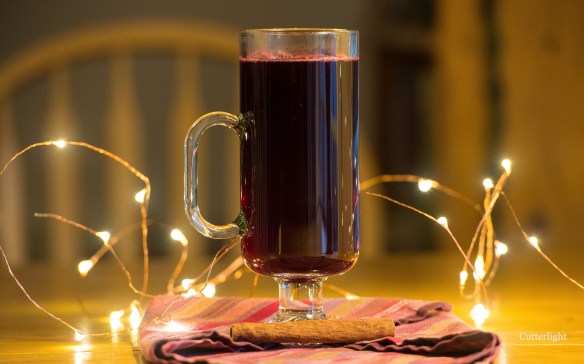
Hot spiced lingonberry juice – a magical potion.

When we were in Mongolia, we were served hot fruit tea, particularly sea buckthorn berry tea. Based on our experience with teas, we expected this drink to be made from tea leaves along with dried fruit. The tea we were served was not really tea, but heated fruit juice infused with spices. Although we’d both previously enjoyed hot, spiced cider, it hadn’t occurred to us to heat other juices and enjoy them this way. Thank you, Mongolia.

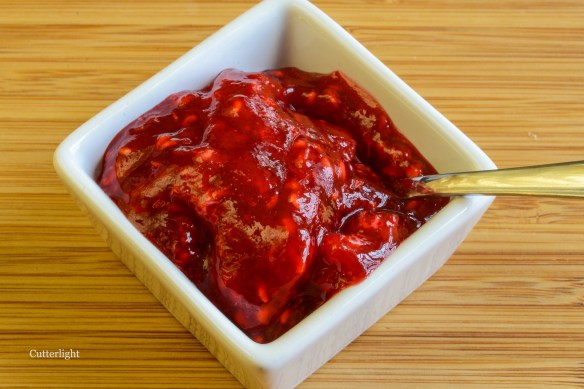
Fast-forward to the present. Now is the time to pick lowbush cranberries in Alaska. We’ve been told for years to wait until after the first frost to pick these bright red beauties. In Point Hope, the first frost often coincided with snow and the first Arctic blasts from points still further north. By the time this happened, it was painfully cold to go out and pick these gems. Chignik Lake lies at a much lower latitude, and mornings that begin with a glaze of frost have been warming up into the 50’s. So, we’ve been picking lowbush cranberries by the gallon. Lowbush cranberries, otherwise known as lingonberries, are the wild cousins of the big juicy cranberries that appear in stores around Thanksgiving. Because of my recent experience with Mongolian fruit teas, I processed my lowbush cranberries into juice, saving the remaining pulp to make delicious cranberry sauce to go with dishes such as roast turkey and grilled pork tenderloins.

Making the juice was easy. I combined four cups of berries with two-and-a-half cups of water. I brought the water to a simmer for about ten minutes. While the berries were simmering, I took a silicon spatula and stirred and squashed the berries. After ten minutes, I hung a piece of cheesecloth in a tall food storage container and placed the berry mixture in the cheesecloth in order to separate the pulp and the juice. I froze the resulting juice in ½ cup portions. I also froze the pulp to be made into cranberry sauce later.

After all this lingonberry processing, I was ready to sit down and enjoy a cup of hot berry tea! A steaming, aromatic cup of this juice spiced with warm wintertime flavors was a perfect reward for my work in the kitchen. I can’t adequately describe how satisfying this tea is. The aroma and flavor evoked the best memories of a warm, cozy home on cold winter nights, kind of like mulled cider. At the same time, I felt like I was pouring some incredibly healthy elixir into my body. It is something like the feeling, I imagine, of drinking a magical potion from a friendly witch.

Hot Spiced Lingonberry Tea

Ingredients

  • 1 cup brown sugar, packed
  • 4 cups lingonberry juice
  • ½ tsp allspice
  • 1 stick cinnamon
  • 6 whole cloves
  • dash ground nutmeg

Directions

  1. Place juice and brown sugar in a pot. Whisk until well blended.
  2. Add allspice, cinnamon and cloves.
  3. Simmer 10 minutes.
  4. Ladle tea into mugs through a fine wire mesh sieve.
  5. Grate a dash of nutmeg onto hot juice and serve immediately.

Blueberry Jam Bars – The Best Part of a Survival Kit for Stormy Afternoons

blueberry-jam-bars-n

Stormy afternoon survival kit: A great book, freshly brewed tea, and blueberry jam bars still warm from the oven.

My morning chores were to make a batch of yogurt, sourdough loaves for the week and sourdough pizza crusts for the freezer. Those tasks complete, it would have been nice to go outside for a walk. But this Saturday’s weather turned it into a stay-inside kind of day. We’ve heard that October is the month that Chignik Lake earned its name. Chignik means big winds in the native language. Saturday, it poured rain sideways. The lake was blown into a froth of whitecaps. Our little home here hunkered down solidly, just like our little house in Point Hope. It was the kind of day to curl up with a warm drink, a book, and a blanket. In our house, this scene also begs for a home-baked accompaniment. With a shelf of preserves made from berries we picked earlier, I had no trouble baking up a batch of oat bars filled with jam. The hardest part was to choose which jam – blueberry, currant, raspberry, or cranberry. Blueberry! In just over 30 minutes, I had delicious bars ready to go. This recipe is as easy as pie… or as blueberry oat bars.

Blueberry Oat Bars

Serves 9 polite eaters, or 2 ( if you have limited willpower)

Ingredients

  • 1/2 cup dark brown sugar, packed
  • 1 cup all-purpose flour
  • 1/4 tsp baking soda
  • pinch salt
  • 1 cup rolled oats
  • 1/2 cup unsalted butter, melted
  • 1 cup homemade blueberry jam (substitute any jam you have on hand)

Directions

  1. Preheat oven to 350 degrees F (175 degrees C).
  2. Grease 8 inch square baking dish.
  3. Combine sugar, flour, baking soda, salt, and oats in a medium bowl.
  4. Drizzle melted butter into flour mixture.
  5. Toss until mixture is crumbly.
  6. Press 2 cups of the mixture evenly into bottom of baking dish.
  7. Spread jam on top of flour mixture.
  8. Sprinkle remaining flour mixture atop jam, as even as you can.
  9. Lightly press flour mixture into jam.
  10. Bake for 35 minutes. Finished bars should be lightly browned.
  11. Allow to cool before cutting.

Rustic Char

char-rustic-in-pan-n

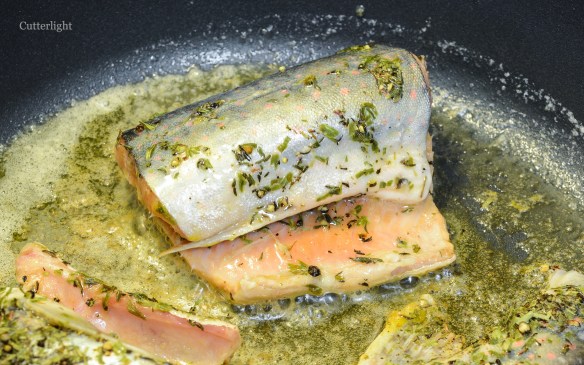
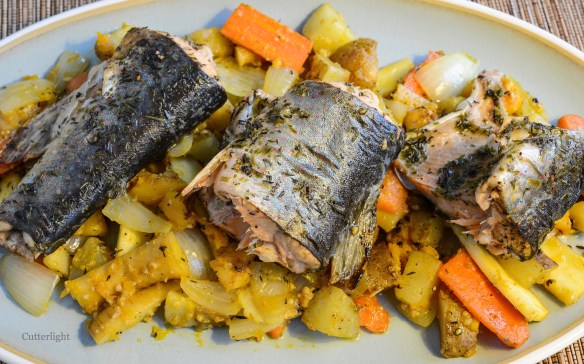
A great pleasure in life is obtaining seasonally fresh ingredients to take back to the kitchen. With Dolly Varden char at their fattest in fall and entering local streams, now is the time to go out and get them. Brookies and small lake trout shine equally well in this simple, exceptionally satisfying dish, as do Arctic char which are sustainably farmed and available in markets.

Char generally have a flavor that is richer than trout but lighter than most salmon. The keys to this dish are hearty vegetables, fresh charr, thyme, butter or quality olive oil and a good white wine. Add a spritz of lemon juice and a dash of salt and pepper. Don’t get hung up on specific ingredients; this is camp-style fare at its finest. And by all means, if you live where fresh herbs are available, substitute them for the dried herbs we use here in Chignik Lake.

rustinc-char-photo-n

This dish can easily be made in one pan. Simply hold the fish in reserve and add to the vegetables during the last half of cooking. Otherwise, prepare in two pans as follows.

The vegetables:

Ingredients

  • 3 or 4 cups hearty vegetables such parsnips, carrots, potatoes, sweet potatoes, butternut squash, pumpkin, etc. chopped coarse
  • sweet onion, chopped coarse
  • approximately 8 to 10 garlic cloves, cut in half
  • 1/2 tbsp thyme (dry)
  • 1/4 tbsp rosemary (dry)
  • 1 tablespoon olive oil
  • 1 tablespoon butter
  • 1/4 cup white wine
  • sea salt and freshly ground pepper to taste

Directions

  1. Add butter and olive oil to pan and heat over medium-high heat.
  2. Add vegetables and seasonings, turning to ensure everything is well coated and seasoned.
  3. Add wine, stir and cover pan. Reduce heat. Stir occasionally. When done, a fork will easily pass through vegetables.

The fish:

Ingredients

  • 1 fresh char of about 2 lbs, gutted, head and tail removed, rinsed and patted dry
  • 1 tablespoon olive oil
  • 1 tablespoon butter
  • 1/2 tbsp thyme
  • 1/2 tbsp tarragon (optional)
  • 1/2 tbsp marjoram (optional)
  • lemon juice
  • splash or two of white wine
  • sea salt and freshly ground pepper to taste
  • additional olive oil or butter for prepping fish

Directions

  1. Sprinkle lemon juice inside and outside of fish.
  2. Use fingers or a brush to cover fish inside and out with a light coating of butter or olive oil. Gently rub thyme and other herbs (if used) inside cavity and outside. Cut fish into three or four pieces and set aside.
  3. Place butter and olive oil in a pan and heat over medium-high heat.
  4. When oil/butter are hot enough to sizzle, add fish pieces. Add salt, pepper and a splash of white wine. Cover and lower heat to medium-low. Cook for six minutes.
  5. Gently turn fish. Sprinkle salt and pepper and add a splash of white wine. Cook for six minutes.
  6. Fish is done when flesh is opaque inside the cavity.
  7. Arrange vegetables on plates or serving platter, top with fish and serve piping hot with a favorite Chardonnay, Viognier or dry Riesling.

Dolly Varden Shioyaki (Salted, Grilled Char)

char-shioyaki-n

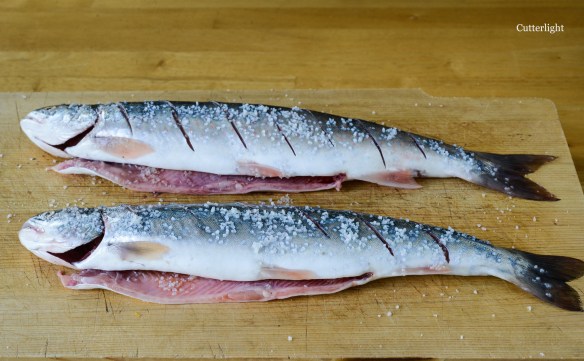
As the autumn air grows clear and crisp, Dolly Varden – close relatives of brook trout – are ascending streams on annual spawning runs. Salted and grilled over charcoal, there is no finer way to celebrate the coming of fall.

The small, icy-cold, brilliantly crystalline stream that flows less than 100 meters from our home has suddenly become positively choked with char. Only a week ago, the pools were bereft of anything but a smattering of fingerling salmon parr and equally diminutive juvenile Dolly Varden. The scene changed overnight when we woke to see the mountains rimming Chignik Lake gleaming with the season’s first snow. As the day warmed and the snow melted, the village stream filled to its brim with fresh snowmelt as clear and bracing as an Alaska September morning. Apparently that’s the signal Chignik Lake’s char were awaiting. When I checked that evening, each of the lower pools was packed with one of our favorite fish – Dolly Varden char. To be sure, there were no trophies among them, although a couple appeared to be pushing 16 inches. That’s fine. Eight to 12 inch fish (20 to 30 cm) are the perfect size for one of our very favorite foods – fresh char salted and grilled over charcoal.

I first encountered this simple but elegant fare while living in Japan. At festivals, fairs and inns in mountain villages, ayu (a trout-like fish highly regarded in Japan and South Korea) and iwana (white-spotted char very similar to Dolly Varden, Arctic Char and Brook Trout) are salted, skewered on bamboo sticks and roasted over hot coals till their skin turns a crisp golden-brown. With very small char, the bones are soft; it is common practice to eat the entire fish from tail to head.

char-salted-slashed-n

Char Shioyaki (Salted Grilled Char)

Ingredients

  • 8-to-16-inch char, gutted and gilled but with head left intact. (Brook Trout, Dolly Varden or Arctic Char)
  • Sea Salt (We have found coarse gray sea salt, Sel Gris, to be best for complimenting salmon, trout and char.)
  • Wooden skewers, soaked in water to prevent them from burning (Bamboo is traditional, but skewers fashioned from hardwoods such as alder, peach, apple, hickory and similar woods also work well.)

Directions

  1. Prepare a charcoal grill or campfire. (Alternatively, fish can be broiled on a baking sheet on the top rack of the oven.)
  2. Thoroughly clean stomach cavity and gills from fish. Do not scale. Leave head intact. Rinse in cold water and pat dry with paper towels.
  3. Using a very sharp knife, make shallow oblique cuts spaced about 1″ apart through the skin. Avoid cutting too deeply.
  4. Run sharpened skewer into fish’s mouth and through the body, making sure fish is securely skewered.
  5. Liberally salt the fish inside and outside.
  6. Placed directly on a very hot grill. To prevent skin from sticking to grill, do not move fish. Turn only once, gently loosening with a spatula if necessary. Roast till skin, tail and fins are crisp and golden brown, eyes are white and opaque, and meat is splitting where slashed. Alternatively, fish can be roasted on roasting stick over hot coals.

Serve with cider, a favorite bourbon, sake, or Pinot Gris.


Out of Chocolate! Now What? Chewy Almond Thins to the Rescue

chewy-almond-crisps-n

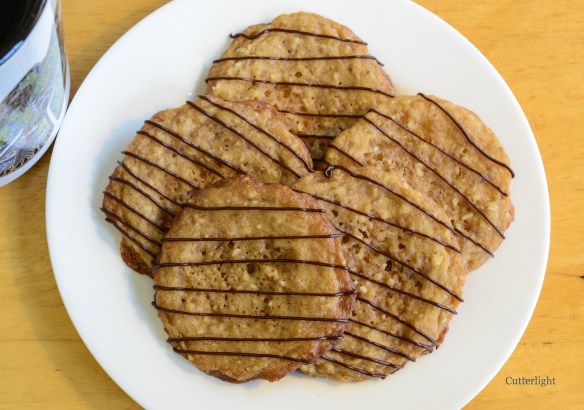
These candy-like cookies are ridiculous. Chewy and flavorful – a cure for a terminal sweet tooth.

At the end of most evening meals, Jack and I enjoy a piece of dark chocolate or a little something sweet with a cup of tea. I have a terrible sweet tooth that seems to be sated by this little habit. Thinking that I would bake more than I have been, we didn’t send out very much chocolate for our après dinner tradition. Now our chocolate is all gone – at least till the next Amazon order arrives via bush plane.

In these kinds of emergencies, my Williams-Sonoma Baking book always seems to save the day. It is a solid baking book with a number of foundational recipes that can be followed directly or easily adapted. I remembered a quick cookie recipe loaded with almonds that I hoped would do the trick. The authors of the recipe called these cookies Almond Crisps. Mine turned out beautifully flat and a bit lacy. They were pleasantly chewy, like a really satisfying caramel. I think this is due to the combination of sugar and brown sugar. Delicious. I adorned these cookies with a chocolate drizzle made from a few semi-sweet chips I had stashed in my pantry.

Our problem now is that three dozen of these cookies have up and disappeared!

Chewy Almond Thins

Ingredients

  • ½ cup unsalted butter, room temperature
  • 1 cup brown sugar
  • 1 large egg
  • 1 tsp vanilla extract
  • ¾ cup all purpose flour
  • 1 tsp baking powder
  • pinch salt
  • ½ cup finely chopped almonds

Directions

  1. In the bowl of a stand mixer, cream butter.
  2. Add sugar and continue to beat until sugar and butter are well mixed.
  3. Add egg and vanilla into mixture. Mix on low speed until well mixed.
  4. Sift flour, baking powder, and salt together.
  5. Stir flour mixture into butter mixture.
  6. Stir in almonds.
  7. Preheat oven to 400 degrees F (200 degrees C).
  8. Line a baking sheet with parchment paper.
  9. Drop teaspoonfuls of batter onto prepared baking sheets. Space cookies about 2 inches apart. They will spread.
  10. Bake 5 minutes. Edges will be golden brown, but cookies will still be soft.
  11. Let cookies cool on baking sheet for exactly 5 minutes. Then remove to wire rack to finish cooling.

Super Sourdough Success

sourdough-loaf-n

Two loaves of sourdough bread fresh out of the oven. As soon as they cooled enough to cut, we were in. Delicious!

Every July, I make culinary goals for myself as this is the time of year we do our bulk shopping for our year in the Alaskan bush. My two big goals this year were to master working with sourdough starter and to make cheese.

I’ve tried making sourdough bread with starter before. A friend gave me some of hers which she had had going for several years. For whatever reason, my sourdough did not turn out. Jack called it an epic fail. I don’t remember it being epic. That would have involved tears, bread in the trash, and possibly my fists pounding the floor like a tantrumming child. Don’t ask me about the time I tried to hard boil eggs! That was an epic fail. I do remember that my last attempt making sourdough bread wasn’t good. So, it went on the goal list to try again.

Most people go to their local store to buy the things they need. If they are lucky, they live in a place with specialty shops where they can find unique tools to help them achieve their culinary goals. Out here in the bush, we rely on the U.S. Postal Service to deliver items we can find via the Internet. This involves lots of planning and lots of patience waiting for items to show up. Last week, my sourdough starter finally arrived. I’ve been diligently feeding it every day and it’s been bubbling away on the countertop in a nifty glass jar I bought especially for this purpose.

Today was the big day. The starter smelled nicely sour. I gathered my ingredients and set to work. Happily, the two loaves came out lightly sour and made for a great accompaniment to Jack’s clam chowder. Hurrah! It will be interesting to see if the starter changes flavor as it continues to age. I am also curious to see how the starter will taste in sourdough pancakes. Stay tuned to find out!

Homemade Sourdough Bread

Ingredients

  • 3 ¾ cups all purpose flour
  • 2 tbsp granulated sugar
  • 2 ¼ tsp active dry yeast
  • 1 cup whole milk
  • 2 tbsp unsalted butter
  • 1 ½ cups sourdough starter
  • 2 tsp salt
  • 2 tbsp olive oil
  • 1 egg
  • 1 tbsp water

Directions

  1. In a large bowl, combine 1 cup flour, sugar, and yeast. Whisk together.
  2. Place butter and milk in small pot on stove. Warm to about 110 degrees F.
  3. Whisk milk mixture into flour mixture.
  4. Whisk in sourdough starter.
  5. Stir another cup of flour into dough mixture.
  6. Stir and then knead in one more cup of flour and salt. (I actually knead in the large bowl.)
  7. Knead in final ¾ cup of flour. Dough should be well mixed and slightly sticky.
  8. Turn dough out of bowl and coat bowl with 2 tbsp olive oil. Place dough back in bowl.
  9. Cover with plastic wrap and rise for 1 hour or until doubled in size.
  10. Punch dough down. Divide dough in half and shape each half into a loaf-shaped log.
  11. Place loaves on a parchment-lined baking sheet.
  12. Cover and let rise for an hour, or until doubled in size.
  13. Heat oven to 375 degrees F.
  14. Mix egg and water and brush loaves generously with this mixture.
  15. Bake loaves for 25 minutes. Finished loaves will be golden brown and have a hollow sound when the bottom is tapped.

30 Minute Raspberry Jam!? Yes, Way!

raspberry-jam-n

Fresh raspberry freezer jam. 30 minutes from ripe berries on a bush to yummy jam.

Chignik Lake is a magical place. Maybe I shouldn’t gleefully announce this. One of the things that make this place magical is the small population. 😉

Jack and I really enjoyed living in Mongolia. The stint there certainly scratched a life-long itch of living overseas. We enjoyed trips our to the countryside and we certainly miss our Mongolian friends. But while we were away from Alaska, we longed for the pristine forests, tundra, mountains and seascapes and outdoor activities that have forever become part of our desired reality. At the top of our list? Foraging for wild food.

Part of the magic of Chignik Bay is the blueberries, crowberries (also known as blackberries in Alaska), and cranberries that grow in wild abundance. Additionally, currants and raspberries have been planted here and are thriving. We may try to grow our own in the spring. We’ve found many mushrooms and still need to figure out which ones are edible. There will be fireweed shoots to harvest in the spring, too. Needless to say, our freezer is stocked with the Sockeye and Silver salmon we’ve caught.

After a few trips out to nearby muskeg areas (berries love this type of environment), our freezer was stocked for the coming winter. It was time to start processing some of the berries into jams, jellies, sauces and syrups. I grabbed my container of pectin and noticed a recipe for “jam in 30 minutes” – no cooking required. Freezer jam!

It turned out fantastic. Since I used perfectly ripe raspberries for my experiment, the jam looks and tastes exceptionally bright and flavorful, like the fresh fruit I used. I do like cooked jams, but this fresh jam is a quick and easy way to make something a little different than the usual. It is delicious spread on bread or spooned into yogurt or hot cereal. The jam will keep for about three weeks in the refrigerator and will keep in the freezer for about a year.

Raspberry Freezer Jam

Ingredients

  • 1 2/3 cups of cleaned, ripe raspberries
  • 2/3 cup granulated sugar
  • 2 tbsp instant pectin

Directions

  1. Stir sugar and pectin into a bowl.
  2. Mix in berries.
  3. Stir for 3 minutes.
  4. Ladle mixture into freezer safe containers, jam jars work well.

Makes 2 cups of jam.

New Favorite Appetizer: Ikura on Avocado

ikura on avadado n

With freshly cured salmon roe on hand and avocados just arrived from The Big City, we put one and one together. Wow! Perfect with a Sauvignon Blanc while grilling salmon. Click here for the ikura recipe.

And if you’re out in Bush Alaska and no Sauvignon is on hand, how about a home-brewed beer or a sparkling glass of Soda Stream fizzy water?

The Magic of Freshly Cured Ikura (Salmon Roe Caviar)

ikura fresh in clear glass n

In The Bell Jar, Sylvia Plath describes eating an entire bowl of caviar by herself. Which sounds a little piggish. Certainly we would never do such a thing. No, never. The happy little seal… well, he’s not talking.

Making your own ikura (salmon roe caviar) is easy.  The recipe, linked below, continues to be one of Cutterlight’s most popular.

Click here for the recipe: Ikura: Curing Salmon Eggs

This batch came from a Sockeye salmon, and although chum salmon eggs are the traditional choice due to their large size, the ripe eggs of any species of salmon or trout work well.

Bizarre Food or a Gourmet Delicacy? Sautéed Salmon Shirako on Polenta

Shirako on polenta n

This Japanese delicacy hasn’t quite caught on in America… yet. But as more and more people try it, they’re discovering what many residents of the Atlantic Gulf Coast have known for generations: this stuff is delicious!

Not long ago daughter Maia reported from Japan that she had just tried shirako. “What?!” I asked in astonishment. “Really? How was it?”

“Oshikatta yo!”

“Hontou ni?”

“Hontou ni!”

Translation: She had dined on the milt sacs of cod and found them to be delicious. “Really?”   “Really!”

With this conversation in mind, I looked dubiously at the pair of milt sacs I’d just removed from a freshly caught Sockeye salmon. I’d done some reading and discovered that “white roe” – the milt sacs of mullet – are a traditional delicacy along the Gulf Coast of America. Packed with nutrition, they definitely belong in the Super Food category as well. “Well, why not,” I mused. “They look like they’re made to be rolled in corn meal, fried up and served with grits.”

That’s all there is to it. And yes, they were delicious. Really!

Sautéed Shirako

Ingredients

  • Fresh milt sacs from salmon, cod, mullet or similar fish
  • corn meal
  • freshly ground black pepper
  • salt or soy sauce
  • olive oil (or butter or bacon fat)

Directions

  1. Heat a tablespoon or two of olive oil, butter or bacon fat in a skillet over medium heat.
  2. Sprinkle a tablespoon or two of cornmeal on a cutting board or plate. Add a little freshly cracked black pepper.
  3. Rinse milt sacs in cold water. Pat dry but leave a little dampness (so cornmeal will attach).
  4. Rolls sacs in cornmeal.
  5. When oil hot enough to gently sizzle, carefully place the sacs in the skillet. Add a few dashes of soy sauce or sprinkle with salt. Lower heat to medium-low.
  6. Sauté for 3 minutes. Gently turn and sauté other side for two or three additional minutes, longer if the sacs are particularly large. Both sides should be crisp and golden.
  7. Serve piping hot with grits or polenta.