First Silver of 2018

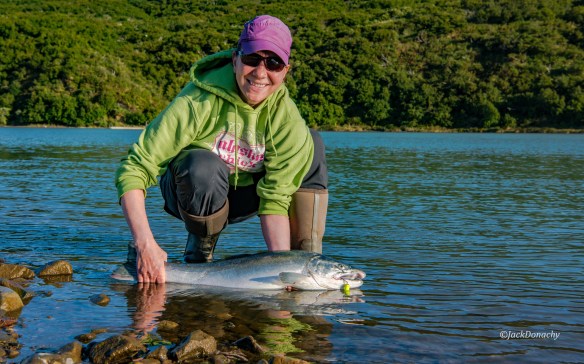
Ocean-bright and full of fight, Barbra’s 12-pound Coho today is the first and only salmon we’ve put on the bank this year… so far.

In each our previous six years in Alaska, our fish for the coming months were long ago caught, cleaned, freezer-packed or smoked and canned and put away.

Not this year.

Like a lot of salmon runs around Alaska, here on the Chignik River its been a mere trickle of fish compared to other years. In fact, for a few weeks in July fishing was closed altogether. Still, we were confident upon returning from our bike trek in Hokkaido that we’d be able to get the couple of dozen or so fish we need.

That was nearly a month ago. Admittedly, it’s not like we’ve been hitting the water every day. But the few times we’ve been out, it’s been discouraging. When lots of salmon are around, so are bears, eagles and seals, and we can generally see lots of jumpers – salmon fresh from the sea and full of energy spontaneously leaping for whatever reasons salmon spontaneously leap. But it’s been eerily quiet; the usual eagle roosts have been empty.

Even in this down year, hundreds of thousands of Sockeyes ascended the river, and there will undoubtedly be thousands of Coho as well. It felt great to finally get one. Pasta with fresh salmon is on the menu tonight.

Knee Deep in Trout and Char (somewhere in Hokkaido)

Iwana (Dolly Varden Char) are one of Hokkaido’s most celebrated cold-water fish.

I have an incurable habit of looking into water for fish. It doesn’t matter what kind of water. At the beach I check the translucent prisms of waves for whatever might be cruising the surf. Coming upon pools on rivers during hikes I make efforts to position myself so that I’m looking into shade rather than glare so that I can maybe catch a glimpse of something with fins. I’ll even check out coin fountains in the off chance that a carp or even a goldfish might be swimming around. But bridges on quiet country roads crossing pretty little trout streams are especially inviting. There’s almost always a pool below the bridge, and if the water has a population of trout, there are often a few of them hanging out right there. No matter how hard-fished the water might be, it’s worth a look.

Yamame could literally be translated as “Mountain Girl” – a lovely name for a lovely fish. More commonly the stream-dwelling form of this species is called “Cherry Trout.” Similar to Cutthroat and Rainbow Trout of the Pacific Northwest, (to which yamame are related), some go to sea where they attain sizes measured in pounds and return to their natal rivers to spawn bright as polished chrome – Cherry Salmon.

And so there we were, mid-afternoon, straddling our bikes and leaning over the the concrete side of a bridge on a quiet road running through a mix of forest and farmland somewhere in Hokkaido. The water was perfectly clear, but the trout and char are so adeptly camouflaged to match the stony bottoms of these streams that unless one moves they are all but impossible to pick out. 

One moved. As it rose to take something off the surface I could even see its spots. A char of some type. I hadn’t done any fishing yet in Hokkaido. This fish was telling me it was time I did.

I didn’t expect the fish to be large and they weren’t. But in the space of about two hours I covered a couple hundred yards of this silvery mountain stream and caught two dozen or so fish  About half of them were iwana. The others were yamame. A few came to a parachute Adams – my favorite dry fly searching pattern. A lot more came to a pheasant tail nymph – my favorite nymph. A couple of overly eager types tried to eat the pea-sized orange strike indicator I was using. 

A younger version of myself would have kept a few of these fish for the frying pan. But these days I fish for trout in part to simply confirm that they are present, and I wanted these fish to remain present. So Barbra took a couple of photos and I released everything to continue living out their lives in this silvery piece of water and light somewhere in Hokkaido.

There wasn’t a single human footprint along the banks, much less a path. Knee deep in a cold mountain stream full of trout and char – sitting on top of the world, legs hanging free.

Corrupting a Child into the Art of Angling: a Journey from Granny Knots to 8-Weights

The 2018 cover of the Southwest Alaska Fishing Regulations featuring my photography: I was out on the ice last winter when I happened upon these two cuties (Barbra’s students) trying their luck for Dolly Varden Char and smelt on Chignik Lake. Teaching a young person to fish is an action that can have long legs and far-reaching positive consequences.

My father started my little sister and me with granny knots, #6 hooks, 10 lb test line, wine cork bobbers and solid fiberglass poles sans reels. Hers had a red handle. Mine was green. Half-a-mile below our house down the winding Route 322 hill lay Piney Dam Reservoir, an impoundment on western Pennsylvania’s Clarion River which, back in those days, was fairly fishless thanks primarily to acid runoff from coal strip mines and effluent from a paper mill 60 miles upstream. This was in the days before President Nixon’s executive order establishing the Environmental Protection Agency. The river looked clean – but the acid runoff left it relatively sterile, bereft of the web of aquatic weeds, tiny crustaceans and insect that make up a healthy ecosystem. These days, the coal mines are mostly gone, grown over with mixed forests of white pine and oak and other hardwoods that have reclaimed the landscape from the war-zone look I remember from childhood. Thanks to EPA regulations, the mining operations that remain are much more responsibly operated. Meanwhile, the paper mill modernized, also guided by EPA regulations. Now trout, bass, muskellunge, decent-sized panfish and, I’m told, even walleyes swim in waters that back in my day held little more than a few stunted sunfish, perch, shiners and bullheads.

Given time, if the Earth isn’t damaged too much, it can heal.

On the sunny side of the valley at the foot of the old 322 bridge was a small, wooden, long-abandoned dock. The steps leading down the steep embankment were rotting and coming apart. The dock itself wasn’t in much better shape. But unclaimed, we called it ours, as in “Let’s go fishing at our dock.”

Even digging up a coffee can’s worth of worms in preparation for those trips was an adventure, and with my dad being a biologist, something of a science lesson as well. For starters, we discovered that there were different kinds of worms; the little red ones worked best. And turned up by Dad’s spade would be other creatures: beetles and beetle larvae, centipedes and millipedes and alien-looking chrysalises. Sometimes garter snakes and little green snakes would glide out of the weeds ahead of us, and a rock turned over might reveal mice tunnels, big black crickets or shy red-backed salamanders with their protruding, otherworldly eyes.

There are four indispensable characteristics an adult must possess if he or she expects to successfully corrupt a child into the art of angling:

  1. The adult must know where there are fish an inexperienced child would be able to catch…
  2. …and he or she must know how to catch those fish in the easiest manner conceivable.
  3. Once conditions one and two have been met, the adult must possess the abundance of patience necessary to allow the young person to figure out how to catch those fish.

To his credit, although my dad took along his own outfit, after casting far from the cover of the dock out into featureless water where there would be no fish, he would set his rod down, ignore it, and focus on my sister and me. That way, if one of us might say, “Dad, you should fish too,” he could truthfully reply, “I am fishing.”

There were always a few panfish hanging out in the dock’s shade – diminutive bluegills and pumpkinseeds, a shiner or two, and our favorites for their combination of size, brilliant orange fins and qualities on the table, yellow perch. The shiners, too bony to deal with, went back into the water. As for the rest of the fish, five-inches was enough to make a “keeper,” and those went on a hand-made stringer. As long as we didn’t fish it too often, the dock could be counted on for a meal’s worth of fish.

The fourth characteristic necessary to develop an enthusiastic young fisherman is probably the most important. The adult must know when enough is enough. My sister and I were diligent in our attention to our wine-cork bobbers, staying with them as they rocked in the wake of ski boats, not moving our eyes from them for long minutes when they just sat there on placid water doing nothing. We didn’t miss many bites. But as time went by and we thinned the dock’s population of fish, bites became fewer and further between. The sun climbed higher and grew hotter. Small stomachs started to growl.

My father seemed to have a sixth sense for impeccably timing the question, Are you ready to call it a day?

No! Not yet! Let’s stay! Just one more? We’d plead.

Well, my dad would wisely say while enthusiasm was still running high, We’ve got enough for a meal. Your mother’s going to be wondering where we are. It’s time to go.

Aw-ww! That’s the response you hope to hear from someone you’re trying to teach anything to when it’s time to call it a day. Aw-ww, in at least two syllables.

Weeks went by between our trips to the dock, but my sister and I never lost track of whose turn it was to carry the stringer back to the car and triumphantly in through the kitchen door. Down in the basement, Dad would spread out yesterday’s Pittsburgh Press and we’d get to watch as he cleaned the catch. Too small to bother filleting, he’d scale the fish and gut them and remove their heads, so that by the age of six I knew enough about fish anatomy to pass a biology exam. We’d even open their stomachs to examine the dragonfly larvae, midge pupae and other tiny animals they fed on.

Upstairs in the kitchen, Mom made them Appalachian style – rolled in cornmeal seasoned with salt and pepper and fried golden brown and so crisp their tails were like potato chips. The three of us unerringly remembering whose plate the catch-of-the-day belonged on – usually a nice perch. Bread and butter and a big salad of lettuce, tomatoes and cucumbers from my dad’s garden rounded out the meal. Those summertime meals of fresh fish and garden salad are far and away my favorite childhood food memory.

Eight-Weights: Alaska Peninsula Summer Trek – Going Off the Grid for Salmon, Trout, Char, Grayling and Pike

Early last Friday morning we put the finishing touches on packing for this summer’s (potentially epic) fishing-centric trek on the upper Alaska Peninsula. Two Salsa Fargo bikes equipped with semi-fat tires, to be loaded with Big Agnes Rattlesnake Mountain Glow tent, down sleeping bags, Alpacka pack rafts, tenkara rods, fly rods, freeze-dried camping food, cookware, compact stove, minimal camera gear, blank writing journals, waders, rain gear, and (for me) just one extra pair of underwear. We then borrowed a pickup truck drove the gear to Chignik Lake’s airstrip and loaded it onto a Lake Clark Cessna headed for Nondalton.

I’ll turn 58 on this trip and I’m a little apprehensive – not as sanguine in my physical endurance and strength as I was in the old days. For the first time in my life, I am aware of physical limitations in a way I’ve never before felt those limitations. But I want to get out there and try this and see if I can handle it. I think I can handle it. If it comes together all right, this trip will set the stage for the next several summers. Fortunately, Barbra has greeted the prospects this summer holds forth with unbridled enthusiasm sufficient to douse my doubts. “Pace yourself,” a friend advised, and although that two-word phrase is anathema to the way I’ve gone about things most of my life, I have to concede that on this series of treks, it’s probably the most prudent recommendation I could receive.

Iliamna Lake is the epicenter of the world’s most prolific Sockeye Salmon nursery.

Nondalton is a perfect starting point. The Newhalen River threads together some of Alaska’s (and by extension, the World’s) most storied fly-fishing waters, including Lake Clark upriver and legendary Iliamna Lake downriver. Along with their nearly innumerable tributaries, the entire watershed constitutes the world’s greatest Sockeye Salmon spawning grounds and nursery. Oh, there are kings, silvers, pinks and chums, char, grayling, white fish and pike, too – and at the right time and place lots of them and large ones. But the keystone species is the Sockeye, and it’s because of these millions of spawning salmon and the ocean-borne nutrients they carry upriver each summer that the watershed is home to some of highest numbers of large rainbow trout found anywhere. Trout 18” and up are common. How far up? The Kvichak River, which flows out of Iliamna and into Bristol Bay, gave up a 23-pounder in 1999, and while there don’t seem to be as many super large trout as in the past, fish well over 20 inches are still abundant, as are large Dolly Varden Char, Arctic Grayling, Northern Pike and Lake Trout. In fact, when I ticked off a list of modestly-sized personal bests for the species we’ll be targeting this summer, our friend Jerry, who talked us into this trek, kind of laughed and replied, “You’re gonna break all those records right here on Six Mile.”

After exploring the Six Mile Lake area, the possibilities are practically limitless. Virtually every lake, stream and river in this part of the Bristol Bay watershed is a world class angling destination. So it’s almost a given that we’re going to catch a lot of fish. And camp, and hike, and pick wild berries, and raft, and swat mosquitoes and see bears and moose and cap an especially good day with a bourbon toast from a small flask a fair distance from anything that looks like civilization.

But it’s not all gonna be blueberry patches and easy trout. We might have to bush-whack into some places, and we won’t use guides or take float planes in to the best water. We’re determined to make the fishing our own, and that will mean fishless stretches at times as we explore, and it might mean tough going at times. That’s the price for getting off the beaten path.

If we each get a few personal bests this summer and have a few fish-after-fish-after-fish days, a few memorable wildlife sightings, a few meals of freshly caught fish… If we learn a few things, experience a few new things…

It’ll be a great summer.

JD

And with that, the staff of CutterLight is off on vacation for blessed weeks on end with no phone service, no computers and no news. Look for accounts of our adventures when we resume publishing toward the end of the summer. 

Ink and Light: Watching for Whales and a thought about roads less traveled (and places seldom fished)

Watching for Whales: Point Hope, Alaska

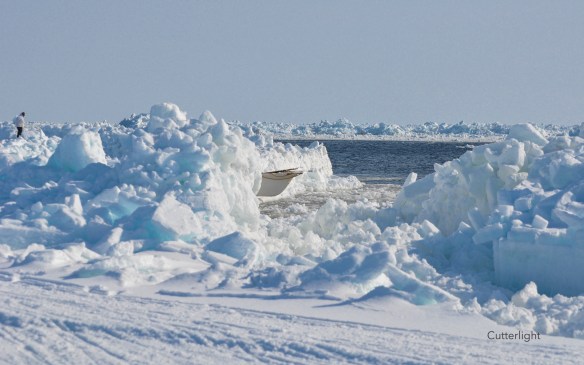
The Inupiat Eskimos of Point Hope, Alaska (population 750) harvest an average of five to 10 Bowhead Whales each spring as part of their subsistence traditions. The season begins in March as whaling crews begin making trails over the frozen sea – at times an arduous task as the sea ice has often buckled up into fairly tall, jagged ridges and it may be several miles over frozen ocean to reach the open leads where the Bowhead and Belugas migrate. Crews still use traditional umiaks, boats made by stretching the skin of Bearded Seals over handcrafted wooden frames. Managed for sustainability, the Chukchi Sea’s Bowhead Whale population is increasing.

When I recall places like this, I wish nothing more than for this to be he way it is for the rest of my life – pointing a pickup truck upstream, upriver, up tide, cutting through forests or along beaches, looking for fish in places only a few people know about, can get to… have time for.
Jack Donachy – from Gravel Lick, 1991

Barbra and I lived in Point Hope, Alaska, from 2011 – 2014.

Ink and Light: Silver on Ice and lines from John Masefield

Silver on Ice: Onboard Gillie, Gulf of Alaska outside Resurrection Bay

Also known as Silver Salmon, tens of thousands to hundreds of thousands of Coho Salmon return to Resurrection Bay near Seward, Alaska each summer where they constitute the greatest Coho Salmon sport fishery in the world. 

I must go down to the sea again, for the call of the running tide
Is a wild call and a clear call that may not be denied;
And all I ask is a windy day with the white clouds flying,
And the flung spray and the blown spume, and the sea-gulls crying.
John Masefield – Sea Fever, 1912

John Masefield (1878-1967) went to sea at the age of 16. About a year later he deserted ship, initially thereafter living as a vagrant and taking odd jobs, but the awe he experienced on the open sea never left him. Masefield was England’s Poet Laureate from 1930-1967.

Fine Dining for Two: Broiled Char or Trout

broiled-char-n

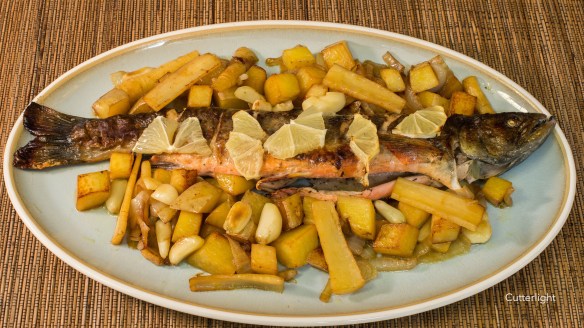
A hint of thyme compliments the delicate flavor of wild char, one or our favorite fish. No wild fish available? Look for Arctic Char at the fish market. They get high marks for being responsibly farmed and are delicious.

There’s something about wild char and trout that calls to simplicity. Among all species of fish, they are among the most demanding of unspoiled environments. Where streams, rivers and lakes are clean and lightly trammeled, these species often thrive, both their numbers and the setting they inhabit evoking bygone times. It is in such settings that light harvest of a few fish is sustainable.

When presented with such fish in the kitchen, the most basic ingredients are all that is wanted. Salt and butter, perhaps a little pepper or a pinch or two of an aromatic herb. A little lemon can be nice, too. Root vegetables such as potatoes, parsnips or rutabaga roasted or pan fried in olive oil and soy sauce make the perfect accompaniment on the serving platter.

Broiled Char or Trout for Two

Ingredients

    • 1 char or trout of about 16 to 18 inches (40 – 45 cm) (between 1 and two pounds, dressed)
    • fine sea salt (we use Grey Sea Salt in all of our salmon and trout recipes)
    • two light pinches of dry thyme (or about double that if you have fresh)
    • 1 lemon cut into thin slices, peel cut away
    • butter, sliced into thin pats
    • olive oil or canola oil
    • broiling pan. We use a Swiss Diamond cast iron griddle for this kind of broiling.

Directions

    1. Place a broiling pan near the top shelf in the oven and preheat on broil. You want the pan to be very hot when the fish is placed on it. This prevents the fish from sticking. Do not oil the pan yet.
    2. Rinse the fish in cold water and dry with paper towels. Make sure the gills and viscera have been removed.
    3. On a cutting board or platter, position the fish with its it’s open belly toward you.
    4. Using a very sharp knife, cut shallow, oblique slashes spaced about an inch apart (2.5 cm) down both sides of the fish. You want to break the skin without cutting all the way through to the body cavity.
    5. Rub fish inside and out with fresh lemon juice.
    6. Salt the fish inside and out. Sprinkle a little thyme inside the cavity on the sides.
    7. Place a few thin slices of butter inside the cavity and on top of the fish’s side.
    8. Place pieces of lemon on top of the fish’s side.
    9. Spread olive oil on broiling pan. A basting brush works well for this. Return pan to oven for about a minute to ensure that oil is very hot.
    10. Place fish on broiling pan or griddle. The fish should really sizzle when it hits the pan. Once the fish is on the pan, do not move it. (Moving a fish just after it hits a pan can cause it to stick to the pan.) Return to the oven and broil for 5 minutes.
    11. Remove pan from oven and gently flip the fish. Do this by rolling the fish on its back using spatulas. This will prevent the cavity from draining. Place additional pieces of butter and fresh slices of lemon on the up side of the fish and return to the oven. Broil for 3 or 4 more minutes.
    12. The fish is done when the slashes have opened, the skin is golden brown, the tail is crisp and the eyes are opaque.
    13. Serve with roasted root vegetables on warmed plates. Compliment with a light Chardonnay or a crisp ale.

Beading the Dolly Varden… And how Did they get that name?

OLYMPUS DIGITAL CAMERA

Spawning salmon attract opportunistic Dolly Varden char looking for easy pickin’s of fresh roe. It’s the perfect opportunity to grab a fly-rod, a handful of beads and hit the water. 

Chignik Lake’s main road begins at the dirt airstrip on the west side of the village and terminates at the riverside boat landing to the east. The 3.3 miles in-between, often marked with clumps of bear scat, moose tracks and even wolf prints, runs past a tiny post office on the ground floor of the postmaster’s home and a clinic only occasionally manned by itinerate healthcare providers who fly in from other villages. Along the way, the mostly dirt road winds past a school with a total enrollment of 19 students, a tiny Greek Orthodox church, a community center and a sparse collection of houses that are home to the village’s 50 or so inhabitants. Patches of salmonberries, alders and fireweed edge most of the road, which at one point crosses a crystalline stream that fills up with spawning char each fall.

The only practical ways in and out of the village are by bush plane or boat. And so, when a friend told us he’d be flying into the sister village of Chignik Bay and suggested we come down for some fishing, we needed to hitch a ride on someone’s skiff in order to make the 16-mile run down the Chignik River, through Chignik Lagoon, around the headlands and into Chignik Bay. Fortunately this didn’t present a problem, as we’re virtually the only two people in the village who don’t have an aluminum Lund v-hull with an outboard motor – the Chignik Lake version of a pickup truck

OLYMPUS DIGITAL CAMERA

Chignik resident Clinton Boskofsky runs his 18’ aluminum skiff down the Chignik River on a sunshine-filled day in early fall.

A few bald eagles eyed us cooly from bank-side perches as the skiff bounced down the remote river toward the Alaska Gulf. Two weeks ago on this same river I’d seen a handful of bears drawn by thousands of sockeye salmon teaming in the shallows, their bodies crimson red, heads moss green. But today salmon were scarce and the bears had moved up into the feeder streams where the fish were still spawning. 

Gradually, the brisk fall air took on a familiar briny scent as we approached the lagoon. The bones of an old gillnetter fishing boat rested along the southern shoreline and an abandoned cannery came into view on the opposite side, vestiges of a not-so-distant past.

old-wooden-fishing-boat-n

“Love this smell!” Barbra called out over the steady hum of the outboard.

“Tide’s out a little, flat calm. No bears I guess, but it’s a good day to see otters!” I called back.

Sure enough, as we broke into open water, a raft of sea otters popped up their heads to give us a curious look.

sea-otter-mother-n-baby-n

Puffins, kittiwakes, murres, gulls, cormorants, auklets and leaping salmon were also in the mix of wildlife as we hung a right, arced around the headlands and cruised into Chignik Bay. Surrounded by a semi-circle of mountains, the evening light over the village was fading fast. As the bow of the skiff nosed into the gravel beach with a metallic crunch, our friend Jerry walked down to greet us.

“Any fish up in the creek?” I asked him.

“I dunno,” he replied. “I just got here myself. Haven’t been up to look yet. I guess we’ll find out tomorrow morning.”

Work in Mongolia having pulled us away from our adopted state for the past two years, it had been awhile since we’d last seen our old friend. With lots of drinking… er… catching up to do, we ended up getting a late start the next day. Fortunately, it wouldn’t matter. If salmon were in the stream the Dollies would be close behind, sucking up any loose eggs that failed to get buried in the spawning redds. The char wouldn’t be fussy as long as we showed them beads approximating the size and color of the roe they were feeding on. 

Shortly after lunch the next day, the three of us were standing on a bridge at the edge of Chignik Bay village overlooking Indian Creek’s pellucid waters. A month ago, this very stretch of the stream had been thick with spawning pink salmon. That run was over. With and without polarized sunglasses, we strained our eyes hoping to catch a tell-tale flash or shadow below the rippled surface.

“There’s a salmon!” I looked to see where Jerry was pointing.

“Oh, yeah!” Barbra exclaimed. “There’s a few!”

Mildly irritated that I still hadn’t found the fish, I narrowed my eyes and kept looking. Gradually, almost magically, some of the multi-colored stream bed rocks I’d been staring at began to reveal themselves as animate objects, little light-gray torpedoes casting faint shadows. Pinks. Looking more closely, other, smaller shapes subtly shifting in the current materialized. Dollies.

OLYMPUS DIGITAL CAMERA

Colored rocks below a rippled surface paint a mosaic on Indian Creek.

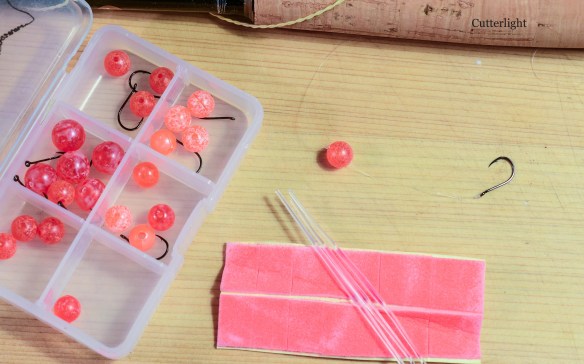
Each of us rigged up with a standard 9’ leader terminating in a 5x tippet, threaded on an egg-sized bead somewhere in the orangish-red spectrum, tied on a small black hook, pinched down the barb and affixed a hot pink, fingernail-sized strike indicator a few feet above the egg. A translucent silicon stopper inserted into the bead would allow us to keep the egg in place a couple of inches above the hook.

Fishing beads is fairly straightforward. When salmon spawn, the female uses her caudal fin – her tail – to dig out a depression in the stream’s gravel bed. This nest is called a redd. As she deposits her eggs, a male releases milt. The female then moves upstream and again uses her tail to push gravel over the fertilized eggs. Thus buried, the eggs will remain well oxygenated and safe from predators until they hatch in the coming months.

OLYMPUS DIGITAL CAMERA

Male Dolly Varden in brilliant fall spawning colors. Note the orange bead “egg” just below its jaws. In a few hours of fishing covering two days, the three of us caught dozens and dozens of char from 10 to 19 inches. We kept 10 fish for the kitchen – a few small fish to charcoal grill whole and three larger fish for other recipes. (See Rustic Char and Dolly Varden Shioyaki.)

But there are invariably eggs that drift out of the redd before they can be buried. Mergansers, gulls, sculpins, trout, char and ravens are among a host of opportunists that seek out these loose eggs. On Indian Creek we encountered American dippers, a fascinating songbird able to hop into a stream and walk along the bottom, availing themselves of drifting roe.

OLYMPUS DIGITAL CAMERA

Dollies are fall spawners and the abdomen of this beautifully-marked female is swelled with her own eggs.

The objective is to present the bead so that it gently bounces along the bottom as a natural egg would. A cast straight upstream or quartering upstream is generally most effective. When a char intercepts the bead, the strike indicator floating with the current will hesitate. With a small, sharp, barbless hook, simply lifting the rod while tightening the line is sufficient to achieve a hookup.

OLYMPUS DIGITAL CAMERA

This male Indian Creek Dolly Varden was stuffed to the gills with fresh salmon roe. Note the red dot on the egg closest to the Dolly; it indicates that the egg has been fertilized.

The next morning, with a few hours to spare before our boat ride was scheduled to show up, we decided to have another go at Indian Creek. This time we wanted to give our tenkara rods a try. It’s origins in Japan, tenkara angling exemplifies simplicity at its finest.

There is no reel. Instead, a long line is attached directly to the tip of a light, delicate but strong, telescoping rod. Our tenkara rods are about 12 feet in length but telescope down to a mere 21 inches. The entire set-up weighs less than 2 1/2 ounces. Rated for a maximum tippet strength of about five pound test, these rods are perfect for hiking and stream exploring in pursuit of fish of a few inches up to a couple of pounds. Between the long rod, a slightly longer line and an outstretched arm, a cast of nearly 30 feet is achievable – plenty long enough to cover the water on streams, small rivers and even the weedy margins of a lakeshore. 
OLYMPUS DIGITAL CAMERA

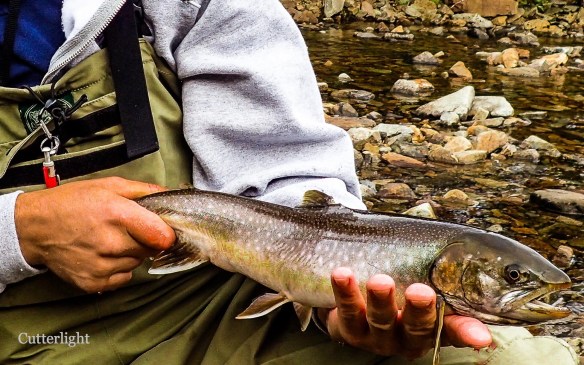
Jerry took this stunning female Dolly on a tenkara rod and a bead. Rod, line, lure and pristine water… Angling doesn’t get any more beautifully simple.

Fishing over the same water we’d hit the previous day, we expected fewer fish. Happily, that wasn’t the case. In fact, our two largest char came on the tenkara rods. And for the second day in a row, except for a pair of dippers and a belted kingfisher, we had the stream to ourselves.

OLYMPUS DIGITAL CAMERA

So how did this fascinating member of the trout and char clan come to be called “Dolly Varden?” Glad you asked.

It seems that sometime in the 1870’s anglers on northern California’s McCloud River were catching a species of brightly-colored trouty-looking fish. Admiring the brilliant spots and colorful markings, the anglers called them “calico trout” after the floral-patterned cloth. A group of fisherman were looking over a catch of these “calico trout” and lamenting that there wasn’t a better name for them when a 16-year old girl, the daughter of local resort owners, happened along. The girl had been reading Charles Dickens’ Barnaby Rudge in which there is a character by the name of Dolly Varden. This character was named for the feminine fashion of the time, a  muslin dress worn over a brightly colored petticoat. In fact, the girl had recently received a dress and petticoat in that very style. “Why not call them ‘Dolly Varden?’” she suggested.

The name stuck, and so this most colorful salmonid came to known by a most colorful name.

screen-shot-2016-10-19-at-8-08-24-pm

The eponymous Dolly Varden fashion of the 1870s…

OLYMPUS DIGITAL CAMERA

 …And an exquisite specimen of Salvalinus malma – the Dolly Varden char.

Back in the skiff heading home, a squall packing icy rain hit us square in the face as we rounded the cape. We pulled jacket hoods tight and hunkered down, following Clinton’s directions to shift our weight against changes in wind and current in order to keep the boat on an even keel. No complaints. A few fish iced down in a small tub, time on a beautiful piece of water, a friendship renewed… And we never take for granted how fortunate we are to live in this land of staggering abundance.

OLYMPUS DIGITAL CAMERA

Sleeves rolled up and arms elbow deep in Indian Creek’s frigid waters, I snapped a few frames not sure what, if anything, I’d get. There appear to be four species of salmon as well as a couple of dozen char in this shot. 
bead-egg-rig-n

A basic bead kit includes a box with a few beads and a few short-shank hooks, silicon toothpicks (if you’ve been using wood, try silicon), and a card of self-adhesive strike indicators. (There are 12 pink, fingernail-sized self-adhesive foam squares on this card.) The strike indicators can be slid up and down the line depending on water depth. The bead, pegged to the line with a silicon toothpick (inserted and trimmed close to the egg) can also be slid. Note that the egg is affixed about two inches above the hook. This positioning ensures that fish are consistently and neatly hooked in or just outside the jaw, minimizing injury. A pack of small split-shot sinkers to keep the egg near the bottom is also handy. There’s still one more step before this rig is finished – can you spot it?
OLYMPUS DIGITAL CAMERA

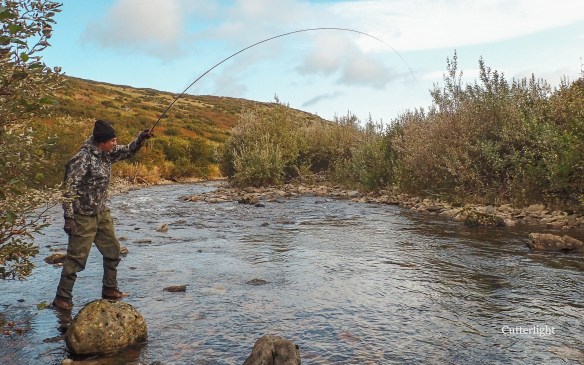
Look Ma! No reel! Determined fighters, even small Dollies put a nice arc in a tenkara rod. My connection with genus Salvalinus, the chars, began when I was about seven years old and caught my first brook trout, S. fontinalis, on Minister Creek in Pennsylvania. It’s an arbitrary thing, I suppose, to have a favorite fish, but if I had to name mine…
Nervous Water and Red Salmon


first salmon Chignik n

Looked out the window this morning and saw nervous water on the lake. Skipped breakfast. Three hens and a buck. I’ll cure eggs for ikura later today. Shioyaki salmon for dinner tonight. Beginning of our second week in Chignik Lake, Alaska.

Back on the Water: Upriver Grayling in Mongolia

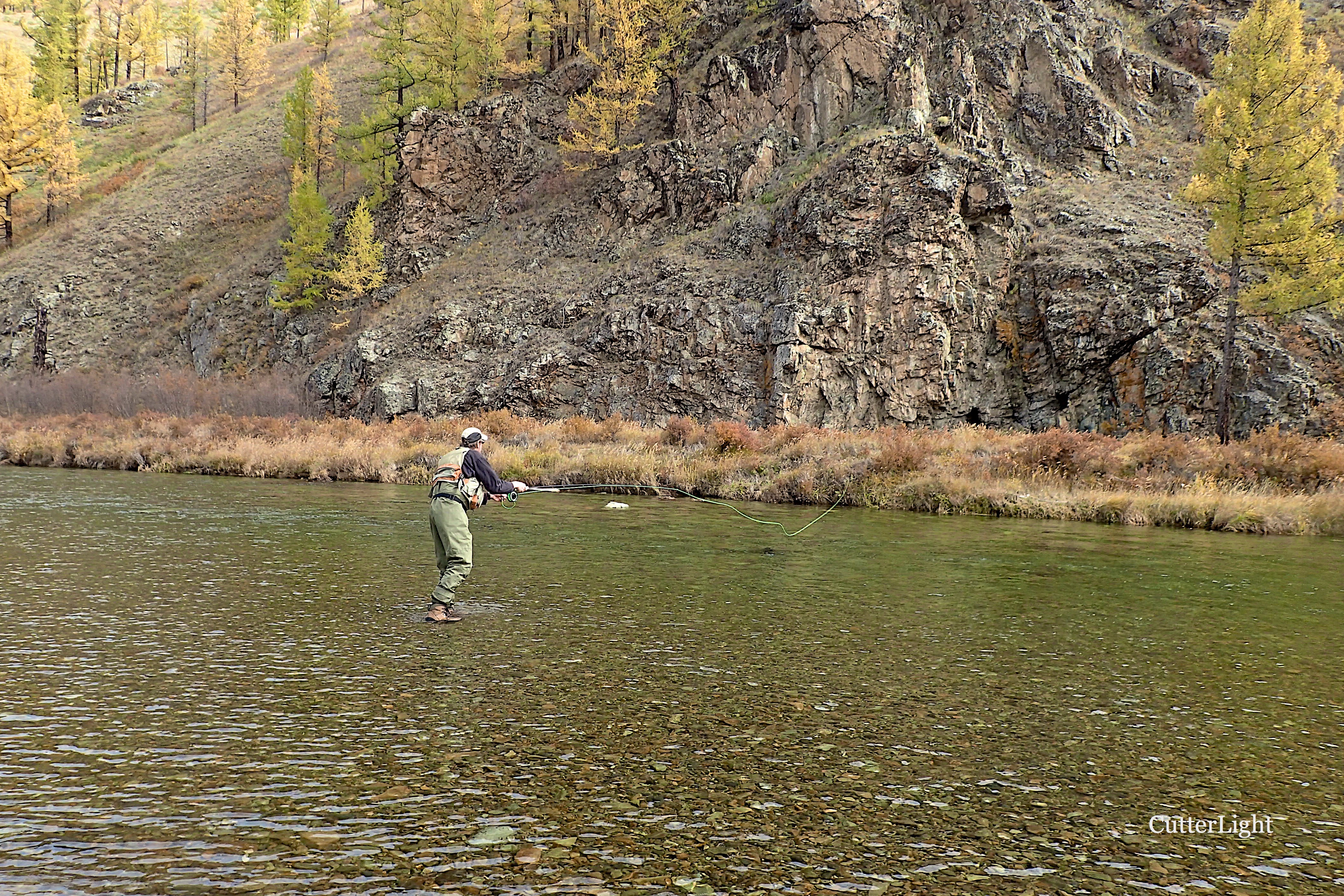
It felt good to finally get out on water. Prospecting for these handsomely marked grayling on a small river in Mongolia took us back to prospecting for trout in small waters in other places.

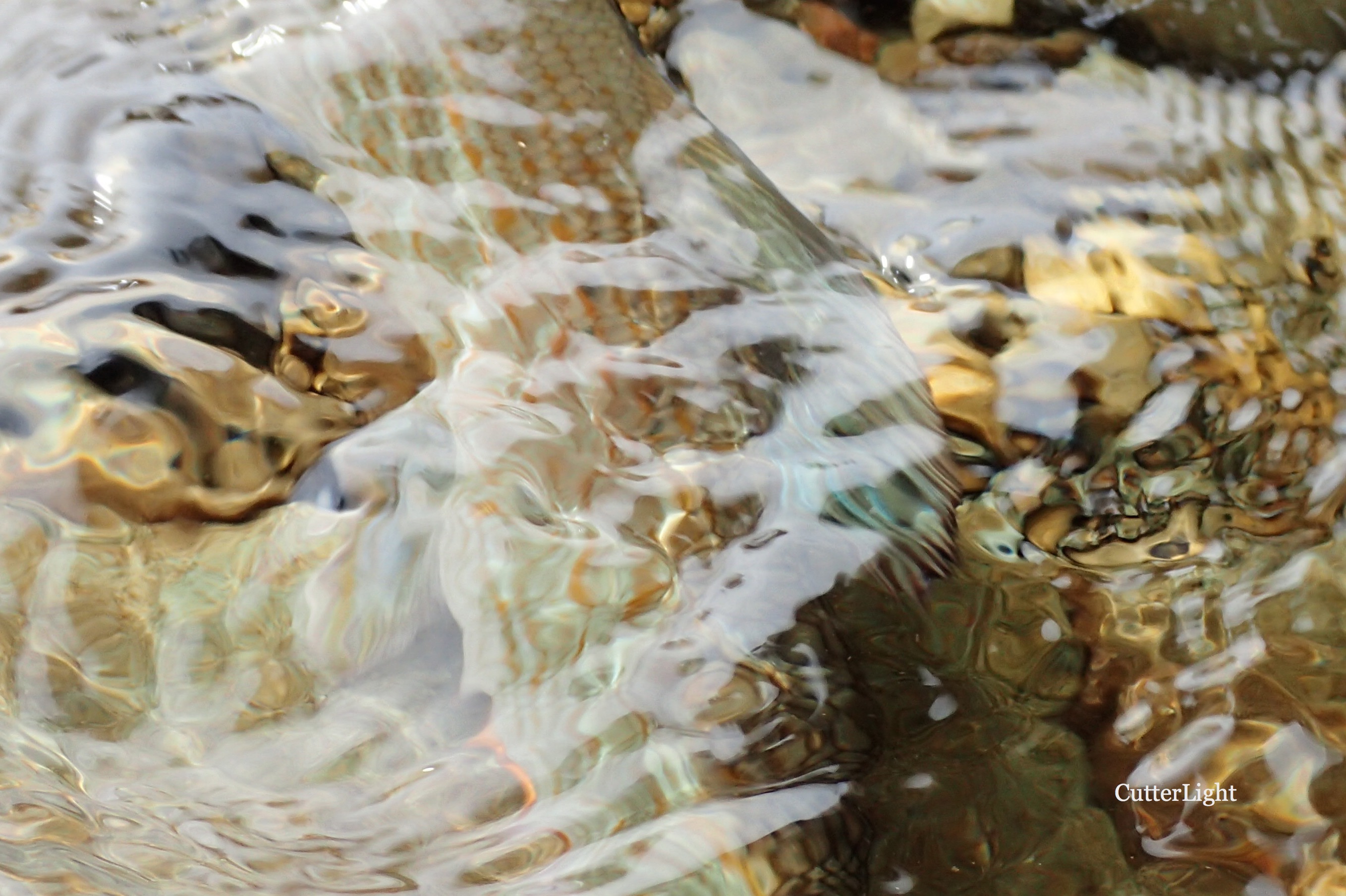
Nearly as translucent as water and marked like colored glass, the grayling’s dorsal fin…

By mid-September, autumn has come to Mongolia’s steppes and mountains. By the end of September, we’ll have had our first snows.

Sluggish with cold and dark with Autumn, one of the year’s last grasshoppers. 

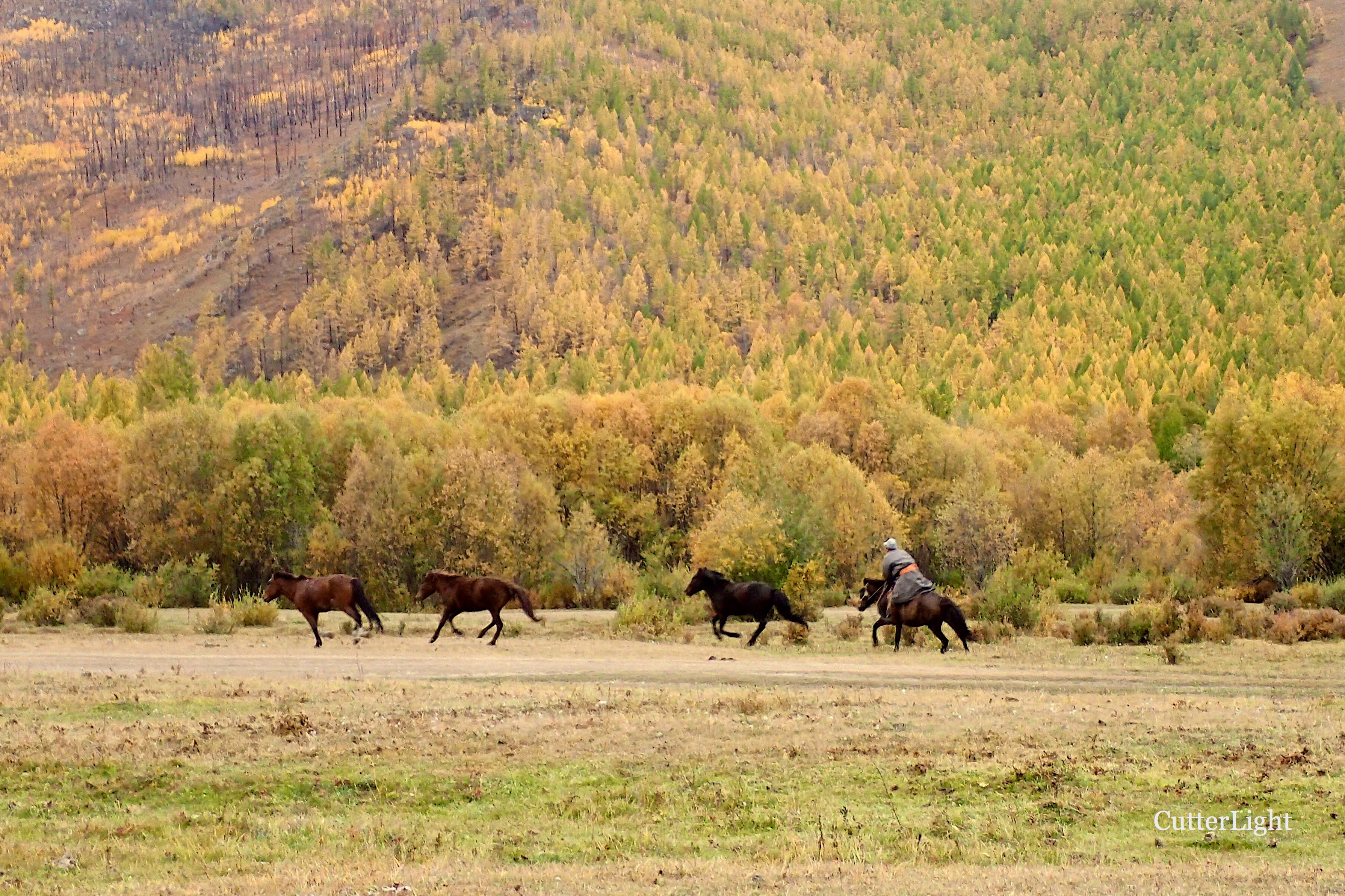
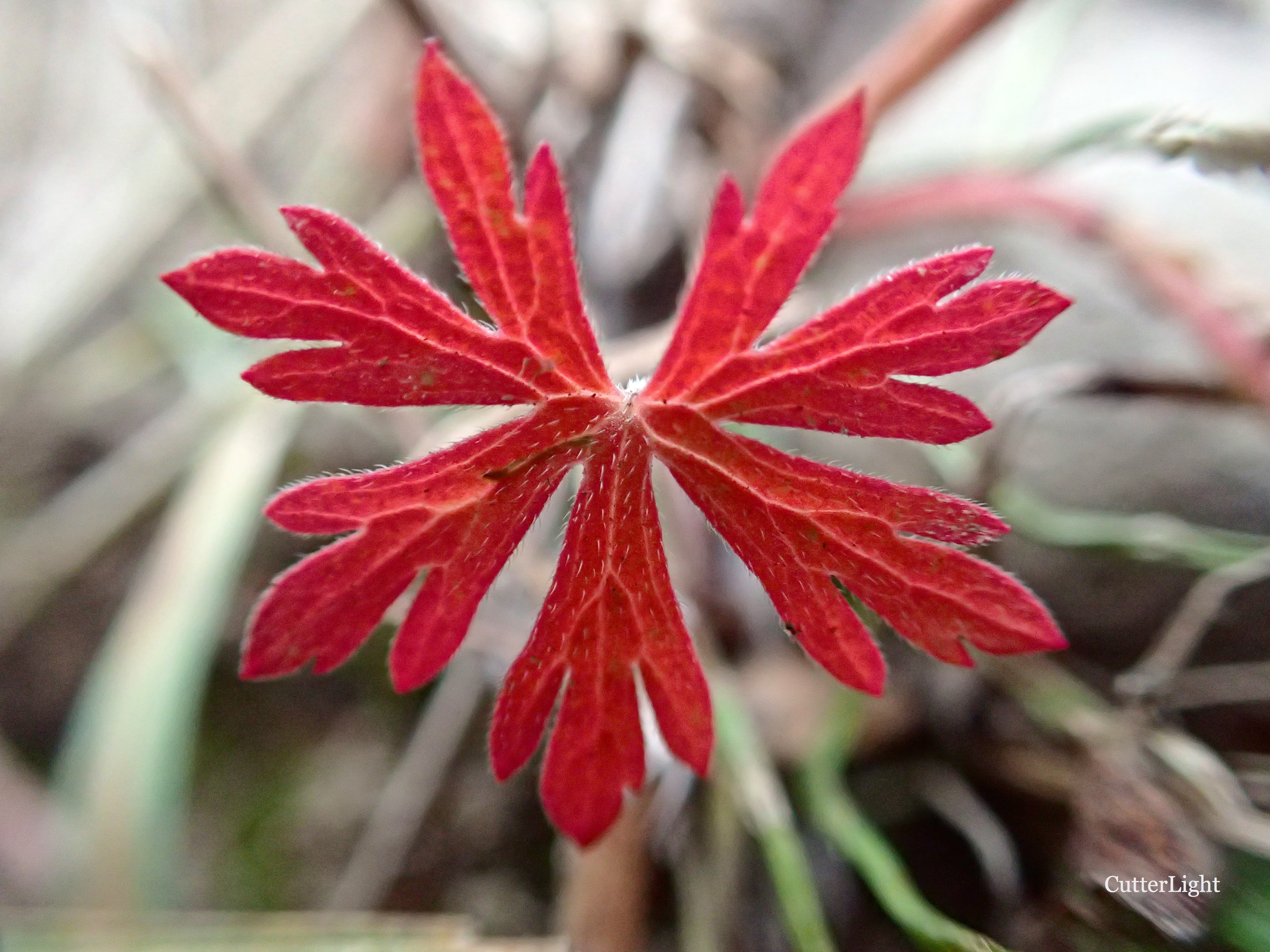
Yellows, golds and browns mixed with the blue-green of evergreens, predominant fall colors across this land. Here and there a touch of crimson. 

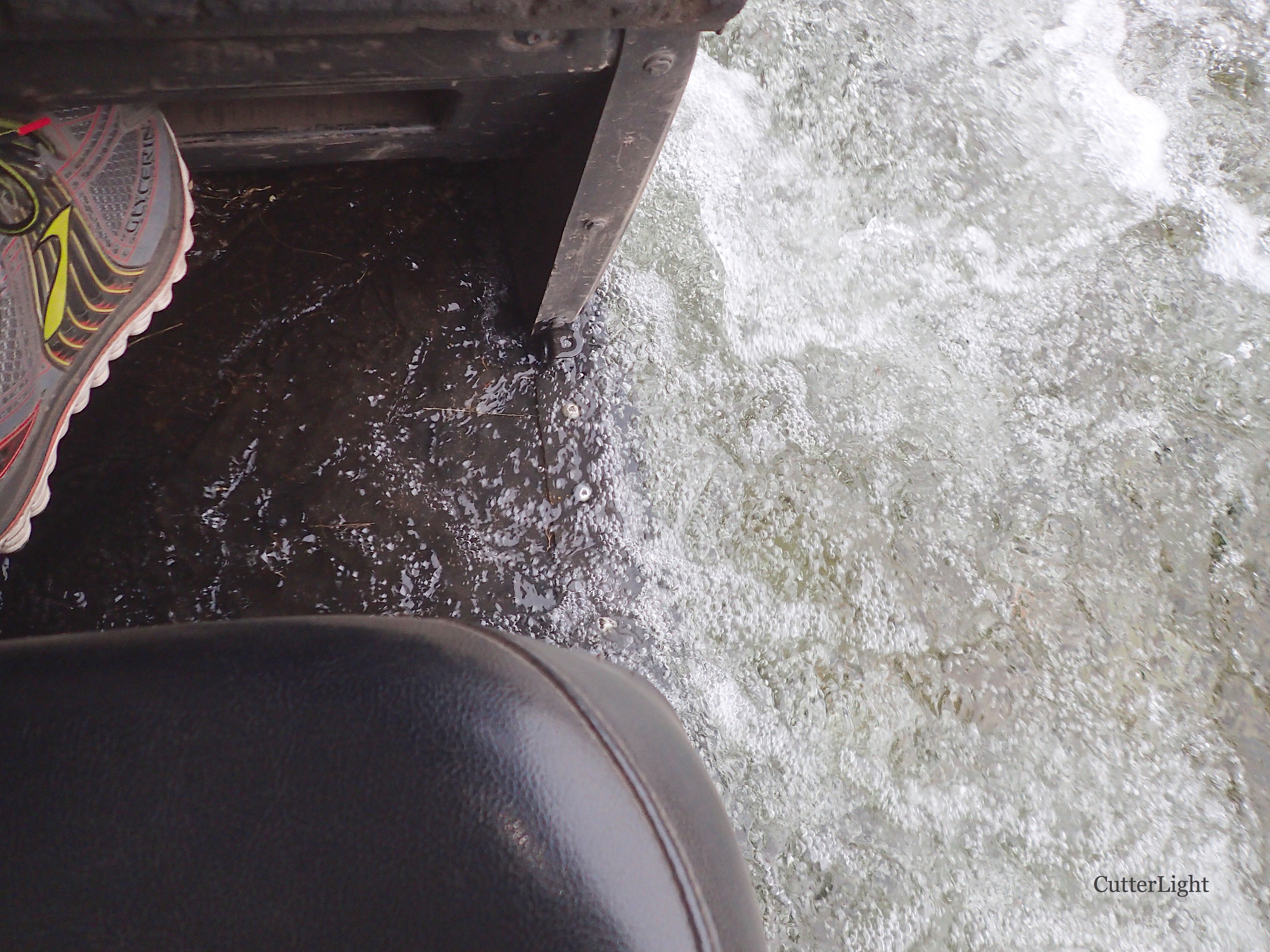
Feet up. Water pours across the floorboards of the doorless Polaris Ranger. One of several crossings.

Not everyone made it.

Stringing up. Something between rumor and someone’s good authority sent us up to these headwaters, prospecting.

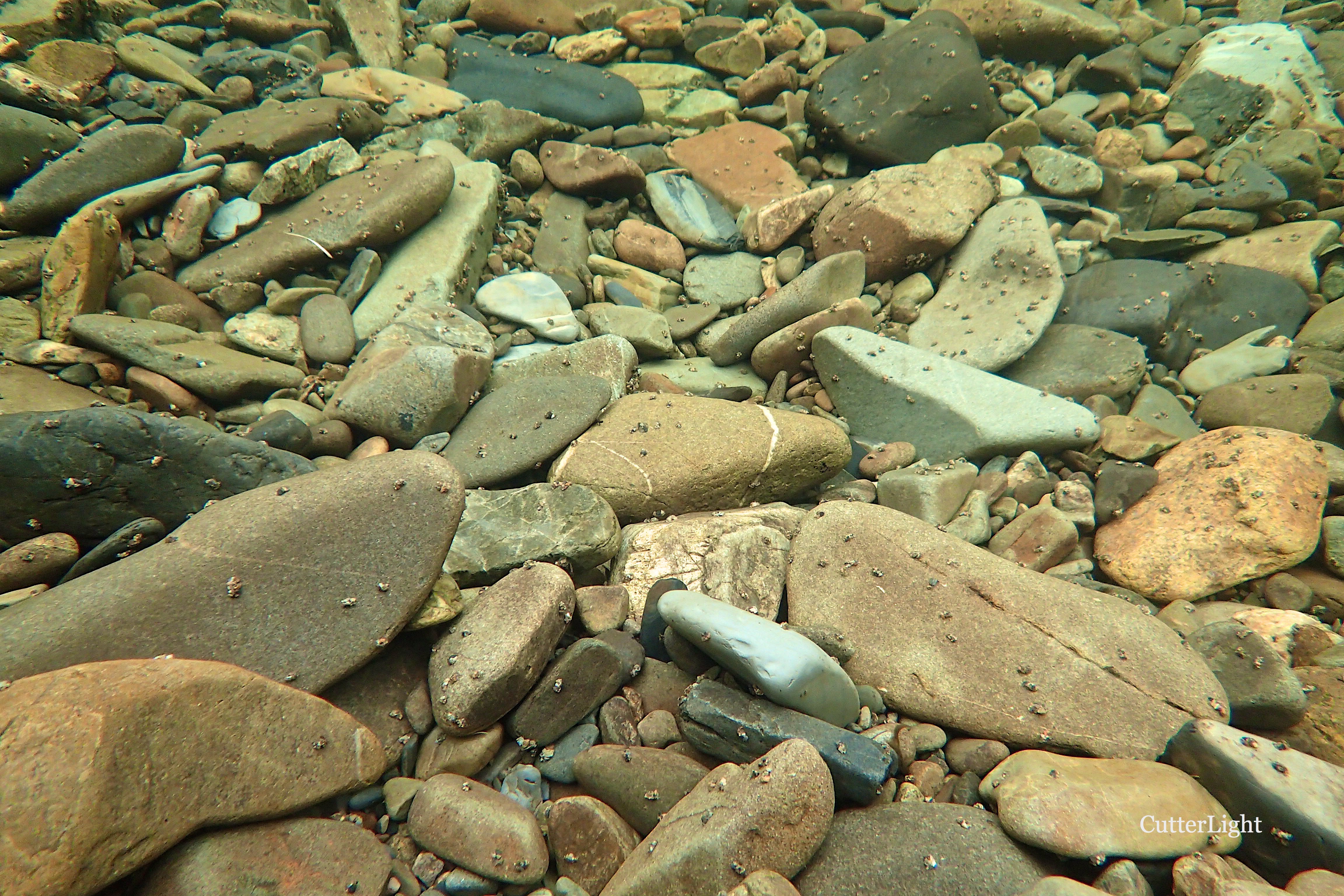
I stuck my camera into the icy water to get a photo of rocks speckled with caddis casings. 

OLYMPUS DIGITAL CAMERA

We encountered sporadic blue-winged olive mayflies. Rocks we flipped revealed caddis and stoneflies, a few loaches and this dragonfly nymph. 

Possible water, but not promising. Larch trees yellowed by frost-laced mornings, pools in shaded feeder streams iced over.

It feels like a lifetime ago that we were on our boat in Alaska, filling coolers with a years’ worth of ocean bright salmon, halibut and rockfish to sustain us through months in the Arctic Bush. Back to roots – a fly rod, a small river, drifting nymphs and dries. Bone satisfying to once again feel the weight of a fish. Could be a rainbow stream in Colorado, cutthroat water in Oregon, a brookie creek in Pennsylvania or a yamame stream in Japan. It all feels like home.

Barbra’s first grayling and her first fish in Mongolia.

We hiked and drove and hiked some more. At last we found the water I’d been looking for – the right depth, the right flow, the right-sized boulders breaking up the bottom at the right intervals. And there in front of us, tens of fish materialized out of nothing – out of water as clear as air – porpoising and splashing across a run maybe 60 feet long and half that width in pursuit of something tiny emerging from the water. Several times these grayling rocketed completely out of the water as they threw themselves at our mayfly patterns. A number of times we were both hooked up, simultaneously.

Eight inches or eighty pounds… It never gets old. The grayling were still feeding when we left, reluctantly, the sun low behind clouds.

OLYMPUS DIGITAL CAMERA

A backward look…

Grayling. Grayling water. Mongolia…