Birds of Chignik Lake: American Wigeon – America’s Most Vegetarian Duck

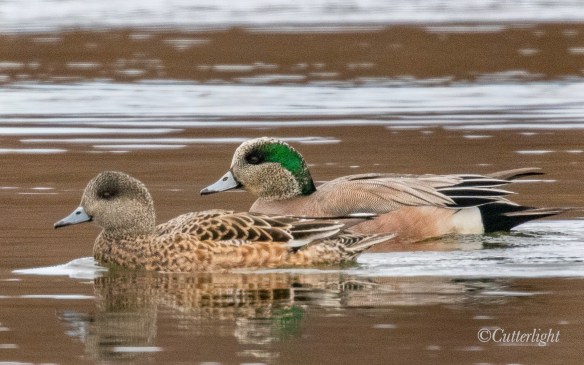
American Wigeons are a typical part of the the spring duck mix on The Chignik. This pair, along with another male, were hanging tight with a pair of Tundra Swans as they fed at an eddy favored by waterfowl. (May 4, 2019)

The first wigeons I ever encountered were of the Eurasian variety – back when I lived in Japan. On my way fishing, I’d often stop my bike on a bridge above Hiratsuka’s Hanamizu River. I wasn’t much of a birder back then, but the teal, wigeons, shovelers, mallards, pintails, egrets, and herons that gathered in the pools and riffles below the bridge fascinated me. At times, a shrike would put in an appearance as well. But sea bass, fluke and other species swimming the nearby coastal waters beckoned, and so I seldom lingered long. These days my priorities have shifted and I carry with me the small regret that I neglected to photograph the river’s kawasemi – glimmering aqua-and-orange plumaged Eurasian Kingfishers.

American Wigeon drake, Chignik River, Alaska. Wigeons are well-known food thieves, mixing in with other ducks and stealing food right from their bills. (May 4, 2019)

I don’t recall seeing American Wigeons until I lived at The Lake, but during breeding the male’s white crown-stripe framed in iridescent green makes this species unlikely to be mistaken for anything else. “Baldpate,” they are named in my copy of Birds of America1an unfortunate epithet for this handsome fellow. The same text gives an alternative common name as “American Widgeon” (with the added d) and the genus name Mareca which later became Anas and has since reverted back to Mareca, so nomenclature for this species has changed since that book’s 1917 publication.

Female wigeon, Chignik River. The most vegetarian duck, wigeons’ blue-gray bills are short compared with other ducks – an adaptation for pulling and breaking off tough vegetation. However, particularly during the breeding season, females take in more insects and other invertebrates. (May 12, 2019)

We generally encountered wigeons in pairs on the lake, on the river and on nearby ponds. As with other dabbling ducks, it is likely that breeding occurs at remote places in the drainage. It pays to listen for the male’s soft, whistling call when approaching likely habitat.

On the one hand, this drake in profile nicely shows the male wigeon’s cinnamon-brown flanks. On the other hand, he illustrates a point common to bird plumage: In this light, although photographed from several angles, his head showed none of the green wigeons in breeding plumage are known for. In different light, the shimmering green likely would have been obvious. In still different light, the stripe might take on a coppery-bronze iridescence. (May 12, 2019)

1Birds of North America, T. Gilbert Pearson, ed., Garden City Books, Garden City, New York, 1917
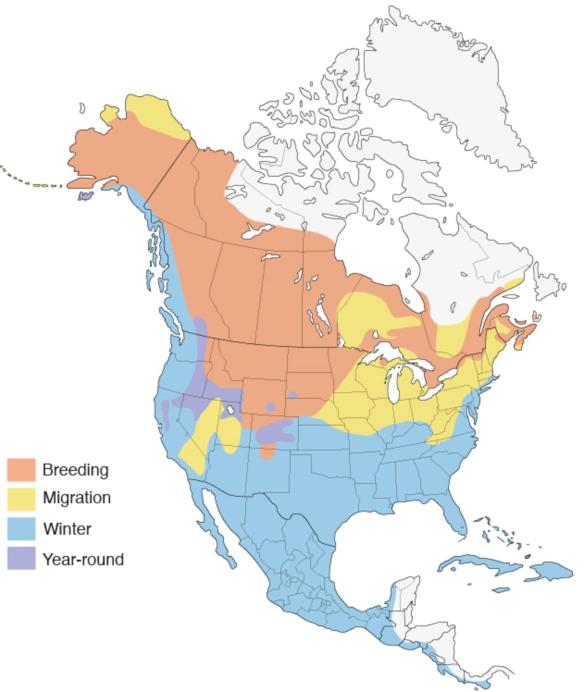
American Wigeon Range Map: with permission from The Cornell Lab of Ornithology, Birds of the World

American Wigeon Mareca americana
Order: Anseriformes
Family: Anatidae
Mareca: from Brazilian-Portuguese marréco = small duck
americana: of America

Status at Chignik Lake, 2016-19: Occurs regularly in Spring

David Narver, Birds of the Chignik River Drainage, summers 1960-63: Not Reported

Alaska Peninsula and Becharof National Wildlife Refuge Bird List, 2010: Common in Spring, Summer & Fall. Absent in Winter

Aniakchak National Monument and Preserve Bird List: Presence Documented
loon silhouette

Previous Article: Northern Pintail – The Dapper Dabbler

Next Article: Green-winged Teal – Bantam-weight Duck

*For a clickable list of bird species and additional information about this project, click here: Birds of Chignik Lake
Birds of Chignik Lake: Northern Pintail – the Dapper Dabbler

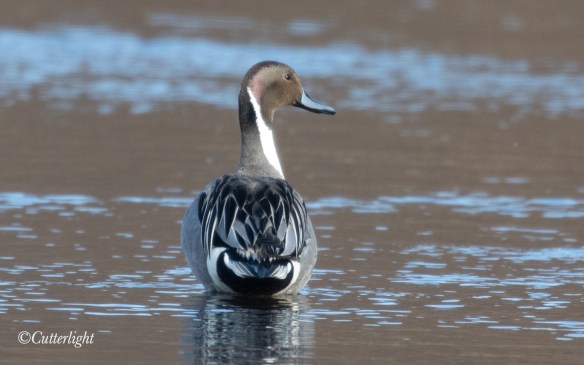
With glossy hints of purple and green highlighting a chocolate-brown neck and head, male pintails are downright regal. (Chignik River, May 2, 2019)

From the first time I encountered Northern Pintails, they became my favorite among the duck tribe. Perhaps it is that their slender, elongated features somewhat resemble my own. Or maybe I’m just plain envious of the drake’s handsome jacket and eye-catching head plumage. In any regard, while there certainly are more brightly-colored birds, it is hard to argue that any are more handsome.

This female and male arrived on The Chignik in late April and hung around for a few days. They appeared intent on nesting. Alas, it seemed that daily boat traffic eventually prompted them to look elsewhere. (May 2, 2019)

The case of the mated pair of pintails in the above photo gives one pause to wonder: In addition to deforestation, draining wetlands, depleting food sources, hunting, poaching, light pollution, pollution in general, and the various hazards presented by windowed buildings,  windmills and other structures, how much negative impact does human traffic in all its forms have on bird populations? The Chignik is relatively lightly traveled, and yet the impact motorized boats have on bird populations (and most likely, on Chinook Salmon populations as well) is readily apparent. The noise and commotion interrupts feeding, mating, nesting, and brood rearing as cruising boats set nervous birds to wing. Every burst into flight constitutes wasted calories. A nest left unguarded for even moments leaves eggs and chicks vulnerable to predation. Waves created by boats contribute to the siltation of weed beds and salmon redds and might even inundate nests along shorelines or situated on small islands. It has long puzzled me that in many locales, wildlife managers seem to take little to no account of this type of traffic.

Portrait of a Lady: With scalloped patterns in shades of gray and brown, female pintails are a beautiful bird in their own right. (May 2, 2019.)

The Chignik’s pintails can be observed in more or less the same seasons as other migrant dabbling ducks – from late spring through early fall. Anytime you see ducks standing or walking along the shore in these seasons it’s worth glassing for pintails as they often come off the water to rest or to look for insects, seeds and land plants.

In profile, the drake pintail’s long, almost gun-metal blue bill only further accentuates his sharp plumage. (May 2, 2019)

Although the upper river and Black Lake are beyond the scope of this study, we’ve seen pintails at those locations. It is almost certain that they nest along the shores of those quieter waters.

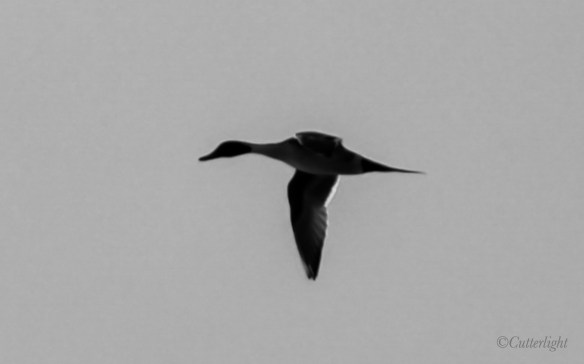
The long bill and eponymous tail make pintails one of the easiest birds to identify in flight – even in silhouette at considerable distance. (Shishmaref, Alaska, May 15, 2011)

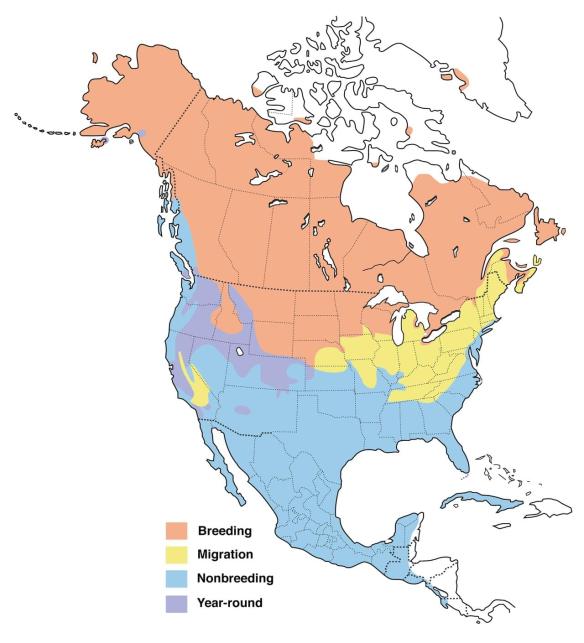
Northern Pintail Range Map: with permission from The Cornell Lab of Ornithology, Birds of the World

Northern Pintail Anas acuta
Order: Anseriformes
Family: Anatidae
Anas: Latin for duck
acuta: from Latin for “to sharpen” – a reference to the Pintail’s tail

Status at Chignik Lake, 2016-19: Common Spring and Fall migrant; Occasional on Chignik Lake. Occasional throughout the system in Summer.

David Narver, Birds of the Chignik River Drainage, summers 1960-63: Common in early and late Summer throughout the watershed; occasional in midsummer

Alaska Peninsula and Becharof National Wildlife Refuge Bird List, 2010:
Common in Spring, Summer & Fall; Absent in Winter

Aniakchak National Monument and Preserve Bird List: Presence Documented

Previous Article: Mallard – “Wary, Wise, Handsome”

Next Article: American Wigeon – America’s Most Vegetarian Duck

*For a clickable list of bird species and additional information about this project, click here: Birds of Chignik Lake

Birds of Chignik Lake: Brant – the Goose that Was Once a Fish (sort of)

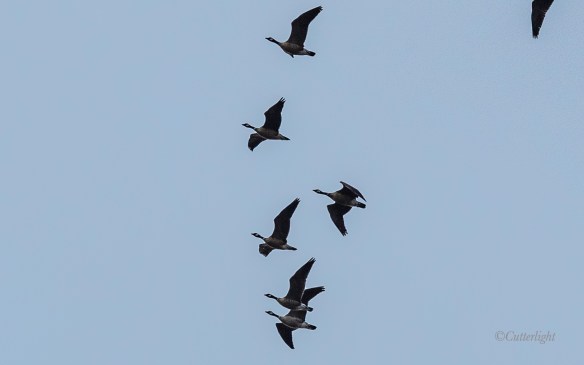
No white patch on cheek, white necklace, short bill, a constant, chatty murmur as opposed to the more distinctive honking associated with Canada and Cackling Geese… Brant!. For awhile during spring, wave upon wave of these migrants can be heard passing over The Lake. (May 5, 2018)

At The Lake, we slept with our bedroom window cracked open in all but most inclement weather. Nighttime sounds included Harbor Seals chasing down Silver Salmon, Brown Bears scavenging the beach, waves lapping the shore, hooting owls and – for a few nights in spring and fall – flocks of migrating geese.

To get a look at Chignik Lake’s migrating Brant, you need a bit of luck with timing (late April through mid May are best), clear skies or high cloud cover, and a good pair of binoculars or a long camera lens. With few exceptions, they’re up there, though David Narver reported them as “occasional” on the river. Birders seriously intent on getting a good look at this species would do well to check out Izembek National Wildlife Reserve way down at the big toe of the Alaska Peninsula. More than 90 percent of the Brant population that utilizes the Pacific flyway – along with half the world’s Emperor Geese – stop here each fall. That’s about 150,000 Brant and tens of thousands of Emperor Geese. (Note to self: go to Izembek!)

Here’s a little better look at Brant in flight. They’re fairly abundant near Point Hope, Alaska, which is situated within their breeding range. (Point Hope, Alaska, September 1, 2013)

Among Brants’ favorite forage is Eel Grass. As Chignik Lagoon continues to grow more silted-in and Eel Grass beds there expand, it will be interesting to see if in the future Brant begin to utilize this area. So why, as Brant feed extensively on Eel Grass, is their specific name “bernicla” (barnacle)? It was formerly believed that certain geese were spontaneously generated from barnacles. In fact, until fairly recently the Catholic Church permitted Catholics to eat these geese on Fridays as they counted as fish. See: Wikipedia.

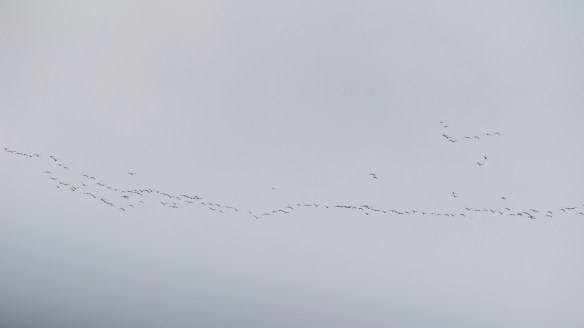
The shifting forms flocks of geese glide in and out of invite a wandering imagination. With Sockeye Salmon soon to ascent the river, these Brant seem to be pointing the way. (May 3, 2018)

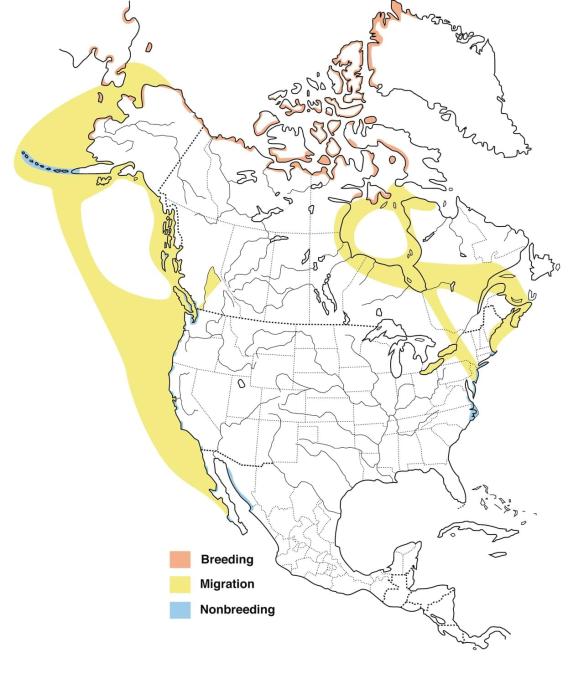
Brant Range Map: with permission from The Cornell Lab of Ornithology, Birds of the World

Brant Branta bernicla
Order: Anseriformes
Family: Anatidae
Branta: Latinized Old Norse Brandgás = burnt-black goose
bernicla: from the Latin for barnacle

Status at Chignik Lake, 2016-19: Spring & Fall migrant seen and heard flying in flocks

David Narver, Birds of the Chignik River Drainage, summers 1960-63: Rare on Chignik River

Alaska Peninsula and Becharof National Wildlife Refuge Bird List, 2010:
Uncommon in Spring; Common in Fall; Absent in Summer & Winter

Aniakchak National Monument and Preserve Bird List: Presence Documented

Previous Article: Cackling Goose (Aleutian Form) – Picture a Canada Goose with a White Necklace

Next Article: Mallard

*For a clickable list of bird species and additional information about this project, click here: Birds of Chignik Lake

© Photographs, images and text by Jack Donachy unless otherwise noted.


Birds of Chignik Lake: Cackling Goose (Aleutian Form) – Picture a Canada Goose with a White Necklace


Early morning high flyers: The white cheeks are typical of Canada Geese. The white necklace is not. Long considered a smaller, more northerly form of Canada Goose, the descriptor “Aleutian form” was often tacked on. But in 2004, the American Ornithological Union assigned these necklaced birds species status and named them for their higher-pitched honking in flight: Cackling Goose, Branta hutchinsii. (Chignik Lake, April 18, 2018)

As a given species disperses from its core range, the tendency for it is to become smaller, perhaps a response to less favorable feeding conditions or other environmental factors. Over time, a given population’s size difference along with other newly formed adaptations may result in a new species.

As geese go, Aleutian Cacklings are small – a little larger than Brant, but a lot smaller than an average Canada Goose. As far as I can determine, Cacklings seldom hang around in the Chignik System. Your best shot at seeing them there is to hope for a reasonably clear spring day and find a comfortable place to watch from. And then listen. During migration, separate flocks of Cacklings and Brandt noisily pass through at virtually any hour day or night on their way to nesting grounds further north. The Cacklings are distinguished by their more goose-like, high-pitched honking.

Cackling Goose: Photo credit – Roy Lowe/U.S. Fish and Wildlife Service – U.S. Fish and Wildlife Service, Wikipedia

For comparison, here’s a Canada Goose. One of these typically weighs from as little as six-and-a-half to nearly 20 pounds. This is considerably larger than its Cackling cousin which weighs roughly three to five pounds. Wild Mallards weight about two to three pounds. (Potter’s Marsh near Anchorage, Alaska, June 25, 2012.)

At times wave after wave of geese cruise north above Chignik Lake. This is yet another flock of Aleutian form Cackling Geese. Their high-pitched honking is part of a springtime symphony which includes winnowing snipe, bugling cranes, rattling kingfishers, piping eagles, mewing gulls and fluting thrushes. (April 18, 2018)

Cackling Goose Range Map: with permission from The Cornell Lab of Ornithology, Birds of the World

Cackling Goose Branta hutchinsii
Order: Anseriformes
Family: Anatidae
Branta:  Latinized Old Norse Brandgás = burnt-black goose
hutchinsii: after English surgeon and naturalist Thomas Hutchins

Status at Chignik Lake, 2016-19: Spring & Fall migrant seen flying high in flocks

David Narver, Birds of the Chignik River Drainage, summers 1960-63: (Species not yet separated from Canada Goose.) Reported Canada Goose rare on Black River

Alaska Peninsula and Becharof National Wildlife Refuge Bird List, 2010:
Uncommon in Spring & Summer; Common in Fall; Absent in Winter

Aniakchak National Monument and Preserve Bird List: Presence Probable but not Documented

Previous Article: Emperor Goose – Alaska’s Painted Beauty

Next Article: Brant

*For a clickable list of bird species and additional information about this project, click here: Birds of Chignik Lake

© Photographs, images and text by Jack Donachy unless otherwise noted.


Birds of Chignik Lake – Tundra Swan: Harbinger of Springtime at The Lake

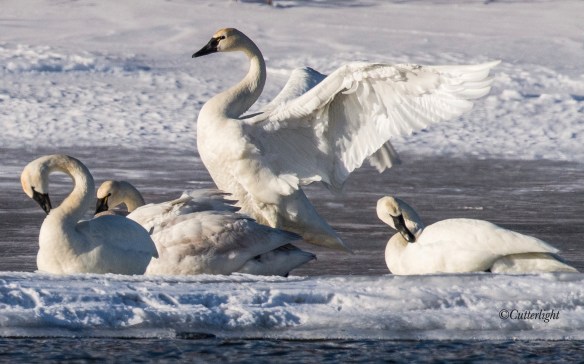
There may be snow on the ground and ice in the river, but when Tundra Swans begin showing up on the Chignik you know spring can’t be far behind. (March 16, 2017)

We were told that when swans show up on the river below the old dump, it’s a sure sign spring is on the way. While it seems possible to encounter Tundra Swans somewhere in the Chignik system in virtually any season (provided there’s open water), in early spring they’re still traveling in flocks, making it a good time to look for them. Prior to breeding, they’re often found with newly arrived ducks – Mallards, Northern Pintails, Buffleheads and other species.

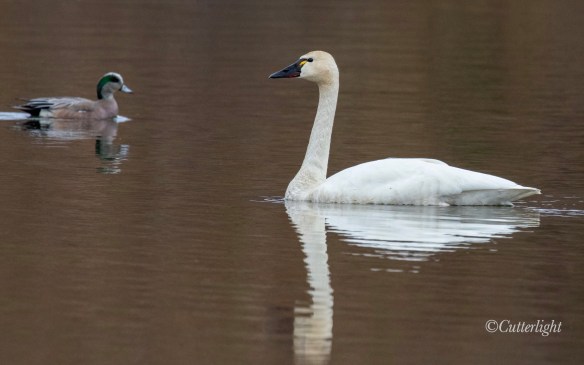
This Tundra Swan was part of a pair we found feeding with a small group of American Wigeons on the Chignik River. The yellow lores and a very white back are diagnostic. (May 4, 2019)

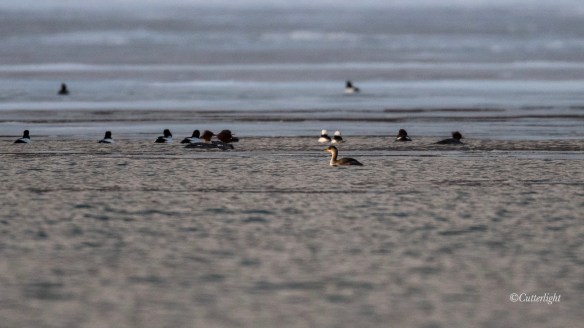
Swans and Ducks gather on The Chignik in Spring. In addition to the scaup, Mallards, Common Goldeneyes, and Buffleheads in this frame, Northern Pintails, and Red-breasted and Common Mergansers are often mixed in among the swans. (March 14, 2017)

A thin white line of several dozen swans underscores the Chignik Mountains at Black Lake. The shallow, weedy waters are important to waterfowl anytime the lake is ice-free. (January 3, 2018)

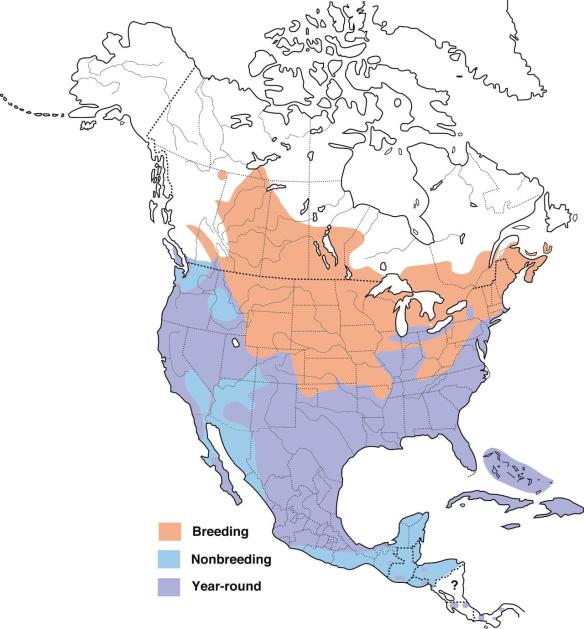
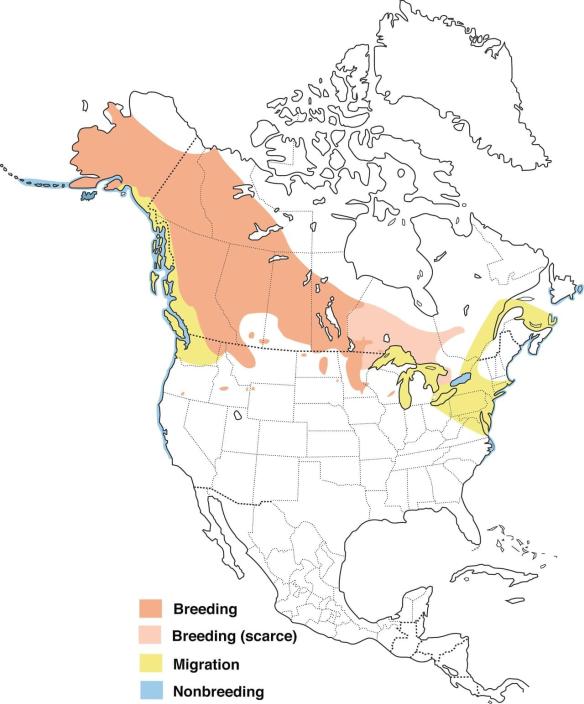
 Tundra Swan Range Map: with permission from The Cornell Lab of Ornithology, Birds of the World

Tundra Swan Cygnus columbianus
Order: Anseriformes
Cygnus: Latinized Greek for swan
columbianus: after the Columbia River (Meriweather Lewis of Lewis & Clark first named this species during their exploration across Northwest America)

Status at Chignik Lake 2016-19: 

David Narver, Birds of the Chignik River Drainage, summers 1960-63Uncommon on Black Lake

Alaska Peninsula and Becharof National Wildlife Refuge Bird List, 2010:
Uncommon in Spring & Fall; Common in Summer; Rare in Winter

Aniakchak National Monument and Preserve Bird List: Presence Documented

Previous Article: Pelagic Cormorant

Next Article: Emperor Goose – Alaska’s Painted Beauty

*For a clickable list of bird species and additional information about this project, click here: Birds of Chignik Lake
© Photographs, images and text by Jack Donachy unless otherwise noted.


Birds of Chignik Lake: Pelagic Cormorant

A hint of iridescent gloss in its plumage, a Pelagic Cormorants skims above Chignik Lagoon on a blue-sky day in late winter. Pelagics are common in The Lagoon where the fish they feed on are plentiful. Only very occasionally do they stray inland to the river and lake. (Chignik Lagoon, May 9, 2019)

My first close encounter with cormorants came at a pool I was fishing on Japan’s upper Tama River some years ago. I was in the midst of a fruitless morning when a cormorant of some sort showed up and elbowed its way into my pool. In no more than a few minutes it dove six times and caught six fish. Impressive.

Pelagic Cormorants are common all along the rocky, fish-rich Pacific side of the Alaska Peninsula. Red-faced and Double-crested Cormorants can be found along this coast as well. As for Pelagics, most of the very few we saw in the study area of this project were in flight as they headed up or down the Chignik System – perhaps from one side of the peninsula to the other.

Although their feet are webbed, cormorants’ middle toes are hooked – an aid in preening. 

Belying their common name, (and their binomial specific name, pelagicus), Pelagics rarely venture far out to sea, preferring rocky nearshore ocean waters.

This first-year Pelagic was encountered feeding below the salmon weir on Chignik River. (October 24, 2018)

Pelagic Cormorant Range Map: with permission from The Cornell Lab of Ornithology, Birds of the World

Pelagic Cormorant Phalacrocorax pelagicus
Order: Suliformes
Phalacrocorax: from ancient Greek name for cormorants – literally “bald raven”
pelagicus: of the open ocean

Status at Chignik Lake 2016-19: Uncommon/Occasional: At times are regular summertime visitors near the mouth of Clarks River on Chignik Lake

David Narver, Birds of the Chignik River Drainage, summers 1960-63Occasional on Chignik Lake after storms

Alaska Peninsula and Becharof National Wildlife Refuge Bird List, 2010:
Uncommon in Spring & Fall; Common in Summer; Rare in Winter

Aniakchak National Monument and Preserve Bird List: Presence Documented

Previous Article: Pied-billed Grebe

Next Article: Tundra Swan

*For a clickable list of bird species and additional information about this project, click here: Birds of Chignik Lake
© Photographs, images and text by Jack Donachy unless otherwise noted.

Birds of Chignik Lake: Pied-billed Grebe – an Alaska Peninsula First

As far as I can determine, this is the lone example of a Pied-billed Grebe recorded on the Alaska Peninsula. The facial striping indicates a first-year bird. (Chignik Lake, January 5, 2019)

The sun hadn’t yet peeked over the mountains rimming Chignik Lake when I noticed a small, grebe-like bird working a nearshore cove. I picked up the binoculars always handy near the living/dining room window and glassed the little bird.

The same bird as above in profile, skim ice in the background. (Chignik Lake, January 5, 2019)

Whoa! There’s a Pied-billed Grebe down below Fred’s! I exclaimed to Barbra. A couple of minutes later, I was clad in waders, camera fixed to its tripod slung over my shoulder. I quietly worked my way toward this out-of-place fellow. Wading out into the water, I stood still, hoping the bird might come closer to check me out.

The grebe did move in a little, but it was still a long shot and there was very little light. I set my aperture to its maximum opening, spun the ISO dial further than I would have cared to, and managed a couple of shots. Then the grebe swam off. Although it hung around for a few days, after that first morning it was always on the far side of the lake. And then it was gone.

From Wikipedia, a Pied-billed in summer plumage. (Mdf – First upload in en wikipedia on 21:02, 27 May 2005 by Mdf)

It’s hard to know what to make of a one-off such as this. Pied-billeds very occasionally have been reported in southern Alaska, but as the map below indicates, this individual was well beyond the typical range for this species. Things are changing in our world; it could be that Pied-billeds are pushing north. For now though, an occurrence such as this is best thought of as an “accidental.” In any event, I was happy to record this species. Maybe this small puzzle piece will have some significance in the future when others study the Chignik area.

Pied-billed Grebe Range Map: with permission from The Cornell Lab of Ornithology, Birds of the World

Pied-billed Grebe Podilymbus podiceps
Order: Podicipediformes
Podilymbus: Podi from Greek, refers to feet at the rear; lympus from the Greek kolympus = diver
podiceps: from Latin for rump-headed

Status at Chignik Lake 2016-19: Accidental

David Narver, Birds of the Chignik River Drainage, summers 1960-63: Not Reported

Alaska Peninsula and Becharof National Wildlife Refuge Bird List, 2010:
Not Reported

Aniakchak National Monument and Preserve Bird List: Not Reported

Previous Article: Red-necked Grebe

Next Article: Pelagic Cormorant

*For a clickable list of bird species and additional information about this project, click here: Birds of Chignik Lake

© Photographs, images and text by Jack Donachy unless otherwise noted.


Birds of Chignik Lake: Red-necked Grebe

What a beauty. The face striping marks this specimen as a juvenile. The Bend on the upper Chignik (just below the lake) proved to be a consistently reliable place to get close enough to waterfowl to score good photographs. (October 23, 2017)

Red-necked Grebes are another among the Chignik’s several fish-hunting birds. We didn’t see them often, but when they were on the lake or river we always grabbed our binoculars for a closer look. It’s a good bet that they breed on Black Lake or nearby tundra ponds.

Buffleheads, goldeneyes, mergansers… and center stage an adult Red-necked Grebe in nonbreeding plumage. (Chignik Lake, January 24, 2017)

These were two of three juveniles that visited the lake in the fall of 2017. (Chignik Lake, October 20, 2017)

Example of a Red-necked Grebe in breeding plumage. (Potter’s Marsh, Anchorage, Alaska. June 24, 2017)

Red-necked Grebe Range Map: with permission from The Cornell Lab of Ornithology, Birds of the World

Red-necked Grebe Podiceps grisegena
Order: Podicipediformes
Podiceps: from the Greek
podicis = rump – refers to the posterior positioning of the grebe’s feet
grisegena: from the Latin
griseus = gray & gena = cheek 

Status at Chignik Lake 2016-19: Occasional in Fall & Winter

David Narver, Birds of the Chignik River Drainage, summers 1960-63: Common on Black Lake; Rare on Chignik Lake

Alaska Peninsula and Becharof National Wildlife Refuge Bird List, 2010:
Uncommon in Spring, Summer & Fall; Rare in Winter

Aniakchak National Monument and Preserve Bird List: Presence Documented

Previous Article: Yellow-billed Loon

Next Article: Pied-billed Grebe – An Alaska Peninsula First

*For a clickable list of bird species and additional information about this project, click here: Birds of Chignik Lake

© Photographs, images and text by Jack Donachy unless otherwise noted.


Birds of Chignik Lake: Yellow-billed Loon

This handsome Yellow-billed Loon was hanging out in an eddy favored by piscivores on the Chignik River. During breeding season, in addition to a distinctive black-and-white chessboard back and bright red eyes, that massive bill would be a diagnostic lemon-sunshine yellow. (November 27, 2017)

When I began this project, I didn’t know that there was such a thing as a Yellow-billed Loon, so I was stoked when in November of 2016 a “different looking” loon sent me to my copy of The Sibley Field Guide. I’d love to see this species in its dramatic breeding plumage, but any sighting of this fairly rare bird constitutes a red-letter day.

What first drew my attention to the Yellow-bills I encountered was their size. Compared even with Commons, they’re large. And of course there’s that dagger Yellow-bills are armed with. While the bills of wintertime Commons can take on a light, blueish-silver color, there’s no mistaking the yellow in a Yellow-billed.

Salmon parr dimple the surface of The Bend on the Chignik River just below Chignik Lake. This is a good place to set a net for Sockeyes, cast a fly for Silvers, or check for fish-eaters such as otters, seals, eagles, kingfishers, mergansers and goldeneyes. (May 7, 2019)

—————————————————————

Range: Yellow-billed Loons are circumpolar Arctic breeders with about half of the world’s 10,000 birds living in Alaska. Their winter range includes the coastal waters of the Aleutian Islands, the Alaska Peninsula, and the Alaskan coast as it extends south and on into British Columbia. They are occasionally observed in fall and winter as far down the Pacific Coast as California, rarely to Mexico, occasionally to inland lakes.

Yellow-billed Loon: Gavia adamsii
Order: Gaviiformes
Gavia: sea mew
adamsii: after British naval surgeon & naturalist Edward Adams who collected and sketched this species

Status at Chignik Lake 2016-19: Occasional in Fall & Winter

David Narver, Birds of the Chignik River Drainage, summers 1960-63: Not Observed

Alaska Peninsula and Becharof National Wildlife Refuge Bird List, 2010:
Rare in Fall & Winter; Not Observed Spring & Summer

Aniakchak National Monument and Preserve Bird List: Probable but not Verified

Previous Article: Common Loon

Next Article: Red-necked Grebe

*For a clickable list of bird species and additional information about this project, click here: Birds of Chignik Lake

© Photographs, images and text by Jack Donachy unless otherwise noted.


Birds of Chignik Lake: Common Loon

Common Loon – Chignik Lake, August 17, 2018

Words such as “common,” “uncommon” and “rare” can be vexingly imprecise. So, what are the chances of seeing a Common Loon on Chignik Lake? Generally pretty good, which prompts the question: Have Common Loons – which David Narver recorded us “uncommon” back in the early ’60’s – become more common on The Lake in recent years? And if so, does that explain the relative absence of the smaller Red-throated Loon – which Narver reported as “common?” I love questions like this, even if the answers are tough to know.

These Commons appeared to be cooperatively feeding as they worked their way along the shoreline. (Chignik Lake, January 14, 2018)

We encountered Common Loons with some frequency – as individuals, in pairs, and at times in what appeared to be family groups of four or five. Commons’ diets are comprised mainly of small fish – lots and lots of them. According the Cornell Lab of Ornithology, a pair with two chicks can consume about half a ton over a 15-week period. Unlike River Otters, mergansers and goldeneyes, Commons usually swallow their prey underwater. I was therefore unable to observe what species of fish they might be targeting. Sticklebacks, small char and juvenile salmon are all likely candidates. The system also holds populations of smelt and sculpins.

Right down to it’s gem-like eye and armed with a serious bill, Common Loons surely rank as one of North America’s most striking birds. (Chignik Lake, August 17, 2018)

Even in silhouette, there’s no mistaking a loon. (Common Loon, Chignik Lake, August 20, 2016)

Common Loon Range Map: with permission from The Cornell Lab of Ornithology, Birds of the World

Common Loon Gavia Immer
Order: Gaviiformes
Gavia: sea mew
immer: perhaps from the Latin immergo – to immerse; or from the Swedish immer – which refers to the ashes of a fire and suggesting the loon’s coloration

Status at Chignik Lake 2016-19: Common to Uncommon

David Narver, Birds of the Chignik River Drainage, summers 1960-63Uncommon

Alaska Peninsula and Becharof National Wildlife Refuge Bird List, 2010:
Common in Spring and Summer; Uncommon in Fall; Rare in Winter

Aniakchak National Monument and Preserve Bird List: Presence Documented

Previous Article: Pacific Loon

Next Article: Yellow-billed Loon

*For a clickable list of bird species and additional information about this project, click here: Birds of Chignik Lake

© Photographs, images and text by Jack Donachy unless otherwise noted.