Whew! Just made it! Lite Double Chocolate Brownie Cookies

Chewy, chocolatey, small and delicious. What’s not to love?

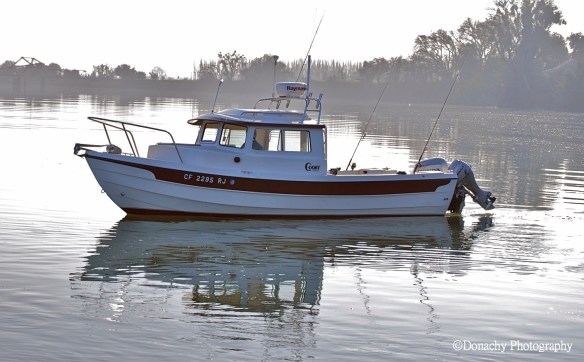
This lifestyle of picking up shallow roots and moving every few years is not for everyone. It normally suits us. We love digging deep into an interesting place, enjoying what it has to offer, and then heading off to experience a new place. This particular move is the strangest one Jack and I have experienced in our life together. Previous moves have been predicated on well thought-out decisions backed by lots of research. A move toward a new adventure – Alaska – Mongolia – is always exciting to us. A move to a place with a new culture or new food, new fishing and new photography opportunities has always been welcome. Newhalen, where we soon will be living, has a lot to offer, but the cloud of having to leave Chignik Lake has put a giant damper on our excitement. We keep reminding ourselves that Newhalen is a terrific place, complete with salmon runs, hiking in nearly pristine landscapes and the many things we love about living in the Alaska Bush. In our new home, we will get to have our lovely little fishing boat, Gillie, with us. We’ve never lived somewhere where we can launch her and have miles and miles of rivers and lakes to explore right outside our door. That in and of itself should be very appealing, right?

Gillie is one salmon-catching boat. She sleeps the two of us comfortably in her cuddy cabin. There’s even a little dining table in the cabin. Equipped with a Coleman stove, she’ll be the perfect vessel for exploring the lakes and rivers of our new home.

But this time, there’s this whole leaving business that is really a drag. We’ve both loved living in Chignik Lake. It’s been a wonderful place to settle in to. We’ve loved only having to share the scenery, the wildlife and the fishing with the few people who call The Lake home. And I’ve enjoyed working in a building that’s well kept and working with a group of students that are second to none. The students and their families here made this the most fun and the easiest teaching job I’ve ever had. We hadn’t intended on leaving yet. So, the excitement of the move and the new destination has a bit of a pall over it.

Well, nonetheless, onward and upward.

One aspect of moving I get a strange pleasure from is the challenge of using up of all of our pantry items by the move date. This batch of cookies was especially satisfying as the recipe, to the tablespoon, helped me finish off several ingredients that I had just a bit of. The purpose of this recipe was to create cookies that could be used to make ice cream sandwiches with the bag of frozen bananas I still have in the freezer. They are perfect! They are small and have just the right texture for this frozen confection. We’ve found that dolloping the banana ice cream atop the open-faced cookies seems to work best. I also think these cookies taste fantastic straight out of the freezer. The idea to keep them in the freezer so they are out of sight didn’t quite work to keep them out of mind. They turned out too good! A taste of a few of these, and the “moving cloud” dissipates a little. 🙂

To keep them “lite” on calories, the ingredients were thought out, but so were the size. I made the cookies small – about two teaspoonfuls of dough. This way two cookies, with the banana ice cream, is a satisfying dessert. (According to an online calorie calculator, these weighed in at just 45 calories per cookie.) Feel free to adjust the size to your liking. I also thought adding a splash of peppermint extract would be delicious – a la “Thin Mint” Girl Scout cookies. (I loved those straight out of the freezer!) Alas, my pantry no longer has this ingredient.

Lite Double Chocolate Brownie Cookies

Ingredients

  • 1 cup whole wheat pastry flour
  • 1/2 cup Dutch processed cocoa powder
  • 1/2 cup granulated sugar
  • 3/4 tsp baking soda
  • 1/4 tsp baking powder
  • generous pinch salt
  • 6 tbsp vegetable oil, I used canola
  • 2 tbsp milk, I used nonfat
  • 1/4 cup low-fat plain yogurt
  • 1 1/2 tsp pure vanilla extract
  • 1/3 cups semi-sweet chocolate chips

Directions

  1. Preheat oven to 325 degrees F.
  2. Whisk together the first 6 ingredients in a large bowl.
  3. Stir in oil, milk, yogurt and vanilla.
  4. Fold in chocolate chips.
  5. Divide dough into 32 pieces. I formed a long skinny log and chopped it into pieces.
  6. Roll pieces into balls.
  7. Evenly space out 24 balls (4 x 6) on a parchment-covered cookie sheet. If your dough balls are bigger, bake fewer at a time to allow for expansion.
  8. Bake for 9 minutes. They will look slightly underdone.
  9. Allow to cool for 10 minutes before removing them from baking sheet.
  10. Repeat with remaining dough balls.
  11. Store cookies in the freezer in zip-top bags to ensure freshness. Enjoy straight out of the freezer.

Morning Nature Walk, the Chigniks, Alaska: Landscapes, New Birds & the Season’s First Bear Photos

A Sandhill Crane fluffs his feathers on a patch of tundra and scrub a short hike from Chignik Lake. The photos accompanying this article were all taken on May 23, 2019 within 2½ miles of this village of about 50 residents.

We got an early start and this chubby fellow or gal appears to be barely awake. Wonderful singers, Sooty Fox Sparrows might be the most abundant bird in and around the village right now. Their only rival in that regard are Wilson’s Warblers.
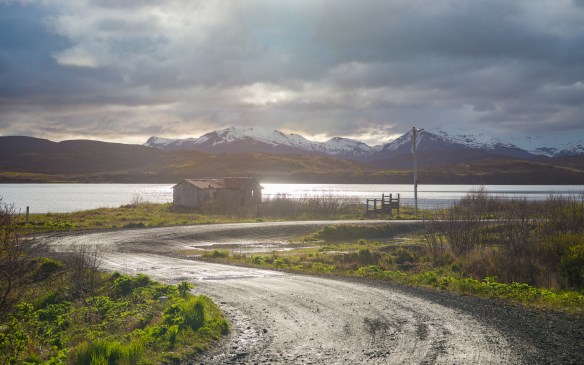
While I focused on a warbler singing near the creek, Barbra turned around and got this elegant frame looking back at one of the village’s abandoned houses and the wooden jungle gym at the old playground.

The weather doesn’t always cooperate. All last night it rained hard and blew a gale, the winds whistling around our snug little home on The Lake. I listened and listened for the little Saw Whet Owl that has been coming around to wake me the past few nights. I could hear waves slapping the sandy beach, the wind… but no owl. There’s light in the sky over the mountains across the lake to the east as I begin this piece of writing in the pre-dawn. Maybe it’ll clear up. After a winter of day after day of spot-on weather forecasts, Spring has returned such prognostication to its usual hit and miss spin of the roulette wheel. It’s supposed to be raining right now, but the sky is clearing. If it does I’ll go out and look for birds. With just four weeks remaining in our life at The Lake, we’re making every day count.
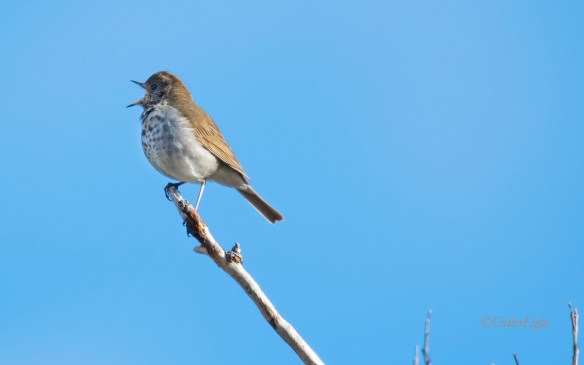
It’s spring and everyone is singing. One of the morning’s objectives was to photograph the Hermit Thrushes that came in with Wilson’s Warblers about a week ago. I’m still looking for a great shot, one with catchlight in the subject’s eye and the bird near enough to crop in portrait close, but this is a start.

Two days ago we woke to a sky that was broken but clearing. The faintest of breezes barely rippled the lake’s surface. We hurried through breakfast, got our camera gear in order, packed a small bag of trail mix and a water bottle, grabbed our binoculars and headed out. Bird song was everywhere and our recently-arrived Tree and Violet-green Swallows had already taken command of the skies. Three elements make for a good birding walk: little or no wind, nice light and birds. We had all three.

We weren’t sure if these Black-capped Chickadees were gleaning insects or gathering nesting material from the last of the catkins in this willow. Either way they didn’t sit still for a moment.

Before we even came to the edge of the village, about a quarter mile walk from our door, we identified 10 species of birds. (There’s a list of what we encountered at the end of this article.) With copses of White Spruce, thickets of alder and willow, salmonberry brakes, open patches of grasses and flowers, rolling terrain, a creek filled with small char and salmon parr and a large lake and river where midges and other insects are constantly hatching, the local landscape features diverse habitat and varied food sources. The dozens of nesting boxes established throughout the village further add to Chignik Lake as a bird paradise.

He’s up there! A tiny speck at the top of the tree on the right, you’d think this Wilson’s Warbler would feel safe from the gentle photographer far below. But I know from experience that as I’m not shooting from a blind, I’m already pushing the bird’s comfort zone. A step or two closer and he’ll disappear. 

Thus far in my ongoing project to document birds within a three-mile radius of The Lake, I’ve identified 76 species, the recent appearance of the Saw Whet Owl being the 76th. Because until recently Barbra’s school district didn’t allow teachers to remain in the district’s housing beyond the school year, this is the first summer we’ve been able to stay for summertime birding. Already this has allowed us to more thoroughly document the two species of swallows that visit The Lake each year, and we’re told that a short way down the river is a colony of Bank Swallows as well. We’re keenly interested to see what else might turn up over the next four weeks.

And there he is, all 4¾ inches of male Wilson’s Warbler, dapper in his jaunty black cap, king of his world overlooking Post Office Creek. In previous years we’ve had quite a few Yellow Warblers and a very few Orange-crowned Warblers as well, but no sign of either of those yet. 

Wilson’s Snipe nest right here in the village. Their vocalizations and winnowing can be heard throughout the day, but I can count on three fingers the times I’ve been close enough to a sitting snipe to get a decent photograph; I’m still looking for my first Chignik Lake shots.

At times, Golden-crowned Sparrows can be cooperative subjects. We have one that visits the lawn just outside our door multiple times a day and no longer pays much attention to our comings and goings. But the bird in this photo is less accustomed to human traffic and chose to eye us warily from inside a thicket of branches while I composed this shot. 

A lightly-traveled ATV trail begins at the Northwest edge of the village and winds its way over varied terrain through patches of crowberry and cranberry, stands of fireweed, willow and alder thickets, bog and tundra all the way to the mouth of Clarks River. We’ve hiked this path often, seldom encountering anyone along the way. Muddy places along the trail often have imprinted evidence of foxes, wolves, bears and moose. We pause often to listen and to look and even to use our noses.

It is a landscape that invites a hike, and on a day like this… who can say “No?”

Every hike is different. The landscape changes from day to day, and with the shifting play of light sometimes the changes are from moment to moment. In the depths of winter, it is possible to hike this trail and encounter nothing save for perhaps a handful of chickadees – a species we’ve come to greatly admire for their intelligence and tenacity. The Native American wisdom that “Every animal knows more than you know,” sinks home when you’re out on a cold, blustery day and these little guys are going about their business, thriving. On this morning we took note of the receding snow line, budding alders, willows leafing out and new flowers, fresh shoots of all kinds of plants popping up everywhere – geranium, yarrow, fireweed, lupine, iris, cow parsnip, star gentian… Each of these plants is like a calendar of the summer, marking the days in different stages of growth.

Is there any plant more graceful than a springtime fern unfurling?

The more you walk, the more you learn, until eventually the generalized mix of bird song is differentiated into individual voices – the chattering of a certain type of warbler, the melancholy Here I am… of a sparrow. What was once a wash of varicolored green becomes an intricate web of individual plants, each kind with its own name, lifecycle and place in this complex ecosystem. Over time you come to know where the owls roost, how to find the nests of ground-nesting sparrows, what kind of tracks have been left in the sand and perhaps how long ago they were placed there. A bird lets you have a glimpse of its form as it flits across the path and where many miles of walking ago you might have thought to yourself “a bird,” you now know precisely what kind of bird and where it might nest and what it likes to eat and you know all this without thinking much about it. It just is.

We have been coming across tracks for close to two weeks – tracks left by large bears, tracks left by sows and their cubs, tracks left by young adults perhaps embarking on their first full season alone. But these were the first two bears we’ve seen this year. Skinny from a dormant winter and quite likely from not having gotten as many salmon as they would have liked given the low return of salmon to the Chignik River last year, these spring bears will manage to begin to put on weight on a diet of grass and tubers. They’ll even eat insects this time of year.

Two miles up the trail a steep bluff provides a vantage point overlooking the lake and an adjacent savannah-like area. We always stop here to glass for wildlife – bears on the beaches, ducks on the water and anything that might happen to be out in the flat where we’ve seen foxes, cranes and signs of wolves, bears and moose. It’s a good place to look for Savannah Sparrows, another species that just recently arrived.

We’ve come to call this view of the lake The Infinity Pool.

Far out on the lake, a few Black Scoters were milling around, occasionally quacking. A young Harbor Seal, barely more than a pup, popped up to have give us a curious look. Three or four Bald Eagles and half a dozen Mew Gulls were resting on a sand spit at the mouth of Clarks. While Wilson’s Warblers and Fox and Golden-crowned Sparrows seemed to be everywhere, the Savannah Sparrows we’d hoped to photograph proved to be more elusive. Here and there we’d hear their distinctive, almost blackbird-like call, but aside from a couple of distant views through binoculars, we didn’t have much luck. We left the grassy area to follow the lake shore. As our boots crunched along the sandy beach, little schools of shore-hugging salmon parr skittering for deeper water.

This stickleback was so ripe with eggs she could barely swim. I cupped her in my hands for a quick photo and released her into a patch of filamentous algae where she tucked in. The Chignik watershed has two types of stickleback – Three-spined and Nine-spined. Slow swimmers, they are preyed upon by everything from River Otters to Mergansers. Most of the time when I see a duck with a fish, it’s a stickleback. 

Seeing young salmon along the lake shore and in the several small creeks feeding in the lake always puts a lightness in our hearts. Sockeyes and Coho and lots of them. When a midge hatch is on, the surface of the lake becomes dimpled as though rain is falling as these fish rise to intercept the insects. When I turned over a few rocks in one of the streams, to my surprise I found the undersides to be thick with mayfly nymphs. There were also a few stoneflies, which equally surprised me. In late summer we’ve been here for the heaviest midge hatches we’ve ever witnessed, but other than sporadic hatches of caddisflies we haven’t noticed much else, a very occasional stonefly and a few small mayflies notwithstanding. The undersides of lake rocks can be thick with caddis cases, so there must be significant hatches of those at some point. And if the feeder streams are home to mayflies, maybe we’ll be around for a hatch of those. There’s always something new to look forward to.
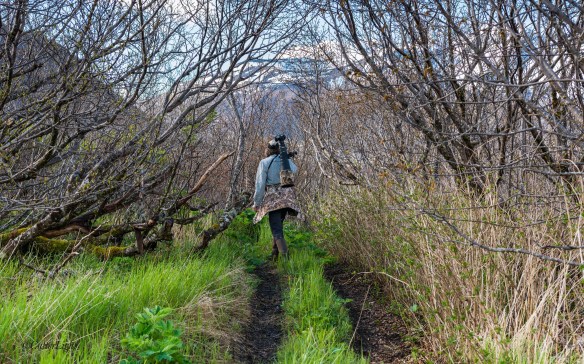
We call this stretch of the trail The Tunnel – a fitting name when it’s crowded in with leafed out alders. We’re usually quiet hikers, but in places such as this where you can’t see more than a few feet ahead, we make a little noise, not wishing to surprise or be surprised by any four-legged beings.

Well, the morning’s half gone. A big patch of blue has pushed its way through the clouds and although the best light is past, it might still be worth it to go out for a look around. Yellow Warblers should be showing up any time now, and I’m still looking for a photograph of a Hermit Thrush with a bit of catchlight in its eye.

Here’s the list of the birds we came across on this walk:

Black Scoter
Common Merganser
Tundra Swan
Greater Yellowlegs
Wilson’s Snipe
Sandhill Crane
Mew Gull
Bald Eagle
Black-billed Magpie
American Robin
Hermit Thrush
Black-capped Chickadee
Tree Swallow
Violet-green Swallow
Wilson’s Warbler
Savannah Sparrow
Golden-crowned Sparrow
Sooty Fox Sparrow
Redpoll
Pine Siskin

In Dandelion Sugar

More than halfway into my first 500 hours on the guitar. Irresistible to take it outside into the yard today, sunshine, swallows swooping, sparrows chirping and singing, warblers chattering from bare alders and newly leafed out willows. Working on my Travis picking patterns. Barbra took this photo for posterity.

After starting off the new year with three consecutive months of not looking at the news, I got sucked in again. A mistake. Monotonous. Depressing. It doesn’t matter which news source you look at, there’s nothing like it to simultaneously rile you up while making you feel powerless. There are better places to focus energy. In fact, we’ve decided to go back off TV altogether. Extra time on the guitar. Extra time to write. I think I’ll start reading Ted Leeson’s The Habit of Rivers this evening.

Still trying to get a decent photo of our Hermit Thrushes. Of course, if I could capture an image of their otherworldly song, that would be the real trick.

I imagine someone will let me know if we go to war.

These final days at The Lake, I want to savor it.

In dandelion sugar.

Waiting for Salmon

Infinite Patience – Bald Eagle scanning for salmon, Chignik Lake, May 20, 2019

Each year from June 1 when Alaska Department of Fish and Game biologists begin counting at the weir on Chignik River till late summer when they remove it, an average of over 700,000 Reds (Sockeye Salmon) are tallied making their annual spawning run up this watershed on the remote Alaska Peninsula. In 2015, the number was a staggering 1,123,898 and that’s after a million Reds were taken by commercial fisherman in Chignik Lagoon, the saltwater estuary the river debouches into. Because Alaska persists in the foolishness of allowing “intercept” fisheries further out at sea, it can be difficult to determine precisely how many salmon are headed for the Chignik watershed – perhaps two million on average. Nonetheless, over that past nine years an average of 780,000 Sockeye Salmon have been counted at the weir.

Last year that number plummeted to just 540,000, and that was despite a nearly complete closure of the commercial fishery. It was, quite literally, a disaster. The cases of beef stew, generic peanut butter, lentils, canned fruit cocktail and boxed mac and cheese freighted in by government agencies didn’t begin to offset the economic and psychological hole the Sockeye collapse created.

As I write this, eager neighbors are already setting nets. Here and there an early-returning fish is showing up. But “early” is the operative term. Even in good years, the run doesn’t get going until the first week of June. Sometime during the second week of that month, the first counts of 1,000 fish a day might begin. Later in summer, daily counts will top ten thousand. The Chignik’s feeder streams will be carpeted with spawning fish. Brown Bears and Bald Eagles will be everywhere.

In a good year.

For now it’s still early.

Everyone is waiting…

…and hoping.

They enter the river with muscles of steel, bright as new dimes. By the time they’re ready to spawn, they will fill clear tributaries in a carpet of crimson. They are the lifeblood of the Chigniks. Reds…


On the Grill: Smoky Maple Rubbed Wild Chignik Salmon and Lemon Garlic Fireweed Shoots

It’s not yet the official start of summer, but nothing feels like the season more than sitting outside in sunshine grilling our supper.

Some people say Chignik River salmon are The Best. Who are we to argue? The vacuum-packed fish we caught last fall taste like we just pulled them out of the water. We love these salmon. They are fun to fish for, delicious and are a beautiful part of this environment. We feel fortunate to have them as part of our menus at least four times a week. Yesterday, we thought we would try a smoky maple rub we were gifted awhile back. It worked perfectly on the grill, giving a nice smoky, sweet layer of flavor while still letting the salmon shine through.

The star of the meal were the fireweed shoots. If you’ve never tried these beauties, now is the time to do it. Around here, they are popping out of the ground in a plum-colored frenzy. Early in the season, the shoots can be picked and used just like asparagus. The leaves are tender and the stems have a satisfying crunch. Later in the summer, the plants will produce fuchsia-colored flowers that climb up the stalks like a calendar of the summer passing. These flowers are edible, as well. We’ve used the pink blossoms in tossed salads and have stirred them into homemade honey ice cream for an added visual pop. But I digress…

Preparing the fireweed shoots is simple. Give the shoots a thorough rinse to remove any dirt. Then mix together soy sauce, lemon and garlic to taste. Toss the mixture with the fireweed shoots. Place a couple of pats of butter beneath the shoots and another couple on top. Grill in foil until the butter is melted and the mixture is bubbling. We like our shoots pretty crunchy, so we only grilled them for about 4 minutes. And if you’ve prepared a baked potato on the side, any extra sauce from cooking fireweed the fireweed makes a delectable topping. Bon Appétit!

The Hike to Clarks River: An Alaska-Sized Landscape on the Remote Southwest Peninsula

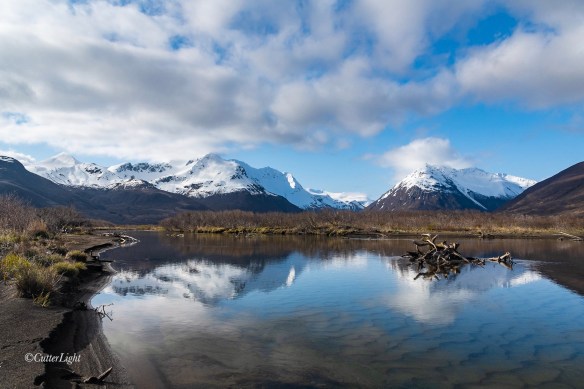
Like a vast infinity pool, Chignik Lake pulls in the mountains and sky and seems to go on forever. 

We woke before dawn to clear skies, still air and frost. With noon temperatures projected to reach a nearly summer-like high of 50° F, it was the perfect day for the three-mile hike from Chignik Lake up to Clarks River. By the time we downed hot bowls of steel cut oats and slabs of energy-rich, thick-cut bacon, the sun had cleared the snow-capped mountaintops across the lake from our house. Outside the air was still brisk from the nighttime freeze, but American Robins, Golden-crowned Sparrows, Sooty Fox Sparrows, Pine Grosbeaks and Redpolls were already filling the sleepy village with song. We didn’t know it yet, but Violet-green Swallows would arrive later in the day to add to the chorus.

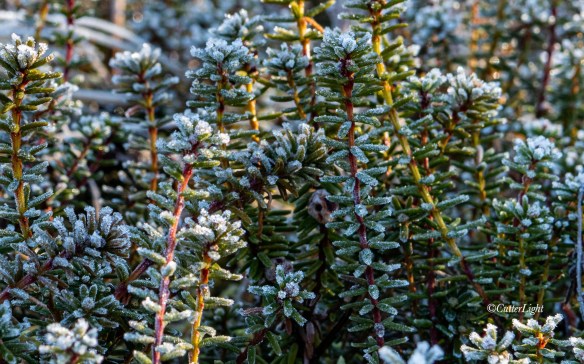
By the time we hit the trail, soft sunlight was beginning to brush the frost off crowberry plants and other vegetation.

Skim ice covered puddles and everything about the morning felt crisp and full of promise. Savannah Sparrows sang from brushy perches. Somewhere down by the lake a Sandhill Crane trumpeted in brassy notes. On a morning like this, there was no telling what we might see. I tapped the bear spray in my coat pocket. We stopped often to listen and to glass patches of open tundra and hillsides.

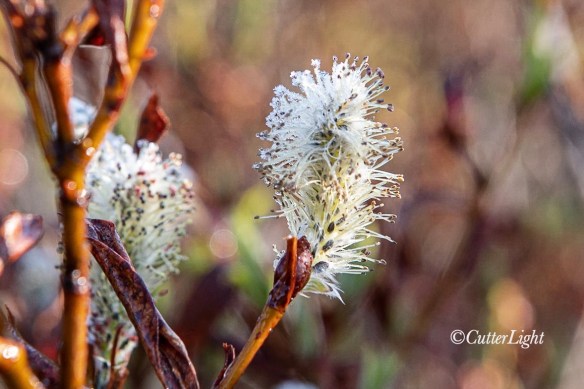
Most of the catkins were finished. In places bathed in light during these 18-hour spring days willows were leafed out in brilliant green.

As we approached Lower Pond, a pair of Black-capped Chickadees emerged from a tangle of still bare alders to look us over. A crane soared low over the path and landed somewhere out of sight. Fresh avalanche runs tongued the steep Chignik Mountain slopes, still buried in snow. When we hit the Blueberry Bog, a snipe exploded from an edge that often seems to have one of these wary, secretive birds. Mindful of not bothering a possible nest, we kept moving.

Barbra hikes into a landscape traversed by fewer than 100 living people. Clarks River lies straight ahead. The lake is to the right. 

As we hiked we noted that Fireweed shoots were at the perfect stage for picking. We’d brought along a small bag to gather some on the way back to add to the evening’s teriyaki salmon stir-fry.

Wildlife tracks ran all along the beach, their number and variety increasing the closer we got to the river. Seldom seen, wolves are always around, as this track attests.

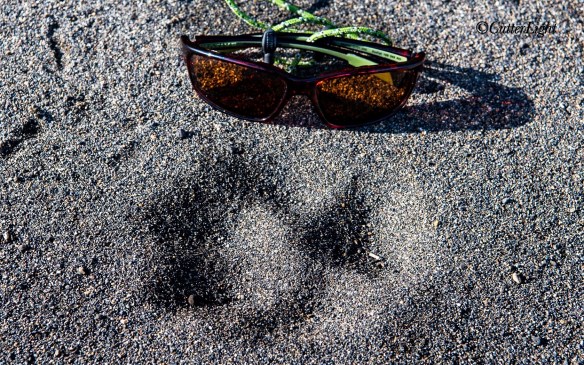
One for the books, this is the largest Brown Bear track we’ve ever come across. With males routinely topping 1,000 pounds and sometimes exceeding a standing height of 9 feet, Chignik’s bears are among the world’s largest, rivaling those of Kodiak Island in size. An abundance of salmon makes for a healthy bear population – and a healthy ecosystem in general. Barbra’s sunglasses measure 5¾ inches from temple to temple.

In addition to lots of fox tracks, two sets of wolf tracks and several sets of bear tracks, it was evident that a troupe of River Otters had recently been through the area. Though it was mostly quiet under the mid-morning sun, a Red-throated Grebe rested out on the lake, and along the far shore we could just make out Scaup, a Red-breasted Merganser and a few Common Goldeneyes. Savannah Sparrows sang and flitted from bush to bush and as we approached the mouth of Clarks, a yellowlegs or perhaps a Wandering Tattler took off up the river.

The remains of a feast, this bleached piece of Red Salmon jaw was a reminder of last fall when the banks of Clarks were trampled down into a bear highway and the shores and shallows were carpeted with spawned-out Sockeyes and Silvers.

We paused to let our eyes search a pool below a beaver dam in a small tributary before Clarks, recalling a fall when we’d seen it stacked with maybe a thousand Coho Salmon. The beavers, like those salmon, are long gone. Tiny salmon fry and parr darted through the pool in tight schools, the parr occasionally rising to take a midge off the water’s surface. Around the pool’s edge, the first light pink salmonberry blossoms were opening.

Clarks River forks just before it debauches into the lake. This is the lower, quieter piece of water. In late summer and fall, tens of thousands of salmon ascend this cold, snow-fed river.

We found a warm spot in the sun on the sandy beach, made a makeshift picnic blanket of my coat amidst otter tracks, and had lunch. Magpies chattered from a distance as we scarfed down trail mix and reminisced about the fine fly-fishing we’d had at the mouth of this river for bright Silvers. You never stop scanning for bears when you’re out here, and of course there are the wolves. The salmon will return soon, new birds are steadily filling the landscape and there’s the prospect of getting that gargantuan Brown Bear in the view finder of one of our cameras – so many incentives to get out into this country to look around.

Vacancies at Chignik Lake’s New Nesting Boxes are Filling Fast: Tree Swallows have Arrived!

We knew that with Violet-greens having returned, Tree Swallows wouldn’t be far behind. This pair didn’t let much daylight burn before checking out a homesite. They may have used this same box last year. That’s the female perched on top of the box while the male, decked out in shimmering shades of blue, assesses the nesting quarters.

Just before leaving The Lake for our epic 65-day bicycle tour of Hokkaido last spring, we installed four new nesting boxes. We left just as the swallows were returning, but when we got back we were informed that our boxes had immediately attracted new tenants. So we’ve been keeping our eye on them, eager for the arrival of Violet-green and Tree Swallows this spring to see who might move in. Violet-greens first showed up on May 14 and headed straight for a set of older boxes at a neighbors’ house. But even with some 40 boxes in the village, we knew every available site would soon have a pair of nesting birds.

This morning when I stepped outside, I lifted my binoculars to scope out silhouettes on a power line near two of our boxes. Tree Swallows – the season’s first! With the early morning sun buried behind gray clouds, there wasn’t much light. But the office where I work on photos and writing has a view of one of our boxes, so I kept my eye on things. Within a couple of hours, new arrivals were checking out the two boxes closest to our home. And then the sun popped out, giving me an opportunity to make a couple of pictures of birds beginning to set up housekeeping at each box.

For awhile, several birds sallied back and forth around this box. Finally a female entered and stayed put for quite awhile. Here the male is checking up on her.

Interested in attracting your own mosquito-eating backyard friends? Check out our previous post on Violet-green swallows where you’ll find tips for putting up nesting boxes as well as the article below that for tips on placing your new boxes. Establishing nesting boxes is way more interesting (and way, way more ethical) than plugging in those nasty electric bug zappers. Click the links below!

Our Violet-greens are Back at The Lake!

New Homes Available! Swallow Nesting Boxes at Chignik Lake

Our Violet-greens are Back at The Lake!

A single Violet-green Swallow can consume hundreds of mosquitoes and midges a day. With 40 or so nesting box cavities scattered throughout the village of Chignik Lake (population 50), these iridescently-plumaged little fellows and their Tree Swallow cousins are local favorites.

Chignik Lake’s first swallows, multi-hued Violet-greens, made their seasonal debut yesterday, May 15. This morning we went out to get photos of these much anticipated first arrivals. Tree Swallows, which will also use the dozens of nesting boxes residents have put up, should be arriving any time now along with the Bank Swallows that have established a colony on a bluff a mile or so down the Chignik River.

The Native American tradition of hanging nesting cavities for swallows goes as far back as anyone knows. Writing in the 1800’s, John J. Audubon noted that:

The… Indian is also fond of the Martin’s company. He frequently hangs up a calabash on some twig near his camp, and in this cradle the bird keeps watch, and sallies forth to drive off the Vulture that might otherwise commit depredations on the deer-skins or pieces of venison exposed to the air to be dried. The slaves in the Southern States take more pains to accommodate this favourite bird. The calabash is neatly scooped out, and attached to the flexible top of a cane, brought from the swamp, where that plant usually grows, and placed close to their huts. Almost every country tavern has a Martin box on the upper part of its sign-board; and I have observed that the handsomer the box, the better does the inn generally prove to be. 

It’s sad to see those annoying, energy-wasting, indiscriminate electric bug zappers, which kill beautiful moths along with everything else, hung more often than nesting boxes in these modern times. A nesting pair of birds will do a better job keeping pests under control, add cheer to any property, and when the wooden box has seen its best days it can be be left to return to soil rather than discarded to fill our world with yet more plastic, toxic parts and slowly-decomposing metal.

If nesting boxes around our village are any indication, they need not be elaborate. All that’s needed is untreated wood, a saw, a means to cut a hole, nails or screws and the appropriate tool for securing that hardware. Although it is often recommended that boxes be cleaned out annually, we know of no one here who does so. The swallows themselves seem perfectly capable of spring cleaning when they arrive, as they have done with natural cavities for as long as swallows have been around. However, if you’d feel better about cleaning out the boxes once the nesting season is finished, by all means go for it; you’ll be creating a clean space for birds that use the boxes as overnight and foul weather shelters during wintertime.

Engaged in housekeeping (removing his offsprings’ excrement) this Violet-green and his mate made a nest behind a knothole in the side of a store in McCarthy, Alaska.  

Two additional tips for your own backyard nesting boxes:

  1. Do Not put any sort of ledge or peg in front of the hole. As you can see in the photo below, swallows and other cavity nesters don’t need a perch. Their claws are adapted to cling to the sides of trees. The only purpose a ledge or peg serves is to give nest-raiders such as magpies, crows and other predators a perch from which to get at eggs and nestlings.
  2. Give some thought to the species of bird you hope to attract, then research the size of entry hole and the size of the interior cavity that bird prefers.

To those tips, we’ll add a third. Invasive European Starlings and House Sparrows haven’t yet found us out here on the Alaska Peninsula. If they are a problem where you live, we urge that they be discouraged from nesting by any means necessary. Both of these birds represent a significant, growing threat to species diversity.

Don’t have the time or the right tools to build your own boxes? Consider purchasing. A cedar box will last a long time, making it an economical gift to birds for years or even decades to come. And don’t be discouraged if your boxes don’t attract guests right away. Sometimes it takes more than one season for birds to move in.

Flowers are blooming, insects are out, swallows are returning and salmon are beginning to stage in the bay for their annual spawning run up the Chignik River. It still feels like spring, but summer is just around the corner.

Lucky Day! Herring Roe from Togiak

A modest quota of herring roe is allotted to non-commercial harvest in Togiak, Alaska each year. Thanks to a neighbor here in Chignik Lake, we got in on this celebrated Bristol Bay delicacy.

Each April, millions of gravid Pacific Herring gather in Bristol Bay’s coves in a spawning event that turns the water creamy white with milt. The individual eggs are initially sticky and adhere to kelp, other seaweed and even tree branches placed in the water by people eager to harvest this bounty. There are so many herring, their numbers aren’t counted. Instead, the Alaska Department of Fish and Game estimates their abundance in biomass measured in weight. This year that figure was put at a mind boggling 217,548 tons. With the population healthy, a modest percentage of the spawn was made available for subsistence harvest. Almost all of these eggs are distributed by Alaskans to fellow Alaskans.

If you are a connoisseur of sushi, you are no doubt familiar with kazunoko, firm, intact sacs of herring roe typically wrapped with a strip of nori (seaweed) and presented as nigiri-zushi. Served with a little soy sauce, the crunchy texture and clean, salty flavor are a delicacy that symbolizes family health and prosperity. The pop the tiny eggs make when bitten into is a traditional feature of New Year’s celebrations. (The eggs freeze well and can be preserved this way for months.)

When a friend and neighbor here at The Lake texted with a message to come on over and get some herring spawn, we didn’t waste a moment. The tiny, translucent, pale yellow eggs were firmly attached to strands of kelp. All they needed was a quick rinse in cold water and a light dip in our favorite soy sauce. Crunch, pop, umami yum! Sides of Silver Salmon sashimi and sweet Alaska deepwater shrimp along with bows of sushi rice made for a meal celebrating a great early morning hike out to Clarks River, our first of season sightings of Savanah Sparrows, and the arrival of the year’s first Tree Swallows and Violate-green Swallows.

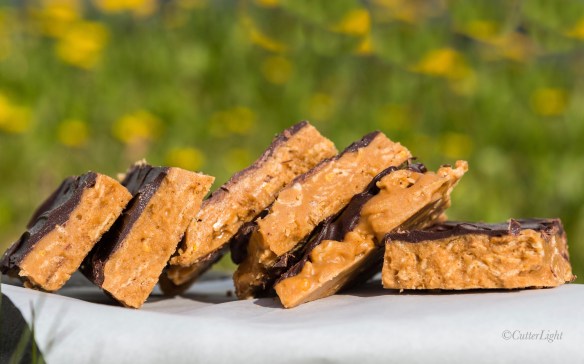
Better Than Butterfingers Bark

Crispy, crunchy, peanut buttery and topped with chocolate. No hydrogenated this or that. No artificial flavors or colors. What’s not to love? 

Recently, Jack and I have cut way back on the sugary treats. But we’re not crazy, we haven’t cut them completely out. We’ve been trying out a new eating style which is working really well. It’s not a fad diet. It’s simply mindful eating. Everyone knows it is healthy to eat a diet with lots of veggies, legumes and whole grains. We’ve been employing a strategy to eat a great variety of food at every meal with an emphasis on those healthy food groups. Jack’s goal has been to serve meals with at least seven different foods as the ingredients. It’s been a delicious experiment that has us feeling fueled up and satisfied.

Do sweets still fit in to this mindful eating plan? Absolutely! I have always enjoyed having something sweet at the end of dinner. I’ve been experimenting with different kinds of natural sweeteners as well as different portion sizes. Rocky Road fudge and Monster Cookie Freezer fudge were a couple of the first hits in the lineup. Aside from natural sweeteners like maple syrup, honey and dates, I still used a tried and true pantry item – granulated sugar. As long as the portions are kept small, sweets will always be part of my repertoire.

One of our favorite candy bars has always been Butterfingers. We both love the flavor combination of chocolate and peanut butter and especially love the crispy crunch that only Butterfingers have. In my quest to use up all the items in our pantry, I came across a recipe for homemade Butterfinger bars. What?!? How is possible to make that crispy crunch at home? I always thought that magic could only be created in a cauldron, or maybe a factory. 😉 Turns out, the recipe is quite simple. Katie over at Chocolate Covered Katie figured out the basics. I’ve adapted her recipe to be even simpler. No shaping bars or dipping technique needed. It’s a few minutes of stirring, some time chilling, a little bit of melting, and a moment of spreading melted chocolate and Voila! – best tasting Butterfinger bark you’ve ever made – guaranteed!

Better Than Butterfingers Bark

Ingredients

  • 1/3 cup honey
  • 3 1/2 tbsp granulated sugar
  • 1 cup smooth peanut butter
  • 2 cups flake cereal (I used whole grain frosted flakes)
  • 2/3 cup semi-sweet chocolate chips

Directions

  1. Line a baking sheet with foil. Grease foil with butter. Set aside.
  2. Combine honey and sugar in a small saucepan.
  3. Over medium heat, bring mixture to a boil.
  4. Boil for a minute while stirring continuously.
  5. Remove pan from heat and stir in peanut butter. It will look like a paste when it’s done.
  6. Fold in flake cereal. Stir well to coat.
  7. Turn mixture out onto the foil-lined baking sheet.
  8. Press mixture until it is about 1/2 inch thick.
  9. Place bark in freezer for 30 minutes.
  10. Melt chocolate chips in a double boiler.
  11. Spread melted chocolate mixture over bark.
  12. Place bark back in freezer to set.
  13. Cut bark to portion as you like.

Recipe adapted from chocolatecoveredkatie.com