Leaving Seward, 2012

Rainbow over Cook Inlet – this photo was taken the second week of August, our last week in Seward.

For us, our summer in Seward came to an end in early August. Our sailboat, Bandon, is sitting on the hard with a fresh coat of bottom paint. We are already counting the days till next May when we’ll move back aboard.

Below: There are days on the Kenai Peninsula when it looks and even feels like we could be in Hawaii or some South Pacific paradise. As it is, we are in a paradise – Alaska. We can’t imagine a better place to cut our teeth as sailors than in Seward. 

Halibut with Smoked Chipotle Blue Cheese and Pine Nuts

Smothered in a mixture of tangy blue cheese, crunchy pine nuts and fiery, smokey peppers, a fillet of halibut, rockfish, snapper or walleye has no chance when placed in front of hungry diners. Here a fillet of black rockfish is served on a bed of black rice.

This year we brought up several wedges of Rogue Caveman Bleu Cheese to Point Hope. This is good stuff, thick and creamy with complex flavors ranging from smoked bacon and butter to sweet fruit. I’ve been eager to use it in cooking, and last night it made its debut on a thick fillet of perfectly flaky black rockfish – one of our favorite fish. Substitute the more traditional halibut for this bleu cheese recipe, or try it with walleye, snapper, porgy or red drum (redfish). Luck into some nice-sized crappie? This twist on the standard bleu cheese topping is just the ticket.

While cayenne pepper powder alone works fine, the wood-smoked chipotles (available from Penzeys Spices) in the following recipe gave this dish a delectable aroma and flavor. Leaving the seeds in the arbol chili kicked up the heat.

Ingredients (Serves 2 to 4):

  • 1 pound halibut fillet, cut into 2 to 4 pieces
  • 1/2 cup bleu cheese, crumbled
  • 1/3 cup chopped pine nuts (or pecans, almonds or walnuts)
  • 1 whole, dried arbol chili pepper, crushed (or 1/2 tsp cayenne powder)
  • 2 smoked, dried chipotle chili peppers, seeds removed, crushed (or use unsmoked chili peppers)
  • 1 tsp dried tarragon, crushed
  • 1 tsp dried marjoram, crushed
  • a few grind of black pepper
  • 1 tsp sugar
  • 2 cloves garlic, minced
  • 2 tbsp lemon juice
  • 1 tbsp extra virgin olive oil
  • additional olive oil for sautéing the mixture

Directions:

  1. Rinse fillets, pat dry with paper towels and set aside.
  2. Set oven on broil and preheat a broiling pan.
  3. In a non-reactive bowl (glass works well) mix together the bleu cheese, pine nuts, spices, herbs and sugar.
  4. Add some olive oil to a small frying pan and heat over medium-low to low heat. Add bleu cheese & pine nut mixture, stirring and turning until cheese is melted.
  5. Add minced garlic and lemon juice to the mixture, cooking for about 1 minute while combining thoroughly. Remove pan from heat and cover with a lid.
  6. Place fillets on broiling pan. Fillets should sizzle when they touch the pan. Broil for about 5 to 7 minutes, depending on thickness of fish. Fish should just be turning opaque when cooked through.
  7. Cover fillets with bleu cheese mixture and continue to broil for 2 to 3 minutes.
  8. Serve piping hot.

We served the fillets on black rice. It was a coin flip between that or saffron rice. This would pair well with a chilled, slightly sweet Gewürztraminer.

Salt Encrusted Whole Fish Stuffed with Shrimp

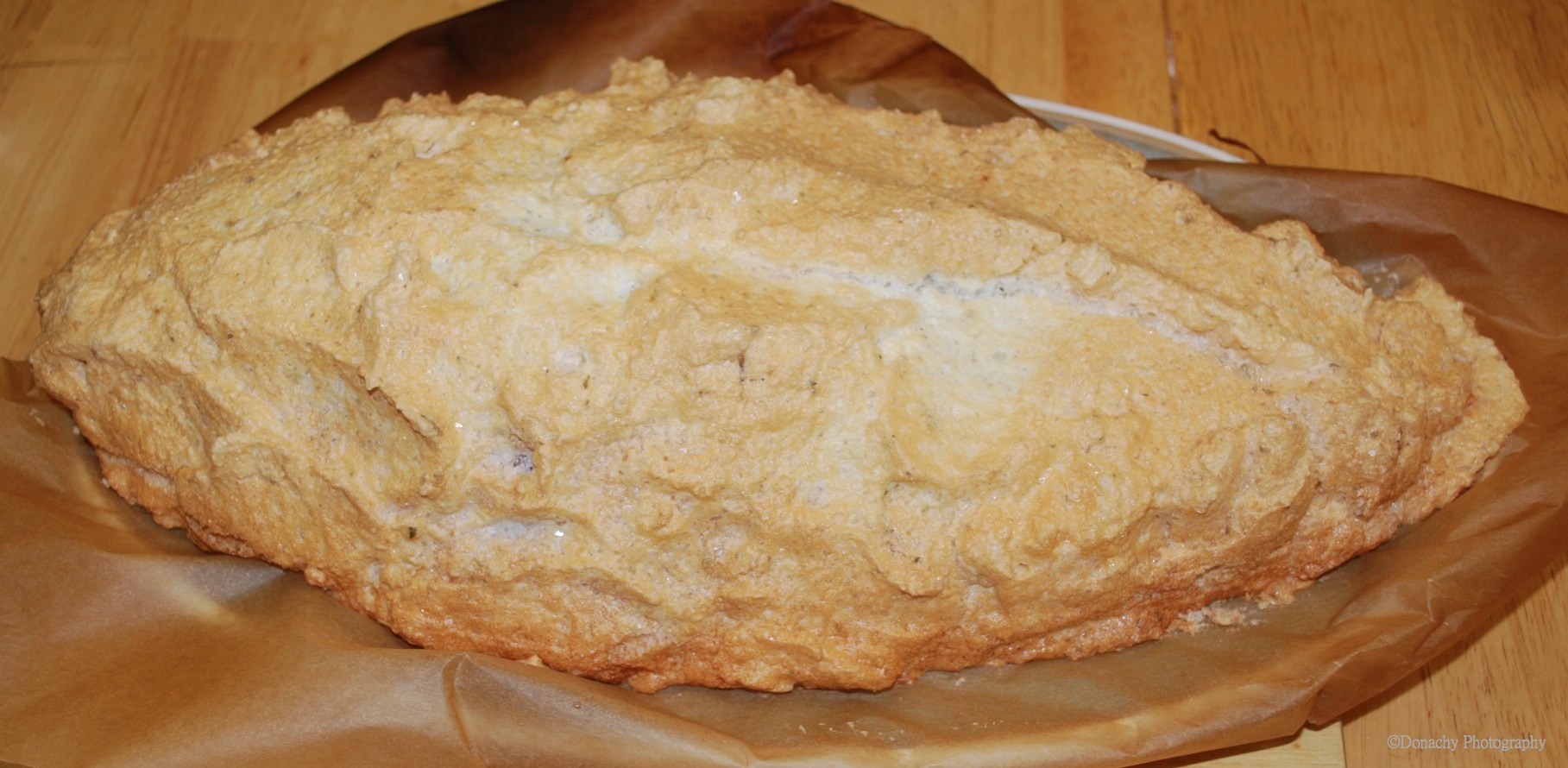
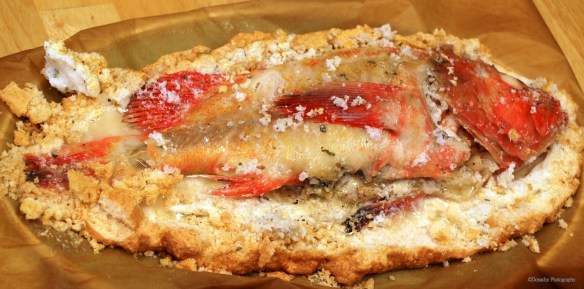
Pesce al Sale – Whole fish baked in a salt crust.

I’d read about this simple yet dramatic presentation for many years, but only got around to trying it when a recipe appeared in the June issue of Field & Stream magazine, which I subscribe to. The basic cooking method is a breeze and could easily be prepared onboard a boat or at camp. It is a show stopper when placed on the dining table, both in terms of the beautiful presentation and in terms of the incredibly moist, flavorful fish that results.

Encased in salt and egg white paste, the fish is ready for the oven.

While I had on hand a two pound yelloweye rockfish (Sebastes ruberrimus) which was perfect for this recipe, there are many fish which would work as well. The first that comes to mind are the true porgies – fish in the genus Pagras and Acanthopagrus. In Britain, these fish are commonly known as sea bream. In Japan, they’re are known as tai, and I would love to place a whole salt-crusted madai or kurodai on the table for Japanese guests, who typically revere these fish. Snapper, walleye, striped bass, pompano, black sea bass and even a firm-fleshed Coho salmon would all work well. A halibut just small enough to fit on a large oven tray and served this way would surely draw oohs and aahs.

About a half an hour later, the fish is ready to serve. 

Keep in mind that the best fish dinners start with the freshest fish possible. Good fish should smell as fresh as the sea they came from. Sadly, most American grocers still haven’t figured this one out, so if you’re having trouble finding good fish, try to locate a Japanese grocery store or an Asian market that sells to Japanese customers. Whole Foods and specialty butcher shops also usually carry quality, fresh fish. Costco, too, sometimes carries whole fish and can generally be depended on for a fresh product.

Voila! The dull side of a knife is used to crack and remove the crust, revealing a succulent fish that wants only a drizzle of olive oil and a squirt of lemon.

Figure about one pound of cleaned, gutted whole fish for every two diners. Thus, a two-pound fish will serve four.

Salt-Crusted Whole Fish with Shrimp

Ingredients: Serves 4

All you really need are the first four ingredients. The others are optional and can be omitted entirely or substituted freely.

  • One 2-pound (.9 kilogram) fish, scaled, gilled and gutted but otherwise left whole
  • 4 egg whites
  • 2 cups sea salt
  • a good-tasting extra virgin olive oil
  • parchment paper and baking sheet or baking platter
  • lemon wedges (preferably from Meyer lemons)
  • 1/4 pound shrimp, peeled (optional)
  • tarragon – either 1 or 2 sprigs fresh or 1 tsp dried & crushed (optional)
  • 1 tsp dried marjoram (optional)
  • 1 or 2 bay leaves, crushed (optional)
  • freshly ground pepper (optional)
  • additional sea salt (optional)

Directions:

  1. Line a baking sheet or platter with parchment paper.
  2. Preheat oven to 450 degrees F. (232 degrees Celsius)
  3. Use paper towels to pat the fish dry. Use a brush (a clean tooth brush works well) to remove all traces of viscera from the stomach and head cavity. Rub cavity with salt, pepper and crushed tarragon, if desired, or place a sprig or two of fresh tarragon in the cavity. Stuff with the shrimp. Set fish aside.
  4. Whip the egg whites until they from stiff peaks.
  5. Gently fold the salt (and the crushed bay leaves and marjoram, if desired) into the egg whites until a paste is formed.
  6. Spread about 1/3 of the salt paste on the parchment paper in a shape large enough to hold the entire fish.
  7. Place the fish on the salt paste and completely cover with remaining salt paste.
  8. Bake for 25 minutes. Turn oven off and continue baking for five minutes. Remove fish from oven, place on dining table and allow it to rest for another 5 to 10 minutes.
  9. Remove crust by cracking it open with the dull side of a knife. The crust can be lifted off with a spatula, large spoon or wide knife blade. The top layer of the fish will easily lift away from the bones.
  10. Serve with lemon wedges and drizzles of extra virgin olive oil.

We served the fish with oven-roasted potatoes and steamed vegetables. This dish would be fun with Margaritas.
Chocolate Drizzled Orange Marmalade Cookies

Our trip back to Point Hope, Alaska, went like clockwork – Swiss clockwork at that. The taxi driver arrived at our storage unit (where we’d spent the night in our camper) ten minutes early and was driving a van which easily held our eight coolers loaded with this summer’s catch. Traveling with eight coolers always fills me with a bit of trepidation; you can imagine the “what if” scenarios that run through our heads for this trip. So we plan for the worst and hope for the best.

Up in Point Hope, our big freezer is now stocked for the year while we wait for about a thousand pounds of dry goods we carefully packed and mailed to arrive via the U.S. Postal service.

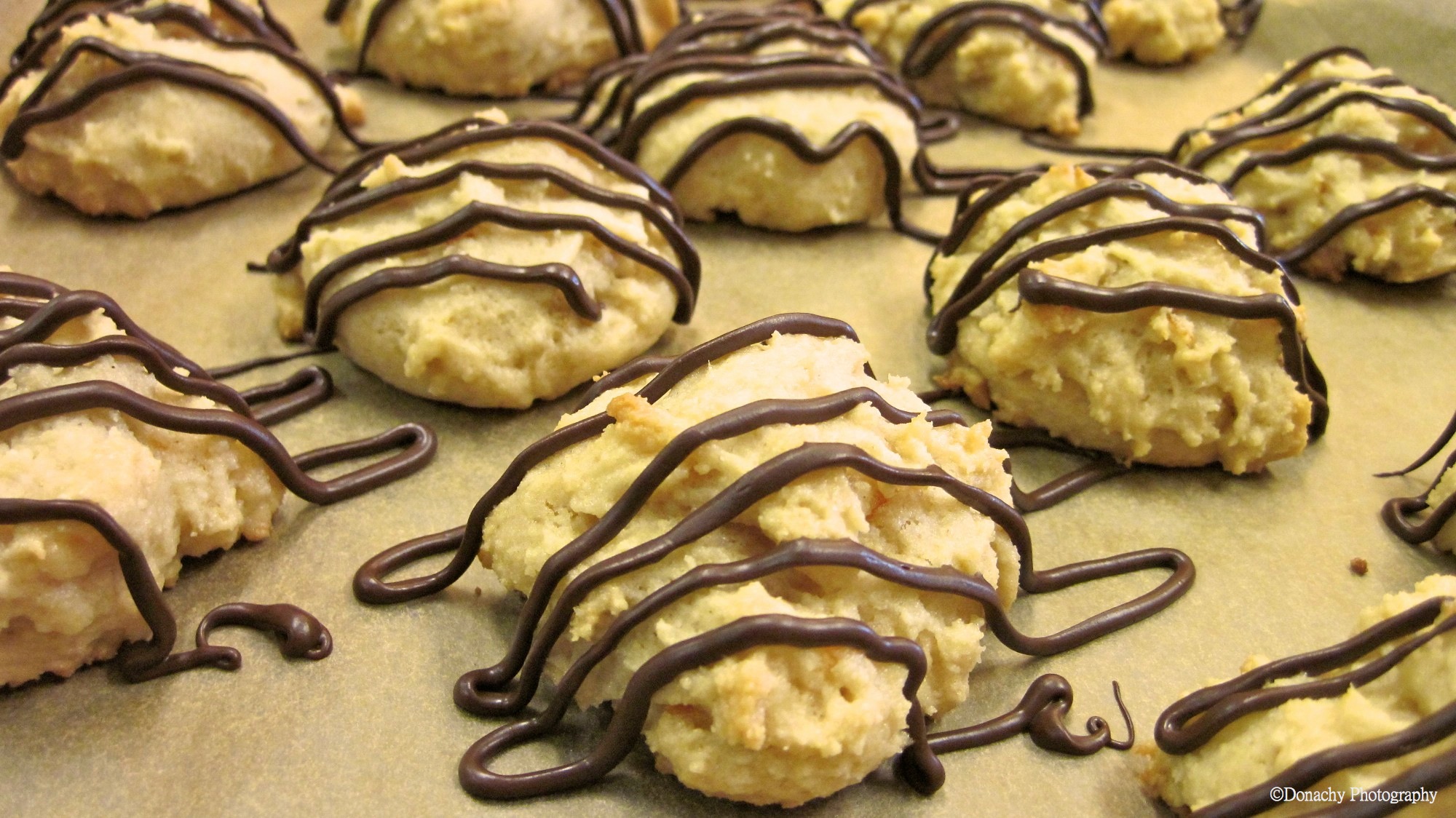
“Waiting” is not something I enjoy. “Doing” is much more fun. After finding a half of a jar of marmalade in the refrigerator, I decided conducting a cookie experiment would be much more fun than sitting around waiting for groceries to arrive. The results? Orange-flavored cookies. The chocolate added a layer of flavor that complimented the orange tang.

Orange Marmalade Cookies (makes 3 dozen)

Ingredients

  • 2/3 cup unsalted butter, softened
  • 1 cup granulated sugar
  • 1/2 cup unsweetened applesauce (can substitute with 2 eggs)
  • 12 tbsp orange marmalade
  • 3 cups all purpose flour
  • 3 tsp baking powder

Directions

  1. Preheat oven to 375 degrees F. Line cookie sheets with parchment paper.
  2. In a large mixing bowl, cream together butter and sugar.
  3. Add applesauce and marmalade and mix thoroughly.
  4. In a separate bowl, sift together flour and baking powder.
  5. Mix in flour mixture to butter mixture until just blended.
  6. Drop dough by tablespoons onto parchment-covered cookie sheets. Leave at least one inch between cookies.
  7. Bake until cookies spread slightly and are lightly browned (about 10 minutes).
  8. Cool cookies completely on wire rack.
  9. Drizzle with melted chocolate, if desired. (I used semi-sweet chocolate chips.)

Afternoon Delight – Strawberries and Zabaglione

Cold, windy, rainy days are perfect days for making something special. This bowl of Strawberries and Zabaglione created with egg yolks, sugar and port wine took only about 15 minutes to prepare – and about two minutes to make disappear.

Some days on Resurrection Bay, glorious sunshine and turquoise waters allow us to imagine we are in the Bahamas rather than Alaska. But this afternoon’s dark skies, white-capped waters and steady drum of cold rain made it a good day to keep the companionway hatch closed and remain cozily tucked into our sailboat with a warm fire in our Dickinson fireplace.

With a few simple ingredients, I whipped up a lovely afternoon snack which had just enough warmth to it to keep the chill outside at bay.

Ingredients

  • 4 egg yolks
  • 4 tsp sugar
  • 4 tbsp port wine

Directions

  1. Whisk all ingredients together over a double boiler until it is not quite as thick as pudding.
  2. Serve immediately over berries. Top with sliced almonds or a spring of fresh mint.

30,000 Seabirds

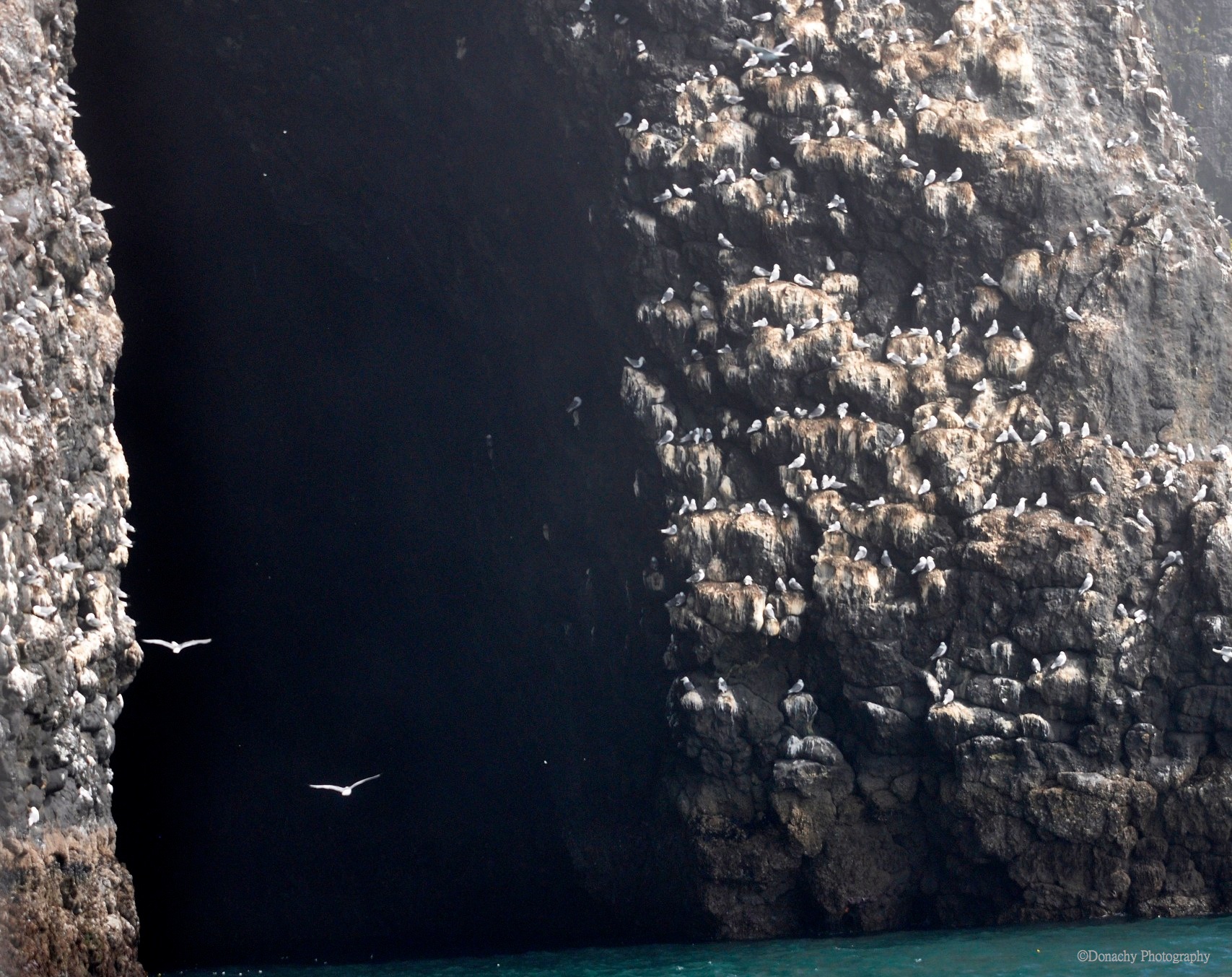
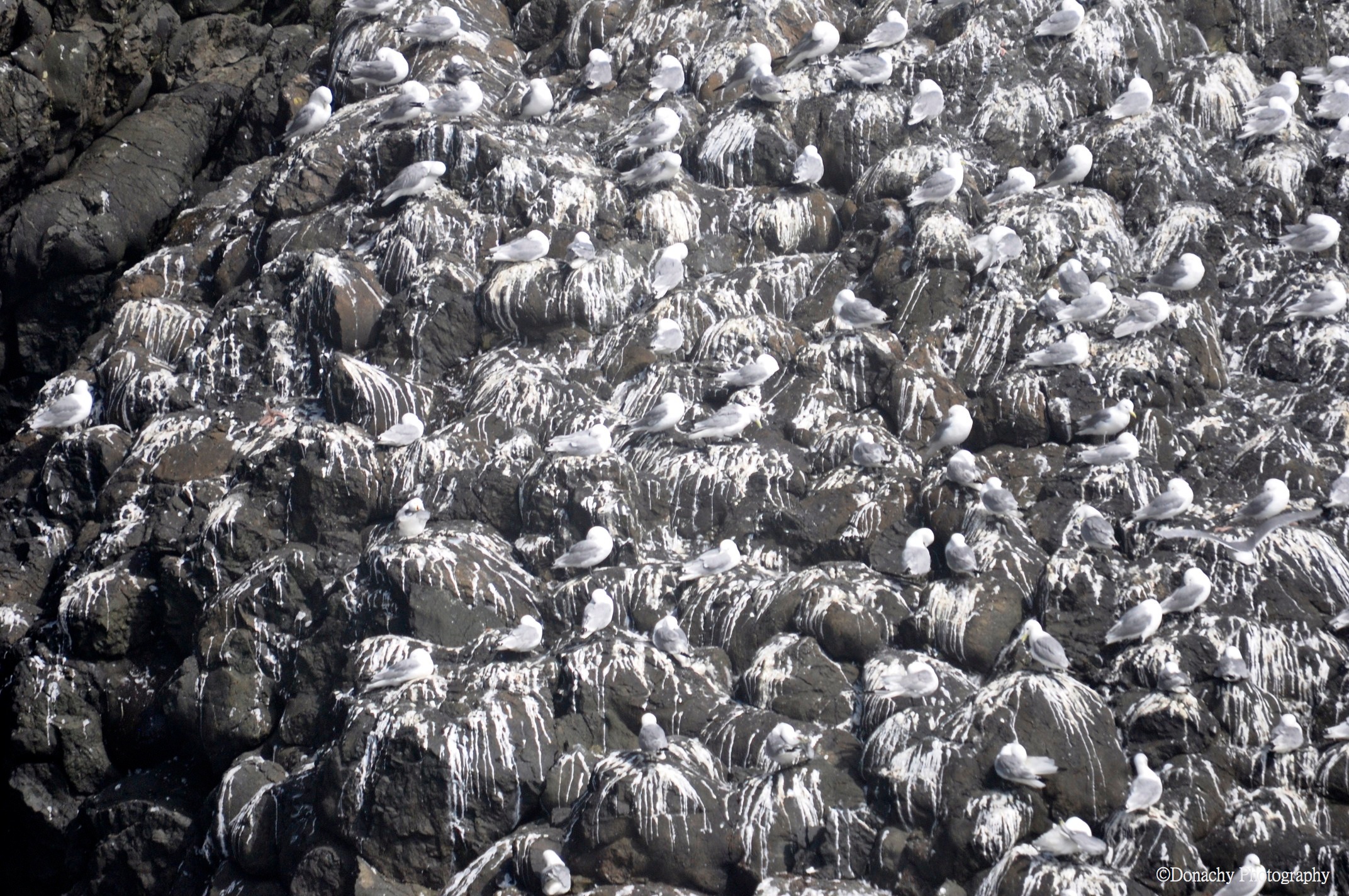
At any given moment, there are as many as 30,000 seabirds roosting, nesting, flying and feeding at Cape Resurrection near Seward, Alaska. While kittiwakes and common murres are the two most abundant species, tufted and horned puffins, murrelets, guillemots, auklets, oyster catchers, cormorants, various gulls and other seabirds are also in the mix. Above and below: black-legged kittiwakes in the thousands take advantage of every available ledge.

The noise (and smell) generated by these colonies is as startling as the sheer number of birds. 

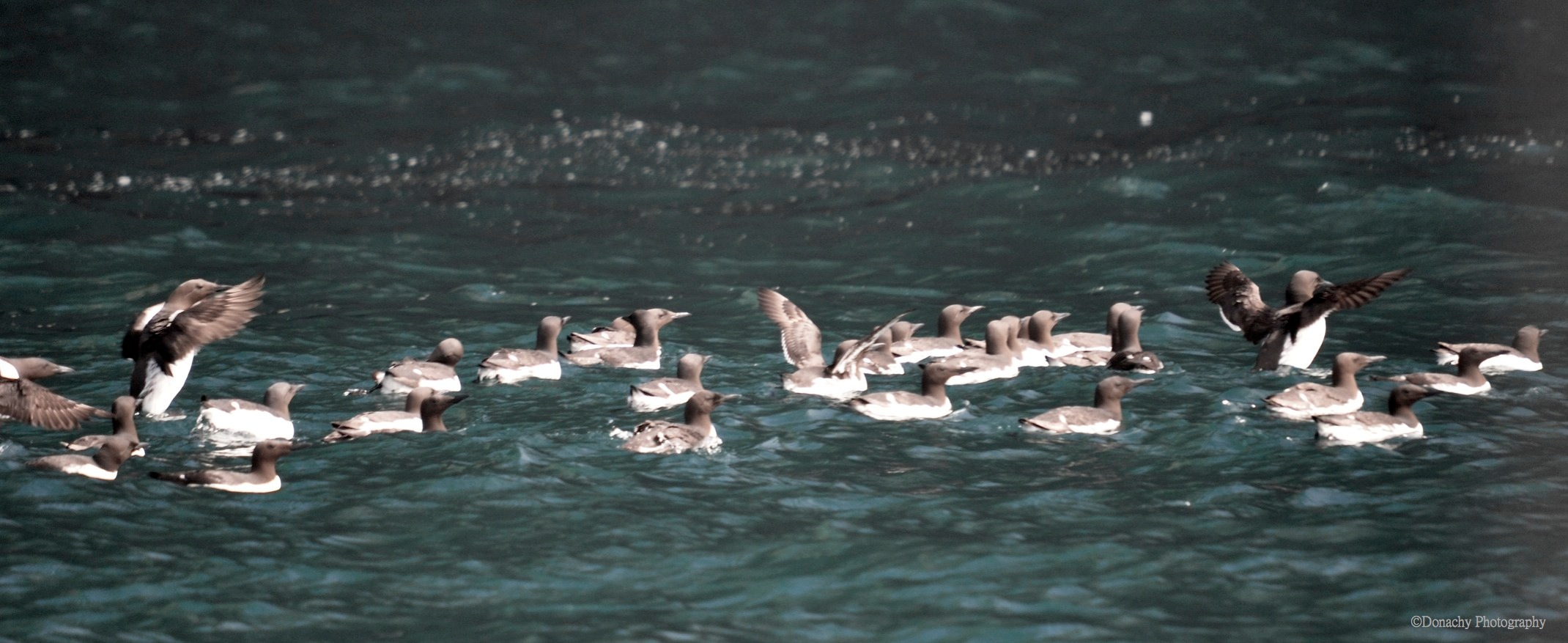
The cape also hosts large rafts of common murres containing dozens or even hundreds of birds.  

Horned puffins (above) and tufted puffins are also quite common. They use their thick, uniquely-hinged bills not only to fish, but to dig nesting burrows up to several feet deep. Once the nesting season is over, puffins spend the rest of the year at sea.

In flight, puffins look like large bumblebees, beating the air into submission with their stubby wings. In search of the small fish they feed on, puffins can dive up to 80 or more feet deep and are agile swimmers. 

On land, with their white bellies and dark backs, murres look a lot like penguins, and like penguins, they are very much at home in water. Murres have been recorded diving to depths of  600 feet. Their eggs are various shades of blue with brown speckles and are steeply pointed at one end to prevent them from rolling off the cliffs where they nest. 

Eagle in Fog, Fishing

The fog was so dense we were apprehensive about even being out on the water. Besides, the fishing was slow. We’d just come through a large group of Orcas, (see Orcas Near Resurrection Bay )and, surmising that they were feeding on salmon, we figured the fish had to be there. But after an hour or so of drifting and not catching…

We decided to take a break from mooching for salmon and drop jigs to the bottom for rockfish. Barbra didn’t waste any time putting a fat five-pound black rockfish in the cooler, but that turned out to be the extent of our success. A brilliantly marked orange and black tiger rockfish hit my metal jig. The fish was small and we had been fishing shallow enough that I thought it would survive a release, so I let it go.

The tiger darted for the bottom, but a few moments later appeared on the surface several feet from our boat. That’s when an eagle that had been watching us lifted from its rocky perch and swooped in. You can tell from the photo above that he’s done this before; notice the tell-tale bones of another rockfish.

Orcas Near Resurrection Bay

It has been an excellent summer for wildlife viewing in Resurrection Bay and surrounding waters. Twice, recently, we have found our C-Dory in the midst of feeding and playing Orcas.

The fishing has been slow out of our homeport of Seward, Alaska lately. For days now, thick fog has blanketed the outer islands and waters beyond, and while boats making long runs are still coming back with fish, even some of the charter captains have been struggling. Nearer to Resurrection Bay, water that recently was teaming with salmon, rockfish and halibut seems to have become deserted, with only a few, scattered fish willing to bite.

It’s still great to be out. An occasional silver salmon breaks the monotony of otherwise fishless hours as we scan the water for whales, Orcas, dolphins and other wildlife. The other day, between patches of dense fog we suddenly found ourselves surrounded by about two dozen Orcas! Maybe they had found the salmon that were eluding us.

We slowed down and idled among these killer whales for awhile, and then motored off in search of fish.

Five Layer Port Berry Tart – Enjoying Summer Berries and Living Larger (if you’re not careful)

A crunchy cookie crust coated with dark chocolate is the foundation for this delicious tart. Layer on sliced almonds and pastry cream. Then finish with port wine-marinated berries. Yum!

Summer has always meant berries to me. When I was young, we would pick buckets of blackberries in thickets behind our home. I have fond memories of hot, sun-drenched, juicy strawberries at a “you-pick” farm…one for the container, one for me. All throughout my summers…berries. I can never seem to get enough of them. Maybe it is because their season is so fleeting.

In their short growing season, wild berries grow abundantly in Alaska. In the past, we’ve picked salmonberries, raspberries, blueberries and currents here on the Kenai Peninsula. This summer, our departure will beat the arrival of these ripening berries. Sigh. Fortunately, the local Seward grocery store supplied me with strawberries and blueberries to meet my berry craving.

This galley-sized tart serves four and was prepared in a Denby pasta bowl. In a traditional kitchen, you might double this recipe and bake it in a fluted tart or a springform pan. A dash of almond or vanilla extract might also be a nice flavor in the pastry cream. These are not staples in Bandon’s galley. Any berries could be used in this recipe. I would imagine ripe peaches would also be delicious.

Five Layer Port Berry Tart

Ingredients

Crust

  • 1 cup all-purpose flour
  • 2 tbsp brown sugar
  • 4 tbsp unsalted butter (separated into 2 portions of 2 tbsp each)
  • 12 rectangles of dark chocolate bar
  • 1/3 cup of sliced almonds

Pastry Cream

  • 2 egg yolks
  • 1/4 cup brown sugar
  • 1/2 cup semolina flour
  • 1/2 cup heavy cream
  • 1/4 cup low fat milk

Berry Topping

  • 1 cup of berries, I used sliced strawberries and whole blueberries
  • 2 tsp of brown sugar
  • 2 tbsp port wine
  • a few sliced almonds to garnish

Directions

  1. Preheat oven to 375 degrees F.
  2. Thoroughly mix together all-purpose flour and 2 tbsp brown sugar.
  3. Cut in unsalted butter.
  4. Mix to form dough ball (add drips of cold water if more moisture is needed to form dough).
  5. Press dough evenly into greased bakeware.
  6. Use tines of fork to prick dough all over the bottom and up the sides of the dough.
  7. Bake for 20 minutes.
  8. Let crust cool on wire rack in bakeware.
  9. On low heat, in a medium saucepan, melt chocolate and 2 tbsp of unsalted butter. Stir constantly.
  10. When chocolate mixture is thoroughly melted and mixed, spread evenly onto cooled crust, ensuring bottom and sides of crust are coated.
  11. Sprinkle 1/3 cup of sliced almonds onto melted chocolate. Press almonds into melted chocolate. Let cool and harden.
  12. In a small bowl, whisk egg yolks and 1/4 cup brown sugar until fully incorporated.
  13. Add semolina to egg mixture and whisk until fully incorporated. Set aside.
  14. Heat milk and cream in a medium saucepan on medium heat just until it boils.
  15. Whisk in heated milk mixture to egg mixture tablespoon by tablespoon, in order to avoid cooking eggs.
  16. Pour egg and milk mixture back into saucepan and stir constantly over medium heat until it thickens (should coat a wooden spoon).
  17. Continue cooking and stirring for two additional minutes. Cool pastry cream completely. Place plastic wrap over pastry cream to avoid developing a skin.
  18. Take remaining 2 tsp of brown sugar and mix with 2 tbsp of port wine.
  19. Pour port wine mixture over berries and let marinate while pastry cream is cooling.
  20. When ready to assemble, strain berries out of port wine mixture.
  21. Assemble tart by spreading cooled pastry cream evenly over chocolate coated crust and then placing strained berries atop pastry cream. Sprinkle a few sliced almonds on top of the berry layer and enjoy immediately.

The crust and pastry cream can be made ahead of time and will keep well in the fridge. Then you can easily assemble this delightful dessert right before you serve it. We did share two of the four servings with our dock neighbors to avoid living too “large!”

The Gentleman Angler

Before we moved to Alaska, we’d never seen fog flowing down mountains. I’m sure it happens elsewhere… This was one of those days of sunshine and patchy fog. Fog encircling the horizon. Fog pouring like a river through mountain gaps on Resurrection Bay. 

I like foggy days. Fog means you can start late and not miss the bite. When it’s foggy, sometimes, big things happen late in the day.

By the time Barbra and I got our C-Dory fueled up and heading out into the bay, it was 10:30 A.M. Most of the fleet – both the charters and recreational boats – had long since left the docks. There was a time when I would have been with them – when I had to be on the water early. Dawn. Before dawn. Early early. Trout streams in Pennsylvania, striper rivers in South Carolina, sea bass beaches in Japan….

Most days, the early morning bite is the best.

Fog changes that.

Laid out on the dock are six silver salmon, eight rockfish, a couple of greenling, three small halibut, and a 35-pound lingcod. A couple of the salmon and the halibut didn’t make it into this photo. All of the fish were filleted, vacuum-packed and flash-frozen, ready to travel with us to Point Hope. I asked Barbra to name her favorite on the dinner table. “The variety,” she answered, without missing a beat. We didn’t get up early for these fish, and we didn’t run far.

We could get up earlier. We could run further. We could catch more fish and larger fish.

We know that.

At some point in my life, numbers and size stopped mattering so much. I still like to fish. But most of the time, most days, the fish that interest me the most are the ones that are still biting after I’ve had a good night’s sleep, breakfast, a leisurely mug of coffee (not in a to-go mug, but in my favorite mug at my breakfast table) and have read the news.

“We’re gentleman anglers,” my older friend and mentor Bill Kodrich explained to me. Forty years ago, we were in a cafe, me with a slice of blueberry pie, Bill with a slice of apple pie and a cup of coffee. It was about ten in the morning. We were headed for Spring Creek. I’d never been. I was eager to go. I thought we should have been there four hours ago.

“We don’t need to hurry,” Bill said with a characteristic smile. “There’ll still be trout in the stream when we get there.”

I get it now.