Alaska Salmon Seafood Chowder with Fennel Sheefish Stock (and a Brief History of the Tomato)

Salmon & seafood tomato chowder_n

Pink salmon and sweet shrimp from the cold, clean seas of Alaska along with a terrific fish stock are key ingredients in this hearty, tomato-based seafood chowder. Made from a little of this, a little of that, and a lot of whatever the catch-of-the-day may have been, in many kitchens and galleys no two chowders are exactly the same. This one was especially tasty, and so we’ve provided the recipe, below.

Native to the Americas, tomatoes didn’t find their way to Europe until Spanish explorers took the fruit back in the late 1400’s or early 1500’s. Even after tomatoes found their way to Britain, leading horticulturalists there believed them to be poisonous. And so this versatile, luscious fruit was not generally consumed in Britain or her American colonies until the mid 1800’s.

It was in the 1800’s that Portuguese immigrants introduced tomato-based seafood chowders such as Manhattan clam chowder to New York and other American cities. Among the endless variations of this soup is the national dish of Bermuda: Bermuda fish chowder is built around a sumptuous combination of fish, tomato purée, onions, a healthy dollop of dark rum and sherry pepper sauce. 

See also: Manhattan-style Razor Clam Chowder

New England-style Alaska Clam Chowder

Alaska Salmon Seafood Chowder 

Ingredients: (makes about

  • 4 cups fish stock (see recipe below)
  • 1 1/2 pounds salmon, cut into 1/2″ or 3/4″ cubes (skin removed or not, chef’s choice)
  • 4 potatoes, diced into cubes smaller than the salmon cubes
  • 1 large onion, chopped semi-coarse
  • 1 cup carrots, chopped into discs
  • 3/4 cup celery, chopped coarse
  • 3/4 lb. shrimp, peeled and veins removed. Leave whole or cut to smaller pieces, depending on size of shrimp.
  • 3/4 lb. shellfish such as razor clams, other types of clams or oysters. Reserve juice to add to fish stock. (We used equal portions of clams and oysters)
  • 1 bay leaf
  • 1/2 tbsp oregano (dry)
  • ground pepper to taste
  • olive oil
  • smoked sea salt (to taste)
  • 1 lb. diced tomatoes (fresh or canned)
  • 6 oz tomato paste
  • 2 cups spinach leaves, chopped large (or use 1/2 cup frozen)
  • 5 cloves garlic, chopped into thin slivers
  • 1/4 cup good sherry or white wine (optional)

Directions:

  1. In a large kettle: Add fish stock, clam or oyster juice, bay leaf, oregano, ground pepper and tomato paste. Stir till paste is thoroughly mixed in.
  2. Add potatoes and tomatoes, ensuring that there is sufficient liquid to cover them. Add additional water, as necessary.
  3. Bring to a boil and then reduce heat to simmer. Continue cooking just until potatoes are tender.
  4. Meanwhile, in a large skillet: Add enough olive oil to cover skillet bottom. Add onions and cook for about 1 minute, stirring frequently. Add carrots and celery and continue stirring for about 3 minutes. Stir in garlic and continue cooking and stirring for 1 more minute – about 5 minutes total. Onions should be just turning translucent. Place in a bowl to prevent over-cooking and set aside.
  5. When the potatoes have just become tender, add sautéed onion mixture to soup. Add sherry or wine, if desired. Return soup to a simmer.
  6. Add salmon, shrimp and shellfish. At this point, we remove the pot from heat – the ambient temperature will cook the seafood sufficiently. (Seafood should be fresh or fresh-frozen.)
  7. Serve piping hot. This soup needs nothing, but a little freshly grated parmesan cheese, a few pieces of nori (dried seaweed), crackers or croutons make nice condiments.

Fennel Fish Stock

Ingredients:

  • 1 1/2 lbs. fish bones & head, cleaned, scaled, gills removed (preferably a white-meated fish such as striped bass, sea bass, snapper, porgy, rock fish, halibut, walleye, etc. We used sheefish.) It is important that the fish is fresh.
  • fennel – leaves and stalks from 2 stalks, chopped coarse (or use 1/2 tbsp fennel seeds or powdered fennel)
  • 1/2 tbsp thyme
  • 1 tsp rosemary
  • 1 bay leaf
  • 8 whole pepper corns
  • 1 tsp smoked sea salt
  • 1/2 cup coarsely chopped carrots
  • 1/2 cup coarsely celery
  • 1 sweet onion, coarsely chopped
  • 1/4 cup good sherry or white wine (optional)
  • water

Directions:

  1. Cut up fish bones and split fish head butterfly style so that everything can be lain as flat as possible in the bottom of a large kettle. 
  2. Place all other ingredients on top of the fish bones and head, arranging so that ingredients are fairly compact so that as little water as possible is needed to cover them.
  3. Cover ingredients with cold water. Bring to a boil over medium heat.
  4. As soon as pot is boiling, reduce heat to simmer. You may need to use a flame shield if stock is boiling too vigorously.
  5. Gently simmer for 20 minutes.
  6. Remove from heat and allow to stand an additional 15 minutes.
  7. Strain through a wire mesh colander and set stock aside.
  8. Stock can be placed into containers and frozen for later used, or used immediately.

The Language of Fishing: A Father and Daughter Story

Maia @ Ja-ike n

Fishing with Maia at Ja-Ike (Snake Pond) in Ishikawa Prefecture, Japan. Ja-Ike was full of large bluegills and bass, and in spring when everything was newly green it was perhaps the most beautiful stillwater we have ever fished. Wild wysteria with their white and lilac blooms draped the trees and reflected in the clear water, and wild yellow irises could be found along the shore. (The image above and some that follow were scanned from snapshots taken in the day.)

We recently drove Maia out to the short strip of pavement that serves as our airport here in Point Hope and saw her off, back to her home in Berkeley, California, where she is finishing the last leg of her senior year in college. She’d just spent part of her winter break visiting us in our Arctic home. For two beautiful weeks, we did nothing more elaborate than watch movies, cook together, eat great food, and catch up. On the short drive to the airport, a ground blizzard (high winds whipping up already fallen snow) forced me to creep along at the speed of a brisk walk. It was 10:00 a.m. and still pitch black. Once we got to the airport, the three of us, Maia, Barbra and I, sat in the car, heater blasting, talking, waiting. We wondered if the small plane would be able to make it up from Kotzebue.

Suddenly the runway lights came on. A few minutes later we found the lights of the plane in the dark sky as it made its descent. The lone passenger disembarked and the pilot helped a couple of the locals unload supplies for the Native Store onto a pickup truck. When they were finished, we hugged and said our good-byes and Maia climbed aboard. Fifty-mile-an-hour gusts were rocking the little plane and pushing the windchill deep into the negative degrees, but the skies above were clear. Should be a routine flight, and with a tailwind no less, Bar and I agreed. Still, a father worries.

Maia Flying Kite_n

Flying a kite on Folley Beach, South Carolina. 


Maia and I started fishing together not long after she learned to walk. Our excursions began on the banks of the Sakuragawa (Cherry River) in Ibaragi Prefecture, Japan. Like Ja-Ike, Sakuragawa had healthy populations of large bluegills and largemouth bass, and like kids the world over, Maia’s earliest fishing experience was shaped around a pole with a line tied to the end, a float, a hook and a worm. 

Back then, the fishing wasn’t really about the fishing. There were flowers and frogs, water snakes and dragonflies, bike rides and walks. I’d put Maia in a little red seat that attached to the handlebars of my three-speed town cruiser and we’d take off, looking for promising water, singing songs and naming birds and stopping at little shops for snacks along the way. Among our favorite finds were the colorful little kawasemi (Eurasian kingfishers) we’d sometimes spy along the river banks and the mysterious evidence of mozu (shrikes) where they’d impaled their tiny victims on garden fences and small tree branches.

Maia's First Salmon, Columbia River n

Maia caught her first salmon, a bright Coho fresh from the sea, on a late summer day near the mouth of the Columbia River not far from our home in Astoria, Oregon. Is there any better dinner than a good fish you caught yourself?

But most of all, those early fishing trips were about us – two buddies, hanging out, discovering a world that was new for both of us. It didn’t matter if we caught fish. In fact, sometimes we didn’t even get around to the fishing. There was always lots to see and explore. We never had a bad day.

Bison Burgers at X-C Nationals, Lincoln, Nebraska_n

Qualifying for nationals in cross country meant a trip to Lincoln, Nebraska and post-race bison burgers. That evening, Maia talked me into going to a movie based on a book she’d recently read and was quite excited about. Although I didn’t become a Harry Potter fan, there is magic in doing things with a person you love, and I have a very fond memory of a pasta dinner at a downtown restaurant followed by watching “Harry Potter and the Philosopher’s Stone” together.

Later, other things became the focal points of our lives: violins and piano lessons, cross country races and track practice, hikes and a black Labrador Retriever-Australian Shepard mix that was lovable and wild. But fishing remained. It was a constant in our lives, an unbroken thread that gave us a common language even in those times when common language between a father and his teenage daughter sometimes became elusive.

Blonde Violinist - _n

Blonde hair and a red violin – and springtime trips to a nearby lake to fish for trout and to pick fiddlehead fern heads to sauté in the pan with those trout.

Razor Clam Limit with Maia - n

Cinching up the bag on two limits of razor clams at Clatsop Beach, Oregon – fried clams for dinner!

Maia & Neal Exit Glacier Trail_n

On the Exit Glacier Trail near Seward, Alaska, with boyfriend Neal. 

Although Maia’s on her own now, we still get together every summer. We hike and explore and boat and enjoy good meals, and our days often end with a bottle of this or that and stories. And we always work in some fishing.

Maia at the helm of Bandon_n

At the helm of our sailboat, Bandon, in Resurrection Bay near Seward, Alaska in June, 2012.

Maia will graduate from college this spring with a degree in music composition and theory. Each time she visits, she brings us an iPod jammed with excellent music – everything from obscure Sinatra to the latest Buck 65 and tons of stuff I’d never find on my own (but end up liking). Maia’s study of music is taking her into a world that, in its depths, goes far beyond my understanding of the subject, and her life near San Francisco couldn’t be much more different than our lives up here in Alaska. And so sometimes we return to the language we know – a language of five-weight fly rods, elk hair caddises and pheasant tail nymphs. We talk of the trout waters we’ve fished and the waters we’d like to fish. And invariably we circle back to the ponds and rivers we knew in Japan and the bluegills we used to catch there, and the bike rides and those those striking little kingfishers with their shimmering turquoise backs.

Read more at: Fishing and Camping along Oregon’s Deschutes River

Alaska Salmon Lox or Gravlax

Lox on onion bagel_n

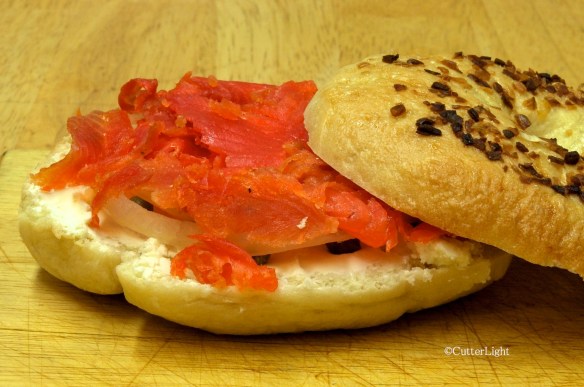
With a history dating back to the European Middle Ages, a number of methods for preparing lox and gravlax (or gravad lax) have evolved. We’ve settled on a dry-brining method that produces beautifully colored, deliciously flavored salmon fillets ready to be sliced translucently thin as on the above freshly made onion bagel.

Many cultures have a tradition of salting and burying fish, a technique that results in both preservation and fermentation. In fact, the origins of sushi can be traced back to fish prepared in this method. The grav of gravlax derives from the Scandinavian word for grave, and lax, salmon, has cognates in many old European languages. Thus gravlax literally means “buried salmon.”

Although preparing lox is somewhat labor intensive (the fillets are packed in salt under light pressure and liquid must be drained every 24 hours or so over a period of several days), since it isn’t smoked, anyone with a refrigerator can make it. Both sea salt and kosher salt produce good results, and we like to add a little brown sugar and black pepper. The dry brining method we prefer is known as “Scottish-style.” Other styles call for a wet brine. Dill, juniper berries and other seasonings are traditionally used in some recipes, but we prefer to add seasonings, if any, when the lox is being served.

In addition to traditional lox on a bagel with cream cheese, capers and a thin slice of onion, it’s also excellent on scrambled eggs, as a colorful finishing touch to deviled eggs, or as a wrap around any number of vegetables or other seafoods and served as an hors d’oeuvre.

Silver salmon head n

Always look for the freshest fish. Salmon should be bright with clear eyes and a pleasant smell reminiscent of the sea.

While historically lox was made with Atlantic salmon, these days, with Atlantic salmon populations in severe decline almost everywhere, the Atlantic salmon available in stores is farmed in places such as Norway, Scotland, British Columbia and Chile. For reasons rooted in flavor, sustainability and environmental impact, we prefer wild Pacific salmon. The salmon in the above photo is Coho (silver salmon), but any Pacific salmon species works well, as do large char. If you leave the skin on the fillets, it can later be used to create a crispy fried appetizer.

For the best presentation, lox should be sliced very thin. The best tool we’ve found for this job is a yanagiba – a Japanese sashimi knife. Our yanagiba has an extraordinarily sharp, nine-and-a-half inch blade. Both the sharpness and the length are important for slicing – not sawing – ultra thin pieces of salmon.

For a great recipe for smoked salmon, see:

Smoked Salmon with Soy Sauce and Brown Sugar Brine

For excellent homemade bagels, see: Bagels 3 Ways

———————————————————-

Homemade Lox

Ingredients

  • 1 lb. fresh salmon fillets, skin on. The fillets need not be scaled, but do take pains to ensure that all bones are removed.
  • ¼ cup coarse sea salt
  • ¼ cup brown sugar
  • 1 tbsp freshly ground black pepper

Directions

  1. Rinse fish and dry thoroughly.
  2. Remove any pin bones in fillet with tweezers or needle nose pliers.
  3. Mix together salt, sugar and pepper. (This recipe works well when multiplied. Our last batch was 5 pounds of fish.)
  4. Pack salt mixture around fish. You can do this skin side down.
  5. Sandwich two pieces of fish together, skin side out.
  6. Pack any leftover sugar mixture onto exposed fillet.
  7. Wrap sandwiched pieces tightly with plastic wrap. Leave sides slightly open so liquid can drain while the salmon cures.
  8. I use a poacher with a draining tray for the next step. Another method would be to place a steamer basket at the bottom of a plastic box. The idea is to create a raised place for the fish to set while being pressed from the top. This will allow the juice to drain away from the fish.
  9. Place sandwiched salmon in poacher.
  10. Place weight on top of all salmon pieces. I use large jars of jam or large containers of salt. I have seen pictures of people using bricks.
  11. Place poacher in refrigerator.
  12. For 7 days, every 24 hours pour off liquid from the bottom of the poacher and flip the fillet sandwiches.
  13. At the end of 7 days, take the salmon out of the plastic wrap and thoroughly rinse using really cold tap water.
  14. Thoroughly pat dry.
  15. Slice very thin and enjoy!
  16. Store leftovers in refrigerator or freeze in airtight containers.

Ikura: Curing Salmon Eggs

Ikura, transluscent, close_n

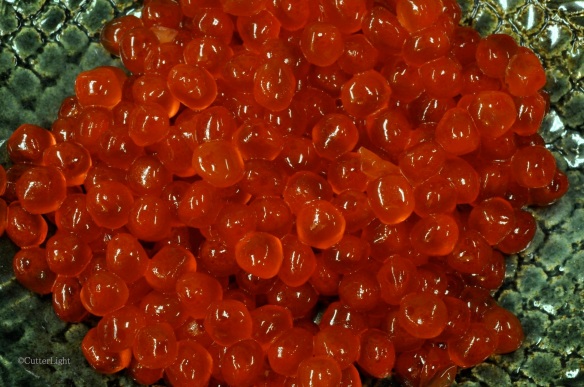
Like fire opals lit from within, freshly cured salmon eggs are ready to be served as ikura sushi, sprinkled on a bowl of rice (ikuradon), as a seafood garnish, with cream cheese and rice crackers, or simply gobbled by the spoonful!

At $40 to $50 a pound wholesale (and more expensive than that at the grocery store, when you can find it), cured salmon roe is not a regularly featured food in most kitchens. But if you catch your own salmon – or are friends with someone who does – it can be. Although the process of curing fresh salmon roe is somewhat time consuming, it is not difficult, and with patience almost anyone can turn out a sushi-grade batch of this delicacy.

Salmon eggs, King, in sacs_n

These two matching skeins of eggs, or roe sacs, from a Chinook salmon were frozen this past summer and went into one of our ice chests when we flew to our home in Point Hope, Alaska this fall. Japanese chefs typically prefer the eggs of chum salmon (they’re big), but the eggs from any salmon species are fine. In fact, very attractive cured roe can be made from the smaller eggs of large char, too.

Whether you use fresh or fresh-frozen eggs, the first step (once the roe is completely thawed) is to separate the individual eggs from the skein. The riper the eggs, the easier this process will be. There’s a trick that makes this process much easier than it might otherwise be. Bring a pot of water to a temperature of about 120 degrees Fahrenheit and plunge the whole skein into the hot water. Remove the pot from heat and gently swirl the eggs around. You’ll probably want a pair of nitrile or plastic gloves for this. As you do this, you’ll notice the eggs becoming opaque – cream colored. They’ll look as though you’ve ruined the batch. You haven’t.

Ikura after soaking in hot water_n

Hot water temporarily colors the roe and makes it easier to remove from the membranous roe sac. Provided you have kept the water temperature below 140° F, do not be concerned if your eggs become whiter and more opaque than those in the above photograph.

Next, pour the eggs and the water into a strainer. Plastic colanders, with their smooth surfaces, work well for this step. A lot of the extraneous tissue will drain off at this point. Place the strainer with the eggs in a large pot, fill with cold water, and continue to swirl the eggs around. The fat and other unwanted tissue will tend to rise above the eggs and can be skimmed off with a wire mesh skimmer. Some of the eggs will still have tissue attached. These can be cleaned by hand.

Ikura before and after being cured_n

Left: Salmon roe separated and cleaned and ready to be cured. Right: the finished product – fresh, salty ikura.

The next step is magical. For each cup of salmon roe, add just less than a teaspoon of salt. Finely ground sea salt or kosher salt works best for this step. Gently but thoroughly mix the salt into the eggs with your hands. The eggs will immediately begin to turn bright and translucent. Taste and roe and, if desired, add additional salt.

Finally, place the eggs in a strainer one more time to allow excess liquid to drain off. The cured roe will keep for several days in the refrigerator. It can also be kept in the freezer in tightly sealed jars.

Ikura on plaice plate_n

One you get the basic method down, you can substitute soy sauce for some of the salt or add a splash or two of sake (酒) to create subtly different flavors.

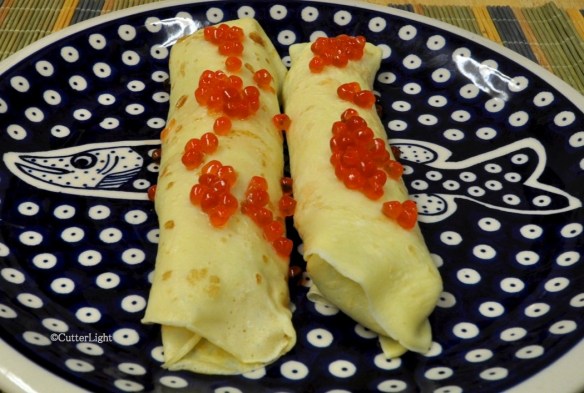
We serve ikura on everything from scrambled eggs to seafood pizza, as well as on traditional Japanese dishes such as chawan-mushi and zaru soba. Below, they add a splash of color and flavor to crepes wrapped around smoked Alaskan salmon and herbed cream cheese.

Crepes w smoked salmon & herbed cheese_n

The Darker the Syrup… Part 1: Maple-Glazed Salmon or Trout

Maple-glazed salmon and salmon spuds (home-fried Yukon golds and sweet potatoes) harken back to American culinary traditions predating recorded history. After several goes at a recipe worthy of this syrup, we came up with one that combined a little fire with the sweet for a taste that struck us as just right.

Maple syrup has been part of Northeastern American cooking since before recorded history. There are reports of Native Americans cooking venison in maple sap. Although these days it is perhaps best known as a topping for pancakes, waffles and French toast, its unique flavor is used to enhance smoked and cured meats and to sweeten a variety of desserts. Both maple syrup and maple sugar are the base for a number of tasty candies.

Gathered in early spring, about 40 quarts of maple sap is needed to produce just one quart of syrup, so it’s not surprising that this amber liquid is rather expensive; a bottle of quality, grade A syrup costs as much as decent bottle of bourbon. But once you’ve tasted authentic maple syrup, it’s awfully hard to go back to cheaper, corn-syrup based, artificially-flavored imitations.

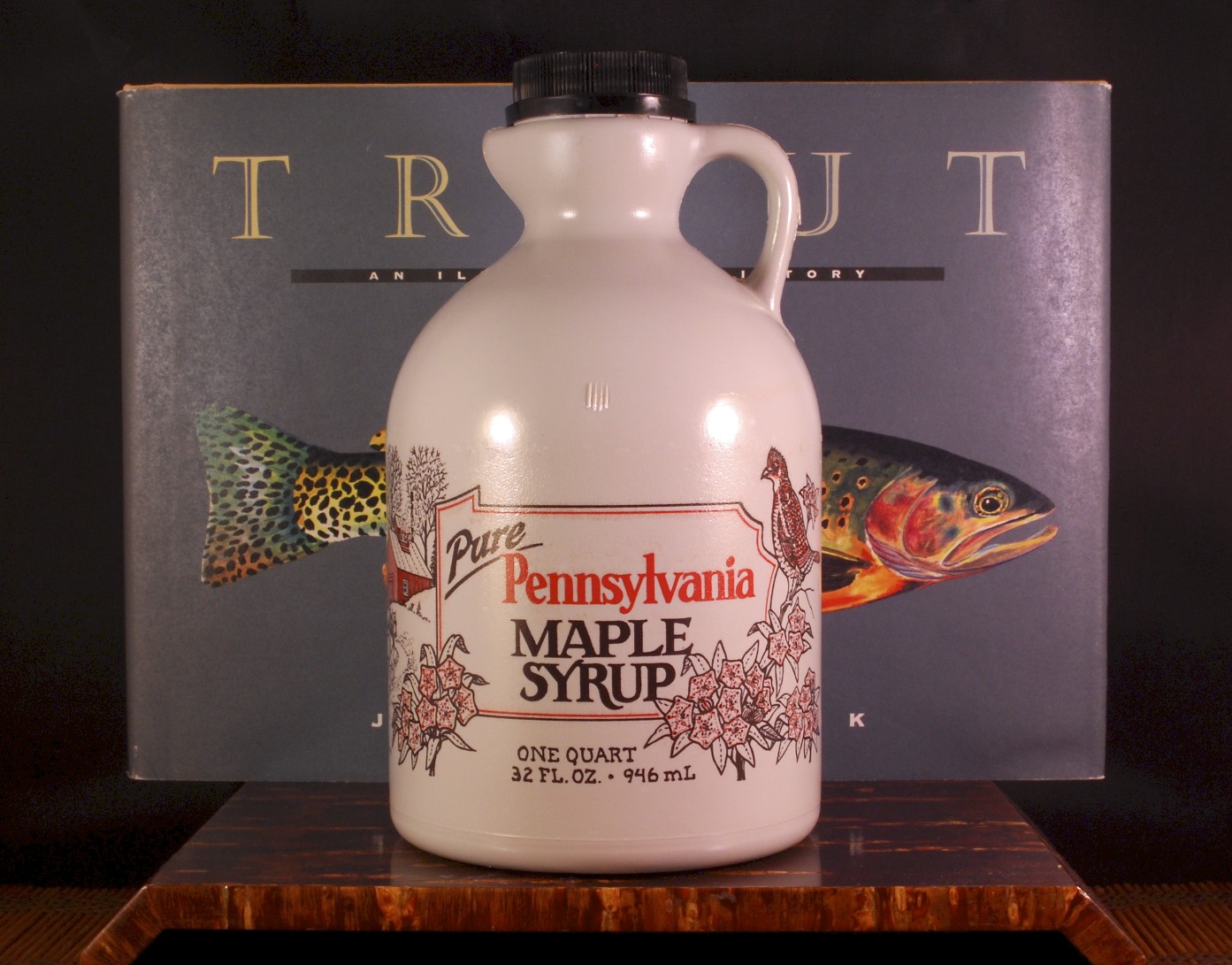
Maple syrup from Yeany’s Farm near Marionville, Pennsylvania, just a few miles from where I grew up. Located in Forest County, the Allegheny Mountains there are laced with the small trout streams I cut my teeth on as a young angler, and where, as the bottle suggests, I kicked out many a ruffed grouse on hikes through the woods. Much thanks to our friend and fellow Pennsylvanian Jack Williams for the thoughtful gift of this excellent syrup.

Maple-Glazed Salmon

Ingredients:

  • 2 salmon, charr or trout fillets, 6 ounces each, skin on
  • 1/3 cup soy sauce
  • 2 tablespoons maple syrup
  • 1/2 tsp powdered ginger
  • 2 cloves minced garlic (or use powdered garlic)
  • 1/3 cup water
  • 1/2 tablespoon sea salt
  • Penzeys Northwoods Fire Seasoning (or make your own blend in a food processor from ingredients such as salt, chipotle pepper, smoked paprika, Tellicherry pepper, garlic powder, oregano, marjoram, thyme, rosemary, cayenne, etc.)
  • olive oil

Directions:

  1. Mix together soy sauce, water, sea salt, ginger and garlic in a glass baking dish just large enough to hold both fillets side-by-side.
  2. Place fillets in marinade, skin side up. Marinate for 30 minutes or slightly longer.
  3. Meanwhile, place a broiling pan in the oven and preheat on high. (Pan should be positioned near the top of the oven – near the broiling element.)
  4. Place maple syrup in a small pan such as a small frying pan and heat over low heat until the syrup simmers and bubbles. Cook down until syrup is thick. Remove from heat and set aside.
  5. After 30 minutes, remove fillets from from marinade. Pat dry with paper towels and sprinkle with Northwoods Fire Seasoning.
  6. Coat broiling pan with olive oil. When sizzling hot, place fillets skin side down on pan. Broil for approximately 7 minutes.
  7. Spoon maple syrup on top of fillets. (You may have to reheat the syrup if it cools and hardens.) Broil for 3 more minutes. Serve hot.

The heat from the seasoning goes perfectly with the sweetness of the Maple syrup. These fillets are excellent with home-fried potatoes seasoned with soy sauce, Cholula sauce, and a couple shakes of Penzeys Southwest Seasoning or a similar mildly fiery seasoning. Enjoy the meal with a fine bourbon.

Click here for a delicious Maple Walnut Fudge recipe.

Baked Lingcod with Lobster Sauce: Celebrating The Rough, Tough King of Northern Pacific Reefs

Seasoned breadcrumbs, lobster sauce with Alaskan shrimp, and a couple dabs of lumpfish roe are fitting accompaniment for one of the sea’s most prized fish – lingcod. This fillet is served on a bed of couscous and is surrounded by thin slices of Coho salmon sashimi. Recipes can be found at the end of this article.

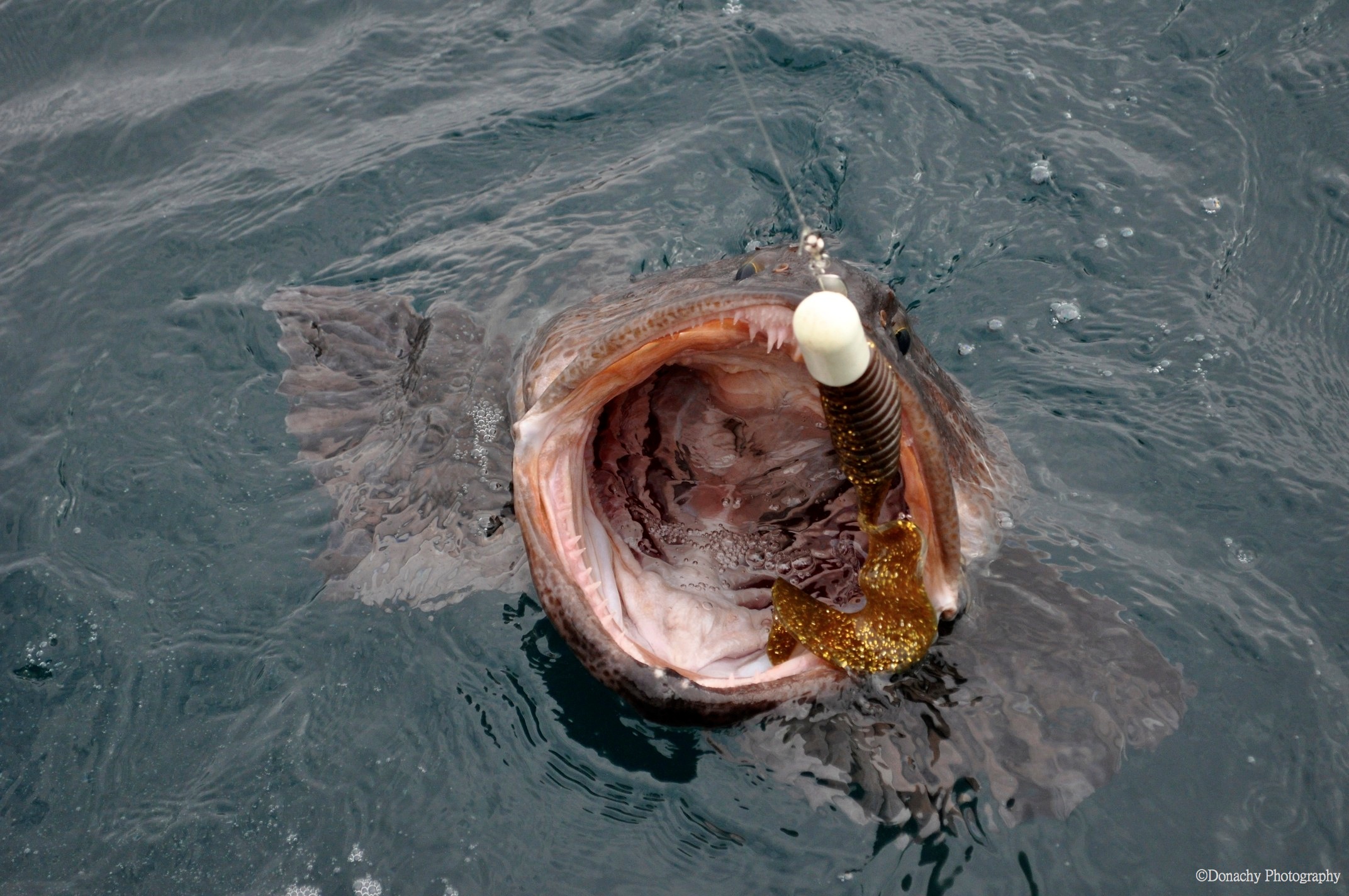
Lingcod (Ophiodon elongatus – long tooth) are a special fish. Their leopard-like spotting marks them for what they are: aggressive predators that, save for other, bigger lingcod, are at the top of the food chain among the fish with which they share rocky Northern Pacific reefs. They lie in ambush, waiting for unsuspecting greenling, rockfish, octopuses or whatever else might happen by, and then spring into action with massive jaws encircling 18 needle-sharp teeth. In the heart of their range – from British Columbia through Southcentral Alaska – 20 to 40-pound lingcod are common, with fish over 50 pounds showing up each year. The all-tackle IGFA record stands at 82 lb 9 0z and came from the Gulf of Alaska. Larger fish have been reported in commercial catches.

Welcoming a nice ling aboard our C-Dory 22 Angler. Note the two-pound rockfish hanging from the lower end of the metal jig.

A few of the usual customers you can expect to run into dropping a metal jig off a deep, rocky point in Alaska: salmon, rockfish, and a lingcod. 

Lings thump a jig like few other fish, and although pound-for-pound the smaller eight to 20-pounders seem to fight harder than the big cows, all lings generally give a good account of themselves, typically peeling line from reels as they dive for the rocks after being hooked. Many an angler has hooked a two or three pound

A 10″ twister tail grub on a 1 pound jighead is dwarfed in the maw of a 40-pounder. Root beer is a favorite color among lingcod fishermen. Here the color is paired with a glow-in-the-dark jig.

rockfish and while reeling in the catch had it violently intercepted by a lingcod. Frequently in these cases, the ling isn’t even hooked, but will hang onto its catch as tenaciously as a bulldog, fighting all the way to the boat where, if the angler is quick-witted enough, it can be gaffed or scooped up in a net. A moment’s hesitation, slack line, or lifting of the hitch-hiking ling’s head above water, however, can cause the predator to release its prey and nonchalantly swim back to the bottom.

If I had just one type of lure to fish rocky reefs, there’d be no contest as to what I’d choose: metal jigs in the right hands are deadly. 

On the table, it is our view that lingcod is unsurpassed among white-meated fish. It compares favorably with grouper, halibut, snapper, and similar fish whether baked, broiled, pan-fried or deep-fried. Interestingly, the meat of fresh lingcod is sometimes blue. This does not affect the flavor or texture at all, and when cooked, the meat comes out in big, white, flakey chunks.

Lingcod are susceptible to overfishing. Most of the ones we catch go back to keep growing and to sustain the population.

Baked Lingcod with Breadcrumbs

Ingredients (serves 4)

  • 24 ounce lingcod fillet cut into 4 separate pieces, skin removed
  • 1/2 cup olive oil, placed in a bowl
  • 2 cups seasoned breadcrumbs (We make our own breadcrumbs and season them with an Italian seasoning blend of our own making, but any good commercial blend is fine.)
  • salt
  • freshly ground pepper
  • Additional olive oil for baking

Directions

  1. Place a baking sheet on the center rack of an oven and preheat to 425 degrees F.
  2. Place breadcrumbs in a bowl and season with Italian seasoning, salt and pepper to taste. Then transfer 1 1/2 cups of breadcrumbs to a plate where you will roll the fillets, and spread the remaining 1/2 cup of breadcrumbs on a cutting board where you will rest the fillets once they’re coated with breadcrumbs.
  3. Dip fillets one at a time in olive oil and completely cover with oil. Then roll the fillet in the breadcrumbs, covering all sides. Place atop breadcrumbs on cutting board.
  4. Coat baking sheet with olive oil. When oil is sizzling hot, place fillets on baking sheet and bake for about 10 minutes (for fillets that are 1 inch thick). Breadcrumbs should be golden brown when fillet is done.
  5. Remove fillets from oven and place on a bed of couscous, rice or farfalle pasta.
  6. Spoon lobster sauce on fillets. Garnish with caviar, lumpfish roe or ikura (cured salmon eggs) and serve piping hot.

Lobster Sauce with Alaskan Shrimp

Ingredients

  • 1 tablespoon Better than Bouillon lobster base or similar lobster base
  • 1/4 pound peeled shrimp. Small shrimp are preferable; larger shrimp can but cut into smaller pieces.
  • 1/2 cup water
  • 1 cup heavy cream
  • 1 1/2 tablespoons rice flour (or substitute all-purpouse flour), as a thickener
  • 1 tablespoon butter
  • 1 tablespoon olive oil
  • 1/4 cup finely chopped sweet onion
  • 1/4 tsp paprika
  • 1 teaspoon dried tarragon
  • Freshly ground pepper
  • Salt, if needed

Directions

  1. In a small pot over medium-low heat, place olive oil and onions. Stir occasionally till onions begin to turn translucent.
  2. Lower heat and add water and lobster bouillon, stirring until mixed together.
  3. Add rice flour, tarragon, pepper, paprika and butter, stirring constantly until flour is completely mixed in and mixture begins to thicken. Cover and lower heat (use a flame tamer if necessary).
  4. Add cream a little at a time, stirring constantly, until desired consistency is achieved.
  5. Add shrimp. Continue to stir until shrimp is cooked through (about 2 to 3 minutes).
  6. Remove pan from heat, but keep warm until sauce is needed.

Alaska’s Permanent Fund and Trout Unlimited

Daughter Maia works a pool in the canyon country of Oregon’s Deschutes River.

This past summer, we fell in love with the film Away We Go in which Verona De Tessant (Maya Rudolph) and Burt Farlander (John Krasinski) find themselves in the enviable, daunting and sometimes scary position of realizing that, although they are not wealthy, they can live virtually anywhere they choose to. Their story unfolds as a touching, insightful comedy as they criss-cross North America searching for just the right place.

Verona: I can do my job from anywhere. And all you need’s a phone, right?

Burt: Well, we don’t want to go back to Chicago, do we?

Verona: No, we did Chicago.

Burt: I used to picture myself in Alaska. God, I love that landscape.

Verona: Alaska?

Burt: Yeah.

Verona: You’ve never mentioned Alaska.

Burt: Wow, they pay people to live in Alaska.

Burt’s line about people being paid to live in this great state gets laughs from audiences, although for different reasons depending on who the audience is. While it’s not true that people are paid to live here, there is something called the Permanent Fund. Without getting into the complexities, Alaska’s Permanent Fund is a constitutional provision established in 1976 that, essentially, taps oil revenues allowing the state government to pay an annual check to every Alaskan resident once they’ve lived here one fiscal year. The amount of the check varies from year to year. The current five-year average is $1,341. This year’s payout was lower, but still appreciable at $878.

That’s where Trout Unlimited comes in.

Barbra and I feel a deep commitment to helping to conserve, protect and restore America’s cold water resources. This commitment flows naturally from our love of salmon and trout and the beautiful and often pristine environs they inhabit and depend upon. Protecting our cold water resources, though, is about more than protecting fish. Trout Unlimited has worked in concert with others to bring down dams that are no longer useful – thus restoring countless miles of free flowing rivers and streams. They work with vineyard owners and other farmers to help ensure water-wise land use. And all across the landscape, TU has, for decades, been instrumental in ensuring that mining, timbering and other resource extraction be carried out with sensible respect for its impact on rivers, streams and estuaries when sensible respect is possible, and that extractive industries be turned away when they can’t conduct their business without destroying watersheds.

At present, TU is in the midst of several critical battles. One of them involves a multi-national mining proposal that threatens the world’s greatest salmon estuary, Bristol Bay. The proposed Pebble Mine could wipe out runs that number into the millions of salmon, as well as fishing jobs and subsistence fishing that generations upon generations of Alaskans (and salmon consumers throughout the world) have depended on. TU is also on the vanguard in fighting against irresponsible extraction of natural gas locked underground in Marcellus Shale. The extraction requires fracking, and it is posing a major risk to the streams and rivers I cut my teeth on as a young angler in Western Pennsylvania.

Again, this isn’t just about trout and salmon. We humans, too, drink the water, grow our farms and forests with it, admire its beauty, and are responsible for passing down a legacy of clean water to future generations.

And so, presented with money that is essentially a gift from our adopted state, the choice on how to spend it was easy. This year, Barbra and I will become lifetime members of Trout Unlimited.

After vetting dozens of organizations, we came to feel that in TU, our contributions will support the causes closest to our hearts. Not just for us, but for generations to come.

To read more about TU’s efforts, click on the following links:

Trout Unlimited’s Home Page

Marcellus Shale Project

Bristol Bay

Maia on a seldom-fished hike-in lake raptly watching her fly line for a twitch. 

Smoked Salmon Quiche and Butternut Squash Pie: Savory and Sweet Breakfast (or Dinner)

Savory smoked salmon quiche, sweet butternut squash tarts, a strip of smoked salmon and a mug of black French roast coffee make for a hearty Fisherman’s Breakfast. 

Whether served as breakfast, lunch or dinner, we’re big fans of quiche. It’s easy to make, and since it’s delicious either hot or cold, there are no complaints about leftovers. In making this particular quiche, I set out to resolve two questions. First, would smoked salmon that has been frozen and then thawed work well, and second would the Penzeys dried shallots I’d recently gotten live up to their billing. I’m happy to report that the smoked salmon seemed to suffer not at all from freezing, and the dried shallots were flavorful enough to merit making them a standard part of our kitchen here in the Alaskan bush.

For the squash pie, I used a modification of Craig Claiborne’s pumpkin pie recipe that has long served well. Since the baking times and temperatures for these two pies was similar, I baked them together. We had a bit of squash purée and pie crust dough left over, so Barbra used a muffin pan to make a few squash tarts.

Smoked Salmon Quiche

Ingredients:

  • 1 pie crust
  • 4 large eggs
  • 3/4 cup heavy cream
  • 1/2 cup milk
  • 1 cup shredded Swiss or Gruyère cheese
  • 1/4 cup shallots chopped fine (I used Penzeys dried shallots,which were excellent)
  • 1/2 cup mushrooms, cut into less-than-bite-sized pieces
  • 1/3 to 1/2 pound smoked salmon, cut into less-than-bite-sized pieces
  • 1/3 cup sun dried tomatoes, cut into small pieces
  • 1 tsp dried majoram
  • sea salt to taste
  • freshly ground pepper to taste

Directions:

  1. Preheat oven to 350 degrees F. Bake pie crust for 20 minutes. Halfway through baking, cover edges with aluminum foil or a pie ring to prevent edge of crust from burning.
  2. Remove the pie crust from the oven and set aside.
  3. Turn oven up to 400 degrees F.
  4. Whisk eggs until blended. Add cream, milk, shallots, marjoram, salt and pepper and mix together.
  5. Add mushrooms, sun-dried tomatoes and smoked salmon, mixing together gently so as not to break up the salmon.
  6. Pour and scrape ingredients into the baked pie crust and place on oven’s center rack. You do not need to place on a baking sheet.
  7. Bake quiche at 400 degrees F. for 15 minutes. Turn down oven to 350 degrees F. and continue baking for 25 – 35 minutes – until a wooden toothpick poked into the center comes out clean.
  8. Serve hot or cold.

Butternut Squash Pie

Ingredients:

  • 1 pie crust
  • 3 cups butternut squash (or pumpkin) purée
  • 1/2 cup sugar
  • 1/2 tsp salt
  • 1/2 tsp grated nutmeg
  • 1/2 tsp cinnamon
  • 1/2 tsp powdered ginger
  • 3 large eggs, lightly whisked
  • 2 tablespoons Bourbon (optional, but very tasty)
  • 1 cup heavy cream

Directions:

  1. Preheat oven to 425 degrees F.
  2. Have a chilled, unbaked pie crust ready.
  3. Squash purée: Cut away the stem of the squash and discard. Then slice squash into into round discs approximately 1 inch thick. Cut the disks into 4 to 6 parts. When you get to the bulb, remove the seeds and fibrous part and slice into 6 strips as you would a pumpkin or melon. Steam, oven roast or grill the squash until a fork passes easily through the flesh. Let cool and cut off the skin. Use a stick blender, regular blender or food processor to purée the squash.
  4. Combine the purée with all the other ingredients in a large mixing bowl, blend together, and pour into the chilled pie crust.
  5. Place on oven’s center rack. Bake for 15 minutes, then reduce heat to 350 degrees F. and continue baking for 30 or 40 minutes, until the filling is set. Cracks will begin to appear on the surface of the pie when the filling is set.
  6. Serve warm or chilled, with or without whipped cream.

For a great recipe for making smoked salmon, see Smoked Salmon with Soy Sauce and Brown Sugar Brine.

Smoked Salmon with Soy Sauce and Brown Sugar Brine

Smoked salmon is a highly anticipated delicacy. With another successful fishing season behind us, I used a tried and true recipe to turn out several pounds worth.

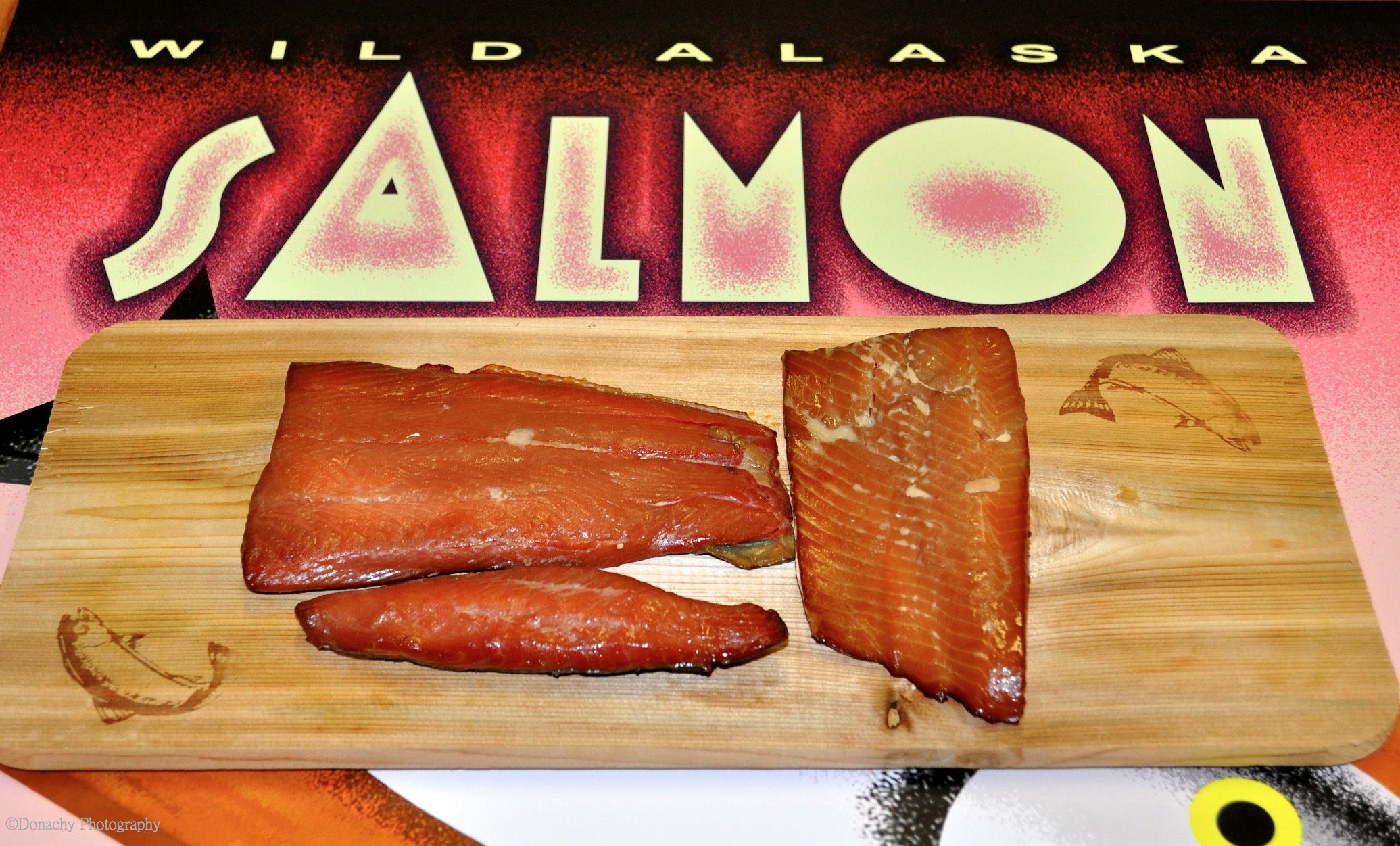
Smoked salmon mousse, smoked salmon omeletes, smoked salmon on pasta, and smoked salmon on crackers are among the many great reasons to set aside a couple of days and smoke part of your catch. Once you’ve done a batch of smoked fish, it’s easy to appreciate why it’s expensive. Smoking takes time. But the results are very much worth it. There’s really not much to our favorite recipe. From year to year and batch to batch, I might vary the amount of garlic or ginger or try a new spice or seasoning. But other than that… well, here it is.

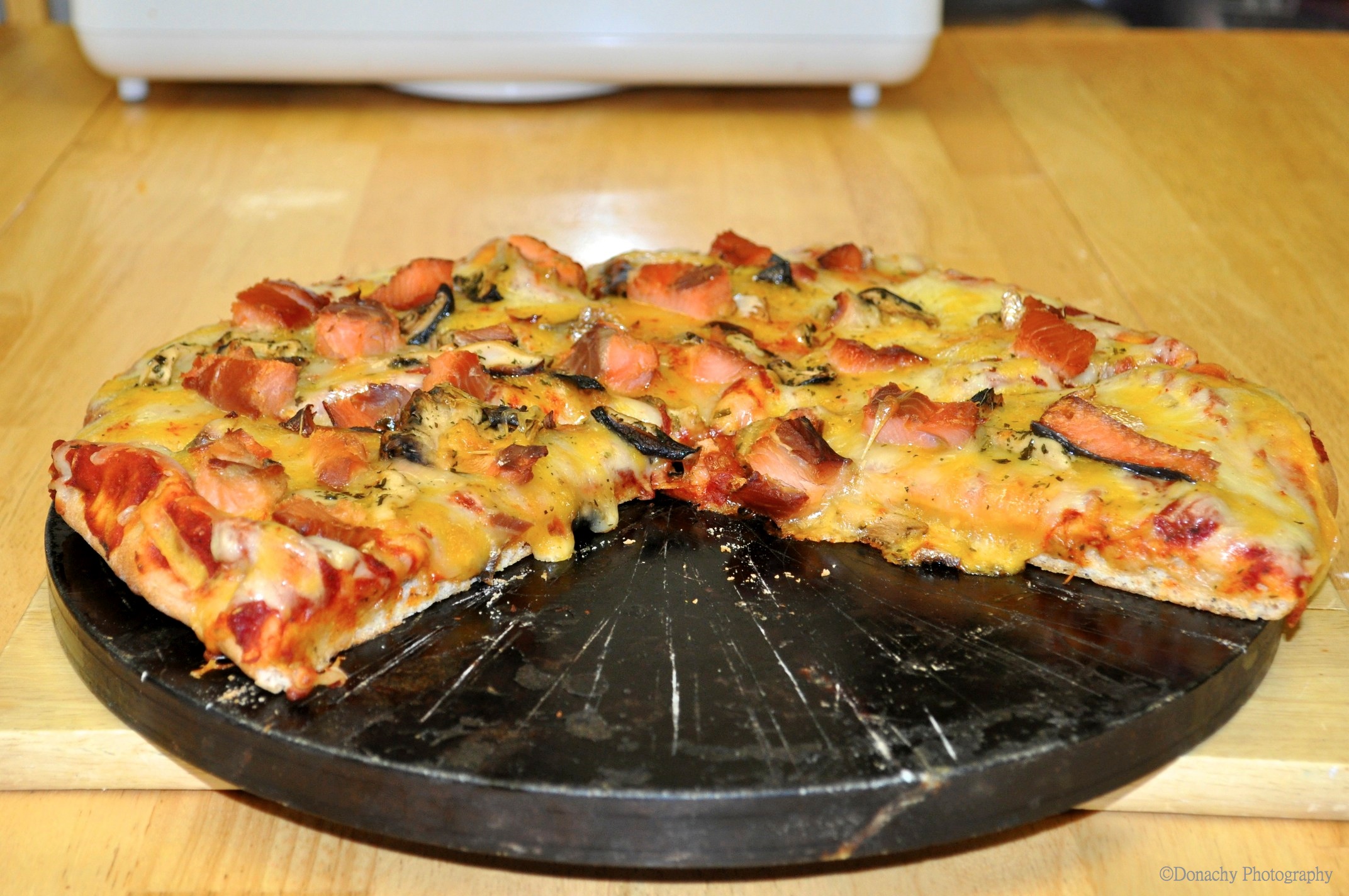
Smoked salmon pizza always draws rave reviews. 

Smoked Salmon with Soy Sauce and Brown Sugar Brine

The basic recipe is 4 parts water to 1 part soy sauce with 1/4 cup sea salt for every cup of soy sauce. Figure about 1 cup brine per pound of fish. Add brown sugar, garlic and ginger to taste. White pepper, cayenne pepper, and other seasonings and spices can be added to create unique brines.

Pyrex clear glass bakeware with their plastic lids is perfect for marinating the fillets. If you’re using a Big Chief or Little Chief smoker, the metal racks fit atop the empty Pyrex containers – and with the fillets atop the racks this setup works well for drying the fillets in the refrigerator prior to smoking.

Ingredients: For eight pounds of salmon, trout, sturgeon or other fish

  • 8 pounds fillets, skin on, rinsed, patted dry, cut into small pieces (a good size is about 3″ x 6″, but smaller or slightly larger is fine)
  • 8 cups water
  • 2 cups soy sauce (Kikkoman is our favorite)
  • 1 1/2 cups brown sugar
  • 1/2 cup sea salt or kosher salt
  • 1 1/2 tbsp granulated garlic
  • 1 tbsp ginger

Directions:

  1. Arrange salmon fillets in glass baking dishes or similar non-reactive containers.
  2. Mix remaining ingredients in a large bowl.
  3. Pour mixture over fillets, making sure they are covered, or until they float.
  4. Cover containers and marinate for about 8 hours (or overnight) in the refrigerator.
  5. Remove fillets from brine, pat dry with paper towels, and arrange on racks to dry in the refrigerator for 6 to 8 hours (or overnight)
  6. Smoke fish according to your smoker’s directions with alder wood, mesquite, fruit tree or hickory chips. Check frequently, keeping in mind that air temperature will influence smoking time. Typical smoking times range from 6 to 8 hours. A slightly wet product is best suited for many of the recipes we enjoy. For straight snacking, a drier product may be preferred.

Don’t have a smoker? Excellent smoked fish can be made on a charcoal grill. I’ve done small batches on my little Weber Smokey Joe and larger batches on Weber’s larger models.

Looking for a recipe to use your smoked salmon in? Type “smoked salmon” into the search tool on this page for some great ideas.

Leaving Seward, 2012

Rainbow over Cook Inlet – this photo was taken the second week of August, our last week in Seward.

For us, our summer in Seward came to an end in early August. Our sailboat, Bandon, is sitting on the hard with a fresh coat of bottom paint. We are already counting the days till next May when we’ll move back aboard.

Below: There are days on the Kenai Peninsula when it looks and even feels like we could be in Hawaii or some South Pacific paradise. As it is, we are in a paradise – Alaska. We can’t imagine a better place to cut our teeth as sailors than in Seward.