Birds of Chignik Lake: Greater Yellowlegs – the Treetop Shorebird

Fattening up for the fall migration, this Greater Yellowlegs took advantage of high water on the lake to snag a few Nine-spine Sticklebacks tucked up in grass beds. (Chignik Lake, August 20, 2018)

The Greater Yellowleg’s piercing call can sound something like a car alarm going off, plenty loud enough to have stirred us from sleep during their spring and fall migration through The Chigniks. If you happen near their nest, you’ll know it. These are fairly large as shorebirds go, averaging about 14 inches in length, and they fiercely defend their territory with ear-piercingly shrill cries.

A treetop is generally not the place to look for shorebirds, but rules have exceptions and so it is with Greater Yellowlegs. While most of the year marshes, mudflats and other wetlands are a good place to look for this species. when they’re on their breeding grounds, check the trees. Yellowlegs use the vantage to keep watch over nests. (Chignik Lake, June 4, 2019)

Their nests are often located near small trees or other features in boggy terrain, which makes the landscape around Chignik Lake ideal breeding ground. While nesting, their diet consists mainly of insects. But during migration, they typically switch to meatier fare such as small fish. Active hunters, watching one high-step along a shoreline as it deftly uses its bill like chopsticks to capture whatever two-inch species might be available is to study a true master. The ones I’ve seen need work at at it only briefly before getting a full belly and treating themselves to a nap.
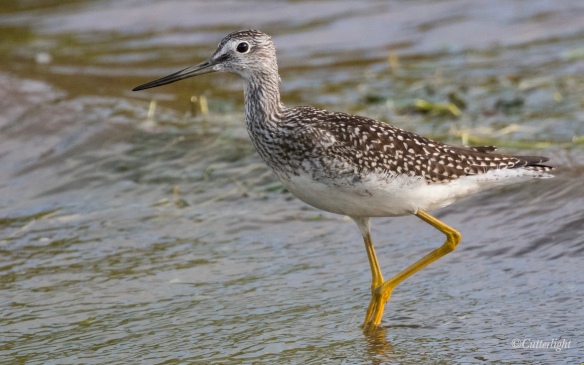
Stepping along the shoreline. (Chignik Lake, August 20, 2018)

With a salmon parr (probably Sockeye). (Chignik Lake, August 20, 2018)

Nap time. (Chignik Lake, August 20, 2018)

Greater Yellowlegs Range Map: with permission from The Cornell Lab of Ornithology, Birds of the World

Greater Yellowlegs Tringa melanoleuca
Order: Charadriiformes
Family: Scolopacidae
Tringa: New Latin, from Ancient Greek trungus = white-tailed, bobbing shorebird mentioned by Aristotle.
melanoleuca: from Ancient Greek melas = black + leukos = white

Status at Chignik Lake, 2016-19: Common Spring through early Fall

David Narver, Birds of the Chignik River Drainage, summers 1960-63: Common

Alaska Peninsula and Becharof National Wildlife Refuge Bird List, 2010Common in Spring and Summer; Uncommon in Fall; Absent in Winter

Aniakchak National Monument and Preserve Bird List: Present
loon silhouette

Previous: Sandhill Crane – Wild, Resounding Tremolo (Check out the video/audio clip!)

Next Article: Wandering Tattler – Sojourner from Far North Mountain Streams to Tropical Pacific Islands

*For a clickable list of bird species and additional information about this project, click here: Birds of Chignik Lake

© Photographs, images and text by Jack Donachy unless otherwise noted.

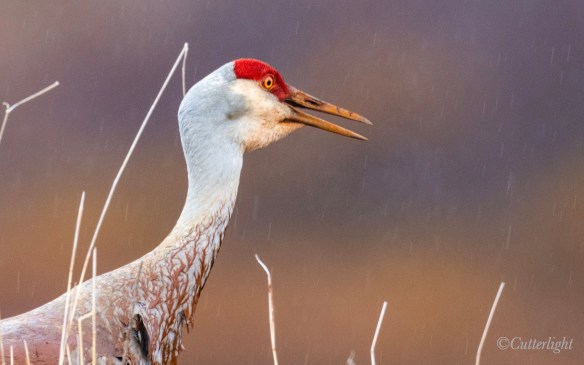
Birds of Chignik Lake: Sandhill Cranes – Wild, Resounding Tremolo (Check out the video/audio clip!)

Gingerly lifting a muddy foot as he displays his stunning plumage, a Sandhill Crane steps through the Berry Bog and wild Iris leaves. Birders who observe Sandhills only in their wintering range may think of their plumage as gray. But on breeding grounds, cranes’ feathers take on a rich, rusty hue. (Chignik Lake, May 22, 2019)

One of the aspects of rural life we most enjoy is the changing of the seasons and the wild music that accompanies those changes. Springtime in The Chigniks ushers in a concerto of rainfall drumming on roofs, wind-driven waves lapping the shore, the crunching tread of bear paws on wet sand, owls hooting in the night, and all manner of songs from birds returning to their familiar breeding grounds: the eerie reverberations of winnowing snipe, the Golden-crowned Sparrow’s plaintive melody, geese cackling high over head, and myriad soli performed by robins, warblers, sparrows, thrushes, wrens, ducks and gulls. But without a doubt, the most iconic of all these vocalizations is the trumpeting tremolo of the Sandhill Crane. We were lucky enough to record a mated pair, heads thrown back, singing in full throat at a very close distance. If you’ve never heard such a performance, you’ve got to click on the video below.

We found this male feeding in a small, winter-browned field with his mate on a rainy day in Spring. (Chignik Lake, May 7, 2019)

These are huge birds. Fully grown they can measure over four feet in height (120 cm+), and if you are lucky enough to be near one, you might swear they go a foot beyond that. The Chigniks abound in the kind of wet, boggy habitat these birds are drawn to both for nesting and for feeding. They’ll eat just about anything – insects, small animals, berries and other plant material all figure into their diet.

Sandhills begin breeding as early as the age of two or as late as the age of seven, and once they have found each other they will remain bonded for a lifespan that might reach into the mid-thirties. They lay one or two eggs. A day after hatching, chicks are ready to follow the parents. Both feed their offspring. ((Chignik Lake, May 4, 2019)

Cranes generally arrive at Chignik Lake in late April, their brassy calls resonating across the lake. At the end of summer, after the chicks have been reared, they depart for wintering grounds to the south. Although they are hunted in some areas, Sandhill Crane numbers are stable. In fact, they appear to be expanding their wintering range to include locations further north.

With an especially long, curling esophagus designed for volume, the music these birds produce is astonishing. Note that toward the end of this clip, it appears that the larger bird, which I presume to be the male, is taking subtle cues from the smaller bird. I kept this video low resolution for faster downloads. (Chignik Lake, May 4, 2019) 

Sandhill Crane Range Map: with permission from The Cornell Lab of Ornithology, Birds of the World

Sandhill Crane Antigone canadensis
Order: Gruiformes
Family: Gruidae
Antigone: Etymology apparently is confused. Carlos Linnaeus chose this genus name after a Greek tragedy in which a character, Antigone, was first cursed when the goddess Hera turned her hair to snakes, but was later redeemed when other gods transformed her into a stork, which, Linnaeus’s either mistranslated or took as sufficiently close enough to crane as to merit the use of this appellation in identifying this genus. (The Antigone herein described is not to be confused with the daughter of Oedipus from the tragic play titled Antigone.)
canadensis: Latinized for Canada

Status at Chignik Lake, 2016-19: Common throughout drainage from approximately Late April through Early September

David Narver, Birds of the Chignik River Drainage, summers 1960-63: Occasionally observed but Commonly Heard at Black Lake

Alaska Peninsula and Becharof National Wildlife Refuge Bird List, 2010Common in Spring, Summer and Fall; Absent in Winter

Aniakchak National Monument and Preserve Bird List: Present

loon silhouette

Previous: Peregrine Falcon

Next Article: Greater Yellowlegs – the Treetop Shorebird

*For a clickable list of bird species and additional information about this project, click here: Birds of Chignik Lake

© Photographs, images and text by Jack Donachy unless otherwise noted.
Birds of Chignik Lake: Peregrine Falcon

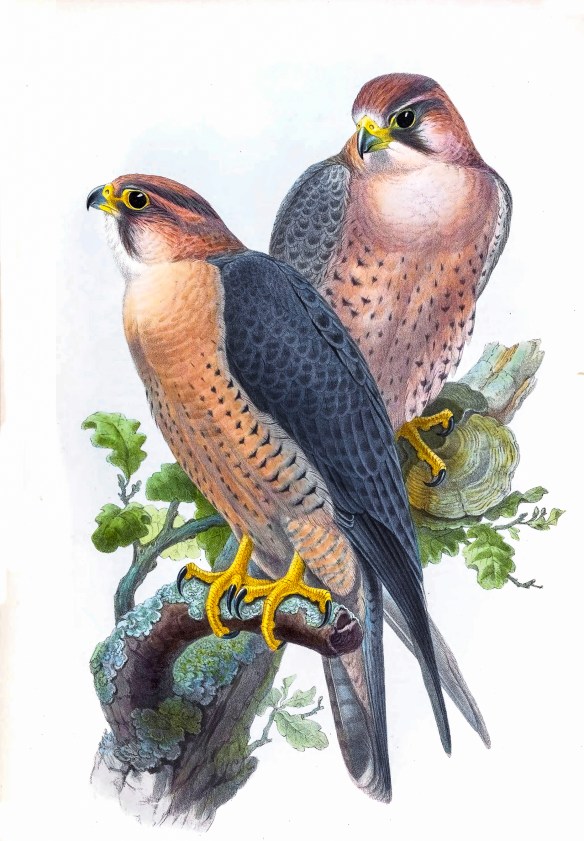
Falco peregrinus, John Gould, English Ornithologist, (1804-1881). Wikipedia

I was driving across the bridge spanning Young’s Bay near Astoria, Oregon on the lower Columbia River when, seemingly from the sky, a single drop of blood spattered on my windshield. It was, of course, too late to look up and gather a clue; I had already passed beneath the overhead girders where that drop had originated. But I had my suspicions.

As soon as I got to the end of the bridge and could turn around, I headed back along the course I had just traveled. Sure enough, perched on a steel beam, a Peregrine Falcon sat, claws buried in the remains of one of the bridge’s  Rock Doves – the latter known colloquially as common pigeon. In an instant I was transported decades back in time to Jean Craighead George’s magical novel My Side of the Mountain and Sam’s Peregrine Falcon, Frightful – boyhood fantasies of running off into the wilderness and living in a hollowed-out tree with my pet falcon and other woodland friends.

Duck Hawks, Louis Agassiz Fuertes, New York Ornithologist (1874-1927), Wikipedia. The original is housed in the New York State Museum. A print is used in Birds of America, Ed. T. Gilbert Pearson, 2017.

I haven’t gotten many good looks at these remarkable birds. Usually I see them as a blur while out fishing along some rocky coast. A duck or shorebird whizzes by in a panic, I look up, and there’s the falcon angling toward its intended prey, the pair gone in a flash, the outcome yet in question.

Formerly known as Duck Hawks, Peregrines are never abundant, but you might catch a glimpse of one or two along just about any rocky coastline in the world. Mudflats where shorebirds gather, too, are a good place to keep a sharp eye out. And don’t be surprised if you see a pair soaring among city skyscrapers. Building ledges make ideal nesting sites, and an abundance of the aforementioned pigeons ensure for a steady supply of food for adults and chicks.

We encountered a couple of them on a recent bicycle tour circumnavigating coastal Hokkaido, Japan’s northernmost island. Very occasionally, in fact rarely, we’ve looked up or down the Chignik Lake or River and caught sight of a specimen speeding one way or the other – southeast toward the Alaska Gulf; north toward the Bering Sea. At about 16 inches long and with a wingspan of 41 inches, Peregrines in flight appear nearly twice as large as the only falcon regularly seen along The Chignik, Merlins.

I’ve never seen a Peregrine perched along the drainage. The habitat isn’t quite right for them. These are birds of rocky cliffs. No doubt a better place to look for them would be on the Gulf side around Chignik Bay or Castle Cape.

Duck Hawks, John J. Audubon, American Ornithologist, 1785-1851. Wikipedia

Peregrine Falcon Range Map: with permission from The Cornell Lab of Ornithology, Birds of the World

Peregrine Falcon Falco peregrinus
Order: Falconiformes
Family: Falconidae
Falco: from Latin falcis = sickle
peregrinus: from Latin for traveller. The medieval Latin phrase Falco peregrinus originated with German theologian and scholar Albertus Magnus (before 1200 to 1280) who was referring to the manner in which young Peregrines were obtained for falconry. Because the nests were generally inaccessible, young falcons were taken while journeying to their breeding grounds.

Status at Chignik Lake, 2016-19: Rare

David Narver, Birds of the Chignik River Drainage, summers 1960-63: Occasional near Chignik Lake

Alaska Peninsula and Becharof National Wildlife Refuge Bird List, 2010Rare in all Seasons

Aniakchak National Monument and Preserve Bird List: Present

loon silhouette

Previous: Merlin – Lady of the Lake

Next Article: Sandhill Crane – Wild, Resounding Tremolo

*For a clickable list of bird species and additional information about this project, click here: Birds of Chignik Lake

© Photographs, images and text by Jack Donachy unless otherwise noted.

Birds of Chignik Lake: Merlin – Lady of the Lake

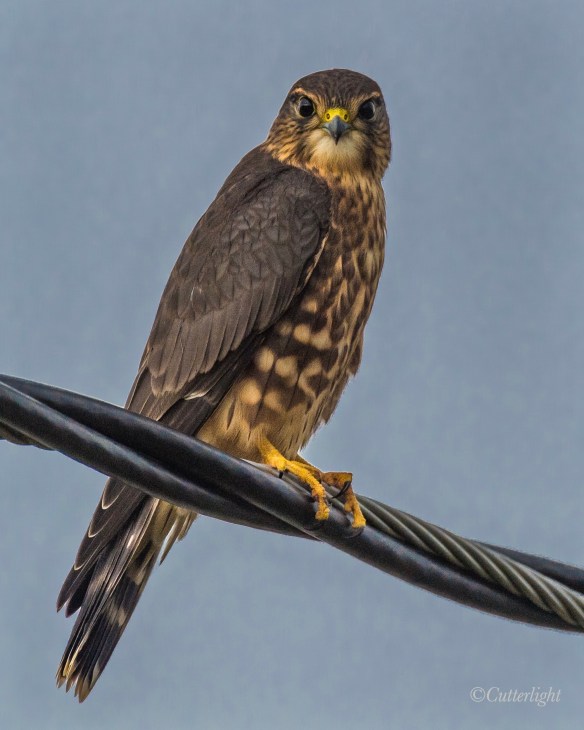
Male Merlin, Chignik Lake. In medieval times in Europe, Merlins were knows as “Lady Hawks” as it was noble women who most often used them in falconry. They are powerful fliers and deft hunters, adapted to chase down passerines, small shorebirds and occasional quail. (August 22, 2018)

Although I’m not certain as to the precise whereabouts, somewhere along the Chignik River there is a magpie nest or similar assemblage of sticks no longer used by its original inhabitants that a pair of Merlins move into each year and make their own. Merlins like nests; they just don’t like building them.

Hunting at White Spruce Grove. (Chignik Lake, August 19, 2016)

It takes a sharp eye to spot these little falcons – they zip by in a blur. My first encounter with Chignik Lake’s Merlins came shortly after I arrived that first year and decided to take on this project. On a dewy morning in mid-August, I hiked the half-mile to the grove of White Spruce where I planned to look for birds. Along the way, I noticed a phenomenon I’d never before seen: a slug was descending from a spruce bough by means of a very fine strand of… mucous? That’s what the filament appeared to be. Our slugs are tiny (and our snails are even tinier – I’ll show you when I write up the article on Pacific Wrens), but even so, I found it surprising that whatever this slug was discharging would be strong enough to support its weight. Perhaps this behavior is old hat to macalogists, but I couldn’t find much information about it.

A new one for me – slug thread. (Chignik Lake, August 19, 2016)

I’d set up my camera tripod on the falling-in porch of a tumbling down house atop a bluff that gave me a view overlooking a patch of red-ripe currants and the river in one direction, a hillside salmonberry brake in another, and a vantage right into the tops of the trees at White Spruce Grove in another. At the time, I was shooting with a Nikon D4 and a Nikkor 200-400 lens with a 1.4 teleconverter, giving me an effective range of 550 mm – albeit with a bit of a focusing challenge.

Birds, berries, and salmon, the bluff overlooking The Bend on the Chignik River is one of my favorite places to shoot. (Chignik Lake, August 16, 2016)

That morning, I’d already documented Sandhill Cranes, Wilson’s, Yellow and Orange-crowned Warblers, Fox Sparrows, Hermit Thrushes, a Pacific Wren, Black-capped Chickadees, Glaucous-winged Gulls, Mew Gulls, Bald Eagles, magpies, Common Ravens and a Wilson’s Snipe that exploded from a tangle of Alders right in front of me and practically flew into my head. The Lake’s swallows – Violet-greens, Tree and Bank – had departed by the beginning of August. Most of the Fireweed had gone to seed, but Yarrow and Wild Geranium were still in bloom.  Out on the river, early Silvers – Coho Salmon – were announcing their arrival with leaps and resounding splashes. Further down, I could hear a kingfisher’s rattle.

At about 10 inches in length and weighing less than half a pound, these falcons are tiny dynamos. Unlike Peregrine Falcons, they don’t dive from above at their prey, but instead either chase down the passerines they feed on or attack them from below. (Chignik Lake, August 17, 2018)

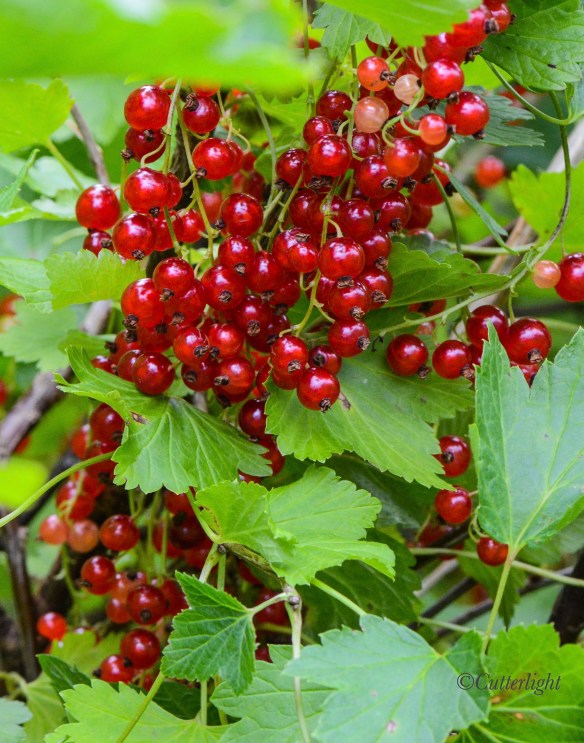
Feral Currants (Chignik Lake, August 17, 2016)

By the first week in August, the salmonberry season is over and the swallows are gone. Down at The Bend, raspberries begin to ripen. Fireweed starts to go to seed as the raspberries pass their peak. Then the currants ripen – cascades of red jewels. Up at the berry bog, the blueberries are ready. The Silvers are in, but the warblers will soon be leaving and when they’re gone, so to will be the Merlins. With so many choices tugging in different directions, life at The Lake can be rather hectic.

Merlin Range Map: with permission from The Cornell Lab of Ornithology, Birds of the World

Merlin Falco columbarius
Order: Falconiformes
Family: Falconidae
Falco: from Latin falcis = sickle
columbarius: from Latin columba = dove

Status at Chignik Lake, 2016-19: Regular inhabitants during summer. Absent in other Seasons

David Narver, Birds of the Chignik River Drainage, summers 1960-63: Rare on Chignik River (Listed as Pigeon Hawk)

Alaska Peninsula and Becharof National Wildlife Refuge Bird List, 2010Uncommon in Spring, Summer and Fall; Rare in Winter

Aniakchak National Monument and Preserve Bird List: Not Reported

loon silhouette

Previous: Bald Eagle – the Song of Summer

Next Article: Peregrine Falcon

*For a clickable list of bird species and additional information about this project, click here: Birds of Chignik Lake

© Photographs, images and text by Jack Donachy unless otherwise noted.

Birds of Chignik Lake: Bald Eagle – the Song of Summer

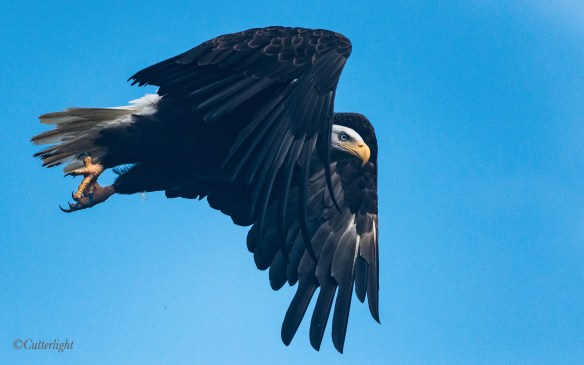
I’ve heard it said that Bald Eagles are so common in Alaska that after awhile people stop noticing them. I am happy to report that I’ve never met a soul so calloused as to be oblivious to these regal creatures. (Chignik Lake, May 20, 2019)

Late May, sometime around six AM, sun barely peeking above the mountains rimming the lake, and I’m wide awake. With a month remaining till the summer solstice, already we’ll have 17 hours of daylight – three more hours than on this same day back in my native Pennsylvania. The calendar says it’s still spring. But up here in The Chigniks, summer has begun.

Fish Hooks

It’s not the first hints of golden-rose sunshine filtering through the blinds on our bedroom windows pulling my eyelids open, and I don’t own an alarm clock and even if I knew how to use the cell phone Barbra and I share as an alarm, I wouldn’t. There’s better music than that to wake to.

Eagle Song

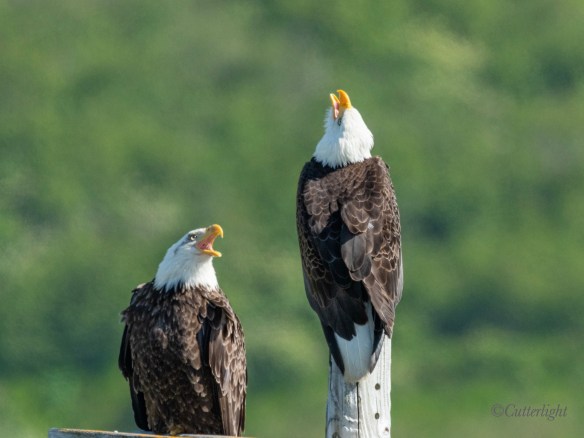
Not 30 yards outside my window a mated pair of Bald Eagles have taken up a familiar perch atop a utility pole offering a sweeping view of the lake. Their piping – sonorous, joyous -, sends an electrifying rush through my entire being. I know what their song is about.

Juvenile

The salmon have returned.

Perhaps just a few this morning, the first trickle, silvery-blue backs glistening in the early light as they push along the shoreline heading up the lake to Clarks River, or further up to the Alec, or to Hatchery Beach, which is not a hatchery at all but a stretch of lake shoreline where underwater, mountain-fed springs push up through clean gravel to create perfect spawning habitat for Sockeye Salmon.

These first few fish are but the vanguard of runs that will continue into fall and that will be counted in the hundreds of thousands.

Out in the kitchen, fixing breakfast for Barbra and myself, I find that I, too, am singing. It’s been a long, wet winter. Summer is finally here. How could I not?

Fall salmon

Bald Eagle Range Map: with permission from The Cornell Lab of Ornithology, Birds of the World

Bald Eagle Haliaeetus leucocephalus
Order: Accipitriformes
Family: Accipitridae
Haliaeetus: Latin derived from Ancient Greek haliaetos = Sea Eagle
leucocephalus: Latinized from Ancient Greek leukos = white + kephalḗ = head. The “bald” in Bald Eagle stems from older English in which bald could be a referent to white. A related term, piebald, refers to a contrasting pattern of colors, often of white and black, which is also evident on the Bald Eagle.

Status at Chignik Lake, 2016-19: Common Spring, Summer and Fall; Less Common in Winter and may be Absent on drainage in coldest months, especially if water is iced over

David Narver, Birds of the Chignik River Drainage, summers 1960-63: Common along Chignik and Black Rivers; Occasional on both lakes

Alaska Peninsula and Becharof National Wildlife Refuge Bird List, 2010Common in all Seasons

Aniakchak National Monument and Preserve Bird List: Present

loon silhouette

Previous: Rough-legged Hawk – Buteo of the Far North

Next Article: Merlin – Lady of the Lake

*For a clickable list of bird species and additional information about this project, click here: Birds of Chignik Lake

© Photographs, images and text by Jack Donachy unless otherwise noted.
Birds of Chignik Lake: Rough-legged Hawk – Buteo of the Far North

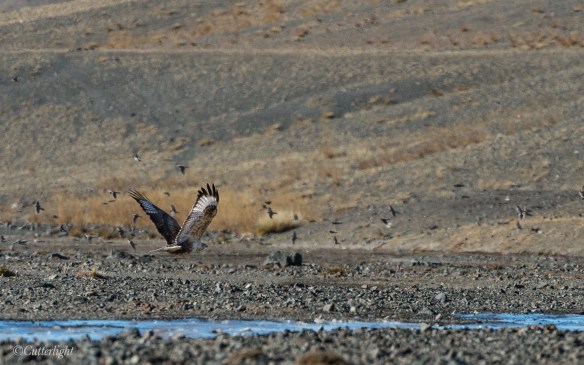
To the extent possible in this project, I’m using images captured in the study area around Chignik Lake. However, since luck conspired against me getting a usable photo of a Rough-legged Hawk in The Chigniks, I’m using photographs of Rough-leggeds I took in Mongolia. There is essentially no difference from continent to continent in the overall appearance of this circumpolar species. (Gobi Desert, Mongolia, October 2014)

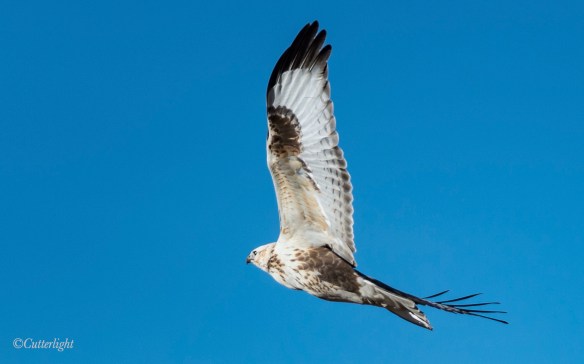
This is the hawk of the north, the only species of Buteo to breed in Arctic regions. Around the village of Chignik Lake, we’ve seen both the typical light-colored form as well as an example of the dark morph – an almost uniformly chocolate brown bird when observed roosting, and in flight showing a much darker overall wing, belly and tail band. On lighter birds, when in flight look for almost light-colored wings accented with a dark fringe, dark wingtips and a distinctively dark patch at the carpal joint (wing wrist).

Although this cruising Rough-legged has a flock of Wheatears in a panic, this species has a decided preference for mice, voles and other small rodents. (Gobi Desert, Mongolia, October 2014)

A bulky shape, light, round head, heavily feathered legs and small talons are good field markers when identifying perched Rough-leggeds. In flight, look for a dark wrist patch on the underwing, dark flanks and belly, dark wingtips, and a dark tail band. These are reported to be the most nocturnal of hawk species, thus the crepuscular hours of morning and evening are a good time to watch for them. In flight, soft wing feathers make them nearly as silent as owls.

Stocky, broad wings, small talons, heavily feathered legs, dark patches at the wrist (wing bend)… Rough-legged! (Gobi Desert, Mongolia, October 2014)

It may not look like much more than a jumble of sticks, but for a number of years this nest on a bluff overlooking Chignik River was home to a pair of Rough-legged Hawks. Unfortunately, winter winds in the valley whose very name means “Big Winds” took the nest down. But in the spring of 2019 – our final spring in The Chigniks -, we saw a pair of Rough-leggeds near their old nesting site. Hopefully they’ll return. (Chignik River, August 29, 2016)

Ermine, lynx, foxes, owls, shrikes and hawks – predators move into an area for a time, do a number on whatever prey species brought them there in the first place, and then they move on. David Narver’s report of Rough-legged Hawks being “common” in the Chignik Valley likely coincided with an abundance of lemmings, voles or possibly ground squirrels and successive successful nesting seasons. We noted these prey species as relatively uncommon to rare during our three years at The Lake, as was the case with Rough-legged Hawks.

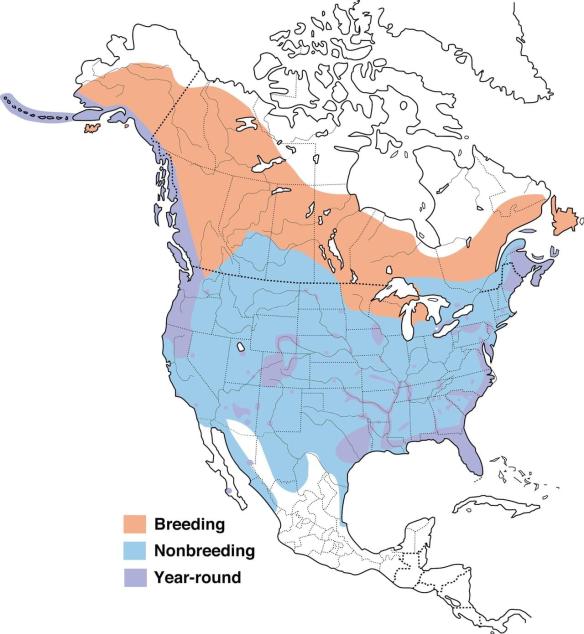
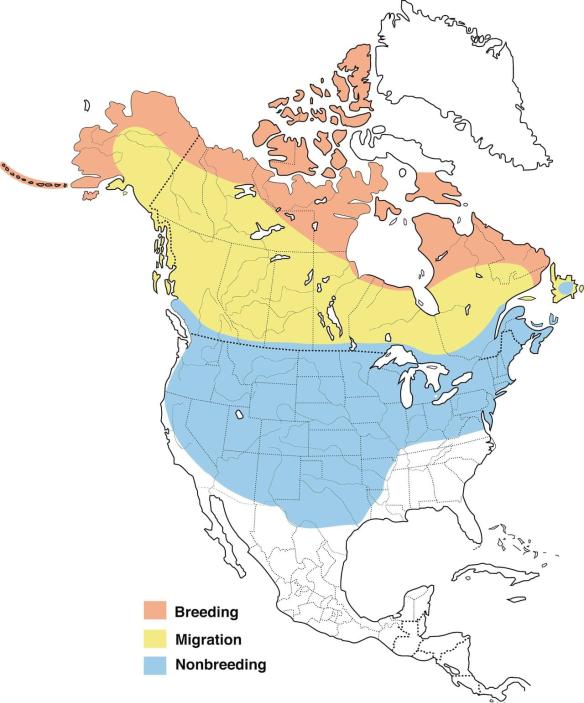
Rough-legged Hawk Range Map: with permission from The Cornell Lab of Ornithology, Birds of the World

Rough-legged Hawk Buteo lagopus
Order: Accipitriformes
Family: Accipitridae
Buteo: from Latin for hawk (or in Europe, buzzard)
lagopus: from Ancient Greek lago = hare; and pous = foot, referent to the heavily feathered legs of this species. Note that Lagopus is the genus name for ptarmigan, which also have heavily feathered legs and feet.  

Status at Chignik Lake, 2016-19: Uncommon

David Narver, Birds of the Chignik River Drainage, summers 1960-63: Common

Alaska Peninsula and Becharof National Wildlife Refuge Bird List, 2010Uncommon in Spring, Summer & Fall; Absent in Winter

Aniakchak National Monument and Preserve Bird List: Present

loon silhouette

Previous: Sharp-shinned Hawk – Sharp Claws and a Tomial Tooth

Next Article: Bald Eagle

*For a clickable list of bird species and additional information about this project, click here: Birds of Chignik Lake

© Photographs, images and text by Jack Donachy unless otherwise noted.

Birds of Chignik Lake: Sharp-shinned Hawk – Sharp Claws and a Tomial Tooth

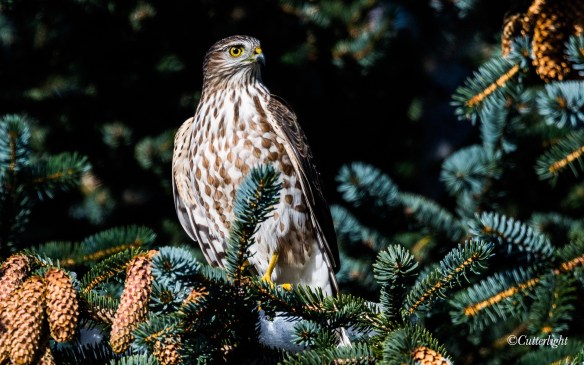
This handsome specimen occasionally hunted the grove of White Spruce trees where a variety of feeders attracted Pine Siskins, redpolls, crossbills and other passerines. That’s snow just behind his talons. (Chignik Lake, October 23, 2017)

“Tsst! Tsst!” I slowly turned to where Barbra was positioned 40 feet from where I’d set up. A subtle motion of her head directed me up into the spruce bows were a small, beautifully marked hawk was perched. I couldn’t believe how close he was. I knew I wouldn’t have more than moments in which to make a photo before I was noticed. Luckily, Barbra’s cue had drawn the bird’s attention to her, and since she was a relatively safe distance, the hawk didn’t seem to feel overly encroached upon. I swiveled the Wimberley-mounted lens toward where Barbra’s eyes were motioning, carefully tilting it up toward the bird’s perch. For almost two minutes the hawk cooperated and I was able to make some photographs. And then it was gone. The last frame I took shows only a blur of barred tail feathers.

I’d seen it before and I saw it again, but I never had another photo op like that. Focused on a newly arrived flock of Red Crossbills, I’d have missed my chance altogether had it not been for Barbra’s keen eyes. Come to think of it, it’s likely that those very same crossbills had the Sharp-shinned’s attention, tempting it to linger longer around a couple of humans than it otherwise might have.

Hawk’s gold – part of a flock of two dozen Red Crossbills. The crossbills were there for the spruce cone seeds; the hawk was there for the crossbills. (Chignik Lake, October 23, 2017)

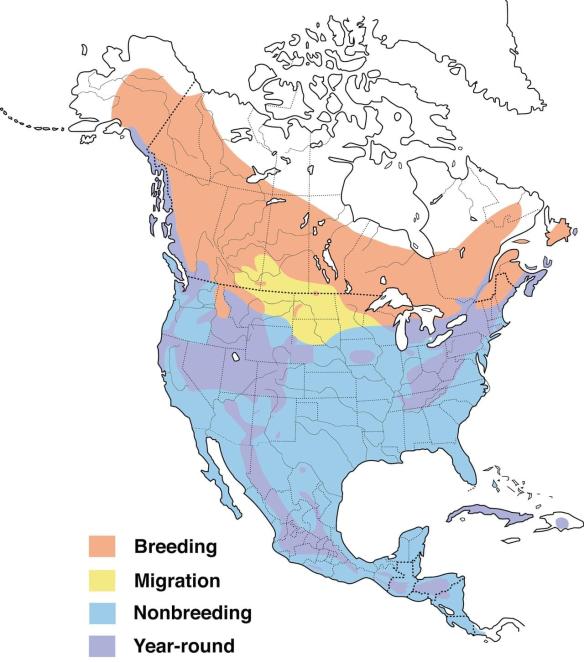
Sharp-shinned Hawks are rare enough on the Alaska Peninsula that it isn’t included as part of their territory on most range maps. If you encounter one out here, you’re fortunate. Seldom found far from forests, Sharp-shinneds on the largely treeless peninsula are most likely migrants, merely passing through. The two copses of White Spruce trees and the feeders, which attracted the song birds that are this species’ favorite prey, no doubt induced it to hang around.

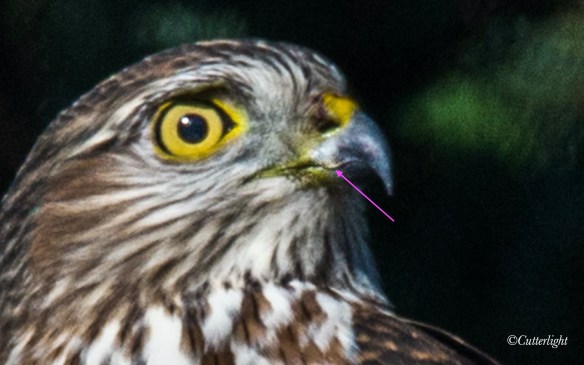
The protrusion on the upper bill of this Sharp-shinned Hawk is called a tomial tooth. It’s a trait shared by falcons, kites, and one group of songbirds, shrikes. Not actually a tooth, of course, the protrusion and the corresponding recess in the lower beak aid these predators in breaking the spines of small birds and other prey. (Chignik Lake, October 23, 2017)

Sharp-shinned Hawk Range Map: with permission from The Cornell Lab of Ornithology, Birds of the World

Sharp-shinned Hawk Accipiter striatus
Order: Accipitriformes
Family: Accipitridae
Accipiter: from Latin accipere = to grasp
striatus: from Latin strio = engraved with lines or stripes

Status at Chignik Lake, 2016-19: Rare

David Narver, Birds of the Chignik River Drainage, summers 1960-63: Not Reported

Alaska Peninsula and Becharof National Wildlife Refuge Bird List, 2010Rare in  all Seasons

Aniakchak National Monument and Preserve Bird List: Not Reported

loon silhouette

Previous: Northern Harrier – Rare but There

Next Article: Rough-legged Hawk – Buteo of the Far North

*For a clickable list of bird species and additional information about this project, click here: Birds of Chignik Lake

© Photographs, images and text by Jack Donachy unless otherwise noted.

Birds of Chignik Lake: Norther Harrier – Rare but There

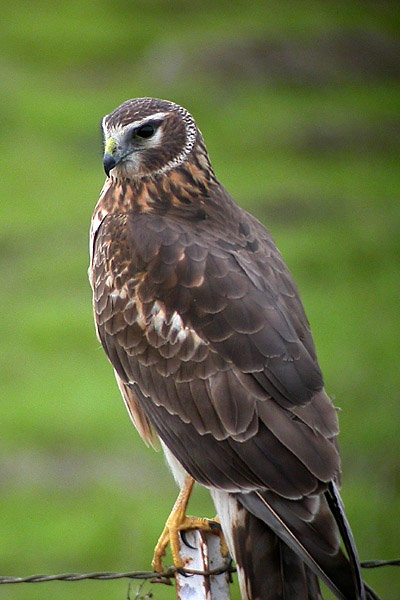
Len Blumin’s beautiful capture of a beautiful bird. Northern Harrier female, Las Gallinas Ponds, California. (Photo Credit: Len Blumin , Wikipedia)

Anytime a slim, long-tailed hawk is observed hugging the terrain as it glides over grasslands, marsh and field, I instinctively think “Marsh Hawk” and go from there. This is a slender, graceful predator with a very long tail, unique even in silhouette. But it is the Harrier’s distinctive white rump that often confirms its identity.

Not much of a photo, I’ll grant that. And yet with that very long tail and white rump patch, there is no doubt that this is a Northern Harrier gliding through the Chignik River valley. (August 29, 2016)

I’ve encountered Northern Harriers (formerly Marsh Hawk) in a number of states, from Florida to Oregon and north to Arctic Alaska. Although they are widespread and might be found anywhere their preferred habitat exists, they generally aren’t abundant anywhere. On the Alaska Peninsula, they’re rare, although they are known to breed out here.

That white rump is diagnostic. Note also the almost owl-like facial disk. Like owls, Harriers rely on a keen sense off hearing to detect the small mammals, occasional birds and other animals they prey upon. (Photo Credit, Dan Pancamo, Wikipedia)

This is exactly the kind of habitat Northern Harriers prefer. I encountered this specimen near Point Hope, Alaska, an Inupiat village located 200 miles north of the Arctic Circle. This kind of terrain is a good place to make a living on voles and lemmings. (September 3, 2011)

Northern Harrier Range Map: with permission from The Cornell Lab of Ornithology, Birds of the World

Northern Harrier Circus hudsonius
Order: Accipitriformes
Family: Accipitridae
Circus: from Ancient Greek kirkos = circle (as soaring in circular patterns)
hudsonius: Latin for of the Hudson Bay

Status at Chignik Lake, 2016-19: Uncommon to rare

David Narver, Birds of the Chignik River Drainage, summers 1960-63: Rare on Black River (listed as Marsh Hawk)

Alaska Peninsula and Becharof National Wildlife Refuge Bird List, 2010Uncommon in Spring, Summer and Fall; Absent in Winter

Aniakchak National Monument and Preserve Bird List: Present

loon silhouette

Previous: Nature Walk & Nest Finding – an Exercise in Mindfulness

Next Article: Sharp-shinned Hawk – Sharp Talons and a Tomial Tooth

*For a clickable list of bird species and additional information about this project, click here: Birds of Chignik Lake

© Photographs, images and text by Jack Donachy unless otherwise noted.
Birds of Chignik Lake: Red-breasted Merganser – Not Just Flashy. Fast!

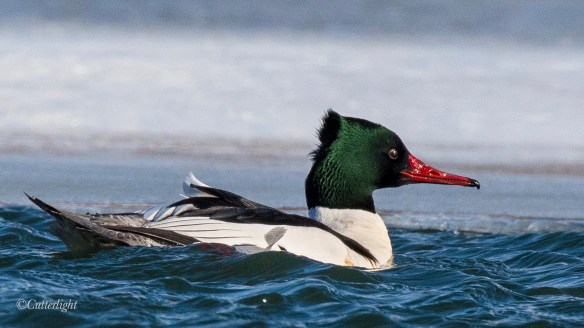
With a crest reminiscent of peacock herl and a bright red orange bill meant for the business of catching fish, Red-breasted Mergansers are both stunningly handsome and adapted for success in the Chignik Drainage. (Chignik Lake, December 31, 2016)

While there is some dispute as to the actual speed it can attain, it is said that the Red-breasted Merganser is the world’s fastest bird in level flight. That means that at speeds of somewhere in the vicinity of 80 miles per hour, while it can’t match a diving Peregrine Falcon’s break-neck 240 mph, it could outrun the predator in a flight parallel to land or water.

In winter and spring, it’s not unusual to see Red-breasted drakes associating with Common Mergansers. Note the Common’s slightly more stout bill, her light colored chest and distinctive white chin. Commons are also somewhat larger and bulkier looking than Red-breasteds. (Chignik Lake, December 2016)

As is the case with their Common cousins, Red-breasteds generally aren’t high on hunters’ lists. Mergansers are sea ducks, most of which are not esteemed as table fare. Though I must say as a fly-tier, the drake’s plumage is tempting. Fortunately there are synthetic materials that obviate the need to take one of these beautiful ducks merely for its feathers.

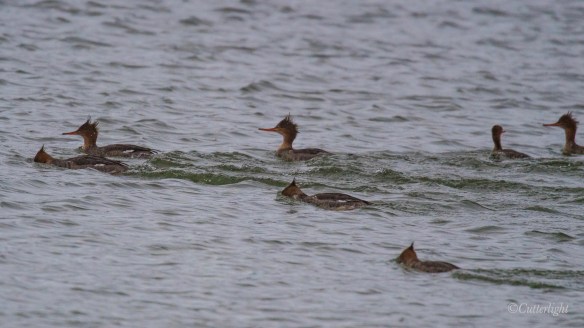
Mergansers are well-known for cooperative feeding strategies – behavior they learn as chicks while hunting with their mother. Although immature birds and females look a lot like immature and female Commons, note A) the very thin bill which can appear to be upturned, B) dark chest and C) absence or near absence of white on the chin. (Chignik Lake, January 14, 2018)

Unlike Common Mergansers, Red-breasteds don’t nest in cavities. They nest on the ground near water. Thus, they are known to breed on the largely treeless Alaska Peninsula.

A Red-breasted drake (forward most) mixes in with a group of Common Mergansers on a fishing expedition. Common Goldeneyes often join these groups. (Chignik Lake, March 23, 2017)

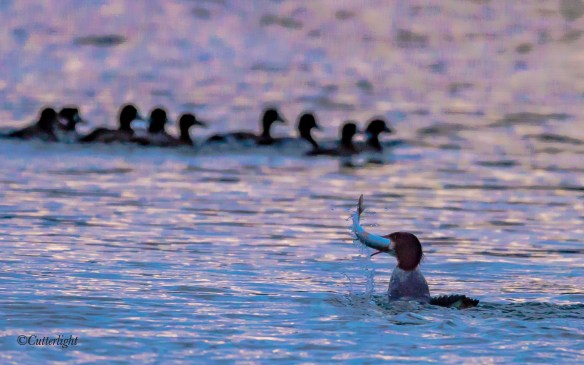
This drake, just coming up with a stickleback, was working an ice edge along with a female Common Merganser and a Common Goldeneye as another day on Chignik Lake came to a close. (December 2016)

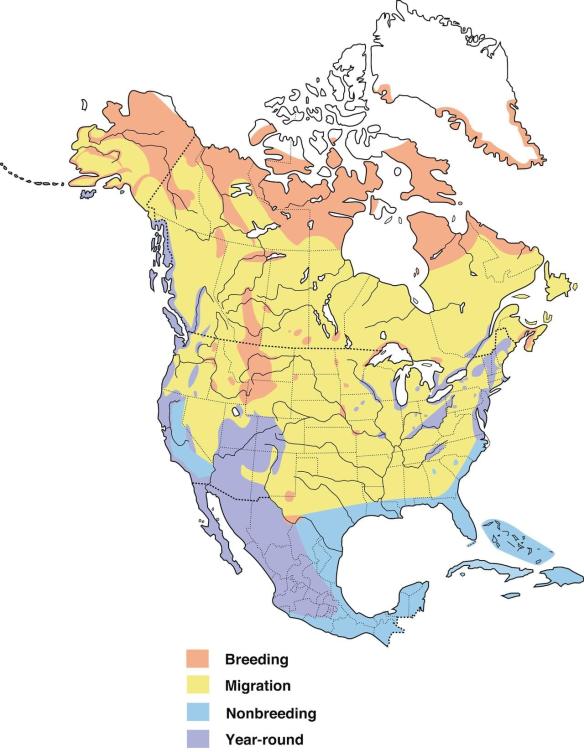
Red-breasted Merganser Range Map: with permission from The Cornell Lab of Ornithology, Birds of the World

Red-breasted Merganser Mergus serrator
Order: Anseriformes
Family: Anatidae
Mergus: from Latin for an unspecified waterbird
serrator: Latin serra = saw

Status at Chignik Lake, 2016-19: Common

David Narver, Birds of the Chignik River Drainage, summers 1960-63: Common

Alaska Peninsula and Becharof National Wildlife Refuge Bird List, 2010Common in Spring, Summer and Fall; Rare in Winter

Aniakchak National Monument and Preserve Bird List: Present

loon silhouette

Previous: Common Merganser- She Wears the Crown

Next Article: Nature Watching & Nest Finding: an Exercise in Mindfulness

*For a clickable list of bird species and additional information about this project, click here: Birds of Chignik Lake

© Photographs, images and text by Jack Donachy unless otherwise noted.
Birds of Chignik Lake: Common Merganser – She Wears the Crown

Another stickleback bites the dust. Along with sculpins, the Chignik’s Three-spine and Nine-spine Sticklebacks frequently feature in the Common Merganser’s diet. (Female Common Merganser, Chignik Lake, March 14, 2017)

Often called Saw-bills for their serrated, fish-grabbing bills, Common Mergansers are one of the Chignik’s more common wintertime ducks. And happily for naturalists photographers, they’re one of the more approachable species. This is probably due to the fact that they aren’t much sought by gunners.

In typical duck fashion, the drakes are indeed strikingly handsome. Here a breeze out of the north is pushing the feathers on his crown up a bit, but they’re considerably shorter and never so dramatically displayed as the hen’s, making Common Mergansers the only species of duck in which the hen shows more of a crown than does the drake. (Chignik Lake, March 14, 2017)

The reason mergansers aren’t much hunted was nicely summed up by Edward Howe Forbush in Birds of America when he wrote: Its flesh as ordinarily cooked is so rank and strong that its flavor is not much superior to that of an old kerosene lamp-wick… As a result, their numbers are stable in North America and appear to be expanding in Europe, where they are known as the Goosander.

Dawn hadn’t yet broken over the lake’s southern mountains when I looked out my window to see a group of a dozen or so mergansers working together to herd Dolly Varden Char against the shoreline. I snuck down to the lake, positioned myself behind a spruce tree and made a few photographs. During my youth back in Pennsylvania, we’d have called a char of that size a “nice keeper.” This merganser is probably a first-year bird and could be either a male or a female. The ducks in the background are Greater Scaup with a drake Common Goldeneye (second from left) mixed in. (December 12, 2016)

Common Mergansers primarily nest in tree cavities, and as they are large ducks (a little over two feet long on average), they require large trees. This would appear to be a key limiting factor in their range and distribution, and the main reason they are not commonly found in The Chigniks during the mid-spring through summer breeding season. As such, this is a species that would benefit from the installation of nesting boxes.

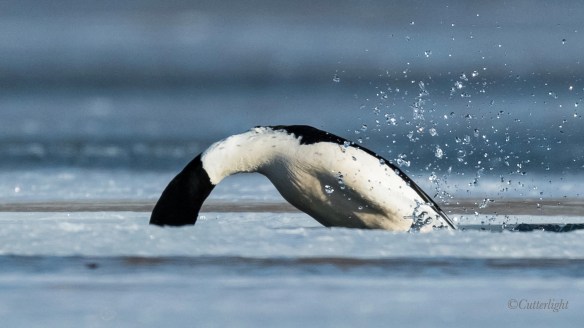
Deadly efficient piscivores, mergansers disappear in an arcing dive in a flash. Once they locate a school of fish, virtually every dive is successful, leaving them plenty of time to sleep or loaf on the water surface, shoreline, rocks or ice. (Chignik Lake, January 31, 2017)

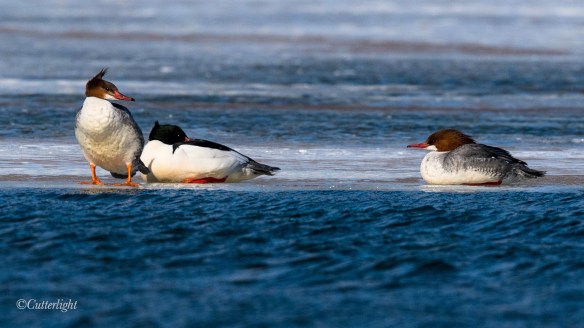
Bellies filled with fresh fish, it’s time to loaf and catch some rays. The longer the ice remains, the longer the mergansers hang around in spring. As soon as forested ponds and lakes in the interior become ice free, these mergansers will be gone. But I have to wonder if nesting boxes of the right size might induce a pair to stay at the lake. (Chignik Lake, March 23, 2017)

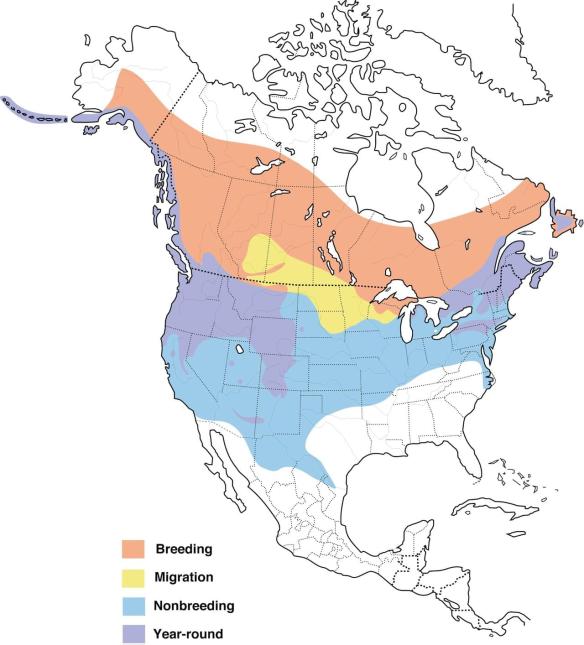
Common Merganser Range Map: with permission from The Cornell Lab of Ornithology, Birds of the World

Common Merganser Mergus merganser
Order: Anseriformes
Family: Anatidae
Mergus: from Latin for an unspecified waterbird
mergansercompound word from the Latin “mergus” as per genus name + “anser” = goose

Status at Chignik Lake, 2016-19: Common from late summer through early Spring

David Narver, Birds of the Chignik River Drainage, summers 1960-63: Not Reported

Alaska Peninsula and Becharof National Wildlife Refuge Bird List, 2010Common in Spring and Winter; Rare in Summer; Uncommon in Fall

Aniakchak National Monument and Preserve Bird List: Present

loon silhouette

Previous: Bufflehead – Our Smallest Diving Duck

Next Article: Red-breasted Merganser – Not just Flashy. Fast!

*For a clickable list of bird species and additional information about this project, click here: Birds of Chignik Lake

© Photographs, images and text by Jack Donachy unless otherwise noted.