The Land of Totoro

Totoro Summer
Rishiri Island, Hokkaido, Japan, June 29, 2018

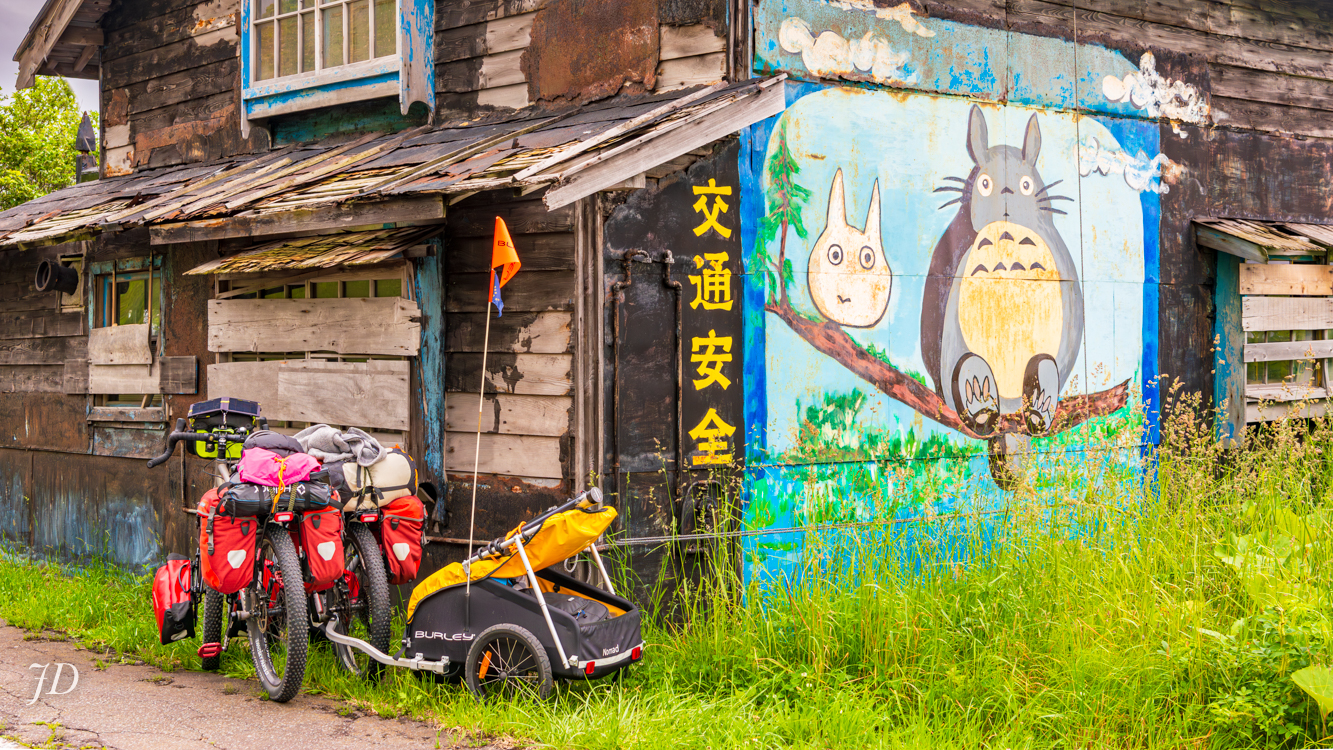
Rishiri-to (Rishiri Island), was one of four small islands we ferried to during our Hokkaido trek. Each of these islands offered beautiful, inexpensive campgrounds, and except for one night, we had the grounds to ourselves. One of my personal objectives during the trek was to have Babra experience authentic Japanese tempura. In a small shop run by an elderly couple on Rishiri-to, we found The Best fare of that kind I’ve ever had. 凡天 (Bonten) may or may not still exist as we found it six years ago; the couple was advanced in years, the shop was small, unassuming and might easily be overlooked. But among other dishes we sampled was tempura uni – sea urchin battered and fried to perfection tempura-style. Like the other three islands we visited, a road lacing along the coastline made bicycling a complete circumference (30-some miles in the case of Rishiri) enjoyable. Lots of birds, flowers, fresh air… and a couple of Totoro sightings!

Along the Herring Highway

Herring House (Nishin Goten)
West Coast of Hokkaido near HaboroJune 17, 2018

Somewhat paralleling the boom and bust of America’s west coast sardine/herring fishery (see Cannery Row), in the late 1800’s through the early 1900’s, fortunes were made and lost on the back of Hokkaido’s west coast herring fishery. The building in the above image is a Nishin Goten, a communal house for the herring fishermen of that era. Inside are the captain’s quarters, other areas where fishermen and other employees (I’m assuming the fishermen’s wives who were vital in processing the catch) could roll out their futons. Such houses featured a kitchen, a place to store slippers (in those days woven from grass) and a bit of furniture. These days, several Nishin Goten are preserved and open to visitors – well worth a stop if you’re traveling Hokkaido’s west coast along the famed Herring Highway.

Date in Morning Fog

Date in Morning Fog
Hokkaido, June 7, 2018

On the morning of the sixth day of our Hokkaido trek, we passed through Date (dah-tā), a seaside town southwest of Sapporo on the shore of Uchiura Bay. The town is known for maricultural products such as scallops and sea urchins. This photo is another early experiment in softening rather than sharpening an image.

Bicycle Trekking in Hokkaido, Japan – Vlog 2: Shiraoi to Hell Valley and on to Lake Toya

This is the second installment from our videos about bicycle trekking and camping in Hokkaido. In this leg of our 1,300 mile tour, we pushed and cruised from Shiraoi to Jigokudani and then on to Lake Toya in Shikotsu-Toya National Park. Listen for the singing cicadas and the bubbling mud pots in the first part of the video. In the second part of the vlog, Barbra kicks in with her “amazing” commentary! Barbra says – I promise to bring a thesaurus next time. 🙂

Bicycle Trekking in Hokkaido, Japan – Vlog 1: Coasting into Shiraoi

In keeping with my goals for 2019, in addition to putting in time toward 500 hours of guitar practice in hopes of finally learning to play, I have just completed the second of five articles for magazine publication. The first article was a salmon-centric piece about life here in Chignik Lake. The second article was an introduction to our 65-day, 1,300 mile bicycle trek in Hokkaido, Japan last summer. While putting the article together I came across a few GoPro videos I’d nearly forgotten. One of those videos is below.

So what makes Japan’s northernmost island a nearly perfect bicycle trekking destination? Great food, clean inexpensive campgrounds, courteous motorists, abundant wildlife, rolling farmland, beautiful seascapes, terrific people, opportunities for hiking, fishing and even hot-air ballooning. The icing on the cake is bike rides like this! Leave a “like” and a comment or question. We’ll be posting additional video material from our Hokkaido Trek, so hit “follow” to make sure you don’t miss the next one!


xx

Agehachou – Asian Swallowtail Butterfly

Almost surreal in it irredescence, this agehachou is one of the many stunning butterflies we’ve encountered on our Hokkaido bike trek.

We’re not lepidopterists, but it would be all but impossible not to notice the incredible beauty and diversity of the moths and butterflies – not to mention the amazing variety of caterpillars – we’ve been encountering on our bike trek around Hokkaido, Japan. If you find them early enough in the morning when they’re still warming up, you can sometimes sneak a decent photo. This agehachou (Asian swallowtail) is among the more stunning butterflies we’ve found, but it seems that all butterflies are beautiful. As the summer progresses and flowers change, different species are emerging. Today the paths were filled with nearly iridescent black caterpillars, leaving us wondering what form they’ll take as adults.

Yagishiri Island Hokkaido – Power of a Storm

Barbra and a young friend cheese it up for the camera at Yagishiri’s ferry port.

A cool ocean breeze drifted in across the Sea of Japan and the sun was shining brightly as we set up our tent on Yagishiri Island. Brilliant orange-yellow Day Lillies speckled the green, gently rolling countryside around us. It was easy to imagine the Suffolk sheep the island is known for tucking their black faces into tufts of rich grass and quietly grazing a few hillsides away.

Yagishiri is home to Suffolk Sheep. Brought over from Scotland, they grow cute and tasty on the island’s lush grass.

The campsite was ideal. Our tent was nestled into a flat between hills and protected from coastal gusts by a small building. The campsite featured cold running water, an immaculate restroom, and even an outdoor shower.

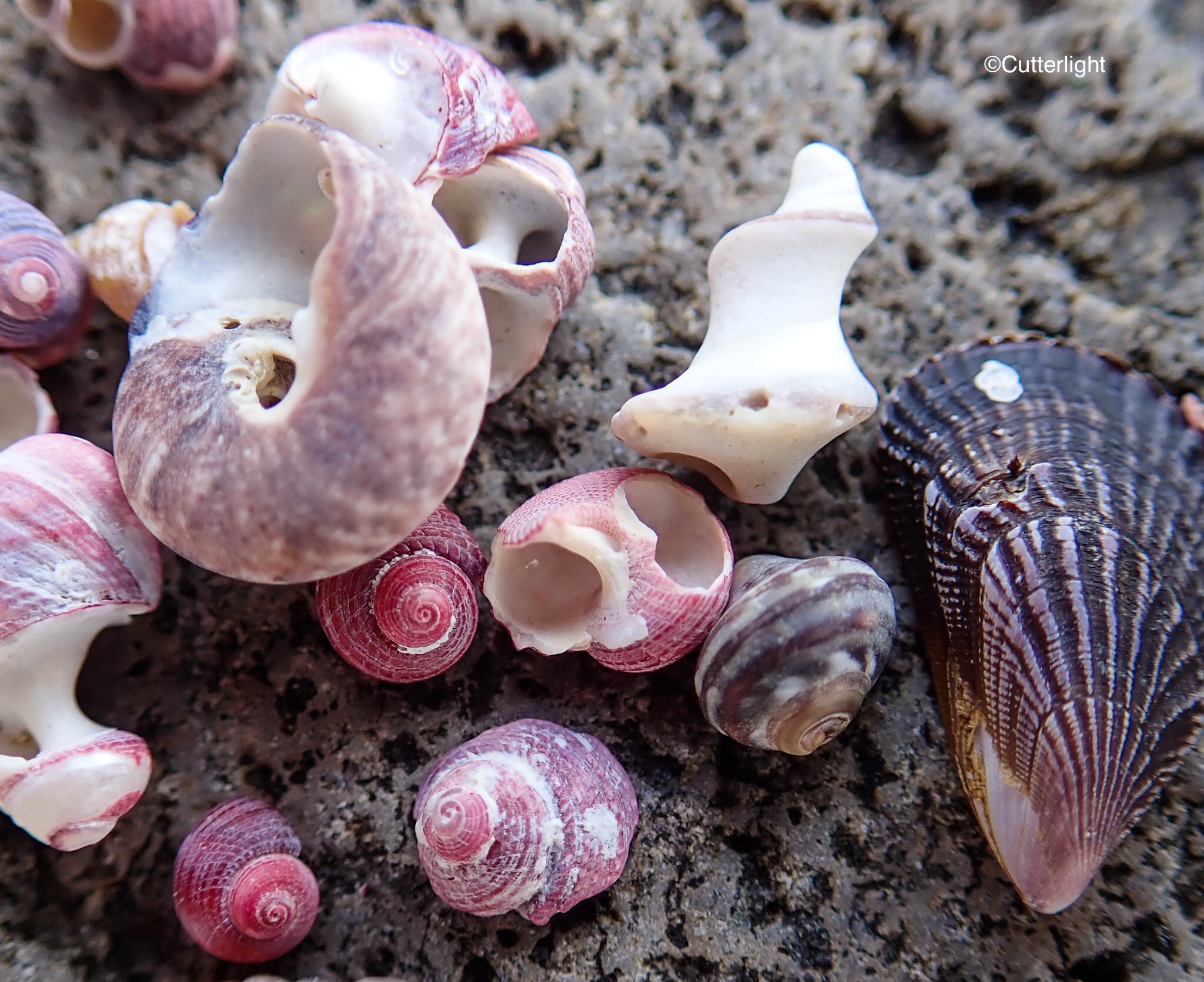
We stowed our bike bags beneath the tent’s fly and headed down an inviting pathway to what the map boasted as a swimming beach. Although the sun was high in the sky, I wasn’t prepared to take a chilly Sea of Japan swim. I noticed that the beach was covered with countless tiny treasures – blue, green and amber beach glass polished smooth, crab husks, miniature clam shells, dried sea urchin shells- some with their spines still attached, and colorful small rocks with interesting patterns. Larger flat rocks offered perfect surfaces on which to create found art displays with favorite finds from the beach. What a lovely, relaxing way to spend part of an afternoon.
Yagishiri-to (Yagishiri Island) is a short ferry ride from the town of Haboro on Hokkaido. There is one main road that follows the island’s perimeter which is only 12 kilometers (just over seven miles). After exploring the beach and with our bike bags stowed at the campsite, we hopped onto our now feather-light bikes and went out to discover the rest of the island. 

As the sun moved in and out from behind a few gathering clouds, I couldn’t help but smile. When I was young, my family traveled a good bit. During those trips, I fantasized about having my bike with me so I could explore those places at a bike’s pace – slow enough to catch all the details around me but fast enough to actually get somewhere. It’s exercise up the hills, the coast back down a pleasantly earned reward.

Off in the distance we began to hear the rumble of thunder. We had nearly reached the opposite side of the island from our camp. Looking out to sea, we tried to discern which way the thunder was coming from. Toward the sea, the clouds were thin and light. Looking toward Hokkaido’s mainland, the clouds were thick with rain.

Rather than turn back, we decided to continue around the island. We guessed the lighter clouds were coming our way. However, a few minutes later, big splats of rain hit us. Seems we are not meteorologists! Near the top of a hill, we spied a path leading into a small forest which, according to our map, would lead to a shrine. We decided a quick side trip there might give us shelter from a burst of rain. We found the shrine in a state of some disrepair. Tall grass grew around the gate-keeping statues and stone lanterns, and scattered ladders and work tools gave the site the look of a place that was on someone’s to-do list. 

Suddenly the clouds ripped open as a torrent of rain poured down. We sat on the dry steps of the shrine enjoying the sounds of rain drumming on the forest canopy while birds chittered complaints in the forest and tree frogs sang in celebration. It was lovely to wait out a squall with no appointments to attend to and no plans for the afternoon. As squalls do, it passed. We got back on our bikes and continued our tour of the island.
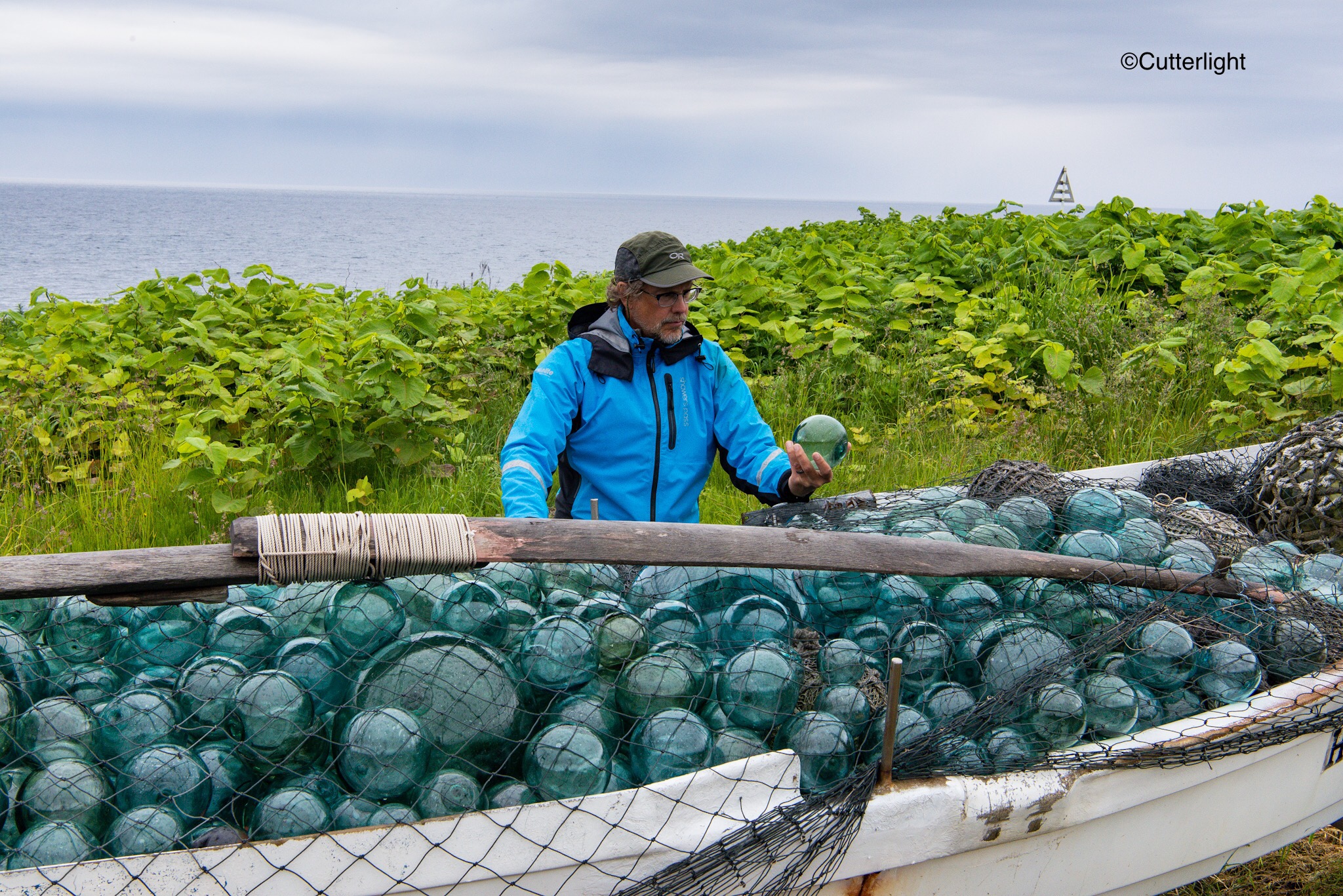
A treasure trove of glass floats filled this small fishing boat to the gunwhales.

As we neared the highest elevation on the road, lightning flashed in the distance. This time, it seemed clear the angry cloud mass was heading straight for us. There was no more leisure in this ride; it was time to get back to camp. The flashes and booms were still over ten miles away according to our primitive counting measurement system – one one thousand, two one thousand, three one thousand… The race was on.

As we neared our campsite, the clouds opened up and once again began to unleash sheets of rain. We hurriedly parked our bikes, grabbed our water bottles and rushed to the tent. As we did, we noticed something strange: the side of the building we were camped by was now open. It seemed magical. We hadn’t noticed any type of opening when we set up the tent. It turns out there was a rolling door, like a garage door. While we were gone exploring, some kind person had come along and opened the building for us. The opening revealed a friendly space with a dry concrete floor, kitchen sinks and stainless steel countertops – a perfect place to duck in out of the rain and cook our dinner!

We positioned our camp chairs near the opening and watched our poor tent get pounded by rain. Soon the thunder and lightening passed directly over us. I’ve always loved watching lightening storms. It was exciting and wild to have the strikes pass close by. We counted them as close as two miles away! Eventually the storm faded across the hills, across the sea and into the distance.
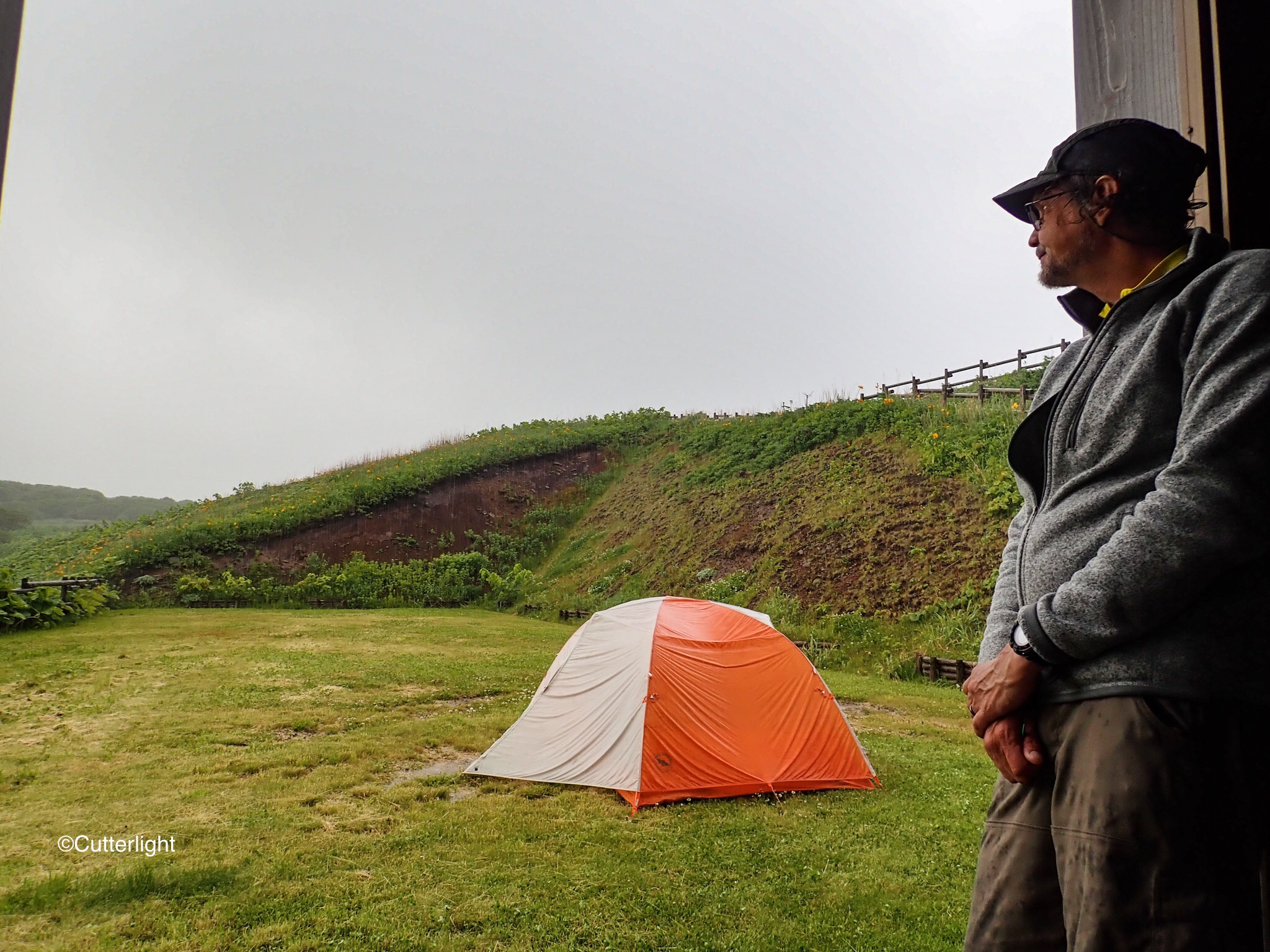
Rain, rain and more rain – waiting for a lull in a series of squalls on Yagishiri-to.

By now it was getting late. Our bellies were full of a hot soba concoction Jack had whipped up and our bodies were warmed by the last sips of peaty, smoky whiskey from a purchase at the Nikka Whiskey distillery. With the rain waning, I t was time for bed.

Our little tent is amazing. It had been thoroughly doused. Yet the fly had held out through the worst of it and our sleeping bags and all of the gear inside the tent was snug and dry. Nestled inside our cocoon, we both quickly drifted to sleep.

Then –

Flash! Crack! Boom! The lightning and thunder came in nearly simultaneous sequence, jolting us awake.

While we had been soundly asleep, another intense squall had crept upon the island. This time the lightning strikes were practically on top of us. Two in a row where there wasn’t time to count to one thousand-one between the nearly blinding flash and the earth-shaking boom had our eyes wide open. A tent previously described as “tough” and “sturdy” now seemed to be but a flimsy piece of nylon separating us from the elements. “Give me your hand!” I demanded of Jack. I grabbed his hand as another Flash! Crack! Boom! pounded down from the heavens. I squeezed my eyes shut but couldn’t keep out the blinding flashes. I plugged my ears to muffle the thunder’s roar. I wondered about people who’d been struck by lightening and had survived. What did that feel like? Were we going to be one of those stories?

“We’re in a low place,” Jack assured me. “We’ll be fine.”

The next blinding flash lit up the tent. This time the roar of thunder came after “one one thousand.” Maybe it was moving away? I still clung to Jack’s hand. Another blinding flash. I buried my head in my sleeping bag and counted – one one thousand. Then, right away, another flash – one one thousand, two one thousand. My heart was still racing. While this squall seemed to be passing, I wondered if another set of storm clouds would move in.

A few minutes passed and another flash came – one one thousand, two one thousand, three one thousand, four one thousand. 

As the thunder and lightning slowly drifted further away, I finally released my grip on Jack’s hand. My heart slowly returned to its normal rate as the drumming of rain on our tent softened. For the remainder of the night it rained and rained, but the thunder and lightning had ceased. The next morning, I woke up wondering where exactly the lightening had struck. A moment later, I felt grateful that I didn’t know. 

Around Shikotsu-Toya National Park: Part I

Hokkaido is rich in the world’s most valuable natural resource: clean, fresh water. This falls was one of many we’ve encountered so far this summer.

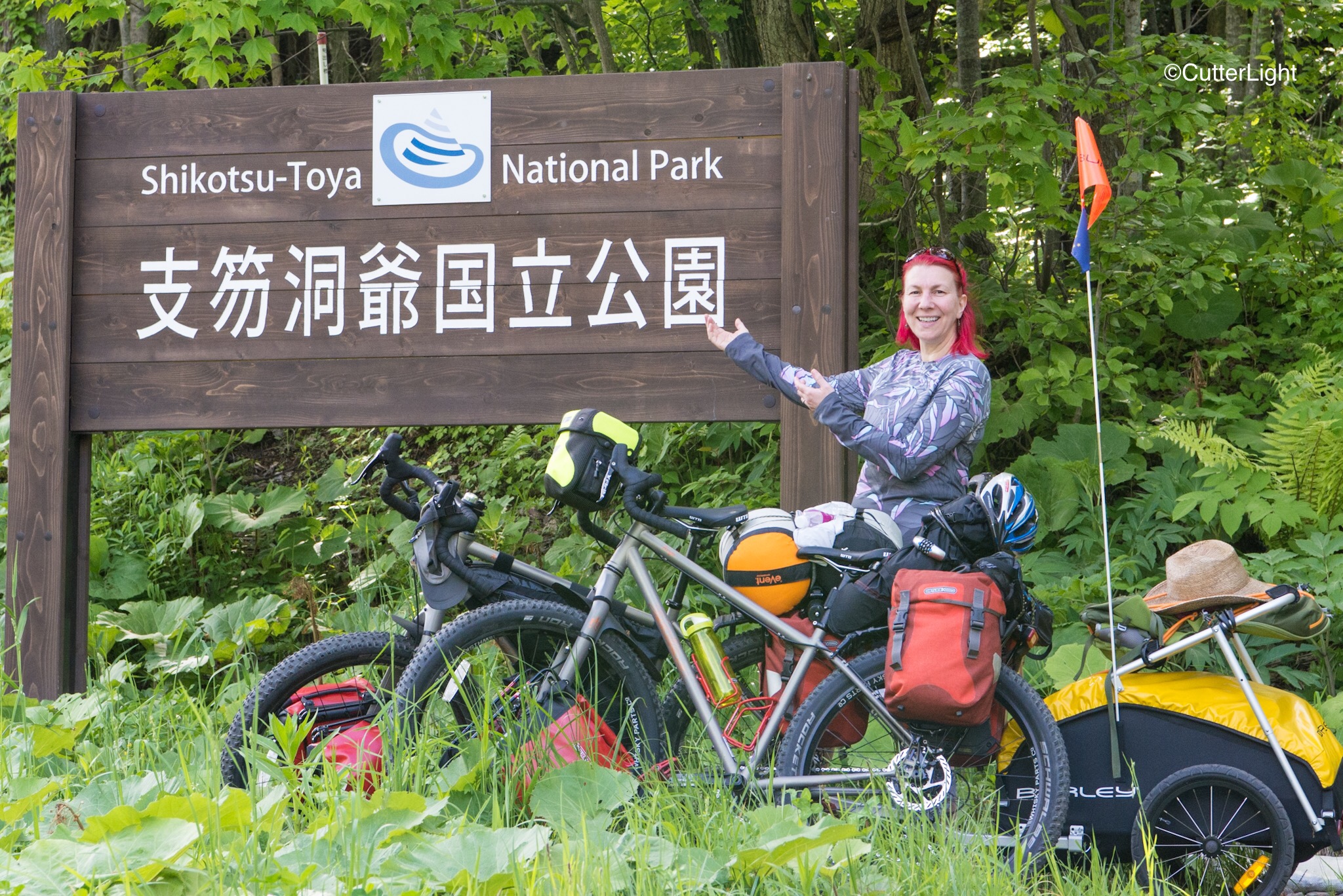
The most frequently visited of the six national parks in Hokkaido, Shikotsu-Toya as a fragmented network of lakes, mountains and geothermal features. Japan’s national parks represent a much looser management philosophy than those of the United States and Canada. Visitors’ centers are fairly minimalistic, featuring perhaps a few pamphlets in Japanese, Chinese, Korean, English and occasionally Russian. There are no entry fees. Tent camping may range from a high of about ¥1,000 per person (about $9 at current exchange rates) per night at privately run campgrounds to free. Although campgrounds generally lack picnic shelters, most have areas to wash dishes as well as clean restrooms. Some also offer showers for an additional fee of ¥300 – ¥500 ($3 – $5).

Several hundred brown bears roam Hokkaido’s forests, beaches and mountains. Although uncommon, attacks do occur – prompting these stylized, imaginative renditions of the bears.

Two species of crows inhabit Hokkaido. This aptly named Large-billed Crow was gathering a morning meal of insects. Opportunistic and intelligent birds, we quickly learned that you can’t leave any food unattended.

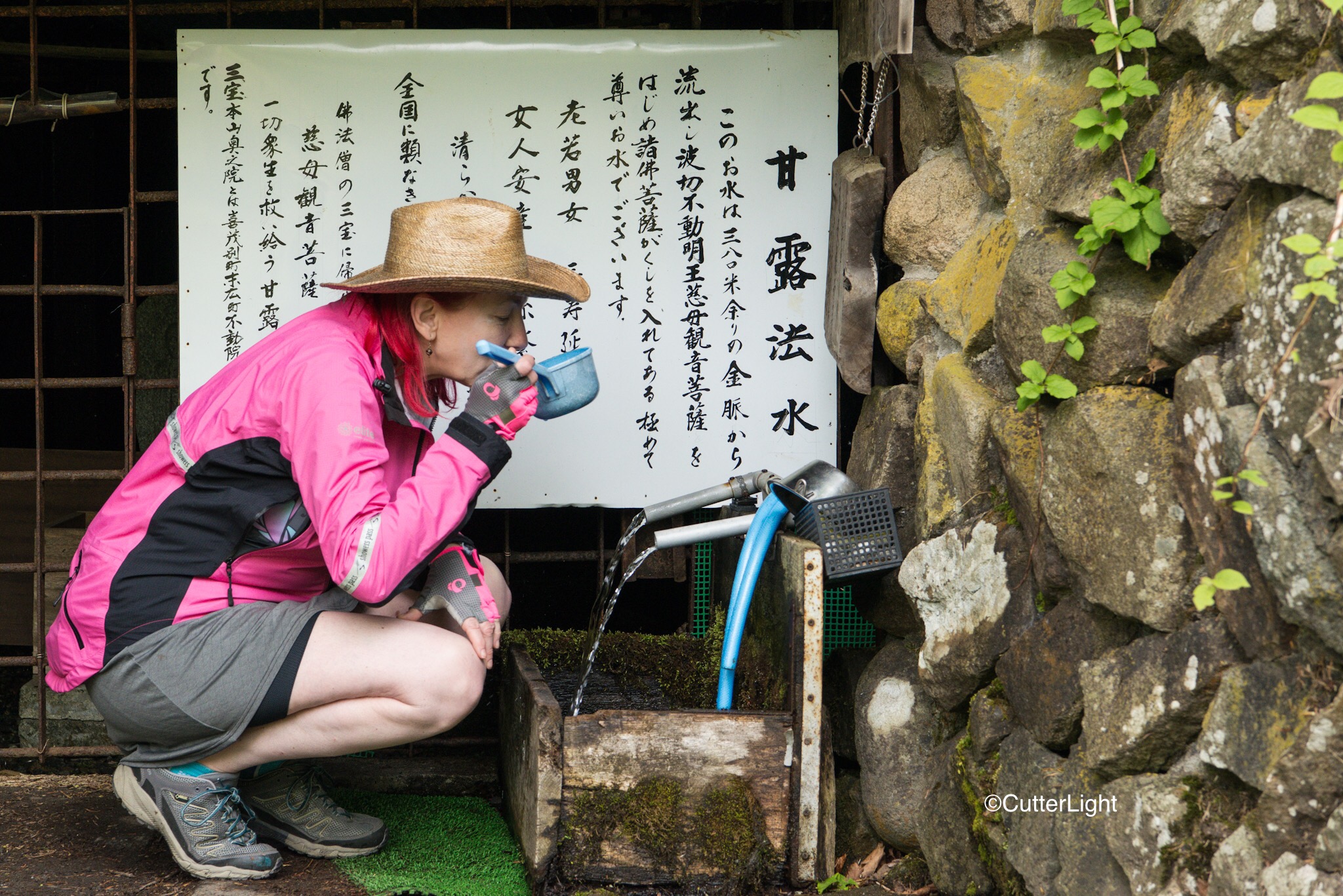
Finding drinking water has been no problem; our favorite sources are the many natural springs we’ve come across.

With schools still in session and nights chilly, early June is still considered the off season in Hokkaido. Campgrounds are often empty on weekdays, and even on weekends it’s possible to find seclusion. 

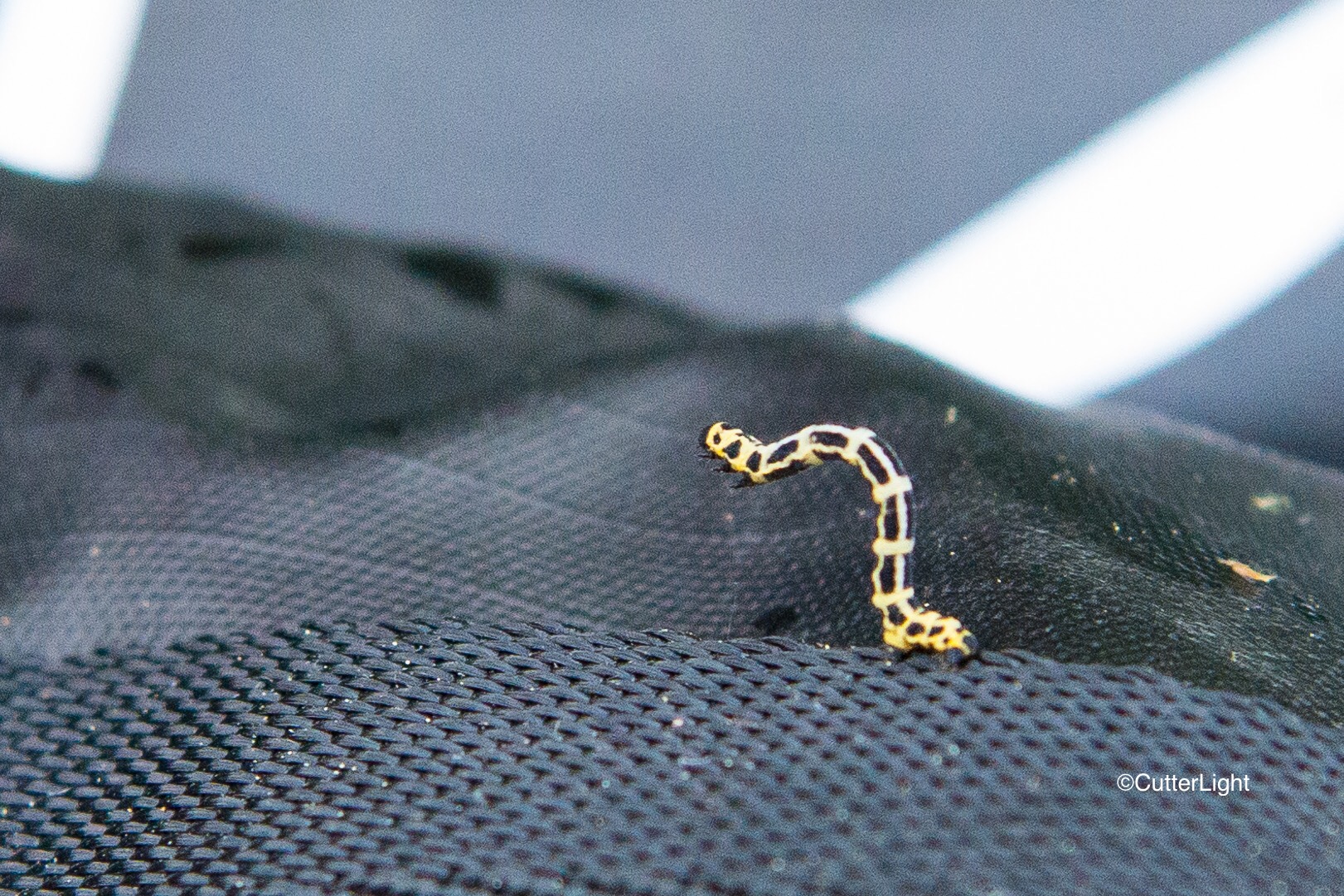
Caterpillars of every description seem to be everywhere. Butterfly season soon.

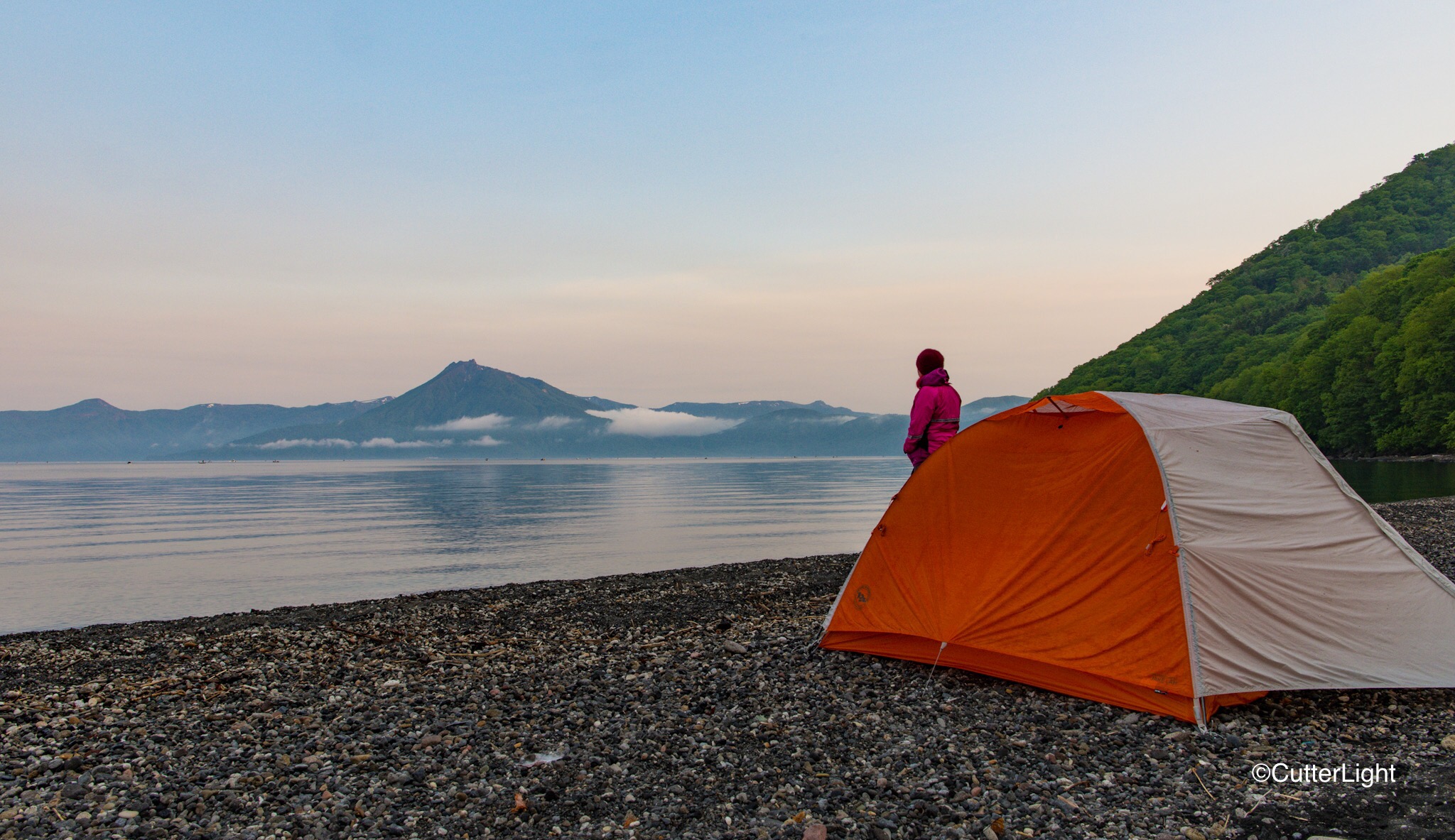
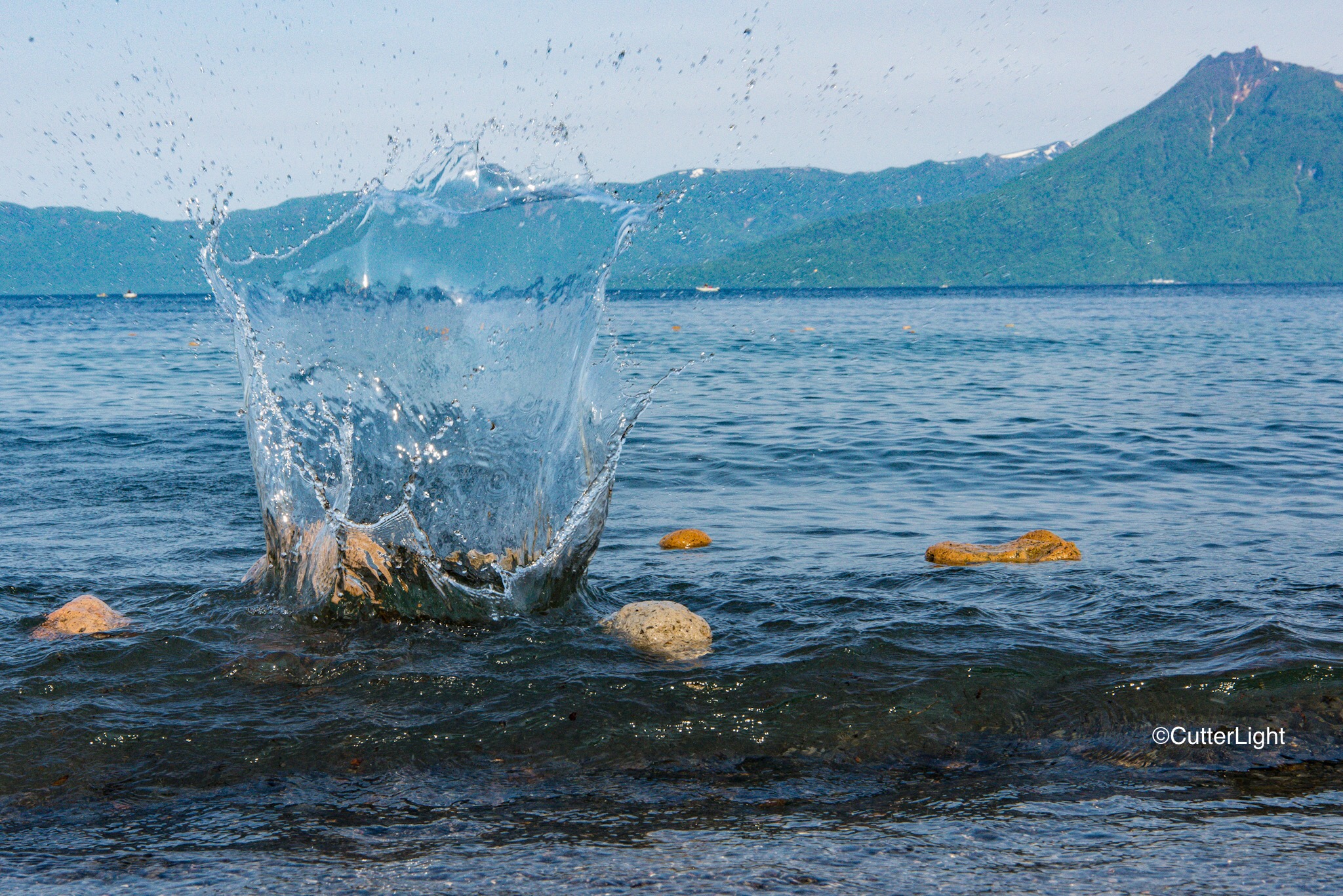
Conical mountains and hot springs belie Hokkaido’s volcanic origins. This beach on Shikotsu-ko (Shikotsu Lake) was covered with pumice – a good bit of which floated nicely!

The last evening light on Shikotsuko.

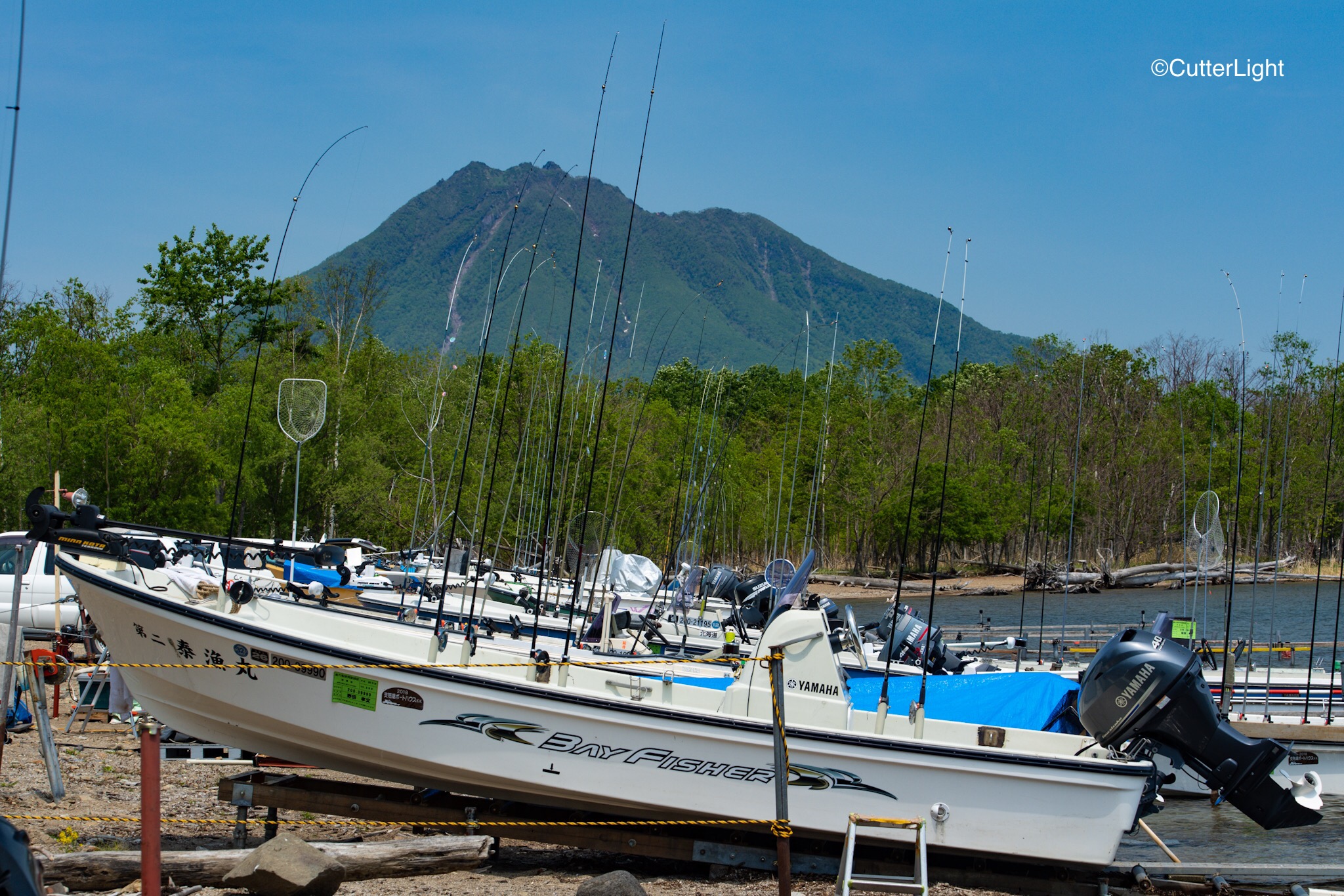
The following day, we rode our bikes along Shikotsuko’s shoreline and happened upon these fishing boats. Rigged for kokanee (land locked Sockeye Salmon), the fishermen hit the water at the first crack of light, take the afternoon off, and then hit it again in the evening.

Centerpin reels, long, limber rods, small flashers to attract the fish’s attention and hooks baited with fly larvae were the tackle and bait choices the experts preferred.

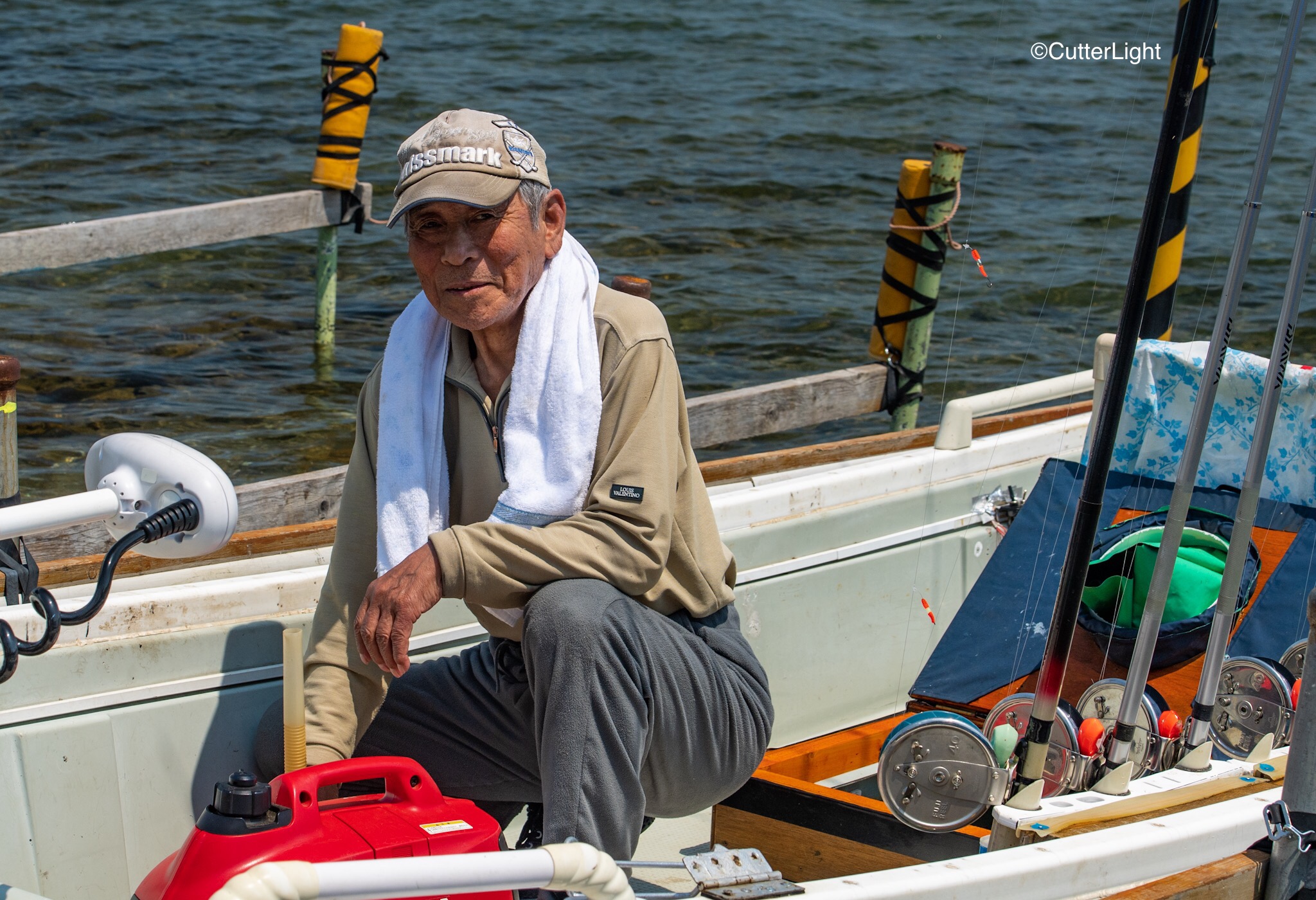
I struck up a conversation with one of the fisherman who then invited me aboard to see his catch – half-a-dozen blue-backed, silver-flanked kokanee in a live well. At 12 inches each, he told me they were running a little small this year, but they still make excellent sashimi.

June is the best season… and I’m guessing that had we had the time it wouldn’t have taken much to get an invite to join him for the evening bite.

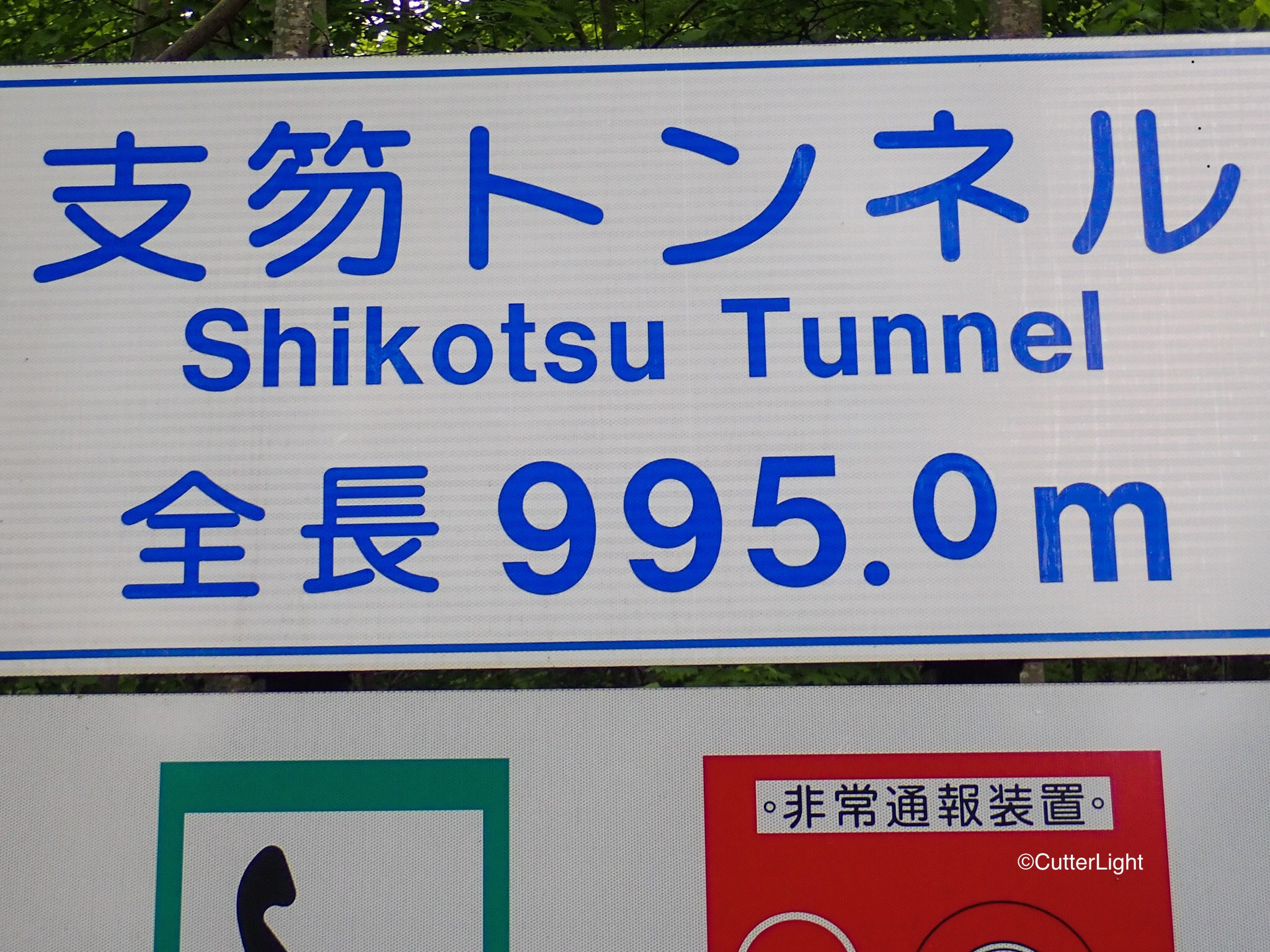
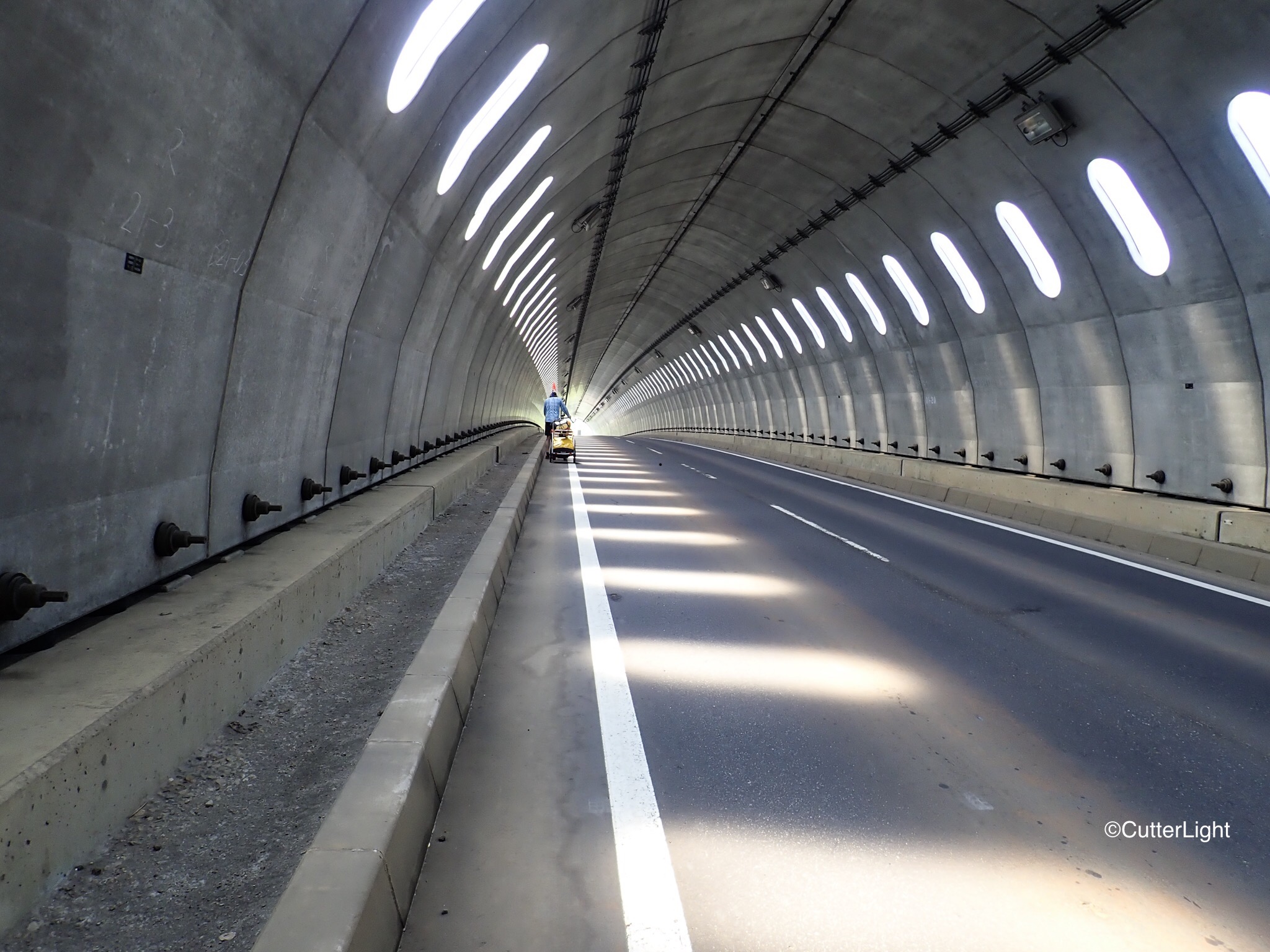
Carrying as much gear as we’re carrying, we expected a fair amount of pushing our bikes up hills and mountains. We were less psychologically prepared for the many tunnels we’ve gone through. Marvels of engineering, they certainly are physically easier than slogging up steep slopes. But with some of them running two miles long and longer – dark, damp, no bike lanes, the slimmest of sidewalks (or none at all) and echoing with the roar of trucks and other traffic – they can wear on your nerves. 

A roadside park where we stopped to check out a waterfall featured a number of totem poles presented to Hokkaido by First Nation’s people of Canada. 

The colors and style of the carvings seemed to fit with Hokkaido’s indigenous Ainu culture.

Most of the tunnels weren’t as cool as this one. Nice shot, Bar!

A Little Glitch & a Lotta Help: Welcome to Japan (and Murray is not your friend)

Just south of Sapporo, the beautiful city of Chitose was our entry point into Hokkaido.

Having lived in Japan both as a 7th Fleet sailor stationed in Yokosuka onboard USS Blue Ridge and as an English language teacher after that, I’m familiar with Japan – its ins and outs, the aspects of life here that make it fascinating and wonderful as well as – at times – puzzling and frustrating. In selling Barbra on the idea of doing our first bike tour in Hokkaido, I’d pretty much painted for her a picture of paradise. I described a land of exceptionally low crime, cleanliness, every modern convenience conceivable, incredibly kind people, great camping spots, and a culture different enough from our own to keep things interesting. There might even be some decent fishing, I offered. She already knew about the food – some of the best seafood, beef, pork and noodle dishes in the world. Given that Hokkaido is the least populated and least visited part of Japan, we probably wouldn’t even have to deal with the crowds that often plague other parts of the country. In fact, the only con I conceded was that Japan can be quite expensive; but even that deficit could be offset by the inexpensive (sometimes free) camping I anticipated.

However, as the trip got closer I began to have a tiny, nagging doubt. Maybe I’d oversold Japan. After all, it had been awhile since I’d lived there. In the interim, Japan had experienced a bubble economy collapse, a disastrous nuclear energy plant melt down, and the passing of time along with the challenges an ever changing world presents to all of us. And then there are the tricks our own memories play on us. What if it turned out to not be as good as I remembered it?

Anchorage to Seattle to San Francisco marked the first leg of our flight schedule, and it wasn’t until the final stop on that leg, San Francisco, that we realized we had not allowed enough time between landing at Haneda Airport, Tokyo and our connecting flight to Chitose, Hokkaido. An optimistic Japan Airlines ticketing agent in San Francisco assured us we’d make our connection – but I was fairly certain we’d made a mistake.

Upon arriving in Haneda we scurried to baggage claim where I had my first opportunity to dust off my never-was-very-good Japanese and explain our situation. Incredibly – and impressively – the baggage handler at the luggage carousel already knew about us and our bikes. He smiled and nodded in their direction as a baggage handler approached pushing a handtruck loaded with three boxes – our two bikes and our bike trailer. Almost simultaneously, our two “luggage” boxes with their brilliant orange duck tape emerged onto the carousel. Phew! Next…

A woman in a JAL uniform seemed to materialize out of thin air. While Yamamoto-San (Ms. Yamamoto) explained to us that we needed to get over to the domestic flights air terminal as quickly as possible. Meanwhile, two baggage handlers helped us load our luggage onto two smaller hand carts – which, by the way, are free in Japan. The race was on.

We followed Yamamoto-San to the baggage check-in counter where she consulted with other JAL agents, and then she made what appeared to be a “command decision” to circumvent normal baggage check-in procedures and get us and our luggage directly over to the boarding gate. With the perfectly quaffed, calm Yamamoto-San alternately leading the way and helping to load these huge boxes onto the elevator to the train shuttle platform, we were all perspiring a little. Arriving on the shuttle deck it looked like we just might make it. Yamamoto-San was on a radio, talking urgently and quickly enough that I could understand almost nothing…

…until she mentioned Murray. Murray… Murray… The word sounded so familiar and yet I couldn’t quite recall its meaning. And then, with what sounded like disappointment in her voice, she said the word again. Muri. 

Muri! As language sometimes does, the meaning suddenly came back to me. Muri means impossible. 

We were not going to make our connecting flight. Despite our assurances that we weren’t really bothered by this turn of events, Yamamoto-San seemed truly disappointed. Back at the baggage check-in counter, she offered to book us into a hotel. I explained that the glitch was really our fault for not allowing sufficient time between flights, but she insisted that, no, it was her airline’s responsibility. In all of my glowing descriptions to Barbra regarding Japan, I had probably not payed sufficient homage to the legendary customer service the Japanese people are known for. 

In the end, we declined the hotel, reasoning it would be simpler to spend the night stretched out on the comfortable seats in the waiting area, grab a cup of coffee in the morning and board a flight that would get us into Chitose at a time coinciding with check-in at our hotel. Our hotel in Chitose, by the way, did not charge us for the cancelled reservation.

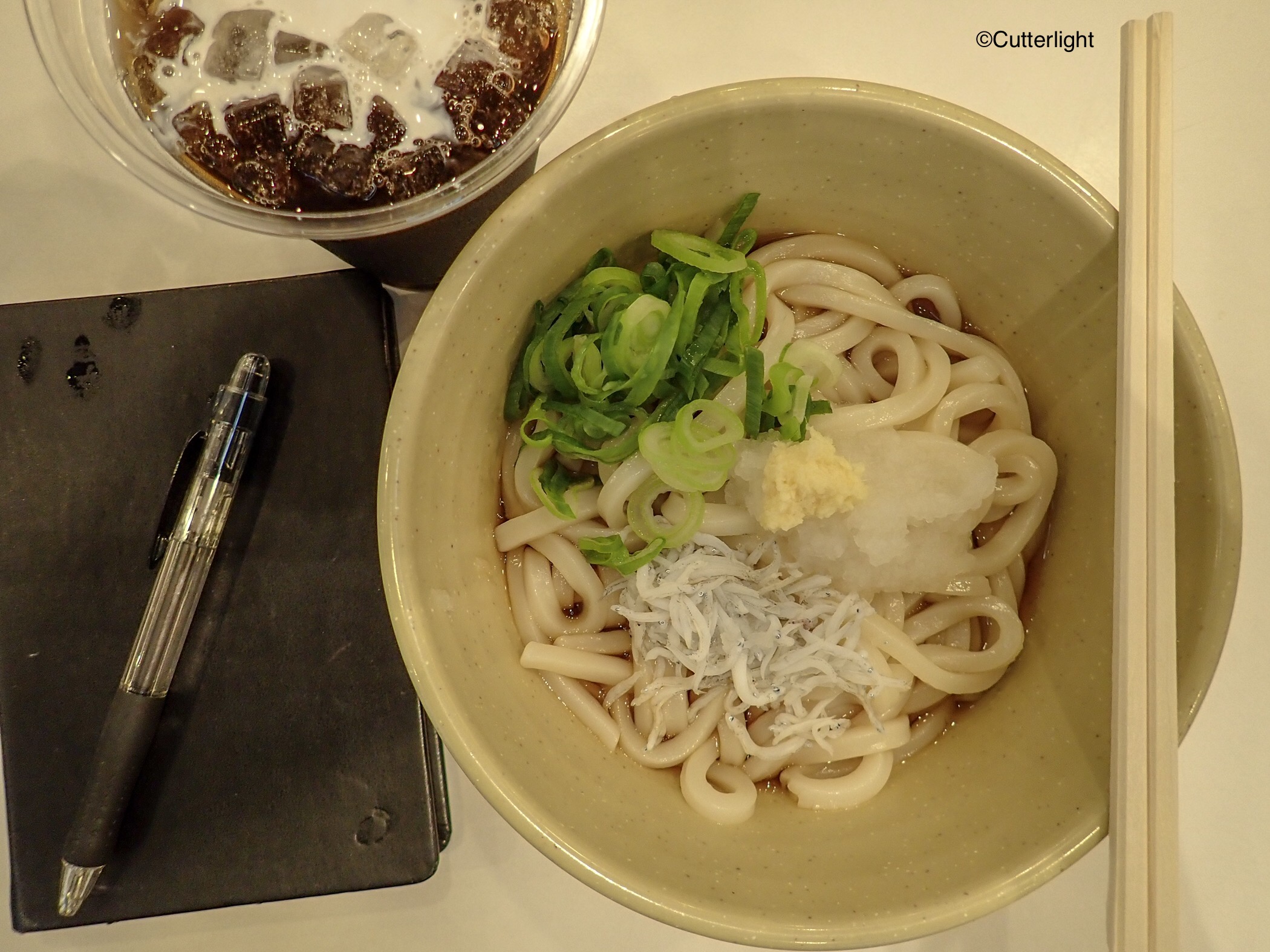
Udon & Iced Coffee – our first breakfast in Japan!

And so, rather than arriving in Chitose on the night of May 29 as planned, we spent the night in Haneda Airport, sleeping relatively soundly in the seating area. The floors were so clean they gleamed. The restrooms were spotless. The coffee and bowl of udon we had for breakfast were excellent. And when we finally arrived at our modestly-priced hotel in Chitose, our room, though perhaps a bit small by American standards, was utterly immaculate, appointed with an excellent bathroom (including a nice, deep tub and more features on the toilet than either one of us is likely to ever use), a comfortable bed and truly plush bathrobes. 

Welcome to Japan.

Almost There, or… Who Does This? Hokkaido Bicycle Trek 2018

Made it to Haneda! Bicycles, trailer, gear & clothing. On to Chitose!

Planning a bike trek around Hokkaido, Japan has been quite a challenge. People travel abroad. We’ve traveled abroad. People go on fishing sojourns. We’ve gone on fishing sojourns. People undertake photography safaris. We’ve undertaken photo safaris. People bike trek. We’ve… ridden our bikes. The challenge has been that people don’t typically do all these things in one, long, self-guided camping trip. Nor do they normally wait until they’re in their 50’s to attempt their first foray into something like this. 

To prepare, we read books on bike trekking – from words of wisdom on ultra light traveling to advice from folks who tote along babies and dogs. We watched countless videos on how people pack and camp with their bikes. Along the way we feathered in fishing. And photography. And pack-rafting. And camp cooking. And backpacking. And bird watching. And then there was the fitness training schedule to help us get into shape for this adventure. With as many people in the world who have already pioneered all of these different adventures, no one seems to have attempted the catch-all combination of what we are hoping to embark on. 

During the planning phase, we practice-packed several times. Each time, we realized another layer of equipment had to be fine-tuned. Without bringing a pack mule or a SAG wagon, we weren’t going to be able to carry along everything that we wanted to. 

The pack raft was the first thing to go. Our rafts compact into fairly small bags, but they necessitate paddles and PFDs. The amount of space and additional weight all of that entails wasn’t going to work. A subsequent trial packing made it clear that our plan to backpack and camp in the back country of the Shiretoko Peninsula, a world heritage site, also required too much stuff – mainly the backpacks themselves. We still plan to explore a backpacking trip, but we’ll look into renting backpacks. 

The next activity to get a hard look was fishing. Hokkaido is reported to have good populations of trout and char and even some salmon fishing as well as opportunities to ply ocean beaches and rocky shorelines for a variety of species. While we considered getting into at least some fishing to be a non-negotiable, we desperately had to figure out how to skinny down our equipment to one rod tube and one waist pouch. The compromise we settled was sharing gear instead of bringing two of everything. Additionally, we modified our lone fly rod to double as a spinning rod. (If it works, we’ll tell you all about it.) In the end, we packed a fly reel, a spinning reel, an 8-weight rod, a tenkara rod, a few small boxes of flies and lures and a small assortment of leaders and tippet material.

The next nonnegotiable was photography gear. Last summer, we limped through with substitute equipment and felt handicapped the entire summer. When we returned home and finally got our photos up on the computer screen for editing, they left us disappointed with the quality. So, our preparation for this summer involved numerous discussions and field tests regarding what gear would best capture the sights and experiences of our journey. What made the cut may seem like a lot to some, but we feel confident that we’ve streamlined our gear without sacrificing too much versatility.

The guiding question in all of this was, What kind of experiences do we most want to have? And the not-so-surprising lesson has been that if the trip is to be about going and doing rather than simply going and seeing, a certain amount of specialty gear is necessary. We know, for example, that we can enjoy first-rate food experiences while keeping our budget reasonably low by visiting markets and cooking for ourselves. But this strategy necessitates carrying with us cookware up to the task. Even birding pretty much requires that we take along a decent pair of compact binoculars and a field guide (which Jack went through with a box cutter and pared down to the bare essentials).

With our gear as fine-tuned as possible, we flew to Anchorage where Paramount bike shop took over the bike-packing – otherwise known as breaking down the bikes and packing them into big cardboard boxes. Meanwhile, we filled two much smaller cardboard moving boxes with the rest of our gear – boxes we’ll discard once we arrive in Hokkaido. And so, ready or not we’ve begun this summer’s adventure with three bicycle boxes and two moving boxes colorfully decorated with neon orange duck tape, packed to withstand the long journey down the West Coast and across the Pacific Ocean. 

At the Anchorage airport, a helpful Alaska Airlines ticket agent was ready to assist us with the puzzle of moving our over-sized bike boxes through the maze of four planes, four airports, two languages and two countries. We were nervous about our baggage surviving the journey or getting lost along the way. As unconventional as it is to travel with ducked-taped cardboard boxes, we are happy we did. At our San Francisco stop, we looked out the plane window and saw our boxes being loaded into the plane. And thanks to the day-glow orange tape, we quickly spotted our luggage as it hit the conveyor belt in Tokyo. Hi-vis tape was a great idea! By the way Big Kudos go out to Terrie at the Alaska Airlines desk-for-troubled-travelers. She was able to figure out how to check our bags all the way to Hokkaido from Anchorage. Amazingly, the cost for all of our baggage was a very-reasonable $200! (Go Club 49!)

As the nerve-wracking airplane travel segment of our journey comes to a happy conclusion, we can now focus on the next leg of the adventure: putting our bikes back together, finding stove fuel and purchasing a few groceries. And then we will answer the question that has been in the backs of our minds (and the pits of our stomachs) ever since we conceived this trip: Will we be able to balance, steer and propel these vehicles??? Stay tuned!