Steam Juicer – a Revelation

If you’ve been following along, you’ll know I avoid superfluous or single use kitchen gadgets. When friends suggested adding a steam juicer to our arsenal, I borrowed one to see what the fuss was about. I first tested it on rhubarb and high bush cranberries with good results, but when I steam juiced wineberries (aka nagoon berries) I was sold. This device simplifies the process of cleaning and sorting, and quickly produces pure, unadulterated juices ready for immediate use or for canning. Highly recommend!

#steamjuicer #kitchengadget #juicing #chefdonachy #alaskacooking #food #foodphotography #eatingwelloffthebeatenpath #alaskafood #alaskabush #fooddestination

Wild Strawberry Rhubarb Hand Pies

A work in progress – wild strawberry rhubarb hand pies. Perfecting a recipe with frozen fruit. It’s not a feat for the easily frustrated.

#rhubarb #handpies #foraging #chefdonachy #alaskacooking #food #foodphotography #eatingwelloffthebeatenpath #alaskafood #alaskabush #fooddestination #moosepie&malbec

The View from the Boat Landing

The View from the Boat Landing
Chignik River, Dawn, September 10, 2018

Behind me from where I stood as I composed this photograph, a dirt and gravel road travels a winding path along steep hillsides for about three miles to the Chignik Lake airfield, a bouncy dirt airstrip capable of handling the nine-seat bush planes and smaller aircraft that regularly travel the Alaska Peninsula. For the first two-and-a-half miles from the boat landing the road hugs steep hills, often within view of the river. Traveling the road from June through November, it’s common – at times almost a given – that you’ll see one of more of the Chignik’s massive brown bears. Sandhill Cranes, Tundra Swans, eagles and any number of passerines are frequently encountered in summer, and at any time of year a glimpse of foxes, moose, wolves and even wolverines is possible. Take note of the local hares you might catch sight of – Tundra Hares, the largest hares in the world.

The road is the road… the road to The Pad… the Top Road. Three miles. On one end, unless you are on a Honda (an ATV), you would need to board a plane to travel further by vehicle. On the other end, you need a skiff. There is no overland connection with any other community. Mountains, rough terrain and jungle-thick alders make travel by foot even to the village of Chignik Lagoon – just six miles down the peninsula from Chignik Lake – impractical. Whether one travels by air or by sea, it is 353 miles to Homer, Alaska – the closest place a road connecting with the North American mainland can be joined.

Is “wilderness village” an oxymoron?

Tundra Swans at Black Lake

Wintertime photograph of snow covered mountains
Tundra Swans at Black Lake – The jagged Aleutian Mountains loom in the background over this bay on remote Black Lake on the Alaska Peninsula. A flock of approximately six dozen Tundra Swans rests on ice in the foreground. Not readily discernible in this photo, a few ducks, mostly Mallards, are milling about in the open water near the ice. This broad, shallow, weedy lake at the headwaters of the Chignik River Drainage provides waterfowl habitat as well as an important nursery for salmon that spawn in various tributaries. The most practical way to access the remote waters of Black Lake is by skiff – about 17 winding miles from the village of Chignik Lake up Chignik Lake and then up Black River. January 3, 2018

Umiak

This umiak – a traditional whaling boat, the hull made of Bearded Seal skin stretched tight and lashed over wooden ribs – was positioned on a rack, allowing me to make a photograph of the inside, upside down. Point Hope, Alaska, March 27, 2012.

Pedal Bike

In bush communities such as Shishmaref, virtually everything comes into the village either by plane or by barge. Trucks, boats, hondas*, snowmachines*, pipes, building materials, food, clothing, clothing washers, bags of chips, cases of pop, birthday presents… It’s not practical to ship out empty detergent bottles, worn out dryers, broken down vehicles or broken toys. So most of the refuse goes to a local dump. In these modern times, when most of what is consumed takes a very long time to return to its elemental or mineral form, whatever isn’t burned remains there – buried or piled high. And there it will remain till the sea comes one day. (Photograph by Barbra Donachy, October 31, 2010)

* “Honda” is the Alaskan term for quad or ATV. “Snowmachine” is Alaskan for snowmobile. Out in the bush, bicycles are often called pedal bikes to distinguish them from hondas/ATVs, which are also often called bikes.

Photo of the Day: Main Street, Shishmaref, Alaska

To imagine Shishmaref, begin with Sarichef Island where the village is situated. Sarichef is one of several low-lying barrier islands running for about 70 miles along the northwest shore of Alaska’s Seward Peninsula. If you’ve ever been to North Carolina’s Outer Banks, you have some idea of such islands. Sand is everywhere. The above photo depicts a section of the main thoroughfare traversing this village of about 570 residents. There are no roads connecting Shishmaref with the larger world. Vehicles and building materials arrive primarily by ocean barge. Groceries are freighted in by plane. Because of the added freight costs, everything in the small local store is quite expensive. Pink salmon and Dolly Varden Char which migrate along the beach, seals taken from the nearby sea, and Musk Oxen, Caribou, an occasional Moose and waterfowl along with blueberries and Cloudberries taken from the mainland supplement most diets.

In 2010-2011 when we lived there, virtually the entire community was without the kind of city plumbing considered necessary in most of North America. The white plastic container near the middle of the street is where “honey buckets” are emptied into. These containers are then taken to a settling lagoon. Most houses have large water tanks of up to about 300 gallons which must regularly be refilled. The closest village is Wales, population about 145, over 70 roadless miles down the coast.

An Incalculable Loss: Tragedy at Chignik Lake

Fred Shangin and Nick Garner

Fred Shangin, left. Nick Garner, right. They don’t cut men from finer cloth. Watermen through and through, from the headwaters of the Chignik to the unpredictable Alaska Gulf and Bristol Bay, Fred and Nick were two of the most skilled boatmen in the world. We were honored to have them take us under wing and teach us. We are asking our readers to make a contribution in the name of Fred and Nick to the Alaska Dive Search Rescue and Recovery Team.*

Christmas Day here was wonderful. To imagine a holiday at The Lake – Halloween, Easter, The Fourth of July, Christmas – place yourself in a small town 50, 60, 70 years ago, in a gentler, quieter world, far less commercialized, less politicized, more intimate. It snowed all day. Multiple invitations were issued back and forth to come share food and cheer, and for those who felt uncomfortable visiting due to Covid… or for whom age has made going out on a snowy day difficult… heaping platters of turkey, ham, moose, beef, salmon, side dishes and desserts were delivered. The day was a snapshot of life in our tiny village.

How quickly a scene… or a small boat… can flip, leaving the world upside down.

Despite the prospect of incoming weather, the following day three of our men took a skiff up the lake, an eight mile run. The boat the men took was also carrying a snow-machine, the Alaska term for snowmobile. The plan was to look for moose or caribou to replenish the village’s stock of meat.

Weather was coming from the southeast. From that direction, winds have an unobstructed eight miles to build waves as they blow up the lake to the sometimes treacherous northwest corner. Near the lake’s outlet at the village of Chignik Lake, the water can be calm while up in the northwest corner messy, white-capped three footers seem to come from all directions as they bounce off the sheer mountains that crowd the shoreline. Sudden williwaws pouring down those same mountains can turn those three-foot waves into erratic four footers. That’s a lot of sea for a small boat – enough to upend such a vessel.

And so it is that the village lost two great men in the prime of their lives, and we lost two dear friends. Fred was a particularly close friend. In fact, he was much more than a friend. He was our nearest neighbor, our guardian angel and perhaps the most generous and capable man we’ve ever known – and the happiest, truly a man who had found his place in this life. Unbelievable that the guy Barbra sometimes called Superman had perished like that.

Fred was one of the guys who kept the diesel generators running that supply The Lake with electricity; the guy who texted and called me, relatives and friends every day to check in and see what we were up to or to invite us along on one of his adventures. He’d run his skiff down the river and out onto the ocean to set halibut skates (similar to trot lines) and crab pots (which he and Nick welded together from rebar and chicken wire); he was the guy who organized hunting trips for moose and caribou. He was the guy who set nets for salmon and liberally shared his catch. When Fred got halibut, everyone got halibut. When Fred got crab, everyone got crab. When Fred and his crew got a moose… well, you get the idea.

He taught us how to spot the caribou that go up on the ridges of the lower mountains on warm summer days, miles across the lake, mere specks we’d overlooked till Fred pointed them out. He appreciated my photographs, and so I’d regularly get texts and calls from him: Bear on the beach with 2 cubs, or Wolf on the airstrip or Looks like a dandy day there Jack. Good day to go out and take some pictures.

Nick, too, was a friend, though we were only just beginning to get to know each other well. Like Fred, he had a wide range of skills and we admired him greatly. Both were loving, devoted family men. To the village, they were excellent providers as well as the kinds of men who would do anything to help a friend or neighbor. Fred was 42. Nick was 39. In our village of Chignik Lake, a community of only 50 or 60 residents, the loss of these two great men is incalculable. The entire village is in a state of disbelief, shock and sadness.

A fitting tribute to these men would be a contribution to the Alaska Dive Search Rescue and Recovery Team.* Thank you so much for contributing whatever you can give.

*The Alaska Dive Search Rescue and Recovery Team is a donation funded, all volunteer, unpaid, 501(c)(3) Non-Profit Corporation. Donations are tax deductible.
   Only through charitable donations can their volunteers receive the specialized training needed to perform hazardous missions. It also ensures they can maintain their extensive rescue gear cache and equipment trailer that are required to perform missions around the state.

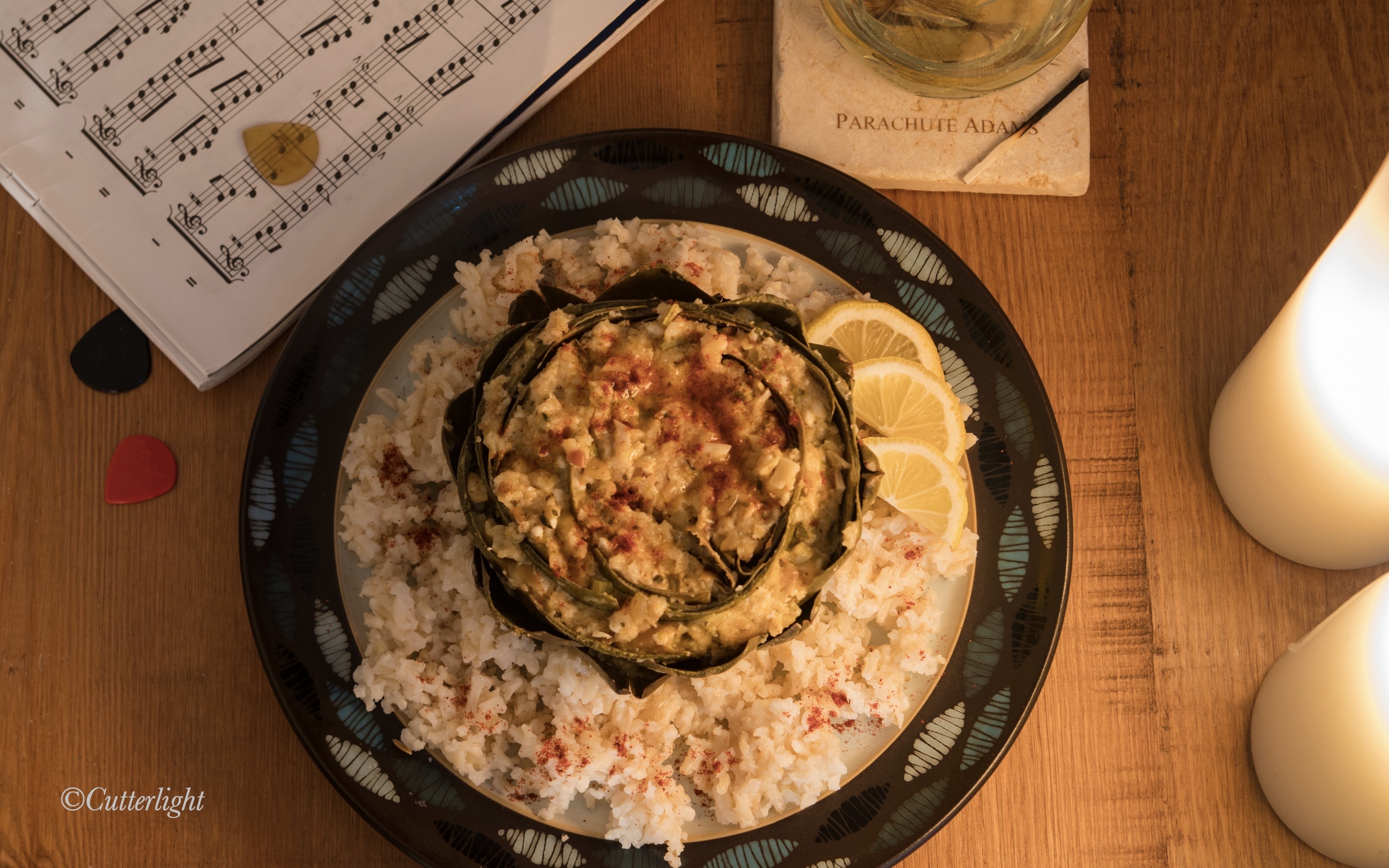
Two-Cheese Stuffed Artichokes Appetizers – (Shhh! It’s really a meal)

Days on end with temperatures stuck below zero, occasionally warming into the single digits or teens to snow. Winter is here, a time when comfort food is never more comforting.

For the first time in several days, we woke this morning to temperatures above 0° Fahrenheit. With the relative warmth, a fresh layer of snow is beginning to accumulate. Black-capped and Boreal Chickadees are nearly constant visitors to the feeders outside our living room window, and from our home’s southwest windows is a view of a river locked in ice.

Aside from summer-caught salmon fillets and wild blueberries, lingonberries and mushrooms gathered near our Newhalen home, most of our groceries come to us by small plane from Anchorage. Out of the asparagus we’d asked for, our shopper at Costco recently substituted artichokes. They’re beautiful, but other than steaming them and creating some sort of buttery dip, we don’t have much experience with this vegetable.

As it happens, we’ve been watching Italian Food Safari, a show created in Australia where Italian families have lived for generations preserving and expanding on the gustatory traditions they brought with them to their new country. It was in one of the show’s episodes that we were introduced to the wonderful idea of stuffing artichokes.

While this dish requires a certain amount of passive preparation time in the form of soaking and steaming the artichokes, the actual preparation is fairly simple. Create a mixture that will steam well and compliment the vegetable, chill a bottle of Pinot Gris or dry Riesling, prepare couscous, brown rice or something similar as a bed for the finished artichoke, and if you’ve never served an artichoke this way before, prepare yourself to be amazed.

Directions

  1. For each artichoke, cut the stem off so that the artichoke will sit upright in a steaming pot. Then cut off the top 1½ inches or so of the artichoke as these ends are mostly prickly and inedible. Next, use a melon baller or paring knife to remove the fine, thistle-like down (the choke) in the center of the artichoke. Taking a moment to do this will result in a more pleasant dining experience. Soak the artichokes in cold water for 30 minutes. You will want to use something to keep them fully submerged. This will ensure they steam nicely.
  2. There are probably all kinds of ingredients that would work well as the stuffing, but you’ll want to avoid items that will overwhelm the subtle flavor of the vegetable. We started by peeling the artichoke stems, chopping them fine and placing them in a bowl. To this, we added chopped garlic, crumbled feta cheese, grated Comté cheese, panko, Italian herbs, olive oil and fresh lemon juice. The cheeses were sufficiently salty that we didn’t add additional salt. Adding a splash of sherry or whatever wine you plan to serve works well. Although we didn’t add any type of meat or seafood to this mixture – and after serving the artichokes agreed that most meat and seafood wouldn’t work very well – we did think that Dungeness or Blue crab might do the trick. Italian-style breadcrumbs would work well as a substitution for the panko. Mix the ingredients together.
  3. Remove artichokes from the cold water where they’ve been soaking and push and pull the petals apart to create spaces into which the mixture can be stuffed. Fill as many of these spaces as you reasonably can.
  4. Arrange the stuffed artichokes stem-side down in a steaming pan – one you’ve prepared so that the artichokes can steam without being immersed in water. A canning rack, or even canning jar lids, works well for this. Steam for 45 minutes.
  5. Finish the artichokes with a drizzle of olive oil and a dusting of smoked paprika. Serve hot on a bed of rice, couscous, quinoa or something similar and celebrate the day with a glass of Oregon Pinot Gris. Don’t forget to provide a bowl for the discarded petals.


Where in the World is Newhalen, Alaska?

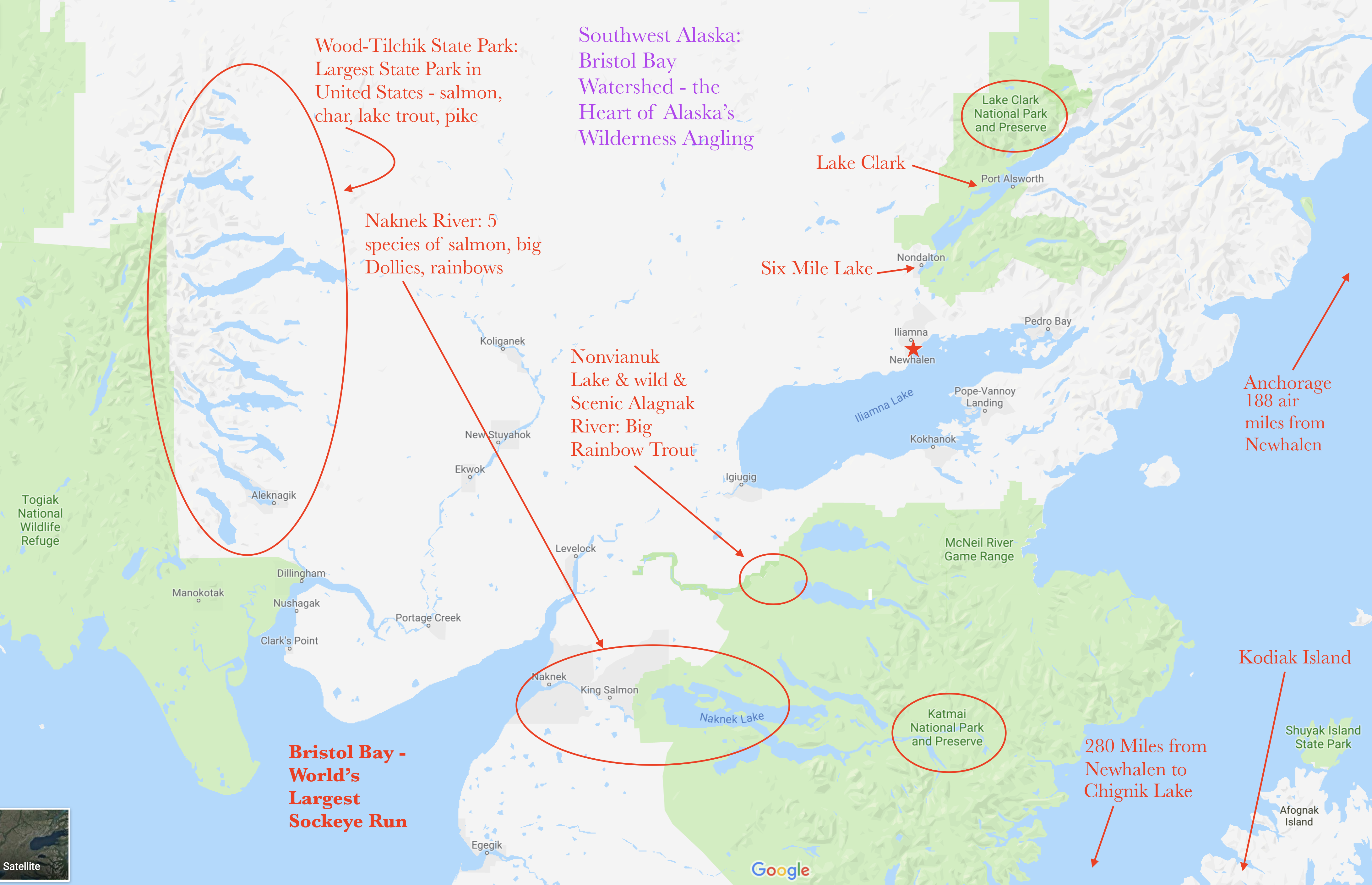
The red star (just right of center) marks Newhalen, Alaska – our new home at the mouth of the Newhalen River on the shores of Lake Iliamna. Temporarily up in the air this past spring with the closing of the school in Chignik Lake, we’ve landed in the heart of some of the best trout and salmon fishing in Alaska – and hence in the world. 

On June 21st, we said our goodbye-for-nows to friends in Chignik Lake, boarded a small bush plane, and bid farewell to the tiny village in the Alaska wilderness that had been our home for the past three years. Our summer has been something of a whirlwind since.

A parting view of our wonderful village on Chignik Lake. The red dot (near center) marks our home there. The good news is that in late July, a family with children moved to The Lake, so the school is restored to the minimum enrollment necessary to open this fall. 

From The Lake, we flew straight to Newhalen and began familiarizing ourselves with our new community. The house we were to move into was still occupied, so we quickly tucked ourselves into a nearby apartment, boarded another plane, and flew across Cook Inlet (the large body of water on the right side of the above map) to Homer where our truck, camper, C-Dory fishing boat and canoe have been in storage. The scramble was on.
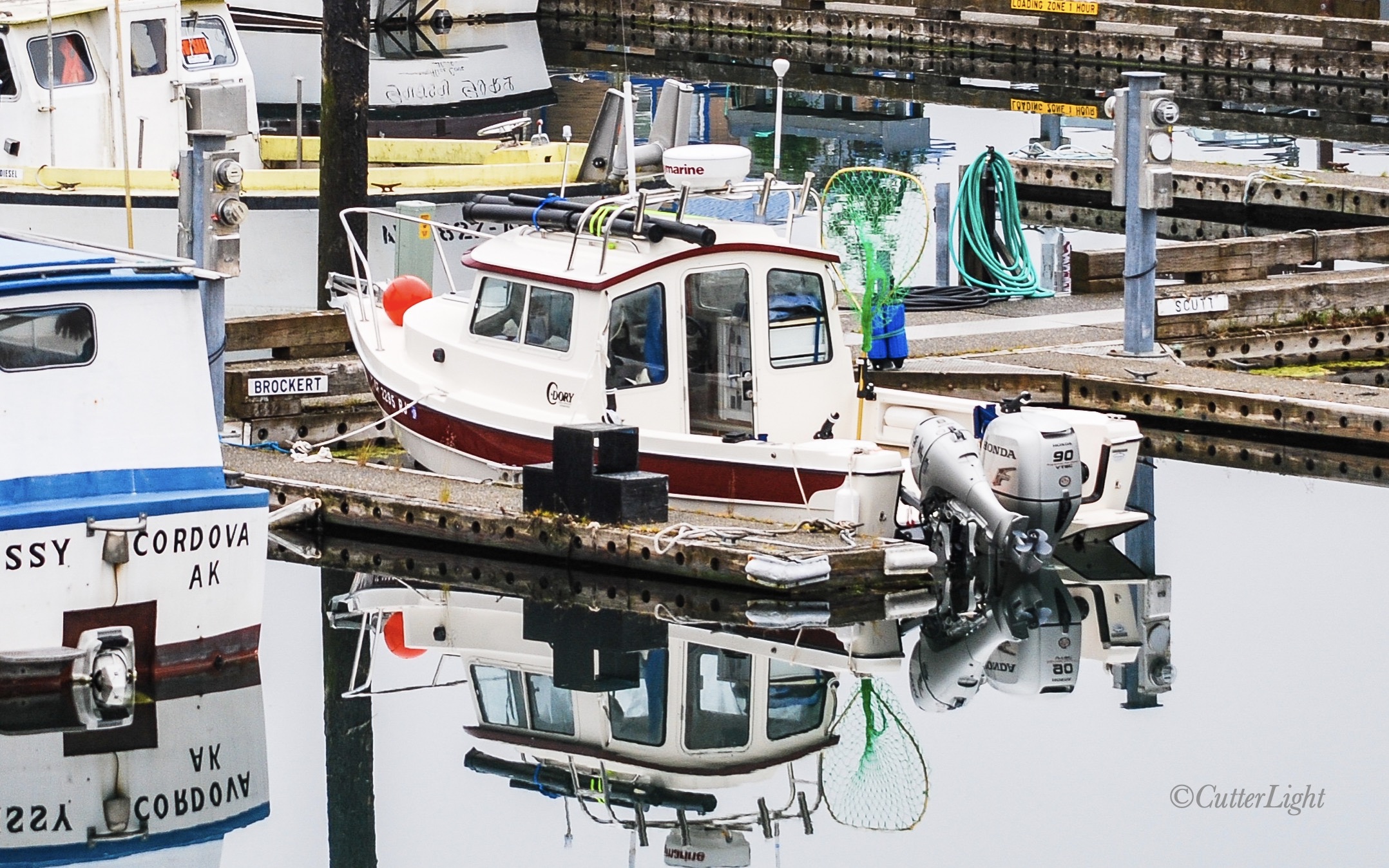
It’s hard to believe this photo of Gillie was taken over 10 years ago in Cordova, Alaska. She’ll be happy to be exploring Lake Iliamna and other nearby waters near our new home.

Six days later, we’d made the drive to Anchorage to take care of errands, appointments and catching up with friends, drove back to Homer (450 miles round trip), delivered the truck, canoe and boat to a transportation company to be barged across Cook Inlet, driven on a haul road to Lake Iliamna, then barged across the lake to our home, returned the camper to storage in Homer, then flew back to Newhalen. Two weeks later, our house-to-be opened up and we began moving in. Since then, we’ve been engaged in daily projects large and small, turning this house into our home.

Meanwhile, we’ve been sandwiching in regular runs in preparation for the half-marathon we’ve signed up for in October, tying flies, catching salmon and putting away 100 pounds of beautiful Newhalen River Sockeye in our freezer, squeezing in a little guitar practice, picking blueberries (gotta have berry security for the coming months) and managing to still have time for our traditional evening games of Scrabble or chess. We’ve barely touched photography and writing during this time.

A thick mattress of soft lichen makes sitting or kneeling to pick blueberries quite comfortable. There is also an abundance of lingonberry (low bush cranberry) along with crowberries and, here and there, cloudberries.

We have begun to get the lay of the land. For about three weeks in mid-July, a nearly steady stream of tens of thousands of salmon ascended the Newhalen River. The fish get temporarily bottlenecked at The Rapids – a spectacular piece of unnavigable white water that forces the salmon close to the banks were anglers (such as ourselves) attempt to get a fly into their mouths. Where there are salmon there are bears, and although we haven’t seen any yet, there are signs of their presence. We have seen a couple of foxes, a set of moose tracks, and a number of interesting birds including ospreys, merlins and loons. The landscape is a mix of tundra with berry patches everywhere (and I mean everywhere) and taiga forest predominated by black spruce and some white spruce. The horizon is shaped by mountains.
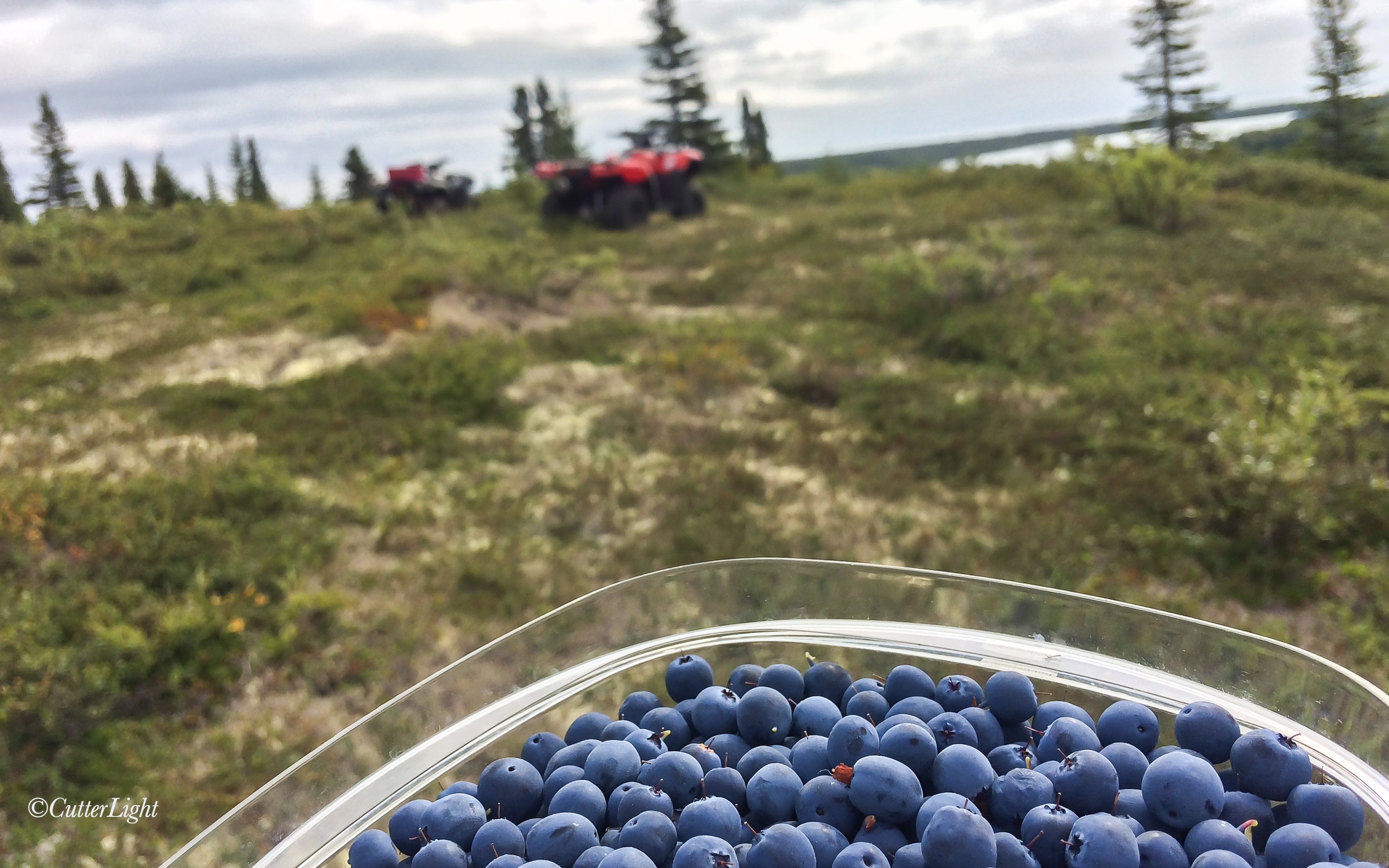
With very limited roads, Hondas (ATVs/quads) are a great way to get out and explore. There are extensive trail systems lacing through the area.

With only a few miles of road and no practical way in or out of the village except by plane, this is till the Alaska bush. But coming from truly remote Arctic villages such as Shishmaref and Point Hope as well as Chignik Lake nearly 300 miles down the Alaska Peninsula, Newhalen and its sister village five miles up the road, Iliamna, are like no bush village we’ve lived in. Some of the roads here are paved! This is a hub for commercial fishermen, sport anglers and eco-tourists, and as such, the area has a decidedly cosmopolitan feel about it. Fairly large planes fly in and out, there is a modern, fully-staffed health clinic, a small grocer and a slightly larger, exceptionally well-stocked general store that carries everything from food to hardware to clothing with even a little fishing tackle in the mix. And get this: we can now get same-day delivery from Costco. It almost feels like cheating. “Cush Bush,” we’ve heard it called. Or “Bush Lite.”
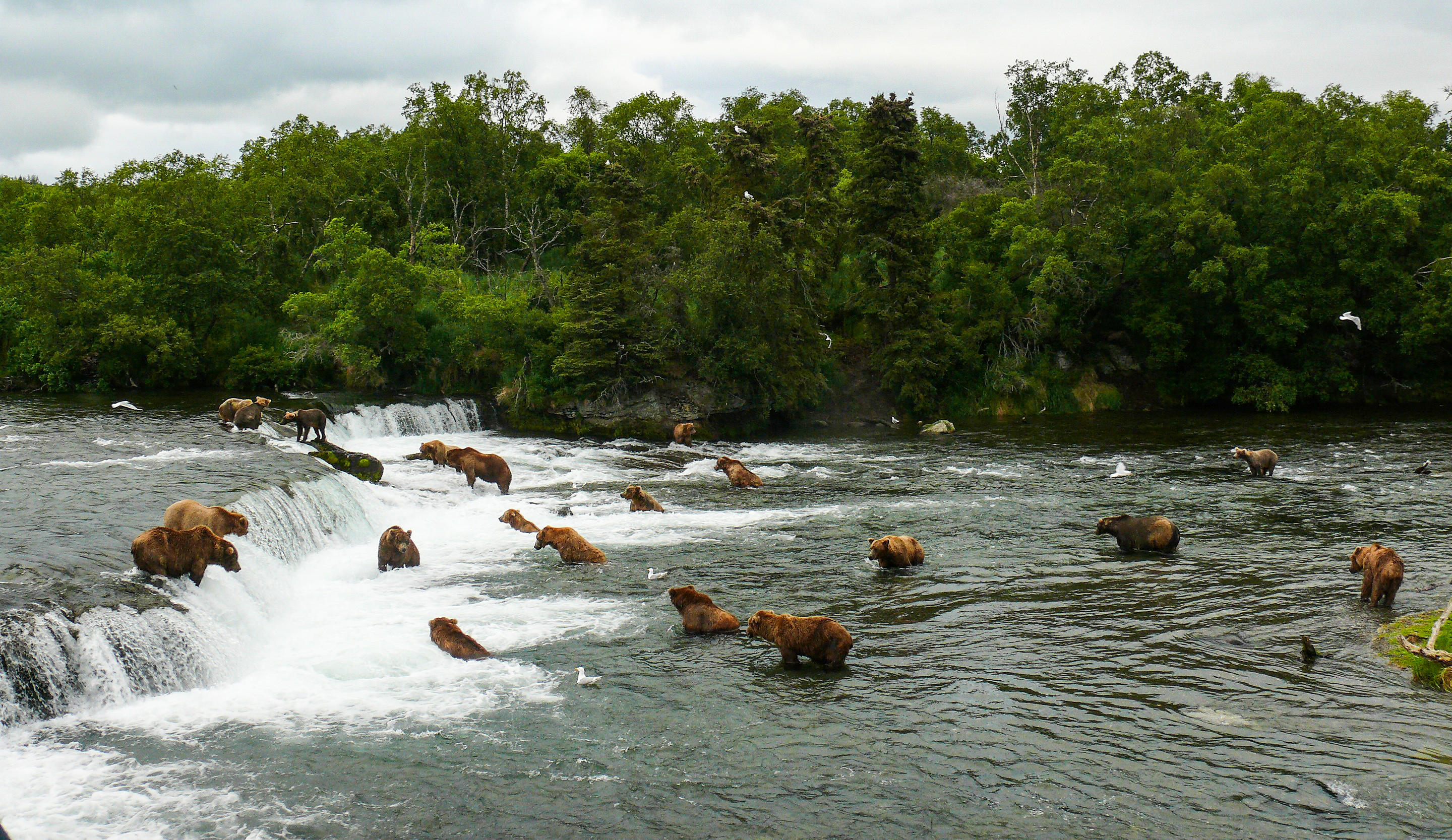
Iconic Brooks Falls in Katmai National Park is just 90 miles – a short bush flight – from Newhalen. (Photo Credit: NPS/Michael Fitz – https://www.nps.gov/media/photo/view.htm?id=76833AAD-1DD8-B71B-0B3BA028DA419061)

At the same time, there are only about 300 residents between the two villages. During our three to five mile morning runs along the main road, we’ve never seen more than a handful vehicles. And the people here are super friendly. New friends at the airport call us when we have freight, and folks at the post office are happy to do the same when we’re expecting something important. Whether we’re on our bicycles, running, or driving our pickup, virtually everyone waves as they drive by. And it’s quiet. Not Chignik Lake quiet, but aside from an occasional plane, once we’re beyond the edge of town all we can usually hear is birds chattering and the distant roar of the Newhalen River. Inside our home, we hear almost nothing from outside. There are no police officers, virtually no litter, and most people don’t bother locking their doors.

Coho Salmon will be arriving in the river soon. A few miles beyond the village the Tazimina River is renowned for trophy-sized grayling and rainbow trout over 20 inches. Fly fishermen catch rainbows that large and larger at the mouth of the Newhalen, a 15 minute walk from our home. We’re a short bush plane ride from Katmai National Park, famous for the Brooks Falls where massive brown bears gather to intercept migrating salmon. As part of the Bristol Bay watershed, rivers that fill with salmon, not to mention trout and char of huge proportions, lie in just about every direction.

When I was a young boy, sometimes my grandfather Donachy would let me have his old issues of Sports Afield, Outdoor Life and Field and Stream. I’d pore over those magazines, reading them cover to cover and then reading my favorite articles again and again. That’s where I first learned of Lake Iliamna, this massive body of water fed by streams and rivers filled with fish, its shores patrolled by wolves, bears and moose, a few isolated Indian villages dotting the landscape, bush planes the only way in… It was the stuff to make a young boy dream.

Well. Here we are.
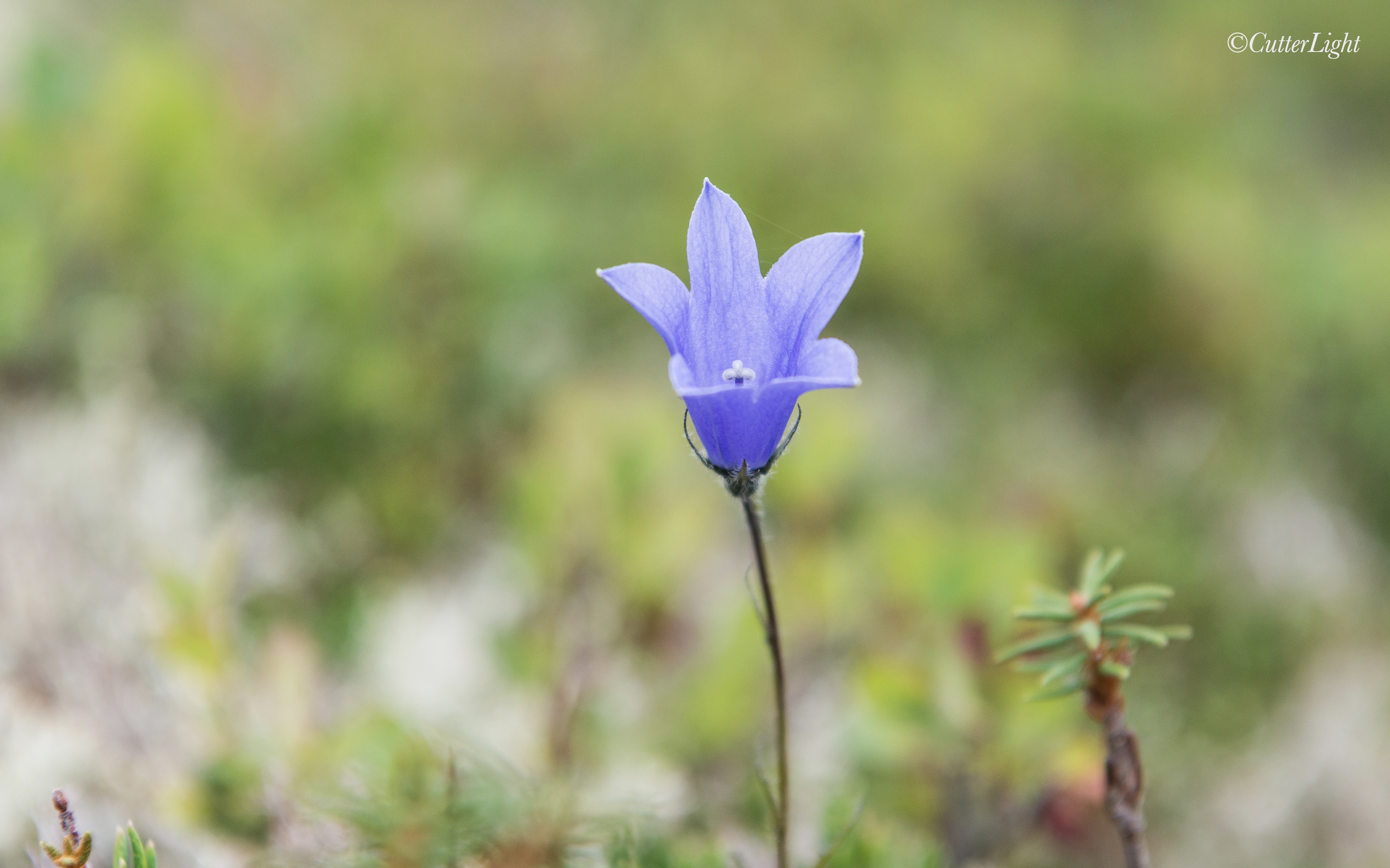
Fireweed flowers are near their finish, but here and there harebell is in full bloom. We’ve finally got our cameras out and are beginning to really dig in and explore this exciting part of Alaska, so stay tuned!