Four Bourbon Taste Test

The four bourbon blind taste test: Maker’s Mark, Basil Hayden’s (Jim Beam Distillery), Blanton’s (Buffalo Trace Distillery), Knob Creek (Jim Beam Distillery) 

Good alcohol is art. Whether the medium is an amber-hued craft ale, a smokey, peaty Isle Scotch, a complex and subtle Willamette Valley Pinot, a tasty Tanqueray and tonic or any of thousands of other choices, a good drink can be downright sublime. In recent years, Barbra and I have become fans of that quintessentially American spirit, bourbon. Although our favorite has been Knob Creek, a recent article on bourbons in Wine Spectator got us thinking that it would be fun to try other makes. And so, as this weekend finds us in Anchorage, last night we engaged ourselves in a blind taste test of four bourbons.

The Crow’s Nest in the Captain Cook Hotel offers commanding views – of a blazing orange sunset over Cook Inlet on one side, of city lights waking and twinkling against the enveloping dark on the other. The bar carries a nice selection of bourbons, and with plenty of empty seats when we arrived, our bartender was happy to indulge us. We were keen to do a side-by-side of two popular brands: Maker’s Mark and Knob Creek. Past that, we were open to anything. “I have a couple I think you’ll find interesting,” she offered. So while we took in the nighttime views out the floor to ceiling windows, she surreptitiously poured out four measures of bourbon in attractive tumblers, arranged them at the bar, and motioned to us that our taste test was ready.

After a round of sniffing, sipping, swirling and comparing impressions, we agreed on our order of preference. We repeated the test one more time, letting our noses and taste buds explore for anything we might have missed the first time around, after which we called our bartender over to reveal which bourbons were which. The results surprised us.

Maker’s Mark, it turned out, was, hands down, our favorite. We found it to be smooth, light on our tongues, and a little sweet in a very agreeable way. Hints of carmel apple reminded me of autumn days in the western Pennsylvania mountains of my youth. We also found notes of sweet cream and vanilla and a clean finish that invited the next sip.

Our second choice – again by a clear margin over the remaining bourbons – was Knob Creek. This whiskey has a rich amber-red color, and a nice nose. Although we both wanted it to have a fuller finish, like Maker’s Mark this drink has a light roasted sweetness that, for me, evokes autumn leaf festivals and cool evenings warmed by oakwood fires – the image of the oak fire no doubt prompted by the subtle oakiness of the whiskey itself.

Although we went back and forth on the next two drinks, in the end we settled on Blanton’s. We found this bourbon to be crisper – less sweet – than the previous two, drier and, perhaps, a bit lighter. Certainly very enjoyable.

Basil Hayden’s has a distinctive rye taste that, perhaps, with more experience with bourbons we might come to appreciate but, for now at least, comes off a bit fumy and and a little overwhelming. I can imagine that if one did develop a taste for Basil Hayden’s, the characteristics of the rye could be satisfying indeed. Perhaps an analogy could be made with single malt Scotch. In our view, there are no “bad” single malt Scotches, but often times there is nothing quite as satisfying as a couple fingers of Laphroaig with all its up front peatiness and smokiness and its sherry undertones.

I’m not sure what it says about us, that our preferences in bourbon were the exact inverse of the pricing. I guess we’re still a couple of cheap dates!
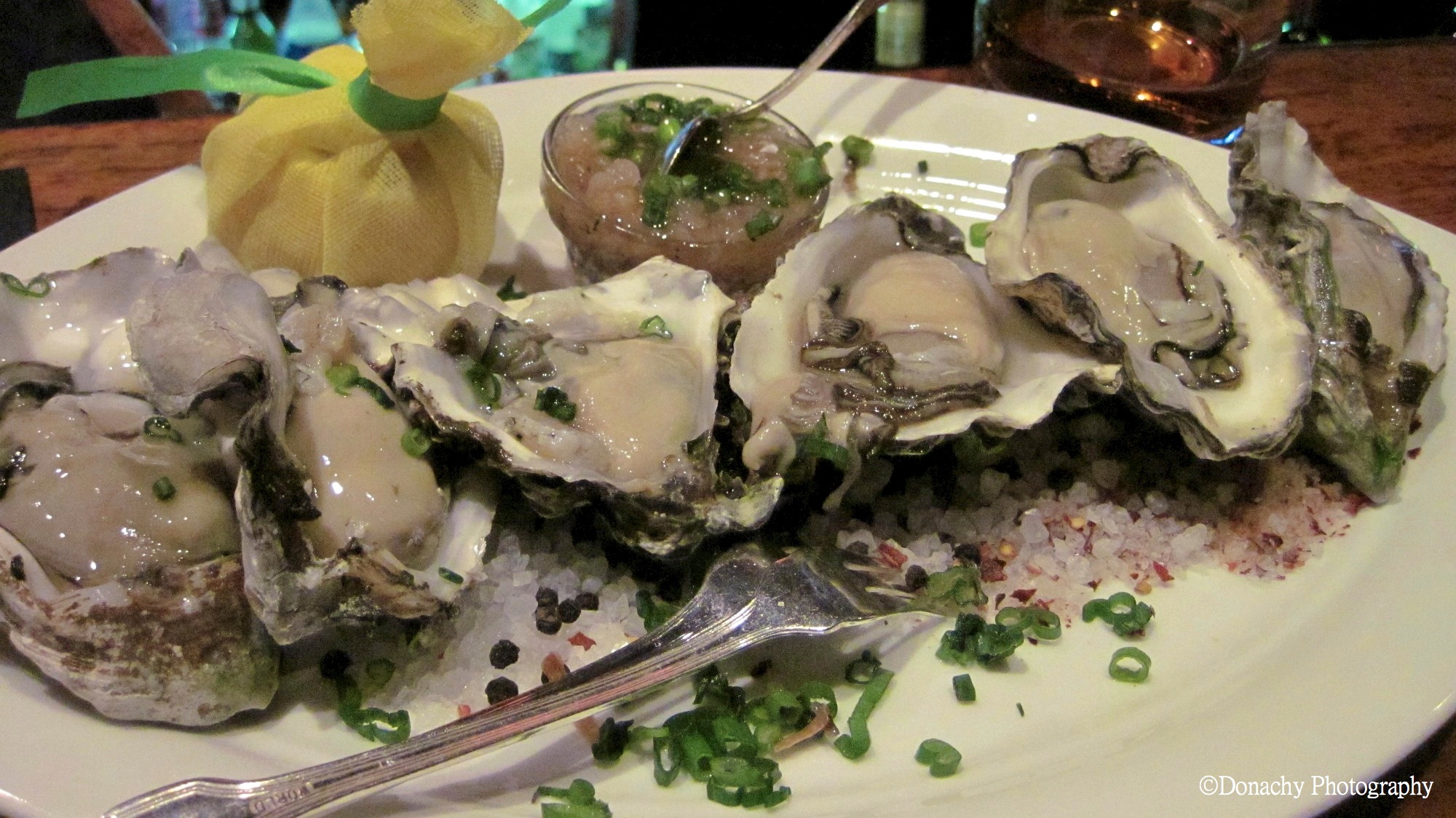
And we incidentally made another discovery. Bourbon is a fine compliment to oysters on the half-shell and would probably pair well with other seafood as well. We splashed a little Blanton’s on these delectable oysters and enjoyed them with a round of Maker’s Mark.
Waste Not Want Not OR Spiced Pear Butter

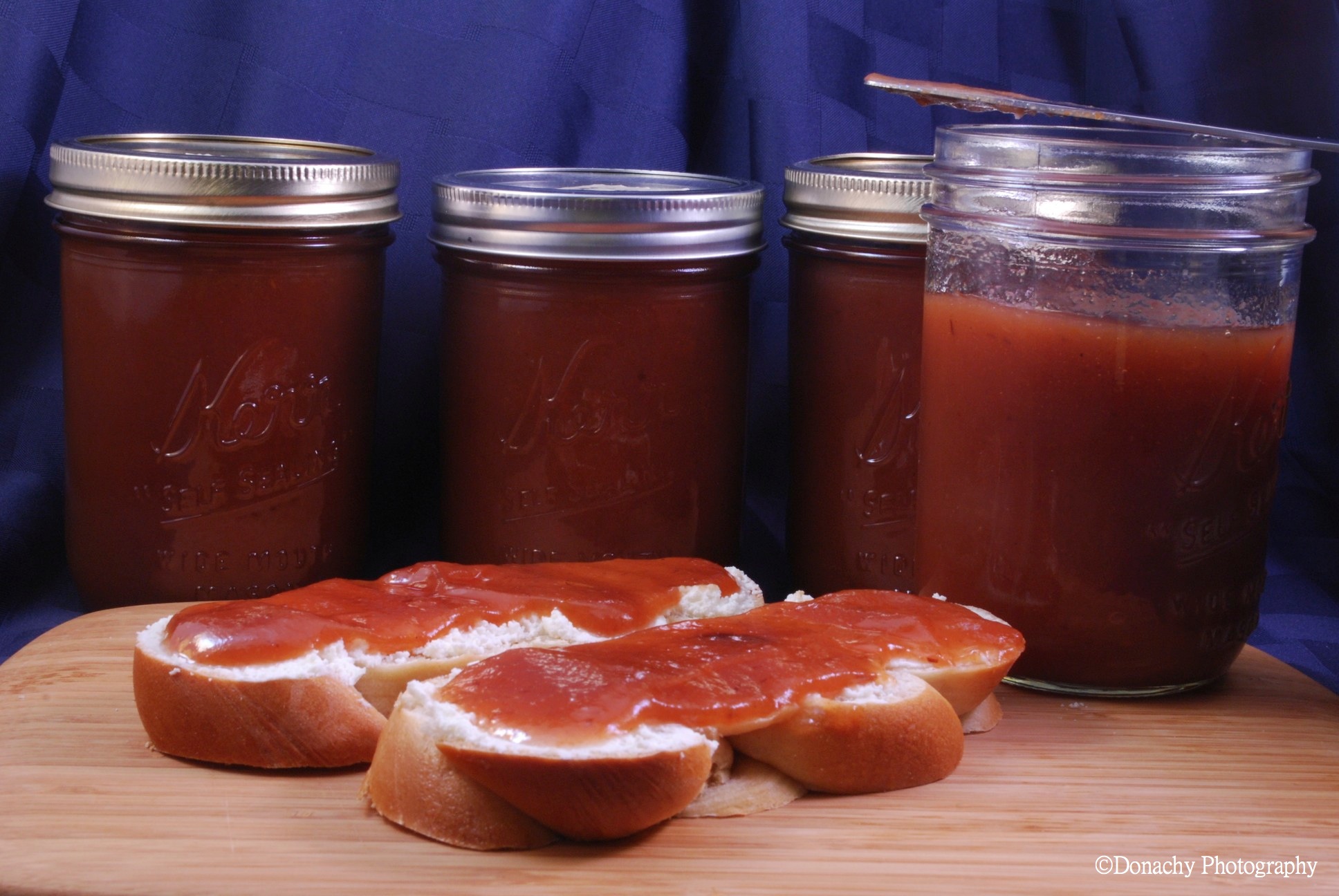
Pear butter and cream cheese slathered on fresh-baked bread and canning jars of just-made pear butter ready for the freezer.

Jack and I try not to waste, especially when it comes to food. When our school’s head cook brought me a box of pears that were too banged up and bruised to serve to students, I gladly took them with the promise of creating something tasty in return.

I bagged up what weighed in at eight pounds of what appeared to be d’Anjou pears. With our supply of maple syrup running low (pancakes and waffles are a weekly feature on our breakfast menu) I reckoned they’d cook down into a fair amount of sweet, lightly spiced pear butter.

Outside it was blowing a gale. I made the walk home in near white-out blizzard conditions only to find my front door knob frozen solid! A snow drift as high as the house had the other door completely buried! After trudging back to school to get help – and fortunately finding one of our maintenance crew who knew exactly what to do – I decided to forego a walk to the store to pick up orange juice, a key element in my most recent batch of pear butter. I did have plenty of lemon juice on hand. Time to experiment.

I have to say this pear butter came out even better than the last. If you picked this up in a cute jar in a boutique gourmet shoppe, you would be happy you spent the $8.

Making pear butter requires an investment of time and effort, but it’s worth it. We taste tested it on Challah bread with a smear of cream cheese. Delicious. We already can imagine filling all the nooks in our weekend waffles with warmed pear butter and chopped pecans. It would be equally tasty on broiled pork chops or grilled chicken.

Ingredients

  • 6 pounds of cored pears cut into cubes (D’Anjou or Bartlett)
  • 1 tbsp dry ground ginger
  • 2 cups water
  • 1 cup lemon juice
  • 4 – 5 cups of sugar
  • 1/2 tsp cardamom
  • 1 tsp orange zest (lemon would be good, too)

Directions

  1. Put cubed pears and ginger into a large pot – preferably one with a thick enough bottom to prevent scorching. Add 2 cups water and 1 cup lemon juice. Bring to a boil. Reduce heat to simmer and cook until pears are soft, 25 – 40 minutes, stirring occasionally. Remove from heat and allow to cool slightly.
  2.  Purée the mixture using food processor, stick or regular blender. Pour puréed pears back into large pot.
  3. Add sugar. Taste after adding 4 cups to see if more sugar is needed. Add cardamom and citrus zest. Taste and adjust seasonings if necessary.
  4. Cook on medium-low heat, stirring often to prevent the purée from sticking to the bottom of the pan and burning. Cook until the mixture is fairly thick. Test by placing a small dollop on a chilled plate: it should not be runny. The cooking-down time can take anywhere from 45 minutes to 2 hours, depending on the batch.
  5. Store in freezer containers or canning jars.
Recipe adapted from http://simplyrecipes.com/recipes/pear_butter/

If you like this post, you might also like:

White Chocolate Chip Pear Butter Bread

Alaskan Chinook Salmon En Papillote

Salmon Challenge #5: Wild Alaskan Chinook en papillote (in parchment paper) on mushroom-pine nut purée and garnished with Alaskan shrimp.

I got the idea for this recipe in A. J. McClane’s North American Fish Cookery, a thin volume of just over 100 fish and shellfish recipes. In his day, McClane was perhaps the most well-known contemporary name in angling literature and journalism and was a gourmet chef to boot. Now 31 years old, this book is very much worth having if you can find a copy. McClane used petrale sole in the original recipe. Salmon was the first of several modifications I made. I would have loved to have had sherry for the mushroom-pine nut purée, but the miso soup used instead gave it a very nice flavor.

To make two servings you will need two oven-proof plates and two sheets of parchment paper large enough to cover the plates. A pair of charger plates to set the hot plates on when they come out of the oven are a nice touch.

Ingredients

  • 3/4 pound fillet of wild salmon, cut in half. Skin on or off is cook’s choice. I leave the skin on in virtually all recipes.
  • olive oil
  • 1 cup chopped mushrooms
  • 3 or 4 cloves of garlic, chopped coarse
  • 1/2 cup sweet onions, chopped coarse
  • 1/4 cup pine nuts
  • 1/2 cup miso soup flavored fairly strong
  • 1/2 tablespoon dry tarragon
  • ground black pepper
  • sea salt
  • soy sauce
  • sherry (optional – to add to mushroom-pine nut purée while sautéing).
  • carrot sliced into julienne strips – enough to place a few on each fillet without overwhelming the fish
  • shrimp peeled and deveined, 2 to 5 for each fillet, depending on size of shrimp. Other garnishes could include thinly sliced lemon, julienne squash, shellfish (small oysters, shrimp, scallops, mussels, crab meat), or fresh herbs

1. Preheat oven to 375 degrees F (190 degrees C).

2. Rinse the salmon fillets, pat dry with paper towels, sprinkle with ground pepper and sea salt and set aside.

3. Very briefly sauté the julienne carrots in olive oil and a little soy sauce, stirring continuously till just limp but still crunchy. Remove from skillet and set aside.

4. Prepare 1/2 cup of strong miso soup and set aside.

5. Place about 3 tablespoons of olive oil in a skillet and heat over medium-high heat. Add the onions and cook for a minute or two. Add the mushrooms, garlic, pine nuts, tarragon, a few grinds of pepper and sea salt. Add the miso soup. Sauté till liquid is mostly evaporated and ingredients are cooked through. Set aside.

6. Purée the mushroom-pine nut mixture in a food processor or blender. If more liquid is needed, add a small amount of water and olive oil.

7. Arrange one sheet of parchment paper on each ovenproof plate and put a little olive oil in the center (where the purée will go) to prevent sticking.

8. Spread half the purée on each sheet of parchment paper. Place salmon fillets atop the purée. Top the salmon with julienne carrots and shrimp.

9. Seal parchment paper by crimping or folding ends together and folding under.

10. Bake on plates on center rack for 20 minutes.

Try this exceptionally flavorful entrée with a glass of Champagne.

If you like this post you might also like:

Salmon Calzone

Wild Alaska Sesame Seed Salmon

Alaska Silver Salmon Pizza

Salmon Burgers with Caesar Slaw

Wild Alaska Salmon Lox

Salmon Pesto Ravioli

Molten Lava Chocolate Cake for Two

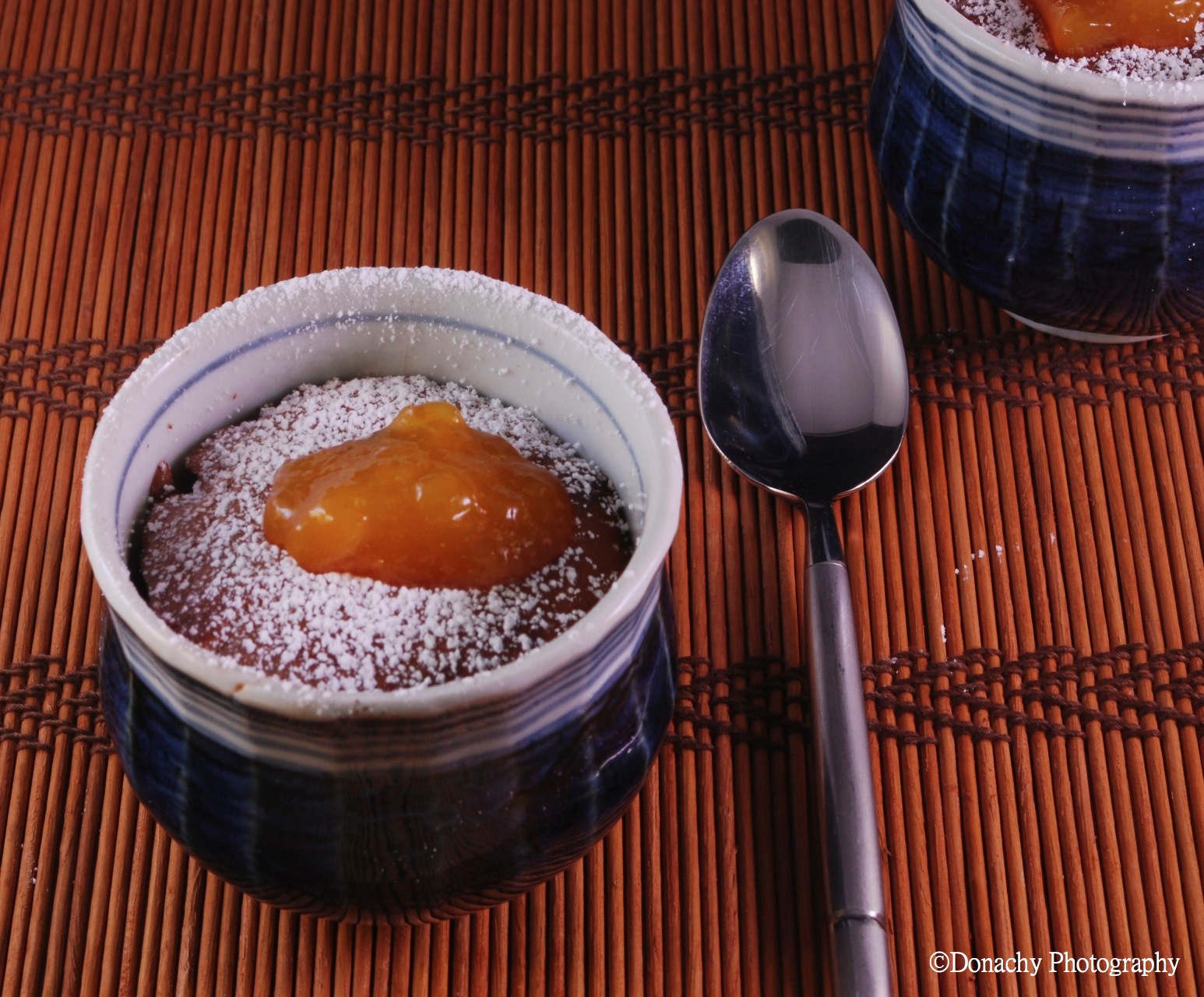
One bite reveals a dark, rich, molten chocolate center. Served warm, this dessert tastes like a celebration.

When we got word that the seller had accepted our offer for our new home, Jack and I both thought “Champagne!” With that not being possible in Point Hope, we went for the next best option – a gourmet celebration meal. Jack created a perfect dinner of seared strip steaks topped with bleu cheese and garnished with a sautéed medley of onions, mushrooms, and garlic. He served the steaks with carrots and parsnips sautéed with a hint of maple syrup. Foil-wrapped baked potatoes and sour cream finished off the plate.

My contribution was dessert. I had read several recipes for molten lava chocolate cake that sounded just right – rich, warm, chocolate and sized to serve individually. I adapted my version from a blog that had scaled down the recipe to two.

Jack had purchased these beautiful ramekins when he lived in Japan. My original thought was to serve the cakes in the ramekins as pictured. I decided to experiment with mine and inverted it. The jam spread perfectly under the cake. I dusted the inverted cake with a bit more powdered sugar. It was a perfect end to a perfect meal.

Molten Lava Chocolate Cake

adapted from Sweetebakes

Ingredients

  • 1/4 cup semi-sweet chocolate chips
  • 2 tbsp unsalted butter
  • 1/2 cup powdered sugar, plus extra for garnish
  • 1 egg
  • 3 tbsp all purpose flour
  • 1 tsp vanilla extract
Directions
  1. Preheat oven to 400 degrees F. Butter two ramekins and place on baking sheet. Set aside.
  2. In a double boiler, melt chocolate chips and butter, stirring until smooth.
  3. Scrape chocolate mixture into a bowl and add powdered sugar. Mix until incorporated.
  4. Add egg and whisk until smooth.
  5. Stir in flour and vanilla extract until smooth.
  6. Pour batter into prepared ramekins and transfer baking pan to oven.
  7. Bake for 12 minutes. Cakes should puff to surface of ramekins.
  8. Allow to sit for 1 minute.
  9. Place a dollop of raspberry or peach jam on cake before inverting onto plate.
  10. Dust with powdered sugar to garnish.

If you liked this post, you might also like:

Way-Better-Than-Pecan-Pie Bars

Crunchy, tasty, chocolatey goodness

What to do with half of a bag of marshmallows and a Saturday afternoon…

Banana Split ala Alaska Bush

Bread Machine Challah

A five-strand braid Challah will provide us with this week’s bread. If we’re lucky, it will last until next weekend to be the main ingredient of a perfect French toast.

Challah was a special occasion bread when I was growing up. Traditionally, Challah is a Jewish celebration bread enjoyed on most Jewish holidays and on Shabbat. It does take time and effort. As warm as our Arctic home is, I never could get the “let the dough rise in a warm, draft-free place” down. If you’ve been following along, you know I depend on my bread machine as the warm, draft-free place.

This challah recipe came from 300 Best Bread Machine Recipes by Donna Washburn and Heather Butt. The bread was eggy and had the texture and taste I remember growing up. The machine did all the work kneading and rising. As for the braiding technique, I followed a terrific tutorial on theshiksa.com.

Ingredients

  • 1 cup water
  • 2 eggs
  • 1 1/4 tsp salt
  • 3 tbsp granulated sugar
  • 3 tbsp butter (room temperature)
  • 4 cups bread flour
  • 1 tsp instant yeast

Glaze

  • 1 egg yolk
  • 1 tbsp water

Directions

  1. Measure bread ingredients into baking pan in the order recommended by the manufacturer. Insert pan into the oven chamber. Select dough cycle.
  2. Remove dough to a lightly floured board; cover with a large bowl and let rest for 10 minutes.
  3. Divide dough into 5 portions. Roll each with the palm of your hand into long, smooth ropes (1 inch in diameter). Braid. See tutorial (www.shiksa.com) for directions. Pinch ends together. Cover and let rise in a warm, draft-free place until doubled in volume (30 – 40 minutes).
  4. Preheat oven to 375 degrees F.
  5. When the dough has risen, beat egg yolk and water. Brush braid with glaze.
  6. Bake in preheated oven for 25 minutes, or until braid sounds hollow when tapped on the bottom.

If you liked this post, you might also like:

Pesto Bread

Rosemary Tomato Bread

Züpfe – Delicious Swiss Bread

Arctic Ocean in February

The Arctic Ocean pushes sea ice into jagged heaps of translucent blue near shore. Further out, fog swirls on the horizon below a brooding sky.

Storm coming.

Point  Hope, February 18, 2012.

Yelloweye & Grits: Breakfast Onboard Gillie

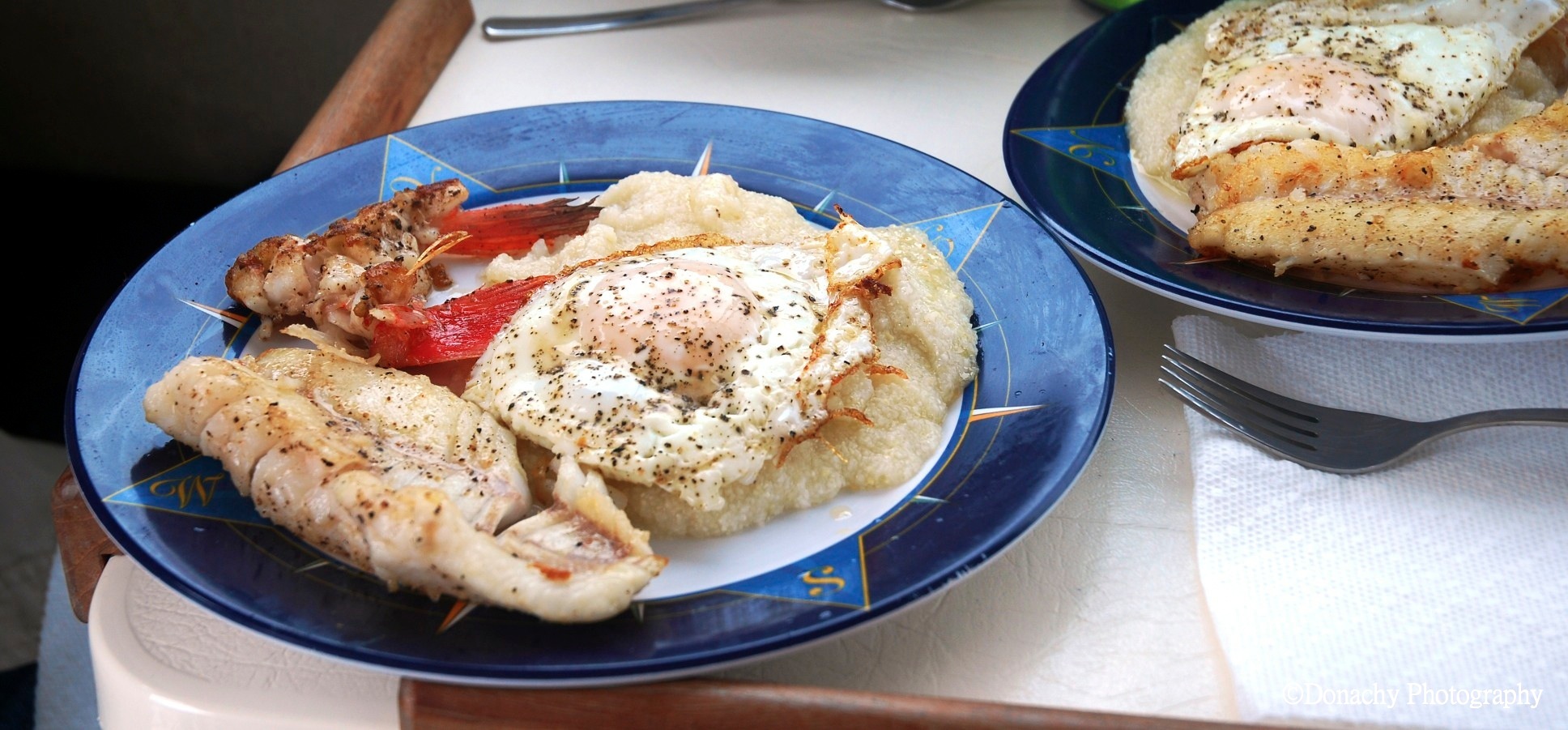
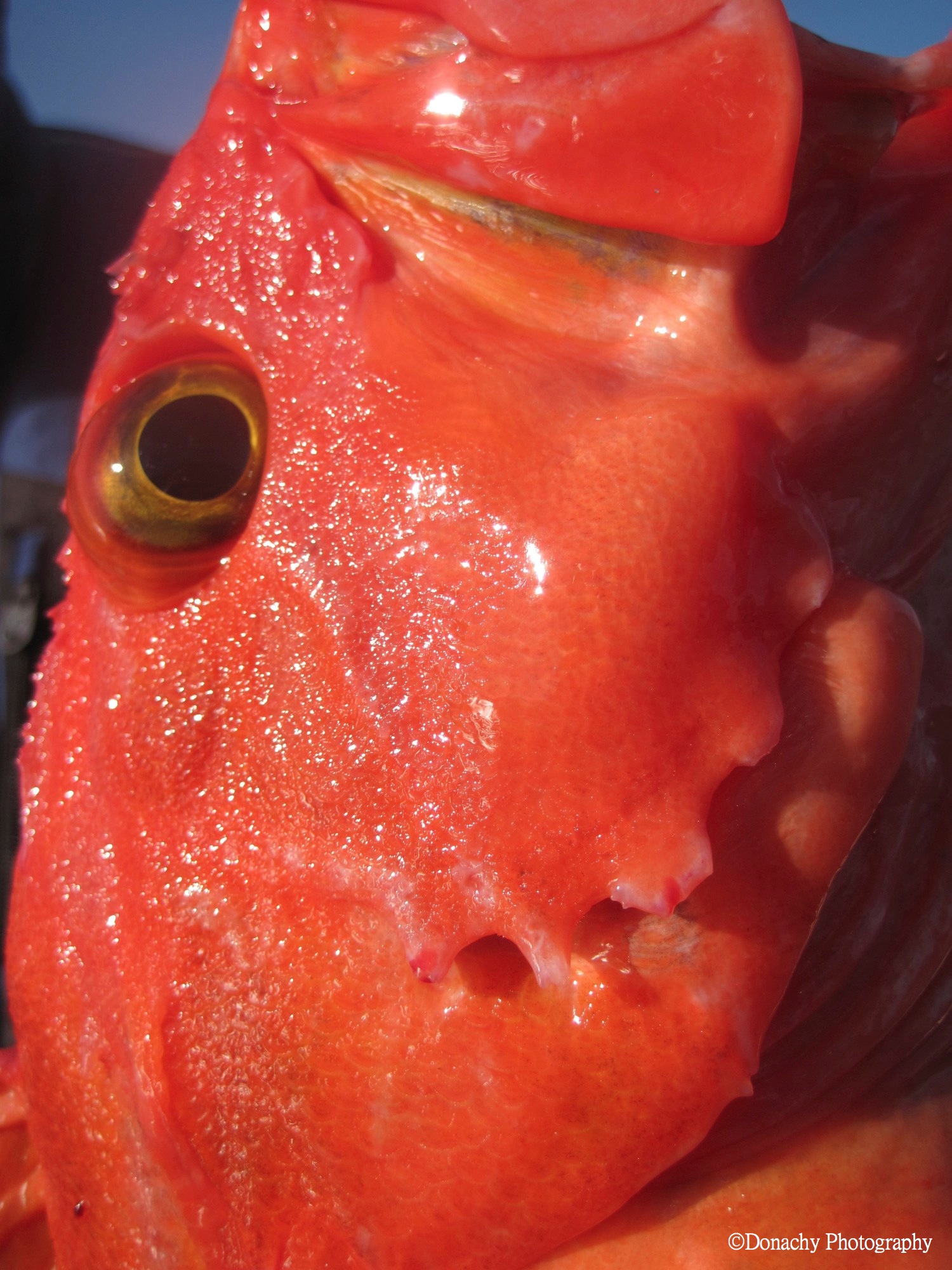
Yelloweye rockfish (Sebastus ruberrimus), a species of the Pacific Coast from Baja Mexico to Prince William Sound Alaska, is prized for its delicate flavor.

We’d spent most of the night on our C-Dory, drifting over deep water on Prince William Sound, admiring the moon and stars in the clear summer sky, talking about our life and occasionally dropping heavy, water-slicing knife jigs to the rocky bottom 160 feet below. Fishing was slow – a few small lingcod notwithstanding. The night was as still as a painting, the inky water mirroring the heavenly lights. With the engine cut off, the quiet was enveloping. When the yelloweye hit, I knew right away it wasn’t another ling. “Might be our yelloweye!” I said to Barbra as I worked the fish up from the depths.

And sure enough, it was. Barbra expertly scooped it up in the net, I did a quick fillet job, put it in a plastic container which I set in our cooler, and we headed back to port for some well-earned sleep. It was already early morning, though not quite yet dawn.

A few hours later when we woke, the sun was already high in the sky and the marina was bustling with activity. With daylight burnin’, we walked up the dock to the showers, blue skies and a few puffy white clouds overhead, deep green hanging on the mountains rimming the harbor.

Back onboard Gillie I put the Coleman stove on the aft deck, fired it up, and after Barbra made coffee I fixed a fisherman’s breakfast of southern-style grits topped with easy-over eggs and a couple of yelloweye fillets along with the collars – that especially sweet piece of meat that includes the pectoral fin muscle. (The collar looks a little like a lobster in the above photo.)

Not a fancy breakfast, but a special one. I kept the seasoning simple: a little sea salt and black pepper ground coarse. The steaming plates of food accompanied by French roast coffee made for a great start to another day in paradise.

To Sea “from whence we came”

During our sailing class last summer, we took one of the sailboats out to this cove on Resurrection Bay where we anchored and then took the dinghy ashore to look around. Barbra caught me gazing wistfully across the water, contemplating the day we might have our own blue water cruising vessel. “We are tied to the ocean. And when we go back to the sea, whether it is to sail or to watch – we are going back from whence we came.” John F. Kennedy

This past week we made an offer on a sailboat. She was docked in Seward, where we took sailing lessons and were camping most of the summer. We went onboard to look her over a couple of times, and then, just before we left Seward, we saw her hauled out for a new coat of bottom paint. She’s a lovely vessel, neither too large nor too small by our sights, sea  worthy and sea kindly enough to take us to any destination we have the guts and gumption to chart a course for, well-appointed enough to allow us to live in comfort once we arrive.

For the past seven months we’ve been kicking it around, researching other vessels, researching blue water sailboats in general, running numbers and scenarios and…

And we finally came to the realize that this – sailing – is like most other things in life that are worth doing: at some point there is nothing left to do but make a decision, push your chips forward, and go all in.

Today we received word that our offer was accepted. So we’re all in. Guess we’re going to learn something about boats and sailing!

Banana Bread with Crunchy Walnut Streusel

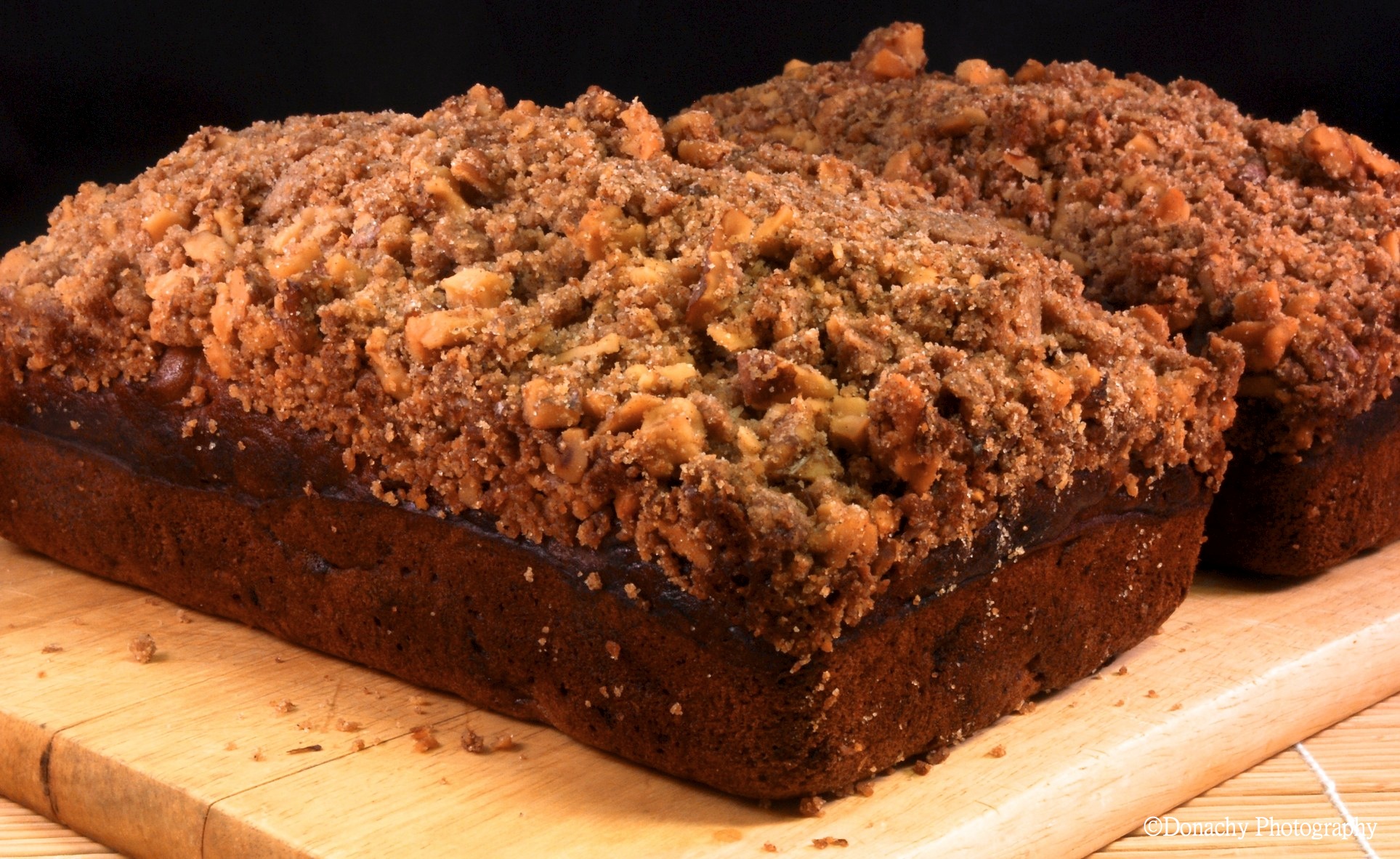
We brought these beautiful loaves of banana bread to a staff potluck, supplying cream cheese for a spread. They were an instant hit.

I have a tried and true banana bread recipe. It’s actually a fruit bread recipe in which I swap out the fruit and the spices. The recipe results in bread that is moist and flavorful. With an impending potluck, I wanted to amp up the recipe and my thoughts turned to coffee shop offerings where muffins and slices of sweet bread covered with streusel topping are always among the favorites. We love to slather a thick slice of this bread with cream cheese and then press the cream cheese into whatever crunchy walnuts may have fallen off. This makes for one decadent slice of bread!

Banana Bread with Crunchy Walnut Streusel

Makes two loaves

Ingredients

  • 3 1/2 cups all-purpose flour
  • 1 tsp baking powder
  • 1 tsp salt
  • 1 tbsp ground cinnamon
  • 1/2 tsp baking soda
  • 1 1/2 cups granulated sugar
  • 1/2 cup applesauce
  • 1/2 cup melted unsalted butter
  • 4 eggs
  • 2 tsp vanilla extract
  • 2 cups mashed bananas – the older the better

Topping

  • 1 cup walnuts
  • 1/2 cup brown sugar
  • 1/2 cup all purpose flour
  • 4 tbsp butter, room temperature

Directions

  1. In a large bowl, combine flour, baking powder, salt, cinnamon, and baking soda. Set aside.
  2. In a mixing bowl, beat granulated sugar, applesauce and 1/2 cup of melted butter together. Add eggs, one at a time, beating well after each addition. Stir in vanilla.
  3. Stir wet ingredients into dry ingredients until just moistened. Stir in bananas.
  4. Prepare streusel topping. Mix 1/2 cup flour, nuts, brown sugar and 4 tbsp butter until mixture resembles coarse crumbs. Set aside.
  5. Pour banana bread batter into two greased 8 in. x 4 in. x 2 in. loaf pans. Bake at 350 degrees F for 30 minutes.
  6. Pull loaf pans out of oven and pack streusel nut mixture on top of loaves. Bake for an additional 30 – 35 minutes or until a toothpick comes out clean. Cool for at least 10 minutes before removing from pans to wire cooling racks.

Pour yourself a big cup of coffee. Cut a thick slice of this bread and smear a generous amount of cream cheese onto it. Sprinkle any crumbs that have fallen off your slice back onto the cream cheese. Put on some coffee shop music. Close your eyes, take a bite, and imagine yourself in coffee shop in one of the world’s great cities… or in a hometown bakery.

Salmon Calzone

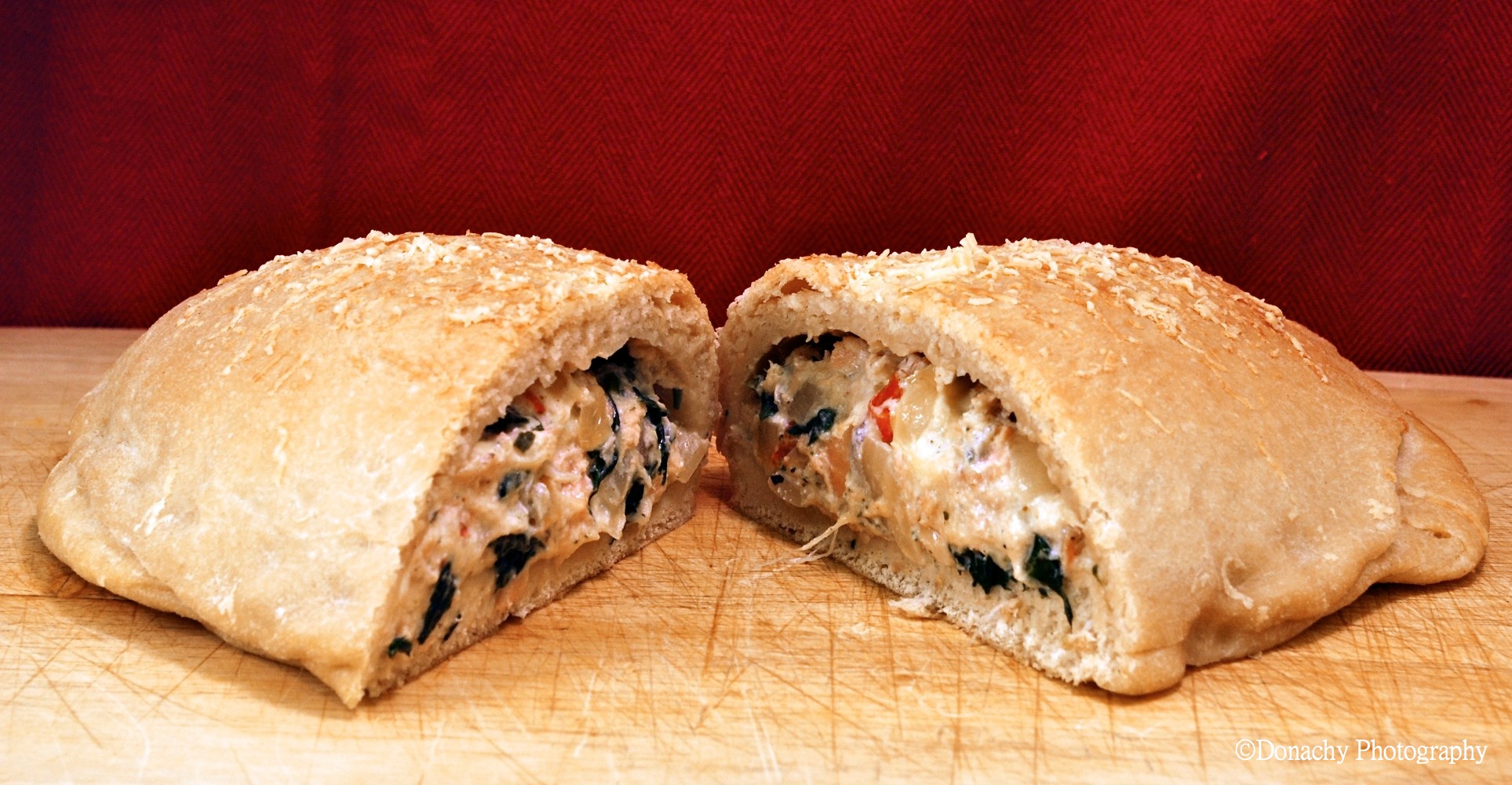
Number four in the Salmon Recipe Challenge. Savory salmon in a creamy cheese mixture enhanced with red bell peppers and spinach; all neatly wrapped in a warm Parmesan crust.

The salmon challenge was intended for Jack. After all, he is the master chef. But after a night of studying (I’m going for a master’s in education technology), I relaxed by surfing cooking and baking blogs where I came across a photo of a delicious-looking calzone. “Wouldn’t a salmon stuffed calzone be divine?” I thought.

I would start this recipe by saying that we dusted off our favorite mechanical kitchen device, our Zojirushi bread machine, but the truth is this machine never has time to collect dust. We use it once a week on slow weeks and more frequently than that on most weeks. We love our Zojirushi bread machine so much that we wrote a review on it for the company from which we bought it. Among the advantages a good bread machine offers is that it solves the often vexing problem of having the right environment for dough to rise.

The calzone dough is a standard pizza dough recipe adapted from the book 300 Best Bread Machine Recipes by Donna Washburn and Heather Butt.

Dough Ingredients

  • 1 1/2 cups water
  • 1/4 nonfat dry milk
  • 1 1/2 tsp salt
  • 2 tbsp granulated sugar
  • 3 tbsp vegetable oil
  • 4 cups bread flour
  • 1 tsp yeast
  1. Measure ingredients into baking pan in the order recommended by the manufacturer. Select dough cycle.
  2. Remove dough to a lightly floured board. Cover with a large inverted bowl and let rest for 10 – 15 minutes. Divide dough into 10 portions. Roll out each into a 6-inch circle and let rest.
  3. Prepare filling.
                            .
Filling Ingredients
  • 2 tbsp olive oil
  • 1 onion, chopped
  • 4 cloves garlic, chopped fine
  • 1 red bell pepper, chopped
  • 2 generous handfuls of fresh spinach, cleaned and stemmed
  • 1 fillet salmon, approximately a pound
  • 8-oz. brick of cream cheese, softened (simply leave out at room temperature)
  • 3/4 cup ricotta cheese
  • 1 1/2 cups grated Swiss cheese
  • 2 tsp dry tarragon
  • 2 tsp dry oregano
  • salt and pepper to taste
  • 2 tbsp Extra Virgin Olive Oil
  • 1/4 cup grated Parmesan cheese

4. In medium skillet, heat olive oil over medium heat. Add onion and sauté for 4 – 5 minutes. Add bell pepper; sauté for 3 – 4 minutes until crisp-tender. Add garlic and spinach and cook until spinach is wilted. Set aside.

5. Season salmon with salt and pepper. I also added a garlic herb mix. Broil salmon, skin side down. After salmon cools, flake salmon and set aside.
6. In large bowl, beat cream cheese until soft and fluffy. Gradually add ricotta cheese, beating until combined. Stir in onion mixture, tarragon, oregano, salt and pepper, then add Swiss cheese and flaked salmon.

7.  Place filling on one half of each circle. Fold calzone over, sealing the edges tightly with your fingertips making a scalloped edge. Cover and let rise in a warm, draft-free place until doubled in volume, 30 – 45 minutes. Meanwhile, preheat oven to 375 degrees F.

8. When calzones are formed, brush with 2 tablespoons Extra Virgin Olive Oil and sprinkle with 1/4 cup grated Parmesan cheese.

9. Bake in preheated oven for 20 – 25 minutes, or until the calzones sound hollow when tapped on the bottom.

These calzones were terrific out of the oven. They make great lunches, too.