Pumpkin Risotto with Spicy Scallops

risotto w scallops n

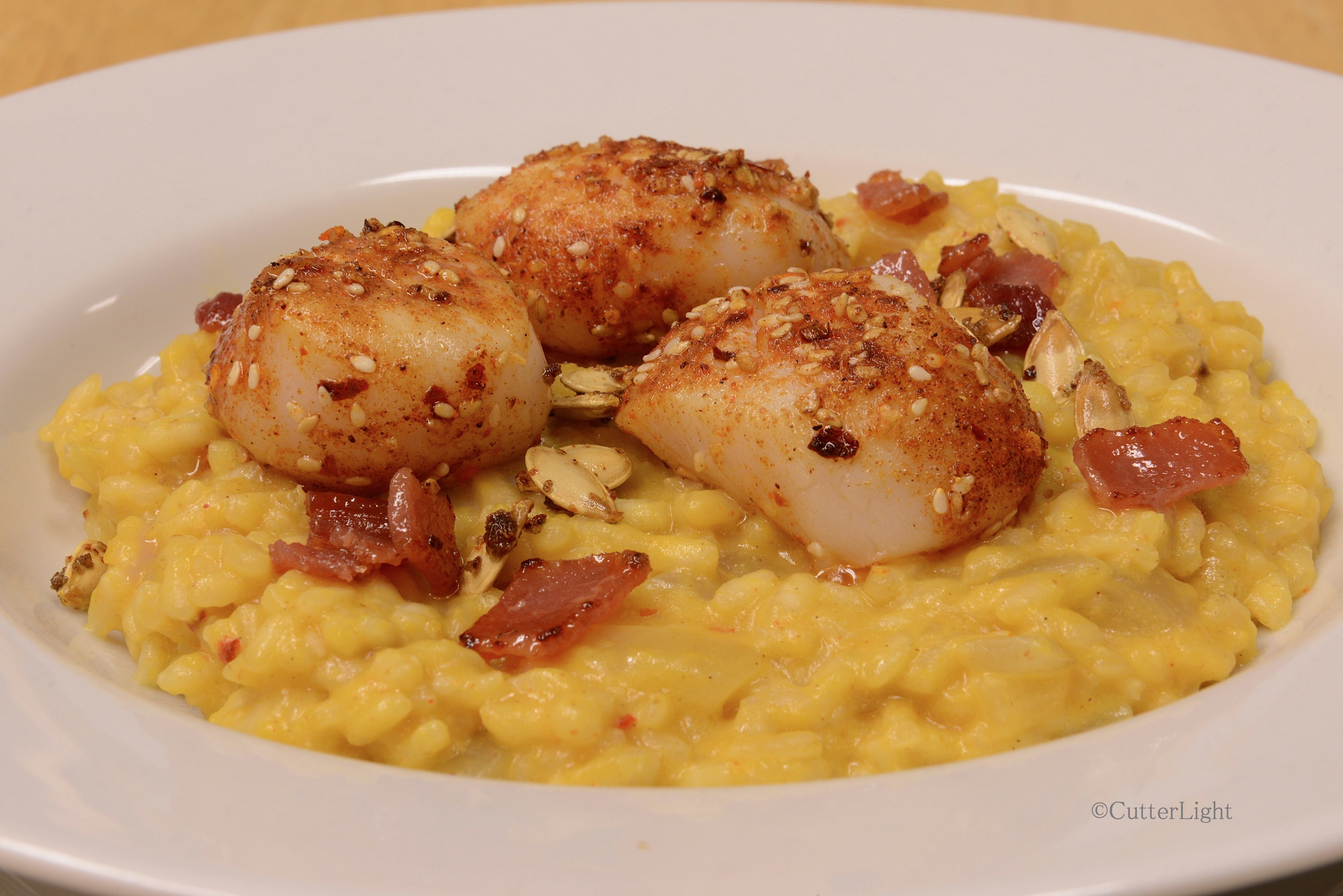
Creamy risotto flavored with seasonal roasted pumpkin and topped with spicy scallops warm up an icy Arctic evening.

With our shared goal of making risotto this year, Arborio rice went on the annual shopping list, and recently when a tiny, 1.5 pound pumpkin arrived in our Full Circle Farms box, we decided to make it a featured ingredient in our first attempt at homemade risotto. The idea to pair spicy scallops with the risotto stemmed from the visual impact we thought they’d have: white scallops dusted with ground peppers, nutmeg and cinnamon atop a mellow-orange base. The visual was complimented by the blend of textures and flavors of this dish. Compared with more usual methods for preparing rice, the risotto was a bit labor intensive. But the results left us anticipating making this dish again soon, perhaps next time with Alaska sweet shrimp.

Pumpkin Risotto with Spicy Scallops
Serves 4

Ingredients: (We use our own blend of spices, but any good Thai-style blend such as Penzeys Spices Bangkok Blend works well.)

  • 1¼ cups pumpkin purée
  • 2 tbsp heavy cream
  • 1 tbsp spice blend, such as Penzeys Bangkok Blend
  • 6 tbsp unsalted butter, divided
  • 5 cups chicken broth (We use Better than Bouillon.)
  • 2 tbsp extra virgin olive oil
  • 1 medium onion, diced
  • 1 clove garlic, minced
  • 2 cups Arborio rice
  • 2 tbsp goat cheese, softened
  • ¼ cup parmesan cheese, grated
  • salt and pepper to taste
  • seared scallops (see below)
  • candied bacon (see below)

Directions

  1. Stir together pumpkin purée and cream in a small pot and bring to a simmer. If it seems too thick, stir in a few tbsp of chicken broth.
  2. Simmer for about 5 minutes. Remove mixture from heat. Season with spice blend, salt and pepper.
  3. Add ¼ cup of butter to the pumpkin mixture, 1 tbsp at a time. Stir until smooth.
  4. Pour the pumpkin mixture into a bowl and set aside.
  5. Pour the chicken broth into a medium pot and warm over low heat.
  6. Place a large pan such as a sautoir (a sauté pan with high, straight sides) or a pot over medium heat and melt the remaining 2 tbsp butter and olive oil.
  7. Add the onion and garlic and sauté for about 3 minutes.
  8. Add the rice and sauté for 3 to 5 minute or until each grain of rice is coated in oil and there is a white dot in the center of each grain.
  9. Begin adding the warm broth to the rice, one ladleful at a time, stirring frequently.
  10. Each time the liquid evaporates, add another ladle of broth and continue to stir.
  11. Continue to add liquid and stir until the rice is al dente, 20-25 minutes.
  12. Stir in the pumpkin mixture until completely combined.
  13. Stir in the goat cheese and parmesan until smooth. Season with salt and pepper.
  14. Place 3 seared scallops atop a portion of risotto.
  15. Finish dish with candied bacon just prior to serving.

Spicy Scallops

Ingredients

  • 12 large scallops, cleaned
  • 1 tbsp spicy seasoning mix, for example Penzeys Bangkok blend (Optional: add sesame seeds to the spice blend)
  • salt to taste

Directions

  1. Heat oil in a heavy skillet over medium-high heat.
  2. Lightly roll each scallop in spice mix and sprinkle with salt
  3. Using tongs or chopsticks to maneuver scallops, quickly sear each one on each side – a few seconds on each side. Do not overcook.
  4. Serve immediately.

Candied Bacon

Ingredients

  • 4 strips of thick cut bacon, chopped into micro pieces
  • 2 tbsp brown sugar

Directions

  1. Heat skillet over medium high heat
  2. Add the bacon to the pan and cook until the fat has rendered off and the bacon has just become crispy.
  3. Drain all but 2 tsp of grease from the pan and return to the stove, over medium heat.
  4. Sprinkle brown sugar over the bacon and stir vigorously until the sugar melts and coats the bacon.
  5. Spread the candied bacon onto a sheet pan lined with parchment and allow to cool and slightly harden.
Honey Glazed Polar Bear Claws – Grrrr, Grrrr

bear claw n

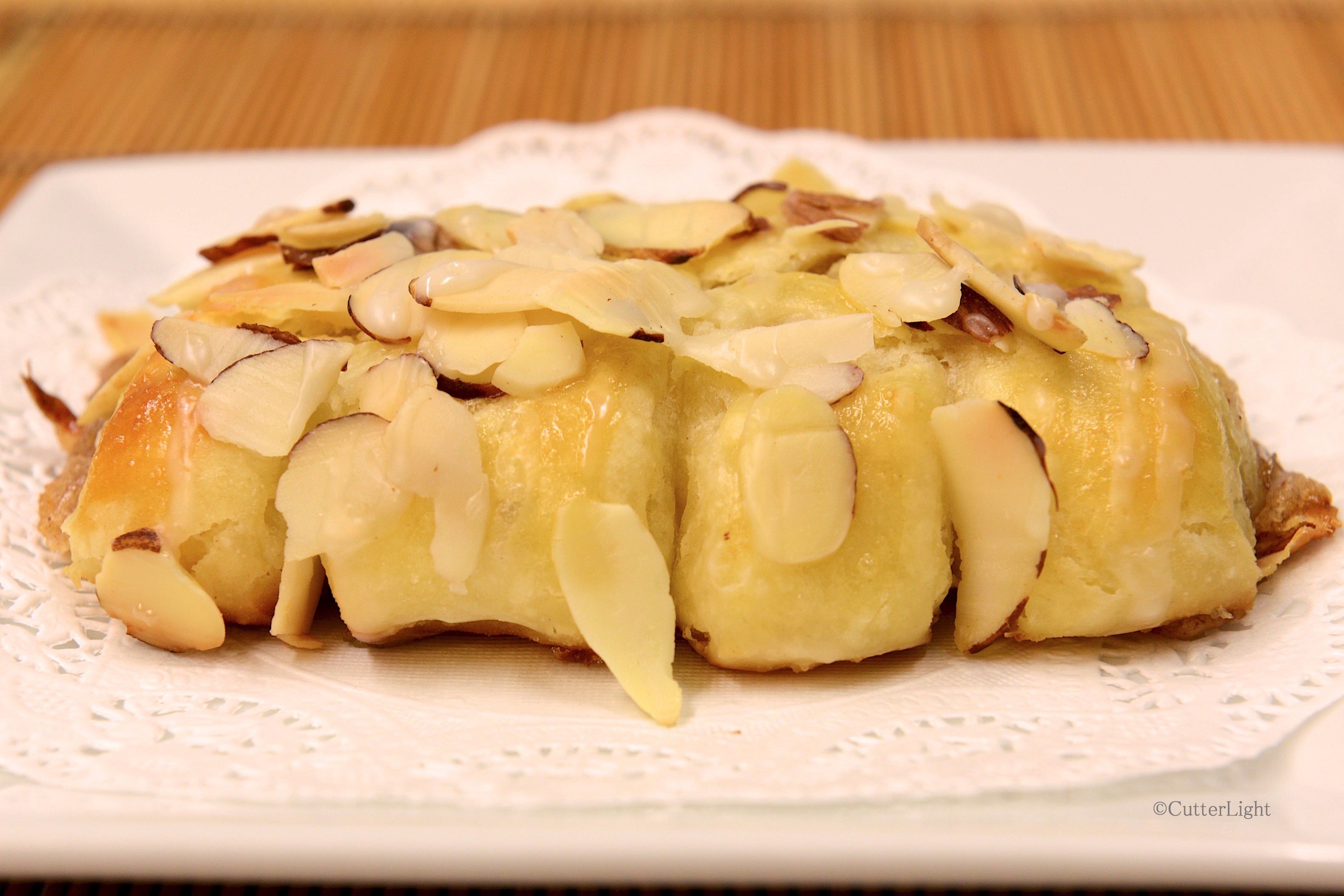
A tempting polar bear claw from our Arctic bakery. No bears were harmed in the making of this pastry!

Topping my baking to-do list this winter were bear claws. There is something about the sweet almond filling that makes these a mainstay of bakery shops – or perhaps it’s their cool name. Jack and I usually pass on these confections because most bakeries prepare them with an overload of sweetness. In researching recipes, I found a plethora of styles, from giant grizzly-sized pastries smothered in sliced nuts to tiny paws with a perfectly manicured almond on the end of each claw, and everything in between.

The recipe I settled on took a bit of time and effort. I wanted a medium-sized confection that emphasized not sweetness but almond flavor.The resulting pastry was superb – a little lighter than standard bakeshop fare and with a nicely balanced taste of almond.

Polar Bear Claws

Ingredients

Dough:

  • 1 3/4 cups all purpose flour
  • 3/4 cup unsalted butter, cold
  • 1/4 cup warm water (105 – 115 degrees F)
  • 2 1/4 tsp yeast
  • 1/4 cup heavy whipping cream
  • pinch salt
  • 1 egg
  • 1/8 cup sugar
  1. Place flour and butter in a medium bowl. Mix together using a pastry blender until well blended and butter pieces are no larger than kidney beans.
  2. In a large bowl, dissolve yeast in warm water. Let stand 5 minutes.
  3. Stir cream, salt, egg, and sugar into yeast mixture.
  4. Pour flour mixture into cream mixture. Stir with a rubber spatula until ingredients are just moistened.
  5. Place dough in plastic wrap and chill overnight in the refrigerator.
  6. Turn dough out onto lightly floured surface. Dust dough with flour. Roll out dough to 14 x 18 inch rectangle. Fold into thirds, making three layers. Roll out again. Fold into thirds once more and place back into refrigerator while you make the filling.

Filling:

  • 1 egg white
  • 1/2 cup almond paste
  • 1/4 cup confectioners sugar
  • 1 tsp cinnamon
  1. Add all filling ingredients to bowl of a stand mixer. Mix on medium speed until all ingredients are well mixed and filling is smooth.

Assembling the pastries:

  1. On a lightly floured surface, roll the chilled dough to a 12 x 16 inch rectangle.
  2. Cut the dough in half, length-wise.
  3. Spread half of the filling down the middle of one piece of dough. Repeat with other piece of dough.
  4. Roll each dough rectangle jelly-roll style from the long side.
  5. Tuck seam under roll.
  6. Cut each long roll into 5 pieces.
  7. Cut three slits into each piece to make the toes.
  8. Place each pastry on a parchment-lined baking sheet, curving them slightly (to spread the toes).
  9. Allow pastries to rise in a warm place for about 20 minutes. They should puff up.
  10. Preheat oven to 400 degrees F.
  11. Brush each pastry with beaten egg.
  12. Generously sprinkle pastries with sliced almonds.
  13. Bake 12 minutes. Pastries should be lightly browned.
  14. Let cool slightly on wire rack. Drizzle with honey glaze.

Glaze:

  • 1/2 cup confectioners sugar
  • 1 tbsp honey
  • 1 tbsp milk
  1. Stir together ingredients until smooth. Add more confectioners’ sugar if too thin, or add more milk if too thick.  Drizzle over warm pastries.

Homemade Goat Cheese

goat milk cheese n

With powdered goat milk, you can make delicious goat milk cheese virtually anywhere. This ball is slated for a hearty layered beet salad and a spicy lamb (or caribou!) pizza.

After last year’s success with homemade “ricotta,” we included powdered goat milk (widely available) in our annual shopping list. We love the flavor and texture of soft cheeses, and with some recipes there is no adequate hard cheese substitute. At the end of summer, we sent a small quantity of various soft cheeses up to our Arctic home. Since it doesn’t matter if they get crumbly, these cheeses are good candidates for the freezer till they’re needed. But that supply has come to its end, and so it was time to try making our own goat cheese.

Following our own directions for a ricotta-style cheese, the hands-on time for creating this cheese took just five minutes. The remainder of the time needed is for draining the whey – a process that took about eight hours. The resulting cheese was creamy, mildly tangy in just the right way, and ready for salads, pizza or crackers and smoked salmon. Slightly salting the finished cheese improves its flavor and shelf life.

Soft Homemade Goat Cheese

Ingredients

  • 1 cup powdered goat milk
  • 4 cups water
  • 2 tbsp white vinegar
  • salt to taste

Directions

  1. Mix powdered milk and water well in a medium pot.
  2. Over medium heat, bring the milk to between 165 degrees F to 180 degrees F.
  3. Remove pot from heat.
  4. Stir in vinegar. Milk should curdle. (This is the whey separating).
  5. Cover pot with clean dish towel and let sit for 2 hours.
  6. Lay a piece of cheesecloth over a sufficiently large container. (I used a 4 cup food storage container.) Secure the cheesecloth in place with a rubber band.
  7. Pour contents of pot onto cheesecloth. Whey should drain through, while curds remain in cheesecloth. You can toss the initial drained whey.
  8. Place container in refrigerator overnight to continue draining. It does not matter if the container is covered or not.
  9. In the morning, turn out cheese ball that is in cheesecloth to a larger bowl and mix in salt, to taste.
  10. Store goat cheese covered in refrigerator.

Recipe makes approximately 1 1/2 cups of goat cheese.

Cherry Almond Bagels

Cherry almond bagel_n

Laced with the essence of cherry and the crunch of toasted almonds, these bagels were chewy perfection waiting for a favorite schmear, cheese or creamy nut spread .

Every week or so I make a batch of yogurt for our breakfasts. Usually there’s nothing to it: I a bit of the previously made yogurt as the starter for the next batch, and in this way yogurt begets yogurt. And even though I use powdered milk (a blend of whole and nonfat) the flavor is excellent.

The ability to easily whip up a batch of yogurt from powdered milk is handy since our little Native store in the Arctic bush doesn’t stock plain yogurt and since milk goes for about four times what it does in places connected by roads. But last week, something strange happened. The yogurt came out, for lack of a better word, weird. It separated into yogurt and way too much whey. The yogurt tasted fine, but the consistency was off-putting. Always loathe to toss out food, I strained the entire batch through cheesecloth overnight, hoping for yogurt cheese. The next morning, we had a taste and agreed it had turned out delicious. So, add another culinary feat to the list: homemade yogurt cheese.

At this point, we needed bagels.

This week’s cherry almond bagels were inspired by our desire to spread yogurt cheese onto a bagel leaning slightly more toward sweet than savory. Dried cherries and almond extract seemed like a perfect combination to mix into the bagel dough. A 20 minute baking time is just right to toast the almond slices which added a very satisfying crunch to each bite – and no, the almond slices did not crumble off; they adhered quite well and were there till the last bite. These bagels are the sweet counterpart to savory favorites such as onion bagels or “everything” bagels.

Cherry Almond Bagels

Ingredients

  • 1  1/2 cups water
  • 4 tbsp honey
  • 1 tbsp almond extract
  • 4 cups all purpose flour
  • 1 1/2 tsp salt
  • 1 tbsp active dry yeast
  • 1/2 cup dried cherries, chopped
  • 3 quarts boiling water
  • 3 tbsp granulated sugar
  • 1 egg, beaten
  • sliced almonds for topping

Directions

  1. Place first 7 ingredients into bread machine pan in the order recommended by the manufacturer. Select dough setting.
  2. When cycle is complete, turn dough out onto a lightly floured surface and let rest.
  3. Bring 3 quarts of water to a boil. Add 3 tbsp of sugar.
  4. While water is coming to a boil, cut dough into 8 pieces. Roll each piece into a ball. Flatten balls into discs about 1/2 inch thick. Poke a hole in each disc and twirl the disk around your finger to enlarge the hole. Place bagels back on the lightly floured surface to rest until the water boils.
  5. Cover a baking sheet with parchment paper.
  6. Preheat oven to 375 degrees F.
  7. When water is boiling, place bagels in water. Boil for 1 minute, then flip to boil for an additional minute. (I fit 4 bagels at a time in my pot.)
  8. After bagels have boiled, remove them from the water with a slotted spoon or strainer spoon made for frying. Place bagels on a clean, dry towel.
  9. Arrange bagels on baking sheet. Brush tops of bagels with beaten egg. Sprinkle with sliced almonds.
  10. Bake for 20 – 25 minutes, until well browned.

Try bagels 3 ways if you’d rather have a savory version.

Light and Airy Smoked Salmon, Alaska Shrimp and Leek Frittata

frittata smoked salmon shrimp n

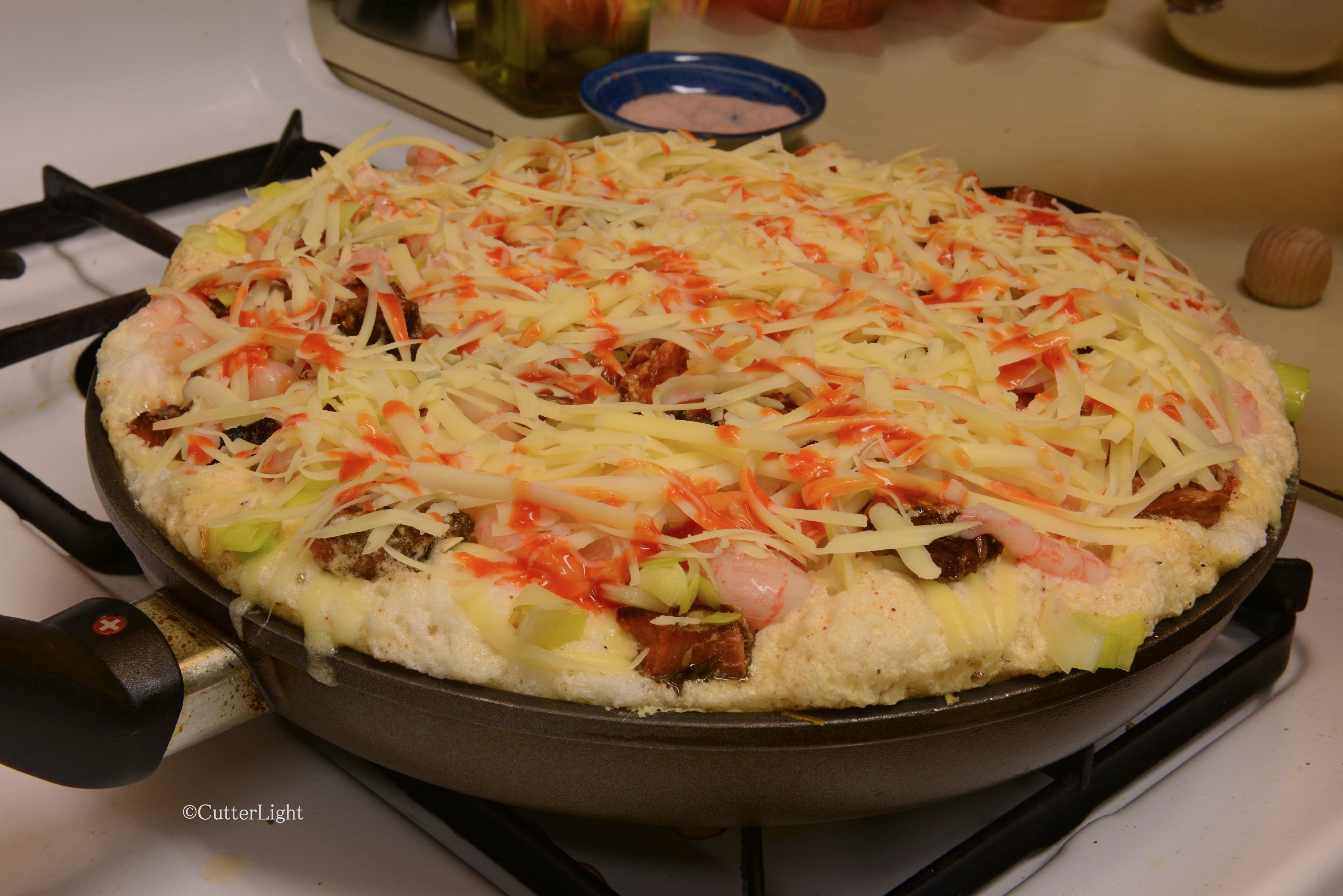
Breakfast, lunch or dinner, this frittata this is sure to draw rave reviews.

This past summer in Seward, we had a series of some of the best meals we’ve had in Alaska – or anywhere for that matter – at an inconspicuous little restaurant called The Smoke Shack. In our view, this is hands down Seward’s best restaurant. The head chef smokes all his seafood and meat himself, and combines these with a variety of proprietary sauces to provide an authentic Alaskan dining experience, complete with the kind of consistently good service that is hit and miss at Seward’s two mega-large waterfront tourist restaurants.

One of the meals that most impressed us at The Smoke Shack was the smoked salmon frittata. Light, airy, flavorful and standing over an inch tall, we made a mental note to attempt to replicate this breakfast dish in our own kitchen. There are two keys to this dish: Start with top-notch smoked salmon, and separate the egg whites and whip them before folding in the other ingredients. We added shrimp and leeks and our own blend of seasonings. The beauty of frittatas is that with a little imagination, you can come up with your own specialty. Here’s ours.

frittata ready for oven n

Splashed with Cholula sauce and ready for the oven. It helps to start the frittata by cooking it for a few minutes on the stove before placing it in the oven. A non-stick pan such as the excellent ones made by Swiss Diamond are a good choice, as they are oven safe.

fritatta baked n

Piping hot out of the oven and ready to serve, every piece is generously packed with smoked salmon, sweet Alaska shrimp and leeks.fritatta ingredients n

One pan, eggs, whatever additional ingredients are on hand, and seasoned to taste a frittata will feed a lot of hungry sailors, campers or house guests. 

Smoked Salmon, Alaska Shrimp and Leek Frittata

Ingredients (For an 11 inch pan)

  • non-stick, 11″ oven-safe pan
  • light olive oil or other frying oil
  • eight eggs, yolks and whites separated
  • 4 oz smoked salmon (canned or vacuum packed).
  • 4 oz Alaska shrimp, peeled
  • 1 large or 2 small potatoes such as Yukon golds, diced
  • 1 1/2 cups shredded Jarlsberg cheese (We chose this variety for its buttery, sweet flavor, but many other types of cheese would work well.)
  • 1 cup leeks, chopped course
  • fine sea salt, to taste
  • Cholula sauce
  • chili spice blend such as Penzeys’ Northwoods Fire, or any blend featuring a combination of black pepper, smoked chipotle, smoked paprika, cayenne or similar peppers and a pinch of oregano

Directions

  1. Preheat oven to 350 degrees F with rack at center position.
  2. Heat 3 tbsp olive oil in 11-inch pan over medium heat. Add potatoes and cook till tender, adding salt to taste. Remove from heat, set aside potatoes in bowl, wipe pan clean if necessary.
  3. Add 1 tbsp olive to pan over medium low heat. Add leeks and a pinch of salt and cook for about 5 minutes, until tender. Set aside leeks in bowl. Wipe pan clean if necessary.
  4. Meanwhile, place egg whites in mixing bowl, add 1/2 tsp sea salt and beat or whisk till soft peaks are formed. Do not create stiff peaks.
  5. Add chili spice blend to egg yolks, mix together, and add mixture to whites beating at slow speed until just incorporated. Do not over mix.
  6. Place a scant tablespoon of olive oil in pan over low heat and add cooked potatoes. Pour in egg mixture. Top with smoked salmon, shrimp and leeks. Add cheese. Add a few splashes of Cholula. Allow to cook approximately 5 minutes to firm up bottom.
  7. Place pan in oven and cook for 20 minutes.

This frittata pairs nicely with Champagne.

We use Alaska shrimp because they are uniquely tasty and are sustainably harvested. We harvest our own wild Alaska salmon and encourage readers to look for the “wild” or “wild-caught” label when purchasing salmon, as this is the only sustainable choice for salmon.

Yam, Goat Cheese and Shallot Tart

yam goat cheese tart_n

The sweetness of yams and sautéed shallots, the creamy tartness of goat cheese, the zip of parmesan, and a sprinkle of thyme make this savory, aromatic tart perfect served as an appetizer, as a light meal, or as a side dish.

Our CSA (Full Circle Farm) sends a regular delivery of fruits and vegetables to our remote home in Arctic Alaska. In addition to the fresh, organic produce, they insert a recipe flyer into each box. Every recipe we’ve tried has been fantastic. And just in time for Thanksgiving, their test kitchen absolutely nailed a savory vegetable tart. Although we used yams, a number of substitutes came to mine as we were enjoying this tart with falling-off-the-bone tender pork ribs that Jack had slow cooked in the oven. Carrots, turnips, and especially parsnips would all work well. We love parsnips!

Yam, Goat Cheese and Shallot Tart

Ingredients

  • 3 tbsp olive oil
  • 1/4 cup shallots, finely chopped
  • 1 1/4 lb yams, peeled and thinly sliced
  • 1 tbsp thyme
  • 3/4 tsp salt
  • 1/2 cup parmesan cheese, freshly grated
  • 1 cup goat cheese, crumbled

Directions

  1. Preheat oven to 400 degrees F.
  2. In a medium pan, heat olive oil over medium-high heat. Add shallots and sauté until soft (about 2-3 minutes). Remove from heat and set aside.
  3. Grease a springform pan.
  4. Place yam slices in overlapping layers, starting at outer edge and spiraling inwards to make one layer.
  5. Sprinkle some of the thyme, shallots, cheeses, salt and pepper.
  6. Repeat process 3 times to create 3 layers.
  7. Cover top of tart with cheese.
  8. Bake until top is golden brown and tart is easily pierced with a fork, about 45 minutes.
  9. Let cool in pan for 10 minutes.
  10. Remove from pan and cut into wedges to serve.

DIY Small Batch Purple Sauerkraut

sauerkraut diy_n

To make this beautiful purple kraut, you need only a few days of fermenting time and items you already have in your kitchen.

Every year I pick one thing I want to learn to make and force the issue by removing it from our annual shopping list. Last summer, a friend had us taste her homemade kraut infused with locally picked highbush cranberries, which grow in Alaska. It was delicious. Her quick directions gave me confidence that I could easily make sauerkraut, too.

The purpose of lacto-fermenting vegetables is to store the summer harvest so that vegetables can be enjoyed throughout the year. Since I had only one head of cabbage which weighed a pound-and-a-half,  I turned to small batch food preservation methods. Credit for the following directions goes to a blog called The Kitchn where the author posts all sorts of information about lacto-fermentation, photos, and step-by-step directions.

Our first menu with the finished kraut was a knock-your-socks-off reuben. We’ll post that  recipe in an upcoming article.

DIY Small Batch Purple Sauerkraut

Ingredients

  • 1 small head purple cabbage (about 1.5 lbs.)
  • 1 tbsp kosher salt
  • 1 tbsp caraway seeds
  • 1 tbsp dried juniper berries

Directions

  1. Gather materials you will need to process kraut: 2 quart container, cutting board, chef’s knife, gallon Ziploc bag, large mixing bowl, and lidded quart container for final product.
  2. Slice cabbage into ribbons. Discard core.
  3. Place cabbage ribbons into large mixing bowl. Sprinkle salt all over cabbage.
  4. Knead, massage, and squeeze salt into cabbage, until cabbage begins to become shiny and loses liquid. This will take about 10 minutes.
  5. Mix in caraway seeds and juniper berries.
  6. Pack mixture into 2 quart container. Pour any liquid from mixing bowl into container, too.
  7. Fill Ziploc bag with water and set inside 2 quart container to weigh down and cover cabbage.
  8. Press down cabbage every few hours. This will cause air to come to the surface.
  9. If there is not enough liquid to cover the cabbage in 24 hours, add 1 cup water mixed with 1 tsp salt.
  10. Keep the container out of light and at a temperature of 65 – 75 degrees F.
  11. Allow to ferment from 3 – 10 days. Begin tasting at 3 days. Mine tasted just right at 3 days. The longer you leave it, the more sour it will be.
  12. Put finished sauerkraut in a 1 quart container and store in the refrigerator. It should keep for several months.

Salmon Cheddar Soup with Lobster Mushrooms

salmon cheddar soup n

With or without lobster mushrooms (see photo below), this quick, easy seafood soup is one of our wintertime favorites.

The inspiration for this recipe comes from A. J. McClane’s excellent cookbook, North American Fish Cookery. McClane’s original recipe is sans mushrooms and calls for lobster, but the basic stock – milk and cheddar cheese seasoned with nutmeg – lends itself to a variety of innovations. The first time we created this dish we substituted grilled steelhead for the lobster. Other iterations have featured broiled or grilled salmon, smoked salmon, and Alaska shrimp. In fact, we’ve never used lobster, and although freshly ground nutmeg remains a must in our soup, we usually spice it up with the addition of ground smoked chipotles or other peppers and smoked sea salt. Most recently we made this soup with our own canned smoked red salmon, lobster mushrooms and red bell pepper.

lobster mushroom salmon cheddar soup n

Ready for soup: a lobster mushroom, nutmeg, our own blend of smoked chipotles and other seasoning, and a jar of smoked Copper River red salmon.

Salmon Cheddar Soup

Ingredients

  • ¼ to ½ pound smoked salmon, grilled salmon, raw salmon, lobster or shrimp cut into ½-inch chunks. (If using raw seafood, allow for a few minutes cooking time in soup till done.)
  • 1¼ cups lobster mushrooms cut into chunks slightly smaller than the seafood. (Optional) These particularly mushrooms work well because they have a firm texture, nice color, and mild flavor.
  • Part of a red bell pepper cut into thin strips – 4 to 5 strips per serving. Sauté until tender and set aside.
  • 1/4 cup olive oil or butter
  • 3 tbsp flour, as a thickening agent. Rice flour works especially well, but all-purpose flour is fine.
  • 3 cups milk
  • 1¾ cups shredded cheddar cheese
  • 1/8 tsp ground nutmeg
  • 1/2 tsp ground smoked chipotle (optional)
  • freshly ground black pepper
  • sea salt or smoked sea salt
  • paprika (finishing garnish – a dash or 2 per serving)

Directions

  1. Place olive oil or butter in a large pot over medium heat.
  2. Add lobster mushrooms, a little salt, a couple grinds of pepper and sauté for about two minutes.
  3. Lower heat and vigorously stir in flour. Then add milk and seasonings, stirring until mixture begins to thicken and becomes hot. Do not allow to boil.
  4. Stir in seafood and cheddar cheese. Give the soup a taste and adjust seasonings as necessary.
  5. Serve piping hot, garnished with a few strips of bell pepper and a dash or two of paprika.

We enjoyed this soup with homemade biscuits.

Whole Fish Salted and Broiled: Easy, Elegant, Delicious!

dolly varden shioyaki_n

This Chukchi Sea Dolly Varden Char was liberally salted, broiled and served with roasted Peruvian potatoes and garlic cloves. Salt grilling or broiling brings out the natural sweetness of species ranging from porgy and snapper to trout, char and salmon. 

When a friend recently presented us with two harvested-from-the-ocean-this-morning char, we knew immediately what we wanted to do with one of them: shioyaki. Although Japanese cuisine is better known for sushi and sashimi, far more fresh fish on Japanese tables is served well salted and then broiled or grilled.

The Japanese eat a lot of fish, and it is for good reason that shioyaki fish is weekly fare in most households. It’s quick, it’s easy, and fish prepared this way are deliciously savory and sweet. This is also an excellent method for preparing freshly caught trout while camping. Simply clean the catch, skewer it lengthwise, cut a few shallow slashes into the skin, rub salt on the fish and roast it on an open fire or over a grill. Brook trout served this way make for memorable camp fare, as do Japanese iwana (char).

dolly varden side by side_n

This pair of sea run Dolly Varden char have all the characteristics of fresh fish: bright, clear eyes, firm, nicely colored flesh, and no evidence of bruising. 

Because the fish are seasoned only with salt (and perhaps the smoke from a grill or fire), it is imperative that it be absolutely fresh. When you’re purchasing fish, look for a healthy shine, bright colors and clear, bright eyes. The scales should be intact and the gills, if any remain, should be bright red. Don’t be shy about giving a fish you’re considering purchasing a whiff. It should smell clean. Fish does not smell fishy; it is bacteria growing on poorly cared for or old fish that carries the unpleasant smell often called “fishy.”

Salt-Broiled Whole Fish

  1. Start with a clean, fresh fish. If it is a salmon, trout or char, it need not be scaled, but all traces of gill and viscera should be removed. Rinse the fish in cold water and pat dry inside and out. (Fish, such as porgy, snapper and rockfish should be scaled.)
  2. Preheat broiler to high and position a broiling pan a few inches from the heating element. (You may have to experiment to find the right position in your oven.)
  3. Use a very sharp knife to cut shallow diagonal slashes about an inch apart down the length of the fish.
  4. Rub a generous amount of salt into the fish. Let rest for a few minutes up to half an hour. Coarse grey sea salt from France (Celtic sea salt) is perfect for this recipe.
  5. When the broiler is hot, coat the broiling pan with oil by either brushing on or spraying with a pump spray. Canola oil or light olive oil work well.
  6. Place the fish on the pan. It should sizzle. If it doesn’t, it will stick to the pan.
  7. Cook for approximately 8 to 10 minutes per inch of thickness. Do not move fish during cooking. (On a grill, you will want to turn the fish once to ensure even cooking.) The fish is done when the tail and fins are crisp, the eyes are opaque and clear juice is no longer bubbling up through the slashes. With a fat fish, you will see some white fat in the slashes. This is good.

This dish requires no further adornment and is delicious with a glass of cold sparkling water, a craft ale, or a fine daiginjyo sake.

Baked Minestrone Soup: Celebrating Summer’s Garden

minestrone soup n

A hearty bowl of minestrone soup is the perfect way to enjoy seasonally abundant vegetables from your own garden, your CSA, the local farmers’ market or the grocer.

Before there was Rome, there was minestrone soup, and although some may insist that true minestrone must have this or that, the spirit of this dish lies in taking advantage of whatever vegetables are on hand. Add pasta or not, rice or not, and although contemporary versions of minestrone usually feature a bean broth, some versions use vegetable or even meat broth. Chunk up some halibut, striped bass or loup de mer (European seabass), toss it in and you’ve got a hearty fish stew. Here’s how we made our minestrone – courtesy of the abundance of vegetables we have now that we are receiving weekly deliveries to our Arctic home from Full Circle Farm. A good smoked sea salt works beautifully in this soup. A dollop of sherry is nice, too.

Ingredients (feel free to change quantities and freely substitute):

  • olive oil
  • 2 1/2 pounds tomatoes, sliced
  • 1/2 large sweet onion, diced
  • 6 cloves garlic, chopped
  • two sunburst squash, diced (zucchini or summer squash also work well)
  • 1/2 cup kalamata olives, sliced
  • 1 cup (1 ear) sweet corn
  • 1 1/2 cups green beans, cut into 1 inch pieces
  • 1/2 cup parsley, chopped
  • several leaves of basil, cut into thin ribbons chiffonade style. (You can do this by rolling the leaves cigar style, then slicing them.)
  • 1 bunch spinach, chopped coarse
  • 2 cups pinto beans (or other beans), cooked till they’re tender. Separate from broth and save the broth.
  • sea salt
  • black pepper
  • Italian herbs

Directions:

  1. Start by cooking the beans in a pot till they are soft. Save the broth, as it will be the base of the soup. Set aside beans and broth.
  2. Preheat oven to 400° F.
  3. Place olive oil and tomatoes in a large pot over medium heat stirring occasionally till the tomatoes are falling apart. Add onions and green beans and cook till they just begin to soften. Add garlic and squash, followed by parsley and basil. (You will add the beans, spinach and corn later.)
  4. Stir the broth and pour into the pot so that the vegetables are just covered. Add herbs, salt and pepper to taste. Cover with a lid and bring to a boil.
  5. As soon as the broth begins to boil, place the pot into the preheated oven and bake for 15 minutes.
  6. Remove pot from oven. Add beans, spinach and corn. Give the soup a taste and add seasonings as necessary. Return to oven and bake for an additional 15 minutes.
  7. Remove from oven, stir in a good olive oil for added flavor and give it a final taste. Let soup rest with lid on for about 10 minutes.
  8. Serve with freshly grated parmesan cheese and a baguette of French bread or a crunchy bolillo.