Unknown's avatar

About Jack & Barbra Donachy

Writers, photographers, food lovers, anglers, travelers and students of poetry

Philosophies for Learning the Guitar at 60: Begin

Begin. This first step may seem too obvious. It’s not. We Baby Boomers have known about guitars most of our lives. We were playing air guitars by the time we were eight. Maybe like me, you’ve owned a guitar in the past and even taken a couple of lessons. And then quit. For some reason you’ve put off getting serious about learning to play a guitar for 50 years or more. Part of your journey might be understanding what has blocked you in the past – what was in the way.

It wasn’t lack of time. I think it’s important to accept this. Yes, throughout our adult life most of us must make a living. But no one’s work is all-consuming unless one chooses it to be so. And that’s the operative word here: choice. For whatever reasons, learning the guitar wasn’t made a priority. And so instead of becoming guitar players, we devoted our free time to reading novels and newspapers, clubs and memberships, and on and off commitments (or perhaps sustained commitments) to fitness and sundry other hobbies. There have been social events and Sunday drives, certain time-consuming rituals that probably deserve more reflection than we’ve given them (maintaining a lawn, for example), and TV. Hours and hours of TV.

So what was my story? Well, this is a piece of it.

There was a piano in our home. My mother played. A little. I don’t know what prompted her to enroll us in lessons when I was eight and my younger sister was seven. Something like vaguely defined social expectations, I would imagine.

At the conclusion of our first lesson with Ms. Zilhaver, an older woman who periodically stepped away with coughing fits for a few puffs on a cigarette, we were instructed to practice for half-an-hour each day. I did so with alacrity. The following week I reported back to Ms. Zilhaver, prepared for my second lesson. She seemed impressed. I was given additional pieces of music to work on. And so it went for the next few weeks. Making good progress, there were times when I found myself still at the piano well after the prescribed 30-minute period was up.

My sister came to it more slowly. She put in her time, but not without a fair amount of her usual fidgeting and not a minute more than was necessary. After a few weeks, she was still working on music I’d finished.

That’s when my mother intervened.

I can’t tell you her motivations. I can only guess. She was a feminist with a Gibraltar-sized chip on her shoulder and a mission to prove the superiority of women. And girls. Maybe the answers lie in there somewhere. Maybe they lie elsewhere. I don’t know.

In any event, one Saturday afternoon when she thought I was outside playing, I happened to overhear her end of a phone conversation with Ms. Zilhaver. In the future, Ms. Zilhaver was not to advance me further than my sister. If I got ahead, I was to be held back till my sister caught up. It sounded like there was some push-back from the piano teacher, but as many others have discovered, there was no arguing with my mother.

When she got off the phone, I asked her – with some desperation – why she was giving these orders. The only response I got was a scolding for “eavesdropping.” (I wasn’t. I just happened to be in the house). When I pressed, I was answered with the familiar Nadine Donachy “We’re not going to have this conversation.”

Nonetheless, for the next few days I continued practicing as before. At the following lesson, I performed a piece well. In the past, it would have been starred and I would have been assigned a new piece. Not this time. “Let’s just keep working on these same pieces for awhile,” Ms. Zilhaver said.

At that point, I was done with it.

I spent the next eight years in piano limbo. I did not practice. I did not advance. But I was forbidden from quitting. Thus, I suppose, my mother had her evidence of the inferiority of boys, and I had developed a perfectly rotten relationship with learning music.

Fifty-three years of water under the bridge later, it feels freeing to have thought this through. And now, to paraphrase Jimmy Buffet, I’m not going to think about it too long. I’ve got a guitar that wants to be played.

Learning to Play the Guitar at 60: La Grande Expérience (or Is it even Possible?)

It has been said that a guitar sounds good even when it is dropped. I suppose that depends on whether or not the guitar is in tune – and perhaps who is doing the dropping. It is also said that one is never to old to learn to play the guitar, a statement that seems to hinge to some extent on what is meant by the word “play.”

For much of my adult life, I have owned a guitar. My Poco, my grandmother, gifted me the money for my first one when I was 18. I took a couple of lessons, didn’t get far and allowed it to collect dust over the next couple of years until I enlisted in the U. S. Navy whereupon I sold it. My father opined that I should “accept the fact” that I was bereft of “any musical talent.” He’d made similar pronouncements at the outset of other ventures. To this day he cannot believe – will not accept – that I got into the college I got into, let alone that I graduated from it. His assessments always stung, but they generally proved to be nothing to go by. The fact is, I had never practiced much on any sort of musical instrument. So a hypothesis as to whether or not I had – or have – aptitude for such a thing has remained untested.

After leaving the navy I purchased a new guitar, another inexpensive but serviceable steel string acoustic. Like its predecessor, it remained tuned and otherwise barely touched until some years later when it was stolen from my vehicle during a cross country move.

A third guitar, a Fender DG 8S replaced that one. Like the two previous guitars it has a solid spruce wood top, retails for a modest price and gets decent reviews as a “beginner” guitar. It has come with me on successive moves from Astoria, Oregon to Sacramento, California, to two Eskimo villages in the Alaskan Arctic, to Mongolia and back to Alaska where it has resided on a stand in the corner of our living room. All the while it has been regularly dusted, generally kept in tune, and otherwise neglected. Thus, over the course of 32 years of on and off guitar ownership, I learned to play the C Major scale, the chords C, D, G and F (OK, I couldn’t really play the F chord), and, imperfectly, the first four very simple songs in Mel Bay’s Modern Guitar Method Grade 1, peaking with Sparkling Stella, aka Twinkle, Twinkle Little Star on page 11. Page 12 remained beyond me. I could barely read music and I never spent enough time with even the simple songs I “knew” to master them in any meaningful way. Evolving from a halting rendition of Twinkle, Twinkle to the blues-folk music I dreamed of playing seemed an impossible journey.

I suppose some of these old tapes and a few more were in my head this past New Year’s Eve when, with a beer in my belly and another in my fist, I found myself admiring the glow of decorative holiday lights reflecting on the polished spruce of my guitar. I had been putting together a compilation of goals for the coming year: run a half-marathon, send out at least five articles for publication, improve my fly-casting, etc. when a new thought suddenly presented itself.

Wouldn’t it be a neat trick to finally learn to play the guitar at the age of 60?

On January 1, I picked up the Fender and began practicing. It made my fingertips hurt – a stage I’d experienced in the past and had never gotten through. This time I stayed with it. Sixty-two days later, on March 3, I reached a small milestone: my first 100 hours of meaningful, purpose-driven practice – more practice… far more… than in the previous 59 years of my life combined on any musical instrument. The fingertips of my left hand now bear thickly calloused pads which are impervious to the steel strings’ bite. Both hands have developed newfound strength and dexterity and I’m gradually getting the hang of the patting-your-head-while-rubbing-your-stomach gymnastics necessary in guitar playing.

Meanwhile I’ve scoured the Internet searching for examples of people who picked up a guitar for (essentially) the first time in their 7th decade and went on to acquire any sort of meaningful mastery of it. The search results have not been encouraging.

I was unable to find even one such instance. Yes, there were examples of people who had played well in their younger days, set the instrument aside, and then returned to it later in life. But that’s an entirely different matter than starting virtually from scratch.

What I did find were repetitions of advice and “encouragement” which I found to be quite patronizing. One trope begins “Many of my older students…” Really? Well then pray, share with us an example in this day and age of Youtube videos.

Even more condescending is the repeated assurance that “Older students can derive great benefits from learning to play the guitar.” Articles written under this thesis generally go on to reveal that by “benefits” the author is referring to the kinds of advantages one might as readily derive from a walk in fresh air followed by a rousing game of Scrabble. In this vein, a 2016 Washington Post Article concludes with one such older student declaring, “My cats have stopped yowling, which I take as a good sign.” Really? That’s where the bar is set?

I like walking and I like Scrabble, but I’m not looking for “benefits;” I want to learn to play the guitar, and I want to know if, as I close in on 60, I may have waited too long.

I have read again and again that one is “never too old to learn to play the guitar.” Yet, there comes a point when one is too old to achieve meaningful mastery of new, complex skills. Memory, finger dexterity, hand speed and the ability to create new connections in one’s brain all deteriorate. I expected there to be research-based guidance and exemplars regarding this matter. The only worthwhile bit of information I’ve turned up is that others are asking this same question to little avail.

And so, what began on the evening of December 31, 2018 as a somewhat whimsical challenge to myself has morphed into La Grande Expérience – The Great Experiment. Starting with little or no previous experience:

Can a sexagenarian reasonably expect to achieve any sort of meaningful mastery of the guitar? Or must one concede that by that age, windows have closed and the best to be hoped for are vaguely defined “benefits?”

I will conclude for now with that question. I have left open what I mean by “meaningful mastery.” Nor have I said anything about my own progress over these past 62 days. I leave those subjects to future installments under this heading.

For now, I offer a thought and a question. Perhaps two questions. First, the thought.

If you are an older person – approaching or past 60 – and you have taken up or are considering taking up a new endeavor, I say whole heartedly, Go for it! I will cross the threshold of 60 in less than four months. In recent years I’ve added a number of new skills to my life: sailing, bike trekking, photography and birding to name a few. I’ve greatly expanded my skills as a home chef, brought to hand my first salmon caught on a fly (and many more thereafter), engaged in my first ever cross country skiing, made more progress with a foreign language in a few months than I had in all the years of high school and college classes combined and am presently in training to complete my first half-marathon in 10 years. All of these disciplines have added depth and joy to my life. It hardly matters that there are no prospective Olympic medals, National Geographic assignments or recognition as the next Lee Wulff in the offing. It feels good to be strong, to be opening new doors and to have the capacity to immerse myself in new worlds.

That being said…

Have you… or do you know of someone who has… achieved a reasonable degree of proficiency on the guitar (or other instrument) having picked it up as a beginner in their 60th year or later?

And this: drawing perhaps from your own experience, what advice do you feel might be offered to others who wish to acquire a new skill?

All Quiet at The Lake

Dawn, late February, Chignik Lake, Alaska

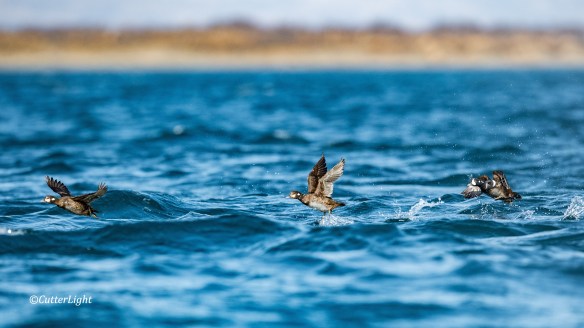
It has been a winter unlike our previous two at Chignik Lake – quiet, even by the quiet standards we’ve become accustomed to. Pine Siskins, dozens of them, have taken over the White Spruce Grove. A raucous lot, it may be that they’ve driven off most other birds. In any event, the Dark-eyed Juncos and other sparrows of past years have been all but absent, and we’ve not seen a sign of Golden-crowned Kinglets, Redpolls or wrens. There’ve been fewer, far fewer, ducks on the lake this year as well. Perhaps this unusually warm Alaskan winter has given waterfowl other open water to choose from. And while we did spot our first ever winter-white Short-tailed Ermine as well as a pure white Collared Lemming awhile back, otherwise wildlife has been scarce, a very occasional fox, otter or seal notwithstanding.

A friend has been setting a net and catching a few Sockeyes. Mirror bright, free of sea lice and small at just 22 inches or so, they are almost undoubtedly representatives of a resident lacustrine population – kokanees that never migrate out to sea but spend their lifecycle in the lake. One such fish is on the dinner menu for this evening. I will poach it whole in a broth of clam juice, lemon and saffron. The broth in turn will serve as the base for a salmon bisque.

As quiet as it has been, Barbra and I remain as busy as ever. There are unending lists of new recipes and baking, many thousands of photographs from previous adventures to edit, Barbra’s duties as a teacher to attend to, literature to read and study and future adventures to plan for. We’re looking forward to slightly warmer weather when we can more comfortably work on our fly-casting. We’re both on pace to be in shape to run a half-marathon this summer – our first in 10 years. Meanwhile, I’ve been putting in full days and then some between putting together articles for magazines and my new interest, learning to play an acoustic steel string guitar. The quiet provides a pleasant backdrop for these activities.

Only three months till Sockeyes begin returning to the Chignik River. Biologists are forecasting a strong run. It’s raining on the Lake this morning, but there’s new snow on the mountains. A neighbor reports hearing our owls make “strange noises” lately. Spring is coming.


Easy, healthy, but most importantly – Delicious Chocolate Cranberry Almond Oat Bites

Whether you are getting ready to get on the treadmill, go for a hike or maybe just need a little sweet, these are the cookies – a satisfying bite packed with flavor! Good-bye chocolate chip cookies, hello packed oat cookies!

There is something quite inspiring in completing a major fitness challenge. Jack and I returned home from our 1,300 mile bike trek in Hokkaido revved and looking ahead to The Next Big Thing. With roads outside often treacherously icy and the fact that wild animals in these parts make the whole village nervous if anyone is seen going for a run, we’ve pieced together a gym in our living room. (By the way, all ice is definitely not created equal. Chignik Lake has the slickest ice we’ve ever experienced).

Our gym which is comprised of a treadmill, a stationary spinning cycle, a set of Powerblock dumbbells, and a TRX resistance band. These four pieces of equipment take up very little space and gives us plenty of variety with which to accomplish our fitness goals. Plus, a spin on a bike or a run on a treadmill goes by fairly painlessly with a view of the lake out the window. (Yesterday a group of river otters was playing and fishing on the ice.)

Of course, when we work out, we have to eat – a golden opportunity to get in the kitchen and bake something. In Point Hope, I baked us batches of homemade granola bars to fuel us. During our bike training last year, I made little bites of tahini fudge speckled with coconut and chocolate chips. This time, I wanted to try a granola type creation that would be more like a cookie. These two-bite cookies are packed with oats, dried cranberries, chocolate chips, and almonds -and no processed sugar. They have the texture of a soft cookie and tons of flavor. Better still, they are easy and super quick to make. I’ve been making batches and keeping them in the freezer. After they thaw, they have the same texture and flavor as when they’ve cooled out of the oven. Perfect!

Chocolate Cranberry Almond Oat Bites

Ingredients

  • 1 cup quick oats
  • 3/4 cup whole wheat flour (I use Bob’s Red Mill Whole Wheat Pastry Flour)
  • 1 1/2 tsp baking powder
  • 1 tsp cinnamon
  • pinch salt
  • 2 tbsp unsalted butter, melted
  • 1 egg
  • 1 tsp vanilla extract
  • 1/2 cup pure maple syrup
  • 1/2 cup dried cranberries
  • 1/4 cup semi-sweet chocolate chips
  • 1/4 cup coarse-chopped almonds

Directions

  1. Preheat oven to 325° F. Line baking sheet with parchment paper. Set aside.
  2. Whisk together oats, flour, baking powder, cinnamon and salt in a large bowl. Set aside.
  3. In a medium bowl, whisk together melted butter, egg, vanilla and maple syrup.
  4. Pour maple syrup mixture into oat mixture. Stir until combined.
  5. Fold in cranberries, chocolate chips and almonds.
  6. Using a small cookie scoop or tablespoon, scoop out dough and place balls on prepared baking sheet. The cookies will not spread much. Slightly flatten cookies.
  7. Bake cookies for 12 minutes. Let cookies cool on baking sheet for 10 minutes before transferring them to wire cooling rack.
  8. Store cookies in airtight container for a few days. Cookies will freeze well.


When Evergreens are too Precious to Cut, Why not Craft Your Own Christmas Tree?

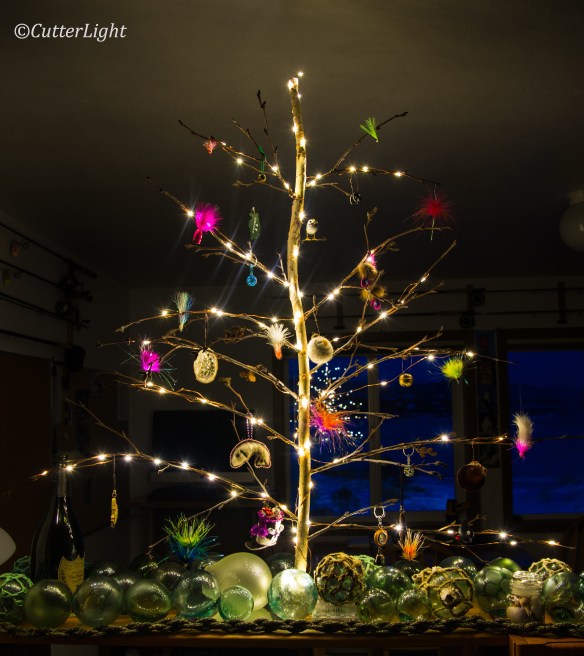
A beaver obliged by stripping the bark from the trunk of this hand-crafted holiday tree. A drill and a few Alder branches were the only other materials required. With almost all of our Christmas ornaments in storage in Sacramento, California, we had fun hanging items on hand here in Chignik Lake. 

The few White Spruce trees around Chignik Lake are not native to the area. They were brought from Kodiak Island and are too valuable for what they add to the landscape and as refuges for birds (they love the dense cover and the cone seeds) to even contemplate cutting for use as Christmas trees. So we crafted our own tree using abundant Alders as branches and a section of a beaver-gnawed stick we’d found while out hiking.

When we lived in Shishmaref and Point Hope, we had a tree we’d crafted from driftwood from the beaches of Sarichef Island where Shishmaref is located. It was nice, but we like our new tree even better. With all the decorations from that first tree carefully packed away and put in storage when we moved to Mongolia for two years, we didn’t have much on hand when it came to decorating our Alder tree. So we used our imaginations.

An assortment of seashells, brass bells (presented to us for good luck), tiny decorative birds and carved wooden trout we’d collected on our recent bike trek in Hokkaido were rounded out with some of our more colorful salmon fishing flies. We placed our collection of Japanese glass fishing floats beneath the boughs along with a decorative lamp made from recycled glass we also sent back from Hokkaido. Two strings of fairy lights competed the decorations.

Lights on we stepped back…

…and had to agree that of all the trees we’ve put up over the years, this is our favorite.

Wild Alaska Salmon Lox – an Edible Treasure

Miniature three-inch bagels are perfect for a snack-size taste of Alaskan salmon lox.

The winter holidays are a time of canapés and party food, which makes this post relevant to the holiday season. For us, agreeably salty lox on a fresh homemade bagel slathered with cream cheese is just plain good food anytime of year. With a river with strong salmon runs flowing right past our home, getting the main ingredient for these sandwiches isn’t a problem. In fact, we normally get plenty of fish for our own needs as well as a few additional fish to give to elders in our village. 

Making lox takes a bit of time, so there is some patience involved, but the method itself is easy. Simply pack salmon fillets in a salt-sugar-pepper mixture.  Let the salt draw out the excess liquid. Turn the fillets daily for about a week. It’s a fairly magical process, in the end transforming the fillets into firm, bright orange jewels. Sliced thin, lox is perfect in scrambled eggs or atop blini as well as on the traditional bagel du jour smeared with cream cheese and sprinkled with capers. Delectable, Wild Alaskan Salmon – an edible treasure.

Homemade Lox

Ingredients

  • 1 lb. fresh salmon fillets, skin on. The fillets need not be scaled, but do take pains to ensure that all bones are removed.
  • ¼ cup coarse sea salt
  • ¼ cup brown sugar
  • 1 tbsp freshly ground black pepper

Directions

  1. Rinse fish and dry thoroughly.
  2. Remove any pin bones in fillet with tweezers or needle nose pliers.
  3. Mix together salt, sugar and pepper. (This recipe works well when multiplied. Our last batch was 5 pounds of fillets.)
  4. Pack salt mixture around fish. Do this skin side down.
  5. Sandwich two pieces of fish together, flesh against flesh, skin side out.
  6. Pack any leftover sugar mixture onto exposed fillet.
  7. Wrap sandwiched pieces tightly with plastic wrap. Leave sides slightly open so liquid can drain while the salmon cures.
  8. I use a large plastic container with a top. Place a smaller food storage container inside the large one to create a raised place for the fish to set. This will allow the juice to drain away from the fish. A fish poacher with a bottom insert that allows drainage also works well.
  9. Place sandwiched salmon in container from step 8.
  10. Finally, you need to ensure that the fillets are tightly pressed together. This can be accomplished by placing full canning jars atop the fillets if you’re using a fish poacher. As I was using a tall plastic container, I simply placed another smaller container on top of the salmon pieces. The smaller container was just the right size so that when I put the lid on the larger container, it pressed down firmly on the fillets without squishing them. The idea is to create just enough weight or pressure to facilitate squeezing out excess moisture as the salt pulls liquid from the fish.
  11. Place container in refrigerator.
  12. For 7 days, every 24 hours pour off liquid from the bottom of the container and flip the fillet sandwiches.
  13. At the end of 7 days, take the salmon out of the plastic wrap and thoroughly rinse using very cold water.
  14. Thoroughly pat dry.
  15. Slice very thin and enjoy!

Store leftovers in refrigerator or wrap tightly in plastic and freeze in airtight containers.

Shishmaref, Alaska on Sarichef Island

February 13, 2011: Flying into Shishmaref. Situated on the Seward Peninsula Near Bering Land Bridge National Preserve, Sarichef, the sandy barrier island upon which Shishmaref is located, is just 2.8 square miles and shrinking. The highest point above sea level is perhaps just over 20 feet. In the photo a frozen lagoon in the foreground and a frozen Chukchi Sea in the background surround this village of fewer than 600 Inupiat inhabitants. The nearby tundra provides wild berries, caribou, musk ox and moose. The seashore waters and a nearby river provide sea run char and salmon. Seals are also hunted and relied upon for subsistence. This is one of the few places in the world where one can reliably encounter McKay’s Buntings. For nine months from late August 2010 through May 2011 we made our home here. It was a fascinating introduction to Alaska.

Salmon with Creamy Fresh Dill Sauce: A Last Taste of Summer

This dish features a classic summertime herb along with garden vegetables and our favorite Autumn fish for a recipe to hold off winter for at least one more evening. While a California Chardonnay would pair well with the rich cream and Coho Salmon, we went with a Willamette Valley Pinot Gris, a lighter wine that let the dill shine.

Dill, dill, dill. What to do with dill? It’s not a seasoning I often use, but thanks to our friends up the Alaska Peninsula at The Farm Lodge in Port Alsworth, we found ourselves with an abundance of this pleasantly aromatic herb blooming in a glass jar on a windowsill. How about using it in a cream sauce to bring together fillets of freshly caught Chignik River Silver Salmon, farfalle pasta, and some of the last zucchini and summer squash we’re likely to see for awhile?

Salmon with Creamy Fresh Dill Sauce for Two

Ingredients

  • 2 fresh wild salmon fillets, skin on, pin bones removed, rinsed and patted dry
  • 2 cups farfalle pasta
  • 1 cup or a little more diced fresh tomato
  • 2 leaves of kale, cut away from the stem and cut into smaller pieces
  • 1 cup or more yellow summer squash, sliced into circles and then cut into smaller pieces
  • 1 cup or more zucchini, sliced into circles and cut into smaller pieces
  • 1/2 cup carrot sliced julienne style
  • other fresh vegetables, as desired/available
  • 3 or 4 cloves of garlic, sliced julienne style
  • 1 shallot, sliced thin to make about 3/4 cup
  • 1/2 cup heavy cream
  • 1 tbsp butter
  • olive oil
  • sea salt
  • juice from 1/2 lemon
  • a loose 1/2 cup of dill leaves and flowers (or use a smaller quantity of dried dill)
  • sherry (or white wine)
  • black pepper
  • 1 cup or more deepwater Alaska shrimp shelled, deveined and patted dry (optional)
  • 1 tbsp corn starch mixed into 2 tbsp cold water

Directions

  1. Prepare pasta.
  2. Meanwhile…

Directions for the salmon

  1. Turn on oven broiler and preheat heavy broiling pan on middle rack for the salmon. Nothing works better for this than seasoned cast iron.
  2. Sprinkle the salmon with sea salt. Our favorite is large grain gray sea salt.
  3. When the broiling pan is sizzling hot, pour on a little olive oil, place the salmon skin side down on the oil and broil for about 9 minutes.
  4. Remove salmon from broiler, place on cutting board or plate and cover loosely with a bowl or foil to rest.

Directions for the cream sauce

  1. Put some olive oil in a fairly large skillet or sauteuse pan over medium heat.
  2. When the oil is hot, add kale, a little sea salt, and a tablespoon or two of sherry. Stir and sauté until kale just begins to wilt. Next, place in zucchini, summer squash and julienne carrots, which will not  take as long to cook. Add a little more salt and sherry, stir and sauté until vegetables just begin to soften. At this point, add the cream and mix together.
  3. Meanwhile, place butter in a separate skillet. When it’s hot, add shallots, a sprinkle of salt, and cook till they’re soft. Add garlic and a healthy splash of sherry, stir and cook till garlic begins to release its odor and soften. If you’re including shrimp, add them and a sprinkle of salt when you add the garlic. It takes only about 2 minutes to cook shrimp through.
  4. Add the shallot mixture to the vegetables, a few grinds of black pepper, the lemon juice, mix together and taste. To thicken the cream sauce, slowly stir in the corn starch mixture. Serve immediately.

Place the pasta on large plates or in pasta bowls. Spoon on the vegetable cream sauce. Place the salmon on top, add a little more cream sauce and another grind of two of pepper. Garnish with fresh dill and pair with a chilled Willamette Valley Pinot Gris.

Alaska Wild Blueberry Skillet Pies

For us, late summer in Alaska means harvest time. This is the time of year for berry picking and fishing for Sockeyes and Silver Salmon in the Chignik River system. Only a short walk away from our home, there is a lovely patch of feral raspberries with plenty of ripe berries. And not so far away in the other direction is a place we call the blueberry bog, where, as you’ve already guessed, we can pick low bush blueberries to our hearts’ content. 

Now that I’ve finally mastered the Buttery Flaky Pie Crust (a culinary goal checked off last winter), I am confident when Jack requests pie for dessert. Today’s request – Alaskan Wild Blueberry Pie.  Jack and our houseguest Isabel knew what they had to do while I was busy teaching my students. Armed with bear spray and berry collecting containers, they hiked the mile or so to the bog. Their efforts were rewarded with fresh slices of pie topped with scoops of extra rich homemade vanilla ice cream.

Alaska Wild Blueberry Skillet Pies

(Makes 2 6-inch skillet pies)

Ingredients

  • 1 double pie crust
  • 3/4 cup sugar
  • 3 tablespoons cornstarch
  • 1/8 teaspoon salt
  • 1/4 cup cold water
  • 5 cups fresh blueberries, divided
  • 1 tablespoon butter
  • 1 tablespoon lemon juice

Directions

  1. In a saucepan over medium heat, combine sugar, cornstarch, salt and water until smooth. Add 3 cups blueberries. Bring to a boil; cook and stir for 2 minutes or until thickened and bubbly.
  2. Remove from the heat. Add butter, lemon juice and remaining berries; stir until butter is melted. Cool. 
  3. Preheat your oven to 350 degrees F.
  4. Cut four circles out of of pie dough. Each dough circle should be about 1/2 inch larger than the mini skillet you’re using as your guide. Place the dough circle into the skillet, being careful not to stretch the dough. With a knife trim off any excess dough.
  5. Ball up all of the extra dough and roll it out on a lightly floured surface. Cut out four more circles large enough to cover the top of a mini skillet.
  6. Next, evenly divide the blueberry filling among the skillets. Top each with approximately 1/2 tablespoon of cubed, cold butter.
  7. Cover each skillet with a piece of dough. Using your fingers, crimp the edge of dough all the way around to seal. Brush with egg wash and sprinkle lightly with sugar. Place skillets onto a cookie sheet for baking.
  8. Bake for 35-40 minutes or until crust is golden and the filling is bubbly. (If the top crust starts to get brown before the inside is hot, cover with aluminum foil.)
  9. Cool before serving. Top with ice cream.


First Silver of 2018

Ocean-bright and full of fight, Barbra’s 12-pound Coho today is the first and only salmon we’ve put on the bank this year… so far.

In each our previous six years in Alaska, our fish for the coming months were long ago caught, cleaned, freezer-packed or smoked and canned and put away.

Not this year.

Like a lot of salmon runs around Alaska, here on the Chignik River its been a mere trickle of fish compared to other years. In fact, for a few weeks in July fishing was closed altogether. Still, we were confident upon returning from our bike trek in Hokkaido that we’d be able to get the couple of dozen or so fish we need.

That was nearly a month ago. Admittedly, it’s not like we’ve been hitting the water every day. But the few times we’ve been out, it’s been discouraging. When lots of salmon are around, so are bears, eagles and seals, and we can generally see lots of jumpers – salmon fresh from the sea and full of energy spontaneously leaping for whatever reasons salmon spontaneously leap. But it’s been eerily quiet; the usual eagle roosts have been empty.

Even in this down year, hundreds of thousands of Sockeyes ascended the river, and there will undoubtedly be thousands of Coho as well. It felt great to finally get one. Pasta with fresh salmon is on the menu tonight.