Winter Light and Polar Bear Prints, Point Hope, Alaska

Sun, 3 PM Dec 22, Point Hope_n

This photo was taken on December 22, 2012, a day in the midst of the month during which the sun does not rise above the horizon in Point Hope, Alaska. 

The sun dipped below the horizon 31 days ago on December 6 and did not rise again till yesterday, January 6. And yet, there was light each day, dim, brief, often breath taking.

We walked to the beach on one of those days when the sun didn’t rise. It was about 3:00 pm, and the sky was filled with shades of red, violet, amber and gold. The sea, which lies just 300 meters or so from our doorstep, is locked in ice. This time of year, polar bears are always a possibility as they roam the ice, searching for food.

Maia's hand in Polar Bear Track, Dec 22, 2012_n

Maia’s hand is dwarfed by a fresh polar bear paw print. 

Edging the beach where ice met land was a fresh set of polar bear tracks. The evidence that we share this environment with these magnificent animals was thrilling – but also a reminder that caution is in order. We scanned in every direction as far as our eyes would take us. No movement. The bear had probably passed through in the dark of early morning.

Polar Bear Tracks on South Beach Dec 22, 2012_n

Arctic foxes often follow polar bears in hopes of dining on scraps of the bear’s kill. Above, you can see the small paw prints of a fox near the bear’s tracks. Notice the tell-tale scrape marks in the snow on the forward edge of some of the bear tracks. Their long claws leave these scrapes as the bears amble along.

We waited and watched and listened. The wind moving over the seemingly endless frozen sea was all we could hear. In the distance to the east, we could see Cape Thompson’s snowy cliffs bathed in light etched against the pink horizon. As we walked along the edge of the sea, we found a murre, apparently exhausted, tucked into a snowy alcove against a bank of ice. The bird was lucky the fox had already passed by. Although the murre found the strength to take flight as we drew near, it is doubtful it went far. The Arctic winter is unforgiving.

Maia walking to ocean Dec 22 Point Hope II_n

Walking west, toward the sea, on a December day in Point Hope…

Daughter Maia was in the village for a two-week visit over winter break from college. Unfortunately, the Northern Lights didn’t cooperate, but the sky still put on some amazing displays.

Point Hope South Beach Dec 22 3 pm Nikon D90

Arctic Spring

Hand stitched ugruk (bearded seal) skins cover the wooden ribs of this traditionally-crafted boat as it sits atop a rack in Point Hope, Alaska. With spring officially here (the Vernal Equinox was March 20), whaling season has begun. Whaling crews have been going out to break trail these past few days. This is rough going across the frozen, buckled landscape of the Arctic Ocean. 

Each Arctic day is lengthening by eight minutes, and the sun is shining with perceptible warmth as months of negative double digit cold gradually give way to highs approaching an even zero degrees Fahrenheit. Although the seas continue to be locked up tight, that is how it should be this time of year. Once the trail is broken, the village’s two whaling crews will set up their camps far out on the ice near open water, where, with boats stitched together from the skins of bearded seals at the ready, men dressed in warm, white parkas will wait and watch.

A small skiff seems to await the Chukchi Sea’s thaw.

Last year, three whales gave themselves to the village. That is the way people here say it. Animals are not “killed.” They give themselves, and for a whale to give itself, the hunters’ skill, preparation and worthiness must all come together. Point Hope is one of the oldest continuously inhabited settlements in the Americas. Perhaps the oldest. Here, the unique interplay of sea and river, hills and tundra bring salmon, char, seabirds, caribou, whales and even berries to the inhabitants. Compared to many other villages, the people of Tikigaq (Crooked Finger – so named for a narrow thrust of land at the tip of the peninsula that long since eroded away) have seldom had to go far for food.

The whales are bowheads, a right whale. These baleen whales may weigh 30 tons or more. Occasionally ivory, slate and jade harpoon heads of old are discovered buried deep in a whale’s blubber, indicating that they have a lifespan of at least 150 years. Although commercial whaling in the 1800’s pushed populations to near extinction, they have gradually recovered and numbers in the Chukchi Sea continue to grow by about 3% each year to over 10,000 currently.

Inuit artist Kenojuak Ashevak’s painting (above) depicts the circle of Arctic seasons. Her painting shows open water for less than half of the year.

When we leave the village in mid-May to spend our summer further south in Alaska, much of the tundra and the Chukchi Sea will still be locked in ice. When we return in mid-August, the tundra will be carpeted in shades of green, some of it already giving way to Autumn’s gold. In high summer, flowers bloom in profusion, but by August, most will be done. Berries – cloudberries, cranberries and crowberries near the village, joined by blueberries further out – will follow. Waves will tumble on the shore as though the ice never existed, and salmon and char will be swimming in the clear-green water.

Fire in the Sky: Aurora Borealis Point Hope, Alaska

Mars hangs above a water silo aglow with lights from the school, a band of auroral light seeming to shoot from the silo like flames. (Click on photos for larger images.)

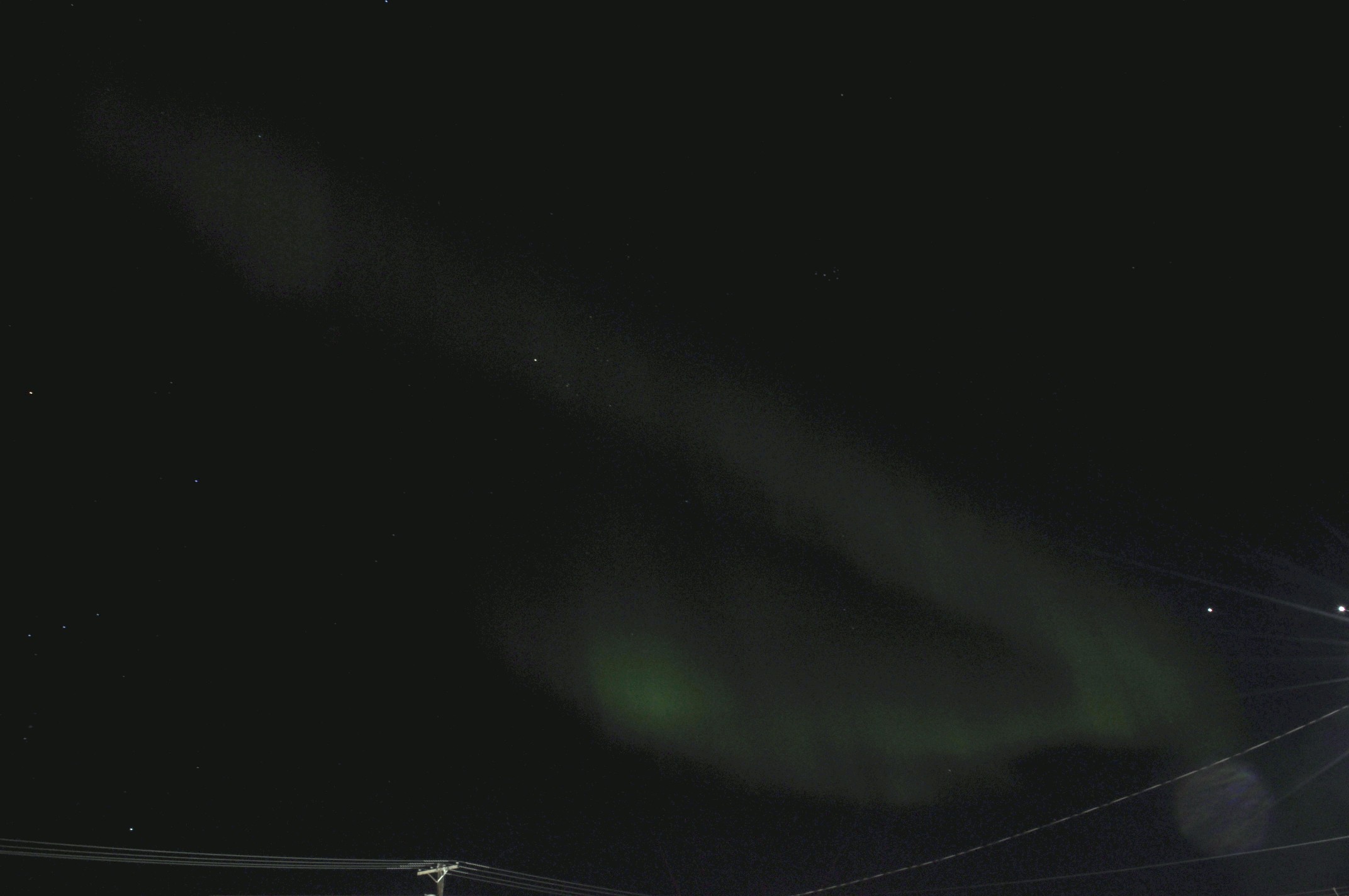
No photo – and certainly not our first attempts – can do justice to a northern sky on fire and dancing with the eerie green and purple glow of an Aurora Borealis. On this night 200 miles above the Arctic Circle, temperatures were an icy negative 10, pushed even lower by a steady breeze. As the sun sank below the frozen sea to the west, the full moon emerged in the east, close to Earth and huge, the color of a blood orange, hanging on the horizon. Jupiter and Venus were aligned, Mars glowed red as an ember against the black sky and Orion’s belt burned bright. Washing over it all was a breathtaking display of slowly moving green bands, some of them edged in purple, some of them jagged and electric, the band on the northern horizon streaked with pink mixed in with the green.

It’s not uncommon to see a bit of faint green or greenish yellow in the night sky up here. But what we were seeing on this night was of a different magnitude – a rare event tracing back to a spike in activity on the Sun a a few days ago. We made a few quick phone calls to friends. “Go outside and look up!” Meanwhile we got our camera and gear together, realizing, suddenly, that we weren’t  sure how to capture any of this. We met one of our friends in front of the school and walked with her toward the lagoon on the north side of town, away from the lights. In every direction, from horizon to horizon and straight overhead, what we saw stunned us. “This is amazing,” we kept repeating.

Note the three aligned stars of Orion’s belt to the left.

By the time we got our camera figured out, our fingers hurt with cold and the peak of the lights was past. But we still got some photos. A large part of photography is capturing light, and this was a quest for capturing light on a sublime scale.

Fireworks over the Columbia River while sharing a bottle of wine from a balcony at my apartment in Astoria, Oregon, tumblers of Scotch and a sky so impossibly filled with stars we felt like the deck of our mountain cabin in Yosemite was sailing through the Milky Way, a full moon hanging over a becalmed ocean on Prince William Sound with not another boat on the water, a campfire, mesmerizing, at our tent site at Oregon’s Sunset Bay State Park… night skies to come in remote anchorages on the Pacific… Our lives are filled with light.

Point Hope in Winter from the Air

The village of Point Hope, Alaska, February 24, 2012, as seen from a nine-passenger Cessna Caravan.

Viewed from the air, a continuous sheet of ice and snow obscures the boundaries between land and sea in the Arctic north. We were happy to fly south to Anchorage for a few days, thereby escaping the steady string of days with temperatures hovering around negative 20 degrees Fahrenheit. Compared to Point Hope, the weather in Anchorage was downright balmy, with highs around 28 degrees. Intermittent snow showers filled the crisp air with big, soft snowflakes.

Six days later our plane touched down on the icy Point Hope runway. As we descended the ladder, a blast of icy wind crushed into our faces, momentarily taking our breath away. The previous week, the absence of wind made walking outside pleasant enough, but now the wind chill is frequently dipping to 50 or 60 below and even colder. Cases of frostbite are up, as are cases of frozen plumbing. Each day, we’re gaining eight minutes of daylight. Still cold. Still a lot of winter left.

Arctic Ocean in February

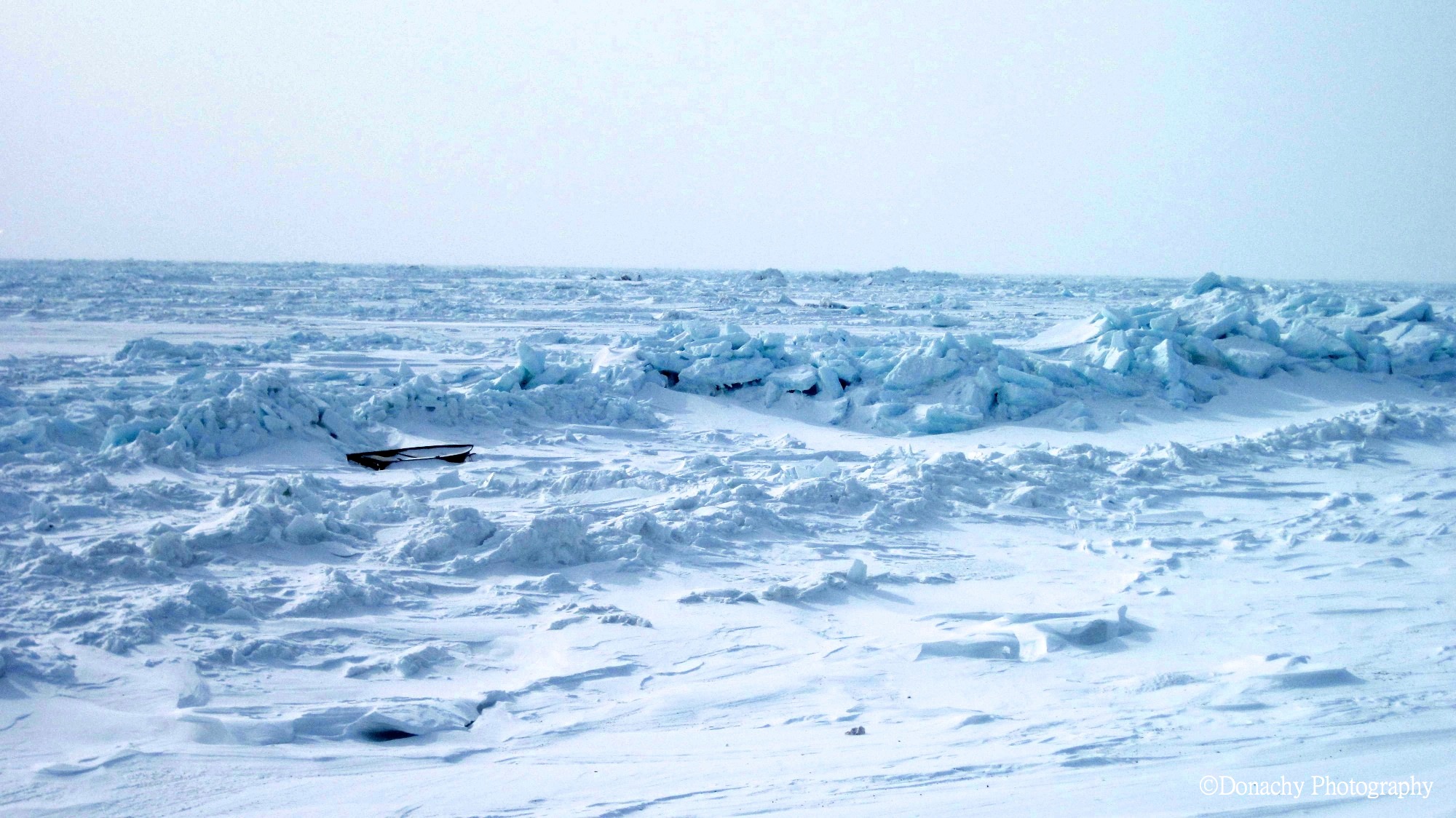
The Arctic Ocean pushes sea ice into jagged heaps of translucent blue near shore. Further out, fog swirls on the horizon below a brooding sky.

Storm coming.

Point  Hope, February 18, 2012.

84 Below

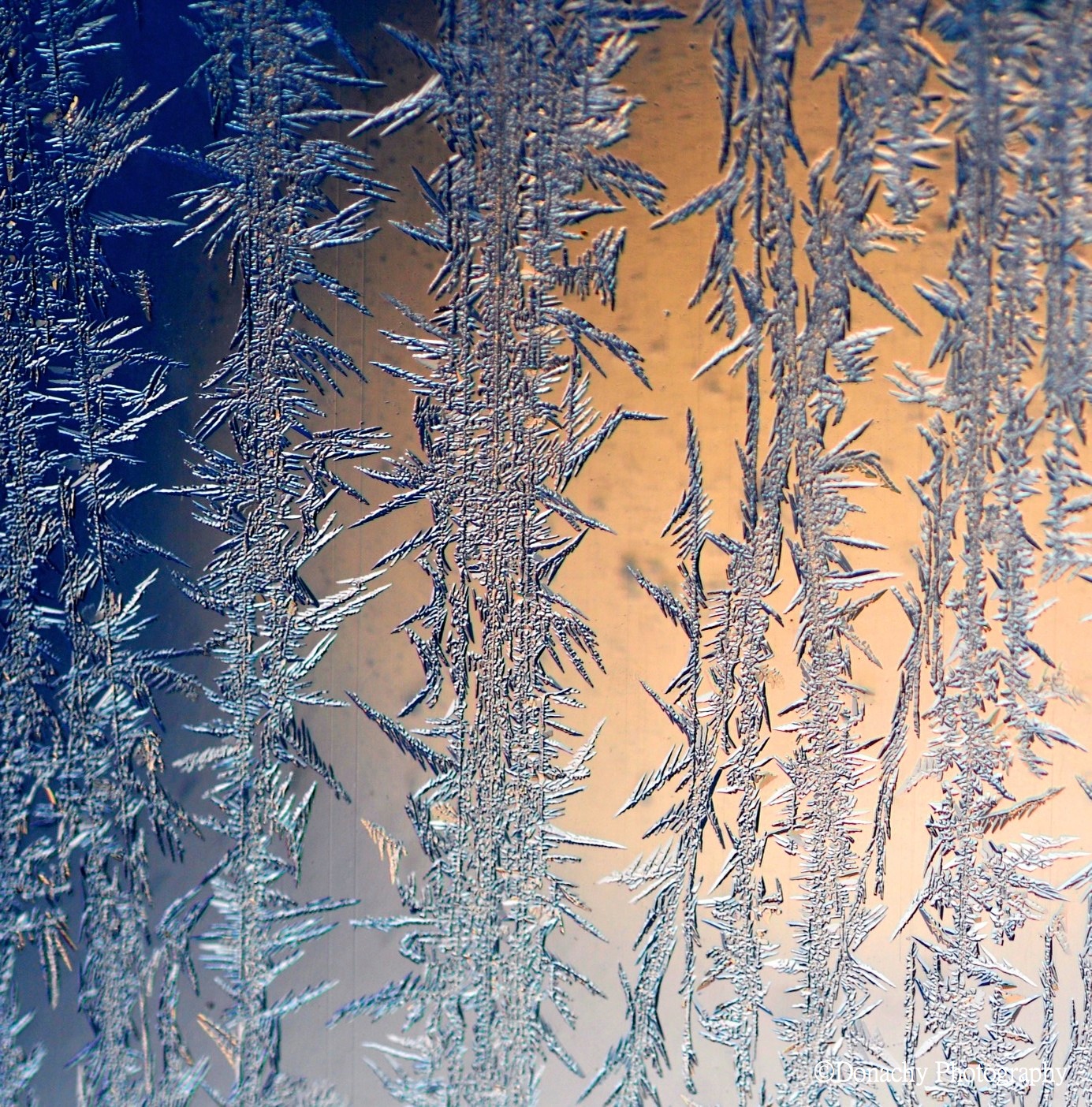
The afternoon winter sun, low on the horizon, backlights an ice-frosted double-paned window on the south side of Tikigaq School.

A few lights from the school and the town peel back the pre-dawn blackness as we begin our short morning walk to school. Steam oozes from nearby buildings–not just from furnace vents, but from every crack and seam, and every molecule of water freezes or vaporizes almost instantly. Brutally cold gusts of wind lift sheets of snow from the ground, at times creating blizzard-like conditions. Our faces begin hurting mere steps from our house. The cold gets in our lungs and makes us cough. Frostbite will nip any exposed skin within five minutes in these conditions.

This is a new cold, a cold we haven’t experienced before. Later in the day, Barbra and I take a cup of near-boiling water outside and slowly pour it out. Most of it turns to steam, vaporizing before it ever hits the ground.

We check NOAA on the computer: 84 below with the windchill.

Polar Numbing Stinging Cold

It’s cold in Point Hope.

Better words for cold according to the thesaurus –Siberian, algid, arctic, below freezing, below zero, benumbing, biting, bitter, blasting, bleak, boreal, brisk, brumal, chill, chilled, cool, crisp, cutting, frigid, frore, frosty, frozen, gelid, glacial, having goose bumps, hawkish, hiemal, hyperborean, icebox, iced, icy, inclement,intense, keen, nipping, nippy, numbed, numbing, one-dog night, penetrating, piercing, polar, raw, rimy, severe, sharp, shivery, sleety, snappy, snowy, stinging, two-dog night, wintry

We were warned when we left Shishmaref – “It’s cold up there.” We thought a few degrees colder would not make too much of a difference. Hmmmm…. I’ve been comparing Shishmaref to Point Hope. It’s true, it is only a few degrees colder here. But this week the “real feel” temperatures have been hovering around minus 40! When the high says 4 degrees, it’s likely that we may hit the high at 3 o’clock in the morning, not mid-day as you might guess. The sun does peek over the horizon, but not enough to warm anything yet. So, we are relying on wind currents to bring us some warmer air flows.

Last year, Jack bought a wolf ruff for my parka. One of our Shishmaref friends finished it and attached it to my coat. It makes a huge difference in blocking the wind. I have polar fleece pants with a wind-blocker lining. I have thick neoprene “muck” boots. I often wear two hats–one with a face blocker. For me, all these are necessities, even for the relatively short walks to school, the post office, or to the store.  One of my students walked home from the school last Saturday without a hat and got frostbite on her ear!

I can feel every crack in my armor.  If my mitten exposes my wrist, it hurts. The slit between my hat and the face blocker stings with cold.

The words in the thesaurus don’t do justice to the cold up here.

Arctic School Bus

When I heard that Point Hope had a school bus, my first thought was that a bus seemed extravagant in a village that stretches barely over 1/2 mile  from tip to tip. Not only do we have a school bus, but it’s a shiny, brand-new school bus that just came off the barge this summer. Wow, I thought, our school district is rich!

Once winter set in, my perspective changed. These days, walking the scant 150 feet from the front door of our house to the school is no small enterprise. Bundled up from toe to nose and nearly getting blown off my feet by icy blasts of wind, I totally get the school bus. Within minutes, any skin exposed to this wind begins to hurt! Who would walk to school in those conditions? There are days I wish I could take the school bus.

A Point Hope Thanksgiving or Do You Have Turkeys North of the Arctic Circle?

Translucent pink Muktuk (whale skin and blubber), whale meat, and whole Arctic grayling were passed out to guests at the Point Hope Thanksgiving feast.

Like Shishmaref, the residence of Point Hope generally don’t have big family Thanksgiving celebrations at home. It is a community event. Turkeys and hams flood into the village in preparation for the big feast. (Yes, we do get turkeys north of the Arctic Circle.) Anyone who volunteered an oven received either a turkey or a ham to prepare. We received a 22 pound ham which we cooked and delivered to the school gym. Large quantities of traditional dishes such as stuffing, candied yams, corn and cranberry sauce were brought in to the school pot-luck style. By 4 p.m., volunteers had carved turkeys and hams and all the side dishes were readied to be served.

After key community members gave speeches expressing thanks, the village was ready to share the meal. The first course? Muktuk (the layer of whale skin attached to the pink blubber shown in the above photo) and chunks of frozen whale meat. Many people brought out sharp knives and small containers of seasoned salt and immediately carved into their frozen chunks of whale. Others, like us, had brought Ziplock bags in order to save the pieces to eat later at home. Both muktuk and whale meat are traditionally eaten raw, boiled, or fried. We talked to the owner of the local restaurant who suggested slow cooking the whale meat in a stew. Sounds like a good idea. Tune in later for that culinary feat. The community also shared whole frozen grayling, dolly varden, and big chunks of salmon. Of course, the elders were served first, but there was plenty to go around to everyone.

The next course featured platefuls of traditional Thanksgiving fare. Seated around the perimeter of the school gym on the floor and in chairs brought from home families and friends engaged in conversations. There were probably 500 people altogether. At one end of the gym, tables covered with huge sheet cakes were waiting to be cut and served for dessert.

Obviously, Thanksgiving is not a traditional Inupiat celebration. In our readings of Alaska history and in conversations with history buffs, we’ve learned that the Inupiat people had celebrations and traditions similar to many of the traditions that the missionaries introduced several decades ago. The similarities made it easy for the Inupiat to adopt new holidays. For example, the divvying up of whale meat was already a fall tradition. Folding Thanksgiving into this tradition was logical.

Arctic Sunset

At 2:21 p.m. on December 6, 2011 the sun will set in Point Hope. Of course, in most places, the sun will rise again the next day. This is not the case here. The sun will not rise again until 1:56 p.m. on January 7, 2012.

This afternoon, I could see the most beautiful pink and orange reflection out my kitchen window. The sunset and the ocean called to me. It was 12 degrees out with just a light wind, tolerable with my down jacket, mittens, face mask, and snow boots. The colors in the sky were magical. Swatches of blues and pinks hovered above the icy sea washed with an electric orange glow. The snow leading to the beach was pristine except for scattered caribou prints. Seven foot cliffs of packed snow loomed over the eroded beach. The edge of the ocean was covered in undulating sheets of ice showing only patches of open sea. The frozen crust lifted and fell slowly as the ocean below it was beginning its winter slumber.

In California, I used to visit the coast in order to replenish my energy. The foaming and crashing sea along the West Coast always rejuvenated me, especially when my spirits were low. The Arctic Ocean imbues a person with a sense of calm and peace. As I looked to my left and right up and down the icy beach, others, too, were taking in the view.