On A Frozen Sea

Sphere and Pyramid
The Chukchi Sea, April 21, 2012

In late winter and early spring, our Inupiat friends in Point Hope began talking about “breaking trail” across the frozen Chukchi Sea so that snow machines (snow mobiles) and hondas (ATVs) could be driven out to leads (open lanes in the ice) in order to set up whaling camps. “Breaking trail?” Informed by our experiences with freshwater lakes, we wondered, “Can’t you just drive out across a smooth blanket of ice?”

Well, as we learned, a frozen sea isn’t like that. As ice forms and expands and is pushed around by winds and currents, sheets separate (creating leads) and later are pushed together again, the resulting pressure ridges can heave up massive jumbles of jigsaw ice. Some of the chunks are as large as a garage. This was all new to us the first time we hiked out to a camp. In the above photo our eyes are drawn to an otherworldly sphere and pyramid lit blue in pre-dawn light.

Rothko Sunrise, Point Hope

Sunrise, Sunset – Point Hope, Alaska November 19, 2011

One hundred twenty-five miles north of the Arctic Circle, on this date there still remained four hours and three minutes of daylight in Point Hope’s sky. This late in the year the Chukchi Sea was blanketed in ice, the sun barely ascending above the horizon. From November 18 to 19, nine minutes and 52 seconds of daylight were lost. The following day, ten minutes were lost – an additional eight seconds. The next day, 10 more seconds of light disappeared. And so it continued, darkness gathering momentum toward December 6 when the sun vanished, leaving only a glow on the horizon. The sun remained down for 30 days until January 6 when it peeked above the frozen sea at 2:03 PM and remained barely visible for 19 minutes and 20 seconds.

I first encountered art in the style of Mark Rothko’s colorfield paintings (a painting by an art student at the local college) in my teens. Like many others, I was fascinated by the juxtaposition of colors. I would shoot this scene differently now… but will most likely never get the opportunity. Happy to have been there, seen it, and come away with this photograph despite its imperfections.

On a Frozen Sea

On a Frozen Sea, the two of us, April 14, 2013, near Point Hope, Alaska. This is about two miles from the village of Point Hope on a trail broken through huge chunks of ice, as seen, and marked here with a hook. Sea ice here is several feet thick – safe enough, but several of our local friends had stories about getting temporarily stranded when the ice they were on ice broke free from the main sheet. The gun is a precaution against Polar Bears.

I’ve enjoyed going back through photographs from our four years in Arctic Alaska. Although there are a number of additional pictures I’m reasonably happy with, the truth is that most of the images we made in those years constitute memories rather than art. As self-taught photographers, we still had a lot to learn about light, and how cameras interpret light, and composition, and optimal camera settings, lens choices and technique. Moreover, the images we made in those early days have a somewhat random feel about them as we hadn’t yet developed a vision for how we wanted to shoot and what we wanted to make images of… what stories we wanted to tell. We’d love to go back and revisit those scenes, and from time to time we discuss the possibility… but as Frost warned, way leads to way.

When we left Point Hope in the spring of 2014, we traveled to Mongolia where we lived for the following two years. We’re looking forward now to revisiting that collection. So, we hope to see you “in Mongolia!” JD

Igloo: Arctic Home made of Whale Bone, Ship Timbers & Sod

Ghost village ruins of an Inupiat home constructed from ship timbers, sod and the bones of Bowhead Whales. Tikigaq, Alaska September 3, 2011

Saltwater inundation caused by an encroaching sea forced the people of Point Hope to relocate further inland down Tikigaq Peninsula a few decades ago, but I am told that as recently as the 1970’s a few people still inhabited homes such as the one above. In fact, on at least one such structure we saw, there was a junction box for electricity. Along with these igloos (a term which refers not just to structures made of ice, but to any dome-shaped Inupiat dwelling), there were other more familiar-looking homes in old Tikigaq, but those too have long been abandoned to decay back into the Arctic tundra.

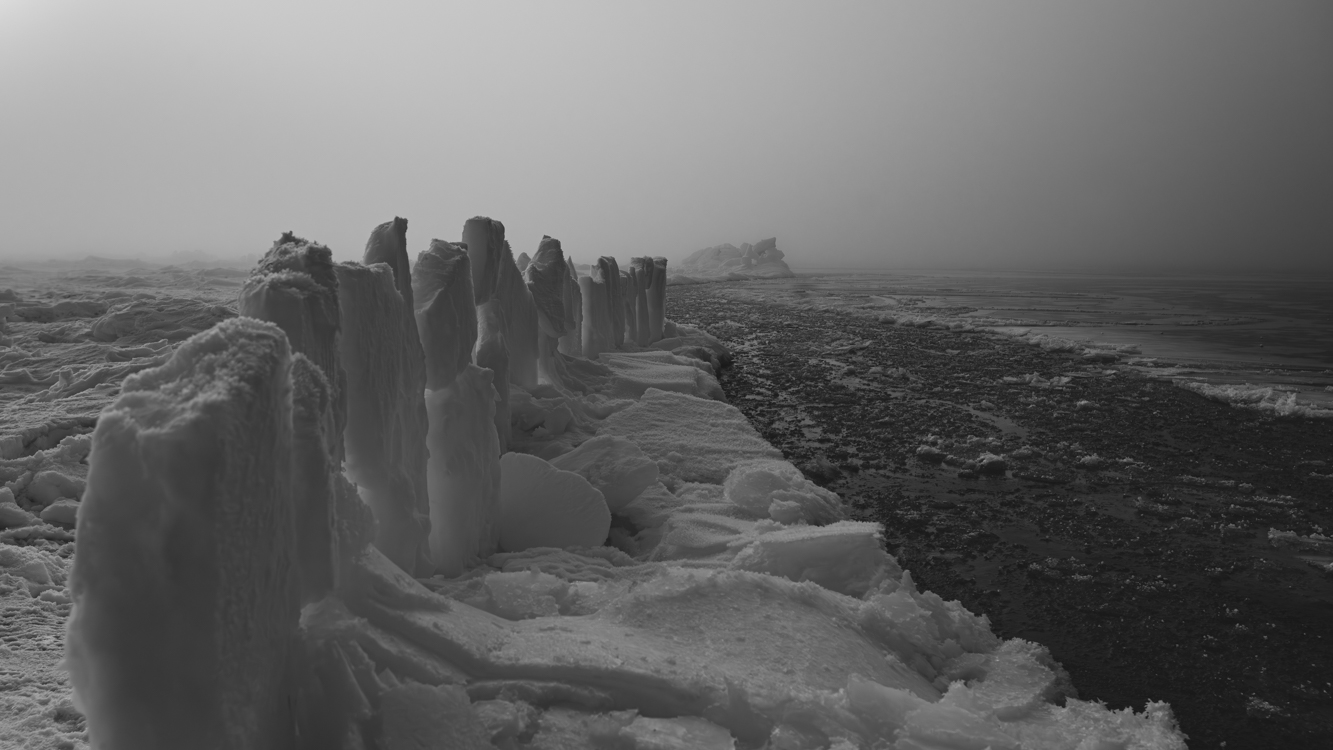
Icehenge

Black and white photograph of a hunting blind made of large ice slabs positioned along the edge of Arctic sea ice by Inupiat whalers.
Three miles out on the frozen Chukchi Sea, 125 miles north of the Arctic Circle, thick fog lifts to reveal slabs of ice positioned by Inupiat whalers to serve as a hunting blind along the edge of a slushy lead. Both Bowhead and Beluga Whales are taken as they migrate through these open lanes between sheets of ice. Near Point Hope. Alaska, May 3, 2012

The Catch: Bringing a Whale up on Sea Ice in Arctic Alaska

Inupiat whaling on the frozen Chukchi Sea near Point Hope, Alaska. April 26, 2012

As Bowhead Whales go, this was a small one – perhaps 10 tons or so. We had hiked approximately three miles from the village of Point Hope across the frozen Chukchi Sea to the camp where we had heard a whale had been caught. Locals had traveled by snowmachine and honda (snowmobile and ATV). There is always the danger of encountering a Polar Bear in this environment, and so we were armed. After snapping this picture I handed the camera to Barbra and took a place on the rope.

The open water in this picture is called a lead – an opening between two sheets of ice. You can see, across the water, the jumble of ice along the edge. Sea ice is often not the smooth sheet of white one might imagine. It continuously buckles, pushes up along pressure ridges, drifts apart and then presses back together. In a way, it behaves like the Earth’s tectonic plates, buckling, heaving, colliding, lifting. And so in order to make a whaling camp, trails must first be made through these places where jagged ridges of ice, individual chunks the size of cars, some much larger, must be broken through and smoothed out.

It is a lot of work to take a whale.

Changes: With Feet in Two Worlds Now

Point Hope from plane n

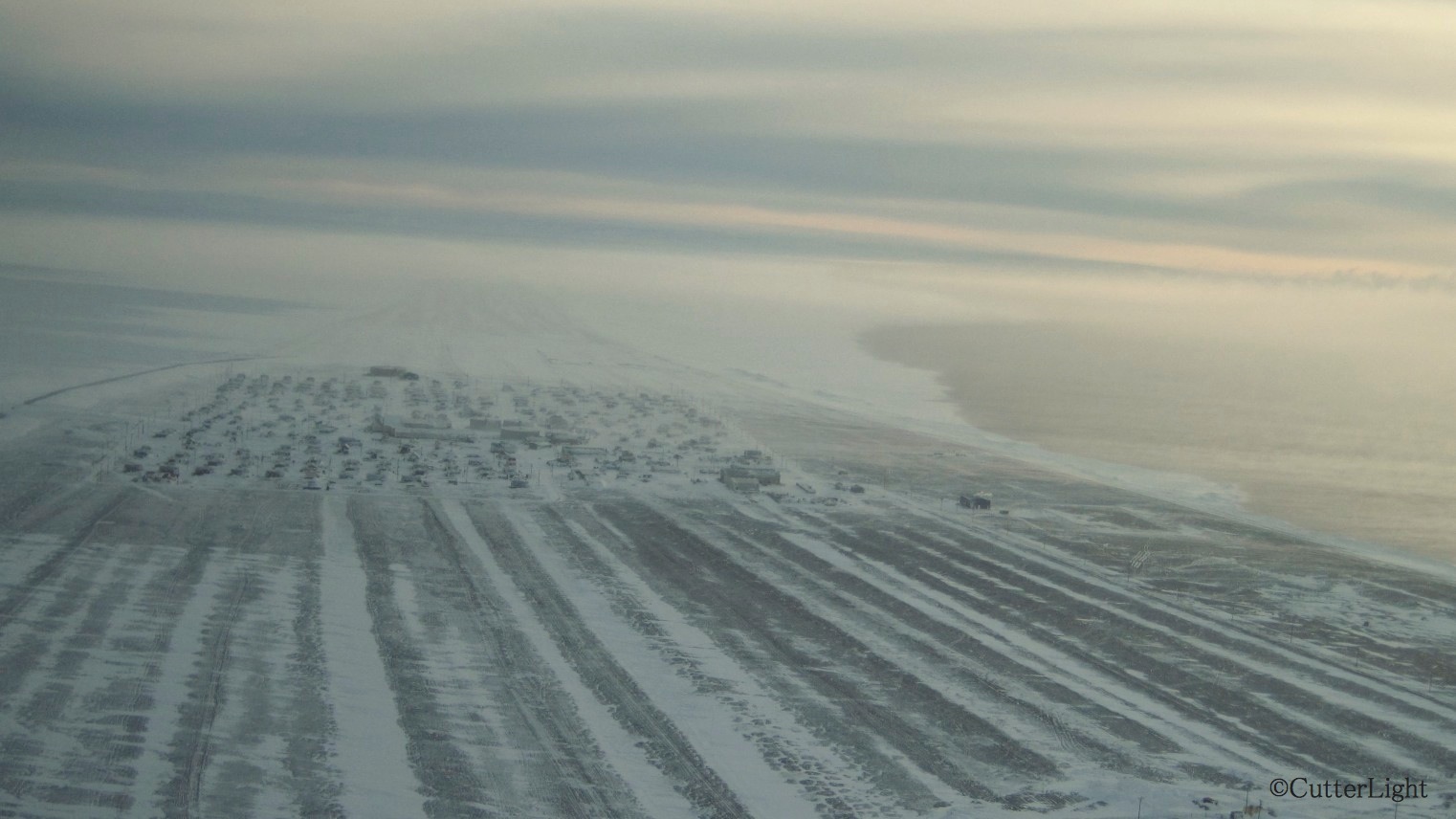
From the air on the south side of the peninsula, our village of Point Hope is a small interruption in a vast, roadless, icy land. This photo was taken in late January from a little six-seat plane as we flew in from a trip to Anchorage. What’s missing in this picture? Sea ice. There should be a thick sheet of it in the foreground where this year there is only open water.

Back in early November, we made the decision that this would be our final year in Point Hope. We’ve loved living here, and the decision was not easy. The people of this village – our adopted hometown these past three years – have been kind and generous and fierce and proud, attributes we greatly admire. Our students have been wonderful, and when you teach in a building where from kindergarten through senior high there are fewer than 200 students, they all become your students. In our combined 30+ years of teaching, neither of us had ever bonded with students the way we bonded with the students of Tikigaq School.
freezing rain point hope n

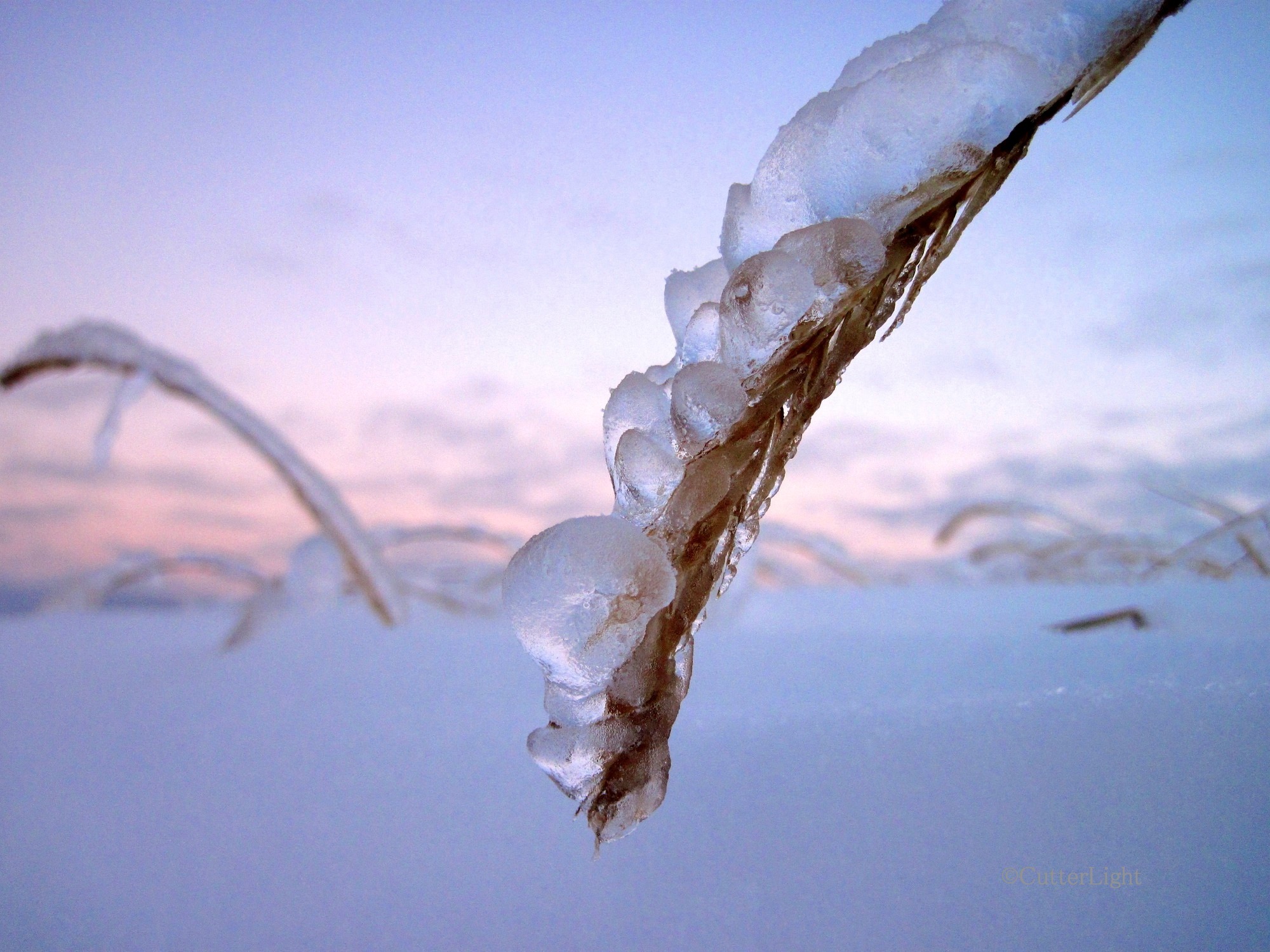
Freezing rain turned this stalk of grass into a silvery jewel. Rain in January in Point Hope is not completely unheard of, but days in a row of such weather during what is usually the coldest month of the year is highly unusual.

In mid-December we turned in our resignations, not sure where we would go next, urged only be the sense that it was time for us to go. The pull is a feeling that is difficult to describe or explain. The letters of resignation were short, polite, appreciative, but with them we cut the cord. No safety net. No turning back. We began to focus on our next move.

Aurora feb 2014 a n

A few nights ago, the aurora borealis put on a show. This was not one of the dancing, colorful displays we’ve seen in the past, but a steady, emerald swath glowing just above the northern horizon. 

At first, we were limiting our consideration to Alaska, dreaming of a situation in the Southeast where we might live within an easy walk of our boats and our new school. Our free time was consumed wtih the routine but critical tasks associated with a job search: revising our resumés, shoring up our references, researching schools and communities, distilling our careers and lives into tightly written letters of introduction. As two souls with nomadic DNA and Gypsy blood caught in this modern “career path” world, it’s a process we’ve been through many times.

But this time around, there was a twist to the job hunting. We both constructed online career histories on Linkedin, a networking website for professionals. Out of the blue, Barbra received a query from a headhunter with an agency that places teachers, administrators and technology experts with overseas schools. Although the particular company the inquiring person represented didn’t interest us, it got us thinking.

What if…?

Could we…?

What would we do with our boats?!?
tikigaq old bones_new

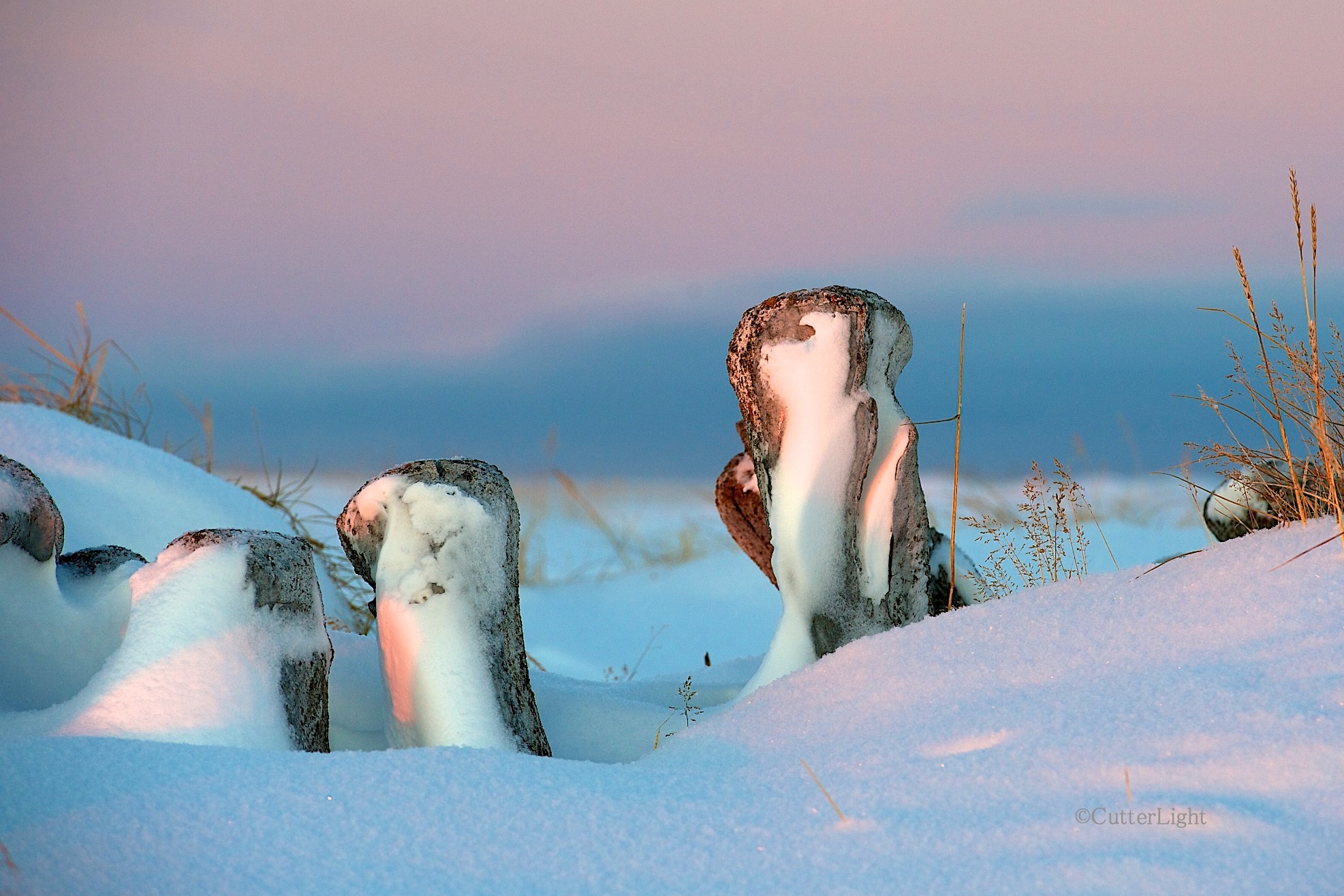
Early morning light bathes whale bones in the ghost town of Old Tikigaq pink and gold after a night of fresh snow.

After careful research, we signed aboard with Search Associates, an agency that works with over 600 internationally-minded schools in 160 countries. While we lacked the experience with International Baccalaureate programs these schools desired, our backgrounds are rich in quality experience and our references are strong. We allowed ourselves to dream, and although we thought that in order to get our foot in the door we’d accept the right position in virtually any country, there were a few countries that were very much on our short list. Our dream list.

One of those countries was Mongolia. Several years ago, when we were living in Sacramento, our local Trout Unlimited chapter invited a guest who had recently made a film about fly fishing in Mongolia for lenok (an ancient form of trout) and taimen (the world’s largest trout/salmon). The vast, sparsely populated countryside was sublime. The rivers were pristine. The idea of a remote camp out on the steppes, the guides speaking Mongolian, the huge night sky filled with stars after a day spent pursuing species of fish few anglers will ever encounter, our stomachs filled with rock roasted meat, our minds pleasantly humming with yak-milk vodka, and beyond the camp neither a light nor a human sound for as far as one could see or hear, is an idea that has been growing in us ever since.

We are due in country on July 31. It appears that we’ve already found a nice apartment just a few minute’s walk from the International School of Ulaanbaatar in Mongolia’s capital of Ulaanbaatar. We’re thrilled. This is just the dose of “New” we’ve been craving.

A couple of weeks ago, we were in the Anchorage airport, flying back to Point Hope when we suddenly encountered a scent that, for us, will always be pleasantly, irresistibly memorable. Muktuk. Whale fat. We looked around and soon found a small group of people who appeared to be Eskimo pushing a cart loaded with coolers, no doubt the source of the mildly sweet, rich smell. “We’re two among 0.00000-something percent of people in the world who can instantly identify that smell,” I said to Barbra as we laughed about our arcane expertise.

This morning one of Barbra’s students, Dmitri, came to school wearing the same scent. “Wow,” Barbra said with a smile. “You smell like muktuk!”

“Yeah,” Dmitri smiled back. “It’s good, isn’t it.”

Little stories like that keep us wanting to explore and experience.

pt hope from plane dawn n

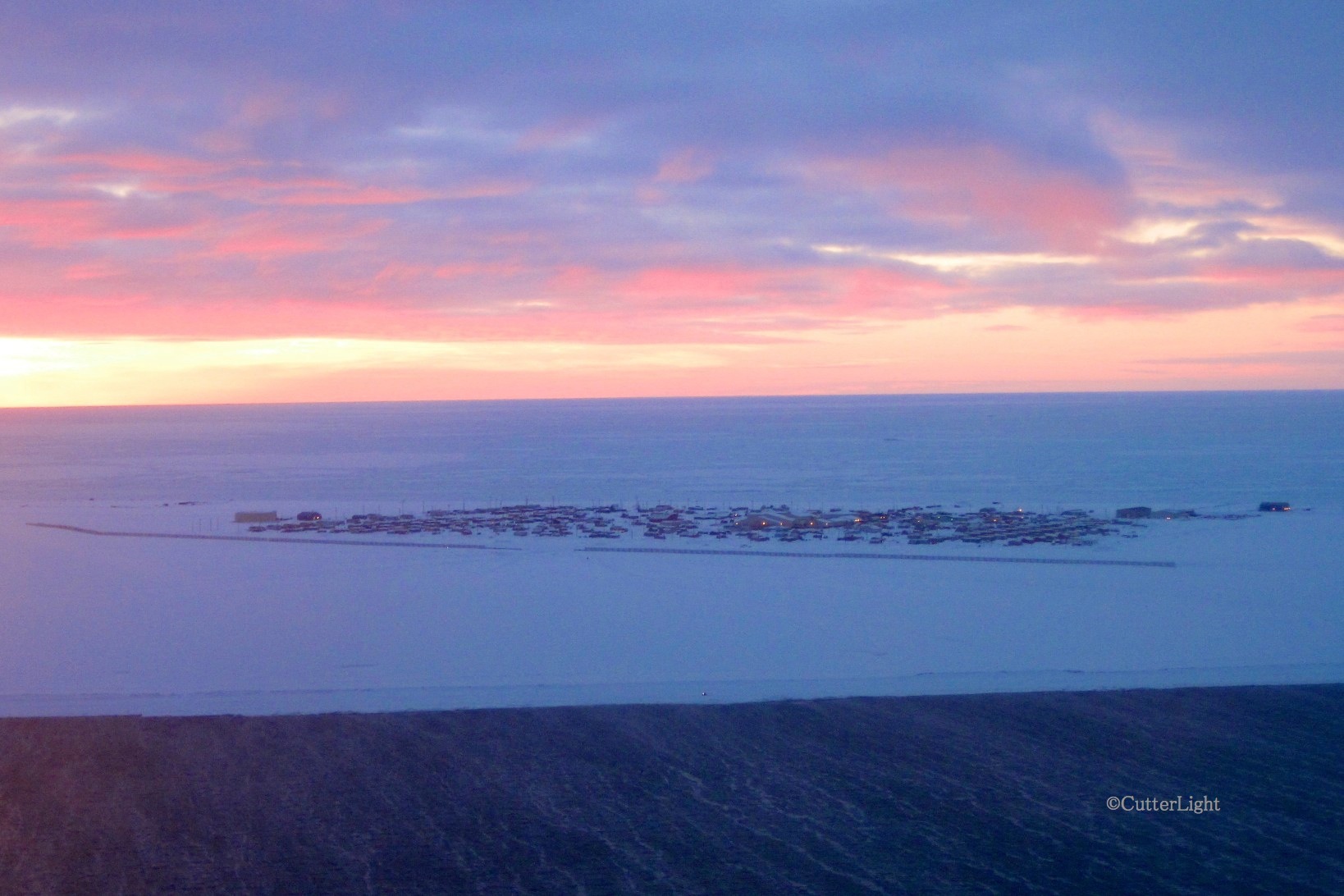
Sunrise over Point Hope, a village by the Chuckchi sea.
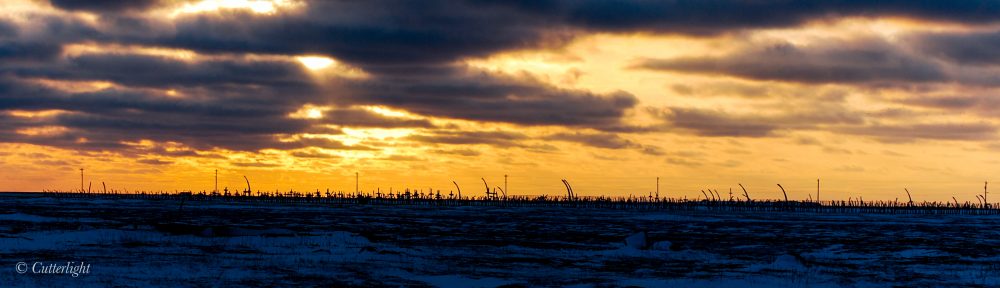
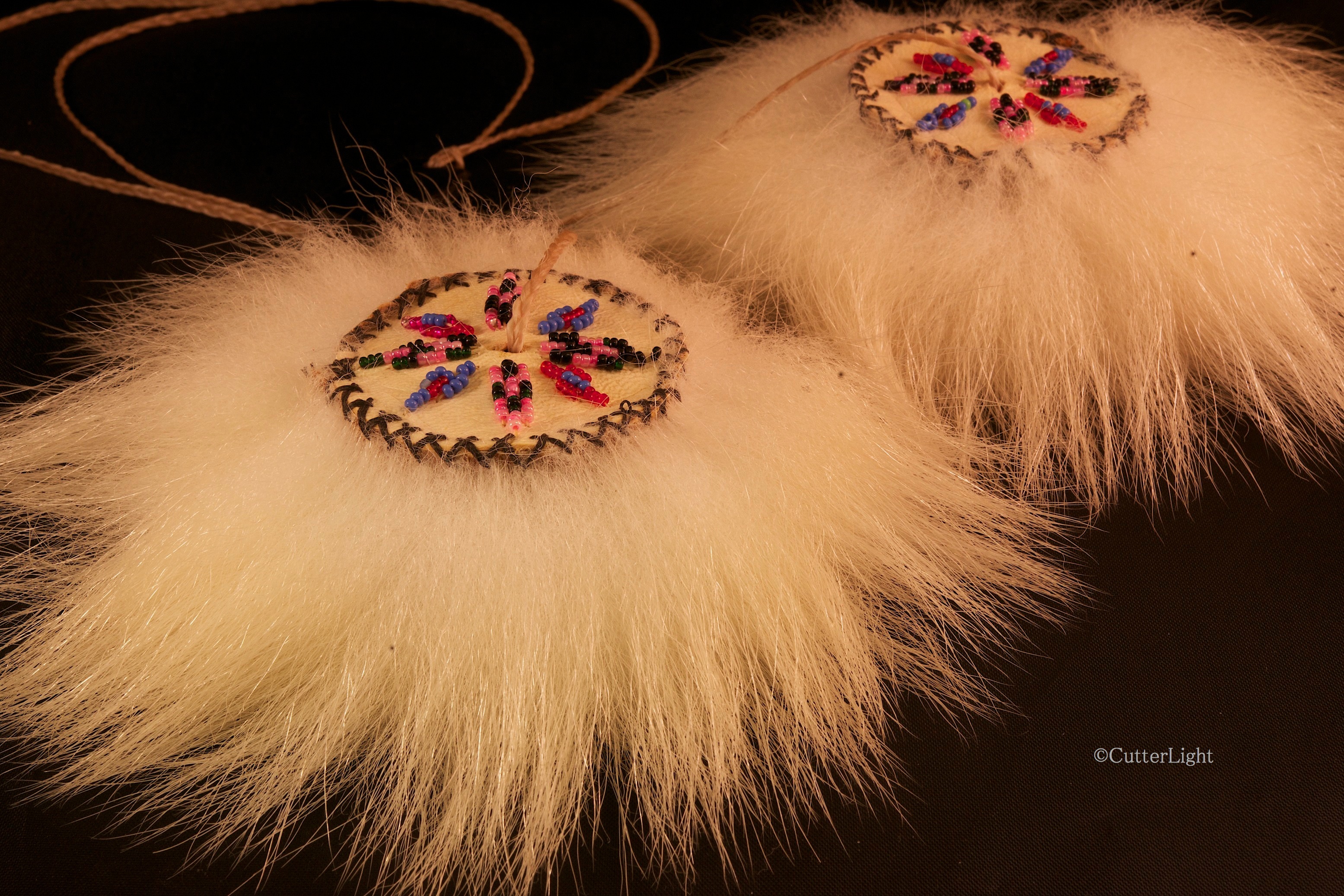
Inupiat (Eskimo) Yo-Yo with Polar Bear Fur

eskimo yoyo n

Fashioned from polar bear fur and finished with intricate beading, this Inupiat yo-yo has transcended it’s traditional purpose to become art. Based on a bola design, in olden times tools like this were made of rocks tethered together with sinew and were used to catch birds. 

Beautifully crafted by Molly Oktollik, one of the elders here in the village of Point Hope, Alaska, this Inupiat “yo-yo” isn’t what most of us envision when we hear the word yo-yo. In former times, they were made of rocks held fast on sinew tethers and in the right hands were a formidable tool for catching birds. Ptarmigan, for one species, are often easy to get close to, and ducks and sea birds returning to their headland roosts typically fly in on a low trajectory.

These days yo-yos are crafted as pieces of art, or, when less elaborate, as toys. It takes a certain skill, but the two ends can be made to rotate in opposite directions – that is, with one end revolving around the center handle clockwise, and the other revolving counterclockwise. It’s a pretty cool trick if you can get it to work.

Nose Pressed to Glass

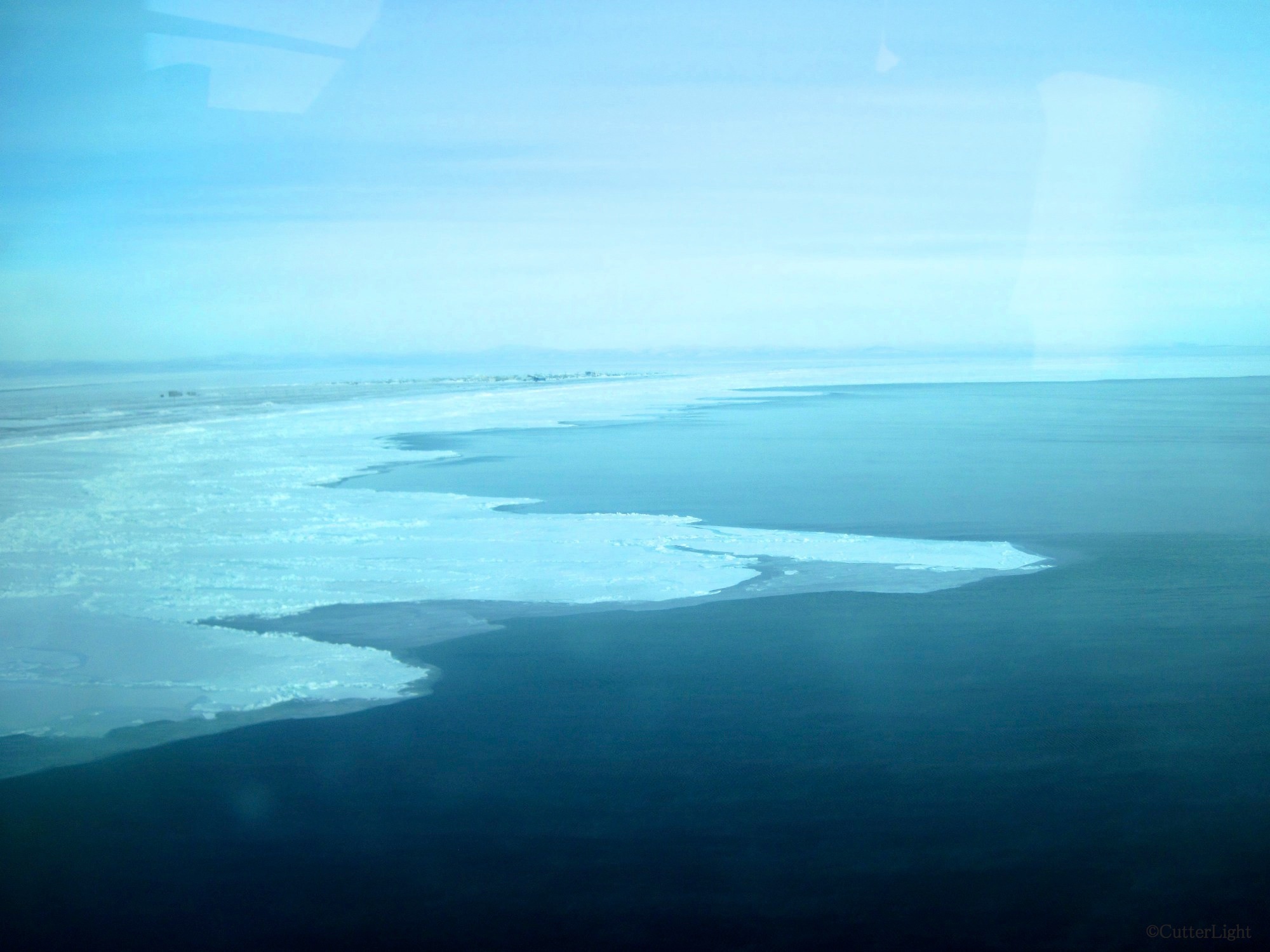
Sea Ice1_n

Sea ice fascinates us. Our village can be seen in the upper left of this photo. At the time of the photo, north winds had blown much of the ice away from the land. The “sticky ice,” the ice which clings to the shore, can usually be relied on to be safe to walk on. Even this sticky ice is subject to the whim of Mother Nature’s strong winds and current. 

Sea Ice2_n

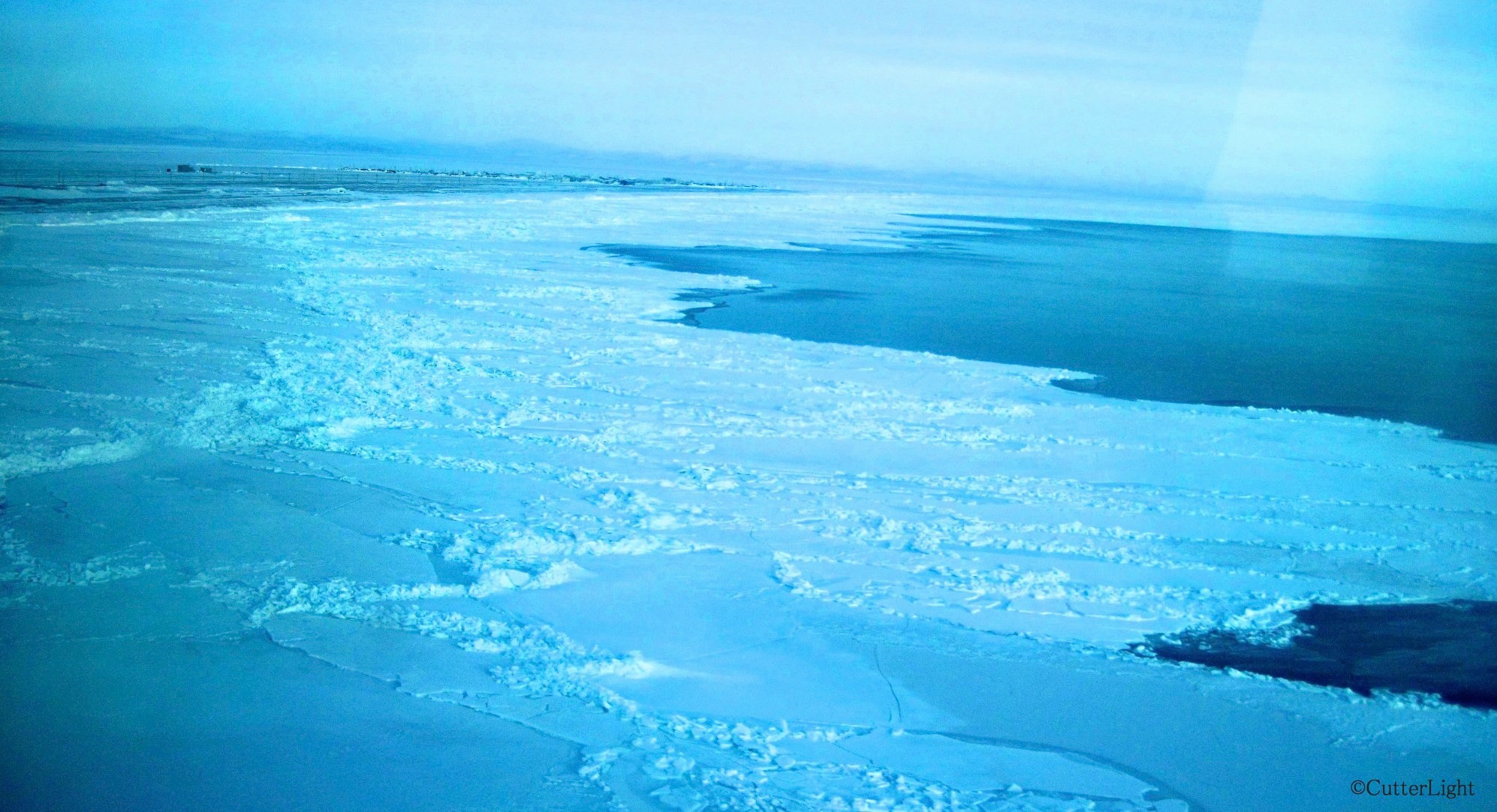
Piles of ice form along pressure points of the frozen surface of the sea. There are many histories of boats navigating too late in the season and becoming stranded or crushed between these pressure points.

Sea Ice3_n

Recently, wind from the south has closed this lead – the open water to the right. The view from our village today is solid ice as far as the eye can see. The villagers are readying their seal skin boats to go whaling. Soon the bowhead migration will begin. When the north wind blows open a lead, the whaling crews of Tikigaq will patrol the open water in hopes of catching animals that are in their Spring migrations. These whales make up a critical part of the subsistence catch in this Inupiat village.

Project Chariot_n

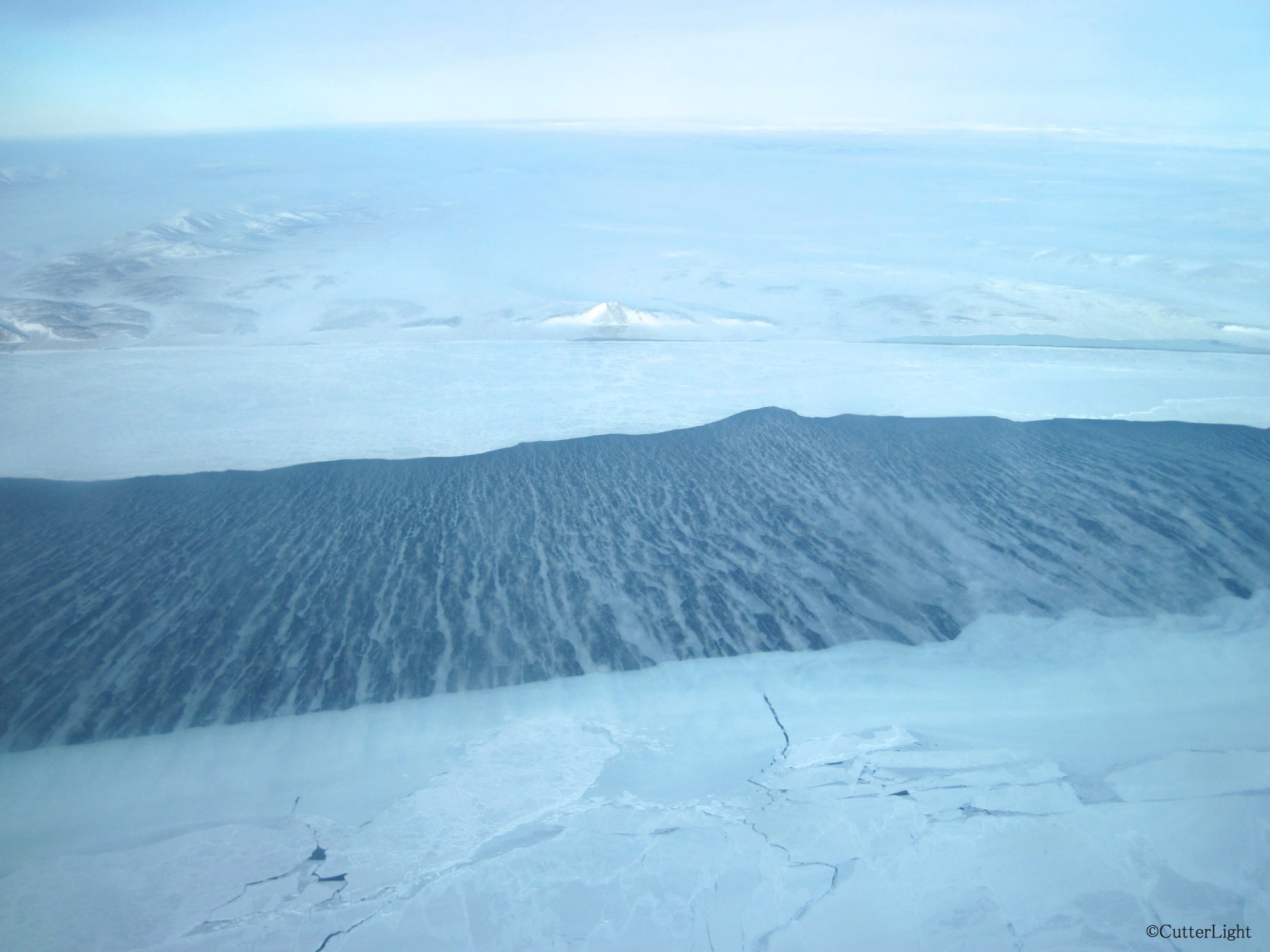
I’ve recently been reading the book The Firecracker Boys. This true story is about a crazy post WWII idea some engineers and scientists had for using a nuclear bomb to blast a harbor between the peak in the center of this photo and the ridge on the left. This is about 25 miles east of Point Hope. The proposed  H-bomb  was to be 163 times the strength of the bomb that was dropped on Hiroshima. Scientists and engineers promised to sculpt the land based on human requirements. It was part marketing (using bombs for good) and part wild scientific experimentation. It’s a shocking and crazy true story!

PHO 1_n

Nose pressed to glass, I peered out from the bush plane window as we lifted straight up, like a helicopter, in the 40 m.p.h. north wind. It seemed scary on the ground. With gusts well above 40 m.p.h., the plane arrived, landed on the airstrip and never turned into the usual parking area. I fought my way toward the plane, slipping along the airstrip as if being pushed down by a strong arm. Once in the plane, I felt calm and safe with skilled bush pilots at the controls.

PHO 2_n

From the air, the village looks like a patchwork quilt as rooftops peak above a blanket of snow. If the snow and ice were sand, Point Hope could be any beachfront real estate in the world!

Tikigaq School 5th Graders Perform Point Hope Eskimo Dances

The rhythms are played on traditionally-crafted drums; the dances have been passed down from generation to generation. These fifth graders demonstrate that Inupiat traditions are alive and well in Point Hope, Alaska.

With the help of village elder Aaka Irma, my fifth graders and I learned an old Point Hope Eskimo dance that hadn’t been performed in some time. Under the guidance of our Inupiat language teacher, Aana Lane, the students also practiced popular traditional Point Hope dances. The students performed these dances for the Christmas presentation last month to an enthusiastic crowd.

The group of students I have this year is very connected to their culture and heritage, particularly when it comes to dancing. It’s amazing to see every student in the class become so completely engaged in a cultural tradition. During their performance in December, the students captivated the entire audience. The performance culminated with the students inviting one and all to join them on the gym floor in the closing Common Dance – a dance familiar to virtually everyone in our village.