Whaling: Two Miles Out on the Frozen Chukchi Sea

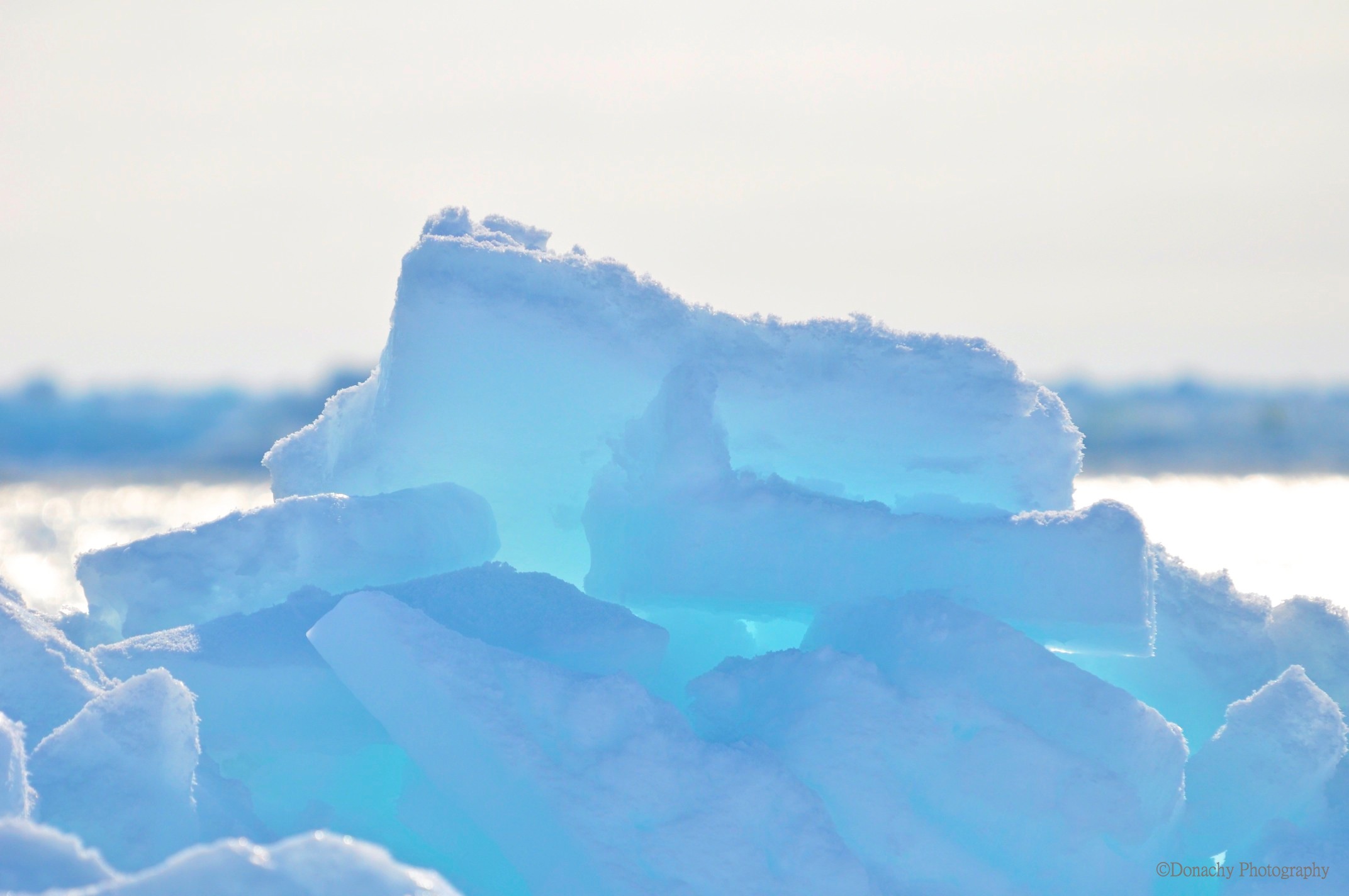
Two miles from land across the frozen Chukchi Sea, the ocean ice is constantly breaking up and reforming, creating ridges of fragmented ice. The blocks of ice in this photo weigh from hundreds to thousands of pounds, but are so clear they seem to be lit from within. 

We had heard that the bowhead whale was out near the point, three miles west of the village of Point Hope. But once out there, we saw few signs of activity. We found a trail leading out onto the ice and began following it in hopes of locating the lead – the place where currents and wind had caused a break in the ice and created open water. That’s where the whaling camp would be.

The ball and pyramid, above, were a familiar trail marker from a previous trek out onto the ice. (Click here to see “Whale Camp: Frozen Sees and Icescapes.” A frozen sea is not smooth. It is more like an otherworldly, windswept rock and sand desert with the rocks replaced by ice and snow replacing the sand. Note the faint snowmobile tracks curving along the right edge of the photo – that’s the trail. 
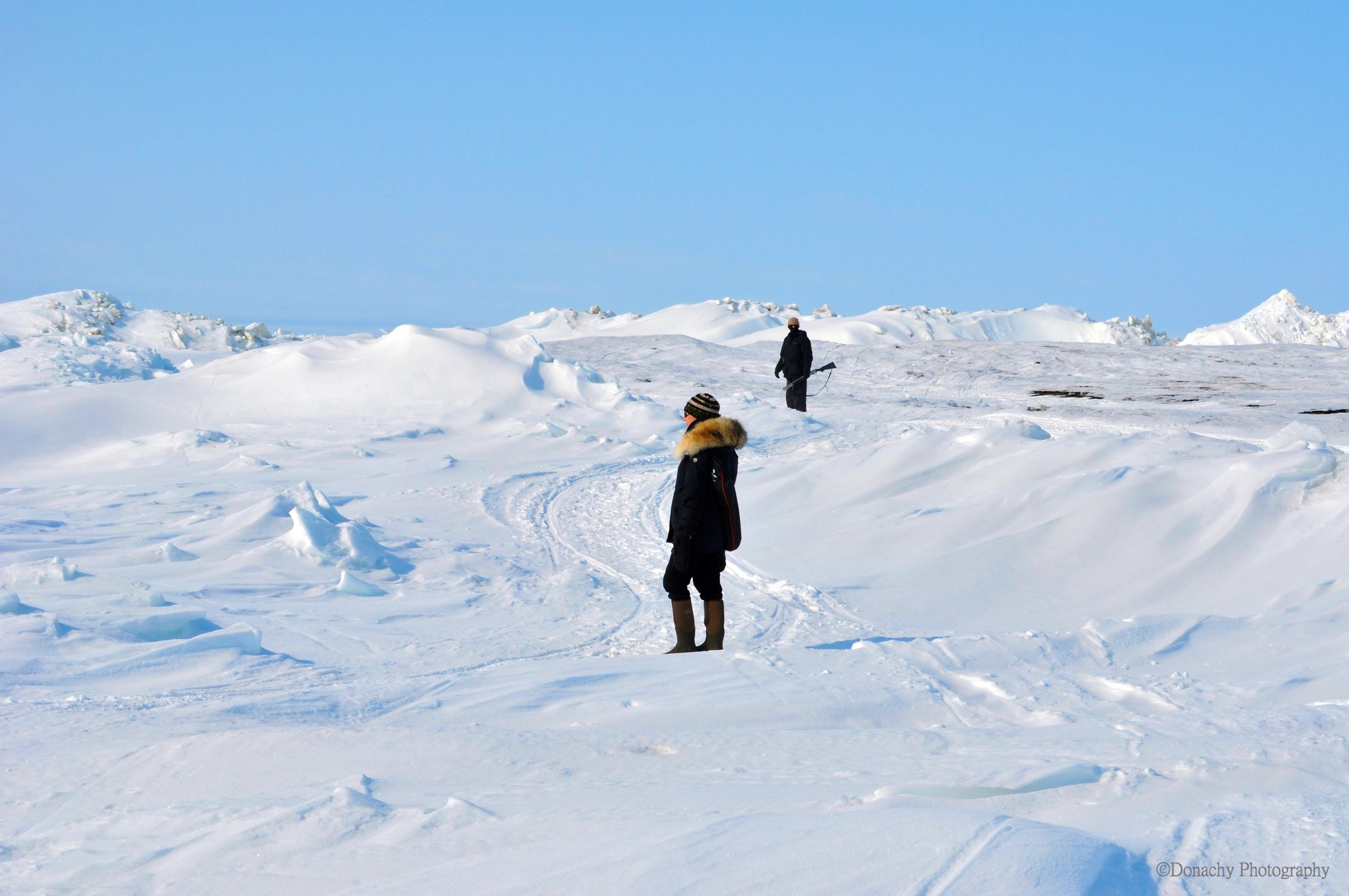
A mile or more out on the ice, Barbra and our friend, Bill, pause to scan for telltale seabirds that might give away the location of the lead. This is an area frequented by polar bears, hence the gun Bill is carrying. We saw no bears, but did cross a number of fox tracks.

Huge, luminescent fragmants of snow-dusted ice reminded me of the hardtack candy my grandmother used to keep in a crystal bowl. 

Leads can open and close in moments, leaving people stranded when a break-off occurs, or generating enough force to place this pickup-truck-sized block of ice precariously atop a mass of fragments. A walk across sea ice gives one a glimpse into the forces behind tectonic plates and events such as earthquakes and the formation of mountain ranges.
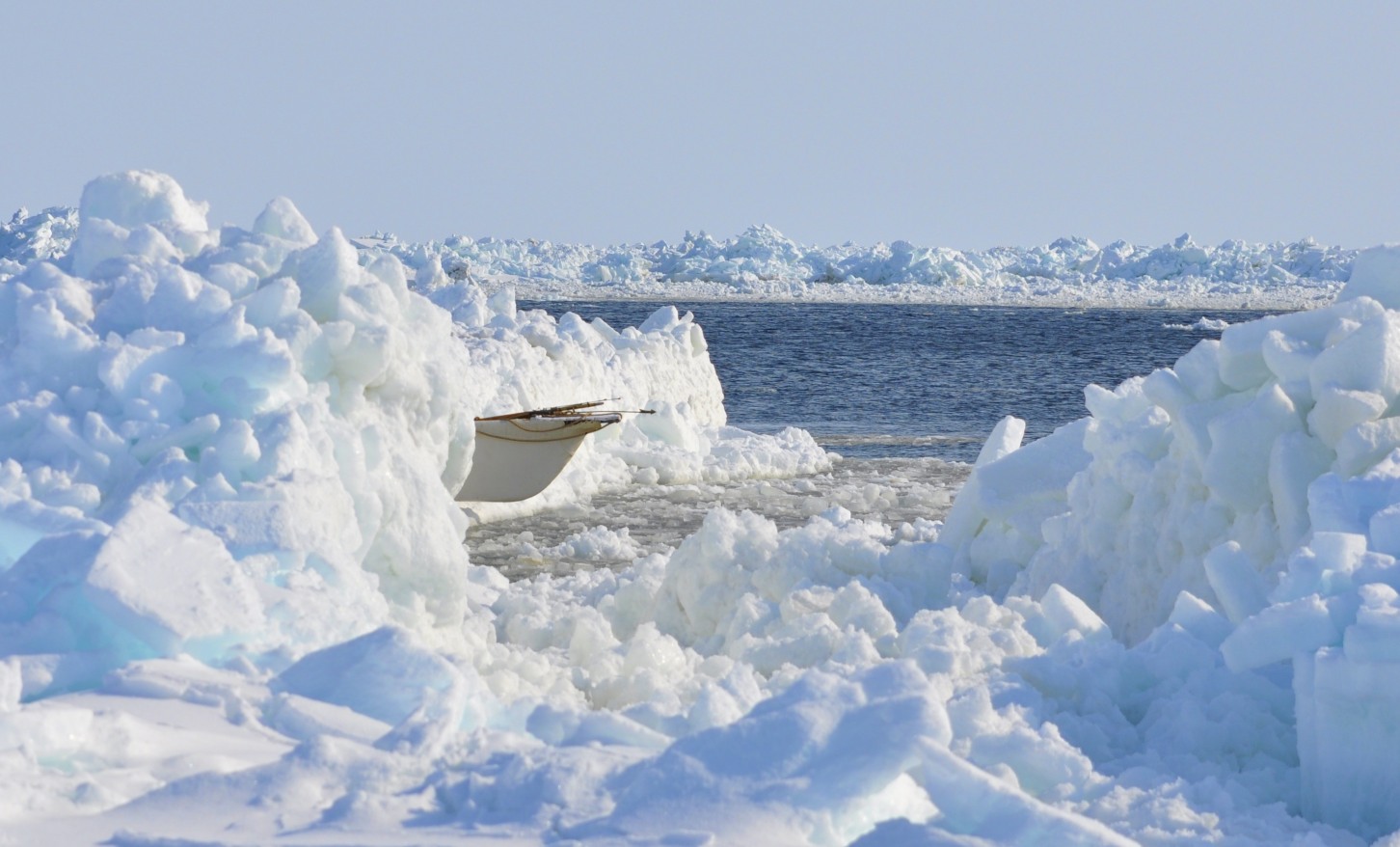
We’d walked over five miles by the time we finally found the lead – a fairly narrow band of water hemmed in between two ice sheets. The bow of a seal-skin boat was a sure sign we were nearing the main whaling site.

This is a typical whaling outpost. The seal-skin boat, which is about 17  feet long, is made from hand-stitched bearded seal hide. The boats are light, able to be moved on a moment’s notice. The jumble of ice at the edge of the lead was piled there by natural forces and serves as both wind shield and hunting blind. Note the mass of floating ice out on the water. 
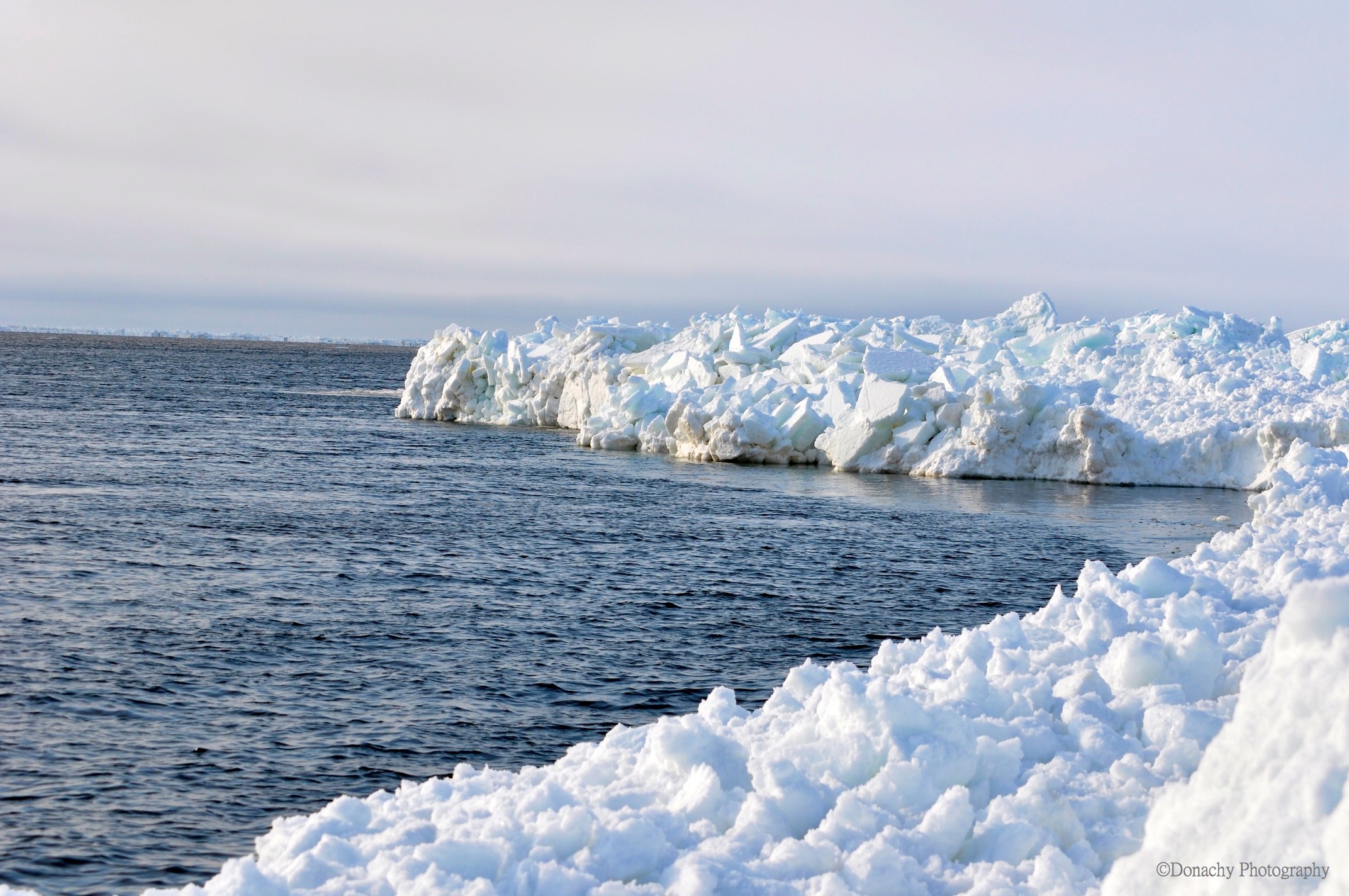
At the edge of the lead, the ice does not taper. It is thick and strong, but susceptible to breaking off if the wind shifts. 

We had wondered how a whale weighing 10, 30 or even 50 tons is pulled from the water. Two heavy block and tackles are anchored to the ice. The one nearest open water is pegged with a thick metal spike. Fifty yards or so back a second block and tackle is anchored by drilling two holes through the ice and securing the it with a strong harness. Even with the modest mechanical advantage of pulleys, it takes dozens of people pulling for all they’re worth to bring the whale out of the water.
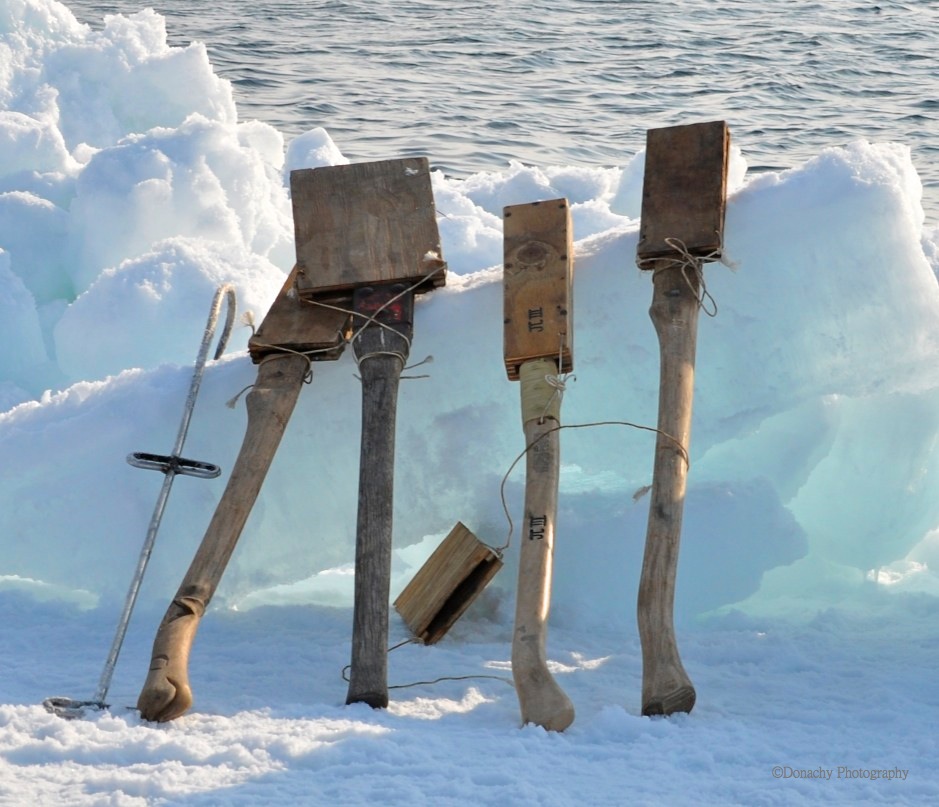
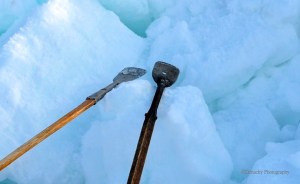
Most of the tools used are hand-crafted. The spade-like implements on the right are butchering tools.


We were very aware of this deep crack in the ice, as, no doubt, were the whaling captain and his crew. While the ice to the right of the crack was sturdy enough to support a house, a shift in the wind could have caused it to suddenly break off. 
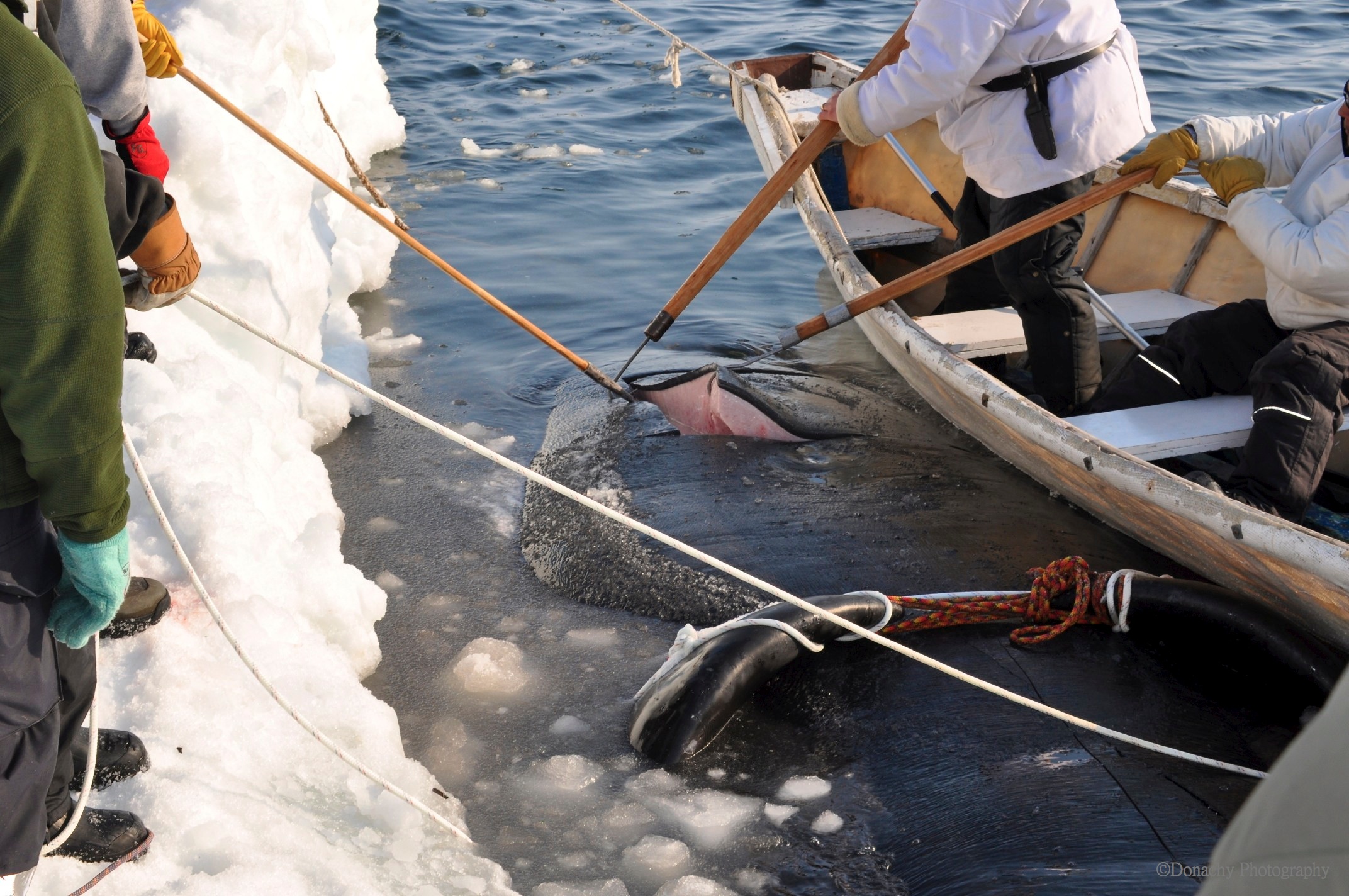
The whale was small, a young one. Here a ceremonial first piece weighing 30 pounds or more is cut for soup in which the only ingredients are melted snow and fresh whale – a welcome celebratory meal against the cold.
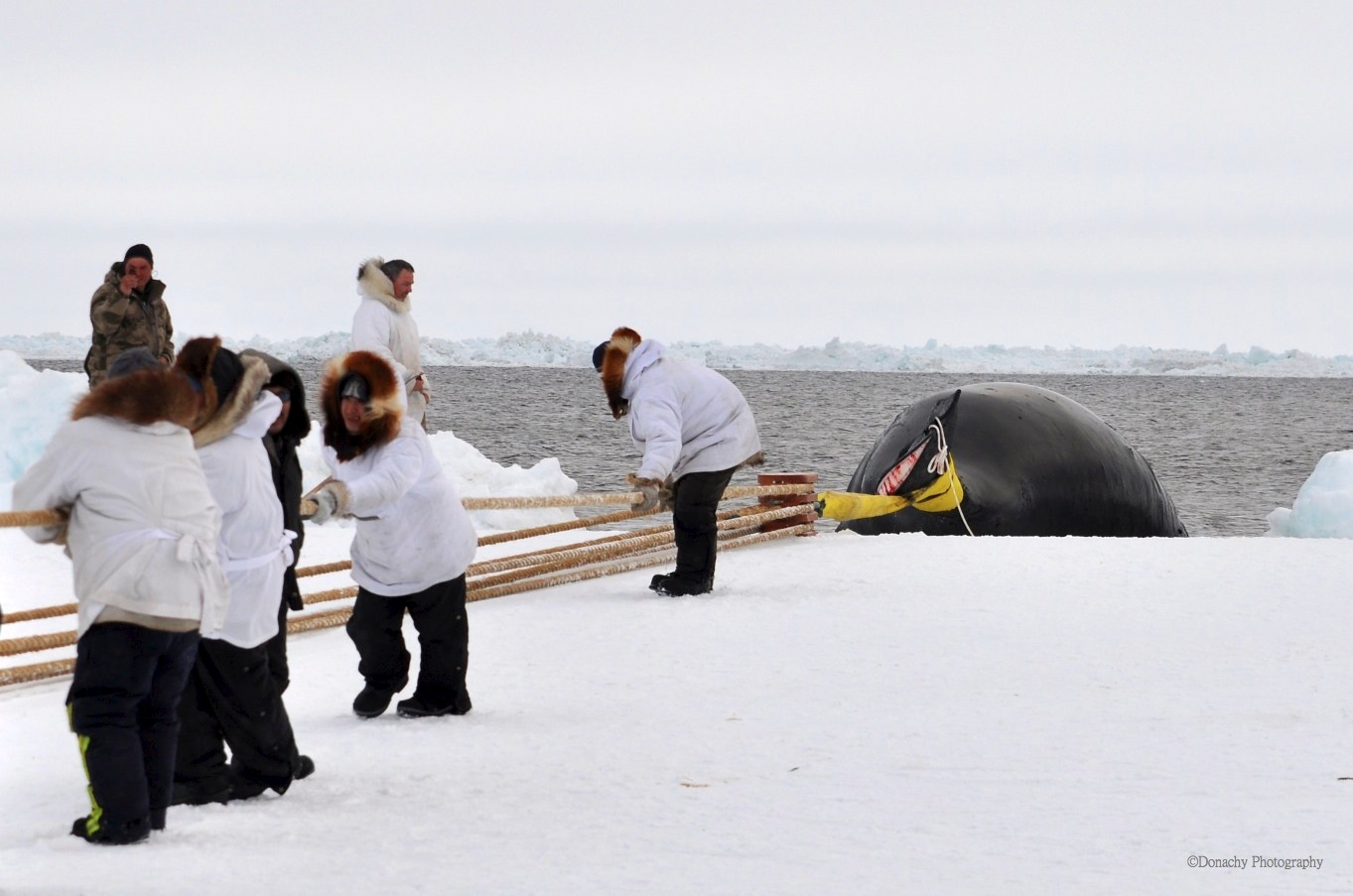
When the pull began, I handed my camera to Barbra and found a place on the rope. The pull started with grunts and chanting, but as the whale begin to emerge from the sea onto the ice, the chanting gave way to whoops of joy and cheers.
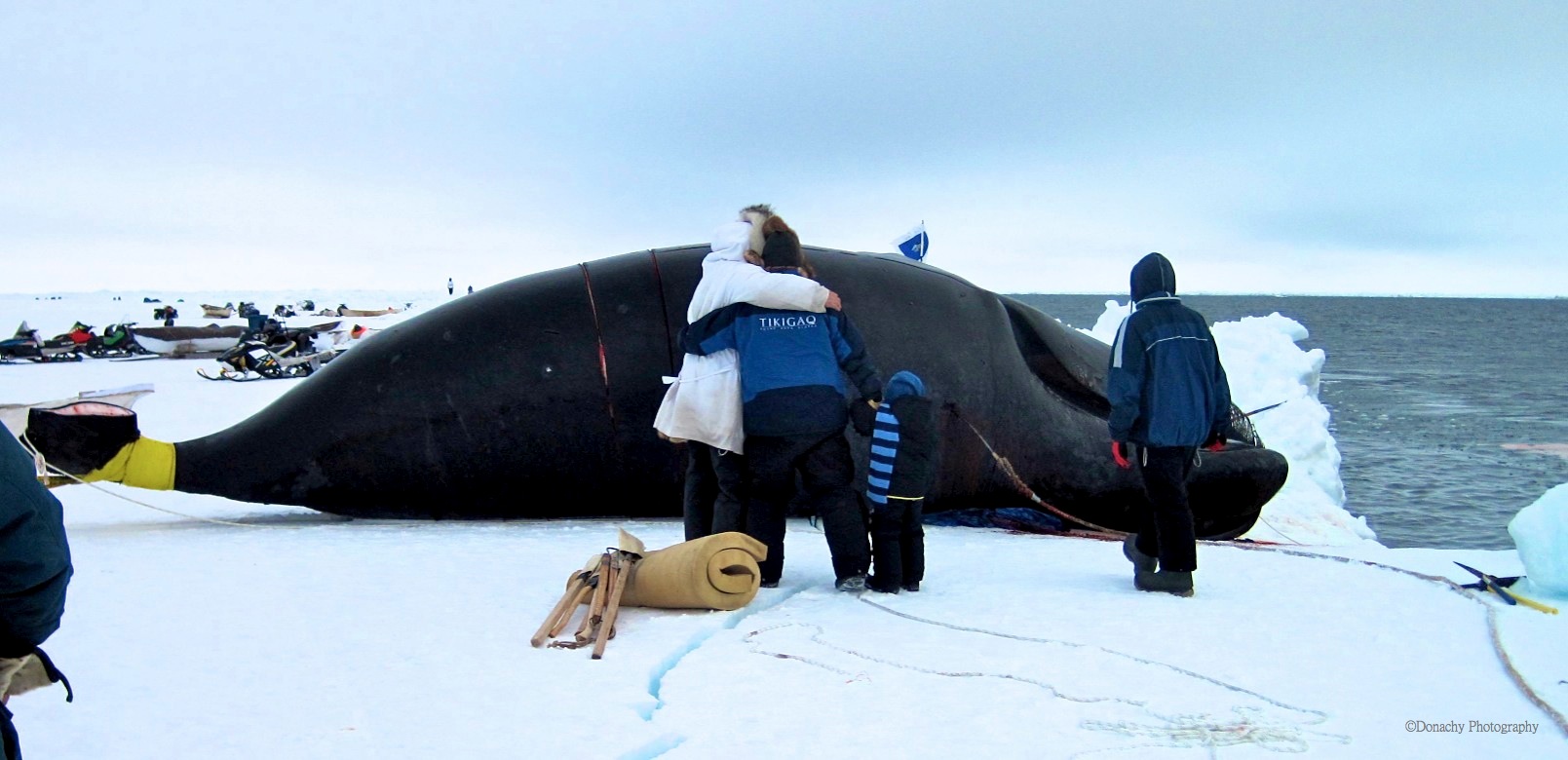
The captain (in the blue coat) shared a celebratory hug (above)…

…and then his crew member headed off with a friend for a bowl of hot whale soup. By this time, Bill, Barbra and I had been out on the ice for nearly five hours and we had a two-mile hike back over the sea to land. We were thrilled to have witnessed and taken part in a tradition that goes back to the roots of this Inupiat village.

Whaling Camp: Frozen Seas and Icescapes

Ball and Pyramid, Chukchi Sea, Alaska: This icescape, photographed with a Nikon D90 and a Sigma Bigma 50 – 500 mm lens, has been slightly processed to increase contrasts. The operative word here is “slightly.” Even to the naked eye, these frozen-sea icescapes are other-worldly.

Evocative, perhaps, of a scene from Star Trek, winter hikers venture across the frozen ocean out to a whaling camp. The gun the lead person is carrying is for protection. Although we saw no sign of polar bears on this day, friends of ours who took a slightly different path encountered fresh tracks.

Seal-skin boat at the ready, these men stand vigile for bowhead and beluga whales. Note the light blue block of ice they’ve cut out and positioned near their gear as a shield. These men are standing on sea ice just a few feet from the open sea. Last year was a good year for whaling in Point Hope, with three bowhead whales harvested. The hunt is dependent on the right ice conditions, which can be elusive. So far this year, no whales have been taken.

A well-equipped wall tent, complete with a supply of propane, serves as one of several whaling camps near the village. These camps are set up on sea ice, and may be anywhere from a few hundred yards to several miles offshore. The hunters travel out to leads – areas where the ice is open. Winds and currents can open and close leads quickly, underscoring the need for whaling crews to be constantly alert.
Sea ice seem to be lit from within by blue light. Heaved up in pressure ridges and broken into fragments weighing several tons, it is easy to appreciate the arduous work “breaking trail” entails as hunters go out onto the ice to set up camps. 

A black and white composition heightens the contrasts in these massive blocks of broken ice.

There’s a sense of being somewhere other than Earth…

And then a flock of common murres skims across a lead…

Rivers of Ice: Glaciers, Icefields and Floating Sculptures of Blue

Icebergs such as this ethereal blue sculpture are the culmination of a dynamic process eons in the making.

It’s easy to imagine glaciers as static – water interrupted, subject to thaw and melt, but otherwise frozen in space and time. In reality, they’re more like slow moving rivers, pulled down by gravity, pushed forward by the unimaginable tonnage of ice and snow in the icefields where the originate. A fast-moving glacier can travel at a rate of 20 meters a day or more.

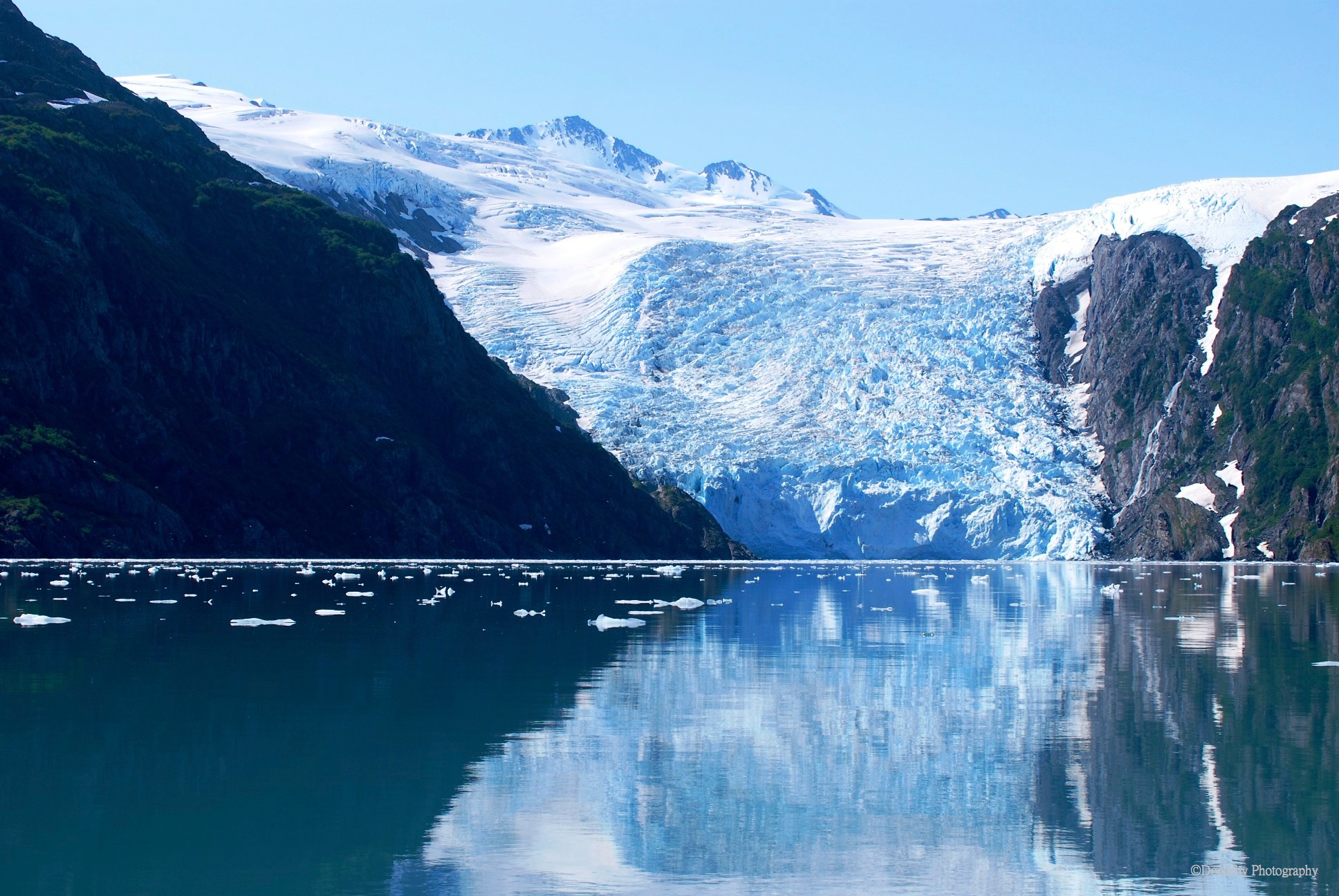
Tidewater glaciers are among the most dynamic forms of ice in nature. Like the Blackstone Glacier (pictured below), they flow from icefields, much as a mountain stream might originate as the outflow from an alpine lake. What makes tidewater glaciers so fascinating is that they don’t gradually turn to water as they descend down a mountain valley, warming and thawing with the descent.

Instead, tidewater glaciers terminate when they reach the sea. The ice continues to flow, pushing the face of the glacier forward. If the face of the glacier is large enough, the combination of forward movement and warmer air and water temperatures can result in spectacular calving events, with massive pieces of ice sloughing off into the sea.

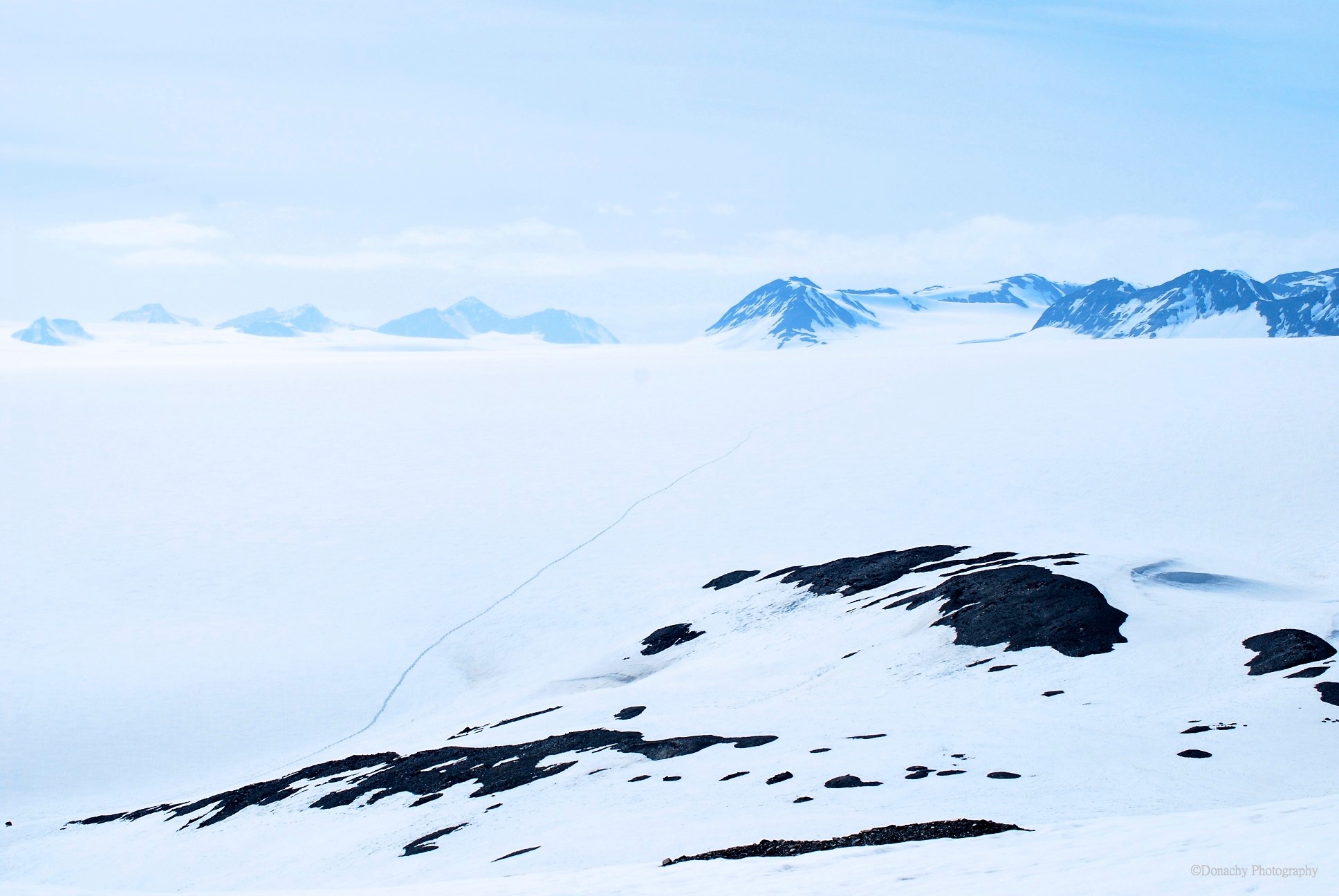
The Harding Ice Field, which gives birth to three dozen or more glaciers, stretches out like a vast, island-studed lake. 

As soon as the freshly calved ice hits the water, it become part of sea’s ecosystem. Harbor seals (above) and black-legged kittiwakes (members of the gull family, below) use the frozen islands to rest, feed and stage hunts. The seals also use the ice as nurseries.


Summer Blueberry Picking on the Arctic Tundra

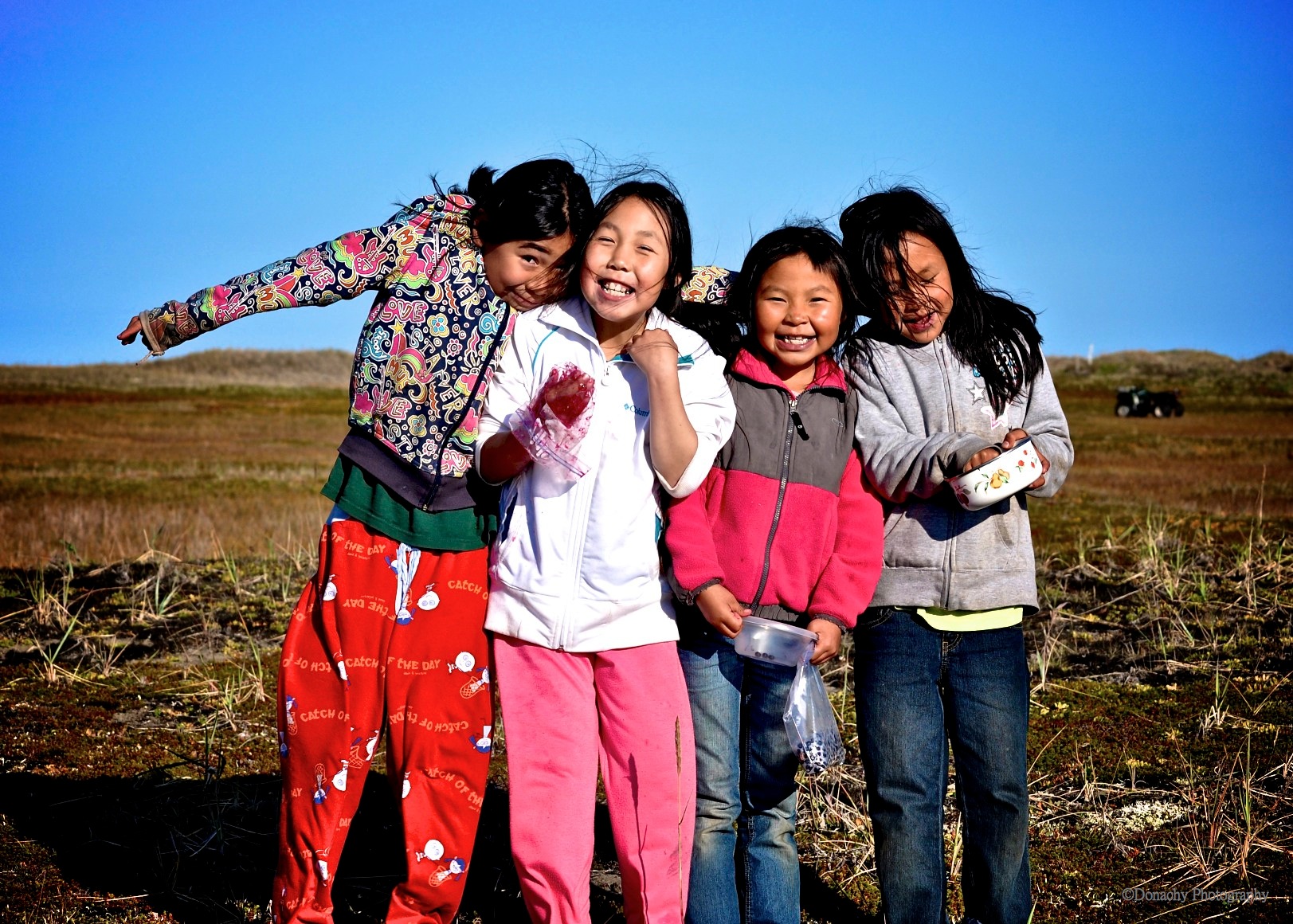
Friends from Shishmaref after an afternoon of blueberry picking. Gathering a cupful or two of these small, tart berries growing in scattered clumps across the tundra was work… the fun kind. The following morning, we celebrated with a stack of blueberry waffles.

Accustomed to the six and seven-foot tall blueberry bushes of Oregon where Barbra and I had picked berries by the bucketful when I lived in Astoria, we were surprised to learn that blueberries were growing right under our feet on our walks through the tundra near Shishmaref. “There’s lots,” one of my students told us. “We’re going to go tomorrow. You guys can follow.”

“Follow” is the village English way of saying “come along.” And sure enough, once we learned to key in on the unmistakable Autumn-red of the bushes (if ground-hugging plants that top out at six-inches can properly be called bushes), we began finding an abundance of small, perfectly ripe, deliciously tart berries. The comparatively thick, woody stems of some of these bushes suggested that they had weathered quite a few seasons near the Arctic Circle. Growing among the blueberries were crowberries (locally called blackberries) and low bush cranberries. Elsewhere in the far north, including in Europe, there are cloudberries, perhaps the most delicious berry on earth.

We walked along in the late summer sun, finding patches of berries here and there, crouching and kneeling to pick, and then moving on to find another patch of tell-tale red. Birds were out sharing the bounty – or maybe the insects associated wtih the fruit: lapland longspurs, white-crowned sparrows, savanah sparrows, and other small birds.

The pause that refreshes. A berry-picker gazes across the open tundra on Sarichef Island where Shishmaref is located, snacking on a bag of berries that probably aren’t going to make it all the way home. The red leaves near her feet? Yep. Blueberries!

The Birds are Back in Town!

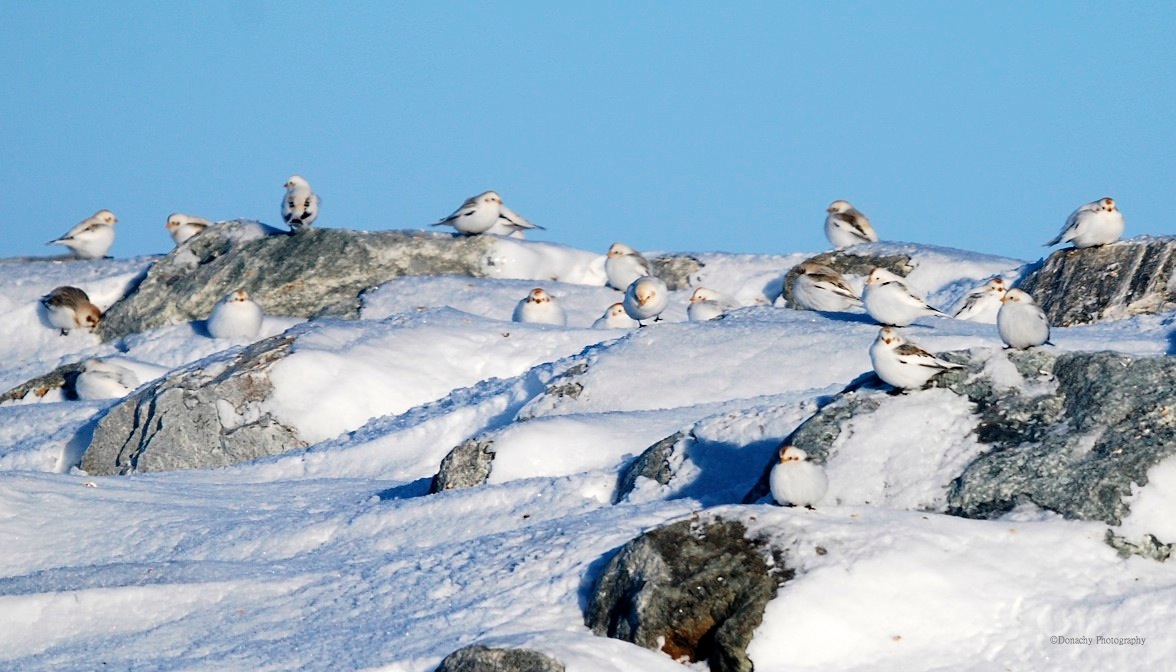
Feathers puffed against the cold, a female McKay’s bunting warms herself in the radiant heat from a rock. Daily highs are reaching the teens and even the twenties now, and today’s sunshine stretched from sunrise at 7:00 AM to sunset at 11:13 PM. The midnight sun is back, and so are the birds! 
Gripped in the heart of winter, an Arctic landscape can be one of the quietest places on earth. Save for a few hardy ravens that manage to make a living off dumpsters and the local garbage facility, most birds head for warmer climes. There are no tree branches for the wind to whistle through, no dry grass to rustle, and on the coldest nights, even the village dogs huddle up and stay mum. Dark settles in, and the waiting begins.
For the past couple of weeks, we’ve increasingly been hearing the welcome twitters and chirps of flocks of the snow birds of the north, snow buntings and McKay’s buntings. It’s been weeks since the last windstorm, and these days we can feel the warmth of the sun on our faces. It feels… wonderful.
I’ve always admired passerines – songbirds. These snow buntings have become some of my favorites.

Chiming Bells, Paintbrush & Bog Candles: Flowers of the AlCan Highway

Fireweed is as common as it is beautiful along the highways of western Canada and Alaska. It’s just one of dozens of wildflowers travelers can expect to encounter. Young fireweed leaves are a tasty addition to salads, and their petals can be used to make a beautifully colored ice cream.

Left: Prickly rose looks a lot like its domestic counterparts. This bud is within a day or two of bursting open. Right: I don’t know if one can properly talk about wildflowers growing in beds, but where we found a few chiming bells, there always seemed to be others peeking out from the shade where the soil was damp and the sunlight sparse.

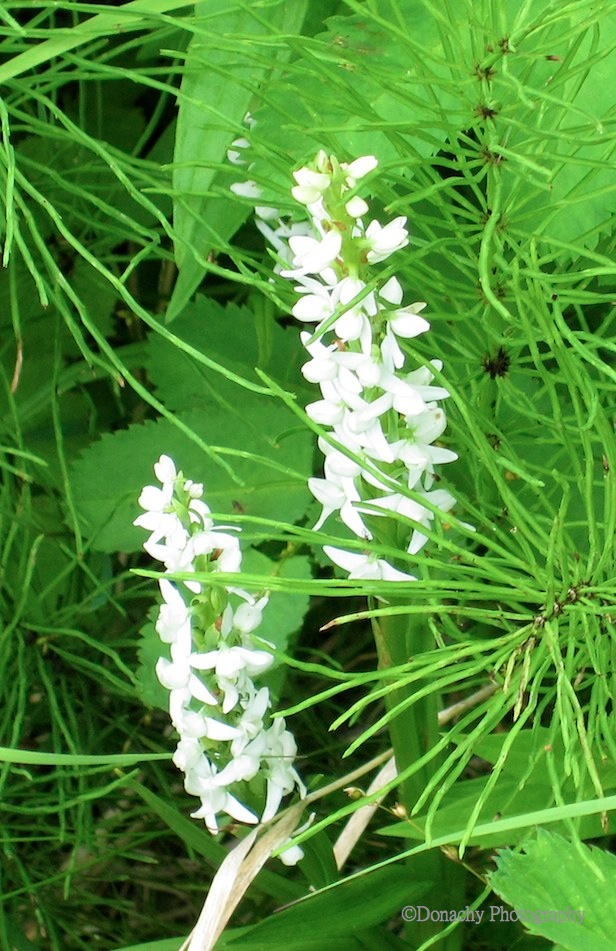
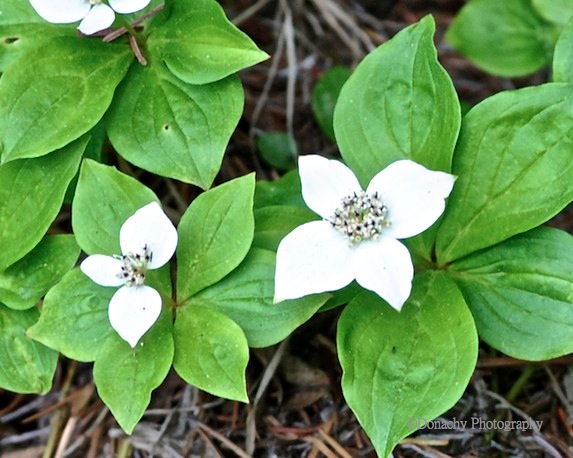
Appropriately named bog candle lights up the shaded places where it grows..Northern Yarrow is common throughout the region. Dwarf dogwood hugs the forest floor.

Fireweed leans toward the sun above a yellow sea of monkey flower.

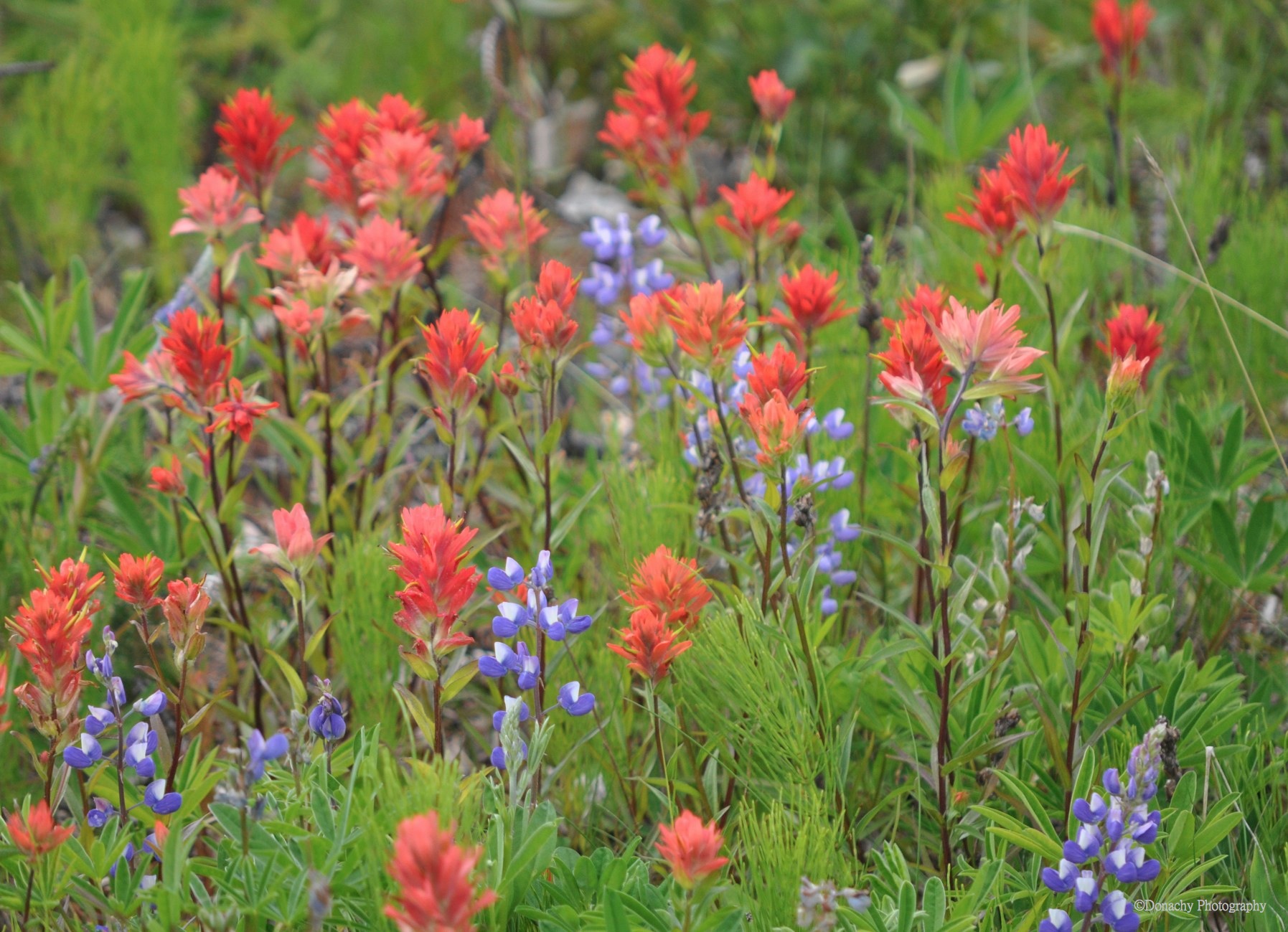
Indian paintbrush (red) and lupine (blue) are common throughout the Pacific Northwest.

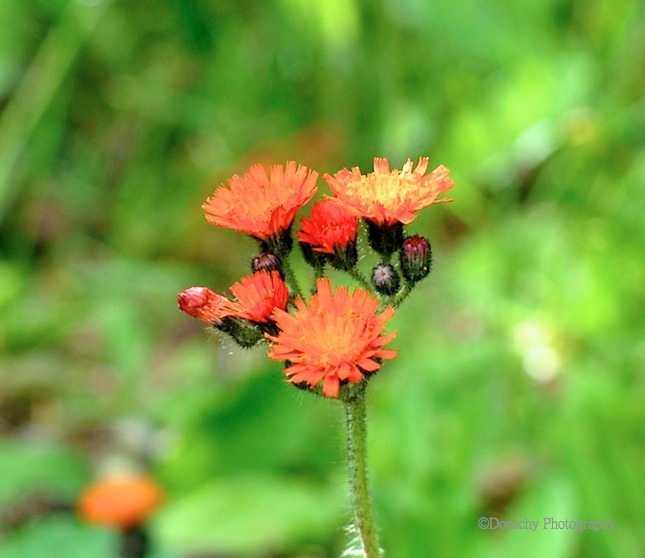
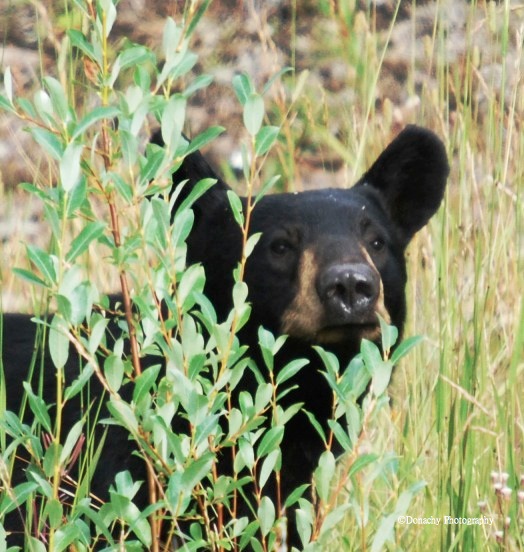
Orange hawkweed is sometimes mistaken for Indian paintbrush, but it’s an invasive species – albeit a pretty one. Wildflowers seem to be everywhere in western Canada. This black bear is framed in fireweed stalks as he takes a break from browsing a patch of sweet clover. A road trip up the West Coast through British Columbia, into Yukon Territory and on to Alaska had long been on our lifetime things-to-do list. This is one of the world’s great drives.

Bison and Bears (and a C-Dory) on the Al-Can Highway

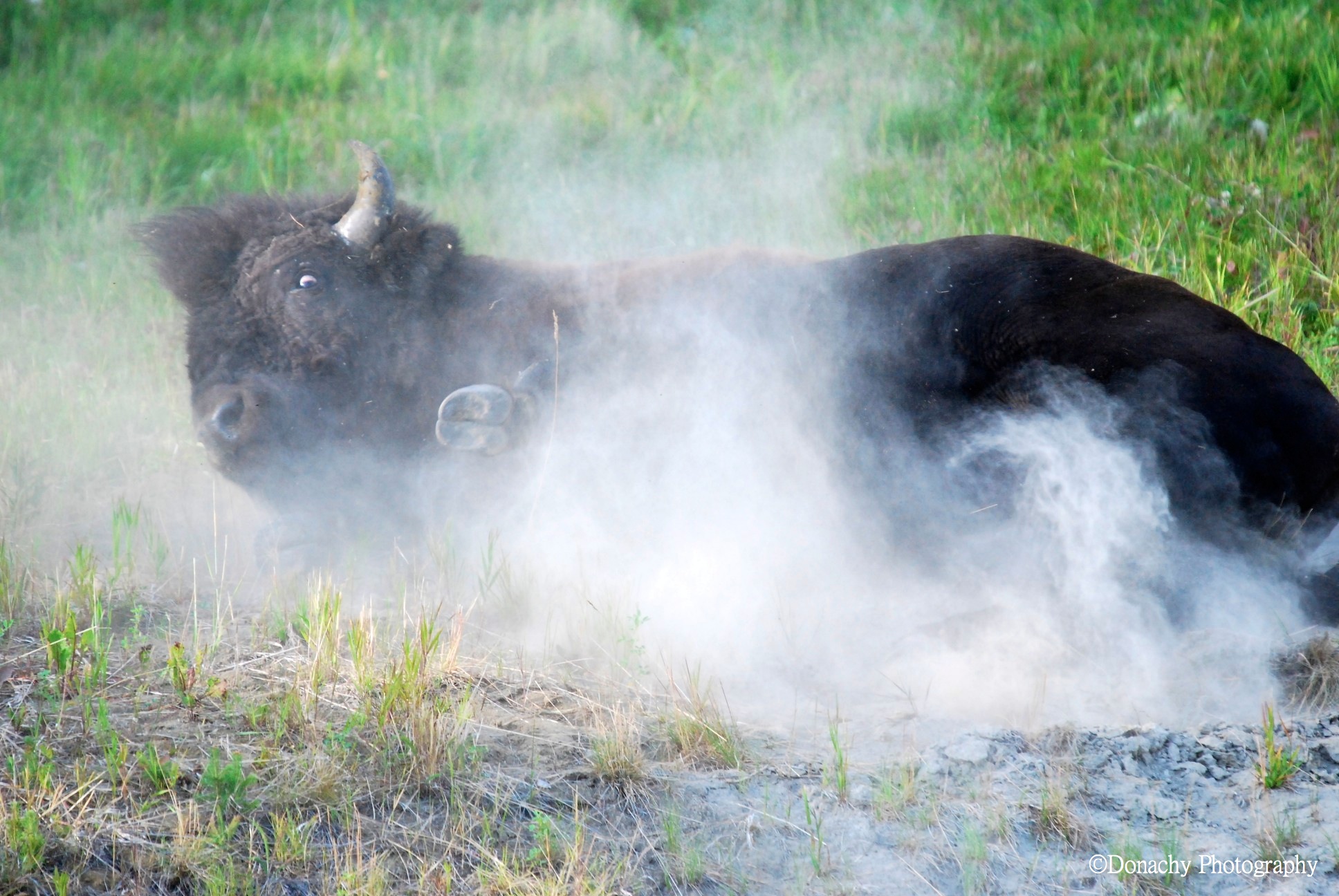
Ferdinand the Wood Bison kickin’ it in a dust wallow in Northern British Columbia. In addition to breathtaking views of the Canadian Rockies, vast forests, free-flowing rivers and an amazing array of wildflowers, a summer drive through western British Columbia and Yukon Territory on the way to Alaska provides one of the premier animal viewing opportunities in North America. (This is the first of several posts planned about the drive to Alaska and sights both along the way and in Alaska.)

In the fall of 2008 when Barbra and I purchased our C-Dory 22 Angler fishing boat, Gillie, we had no idea that 21 months later we’d be towing it 3,200 miles from Sacramento, California to Valdez, Alaska on a 43-day camping, exploring and fishing odyssey. With the exception of one night in an Anchorage hotel, we camped on Gillie – both at sea and on land – the entire trip. As Barbra and I fell into the daily rhythms of preparing meals and crawling into bed each night, our boat actually seemed to grow larger.

The trip north proved to be an ongoing revelation – one filled with far more grandeur than we’d anticipated.

I’d seen plains bison on trips to Yellowstone National Park, but we had no idea there was another subspecies of American bison, wood bison, roaming free in northern Canada and eastern Alaska. We encountered herds engaged in typical bison behavior including grunting males butting heads, females nursing spindly-legged young, and

individuals dust wallowing.

Our Tacoma had a feature we loved: a sun roof. By shooting photos from the open roof, we could safely get close to roadside animals, neither spooking them nor putting ourselves in danger. It was like having a photography blind.

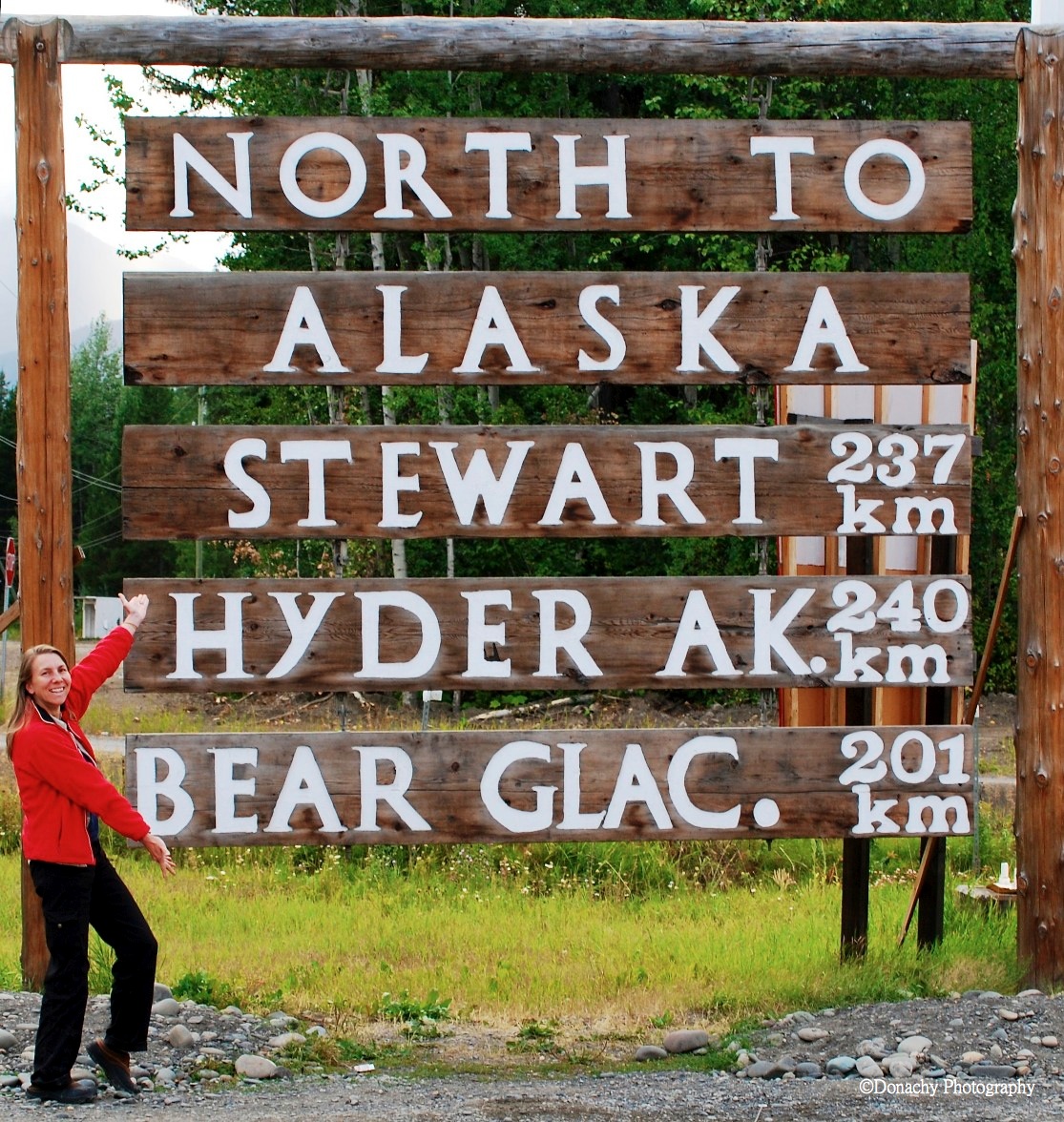
At the beginning of the journey, we kept a list of the animals we encountered, dutifully tallying deer, elk, bison, stone sheep, moose, caribou, coyotes, hawk owls, and eagles. Eventually the numbers overwhelmed us. But there is one figure we still recall: thirty-two black bears. We also saw grizzlies, near Hyder, not to mention the sea mammals we encountered once we launched our boat in Alaska. And, of course, there were beavers and innumerable smaller animals and birds. But the group of animals we still most frequently talk about were the ones we didn’t see.

One evening, at the kind of typical roadside rest stop that served as our (free) campground most nights, we were walking after dinner and taking in an endless vista of taiga coniferous forest interspersed with aspen fringed lakes and swatches of magenta fireweed. It was around eleven o’clock at night, still light. With not a vehicle or building in sight, it felt like we had the whole world to ourselves.

And then we heard it. From a distant hill, a lone, high-pitched howl. Soon it was joined by other howls. Wolves! We listened in awe, our hearts singing.

Cow moose and their calves, such as this one, often hang out close to the highway in bear and wolf country. This helps them avoid predators, but vehicle fatalities run high.

Travelers are bound to see bears – boars, sows and cubs – as they travel along the Al-Can.

Stone Sheep ewes take in salt or other minerals near Muncho Lake, British Columbia. Notice the lamb with the third ewe. Meanwhile, other lambs watch their mothers from the safety of a nearby slope.

For us, the drive to Alaska was the fulfillment of lifelong dreams. I used to pore over my grandfather’s back issues of Field and Stream and Outdoor Life, devouring anything and everything written about the Canadian and Alaskan wilderness. For both of us, the experiences we had on this trip exceeded our imaginations.

Less than a year later, we would be saying goodbye to friends in Sacramento and leaving behind our beloved E Street craftsman bungalow, a yard full of orange, lemon, grapefruit, lime, apple, cherry, peach and pear trees, and our long runs along the beautiful American River. We’d be trading our patch of raspberries for wild cloudberries, our fresh tomatoes for canned.

When we first got our C-Dory, we envisioned weekends to Bodega Bay and other ports along the California and Oregon Coast. We never imagined it would take us all the way to Alaska and a new life.

The C-Dory has a cuddy cabin that comfortably sleeps two, a small dinette in the cabin, and an amazing amount of storage. A dependable Coleman stove served as our gas range.
There is a Lake…

At a remote lake we discovered by chance, the trout are not as long as your leg. Lots and lots (and lots) of 14 to 18 inchers though.

Weighing in at about 15 pounds (including flippers), Super Cat pontoons inflate quickly, can be worn like backpacks, and fish comfortably.

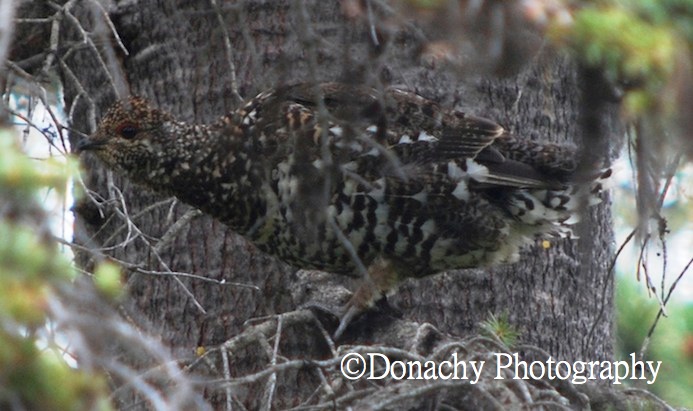
The walk in to remote waters is part of the adventure. On this particular hike, there were wildflowers, game tracks, berries, and a well-camouflaged covey of grouse perched in spruce trees.
Each summer, Maia, Barbra and I make it a point to meet up somewhere to fish, cook together, catch up with each other’s lives, and enjoy good wine and beer and stories. The fishing is secondary, but catching is definitely more fun than not catching. This is the kind of lake where you lose count of the fish turned, hooked or landed and settle into a gentle rhythm of casting, kicking and intense line watching, vigilant for the slightest twitch.

It is a beautiful and rare thing these days to fish a lake – no matter how remote – free from even a solitary scrap of litter. Such was the case on this lake. There was a hiking trail, and part of it traversed a log and board walk over a marshy area, but it was clear that those who know about this lake care about it. Save for a few mountain goats high up on a slope overlooking the lake, a pair of ospreys occasionally circling overhead and a small family of loons, we had the pristine water to ourselves.

On many remote (and not so remote) lakes, a size 8 or 10 bead head nymph dressed in olive, brown or black and jazzed up with something that sparkles is a killing pattern, and such was the case on this day. Lush beds of weeks were visible in the clear water. That’s where the insects were, and of course, the trout.

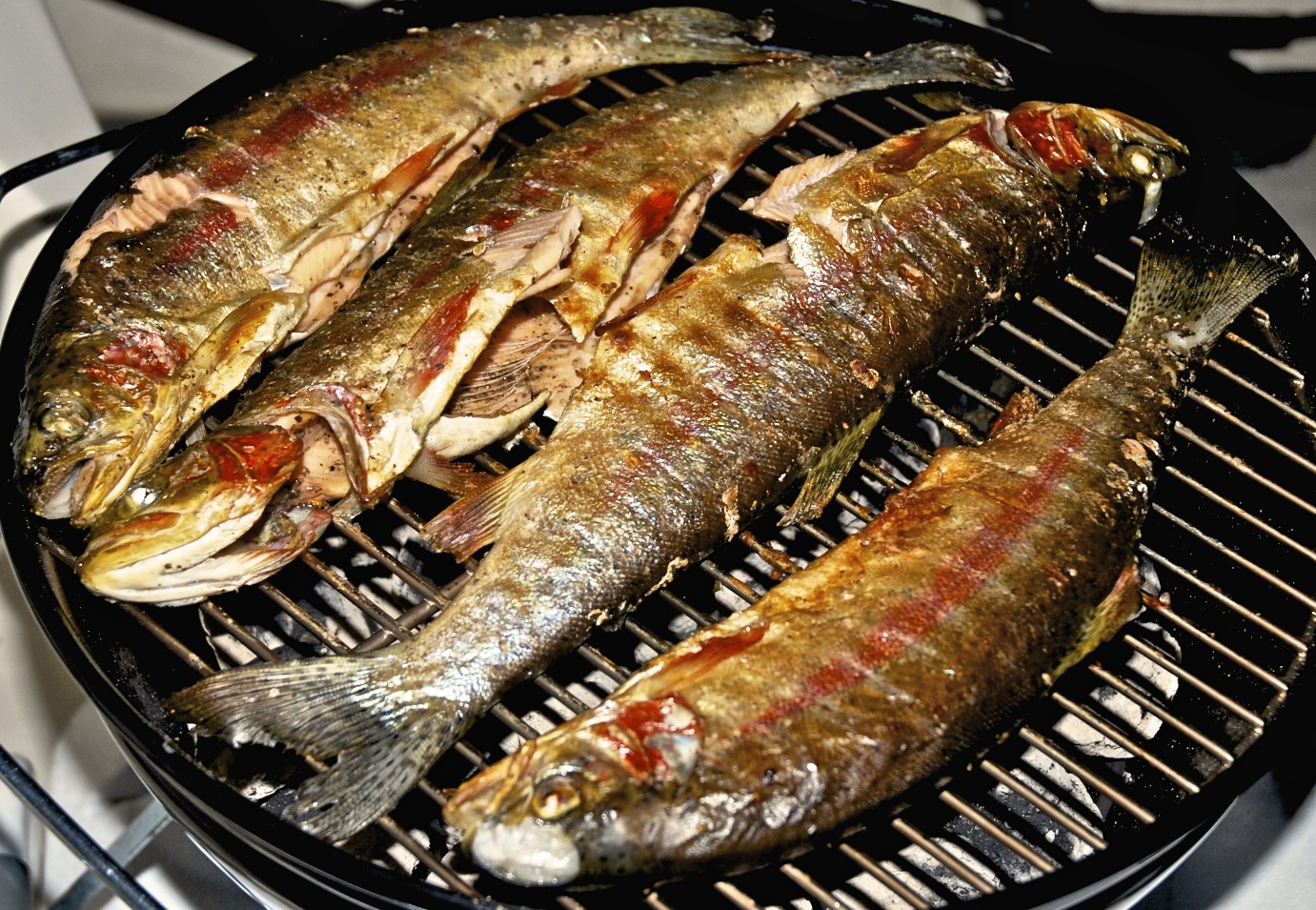
With a healthy population of trout and several size classes represented, we kept four smaller fish for dinner back at our campsite on a different lake. Evidence of a diet rich with scuds (freshwater shrimp), their flesh was as red as sockeye salmon flesh.

It’s difficult to improve on salt, ground pepper, and glowing charcoal when cooking just-caught fish. Accompanied with freshly picked sweet corn, roasted potatoes and a bottle of Chardonnay enjoyed around a campfire as the evening sky grew dark, our conversation was punctuated by an occasional pop from the fire and loons calling back and forth across the lake.