Sandhill Cranes with Chick: Potter Marsh, Alaska

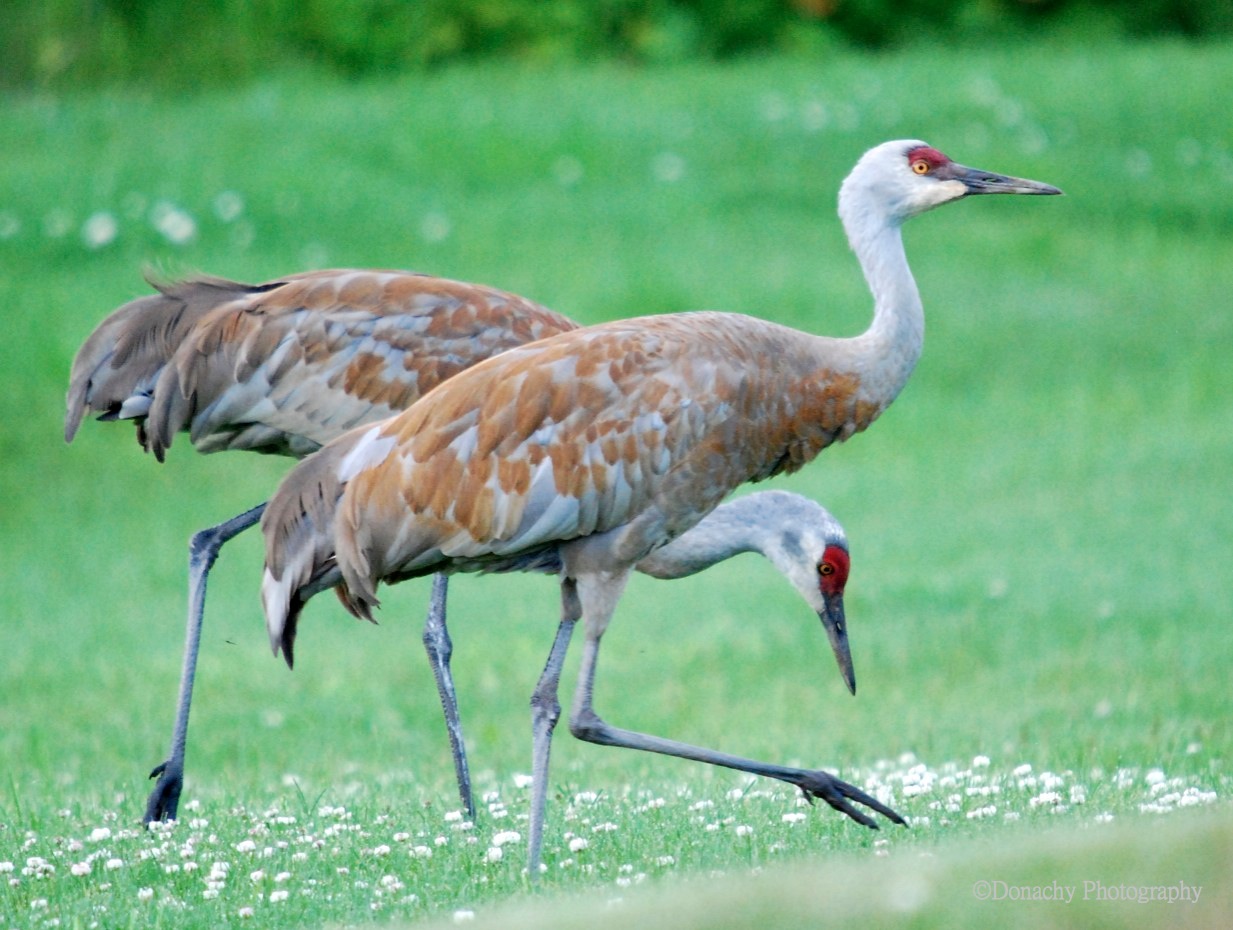
Driving to Anchorage from Seward recently, we spotted these sandhill cranes at Potter Marsh and decided to park the truck and walk out onto the boardwalk for a closer look.

Large birds are cool, and in North America, there aren’t many birds larger than Grus canadensis, sandhill cranes. Adults typically weight 8 to 10 pounds. The stand four to five feet tall and have wingspans of five-and-a-half feet to nearly seven feet. Sandhills are fairly common in the west, and in a few places can be viewed by the hundreds or even thousands. More frequently, they are seen here and there in pairs, in small groups, or as individuals.
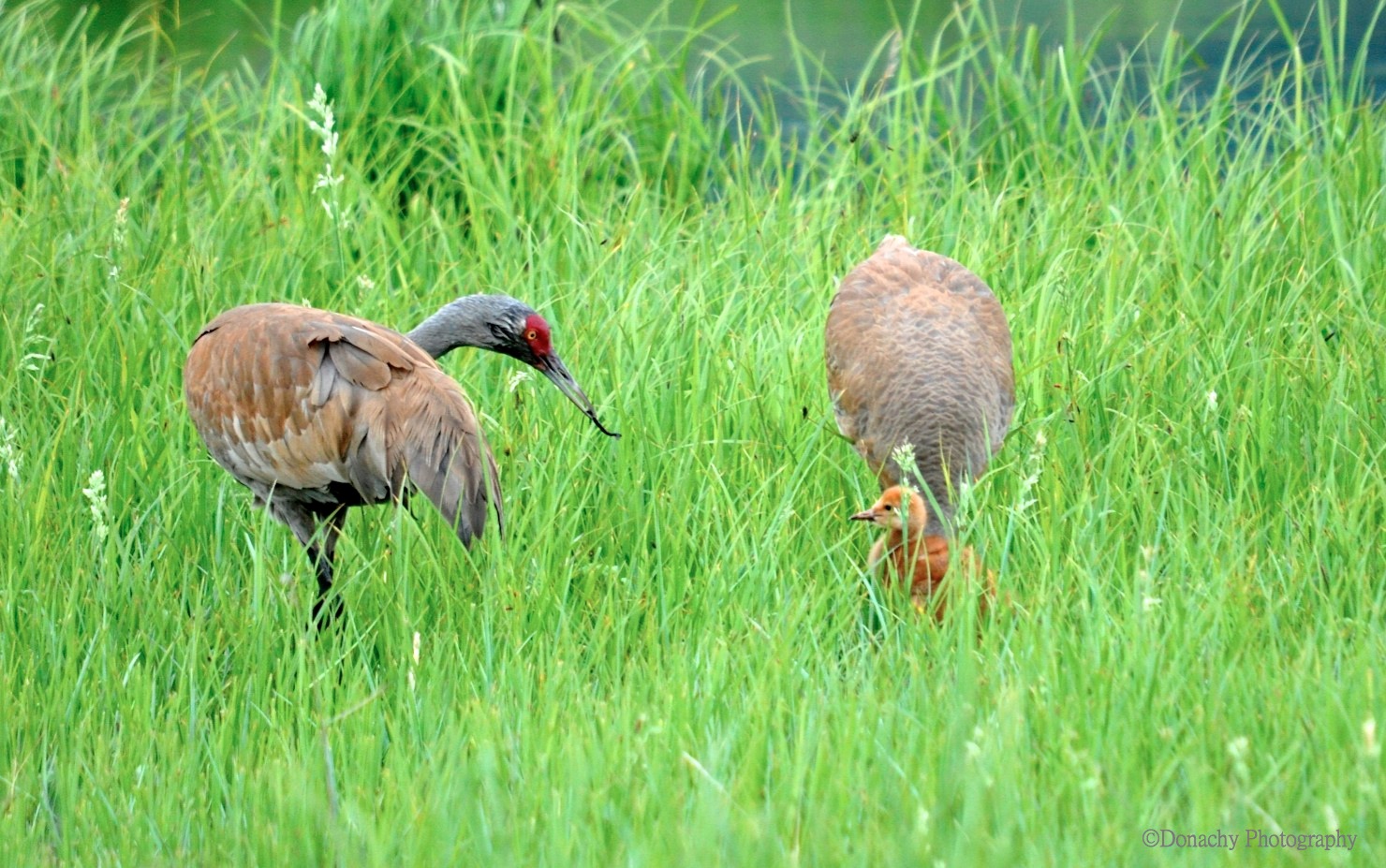
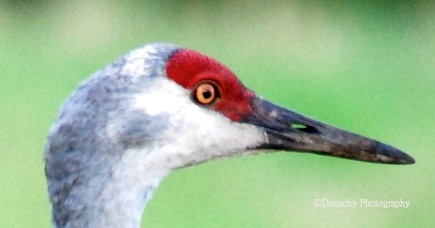
The sexes are similar. Plumage ranges from drab gray to rusty brown. Aside from size, the most distinguishing characteristic is the red crown. (Click the photos for a larger view.)

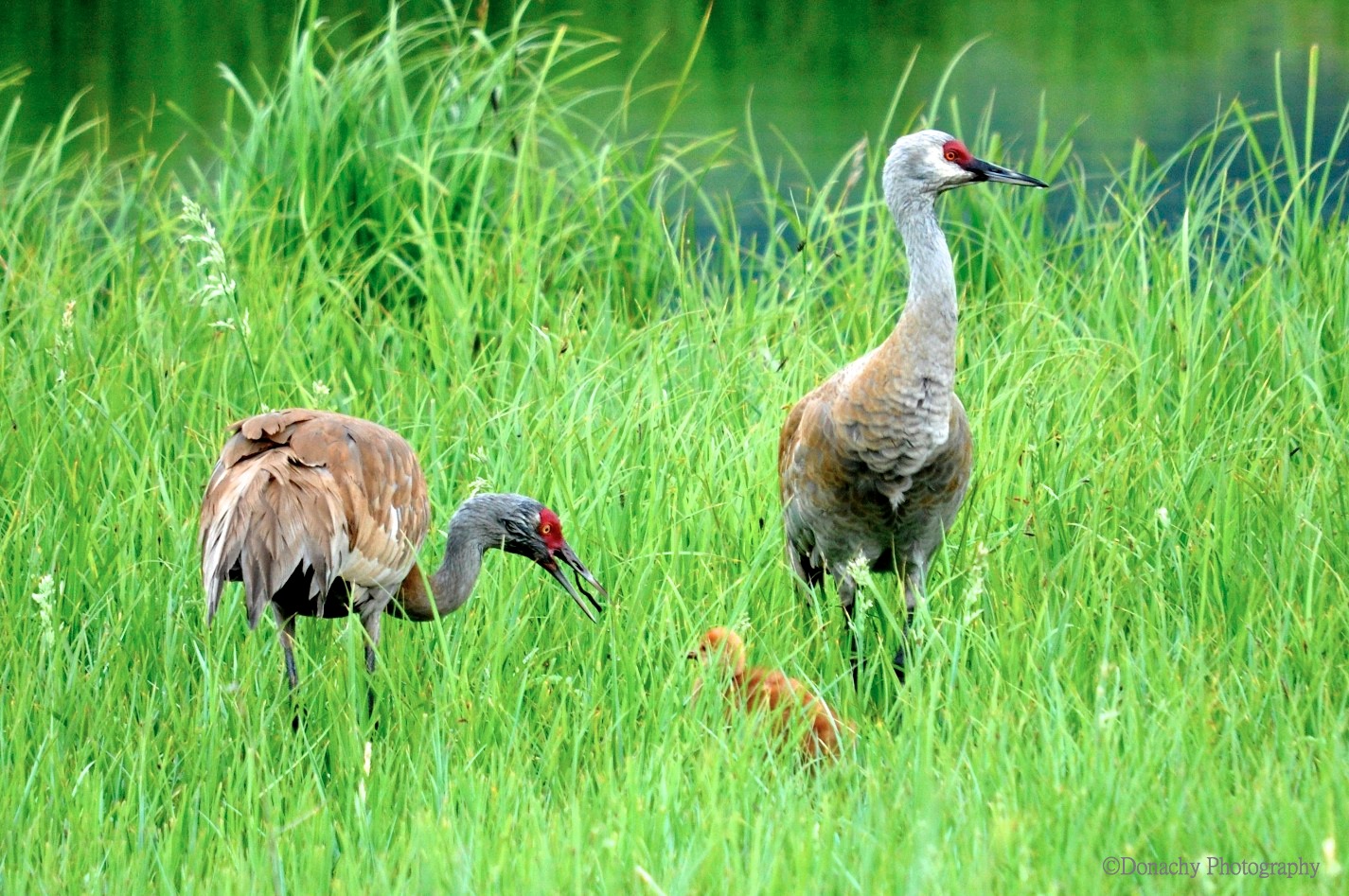
We couldn’t quite make out what the adult bird is feeding the chick. Cranes are catholic in diet. Berries and seeds make up a large portion of their diet, but insects and other small animals figure in as well.

This chick will stay with its parents for 10 months or so – until just before next year’s breeding season when the parents will lay one to three eggs. Sandhills have a life expectancy of about seven years in the wild, but may live up to three times that long. Several subspecies occur throughout the U.S. and across the Pacific to Siberia. Accidentals have been reported in Europe.

Violet-green Swallow

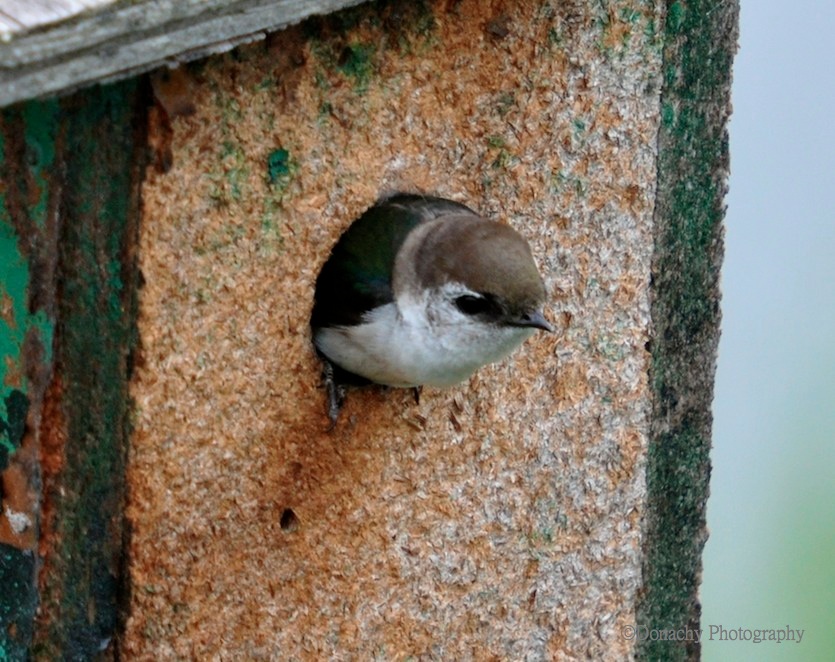
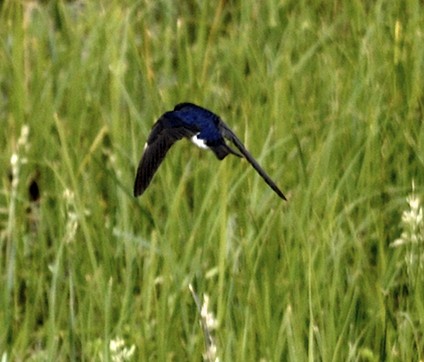
Violet-green swallows (Tachycineta thalassina) are common throughout the western U.S., Canada and Alaska. In flight, look for the distinctive white on the sides of the rump. When they perch, look for white cheeks with white extending above the eye to distinguish them from tree swallows (Tachycineta bicolor).

Depending on the light, violet-greens’ backs can appear to range in color from teal to metallic green to purple. This is the male, above.

Females’ colors, above, tend be a bit more muted than males. 

Look for violet-greens in open areas and semi-open areas where they feed on insects. They can be attracted to nesting boxes.


Orange-crowned Warbler, Potter Marsh near Anchorage

Oranged-crowned warblers (Vermivora celata) are fairly common, but it’s rare to get a good look at these tiny, active birds. Even less common is finding an individual with an identifiably orange crown. 

Color is often the first thing we go to when attempting to differentiate among like species. The perplexing thing is that color is often misleading.

The orange-crowned warbler’s orange crown is seldom visible. What birders typically see is a small, greenish-yellow-brown bird flitting through alders and willows. A warbler. But which warbler?

If you don’t see an orange crown, another tell is the complete absences of barring on the wings.

Orange-crowned warblers feed on insects, worms, nectar and berries. They’re ground nesters. What a thrill it would be to find a nest, tucked away beneath low-growing willows. When summer ends in Canada and Alaska and the Western United States, orange-crowns migrate to the southern U.S. and Central America.

We were lucky to catch this guy preening on an open branch at the edge of Potter Marsh, on the southern edge of Anchorage, Alaska. He stayed long enough for several photos. Before flitting off into the underbrush, he gave us one final view of his seldom-seen orange crown.

Minke Whales

Quintessential Alaska – a whale blows close to moss and fern covered rocks in Resurrection Bay. The water is hundreds of feet deep near shore here – this slope face rises almost vertically to snow-coverd peaks.

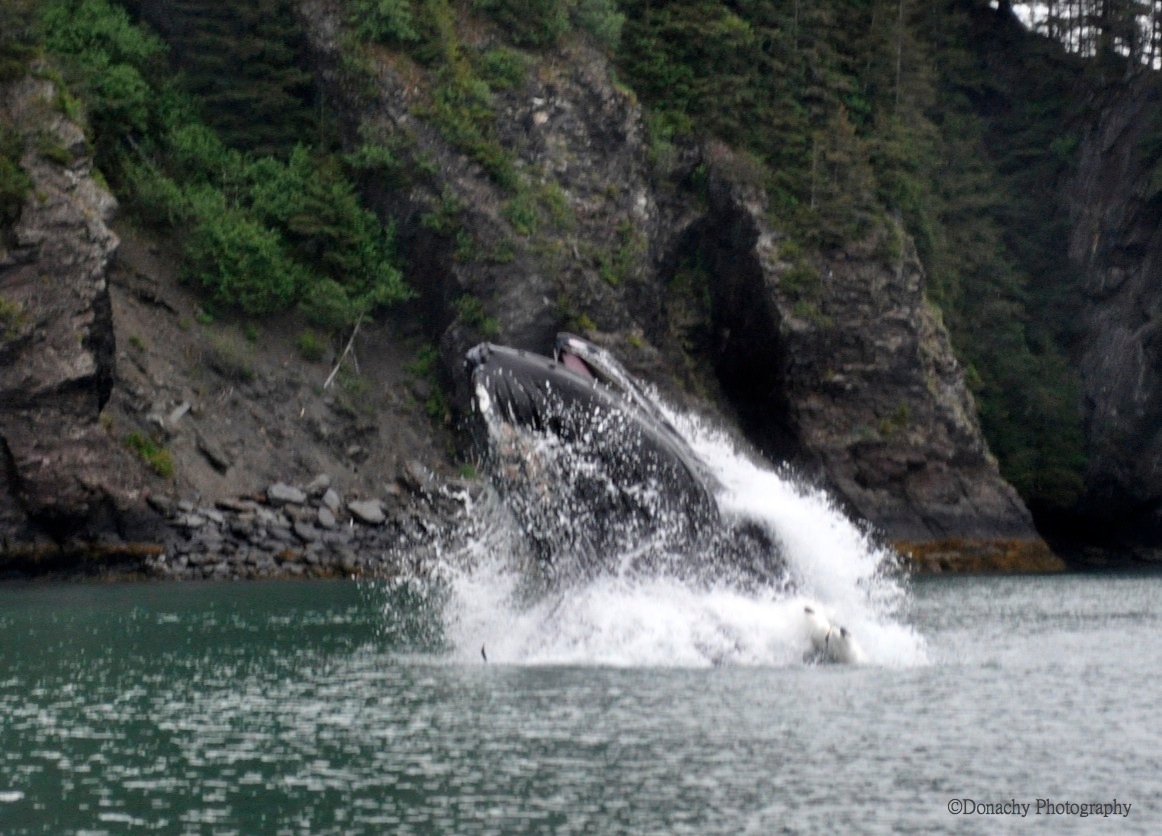
Coming back from a fishing excursion the other morning, we spotted a pair of whales near shore, off our forward port (left) quarter. They appeared to be in no hurry and so we, too, slowed down to spend some time watching them. Here and there we noticed telltale herring flipping on the surface – no doubt the reason the whales were in so close to shore. The steep banks would make the perfect place to corral a meal.

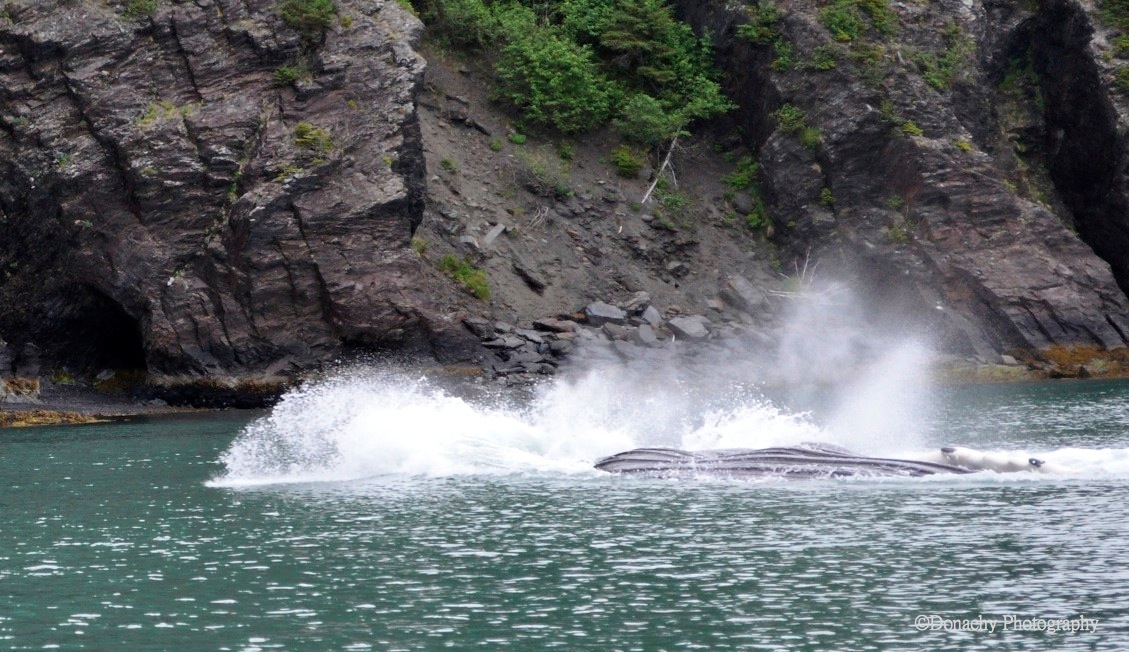
Smooth back, pronounce fin and white markings on the side indicate a minke whale – a member of the rorqual whale group. Rorquals feed by opening their massive, expandable mouths and straining small fish, shrimp, krill and other food through baleen. 

Although we kept a fair distance, at one point the whales disappeared. We thought they’d sounded and left the area until suddenly they both came exploding out of the sea on our starboard side. Herring seemed to be flying in attempts to escape the whales’ massive jaws. As whales go, minkes are small, but they still average nearly 30 feet and 10 tons – large enough to reduce a 22-foot boat like ours to fiberglass splinters. This was our first time to see whales so close, let alone lunge-feeding, and rather than snap photos all we could do was watch, jaws agape, exclaiming “Oooo!”

This photo (taken with a Nikon DX 18-55 lens) captures the blowhole and the distinctive white markings of a minke. 

We lingered, hoping to capture a repeat feeding lunge on film. And then it happened.

If you look closely, you can see a couple of herring in the spray around this minke whale’s head.

Suddenly the surface of the water began to bubble with jumping herring, and then, as if out of nowhere, a huge head came exploding out of the sea. Fortunately Barbra had the presence of mind to snap photos.

By the early 1900’s, after the world’s whaling fleets had mined most of the large whales out of the ocean, countries such as Norway and Japan, which continued whaling, turned their attention to smaller whales such as minkes. They’re still being hunted, but they remain locally common, and overall populations appear to be stable. Minkes can be found throughout the world’s oceans. An excellent field guide to Northern Pacific whales is Whales and Other Marine Mammals of British Columbia and Alaska, by Tamara Eder.

The Sky Over Resurrection Bay and Thoughts from Thoreau

At the end of a warm day, the sun slips down behind the mountains overlooking Resurrection Bay, and even before we notice the light dimming, we can feel the warmth leaving our home in our sailboat on the bay.

Barbra took these photos a few nights ago as we were running home from an evening of fishing of Resurrection Bay, Alaska.

“The surface of the earth is soft and impressible by the feet of men; and so with the paths which the mind travels. How worn and dusty, then, must be the highways of the world, how deep the ruts of tradition and conformity! I did not wish to take a cabin passage, but rather to go before the mast and on the deck of the world, for there I could best see the moonlight amid the mountains.”  Henry Thoreau in Walden

“Every path but your own is the path of fate. Keep on your own track, then.” Henry Thoreau in Walden

Dall’s Porpoises – Tasmanian Devils of the Northern Pacific

You might see a pod of them off in the distance, plowing up water in plumes of bubbles and spray, arcing, crossing each others’ paths, zipping like mad across the sea’s surface. As they speed toward your boat, you can almost hear the sound effects that accompany the Tasmanian Devil’s entrance in the Warner Brothers Cartoons. “Dall’s Porpoises!”

At an average length of 6 feet (1.8 m) and distinctively marked in black and white, they look like miniature versions of Orcas. And they love small boats. On any given outing here in Resurrection Bay, you can almost count on a group of these speedsters showing up around your bow. And since they seem to prefer to play around boats that are running fairly slowly, they don’t discriminate between powerboats and sailboats.

Dall’s porpoises frequently come right alongside small boats, seeming to use the vessels as objects to play around and to race against. Here a group of them are cutting back and forth beneath our C-Dory.

Strictly speaking, Dall’s porpoises don’t really “porpoise.” They quickly surface, throwing up rooster tails of spray as they do, take a quick breath and keep on swimming. Fast. Photographing them is a matter of guessing where they’ll show up next and snapping shots until they do.

Like other dolphins and porpoises, Dall’s have teeth. They feed on small fish, such as herring. We’ve noticed that when we’re trolling for salmon, right about the time we spot Dall’s, our rods often start arcing and our reels start singing – probably because both the porpoises and the salmon are keying on herring.

Although groups typically contain a handful of individuals, there are times when they gather by the thousands. They roam both nearshore and offshore waters in the Northern Pacific. Unfortunately, although they are still common, hunting (several countries take an average of 10’s of thousands annually – an unsustainable number) and fatal encounters with fishing nets are reducing their numbers.

A good place to read more is in the book Whales and other Marine Mammals of British Columbia and Alaska, by Tamara Eder.

Bacon-Wrapped Smelts (Hooligans, Eulachons or Candlefish)

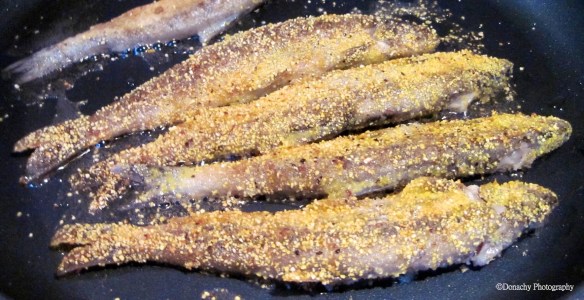
Freshly caught smelt prepared two ways: In the foreground, the fish was rolled in polenta. The smelt in back was dusted in seasoned flour. The fish were pan fried, wrapped in bacon and placed on whole leaves of Romain lettuce to be eaten from head to tail, bones and all. A sprig of asparagus and a few dollops of bright orange flying fish roe (tobiko) finishes the lettuce taco.

As I write this, one of the small rivers flowing into Resurrection Bay is jammed full of smelt. Specifically Thaleichthys pacificus, commonly referred to as hooligans. The AFS (American Fisheries Society) has settled on the name eulachon (pronounced you-luh-chawn), from the Chinook Indian name for the fish. Early west coast explorers and settlers called them candlefish because the spawning fish are so full of fat (about 15% of body weight) that when dried, they can be lit and will burn like a candle.

In the foreground: Polenta is especially coarse cornmeal. Seasoned with salt and pepper, rolling smelt in polenta gives these soft-fleshed fish a nice crunch when pan friend. In the back: another way to prepare smelt for the frying pan is by dropping them into a Ziplock bag containing seasoned flour and giving them a few shakes. Tarragon, fennel, marjoram and salt and pepper are a good start when seasoning these fish. Tongs make this a neat job. Note the asparagus in the pan on the stove.

The meat and bones of eulachons are quite soft. So soft, in fact, that when pan fried, the bones are barely noticeable. Their flavor is wonderful, but they definitely benefit from the addition of some crunch.

When the smelt are running in a river with a healthy population, getting enough for a meal or two is easy. On large rivers, a long-handled net might be necessary. But on this river, the fish were thick and close to shore. Two scoops of the net, and we had all the fish we needed.

Like their relatives, the salmon, eulachon are anadromous. They spend most of their life in the ocean, feeding on plankton, and then return to their natal streams and rivers to spawn, after which they die. Males arrive first and comprise virtually all the fish in the early part of the run. Later the females show up. Ideally, it’s the females you want, as a fresh fish laden with ripe eggs is a delicacy.

The males are quite good, too. In either case, cleaning these small fish (they average about eight inches/20 centimeters) is a simple matter of rinsing them in clean, cold water. There is no need to gill, gut or scale them.

A seemingly endless school of eulachons makes its way up an Alaskan river.

A Study of Upper Summit Lake, Alaska

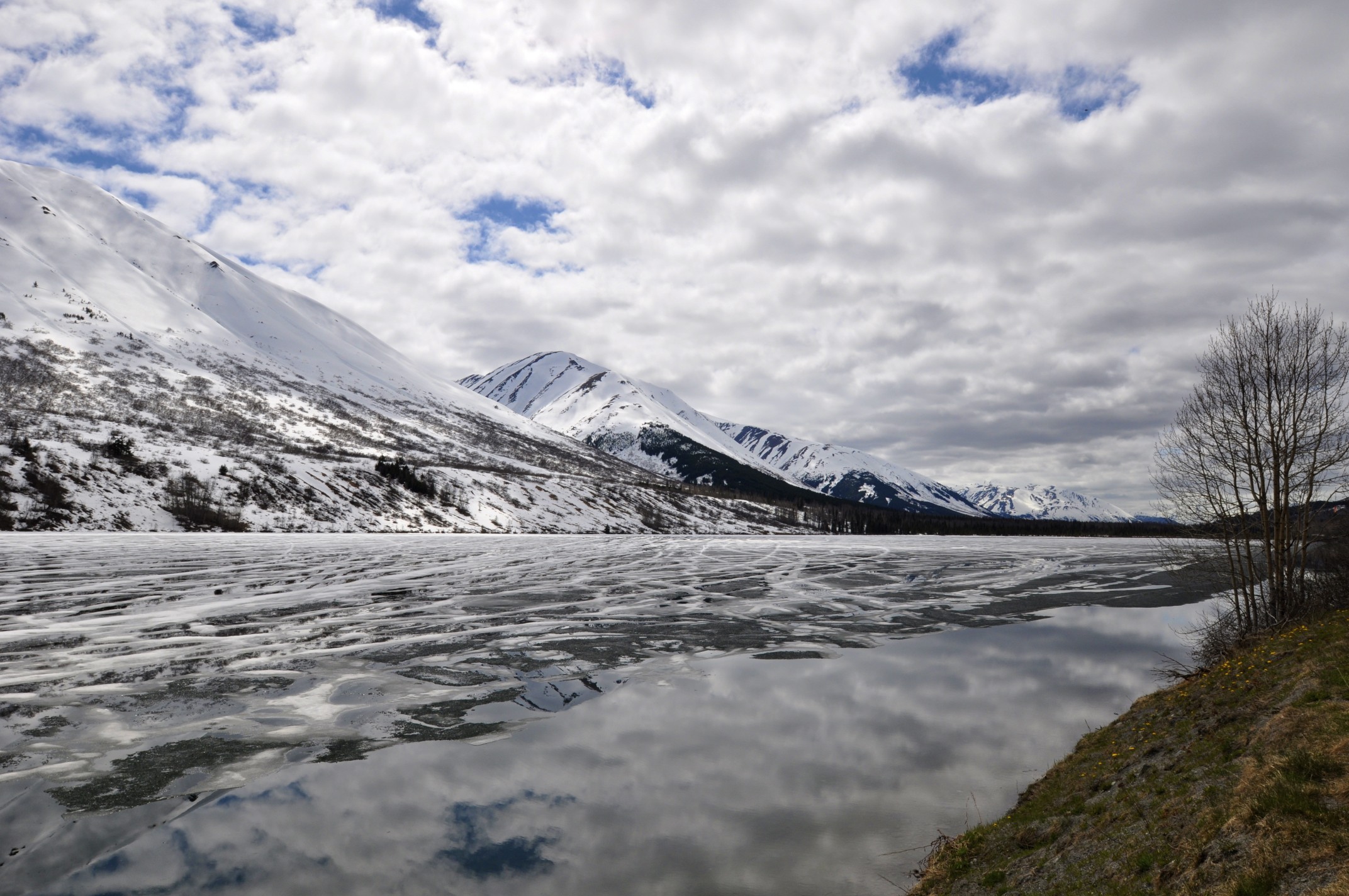
One of the most frequently photographed lakes in Alaska, Upper Summit Lake lies along the Seward Highway between Anchorage and Seward.

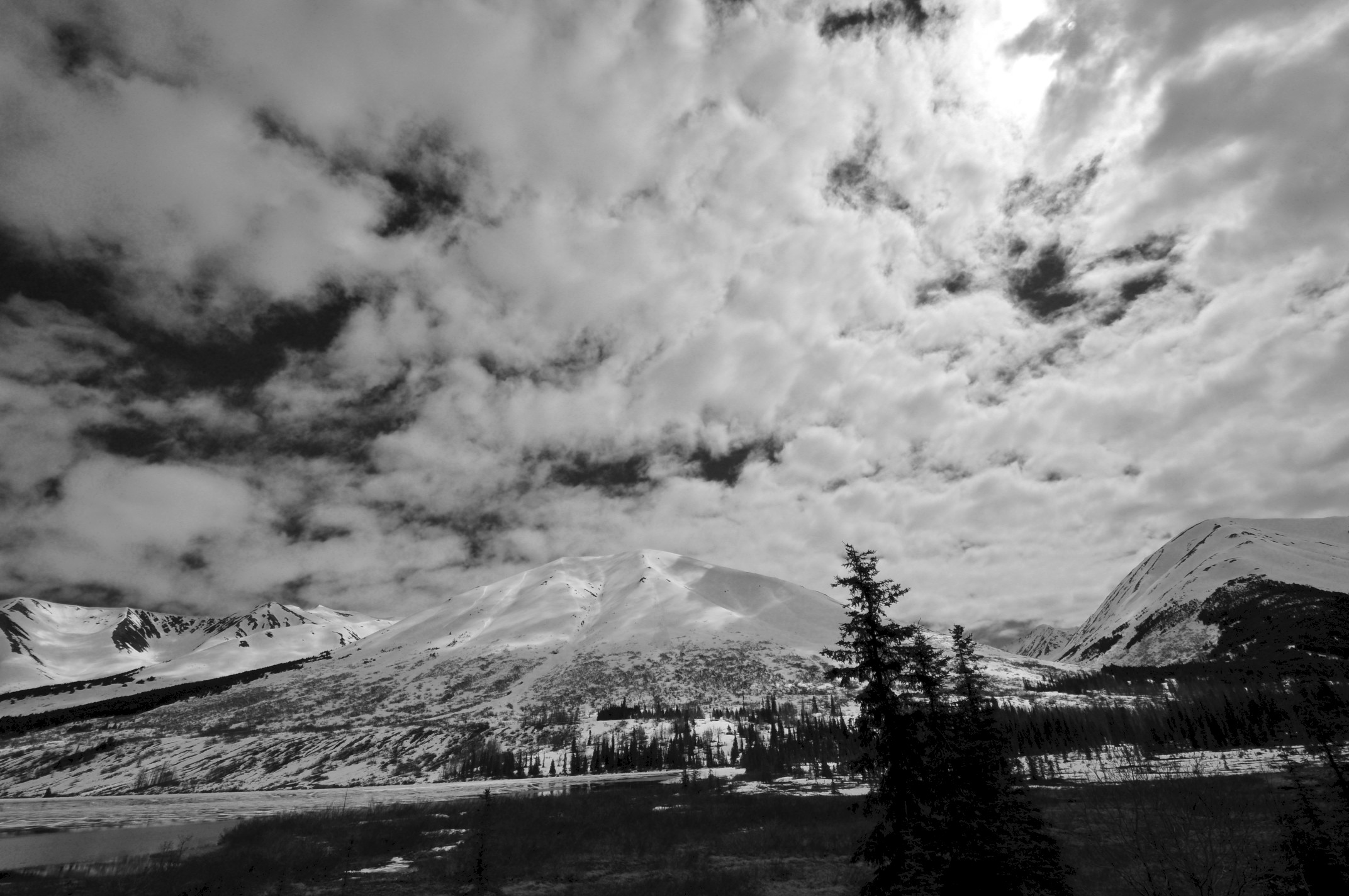
We recently got a wide-angle landscape lens and were eager to try it out. A broken sky over breaking up ice on Upper Summit Lake created a visually arresting set of contrasts and similarities.

We’d never been on the Kenai Peninsula early enough to see this much ice and snow. Only a few days prior, the lake was completely covered in ice, although it was apparent it was beginning to thin.

Notice the dandelions blooming in the foreground. Tough little flowers, pushing up through asphalt in the city, almost pushing away the ice and snow up here.

The upper end of Upper Summit Lake is the kind of place where we slow down and scan for moose.

Morning Song

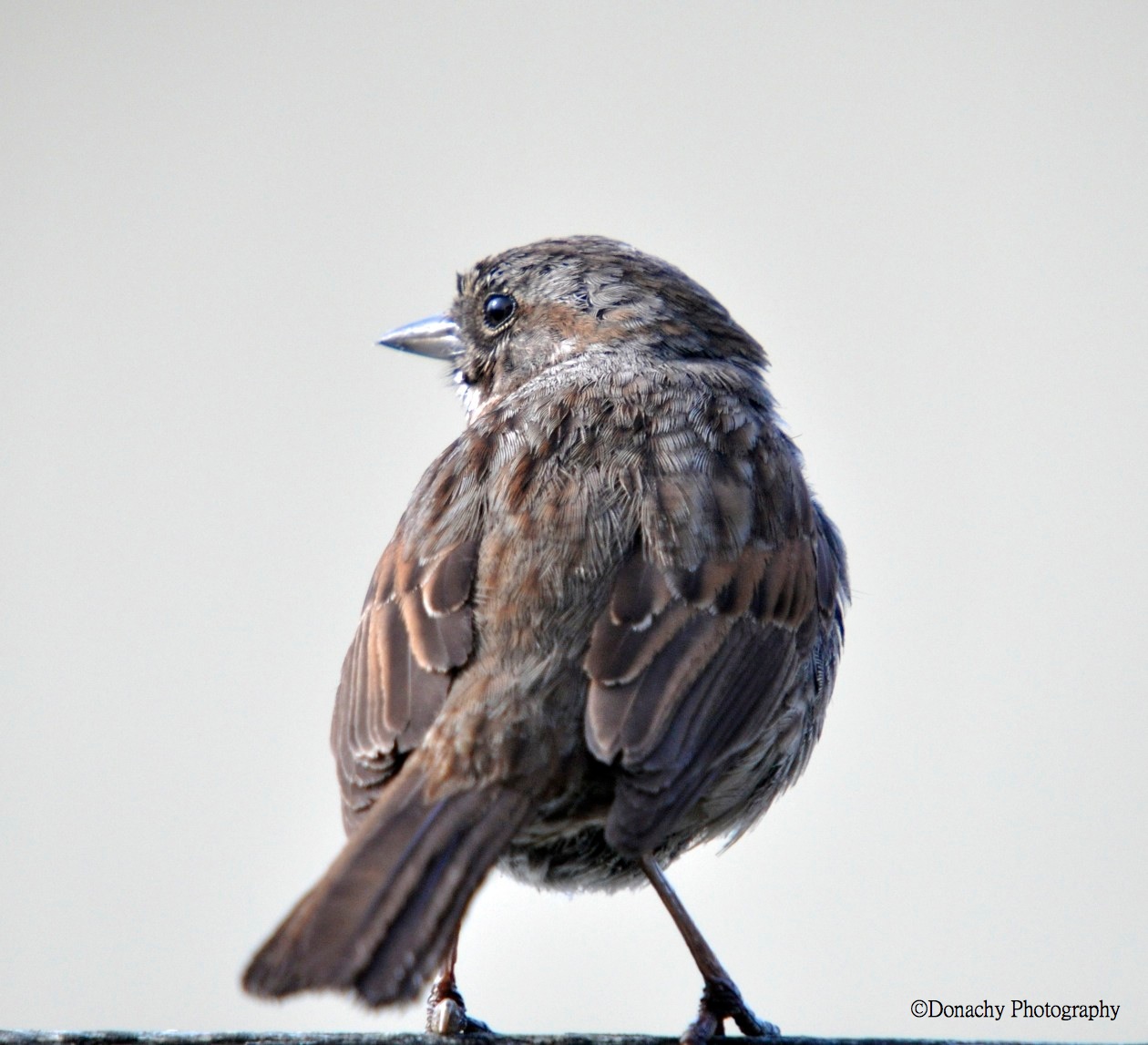
This little guy, a fox sparrow (Passerella iliaca) has been bringing in our days every morning here in Seward with the loveliest song. Day by day, he’s grown a bit tamer. Today he was gracious enough to allow us to get these photos. 

“LBB’s,” my undergraduate ornithology teacher called them. Little brown birds. You see one, and even if you get a really good look at it, when you go to Peterson’s or some other bird guide, what you see quickly becomes a blur of what you think you saw mixed in with a handful of similar-looking birds. But the songs are compelling and unique, and so you keep going back and forth from binoculars to field guides, and if you do this often enough over enough years, distinct species begin to take form.

Here he is, singing his heart out. No doubt some avian version of something clear and strong about being in the right time and place, eager and ready. We humans hear that in birdsong, and it lifts us. 

There are four subspecies of fox sparrows, each geographically unique, except when they overlap. Which they do. And when they do, the birds interbreed. More LBB’s. More scrutiny through binoculars. More head scratching over pictures in bird books.

When I approached too close, he went for a familiar place: the ground. Fox sparrows love underbrush and are often heard rustling through leaves or glimpsed flitting from one low willow to another. 

We’re lucky. We who live in North America. These migratory passerines breed up here. Which means they sing. In the places they head to during the winter, they don’t breed, and they typically don’t sing.

Before he flew off, he perched atop a wooden sign and gave a backward glance. The early morning sky was gray. I returned to the camper to make a blueberry pancake and fry some bacon while Barbra cut a grapefruit in half and made us big mugs of coffee.

Sandhill Cranes: Up Close and Personal

Driving into Homer, Alaska one summer we encountered this beautiful pair of gray and rust colored sandhill cranes (Grus canadensis) foraging on an expansive lawn. Cranes are opportunists, and although they are mainly herbivores seeking grains and seeds, they supplement their diet with insects, small mammals and other animals they encounter.

Bird weights can be deceptive due to their hollow bones. Even though adults have wingspans of six to seven feet (1.8 to 2.1 meters) and stand four to five feet tall (1 to 1.2 meters), they typically weigh less than 10 pounds (4 kilograms).

Since cranes are hunted in Alaska and can be quite wary, we felt lucky to find a pair that wasn’t too skittish. 

Other times we’d seen cranes, they were flying overhead, or, as was the case one summer in Yellowstone, far out on a plain. 

We stalked them for awhile, snapping photos, gauging our distance without spooking them into flight, and then we left the couple to continue their hunting. 

Of course, this being Alaska, when we looked up from the field where we’d been intently watching the cranes, this is what we saw – the Kachemak Glacier, which flows out of the Harding Icefield.