Bread Machine Challah

A five-strand braid Challah will provide us with this week’s bread. If we’re lucky, it will last until next weekend to be the main ingredient of a perfect French toast.

Challah was a special occasion bread when I was growing up. Traditionally, Challah is a Jewish celebration bread enjoyed on most Jewish holidays and on Shabbat. It does take time and effort. As warm as our Arctic home is, I never could get the “let the dough rise in a warm, draft-free place” down. If you’ve been following along, you know I depend on my bread machine as the warm, draft-free place.

This challah recipe came from 300 Best Bread Machine Recipes by Donna Washburn and Heather Butt. The bread was eggy and had the texture and taste I remember growing up. The machine did all the work kneading and rising. As for the braiding technique, I followed a terrific tutorial on theshiksa.com.

Ingredients

  • 1 cup water
  • 2 eggs
  • 1 1/4 tsp salt
  • 3 tbsp granulated sugar
  • 3 tbsp butter (room temperature)
  • 4 cups bread flour
  • 1 tsp instant yeast

Glaze

  • 1 egg yolk
  • 1 tbsp water

Directions

  1. Measure bread ingredients into baking pan in the order recommended by the manufacturer. Insert pan into the oven chamber. Select dough cycle.
  2. Remove dough to a lightly floured board; cover with a large bowl and let rest for 10 minutes.
  3. Divide dough into 5 portions. Roll each with the palm of your hand into long, smooth ropes (1 inch in diameter). Braid. See tutorial (www.shiksa.com) for directions. Pinch ends together. Cover and let rise in a warm, draft-free place until doubled in volume (30 – 40 minutes).
  4. Preheat oven to 375 degrees F.
  5. When the dough has risen, beat egg yolk and water. Brush braid with glaze.
  6. Bake in preheated oven for 25 minutes, or until braid sounds hollow when tapped on the bottom.

If you liked this post, you might also like:

Pesto Bread

Rosemary Tomato Bread

Züpfe – Delicious Swiss Bread

Yelloweye & Grits: Breakfast Onboard Gillie

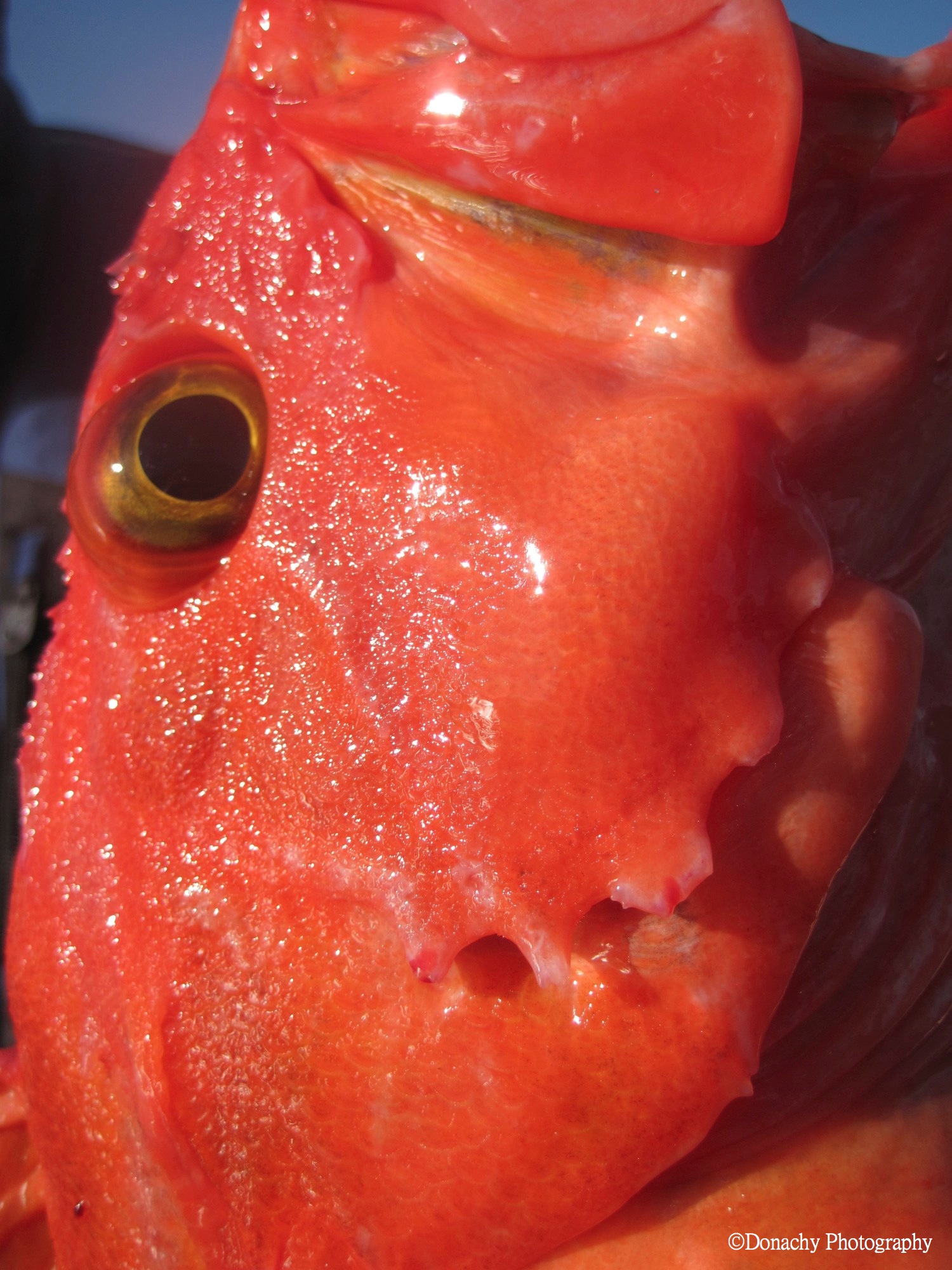
Yelloweye rockfish (Sebastus ruberrimus), a species of the Pacific Coast from Baja Mexico to Prince William Sound Alaska, is prized for its delicate flavor.

We’d spent most of the night on our C-Dory, drifting over deep water on Prince William Sound, admiring the moon and stars in the clear summer sky, talking about our life and occasionally dropping heavy, water-slicing knife jigs to the rocky bottom 160 feet below. Fishing was slow – a few small lingcod notwithstanding. The night was as still as a painting, the inky water mirroring the heavenly lights. With the engine cut off, the quiet was enveloping. When the yelloweye hit, I knew right away it wasn’t another ling. “Might be our yelloweye!” I said to Barbra as I worked the fish up from the depths.

And sure enough, it was. Barbra expertly scooped it up in the net, I did a quick fillet job, put it in a plastic container which I set in our cooler, and we headed back to port for some well-earned sleep. It was already early morning, though not quite yet dawn.

A few hours later when we woke, the sun was already high in the sky and the marina was bustling with activity. With daylight burnin’, we walked up the dock to the showers, blue skies and a few puffy white clouds overhead, deep green hanging on the mountains rimming the harbor.

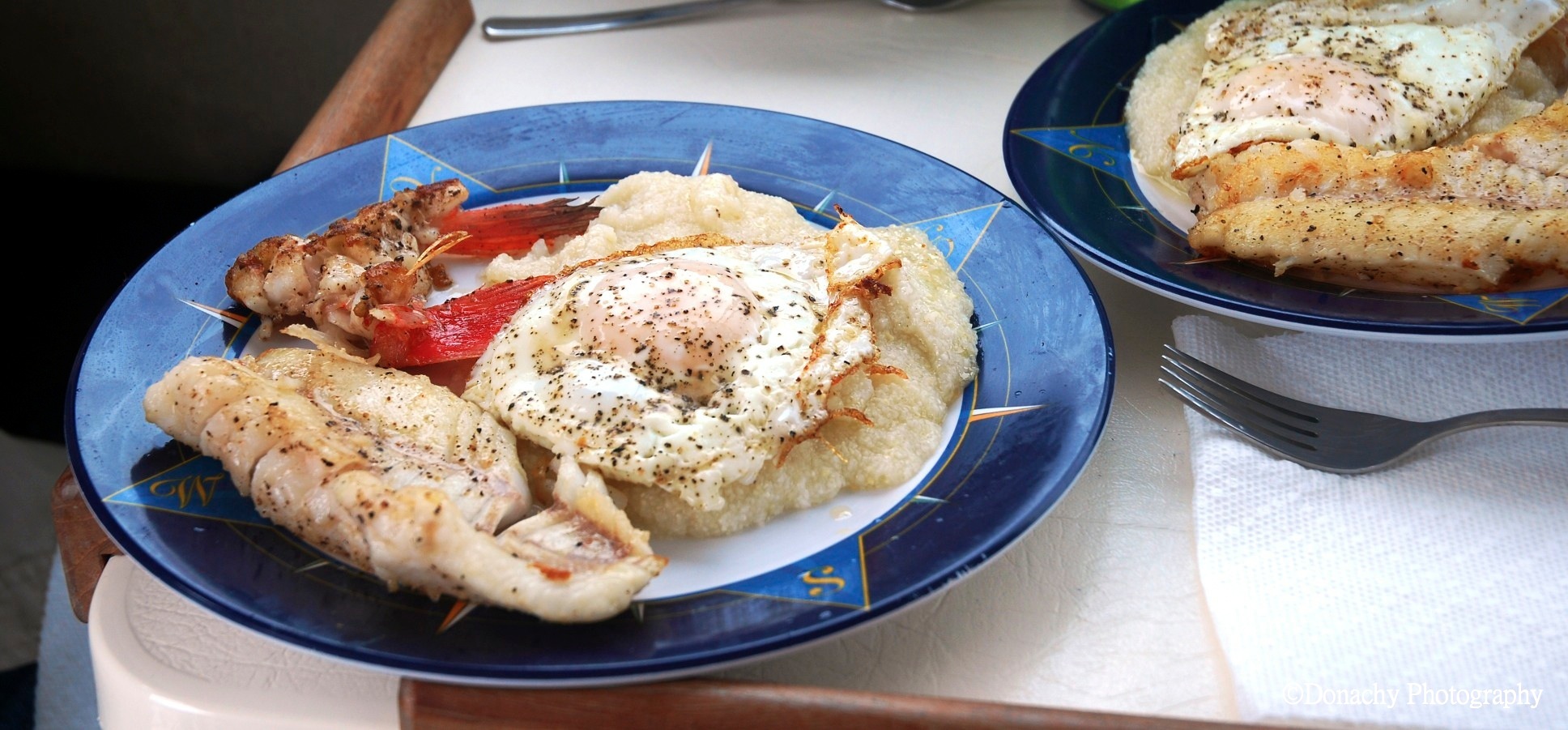
Back onboard Gillie I put the Coleman stove on the aft deck, fired it up, and after Barbra made coffee I fixed a fisherman’s breakfast of southern-style grits topped with easy-over eggs and a couple of yelloweye fillets along with the collars – that especially sweet piece of meat that includes the pectoral fin muscle. (The collar looks a little like a lobster in the above photo.)

Not a fancy breakfast, but a special one. I kept the seasoning simple: a little sea salt and black pepper ground coarse. The steaming plates of food accompanied by French roast coffee made for a great start to another day in paradise.

Banana Bread with Crunchy Walnut Streusel

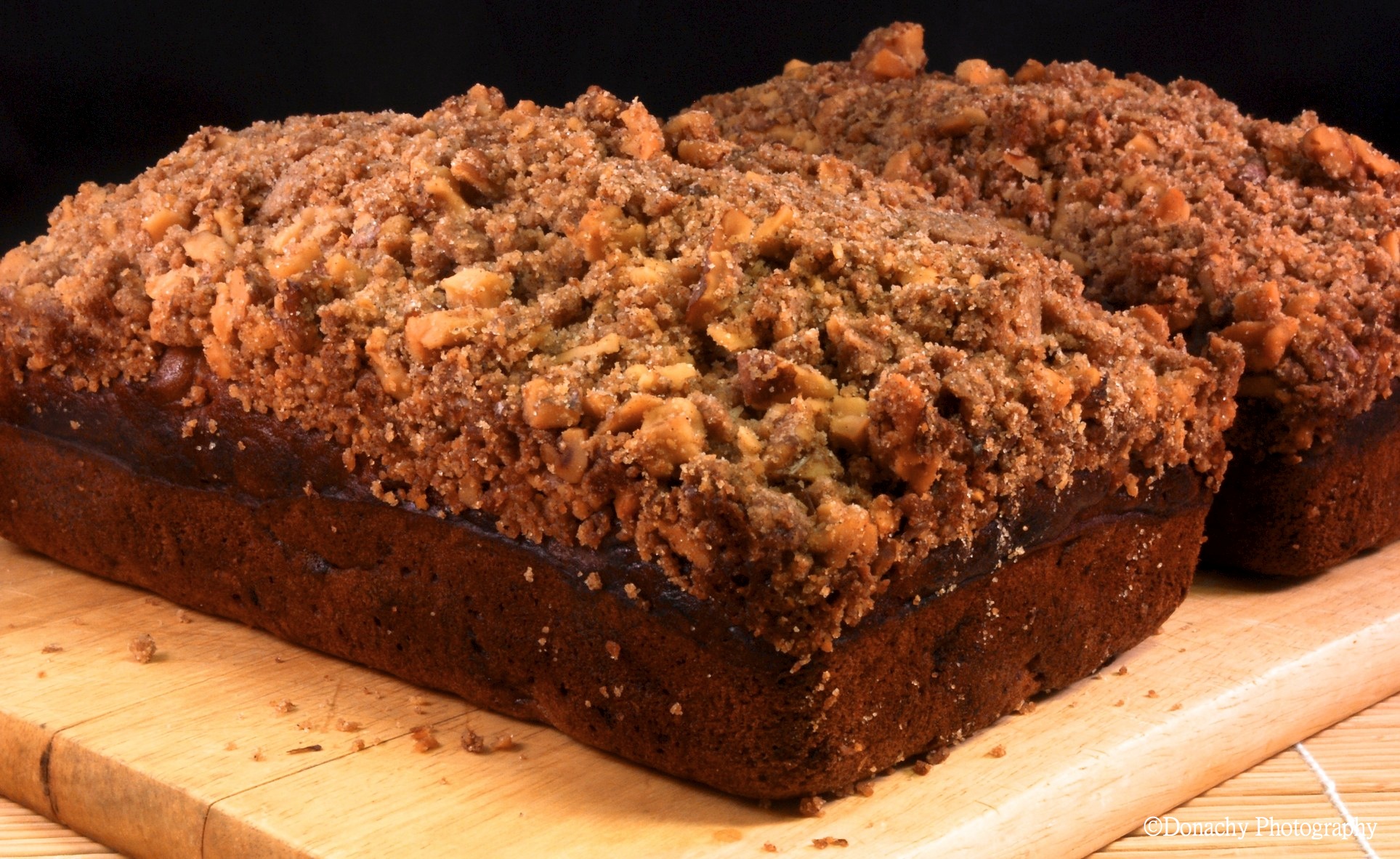
We brought these beautiful loaves of banana bread to a staff potluck, supplying cream cheese for a spread. They were an instant hit.

I have a tried and true banana bread recipe. It’s actually a fruit bread recipe in which I swap out the fruit and the spices. The recipe results in bread that is moist and flavorful. With an impending potluck, I wanted to amp up the recipe and my thoughts turned to coffee shop offerings where muffins and slices of sweet bread covered with streusel topping are always among the favorites. We love to slather a thick slice of this bread with cream cheese and then press the cream cheese into whatever crunchy walnuts may have fallen off. This makes for one decadent slice of bread!

Banana Bread with Crunchy Walnut Streusel

Makes two loaves

Ingredients

  • 3 1/2 cups all-purpose flour
  • 1 tsp baking powder
  • 1 tsp salt
  • 1 tbsp ground cinnamon
  • 1/2 tsp baking soda
  • 1 1/2 cups granulated sugar
  • 1/2 cup applesauce
  • 1/2 cup melted unsalted butter
  • 4 eggs
  • 2 tsp vanilla extract
  • 2 cups mashed bananas – the older the better

Topping

  • 1 cup walnuts
  • 1/2 cup brown sugar
  • 1/2 cup all purpose flour
  • 4 tbsp butter, room temperature

Directions

  1. In a large bowl, combine flour, baking powder, salt, cinnamon, and baking soda. Set aside.
  2. In a mixing bowl, beat granulated sugar, applesauce and 1/2 cup of melted butter together. Add eggs, one at a time, beating well after each addition. Stir in vanilla.
  3. Stir wet ingredients into dry ingredients until just moistened. Stir in bananas.
  4. Prepare streusel topping. Mix 1/2 cup flour, nuts, brown sugar and 4 tbsp butter until mixture resembles coarse crumbs. Set aside.
  5. Pour banana bread batter into two greased 8 in. x 4 in. x 2 in. loaf pans. Bake at 350 degrees F for 30 minutes.
  6. Pull loaf pans out of oven and pack streusel nut mixture on top of loaves. Bake for an additional 30 – 35 minutes or until a toothpick comes out clean. Cool for at least 10 minutes before removing from pans to wire cooling racks.

Pour yourself a big cup of coffee. Cut a thick slice of this bread and smear a generous amount of cream cheese onto it. Sprinkle any crumbs that have fallen off your slice back onto the cream cheese. Put on some coffee shop music. Close your eyes, take a bite, and imagine yourself in coffee shop in one of the world’s great cities… or in a hometown bakery.

Salmon Calzone

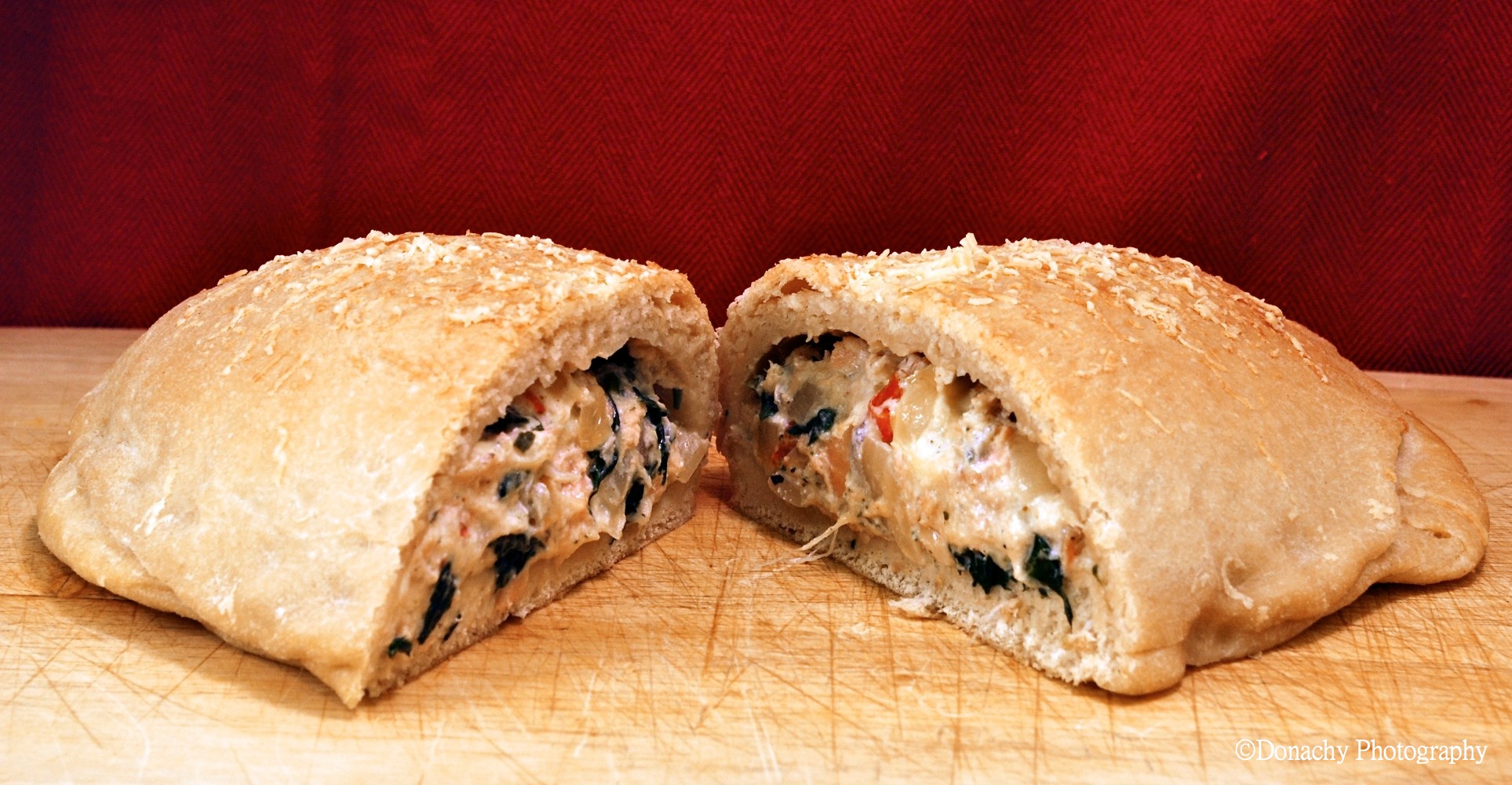
Number four in the Salmon Recipe Challenge. Savory salmon in a creamy cheese mixture enhanced with red bell peppers and spinach; all neatly wrapped in a warm Parmesan crust.

The salmon challenge was intended for Jack. After all, he is the master chef. But after a night of studying (I’m going for a master’s in education technology), I relaxed by surfing cooking and baking blogs where I came across a photo of a delicious-looking calzone. “Wouldn’t a salmon stuffed calzone be divine?” I thought.

I would start this recipe by saying that we dusted off our favorite mechanical kitchen device, our Zojirushi bread machine, but the truth is this machine never has time to collect dust. We use it once a week on slow weeks and more frequently than that on most weeks. We love our Zojirushi bread machine so much that we wrote a review on it for the company from which we bought it. Among the advantages a good bread machine offers is that it solves the often vexing problem of having the right environment for dough to rise.

The calzone dough is a standard pizza dough recipe adapted from the book 300 Best Bread Machine Recipes by Donna Washburn and Heather Butt.

Dough Ingredients

  • 1 1/2 cups water
  • 1/4 nonfat dry milk
  • 1 1/2 tsp salt
  • 2 tbsp granulated sugar
  • 3 tbsp vegetable oil
  • 4 cups bread flour
  • 1 tsp yeast
  1. Measure ingredients into baking pan in the order recommended by the manufacturer. Select dough cycle.
  2. Remove dough to a lightly floured board. Cover with a large inverted bowl and let rest for 10 – 15 minutes. Divide dough into 10 portions. Roll out each into a 6-inch circle and let rest.
  3. Prepare filling.
                            .
Filling Ingredients
  • 2 tbsp olive oil
  • 1 onion, chopped
  • 4 cloves garlic, chopped fine
  • 1 red bell pepper, chopped
  • 2 generous handfuls of fresh spinach, cleaned and stemmed
  • 1 fillet salmon, approximately a pound
  • 8-oz. brick of cream cheese, softened (simply leave out at room temperature)
  • 3/4 cup ricotta cheese
  • 1 1/2 cups grated Swiss cheese
  • 2 tsp dry tarragon
  • 2 tsp dry oregano
  • salt and pepper to taste
  • 2 tbsp Extra Virgin Olive Oil
  • 1/4 cup grated Parmesan cheese

4. In medium skillet, heat olive oil over medium heat. Add onion and sauté for 4 – 5 minutes. Add bell pepper; sauté for 3 – 4 minutes until crisp-tender. Add garlic and spinach and cook until spinach is wilted. Set aside.

5. Season salmon with salt and pepper. I also added a garlic herb mix. Broil salmon, skin side down. After salmon cools, flake salmon and set aside.
6. In large bowl, beat cream cheese until soft and fluffy. Gradually add ricotta cheese, beating until combined. Stir in onion mixture, tarragon, oregano, salt and pepper, then add Swiss cheese and flaked salmon.

7.  Place filling on one half of each circle. Fold calzone over, sealing the edges tightly with your fingertips making a scalloped edge. Cover and let rise in a warm, draft-free place until doubled in volume, 30 – 45 minutes. Meanwhile, preheat oven to 375 degrees F.

8. When calzones are formed, brush with 2 tablespoons Extra Virgin Olive Oil and sprinkle with 1/4 cup grated Parmesan cheese.

9. Bake in preheated oven for 20 – 25 minutes, or until the calzones sound hollow when tapped on the bottom.

These calzones were terrific out of the oven. They make great lunches, too.

Provisioning for a Year in the Bush

Above, Jack is zip-tying the lid to a Rubbermaid Roughneck tub at our storage unit in Anchorage.

Planning for a year in a remote village may seem like a daunting task. After two bush moves and two annual shopping experiences, I think we’ve nailed it.

In Walden, Thoreau lists everything he took with him to his life on the shores of Walden Pond. Fascinated and inspired by Thoreau’s list, we vigilantly documented all the provisions we sent out to Shishmaref last year and monitored what we used and didn’t use in order to prepare our shopping lists for this coming year.

Here’s what the advice of others and our own experiences have taught us.

1. Rubbermaid Roughneck. They come in a variety of sizes and are easy to stack and store. We label each tub and lid so all the holes we drill for the zip ties which keep them closed match up. The manufacturer says they are “unbreakable.” So far, they have been just that. Caution: most other tubs will break.

2. Cardboard boxes. The best boxes are reliable for only one use, and even then they are more difficult to ship and stack than the plastic tubs. We have gone away from using boxes.

3. Media mail. For books, CD’s, DVDs and other media, the post office gives a discount on their already inexpensive rates. Know that these items will be shipped on the slowest boat, at times will be stacked atop each other in huge piles, and will likely be tossed around. In our first move, just about the only boxes that were wrecked were those that had been sent at the media rate. This time around, we shipped our media in rubber tubs.

4. Dry goods. We think of food items in three categories: dry, refrigerated, and frozen. Our first advice is this: if you don’t have a Costco membership, get one! Costco has excellent prices and they seldom stock anything that isn’t of good quality. Unlike some other stores which, for a fee, will pack and ship your groceries for you, Costco is a “do-it-yourself” proposition. That’s fine with us. Not only do we save money by taking care of something we can do perfectly well ourselves, but in doing so we ensure that our items are properly packaged. And in addition to getting butcher-shop-quality meats and excellent produce, in shopping at Costco we are giving our hard-earned money to a business that is known for treating its employees and its customers fairly and ethically. We won’t name any businesses, but personally we can’t justify giving our money to a corporation that is constantly in the news fending off one law suit after another because they simply do not treat their employees ethically and with respect. Once we have purchased and packed our dry goods, we mail them at the parcel post rate of about 70 cents per pound.

5. Frozen goods. Alaska airlines as well as the the smaller airlines that provide service to the bush allow three checked items (50 pounds each) and one carry on item. We were advised to bring coolers as the checked items, so last year, we brought up three 58-quart coolers stuffed with frozen meat, juice, fruit, and vegetables. All the coolers ended up exceeding the airline’s weight limit by 20 to 25 pounds each, which irritated the employees at the ticket counter end cost as overage fees. This year, we are going to use Rubbermaid tubs instead of coolers. The tubs themselves are lighter than coolers, and by going with 14 gallon (56 quart) coolers and using crumpled newspaper for insulation and to take up some room, we should be able to stay within the weight limit. With items frozen solid (we have a chest freezer at our storage place), everything should hold up fine during travel. We’ll supplement what we buy at Costco with the razor clams, salmon, halibut and rockfish we harvest this summer. By the way, the large bags of frozen vegetables Costco carries are superb.

6. Refrigerated items. Last year, we really wanted cheese, yogurt, eggs, lettuce, apples, and tomatoes, and not knowing whether or not we could readily get these items in Shishmaref, we decided that we would pay the extra cost for “overnight” shipping. We knew that we wouldn’t actually get these things the next day, but we were hoping that our delivery would arrive in two or three days. Unfortunately, it took a full week for our items to arrive. As we unboxed our items, we were mentally preparing for the stench of rotten yogurt, cheese and lettuce. But amazingly, the only items we lost were the few small bags of frozen vegetables we had thrown in as ice bags. The vegetables had thawed and had begun turning to compost.

7. Items we forgot or ran out of. Our experience here is that if you forget something or something gets lost or ruined in transit, don’t worry. If the store in your bush community doesn’t carry something you need, you can pick up your phone and call the Fred Meyer store in Fairbanks. (Don’t bother with their online bush order service; it isn’t really set up to be practical.) Fred Meyer will mail or ship any item they carry in their store. They pack things well, their, customer service is excellent, and their prices are reasonable.

We’ve finished our shopping and packing chores for this year, and now we have the rest of the summer to camp, fish, boat, hike and play!