Big, Fluffy Blueberry One-Pan Pancakes

The one pancake to a pan pancake: Half of one makes for a hearty breakfast. Perfectly crispy on the outside, light and fluffy and jammed full of fruit on the inside, served with a couple strips of thick bacon and maple syrup, who needs the other food groups? Well, coffee…

I’ve been messing around with pancakes for a long time. Here’s what I now think I know about making the perfect pancake.

First, while one can make them from scratch, there is no reason to. Krusteaz has come up with a mix that nails it. We buy Krusteaz mix in bulk at Costco and enjoy waffles or pancakes – or both – once or twice a week.

Second, put the butter in the pan, not on the pancake. Pancakes fry up crispier, turn a lovely golden brown, and taste more decadent when fried in roughly equal parts light olive oil and butter.

Third, the right pan makes a big difference. Barbra and I have become big fans of Swiss Diamond nonstick cookware. The pans are thick and heavy, so food scorch is avoided, and once they heat up, they cook with incredible evenness.

Fourth, do your best to get away with as little water and as little mixing as possible. The result is a fluffier pancake.

Fifth, forget medium heat. Low and long is the way to go. I start on medium-low, and then go a little lower than that, giving the cake time to rise without burning.

Sixth, one big pancake cooks up better – in every regard – than several small ones. Think 11 1/2″ pan and enough batter to cover most of it. Big pancakes can hold more fruit per volume and rise up higher and fluffier than smaller pancakes. (Get a big spatula, and be ready for a little splatter when you flip the cake.)

And finally… Fruit. Adding a generous amount of fruit to the batter lends more than just the added flavor and texture of the fruit itself to the cake; it also adds a creaminess that a fruitless pancake cannot match. Whole blueberries are great, and as this is Alaska, we use them frequently. Chopped bananas are superb. But our favorite? Strawberries. There is something about fresh strawberries, diced, that takes a pancake to another world.

Honey, jam, preserves or maple syrup – they all do a good pancake justice. Crispy around the edges, creamy in the middle, the maple syrup getting on the bacon, a hot cup of coffee to cut through the sweetness… It’s good morning food.
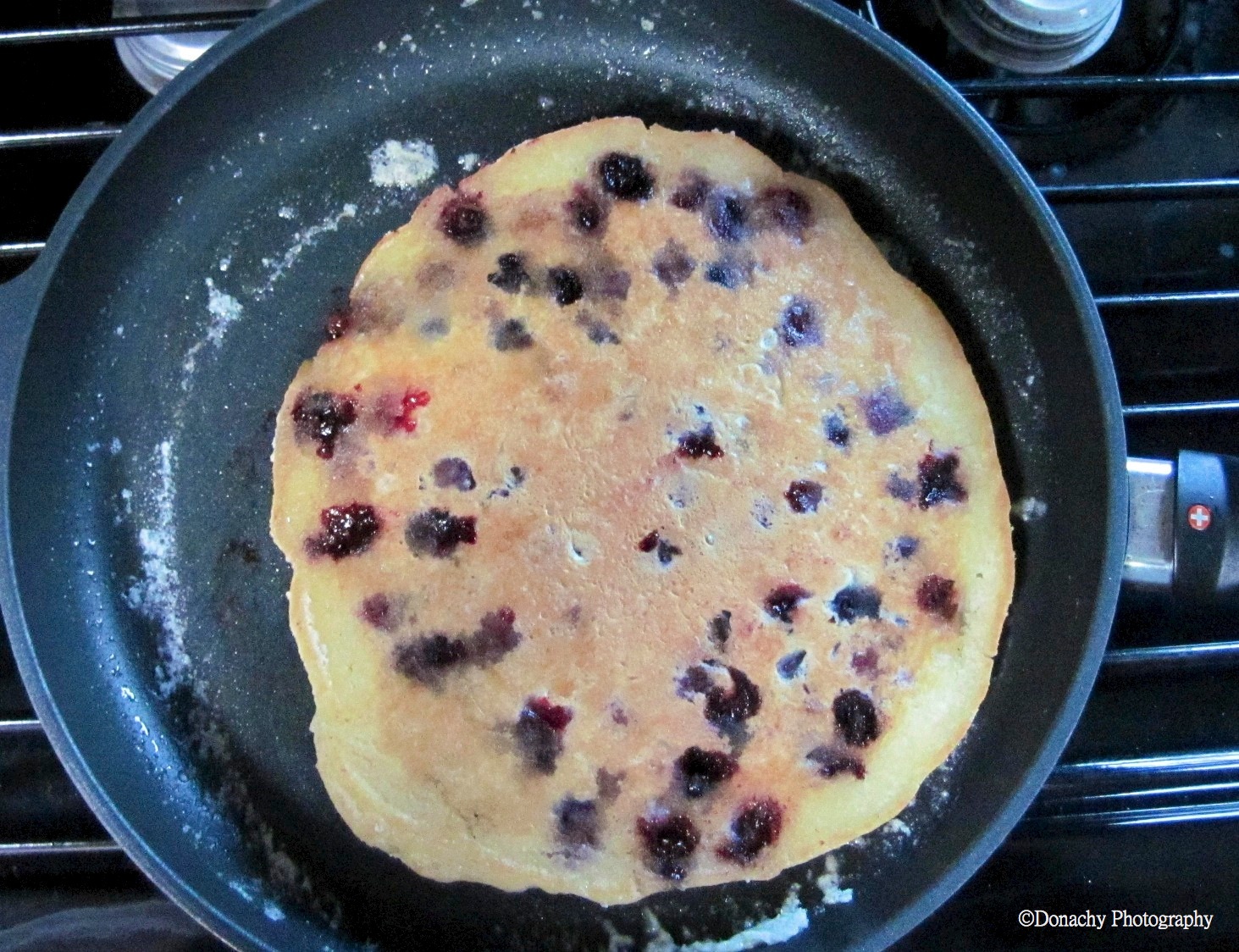
A big blueberry pancake, just about ready to be cut in half and served for breakfast. 

Stanley and the Lance

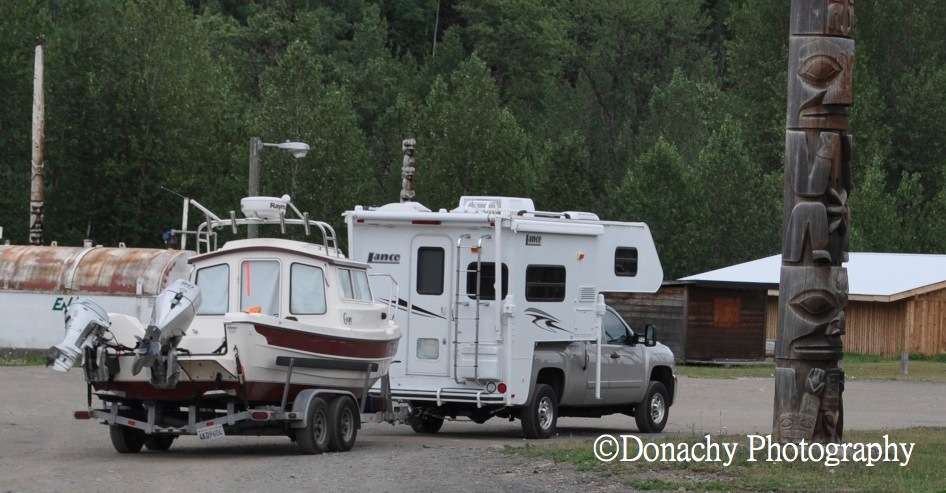
Our home on wheels the past three summers – a Lance camper perched on a 3/4 ton Chevy Silverado, here parked for lunch with a gorgeous view of Resurrection Bay near Seward, Alaska. Note the hitch for towing our C-Dory 22 Angler. This photo was taken on May 21, 2012.

Our first summer in Alaska, we lived aboard our C-Dory 22 Angler, GillieGillie’s pilot house and cuddy cabin made for a cozy nest, and the spirited little Toyota Tacoma that did the pulling over the 8,000 plus miles we drove that summer was, simply, the most enjoyable vehicle either one of us has ever driven. The 43 days we spent traveling in that rig made for a summer for the books. In fact, we talked for some time about traveling all across North America in this rig: exploring blue highways both on land and on water, envisioning jaunts down to the Florida Keys, out to Martha’s Vineyard, across the country to Catalina Island and everywhere in between. We even talked about launching the C-Dory at Pittsburgh, Pennsylvania and cruising all the way down the Ohio and the Mississippi to New Orleans.

But when we made the decision to move to Alaska, rent out our home in Sacramento, and spend our summers on the Kenai Peninsula…

A carved wooden hummingbird given to us by our daughter, Maia, on a trip that passed through a First Nations village in British Columbia greets us each time we open the door. Framed artwork and other personal touches make our camper a home.

After months of comparative shopping and researching campers and trucks, we still felt like we didn’t know as much as we would have liked. On the other hand, we knew enough to be comfortable making a decision. We’ve been very happy with both the Lance Camper and the Chevy Silverado 2500 it sits on.

The camper has a queen-size bed, lots of windows and skylights providing natural lighting, a three-burner propane stove with oven, an air conditioner and heater, a good shower and flush toilet, a TV and sound system, a great refrigerator/freezer, lots of storage space and enough room overhead to be comfortable for a person of my height (I’m 6′ 1″). We added a solar panel, which we highly recommend; even on cloudy days the battery charges. We also have a generator which, although rarely used, has been much appreciated the couple of times we’ve needed it.

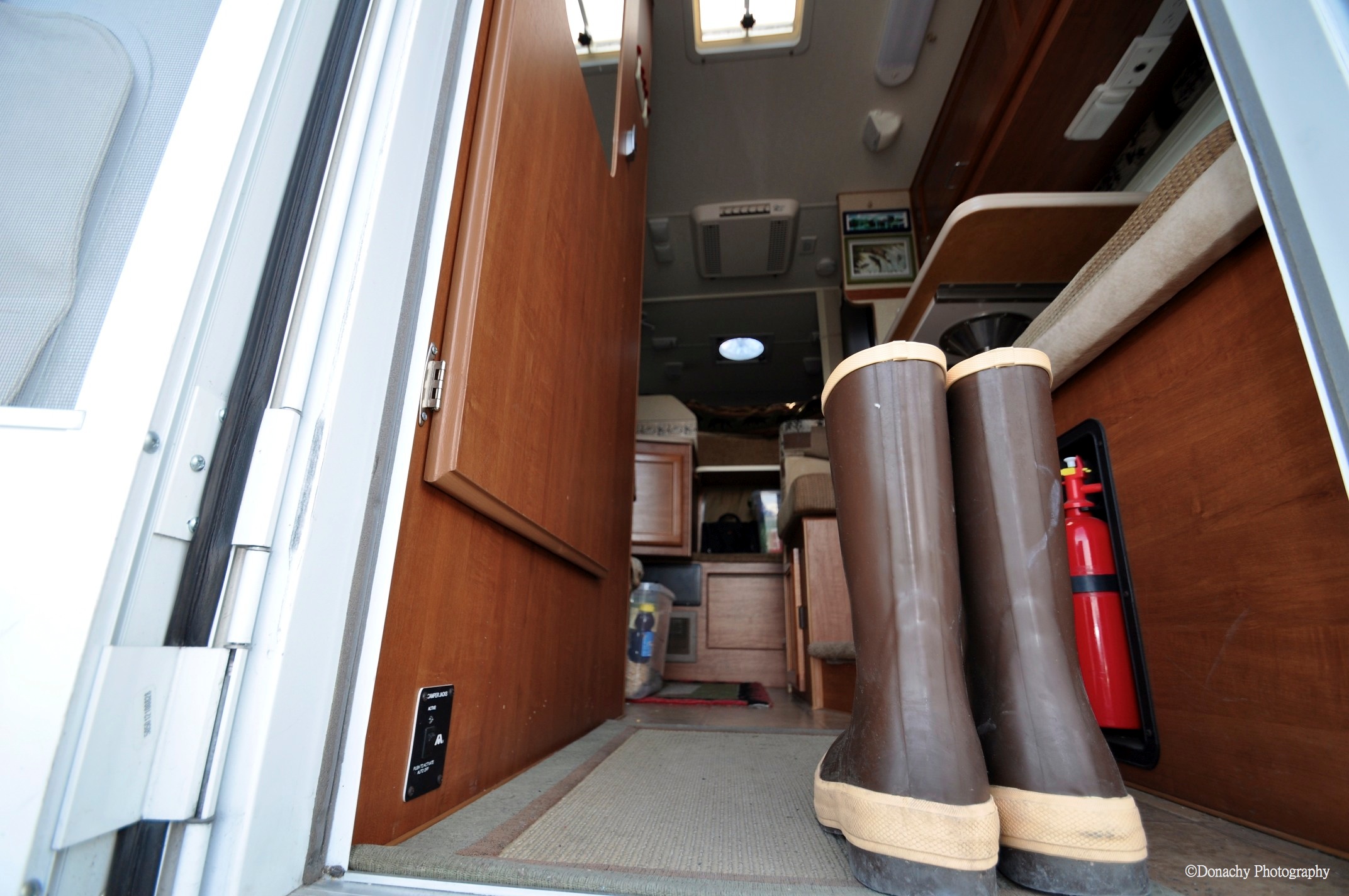
A pair of Xtratuff boots – iconic of Alaska anglers and boaters – is ready at the entrance. 

Stanley is a name conferring strength and dependability – like Stanley tools. Fitted with airbags (extra shock absorbers), our three-quarter ton Silverado has performed superbly carrying the camper and towing our 4,500 pound boat. Given a steep mountain grade, Stanley shifts down as if to say, “All right.” Nothing more. No groaning and straining, no needless extra shifting, just a simple, straightforward, “All right” and up the mountain we go. And kicked into four-wheel drive, this truck has the grit to power through even loose beach sand with the camper – a test we didn’t intend to put the truck through and won’t be repeating.

We went back and forth regarding two options: gas or diesel, and dual rear wheels or single. We opted for a gas engine and single wheels, and after three summers of putting this rig to the test we can say without hesitation that with the right tires, single wheels are fine. And we’re happy we don’t have to deal with the noise of a diesel engine (or impose that noise on our neighbors). That being said, the fact is we don’t put a lot of miles on our rig. A diesel engine offers some real advantages to campers engaged in extensive traveling.

To anyone contemplating a rig like this, we have one firm recommendation: Start by choosing the camper you want, then match it to the right truck. 

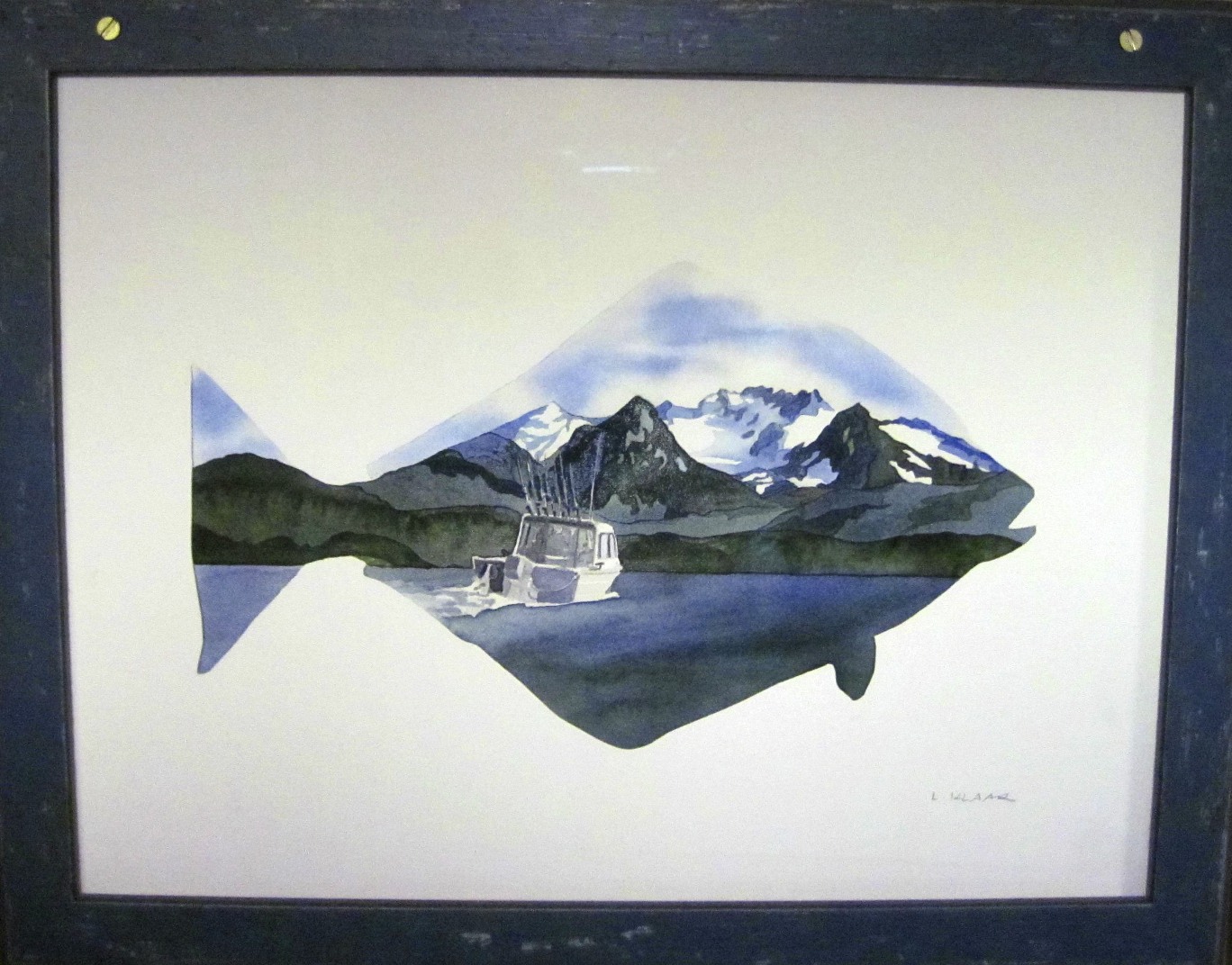
This watercolor by Homer, Alaska artist Leslie Klaar depicts a boat much like our C-Dory heading off for a day of fishing in the great Northwest. It hangs near the door of of our camper.

Livin’ in a Van down by the River

Seward Harbor, May 21: This is the view from the back widows of our pickup truck camper, our summer home while we work to get Bandon ready to live on and to sail. Mornings start early up here, the first sunlight slanting into the camper a little after 5:00 AM – and getting earlier each day. Warblers and other songbirds are the first to wake. Too early for us. By the time we roll out of bed, gulls are calling and scolding and the high chirps of eagles have taken over. The fishing season hasn’t come into full swing yet, though a few engines can be heard making ready for a morning or a day on the water. Blueberry pancakes with maple syrup and strips of bacon on the side some days, fried eggs others, cold cereal when we’re really eager to get moving, but always with a ruby red grapefruit, a glass of orange juice and a big mug of coffee made from freshly ground beans. Then the walk to the end of the dock and a full day of work. In the photo above, as you look down the open water between the docks, Bandon is the last mast on the left.

We’ve submitted the paperwork to the coast guard in order to change the name of our Island Packet 350 from Tarsus to Bandon.

This is a sound vessel, and she surveyed well, but there is always work. The first of it has begun with giving every square inch of her interior – from her beautiful teak-wood sole to her overhead – a good cleaning. Meanwhile, there’s sorting through all the items previous owners left behind. From can openers to canvas, much of it is useful, and much of it is not. All of it requires a decision: toss out, donate to the  local thrift shop, or clean and restow.

Everything we touch, clean, move off or bring aboard makes this boat that much more ours. Bandon will be our home. In the near-term, that means about three months out of the year. And so we are outfitting it as such. This means furnishing it with good dinnerware (we went with Denby for our plates, bowls and pasta bowls), stemware (we found Schott Zweisel Tritan crystal wine glasses that look and feel luxurious but are exceptionally break resistant), and quality bourbon/Scotch glasses.

We anticipate that Bandon will be a full-on sailing vessel in every sense, but we recognize that even the most serious sailing vessels spend most of their days at anchor or in port. We want those days to be comfortable and inviting.

Bison and Bears (and a C-Dory) on the Al-Can Highway

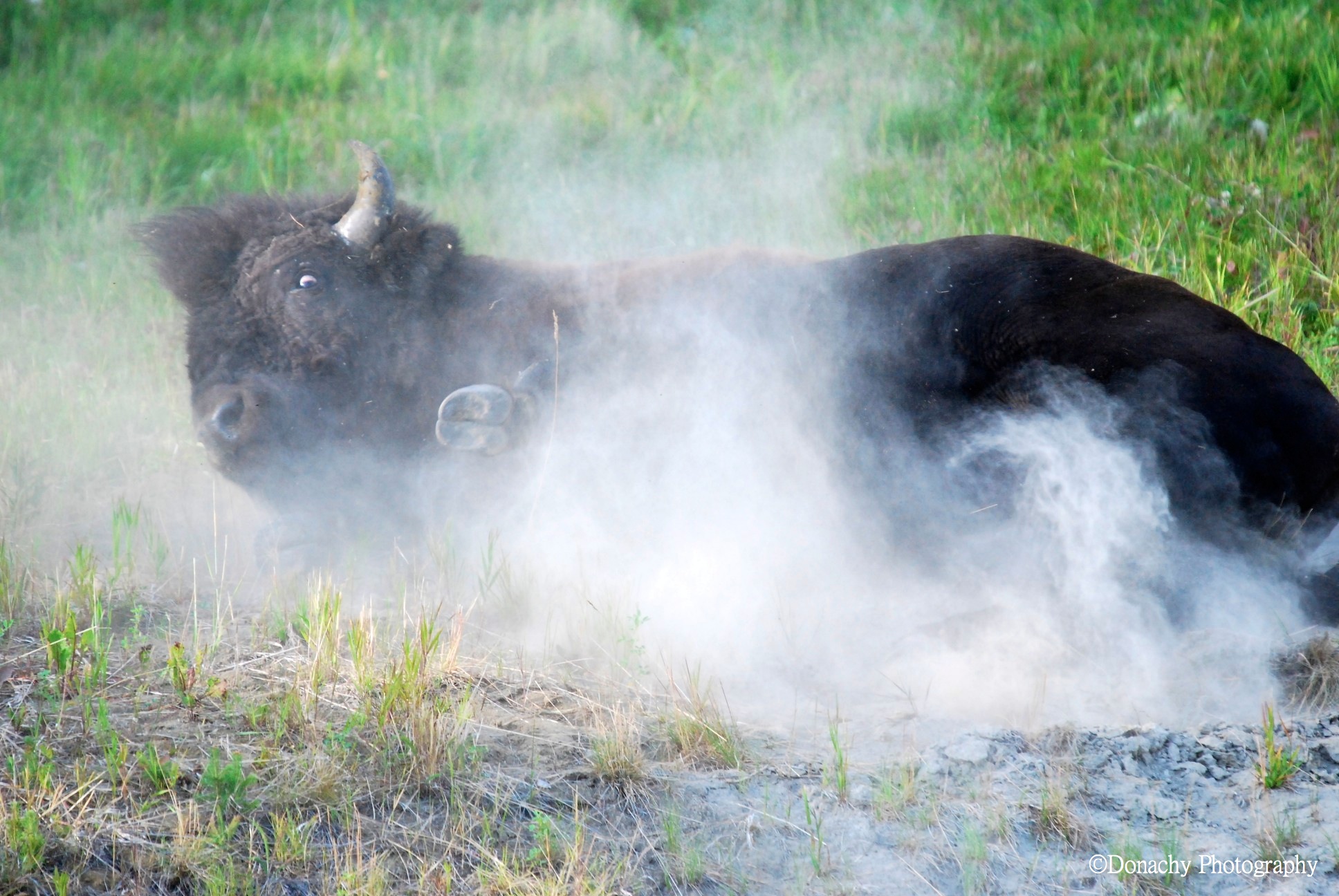
Ferdinand the Wood Bison kickin’ it in a dust wallow in Northern British Columbia. In addition to breathtaking views of the Canadian Rockies, vast forests, free-flowing rivers and an amazing array of wildflowers, a summer drive through western British Columbia and Yukon Territory on the way to Alaska provides one of the premier animal viewing opportunities in North America. (This is the first of several posts planned about the drive to Alaska and sights both along the way and in Alaska.)

In the fall of 2008 when Barbra and I purchased our C-Dory 22 Angler fishing boat, Gillie, we had no idea that 21 months later we’d be towing it 3,200 miles from Sacramento, California to Valdez, Alaska on a 43-day camping, exploring and fishing odyssey. With the exception of one night in an Anchorage hotel, we camped on Gillie – both at sea and on land – the entire trip. As Barbra and I fell into the daily rhythms of preparing meals and crawling into bed each night, our boat actually seemed to grow larger.

The trip north proved to be an ongoing revelation – one filled with far more grandeur than we’d anticipated.

I’d seen plains bison on trips to Yellowstone National Park, but we had no idea there was another subspecies of American bison, wood bison, roaming free in northern Canada and eastern Alaska. We encountered herds engaged in typical bison behavior including grunting males butting heads, females nursing spindly-legged young, and

individuals dust wallowing.

Our Tacoma had a feature we loved: a sun roof. By shooting photos from the open roof, we could safely get close to roadside animals, neither spooking them nor putting ourselves in danger. It was like having a photography blind.

At the beginning of the journey, we kept a list of the animals we encountered, dutifully tallying deer, elk, bison, stone sheep, moose, caribou, coyotes, hawk owls, and eagles. Eventually the numbers overwhelmed us. But there is one figure we still recall: thirty-two black bears. We also saw grizzlies, near Hyder, not to mention the sea mammals we encountered once we launched our boat in Alaska. And, of course, there were beavers and innumerable smaller animals and birds. But the group of animals we still most frequently talk about were the ones we didn’t see.

One evening, at the kind of typical roadside rest stop that served as our (free) campground most nights, we were walking after dinner and taking in an endless vista of taiga coniferous forest interspersed with aspen fringed lakes and swatches of magenta fireweed. It was around eleven o’clock at night, still light. With not a vehicle or building in sight, it felt like we had the whole world to ourselves.

And then we heard it. From a distant hill, a lone, high-pitched howl. Soon it was joined by other howls. Wolves! We listened in awe, our hearts singing.

Cow moose and their calves, such as this one, often hang out close to the highway in bear and wolf country. This helps them avoid predators, but vehicle fatalities run high.

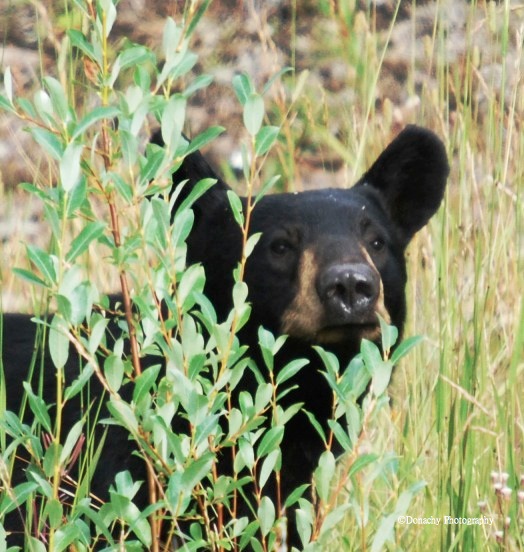
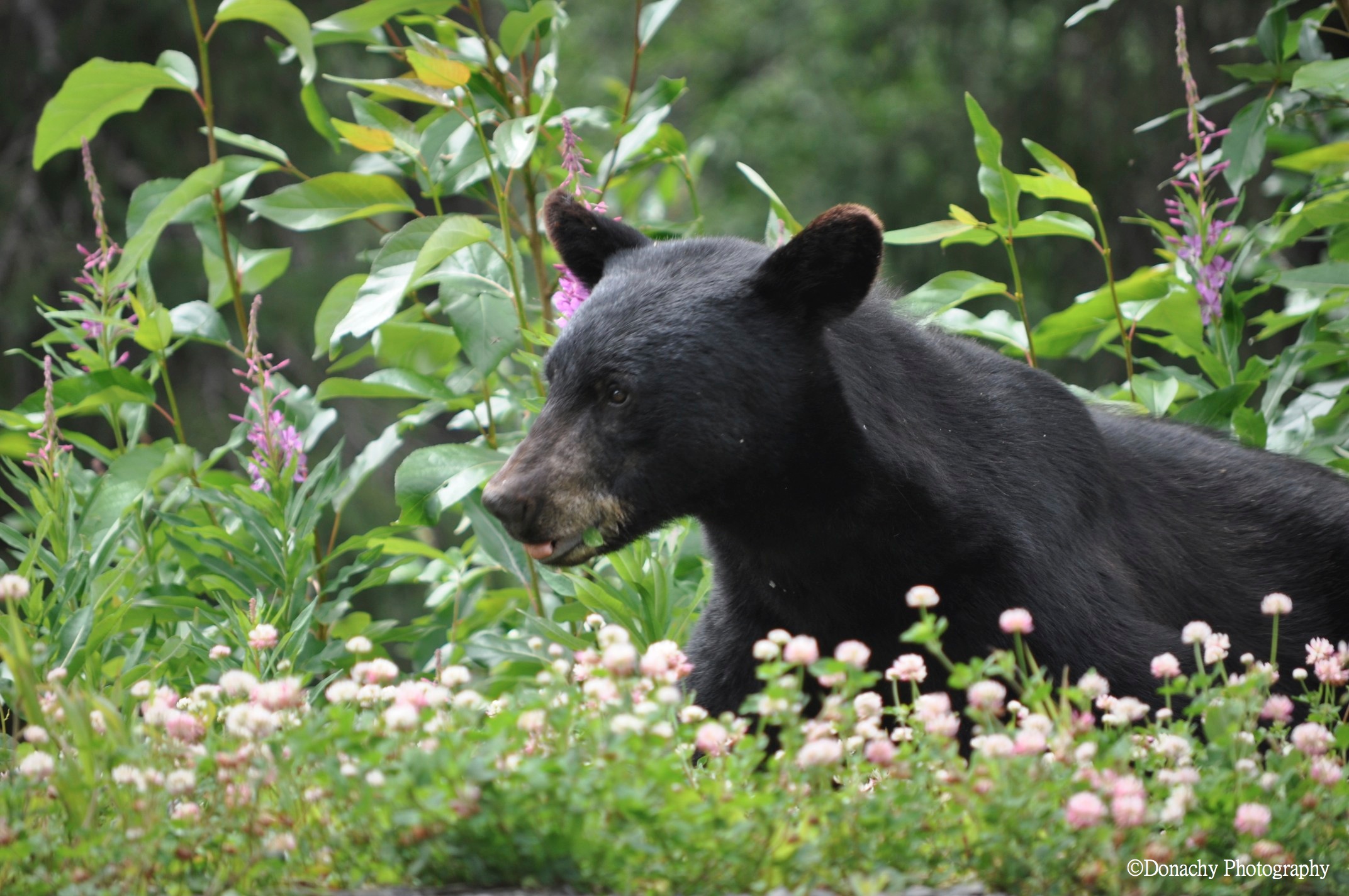
Travelers are bound to see bears – boars, sows and cubs – as they travel along the Al-Can.

Stone Sheep ewes take in salt or other minerals near Muncho Lake, British Columbia. Notice the lamb with the third ewe. Meanwhile, other lambs watch their mothers from the safety of a nearby slope.

For us, the drive to Alaska was the fulfillment of lifelong dreams. I used to pore over my grandfather’s back issues of Field and Stream and Outdoor Life, devouring anything and everything written about the Canadian and Alaskan wilderness. For both of us, the experiences we had on this trip exceeded our imaginations.

Less than a year later, we would be saying goodbye to friends in Sacramento and leaving behind our beloved E Street craftsman bungalow, a yard full of orange, lemon, grapefruit, lime, apple, cherry, peach and pear trees, and our long runs along the beautiful American River. We’d be trading our patch of raspberries for wild cloudberries, our fresh tomatoes for canned.

When we first got our C-Dory, we envisioned weekends to Bodega Bay and other ports along the California and Oregon Coast. We never imagined it would take us all the way to Alaska and a new life.

The C-Dory has a cuddy cabin that comfortably sleeps two, a small dinette in the cabin, and an amazing amount of storage. A dependable Coleman stove served as our gas range.

Fishing and Camping along Oregon’s Deschutes River

Edged by a thin strip of green, the Deschutes River is born in mountains southwest of Bend. Brookies – aggressive and abundant – dominate the headwaters where it flows out of Little Lava Lake. When the river hits Crane Prairie Reservoir, rainbows (and largemouth bass) dominate. Once the river drops into canyon country north of Bend, redbands come into their own. Although canyon trout typically don’t run large, there’s a good chance you’ll have the water to yourselves, as we did. Further downstream, steelhead attract attention from fly fishermen who spend hours swinging flies in hopes of that one, elusive, electrifying grab. (Click on any of the photos for a larger view.)

In June of 2009, Maia and I spent a week camped along the Deschutes River near Bend, Oregon where we were enrolled in an Orvis Fly Fishing School – an experience we highly recommend to any parent-son/daughter, husband-wife or fishing partner team looking to boost their skills and knowledge. (We’d love to take one of their saltwater fly fishing or wing shooting schools in the future.)

Tumalo State Park proved to be an excellent location for our headquarters. Tent friendly, it was both quiet and conveniently close to Bend and the region’s excellent fly fishing. In addition to the Deschutes Canyon, we also explored the nearby Metolius River, Lava Lake, Little Lava Lake and the Upper Deschutes.

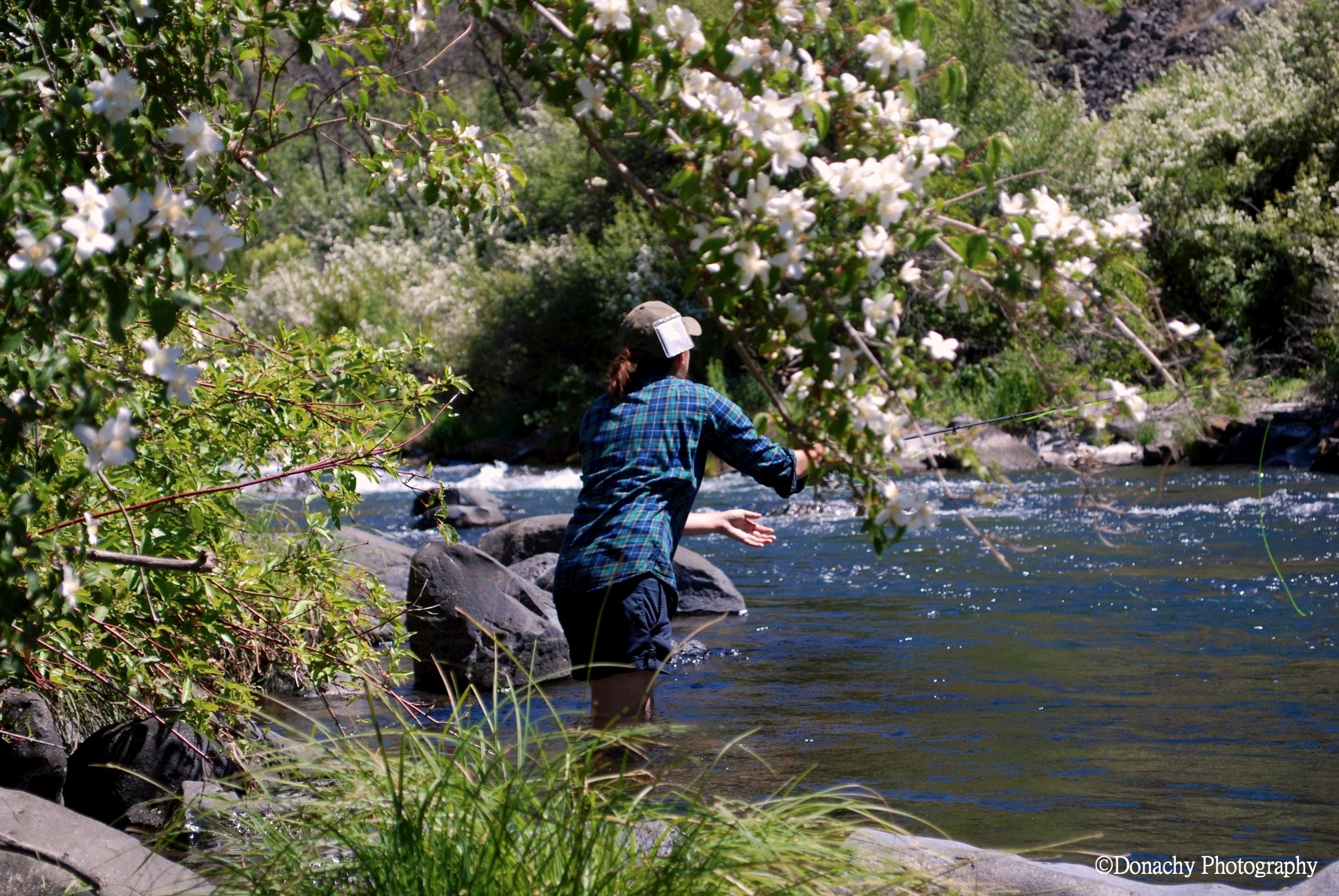
Fishing an elk hair caddis, Maia coaxed a pair of the Deschute’s redband trout from this canyon pool.

The redbands of the canyon are not large, but numbers are good, the water is beautiful and the setting is dramatic.

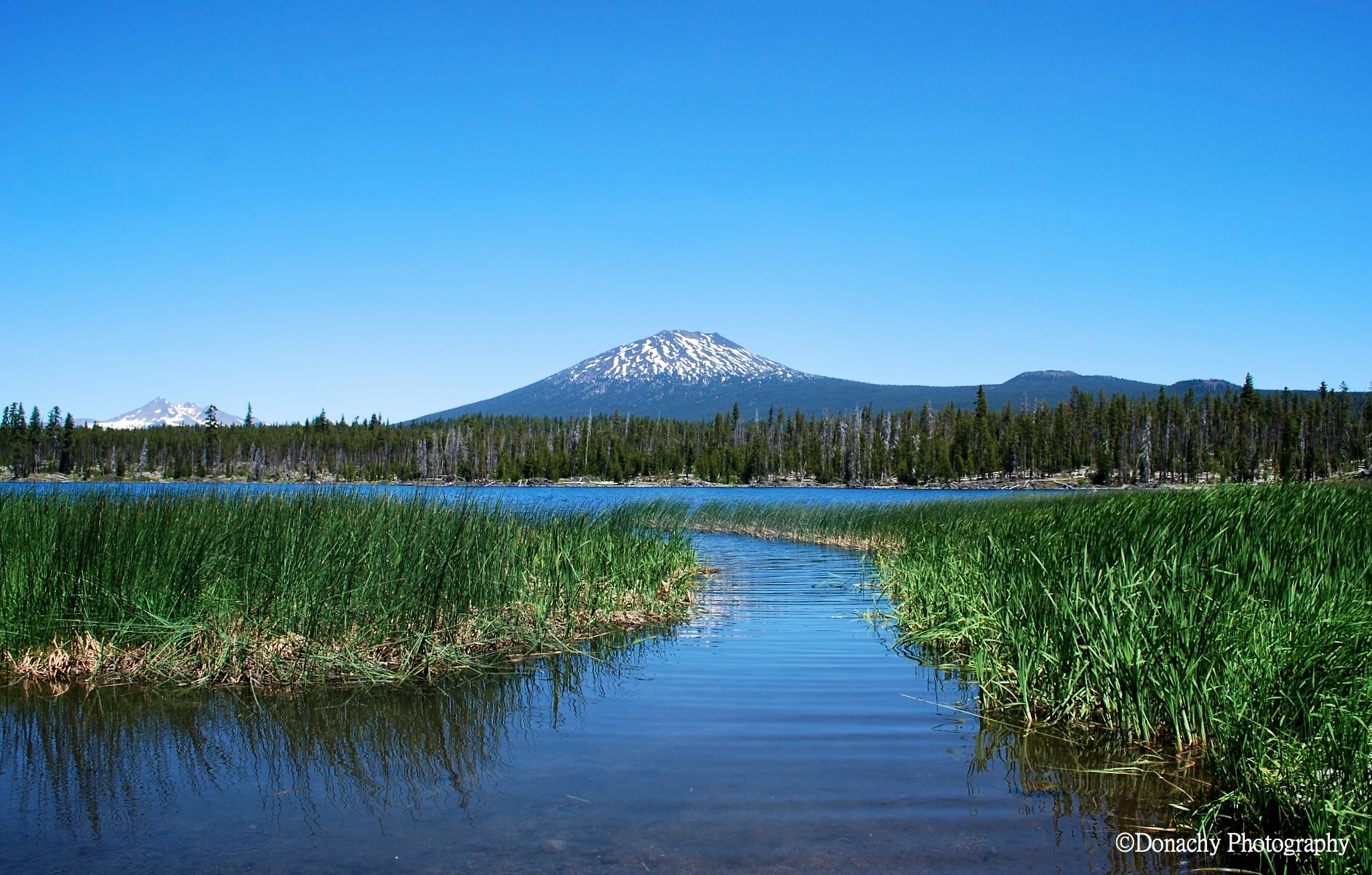
The float tube launch on Lava Lake seems to lay out a path to Mount Bachelor, one of Oregon’s premier ski destinations.

As Maia and I were preparing to launch our float tubes on Lava Lake, a fly fisherman who appeared to be in his 70’s was just coming in. “Wanna see what I’ll be having for breakfast?” he asked with a playful grin. He then pulled from a wet canvas creel a fat, 18 inch rainbow. The silvery fish had undoubtedly been stocked as a fingerling and grown heavy on a diet rich with scuds and aquatic insects. “Been coming here for decades,” he said. “Fishing’s still good, and you can’t beat the setting.” Since we were after a trout or two for dinner that night, we were heartened by his success. And sure enough, in addition to a couple of smaller trout, a rainbow just shy of two pounds fell to an bead head olive wooly bugger in the short time we spent on the lake.

After a dinner of salad, pan-friend New York strip steak, freshly caught trout and multi-colored Peruvian potatoes, we relaxed in front of our campfire enjoying a finger or two of Scotch, reminiscing about the day’s fishing, about the fishing we’d had other days going all the way back to afternoons spent float fishing for bluegills and bass on our home river in Japan when Maia was only three, and dreaming about trips we’d take in the future…

Until I lived in Oregon, I’d never seen garter snakes hunt fish. This one was working the margins of Lava Lake.

We had read about Hosmer Lake’s unique (and quite challenging) Atlantic Salmon and Brook Trout fishing. Kicking around in our float tubes in water only slightly less clear than air, we could see fish – big ones – nearly 20 feet deep. The white edges on their fins gave the brookies away; the others, we surmised, must be the salmon. The fish were beyond us on this particular day, but what a lovely piece of water. Excellent nature watching, too – birds, otters, wild flowers along the shore, and, of course, the fish in aquarium-like conditions.

In the week we spent sampling the fishing near Bend, we barely scratched the surface. In addition to miles of river, there are several lakes accessible by vehicle and numerous  hike-in fisheries. Area campground fees range from reasonable to downright cheap, and Bend itself is a cool city of about 80,000 that merits time set aside for exploration.

There is a Lake…

At a remote lake we discovered by chance, the trout are not as long as your leg. Lots and lots (and lots) of 14 to 18 inchers though.

Weighing in at about 15 pounds (including flippers), Super Cat pontoons inflate quickly, can be worn like backpacks, and fish comfortably.

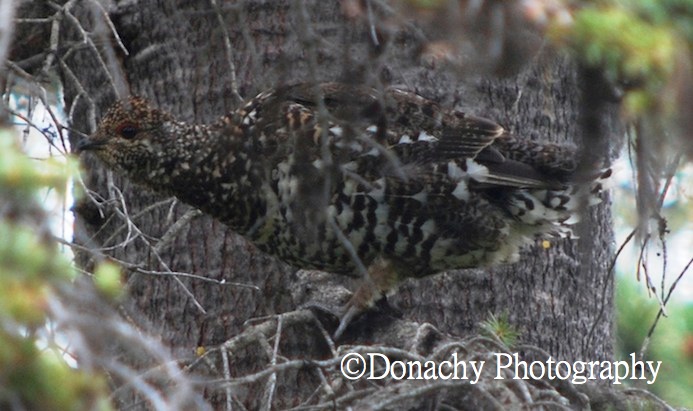
The walk in to remote waters is part of the adventure. On this particular hike, there were wildflowers, game tracks, berries, and a well-camouflaged covey of grouse perched in spruce trees.

Each summer, Maia, Barbra and I make it a point to meet up somewhere to fish, cook together, catch up with each other’s lives, and enjoy good wine and beer and stories. The fishing is secondary, but catching is definitely more fun than not catching. This is the kind of lake where you lose count of the fish turned, hooked or landed and settle into a gentle rhythm of casting, kicking and intense line watching, vigilant for the slightest twitch.

It is a beautiful and rare thing these days to fish a lake – no matter how remote – free from even a solitary scrap of litter. Such was the case on this lake. There was a hiking trail, and part of it traversed a log and board walk over a marshy area, but it was clear that those who know about this lake care about it. Save for a few mountain goats high up on a slope overlooking the lake, a pair of ospreys occasionally circling overhead and a small family of loons, we had the pristine water to ourselves.
On many remote (and not so remote) lakes, a size 8 or 10 bead head nymph dressed in olive, brown or black and jazzed up with something that sparkles is a killing pattern, and such was the case on this day. Lush beds of weeks were visible in the clear water. That’s where the insects were, and of course, the trout.

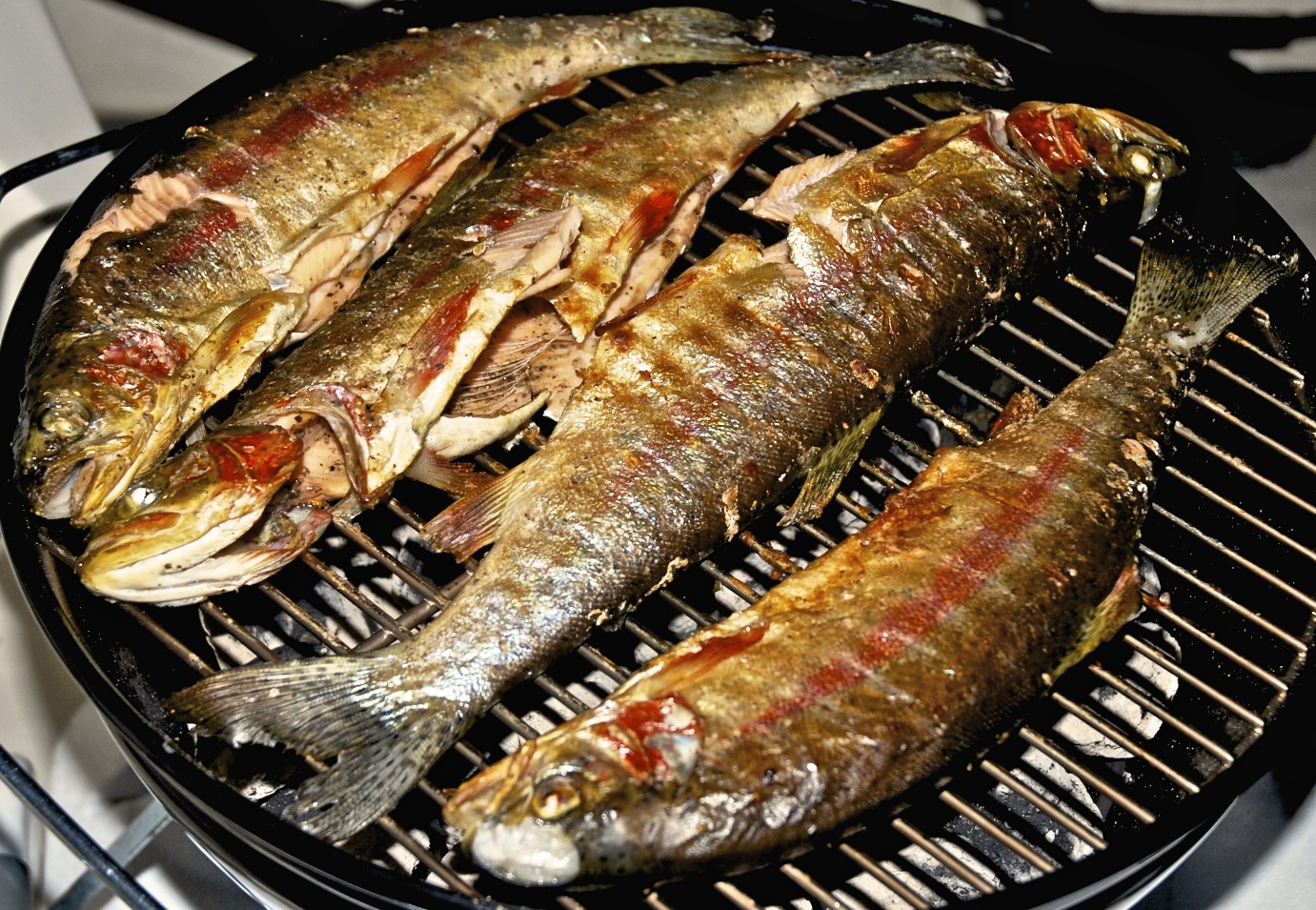
With a healthy population of trout and several size classes represented, we kept four smaller fish for dinner back at our campsite on a different lake. Evidence of a diet rich with scuds (freshwater shrimp), their flesh was as red as sockeye salmon flesh.

It’s difficult to improve on salt, ground pepper, and glowing charcoal when cooking just-caught fish. Accompanied with freshly picked sweet corn, roasted potatoes and a bottle of Chardonnay enjoyed around a campfire as the evening sky grew dark, our conversation was punctuated by an occasional pop from the fire and loons calling back and forth across the lake. 

A Lance Camper, a C-Dory and Two Mighty Trucks

A mighty little truck. The first year we came up to Alaska, 2009, we used our C-Dory as our camper and towed it up and back – more than 8,000 miles over 43 days with our 2004 Toyota Tacoma. We had a sunroof, which proved to be just the thing for wildlife photography. Here the rig is parked in front of Muncho Lake in Northern British Columbia. Right after we took this photo, three Rocky Mountain Sheep ewes and their several lambs crossed the road right in front of us. (See C-Dory 22 Angler: A Boat for Alaska)

I have long admired the line from Robert Frost’s poem The Road not Taken, “…Yet knowing how way leads on to way…” for the simple, universal truth it holds. When we purchased this boat, we had no idea we’d be towing it to Alaska, using it as our camper both on land (it was a great conversation starter in campgrounds) and on the water. Nor did we have any idea that we would fall so hard for this great state. I don’t recall who spoke first, but on our way back to California that summer at some point one of us turned to the other and said what we’d both been thinking: “We need to figure out how to move up here.”

A few months later, we had job offers in the Alaskan bush, a new Lance camper and a Chevy Silverado 2500 pickup truck. We were ready!

The camper is equipped with air conditioning, heat, a shower and toilet, three-burner stove, a surprisingly large and very adequate refrigerator-freezer, TV, stereo, queen-sized bed, small dining table and comfortable seating, skylights and lots of cupboards and cabinets. Good headroom, too. We’re comfortable living small, so for the two of us it’s a plush set-up. We keep reminding ourselves that we’re preparing for a future chapter in our lives when, hopefully, we will live aboard a sailboat. An item we installed that has proved indispensable is the solar panel which, even on cloudy days, supplies enough of an extra trickle of electricity to make life easier.

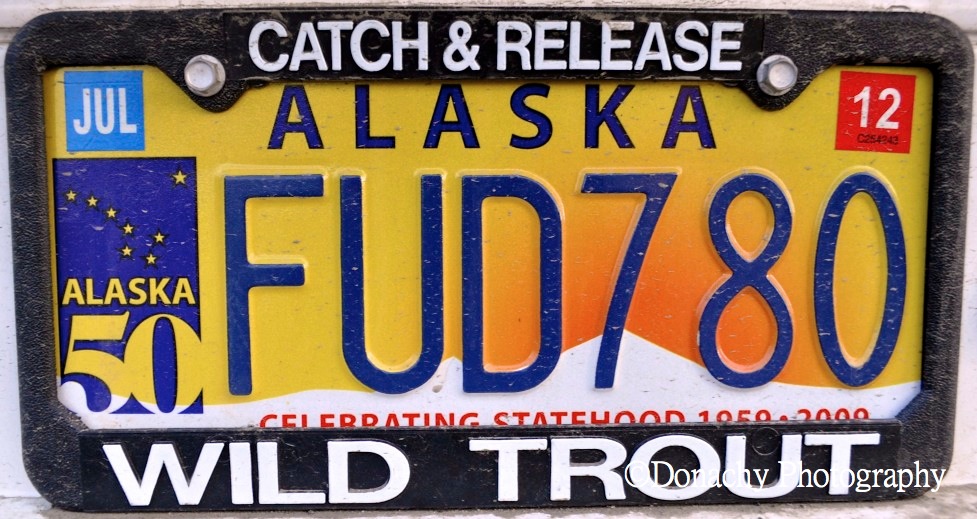
It was a red-letter day when we got our Alaska license plates! That morning we walked into the DMV in Haines where a friendly clerk gave us a couple of driver’s license booklets to study. We walked to a nearby coffee shop, had our soy lattes, returned to the DMV, took the test, got our photos taken, and were issued licenses.
.
.
Although we are in the heart of a near-record cold spell, we’re over the hump in the school year and our thoughts are beginning to turn toward another summer in Seward, exploring the Kenai Peninsula and boating and fishing the beautiful waters of Resurrection Bay.
.
.
Gool ol’ Stanley, our reliable Chevy Silverado 3/4 ton, loaded up on her maiden trip to Alaska.
.