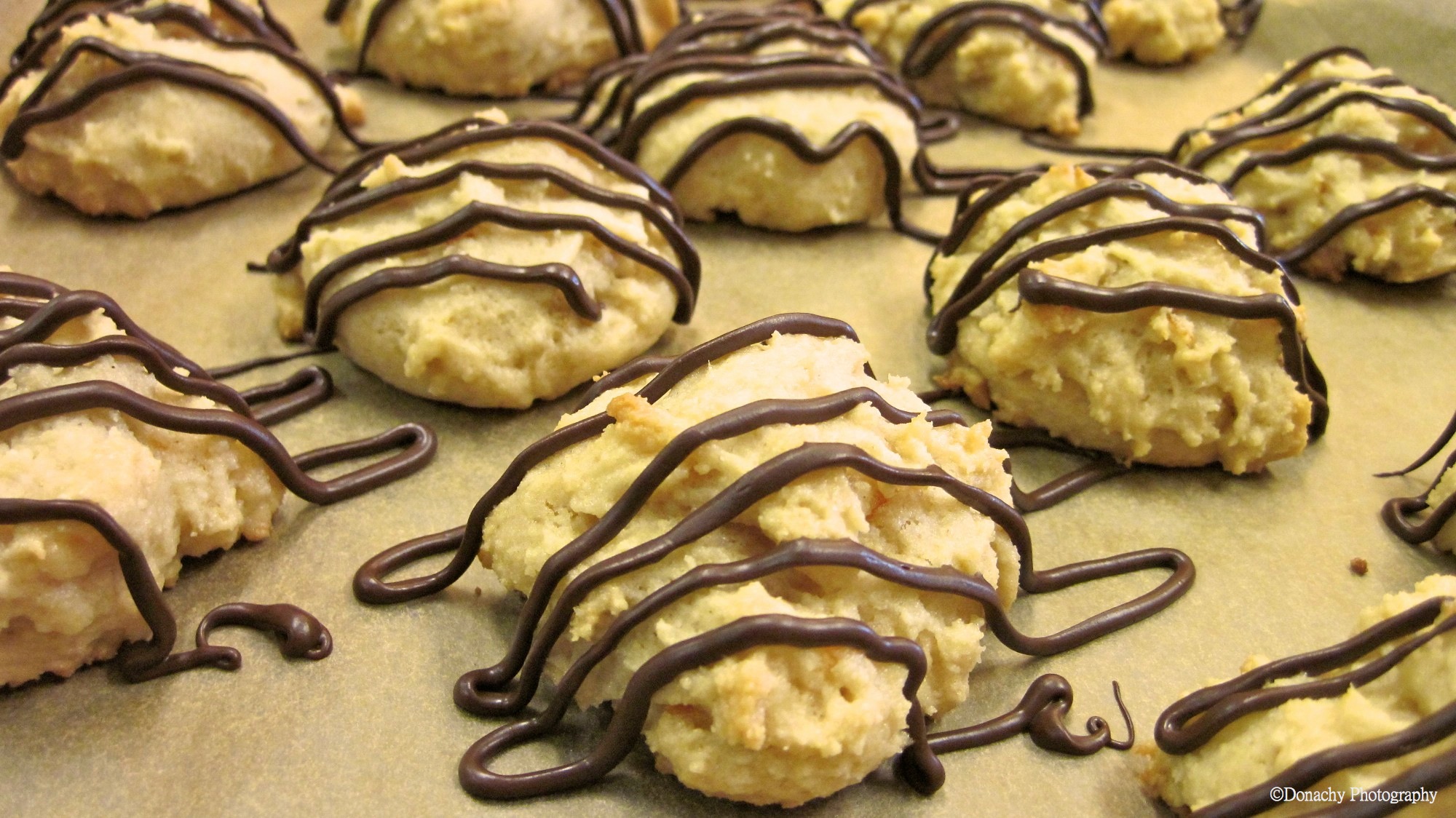
Chocolate Drizzled Orange Marmalade Cookies

Our trip back to Point Hope, Alaska, went like clockwork – Swiss clockwork at that. The taxi driver arrived at our storage unit (where we’d spent the night in our camper) ten minutes early and was driving a van which easily held our eight coolers loaded with this summer’s catch. Traveling with eight coolers always fills me with a bit of trepidation; you can imagine the “what if” scenarios that run through our heads for this trip. So we plan for the worst and hope for the best.

Up in Point Hope, our big freezer is now stocked for the year while we wait for about a thousand pounds of dry goods we carefully packed and mailed to arrive via the U.S. Postal service.

“Waiting” is not something I enjoy. “Doing” is much more fun. After finding a half of a jar of marmalade in the refrigerator, I decided conducting a cookie experiment would be much more fun than sitting around waiting for groceries to arrive. The results? Orange-flavored cookies. The chocolate added a layer of flavor that complimented the orange tang.

Orange Marmalade Cookies (makes 3 dozen)

Ingredients

  • 2/3 cup unsalted butter, softened
  • 1 cup granulated sugar
  • 1/2 cup unsweetened applesauce (can substitute with 2 eggs)
  • 12 tbsp orange marmalade
  • 3 cups all purpose flour
  • 3 tsp baking powder

Directions

  1. Preheat oven to 375 degrees F. Line cookie sheets with parchment paper.
  2. In a large mixing bowl, cream together butter and sugar.
  3. Add applesauce and marmalade and mix thoroughly.
  4. In a separate bowl, sift together flour and baking powder.
  5. Mix in flour mixture to butter mixture until just blended.
  6. Drop dough by tablespoons onto parchment-covered cookie sheets. Leave at least one inch between cookies.
  7. Bake until cookies spread slightly and are lightly browned (about 10 minutes).
  8. Cool cookies completely on wire rack.
  9. Drizzle with melted chocolate, if desired. (I used semi-sweet chocolate chips.)

Portabella Cap Stuffed with Yelloweye Rockfish

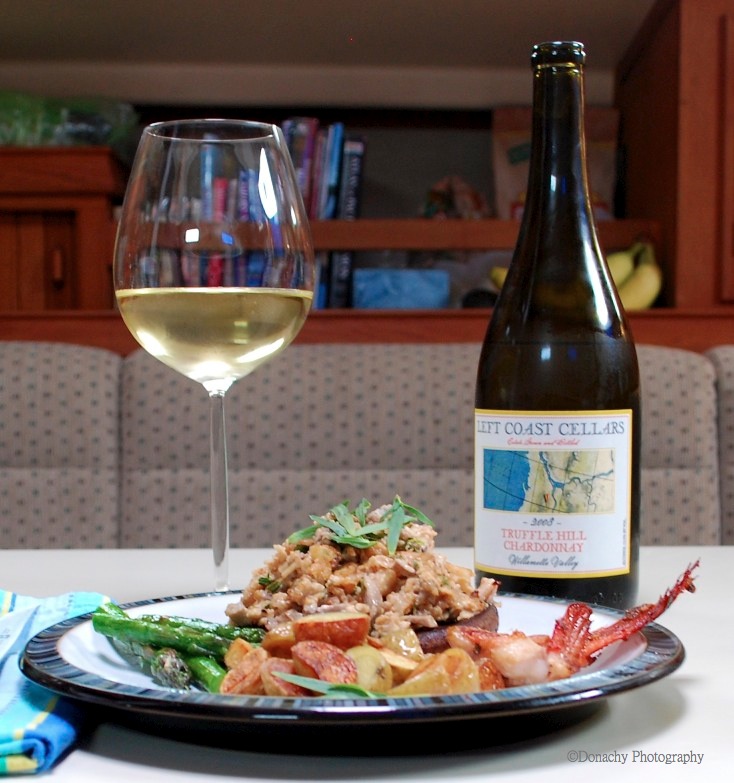
This summer’s fishing has brought us riches of our one of our favorite species, Sebastes ruberrimus, yelloweye rockfish. The collar meat of yelloweye, especially the smaller two to five pound fish, has a lobster-like texture and taste that we’ve enjoyed experimenting with and have even served as one would lobster with drawn butter. In this creation, we combined yelloweye with another favorite, Portabella mushroom caps, and paired it with a Willamette Valley Chardonnay for one of the easiest and best meals of the summer.

Ingredients for two servings:

  • ½ pound collar meat from yelloweye rockfish, chopped into small pieces. (Substitute similar fish such as red snapper, red porgy, striped bass or walleye)
  • 2 portabella mushroom caps, stems removed
  • 2 portabella mushroom stems (from above), chopped coarse
  • egg whites from 2 eggs
  • 2 or 3 cloves garlic, chopped fine, divided into equal parts
  • ½ cup rice crackers (sesame flavor is good) crumbled fairly fine
  • 2 tsp soy sauce, separated into 1 tsp each
  • 1 tbsp grated parmesan cheese
  • 2 tsp finely chopped tarragon
  • freshly ground black pepper
  • 2 tablespoons sherry
  • olive oil

Directions:

  1. Add enough olive oil to cover the bottom of a frying pan large enough to hold the 2 mushroom caps and heat over medium low heat.
  2. Add the mushrooms, gill side up, and cook for about 5 minutes.
  3. Add 1 tsp soy sauce and half the garlic. Turn the caps and move around so the gills absorb the soy sauce. Cook until mushroom is tender.
  4. Meanwhile, combine yelloweye meat, crackers, parmesan, tarragon, egg whites, chopped portabella stems, a healthy dollop of olive oil, a few grinds of pepper and the remaining garlic and soy sauce in a bowl, mixing ingredients together.
  5. Heat a frying pan over medium-high to high heat (you want enough heat to drive off moisture), add olive oil to cover the bottom, and add the yelloweye mixture, stirring frequently for about two minutes. Add sherry and continue cooking until browned, stirring frequently. Avoid overcooking.
  6. Place cooked yelloweye mixture on sautéed mushroom caps, garnish with a few tarragon leaves, (or, nori, or, better still, a shiso leaf, if available)

We served this dish with home fried potatoes, asparagus sautéed in butter and lemon, and a creamy Chardonnay with touch of oak, toasted almonds, and hints of fall fruit.

30,000 Seabirds

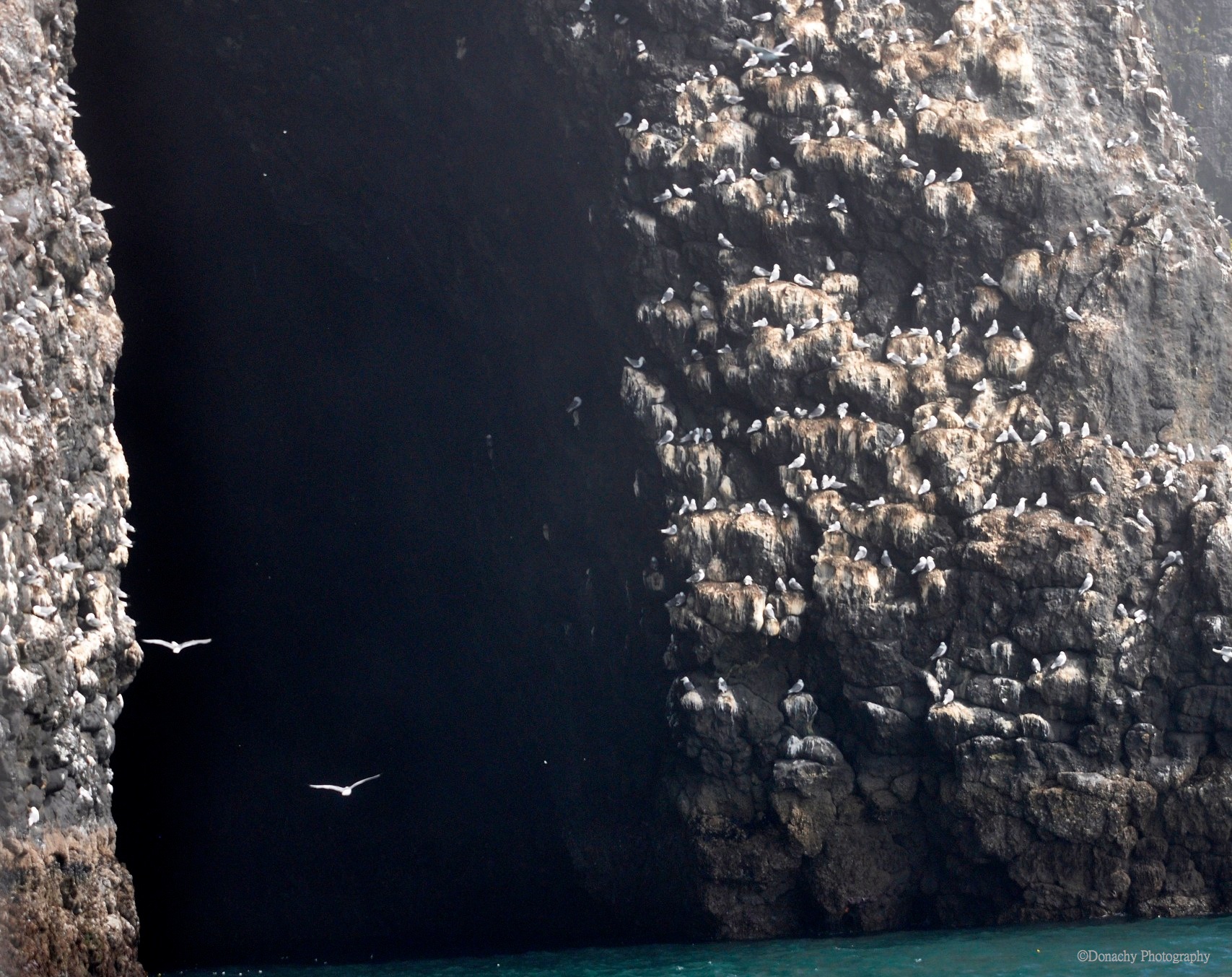
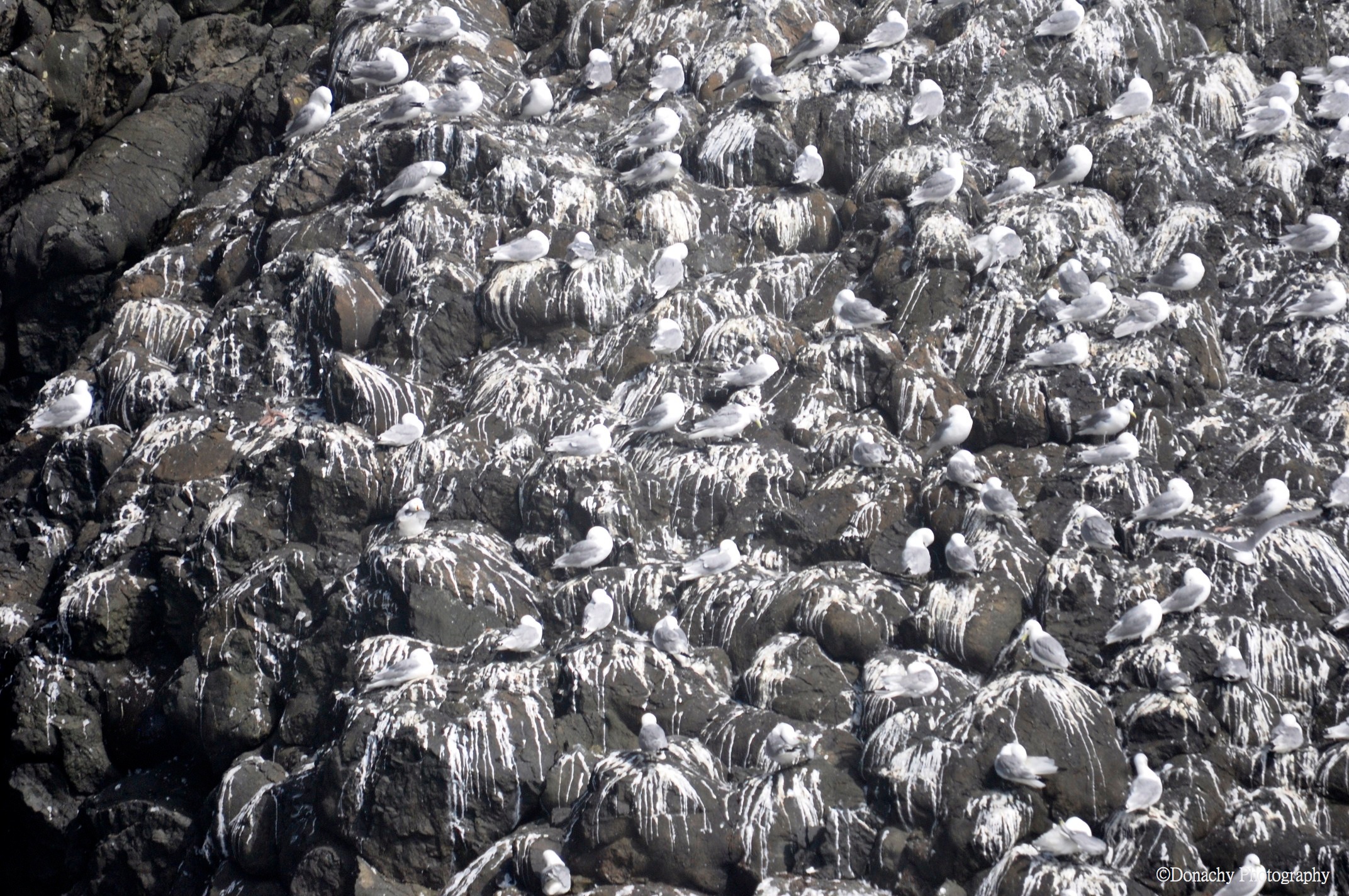
At any given moment, there are as many as 30,000 seabirds roosting, nesting, flying and feeding at Cape Resurrection near Seward, Alaska. While kittiwakes and common murres are the two most abundant species, tufted and horned puffins, murrelets, guillemots, auklets, oyster catchers, cormorants, various gulls and other seabirds are also in the mix. Above and below: black-legged kittiwakes in the thousands take advantage of every available ledge.

The noise (and smell) generated by these colonies is as startling as the sheer number of birds. 

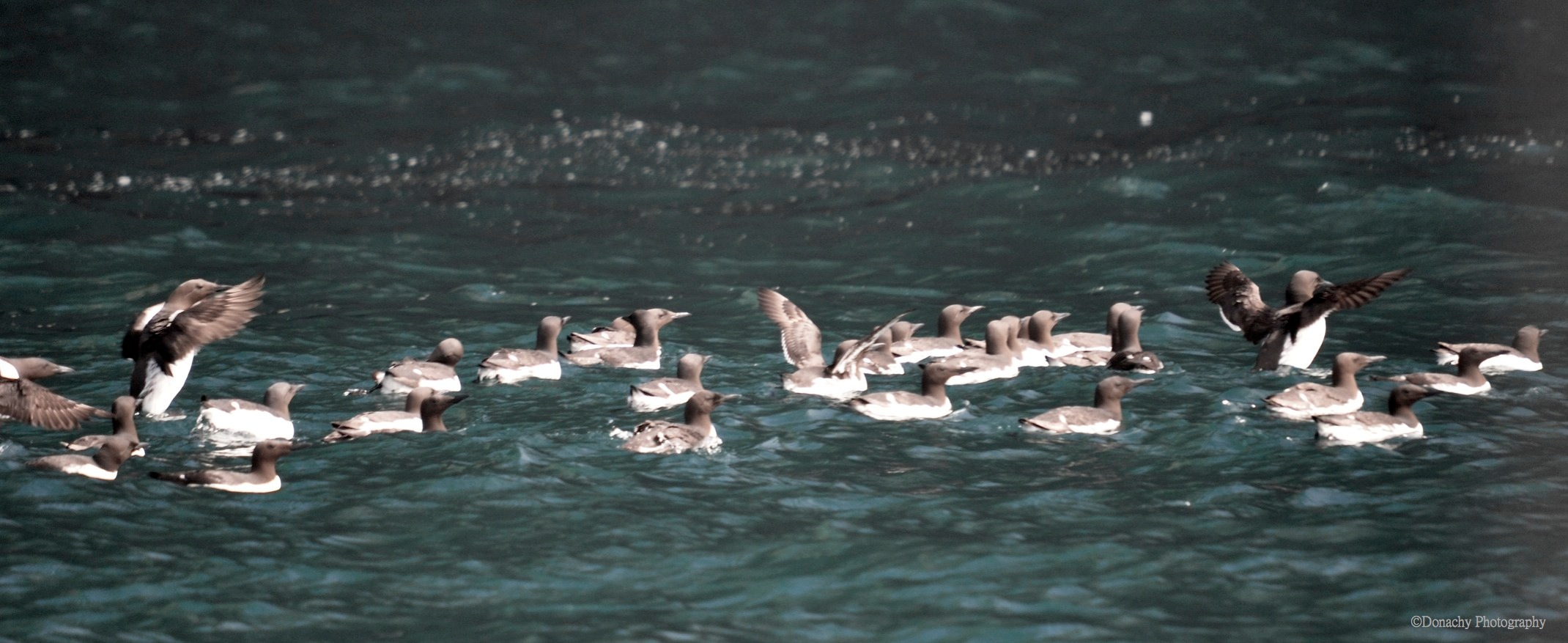
The cape also hosts large rafts of common murres containing dozens or even hundreds of birds.  

Horned puffins (above) and tufted puffins are also quite common. They use their thick, uniquely-hinged bills not only to fish, but to dig nesting burrows up to several feet deep. Once the nesting season is over, puffins spend the rest of the year at sea.

In flight, puffins look like large bumblebees, beating the air into submission with their stubby wings. In search of the small fish they feed on, puffins can dive up to 80 or more feet deep and are agile swimmers. 

On land, with their white bellies and dark backs, murres look a lot like penguins, and like penguins, they are very much at home in water. Murres have been recorded diving to depths of  600 feet. Their eggs are various shades of blue with brown speckles and are steeply pointed at one end to prevent them from rolling off the cliffs where they nest. 

Eagle in Fog, Fishing

The fog was so dense we were apprehensive about even being out on the water. Besides, the fishing was slow. We’d just come through a large group of Orcas, (see Orcas Near Resurrection Bay )and, surmising that they were feeding on salmon, we figured the fish had to be there. But after an hour or so of drifting and not catching…

We decided to take a break from mooching for salmon and drop jigs to the bottom for rockfish. Barbra didn’t waste any time putting a fat five-pound black rockfish in the cooler, but that turned out to be the extent of our success. A brilliantly marked orange and black tiger rockfish hit my metal jig. The fish was small and we had been fishing shallow enough that I thought it would survive a release, so I let it go.

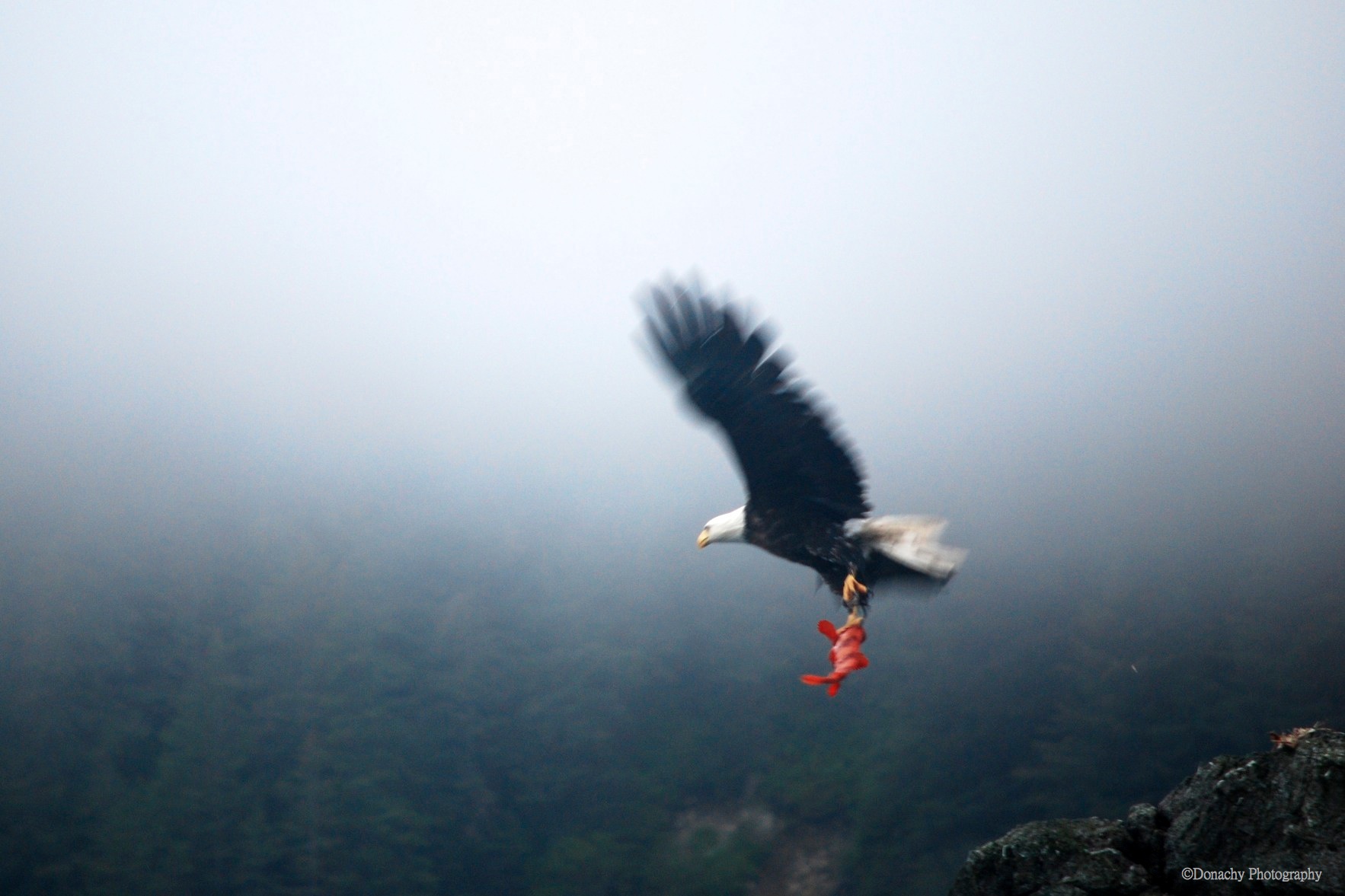
The tiger darted for the bottom, but a few moments later appeared on the surface several feet from our boat. That’s when an eagle that had been watching us lifted from its rocky perch and swooped in. You can tell from the photo above that he’s done this before; notice the tell-tale bones of another rockfish.

Orcas Near Resurrection Bay

It has been an excellent summer for wildlife viewing in Resurrection Bay and surrounding waters. Twice, recently, we have found our C-Dory in the midst of feeding and playing Orcas.

The fishing has been slow out of our homeport of Seward, Alaska lately. For days now, thick fog has blanketed the outer islands and waters beyond, and while boats making long runs are still coming back with fish, even some of the charter captains have been struggling. Nearer to Resurrection Bay, water that recently was teaming with salmon, rockfish and halibut seems to have become deserted, with only a few, scattered fish willing to bite.

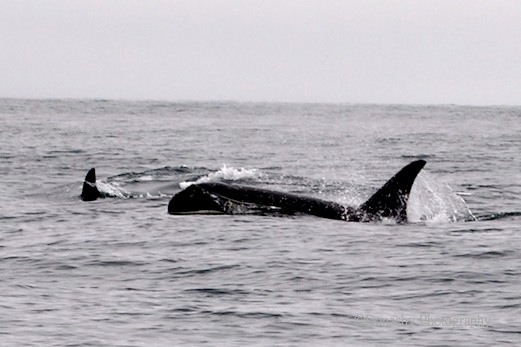
It’s still great to be out. An occasional silver salmon breaks the monotony of otherwise fishless hours as we scan the water for whales, Orcas, dolphins and other wildlife. The other day, between patches of dense fog we suddenly found ourselves surrounded by about two dozen Orcas! Maybe they had found the salmon that were eluding us.

We slowed down and idled among these killer whales for awhile, and then motored off in search of fish.

The Gentleman Angler

Before we moved to Alaska, we’d never seen fog flowing down mountains. I’m sure it happens elsewhere… This was one of those days of sunshine and patchy fog. Fog encircling the horizon. Fog pouring like a river through mountain gaps on Resurrection Bay. 

I like foggy days. Fog means you can start late and not miss the bite. When it’s foggy, sometimes, big things happen late in the day.

By the time Barbra and I got our C-Dory fueled up and heading out into the bay, it was 10:30 A.M. Most of the fleet – both the charters and recreational boats – had long since left the docks. There was a time when I would have been with them – when I had to be on the water early. Dawn. Before dawn. Early early. Trout streams in Pennsylvania, striper rivers in South Carolina, sea bass beaches in Japan….

Most days, the early morning bite is the best.

Fog changes that.

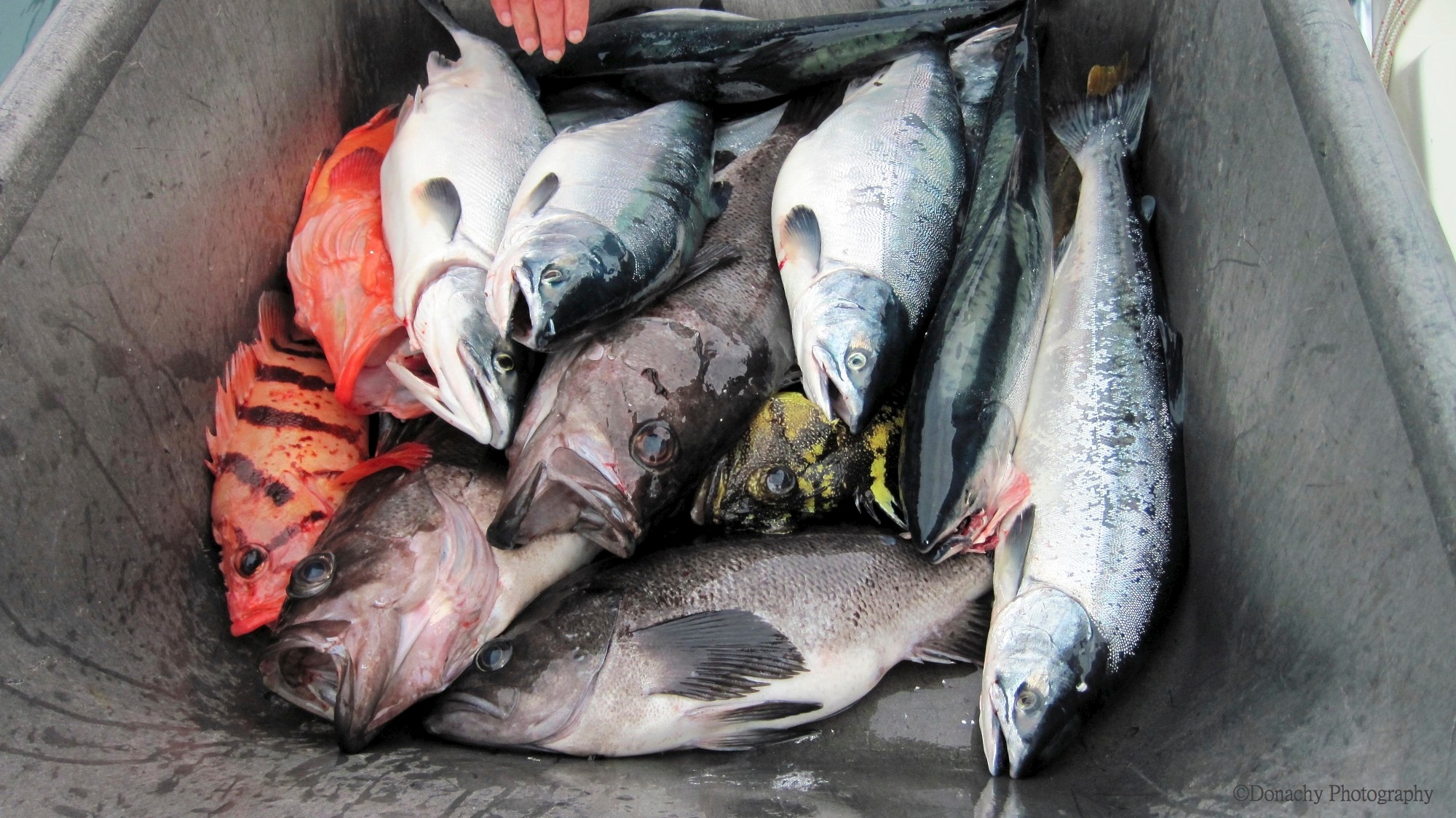
Laid out on the dock are six silver salmon, eight rockfish, a couple of greenling, three small halibut, and a 35-pound lingcod. A couple of the salmon and the halibut didn’t make it into this photo. All of the fish were filleted, vacuum-packed and flash-frozen, ready to travel with us to Point Hope. I asked Barbra to name her favorite on the dinner table. “The variety,” she answered, without missing a beat. We didn’t get up early for these fish, and we didn’t run far.

We could get up earlier. We could run further. We could catch more fish and larger fish.

We know that.

At some point in my life, numbers and size stopped mattering so much. I still like to fish. But most of the time, most days, the fish that interest me the most are the ones that are still biting after I’ve had a good night’s sleep, breakfast, a leisurely mug of coffee (not in a to-go mug, but in my favorite mug at my breakfast table) and have read the news.

“We’re gentleman anglers,” my older friend and mentor Bill Kodrich explained to me. Forty years ago, we were in a cafe, me with a slice of blueberry pie, Bill with a slice of apple pie and a cup of coffee. It was about ten in the morning. We were headed for Spring Creek. I’d never been. I was eager to go. I thought we should have been there four hours ago.

“We don’t need to hurry,” Bill said with a characteristic smile. “There’ll still be trout in the stream when we get there.”

I get it now.

Silvers and Pinks (And Otters)!

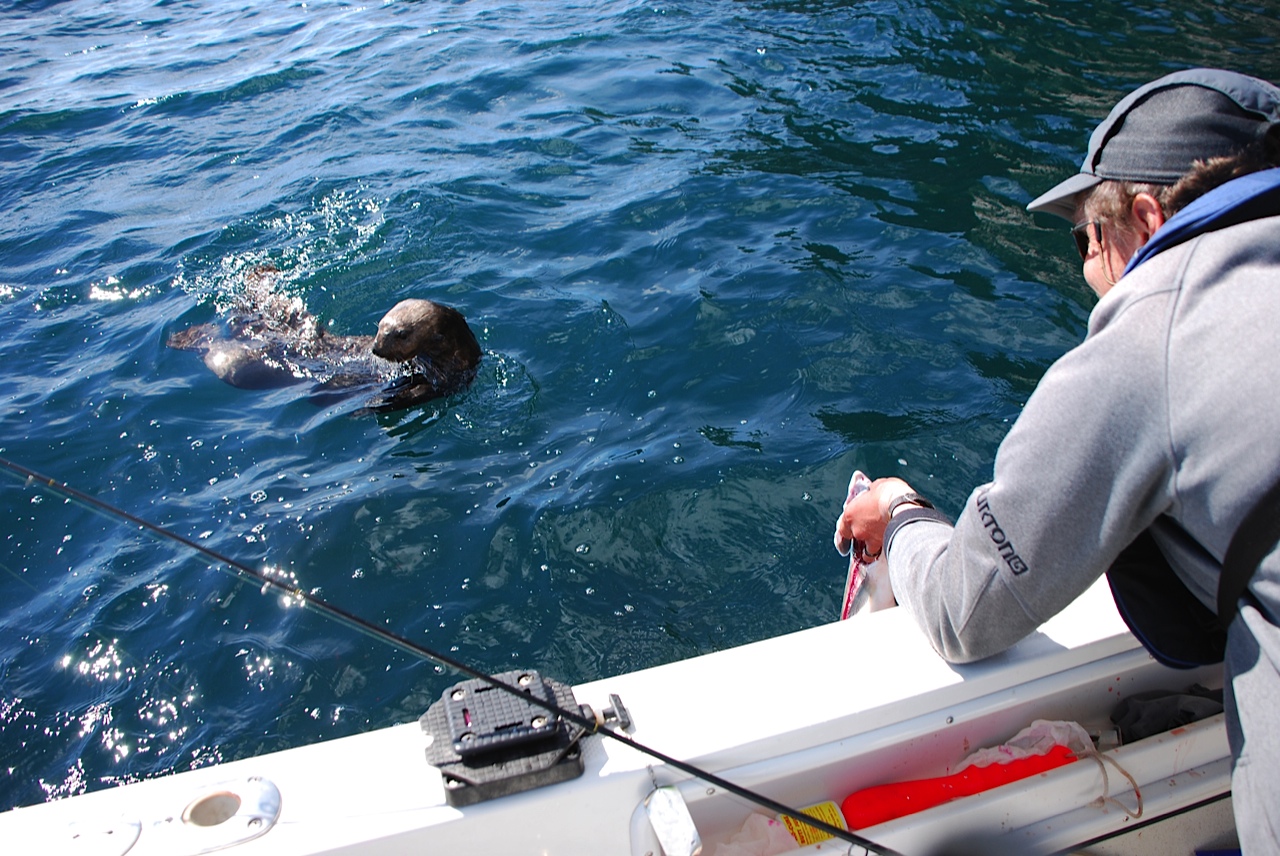
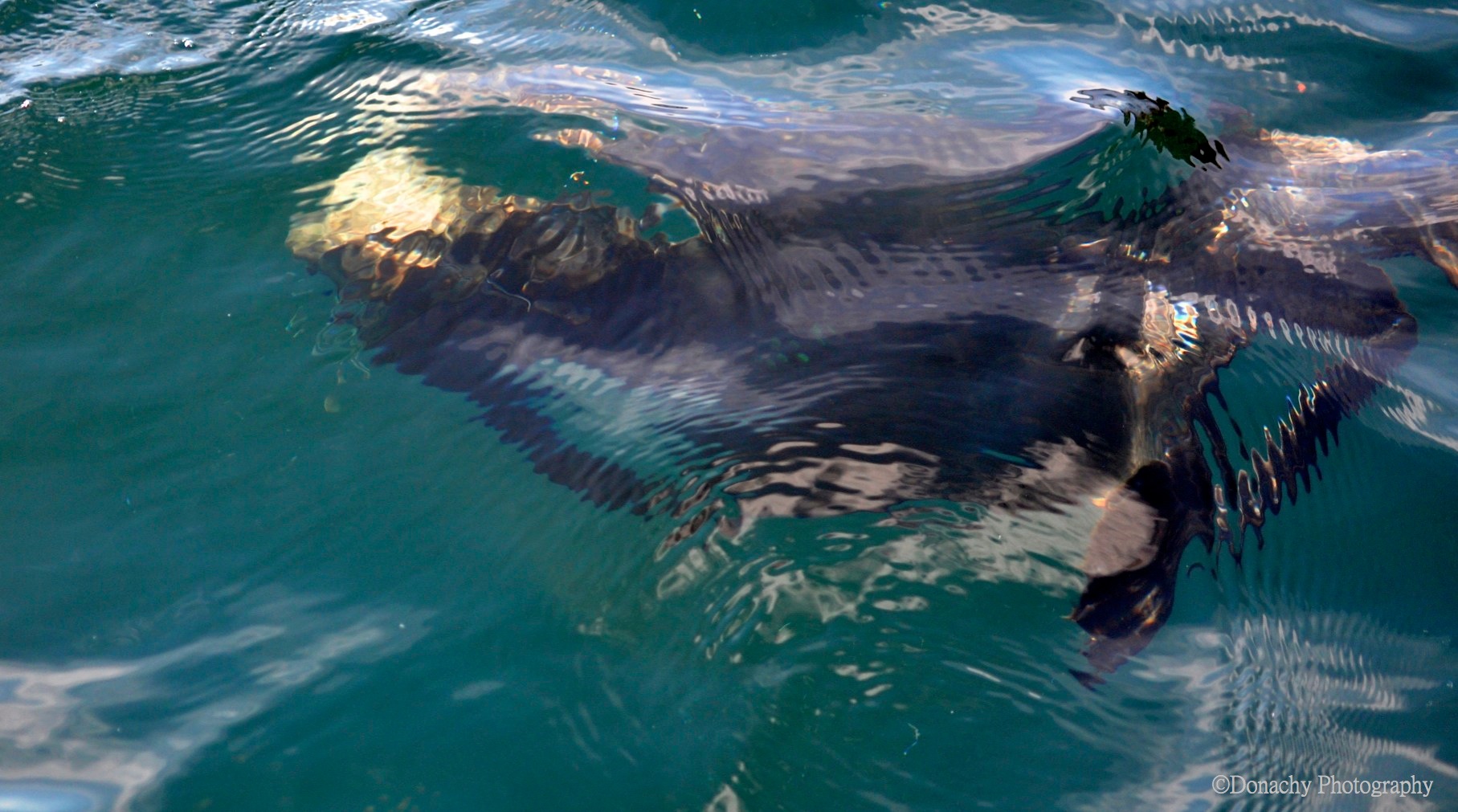
This curious fellow swam right up to our C-Dory, Gillie, to watch me rinse off a salmon Barbra had just caught.

Alaska. Every trip out on the water is a reminder that you could live here several lifetimes and never see it all. While sea otters are fairly common along the southern and central Alaskan coastline, we’ve never have one swim up to the boat. (Although, there were a trio that used to follow us as we walked the docks in Cordova.) This guy seemed genuinely curious – and maybe hopeful of a handout – as I rinsed off a Coho before putting it in the fish box on a recent excursion to Rugged Island in Resurrection Bay, near Seward. Meanwhile, floating on her back with a pup on her stomach, a mother otter watched us a little more guardedly and from a distance.

Fishing partner Bixler McClure got this shot of the otter coming over to investigate the boat. 

On any given sailing or boating trip out on the bay, you’re likely to encounter harbor porpoises, Dall porpoises, Orcas, whales, eagles, thousands of sea birds, leaping salmon, seals, sea lions and every once in a while you might spot the fin of a seven-foot salmon shark (they look very much like small great white sharks) cutting through the water. Bears come down to the beaches, and on rare occasions a wolverine might be glimpsed.

And, of course, there are the fish. Resurrection Bay lies between green-shouldered, snow-capped mountains – a dramatic backdrop. It extends over 10 miles before meeting the Alaska Gulf, and on many days the waters are nearly glass smooth, rippled only by a gentle breeze. On days such as these, the fishing is truly pleasant.
When the silvers (Coho salmon) show up – usually the run is in full swing by mid-July – the fishing is excellent, with six-salmon limits the norm. Skilled (or lucky) anglers often mix in a king or two, and after you’ve got salmon in the fish box you can switch tactics and target rockfish and halibut. There are bigger rockfish and halibut out in the Gulf – and more of them -, but if you stay with it you can find fish in the bay and you don’t have to deal with a long run.
The custom here is to take the fish out of your fish box and load them into a dock cart so you can wheel them up to one of the fish cleaning stations. Once we’ve filleted our fish, we take them to J-Dock to be vacuum packed and flash frozen. Fish cared for this way taste great even a year or more later.
 Below: Barbra got this watery photo of the otter swimming around Gillie.
Below: Three limits of salmon and a couple of rockfish, laid out, rinsed off and ready to take up to the cleaning station. This winter in Point Hope, every meal these fish provide will be a memory of our summer in Seward. These are the good old days.

Savannah Sparrow

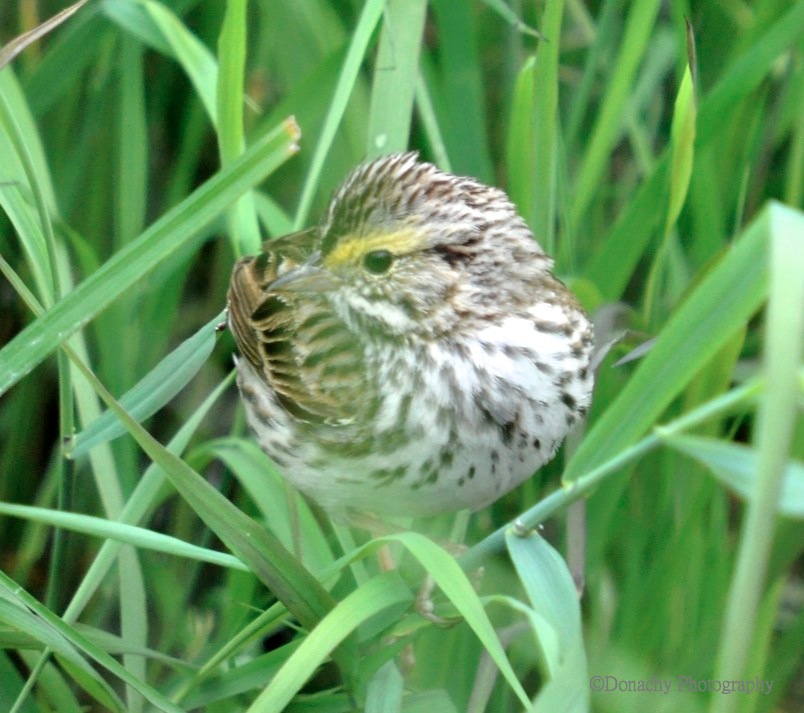
Savannah sparrows (Passerculus sandwichensis) are common and widely distributed in North America. The distinctive yellow lores (eye stripe) is the best way to distinguish savannah’s from other sparrows with streaked plumage.

All across North America – including all over Alaska – savannah sparrows are a common sight in open fields and marshes and in low brushy areas. Mainly seed eaters most of the year, they include insects in their diet as well, particularly during the breeding season. Their song has been described as “insect like,” and although it has a buzz to it, the description doesn’t really do it justice. Listen for the notes of the savannah’s high, buzzy song next time you’re in an open area. They can be hard to spot in the low brush and ground cover they call home, but when flushed, they usually fly just a short distance and may perch to take a look around. About five to six inches from beak to tail, savannah’s nest on or near the ground, laying  four to six blue-green eggs speckled with dark brown in cup shaped nests. The sexes are similar.

Incidentally, the species name sandwichensis comes from Sandwich Bay in Unalaska, Alaska. This photos was taken at Potter Marsh, near Anchorage.

Holster the Pistol, Take a Breath, Try it Again

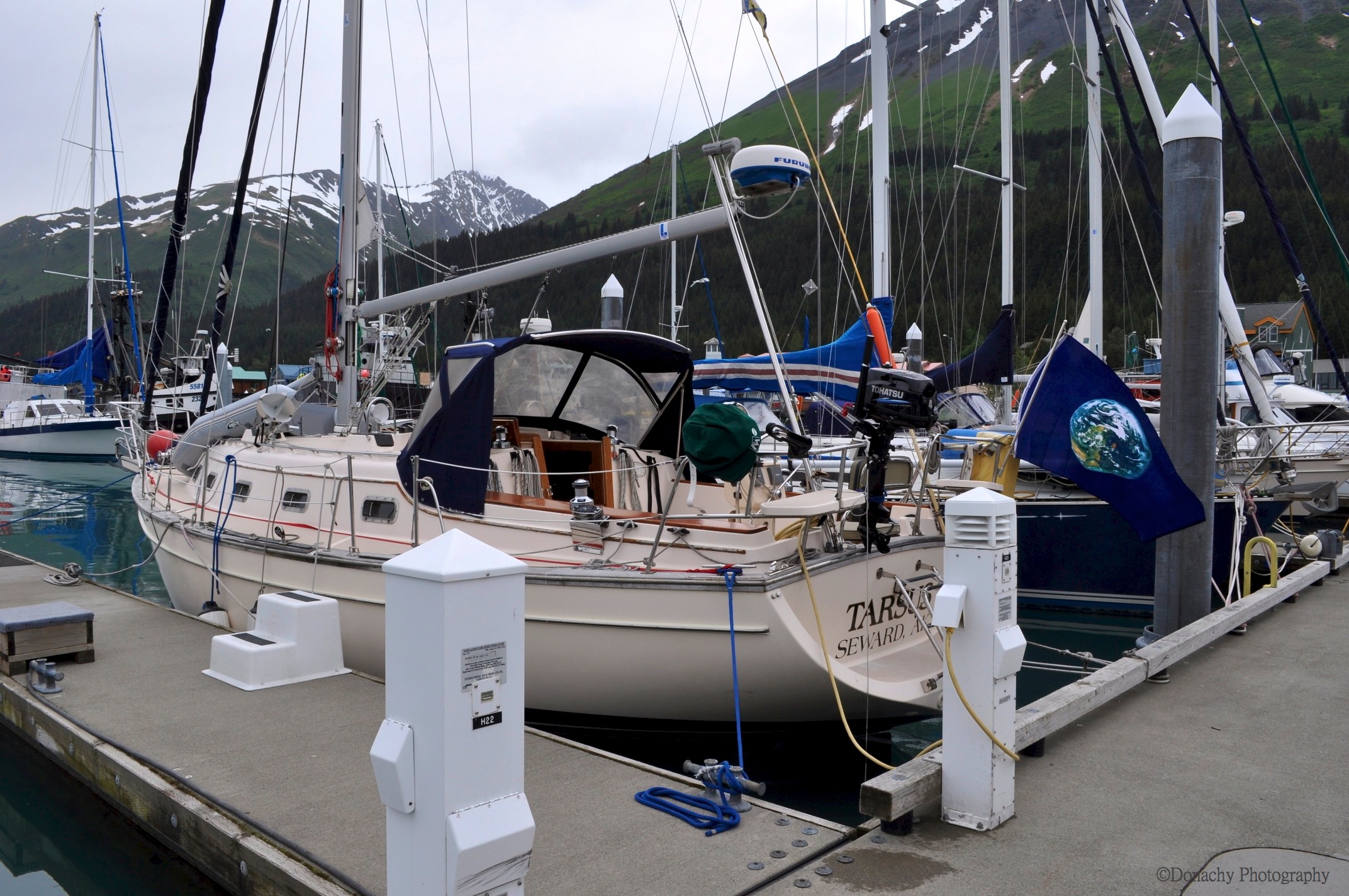
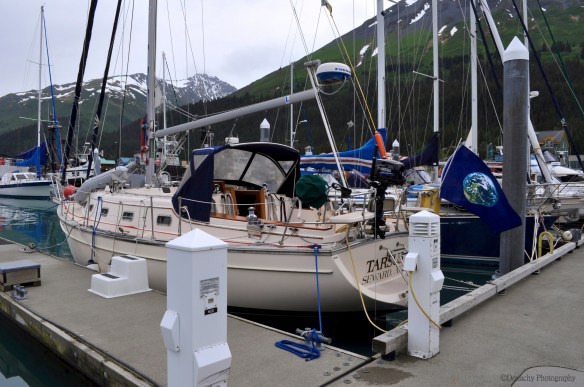
To the uninitiated, this photo may appear to be unremarkable. It’s a boat, tied to a dock. But this photo represents accomplishment and progress in small but important details in our seamanship. (We’re awaiting arrival of the new name letters we’ve ordered for the stern.)

The first time we docked Bandon, we were assigned a generously long, open slip at the end of H Dock in Seward. Nonetheless, having never docked a sailboat on our own before, bringing it in was intimidating. The boat’s 35 feet seemed to morph into 350 feet, and although there probably weren’t more than a handful of onlookers, it felt like we were in the middle of the Super Dome on Super Bowl Sunday, hearts in our throats.

There’s an art to docking, and some boats are easier to maneuver than others. Features such as twin engines and bow thrusters, which our Island Packet does not have, make precision docking easier. Features such as a full keel – which renders it all but impossible to turn the stern when in reverse – make the job more challenging. And then there are the prevailing winds pushing on the bow during the docking procedure, and the inevitable audience that inexperience seems to draw.

But the last time we brought the boat in – after a three-day cruise around Resurrection Bay – we managed to line it up and back it in… if not perfectly, at least competently. It felt good to make obvious progress with yet another aspect of seamanship. And there’s a real pay-off to docking stern first in our assigned slip: the prevailing winds are such that in the evening when we’re relaxing in our cockpit, the dodger (the canvas and clear vinyl hood above the companionway) acts as a windshield when the bow’s pointing south.

Take a walk along most docks, and it soon becomes evident that there are any number of ways to secure a boat to a horn cleat. Some work better than others. You don’t want to create a knot that might jam, but you don’t want a knot that will slip, either. The first few times we tied off, we pretty much guessed at what we were doing – resulting in the beginner’s mistake of too many wraps, and too many hitches. Now we get it: a couple turns of the line across the horns finished with a single weather hitch is both tidy and secure.

As with many things in life, if you’ve never been shown how to do something – including how to begin the task, what the process looks and feels like, and how the end product should appear – even simple tasks can prove challenging. Is this what it’s supposed to look like? and Why is this so difficult? become frequent refrains. Often times manuals appear to be written and illustrated for people who already have some expertise or background in the subject and make little sense until after you’ve figured out how something works.

Barbra rebedding a chainplate for the second time – the first go at it having gone quite wrong. We still may not have gotten it right, and will give it another go till we seal up the rain leak we’ve been trying to chase down. 

There’s nothing like having access to a patient, knowledgable mentor to walk one through the steps of new tasks – and to do so as often as needed until the task is mastered. But most of the time, a combination of self-study, intuition, trial and error and a willingness to occasionally screw up and break things suffices instead. The first time we set the anchor, I wanted to pull out a pistol and shoot the whole system in the fashion of General George Patton shooting a jeep that wouldn’t start. The windlass repeatedly jammed, we had a heck of a time holding the boat in position and for the life of us, we could not figure out when the anchor was on the bottom as the chain, heavy and dense, hung straight down from the bow. We put the engine in reverse, backed up until the chain went taut and our movement stopped, and then spent a fitful night worrying that the anchor wasn’t set at all and we’d wake up to find our boat grounded.

But the anchor held, and the next morning it came up with chunks of clay and mud clinging to it, indicating it had dug in just as it should have. The next time we set the anchor, the process went smoothly… leaving us wondering how in the world it could have been so difficult the first time.

And so it goes. With a lot of what we do, the first attempt is chaotic, filled with uncertainty and error and no small amount of frustration. But we think and communicate and debrief, and subsequent attempts go more smoothly and fill us with satisfaction and, yes, pride.

Each new thing we learn is a new thing we’ve learned. This summer, our task has been to begin to master some of the most basic elements of sailing, seamanship and boat care. The learning curve, for us, is steep. But by taking things in small steps, it seems achievable. Looking into the future, it is apparent that in sailing, we have found a pass-time and a lifestyle in which there will be no end to additional skills to master, knowledge to acquire, and experiences to cherish. That’s what drew us to this in the first place.

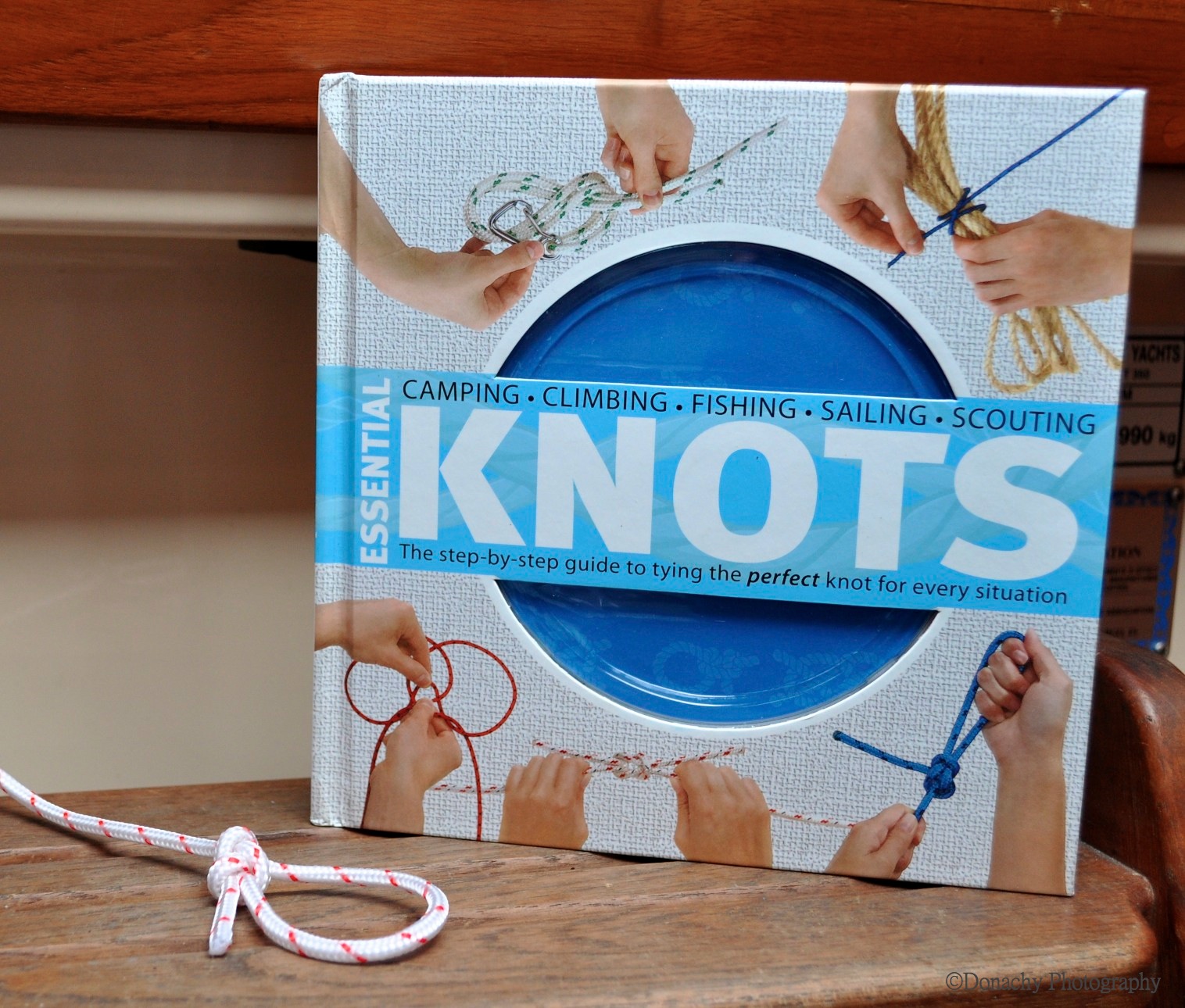
Knots are essential to sailing, and the bowline (above) is a classic with multiple uses. After consecutively tying this knot dozens of times, either one of us could probably tie it in our sleep.

Sandhill Cranes with Chick: Potter Marsh, Alaska

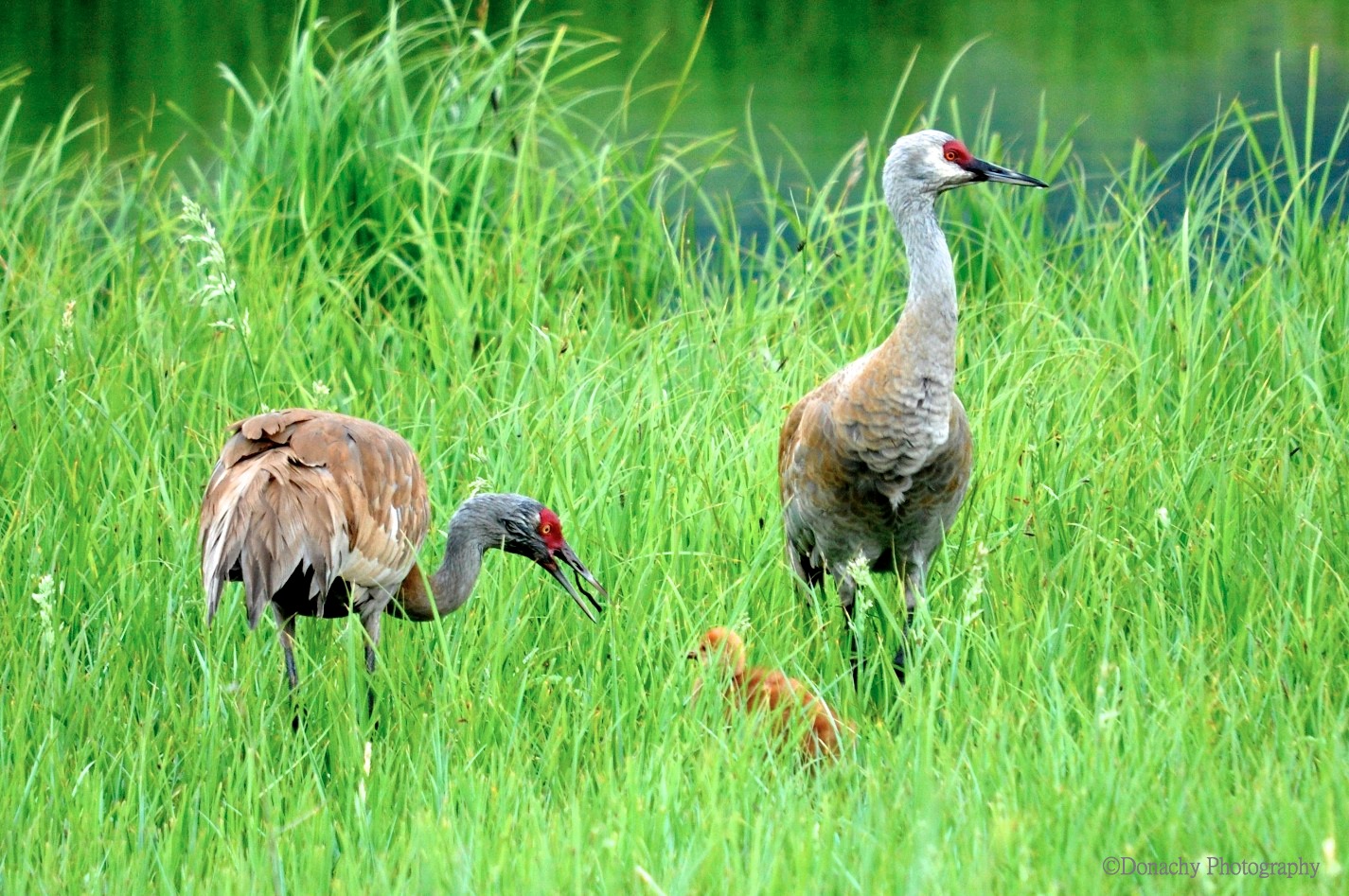
Driving to Anchorage from Seward recently, we spotted these sandhill cranes at Potter Marsh and decided to park the truck and walk out onto the boardwalk for a closer look.

Large birds are cool, and in North America, there aren’t many birds larger than Grus canadensis, sandhill cranes. Adults typically weight 8 to 10 pounds. The stand four to five feet tall and have wingspans of five-and-a-half feet to nearly seven feet. Sandhills are fairly common in the west, and in a few places can be viewed by the hundreds or even thousands. More frequently, they are seen here and there in pairs, in small groups, or as individuals.

The sexes are similar. Plumage ranges from drab gray to rusty brown. Aside from size, the most distinguishing characteristic is the red crown. (Click the photos for a larger view.)

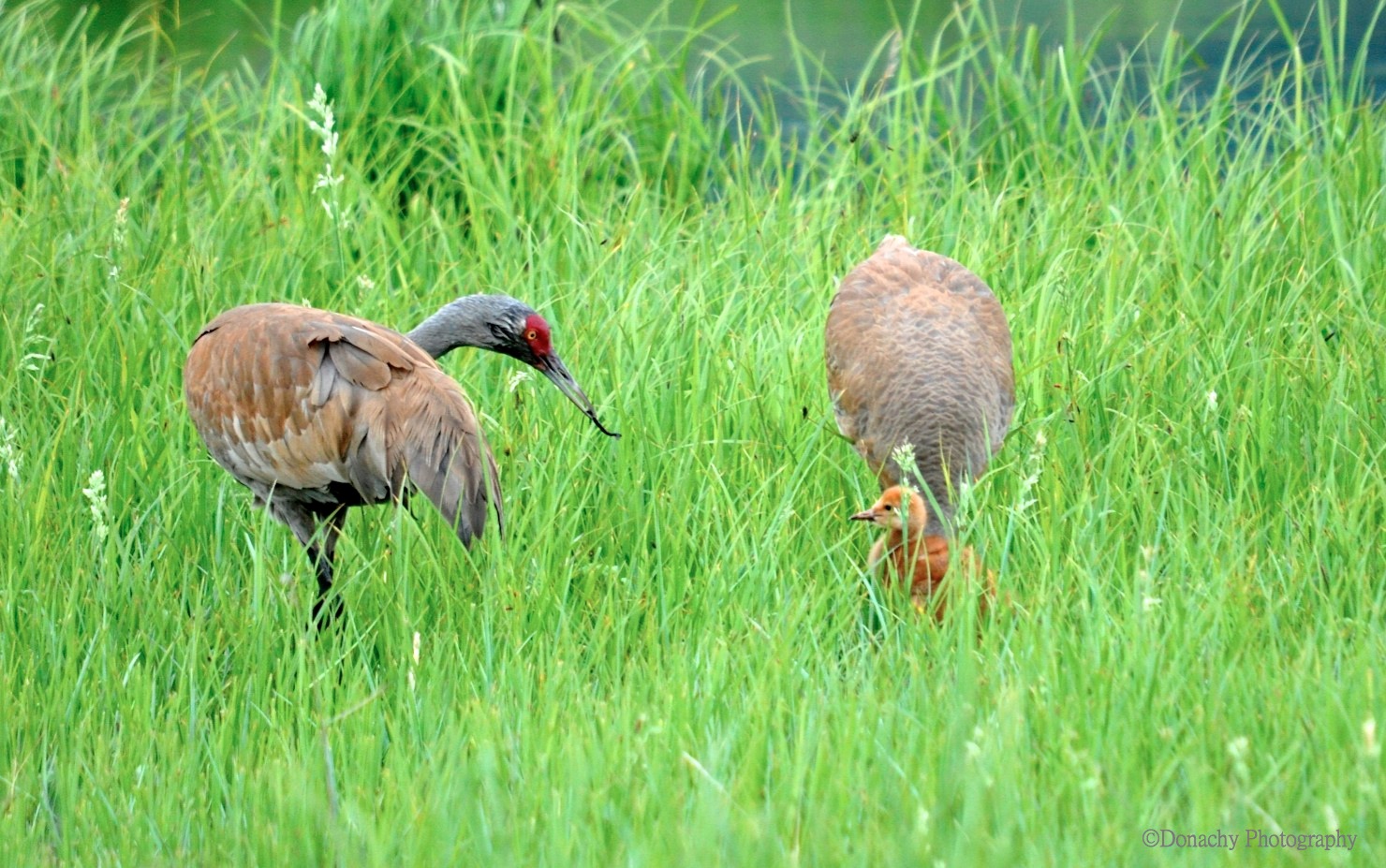
We couldn’t quite make out what the adult bird is feeding the chick. Cranes are catholic in diet. Berries and seeds make up a large portion of their diet, but insects and other small animals figure in as well.

This chick will stay with its parents for 10 months or so – until just before next year’s breeding season when the parents will lay one to three eggs. Sandhills have a life expectancy of about seven years in the wild, but may live up to three times that long. Several subspecies occur throughout the U.S. and across the Pacific to Siberia. Accidentals have been reported in Europe.