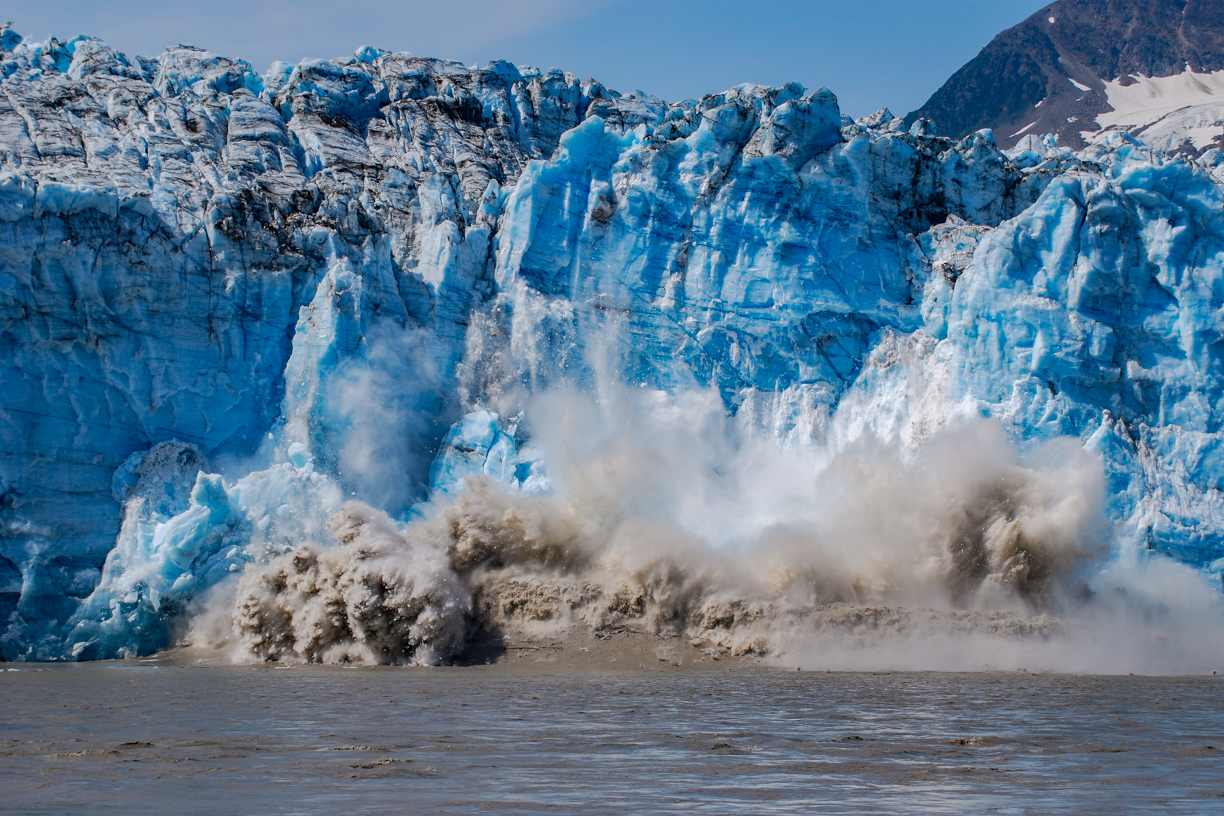
When we first came to Alaska back in 2009, you could still make the 49 mile drive from Cordova to the Million Dollar Bridge (the Bridge to Nowhere). Across the broad, swift, roily Copper River, massive Childs Glacier towered. We had just completed the Salmon Jam half-marathon. Along with another couple, we rented a car and made the drive out through the vast delta wetlands along a mostly unpaved rough, pot-holed road – Trumpeter Swans, other waterfowl, beaver lodges, bear scat and even a couple of moose along the way, distant mountains, our eyes wide with Alaska wow.
Barbra was our primary photographer in those days. We had identified an area that was active, popping and cracking, sloughing off showers of ice. “That entire face is going to go,” I predicted. Barbra set up the camera on a tripod and programmed it to take a shot every second. (The result was like a stop action film.) Shortly after the above shot was made, a wave of five or six feet came barreling toward us with a speed that caught us off guard. I grabbed the tripod as we scrambled for higher ground. Back in Cordova, upon seeing the photos on our camera a Forest Service Ranger told us we had witnessed a “once in every five years or so event.”
Light and creamy vanilla cheesecake drizzled flooded with wineberry syrup. Just building the anticipation for berry-picking season.
For most, I imagine spring flowers sow hope for warmer weather and start dreams of sunny summer adventures. The flowers of this particular spring were different for me.
For the last two summers, Jack and I have spent countless hours studying and identifying all the flowers we could find in the surrounding areas of Chignik Lake. It was a beautiful education. The flowering season began with chocolate lilies and ended with tiny white yarrow with lilac-colored geranium sustaining throughout. Along the growing months from May through October, a rainbow of blossoming gems ebbed and flowed. Although I loved seeing and identifying all the blooms, the flowers that gave me the most joy were the ones that I knew would transform into fruit. As we hiked through the months, I would monitor the progress of my miniature crops as they turned from tiny bud to flower to hard little fruit, and then to the final stage of delectable berry treasures that were ready to harvest.
Whenever Jack and I visit different places, we regularly look for flowers. It is interesting to us to see which flowers we have learned about at the Lake which also grow in other places. As it turns out, we are now in a new place. Yes, a surprising plot twist.
We would not have guessed we were going to make a move…even as late as this recent February. A principal job was opening at my school and I was just about finished with my credentialing coursework. We loved our community and our home. We have close friends and a deep connection to Chignik Lake. But life happens. Way leads to way. Turned out the way that opened was a door we had been keeping an eye on for a long time.
If you’ve been following our story for a long while (like thirteen years long), you’ll remember that our whole Alaska adventure began with a summer-long trip. It was one of those once-in-a-lifetime trips that people do. A hobby at that time had been running destination half marathons. Jack found an interesting destination that would align this hobby with a blend of other interests like road-tripping, camping, boating, and of course visiting Alaska. With just six days to make it up the Al-Can, launching our trusty C-Dory in Valdez, and boating over to the destination Salmon Jam Half Marathon in Cordova Alaska, we would start a journey that we had no idea would change our life. On the way home from that Epic Alaska Summer Adventure, we decided that Alaska would become home. In the way life sometimes circles and spirals, we find ourselves back in Cordova. This time, it is not a travel destination, but a new home.
A common thread in all of our our Alaskan homes has been the opportunity to forage for interesting edible plants. How fortunate are we to live in a big beautiful state that offers so many wild foods…among my all-time favorites – berries! We discovered many flowers on our initial hikes on the trails in the Chugach National Forest. I’m happy to report blueberry, low bush and high bush cranberry, salmonberry, currant, nagoonberry and lots of strawberry flowers. Now, in this new place, I get to follow my familiar summertime tradition of monitoring all of these flowers’ progress from bud to fruit. With any luck, we’ll find lots to harvest later this summer.
Jack suggested I share my process for making wineberry (aka nagoonberry) syrup. Most people find the process to be tedious. It’s pretty simple, actually. After picking the precious gems from your secret spot, take them home and xxxxxxx xxxxxxx xxxxxxxxxx xxxxxxx xxxxxxx xxxxx xxxxxxxx xxxxxx. For each cup of processed berries add 1/4 cup of water. Simmer the berries until soft. Smash the mixture with a potato masher. Separate the juice from the pulp by suspending a cheesecloth over a . Every time I try to publish this, it gets redacted. I guess the FBI doesn’t want it shared – (Fruit and Berry Interagency). 😉
For this creation, I used a no-bake cheesecake recipe adapted from a blog I follow, Sally’s Baking Addiction. I modified it to make a 4-inch version, which is perfect for two hungry writers, or can be served to four for a nice little sweet bite at the end of a meal. I like the no-bake version to complement fruit syrups because it is light and airy but still retains the tanginess of the flavor you’d expect from a cheesecake.
4-inch No Bake Cheesecake
Ingredients
Crust
1/2 cup graham cracker crumbs
1.5 tbsp brown sugar
3 tbsp unsalted butter, melted
Cheesecake
1/4 cup + 1 tbsp heavy whipping cream
6 oz. cream cheese, room temp
2 tbsp granulated sugar
1/2 tbsp powdered sugar
1 tbsp sour cream
1/2 tsp lemon juice
1/2 tsp pure vanilla extract
Directions
To make the crust, stir together crust ingredients. Pour into a 4-inch springform pan. Use the back of a spoon to pack the crust tightly against the bottom and sides of the pan. Place pan in freezer while the filling is being made.
Using an electric mixer fitted with a whisk attachment, whisk heavy cream until stiff peaks are formed. Scrape whipped cream into a separate bowl.
Using the original bowl you used for whipping cream, beat cream cheese and granulated sugar together until smooth.
Add powdered sugar, sour cream, lemon and vanilla. Beat again until mixture is smooth.
Gently fold whipped cream into cream cheese mixture.
Spread cheesecake filling into prepared crust.
Cover with plastic wrap and let cheesecake chill and set. I left it in the fridge for about 18 hours.
When ready to serve, loosen the chilled cheesecake by running a knife around the perimeter of the pan before springing it open. I prefer to serve the cheesecake without any syrup and let my guests adorn their own. It definitely adds to the anticipation and the wow factor.
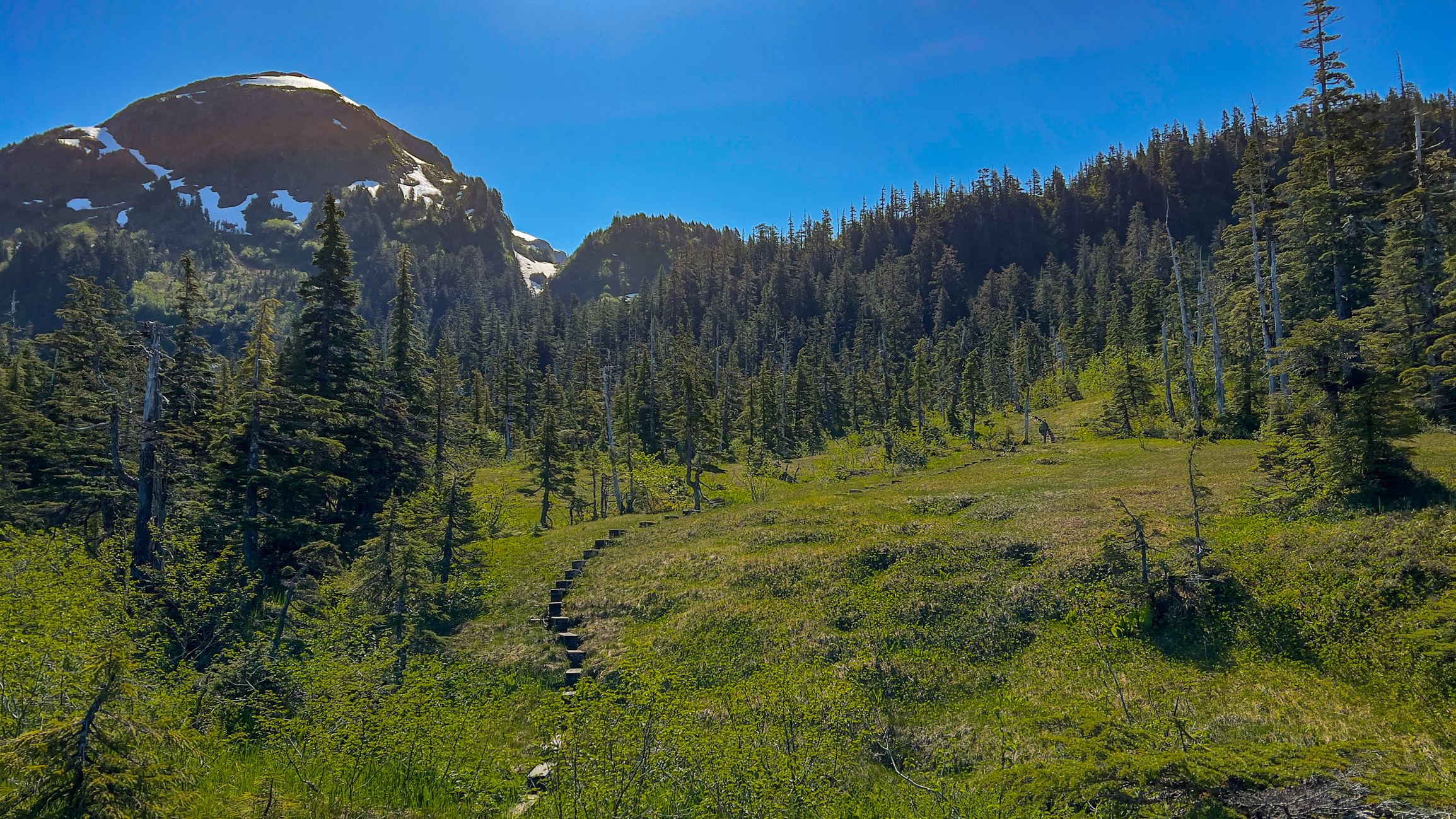
This is what a sub-polar temperate rainforest looks like on the dry side of a mountain. The first part of the trail gently meanders through a forest of hemlock, spruce and cedar. The understory is populated by blueberry, currant, salmonberry, devil’s club, twisted stalk, several species of fern and other plants.
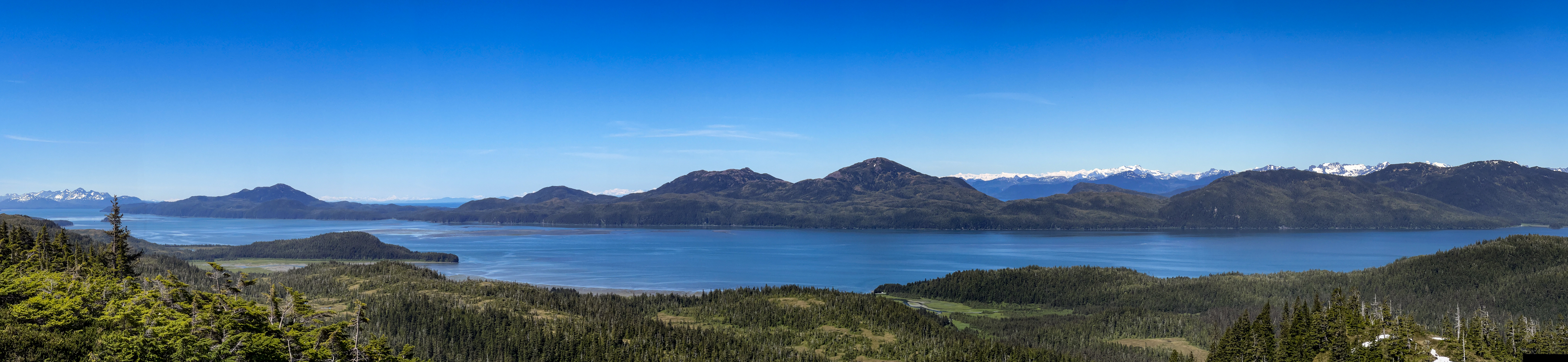
On June 18 we took advantage of a warm day filled with sunshine to take on the Heney Ridge Trail near Cordova. Lingering snow fields above the tree line stopped us with about a quarter mile to go on this 4.1 mile trail, but from where we stopped, the sweeping views taking in snow-capped peaks and Prince William Sound were nonetheless spectacular.
As we gained elevation, the trees gradually thinned out and in places gave way to muskeg meadows. This is marshy, fragile terrain. Narrow boardwalks and steps installed by the Forest Service help minimize hikers’ impact. (Barbra is right of center – a tiny figure giving some idea of the scale of this landscape.
Getting even a glimpse of birds proved challenging, but along the way we heard the songs and chatterings of Boreal Chickadees, Golden-crowned Kinglets, Ruby-crowned Kinglets, Orange-crowned Warblers, Wilson’s Warblers, Hermit Thrushes, Varied Thrushes, American Robins, Crows and Ravens. An American Dipper buzzed by as we were admiring the upper reaches of Heney Creek, and once we had climbed above the tree line we were able to look down on soaring eagles and gulls. Fresh bear scat. Fox scat dense with hair from its meal.
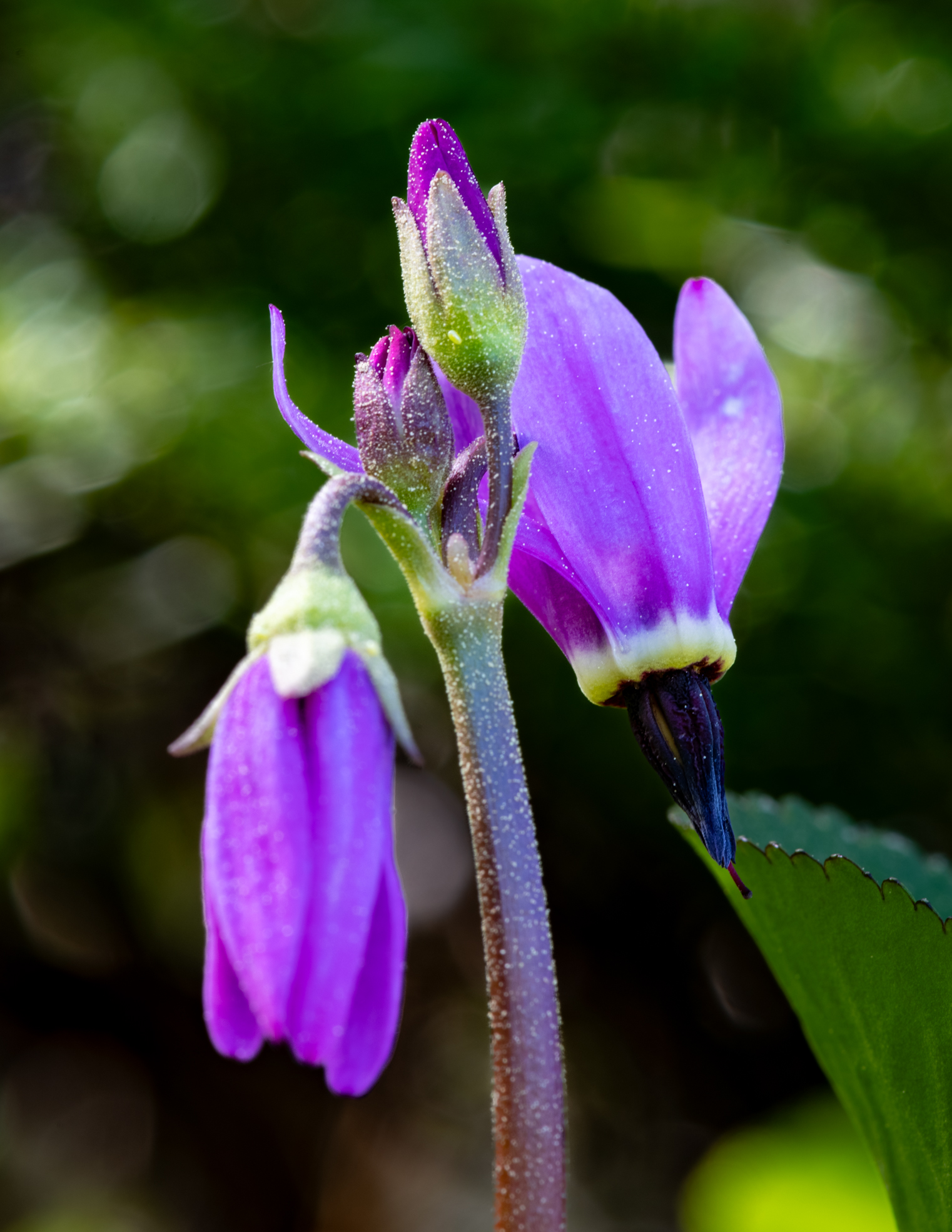
It was in these high meadows that we came upon an old friend: Shooting Stars, a favorite flower we didn’t have at Chignik Lake and were happy to reacquaint. This specimen is dusted with pollen from evergreen trees.
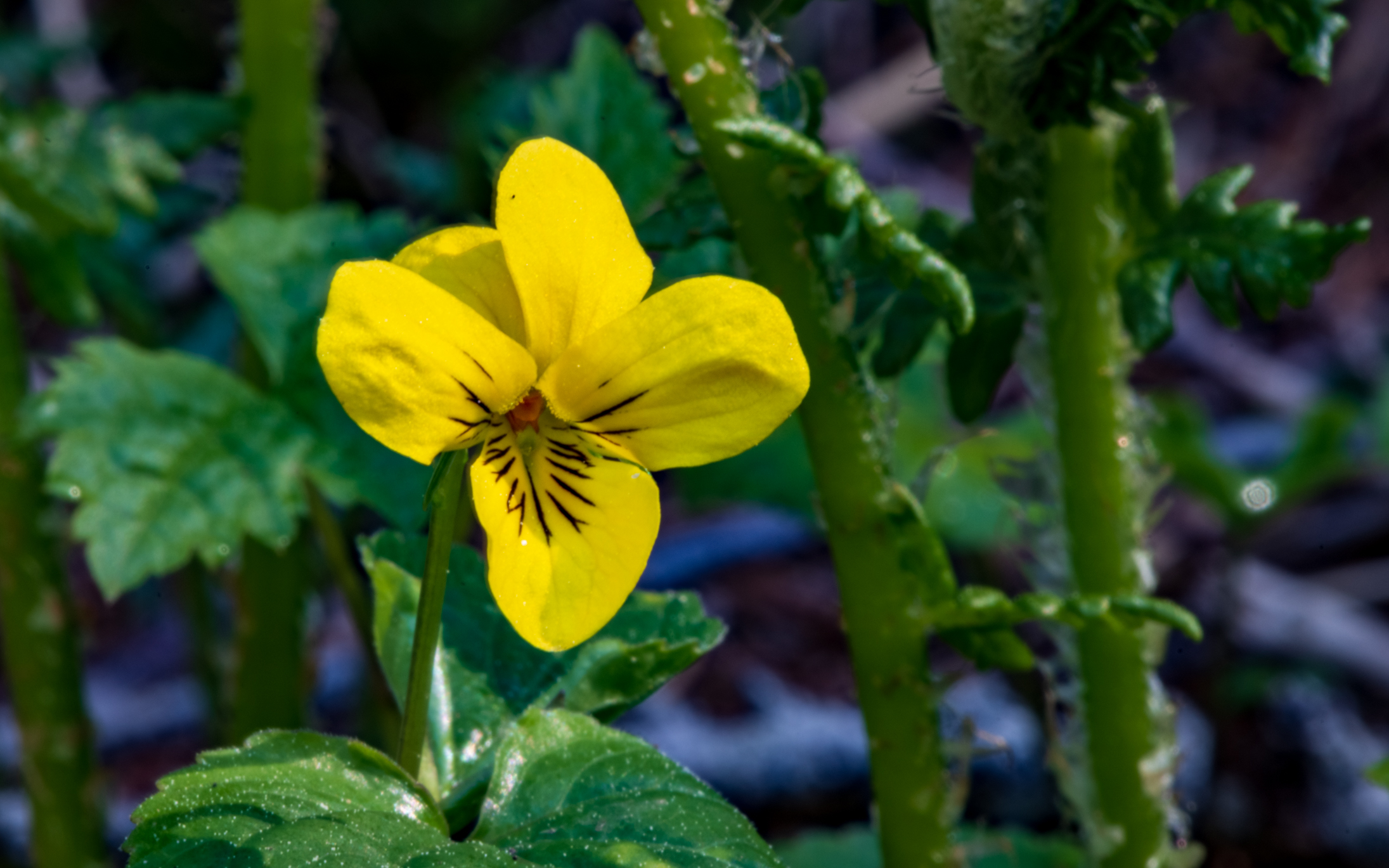
Several types of violet are native to Alaska. This tiny beauty is Stream Violet which we found growing near seeps and streams along the trail.
From approximately the halfway point, the trail became steep (there is a ladder in one place) and mostly rocky. No technical climbing involved, but Barbra and I agreed on the adjective “rigorous.” Totally worth the effort, though.
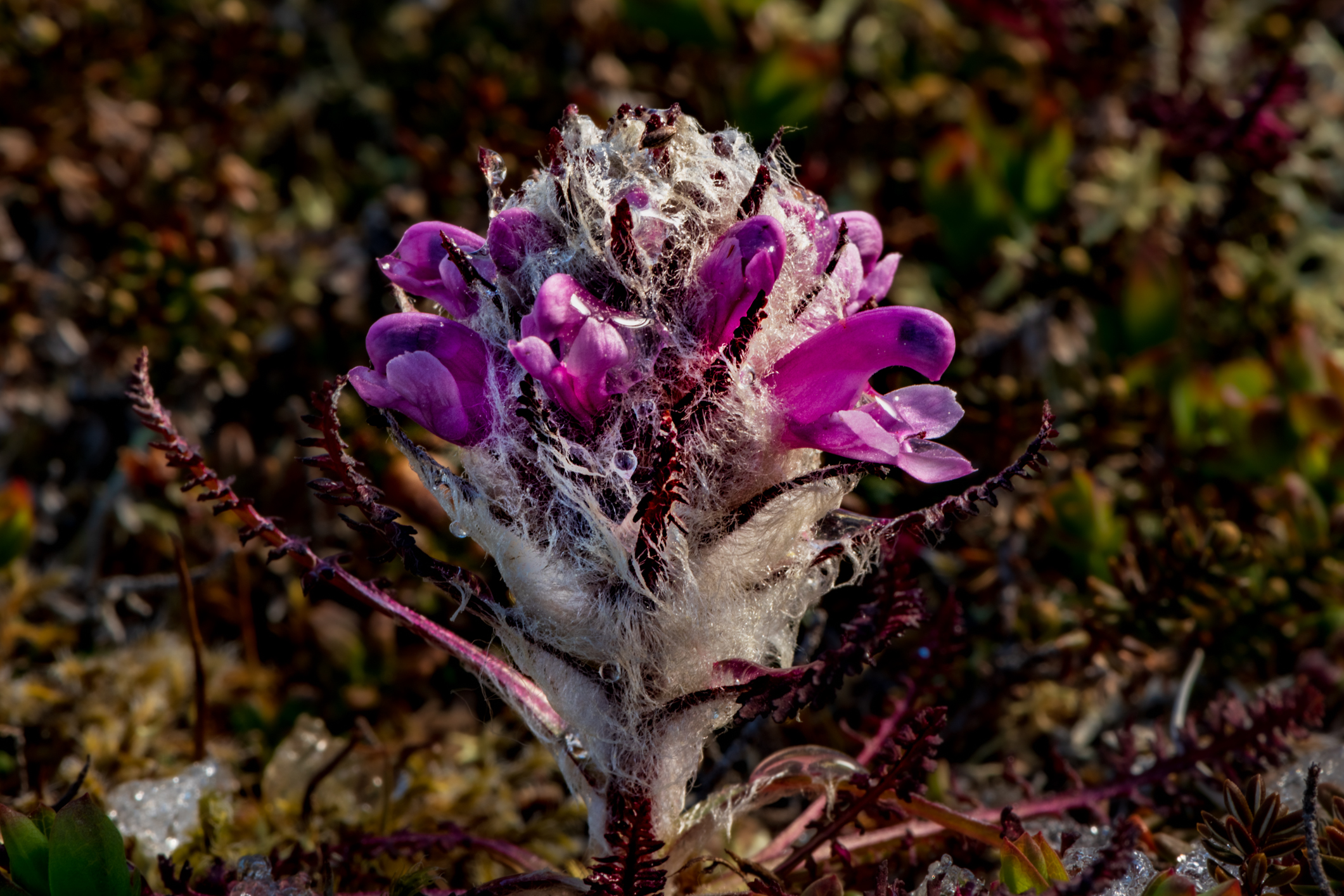
At the rocky terminus of our hike, we looked for alpine flowers. Small but beautiful, we found a few. Jewel of the mountains, Wooly Lousewort.
Narcissus-flowered Anemone
One often has to look closely to find the gems that are alpine flowers. This Wedge-leafed Primrose bloom is about the size of a fingernail…
…and these Alaskan Pincushion flowers are even small than that. But they’re all favorites, the two of us calling back and forth to each other with each discovery. Bell heather, tiny Vaccinium, minuscule Alpine Azalea, White Marsh Marigold (which might better be named Snow Marigold) in wet places…
Rock cairns mark the alpine portion of the trail. The last part is fairly lightly traveled, and it’s easy to confuse a rocky ephemeral creek bed for the actual path. Eagles soaring below, piping from perches in the distant forest, waterfalls rushing from melting snowfields, a light breeze, shirtsleeve warm, quiet… We’ll be back.
I found a jar upon a mountain and thought to open it it smelled of moonshine and spring winds upon that mountain top It gathered in the village below the lake and river and distant sea
I found a jar upon a mountain near the village where I lived it caught the light a certain way and seemed to hold it there It gathered in the autumn day the sky, the mountains, the distant sea
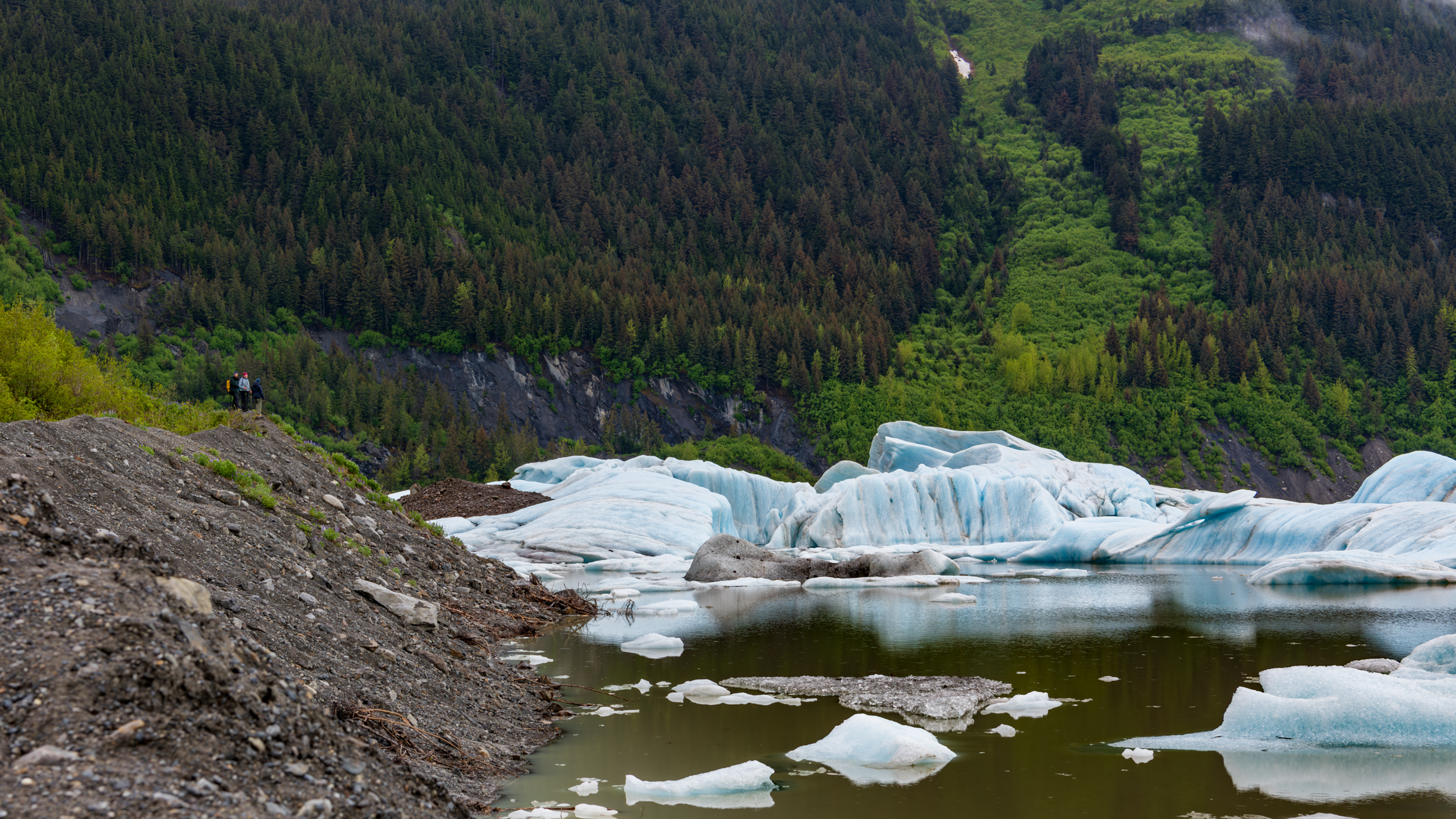
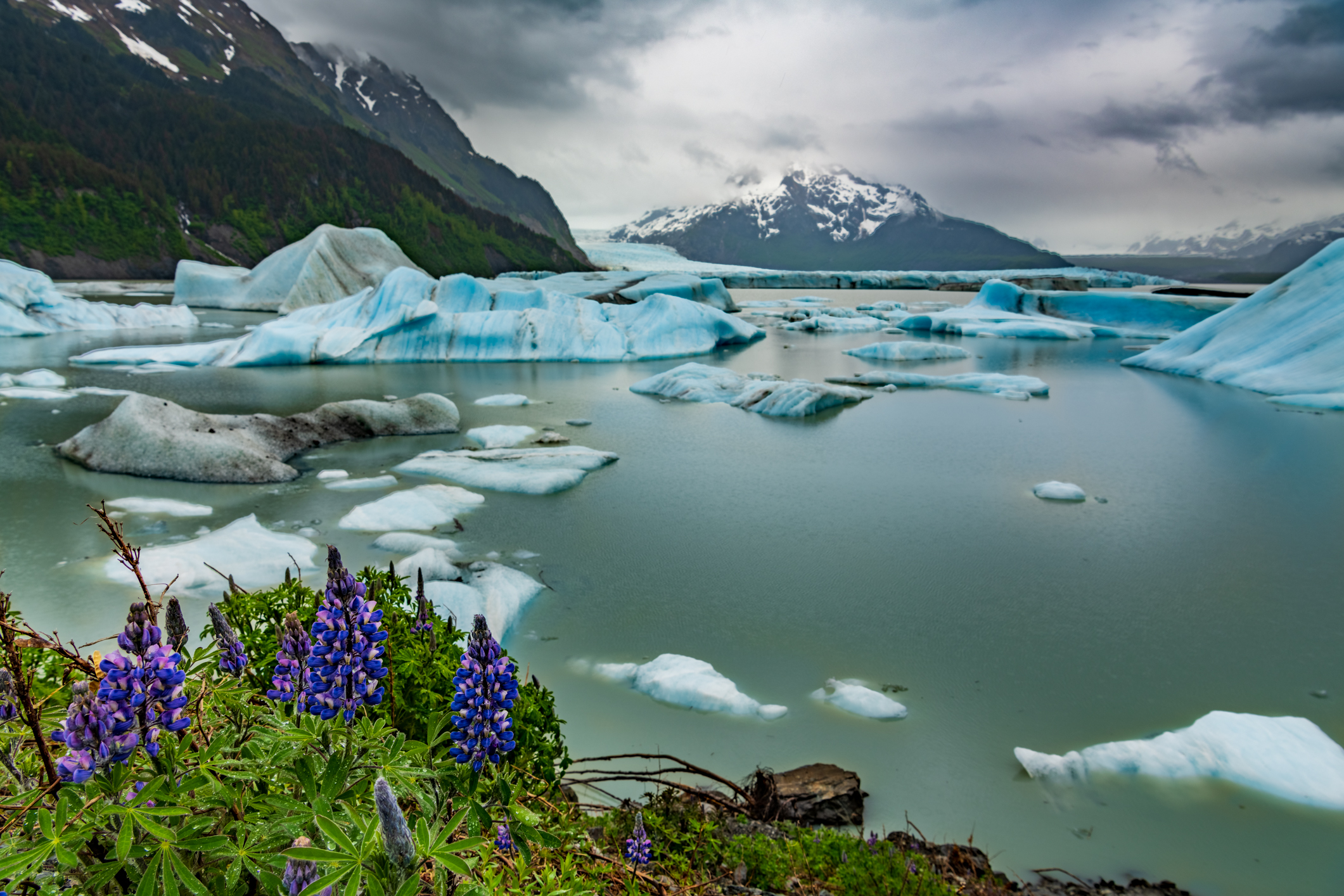
Quite a few of the images I capture are key-worded “vast” in my Lightroom catalog. Here, as I was walking along the glacial moraine at Sheridan Lake, I turned around just in time to catch Barbra and two visiting friends taking in the landscape. Located about 17 miles from our home in Cordova, a short walk through spruce and hemlock forests leads to this magical lake where, in wintertime people ice skate among massive structures of ice and in springtime and early summer kayak and canoe through the same setting.
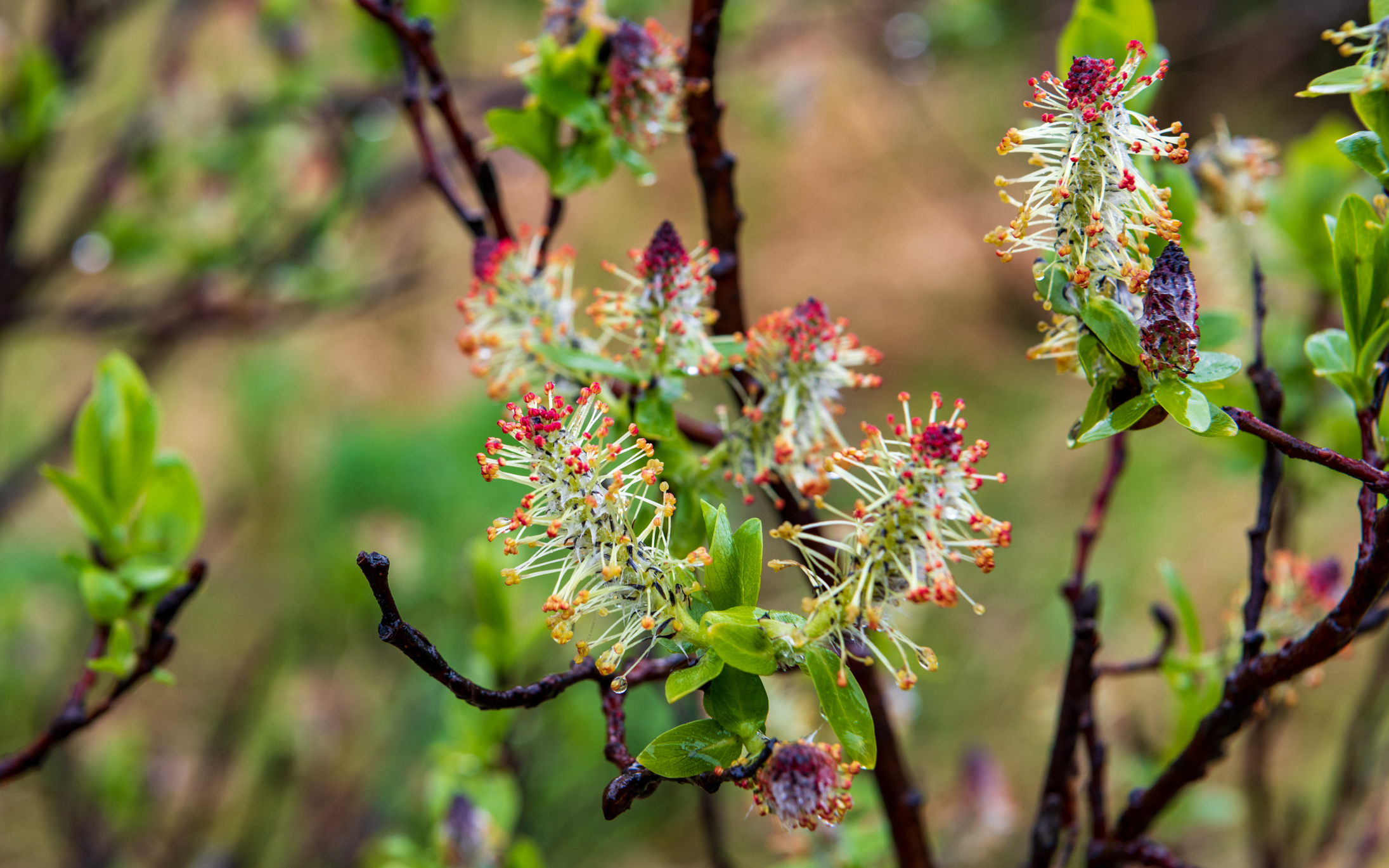
It was June 12 when we visited the lake, but here on the edge of Alaska’s Chugach National Forest, the world’s northernmost rainforest, it’s still spring as these willow flowers attest.
That’s Sheridan Mountain on the left side of this image – another hike for another day. Just right of center is a peek view of Sheridan Glacier itself.
We’re hoping to visit this lake again soon with our pack rafts, hopefully on a day with a little nicer light. It’d be interesting to get a closer view of the ice, and to put a watercraft of known size in the picture to provide a sense of scale.
Having arrived in Cordova by ferry from Whittier (a 100-mile cruise across Prince William Sound) on May 15, although most of our time has been given to setting up our new home, we’ve already managed to feather in a handful of hikes. With nearly 20 named Forest Service trails within a short drive – and all of them changing with the seasons, all of them beautiful as they wind through stands of moss-draped evergreens, through muskeg, up mountains and along lakes, rivers and streams, there will be lots more to come. So stay tuned!
A landscape seen by fewer than 100 living people….
The Hike Up Flattop
There’s a small mountain behind our village. We call it Flattop, though once you reach the peak you find that it is somewhat rounded. Although reaching the summit constitutes an elevation gain of only about 1,200 feet (a quarter of a mile; four football fields), because it is the foreword-most mountain facing the village, the summit provides an unobstructed 180 degree view sweeping from the corner of Chignik Lake to one’s left where Clarks River enters, down the lake and through the village, and then down the Chignik River all the way across the estuary to the next village, Chignik Lagoon, a vista encompassing about 12 miles. But in fact, the view is more grand even than that, for one can see mountains 20 miles beyond Chignik Lagoon where a portion of the Alaska Peninsula curves out into the Alaska Gulf, and while gazing across Chignik Lake the landscape disappears in haze over Bristol Bay. Keeping in mind that a few steps beyond the last house in the village one is entering a landscape fewer than 100 living people have seen, the view from Flattop is even more exclusive.
The roundtrip hike from our home to the summit and back is fairly rigorous. We begin by following the community’s main thoroughfare, a dirt road that curves along the lakeshore, crosses a small, willow-crowded stream inhabited by char, and then branches off to the left past a few houses beyond which is a honda trail. For about two miles, the trail alternately cuts through stands of scrub alder and willow, open tundra, and shoulder-high grasses, fireweed, ferns and salmonberry brakes.
The trailhead leading up Flattop is easy to miss if you don’t know where to look. People – young men who are hard on their machines – very occasionally take their quads up the mountain, though scarcely often enough to beat back the jungle-thick vegetation waiting to reclaim any seldom-used path in this part of the world. Not long ago, a neighbor was lucky to get clear in time to avoid injury when the mountain took control of his honda. His quad is now somewhere on Flattop’s steep flanks, hung up in alders, unrecoverable. One’s own two feet are the more prudent – and satisfying – option for ascent.
In the early morning of September 17, we entered the trailhead through a field of tall grasses and fireweed gone to downy seed, colored with autumn, made dripping wet with low fog. As we gained elevation, the grasses, ferns and flower stalks gave way to thick stands of salmonberry bushes. It wasn’t long before our pants were soaked and our water-resistant boots were saturated through to squishy socks. Sunshine in the forecast promised dry clothing once we climbed beyond the vegetation.
Landmark by landmark, salmonberry brakes began to thin. Alders grew smaller and more wind-twisted. We ambled through openings where, back in early June, we’d come across patches of heathers and wildflowers – vaccinium, geranium, yarrow, paintbrush, candle orchid, fireweed. At times we lost the faint trail, the path buried in tall, thick grasses or barely discernible through tangled tunnels of gnarled alders. Just as the sun broke free from mist and crested the summit we emerged onto the first treeless scree, the sudden warmth and open landscape a joy, handfuls of lingonberries, tart, sweet, energizing.
As we continued up the slope, I studied the loose scree for signs of the Weasel Snout, lousewort, Alpine Azalea, Alp Lily, Pincushion, Moss Campion, Roseroot, avens, saxifrage and Purple Oxytrope I’d photographed in June, but aside from a few lupine still clinging to periwinkle-colored blooms, the rest were gone, the few remaining leaves various hues of yellow, red and orange. Near the top we were surprised to find blueberries, wind-stunted bushes hugging thin soil, leaves crimson, berries big and frost-nipped sweet.
We had chosen a day when the forecast predicted calm air, offering the hope of mountains mirrored in a glassy lake and pleasant loafing at the top. We scanned the lakeshore and flats for moose and other wildlife, but aside from a few Black-capped Chickadees, Pine Grosbeaks, a sparrow or three and clouds of midges dancing in filtered sunlight, animals were scarce, though near the summit my spirit bird, a Northern Shrike, materialized from out of nowhere to hover a few feet above my head in order to puzzle me out. Bear tracks all the way at the top. Moose tracks and fox tracks along the way. Lynx scat… maybe.
The video is best viewed on a large screen. As you watch, notice the round, snow-crowned summit just barely peaking out from behind foreground mountains in the view across the lake. That’s Mount Veniaminof, an occasionally active volcano 24 miles southwest of Chignik Lake. The earth’s curve over that distance causes it to appear to be only as tall as the closer 3,000 foot peaks. But in fact, Veniaminof touches the sky at 8,225 feet. We hear it rumble from time to time and have occasionally woken to a smoke-clouded sky or a fine dusting of volcanic ash on new snow in the village.
The corner of the lake to the left, in front of those mountains, is where Clarks River debouches. A major salmon spawning tributary, in September Clarks offers spectacular, nearly untouched fly-fishing for returning Coho Salmon.
Then, looking up the lake through the gap in the hills and mountains, the landscape disappears into haze. Black River flows into Chignik Lake here, beyond which is miles of Black River itself, and then the upper lake, Black Lake. Past that is a vast area of boggy tundra and kettle ponds all the way across the peninsula to the ghost village of Ilnik and the coast where sandy barrier islands, The Seal Islands, front Bristol Bay.
Following the landscape to the right, the lake narrows as it flows past the village of Chignik Lake, a community of about 50 to 55 people, most of whom are of Alutiiq heritage. The large white buildings in the middle are the school gym (left) and the school itself (right) where Barbra teaches. Just as the village ends, the lake narrows further, picks up speed and becomes Chignik River. A narrow dirt road follows the river downstream and terminates at a boat landing across from the fish-counting weir, the buildings of which are just barely visible. There are no roads beyond this one, which terminates on its other end at the airfield.
I included a photograph looking downriver and across the estuary, locally referred to as the lagoon. The image zooms in on the village of Chignik Lagoon, the community closest to Chignik Lake. With no roads nor even trails linking the communities, the river and estuary serve as the highway. Virtually everyone in The Chigniks owns a skiff or two.
The end credits roll over a black and white photograph I made from Flattop’s summit in early June.
Hiking with us on this day were school faculty members new to The Lake: Melody Wiggins, Jacob Chapman and Melody’s son, Micah. Barbra is on the right in the group photo.
This summer, one of my goals was to reignite my writing spark. To that end, I signed up for a couple of writing workshops. First stop, Tutka Bay, Alaska.
Several years ago, I acquired the Tutka Bay Lodge Cookbook. It has become one of my two absolute favorite culinary resources. Through the book, I became acquainted with people whom I thought would be kindred spirits. The chefs sought to sustainably use and showcase what they could forage from the lodge’s nearby wilderness. The lodge’s location seemed idyllic – a fjord only accessible by boat surrounded by forest. The cookbook is filled with culinary wonders featuring harvested beach greens, foraged berries and mushrooms, and wild caught fish. When I first read the cookbook, I learned that a cooking school is held on site. I began dreaming of a visit. As with most lodge visits in Alaska, a stay there is expensive. So, it remained a dream – I would say a recurring dream. But I visited the lodge virtually and fueled this dream by regularly adapting the cookbook’s many recipes to create dishes and meals with items we forage and gather here at the Lake.
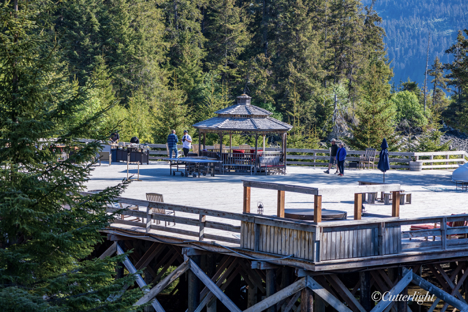
Set among spruce trees and overlooking a narrow fjord off Kachemak Bay, the deck at Tutka Bay Lodge was an ideal place for cooking classes, a soak in the hot tub, or just relaxing and listening to the songs of forest birds.
During this same time, Jack contributed writing and photos to a lovely “local” magazine called Edible Alaska. The magazine features food-related stories from all over our beautiful state. Earlier this past Spring, the Edible magazine people organized a culinary writing retreat at Tutka Bay Lodge. We were lucky to be invited to this retreat along with what turned out to be an intimate group of fourteen enthusiastic foodies.
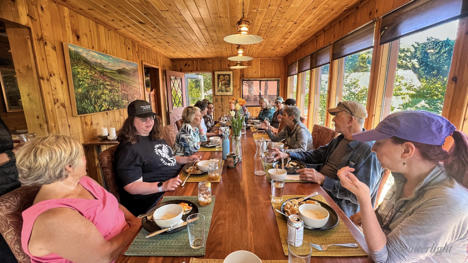
What was a day in the life of an Alaskan culinary writers’ retreat like? As Tutka Bay Lodge is noted for being a dining destination, the days were filled with delicious food. Days started with spruce tip sprinkled breads, house-made lox, fluffy scrambled eggs infused with the lodge’s greenhouse herbs, and bacon sourced from a farm across Kachemak Bay. One of our lunches featured a fresh tossed raw vegetable dish with a grilled open-faced halibut salad sandwich accompanied by a bowl of cream of celery root soup topped with julienned Granny Smith apples. Each dinner began with appetizers paired with wines. Among other starters was a beautiful cold charcuterie lain out along with fresh pretzel bites doused in butter and a Moroccan eggplant tagine. Family-style dinners followed with menu offerings such as king crab infused mashed potatoes, a perfectly cooked beef tenderloin, tossed salads, and herbed biscuits. The most memorable dessert was a Spanish-style baked cheesecake topped with a caramel sauce made from foraged beach kelp.
Due to the workshop atmosphere, there were plenty of opportunities to learn about local foods. Across Kachemak Bay in the town of Homer, we went on guided tours of Stoked Beekeeping Company, Blood, Sweat and Food farm, and Synergy organic vegetable farm. At a dinner hosted by Synergy Farm, we tasted and learned about mead from Sweetgale Wines. Back at the lodge, we foraged the beach at low tide with naturalist guides. Tutka Bay Chefs taught classes on Moroccan spices, salmon preparation and sushi-making. A local oyster farmer taught us about her business followed by an oyster tasting session. I came home loaded with culinary ideas and goals for the summer. I am more inspired than ever to make bull kelp pickles and to find goose tongue and other beach greens from our nearby ocean beaches.
As writers, we were happy for the opportunity to work with Kirsten Dixon, author and lodge owner. She led us through a writing workshop, connecting modern and ancient stories to Tutka Bay. She shared some of her personal writing as well as other writing that inspired her. Kirsten suggested some writing themes and encouraged participants to share their work at the end of the retreat. The lodge features a cozy writer’s loft which Jack and I found to be ideal as we composed our thoughts surrounded by beautiful views and birdsong.
I departed our retreat inspired to write more regularly. But that wasn’t what left the biggest impression. One of the participants I met on the first day confided that she hadn’t been around people in two months. She seemed particularly uncomfortable in social setting settings that were part of life at the lodge. The funny thing is that as she shared this with me, I realized that I felt similarly. For all of us, this retreat was the first time since Covid began that we had been in an intimate setting with new people. A warm feeling was growing in the group. What was it? One person articulated it well. “This experience has been like coming out of a fog” she said. It felt freeing to be in place that invited the sharing of ideas and thoughts, a lovely counter to feelings of suspicion and worry that seemed to pervade social gatherings these past two years.
It was a wonderful visit with newly made friends. I now have a new group I can share culinary ideas with. I have more inspiration to gather and create. I have new ideas to draw writing from. I feel like my fog, too, has lifted.
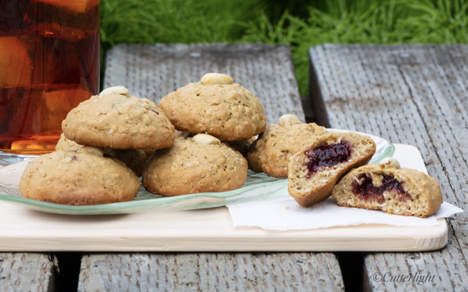
In honor of this feeling and inspired by my new friends and my new cookbook, Living Within the Wild, I give you a small batch of “Coming Out of the Fog Cookies.”
In Kirsten Dixon and Mandy Dixon’s new cookbook, they shared a recipe for berry chocolate chip cookies. The idea is to take a great chocolate chip cookie and embed a surprise of berry jelly in the center. With this recipe bouncing around my head for a few days, I came up with my own version of this cookie. My idea is to take the best part of a monster cookie and stuff it with a complementary jam surprise. This batch is small. (Two people should only eat eight cookies between them, right?) Of course, this recipe can easily be doubled or tripled if need be.
I invite you to join me in coming out of the fog.
Coming Out of the Fog Cookies
Ingredients
2 tbsp unsalted butter, melted
2 tbsp granulated sugar
2 tbsp brown sugar
1 large egg, beaten
½ tsp vanilla extract
2 tbsp creamy peanut butter
8 tbsp all-purpose flour
6 tbsp quick oats
¼ tsp baking soda
Pinch salt
8 tsp jam
Directions
Preheat oven to 325° F (160° C).
Line baking sheet with parchment paper.
In a large bowl, mix together first 6 ingredients.
Stir in flour, oats, baking soda, and salt.
Chill dough for about 15 minutes.
Divide dough into 8 pieces and roll into balls.
Flatten balls.
Place 1 tsp of jam in center of flattened dough.
Close dough around jam. *
Place stuffed cookies, smooth side up, on prepared baking sheet.
Bake for 18-20 minutes, until lightly browned.
Let cookies cool on baking sheet for a few minutes and finish cooling on wire rack.
Enjoy slightly warm or room temperature with a glass of freshly brewed ice tea.
*If your dough is too sticky, butter your hands to work with the dough.
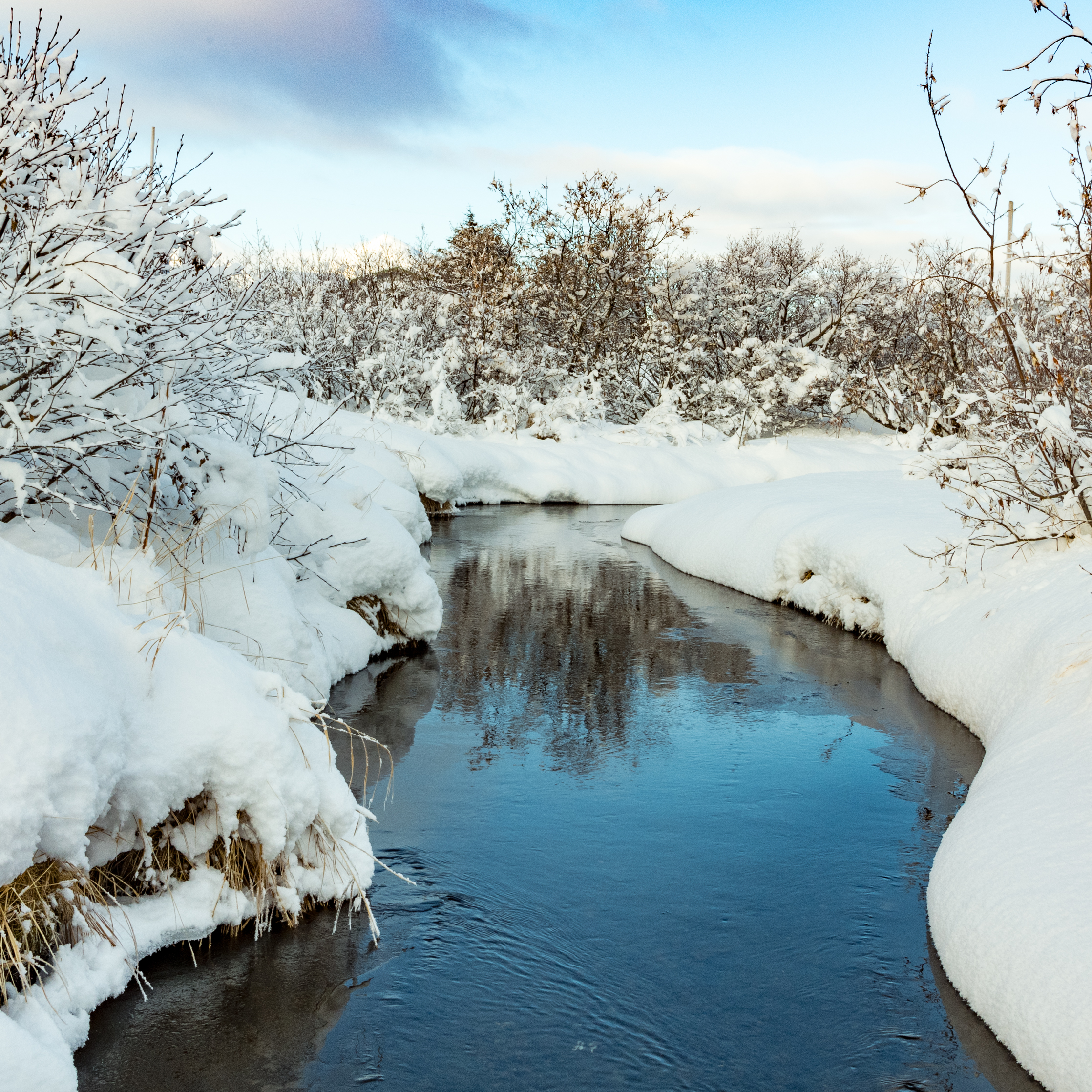
Barbra and I call the stream in the above photo Post Office Creek for its proximity to the former post office here in Chignik Lake. The post office has since relocated, but during the first three years we lived here, we regularly crossed this creek on foot as we traveled back and forth. Although our home sits just 60 paces from a lake full of water, this tiny creek holds an especial appeal and anytime I am near it, I find myself drawn to it, approaching stealthily for a careful look into its deeper pools.
From mid-spring through fall, there are char and sometimes salmon parr and one year a pair of Pink Salmon spawned in a riffle below the culvert where the road crosses. The char are wary, but by approaching quietly and giving one’s eyes a few moments to adjust, fish a foot long and even larger might be found. A cottonwood overlooking the mouth is a favorite perch for kingfishers, and when salmon are in the lake eagles can also be found there. Loons and mergansers regularly hunt the lake’s waters outside the creek mouth and yellowlegs can often be found wading and catching small fish along the shore.
During wintertime, there generally isn’t much evidence of life in the creek’s clear waters, but it’s there – char eggs waiting to hatch, caddis larvae along with mayfly and stonefly nymphs clinging to the undersides of rocks, a visiting heron catching small fish where the creek enters the lake, fresh otter and mink tracks at the mouth some mornings.
In summertime snipe nest in a marsh that seeps into the creek, and bears use it as a thoroughfare so that even in the village, you’re wise to carry bear spray if you’re walking that way. The dense thickets of willow and alder near its banks are a good place to look for warblers and thrushes. In fall Coho gather just below the creek’s mouth, resting before traveling to larger tributaries further up the lake. As Roderick Haig-Brown observed, a river never sleeps. Nor does Post Office Creek. I made this picture on January 13, 2021. (Nikon D850, 24-70mm f/2.8, 1/50 @ f/22, ISO 400, 24mm)
Each September we pick a day when the forecast is for clear skies, pack up our gear, and head up the lake to Clarks River. In years past, we hiked a three-mile honda trail across a rolling landscape of tundra, berry bogs, salmonberry brakes, meadows and dense stands of alders and willows. This year, we took our scow up the lake and beached it on the sandy shore near the mouth of Clarks.
The Silver fishing here can be phenomenal, though it is seldom as easy as the fishing further downriver. By the time they’ve arrived at Clarks, the salmon have been in the river awhile. Although many are still silvery bright, we’ve found them somewhat less inclined to come to our flies than are newly-arrived fish. Nonetheless, basking under blue skies while presenting flies to 10-pound fish cruising the lake’s shoreline is a pleasant change from swinging streamers in river current. We can often see the takes as a salmon peals off from the pod of fish it is swimming with and turns to inhale whatever combination of fur and feather we’re offering.
At some point, the urge to explore the lower reaches of Clarks River itself overtakes us. As we make our way across the sandy beach and then along the well-worn bear path following the river, we never cease to be amazed by evidence of just how many bears fish here. The trampled, matted down vegetation strewn with salmon parts suggests more of a bear highway than a bear trail. There are always a few eagles hanging around, seals, gulls, mergansers and other ducks, and we’ve come across the tracks of otter, mink, moose, wolf and wolverine.
The salmon are always there in September, so many that at times they seem to carpet the rocky river bottom. Every so often a fresh school of fish enters the river, and when they do they sometimes come in such numbers that the wake they push before them looks like a tidal bore. As with the lake, in Clarks’ extraordinarily clear water, the fishing is not a given. But with the right fly, thoughtful casting and patience, we manage to coax a few. The challenge is part of the enjoyment, as is the knowledge that most probably ours will be the only flies any of these salmon ever see.
It is difficult to make a good photo of Clarks itself and the salmon we catch there. During early morning in September, the mountains that cup Clarks keep it in shadow. By the time the sun rises above those jagged peaks, it shines very bright. The process reverses itself as evening approaches, the valley abruptly transitioning from bright to dark in moments as the sun disappears. Barbra made the above photo in the evening of September 12 along the lakeshore just below Clarks. Shirtsleeve fishing in Alaska in September is not a thing to be expected, but each year we’ve picked a day or two, made the trek to this pristine river, and lucked out. (Nikon D800, 24-70mm f/2.8, 1/1000 at f/8.0, 31mm, ISO 400)
It is not an easy hike. Nor is the trail, now overgrown with disuse, easy to find. But one fall day a couple of years ago, a visiting friend and I made the climb to the top of Flattop.
This is the view looking across the lake and across the Alaska Peninsula toward Bristol Bay. Clarks River, a spectacularly clear, nearly pristine spawning tributary, enters the lake just out of view to the left. To the right, the lake narrows and passes by the village of Chignik Lake and then tapers further as the water picks up speed and becomes Chignik River. If you look closely, you can just make out the airplane landing strip on this side of the water near the right-center of the photo. (Nikon D5, 24-70mm f/2.8, 1/160 at f/22, 24mm, ISO 320)











 CutterLight