Out of Chocolate! Now What? Chewy Almond Thins to the Rescue

chewy-almond-crisps-n

These candy-like cookies are ridiculous. Chewy and flavorful – a cure for a terminal sweet tooth.

At the end of most evening meals, Jack and I enjoy a piece of dark chocolate or a little something sweet with a cup of tea. I have a terrible sweet tooth that seems to be sated by this little habit. Thinking that I would bake more than I have been, we didn’t send out very much chocolate for our après dinner tradition. Now our chocolate is all gone – at least till the next Amazon order arrives via bush plane.

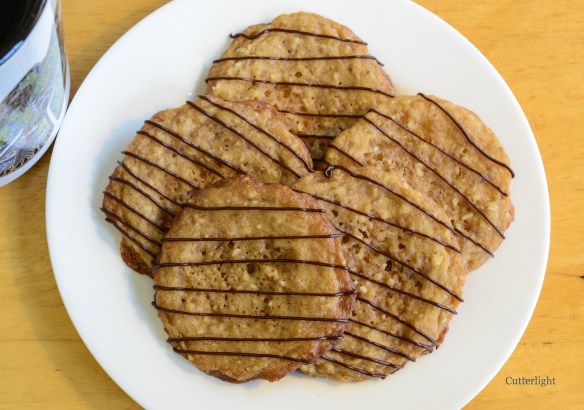
In these kinds of emergencies, my Williams-Sonoma Baking book always seems to save the day. It is a solid baking book with a number of foundational recipes that can be followed directly or easily adapted. I remembered a quick cookie recipe loaded with almonds that I hoped would do the trick. The authors of the recipe called these cookies Almond Crisps. Mine turned out beautifully flat and a bit lacy. They were pleasantly chewy, like a really satisfying caramel. I think this is due to the combination of sugar and brown sugar. Delicious. I adorned these cookies with a chocolate drizzle made from a few semi-sweet chips I had stashed in my pantry.

Our problem now is that three dozen of these cookies have up and disappeared!

Chewy Almond Thins

Ingredients

  • ½ cup unsalted butter, room temperature
  • 1 cup brown sugar
  • 1 large egg
  • 1 tsp vanilla extract
  • ¾ cup all purpose flour
  • 1 tsp baking powder
  • pinch salt
  • ½ cup finely chopped almonds

Directions

  1. In the bowl of a stand mixer, cream butter.
  2. Add sugar and continue to beat until sugar and butter are well mixed.
  3. Add egg and vanilla into mixture. Mix on low speed until well mixed.
  4. Sift flour, baking powder, and salt together.
  5. Stir flour mixture into butter mixture.
  6. Stir in almonds.
  7. Preheat oven to 400 degrees F (200 degrees C).
  8. Line a baking sheet with parchment paper.
  9. Drop teaspoonfuls of batter onto prepared baking sheets. Space cookies about 2 inches apart. They will spread.
  10. Bake 5 minutes. Edges will be golden brown, but cookies will still be soft.
  11. Let cookies cool on baking sheet for exactly 5 minutes. Then remove to wire rack to finish cooling.

Super Sourdough Success

sourdough-loaf-n

Two loaves of sourdough bread fresh out of the oven. As soon as they cooled enough to cut, we were in. Delicious!

Every July, I make culinary goals for myself as this is the time of year we do our bulk shopping for our year in the Alaskan bush. My two big goals this year were to master working with sourdough starter and to make cheese.

I’ve tried making sourdough bread with starter before. A friend gave me some of hers which she had had going for several years. For whatever reason, my sourdough did not turn out. Jack called it an epic fail. I don’t remember it being epic. That would have involved tears, bread in the trash, and possibly my fists pounding the floor like a tantrumming child. Don’t ask me about the time I tried to hard boil eggs! That was an epic fail. I do remember that my last attempt making sourdough bread wasn’t good. So, it went on the goal list to try again.

Most people go to their local store to buy the things they need. If they are lucky, they live in a place with specialty shops where they can find unique tools to help them achieve their culinary goals. Out here in the bush, we rely on the U.S. Postal Service to deliver items we can find via the Internet. This involves lots of planning and lots of patience waiting for items to show up. Last week, my sourdough starter finally arrived. I’ve been diligently feeding it every day and it’s been bubbling away on the countertop in a nifty glass jar I bought especially for this purpose.

Today was the big day. The starter smelled nicely sour. I gathered my ingredients and set to work. Happily, the two loaves came out lightly sour and made for a great accompaniment to Jack’s clam chowder. Hurrah! It will be interesting to see if the starter changes flavor as it continues to age. I am also curious to see how the starter will taste in sourdough pancakes. Stay tuned to find out!

Homemade Sourdough Bread

Ingredients

  • 3 ¾ cups all purpose flour
  • 2 tbsp granulated sugar
  • 2 ¼ tsp active dry yeast
  • 1 cup whole milk
  • 2 tbsp unsalted butter
  • 1 ½ cups sourdough starter
  • 2 tsp salt
  • 2 tbsp olive oil
  • 1 egg
  • 1 tbsp water

Directions

  1. In a large bowl, combine 1 cup flour, sugar, and yeast. Whisk together.
  2. Place butter and milk in small pot on stove. Warm to about 110 degrees F.
  3. Whisk milk mixture into flour mixture.
  4. Whisk in sourdough starter.
  5. Stir another cup of flour into dough mixture.
  6. Stir and then knead in one more cup of flour and salt. (I actually knead in the large bowl.)
  7. Knead in final ¾ cup of flour. Dough should be well mixed and slightly sticky.
  8. Turn dough out of bowl and coat bowl with 2 tbsp olive oil. Place dough back in bowl.
  9. Cover with plastic wrap and rise for 1 hour or until doubled in size.
  10. Punch dough down. Divide dough in half and shape each half into a loaf-shaped log.
  11. Place loaves on a parchment-lined baking sheet.
  12. Cover and let rise for an hour, or until doubled in size.
  13. Heat oven to 375 degrees F.
  14. Mix egg and water and brush loaves generously with this mixture.
  15. Bake loaves for 25 minutes. Finished loaves will be golden brown and have a hollow sound when the bottom is tapped.

30 Minute Raspberry Jam!? Yes, Way!

raspberry-jam-n

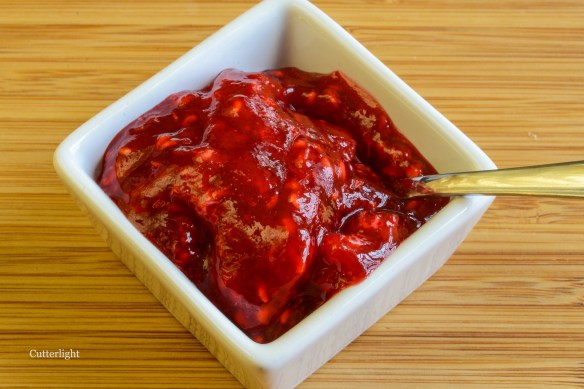
Fresh raspberry freezer jam. 30 minutes from ripe berries on a bush to yummy jam.

Chignik Lake is a magical place. Maybe I shouldn’t gleefully announce this. One of the things that make this place magical is the small population. 😉

Jack and I really enjoyed living in Mongolia. The stint there certainly scratched a life-long itch of living overseas. We enjoyed trips our to the countryside and we certainly miss our Mongolian friends. But while we were away from Alaska, we longed for the pristine forests, tundra, mountains and seascapes and outdoor activities that have forever become part of our desired reality. At the top of our list? Foraging for wild food.

Part of the magic of Chignik Bay is the blueberries, crowberries (also known as blackberries in Alaska), and cranberries that grow in wild abundance. Additionally, currants and raspberries have been planted here and are thriving. We may try to grow our own in the spring. We’ve found many mushrooms and still need to figure out which ones are edible. There will be fireweed shoots to harvest in the spring, too. Needless to say, our freezer is stocked with the Sockeye and Silver salmon we’ve caught.

After a few trips out to nearby muskeg areas (berries love this type of environment), our freezer was stocked for the coming winter. It was time to start processing some of the berries into jams, jellies, sauces and syrups. I grabbed my container of pectin and noticed a recipe for “jam in 30 minutes” – no cooking required. Freezer jam!

It turned out fantastic. Since I used perfectly ripe raspberries for my experiment, the jam looks and tastes exceptionally bright and flavorful, like the fresh fruit I used. I do like cooked jams, but this fresh jam is a quick and easy way to make something a little different than the usual. It is delicious spread on bread or spooned into yogurt or hot cereal. The jam will keep for about three weeks in the refrigerator and will keep in the freezer for about a year.

Raspberry Freezer Jam

Ingredients

  • 1 2/3 cups of cleaned, ripe raspberries
  • 2/3 cup granulated sugar
  • 2 tbsp instant pectin

Directions

  1. Stir sugar and pectin into a bowl.
  2. Mix in berries.
  3. Stir for 3 minutes.
  4. Ladle mixture into freezer safe containers, jam jars work well.

Makes 2 cups of jam.

New Favorite Appetizer: Ikura on Avocado

ikura on avadado n

With freshly cured salmon roe on hand and avocados just arrived from The Big City, we put one and one together. Wow! Perfect with a Sauvignon Blanc while grilling salmon. Click here for the ikura recipe.

And if you’re out in Bush Alaska and no Sauvignon is on hand, how about a home-brewed beer or a sparkling glass of Soda Stream fizzy water?

The Magic of Freshly Cured Ikura (Salmon Roe Caviar)

ikura fresh in clear glass n

In The Bell Jar, Sylvia Plath describes eating an entire bowl of caviar by herself. Which sounds a little piggish. Certainly we would never do such a thing. No, never. The happy little seal… well, he’s not talking.

Making your own ikura (salmon roe caviar) is easy.  The recipe, linked below, continues to be one of Cutterlight’s most popular.

Click here for the recipe: Ikura: Curing Salmon Eggs

This batch came from a Sockeye salmon, and although chum salmon eggs are the traditional choice due to their large size, the ripe eggs of any species of salmon or trout work well.

Bizarre Food or a Gourmet Delicacy? Sautéed Salmon Shirako on Polenta

Shirako on polenta n

This Japanese delicacy hasn’t quite caught on in America… yet. But as more and more people try it, they’re discovering what many residents of the Atlantic Gulf Coast have known for generations: this stuff is delicious!

Not long ago daughter Maia reported from Japan that she had just tried shirako. “What?!” I asked in astonishment. “Really? How was it?”

“Oshikatta yo!”

“Hontou ni?”

“Hontou ni!”

Translation: She had dined on the milt sacs of cod and found them to be delicious. “Really?”   “Really!”

With this conversation in mind, I looked dubiously at the pair of milt sacs I’d just removed from a freshly caught Sockeye salmon. I’d done some reading and discovered that “white roe” – the milt sacs of mullet – are a traditional delicacy along the Gulf Coast of America. Packed with nutrition, they definitely belong in the Super Food category as well. “Well, why not,” I mused. “They look like they’re made to be rolled in corn meal, fried up and served with grits.”

That’s all there is to it. And yes, they were delicious. Really!

Sautéed Shirako

Ingredients

  • Fresh milt sacs from salmon, cod, mullet or similar fish
  • corn meal
  • freshly ground black pepper
  • salt or soy sauce
  • olive oil (or butter or bacon fat)

Directions

  1. Heat a tablespoon or two of olive oil, butter or bacon fat in a skillet over medium heat.
  2. Sprinkle a tablespoon or two of cornmeal on a cutting board or plate. Add a little freshly cracked black pepper.
  3. Rinse milt sacs in cold water. Pat dry but leave a little dampness (so cornmeal will attach).
  4. Rolls sacs in cornmeal.
  5. When oil hot enough to gently sizzle, carefully place the sacs in the skillet. Add a few dashes of soy sauce or sprinkle with salt. Lower heat to medium-low.
  6. Sauté for 3 minutes. Gently turn and sauté other side for two or three additional minutes, longer if the sacs are particularly large. Both sides should be crisp and golden.
  7. Serve piping hot with grits or polenta.

Purple Martins: The Highest-Flying Swallow

purple martins w draggonfly n

The Catch: Purple Martins, Kimiwan Lake Bird Walk, Alberta, Canada

Swallows are a favorite bird wherever they fly, and among them North America’s largest and most universally appreciated species is without a doubt the Purple Martin (Progne subis). Before Europeans ever came to North America, Native Americans in the South were known to hang hollow gourds as nesting boxes to attract these birds. The beneficial nature of Martins is well known: not only do they consume enormous quantities of insects that humans consider pests – among them horseflies, beetles, termites and grasshoppers -, they also aggressively drive away birds of prey as well as crows and thus were traditionally welcomed by farmers. Often soaring at altitudes of several hundred feet, Martins capture their prey exclusively on the wing; they quench their thirst on the wing as well, skimming the surface of ponds, lakes and rivers.

purple martin male gun metal n

Iridescent purples and gun metal blues mark the plumage of the male Martin.

Although the range of the three subspecies of Martins covers most of the U. S. and sections of southern Canada, they tend to be rather uncommon. This is due in part to their very specific nesting requirements and to the fact that invasive species – European starlings and house sparrows – frequently outcompete Martins for preferred sites. Formerly found in hollow trees, Eastern Martins have almost exclusively shifted their nests to human created housing: apartment-like complexes on poles, rows of houses side-by-side, or, particularly in the South, hollow gourds. Like Chimney Swifts and Barn Swallows, Eastern Purple Martins have become dependent upon humans for nesting sites.

purple martin female n

The plumage of females is lighter in color, predominated by shades of brown.

Writing in the early 1800’s, John Audubon observed the ubiquitous nature of Martin nesting boxes in America:

The… Indian is also fond of the Martin’s company. He frequently hangs up a calabash on some twig near his camp, and in this cradle the bird keeps watch, and sallies forth to drive off the Vulture that might otherwise commit depredations on the deer-skins or pieces of venison exposed to the air to be dried. The slaves in the Southern States take more pains to accommodate this favourite bird. The calabash is neatly scooped out, and attached to the flexible top of a cane, brought from the swamp, where that plant usually grows, and placed close to their huts. Almost every country tavern has a Martin box on the upper part of its sign-board; and I have observed that the handsomer the box, the better does the inn generally prove to be. 

All our cities are furnished with houses for the reception of these birds; and it is seldom that even lads bent upon mischief disturb the favoured Martin. He sweeps along the streets, here and there seizing a fly, bangs to the eaves of the houses, or peeps into them, as he poises himself in the air in front of the windows, or mounts high above the city, soaring into the clear sky, plays with the string of the child’s kite, snapping at it, as he swiftly passes, with unerring precision, or suddenly sweeps along the roofs, chasing off grimalkin, who is probably prowling in quest of his young. Birds of America, John J. Audubon, printed 1827 – 1838.

Purple Martin male wings n

Healthy Martin colonies indicate a healthy environment.

The next time you see a large flock of dark birds, look closely. Although often starlings, Martins, too, come together in the thousands and even hundreds of thousands, particularly in late summer as they prepare to migrate to South America.

For more information about Purple Martins, or to learn more about building a nesting complex of your own to attract them, visit www.purplemartin.org

For more information on the wonderful Kimiwan Nature Walk and Interpretive Center in McLennan, Alberta, please visit www.kimiwanbirdwalk.ca.


C’mere and give us a kiss

mountain sheep give us a kiss n

We’ve all been there – mornings when you’re out of cigarettes and reduced to digging through an overflowing ashtray; mornings when you can’t find your Scotch glass… or the sash for your robe. Your lipstick’s smeared from the night before, your head is pounding, you can’t even look at food and you just want to know that you’re still loved. (Stone Sheep Ewe on a rainy day in Alberta, Canada)

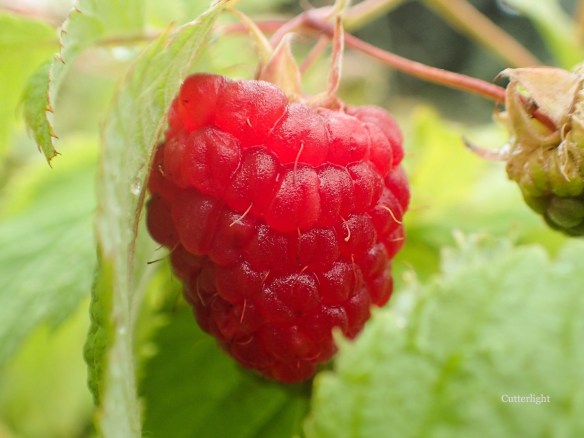
Where all the Raspberries are as Big as Your Thumb

“Pick me! Pick me!”

Anyone who knows Jack knows that he is a fisherman through and through. Moving to a village where the salmon are running so thick we can see them finning up the river and into the lake is beyond Jack’s wildest expectations. This is not his dream. This is our reality. He’s spent time every day walking the shore, sometimes with fishing rod in hand, other times just watching and listening to the music of river current and salmon jumping, splashing, sloshing their way upstream.

And so it’s understandable that it was left to me to spot the patch of raspberries Jack had walked right past on his way to the river. And such raspberries! The patch isn’t large, but this has been an exceptional year for berries and the vines are heavy with tart, sweet, jem-like fruit.

raspberries in bowl chignik n

And with green berries still growing in more shaded parts of the patch, we should be able to pick all we need. Jam, pies, syrups, fresh with morning cereal… How about a raspberry-chipotle sauce to go with fresh-caught salmon?

“Bigger than store-bought,” as Jack says. Tastier, too. I don’t know about them being as big as your thumb, but they’re the biggest we’ve ever seen. Can you believe he was so intent on the salmon that he walked right past the whole patch without even noticing?!

Nervous Water and Red Salmon


first salmon Chignik n

Looked out the window this morning and saw nervous water on the lake. Skipped breakfast. Three hens and a buck. I’ll cure eggs for ikura later today. Shioyaki salmon for dinner tonight. Beginning of our second week in Chignik Lake, Alaska.