A Lance Camper, a C-Dory and Two Mighty Trucks

A mighty little truck. The first year we came up to Alaska, 2009, we used our C-Dory as our camper and towed it up and back – more than 8,000 miles over 43 days with our 2004 Toyota Tacoma. We had a sunroof, which proved to be just the thing for wildlife photography. Here the rig is parked in front of Muncho Lake in Northern British Columbia. Right after we took this photo, three Rocky Mountain Sheep ewes and their several lambs crossed the road right in front of us. (See C-Dory 22 Angler: A Boat for Alaska)

I have long admired the line from Robert Frost’s poem The Road not Taken, “…Yet knowing how way leads on to way…” for the simple, universal truth it holds. When we purchased this boat, we had no idea we’d be towing it to Alaska, using it as our camper both on land (it was a great conversation starter in campgrounds) and on the water. Nor did we have any idea that we would fall so hard for this great state. I don’t recall who spoke first, but on our way back to California that summer at some point one of us turned to the other and said what we’d both been thinking: “We need to figure out how to move up here.”

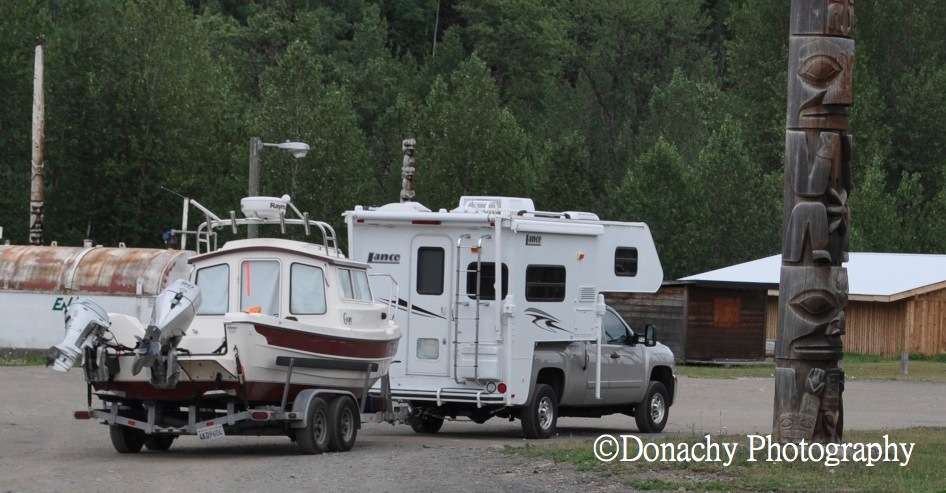
A few months later, we had job offers in the Alaskan bush, a new Lance camper and a Chevy Silverado 2500 pickup truck. We were ready!

The camper is equipped with air conditioning, heat, a shower and toilet, three-burner stove, a surprisingly large and very adequate refrigerator-freezer, TV, stereo, queen-sized bed, small dining table and comfortable seating, skylights and lots of cupboards and cabinets. Good headroom, too. We’re comfortable living small, so for the two of us it’s a plush set-up. We keep reminding ourselves that we’re preparing for a future chapter in our lives when, hopefully, we will live aboard a sailboat. An item we installed that has proved indispensable is the solar panel which, even on cloudy days, supplies enough of an extra trickle of electricity to make life easier.

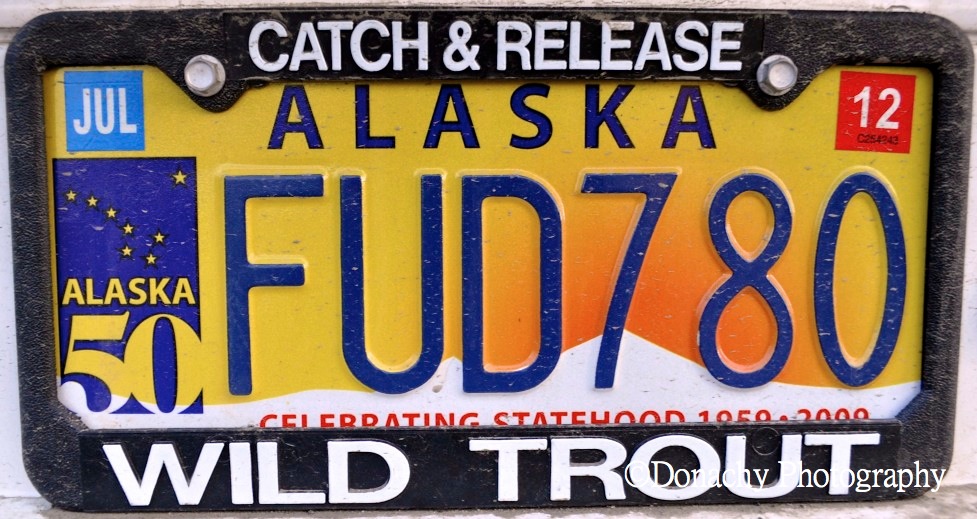
It was a red-letter day when we got our Alaska license plates! That morning we walked into the DMV in Haines where a friendly clerk gave us a couple of driver’s license booklets to study. We walked to a nearby coffee shop, had our soy lattes, returned to the DMV, took the test, got our photos taken, and were issued licenses.
.
.
Although we are in the heart of a near-record cold spell, we’re over the hump in the school year and our thoughts are beginning to turn toward another summer in Seward, exploring the Kenai Peninsula and boating and fishing the beautiful waters of Resurrection Bay.
.
.
Gool ol’ Stanley, our reliable Chevy Silverado 3/4 ton, loaded up on her maiden trip to Alaska.
.

84 Below

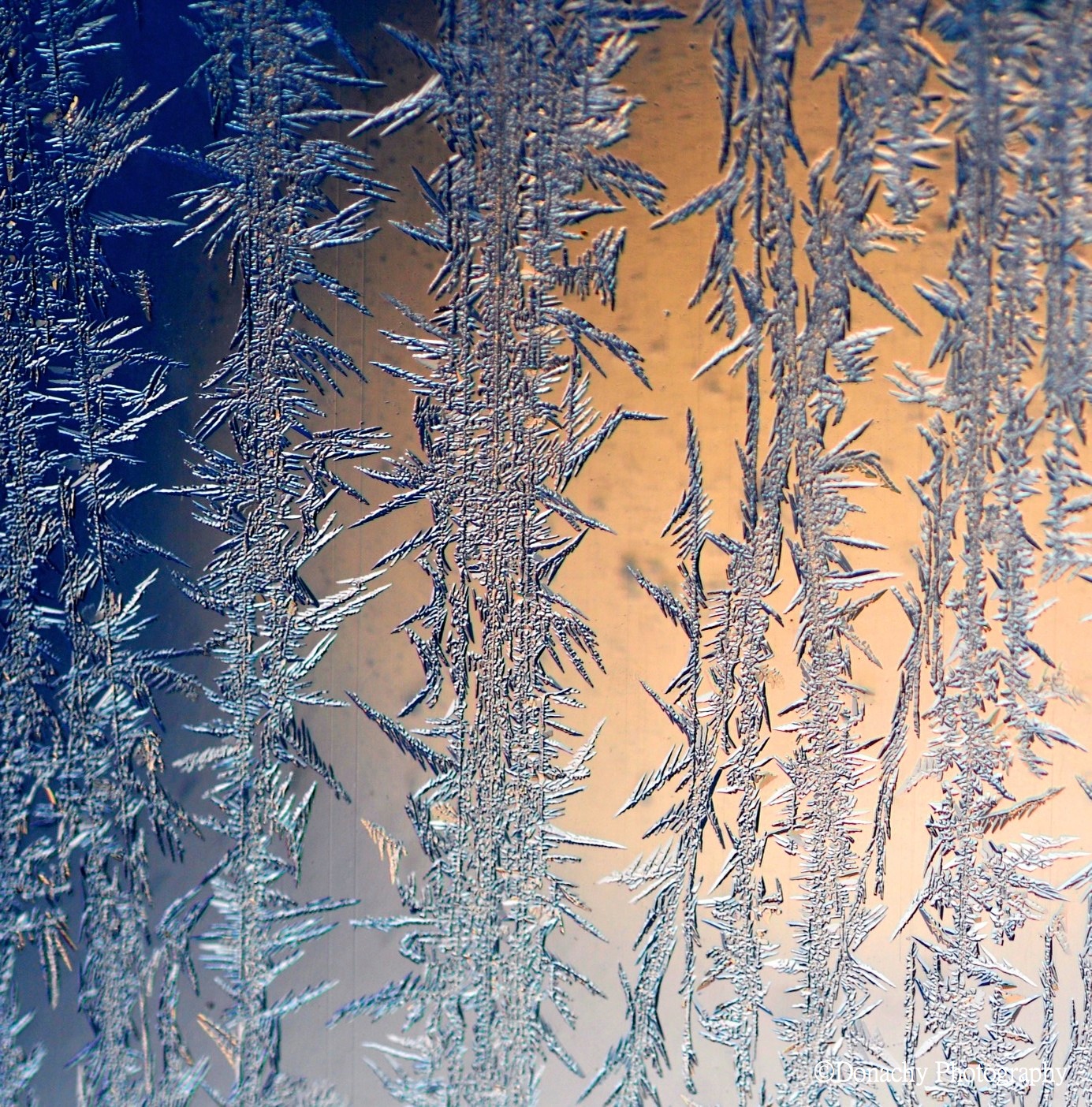
The afternoon winter sun, low on the horizon, backlights an ice-frosted double-paned window on the south side of Tikigaq School.

A few lights from the school and the town peel back the pre-dawn blackness as we begin our short morning walk to school. Steam oozes from nearby buildings–not just from furnace vents, but from every crack and seam, and every molecule of water freezes or vaporizes almost instantly. Brutally cold gusts of wind lift sheets of snow from the ground, at times creating blizzard-like conditions. Our faces begin hurting mere steps from our house. The cold gets in our lungs and makes us cough. Frostbite will nip any exposed skin within five minutes in these conditions.

This is a new cold, a cold we haven’t experienced before. Later in the day, Barbra and I take a cup of near-boiling water outside and slowly pour it out. Most of it turns to steam, vaporizing before it ever hits the ground.

We check NOAA on the computer: 84 below with the windchill.

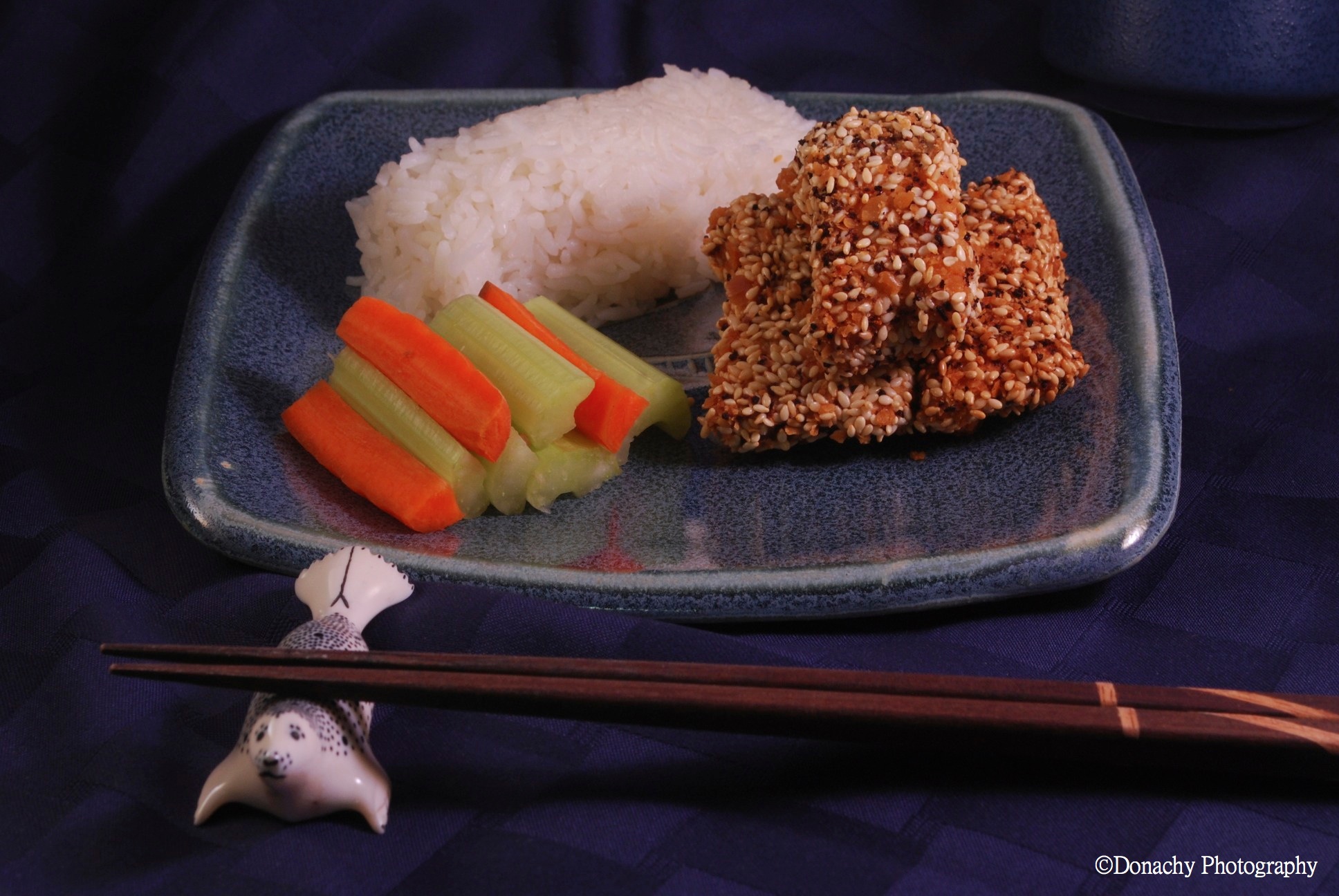
Wild Alaska Sesame Seed Salmon

This is Recipe #3 of 9 in Barbra’s Salmon Challenge series. The spotted seal ohashi-oki (chopstick rest) was made by an artist in Shishmaref of walrus ivory and baleen.

I’m not sure why I mailed as many containers of sesame seeds to the bush as I did this year, but we have them in abundance. And we have lots of salmon. So…

This dish is easy to whip up, invites seasoning substitutions and additions, is visually attractive and really tasty. The other nice thing about this dish is that the crunch and flavor combinations lend themselves to accompaniment by a wide variety of condiments, from Japanese and Chinese dipping sauces to tartar sauce to a simple squeeze of lemon. Whatever you serve them with, they’re bound to disappear quickly.

Ingredients

  • 3/4 pound salmon filet cut into 1 1/2 inch cubes – skin on or skin off, cook’s preference (I left the skin on)
  • 1/2 cup flour
  • 2 eggs, beaten
  • 1/2 cup Saltine crackers, crushed fine
  • 1 1/2 teaspoons powdered ginger
  • 5 tablespoons sesame seeds (light or dark or for an attractive presentation, both)
  • sea salt
  • black pepper
  • approx. 1 1/2 quarts oil for deep frying (I used light olive oil)

1. Season the salmon cubes with sea salt and pepper and set aside.

2. In a glass bowl, mix together the sesame seeds and the crushed crackers.

3. In a Ziplock bag, mix together the flour and the ginger.

4. In a pan on the stovetop or in a deep fat fryer, heat oil to about 350 – 375 degrees. (I heat oil on a stovetop and check for readiness by dropping in a pinch of damp cracker crumbs. The crumbs will bubble fairly vigorously when the oil is ready. Don’t let the oil overheat or smoke).

5. Set oven on low “warm” heat.

6. Place 2 – 3 salmon cubes in the Ziplock bag and shake till thoroughly dredged with flour. Using tongs or chopsticks, coat the dredged cubes in egg, then roll them in the sesame seed & cracker mixture. Set aside. Repeat till all salmon cubes are coated with sesame seed & cracker mixture.

7. Place salmon cubes in hot oil, a few at a time. Oil should roil fairly vigorously around the cubes. Fry for about 2 minutes. If cubes begin to rise to the surface, you may be cooking them too long. Place cooked cubes on a plate covered with a paper towel to drain oil and keep warm in oven set on low heat.

8. Serve with fresh lemon wedges, tarter sauce, or other dipping sauce.

Serves 2 – 3. I found myself craving a hefeweizen with these.

Pesto Bread

Another delicious bread machine recipe from 300 best Bread Machine recipes! Imagine your kitchen filling with the aromas of basil and parmesan cheese mixing with fresh baking bread. We were poised by the machine armed with butter knives and butter waiting eagerly for the machine to complete its cycle. We were not disappointed!

Pesto Bread

Makes a 1.5 loaf

  • 1 1/4 cups water
  • 1/4 cup nonfat dry milk
  • 1 1/2 tsp salt
  • 2 tbsp granulated sugar
  • 2 tbsp pesto sauce
  • 4 cups bread flour
  • 1/2 cup grated Parmesan cheese
  • 1 1/2 tsp bread machine or instant yeast
  1. Measure ingredients into baking pan in the order recommended by the manufacturer. Insert pan into the oven chamber.
  2. Select basic cycle.

Harvesting Chickens Alaska Style

There are days when it seems, as Barbra says, like you could put one of your socks on a hook and catch halibut. Two-fish limits are the norm even on slow days. This brace of 20 and 25 pound fish came back-to-back and fell for twister-tails on five-ounce jigs in 80 feet of water near Homer. Halibut this size are referred to as “chicken halibut” and make for fine dining indeed.

We love Alaska, but between the cold and our wanderlust, it’s unlikely we’ll remain here permanently. We dream about sailboats and warm beaches, about driving our camper all over Canada and the U.S., and about one day maybe owning a home on a few acres, complete with a clean, wood burning stove, a large vegetable garden, perhaps some fruit trees and of course a few chickens for eggs and for roasting. The good life comes in many forms!

One thing that has dismayed us as we’ve looked for our next utopia is the state of many of America’s freshwater fisheries. Log onto a few of our states’ department of natural resources pages, look at fish consumption advisories, and a pattern soon emerges. Mercury and polychlorinated biphenyls (PCBs) contaminate most freshwater bodies, and some even contain unhealthy amounts of DDT–a chemical we’d thought was no longer a problem. Warnings and advisories recommending limited consumption of fish are the norm rather than the exception all across America as fallout from coal fired power plants, cement plants and other sources have laced our waters with unhealthy amounts of toxins. In some waters, it is recommended that no fish be eaten. More commonly – in our view shockingly – anglers and their families are advised to limit their consumption to just one meal of walleye, lake trout, bass or other fish per week or even less!

That’s not very many fish dinners.

The good news is that, thanks to increased awareness which has led to increased regulation of industry, levels of contaminants on many waters are tending downwards. Yes, keeping toxins out of our environment is expensive, but when we take into consideration health issues and quality of life, letting polluters pollute is even more costly. We have the means to keep our country clean, and that’s precisely what we should be doing. If industries won’t comply, then, yes, we need our government to intervene.

Meanwhile, we feel very fortunate to live in a place where, with very few exceptions, people can eat as many meals of fish as they desire with the confidence that they are enhancing, not harming, their health. And so, at this point in our life, our “chickens” are of the finned variety. For now, our halibut omelets are made with store-bought eggs and Tillamook cheddar cheese. Maybe one day they’ll be made with eggs from our own chickens and cheese from our own kitchen!

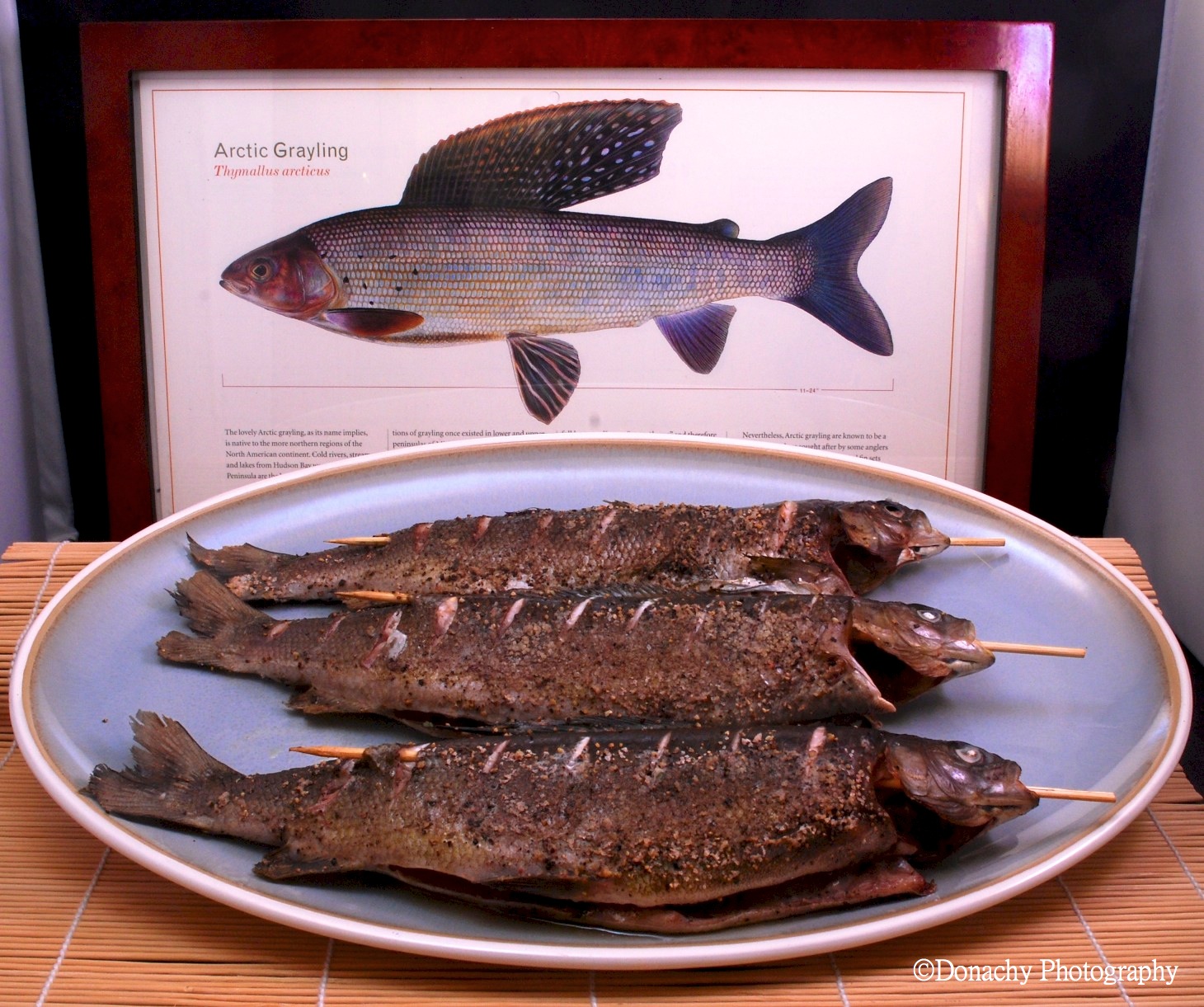
Arctic Grayling Shioyaki with Roe – A Yellowstone Connection

Arctic grayling are abundant throughout much of Alaska. I was happy to finally have an opportunity to taste them. I skewered these three, cut a few diagonal slashes in their skin, and salted and broiled them in the fashion that Japanese prepare charr, trout and small salmon. Two of the fish had nice sacs of roe with I cured as one would cure salmon roe in making ikura. The grayling themselves were unremarkable, but the roe was quite delicious.

One summer several years ago I tent camped alongside the Madison River in Yellowstone National Park. It was glorious. Recent fires had changed the ecosystem. Not destroyed it. Changed it. Along with Yellowstone’s iconic bison, elk were abundant, the big bulls absolutely magnificent with their velvet-covered racks. We encountered moose, sandhill cranes, several black bears and a grizzly, and listened in awe as a pack of wolves howling across a valley broke the quiet one evening. It was during this stay that Maia took her first-ever fly caught trout, beautifully marked  cutthroats from Cascade Creek. We still talk about how we had to cross that stream a couple of times to avoid basking bison.

One of the highlights of that visit to Yellowstone was a morning spent alone, fishing the Gibbon River from the lip above the 80-foot falls upstream a mile or so. Although I got a late start and the sun was already high in a cloudless sky, brown trout in the eight to 13 inch range were cooperative, most of them falling to a #14 pheasant tail nymph. Mountain flowers seemed to be in bloom everywhere, birds were out in force, and I had the river completely to myself.

And then I came to the hole. Rip-rap on one side, a rock wall on the other and a log jam at the tail pushed the water into a long pool I estimated to be eight to 10 feet deep–the deepest water I’d encountered. With brush growing along the edges and with the depths guarded by drowned snags, tell-tail strands of monofilament suggested this piece of water was fairly hard-fished. So I took a while to contemplate my approach. Wishing to get as deep as possible, the first thing I did was lengthen my leader and switch to a weighted pheasant tail. I then waded to the shallows at the tail of the pool, gauged the light breeze, and executed a cast upstream to allow for a long drift right down the heart of the pool. Stripping in bright green line as it drifted toward me, I imagined my little fly descending ever deeper. Just as the last of the green line floated above a forked log at the deepest part of the pool, it ever so slightly hesitated. I gave the line a quick strip as I lifted my rod and immediately felt the weight of a decent fish. From the manner in which it fought, I knew right away it wasn’t another brown, and it certainly wasn’t a rainbow. Whitefish? I had no idea. Somehow I managed to keep clear of the snags, and a few moments later my jaw dropped as an Arctic grayling coasted into view. I’d never caught one before, and had no idea they were a possibility in any of Yellowstone’s rivers. I led it to the gravelly shallows near my feet, gently cupped it in my hand and spread it’s amazing, sail-like dorsal fin. The dark fin, wet and flecked with iridescent blue, glistened in the sun and I was reminded that this is why one should always carry a camera. Mine, of course, was up in my car. I let the silvery-gray fish slip from my hand and sink back to the depths. Moments later, following the same pattern, a second grayling presented itself to me, this one a fraction of an inch smaller than the first.

Arctic grayling (Thymallus arcticus) are an ancient fish, their ancestors having preceded their charr, trout and salmon brethren in branching off from a common ancestor some 60 million years ago. As the earth has continued to warm since the last Ice Age, grayling have retreated to ever fewer waters in the lower-48. There aren’t many places where they can still be found, and most of these are high altitude lakes in the northern Rockies. Fluvial grayling–river grayling–are fairly rare in the lower-48. In holding those fish, in being in their presence, I felt a connection to a vanished epoch populated by mastodons and mammoths, sabertooth cats, dire wolves and other species long since vanished. Although those fish were only 11 or 12 inches in length, to me, they were trophies–as fined as any fish I’ve ever landed. I’ve long thought that if and when I settle down, I would like to have fiberglas replica mounts, or perhaps a painting, made of those two  grayling, loafing near the submerged snag where I found them in that deep pool on the Gibbon River.
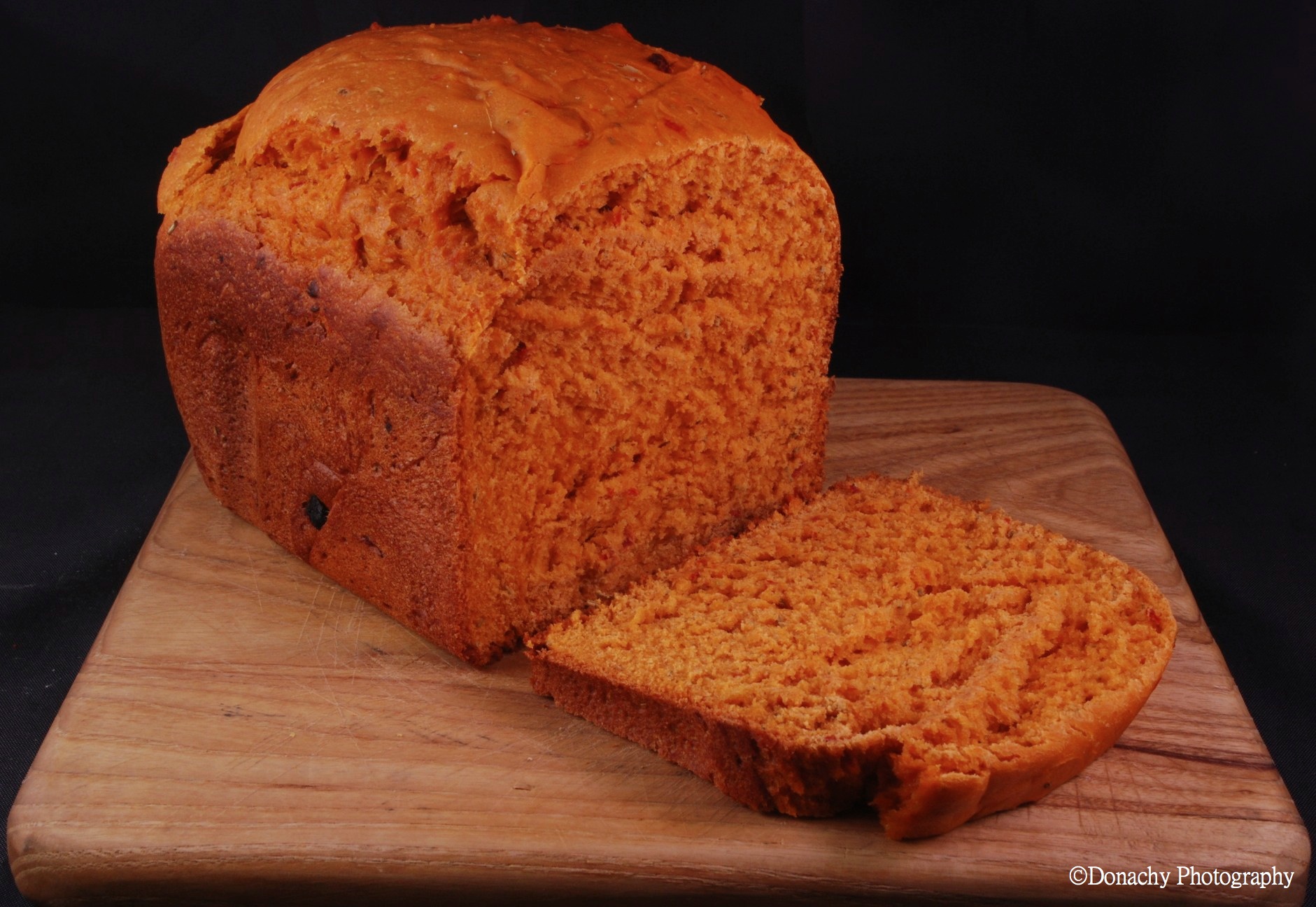
Rosemary Tomato Bread

A friend here in Point Hope lent me a book called 300 best Bread Machine recipes. Of the 300, I picked out about a dozen to try. The first was a honey wheat oat bread, and it was absolutely terrific. The evening it came out of the bread machine, Jack and I put our other dinner plans on hold and instead stuffed ourselves with warm slices of this bread slathered in butter and honey. After a few days, some breads crumble or dry too much. Not this one.  It was dense and flavorful and help up nicely.

The oat bread recipe was a safe pick. I knew how it was supposed to taste and look. Next it was time for a leap to the recipe that made me borrow the book in the first place – Rosemary Caesar Bread featuring tomato-vegetable juice, sun-dried tomatoes, and rosemary. The beautiful color and aroma of this bread makes it a centerpiece loaf.  Following is my adaptation of the recipe, including a name change. “Caesar” makes me think of anchovies (Caesar dressing), so I think “Rosemary Tomato Bread” is more accurate.

Rosemary Tomato Bread

Ingredients

  • 1 1/4 cups tomato-vegetable juice
  • 1 tbsp granulated sugar
  • 2 tbsp extra virgin olive oil
  • 3 1/2 cups bread flour
  • 1/3 cup chopped sun-dried tomatoes
  • 1 tbsp dry rosemary
  • 1/4 tsp paprika
  • 1 tsp salt
  • 1 1/4 tsp bread machine yeast

Measure ingredients into the baking pan in the order recommended by the manufacturer. Select Basic cycle to bake.

Makes 1.5 lb loaf. This is an excellent bread to serve with breakfast eggs or for making egg salad sandwiches.

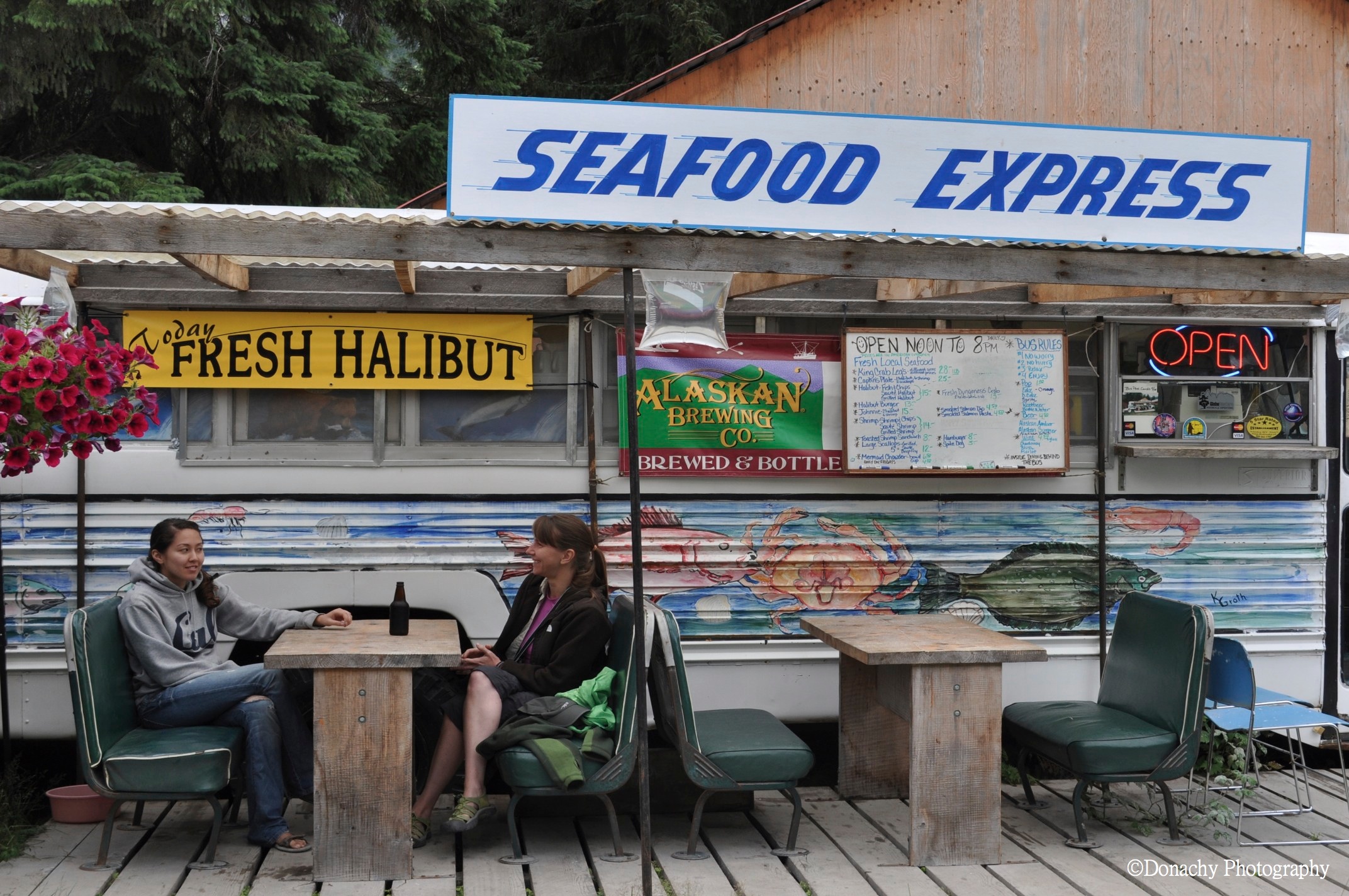
The Bus in Hyder: The Best Fish & Chips Anywhere

Barbra and Maia waiting for orders of fried halibut and fried shrimp at The Bus in Hyder, Alaska

We blogged about Hyder before (A Ghost Town and a Grizzly, February 5, 2011). It’s an interesting  town of 87 inhabitants, definitely worth the side trip if you find yourself traveling the Cassiar Highway in northern British Columbia. Go there when the chum salmon are running in late July and August, and you’ll have an excellent opportunity to view grizzlies up close from a deck overlooking Fish Creek.

A hip little shop on main street, Boundary Gallery and Gifts run by Caroline Steward, features dulcimers beautifully crafted from Sitka Spruce as well as some of the best fudge we’ve ever had. There’s a hotel, a post office, a small, sparsely-stocked grocery store, a couple of RV parks and a boat launch on Portland Canal, which isn’t a canal at all but is a narrow, 71-mile long fjord separating Southeastern Alaska from British Columbia. It’s the kind of place that takes you back in time. None of the streets are paved. The residents are friendly and the ones we’ve met have been happy to while a way a piece of the day talking. Maybe the quiet, natural beauty of the place brings out easy-going attitudes. Part of the movie Insomnia (Al Pacino, Robin Williams, Hilary Swank) was filmed here in 2001.

If you do go to Hyder, the one place you shouldn’t miss is The Bus. Diana and Jim Simpson came up with the idea to permanently park a school bus on one of the side streets in town and convert it into a kitchen. Jim’s the fisherman. Diana’s the cook. The catch of the day generally features fresh halibut and Alaska’s incredibly delicious shrimp along with salmon and other shellfish. Traveling from place to place, we’ve come across really good deep fried fish from time to time. Heck, I make pretty good deep fry myself. I don’t know exactly what Diana does, but the fare at The Bus is in a class by itself. It’s been our good fortune to dine there on two separate occasions, two different summers. Both times, our plates of fried halibut, shrimp and French fries disappeared fast and left us talking with amazement for some time afterwards. Diana also keeps icy cold Alaska Amber Ale and Alaska Summer Ale on hand – the perfect compliments to enjoying the food while Rufus Hummingbirds call back and forth from the tops of spruce trees.

Alaska Silver Salmon Pizza

Wild Alaskan Silver Salmon Pizza: The second of nine salmon recipes

With a fairly large tub of salmon fillets in the freezer and us on the downward slope of the school year, Barbra has challenged me to come up with nine new salmon recipes. The first creation was Salmon Burgers & Caesar Slaw. Here’s the second: Silver Salmon Pizza.

Put a pizza stone on the center rack of the oven and preheat to 400 degrees.

Ingredients

  • pizza crust
  • tomato sauce (see recipe below)
  • shredded mozzarella
  • shredded cheddar (about 1/2 as much as the mozzarella)
  • Kalamata olives, cut in half lengthwise
  • 1/2 pound salmon, grilled or broiled and cut into smaller pieces
  • 2 strips thick bacon, cooked, drained and cut into small pieces
  • 1/3 cup sweet onion, chopped coarse
  • several cloves of garlic, chopped coarse
  • sun-dried tomatoes, chopped coarse
  • 1 sheet of nori (dried seaweed) cut into thin strips

The crust: We usually pre-bake our crusts for about 10 minutes and then freeze them. Later, we thaw the crusts and add the pizza toppings and bake for 8 to 12 minutes. The crust does not have to be completely thawed.

The sauce:

  • 6-ounce can of tomato paste
  • 1/2 tin of anchovies chopped fine (about 1 tablespoon)
  • generous amount of Italian herbs
  • garlic powder (or fresh garlic chopped fine and briefly sautéed)
  • 2 tablespoons olive oil
  • a few grinds of black pepper
  • approximately 3 ounces of water–you want the sauce to be thick

Mix these ingredients together with a wooden spoon in a glass bowl and let stand for at least 20 minutes.

The salmon: Grill or broil. I rubbed the salmon for this pizza with a fiery Southwestern rub from Penzeys. For best results, cut or pull apart the salmon with its natural grain.

Other toppings: heat about a tablespoon of olive oil in a frying pan over medium high heat. Add the onions and cook for about 2 minutes. Add the olives, garlic and sun-dried tomatoes. Don’t overcook. Onions should be just translucent and still have some crunch.

Spread the tomato sauce on the pizza crust. Add the mozzarella. Add the cheddar. Spoon on the mixture of onion, garlic, olives and sun-dried tomatoes. Sprinkle on the bacon. Top with salmon.

Bake at 400 degrees for 8 to 12 minutes, until crust is golden brown on edges and underneath.

Sprinkle nori strips on the pizza after it is done baking. Set out a bottle of Cholula sauce on the table, and pour out glasses of a good amber ale!

Running North of the Arctic Circle

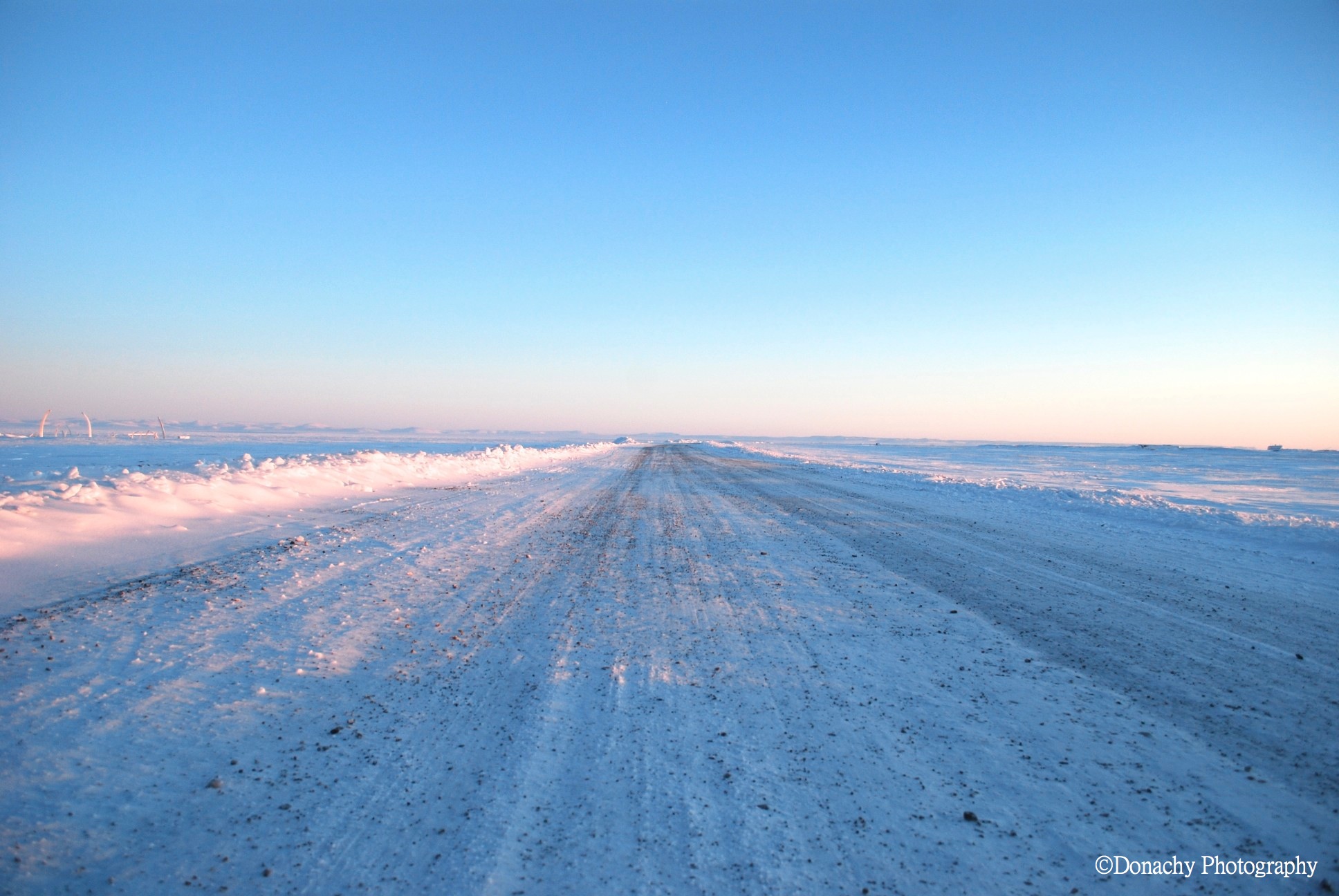
7 Mile Road pictured above is one of our Arctic “rave runs.” Our other choice is running along the frozen shore of the Arctic Ocean. Brrr!

Before moving to Alaska, Jack and I took part in about three “destination” half marathons each year. These runs took us to places such as California’s wine country, San Diego and vicinity, and the coastal redwood forests of northern California. But it’s now been two-and-a-half years since our last half marathon–the Salmon Festival Half Marathon in Cordova, Alaska in the summer of 2009. After that first visit to Alaska, our life became consumed with moving up here. Then, when we moved to Shishmaref, we managed to sit on our rear ends for the majority of the school year. We were painfully reminded of our lack of exercise during an embarrassing mile-and-a-half walk from the Nome airport into Nome last spring which was way more taxing than it should have been.

Fast forward to the present.

We both really enjoy the challenge of half marathons, a race just long enough to be physically challenging and mentally rewarding without being so long that the preparation consumes our lives or we’re left feeling overly whipped after the event. Aside from running halfs, our secondary goal has always been to stay fit enough that we are able to run five miles at the drop of a hat, or take off on a reasonably strenuous hike. With those goals in mind, we vowed to make changes in our fitness regimen when we moved to Point Hope.

Prior to the start of the school year, we managed to get in a couple of runs outside. But our options in a town paved in unforgivingly hard concrete and situated on a point of land carpeted in small rocks proved to be quite limited. And then there’s the weather… Luckily our school has a decent weight room equipped with two treadmills and an elliptical trainer.

Jack used his years of running experience to draw up a running schedule for us–one that would get us back in shape quickly without risking injury. I’ve always liked having a goal event to shoot for–a road race of some kind–but our summer schedule is still up in the air, and there aren’t a lot of races up here. The event we’re most likely to take part in is the Mayor’s Marathon and Half Marathon in Anchorage on the summer solstice. Otherwise, we might get out our maps and GPS, measure off our own course, give it a name and reward ourselves with the traditional beers and t-shirts once we’ve run it!

Even with goals set and schedules printed, honestly, running on the treadmill is BORING! We’ve loaded our iPod with podcasts and music, and one of our colleagues positioned the treadmills so people can run side-by-side and talk (just like the old days when Jack and I used to run the trails along the American River in Sacramento!). I also have audio books ready to upload to help combat my new nemesis. The other challenge (and this one is kind of ironic) is that I’ve always hated to run in the heat; our weight room, kept at a constant, breezeless temperature of 70 degrees means minimum running attire and lots of water. Ugh! The tiny fans on the treadmills put out a barely perceptible stream of air.

All that being said, it’s time to pack my workout bag, make sure my iPod has my latest running playlist and get ready to pretend I’m running on a cool morning in Maui!