Minke Whales

Quintessential Alaska – a whale blows close to moss and fern covered rocks in Resurrection Bay. The water is hundreds of feet deep near shore here – this slope face rises almost vertically to snow-coverd peaks.

Coming back from a fishing excursion the other morning, we spotted a pair of whales near shore, off our forward port (left) quarter. They appeared to be in no hurry and so we, too, slowed down to spend some time watching them. Here and there we noticed telltale herring flipping on the surface – no doubt the reason the whales were in so close to shore. The steep banks would make the perfect place to corral a meal.

Smooth back, pronounce fin and white markings on the side indicate a minke whale – a member of the rorqual whale group. Rorquals feed by opening their massive, expandable mouths and straining small fish, shrimp, krill and other food through baleen. 

Although we kept a fair distance, at one point the whales disappeared. We thought they’d sounded and left the area until suddenly they both came exploding out of the sea on our starboard side. Herring seemed to be flying in attempts to escape the whales’ massive jaws. As whales go, minkes are small, but they still average nearly 30 feet and 10 tons – large enough to reduce a 22-foot boat like ours to fiberglass splinters. This was our first time to see whales so close, let alone lunge-feeding, and rather than snap photos all we could do was watch, jaws agape, exclaiming “Oooo!”

This photo (taken with a Nikon DX 18-55 lens) captures the blowhole and the distinctive white markings of a minke. 

We lingered, hoping to capture a repeat feeding lunge on film. And then it happened.
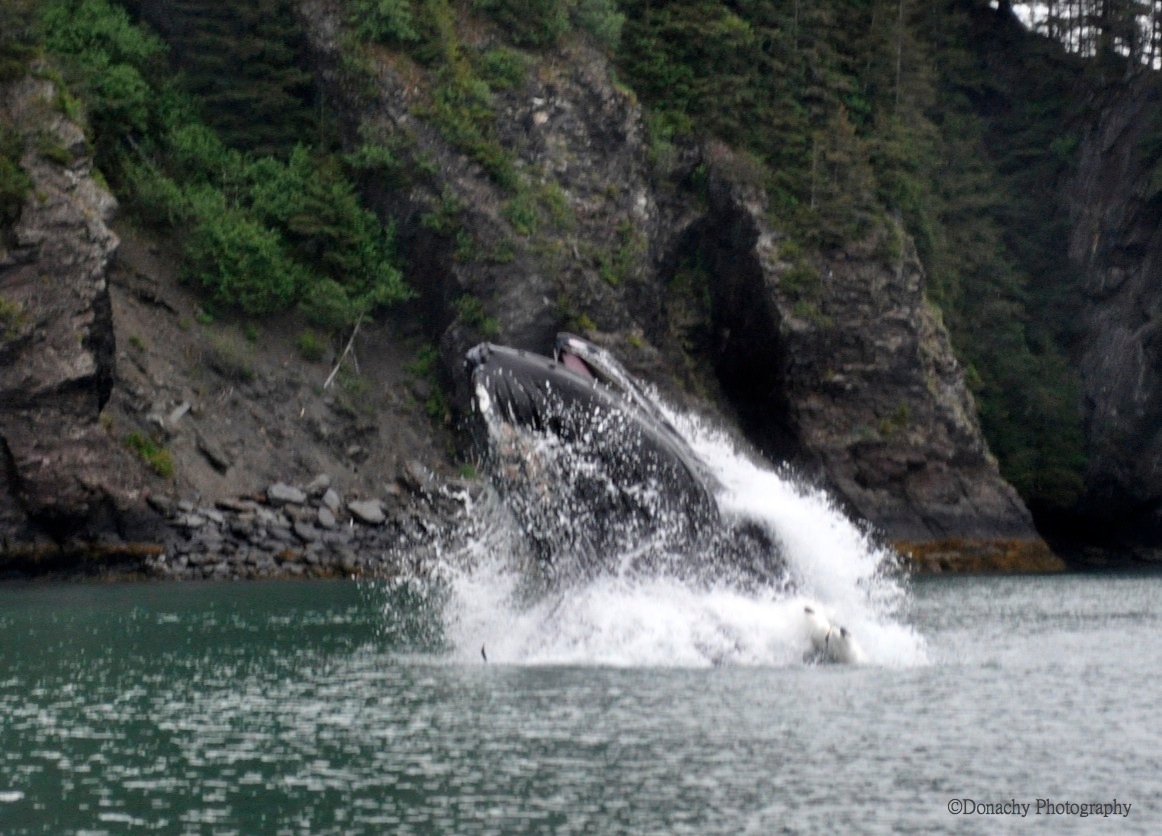
If you look closely, you can see a couple of herring in the spray around this minke whale’s head.

Suddenly the surface of the water began to bubble with jumping herring, and then, as if out of nowhere, a huge head came exploding out of the sea. Fortunately Barbra had the presence of mind to snap photos.
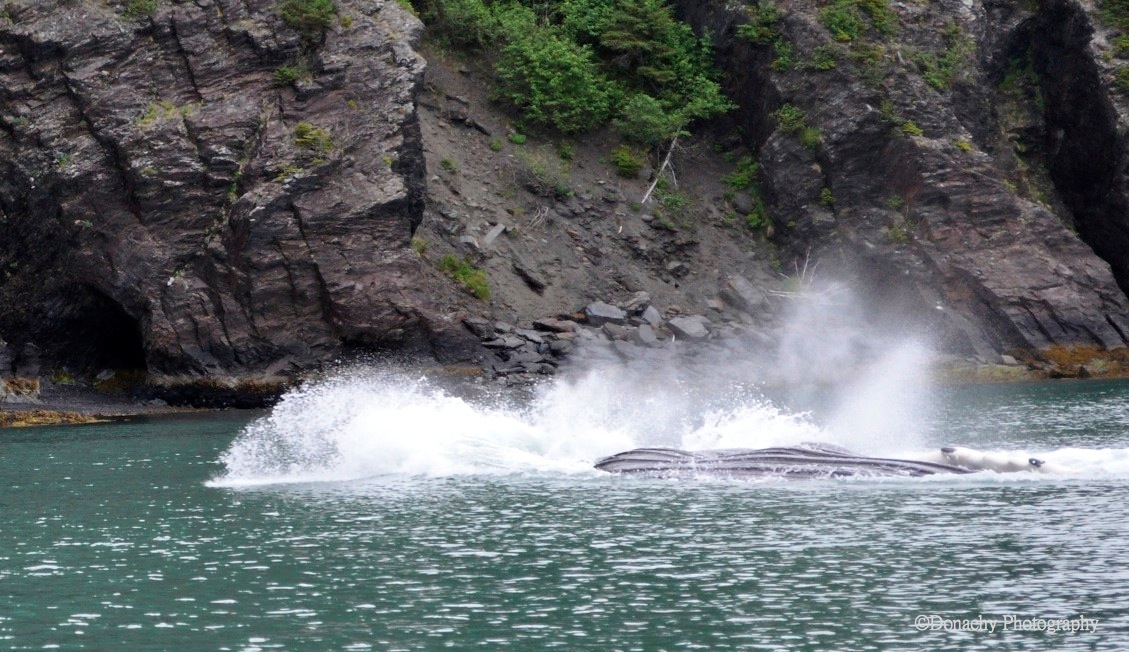
By the early 1900’s, after the world’s whaling fleets had mined most of the large whales out of the ocean, countries such as Norway and Japan, which continued whaling, turned their attention to smaller whales such as minkes. They’re still being hunted, but they remain locally common, and overall populations appear to be stable. Minkes can be found throughout the world’s oceans. An excellent field guide to Northern Pacific whales is Whales and Other Marine Mammals of British Columbia and Alaska, by Tamara Eder.

The Sky Over Resurrection Bay and Thoughts from Thoreau

At the end of a warm day, the sun slips down behind the mountains overlooking Resurrection Bay, and even before we notice the light dimming, we can feel the warmth leaving our home in our sailboat on the bay.

Barbra took these photos a few nights ago as we were running home from an evening of fishing of Resurrection Bay, Alaska.

“The surface of the earth is soft and impressible by the feet of men; and so with the paths which the mind travels. How worn and dusty, then, must be the highways of the world, how deep the ruts of tradition and conformity! I did not wish to take a cabin passage, but rather to go before the mast and on the deck of the world, for there I could best see the moonlight amid the mountains.”  Henry Thoreau in Walden

“Every path but your own is the path of fate. Keep on your own track, then.” Henry Thoreau in Walden

Dall’s Porpoises – Tasmanian Devils of the Northern Pacific

You might see a pod of them off in the distance, plowing up water in plumes of bubbles and spray, arcing, crossing each others’ paths, zipping like mad across the sea’s surface. As they speed toward your boat, you can almost hear the sound effects that accompany the Tasmanian Devil’s entrance in the Warner Brothers Cartoons. “Dall’s Porpoises!”

At an average length of 6 feet (1.8 m) and distinctively marked in black and white, they look like miniature versions of Orcas. And they love small boats. On any given outing here in Resurrection Bay, you can almost count on a group of these speedsters showing up around your bow. And since they seem to prefer to play around boats that are running fairly slowly, they don’t discriminate between powerboats and sailboats.

Dall’s porpoises frequently come right alongside small boats, seeming to use the vessels as objects to play around and to race against. Here a group of them are cutting back and forth beneath our C-Dory.

Strictly speaking, Dall’s porpoises don’t really “porpoise.” They quickly surface, throwing up rooster tails of spray as they do, take a quick breath and keep on swimming. Fast. Photographing them is a matter of guessing where they’ll show up next and snapping shots until they do.

Like other dolphins and porpoises, Dall’s have teeth. They feed on small fish, such as herring. We’ve noticed that when we’re trolling for salmon, right about the time we spot Dall’s, our rods often start arcing and our reels start singing – probably because both the porpoises and the salmon are keying on herring.

Although groups typically contain a handful of individuals, there are times when they gather by the thousands. They roam both nearshore and offshore waters in the Northern Pacific. Unfortunately, although they are still common, hunting (several countries take an average of 10’s of thousands annually – an unsustainable number) and fatal encounters with fishing nets are reducing their numbers.

A good place to read more is in the book Whales and other Marine Mammals of British Columbia and Alaska, by Tamara Eder.

Yelloweye Rockfish Benedict: Alaskan Breakfast of Champions

Freshly cracked pepper, sea salt and maybe a dash of soy sauce are all the seasoning freshly caught yelloweye want. Topped with hollandaise sauce and served on pan-toasted English muffins with sides of thick bacon, summer squash, ruby red grapefruit and ruby red mimosas, this is the kind of breakfast that makes you happy you’re a fisherman – or married to one! 

Like single malt Scotch and country drives in autumn, when it comes to table fare there are no bad rockfish. But within genus Sebastes, some cook up better than others. In Japan, small but tasty mebaru (Sebastes inermis) are among the most highly prized fish wherever they are found. Here in Alaska, yelloweye (Sebastes ruberrimus), which can grow to over 30 inches (80 centimeters) and 20 pounds (9 kilograms) are the stars. The sweet, delicately flavored meat puffs up slightly when cooked and flakes off in large, firm chunks for a taste and texture that is unparalleled among rockfish.

.

When preparing fillets this way, a good rule of thumb is nine minutes per one inch of thickness, thus a fillet one inch thick will be cooked for about nine minutes.

I pan toast English muffins (or any other toast) by using about three parts olive oil to one part butter (or no butter at all) over low to medium-low heat in a heavy frying pan. Heat the oil, add the bread, toast, flip and do the other side. This produces tasty toast, and you can do it in any kitchen, over a Coleman stove, or in a galley.

Yelloweye Rockfish Benedict

Ingredients:

  • 1 rockfish fillet about 3/4 lb to 1 lb, cut in half to serve 2 people. We generally prefer our fillets scaled, skin on. (Skin removed is fine.)
  • salt
  • pepper
  • soy sauce (optional)
  • olive oil
  • 3 egg yolks
  • 4 tbsp butter
  • 1 tbsp lemon juice
  • healthy pinch or two of cayenne pepper (or mildly fiery chili-based seasoning such as the Southwestern rubs made by Penzys or Dean & Deluca)
  • 2 English muffins, sliced in half, toasted

Directions:

For Hollandaise:

  1. Melt butter in a small pan over low heat.
  2. Set up a double boiler by putting some water in a pot and bring it to boil. In a smaller pot, place egg yolks and lemon juice. Place this smaller pan in the larger pot, but not in the water. The steam will heat the smaller pot.
  3. Vigorously whisk the egg and lemon mixture until it increases in volume.
  4. Slowly drizzle the melted butter into the whisked egg mixture, add a pinch of slat, and continue to whisk until everything is blended.
  5. Set aside. This mixture can be warmed again, if necessary. If it’s too thick, whisk in a few drops of water. Too thin, cook more, being sure to continue whisking/stirring.

To cook the rockfish:

  1. Rinse the fillets, pat dry with paper towels, and place on a cutting board, skin side down. Add freshly cracked pepper and sea salt and set aside.
  2. In a skillet large enough to hold the fillets so that they don’t touch, place enough olive oil to liberally cover the bottom of the pan and heat over medium-low heat.
  3. When the oil is hot enough to make the fish sizzle, add the fillets skin side down. Cook for 5 minutes.
  4. Turn the fillets and sprinkle with salt and freshly cracked pepper. Add about 1/2 tablespoon of soy sauce (optional) and continue cooking for 4 minutes.

To serve:

Place toasted English muffins on plates, place the fillets on the muffins, and spoon on the Hollandaise. Sprinkle on a dusting of cayenne pepper or a similarly fiery pepper-based rub. Serve with seasonal vegetables.  We enjoyed this meal with mimosas made with freshly-squeezed ruby red grapefruit.

A Good Day Sailing

We took advantage of beautiful weather yesterday to do some sailing on Resurrection Bay. Dall porpoises showed up around our boat as usual and several times we saw salmon leaping. Maia got her first experience at the helm of a sailboat.

Air temperatures were in the low 60’s, so a light jacket was in order, but the sun felt great. 

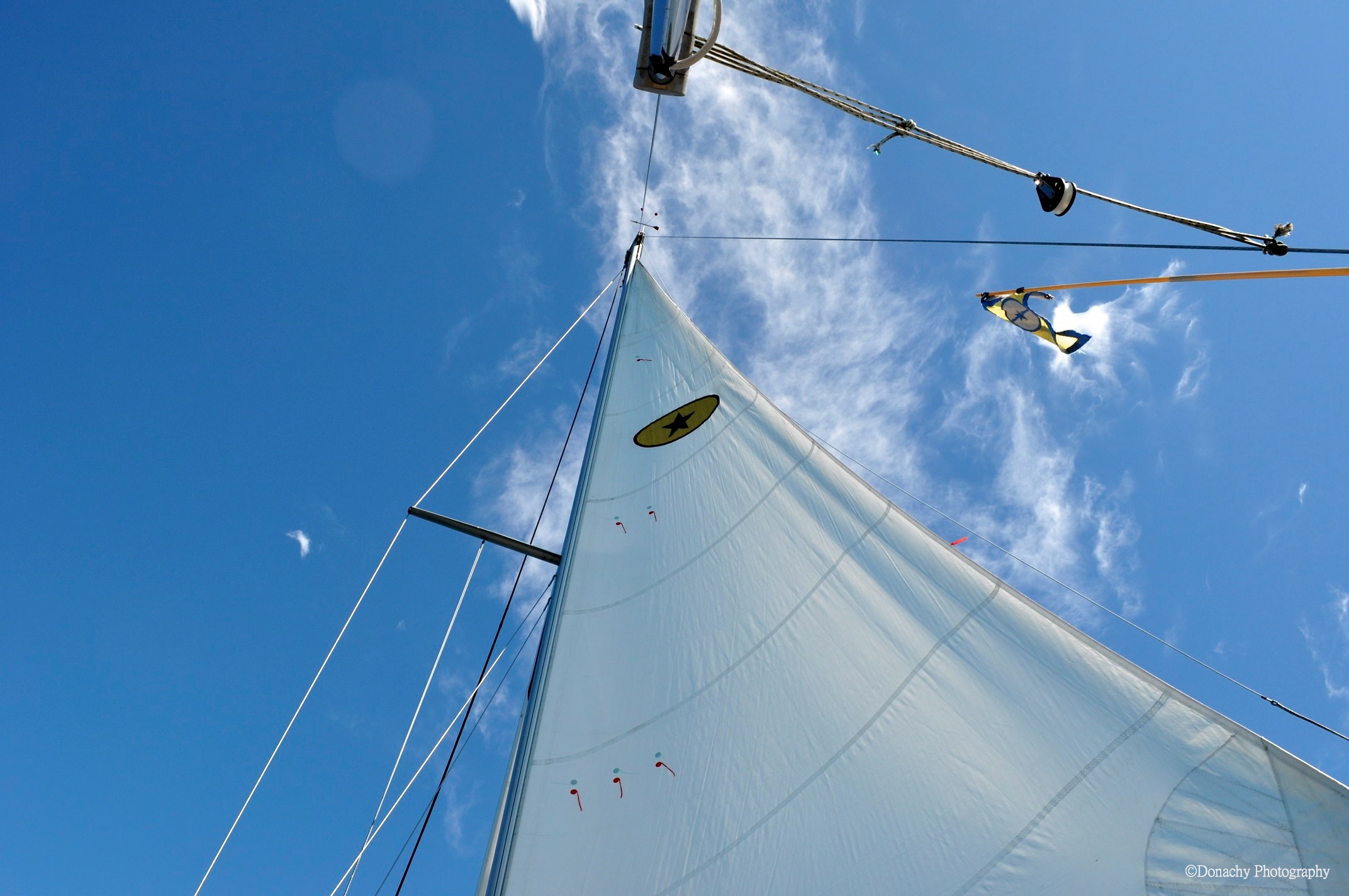
It’s always good to look up and see the mainsail catching wind.

These are the good old days.

Bacon-Wrapped Smelts (Hooligans, Eulachons or Candlefish)

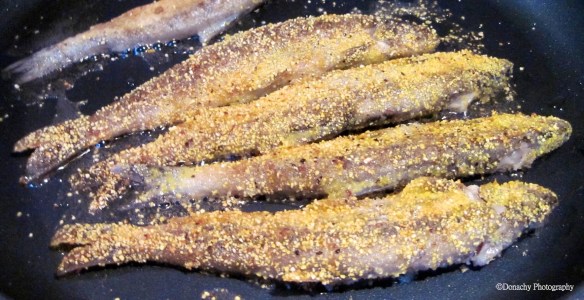
Freshly caught smelt prepared two ways: In the foreground, the fish was rolled in polenta. The smelt in back was dusted in seasoned flour. The fish were pan fried, wrapped in bacon and placed on whole leaves of Romain lettuce to be eaten from head to tail, bones and all. A sprig of asparagus and a few dollops of bright orange flying fish roe (tobiko) finishes the lettuce taco.

As I write this, one of the small rivers flowing into Resurrection Bay is jammed full of smelt. Specifically Thaleichthys pacificus, commonly referred to as hooligans. The AFS (American Fisheries Society) has settled on the name eulachon (pronounced you-luh-chawn), from the Chinook Indian name for the fish. Early west coast explorers and settlers called them candlefish because the spawning fish are so full of fat (about 15% of body weight) that when dried, they can be lit and will burn like a candle.

In the foreground: Polenta is especially coarse cornmeal. Seasoned with salt and pepper, rolling smelt in polenta gives these soft-fleshed fish a nice crunch when pan friend. In the back: another way to prepare smelt for the frying pan is by dropping them into a Ziplock bag containing seasoned flour and giving them a few shakes. Tarragon, fennel, marjoram and salt and pepper are a good start when seasoning these fish. Tongs make this a neat job. Note the asparagus in the pan on the stove.

The meat and bones of eulachons are quite soft. So soft, in fact, that when pan fried, the bones are barely noticeable. Their flavor is wonderful, but they definitely benefit from the addition of some crunch.

When the smelt are running in a river with a healthy population, getting enough for a meal or two is easy. On large rivers, a long-handled net might be necessary. But on this river, the fish were thick and close to shore. Two scoops of the net, and we had all the fish we needed.

Like their relatives, the salmon, eulachon are anadromous. They spend most of their life in the ocean, feeding on plankton, and then return to their natal streams and rivers to spawn, after which they die. Males arrive first and comprise virtually all the fish in the early part of the run. Later the females show up. Ideally, it’s the females you want, as a fresh fish laden with ripe eggs is a delicacy.

The males are quite good, too. In either case, cleaning these small fish (they average about eight inches/20 centimeters) is a simple matter of rinsing them in clean, cold water. There is no need to gill, gut or scale them.

A seemingly endless school of eulachons makes its way up an Alaskan river.

A Study of Upper Summit Lake, Alaska

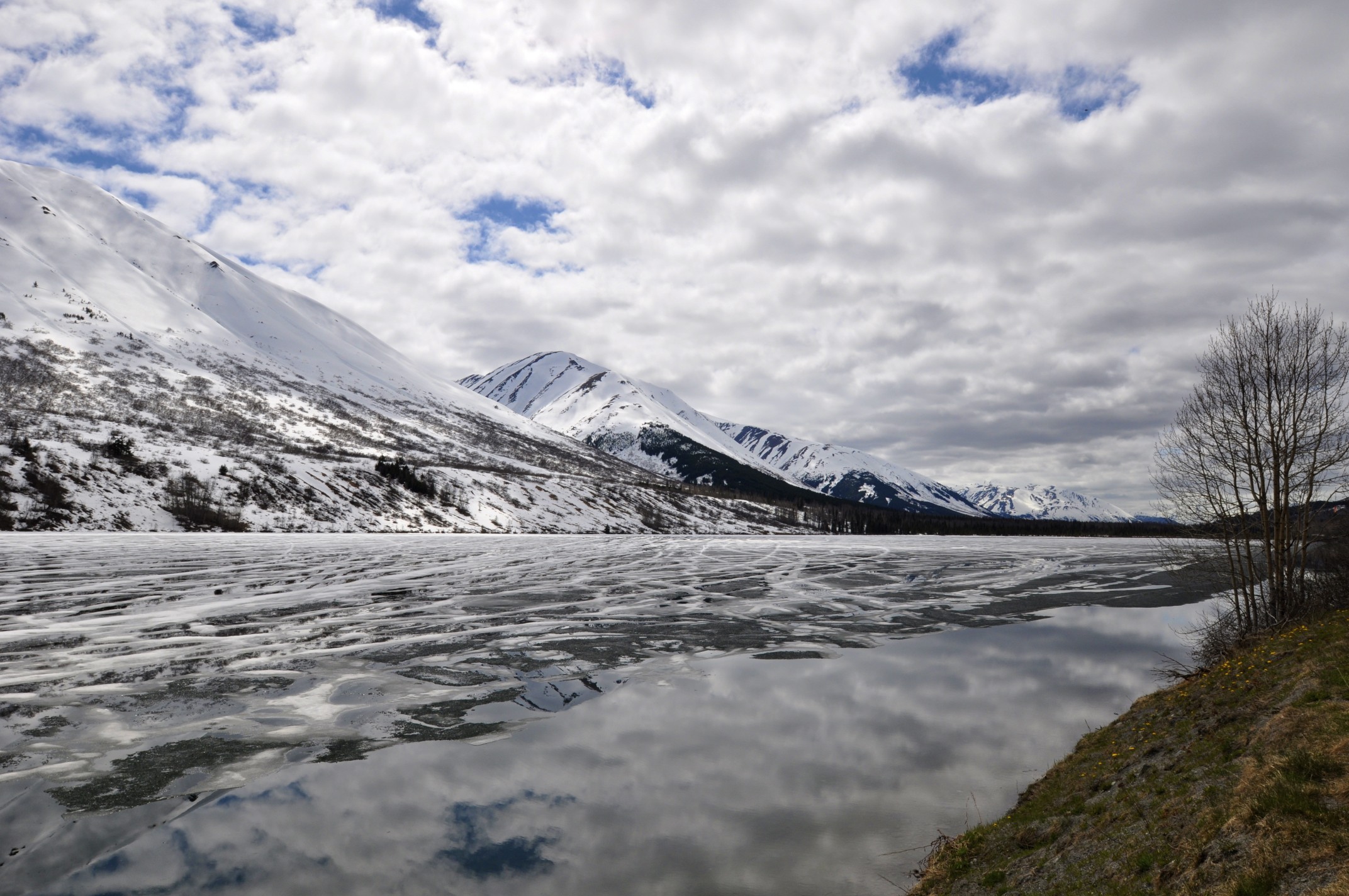
One of the most frequently photographed lakes in Alaska, Upper Summit Lake lies along the Seward Highway between Anchorage and Seward.

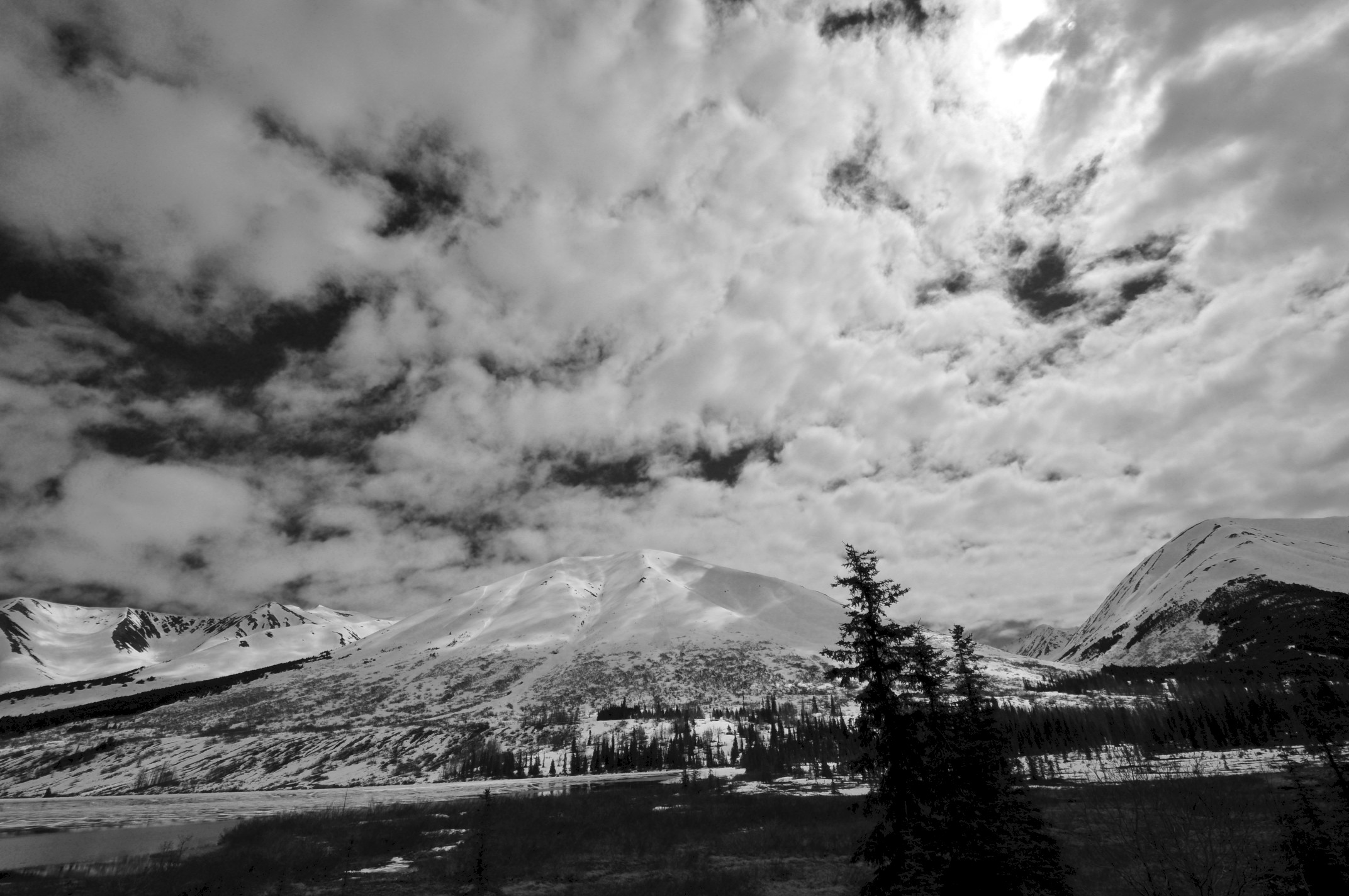
We recently got a wide-angle landscape lens and were eager to try it out. A broken sky over breaking up ice on Upper Summit Lake created a visually arresting set of contrasts and similarities.

We’d never been on the Kenai Peninsula early enough to see this much ice and snow. Only a few days prior, the lake was completely covered in ice, although it was apparent it was beginning to thin.

Notice the dandelions blooming in the foreground. Tough little flowers, pushing up through asphalt in the city, almost pushing away the ice and snow up here.

The upper end of Upper Summit Lake is the kind of place where we slow down and scan for moose.

Stanley and the Lance

Our home on wheels the past three summers – a Lance camper perched on a 3/4 ton Chevy Silverado, here parked for lunch with a gorgeous view of Resurrection Bay near Seward, Alaska. Note the hitch for towing our C-Dory 22 Angler. This photo was taken on May 21, 2012.

Our first summer in Alaska, we lived aboard our C-Dory 22 Angler, GillieGillie’s pilot house and cuddy cabin made for a cozy nest, and the spirited little Toyota Tacoma that did the pulling over the 8,000 plus miles we drove that summer was, simply, the most enjoyable vehicle either one of us has ever driven. The 43 days we spent traveling in that rig made for a summer for the books. In fact, we talked for some time about traveling all across North America in this rig: exploring blue highways both on land and on water, envisioning jaunts down to the Florida Keys, out to Martha’s Vineyard, across the country to Catalina Island and everywhere in between. We even talked about launching the C-Dory at Pittsburgh, Pennsylvania and cruising all the way down the Ohio and the Mississippi to New Orleans.

But when we made the decision to move to Alaska, rent out our home in Sacramento, and spend our summers on the Kenai Peninsula…

A carved wooden hummingbird given to us by our daughter, Maia, on a trip that passed through a First Nations village in British Columbia greets us each time we open the door. Framed artwork and other personal touches make our camper a home.

After months of comparative shopping and researching campers and trucks, we still felt like we didn’t know as much as we would have liked. On the other hand, we knew enough to be comfortable making a decision. We’ve been very happy with both the Lance Camper and the Chevy Silverado 2500 it sits on.

The camper has a queen-size bed, lots of windows and skylights providing natural lighting, a three-burner propane stove with oven, an air conditioner and heater, a good shower and flush toilet, a TV and sound system, a great refrigerator/freezer, lots of storage space and enough room overhead to be comfortable for a person of my height (I’m 6′ 1″). We added a solar panel, which we highly recommend; even on cloudy days the battery charges. We also have a generator which, although rarely used, has been much appreciated the couple of times we’ve needed it.

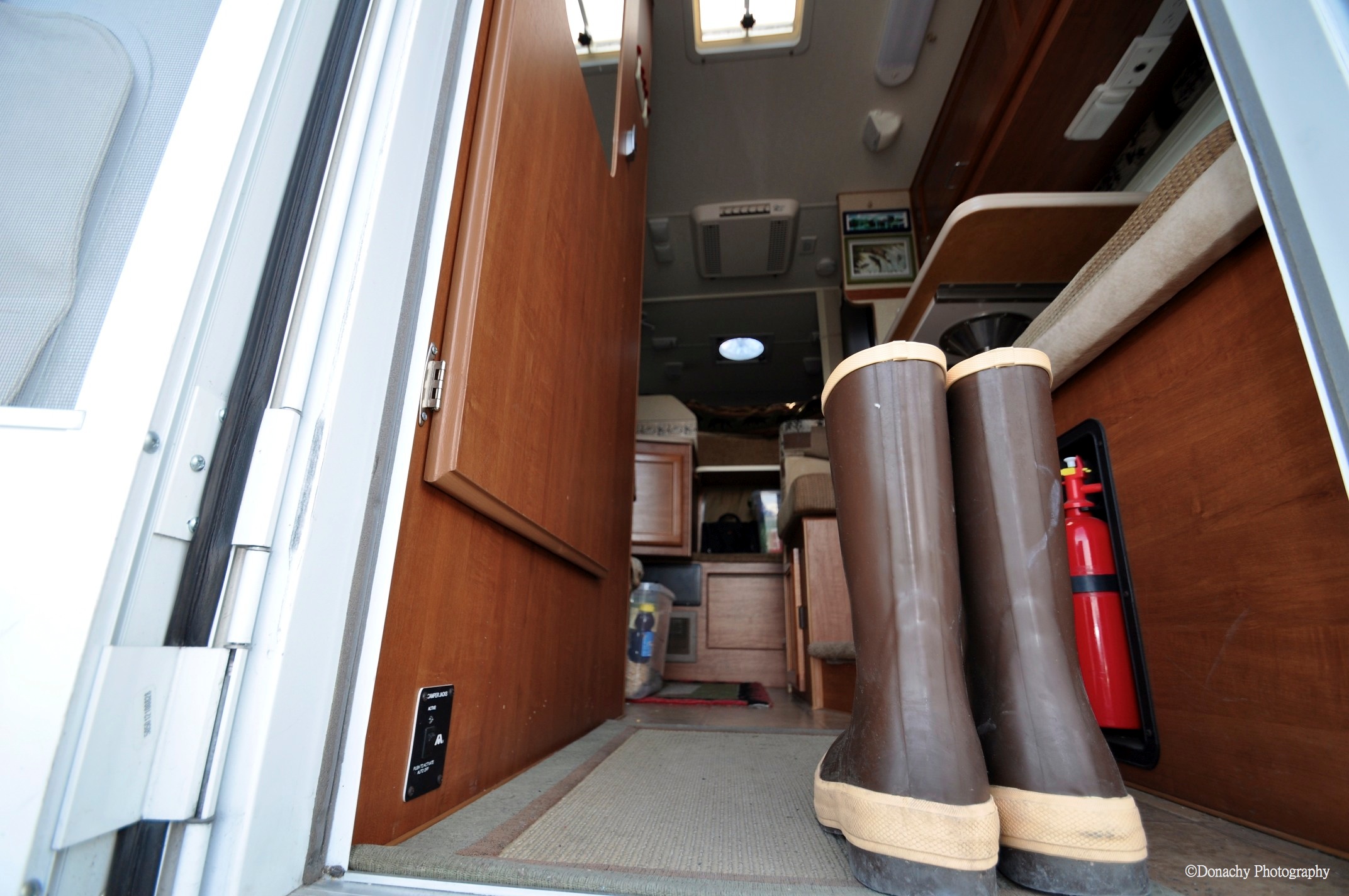
A pair of Xtratuff boots – iconic of Alaska anglers and boaters – is ready at the entrance. 

Stanley is a name conferring strength and dependability – like Stanley tools. Fitted with airbags (extra shock absorbers), our three-quarter ton Silverado has performed superbly carrying the camper and towing our 4,500 pound boat. Given a steep mountain grade, Stanley shifts down as if to say, “All right.” Nothing more. No groaning and straining, no needless extra shifting, just a simple, straightforward, “All right” and up the mountain we go. And kicked into four-wheel drive, this truck has the grit to power through even loose beach sand with the camper – a test we didn’t intend to put the truck through and won’t be repeating.

We went back and forth regarding two options: gas or diesel, and dual rear wheels or single. We opted for a gas engine and single wheels, and after three summers of putting this rig to the test we can say without hesitation that with the right tires, single wheels are fine. And we’re happy we don’t have to deal with the noise of a diesel engine (or impose that noise on our neighbors). That being said, the fact is we don’t put a lot of miles on our rig. A diesel engine offers some real advantages to campers engaged in extensive traveling.

To anyone contemplating a rig like this, we have one firm recommendation: Start by choosing the camper you want, then match it to the right truck. 

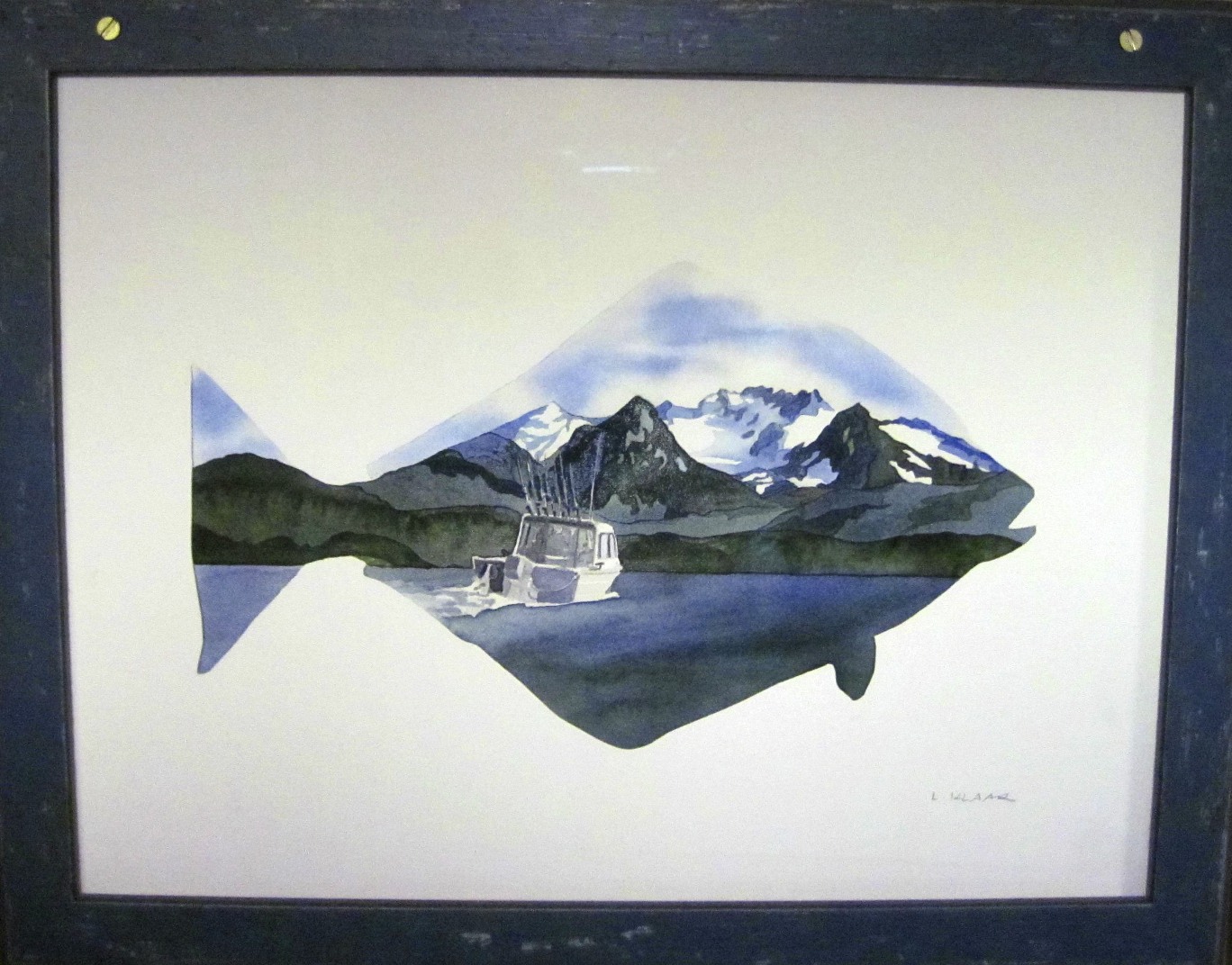
This watercolor by Homer, Alaska artist Leslie Klaar depicts a boat much like our C-Dory heading off for a day of fishing in the great Northwest. It hangs near the door of of our camper.

Livin’ in a Van down by the River

Seward Harbor, May 21: This is the view from the back widows of our pickup truck camper, our summer home while we work to get Bandon ready to live on and to sail. Mornings start early up here, the first sunlight slanting into the camper a little after 5:00 AM – and getting earlier each day. Warblers and other songbirds are the first to wake. Too early for us. By the time we roll out of bed, gulls are calling and scolding and the high chirps of eagles have taken over. The fishing season hasn’t come into full swing yet, though a few engines can be heard making ready for a morning or a day on the water. Blueberry pancakes with maple syrup and strips of bacon on the side some days, fried eggs others, cold cereal when we’re really eager to get moving, but always with a ruby red grapefruit, a glass of orange juice and a big mug of coffee made from freshly ground beans. Then the walk to the end of the dock and a full day of work. In the photo above, as you look down the open water between the docks, Bandon is the last mast on the left.

We’ve submitted the paperwork to the coast guard in order to change the name of our Island Packet 350 from Tarsus to Bandon.

This is a sound vessel, and she surveyed well, but there is always work. The first of it has begun with giving every square inch of her interior – from her beautiful teak-wood sole to her overhead – a good cleaning. Meanwhile, there’s sorting through all the items previous owners left behind. From can openers to canvas, much of it is useful, and much of it is not. All of it requires a decision: toss out, donate to the  local thrift shop, or clean and restow.

Everything we touch, clean, move off or bring aboard makes this boat that much more ours. Bandon will be our home. In the near-term, that means about three months out of the year. And so we are outfitting it as such. This means furnishing it with good dinnerware (we went with Denby for our plates, bowls and pasta bowls), stemware (we found Schott Zweisel Tritan crystal wine glasses that look and feel luxurious but are exceptionally break resistant), and quality bourbon/Scotch glasses.

We anticipate that Bandon will be a full-on sailing vessel in every sense, but we recognize that even the most serious sailing vessels spend most of their days at anchor or in port. We want those days to be comfortable and inviting.

Sandhill Cranes: Up Close and Personal

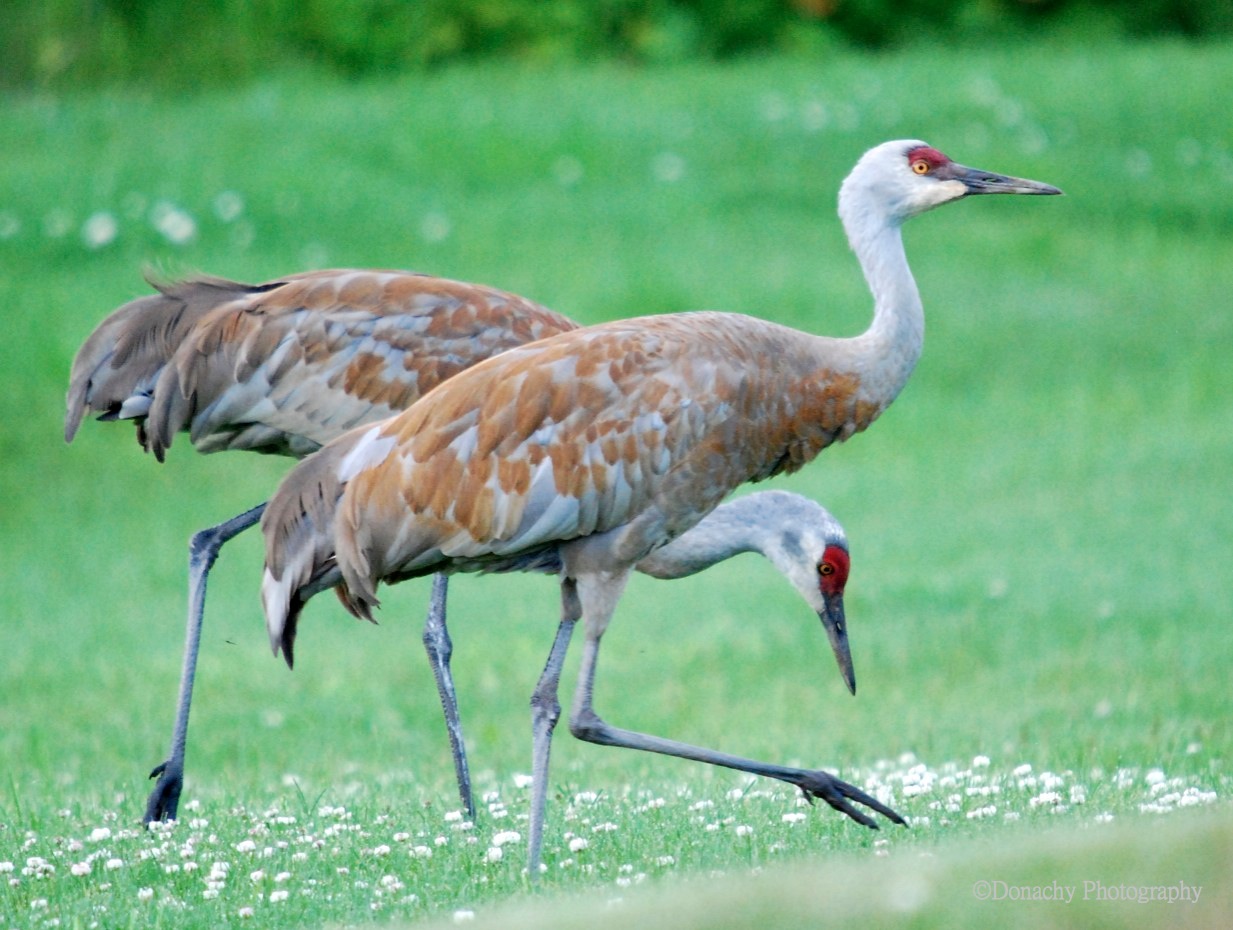
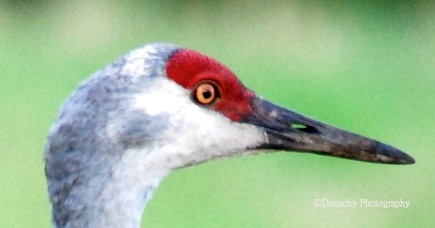
Driving into Homer, Alaska one summer we encountered this beautiful pair of gray and rust colored sandhill cranes (Grus canadensis) foraging on an expansive lawn. Cranes are opportunists, and although they are mainly herbivores seeking grains and seeds, they supplement their diet with insects, small mammals and other animals they encounter.

Bird weights can be deceptive due to their hollow bones. Even though adults have wingspans of six to seven feet (1.8 to 2.1 meters) and stand four to five feet tall (1 to 1.2 meters), they typically weigh less than 10 pounds (4 kilograms).

Since cranes are hunted in Alaska and can be quite wary, we felt lucky to find a pair that wasn’t too skittish. 

Other times we’d seen cranes, they were flying overhead, or, as was the case one summer in Yellowstone, far out on a plain. 

We stalked them for awhile, snapping photos, gauging our distance without spooking them into flight, and then we left the couple to continue their hunting. 

Of course, this being Alaska, when we looked up from the field where we’d been intently watching the cranes, this is what we saw – the Kachemak Glacier, which flows out of the Harding Icefield.