Common Merganser with Chicks, Tuul River, Ulaanbaatar

common merganser 2015 Tuul River n

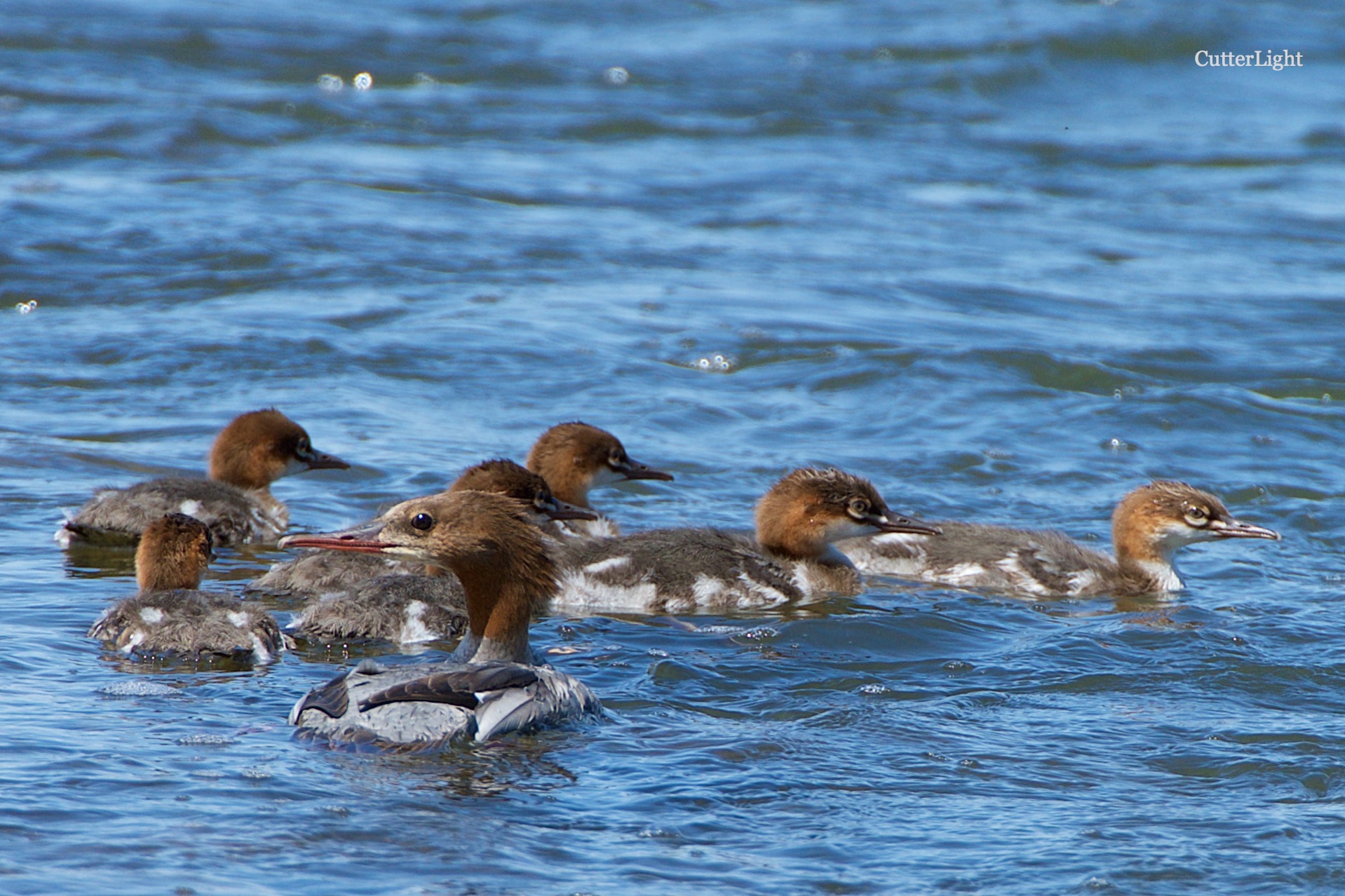
A healthy family of common mergansers (Mergus merganser) indicates an abundance of small fish in the Tuul River on the outskirts of Ulaanbaatar, Mongolia.

Mergansers are large diving ducks that subsist primarily on fish, although the young also fill up on aquatic insects such a the larva of mayflies and stoneflies. They make their nests in cavities in trees, sometimes a good distance from water. Less frequently, mergansers nest in holes in cliffs or high banks. They can be found on open water throughout the Northern Hemisphere, and are a good indicator of clean water and healthy populations of small fish.

Common Merganser hen 2015 n

If you look closely, you can make out the serrations on her bill – the perfect adaptation for holding onto fish. In contrast to the females, the drakes’ heads are dark green, their flanks are white and their backs are black. Although common mergansers are usually encountered on freshwater lakes and rivers, they are frequently seen in coastal bays and estuaries as well.

Common merganser family Tuul n

A baleful eye tells us we’ve approached close enough. Undisturbed this family went about their business, dipping their heads underwater in search of food as they paddled along the river’s current breaks.

Hana Restaurant, Ulaanbaatar: a Trip to Japan Without the Passport

Sushi?… In Mongolia?! Heck yeah! Slightly crunchy in the best possible way, herring roe paired with mackerel is a sumptuous favorite at the Hana Japanese restaurant in Ulaanbaatar.

Jack’s birthday. What to get a man with a serious fish addition in a country where canned Alaskan salmon is pretty much the only palatable fish to be found? We’d heard a couple of good reports from a relative newcomer to Ulaanbaatar’s rapidly growing restaurant scene. Hana was said to have the best sushi – in fact the best fish of any description – in town.

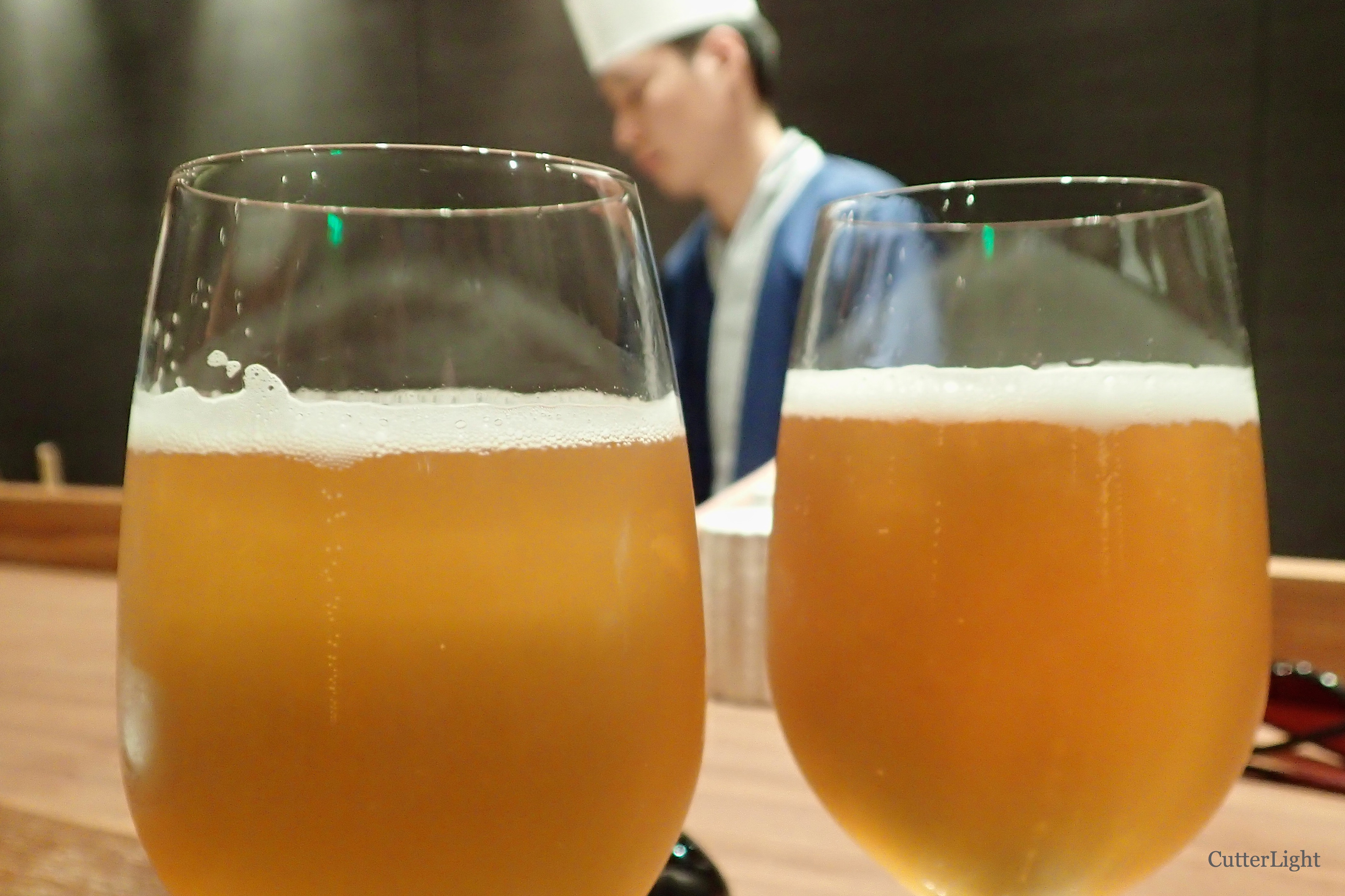
Crisp, light and slightly malty, when it comes to pairing a beverage with sushi, it’s tough to beat a traditional Japanese rice lager such as these frosty glasses of Sapporo. Hana also features a decent wine list as well as locally-brewed beers.

On a whim, we’d stopped in for lunch at Hana the previous day during a walk of the city. I thought we were just getting in out of the mid-day heat for a bite to eat. I know now that Jack was vetting the place for a possible birthday meal. We each ordered a set menu. My chirashi-zushi, an assortment of beautifully-sliced salmon, tuna, sea bass, prawn and mackerel on top of a bowl of sushi rice surprised with its fresh and delicate flavors. Jack went with a nigiri-zushi set (which should have tipped me off that he was up to something). Like my bowl of chirashi-zushi, Jack’s meal was beautifully presented and fresh. Our bowls of miso soup, too, were spot on. We’d tried the sushi at a couple of other Ulaanbaatar restaurants, and had found it to be OK. But our lunch experience at Hana was authentically good.

As bright and fresh as maguro in Japan, this tuna flank was amazing. 

Anytime we visit a good restaurant, we start by asking available waitstaff, chefs, managers and owners what they recommend. On the night we visited Hana, the consensus was that the tuna, recently flown in from Hana’s Japanese supplier, was superb. We began our meal with a plate of maguro sashimi and were not disappointed. The translucent-ruby slices were served with a traditional salad of shiso leaf and julienne daikon, radish and squash. It was absolutely delicious.

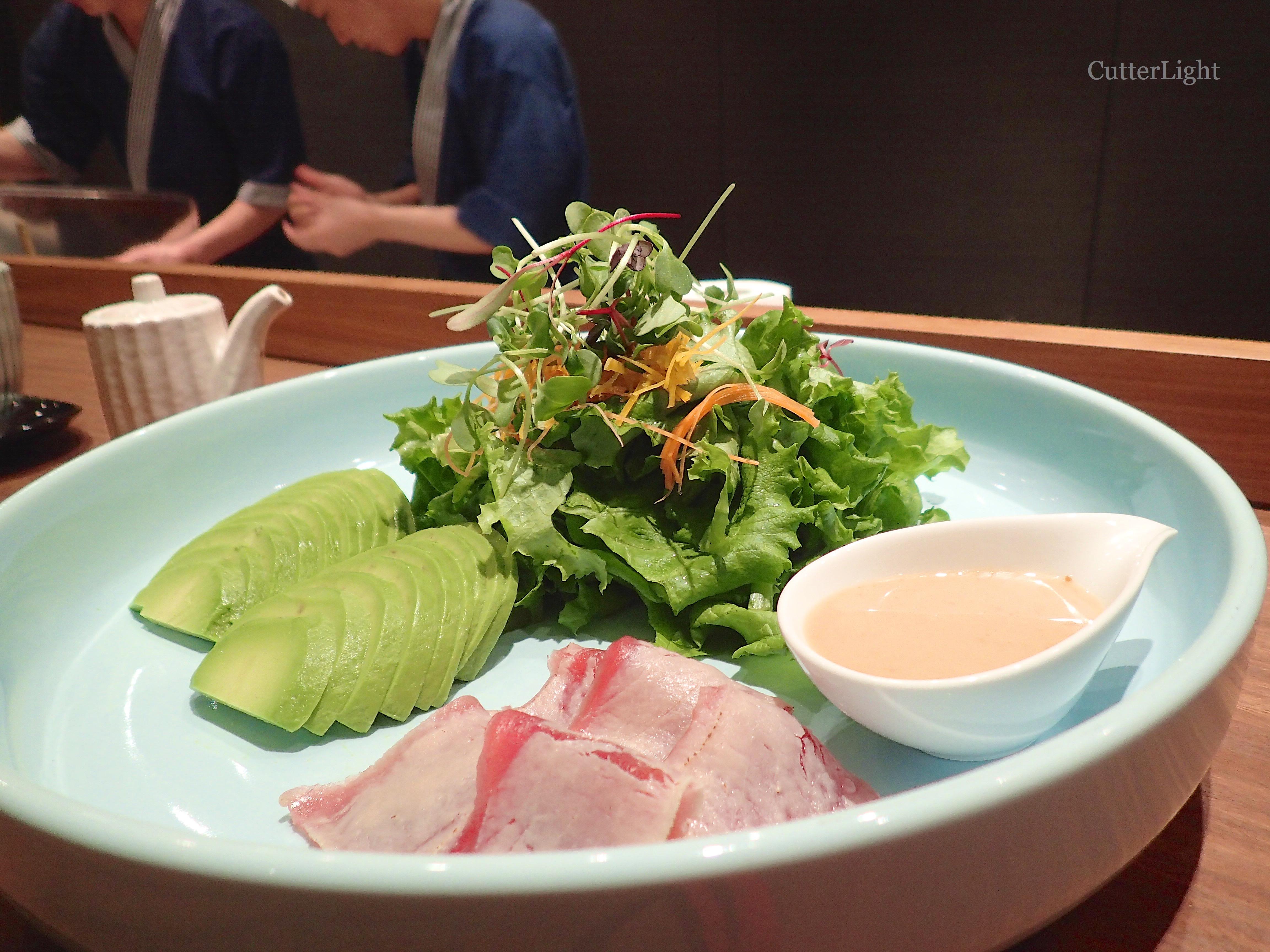
Perfectly ripe, creamy avocado, crisp garden salad, seared tuna flank and a house-made sesame dressing came together beautifully. In the background, our chef is shaping the nigiri-zushi that would follow. 

The next item that was recommended to us was an appetizer salad featuring a balance of impeccably ripe, thinly sliced avocado and lightly seared tuna. Searing the tuna gave it a sweetness which was deliciously complimented by a quick dip in soy sauce. The chef’s sesame sauce gave the avocado and garden salad a savory-sweet dimension. In California, restaurant goers take avocado as good as this for granted. Here in UB, this kind of quality is evidence of the effort and attention to detail that separates Hana from other establishments.

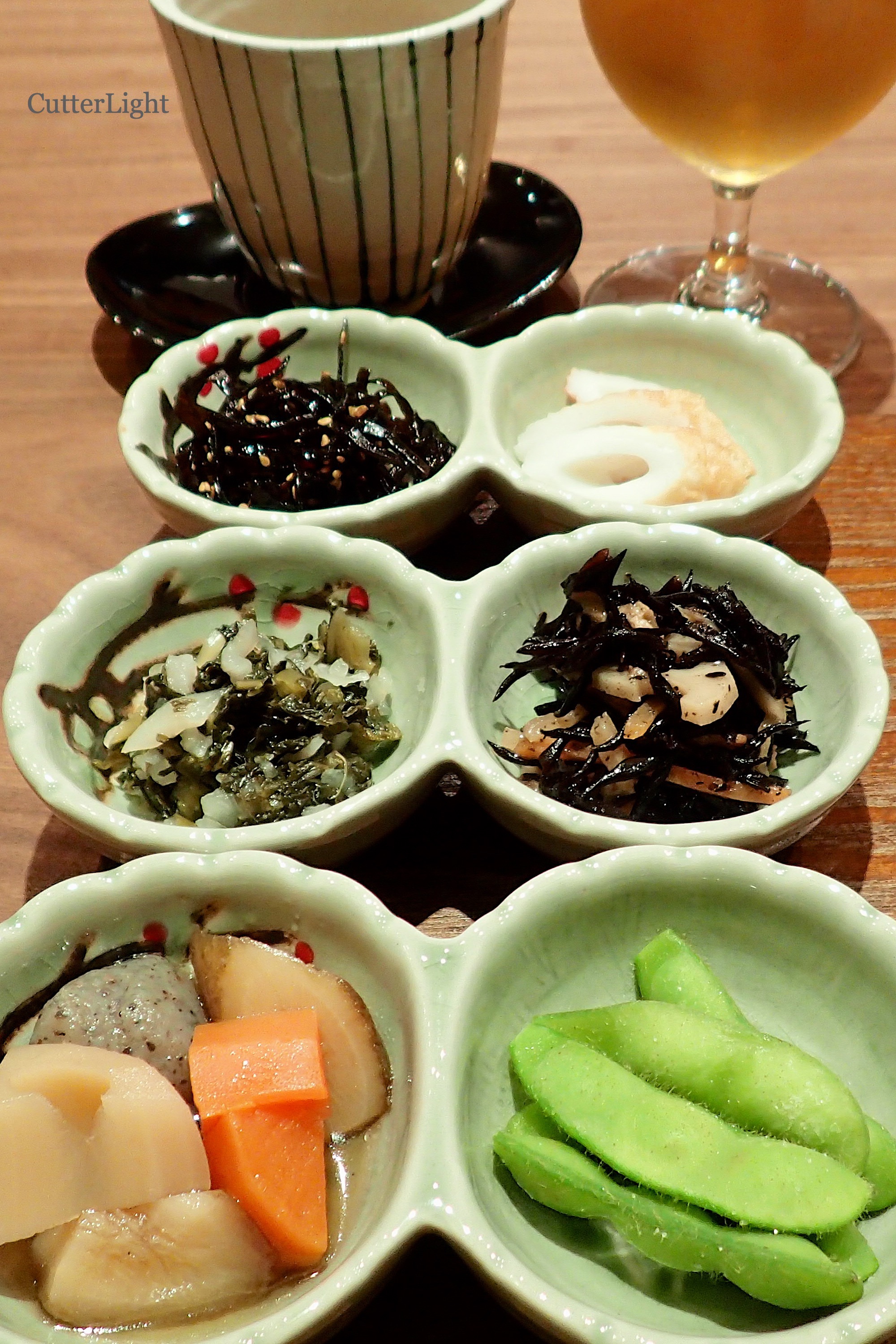
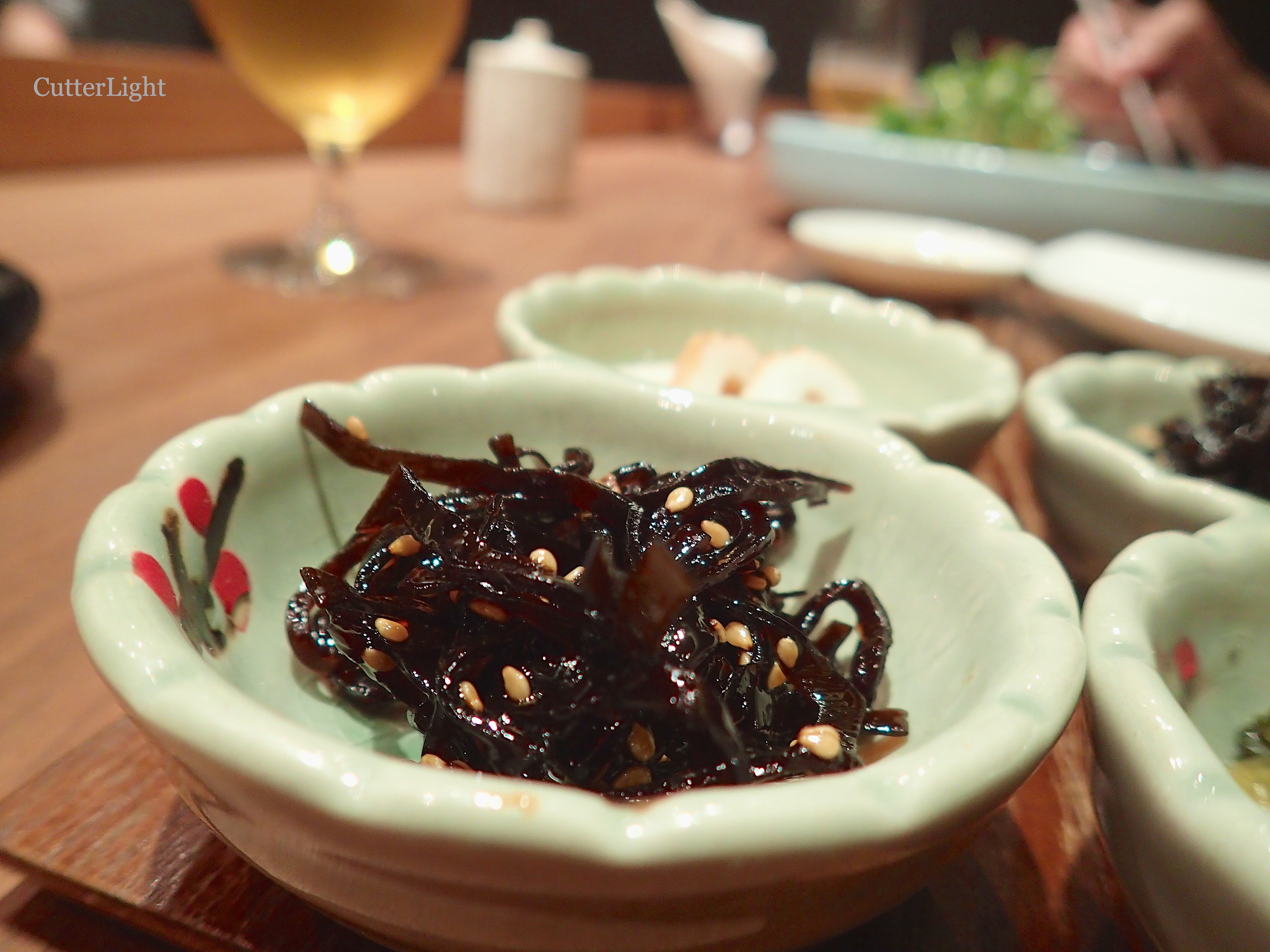
A delicious, authentic assortment of steamed vegetables, pickled seaweed and other appetizers appeared next. 

Among the appetizers, our favorite was this konbu tsukudani. This savory bite is made of kelp cut thin, cooked in soy sauce and mirin, and served with sesame seeds. Jack felt like he was back in Japan. 

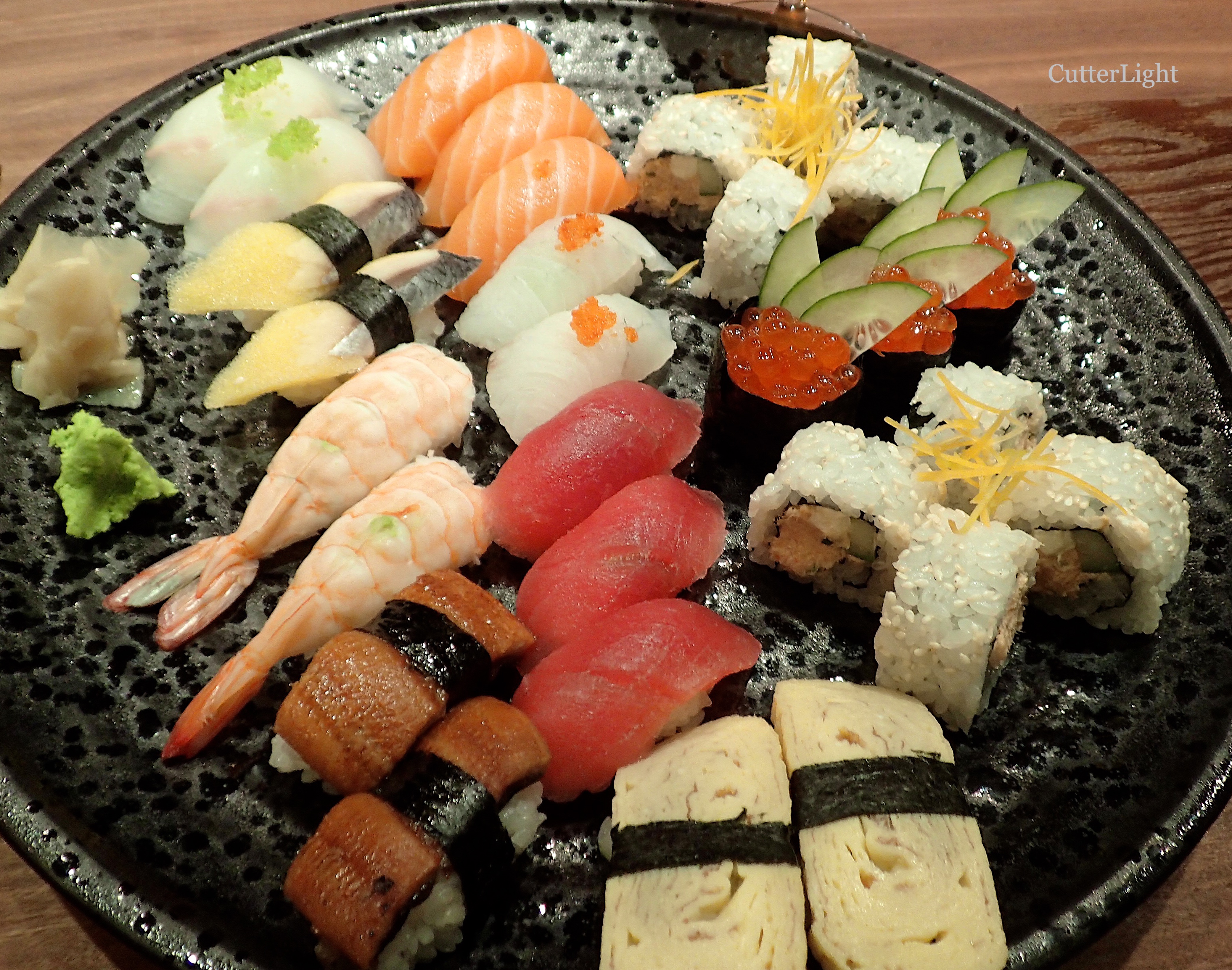
With enough food for two or three people, the sushi assortment platter is a good place to start if you’re visiting Hana. 

When it came to choosing our main entrée, we opted for the assorted nigiri-zushi for two.

The plate featured the obligatory cooked shrimp, tamago (egg), and a sushi roll that didn’t excite us. The tamago was quite good – but not something we typically would order á la carte. The remainder of our plate took us to Japan.

Although the hamachi lacked the butteriness we expect, it was impeccably fresh and beautifully presented with wasabi-cured flying fish roe. 

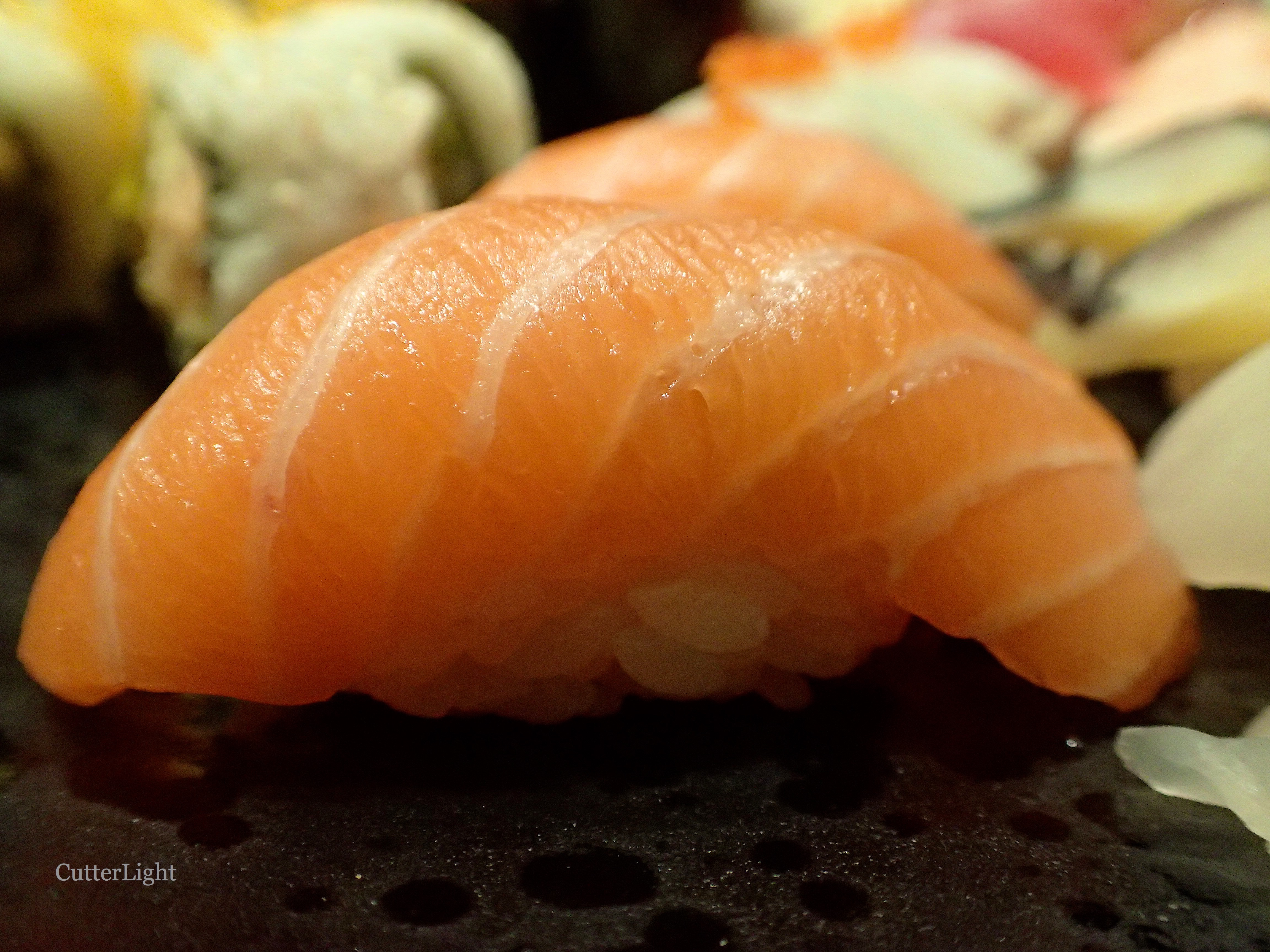
The sea bass, sliced translucently thin (you can see the wasabi beneath it) and dressed with a dollop of flying fish roe, was excellent. Given that the fish is fresh, what really makes and breaks sushi is the quality of the rice. Delicately flavored sea bass is unforgiving. At Hana, the sushi rice is excellent. Former Alaskans, we appreciate the difference between good, really good and excellent salmon. Fresh and melt-in-your-mouth buttery soft, the salmon sushi at Hana is perhaps the best fish available in Ulaanbaatar. 

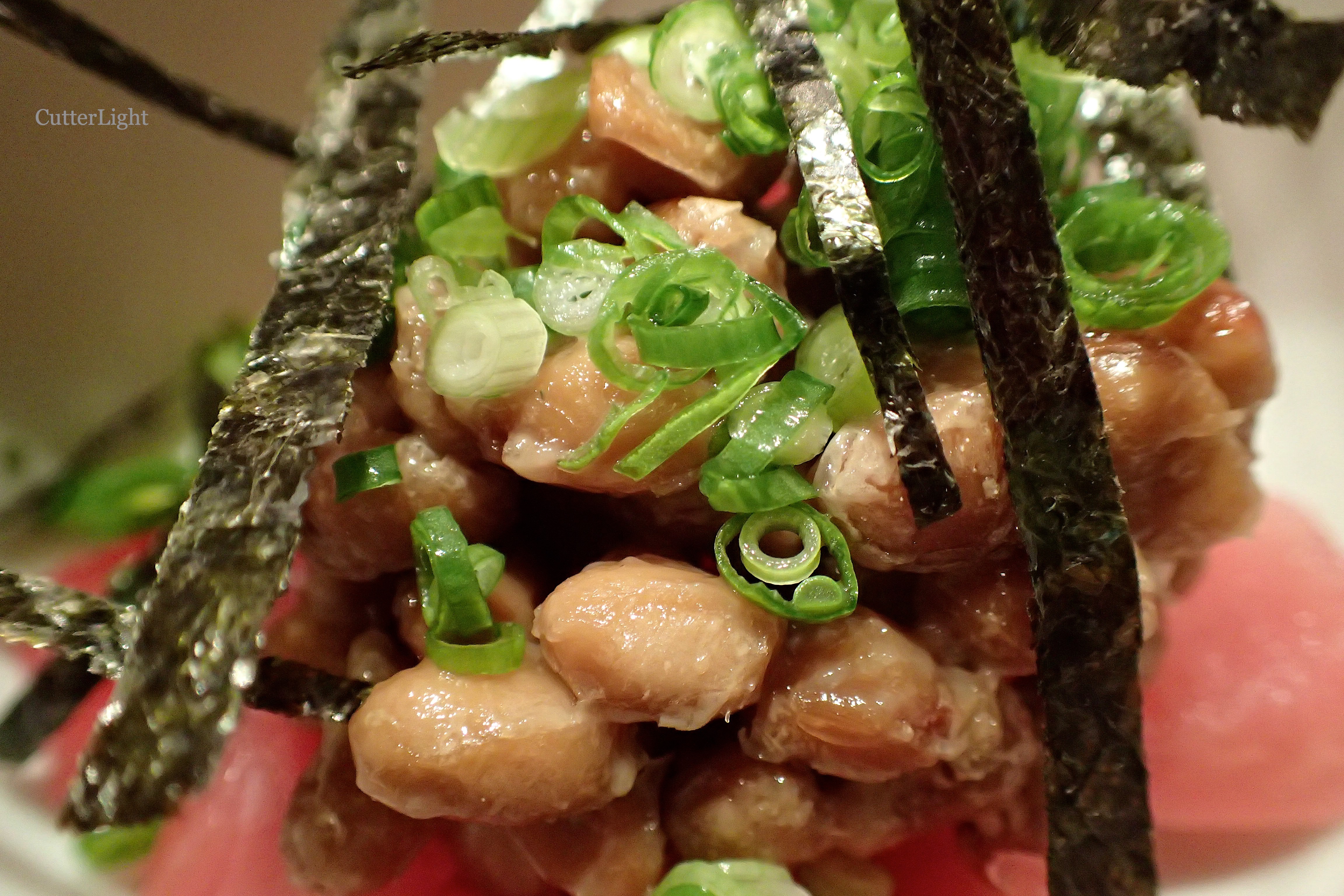
We were on the verge of leaving when the chef brought out a treat appreciated by true aficionados of Japanese cuisine and by few others. Natto. Sticky, gooey, fermented soy beans. In most restaurants, natto is served on rice, perhaps accompanied by a raw quail egg. On Jack’s birthday, the chef served it on a bed of tuna sashimi. I let him have the bowl to himself. The perfect end to the perfect birthday dinner. 

Ulaanbaatar is not a foodie mecca. But restaurants like Hana are working to change that.

Fire and Ice Needles: Dawn, Hustai National Park, Mongolia

ice needles at dawn n

Stalked a group of stag red deer

up a draw to the top of a rise 

where the sun broke fiery and cold

lighting feather grass and ice needles

suspended in the negative something air.

Along the ridge, winter-hard antlers

lit with sunlight

scattered into the dawn.

– Hustai National Park, Mongolia, 2014

Jack Donachy


Takhi – A Success Story in the Land of Chinggis Khan

Takhi w magpie full n

Magpie and takhi (Przewalski’s horse) – old friends reacquainted in a scene that has played out for many thousands of years but that was sadly interrupted in those decades during which the takhi were extinct in the wild. 

In 1967, somewhere on the arid steppe of Mongolia’s Western Gobi Dessert, the last small herd of wild takhi was seen. Two years later, only one horse remained. And then Equus przewalskii vanished completely from the wild. Although closely related to modern domestic horses, takhi were never tamed. This differentiates their status as “truly wild” from the ferrel mustangs of America which are descendants of domestic horses.

In their natural environment, wolves were their main predators, and the dry, harsh, cold conditions of the steppe would invariably claim victims each winter. But the main cause of the demise of the takhi was probably due to its being hunted for meat.

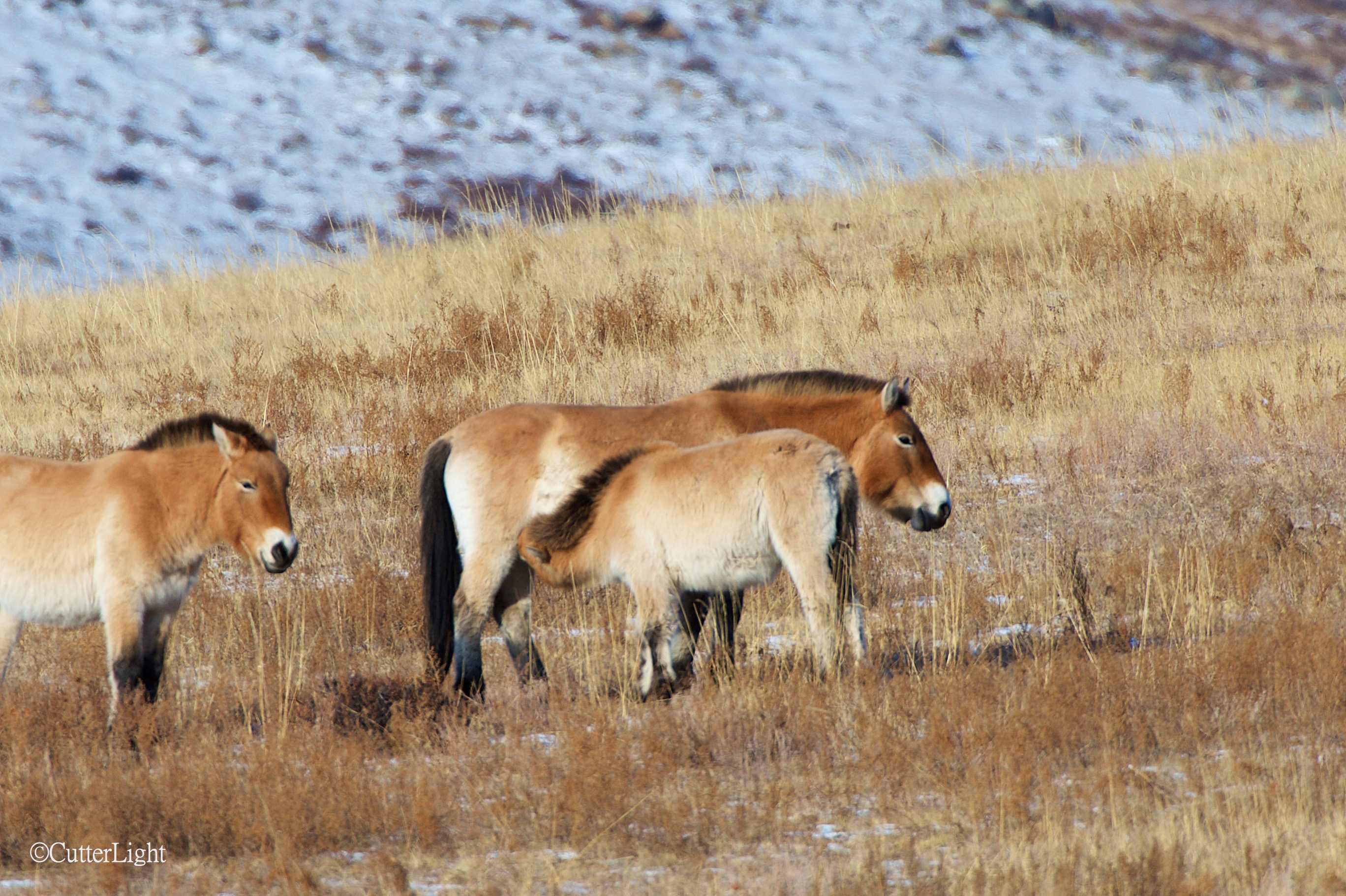
Takhi nursing winter n

Takhi form small family groups comprised of a lead stallion, two or three mares, and their offspring. These family groups loosely intermingle with other families as well as with bachelor stallions which often travel in pairs or groups of three. Stocky and with zebra-like manes, takhi are comparatively small, standing only about 48 – 56 inches tall at the shoulders. They have 66 chromosomes, two more than any other species of horse. 

By 1970, the only living specimens existed in a few zoos and private ranches. Extinct in the wild, it seemed only a matter of time till their official extinction from the planet would be announced.

Then something truly remarkable occurred. In a cooperative venture between the Zoological Society of London and Mongolian biologists, the horses were reintroduced to Mongolia’s Khustai (Hustai) National Park where they’ve been thriving even since.

takhi with red deer n

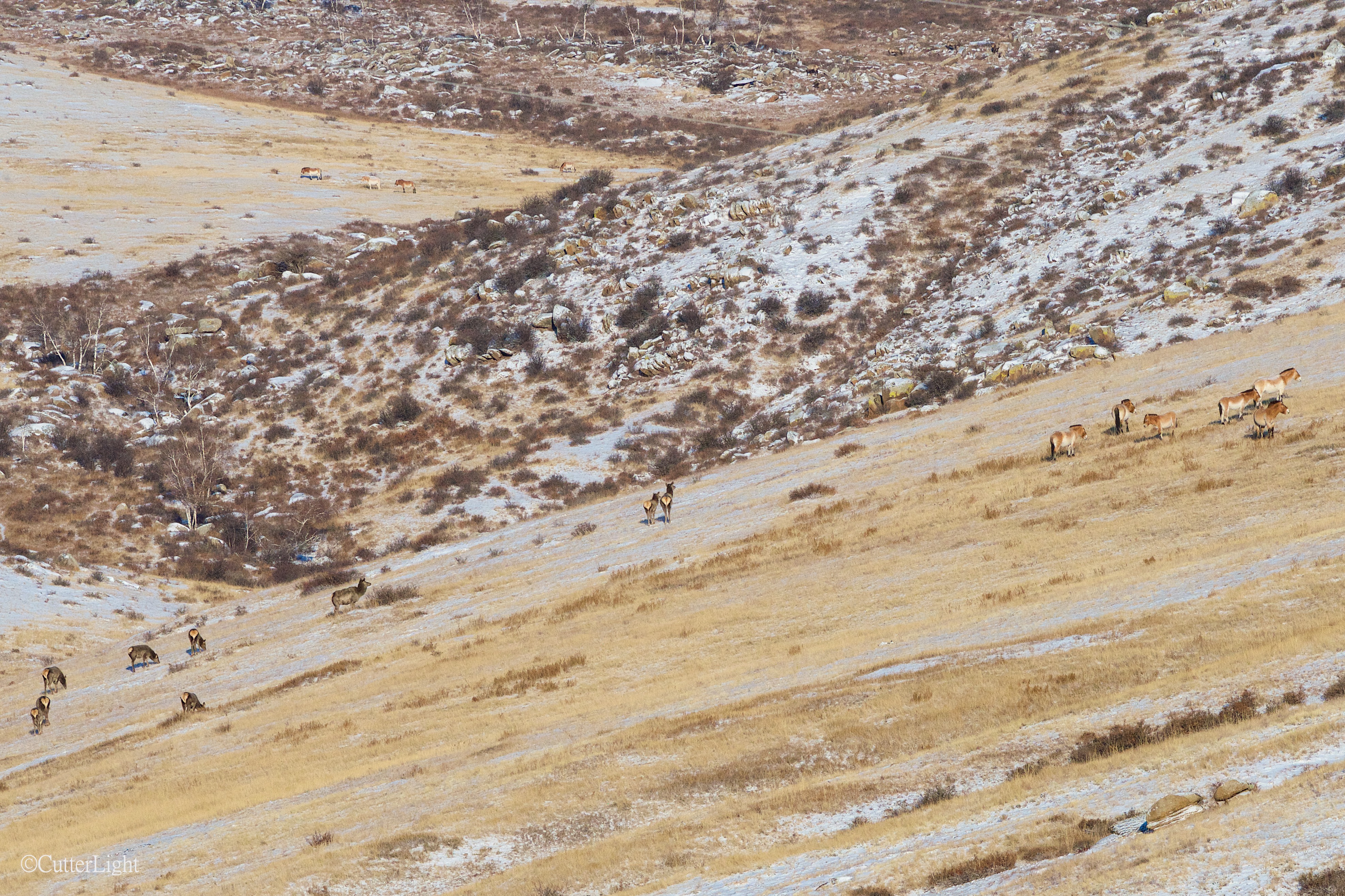
On a morning bright with ice needles in the air and a fresh dusting of snow on the ground, takhi and female red deer (Cervus elaphus) share a piece of rugged terrain in Mongolia’s Khustai National Park. 

takhi stallion pair n

In full winter coats, these wild takhi are as beautiful as they are tough.

We counted ourselves as lucky to have spent a few days in Khustai during some of the coldest stretches of winter. The deeply rutted dirt roads were quiet, wildlife was abundant, and the horses seemed only mildly curious regarding our presence.

takhi in summer field

Takhi can readily be viewed in summertime as well. We can’t say which season is more beautiful. There are wild horses in this world still. That is beautiful.

Big, Beautiful Grizz Chillin’ at the Edge of an Alaskan Forest

Grizzley admiring nails n

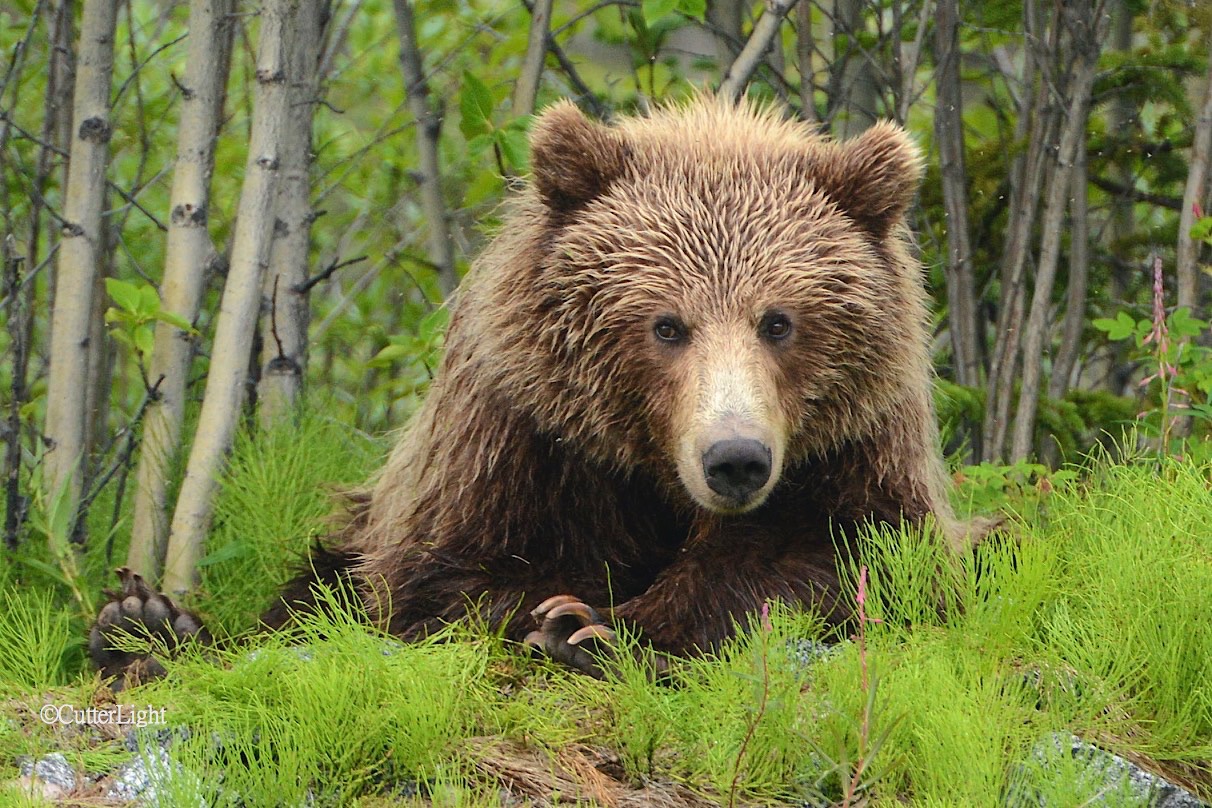
We caught this Alaskan grizzly bear chillin’ on the edge of a forest on a cool, overcast morning in mid-summer. With nails like that, who wouldn’t lie around admiring them? (Six more photos.)

Grizzley looking straight on n

The previous day, I (yours truly, Jack Donachy) managed to drop and break “the big lens.” But this sleepy guy barely paid us any attention as we photographed him from the safety of our Chevy, so the 70-200 mm with a 1.4 teleconverter got us close enough. Hard to say how many cars had driven by this big, blonde-brown hulk without noticing that morning. We stayed with him – and he with us – for about half an hour.

Grizzly the Thinker n

He’d doze off for a bit, wake up, think about whether or not to get up (or maybe he was trying to remember where he’d left his car keys last night), give a little sigh and then drop off to sleep again. 

grizzly sleeping  a n

Grizzly looking to his right n

And then he’d wake and take a look around.

Grizzly picking up scent n

Eventually a scent on the air caught his attention…

Grizzly ambling off diorama n

And he ambled off. Almost looks like he’s posed in a diorama. The overcast morning light really made the colors pop.

Daurian Partridge: Birds of Mongolia

Daurina partridge pair n

We encountered these softball-shaped Daurian partridge (Perdix daurica) in the pre-dawn of a December trip to Mongolia’s Hustai National Park.

Any day we see a new species of bird or other animal is a good day. On a recent three-day trip to Hustai, we had several such encounters. Nothing was any cuter than these relatives of pheasants and quail that would have fit perfectly in our cupped hands.

daurian partridge back n

We startled them, a covey of 14, as they were feeding on seeds on the coldest morning to date this winter in Mongolia. Maybe it was the sub zero (Fahrenheit) temperatures, or the fact that none of us – including the birds – were fully awake. But uncharacteristically they let us hang around and snap a few photos in the blue morning twilight. The orange beard-like feathers and gray side whiskers are part of their fall and winter plumage. 

Daurian partridge bokeh n

Named for the Daurian region of Russia, the average Daurian partridge is about 11 or 12 inches (28 to 30 cm) from head to tail and weighs around one half to three quarters of a pound (225 to 340 grams). The main part of their diet consists of seeds, which are abundant on Mongolia’s steppe grasslands. Insects and berries also figure into their diet, when available. Partridge are ground nesters, having developed a long-term dislike of heights (such as tree branches) when, Daedalus (father of Icarus of Greek legend) threw his nephew Perdix off the Athena hill in a fit of anger. Not wishing to experience another such fall, members of genus Perdix avoid high places to this day. So the legend goes.

daurian partridge flying away n

But they do fly, and this is the more usual view of Daurian partridge. Twice, previously, while hiking the Mongolian steppe we’ve had our startled hearts stop in our chests as a thrumming whoosh of wingbeats exploded practically underfoot. Once the birds have flushed, it’s difficult to approach them again, although you can sometimes track them down by listening for their rix, rix, rix, call as they regroup. 

Oasis in the Southern Gobi: A Camel-Back Trek

Buntings framed by desert wood n

Brown with October’s cold, a gnarled desert tree frames buntings (possibly Jankowski’s) (Emberiza sp.) near our ger in Mongolia’s southern Gobi Desert .

A few miles south of the Khongoryn Els singing dunes marked our southern-most push into the Gobi.

OLYMPUS DIGITAL CAMERA

A herdsman’s goats crowd around a rare source of water. 

black-tailed gazelle against dunes n

While driving, we encountered a species of gazelle that was new to us – black-tailed gazelle (Gazella subgutturosa).

black-tailed gazelle n

The black-tails proved to be every bit as skittish as the Mongolian gazelle we’d been seeing throughout the trip. 

After driving through an expanse of mostly sand and rock, we came into an area of small trees, shrubs and tall grasses, evidence of water close to the desert’s surface. The family gers there would be our camp for the next two nights. With water available, one of our first orders of business was good hair shampooings all around. This was to be the closest thing to a shower we had during our eight-day trek, and it was decidedly refreshing.

OLYMPUS DIGITAL CAMERA

Jimi Carter and I lug water cans to our ger for impromptu hair washing. The effects of the mini-shower were immediately spirit lifting. 

gerbil in s gobi

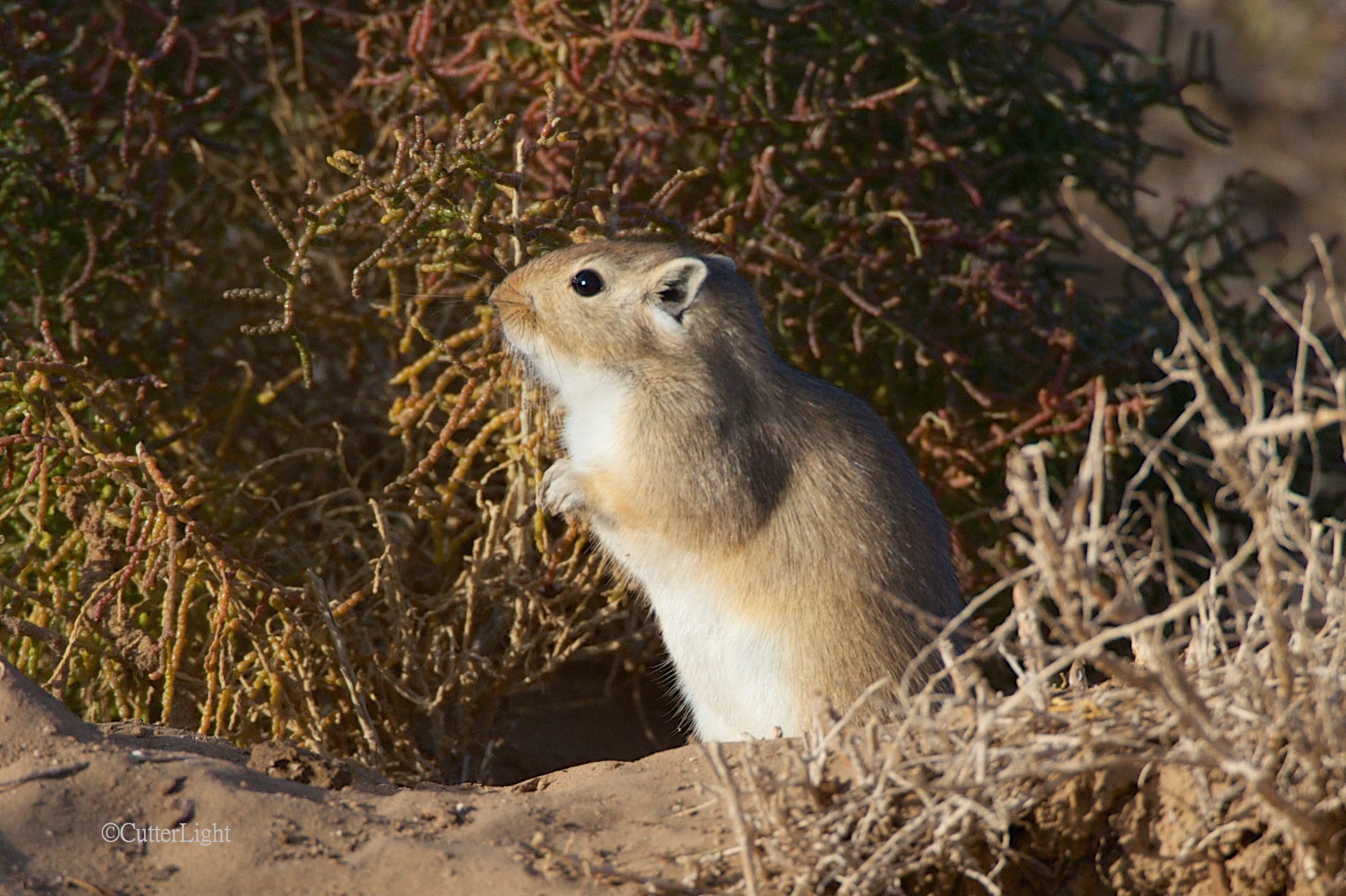
There was a large gerbil warren not far from our camp – and signs that a fox had recently visited it. 

OLYMPUS DIGITAL CAMERA

For dinner, the appetizers featured steaming bowls of temeni suute tsai (suu – te – tsay) – camel milk tea, fried bread and camel milk aarts. Aarts is similar to sweet, mild cream cheese. It was absolutely delicious, and we had to remind ourselves to save room for the main course – goat with a variety of goat meat sausages. 

sunset south gobi

The sunset that night was, as usual, spectacular. 

OLYMPUS DIGITAL CAMERA

This was the most spacious and ornately decorated ger we stayed in. Note the bag of aarts – camel milk cream cheese – on the right wall. After breakfast, our host rounded up several camels for our trek to a set of dunes about three miles from the ger. 

OLYMPUS DIGITAL CAMERA

Decked out in a traditional dell, our driver, Nimka, (foreground) and our host were ready to mount up and lead the way to the dunes.

cinereous n

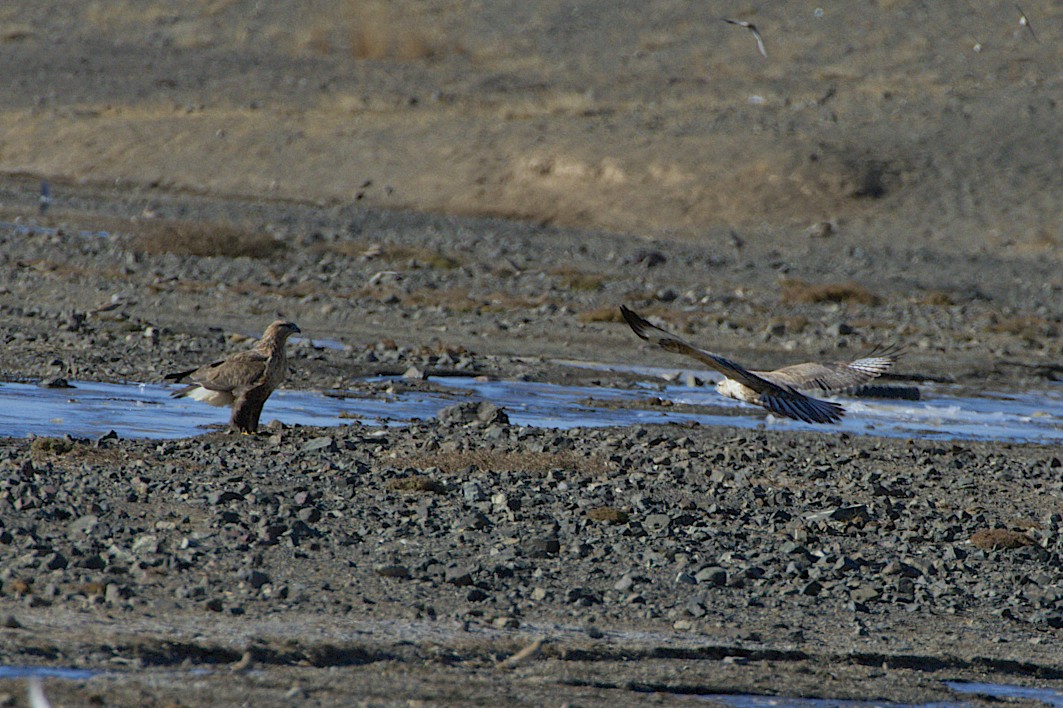
Raptors use the dunes as perches and hunting grounds. Here a cinereous vulture (Aegypius monachus) executes a take-off… 

common buzzard n

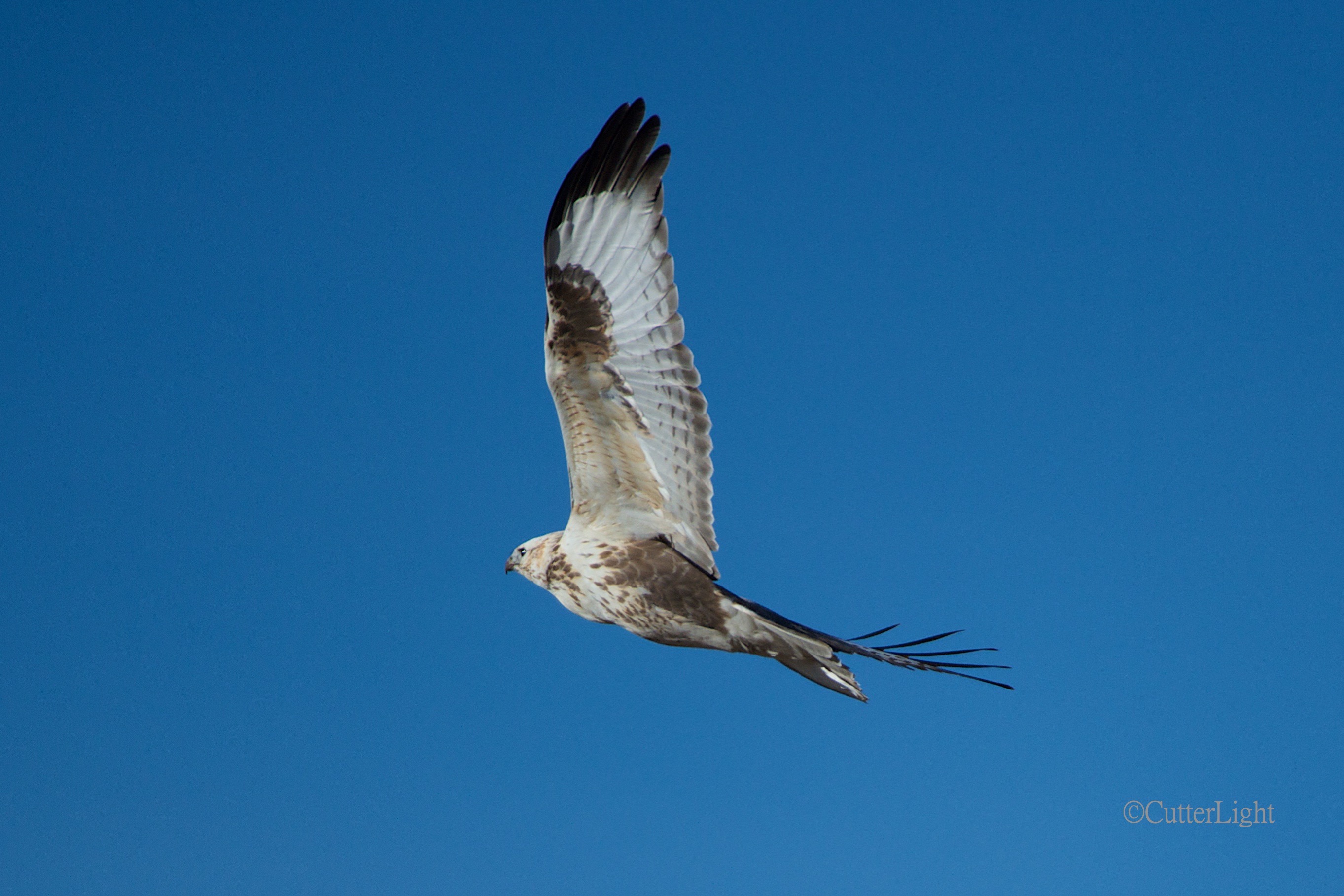
…and a common buzzard (Buteo buteo) soars above the landscape scanning for prey.

OLYMPUS DIGITAL CAMERA

Evidence of a successful hunt. The porcupine-like quills are those of a hedgehog. We found several of these pellets along the ridge of the dune. Birds of prey regurgitate the undigested parts of the birds and mammals they dine on.

OLYMPUS DIGITAL CAMERA

Camels tethered below, we ascended a fairly steep dune where we’d seen raptors perched. Although we never did encounter a fox, once again their tracks were present, along with those of hares. 

OLYMPUS DIGITAL CAMERA

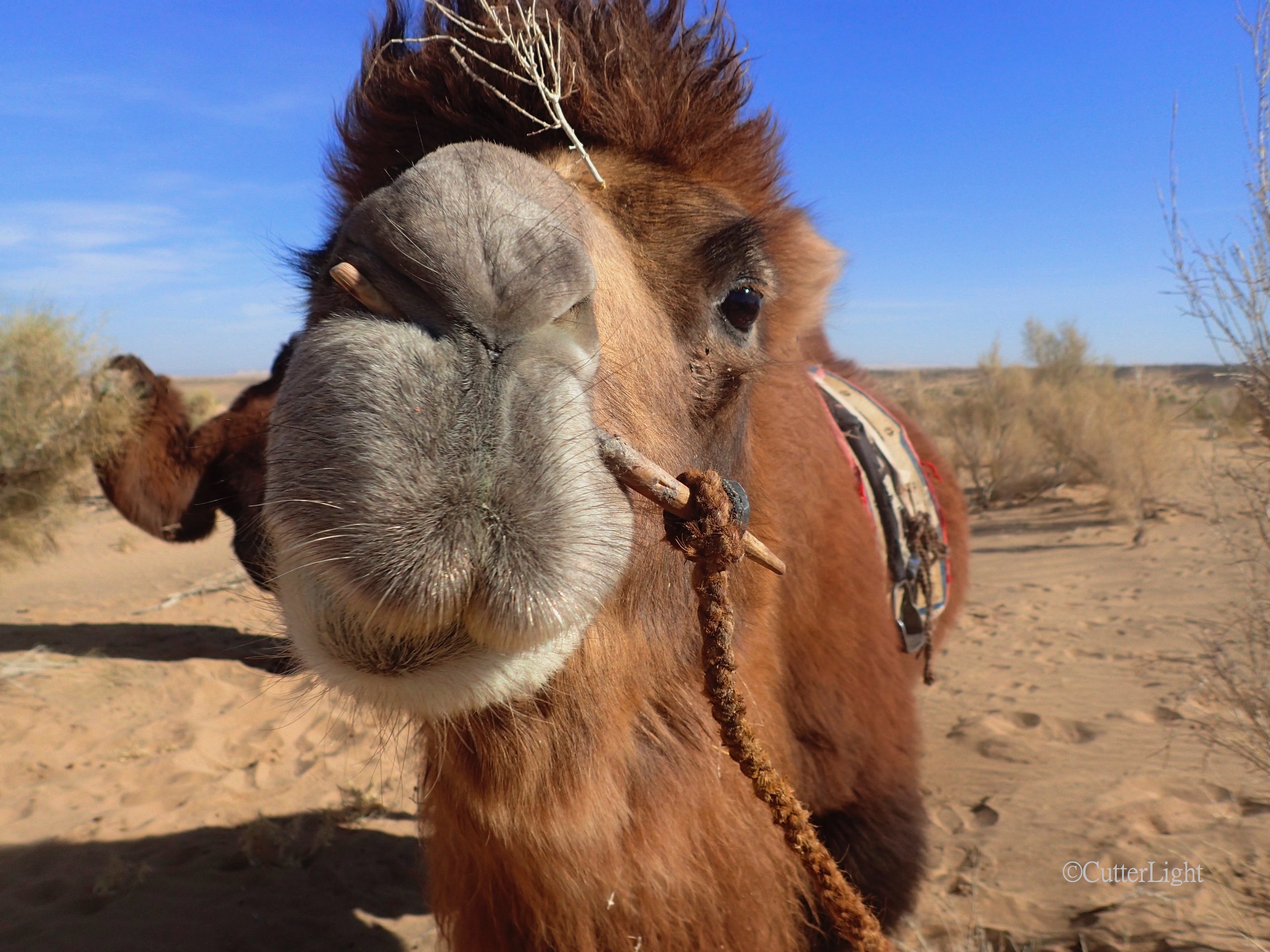
We named our camels for the trek. Here Barbra’s camel, Timmy, hams it up for the camera. (The Mongolian word for camel is teme – hence Timmy the teme.)

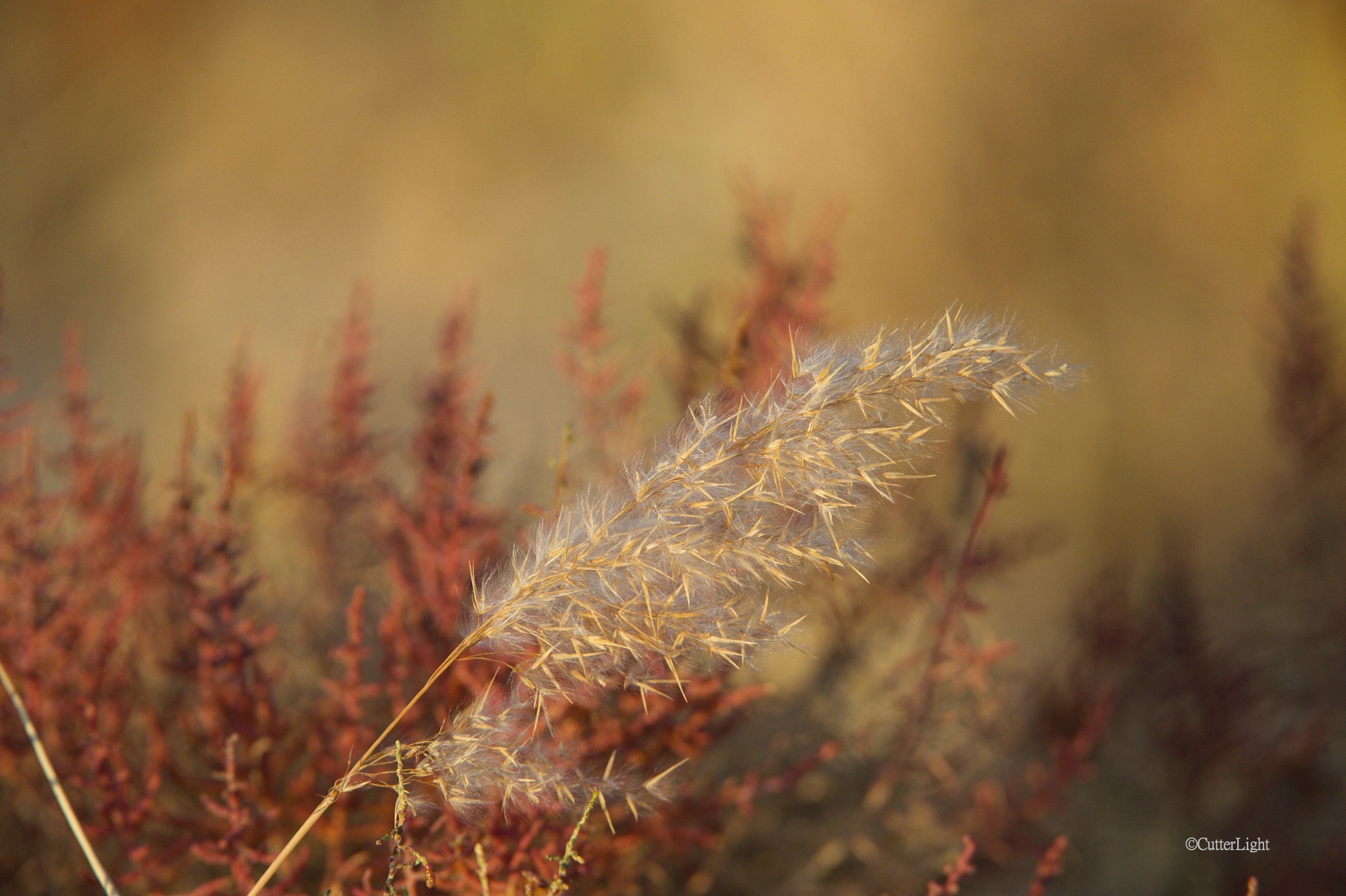
Below: Surprisingly lush growths of various seed producing grasses provide forage for the abundant bird and rodent populations, which in turn provide prey for foxes, wolves and the Gobi’s numerous raptors.

wheat grass wild n

red grass on wheat n

backlit seed head n

buntings 2 n

In addition to the many buntings and sparrows around this oasis ger, there were times in the early morning when thousands of doves filled the skies. 


Climbing Khongoryn Els: The Gobi Desert’s Singing Dunes

dunes big with human n

Towering nearly 200 meters high, Mongolia’s Khongoryn Els are among approximately 30 “singing dunes” worldwide. Precise balances of humidity, silicon content and sand grain size and shape must be perfect to achieve the deeply vibrating hum these dunes produce. Click any photo to enlarge. 

With each step up the steep slope of the dunes, we simultaneously gained and lost elevation, slipping back with the shifting sand. Although the mid-October day was cool, we were stripped down to jeans and shirts, and would have been more comfortable in shorts. By the midway point, we were drenched with sweat. And that’s about when we began to notice it – an unmistakable vibration that began in our feet and traveled through our leg bones up through our hips accompanied by a low, resonate hum. The sound was audible – sort of like monks chanting “ohmmmmmm” from somewhere deep in their throats.

sculpted dunes 1 n

Wind sculpted sand has fascinated humans for millennia. Views like this were our reward for hiking to the top of the dunes.

barbra climbing dunes n

Water bottle in tow, Barbra takes a breather halfway up the tallest dune. Livestock look like mere dots on the shores of the distant shallow lake. The water is a morning gathering place for doves in the thousands… perhaps tens of thousands.

OLYMPUS DIGITAL CAMERA

The top of the dunes felt like the top of the world –  the perfect place to make sand angels. 

sea of dunes n

Although much of the Gobi Desert is rocky and wet enough to support plant life, the area of the singing dunes is an ocean of ever-shifting sand. See Yolyn Am Canyon: Wildlife Safari amidst Remnants of the Gobi’s last Glacier and The Gobi Desert’s Valley of the Lammergeier.

dunes sculpted contrast n

Dusk was closing in by the time we descended the Khongoryn Els, creating dramatic contrasts along the dunes’ curving edges. 

One of the funnest runs of our lives was racing down the dunes barefoot – a 200 meter decent, big strides landing in soft, cool sand, only slightly tilted away from vertical.


The Gobi Desert’s Valley of the Lammergeier

ibex bull w cow n

On our second day in the Yolyn Am Canyon in mid-October, we encountered more ibex such as this handsome billy. The sheer number of raptors was astounding.

russian van tight squeeze n

Out trusty Russian van slipped through a seemingly impossible passage. Here and there, falcon, hawk and eagle’s nests were perched on ledges along the craggy, vertical walls.

Saker falcon n

A saker falcon stretches his wings during a morning of hunting. 

rough legged hawk wheatears

Small birds and mammals abound in the canyon, providing ample forage for raptors and other predators. On this morning, swarms of wheatears seemed oblivious to this rough-legged hawk, which was probably hoping to score one of the canyon’s many small mammals.

shy pica

This shy pica had good reason to be on high alert. 

rough legged hawk pair

Probably a mated pair, these rough-legged hawks were hunting along a spring creek.

young & female ibex yolyn am 2 n

During our two-day journey on foot and by van through the canyon, we saw over 20 ibex.

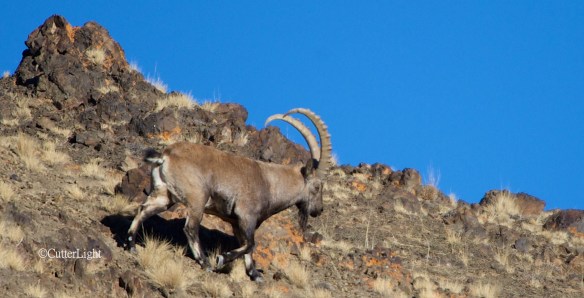
bull ibex walking downslope n

Bearded, muscular and with iron-like knobbed horns silhouetted against a blue Mongolian sky, this billy cast a baleful eye on us as he calmly passed by.

lammergeier disapper rocks

The shape of the tail and the gold under the chin make it easy to identify this as the Yolyn Am’s eponymous bird – a lammergeier, also known as a bearded vulture. They kept their distance. We have equally blurry shots of the canyon’s golden eagles. 

OLYMPUS DIGITAL CAMERA

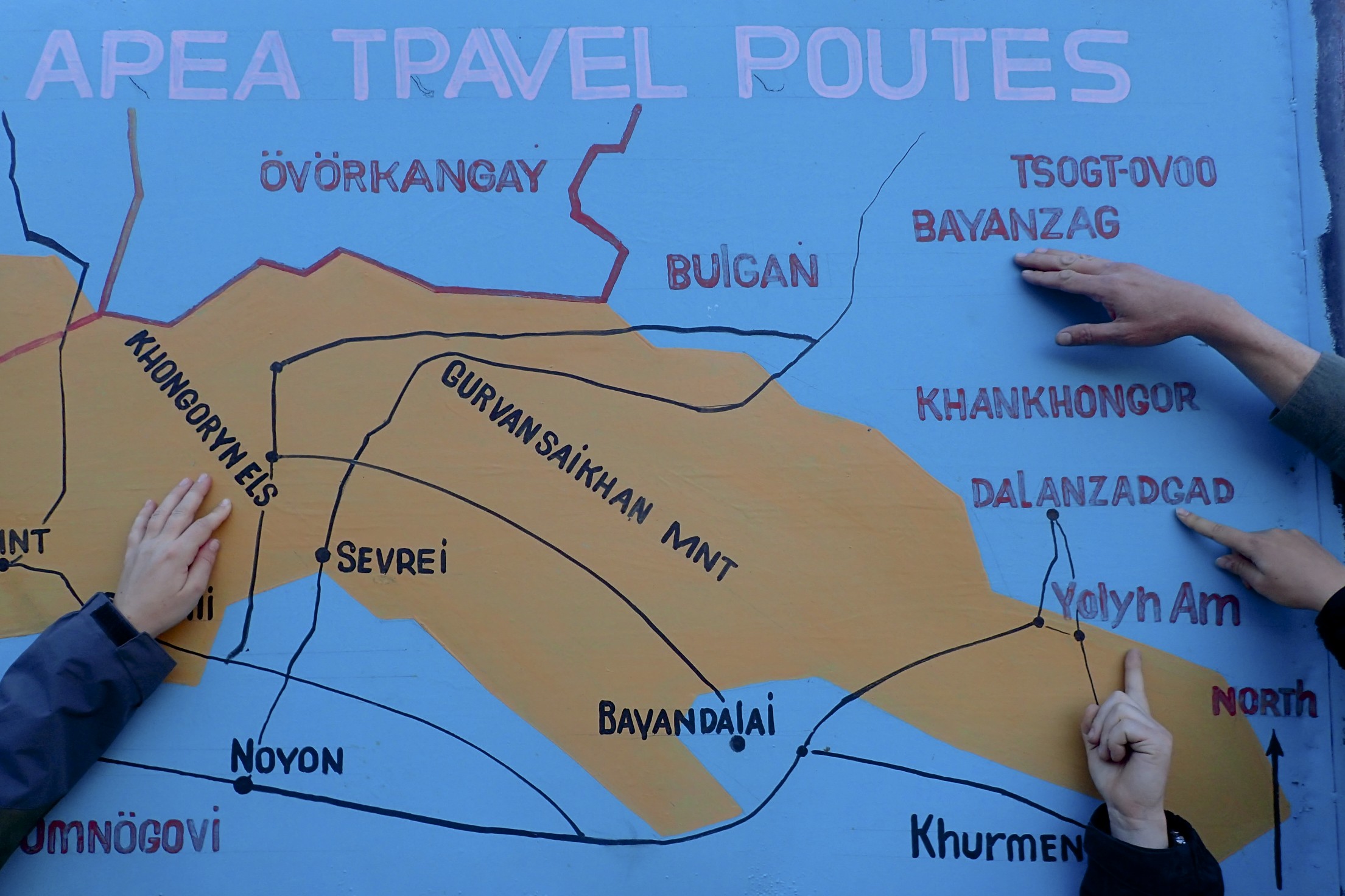
Three-hundred fifty miles (560 km) south of Ulaanbaatar, the Gobi Desert is wild and remote yet accessible. (In Mongolian cyrillic, the   “P’s” are pronounced as “R’s” in English.)

Coming next: The famous Singing Dunes – an Ocean of Sand

Yolyn Am Canyon, Mongolia: Wildlife Safari amidst Remnants of the Gobi Desert’s Last Glacier

ibex bull disappearing n

When this magnificent male Siberian ibex turned his back to us and disappeared, our hearts sank. But moments later, he reemerged for a second photo op. His group of females, young males and yearlings was tucked away up a narrow arm of Mongolia’s remote Yolyn Am Canyon.

ovoo Yolin Am Canyon n

Ovoos – sacred mounds of stones and other objects – are common throughout Mongolia. This one is a testament to the special place Yolyn Am Canyon holds in the hearts of the Mongolian people. Translated as “The Valley of the Lammergeiers” (a raptor also known as bearded vultures), the canyon is home to abundant wildlife, some of it rare.

On the evening of day four of our tour from Ulaanbaatar through the Gobi Desert, we stayed in a ger on the outskirts of Mongolia’s Yolyn Am Canyon. Situated at elevation in a narrow valley surrounded by jagged peaks, sunlight only briefly reaches the canyon’s floor each day. Until recent times, ice remained in the valley throughout the year, which made Yolyn Am the Gobi’s last glacier. In recent years, the ice is gone by August or September. By the time of our visit in mid-October, however, ice had returned to the spring creek that flows through the valley’s shadows.

chaffinch n

It is the universal story across our planet: Where there is water, there is life. The spring creek emerging from the stone mountains of Yolyn Am are an oasis sought out by diminutive passerines such as this chaffinch (Fringilla sp) as well as charismatic megafauna such as the park’s argali bighorn sheep and Siberian ibex.

chaffinch bathing n

Fringed with October ice even in the sunny portions of the canyon, this water makes for a chilly bath.

pica fight 2 n

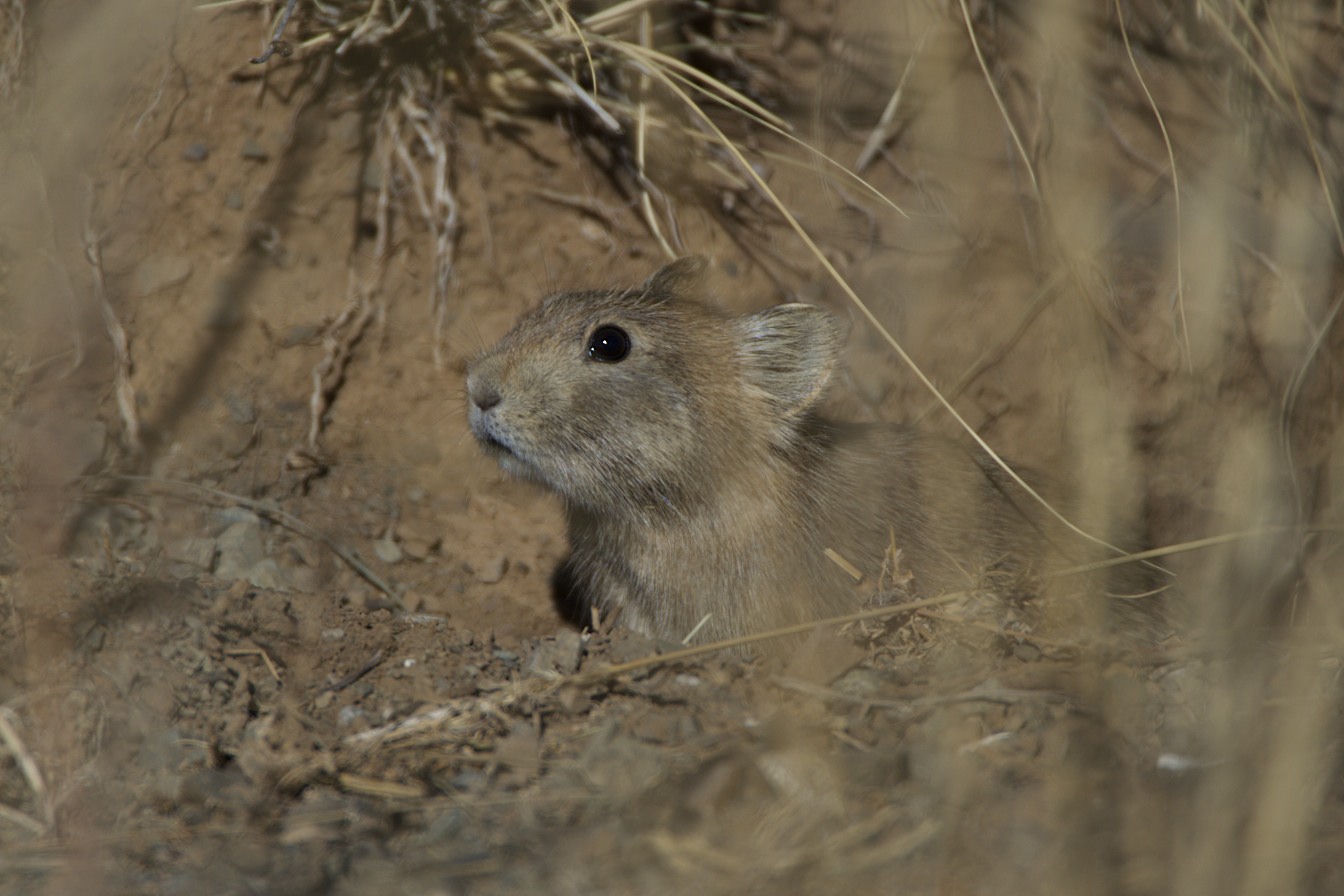
Dense populations of Daurian pika (Ochotona dauurica) and other rodents sometimes lead to disputes. With winter’s icy lock looming, it is critical that each pika lay claim to a food source and stock up enough grass and seed to get them through the coming dark and cold. When stakes are high, these relatives of rabbits go at it with teeth bared and kicks flying.

Pika vanquished n

Ears back and chin down, the vanquished rival retreats to his burrow.

Walking through the narrow canyon in late morning light, we found ourselves surrounded by innumerable pikas, gerbils, wheatears, horned larks, buntings and other passerines. The abundance of wildlife was a revelation, and for me, an avid birder, it was hard to take my eyes of the creek bank and sunny glades where most of the action was going on.

And then magic happened.

“Jack!” one or our party exclaimed. “Ibex!” I followed the line of his index finger to a far off ridge where, unmistakably silhouetted against a famously blue Mongolian sky stood a beautiful example of a mature male Siberian Ibex. In such flawless relief against the sky and perfectly still, it looked like a statue. Far off in the distance, it was staring directly at us and no doubt had been for some time.

I crouched low and began pacing myself toward it. Forty strides, stop, shoot. Forty strides, stop, shoot. Along the way I passed up the very shot of red-billed choughs (Pyrrhocorax pyrrhocorax brachipus)  – a crow-like bird with a distinctive bright red bill and matching legs – I’d been hoping to get on this trip. I kept closing ground on the ibex, and although still well out of range, I reasoned that with every set of 20 paces I might be getting slightly better shots.

And then I looked down to where my left foot was about to fall near the edge of the creek and saw something I hadn’t even considered would be a possibility on this cool October morning…

Halys pit viper n

Which of us more surprised the other is impossible to say. For a brief moment, I considered stopping to reposition this 22 inch (55 cm)  snake, or to at least get a better photographic angle on him. But the ibex… Ironically, it turns out that seeing a Halys pit viper (Gloydius halys) is more unusual than seeing an ibex. On the other hand, as the name “pit viper” suggests, it’s just as well I didn’t mess around with this guy. Besides, on this cold day in a land where raptors are abundant, it was in the snake’s best interest that I left him alone.

ibex bull 2nd look n

This was a thrill. The ibex was still far off and way up, but he couldn’t have been any more beautifully silhouetted against the October sky atop this classic, jagged ridge. And then he disappeared for the last time. When I turned around to find Barbra and our group, they were pointing up a narrow canyon arm I’d just passed. The arm was on the other side of the ridge over which the male had disappeared, so I suspected this is where the rest of his group might be. The chase was on!

Somewhere between walking and running, I began scrambling as fast as I could up a wild side canyon. For one short stretch where a feeder spring tumbled over a mossy rock face, the ascent was almost vertical and I struggled between the camera gear I was carrying and finding hand-holds. But once I got up on the bench, there they were. Six, no, eight… maybe a dozen ibex represented by young males with their horns just beginning to gain weight and curl, females, younger animals and kids. They were watching me, but they had the high ground and I was on the opposite side of the canyon. They didn’t seem particularly nervous, so I continued scrambling, breaking a trail as I climbed.

young ibex looking at me n

With sturdy legs and heavily muscled bodies, the wild goats are stunning. 

As I stepped through the low undergrowth, I suddenly recognized an unmistakable smell. Wild juniper. I reluctantly took my eyes off the ibex and looked down to see a vast carpet of berried shrubs blanketing the side of the canyon I was climbing. Still making my way to higher ground and watching the animals on the opposite canyon wall, I found myself almost instinctively thinking, “This would be the perfect place for…”

At that very moment the ground around my feet exploded in a wind-rush thrum of blurred wings. Chukar!

chukar w lichen rock n

Shooting in manual, I was spinning dials like mad on my camera to adjust from the sunny slopes on the opposite canyon wall where the ibex were to the shade where this hen chukar was kind enough to pose on a lichen-stained rock complimenting her colors. The rest of the covey – her brood, I’m guessing – kited off to the opposite canyon wall and began calling each other back together. 

white-winged snow finch im back n

It seems that everywhere we looked that day, wildlife was abundant and cooperative. This young white-winged snow bunting (Montifringilla nivalis) insistently remained underfoot till I snapped a few shots.

white-winged snow finch im n

Our day-hike through Yolyn Am ended with shadows and cold crowding us out of the canyon, and though we could have walked further, we began to reckon that a warm ger and a hot meal sounded pretty good.

frozen water Yolin Am Canyon n

Ice – the great aquifer of arid highlands. It is this frozen water, slowly melting through the summer, that keeps the Yolyn Am Canyon wet and fecund. We couldn’t help but wonder what changes are in store for this magical place as the planet continues to warm.

red-billed choughs sunset n

A flock of red-billed choughs gathers in the canyon’s last light before flying to their roosts.

Next: Further South in the Yolyn Am Canyon – more ibex, gerbils, a lammergeier, rough-legged hawks, and a rare saker falcon in “The Valley of the Lammergeiers.”