The Magic of Freshly Cured Ikura (Salmon Roe Caviar)

ikura fresh in clear glass n

In The Bell Jar, Sylvia Plath describes eating an entire bowl of caviar by herself. Which sounds a little piggish. Certainly we would never do such a thing. No, never. The happy little seal… well, he’s not talking.

Making your own ikura (salmon roe caviar) is easy.  The recipe, linked below, continues to be one of Cutterlight’s most popular.

Click here for the recipe: Ikura: Curing Salmon Eggs

This batch came from a Sockeye salmon, and although chum salmon eggs are the traditional choice due to their large size, the ripe eggs of any species of salmon or trout work well.

Bizarre Food or a Gourmet Delicacy? Sautéed Salmon Shirako on Polenta

Shirako on polenta n

This Japanese delicacy hasn’t quite caught on in America… yet. But as more and more people try it, they’re discovering what many residents of the Atlantic Gulf Coast have known for generations: this stuff is delicious!

Not long ago daughter Maia reported from Japan that she had just tried shirako. “What?!” I asked in astonishment. “Really? How was it?”

“Oshikatta yo!”

“Hontou ni?”

“Hontou ni!”

Translation: She had dined on the milt sacs of cod and found them to be delicious. “Really?”   “Really!”

With this conversation in mind, I looked dubiously at the pair of milt sacs I’d just removed from a freshly caught Sockeye salmon. I’d done some reading and discovered that “white roe” – the milt sacs of mullet – are a traditional delicacy along the Gulf Coast of America. Packed with nutrition, they definitely belong in the Super Food category as well. “Well, why not,” I mused. “They look like they’re made to be rolled in corn meal, fried up and served with grits.”

That’s all there is to it. And yes, they were delicious. Really!

Sautéed Shirako

Ingredients

  • Fresh milt sacs from salmon, cod, mullet or similar fish
  • corn meal
  • freshly ground black pepper
  • salt or soy sauce
  • olive oil (or butter or bacon fat)

Directions

  1. Heat a tablespoon or two of olive oil, butter or bacon fat in a skillet over medium heat.
  2. Sprinkle a tablespoon or two of cornmeal on a cutting board or plate. Add a little freshly cracked black pepper.
  3. Rinse milt sacs in cold water. Pat dry but leave a little dampness (so cornmeal will attach).
  4. Rolls sacs in cornmeal.
  5. When oil hot enough to gently sizzle, carefully place the sacs in the skillet. Add a few dashes of soy sauce or sprinkle with salt. Lower heat to medium-low.
  6. Sauté for 3 minutes. Gently turn and sauté other side for two or three additional minutes, longer if the sacs are particularly large. Both sides should be crisp and golden.
  7. Serve piping hot with grits or polenta.

Purple Martins: The Highest-Flying Swallow

purple martins w draggonfly n

The Catch: Purple Martins, Kimiwan Lake Bird Walk, Alberta, Canada

Swallows are a favorite bird wherever they fly, and among them North America’s largest and most universally appreciated species is without a doubt the Purple Martin (Progne subis). Before Europeans ever came to North America, Native Americans in the South were known to hang hollow gourds as nesting boxes to attract these birds. The beneficial nature of Martins is well known: not only do they consume enormous quantities of insects that humans consider pests – among them horseflies, beetles, termites and grasshoppers -, they also aggressively drive away birds of prey as well as crows and thus were traditionally welcomed by farmers. Often soaring at altitudes of several hundred feet, Martins capture their prey exclusively on the wing; they quench their thirst on the wing as well, skimming the surface of ponds, lakes and rivers.

purple martin male gun metal n

Iridescent purples and gun metal blues mark the plumage of the male Martin.

Although the range of the three subspecies of Martins covers most of the U. S. and sections of southern Canada, they tend to be rather uncommon. This is due in part to their very specific nesting requirements and to the fact that invasive species – European starlings and house sparrows – frequently outcompete Martins for preferred sites. Formerly found in hollow trees, Eastern Martins have almost exclusively shifted their nests to human created housing: apartment-like complexes on poles, rows of houses side-by-side, or, particularly in the South, hollow gourds. Like Chimney Swifts and Barn Swallows, Eastern Purple Martins have become dependent upon humans for nesting sites.

purple martin female n

The plumage of females is lighter in color, predominated by shades of brown.

Writing in the early 1800’s, John Audubon observed the ubiquitous nature of Martin nesting boxes in America:

The… Indian is also fond of the Martin’s company. He frequently hangs up a calabash on some twig near his camp, and in this cradle the bird keeps watch, and sallies forth to drive off the Vulture that might otherwise commit depredations on the deer-skins or pieces of venison exposed to the air to be dried. The slaves in the Southern States take more pains to accommodate this favourite bird. The calabash is neatly scooped out, and attached to the flexible top of a cane, brought from the swamp, where that plant usually grows, and placed close to their huts. Almost every country tavern has a Martin box on the upper part of its sign-board; and I have observed that the handsomer the box, the better does the inn generally prove to be. 

All our cities are furnished with houses for the reception of these birds; and it is seldom that even lads bent upon mischief disturb the favoured Martin. He sweeps along the streets, here and there seizing a fly, bangs to the eaves of the houses, or peeps into them, as he poises himself in the air in front of the windows, or mounts high above the city, soaring into the clear sky, plays with the string of the child’s kite, snapping at it, as he swiftly passes, with unerring precision, or suddenly sweeps along the roofs, chasing off grimalkin, who is probably prowling in quest of his young. Birds of America, John J. Audubon, printed 1827 – 1838.

Purple Martin male wings n

Healthy Martin colonies indicate a healthy environment.

The next time you see a large flock of dark birds, look closely. Although often starlings, Martins, too, come together in the thousands and even hundreds of thousands, particularly in late summer as they prepare to migrate to South America.

For more information about Purple Martins, or to learn more about building a nesting complex of your own to attract them, visit www.purplemartin.org

For more information on the wonderful Kimiwan Nature Walk and Interpretive Center in McLennan, Alberta, please visit www.kimiwanbirdwalk.ca.



C’mere and give us a kiss

mountain sheep give us a kiss n

We’ve all been there – mornings when you’re out of cigarettes and reduced to digging through an overflowing ashtray; mornings when you can’t find your Scotch glass… or the sash for your robe. Your lipstick’s smeared from the night before, your head is pounding, you can’t even look at food and you just want to know that you’re still loved. (Stone Sheep Ewe on a rainy day in Alberta, Canada)

Where all the Raspberries are as Big as Your Thumb

“Pick me! Pick me!”

Anyone who knows Jack knows that he is a fisherman through and through. Moving to a village where the salmon are running so thick we can see them finning up the river and into the lake is beyond Jack’s wildest expectations. This is not his dream. This is our reality. He’s spent time every day walking the shore, sometimes with fishing rod in hand, other times just watching and listening to the music of river current and salmon jumping, splashing, sloshing their way upstream.

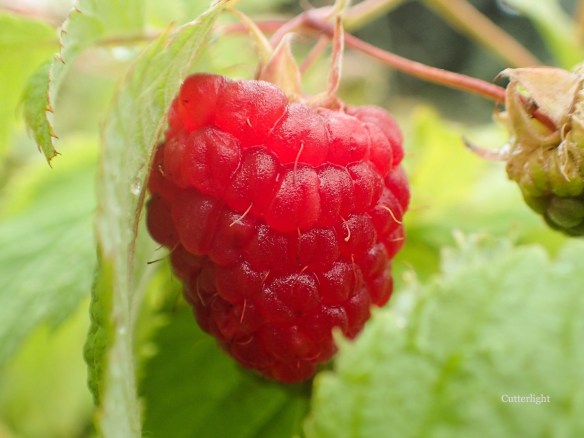
And so it’s understandable that it was left to me to spot the patch of raspberries Jack had walked right past on his way to the river. And such raspberries! The patch isn’t large, but this has been an exceptional year for berries and the vines are heavy with tart, sweet, jem-like fruit.

raspberries in bowl chignik n

And with green berries still growing in more shaded parts of the patch, we should be able to pick all we need. Jam, pies, syrups, fresh with morning cereal… How about a raspberry-chipotle sauce to go with fresh-caught salmon?

“Bigger than store-bought,” as Jack says. Tastier, too. I don’t know about them being as big as your thumb, but they’re the biggest we’ve ever seen. Can you believe he was so intent on the salmon that he walked right past the whole patch without even noticing?!

Nervous Water and Red Salmon


first salmon Chignik n

Looked out the window this morning and saw nervous water on the lake. Skipped breakfast. Three hens and a buck. I’ll cure eggs for ikura later today. Shioyaki salmon for dinner tonight. Beginning of our second week in Chignik Lake, Alaska.

Snow and Flowers: It’s Spring in Mongolia!

yellow flower beautiful n

Our most recent heavy snow was just two weeks ago, and we’ve had a few flurries since then. But out in the countryside near Ulaanbaatar, wildflowers have begun to grow in profusion. 

snow drop mongolia n

Snow drops (above) are among the very first flowers to show.

white flowers w yellow, pink orange n

Notice the small red ant on the right side of the photo. The centers of these particular flowers reveal a tell-tale indication of their age, with the youngest flowers having yellow centers. Most of the early wildflowers are small. But they’re everywhere, and close examination they often reveals intricate beauty…

purple flower macro n

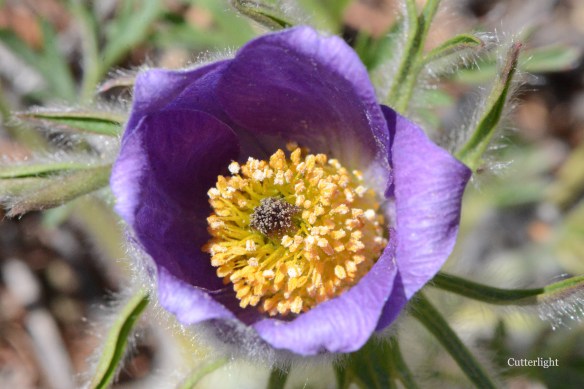
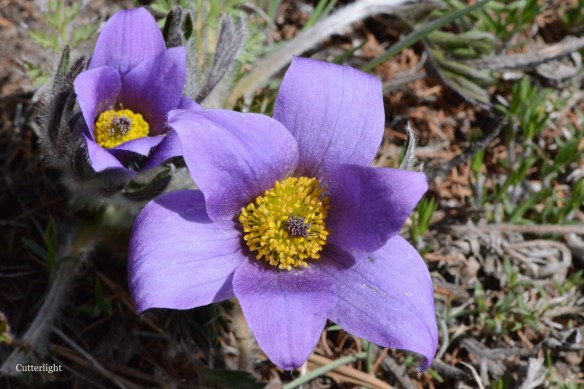
…making us wish we knew more about these splashes of color.

purple flower macro inside pollen n

pink flower macro stamens n

yellow poppy w pink n

forget-me-nots mongolia n

And happy to come across something as familiar as Alaska’s state flower, forget-me-nots.

rubarb wild n

There’s wild rhubarb, too, and wild mint and caraway are abundant.

purple flower Mongolia n

But it’s the flowers that capture our attention.

pink flower succulent n

And leave us vowing to take a botany course when we return to Alaska.

wild iris n

Bar May snowstorm n

The scene in Ulaanbaatar just over two weeks ago on May 11. 

Horse Skull, Springtime in Mongolia

horse head black n white n

Terelj National Park, May 2016. It was a hard, cold winter.


Homemade Chewy Ramen Noodles

ramen n

Homemade ramen – the adult (just better) version of that ten-cent package we used to subsist on in college.

Mongolians love their noodles. It is a staple food available in any grocery. Any Mongolian woman knows how to whip up a batch of noodles from scratch and cut them to perfection. I think nearby influences have brought in another version of a popular noodle – ramen. There are lots of tasty ramen shops around Ulaanbaatar. Some shops feature windows into the back where you can see highly skilled noodle makers tossing, spinning, stretching, and cutting dough by hand with a wizard’s touch.

I always liked ramen. But my ramen memories had always included that super-salty instant soup that I used to buy in my early college years. Both Jack and I have fond memories of throwing something into that soup to make it more healthful and more tasty. Now, I have been exposed to beautiful bowls of tasty, chewy ramen noodles swimming in flavorful broth and topped with hard boiled eggs, vegetables, and different meats. On a cold day in Ulaanbaatar, there is nothing more satisfying than a giant bowl of ramen.

Being an experienced pasta maker, I thought there was nothing to making ramen noodles. I even thought they were probably just spaghetti noodles. With that in mind, I made a batch of spaghetti and handed it over to Jack for the creation of soup. That didn’t work. Turns out, it isn’t that simple. The noodles got soggy and fell apart. My pasta-making ego was bruised. After a spell, I decided to give it a try again, this time armed with some research. What gives ramen noodles that necessary chewiness? After reading through a few websites, I decided to experiment. It seems that ramen noodles need something called an alkaline salt. One website cited that the origin of the noodles is from a place where the water has a high minerality which contributes to the texture. The most common ingredient for this alkaline salt is called kansui, which can be purchased in Chinatown. As there is no “Chinatown” in Ulaanbaatar, I needed to make my own. Thank goodness for the internet. A quick search revealed that kansui can be made at home by baking baking soda for an hour in a 250 degree F oven. Harold McGee of the New York Times explained baking the baking soda essentially changes the sodium bicarbonate into sodium carbonate which is an alkaline salt, that works perfectly in ramen noodle dough.

After a few experiments I learned that adding a little salt to the dough recipe made the noodles taste better. I never add salt to my regular pasta noodles. I also tried making noodles with all purpose flour and again with semolina flour. I happen to have a lot of semolina in my pantry right now. Turns out the noodle texture and flavor is similar with either flour, so I can say that those two flours are interchangable in this recipe.

With a successful recipe in the box, we are happily eating ramen that is 1,000 times better than the ramen both of us subjected ourselves to in college. Jack has been creating soup bases from broth, miso and even tomato juice. We’ve been adding pan fried meat like chicken or pork. Sauteed vegetables like eggplant and asparagus have entered the scene lately. Sometimes we amp up the spice by floating a bit of Cholula or Sweet Chili Sauce atop the whole dish. I’ve found that keeping portions of the noodles in ziptop bags in the freezer allows us to have the “instant meal” like the old days but with a fresh-made flavor.

Homemade Chewy Ramen Noodles

Ingredients

  • 1 cup hot water
  • 2 tbsp kansui
  • 1 tsp salt
  • 4 cups all purpose or semolina flour

Directions

  1. In a bowl, mix together water, kansui, and salt. Stir until salt is dissolved.
  2. Place flour in a large bowl.
  3. Make a well in the middle of the flour. Pour hot water mixture into the well.
  4. Using a fork, begin to blend the water and flour starting in the middle.
  5. Pull more flour in from the edge of bowl into the well in order to moisten all the flour. Continue to stir with the fork. The mixture should all look like scrambled eggs. There should not be any dry parts or really wet parts. If the mixture is too wet, add a little flour. If it is too dry, add a bit more water.
  6. When the whole mixture looks like the texture of scrambled eggs, knead it by hand until it is formed into a ball.
  7. Place ball into a ziptop bag, seal, and let rest for an hour.
  8. Divide dough into 8 pieces.
  9. Roll each piece through a pasta machine starting with largest setting (mine is 7). Keep running dough through the machine decreasing the setting by one each time.
  10. After some experimenting, I liked the texture and thickness rolled down through a 2 setting (second to smallest). Then, cut the pasta using the spaghetti cutter.
  11. Boil the noodles for 2 to 2 1/2 minutes to cook. They should be al dente. After cooking, drain them and immediately add them to your favorite broth.

Store-bought is easier, but homemade is tastier – Homemade Basil Pesto

pesto n

A bright, fresh taste that is missing in our store-bought favorite. Homemade pesto can’t be beat.

The combination of creamy pine nuts, salty parmesan cheese, bright and flavorful basil, spicy fresh garlic all combined to make a sauce that is simply magic. We douse our pasta in pesto, smear it on sandwiches, and swirl it into bread dough. We freeze big batches of basil when the leaves ripen in the summer and make fresh pesto all year long.

Homemade Pesto

Ingredients

  • 2 cups packed basil leaves (or frozen equivalent)
  • 1/2 cup grated parmesan cheese
  • 1/3 cup pine nuts
  • 3 garlic cloves
  • 1/2 cup extra virgin olive oil
  • salt and pepper to taste

Directions

  1. Place basil, parmesan, pine nuts, and garlic cloves in blender, food processor, or nut chopper attachment of a stick blender. Give the mixture a couple of blitzes to chop the basil leaves.
  2. With the  machine running, drizzle olive oil into basil mixture.
  3. When all is chopped and nicely blended, salt and pepper to taste.