Sunrise, Point Hope, Alaska

A mid-morning sunrise backlights the village of Point Hope, Alaska.

Two days after this serene morning dawned on Point Hope, the weather turned more extreme. As I write this, our home is shaking as winds out of the South East gust to 60 miles an hour – the “violent storm” category on the Beaufort scale, just below hurricane force winds.

But our home is snug. Steel cut oats for breakfast, perhaps moose stroganoff for dinner. A good day to get some reading and writing accomplished.

October 21st, 2012: Sunrise: 10:35 AM          Sunset 7:08 PM

We’re losing about nine minutes of daylight each day.

Road to the Chukchi: a short poem & letter

The first thing you have to learn

when you come up here

is how to get up early

when the mercury is stuck

and the land is locked in ice

and not think too much about it…

A friend in another part of Alaska writes:

We just got back from Florida. Eighty-seven degrees and sunshine. Here, it’s 32 and dark. Am I crazy to prefer this?

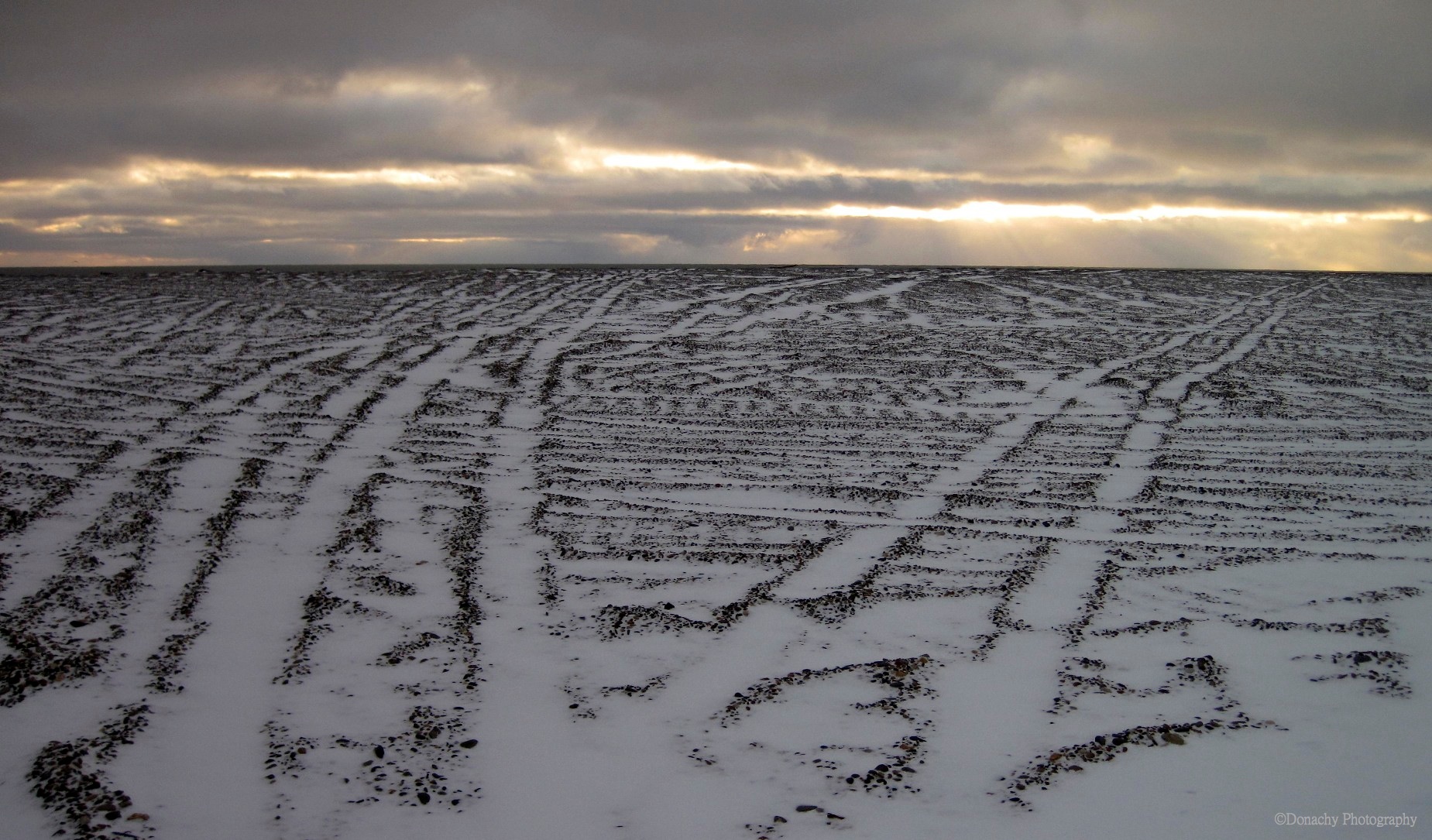
Point Hope, Alaska. Three views of the Chukchi Sea, October 13, 2012

Alaska’s Permanent Fund and Trout Unlimited

Daughter Maia works a pool in the canyon country of Oregon’s Deschutes River.

This past summer, we fell in love with the film Away We Go in which Verona De Tessant (Maya Rudolph) and Burt Farlander (John Krasinski) find themselves in the enviable, daunting and sometimes scary position of realizing that, although they are not wealthy, they can live virtually anywhere they choose to. Their story unfolds as a touching, insightful comedy as they criss-cross North America searching for just the right place.

Verona: I can do my job from anywhere. And all you need’s a phone, right?

Burt: Well, we don’t want to go back to Chicago, do we?

Verona: No, we did Chicago.

Burt: I used to picture myself in Alaska. God, I love that landscape.

Verona: Alaska?

Burt: Yeah.

Verona: You’ve never mentioned Alaska.

Burt: Wow, they pay people to live in Alaska.

Burt’s line about people being paid to live in this great state gets laughs from audiences, although for different reasons depending on who the audience is. While it’s not true that people are paid to live here, there is something called the Permanent Fund. Without getting into the complexities, Alaska’s Permanent Fund is a constitutional provision established in 1976 that, essentially, taps oil revenues allowing the state government to pay an annual check to every Alaskan resident once they’ve lived here one fiscal year. The amount of the check varies from year to year. The current five-year average is $1,341. This year’s payout was lower, but still appreciable at $878.

That’s where Trout Unlimited comes in.

Barbra and I feel a deep commitment to helping to conserve, protect and restore America’s cold water resources. This commitment flows naturally from our love of salmon and trout and the beautiful and often pristine environs they inhabit and depend upon. Protecting our cold water resources, though, is about more than protecting fish. Trout Unlimited has worked in concert with others to bring down dams that are no longer useful – thus restoring countless miles of free flowing rivers and streams. They work with vineyard owners and other farmers to help ensure water-wise land use. And all across the landscape, TU has, for decades, been instrumental in ensuring that mining, timbering and other resource extraction be carried out with sensible respect for its impact on rivers, streams and estuaries when sensible respect is possible, and that extractive industries be turned away when they can’t conduct their business without destroying watersheds.

At present, TU is in the midst of several critical battles. One of them involves a multi-national mining proposal that threatens the world’s greatest salmon estuary, Bristol Bay. The proposed Pebble Mine could wipe out runs that number into the millions of salmon, as well as fishing jobs and subsistence fishing that generations upon generations of Alaskans (and salmon consumers throughout the world) have depended on. TU is also on the vanguard in fighting against irresponsible extraction of natural gas locked underground in Marcellus Shale. The extraction requires fracking, and it is posing a major risk to the streams and rivers I cut my teeth on as a young angler in Western Pennsylvania.

Again, this isn’t just about trout and salmon. We humans, too, drink the water, grow our farms and forests with it, admire its beauty, and are responsible for passing down a legacy of clean water to future generations.

And so, presented with money that is essentially a gift from our adopted state, the choice on how to spend it was easy. This year, Barbra and I will become lifetime members of Trout Unlimited.

After vetting dozens of organizations, we came to feel that in TU, our contributions will support the causes closest to our hearts. Not just for us, but for generations to come.

To read more about TU’s efforts, click on the following links:

Trout Unlimited’s Home Page

Marcellus Shale Project

Bristol Bay

Maia on a seldom-fished hike-in lake raptly watching her fly line for a twitch. 

Cloudberry Country

In northern latitudes where they grow, cloudberries (Rubus chamaemorus) are prized as a delicacy. 

Sept 1, Point Hope, Alaska: It has rained for at least part of each day ever since we came back to Point Hope on August 11 – twenty-two consecutive days. Yesterday, the sun finally broke free, and after an energizing breakfast of French toast, smoked salmon, honeydew mellon, orange juice and coffee, we borrowed one of the school’s vehicles and four of us drove out Seven-mile road (which is actually only five miles) to pick some of the last of this year’s aqpik – the Inupiat word for cloudberries.

Cloudberries like wet tundra, but can also be found in meadows. The boggy fields near Point Hope necessitate Muck Boots or similar footwear. 

We’re glad we don’t have to choose a favorite fruit, but a good way to think of fruit is in terms of where they are best served. If I could have a freshly-picked, perfectly juicy, slightly tart ruby red grapefruit every morning for breakfast, I’d seldom want any other fruit with my morning meal. Peaches shine when grilled to caramelize some of their sugar and served with mascarpone cheese or goat cheese. And I occasionally have dreams about the elderberry pies my grandmother used to bake for me made from the dark purple fruit I picked near my boyhood home in Pennsylvania.

Snowy owls, ground squirrels, foxes, caribou and occasionally brown bears are visitors and residents of the tundra where, in addition to cloudberries, stunted willows grows. 

Soft, juicy, and slightly creamy, cloudberries make a sorbet that is sublime, and they are excellent in ice cream as well. They are delicious as freezer jam, and this year we made syrup from the juice of some of the berries. Recently Barbra made a delicious cloudberry bread which was perfect with our peanut butter and jam sandwiches. Cloudberry liqueur is popular, and apparently there is a Canadian-brewed beer that features them.

The last of the cloudberries signal the end of summer here in Point Hope. The salmon and char are nearing the ends of their runs, and we’ve already had a little sleet. 

Click on the links below for additional cloudberry recipes, and stay tuned for recipes on cloudberry syrup and spicy cloudberry chipotle sauce for poultry, pork and fish.

Cloudberry Freezer Jam                                                               Cloudberry Sorbet

Cloudberry Upside-Down Cake                                                  Cloudberry Syrup

30,000 Seabirds

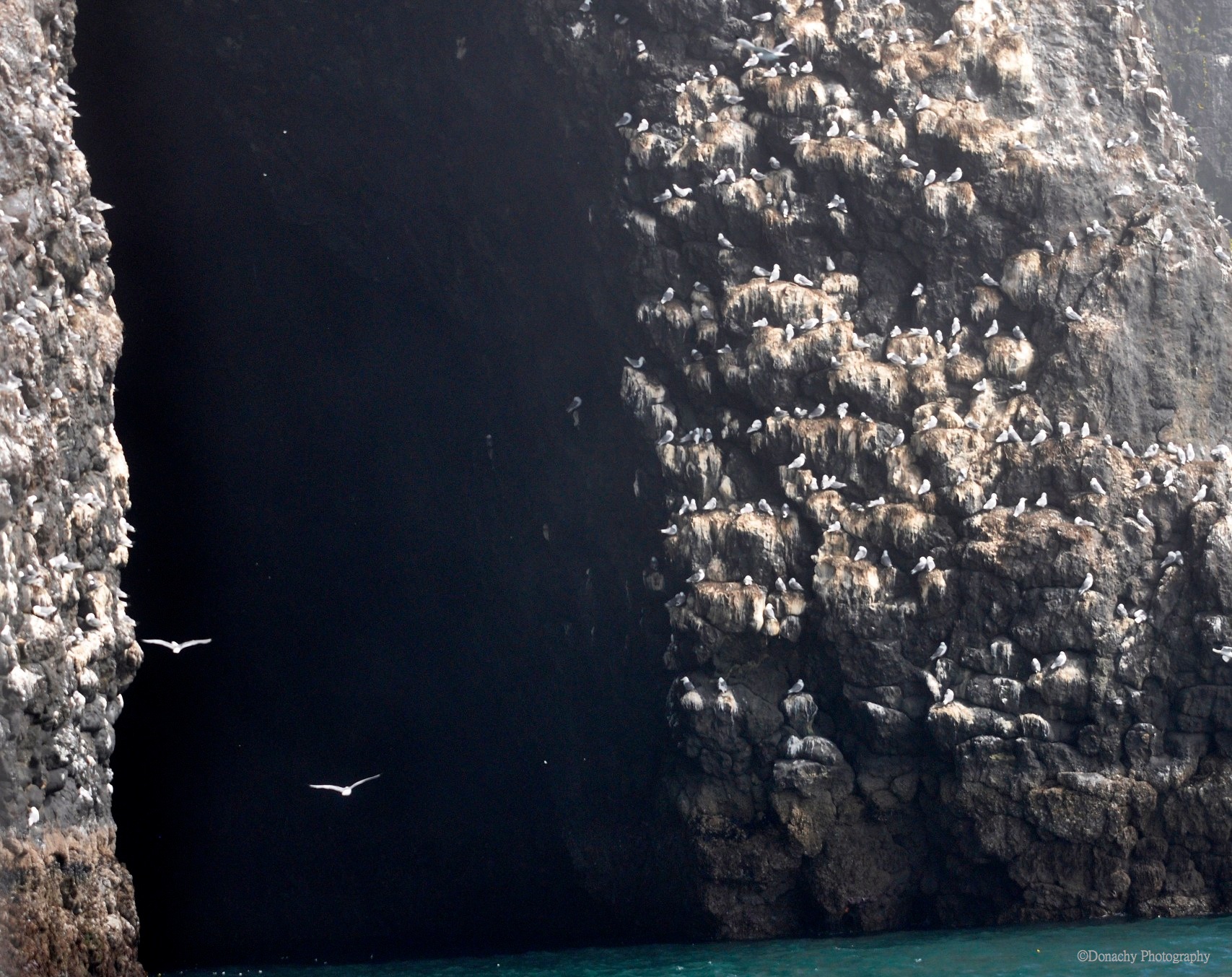
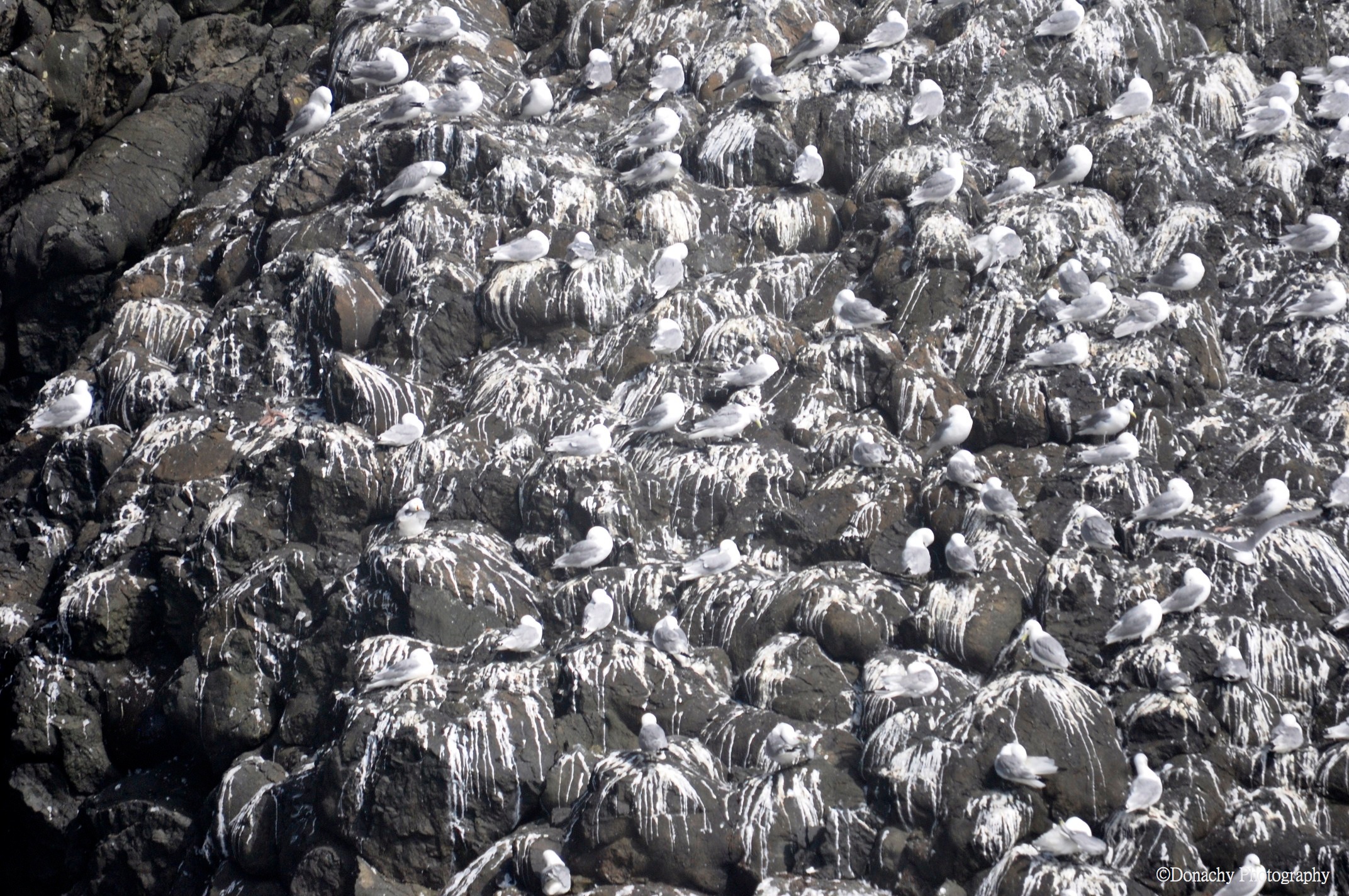
At any given moment, there are as many as 30,000 seabirds roosting, nesting, flying and feeding at Cape Resurrection near Seward, Alaska. While kittiwakes and common murres are the two most abundant species, tufted and horned puffins, murrelets, guillemots, auklets, oyster catchers, cormorants, various gulls and other seabirds are also in the mix. Above and below: black-legged kittiwakes in the thousands take advantage of every available ledge.

The noise (and smell) generated by these colonies is as startling as the sheer number of birds. 

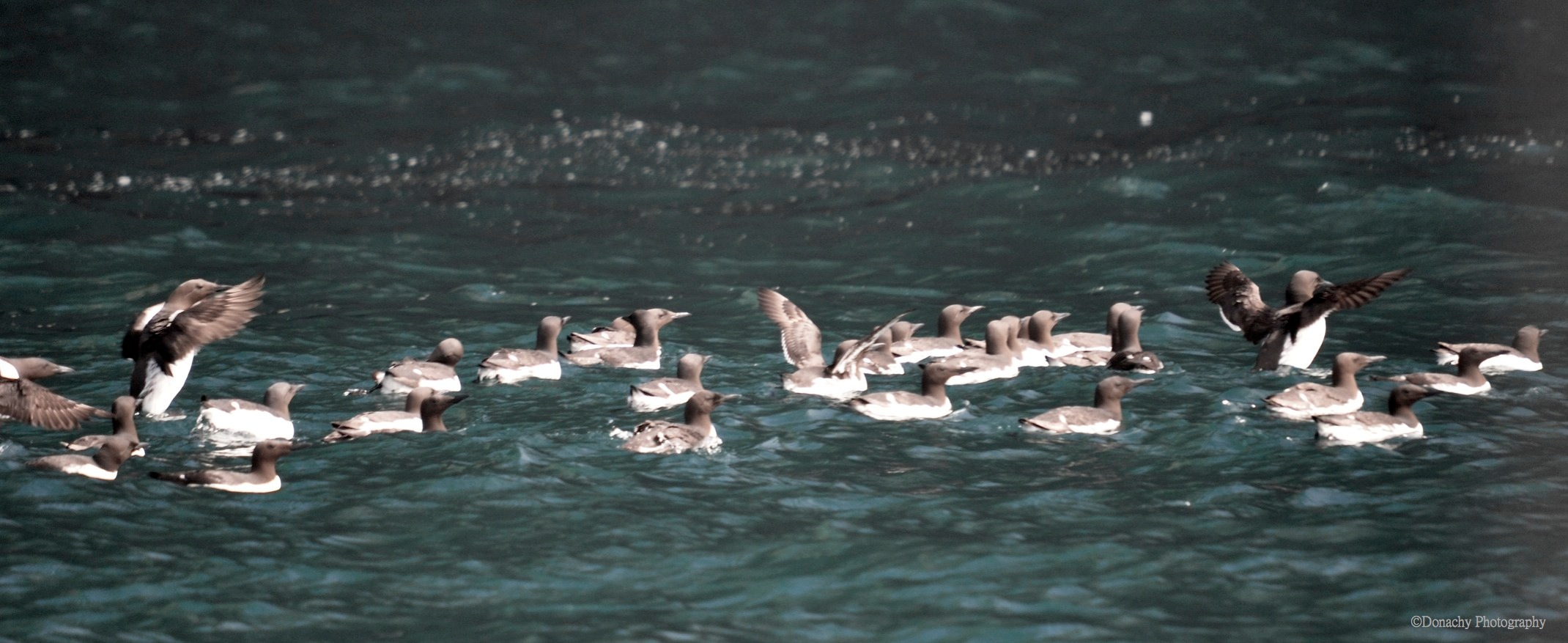
The cape also hosts large rafts of common murres containing dozens or even hundreds of birds.  

Horned puffins (above) and tufted puffins are also quite common. They use their thick, uniquely-hinged bills not only to fish, but to dig nesting burrows up to several feet deep. Once the nesting season is over, puffins spend the rest of the year at sea.

In flight, puffins look like large bumblebees, beating the air into submission with their stubby wings. In search of the small fish they feed on, puffins can dive up to 80 or more feet deep and are agile swimmers. 

On land, with their white bellies and dark backs, murres look a lot like penguins, and like penguins, they are very much at home in water. Murres have been recorded diving to depths of  600 feet. Their eggs are various shades of blue with brown speckles and are steeply pointed at one end to prevent them from rolling off the cliffs where they nest. 

Eagle in Fog, Fishing

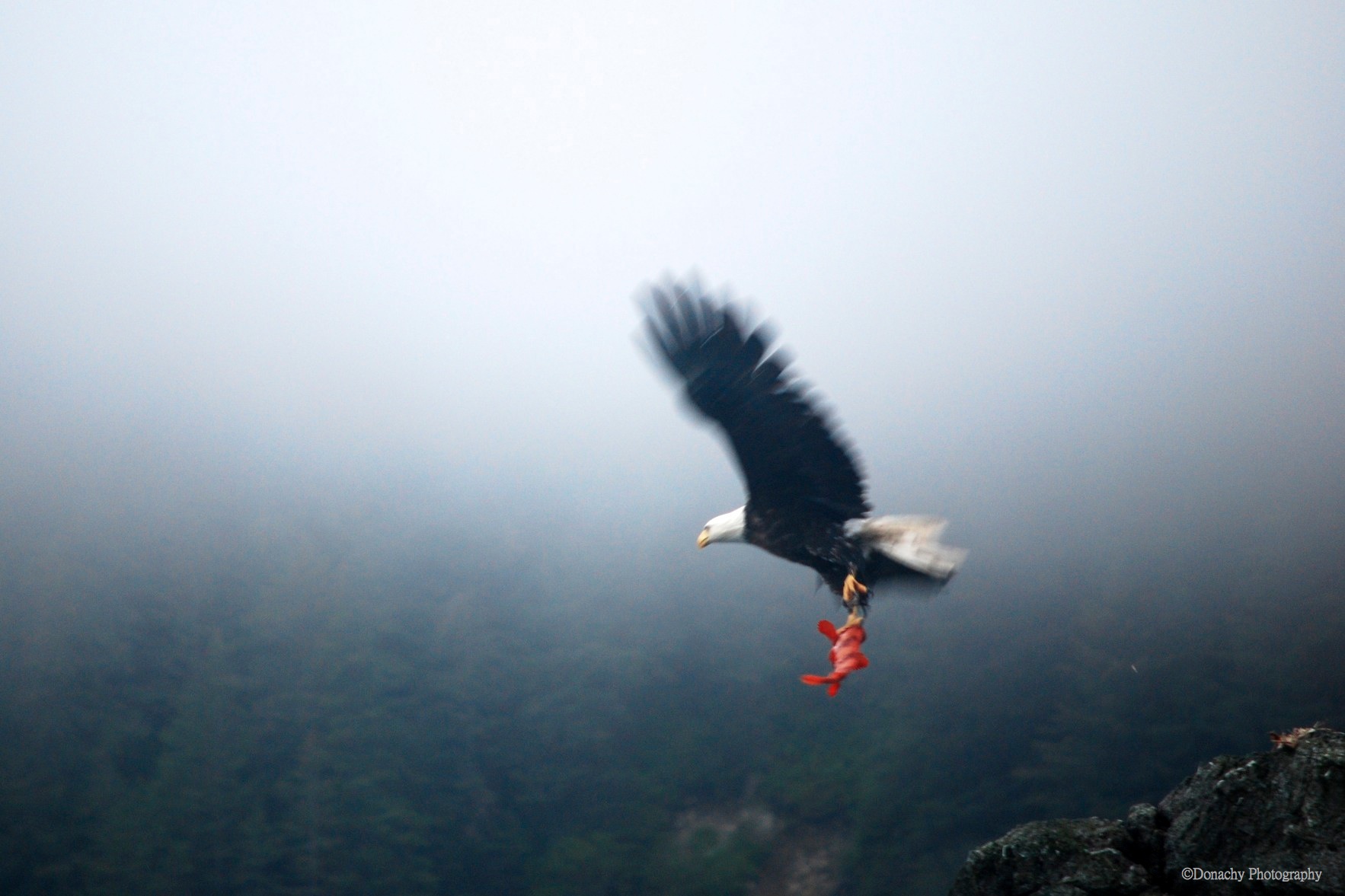
The fog was so dense we were apprehensive about even being out on the water. Besides, the fishing was slow. We’d just come through a large group of Orcas, (see Orcas Near Resurrection Bay )and, surmising that they were feeding on salmon, we figured the fish had to be there. But after an hour or so of drifting and not catching…

We decided to take a break from mooching for salmon and drop jigs to the bottom for rockfish. Barbra didn’t waste any time putting a fat five-pound black rockfish in the cooler, but that turned out to be the extent of our success. A brilliantly marked orange and black tiger rockfish hit my metal jig. The fish was small and we had been fishing shallow enough that I thought it would survive a release, so I let it go.

The tiger darted for the bottom, but a few moments later appeared on the surface several feet from our boat. That’s when an eagle that had been watching us lifted from its rocky perch and swooped in. You can tell from the photo above that he’s done this before; notice the tell-tale bones of another rockfish.

Orcas Near Resurrection Bay

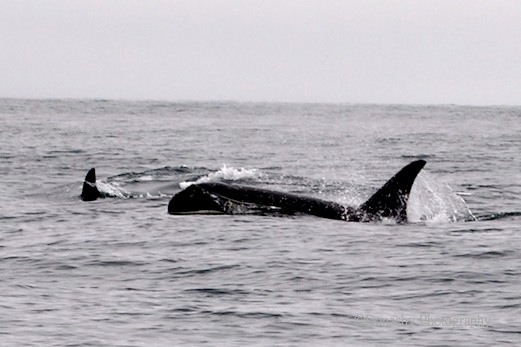
It has been an excellent summer for wildlife viewing in Resurrection Bay and surrounding waters. Twice, recently, we have found our C-Dory in the midst of feeding and playing Orcas.

The fishing has been slow out of our homeport of Seward, Alaska lately. For days now, thick fog has blanketed the outer islands and waters beyond, and while boats making long runs are still coming back with fish, even some of the charter captains have been struggling. Nearer to Resurrection Bay, water that recently was teaming with salmon, rockfish and halibut seems to have become deserted, with only a few, scattered fish willing to bite.

It’s still great to be out. An occasional silver salmon breaks the monotony of otherwise fishless hours as we scan the water for whales, Orcas, dolphins and other wildlife. The other day, between patches of dense fog we suddenly found ourselves surrounded by about two dozen Orcas! Maybe they had found the salmon that were eluding us.

We slowed down and idled among these killer whales for awhile, and then motored off in search of fish.

The Gentleman Angler

Before we moved to Alaska, we’d never seen fog flowing down mountains. I’m sure it happens elsewhere… This was one of those days of sunshine and patchy fog. Fog encircling the horizon. Fog pouring like a river through mountain gaps on Resurrection Bay. 

I like foggy days. Fog means you can start late and not miss the bite. When it’s foggy, sometimes, big things happen late in the day.

By the time Barbra and I got our C-Dory fueled up and heading out into the bay, it was 10:30 A.M. Most of the fleet – both the charters and recreational boats – had long since left the docks. There was a time when I would have been with them – when I had to be on the water early. Dawn. Before dawn. Early early. Trout streams in Pennsylvania, striper rivers in South Carolina, sea bass beaches in Japan….

Most days, the early morning bite is the best.

Fog changes that.

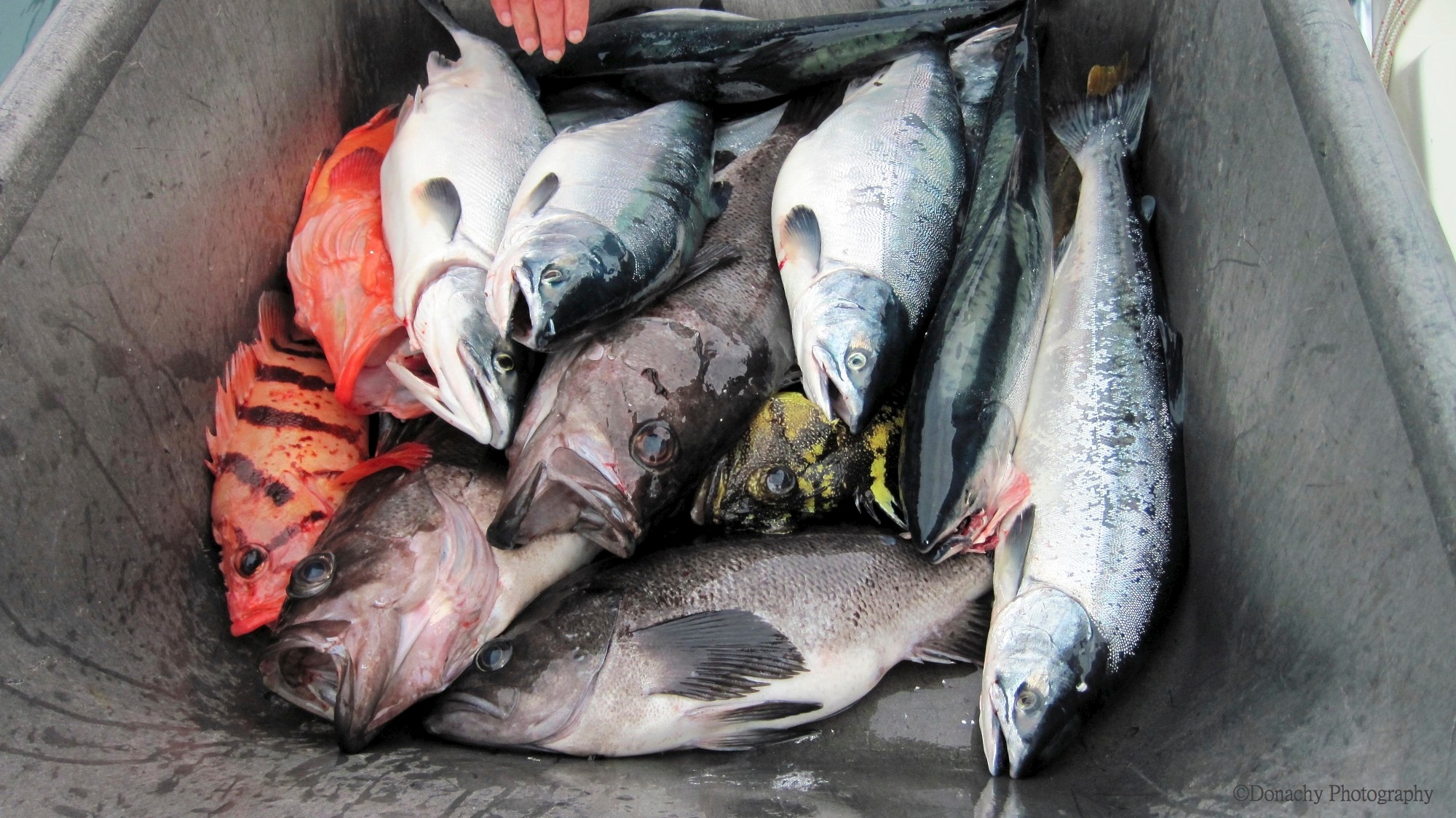
Laid out on the dock are six silver salmon, eight rockfish, a couple of greenling, three small halibut, and a 35-pound lingcod. A couple of the salmon and the halibut didn’t make it into this photo. All of the fish were filleted, vacuum-packed and flash-frozen, ready to travel with us to Point Hope. I asked Barbra to name her favorite on the dinner table. “The variety,” she answered, without missing a beat. We didn’t get up early for these fish, and we didn’t run far.

We could get up earlier. We could run further. We could catch more fish and larger fish.

We know that.

At some point in my life, numbers and size stopped mattering so much. I still like to fish. But most of the time, most days, the fish that interest me the most are the ones that are still biting after I’ve had a good night’s sleep, breakfast, a leisurely mug of coffee (not in a to-go mug, but in my favorite mug at my breakfast table) and have read the news.

“We’re gentleman anglers,” my older friend and mentor Bill Kodrich explained to me. Forty years ago, we were in a cafe, me with a slice of blueberry pie, Bill with a slice of apple pie and a cup of coffee. It was about ten in the morning. We were headed for Spring Creek. I’d never been. I was eager to go. I thought we should have been there four hours ago.

“We don’t need to hurry,” Bill said with a characteristic smile. “There’ll still be trout in the stream when we get there.”

I get it now.

Silvers and Pinks (And Otters)!

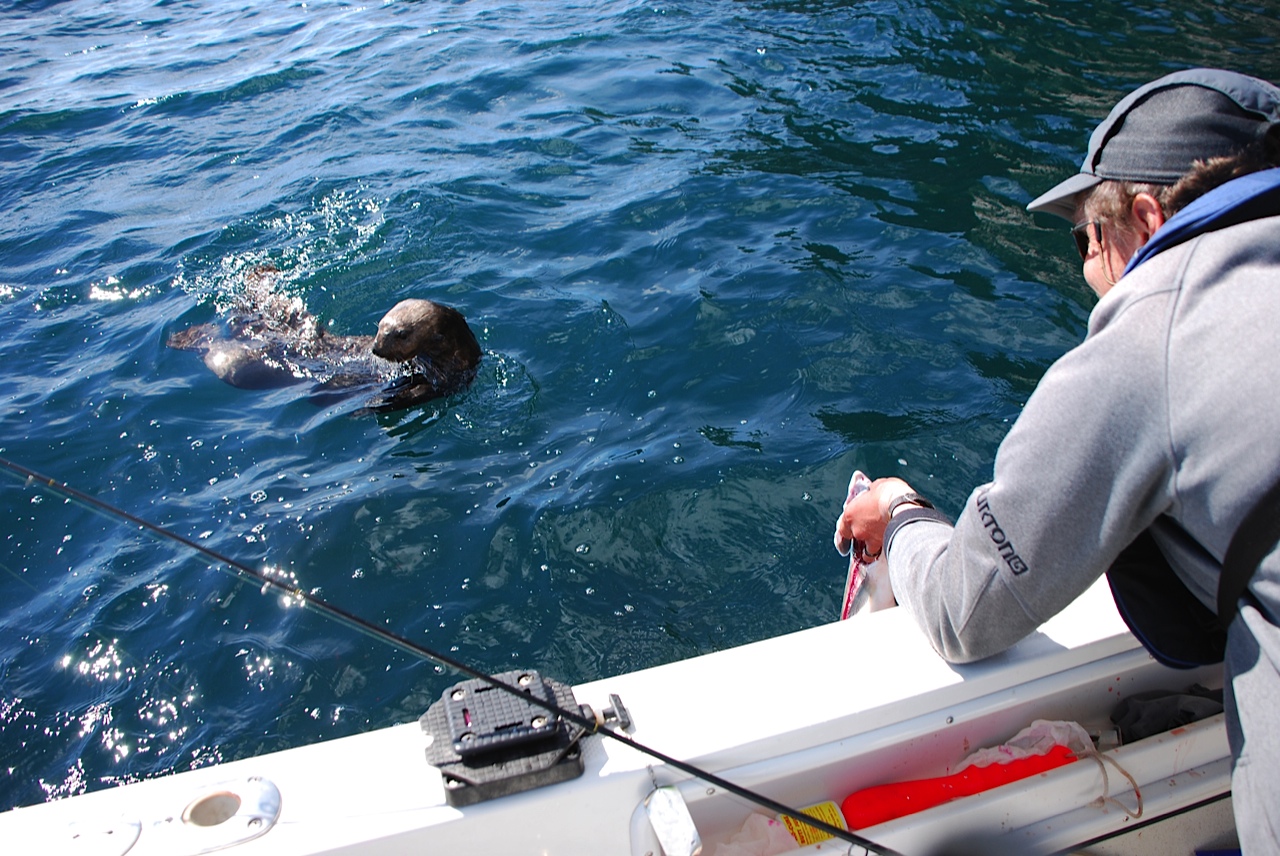
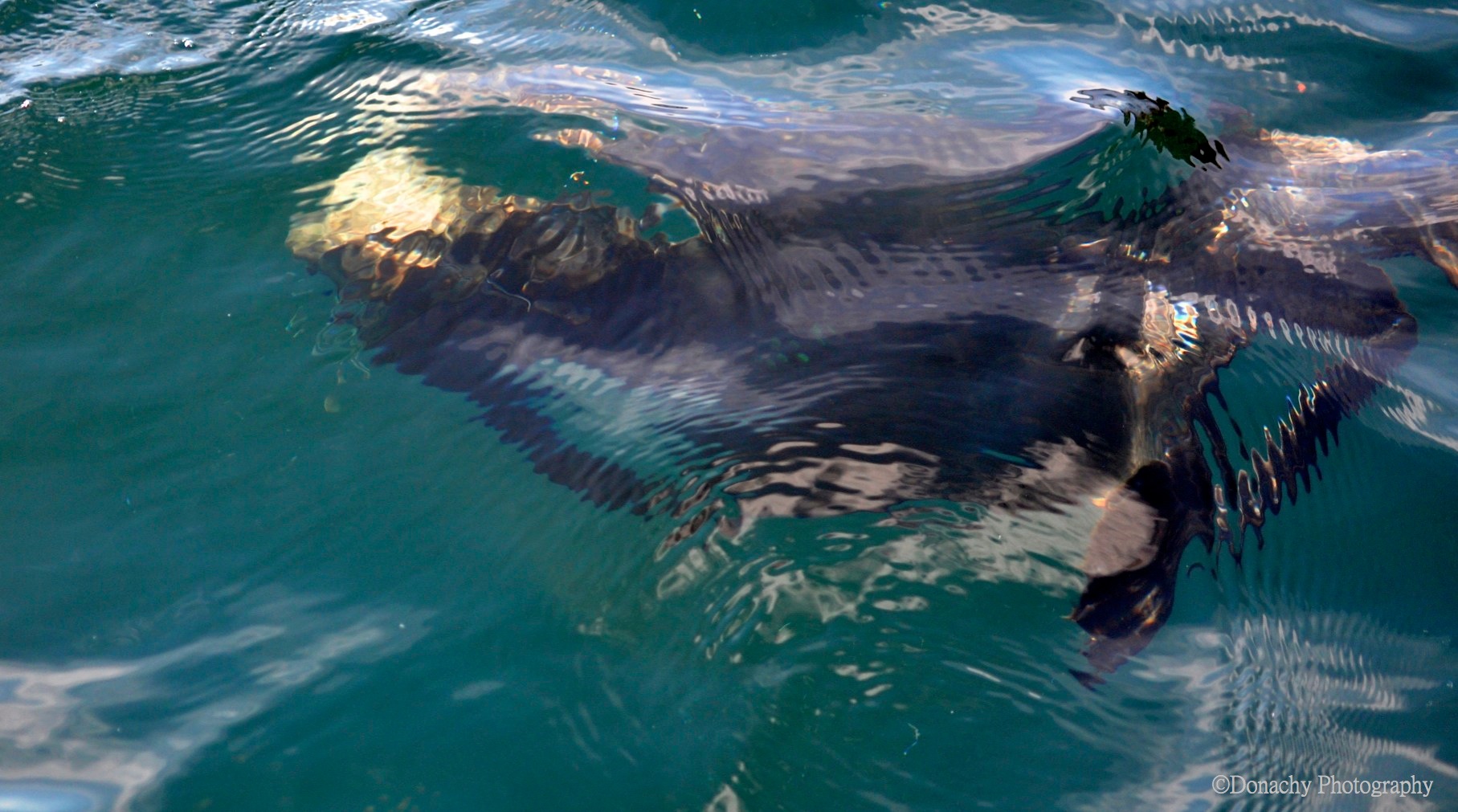
This curious fellow swam right up to our C-Dory, Gillie, to watch me rinse off a salmon Barbra had just caught.

Alaska. Every trip out on the water is a reminder that you could live here several lifetimes and never see it all. While sea otters are fairly common along the southern and central Alaskan coastline, we’ve never have one swim up to the boat. (Although, there were a trio that used to follow us as we walked the docks in Cordova.) This guy seemed genuinely curious – and maybe hopeful of a handout – as I rinsed off a Coho before putting it in the fish box on a recent excursion to Rugged Island in Resurrection Bay, near Seward. Meanwhile, floating on her back with a pup on her stomach, a mother otter watched us a little more guardedly and from a distance.

Fishing partner Bixler McClure got this shot of the otter coming over to investigate the boat. 

On any given sailing or boating trip out on the bay, you’re likely to encounter harbor porpoises, Dall porpoises, Orcas, whales, eagles, thousands of sea birds, leaping salmon, seals, sea lions and every once in a while you might spot the fin of a seven-foot salmon shark (they look very much like small great white sharks) cutting through the water. Bears come down to the beaches, and on rare occasions a wolverine might be glimpsed.

And, of course, there are the fish. Resurrection Bay lies between green-shouldered, snow-capped mountains – a dramatic backdrop. It extends over 10 miles before meeting the Alaska Gulf, and on many days the waters are nearly glass smooth, rippled only by a gentle breeze. On days such as these, the fishing is truly pleasant.
When the silvers (Coho salmon) show up – usually the run is in full swing by mid-July – the fishing is excellent, with six-salmon limits the norm. Skilled (or lucky) anglers often mix in a king or two, and after you’ve got salmon in the fish box you can switch tactics and target rockfish and halibut. There are bigger rockfish and halibut out in the Gulf – and more of them -, but if you stay with it you can find fish in the bay and you don’t have to deal with a long run.
The custom here is to take the fish out of your fish box and load them into a dock cart so you can wheel them up to one of the fish cleaning stations. Once we’ve filleted our fish, we take them to J-Dock to be vacuum packed and flash frozen. Fish cared for this way taste great even a year or more later.
 Below: Barbra got this watery photo of the otter swimming around Gillie.
Below: Three limits of salmon and a couple of rockfish, laid out, rinsed off and ready to take up to the cleaning station. This winter in Point Hope, every meal these fish provide will be a memory of our summer in Seward. These are the good old days.

Savannah Sparrow

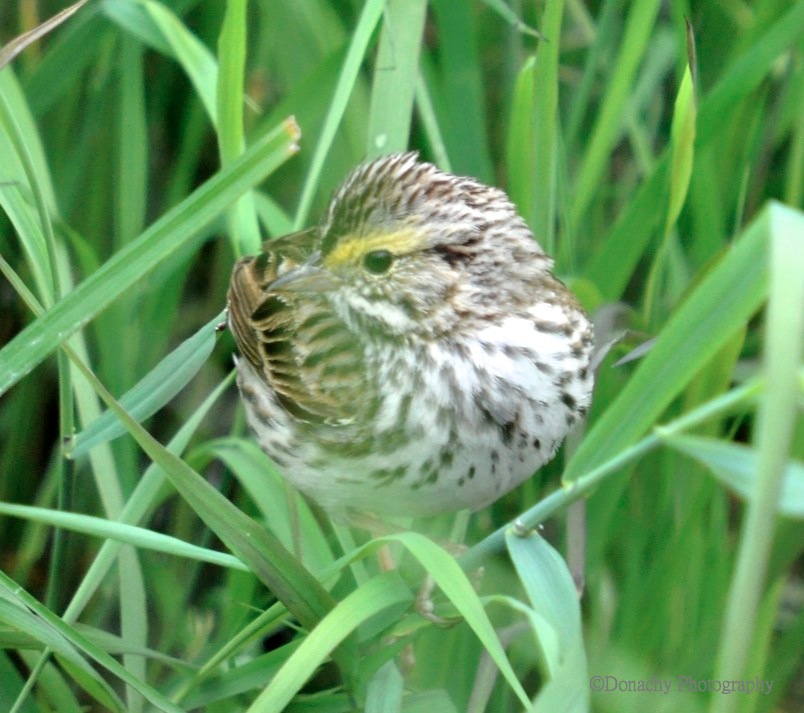
Savannah sparrows (Passerculus sandwichensis) are common and widely distributed in North America. The distinctive yellow lores (eye stripe) is the best way to distinguish savannah’s from other sparrows with streaked plumage.

All across North America – including all over Alaska – savannah sparrows are a common sight in open fields and marshes and in low brushy areas. Mainly seed eaters most of the year, they include insects in their diet as well, particularly during the breeding season. Their song has been described as “insect like,” and although it has a buzz to it, the description doesn’t really do it justice. Listen for the notes of the savannah’s high, buzzy song next time you’re in an open area. They can be hard to spot in the low brush and ground cover they call home, but when flushed, they usually fly just a short distance and may perch to take a look around. About five to six inches from beak to tail, savannah’s nest on or near the ground, laying  four to six blue-green eggs speckled with dark brown in cup shaped nests. The sexes are similar.

Incidentally, the species name sandwichensis comes from Sandwich Bay in Unalaska, Alaska. This photos was taken at Potter Marsh, near Anchorage.