Snow and a Memory of Snow: 10 Photographs during a Spring Snowfall in Ulaanbaatar

granite dancers in snow soft n

Granite Dancers in Spring Snow  I walk passed this sculpture at least two times a day, every day, but this was the first time I photographed it. On this day, I knew before I left the apartment that I wanted to record it in the particular light that was falling. The snow was a bonus, adding depth and additional movement. Nikon D4, Nikkor 200-400mm f/4G IF-ED II, 200mm, ISO 100, f/4, 1/200

Watching the snow fall from inside our apartment building, I was reminded of a favorite haiku by Basho. Come! Let’s go snow-viewing/till we’re buried!

granite dancers in snow sharp n

Granite Dancers in Spring Snow, high contrast This is the same exposure as above. I brought up the contrast and saturation and sharpened the edges. This image might be more marketable as a postcard, but I prefer the softer, previous image, which, to me, feels more intimate.

Which do you like?

UB apt building snowy day enhanced a n

Brick Apartment Building in Snowfall, Ulaanbaatar  This is the view out the window of my apartment in Ulaanbaatar, Mongolia. On most days, it is uninteresting to me, the occasional pigeon roosting on our windowsill notwithstanding. But on this day, the scene was transformed into something magical. I set the ISO low to preserve as much contrast as possible. Then, in processing, I brought up the contrast even more, exaggerating the blue in the window panes and the black of the railings. Nikon D800, Nikkor 50mm f1.4G, ISO 100, f/3.5, 1/125

UB apt row snowy day b n

It’s Snowing in UB  I’m not entirely sure why, but this photo and the next one tug at my gut in the way really good writing does. For me, there’s something lonesome… longing… in these shots where the focus is almost on the nearest snowflakes but not quite on anything. I imagine someone far from home, perhaps recently moved from the Mongolian steppe, or any place in the world, looking out on a city… no people, no traffic, nothing… focusing on nothing, longing for home. Nikon D800, Nikkor 50mm f/1.4G, ISO 1250, f/5, 1/1000

Snow and a Memory of Snow n

Snow and a Memory of Snow  As in the above photo, the focus is close to the viewer, yet indistinct. For me, these shots evoke a sense of thoughts being elsewhere. A person from snow country could look out the window on snowfall in any city in the world and in a moment be taken back to a memory in a small town or city, a ger out on the steppe, a woodland cabin, or anywhere. Anyway, that’s what I was going for in this image. This is probably the most purposeful, intended image I’ve taken so far. I applied a small technique to get the focal point where I wanted it to be. The image was inspired by the song It’s Snowin in Brooklyn by Ferron, a song I heard just one time on a snowy night in Boulder, Colorado back in 1985 and which has been stuck in my head all these many years till I recently rediscovered it thanks to an Internet search based on a single line from the song. Nikon D800, Nikkor 50mm f/1.4G, ISO 100, f/1.4, 1/800

UB apt snowy day streak d n

Snow Streaks on Brick  For a brief few moments, a breeze kicked up, gently driving the snow diagonally. I used settings one might employ to capture rushing streams and waterfalls to capture the faint, oblique lines the driven snow was painting on the brick. In processing, by bringing up the contrast and increasing color saturation, I was able to accentuate the blackness of the railings and the blueness in the windowpanes. The splash of light and the yellow pot in the window on the right add a place for the eye to wander to in this photo. Nikon D800, Nikkor 24-70 f.2.8G ED, ISO 640, Focal Length 70mm, f/22, 1/5

woman w green umbrella snowy day n

Woman with Green Umbrella, Snowy Day, Ulaanbaatar  I saw her walking down the street toward our apartment when she was in the distance and began thinking about how I would compose the shot. I wanted to create a watery blur, reminiscent of an impressionist painting – evocative perhaps, of Andre Kohl’s studies of women carrying umbrellas. I’m not sure how well the green works, and even as I was framing this shot I was imagining processing it in black and white. Were I to shoot this again, I think I would decrease the shutter speed. (See next picture.) Nikon D4, Nikkor 200-400mm f/4g IF-ED II, ISO400, Focal Length 200mm, f/4, 1/640

woman w umbrella b n w snowy day n

Impression of a Woman with Umbrella This is the above photo processed as a black and white shot. What do you think? I prefer this one, partly for the way the umbrella and the woman’s features are only suggested. Again, a slower shutter speed might have further enhanced the image I was striving for.

house sparrows snowy day n

House Sparrows Framed in Spring Snow, Ulaanbaatar We pass by flocks of these friendly little guys each day on our walk to and from school. These are birds of the city – ubiquitous in northern temperate climates the world over. In fact, even in the trees along the river that runs through Ulaanbaatar, this species becomes less common, and by the time one has hiked up the forested mountain on the edge of town, they disappear altogether, so specifically adapted to co-habitation with humans have they become. But on this day, they presented themselves in fresh light, framed in falling snow. I wanted a shallow depth of field because the background could have been a distraction, and so I focused on the female and let the three males blur out a little.  Nikon D4, Nikkor 200-400mm f/4g IF-ED II, ISO400, Focal Length 400mm, f/4, 1/640

kestrel snowy day n

First Kestrel of Spring, Snowy Morning, Ulaanbaatar, March 26, 2015  Mongolia is home to many birds of prey, most of which fly south in late fall. I first spotted this kestrel – a type of small falcon – earlier in the week when it and a harrier were circling above our apartment building. The harrier has since moved on, but I continue to see this or other kestrels in the city. An abundance of sparrows (above photo) and plenty of buildings to use as perches make this a good place for small birds of prey to get something to eat as they migrate to their nesting sites in the mountains.

            The snow was falling heavily when I heard the kestrel’s chirp from high above. I swung my lens skyward knowing I’d only get a shot or two before the glass was covered with snow. Autofocus was useless, so I did my best to manually focus while panning with the bird with a two-pound camera attached to a seven-pound lens. This image is significantly cropped and not very clear. I value it for the documentation of the year’s first kestrel, one of our favorite birds. Nikon D4, Nikkor 200-400mm f/4g IF-ED II, ISO400, Focal Length 400mm, f/4, 1/640

So what do you think?

When it was time to come back in, we were, in fact, buried in heavy, wet snow and a little worried about our cameras. But they held up fine. The next day we hiked down to the river to check the willows, poplars and pines for newly arriving songbirds. I still have to go through those photos. Next time!

Fire and Ice Needles: Dawn, Hustai National Park, Mongolia

ice needles at dawn n

Stalked a group of stag red deer

up a draw to the top of a rise 

where the sun broke fiery and cold

lighting feather grass and ice needles

suspended in the negative something air.

Along the ridge, winter-hard antlers

lit with sunlight

scattered into the dawn.

– Hustai National Park, Mongolia, 2014

Jack Donachy


Mongolia’s Impressive Red Deer

red deer stag pair n

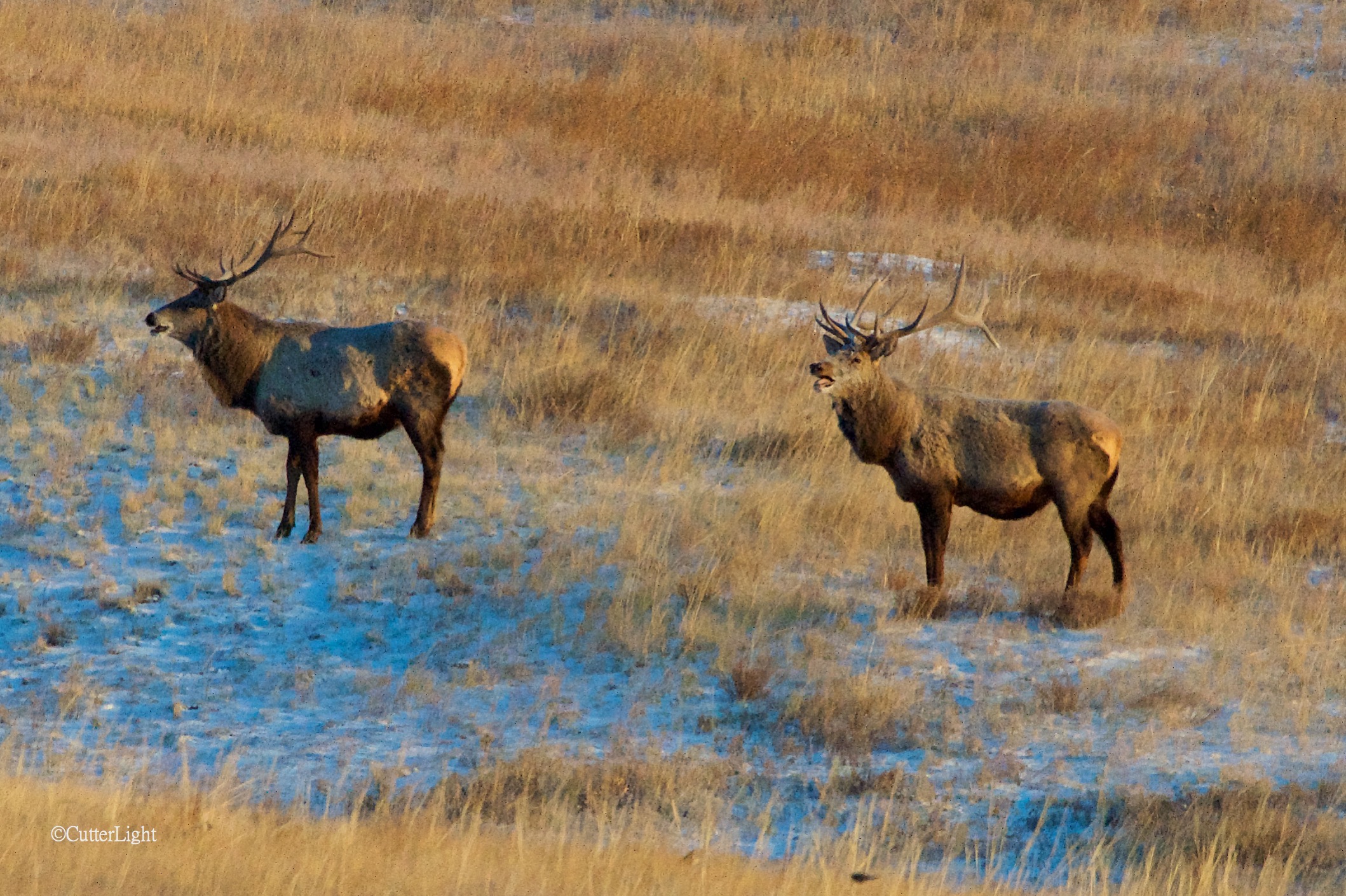
Red deer stags (Cervus elaphus) in early morning light. Among the world’s largest deer, this species shares an extinct ancestor in common with North American elk: Megaloceros, the massive Irish elk. 

Historically, red deer ranged from the British Isles east through Mongolia and other parts of Asia and south into northern Africa. Until about two decades ago, their numbers in Mongolia were strong with some 130,000 individuals taking advantage of forest, steppe and mountain habitat. In recent years, however, poaching has decimated red deer herds in this country as their antlers command increasingly high prices as an ingredient in traditional medicines in China and elsewhere. Even National Football League players in America have been implicated in purchasing these medicines. Elk and red deer grow new antlers each year. When the antlers are growing, they are covered in soft tissue and are said to be “in velvet.” This is when the antlers are valuable.

Here’s the problem for the elk and deer. Some studies indicate there may actually be health benefits gained from using medicinal antler and regardless of the science, a lot of people believe they derive benefit from the antler. The trade is annually running over 1.5 billion U.S. dollars, and it is destroying populations of these magnificent animals. Although no recent population surveys have been conducted, it is believed that there are now fewer than 10,000 red deer in Mongolia.

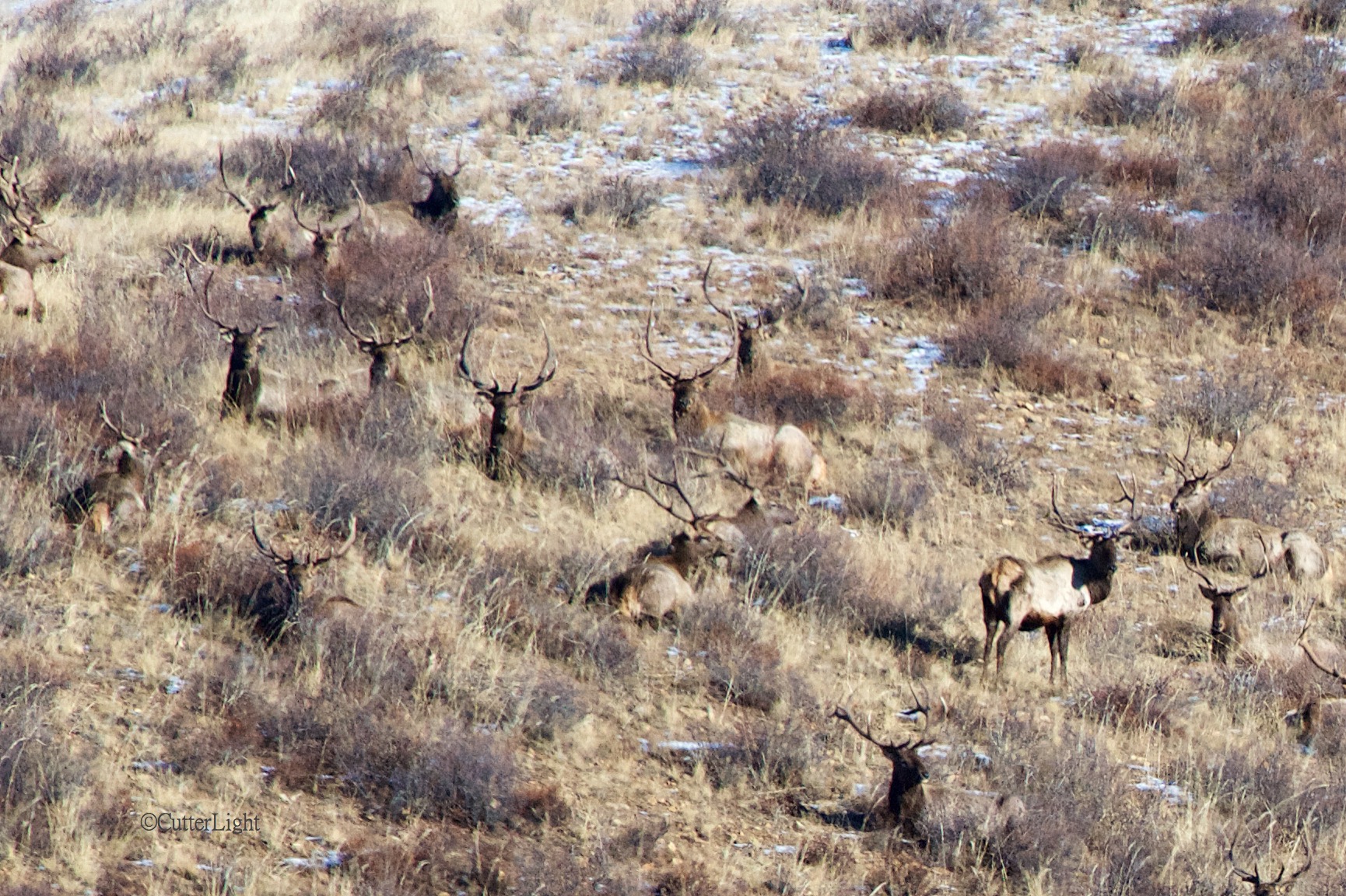
red deer males bedded down n

On a recent trip to Mongolia’s Hustai National Park, we encountered a herd of approximately 100 mature male red deer. Separated by sex during the winter months, females were miles away in a different part of the park. These stags will drop their anglers in early spring.

Among deer, only Alces alces – called moose in North America and Eurasian elk in Europe and Asia, North American elk (wapiti), and sambar deer are larger. Adult male red deer attain weights between 550 – 770 pounds (250 – 345 kg). Some subspecies grow even larger. The extinct Irish elk, Megaloceros, which occupied much of the same range as modern-day red deer, was believed to have attained a weight of 1,500 pounds (700 kg) and had truly massive, moose-like antlers – perhaps contributing to its demise. Because of their value as a food and game species (these are the “harts” and “stags” of European hunting lore), red deer have been introduced to New Zealand, Australia, Chili and Argentina.

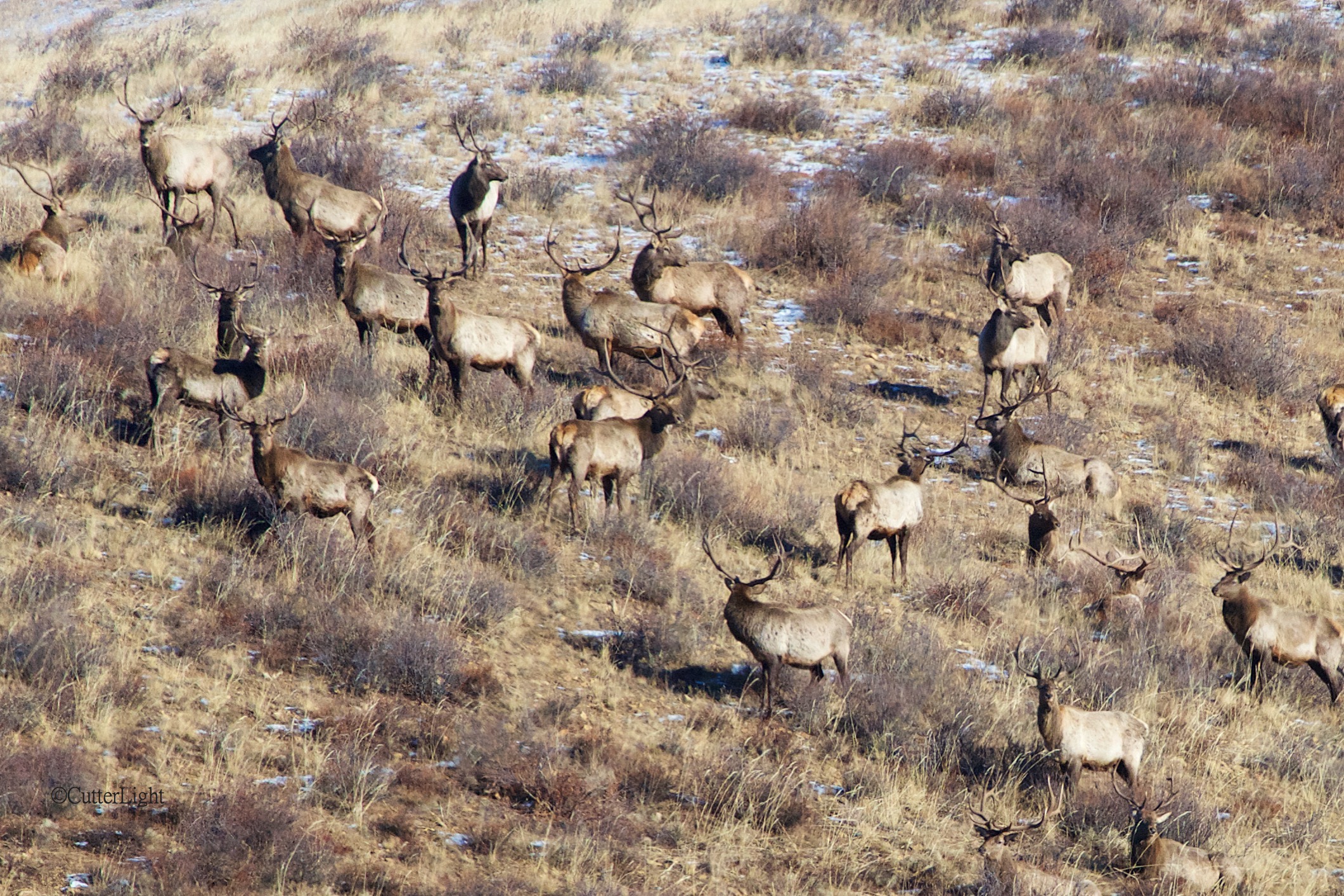
red deer males on alert n

We stalked these deer stooping and crawling for about half a mile (1 kilometer). Suddenly nearly all of them stood up – 100 animals including the ones outside the frame of this photo -, made nervous by an approaching rider on a horse.

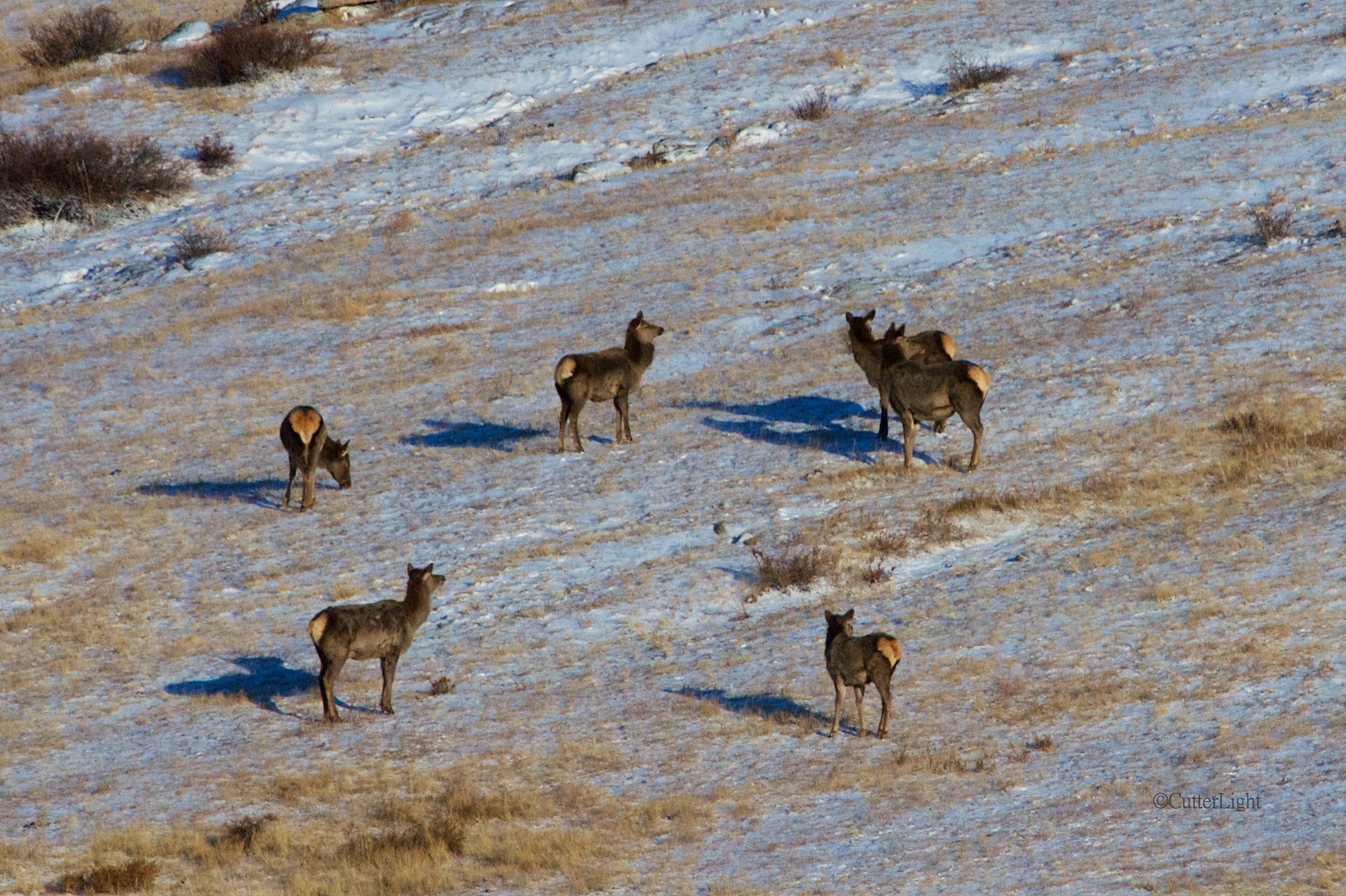
red deer femals on snow n

Rutting season occurs in autumn. The rest of the year females and young form distinct groups away from the mature males.

OLYMPUS DIGITAL CAMERA

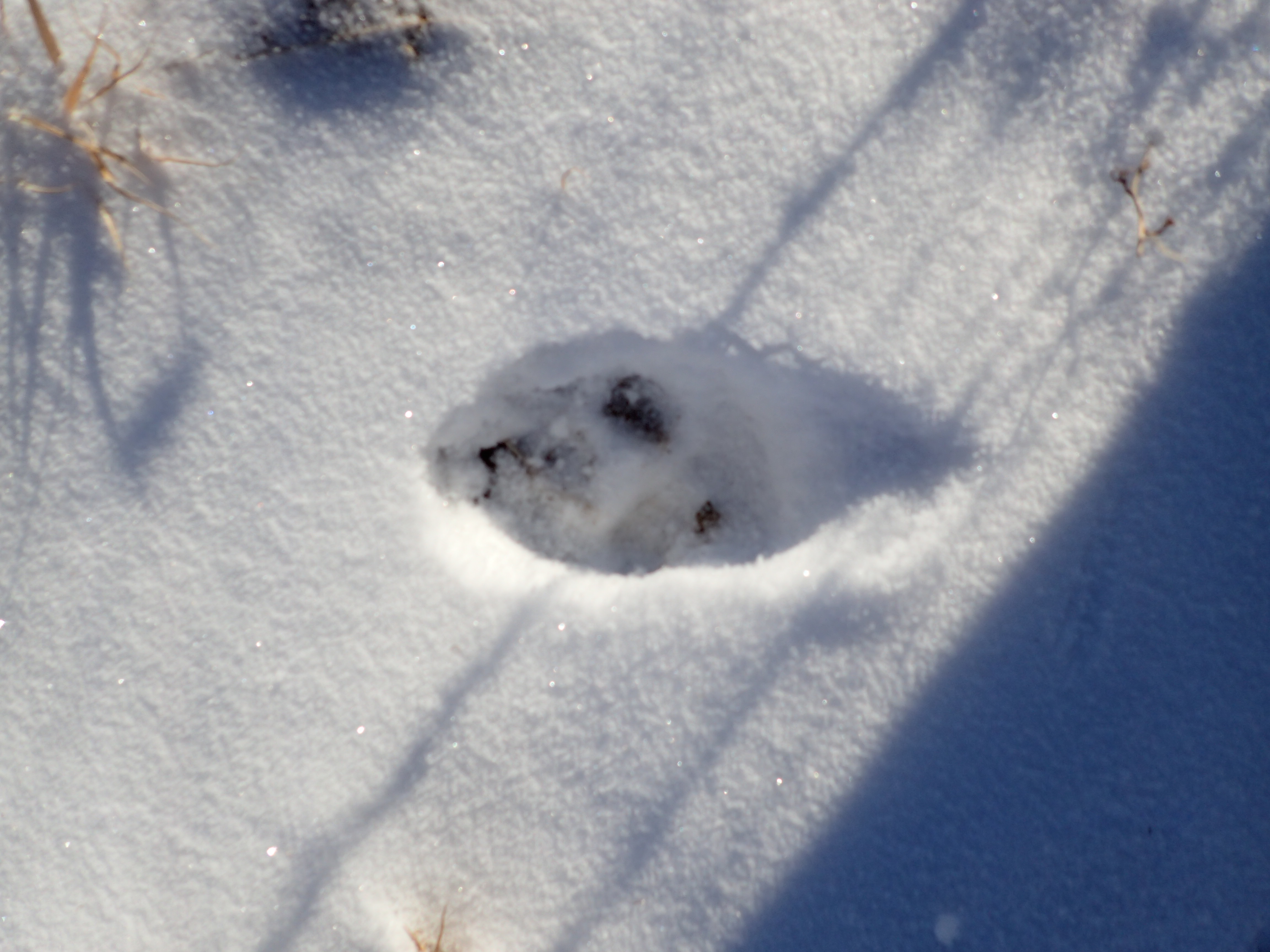
It’s not just poachers that prompt vigilance among red deer. This wolf track spotted near a herd of females and young was fresh.

red deer 3 males gathering scent n

Some scent on the air kept causing the largest of these three males to look back. 

red deer running over hill n

Dozens of stags stream over a break in the hillside. In a land where nomads and their herds have shared the landscape with wild animals for millennia, the countryside would seem empty without the red deer. As Mongolia’s human population continues to grow, it will become increasingly necessary that places such as Hustai National Park are protected if the deer are to continue to thrive.

Takhi – A Success Story in the Land of Chinggis Khan

Takhi w magpie full n

Magpie and takhi (Przewalski’s horse) – old friends reacquainted in a scene that has played out for many thousands of years but that was sadly interrupted in those decades during which the takhi were extinct in the wild. 

In 1967, somewhere on the arid steppe of Mongolia’s Western Gobi Dessert, the last small herd of wild takhi was seen. Two years later, only one horse remained. And then Equus przewalskii vanished completely from the wild. Although closely related to modern domestic horses, takhi were never tamed. This differentiates their status as “truly wild” from the ferrel mustangs of America which are descendants of domestic horses.

In their natural environment, wolves were their main predators, and the dry, harsh, cold conditions of the steppe would invariably claim victims each winter. But the main cause of the demise of the takhi was probably due to its being hunted for meat.

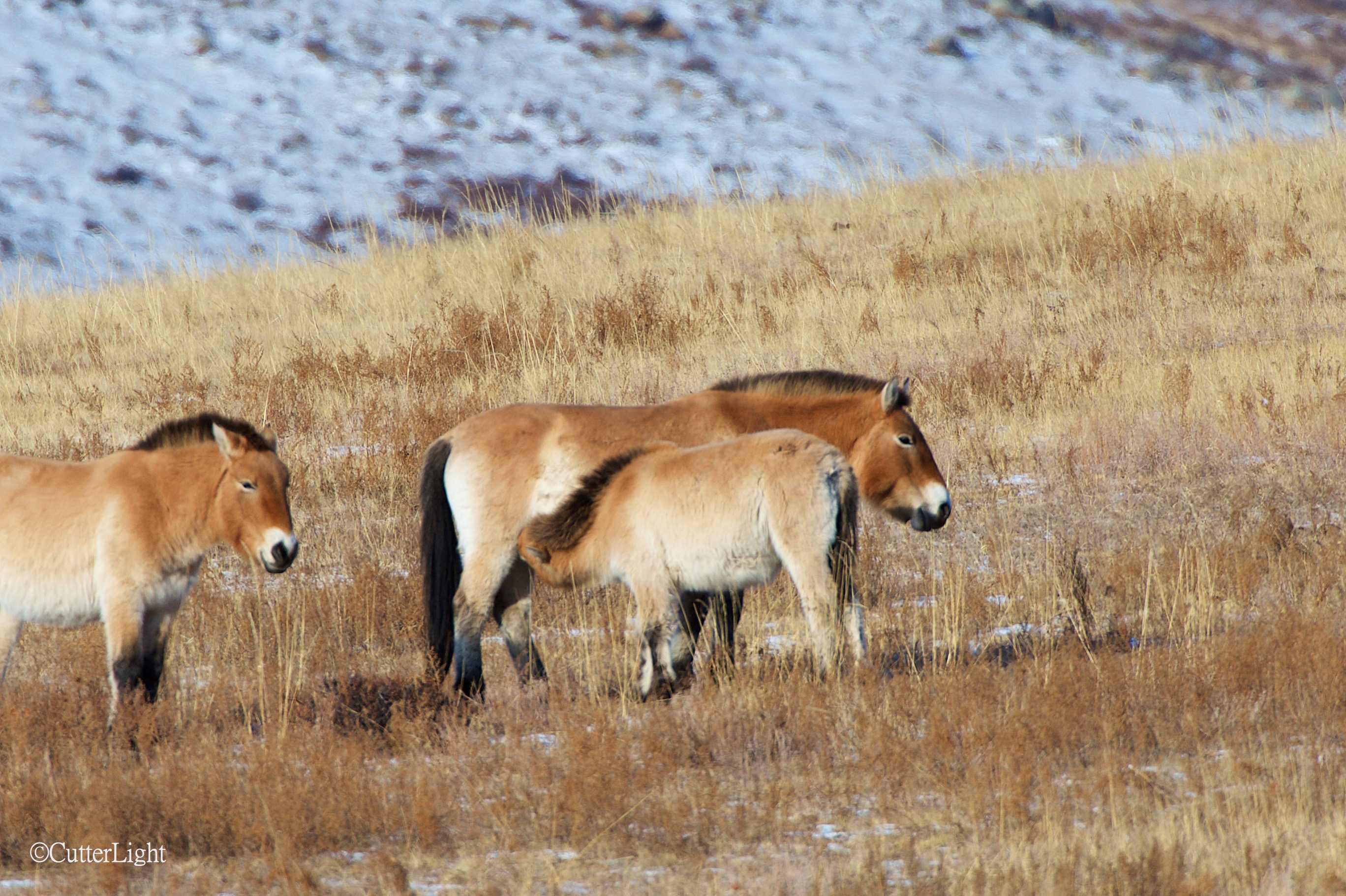
Takhi nursing winter n

Takhi form small family groups comprised of a lead stallion, two or three mares, and their offspring. These family groups loosely intermingle with other families as well as with bachelor stallions which often travel in pairs or groups of three. Stocky and with zebra-like manes, takhi are comparatively small, standing only about 48 – 56 inches tall at the shoulders. They have 66 chromosomes, two more than any other species of horse. 

By 1970, the only living specimens existed in a few zoos and private ranches. Extinct in the wild, it seemed only a matter of time till their official extinction from the planet would be announced.

Then something truly remarkable occurred. In a cooperative venture between the Zoological Society of London and Mongolian biologists, the horses were reintroduced to Mongolia’s Khustai (Hustai) National Park where they’ve been thriving even since.

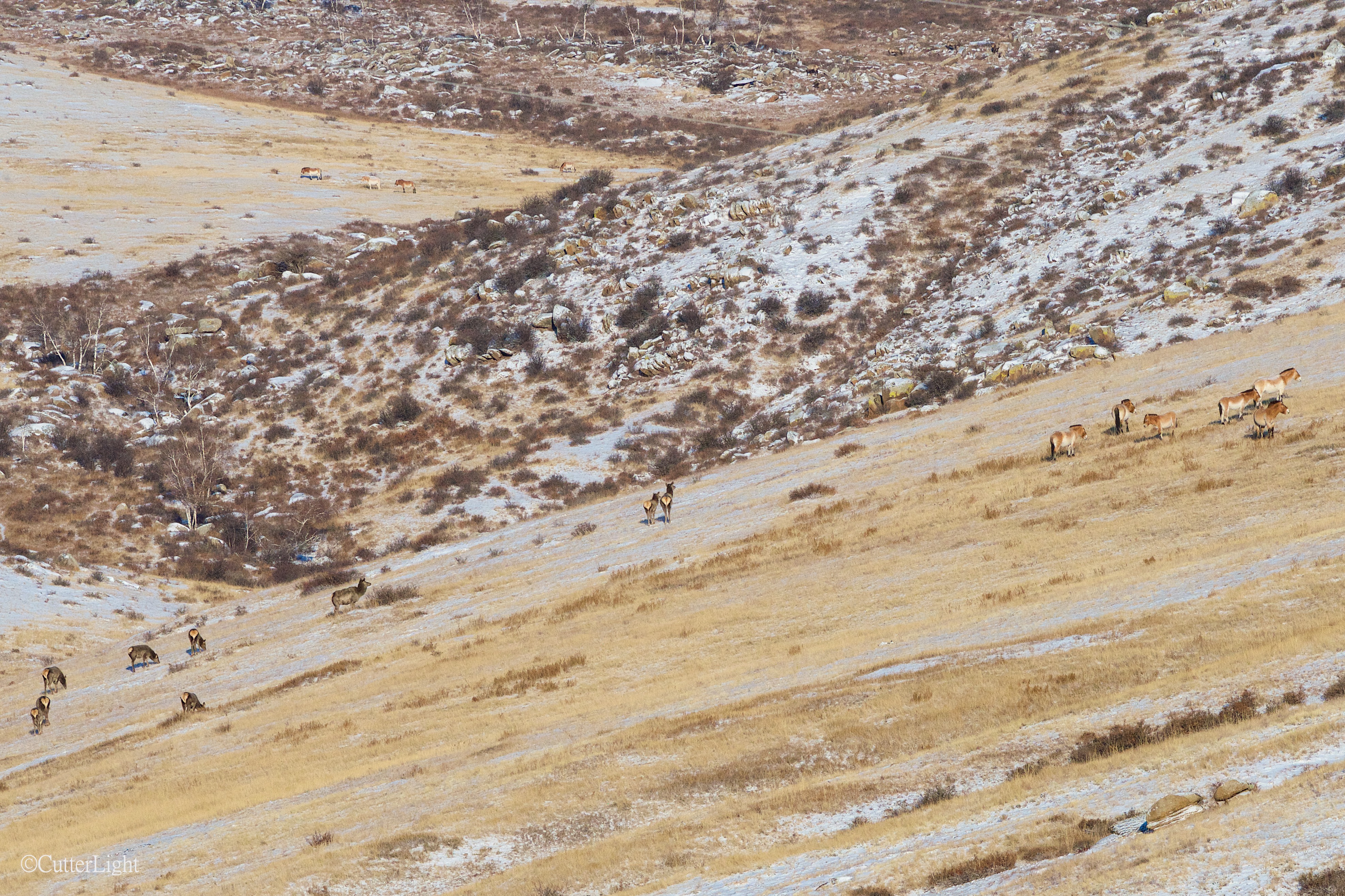
takhi with red deer n

On a morning bright with ice needles in the air and a fresh dusting of snow on the ground, takhi and female red deer (Cervus elaphus) share a piece of rugged terrain in Mongolia’s Khustai National Park. 

takhi stallion pair n

In full winter coats, these wild takhi are as beautiful as they are tough.

We counted ourselves as lucky to have spent a few days in Khustai during some of the coldest stretches of winter. The deeply rutted dirt roads were quiet, wildlife was abundant, and the horses seemed only mildly curious regarding our presence.

takhi in summer field

Takhi can readily be viewed in summertime as well. We can’t say which season is more beautiful. There are wild horses in this world still. That is beautiful.

Crows Ice Fishing for Caddis Larvae: Tuul River, Mongolia

carion crow flock tuul  n mountains n

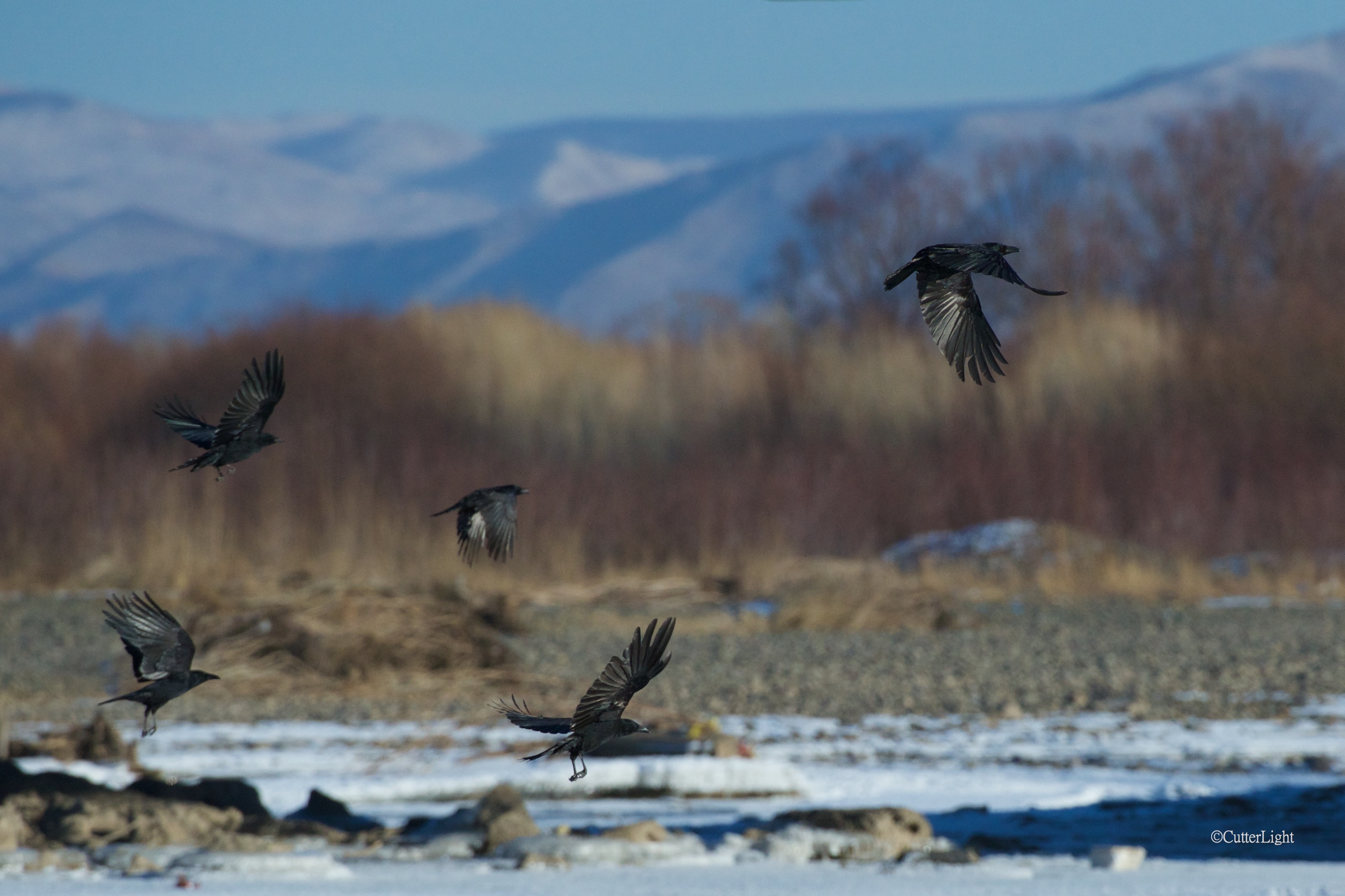
Corvids – a group which includes crows, ravens, rooks, jays, magpies and nutcrackers – fascinate. On a frigid December afternoon, we found them ice-fishing for caddis larvae in Mongolia’s Tuul River in the heart of Ulaanbaatar. (Click any of the photos for a larger view.)

The most intelligent of all birds, and with a brain-to-body-mass ratio rivaling that of the great apes and cetaceans, crows and their allies often exhibit remarkable behavior. Members of this family have been observed using and to some degree engineering purpose-specific tools – the only nonhuman animal other than the great apes to do so. There’s little doubt that certain feeding behaviors adopted by crows have been learned by watching other birds and animals.

carrion crows wings n cadis n

Note the object in the beak of the crow on the left. It’s a caddis larva casing.

The Tuul River flows through Ulaanbaatar, Mongolia’s capital city. Despite urbanization, the river’s water quality remains high – good enough to support species of trout as well as sensitive aquatic insects such as mayflies, stoneflies and caddisflies – species which spend the early part of their lives as larvae on the bottoms of clean rivers and streams. The Tuul is fast-flowing. Consequently, despite weeks on end of sub-freezing temperatures, here and there pockets of water remain open over shallow, stony, silt-free bottom.

OLYMPUS DIGITAL CAMERA

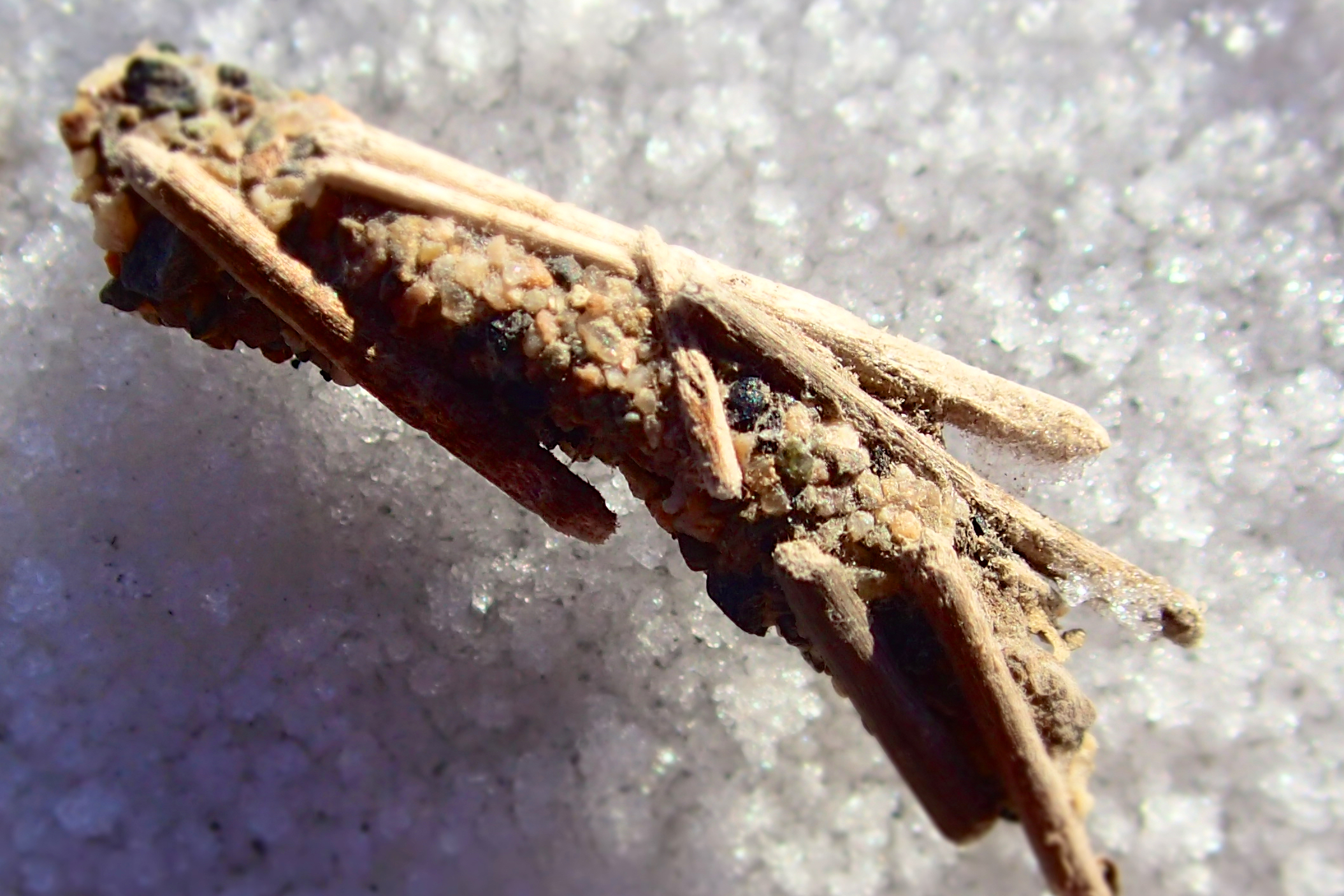
We took a cue from watching the crows and began scanning the ice for caddis larvae casings. As our eyes tuned into the proper size and shape, the empty husks appeared everywhere. This casing, constructed of tiny sticks and pebbles, is about 1.5 inches long (3.8 cm) and belonged to a member of the Northern case maker caddisfly family. 

Perhaps the crows learned of the abundance of wintertime food in these areas of open water by watching dippers – a robin-sized bird that happily plunges into pools and riffles in all seasons in search of aquatic insects and small fish. In fact, on this day we saw a white-throated dipper submerge itself in one of the riffles where the crows were feeding and come up with a small fish.

carion crow w caddis n

Here a carrion crow (Corvus corone) has his prize – a caddis larva pried from its pebble and stick casing.

Not adapted to plunge into water, the crows were fishing from the edge of the ice – thus gaining access to water not overly deep, but deep enough to provide habitat for slow-moving caddis larvae. Resourceful birds, are crows.

The Chinggis Khan Equestrian Statue: An Impressive Monument to Mongolia’s Past and Future

Chinggis statue face close n

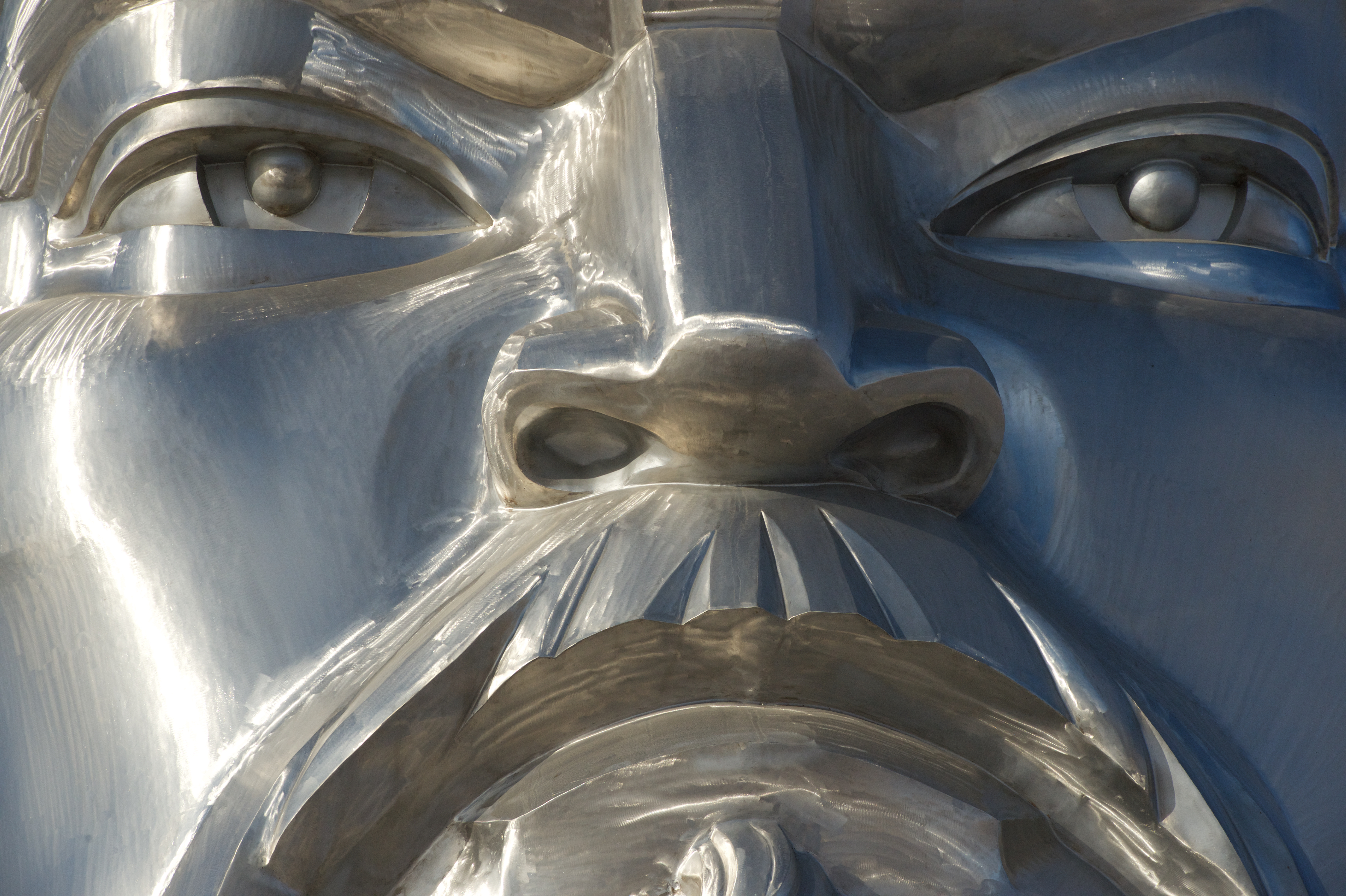
There is no overstating the importance of Chinggis Khan – ruler of all who live in felt tents – to the Mongolian people. Revered in film and in statues such as this 40 meter (131 feet) tall monument , the founder of the Mongolian Empire is evoked in everything from currency to Ulaanbaatar’s international airport to vodka labels.

Sitting at an altitude of 4,429 feet above sea level, just over one million people live in Ulaanbaatar, Mongolia’s capital city. Another 1.7 million Mongolians live in the countryside, either in smaller communities or as nomadic herders on the highland steppe or vegetated regions of the desert. In former times, these grasslands and the nomadic herding culture that accompanied them stretched through Kazakhstan as far west as Hungary, so when Chinggis Kahn proclaimed himself ruler of all who live in the circular, felt-covered tents called gers that were the homes of these nomadic people, he was laying claim to the largest contiguous land mass ever to fall under one empire.

Chinggis Khan w landscape n

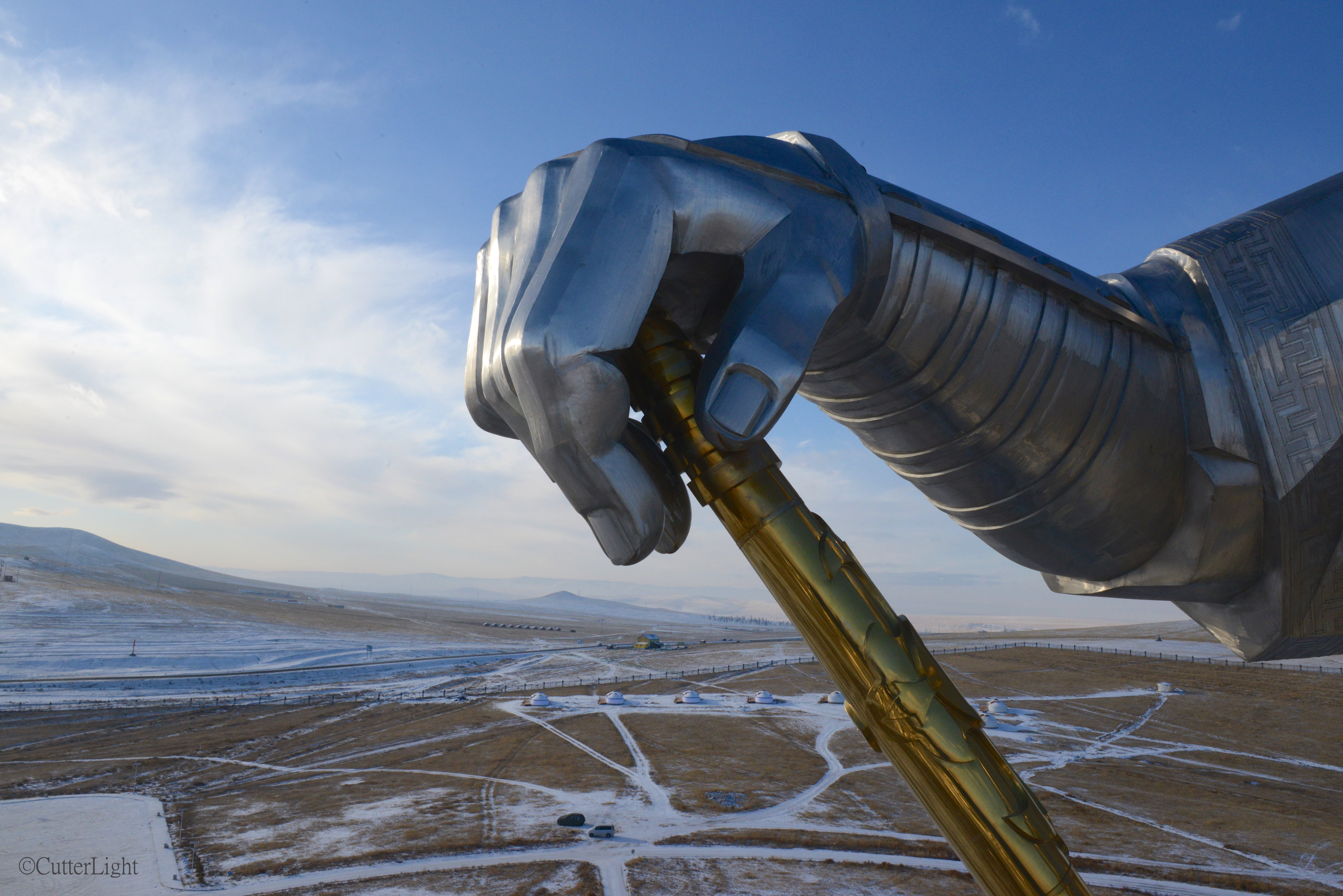
Looking east toward the place of his birth, Chinggis still dominates the rugged Mongolian steppe. Two hundred-fifty tons of stainless steel went into this statue which is situated at the location where a young Temüjin (Chinggis’s boyhood name) found a golden whip and took it mean that he was destined to become a great leader. 

At his birth in 1162(?), the land of Tumüjin’s childhood was occupied by numerous, often warring nomadic tribes. Part of Chinggis’s legacy includes uniting these tribes under one rule and in the process creating a national identity for the Mongolian people.

The nomadic culture has died out or essentially been extirpated elsewhere such as in Kazakstan and Hungary. Under Stalin, the Soviets waged an unrelenting campaign to wipe out or drive out nomadic herdsmen, in many locales turning former grazing lands into collective farms and bringing about mass starvation in the process.

Chinggis statue hand over gers n

The name Chinggis Khan means “leader of all who live in felt tents.” 

But in Mongolia, a land sufficiently insulated and independent enough from both the Russians and the Chinese, hundreds of thousands of Mongolians still live much as they did in the 13th century when Chinggis rose to power. As such, they are the last truly nomadic people in the world.

Millennia of equestrian know-how passed down generation to generation is still showcased in annual tournaments where horse-mounted riders traveling at full gallop demonstrate an ability to pierce man-sized targets with arrows shot from simple bows. It is easy to imagine the terror such skilled, mounted warriors would have invoked in territories where horsemanship was all but unknown. In addition to enemy soldiers felled in battle, under the various Khans, Mongolian armies slaughtered tens of millions of civilians in locales where people had refused invitations to surrender.

At its zenith, the Mongolian Empire stretched from eastern Europe through much of China and Southeast Asia all the way to the shores of the Pacific Ocean. Present day Mongolia lies within the bean-shaped boundary partially covered by the map key. 

The positive aspects of Chinggis’s legacy include bringing political stability to the Silk Road and thus to regional commerce, establishing religious tolerance, fostering intellectual growth and greater communication throughout the empire, and quelling the region’s history of tribal and clan warfare by introducing meritocracy to government.

Chinggis leather boot njpg

This leather boot, located in the museum below the statue, is the same size as the stainless steel boots on Chinggis’s feet. The statue was completed in 2008 and is currently the largest equestrian statue in the world. 

soldier statues at chinggis statue n


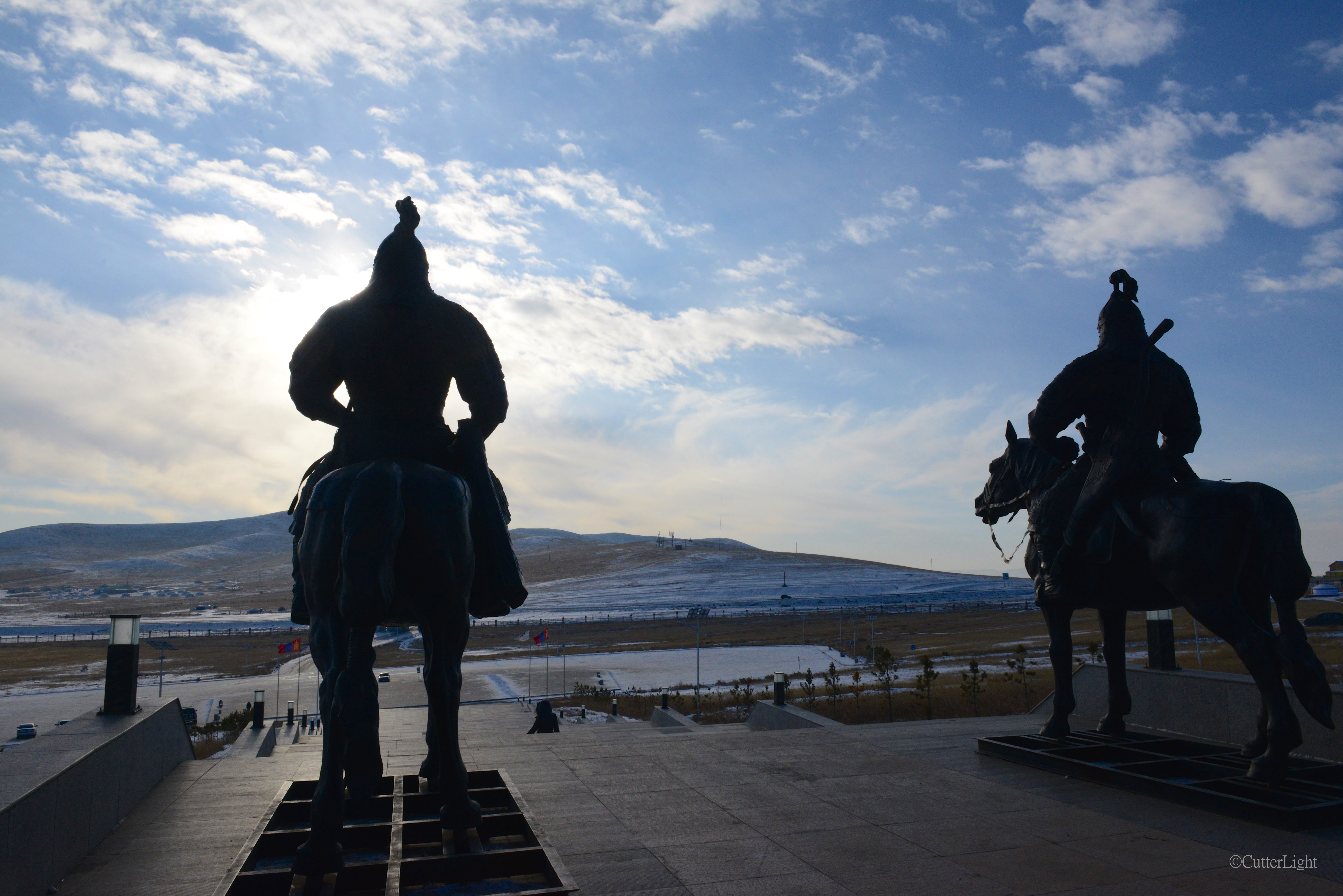
Reminiscent of the soldiers who rode with Chinggis, these vigilant horsemen face the rising January sun. The museum is a collection of period weaponry, jewelry, serving ware and other artifacts, as well as portraits of the 36 Khans who succeeded Chinggis and were appointed as heads of various regions of the empire. Chinggis Khan died in August, 1227. He was about 65 years old. Various accounts have him succumbing to an infected battle wound, a hunting accident, a fall from a horse and the dagger of a woman his army captured. Probably as protection from desecration by rivals, the whereabouts of his burial site remain shrouded in mystery as well…

From the end of the 17th century until 1911, Mongolia was under the control of China. Soon after that, they fell under Russian hegemony and in 1924 were declared a satellite state of the Soviet Empire. It wasn’t until 1989 that Russia withdrew it’s troops from Mongolia. In 1992, Mongolia created a new constitution and a multi-party democracy. Mongolia is thus at once a very young country, and a very old one.

OLYMPUS DIGITAL CAMERA

A Lincolnesque statue of Chinggis Khan overlooks Ulaanbaatar’s central square from the steps of the Government Building.

Change is happening quickly in this young democracy; just recently the capital city’s central square, Sükhbaatar Square, was officially renamed Chinggis Khan Square. With an abundance of valuable natural resources (gold, copper, uranium and molybdenum among them) and a resilient, well-educated, optimistic populace, Mongolia’s future looks bright.


Birds of Mongolia: Daurian Partridge

Daurina partridge pair n

We encountered these softball-shaped Daurian partridge (Perdix daurica) in the pre-dawn of a December trip to Mongolia’s Hustai National Park.

Any day we see a new species of bird or other animal is a good day. On a recent three-day trip to Hustai, we had several such encounters. Nothing was any cuter than these relatives of pheasants and quail that would have fit perfectly in our cupped hands.

daurian partridge back n

We startled them, a covey of 14, as they were feeding on seeds on the coldest morning to date this winter in Mongolia. Maybe it was the sub zero (Fahrenheit) temperatures, or the fact that none of us – including the birds – were fully awake. But uncharacteristically they let us hang around and snap a few photos in the blue morning twilight. The orange beard-like feathers and gray side whiskers are part of their fall and winter plumage. 

Daurian partridge bokeh n

Named for the Daurian region of Russia, the average Daurian partridge is about 11 or 12 inches (28 to 30 cm) from head to tail and weighs around one half to three quarters of a pound (225 to 340 grams). The main part of their diet consists of seeds, which are abundant on Mongolia’s steppe grasslands. Insects and berries also figure into their diet, when available. Partridge are ground nesters, having developed a long-term dislike of heights (such as tree branches) when, Daedalus (father of Icarus of Greek legend) threw his nephew Perdix off the Athena hill in a fit of anger. Not wishing to experience another such fall, members of genus Perdix avoid high places to this day. So the legend goes.

daurian partridge flying away n

But they do fly, and this is the more usual view of Daurian partridge. Twice, previously, while hiking the Mongolian steppe we’ve had our startled hearts stop in our chests as a thrumming whoosh of wingbeats exploded practically underfoot. Once the birds have flushed, it’s difficult to approach them again, although you can sometimes track them down by listening for their rix, rix, rix, call as they regroup. 

Urban Birding in the World’s Coldest Capital City: A Winter Walk along Ulaanbaatar’s Tuul River

redpole on dark background 2 n

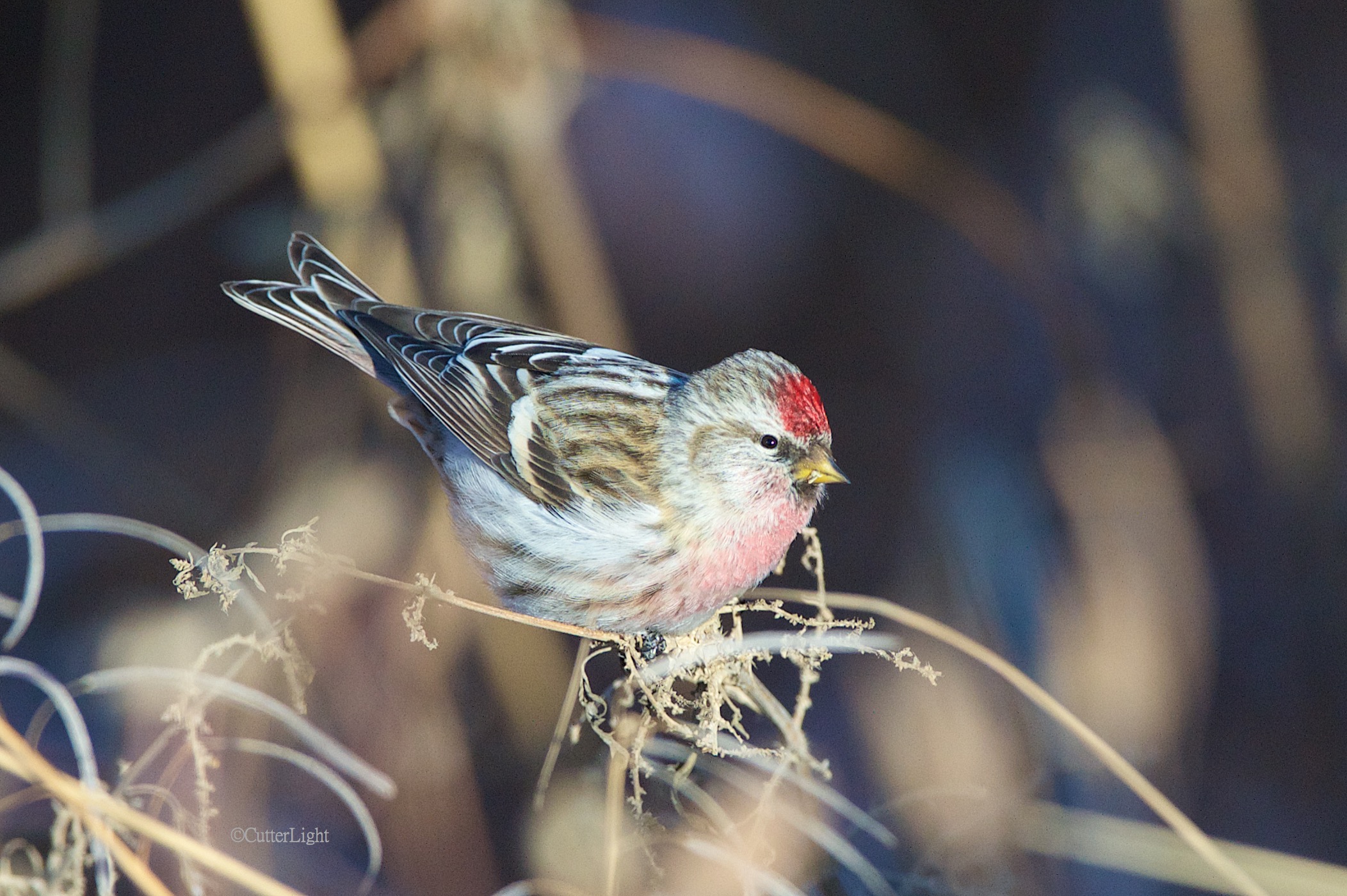
Redpoll, (Acanthis flammea)                                     Mongolian: Дөлөн цэгцүүхэй,

On a December morning with temperatures hovering around -13 degrees Farhenheit (-25 C) we fueled up with bacon and grits and walked from our apartment to the nearby Tuul River to check out the local bird scene.

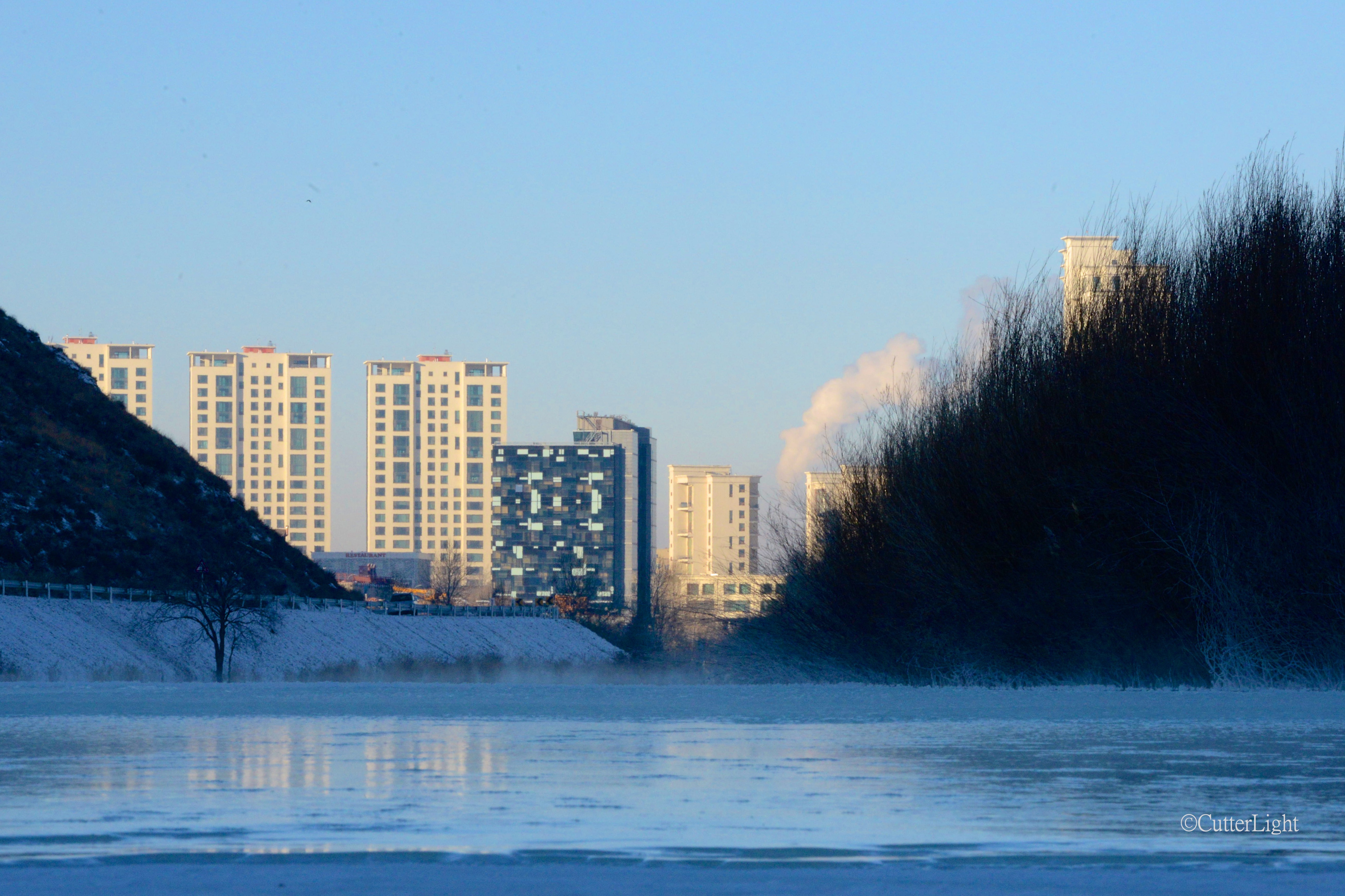
Ulaanbaatar from frozen tuul n

Mist gently lifts from a patch of open water on Mongolia’s Tuul River. Along the shoreline to the right, frosted willows appear as sprays of white. In the background, dawn arrives on Ulaanbaatar, a rapidly growing city of just over one million inhabitants doing their best to stay warm with the country’s abundant coal. 

great tit ground n

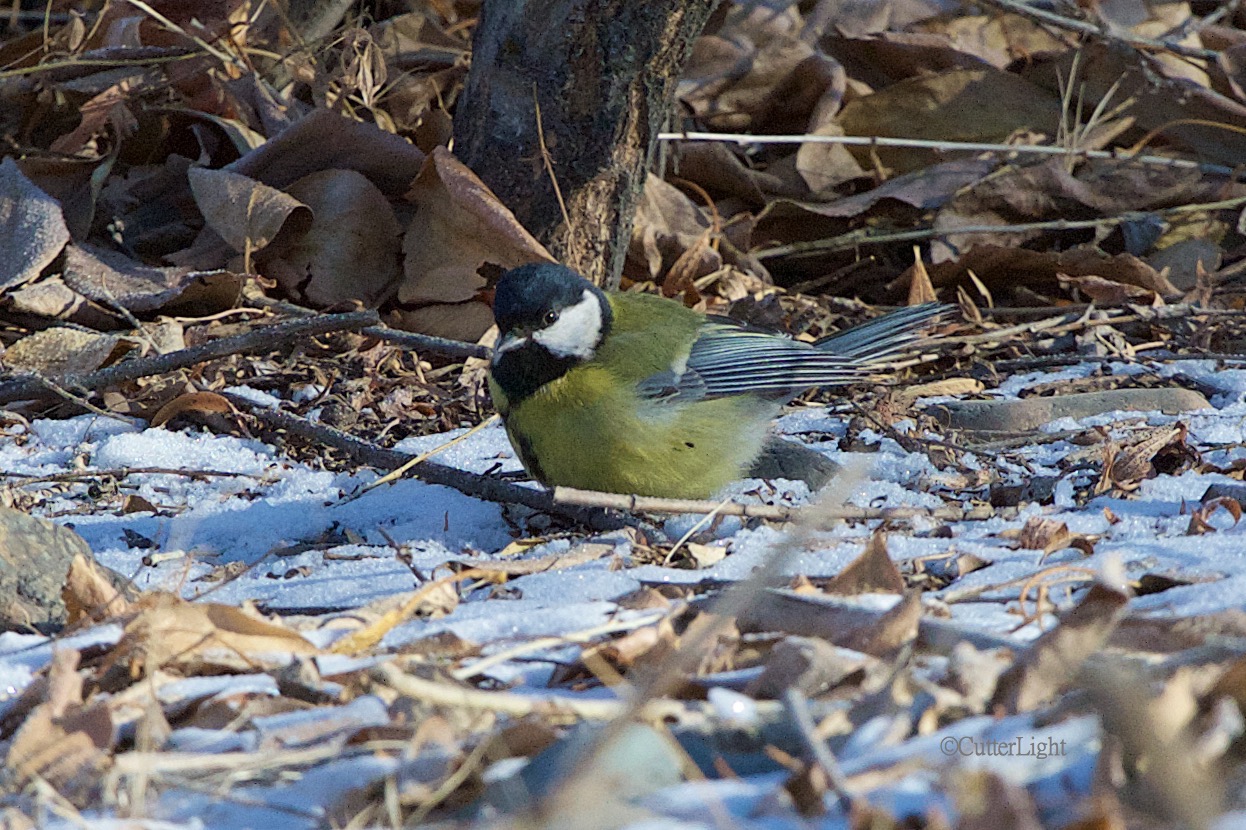
Great tit, (Parus major)                                               Mongolian: Их хөхбух

Relatives of the familiar chickadees of North America, these are one of the more common and colorful passerines in and around Ulaanbaatar.

azure tit on tree n

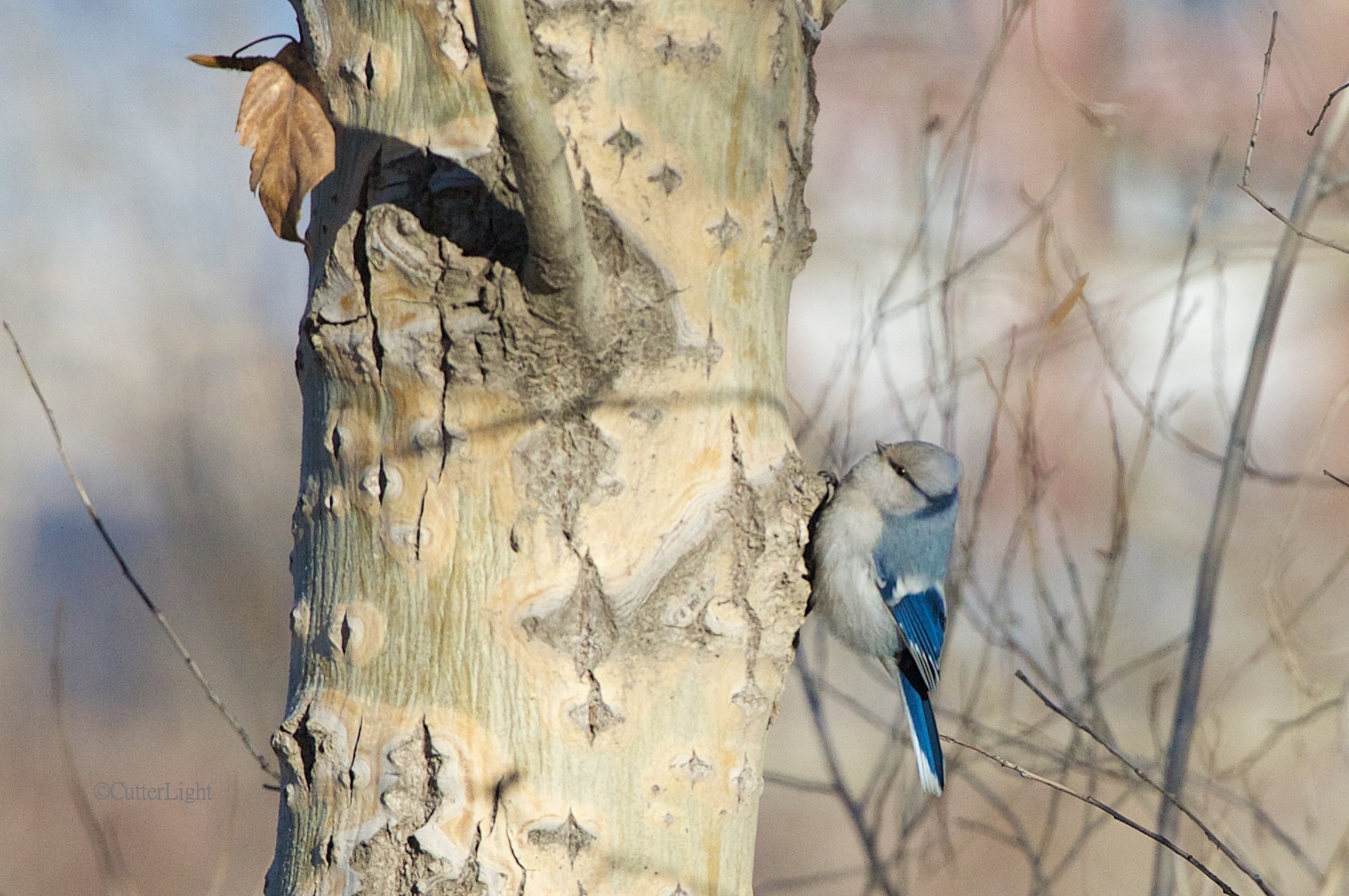
Azure tit, (Parus cyanus)                                               Mongolian: Номин хөхбух

Abundant but more shy than great tits, these beautiful little birds are seldom seen in the city itself, but we saw several during our walk along the Tuul.

penduline tit nest n

We found two of these mitten-shaped nests – the work of white-capped penduline tits, (Remiz coronatus), (Бургасны ураншувуу). Like the buds of the tree it’s hanging from, the nest is dormant. Although the birds who made this nest will not use it again, male penduline tits, which arrive before females in the spring, use abandoned nests as indicators of suitable breeding habitat. Some Mongolians and other Asians hold a belief that these nests have medicinal powers – a belief unsupported by science – and collect them, a practice which has directly resulted in a decline in penduline tit numbers.

eurasian tree sparrow front n

Eurasian tree sparrow, (Passer montanus)                   Mongolian: Хээрийн бор шувуу

Much like pigeons, tree sparrows seem to show up wherever humans live. Presumably these friendly little birds have essentially co-evolved with people. Within the city of Ulaanbaatar they occur in flocks in a variety of habitats. But along the Tuul River, their numbers thin as passerines more adept at thriving without the spoils of humans outcompete them. By the time one crosses the river and enters the forests of Bogd Kahn Mountain, tree sparrows are almost entirely replaced by tits, finches, nuthatches and other birds.

eurasian magpy shimmering n

Eurasian (or common) magpie, (Pica pica)                  Mongolian: Алаг шаазгай

In urban settings magpies are often quite approachable, however the magpies along the Tuul proved wary. We worked to get this photo of a bird puffed up against the cold, a streak of emerald-green shimmering along the length of the tail. Generally scavengers and foragers, the magpie’s hooked beak is a tell-tale sign that it will assume the role of predator given the opportunity.

carrion crows wings n cadis n

Carrion crows, (Corvus corone)                                         Mongolian: Хар хэрээ

We found a group of crows targeting caddisfly larvae in a shallow riffle that hadn’t yet frozen, as is evident by the caddisfly casing in the beak of the bird on the left. The crows were using the edge of the ice to access this bounty. Perhaps they learned this behavior by observing dipper birds, a species that also frequents open water such as this during winter to feed on insects and small fish.

OLYMPUS DIGITAL CAMERA

Scattered across the ice near the riffle where the crows were feeding, we found a number of empty caddis larvae casings. The larva that built this home from fragments of wood and tiny pebbles probably belongs to the Northern case maker group, family Limnephilidae. The fact that caddisflies are apparently abundant in this stretch of the Tuul indicates that despite urban development, water quality remains good.

white throated dipper Tuul n

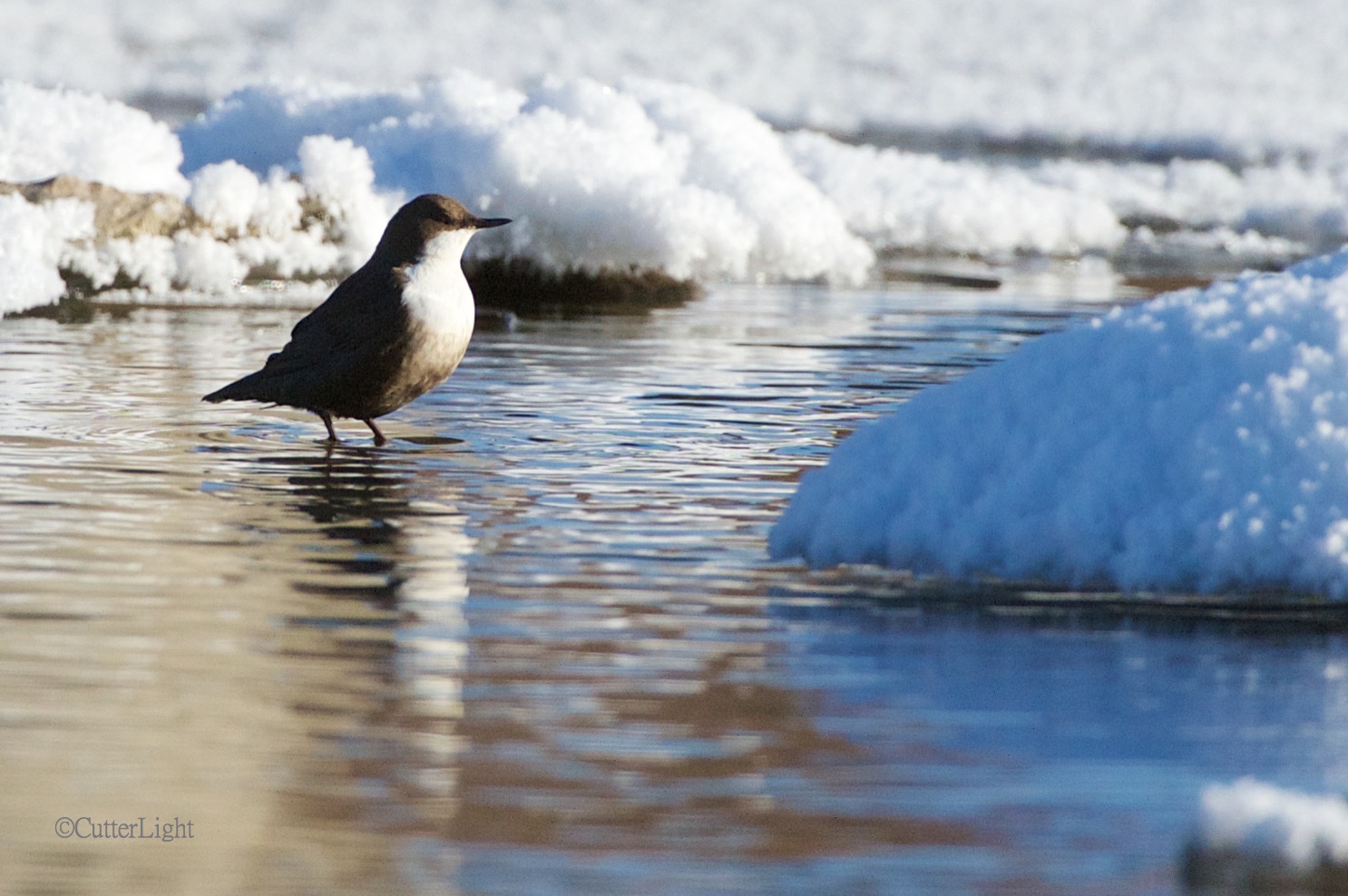
White-throated dipper, (Cinclus cinclus)                  Mongolian: Гялааномруу хараацай,

Bee-like rapid wingbeats and an electric buzzing cry alerted us to the presence of a dipper bird near the same water the crows were using. What threw us was the flash of white as the bird zoomed by; in America and Japan we’d seen only brown dippers. This one disappeared under the icy water and came up with a fairly large minnow. Any day we can check off a new species is a good day.

The mix of willows, poplars, cottonwood and pines along the banks of the Tuul, as well as the river itself, constitute a biologically rich greenbelt in the heart of a rapidly growing city. Here’s to hoping that the citizens of Ulaanbaatar recognize what a treasure this is and insist on its protection.

We invite comments, corrections, discussion and further information from our readers.

Yolyn Am Canyon, Mongolia: Wildlife Safari amidst Remnants of the Gobi Desert’s Last Glacier

ibex bull disappearing n

When this magnificent male Siberian ibex turned his back to us and disappeared, our hearts sank. But moments later, he reemerged for a second photo op. His group of females, young males and yearlings was tucked away up a narrow arm of Mongolia’s remote Yolyn Am Canyon.

ovoo Yolin Am Canyon n

Ovoos – sacred mounds of stones and other objects – are common throughout Mongolia. This one is a testament to the special place Yolyn Am Canyon holds in the hearts of the Mongolian people. Translated as “The Valley of the Lammergeiers” (a raptor also known as bearded vultures), the canyon is home to abundant wildlife, some of it rare.

On the evening of day four of our tour from Ulaanbaatar through the Gobi Desert, we stayed in a ger on the outskirts of Mongolia’s Yolyn Am Canyon. Situated at elevation in a narrow valley surrounded by jagged peaks, sunlight only briefly reaches the canyon’s floor each day. Until recent times, ice remained in the valley throughout the year, which made Yolyn Am the Gobi’s last glacier. In recent years, the ice is gone by August or September. By the time of our visit in mid-October, however, ice had returned to the spring creek that flows through the valley’s shadows.

chaffinch n

It is the universal story across our planet: Where there is water, there is life. The spring creek emerging from the stone mountains of Yolyn Am are an oasis sought out by diminutive passerines such as this chaffinch (Fringilla sp) as well as charismatic megafauna such as the park’s argali bighorn sheep and Siberian ibex.

chaffinch bathing n

Fringed with October ice even in the sunny portions of the canyon, this water makes for a chilly bath.

pica fight 2 n

Dense populations of Daurian pika (Ochotona dauurica) and other rodents sometimes lead to disputes. With winter’s icy lock looming, it is critical that each pika lay claim to a food source and stock up enough grass and seed to get them through the coming dark and cold. When stakes are high, these relatives of rabbits go at it with teeth bared and kicks flying.

Pika vanquished n

Ears back and chin down, the vanquished rival retreats to his burrow.

Walking through the narrow canyon in late morning light, we found ourselves surrounded by innumerable pikas, gerbils, wheatears, horned larks, buntings and other passerines. The abundance of wildlife was a revelation, and for me, an avid birder, it was hard to take my eyes of the creek bank and sunny glades where most of the action was going on.

And then magic happened.

“Jack!” one or our party exclaimed. “Ibex!” I followed the line of his index finger to a far off ridge where, unmistakably silhouetted against a famously blue Mongolian sky stood a beautiful example of a mature male Siberian Ibex. In such flawless relief against the sky and perfectly still, it looked like a statue. Far off in the distance, it was staring directly at us and no doubt had been for some time.

I crouched low and began pacing myself toward it. Forty strides, stop, shoot. Forty strides, stop, shoot. Along the way I passed up the very shot of red-billed choughs (Pyrrhocorax pyrrhocorax brachipus)  – a crow-like bird with a distinctive bright red bill and matching legs – I’d been hoping to get on this trip. I kept closing ground on the ibex, and although still well out of range, I reasoned that with every set of 20 paces I might be getting slightly better shots.

And then I looked down to where my left foot was about to fall near the edge of the creek and saw something I hadn’t even considered would be a possibility on this cool October morning…

Halys pit viper n

Which of us more surprised the other is impossible to say. For a brief moment, I considered stopping to reposition this 22 inch (55 cm)  snake, or to at least get a better photographic angle on him. But the ibex… Ironically, it turns out that seeing a Halys pit viper (Gloydius halys) is more unusual than seeing an ibex. On the other hand, as the name “pit viper” suggests, it’s just as well I didn’t mess around with this guy. Besides, on this cold day in a land where raptors are abundant, it was in the snake’s best interest that I left him alone.

ibex bull 2nd look n

This was a thrill. The ibex was still far off and way up, but he couldn’t have been any more beautifully silhouetted against the October sky atop this classic, jagged ridge. And then he disappeared for the last time. When I turned around to find Barbra and our group, they were pointing up a narrow canyon arm I’d just passed. The arm was on the other side of the ridge over which the male had disappeared, so I suspected this is where the rest of his group might be. The chase was on!

Somewhere between walking and running, I began scrambling as fast as I could up a wild side canyon. For one short stretch where a feeder spring tumbled over a mossy rock face, the ascent was almost vertical and I struggled between the camera gear I was carrying and finding hand-holds. But once I got up on the bench, there they were. Six, no, eight… maybe a dozen ibex represented by young males with their horns just beginning to gain weight and curl, females, younger animals and kids. They were watching me, but they had the high ground and I was on the opposite side of the canyon. They didn’t seem particularly nervous, so I continued scrambling, breaking a trail as I climbed.

young ibex looking at me n

With sturdy legs and heavily muscled bodies, the wild goats are stunning. 

As I stepped through the low undergrowth, I suddenly recognized an unmistakable smell. Wild juniper. I reluctantly took my eyes off the ibex and looked down to see a vast carpet of berried shrubs blanketing the side of the canyon I was climbing. Still making my way to higher ground and watching the animals on the opposite canyon wall, I found myself almost instinctively thinking, “This would be the perfect place for…”

At that very moment the ground around my feet exploded in a wind-rush thrum of blurred wings. Chukar!

chukar w lichen rock n

Shooting in manual, I was spinning dials like mad on my camera to adjust from the sunny slopes on the opposite canyon wall where the ibex were to the shade where this hen chukar was kind enough to pose on a lichen-stained rock complimenting her colors. The rest of the covey – her brood, I’m guessing – kited off to the opposite canyon wall and began calling each other back together. 

white-winged snow finch im back n

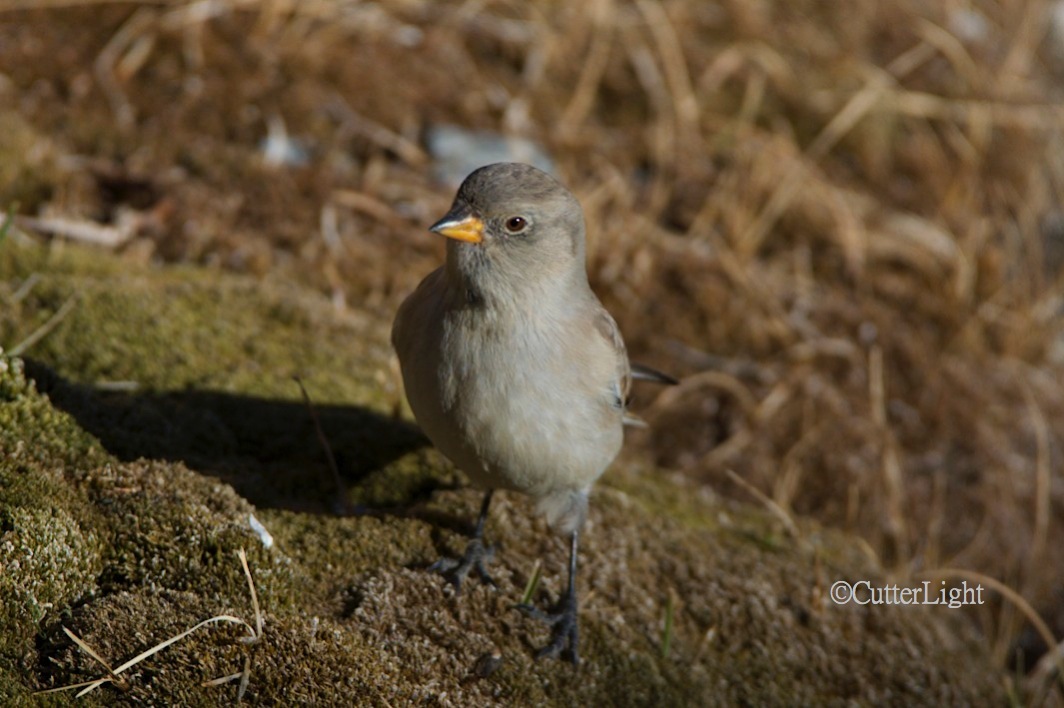
It seems that everywhere we looked that day, wildlife was abundant and cooperative. This young white-winged snow bunting (Montifringilla nivalis) insistently remained underfoot till I snapped a few shots.

white-winged snow finch im n

Our day-hike through Yolyn Am ended with shadows and cold crowding us out of the canyon, and though we could have walked further, we began to reckon that a warm ger and a hot meal sounded pretty good.

frozen water Yolin Am Canyon n

Ice – the great aquifer of arid highlands. It is this frozen water, slowly melting through the summer, that keeps the Yolyn Am Canyon wet and fecund. We couldn’t help but wonder what changes are in store for this magical place as the planet continues to warm.

red-billed choughs sunset n

A flock of red-billed choughs gathers in the canyon’s last light before flying to their roosts.

Next: Further South in the Yolyn Am Canyon – more ibex, gerbils, a lammergeier, rough-legged hawks, and a rare saker falcon in “The Valley of the Lammergeiers.”

Gobi Desert Trek Day II: The Central Mongolian Steppe from Ikh Khayrkhan Uul to Baga Gazaryn Uul

horses in salt lake n

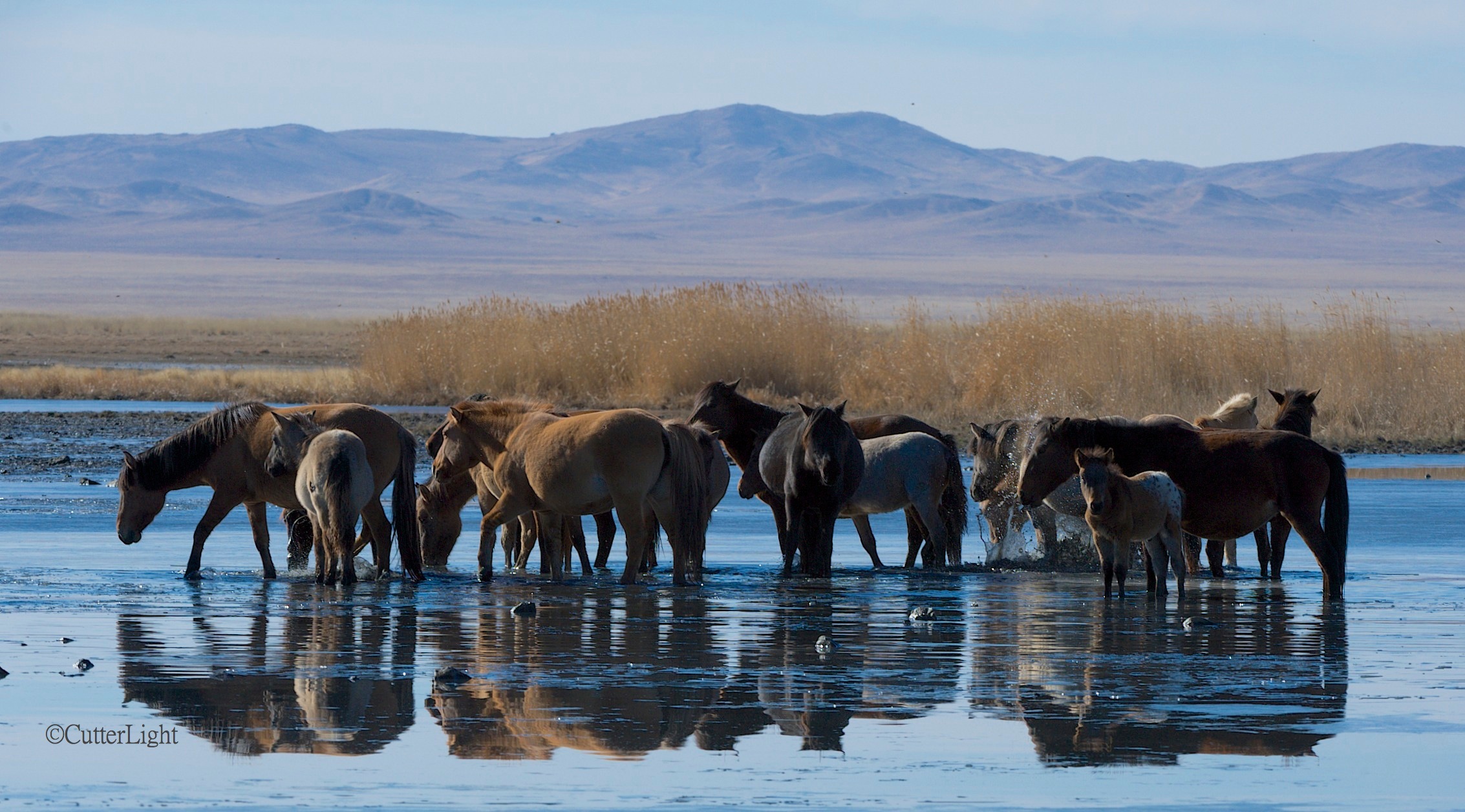
It’s a tough breed of horses that call Mongolia home. Most Mongolians were practically born in the saddle, and even Ulaanbaatar’s urbanites ride them with ease. But these horses are never truly tamed in the western sense of that word. Here a group wades a small salt lake on a mid-October morning a few ticks above freezing.

We woke after spending our first night in a ger to a world of frosted grass and blue skies. After breakfast and some casual rock climbing on nearby outcrops, we piled into the van and resumed our journey south to the Gobi Desert.

russian van off road n

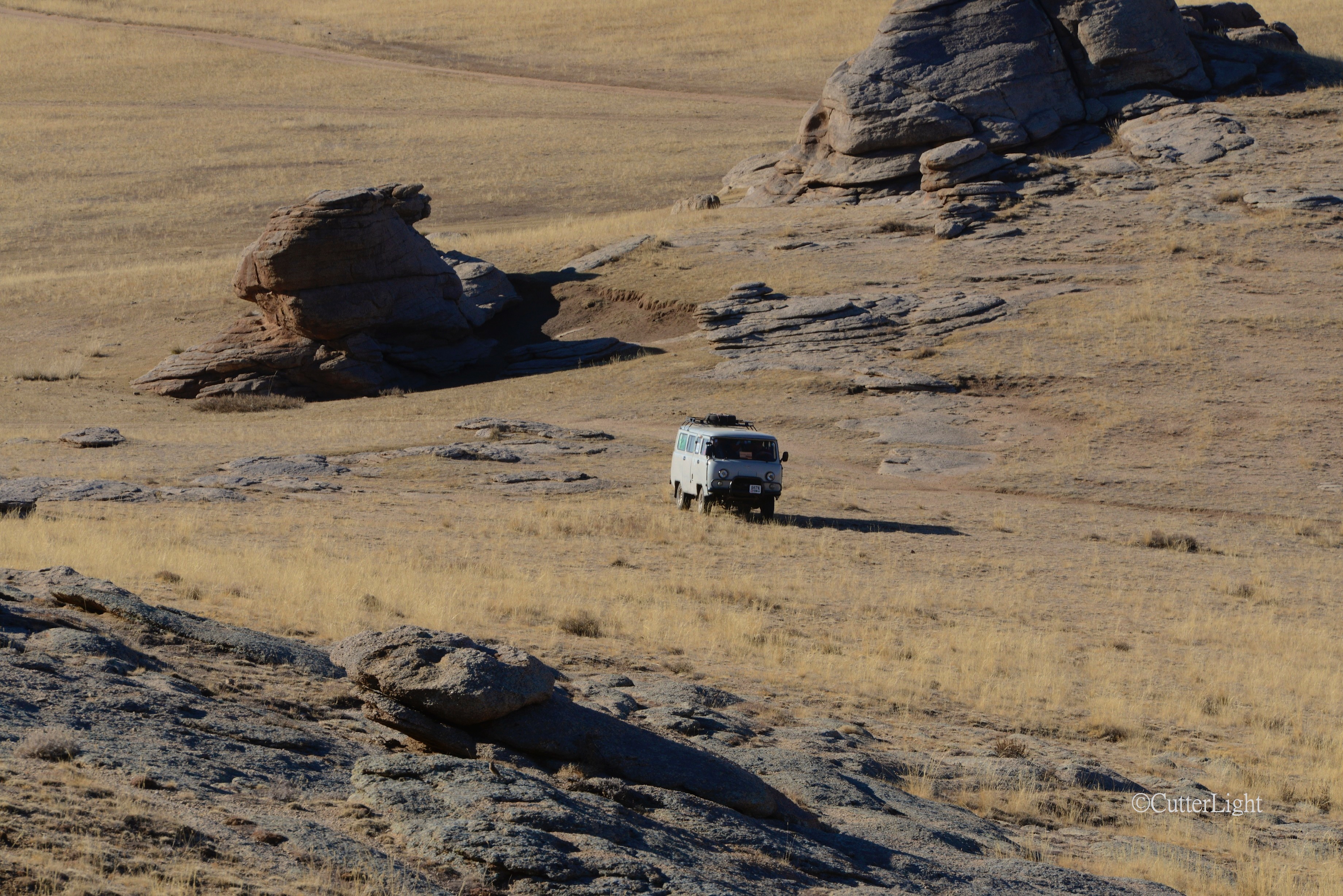
Beefy and easy to keep running, four-wheel drive Russian-built vans are standard on the Mongolian steppe. 

ruddy shelducs salt lake n

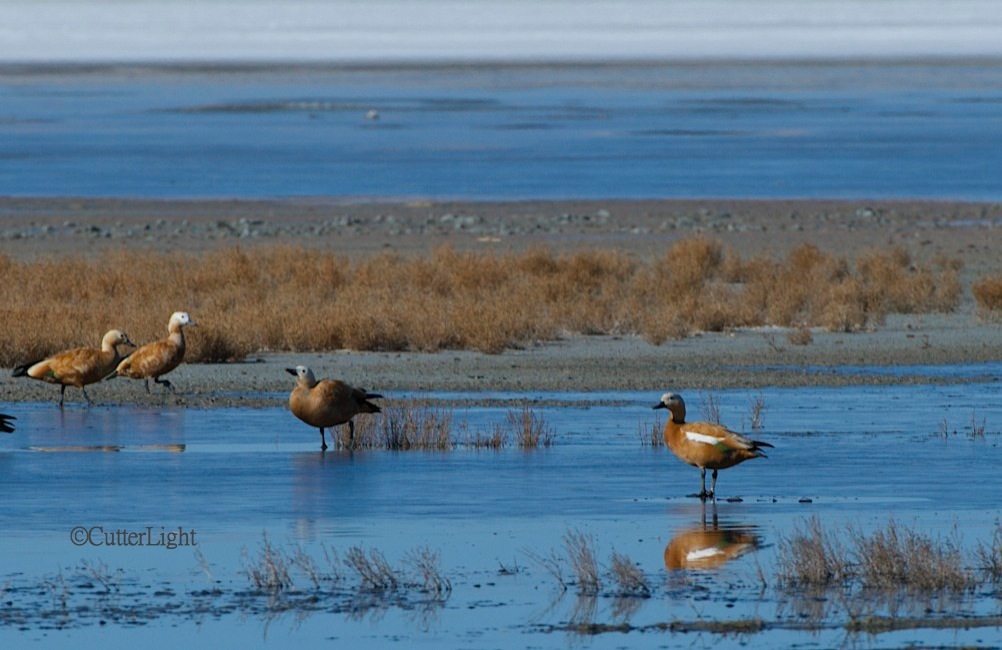
Ruddy shelducks (Tadorna furruginea). The white edge along the lakeshore at the top of this photo is salt.  Known for their affinity for brackish water, ruddy shelduck numbers are declining worldwide as salty wetlands are drained for agriculture. In addition to the horses in the photo above, the lake was also populated with common shelducks and teal. 

common shelducks salty lake n

Heads down and tails up, common shelducks (Tadorna tadornain muted late fall plumage sift through the lake’s briny muck. Meanwhile, hundreds of passerines, including scores of horned larks, flitted through the air and along the shoreline.

The sun moved higher into the sky. With the soft morning light leaving the lake’s waters, it was time to climb back into the van. The vastness of the land, dotted here and there with horses, cattle, goats, sheep and wild gazelle, continued to mesmerize us. But ever so subtly, we noticed that the grass itself was becoming more sparse.

Off in the distance, a group of especially large-looking horses caught our attention. As we drew closer, humps emerged from their backs. Camels! In less than a morning’s drive, we found ourselves transitioning from the lush grasslands of the steppe to the northern edge of one of the world’s great deserts: the Gobi.

OLYMPUS DIGITAL CAMERA

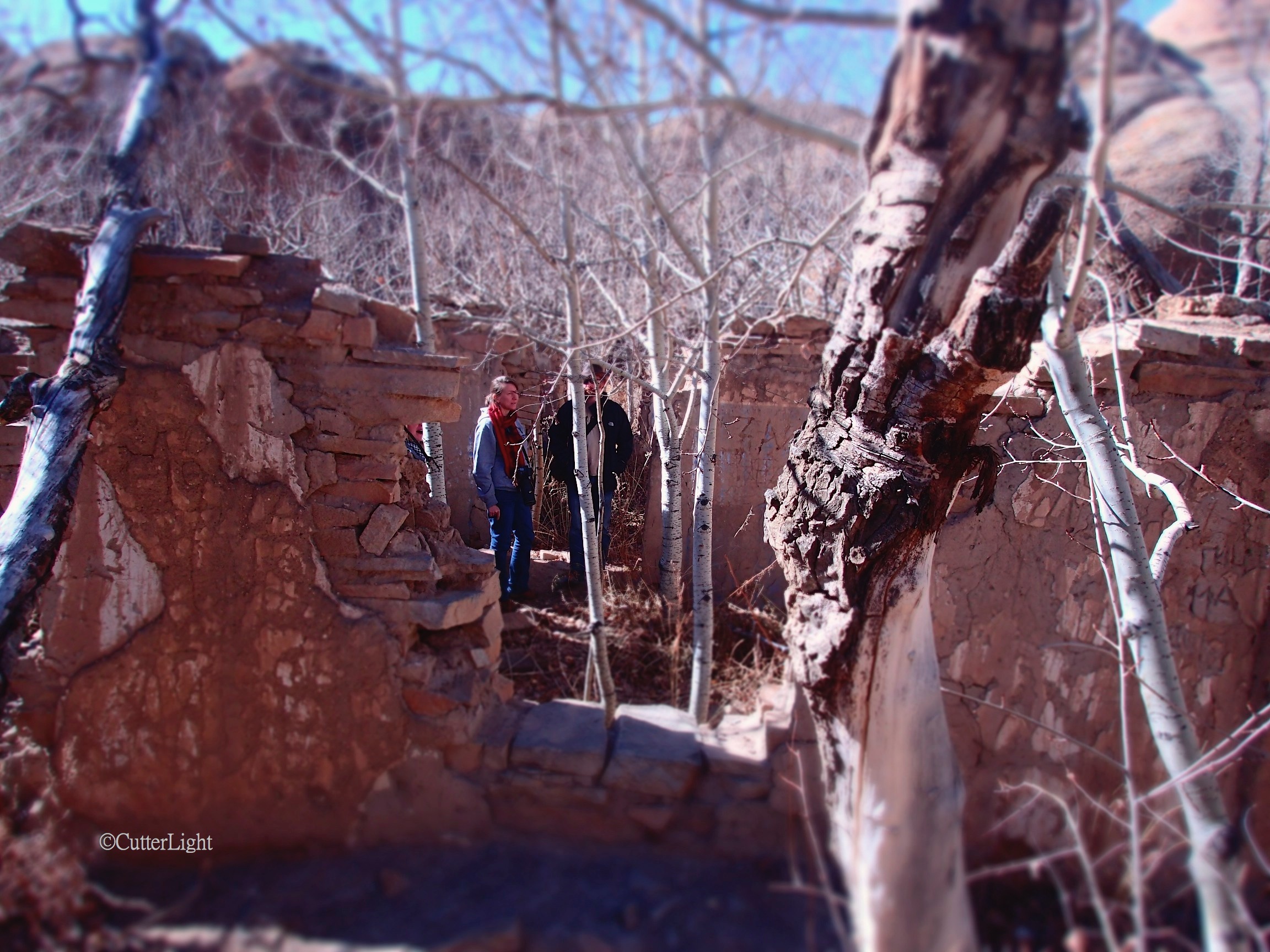
Birch trees tell a tale of water just below the ground’s surface in an otherwise parched landscape, and it was here a band of monks established a monastery long since abandoned and fallen to ruins. 

OLYMPUS DIGITAL CAMERA

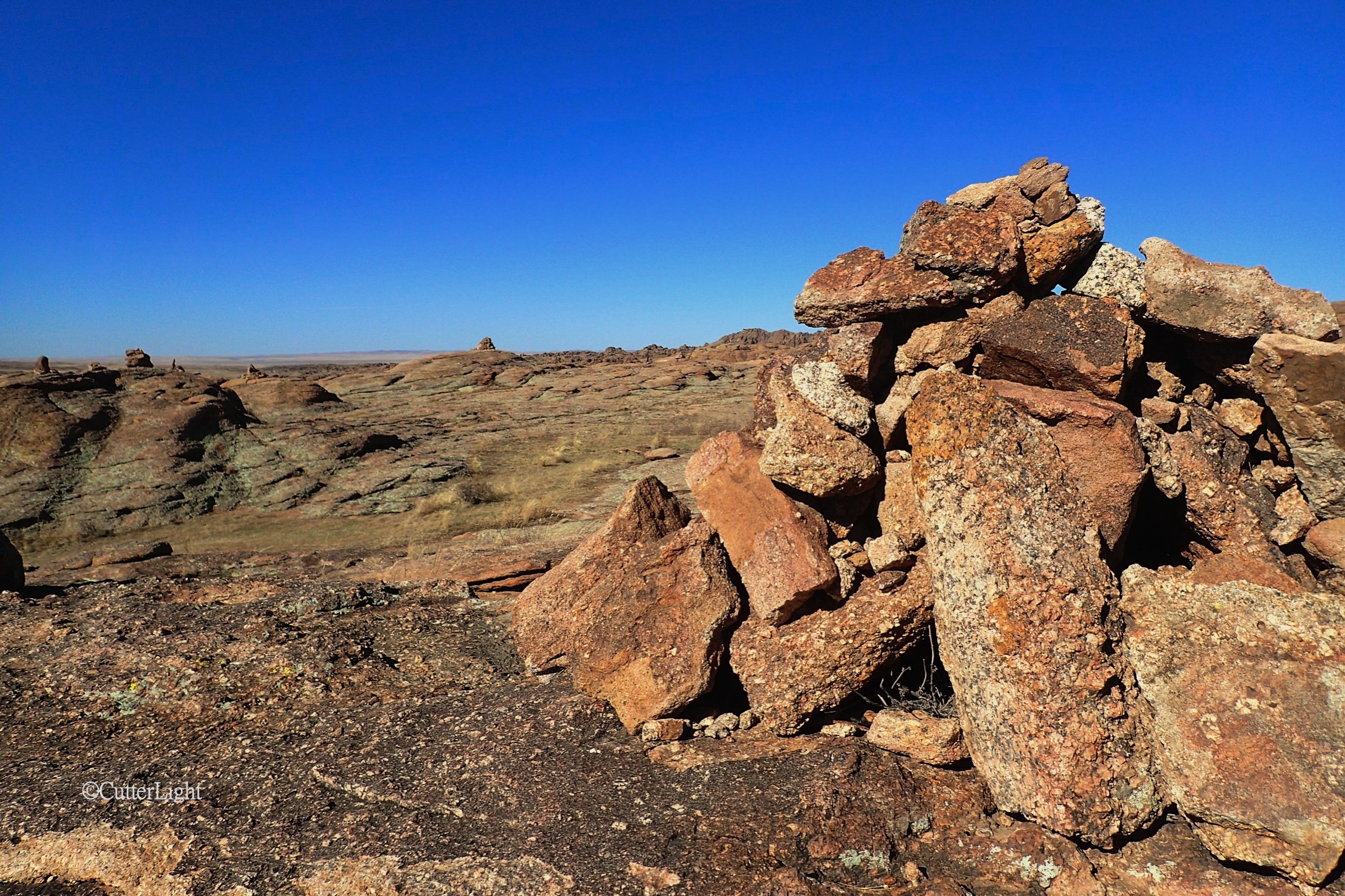
And yet in a sense, the monastery is still alive and vibrant as these nearby ovoos attest. It is the custom in Mongolia to add rocks and other items to these cairns and walk around them clockwise three times out of respect for the sky and earth and to ensure a safe journey.

grasshopper_new

Brown with late autumn, this familiar grasshopper is a testament to species similarity throughout the Northern Hemisphere. Existing in tremendous numbers in a country where pesticides are still all but unheard of, these hopping protein pills account for the huge number of birds here.

OLYMPUS DIGITAL CAMERA

Featuring a dinner of stew with Mongolian-style noodles, goat milk tea, and six liters of wine along with our hosts’  airag (fermented mare’s milk), our second night was celebratory. 

That night, we stayed with a nomadic family in their winter camp. Their gers and ungated livestock enclosures (where the otherwise free-ranging animals spend the night) were tucked away from the coming winter wind among rock outcrops.

Nomadic Mongolian herders don’t travel constantly; they maintain two to four seasonal camps. As the seasons change, they pack up their gers, gather their livestock, and take advantage of fresh pasture.

Twice at this camp – once in the evening and once in the morning – we flushed out large coveys of some type of partridge. Both times the birds flew directly into the low sun, so that all we got was the sudden wind-rush thrum of wings, hearts stopped dead in our chests, and winged silhouettes. As usual, rock buntings and other finch-like birds were abundant.

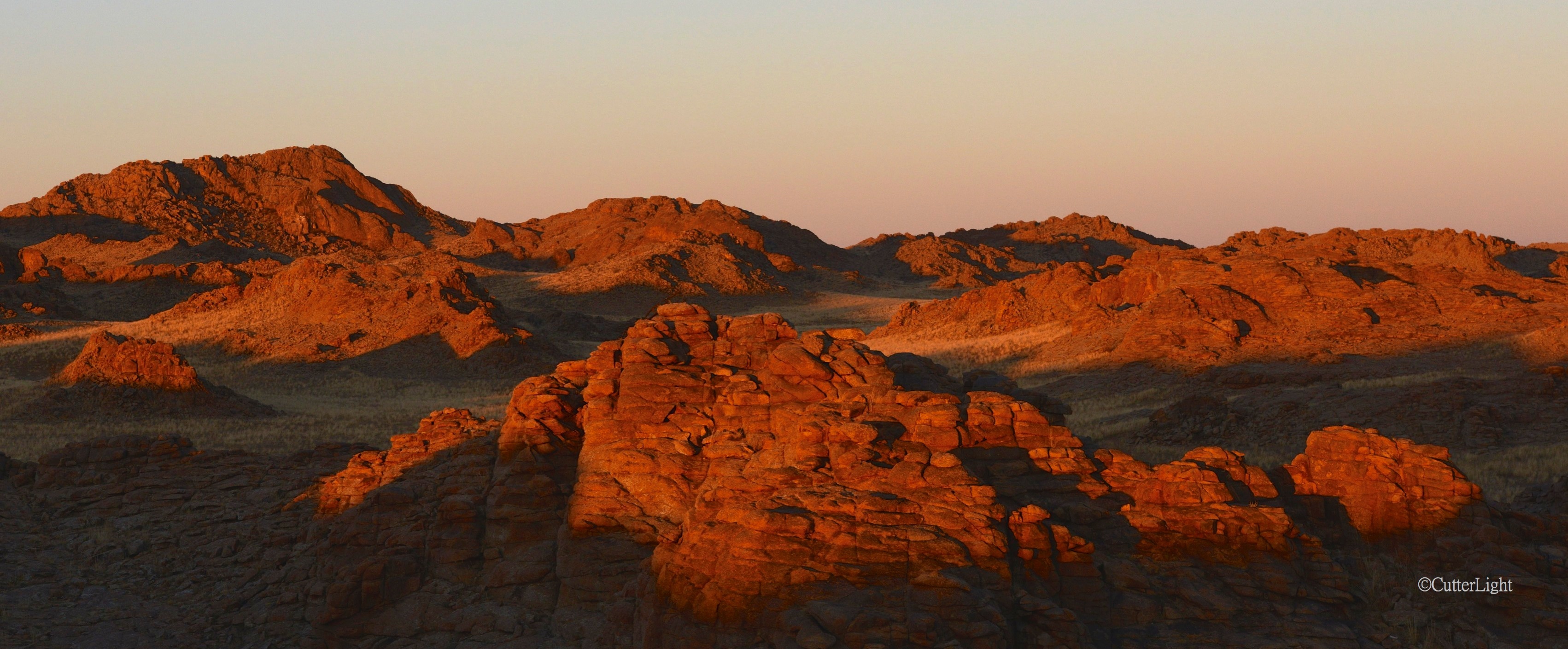
red rocks at sunset n

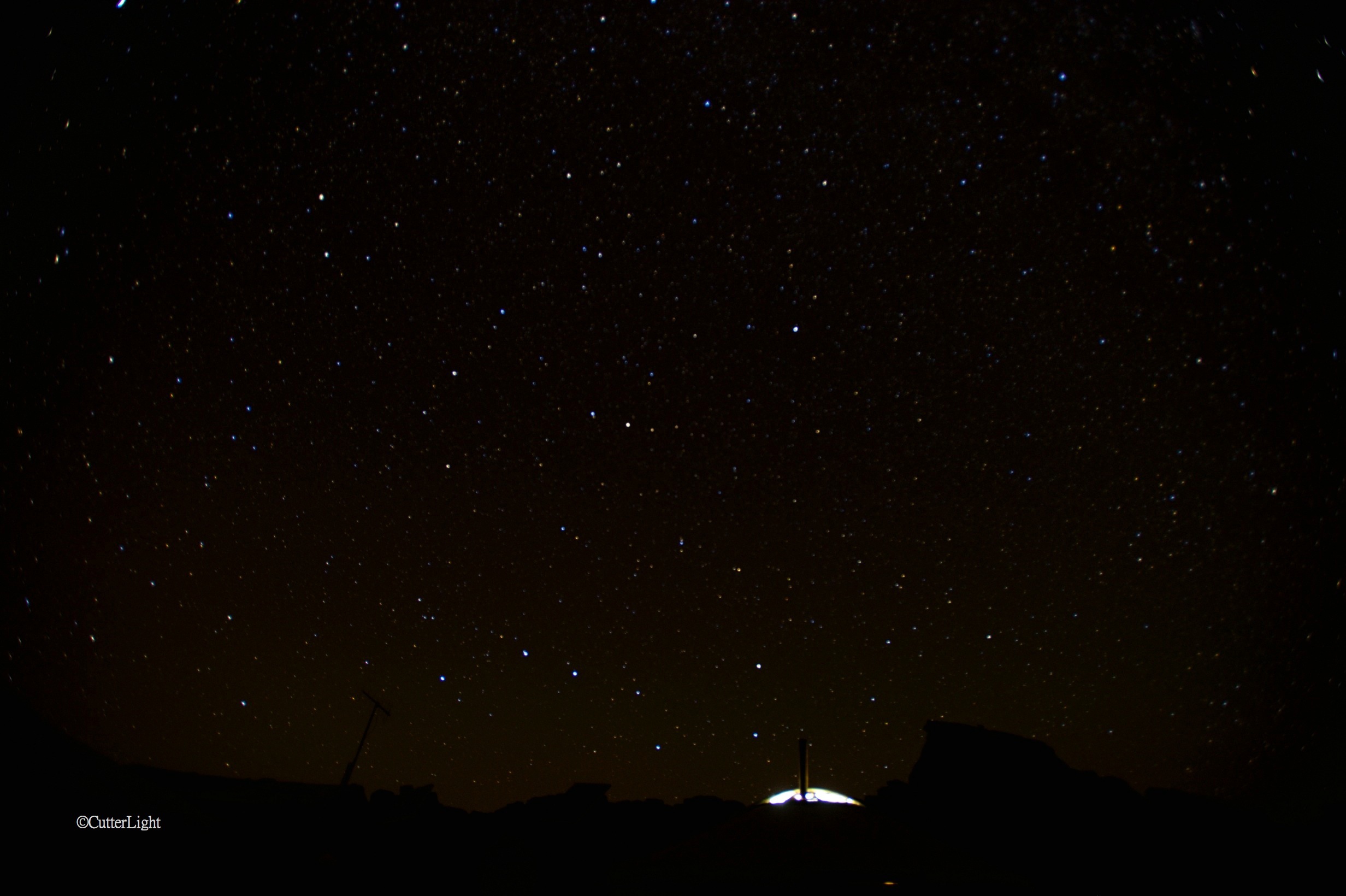
Sunset on another day in the cold, spare paradise we were discovering. Below, the night sky.

big dipper over ger n

Dipper scooping out the horizon… dome of the felt-covered ger glowing white on the sky… Fire inside against the chill of the night… Straight above, the wash of the Milky Way… 

Next: The Middle Gobi Desert: Life in a Mongolian ger.

Coming soon: Raptors, Gazelles, Ibex, Picas and a Pit Viper