Portabella Cap Stuffed with Yelloweye Rockfish

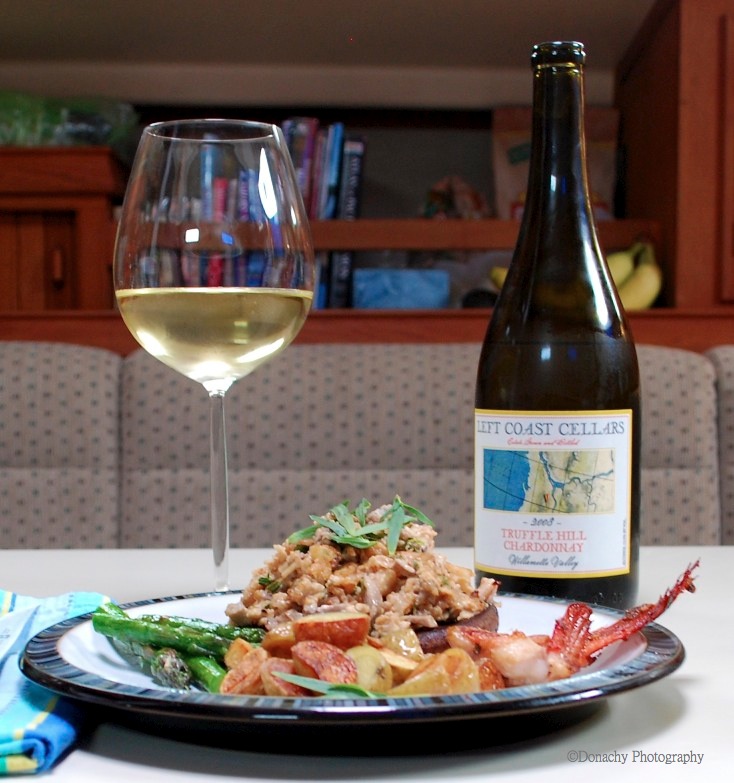
This summer’s fishing has brought us riches of our one of our favorite species, Sebastes ruberrimus, yelloweye rockfish. The collar meat of yelloweye, especially the smaller two to five pound fish, has a lobster-like texture and taste that we’ve enjoyed experimenting with and have even served as one would lobster with drawn butter. In this creation, we combined yelloweye with another favorite, Portabella mushroom caps, and paired it with a Willamette Valley Chardonnay for one of the easiest and best meals of the summer.

Ingredients for two servings:

  • ½ pound collar meat from yelloweye rockfish, chopped into small pieces. (Substitute similar fish such as red snapper, red porgy, striped bass or walleye)
  • 2 portabella mushroom caps, stems removed
  • 2 portabella mushroom stems (from above), chopped coarse
  • egg whites from 2 eggs
  • 2 or 3 cloves garlic, chopped fine, divided into equal parts
  • ½ cup rice crackers (sesame flavor is good) crumbled fairly fine
  • 2 tsp soy sauce, separated into 1 tsp each
  • 1 tbsp grated parmesan cheese
  • 2 tsp finely chopped tarragon
  • freshly ground black pepper
  • 2 tablespoons sherry
  • olive oil

Directions:

  1. Add enough olive oil to cover the bottom of a frying pan large enough to hold the 2 mushroom caps and heat over medium low heat.
  2. Add the mushrooms, gill side up, and cook for about 5 minutes.
  3. Add 1 tsp soy sauce and half the garlic. Turn the caps and move around so the gills absorb the soy sauce. Cook until mushroom is tender.
  4. Meanwhile, combine yelloweye meat, crackers, parmesan, tarragon, egg whites, chopped portabella stems, a healthy dollop of olive oil, a few grinds of pepper and the remaining garlic and soy sauce in a bowl, mixing ingredients together.
  5. Heat a frying pan over medium-high to high heat (you want enough heat to drive off moisture), add olive oil to cover the bottom, and add the yelloweye mixture, stirring frequently for about two minutes. Add sherry and continue cooking until browned, stirring frequently. Avoid overcooking.
  6. Place cooked yelloweye mixture on sautéed mushroom caps, garnish with a few tarragon leaves, (or, nori, or, better still, a shiso leaf, if available)

We served this dish with home fried potatoes, asparagus sautéed in butter and lemon, and a creamy Chardonnay with touch of oak, toasted almonds, and hints of fall fruit.

Eagle in Fog, Fishing

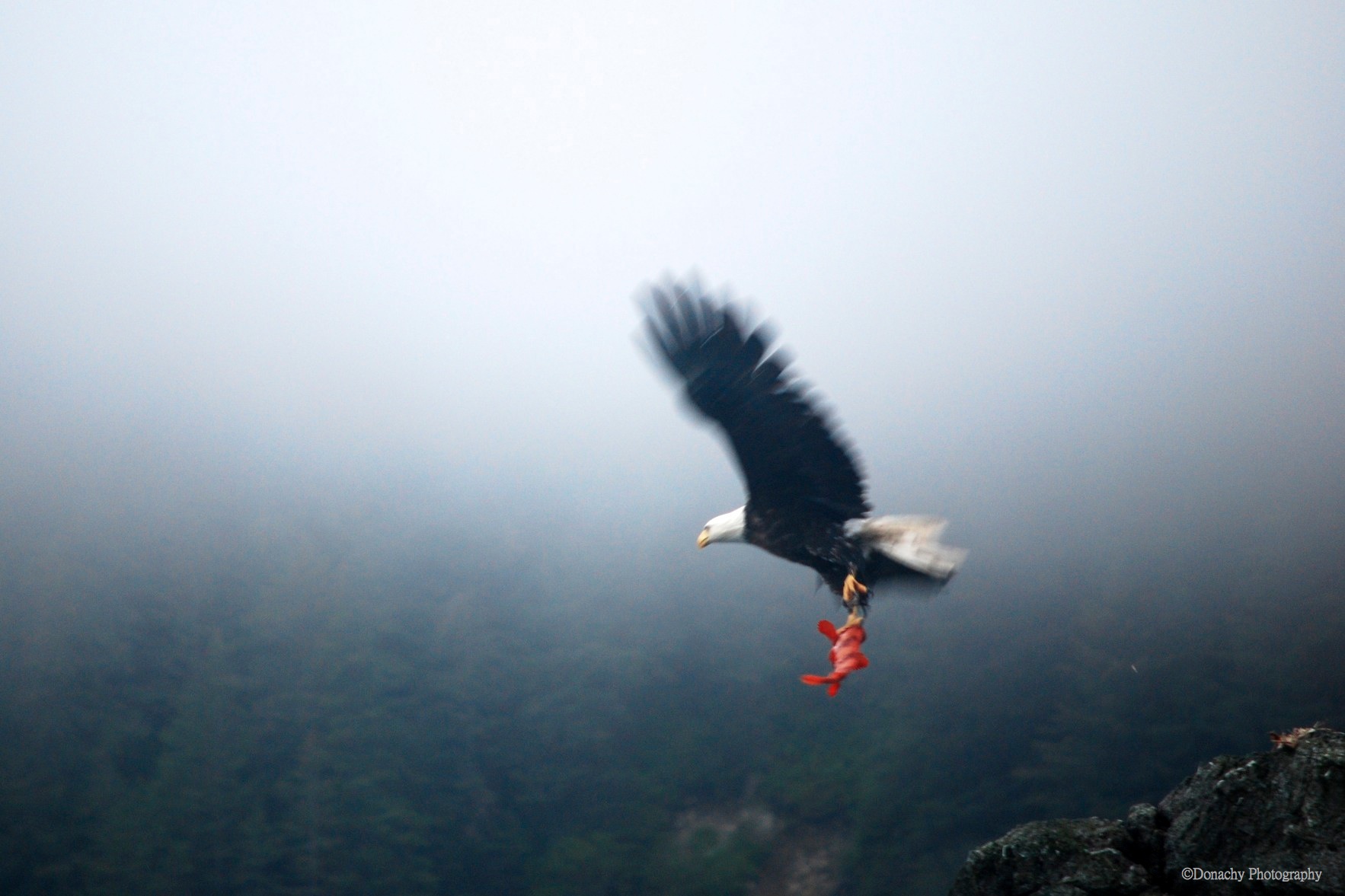
The fog was so dense we were apprehensive about even being out on the water. Besides, the fishing was slow. We’d just come through a large group of Orcas, (see Orcas Near Resurrection Bay )and, surmising that they were feeding on salmon, we figured the fish had to be there. But after an hour or so of drifting and not catching…

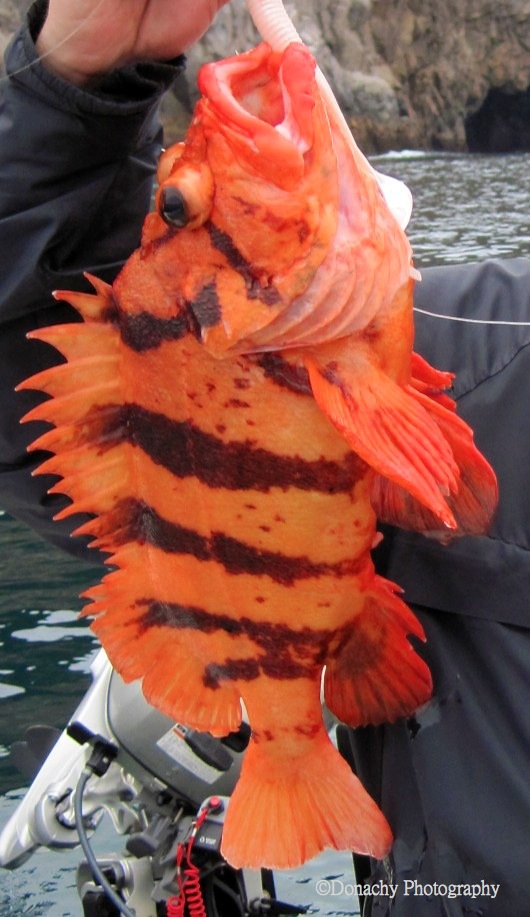
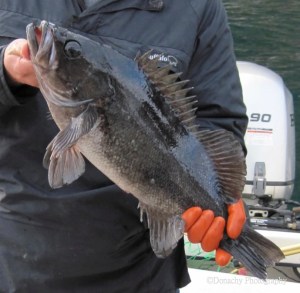
We decided to take a break from mooching for salmon and drop jigs to the bottom for rockfish. Barbra didn’t waste any time putting a fat five-pound black rockfish in the cooler, but that turned out to be the extent of our success. A brilliantly marked orange and black tiger rockfish hit my metal jig. The fish was small and we had been fishing shallow enough that I thought it would survive a release, so I let it go.

The tiger darted for the bottom, but a few moments later appeared on the surface several feet from our boat. That’s when an eagle that had been watching us lifted from its rocky perch and swooped in. You can tell from the photo above that he’s done this before; notice the tell-tale bones of another rockfish.

The Gentleman Angler

Before we moved to Alaska, we’d never seen fog flowing down mountains. I’m sure it happens elsewhere… This was one of those days of sunshine and patchy fog. Fog encircling the horizon. Fog pouring like a river through mountain gaps on Resurrection Bay. 

I like foggy days. Fog means you can start late and not miss the bite. When it’s foggy, sometimes, big things happen late in the day.

By the time Barbra and I got our C-Dory fueled up and heading out into the bay, it was 10:30 A.M. Most of the fleet – both the charters and recreational boats – had long since left the docks. There was a time when I would have been with them – when I had to be on the water early. Dawn. Before dawn. Early early. Trout streams in Pennsylvania, striper rivers in South Carolina, sea bass beaches in Japan….

Most days, the early morning bite is the best.

Fog changes that.

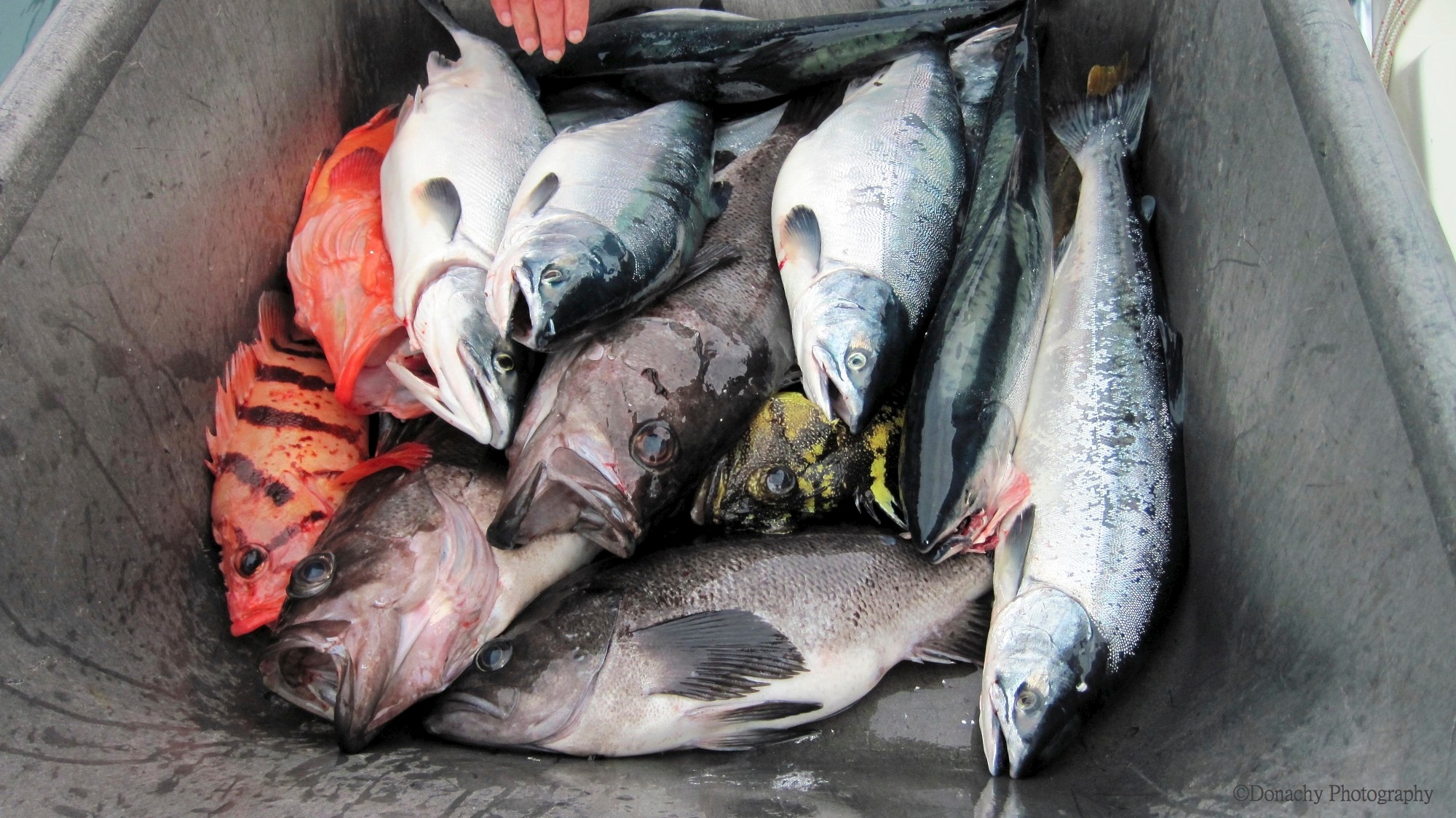
Laid out on the dock are six silver salmon, eight rockfish, a couple of greenling, three small halibut, and a 35-pound lingcod. A couple of the salmon and the halibut didn’t make it into this photo. All of the fish were filleted, vacuum-packed and flash-frozen, ready to travel with us to Point Hope. I asked Barbra to name her favorite on the dinner table. “The variety,” she answered, without missing a beat. We didn’t get up early for these fish, and we didn’t run far.

We could get up earlier. We could run further. We could catch more fish and larger fish.

We know that.

At some point in my life, numbers and size stopped mattering so much. I still like to fish. But most of the time, most days, the fish that interest me the most are the ones that are still biting after I’ve had a good night’s sleep, breakfast, a leisurely mug of coffee (not in a to-go mug, but in my favorite mug at my breakfast table) and have read the news.

“We’re gentleman anglers,” my older friend and mentor Bill Kodrich explained to me. Forty years ago, we were in a cafe, me with a slice of blueberry pie, Bill with a slice of apple pie and a cup of coffee. It was about ten in the morning. We were headed for Spring Creek. I’d never been. I was eager to go. I thought we should have been there four hours ago.

“We don’t need to hurry,” Bill said with a characteristic smile. “There’ll still be trout in the stream when we get there.”

I get it now.

Silvers and Pinks (And Otters)!

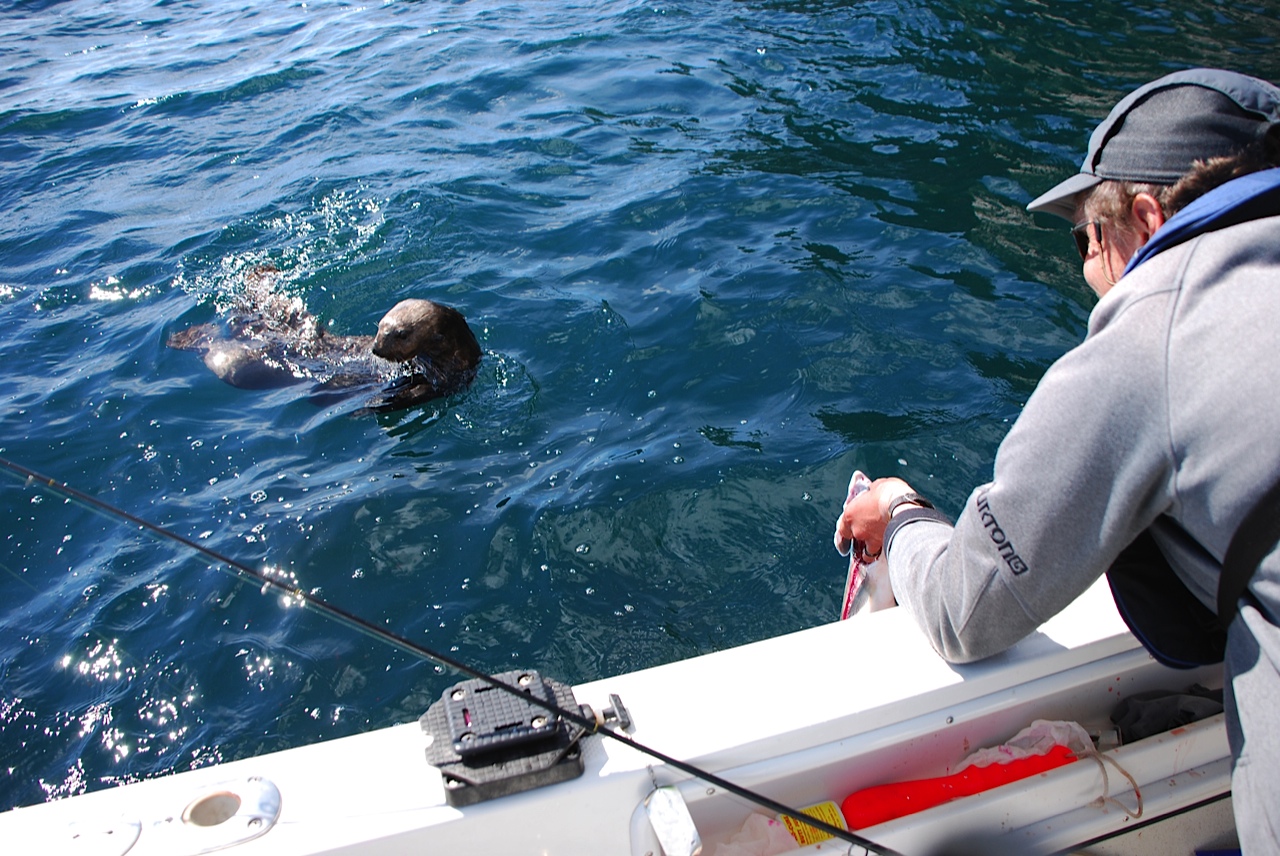
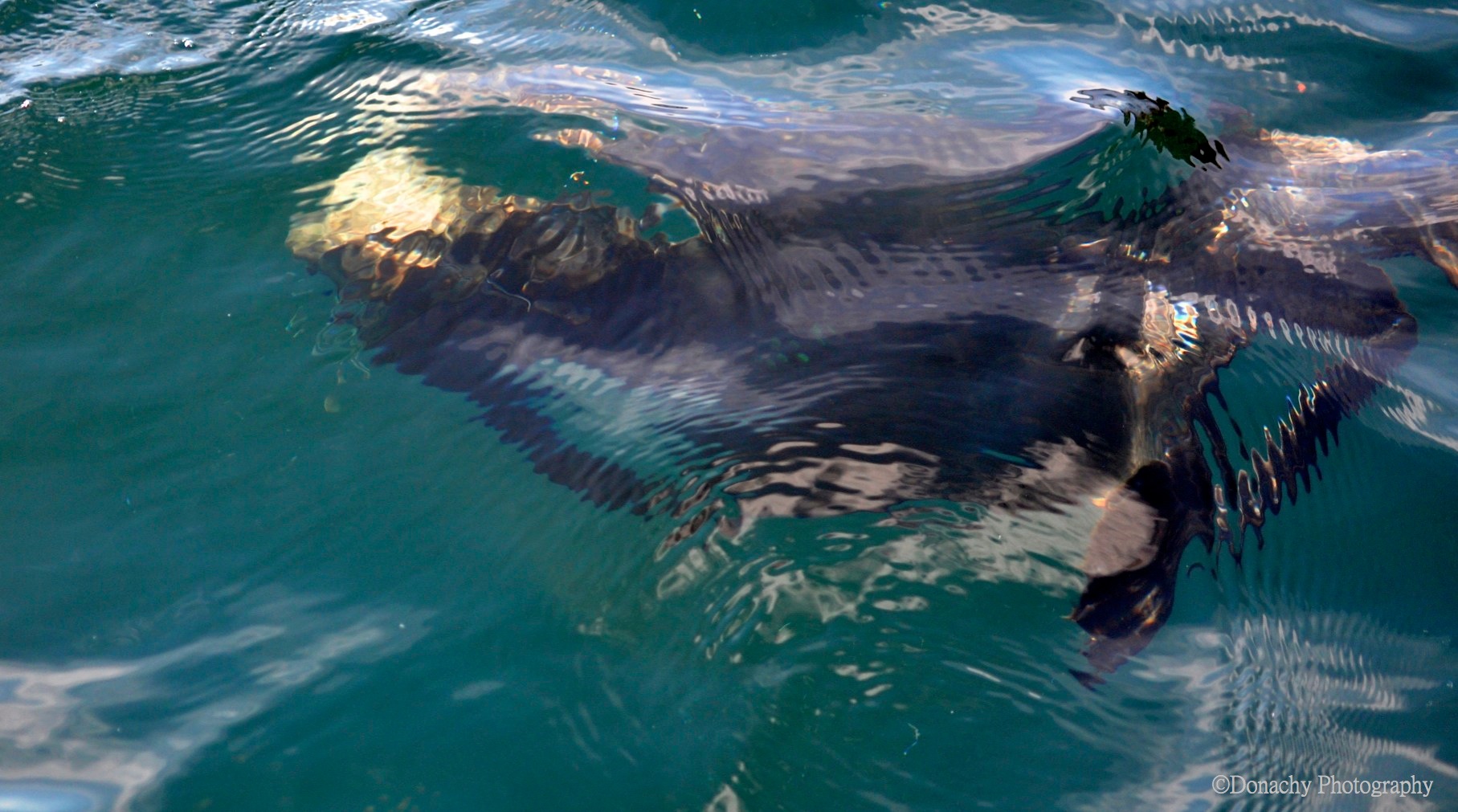
This curious fellow swam right up to our C-Dory, Gillie, to watch me rinse off a salmon Barbra had just caught.

Alaska. Every trip out on the water is a reminder that you could live here several lifetimes and never see it all. While sea otters are fairly common along the southern and central Alaskan coastline, we’ve never have one swim up to the boat. (Although, there were a trio that used to follow us as we walked the docks in Cordova.) This guy seemed genuinely curious – and maybe hopeful of a handout – as I rinsed off a Coho before putting it in the fish box on a recent excursion to Rugged Island in Resurrection Bay, near Seward. Meanwhile, floating on her back with a pup on her stomach, a mother otter watched us a little more guardedly and from a distance.

Fishing partner Bixler McClure got this shot of the otter coming over to investigate the boat. 

On any given sailing or boating trip out on the bay, you’re likely to encounter harbor porpoises, Dall porpoises, Orcas, whales, eagles, thousands of sea birds, leaping salmon, seals, sea lions and every once in a while you might spot the fin of a seven-foot salmon shark (they look very much like small great white sharks) cutting through the water. Bears come down to the beaches, and on rare occasions a wolverine might be glimpsed.

And, of course, there are the fish. Resurrection Bay lies between green-shouldered, snow-capped mountains – a dramatic backdrop. It extends over 10 miles before meeting the Alaska Gulf, and on many days the waters are nearly glass smooth, rippled only by a gentle breeze. On days such as these, the fishing is truly pleasant.
When the silvers (Coho salmon) show up – usually the run is in full swing by mid-July – the fishing is excellent, with six-salmon limits the norm. Skilled (or lucky) anglers often mix in a king or two, and after you’ve got salmon in the fish box you can switch tactics and target rockfish and halibut. There are bigger rockfish and halibut out in the Gulf – and more of them -, but if you stay with it you can find fish in the bay and you don’t have to deal with a long run.
The custom here is to take the fish out of your fish box and load them into a dock cart so you can wheel them up to one of the fish cleaning stations. Once we’ve filleted our fish, we take them to J-Dock to be vacuum packed and flash frozen. Fish cared for this way taste great even a year or more later.
 Below: Barbra got this watery photo of the otter swimming around Gillie.
Below: Three limits of salmon and a couple of rockfish, laid out, rinsed off and ready to take up to the cleaning station. This winter in Point Hope, every meal these fish provide will be a memory of our summer in Seward. These are the good old days.

Don’t Bogart that Collar, My Friend: Yelloweye Rockfish Melts

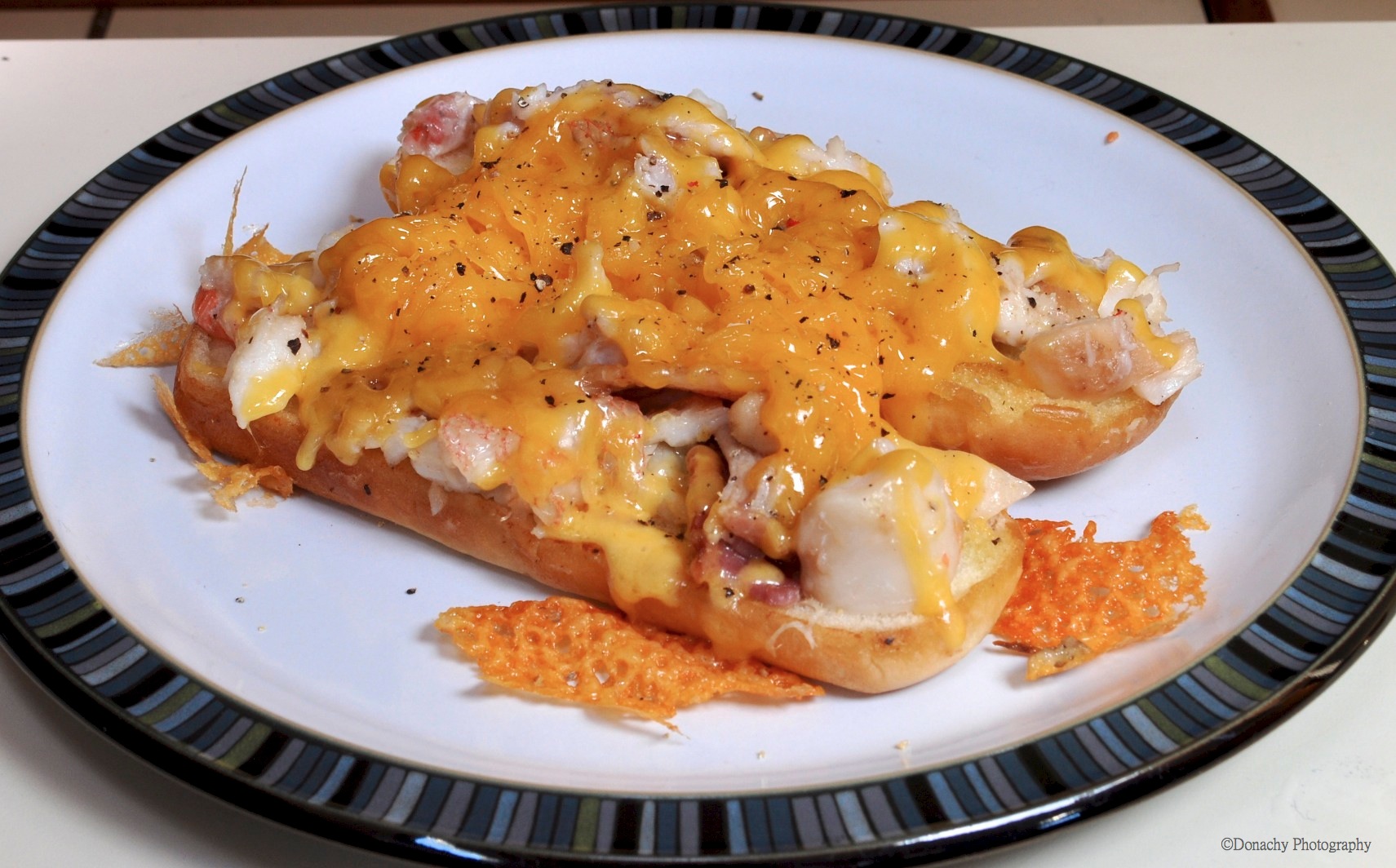
A pan-toasted sourdough bun, a chunky heap of yelloweye rockfish, and Tillamook cheddar cheese along with a couple of grinds each of sea salt and pepper are all you need for a gourmet lunch. The collar meat of yelloweye has a texture and flavor reminiscent of lobster and in similar fashion puffs up when you cook it.

While crab or shrimp are the classic seafoods in a melt, firm, white-meated fish is every bit as good. Enter yelloweye rockfish (Sebastes ruberrimus) collar meat. The large, firm chunks of meat are perfect on melts. Lingcod, halibut, grouper, snapper and freshwater walleye are good candidates for this dish as well, and while collar meat is an excellent choice, any boneless portion of fish works fine.

I like to start with pan-toasted sourdough bread. Heat some olive oil in a frying pan, place in the bread and move the down side around so it become coated with the oil. Cook over medium-lowor low heat till it’s toasted golden brown. Sometimes I add a little butter or some garlic to the olive oil.

Meanwhile, in a separate pan where you’ve also heated a little olive oil, place the fish and cook it over medium-low heat.

If you’ve timed things right, the first side of the bread is toasted and ready to flip at about the same time the seafood is cooked through.

Flip the bread to toast the other side, place the hot, cooked seafood on the toasted side of the bread, cover with shredded cheddar cheese, add a few grinds of pepper and some sea salt, then cover the pan with a lid and continue cooking over low heat till the cheddar is melted.

A few slices of avocado or fresh fruit on the side, a cold lager, iced tea or freshly-squeezed lemon-ade, and you’ve got a quick and easy lunch that will be relished as much by most kids as by gourmets.

Getting Wasted on Cheap Vodka

“Higher! Lift it higher!” Barbra strains to hoist a lingcod of about 30 pounds that fell to a jig in 100 feet of water. 

Six-thirty AM and virtually no wind. Gaff – check. Rods rigged and ready – check. Plenty of knife jigs, lead-heads, twister tails – check. A fifth of cheap vodka in a plastic bottle…

Check.

It was our friend Jerry’s last day in Seward, and he had just enough time for a quick out-and-back morning trip. We were looking for his first-ever halibut, along with whatever else might be interested in our jigs.

With Barbra at the helm of our C-Dory, cruising between 15 and 20 knots over calm seas it took us about an hour to get to a place we knew would offer a chance to pick up halibut without running all the way out into the Gulf of Alaska.

Sea birds, vast shoals of herring, porpoises, seals and off in the distance the misty spout of a whale – all against a dramatic Alaskan background of green-sloped, snow-shouldered mountains, glaciers and  rugged, rocky – make any trip out onto the bay a good one.

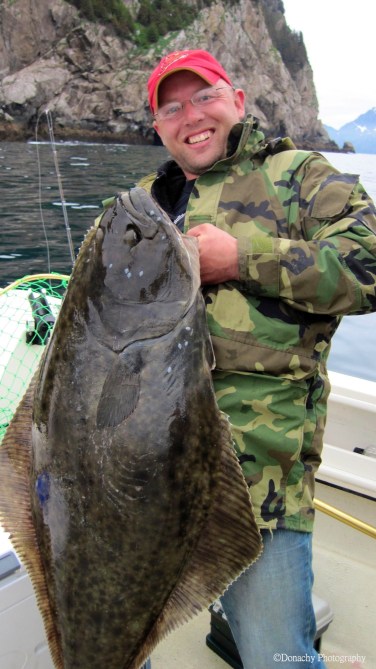
We got a few fish, too. Jerry nailed his first-ever halibut (not to mention a 50-pound-class lingcod – also a first), Barbra got her hands on her first 30-pound lingcod, and I hooked another nice halibut. In three hours of fishing, we caught maybe half-a-dozen lings, the halibut, Pacific cod, greenling, a brilliantly colored sculpin and over a dozen assorted rockfish including blacks, yelloweye, quillbacks, and a beautifully marked tiger.

We kept a yelloweye, the tiger (photo on the left), and a halibut.

Since the lings have to be released (the season doesn’t open till July 1, and it is permanently closed within Resurrection Bay), the only one we pulled out of the water for a quick photo was Barbra’s 30-pounder.

But she brought an even larger fish to the boat that day, and the way she caught it was a first for us – one that gave new meaning to the exclamation “Color!” fishermen often call out when they get the first glimpse of a fish coming up from the depths.

Laid across the mouth of one of the most beautifully marked lings we’ve ever seen – a 40 pounder with striking, amber-brown spots – was a bright orange yelloweye rockfish! The jig hook was planted firmly in the yelloweye’s mouth, but had no purchase on the lingcod. The ling’s jaws were simply clamped down on its meal – and  it was giving every bit as good of a fight  as if it had been securely hooked.

We released several nice black rockfish, such as this one Jerry caught.

I knew, based on reading about events like this, that as long as we didn’t raise the ling’s head above water, he’d continue to hold onto the rockfish like a dog playing tug-of-war with a rope. So what did I do? I grabbed Barbra’s leader and lifted the ling’s head above water, causing it to instantly drop the yelloweye and sink back into the depths. Oops…

We thus missed a chance for a really great photo – the bright orange of the yelloweye lying lengthwise across the jaws of a massive lingcod. Ahh… next time!

Interestingly enough, the yelloweye didn’t look particularly damaged. When we released it, it scurried straight for the bottom.

And the vodka?

Jerry and I had read about fishermen using cheap booze – not a .22 rifle, not a .410 shotgun, not a billy – cheap booze to subdue fish. Halibut are notorious for going crazy once they’re on the deck of a boat. They’ve been known to bust up tackle, wreck coolers and even injure their captors. But with a shot or two of alcohol on their gills…

When Jerry got his fish up on the surface, I gaffed it right behind the cheek and pulled its head up out of water. As soon as the fish opened its mouth, Jerry poured a couple shots of vodka down its hatch. The affect was amazing. The fish slumped like an overserved patron passing out on a bar, and we slid it over the gunwale without a struggle . Once we had it on the deck of the C-Dory, we splashed its gills with another shot of vodka for good measure and then hung it over the side of the boat to bleed it out.

Easiest time of it I’ve ever had with a halibut.

Even the little fish are cool: Barbra with a brilliantly marked Pacific sculpin that tried to eat a jig nearly as large as itself.

Dall’s Porpoises – Tasmanian Devils of the Northern Pacific

You might see a pod of them off in the distance, plowing up water in plumes of bubbles and spray, arcing, crossing each others’ paths, zipping like mad across the sea’s surface. As they speed toward your boat, you can almost hear the sound effects that accompany the Tasmanian Devil’s entrance in the Warner Brothers Cartoons. “Dall’s Porpoises!”

At an average length of 6 feet (1.8 m) and distinctively marked in black and white, they look like miniature versions of Orcas. And they love small boats. On any given outing here in Resurrection Bay, you can almost count on a group of these speedsters showing up around your bow. And since they seem to prefer to play around boats that are running fairly slowly, they don’t discriminate between powerboats and sailboats.

Dall’s porpoises frequently come right alongside small boats, seeming to use the vessels as objects to play around and to race against. Here a group of them are cutting back and forth beneath our C-Dory.

Strictly speaking, Dall’s porpoises don’t really “porpoise.” They quickly surface, throwing up rooster tails of spray as they do, take a quick breath and keep on swimming. Fast. Photographing them is a matter of guessing where they’ll show up next and snapping shots until they do.

Like other dolphins and porpoises, Dall’s have teeth. They feed on small fish, such as herring. We’ve noticed that when we’re trolling for salmon, right about the time we spot Dall’s, our rods often start arcing and our reels start singing – probably because both the porpoises and the salmon are keying on herring.

Although groups typically contain a handful of individuals, there are times when they gather by the thousands. They roam both nearshore and offshore waters in the Northern Pacific. Unfortunately, although they are still common, hunting (several countries take an average of 10’s of thousands annually – an unsustainable number) and fatal encounters with fishing nets are reducing their numbers.

A good place to read more is in the book Whales and other Marine Mammals of British Columbia and Alaska, by Tamara Eder.

Yelloweye Rockfish Benedict: Alaskan Breakfast of Champions

Freshly cracked pepper, sea salt and maybe a dash of soy sauce are all the seasoning freshly caught yelloweye want. Topped with hollandaise sauce and served on pan-toasted English muffins with sides of thick bacon, summer squash, ruby red grapefruit and ruby red mimosas, this is the kind of breakfast that makes you happy you’re a fisherman – or married to one! 

Like single malt Scotch and country drives in autumn, when it comes to table fare there are no bad rockfish. But within genus Sebastes, some cook up better than others. In Japan, small but tasty mebaru (Sebastes inermis) are among the most highly prized fish wherever they are found. Here in Alaska, yelloweye (Sebastes ruberrimus), which can grow to over 30 inches (80 centimeters) and 20 pounds (9 kilograms) are the stars. The sweet, delicately flavored meat puffs up slightly when cooked and flakes off in large, firm chunks for a taste and texture that is unparalleled among rockfish.

.

When preparing fillets this way, a good rule of thumb is nine minutes per one inch of thickness, thus a fillet one inch thick will be cooked for about nine minutes.

I pan toast English muffins (or any other toast) by using about three parts olive oil to one part butter (or no butter at all) over low to medium-low heat in a heavy frying pan. Heat the oil, add the bread, toast, flip and do the other side. This produces tasty toast, and you can do it in any kitchen, over a Coleman stove, or in a galley.

Yelloweye Rockfish Benedict

Ingredients:

  • 1 rockfish fillet about 3/4 lb to 1 lb, cut in half to serve 2 people. We generally prefer our fillets scaled, skin on. (Skin removed is fine.)
  • salt
  • pepper
  • soy sauce (optional)
  • olive oil
  • 3 egg yolks
  • 4 tbsp butter
  • 1 tbsp lemon juice
  • healthy pinch or two of cayenne pepper (or mildly fiery chili-based seasoning such as the Southwestern rubs made by Penzys or Dean & Deluca)
  • 2 English muffins, sliced in half, toasted

Directions:

For Hollandaise:

  1. Melt butter in a small pan over low heat.
  2. Set up a double boiler by putting some water in a pot and bring it to boil. In a smaller pot, place egg yolks and lemon juice. Place this smaller pan in the larger pot, but not in the water. The steam will heat the smaller pot.
  3. Vigorously whisk the egg and lemon mixture until it increases in volume.
  4. Slowly drizzle the melted butter into the whisked egg mixture, add a pinch of slat, and continue to whisk until everything is blended.
  5. Set aside. This mixture can be warmed again, if necessary. If it’s too thick, whisk in a few drops of water. Too thin, cook more, being sure to continue whisking/stirring.

To cook the rockfish:

  1. Rinse the fillets, pat dry with paper towels, and place on a cutting board, skin side down. Add freshly cracked pepper and sea salt and set aside.
  2. In a skillet large enough to hold the fillets so that they don’t touch, place enough olive oil to liberally cover the bottom of the pan and heat over medium-low heat.
  3. When the oil is hot enough to make the fish sizzle, add the fillets skin side down. Cook for 5 minutes.
  4. Turn the fillets and sprinkle with salt and freshly cracked pepper. Add about 1/2 tablespoon of soy sauce (optional) and continue cooking for 4 minutes.

To serve:

Place toasted English muffins on plates, place the fillets on the muffins, and spoon on the Hollandaise. Sprinkle on a dusting of cayenne pepper or a similarly fiery pepper-based rub. Serve with seasonal vegetables.  We enjoyed this meal with mimosas made with freshly-squeezed ruby red grapefruit.

Bacon-Wrapped Smelts (Hooligans, Eulachons or Candlefish)

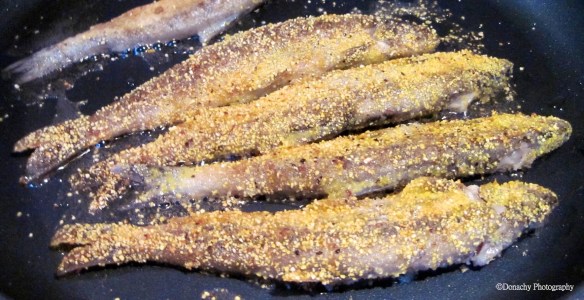
Freshly caught smelt prepared two ways: In the foreground, the fish was rolled in polenta. The smelt in back was dusted in seasoned flour. The fish were pan fried, wrapped in bacon and placed on whole leaves of Romain lettuce to be eaten from head to tail, bones and all. A sprig of asparagus and a few dollops of bright orange flying fish roe (tobiko) finishes the lettuce taco.

As I write this, one of the small rivers flowing into Resurrection Bay is jammed full of smelt. Specifically Thaleichthys pacificus, commonly referred to as hooligans. The AFS (American Fisheries Society) has settled on the name eulachon (pronounced you-luh-chawn), from the Chinook Indian name for the fish. Early west coast explorers and settlers called them candlefish because the spawning fish are so full of fat (about 15% of body weight) that when dried, they can be lit and will burn like a candle.

In the foreground: Polenta is especially coarse cornmeal. Seasoned with salt and pepper, rolling smelt in polenta gives these soft-fleshed fish a nice crunch when pan friend. In the back: another way to prepare smelt for the frying pan is by dropping them into a Ziplock bag containing seasoned flour and giving them a few shakes. Tarragon, fennel, marjoram and salt and pepper are a good start when seasoning these fish. Tongs make this a neat job. Note the asparagus in the pan on the stove.

The meat and bones of eulachons are quite soft. So soft, in fact, that when pan fried, the bones are barely noticeable. Their flavor is wonderful, but they definitely benefit from the addition of some crunch.

When the smelt are running in a river with a healthy population, getting enough for a meal or two is easy. On large rivers, a long-handled net might be necessary. But on this river, the fish were thick and close to shore. Two scoops of the net, and we had all the fish we needed.

Like their relatives, the salmon, eulachon are anadromous. They spend most of their life in the ocean, feeding on plankton, and then return to their natal streams and rivers to spawn, after which they die. Males arrive first and comprise virtually all the fish in the early part of the run. Later the females show up. Ideally, it’s the females you want, as a fresh fish laden with ripe eggs is a delicacy.

The males are quite good, too. In either case, cleaning these small fish (they average about eight inches/20 centimeters) is a simple matter of rinsing them in clean, cold water. There is no need to gill, gut or scale them.

A seemingly endless school of eulachons makes its way up an Alaskan river.

(Almost) Drowning Barbra: Six Years of Bliss On and Off (and in) the Water

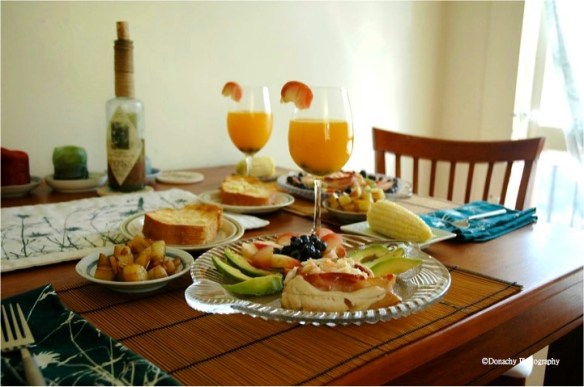
Astoria Brunch: Freshly caught greenling fillets wrapped around local bay shrimp and Dungeness crab in a mixture of lemon, olive oil, butter, garlic and tarragon, topped with a thick slice of applewood-smoked bacon and broiled. The corn, donut peaches and blueberries were purchased that morning at the Sunday Market. Pan-fried potatoes, avocado, toasted French bread, and mimosas garnished with blueberries and slices of perfectly ripe donut peach rounded out the meal. Greenling is a wonderful fish, comparable to sole. There’s a story behind the greenling.

Tomorrow marks the sixth anniversary of my first date with Barbra. We met on Match.com at a time in our life when we were each comfortable with who we were and knew what we wanted and did not want in a relationship. In our experience, those three prerequisites allow one to be perfectly honest when using Match.com, which is the key to making it work.

After several weeks of voluminous email correspondence and nearly daily phone conversations, all of which had gone swimmingly well, we decided to meet. At the time, I was living in Astoria, Oregon. Barbra was living in Sacramento, California. Spring break was coming up and I was planning a trip to San Francisco to hang out with a couple of buddies from my navy days. I’d be passing through Sacramento. It was perfect.

Our plan was to meet at Barbra’s house and from there to go downtown for lunch. After lunch, Barbra would give me a quick tour of Sacramento. The whole date was supposed to last about two hours.

So much for plans…

Nine hours, two delicious meals, and the long version of a walking tour of the city later, we reluctantly said our goodbyes. We were already making plans for a second date a few days later when I’d be on my way back to Astoria.

To say that our first date went well is an understatement. At every turn of conversation, we uncovered yet another point of compatibility. Barbra reminds me that I was too shy to hold her hand at first. I remind her that I could tell right away we were going to have lots and lots of time together, and there didn’t seem to be a need to rush anything.

—————————-

We didn’t go fishing the very first time Barbra visited Astoria. I think it was the second time. She’d never been fishing before, but as an avid outdoorswoman, she was eager to give it a try. So early (early early) one summer morning, I put gear for two in my Toyota Tacoma and we drove in the pre-dawn to Ecola State Park, just north of Cannon Beach. The fishing involved a descent down a steep trail to the beach, and from there a hike out to some rocks exposed at low tide where I could always count on picking up some nice surfperch and greenling.

It was an absolutely gorgeous morning. Barbra was thrilled to see all the life in the tide pools on the hike out – purple and orange ocher sea stars, bright green flower-like anemones, small fish, dark purple sea urchins, and even a large, red, many-armed sun star. Getting to the fishing spot involved a scramble over seaweed covered, mussel encrusted rocks, which Barbra handled with no problem.

True to form, the fish were there. Barbra’s first fish ever was a beautifully colored 15” striped surfperch. In the next couple of hours, we caught enough striped surfperch, red tail surfperch and greenling for several meals. Seagulls, oyster catchers and other seabirds along with seals and sea lions added to the atmosphere. Barbra had a blast, and I couldn’t have been happier. It was time to go.

It was then that I realized I’d committed the cardinal error of rock fishing. We’d stayed too long. The cold tide was rushing in, pouring in like a river through the very channels that made fishing in this locale so productive. We were cut off from the beach, and our rock was disappearing fast.

Still, I thought that if we moved quickly, we could wade to the beach before the water rose any higher. With our gear packed up tightly, we made our way waist-high into the rising water. Suddenly we were trapped. The water ahead of us was too deep to go forward. Behind us, too, the water had deepened. I knew that the moment I lifted my foot, I’d be swept off my feet.

I turned to Barbra. “We’re going to lose our footing. When the water knocks you over, let it put you on your back and just float with it. Don’t fight it. We’ll be OK.”

A second later, we were looking up at blue sky, backs down in the cold Pacific, rapidly being swept out toward open sea. I knew from experience fishing river mouths that at some point the current would slacken and that as it did, with any luck there would be a sandbar shallow enough for us to regain our footing.

I reached toward Barbra. “Give me your hand.” Barbra’s eyes were as big as half-dollars. She said nothing. She held out her hand, I grabbed it, and we floated on our backs, heads pointed toward the sea. As we floated, I let my left leg hang down, probing for bottom. If this plan failed, there were a couple of exposed rocks further out we might be washed into. Beyond that, we’d hit the longshore current, too far from land. Hypothermia would set in…

Suddenly my left sneaker made a familiar scrape against sand. The bar sloped upwards rapidly, just as it should have.

“I’m on sand! Put your feet down.” I raised myself, and helped Barbra to her feet.

We’d been carried out about 50 yards. With the tide still flooding there were no guarantees. Holding Barbra’s hand, I began gingerly following the curving lip of the sandbar back toward shore.

When we finally made it to the beach, we turned around and looked out across the swirling water. The rocks we’d been fishing from were completely gone. The current was still running, but not nearly as hard as it had been. We looked at each other and smiled. “Thought we might end up in Japan for a while there,” I said sheepishly. “Geez, I’m sorry about that.”

“I knew you’d get us out of it,” Barbra replied.

Climbing up the steep trail was a slog in our wet clothing. At the truck we took inventory. Other than a thoroughly cold soaking, we were fine. Even Barbra’s camera equipment came out of the ordeal unscathed. We climbed in, I turned on the engine, blasted the heat, and we headed home.

The day was still young. Back at my apartment, I took a hot shower. While Barbra got cleaned up, I walked the three blocks down to the Sunday Market and got us a couple of coffees from The Rusty Mug and blueberries, donut peaches and some salt-and-pepper corn from market vendors. Coming up the stairs to my apartment, I could hear a CD Barbra had chosen from my collection.

It was a Johnny Cash album…

What a woman!