Birds of Chignik: Black Turnstone

black turnstone Chignik Lagoon

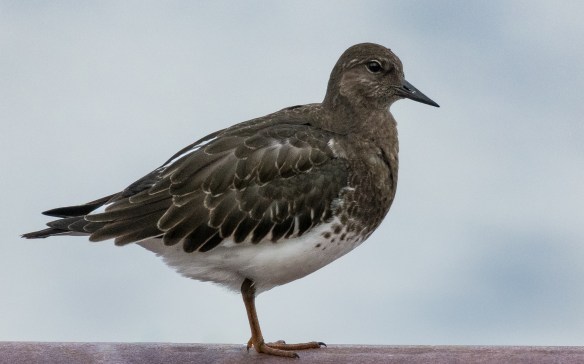
Note the sharp, well-defined toenails on this Black Turnstone. It shares this adaptive characteristic in common with Ruddy Turnstones, enabling the two species to easily walk on the slick, seaweed covered rocks they frequent. (Chignik Lagoon, July 27, 2020)

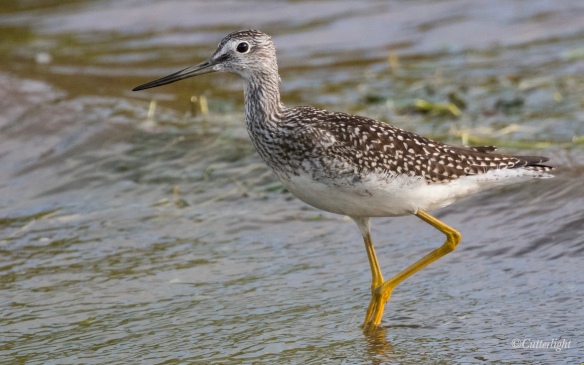
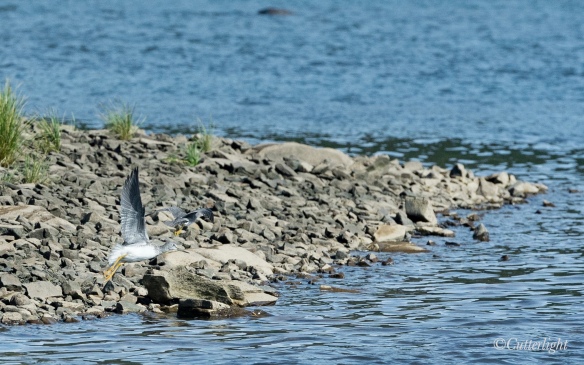
On the same day I photographed Ruddy Turnstones at Chignik Lagoon, I encountered their somewhat chubbier cousins, Black Turnstones. When we first arrived, there appeared to be a small flock of the Blacks, but they took wing as we beached our scow. I found the lone specimen in the above photo hanging out near a pair of Wandering Tattlers.

These stout, robin-sized birds get their name from the manner in which they use their chisel-like bill to turn over kelp, stones and other debris in search of invertebrates and fish eggs. They even use their bill as a plow, moving through washed up seaweed and dining on whatever is stirred up or uncovered. Black Turnstones also use their bills to hammer at and pry open barnacles and bivalves.

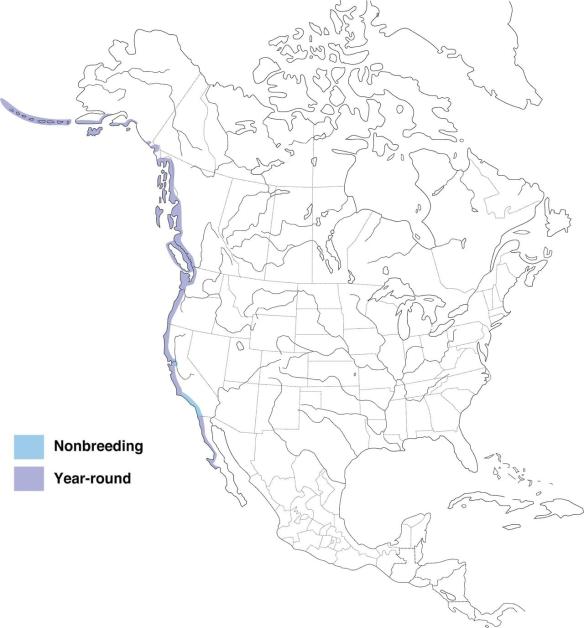
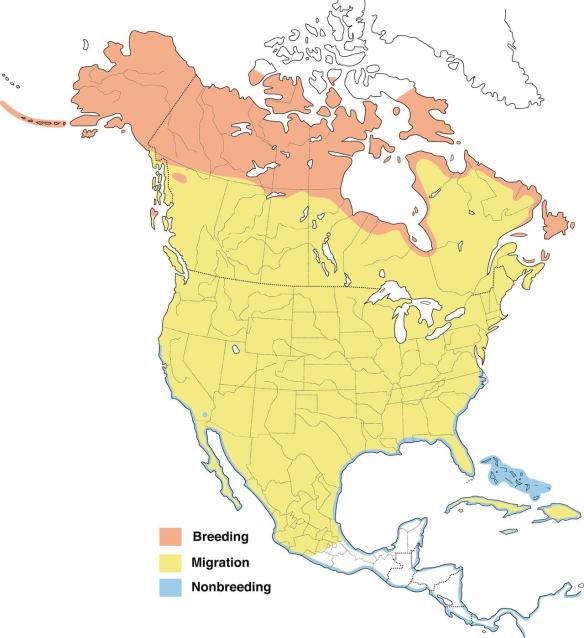
Because they are Pacific Coast residents rather than the long-distance migrants their Ruddy relatives are, they can be seen throughout the year on rocky coasts from the more southerly  parts of Alaska as far south as Mexico’s Baja Peninsula.
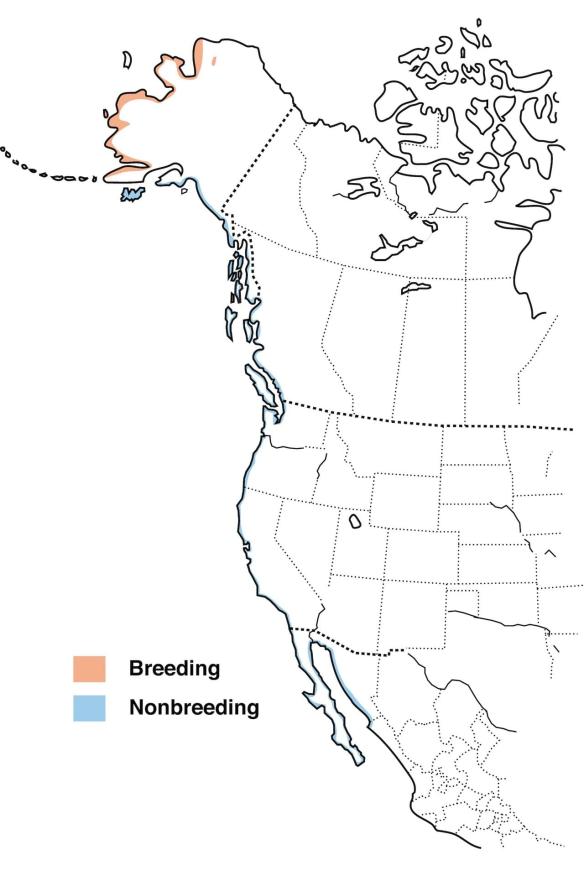
Black Turnstone Range Map: with permission from The Cornell Lab of Ornithology, Birds of the World

Black Turnstone Arenaria melanocephala
Order: Charadriiformes
ArenariaLatin arenarius. arena = sand; inhabiting sand
melanocephala: Ancient Greek melas = black +  kephale = head; black headed

Status at Chignik Lake: Occasional as a post-breeding migrant along the shorelines of Chignik Lagoon and Chignik Bay

David Narver, Birds of the Chignik River Drainage, summers 1960-63: Occasional at Black Lake

Alaska Peninsula and Becharof National Wildlife Refuge Bird List, 2010:
Uncommon in Spring & Fall; Rare in Summer; Not reported in Winter

Aniakchak National Monument and Preserve Bird List: Present

Click here for the: Table of Contents and Complete List of Birds of Chignik Lake

© Photographs, images and text by Jack Donachy unless otherwise noted.

For a list of reference materials used in this project, see: Birds of Chignik Lake

Birds of Chignik: Black Oystercatcher – the Bill that Fits the Bill

black oystercatcher chignik bay

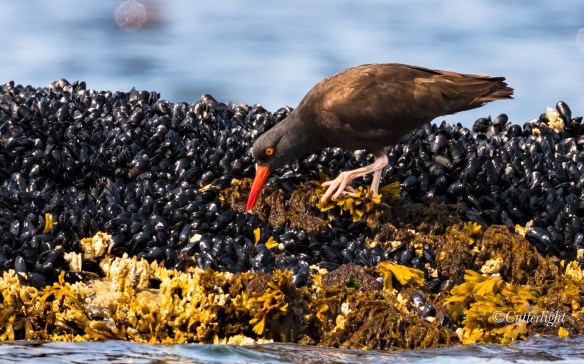
A Black Oystercatcher works an intertidal mussel shoal at the base of Eagle Rock in Chignik Bay. 

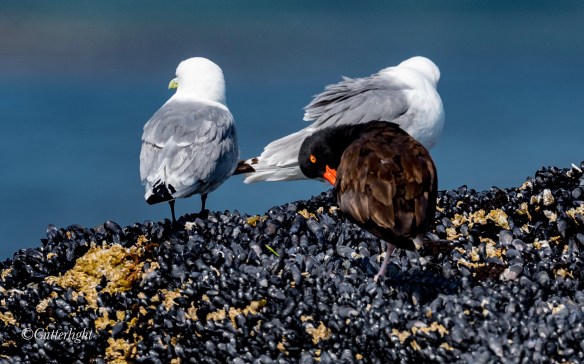
A sharp eye is likely to pick out the crimson of a Black Oystercatcher’s bill before the entire bird can be made out. Although, as can be seen in the above photo, their plumage has more brown that black in it, they tend to blend in well with the rocky, mussel-strewn habitat they prefer. There seldom seem to be many of these birds in any one place, but from the Aleutian Islands to Baja Mexico they are frequently seen in pairs, as single birds or as small family groups.  I’ve read that at times flocks of these striking birds can number in the dozens or even hundreds – no doubt an amazing sight. Look for oystercatchers especially on small rocky islands or sloping shorelines, especially at low tide when barnacle and shellfish colonies are exposed.

black oystercatcher with kittiwakes

At 17.5 inches from bill to toe, the oystercatcher’s overall size compares with that of these Black-legged Kittiwakes, which measure about 17 inches.

Oystercatchers tend to be wary, taking flight with shrill yelps and piping whistles, so it pays to have a long lens or a good pair of binoculars when watching them forage. Contrary to what their name implies, their diet is fairly eclectic and includes a variety of bivalves, chitons, crabs, sea urchins, worms and other invertebrates. At times they may also feed on sandy beaches and mudflats.

black oystercatcher foraging mussel bed

Doubtless there is all manner of deliciousness to be pried from this bed of blue mussels, and the Black Oystercatcher has the bill that fits the bill. Why the bright color? Thees matters usually have to with intraspecies identification and mating, with a nice bright bill and eye signifying health and good genes to a prospective partner.

Oystercatchers appear to mate for life. Females lay two or three eggs in a nest the male has casually scraped out above the tide line, usually on a small, rocky island. Though the young can walk soon after hatching, parents spend considerable time teaching them the ins and outs of foraging.

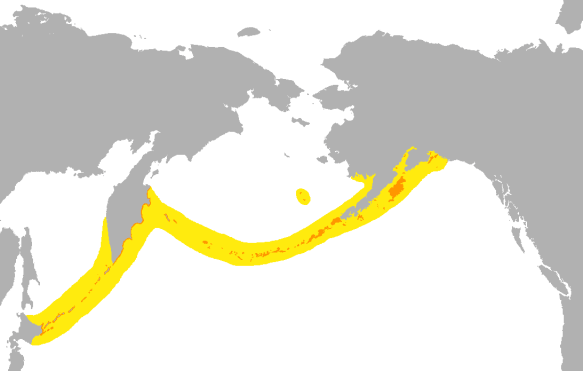
Black Oystercatcher Range Map: with permission from The Cornell Lab of Ornithology, Birds of the World

Black Oystercatcher Haematopus bachmani
Order: Charadriiformes
Haematopus: Greek haima = blood + pous = foot
bachmaniNamed by John James Audubon for his friend John Bachman

Status at Chignik Lake: This marine species is occasional along the shorelines of nearby Chignik Lagoon and Chignik Bay

David Narver, Birds of the Chignik River Drainage, summers 1960-63As this is a marine species, not reported

Alaska Peninsula and Becharof National Wildlife Refuge Bird List, 2010:
Uncommon in all seasons

Aniakchak National Monument and Preserve Bird List: Present

Table of Contents and Complete List of Birds of Chignik Lake

© Photographs, images and text by Jack Donachy unless otherwise noted.

For a list of reference materials used in this project, see: Birds of Chignik Lake
Birds of Chignik Lake: Semipalmated Plover

semipalmated plover alaska

Semipalmated Plover, male in his striking breeding plumage. The partial webbing between this bird’s toes is visible; it is this partial webbing from which the term “semipalmated” is derived. Denali Highway, Alaska

As I may have mentioned elsewhere, finally obtaining a small boat here on the Chignik opened up new worlds in terms of wildlife viewing in general, birding in particular, fishing and all around exploring. As to the birding, with the greater range the scow provided we immediately began cataloguing species new to us in the drainage, The little Semipalmated Plover, already a favorite from other birding ventures, was among the first of these new-to-us Chignik species.

semipalmated plover juvenile chignik river

Semipalmated Plover juveniles, Chignik River, July 24, 2020. These plovers typically occurred on river gravel bars and shorelines in mixed flocks of Western and Least Sandpipers

As we didn’t acquire our scow until July, there is still documentation to be done. The Semipalmateds we encountered appeared to all be juveniles. According to Herbert K. Job, writing in Birds of America*, this isn’t unusual. He reported flocks of nothing but young birds migrating into the Atlantic seaboard in September, a month or so after adults had arrived from their northern breeding grounds. At any rate, we took lots of photos, searched through them carefully on the large screen of our computer, and found no adults. This coming spring, we will begin early searching the various shorelines, river bars and rocky islands for signs of adult birds and breeding.

semipalmated plover nest denali highway alaska

If you didn’t know they were there, you’d probably miss them, but even when you feel certain a nest may be nearby, the eggs can be quite difficult to locate. The nest itself is a barely discernible depression lined with twigs and leaves. The precocial young will leave the nest upon hatching and although the parents will stay close, the little ones will find their own food. There may be nothing in the avian world quite so cute as the scurrying ping-pong ball of fluff a young shore peep resembles. Approximately four weeks after hatching, they’ll be able to fly. (Denali Highway, Alaska)

Semipalmated Plover Range Map: with permission from The Cornell Lab of Ornithology, Birds of the World

Semipalmated plover Charadrius semipalmatus
Order: Charadriiformes
CharadriusLatin derived from Greek kharadrios for a bird found in river valleys
semipalmatusLatin – semi = half + palmatus = palm – referring to this species’ partly webbed feet

Status at Chignik Lake: Occasional to Common in Summer; Status in Spring uncertain; Absent in Fall and Winter

David Narver, Birds of the Chignik River Drainage, summers 1960-63Occasional

Alaska Peninsula and Becharof National Wildlife Refuge Bird List, 2010:
Uncommon in Spring, Summer & Fall; Not Reported in Winter

Aniakchak National Monument and Preserve Bird List: Present

able of Contents and Complete List of Birds of Chignik Lake

© Photographs, images and text by Jack Donachy unless otherwise noted.

For a list of reference materials used in this project, see: Birds of Chignik Lake
Birds of Chignik: Double-crested Cormorant

Chignik Double-crested cormorant

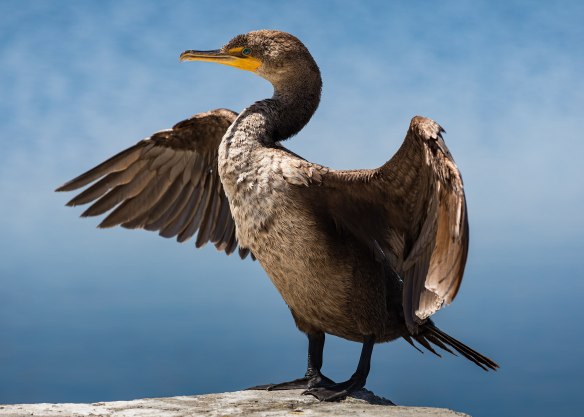
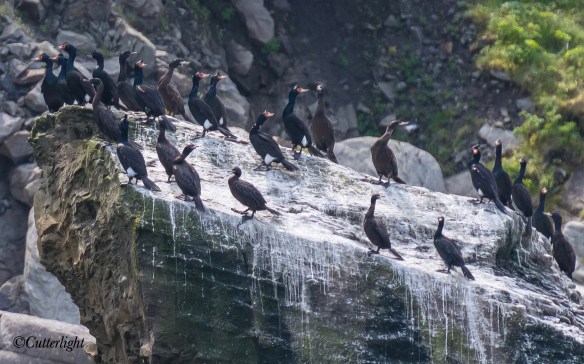
Next to Pelagic Cormorants (left), at first glance Double-cresteds are bulkier birds. The yellow lores and throat are diagnostic. As is also the case with Red-faced Cormorants, the coloration is due to bare skin, not plumage. Note, too, the Double-crested’s heavy, hooked bill.

From a distance, the Chignik’s three species of cormorants, like most cormorants worldwide, look pretty much the same: a gangly cross between a loon and a goose dressed in drab, brown-black plumage. But if you’re lucky enough to get near to a cormorant, you might find that they are actually quite striking.

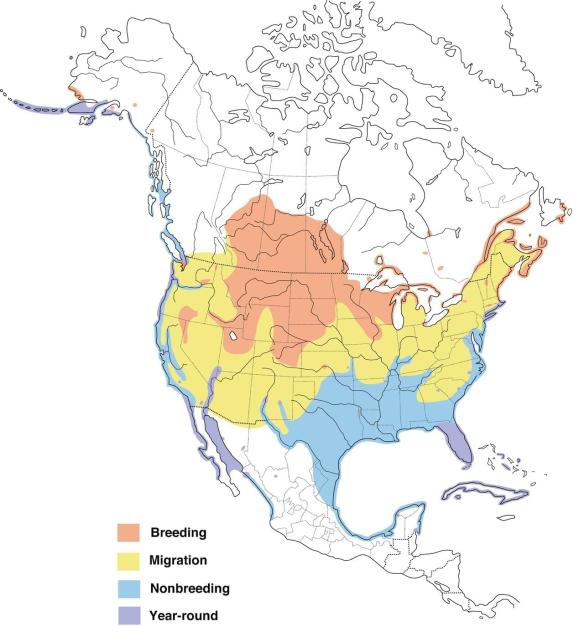
Like our other cormorants, Double-cresteds are primarily piscivorous. They are far and away the most wide-spread and common of North America’s cormorants, and unlike our other species, Double-cresteds frequently nest in trees. This could account for the fact that they are more frequently seen in fresh water than Red-faced or Pelagic cormorants, though they are still at home on ocean waters.

“Mike” Michael L. Baird’s photograph captures the double crest of this Double-crested Cormorant in breeding plumage. CC BY 2.0, https://commons.wikimedia.org/w/index.php?curid=1995289

In non-breeding plumage, look for the yellow-orange skin around the Double-crested’s face. Photograph  © Frank Schulenburg, CC BY-SA 4.0, https://commons.wikimedia.org/w/index.php?curid=79611808

From a distance, this Japanese Cormorant looked as black and nondescript as any cormorant, but a closer look revealed a pallet of subtle hues..

Double-crested Cormorant Range Map: with permission from The Cornell Lab of Ornithology, Birds of the World

Double Cormorant Phalacrocorax auritus
Order: Suliformes
PhalacrocoraxLatinized Ancient Greek = cormorant (from “bald” and “crow/raven”)
auritusLatin = eared (for its breeding plumage crests)

Status at Chignik Lake: Not observed in the freshwater drainage, but common in nearby coastal waters

David Narver, Birds of the Chignik River Drainage, summers 1960-63Not observed

Alaska Peninsula and Becharof National Wildlife Refuge Bird List, 2010:
Common in Summer; Uncommon in Spring & Fall; Rare in Winter

Aniakchak National Monument and Preserve Bird List: Present

Table of Contents for the Complete List of Birds of Chignik Lake

© Photographs, images and text by Jack Donachy unless otherwise noted.

Birds of Chignik: Red-faced Cormorant

Chignik red-faced cormorant

After a morning’s feeding, Red-faced Cormorants rest at a favorite roost near the outlet of Chignik Lagoon. 

Red-faced Cormorants are abundant in the sea near the villages of Chignik and Chignik Lagoon, and according to biologists their numbers appear to be increasing. They often roost and feed in mixed flocks alongside Pelagic and Double-crested Cormorants. Like other cormorants, they are primarily fish eaters, though they occasionally take crabs, shrimp and other marine invertebrates.

This beautifully colored Red-faced Cormorant was photographed by Lisa Hupp, USFWS, courtesy Wikipedia. The red face is actually bare skin which loses some of its color when the bird is not in breeding plumage.

Red-faced Cormorant Range Map: By Netzach, https://commons.wikimedia.org/w/index.php?curid=45316418

Red-faced Cormorant Phalacrocorax urile
Order: Suliformes
Phalacrocorax: Latinized Ancient Greek = cormorant
urile: ?

Status at Chignik Lake: Not observed in the freshwater drainage, but common in nearby coastal waters

David Narver, Birds of the Chignik River Drainage, summers 1960-63Not observed (This is a marine species.)

Alaska Peninsula and Becharof National Wildlife Refuge Bird List, 2010:
Common in Summer; Uncommon in Spring & Fall; Rare in Winter

Aniakchak National Monument and Preserve Bird List: Present

Table of Contents for the Complete List of Birds of Chignik Lake

© Photographs, images and text by Jack Donachy unless otherwise noted.

Birds of Chignik Lake: Water Dancer – the Fork-tailed Storm-Petrel

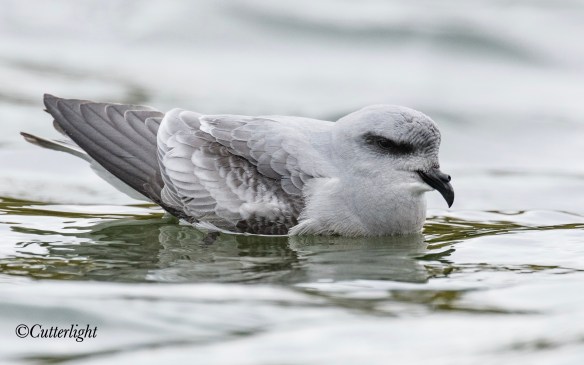
Truly akin to avian ballet dancers, Fork-tailed Storm Petrels patter across the water’s surface gleaning zooplankton and small fish as well as the oil from carcasses they might encounter.

The last of the huge winds that had been buffeting the peninsula were still putting heavy chop on the river as we surveyed the pool below the boat landing. These kinds of storms, often packing winds that would make the national news if they occurred elsewhere, can occur any time of year in the Chigniks. The very place name is, in fact, Alutiiq for “big winds.” Downriver towards the islands, shrill squawks drew our attention to a flock of small, grayish birds hovering, wheeling and diving. Some of them appeared to be running across the water’s surface.

Terns? I said to Barbra. Yeah. They must be some kind of tern. 

Even as I spoke, I knew what I was saying didn’t make sense. The Chignik’s Arctic Terns had long since fledged their young and migrated out. Besides, these birds didn’t really look like terns. Not like any I’d ever seen, anyway.

They’re not terns, Barbra replied. They can’t be terns. They’re cool. Look at them dance!

In that instant, it hit me. Petrels!

I’ve gotta get home and get my camera like, right now! I exclaimed. I’ve read about these! This might be my only chance to get them on the river! We hopped on our honda and sped the three-miles home over the hilly dirt and gravel road. I gathered up my tripod and the camera with the big lens attached, hurried into a pair of waders, and made haste back to the landing.

Fortunately the birds were still there. Better yet, they took little notice of me as I scurried down the shoreline and waded out into the river toward where they were foraging. There were perhaps 20 of these small, Purple-Martin-sized seabirds. The blue-gray cast of their plumage at times made them difficult to pick out against the blue-gray sky and river. These are going to be difficult, I thought to myself.

The birds would hover, descend, and then dance across the water. It very much put in mind a production of Swan Lake. Certainly it was one of the most beautiful foraging displays I’d ever witnessed. What little light was left in the cloud-covered late afternoon sky was going fast. But I stayed with it and eventually began making some decent photographs.

fork-tailed storm petrel

The foraging birds didn’t rest for but a blink. Storm-Petrels belong to a group of pelagic seabirds called Procellariiformes – tubenoses. The hollow atop the petrel’s beak aids in expelling excess salt.

I was lucky to encounter this species on the river. David Narver reported seeing this bird on the open seas just once on the Chignik, then too after a heavy storm.

Fork-tailed Storm-Petrel Range Map: with permission from The Cornell Lab of Ornithology, Birds of the World

Fork-tailed Storm Petrel Oceanodroma furcata
Order: Procellariiformes
Oceanodroma: from ancient Greek okeanos = ocean + dromos = runner
furcata: Latin meaning forked

Status at Chignik Lake: Rare in the freshwater drainage, but probably common in or near Alaska Gulf offshore ocean waters

David Narver, Birds of the Chignik River Drainage, summers 1960-63: One observation on Chignik Lake after a severe storm

Alaska Peninsula and Becharof National Wildlife Refuge Bird List, 2010:
Rare in Spring & Summer; Uncommon in Fall; Not Reported in Winter

Aniakchak National Monument and Preserve Bird List: Presence Documented

Table of Contents for the Complete List of Birds of Chignik Lake

© Photographs, images and text by Jack Donachy unless otherwise noted.

Birds of Chignik Lake: Glaucous-winged Gull – So… What’s Up with the Red Dot?

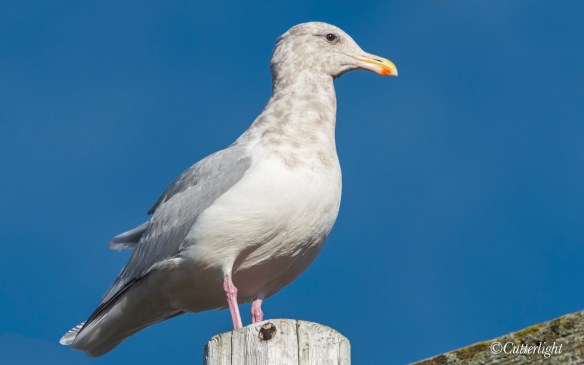
One of Chignik Lake’s Glaucous-winged Gulls, in non-breeding plumage, surveys the shoreline for salmon scraps. (Chignik Lake, November 2, 2016)

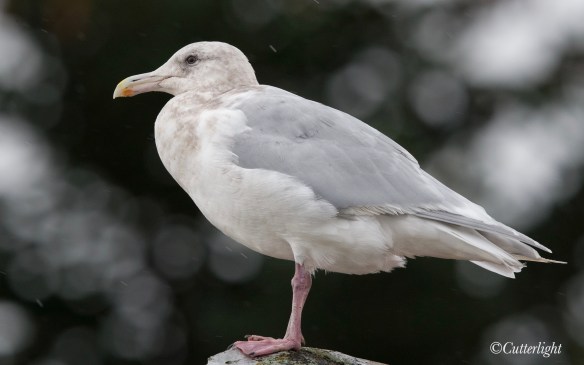
Rubbery-looking pink legs and feet, splotchy-brown neck and head (in non-breeding plumage), thick bill and overall large size quickly narrow the choices when trying to determine the identity of this gull. If you’re in the Pacific Northwest, possibilities are further whittled down. Check for a dark brown iris. Finally, if the gull you’re looking at has wingtips of gray rather than black, it’s a Glaucous-winged.

Perched on an abandoned lakeshore house on a rainy day. Note the toenails. (Chignik Lake, November 12, 2016)

Although there are even more Glaucous-wingeds at Chignik Lagoon and along the nearshore ocean, as long as there is open water there are bound to be a few of these omnivores cruising the lake and river. When it comes to food, virtually anything is on the menu – including the eggs and chicks of other birds and even of their own species. These birds have no qualms about hanging out at the local dump.

This is a second winter Glaucous-winged. Note the overall more brownish-gray plumage and the dark bill tip. Glaucous-wingeds don’t begin breeding until at least their fourth year. (Chignik River, October 9, 2017)

In breeding plumage, the Glaucous-wing Gull’s crimson bill spot contrasts distinctively with its amber-yellow bill. (Chignik Lake, August 19,  2016)

During summertime visits to a seashore or lake, you’ve no doubt noticed the bright red dot on the lower bill of some gulls. Well, we can thank Dutch scientist Niko Tinbergen for figuring out its purpose.

He noticed that adults returning to the nest didn’t feed the chicks until the chicks pecked at the dot. He devised experiments in which he changed or covered the dot. The result was that the chicks didn’t get fed. So this dot – which is particularly obvious during nesting season – is a vital marker in triggering a response from chicks to tap the adult’s bill, and for the adults to then regurgitate a meal.

As the behavior of the chicks appeared to be instinctive, Tinbergen’s observations became important in debates regarding animal behavior: how much is learned verses how much is innate. For his contributions to the science of ethology, in 1973 he was awarded a Nobel Prize.

Glaucous-Winged Gull. (Chignik Lake, August 19, 2017)

Glaucous-winged Gull Range Map: with permission from The Cornell Lab of Ornithology, Birds of the World

Glaucous-winged Gull Larus glaucescens
Order: Charadriiformes
Family: Laridae
Larus: from Latin for (large) sea bird
glaucescens: New Latin glaucous from Greek glaukos. In English – dull grayish green or blue in color

Status at Chignik Lake, 2016-19: Common mid-Spring through fall; Uncommon or Absent in Winter

David Narver, Birds of the Chignik River Drainage, summers 1960-63: Abundant

Alaska Peninsula and Becharof National Wildlife Refuge Bird List, 2010: Common Spring through fall; Uncommon in Winter

Aniakchak National Monument and Preserve Bird ListPresent

loon silhouette

Previous: Mew Gull – The Gull of The Lake

Next Article: Great Horned Owl

© Photographs, images and text by Jack Donachy unless otherwise noted.

Birds of Chignik Lake: Mew Gull – The Gull of The Lake

In breeding season, the Mew Gull’s eye ring becomes brilliantly erubescent. (Denali National Park, July 7, 2017)

Approximately 10,000 Mew Gulls populate Alaska during the summertime nesting season, making it one of the gulls you’re most likely to encounter – particularly if you are around a large inland lake or river. They begin showing up at Chignik Lake in mid-spring and hang around well into fall, their ongoing crying and calling a welcome sign of warmer days.

This is an act of courtship rathe than aggression. Potter Marsh, near Anchorage, is an excellent place to observe Mew Gulls nesting. Unlike our Chignik Birds, the Potter Marsh birds are habituated to humans and are reasonably tolerant of photographers. (June 24, 2017)

When it comes to gull identification – often a vexing matter – in one way Alaskans are fortunate. The gull most likely to be confused with Mews, the Ring-billed, doesn’t make it this far north. So if you see a gull that looks like a Mew – smallish, rounded white head, relatively thin bill, light gray back, dark wingtips with a splotch of white – it’s probably a Mew. When not in breeding plumage, the red orbital ring disappears. So, as with the color of the Mew’s iris (lighter in breeding birds, very dark in non-breeding birds) it can’t always be relied on as a field marker. However, there are two other characteristics worth noting. In Alaska, other than kittiwakes, as adults Mews are the only yellow-billed gull that lacks a red or black marking near the tip of the bill; (Young birds do typically have a dark bill tip.) The other feature is the adult Mew’s greenish-yellow legs. This shows up well in good light.

Behavior is often an excellent clue as to a species’ identity. Mew gulls have a penchant for perching in trees. In fact, they are the only white-headed gull to sometimes nest in trees – though in most locales they more commonly make their nests on the ground. Note the green cast to the legs of this specimen. (Denali National Park, July 7, 2017)

In past years, we haven’t been able to arrive at The Lake until August. By then, the nesting season is over. But we’ve seen enough very young Mews to conclude that they breed locally. As the fall salmon runs dissipate, most of Chignik Lake’s gulls leave. But throughout winter, from time to time a gull or two might show up . They’re opportunistic feeders – small fish, aquatic invertebrates, berries and carrion – particularly dead salmon – all figure in their diet. They can even catch insects on the wing.

Adult Mew Gull and chick, Savage River, Denali National Park. (July 7, 2017)

A first-year Mew Gull glides above the Chignik River in early winter, perhaps searching for salmon scraps. Note the dark bill tip. Even at this late date, there are still salmon in the Chignik system. (Chignik Lake, January 4, 2017)

Wingtips on Water – Chignik Lake, August 17, 2018

As is likely the case with many birders, when I first took on this project not only did I not know much about gulls, I wasn’t sure I wanted to know much about them. Blasé white and gray ice-cream cone thieves, parking lot patrollers, I just couldn’t make myself care very much about which species I was observing.

But I’ve come to care. These are beautiful birds, adapted to all kinds of environments. Far from garbage dump parasites, Mews generally avoid human traffic, preferring instead pristine lake, river, woodland and tundra environments where they assiduously rear their chicks. Chignik Lake is a more vibrant place with them.

Mew Gull Range Map: with permission from The Cornell Lab of Ornithology, Birds of the World

Mew Gull Larus canus
Order: Charadriiformes
Family: Laridae
Larus: from Latin for (large) sea bird
canus: Latin – gray

Status at Chignik Lake, 2016-19: Common mid-Spring through fall; Uncommon in Winter

David Narver, Birds of the Chignik River Drainage, summers 1960-63: Common

Alaska Peninsula and Becharof National Wildlife Refuge Bird List, 2010: Common Spring through fall; Uncommon in Winter

Aniakchak National Monument and Preserve Bird List: Present

loon silhouette

Previous: Wilson’s Snipe – Ghostly Sound of Spring

Next Article: Glaucus-winged Gull – So… What’s Up with the Red Dot?

© Photographs, images and text by Jack Donachy unless otherwise noted.

Birds of Chignik Lake: Wilson’s Snipe – Ghostly Sound of Spring

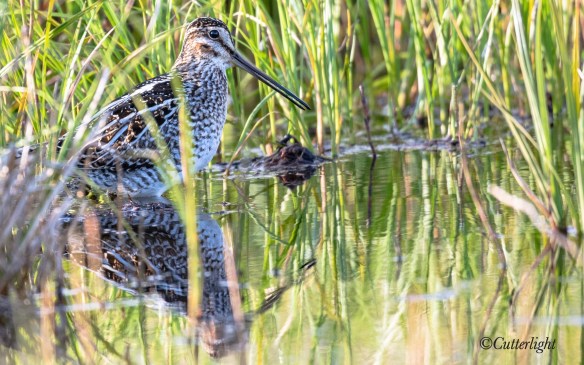
Not an easy capture, finally getting a decent portrait of a Wilson’s Snipe represented a culmination of persistence, patience and study. I made this photograph in a a marshy area in the middle of our village. It is probable that these secretive birds nest in this area. (Chignik Lake, June 4, 2019)

By mid to late March, as evening twilight envelopes the Chignik Lake landscape, an otherworldly sound can be heard – one which no doubt has frightened the bejeezus out of more than one young camper whose head might have been stuffed with ghost stories around the campfire.

Winnowing snipe. At an air speed of about 25 miles an hour, air passing through the snipe’s rectrices (outermost tail feathers) creates some of the strangest avian music in North America.* (Click the highlighted text to listen.)

Migration. Wilson’s Snipe departing Point Hope, Alaska, August 25, 2018.

Country jokes involving nighttime forays into dark forests with flashlights and burlap bags aside, snipe hunts, these are fascinating birds. Grouped along with yellowlegs and tattlers as shorebirds, their more chunky appearance is owing to impressively large breast muscles. These muscles -prized by hunters as a delicacy – enable snipe to achieve astounding aerial speeds of over 60 miles per hour.

We had consistently flushed a snipe from edge habitat on hikes through a corner of the berry bog. Assuming the bird was a nesting hen, we avoided lingering in the area. Then, in early May, we happened upon this egg shell near where we’d been encountering the snipe. The early fireweed shoot in the foreground (lower right) tells the tale of a species that arrives in The Chigniks early, fledges its young, and departs before summer’s end. (Chignik Lake, May 4, 2019)

With a sharp eye, you might find an old nest – a subtle, grass-lined depression about the same size as your hands placed side by side. Only the hen broods the clutch of four mottled brown, sharply-pointed eggs. Chicks hatch out in less than three weeks and almost immediately leave the nest, downy little ping-pong balls perfectly capable of scurrying along after their mother as she hunts for insects and worms. Her bill is equipped with sensory receptors enabling her to probe deep into marsh and muck to feel for whatever might be available there. In fact, she can even move the flexible tip of her upper bill to grasp and pull in small invertebrates.

The berry bog drains into an almost Everglades-like grassy marsh where shallow water flows through wild violets, cottongrass, irises and other flowers. It’s a favorite feeding ground of both snipe and cranes. (Chignik Lake, June 2, 2019)

Apparently snipe sleep quite a bit during the day, so the best time to see them going about their business is in early morning and again in the evening. Because their eyes are set far back on their heads, they have nearly a 360 degree field of vision, making them difficult to approach. A good strategy for observing them is to locate a place they are frequenting and then, armed with binoculars, conceal yourself and wait quietly. They’ll occasionally perch on posts or trees and yelp, producing a call almost like that of a hen turkey.

Before the fall hunting season opens in September, the last of the Chignik’s snipe are long departed. They’ll overwinter in marshes and wetlands further south, and sometime in March head north to the Alaska Peninsula again, bringing with them another sound of spring.

Wilson’s Snipe Range Map: with permission from The Cornell Lab of Ornithology, Birds of the World

Wilson’s Snipe Gallinago delicata
Order: Charadriiformes
Family: Scolopacidae
Gallinago: New Latin for snipe or woodcock: gallina = hen + ago = resembling: 
delicata: Latin – dainty

Status at Chignik Lake, 2016-19: Common mid-Spring through late Summer

David Narver, Birds of the Chignik River Drainage, summers 1960-63: Common in the Watershed (listed as Common Snipe)

Alaska Peninsula and Becharof National Wildlife Refuge Bird List, 2010: Common in Spring and Summer; Uncommon in Fall; Absent in Winter

Aniakchak National Monument and Preserve Bird List: Present

loon silhouette

Previous: Wandering Tattler – Sojourner from Far North Mountain Streams to Tropical Pacific Islands

Next Article: Mew Gull – The Gull of The Lake

*For a clickable list of bird species and additional information about this project, click here: Birds of Chignik Lake
© Photographs, images and text by Jack Donachy unless otherwise noted.

Birds of Chignik Lake: Wandering Tattler – Sojourner from Far North Mountain Streams to Tropical Pacific Islands

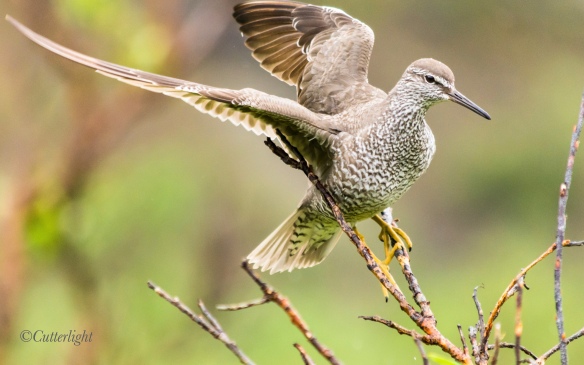
It seems fitting that my first known encounter with Tringa incana was on Tattler Creek in Denali National Park – the very mountain stream where the first Wandering Tattler was discovered. (July 15, 2017)

Wandering Tattlers aren’t mentioned in my 1917 copy of Birds of America. As best as I can determine, the species hadn’t yet been discovered. Denali National Park wasn’t created until 1917 – and was known back then as Mount McKinley National Park. The first Wandering Tattler nest wasn’t found until 1923 along another Denali creek. In any event, the omission is interesting – a reminder of how new the world still was just 100 years ago.

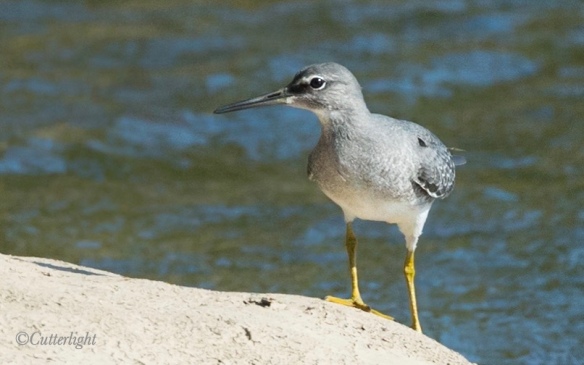
Like the Greater Yellowlegs of the previous article, tattlers are classified as shorebirds, and except for the nesting season rocky shorelines are generally the best places to find them. (Chignik River, August 29, 2016)

I stated above that my first known encounter with this species occurred in Denali National Park. It turns out, I had seen a pair a year earlier along the Chignik River. Inexperienced at bird identification at the time, I labeled the photos I took “Yellowlegs.” But a closer look at the above photo reveals a number of differences between these two species of the genus Tringa, both of which nest inland and often perch in trees.

With more experience, Greater Yellowlegs (above)  and Wandering Tattlers (previous photo) appear to be rather dissimilar. However, in 2016 I didn’t know that there was such a thing as the latter species. (Chignik River, August 20, 2018)

As I write this, I’m in Newhalen, Alaska – on hold as is the case with most of the rest of the country. I am eager for the Coronavirus-related travel ban to be lifted so that I can get back Chignik Lake. I have a couple of suspicions as to which creeks our tattlers nest along – stony, remote flows with steep gradients. There is still comparatively little documentation regarding this species – small wonder when one considers the isolated mountain streams in their far north breeding territory. And so there are contributions yet to be made.

Wandering Tattlers heading south along the Chignik. Eventually, their migration flight might take them to the west coast of the Lower 48, to the rocky coasts of Pacific Islands, or even as far as Australia. (Chignik River, August 29, 2016)

Range Map for Wandering Tattler

Wandering Tattler Range Map: with permission from The Cornell Lab of Ornithology, Birds of the World

Wandering Tattler Tringa incana
Order: Charadriiformes
Family: Scolopacidae
Tringa: New Latin, from Ancient Greek trungus = white-tailed, bobbing shorebird mentioned by Aristotle.
incana: Latin – hoary or grayish white

Status at Chignik Lake, 2016-19: Uncertain. Probably an uncommon but regular resident and breeder along certain rocky tributaries. As Narver observed, probably more likely to be seen in late summer along main river, after chicks have fledged.

David Narver, Birds of the Chignik River Drainage, summers 1960-63: Common along Chignik River after about July 20

Alaska Peninsula and Becharof National Wildlife Refuge Bird List, 2010Uncommon in Spring, Summer and Fall; Absent in Winter

Aniakchak National Monument and Preserve Bird List: Present

loon silhouette

Previous: Greater Yellowlegs – Shorebird of the Treetops

Next Article: Wilson’s Snipe – Ghostly Sound of Spring

*For a clickable list of bird species and additional information about this project, click here: Birds of Chignik Lake

© Photographs, images and text by Jack Donachy unless otherwise noted.