The Many Tastes of Hokkaido – Kita no Lamp-tei Restaurant in Shiraoi

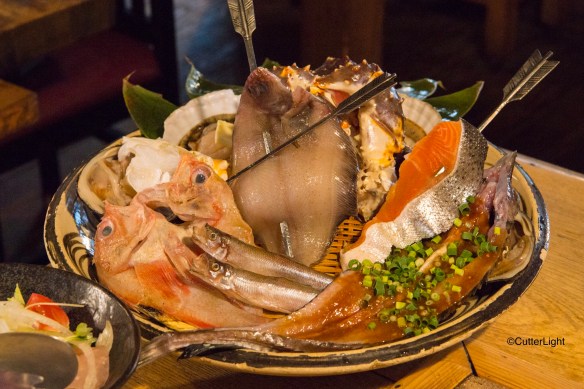
Our waiter’s recommendation: a platter of seafood ready for the tabletop grill featuring some of Shiraoi’s regional summertime specialties. From 12:00: King Crab legs, ocean-fresh salmon, Sailfin Poacher, Willow Leaf Smelt, Thornyhead Rockfish, Surf Clam, Sea Scallop, center, flounder. (Viewer discretion is advised regarding the food photographs that follow.)

When the only two people in Shiraoi we asked for an evening restaurant recommendation immediately suggested the same place even while in the same breath acknowledging that it was too far to reach in a bike trip, our interest was definitely piqued. The first person we asked was our server at Shiraoi’s Kinpen Cafe where we were having a delicious casual seafood lunch and the other was a guide at the local tourist information agency – people who were likely to know where the best food was being served. We lamented the fact that we probably wouldn’t connect with the Kita no Rampu-tei (Northern Lamp) restaurant and resigned ourselves to our standard “Plan B” – ride until we come upon something. That particular night, we grabbed an assortment of sushi and other items at a local supermarket and took them back to our campground for dinner. (And by the way, if you’ve never had supermarket sushi in Japan, don’t be tempted to compare it to the generally not-very-good fare offered in American supermarkets. Supermarket sushi in Japan is superb.)

An excellent choice for casual dining – and a good place to get additional dining recommendations – Kinpen Cafe, Shiraoi.

We broke camp late the following morning at Poroto Campground, hopped on our bikes and headed southwest along the coast toward the city of Noboribetsu.

Frogs, woodpeckers, deer and other wildlife added a nice touch to the quiet, well-maintained campground at Poroto Lake in Shiraoi.

Taking an especially leisurely pace even by our standards, we paused for a while to talk with fishermen trying their luck for flounder and greenling along a harbor wall, had a picnic lunch along another sea wall and stopped frequently to check out African Stonechats and other songbirds which seemed to be everywhere. By the time we’d covered a few miles, the sun was coming down and we were ready for dinner. 

There were some nice fish being caught along this harbor wall. The main target was greenling with flounder showing up in good numbers as well.

Longtime admirers of the beautiful, hand-blown glass floats Japanese fishermen used to buoy their nets in the pre-plastic era, an attractive display of large floats hanging from a building drew our attention. We spent a good bit of time photographing the floats before we realized that the building they were attached to was a restaurant, and a bit of time after that before I stepped back and attempted to decipher the name of the place.

 北のランプ亭. 

“Hey! Kita no Lamp!” I called out to Barbra. “This is the place those people recommended!”

“Oh, wow! What are the odds? Let’s see if we can get a table!” She replied.
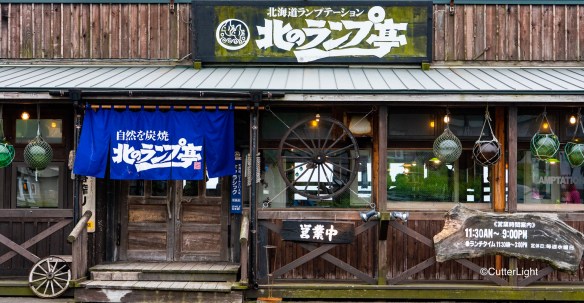
We found out later that Kita no Lamp is the top rated of the area’s 80-some restaurants and that it can be tough to get into without a reservation. Still early in the tourist season and late on a mid-week night to boost, luckily we were able to get a table. I don’t know the bar an establishment has to clear to earn Michelin recognition, but what followed was easily one of the best restaurant experiences either one of us have ever had. 
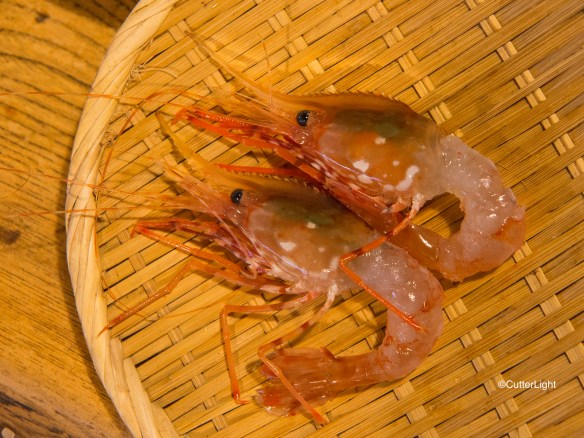
Our waiter first presented this pair of ama-ebi (Northern Deepwater Prawn) live, then took them to the kitchen where they were prepared for the table.

Many years ago as a student of things Japanese, I read several dismissive accounts of Japanese cuisine. “Bland” was a term that cropped up more than once. This was before the sushi revolution swept the world, a revolution that was followed by a growing appreciation of the seasonality of foods, the subtleties of different types of noodles, and before terms such as “umami” had become part of the world-wide culinary lexicon. In fact, when I found myself stationed in Japan as a United States Navy sailor, I couldn’t understand what those writers were talking about. Japanese food is amazing. 

Ikura (salmon roe) served with slivers of nori and a smidgeon of wasabi atop a bowl of steaming hot rice kept the meal moving forward.

Hokkaido in particular merits food destination status, and while seafood reigns supreme on this island surrounded by cold, clean Pacific seas, there is tender, flavorful beef, pork, lamb and fresh fruits and vegetables that rival the best to be found anywhere. Indeed, much of the food will be minimally seasoned. With the very best ingredients served fresh and at their peak, a light hand with seasoning is ideal.

We had been told that we absolutely must try Shiraoi beef. In fact, a fellow camper at Poroto shared a couple of expertly grilled pieces with us, leaving us wanting more of this incredibly flavorful, fatty, soft beef. Here a steak shares a plate with local pork belly, sausages, marinated chicken, pumpkin, mushrooms and asparagus which was at the peak of perfection during our time in Shiraoi.

And so, relatively early in our summer in Hokkaido and comfortably seated at one the island’s top restaurants, we followed our waiter’s recommendations, ordered too much food, savored every last bit of it, and, with the owner’s permission, ended up pitching our tent on the restaurant’s property and spending the night there.
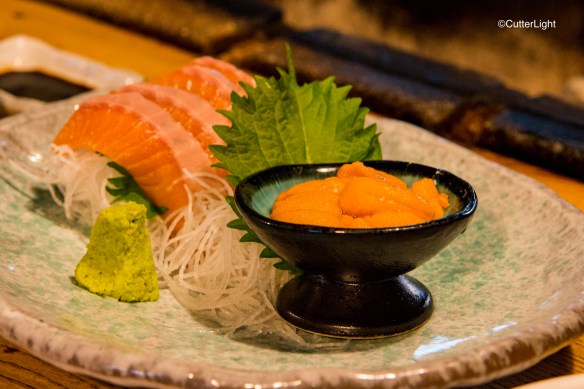
At this time of year, virtually all of Hokkaido features creamy, fresh-from the ocean Sea Urchin. Here a bowl is served along with salmon sashimi.
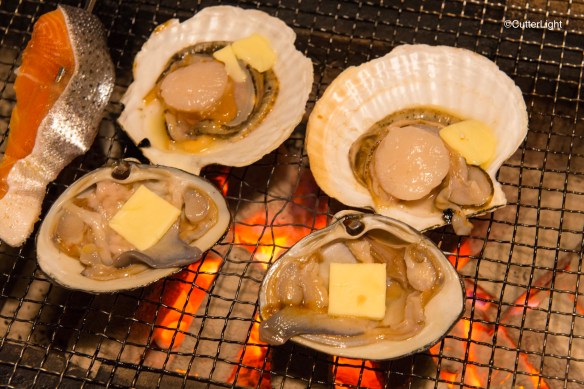
While researching this trip, we kept coming across photos of grilled scallops. Our first encounter with this delicacy was served with a thick pat of rich Hokkaido butter. It was fun grilling these shellfish right at our table. When the butter is melted and not a second longer, the clams and scallops are ready. Add a splash of soy sauce… or not.

Northern Lamp’s decor harkened back to earlier times – classic posters, vintage sake jugs, period lamps and lanterns, and seafaring themed relics.

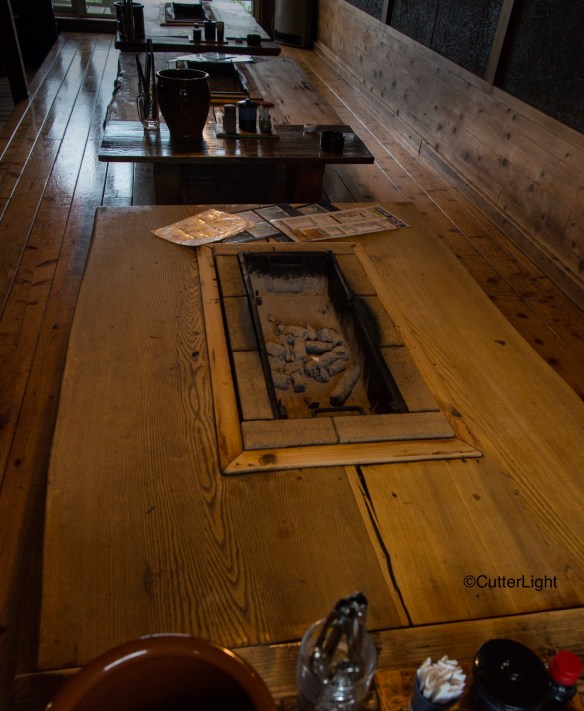
Each table featured a grill which the wait staff filled with hot wood coals when customers were seated. 

These sailors may have been assigned to guard the sake jugs behind them, but they seemed to be more interested in the feast we were working on.

We finished the meal with a small scoop of lemon sorbet – and with some effort got up from the table and set up camp. The following morning we woke to the sun rising over the back deck of Kita no Lamp Restaurant. 

Yagishiri Island Hokkaido – Power of a Storm

Barbra and a young friend cheese it up for the camera at Yagishiri’s ferry port.

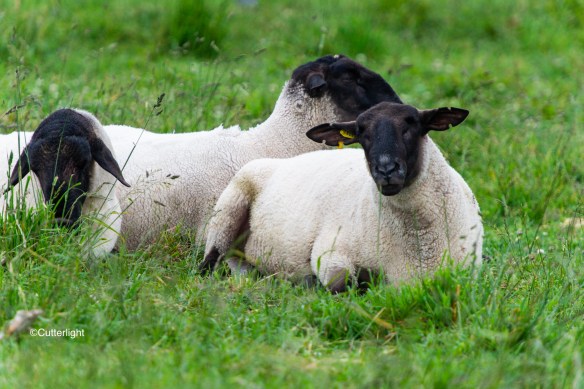
A cool ocean breeze drifted in across the Sea of Japan and the sun was shining brightly as we set up our tent on Yagishiri Island. Brilliant orange-yellow Day Lillies speckled the green, gently rolling countryside around us. It was easy to imagine the Suffolk sheep the island is known for tucking their black faces into tufts of rich grass and quietly grazing a few hillsides away.

Yagishiri is home to Suffolk Sheep. Brought over from Scotland, they grow cute and tasty on the island’s lush grass.

The campsite was ideal. Our tent was nestled into a flat between hills and protected from coastal gusts by a small building. The campsite featured cold running water, an immaculate restroom, and even an outdoor shower.

We stowed our bike bags beneath the tent’s fly and headed down an inviting pathway to what the map boasted as a swimming beach. Although the sun was high in the sky, I wasn’t prepared to take a chilly Sea of Japan swim. I noticed that the beach was covered with countless tiny treasures – blue, green and amber beach glass polished smooth, crab husks, miniature clam shells, dried sea urchin shells- some with their spines still attached, and colorful small rocks with interesting patterns. Larger flat rocks offered perfect surfaces on which to create found art displays with favorite finds from the beach. What a lovely, relaxing way to spend part of an afternoon.

Yagishiri-to (Yagishiri Island) is a short ferry ride from the town of Haboro on Hokkaido. There is one main road that follows the island’s perimeter which is only 12 kilometers (just over seven miles). After exploring the beach and with our bike bags stowed at the campsite, we hopped onto our now feather-light bikes and went out to discover the rest of the island. 

As the sun moved in and out from behind a few gathering clouds, I couldn’t help but smile. When I was young, my family traveled a good bit. During those trips, I fantasized about having my bike with me so I could explore those places at a bike’s pace – slow enough to catch all the details around me but fast enough to actually get somewhere. It’s exercise up the hills, the coast back down a pleasantly earned reward.

Off in the distance we began to hear the rumble of thunder. We had nearly reached the opposite side of the island from our camp. Looking out to sea, we tried to discern which way the thunder was coming from. Toward the sea, the clouds were thin and light. Looking toward Hokkaido’s mainland, the clouds were thick with rain.

Rather than turn back, we decided to continue around the island. We guessed the lighter clouds were coming our way. However, a few minutes later, big splats of rain hit us. Seems we are not meteorologists! Near the top of a hill, we spied a path leading into a small forest which, according to our map, would lead to a shrine. We decided a quick side trip there might give us shelter from a burst of rain. We found the shrine in a state of some disrepair. Tall grass grew around the gate-keeping statues and stone lanterns, and scattered ladders and work tools gave the site the look of a place that was on someone’s to-do list. 

Suddenly the clouds ripped open as a torrent of rain poured down. We sat on the dry steps of the shrine enjoying the sounds of rain drumming on the forest canopy while birds chittered complaints in the forest and tree frogs sang in celebration. It was lovely to wait out a squall with no appointments to attend to and no plans for the afternoon. As squalls do, it passed. We got back on our bikes and continued our tour of the island.

A treasure trove of glass floats filled this small fishing boat to the gunwhales.

As we neared the highest elevation on the road, lightning flashed in the distance. This time, it seemed clear the angry cloud mass was heading straight for us. There was no more leisure in this ride; it was time to get back to camp. The flashes and booms were still over ten miles away according to our primitive counting measurement system – one one thousand, two one thousand, three one thousand… The race was on.

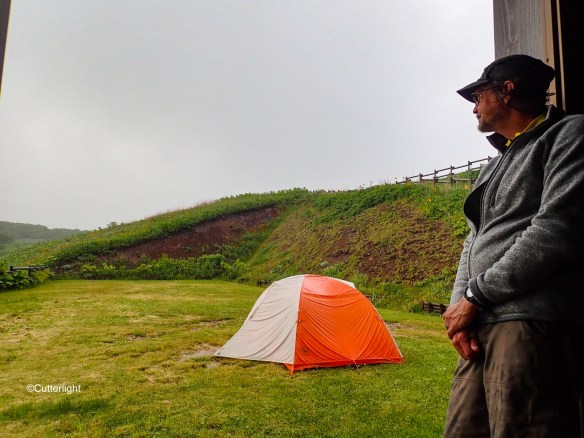
As we neared our campsite, the clouds opened up and once again began to unleash sheets of rain. We hurriedly parked our bikes, grabbed our water bottles and rushed to the tent. As we did, we noticed something strange: the side of the building we were camped by was now open. It seemed magical. We hadn’t noticed any type of opening when we set up the tent. It turns out there was a rolling door, like a garage door. While we were gone exploring, some kind person had come along and opened the building for us. The opening revealed a friendly space with a dry concrete floor, kitchen sinks and stainless steel countertops – a perfect place to duck in out of the rain and cook our dinner!
We positioned our camp chairs near the opening and watched our poor tent get pounded by rain. Soon the thunder and lightening passed directly over us. I’ve always loved watching lightening storms. It was exciting and wild to have the strikes pass close by. We counted them as close as two miles away! Eventually the storm faded across the hills, across the sea and into the distance.

Rain, rain and more rain – waiting for a lull in a series of squalls on Yagishiri-to.

By now it was getting late. Our bellies were full of a hot soba concoction Jack had whipped up and our bodies were warmed by the last sips of peaty, smoky whiskey from a purchase at the Nikka Whiskey distillery. With the rain waning, I t was time for bed.

Our little tent is amazing. It had been thoroughly doused. Yet the fly had held out through the worst of it and our sleeping bags and all of the gear inside the tent was snug and dry. Nestled inside our cocoon, we both quickly drifted to sleep.

Then –

Flash! Crack! Boom! The lightning and thunder came in nearly simultaneous sequence, jolting us awake.

While we had been soundly asleep, another intense squall had crept upon the island. This time the lightning strikes were practically on top of us. Two in a row where there wasn’t time to count to one thousand-one between the nearly blinding flash and the earth-shaking boom had our eyes wide open. A tent previously described as “tough” and “sturdy” now seemed to be but a flimsy piece of nylon separating us from the elements. “Give me your hand!” I demanded of Jack. I grabbed his hand as another Flash! Crack! Boom! pounded down from the heavens. I squeezed my eyes shut but couldn’t keep out the blinding flashes. I plugged my ears to muffle the thunder’s roar. I wondered about people who’d been struck by lightening and had survived. What did that feel like? Were we going to be one of those stories?

“We’re in a low place,” Jack assured me. “We’ll be fine.”

The next blinding flash lit up the tent. This time the roar of thunder came after “one one thousand.” Maybe it was moving away? I still clung to Jack’s hand. Another blinding flash. I buried my head in my sleeping bag and counted – one one thousand. Then, right away, another flash – one one thousand, two one thousand. My heart was still racing. While this squall seemed to be passing, I wondered if another set of storm clouds would move in.

A few minutes passed and another flash came – one one thousand, two one thousand, three one thousand, four one thousand. 

As the thunder and lightning slowly drifted further away, I finally released my grip on Jack’s hand. My heart slowly returned to its normal rate as the drumming of rain on our tent softened. For the remainder of the night it rained and rained, but the thunder and lightning had ceased. The next morning, I woke up wondering where exactly the lightening had struck. A moment later, I felt grateful that I didn’t know. 

Around Shikotsu-Toya National Park: Part I

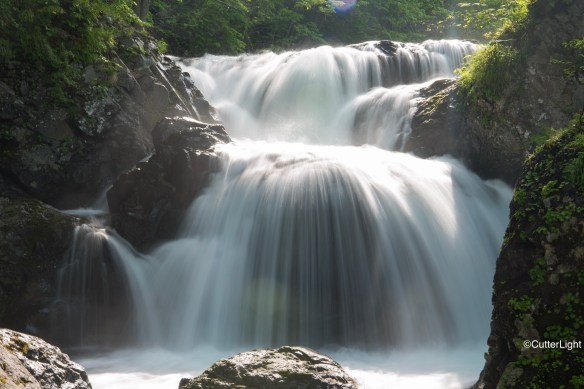
Hokkaido is rich in the world’s most valuable natural resource: clean, fresh water. This falls was one of many we’ve encountered so far this summer.

The most frequently visited of the six national parks in Hokkaido, Shikotsu-Toya as a fragmented network of lakes, mountains and geothermal features. Japan’s national parks represent a much looser management philosophy than those of the United States and Canada. Visitors’ centers are fairly minimalistic, featuring perhaps a few pamphlets in Japanese, Chinese, Korean, English and occasionally Russian. There are no entry fees. Tent camping may range from a high of about ¥1,000 per person (about $9 at current exchange rates) per night at privately run campgrounds to free. Although campgrounds generally lack picnic shelters, most have areas to wash dishes as well as clean restrooms. Some also offer showers for an additional fee of ¥300 – ¥500 ($3 – $5).

Several hundred brown bears roam Hokkaido’s forests, beaches and mountains. Although uncommon, attacks do occur – prompting these stylized, imaginative renditions of the bears.

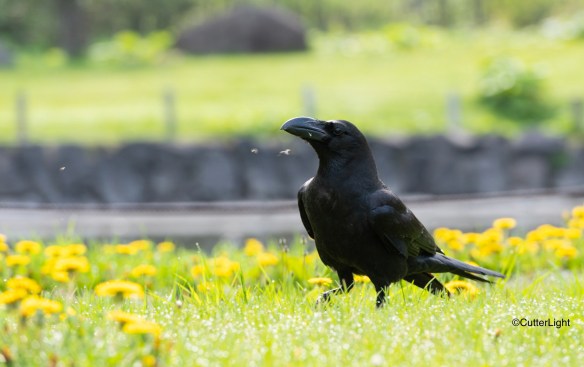
Two species of crows inhabit Hokkaido. This aptly named Large-billed Crow was gathering a morning meal of insects. Opportunistic and intelligent birds, we quickly learned that you can’t leave any food unattended.

Finding drinking water has been no problem; our favorite sources are the many natural springs we’ve come across.

With schools still in session and nights chilly, early June is still considered the off season in Hokkaido. Campgrounds are often empty on weekdays, and even on weekends it’s possible to find seclusion. 

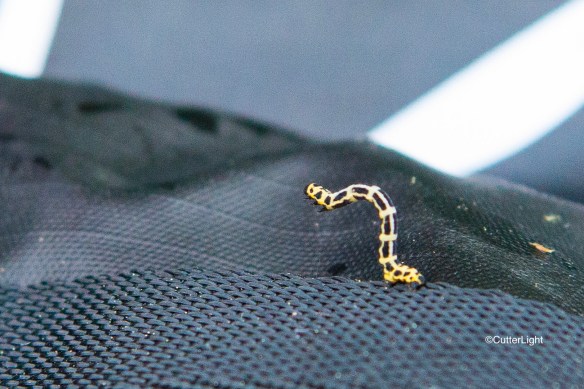
Caterpillars of every description seem to be everywhere. Butterfly season soon.

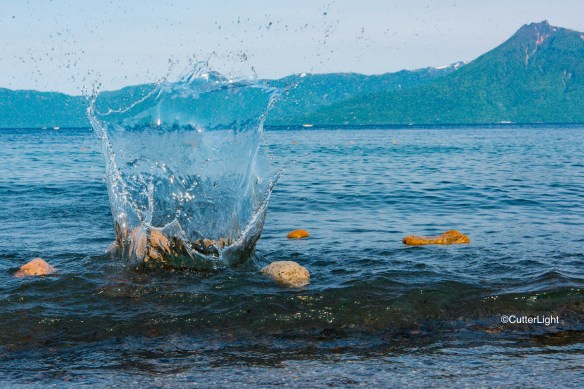
Conical mountains and hot springs belie Hokkaido’s volcanic origins. This beach on Shikotsu-ko (Shikotsu Lake) was covered with pumice – a good bit of which floated nicely!

The last evening light on Shikotsuko.

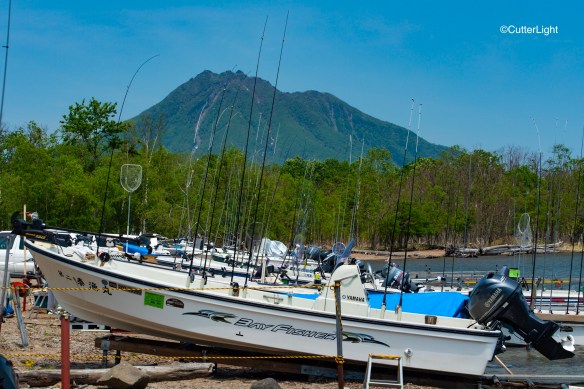
The following day, we rode our bikes along Shikotsuko’s shoreline and happened upon these fishing boats. Rigged for kokanee (land locked Sockeye Salmon), the fishermen hit the water at the first crack of light, take the afternoon off, and then hit it again in the evening.

Centerpin reels, long, limber rods, small flashers to attract the fish’s attention and hooks baited with fly larvae were the tackle and bait choices the experts preferred.

I struck up a conversation with one of the fisherman who then invited me aboard to see his catch – half-a-dozen blue-backed, silver-flanked kokanee in a live well. At 12 inches each, he told me they were running a little small this year, but they still make excellent sashimi.

June is the best season… and I’m guessing that had we had the time it wouldn’t have taken much to get an invite to join him for the evening bite.

Carrying as much gear as we’re carrying, we expected a fair amount of pushing our bikes up hills and mountains. We were less psychologically prepared for the many tunnels we’ve gone through. Marvels of engineering, they certainly are physically easier than slogging up steep slopes. But with some of them running two miles long and longer – dark, damp, no bike lanes, the slimmest of sidewalks (or none at all) and echoing with the roar of trucks and other traffic – they can wear on your nerves. 

A roadside park where we stopped to check out a waterfall featured a number of totem poles presented to Hokkaido by First Nation’s people of Canada. 

The colors and style of the carvings seemed to fit with Hokkaido’s indigenous Ainu culture.

Most of the tunnels weren’t as cool as this one. Nice shot, Bar!

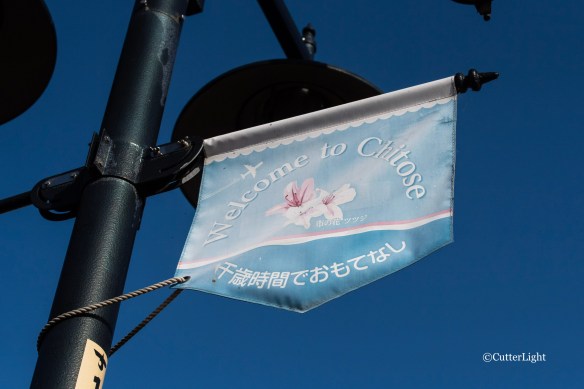
First Stop in Hokkaido – Don’t Miss Beautiful Chitose!

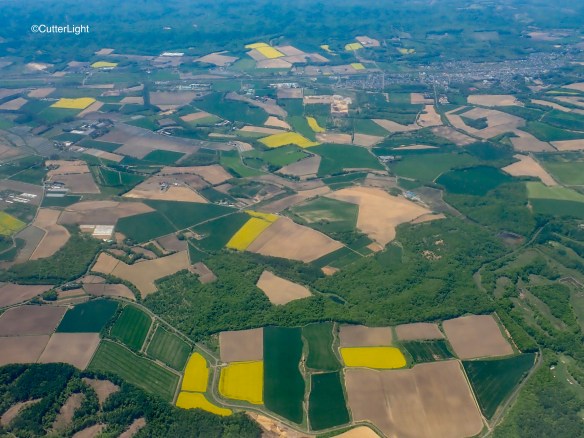
A mosaic of farmlands on the flight into Chitose evoked visions of fresh melons, strawberries, cherries, wines, cheese, and Hokkaido’s famous beef.

Although the city of Chitose, which lies just south of Sapporo, is generally seen as merely an airport stop, it’s a charming city in its own right. We found it to be the perfect place to stage and prepare for our trek around Hokkaido. The local Homac store sells butane camping stove fuel, there’s a beautiful green belt, and – as just about everywhere in Hokkaido – excellent restaurants.

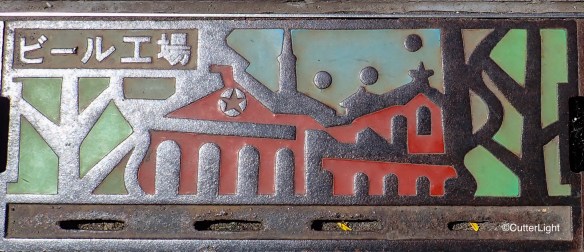
A depiction of the Sapporo Beer Brewery paves the sidewalk outside the Chitose airport.

We quickly discovered that convenience stores such as 7/11 and Lawson are not only convenient (they all have restrooms… clean restrooms), but they feature very good coffee and a variety of tasty prepared foods to quickly fuel up hungry bicyclists. 

Bob!? Is that you? We hadn’t seen this character since we were kids… Either we were a lot smaller or he was a lot bigger back then. American-style hamburgers have not been on our menu… and I really didn’t care for the way he was looking at Barbra.

A passerby who works with one of the international airlines that frequents Chitose stopped to talk with us as we assembled our bicycles outside the hotel. He recommended the restaurant Ramai, which specializes in curry soup. Chock full of chicken and vegetables and exceptionally flavorful, we enthusiastically pass along the recommendation.

Keen to check out Hokkaido’s young and growing wine industry, we found Grace Winery open for tasting…

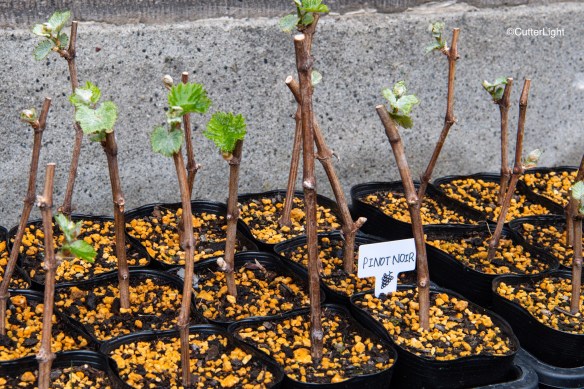
…in addition to haskap berry wine (also known as honeysuckle berry), the winery features whites and reds of German origin as well as Pinot Noir. The grapes at this winery were grown in the Yoichi area, which provided all the incentive we needed to make sure that Yoichi would be a stop on our trek!

At the the Chitose Aquarium (well worth a visit) we had our first encounter with Ainu culture. The Ainu are indigenous to Hokkaido and northern Japan, sharing many traditions in common with the indigenous people of the Pacific Northwest. Here salmon skin footwear is displayed. 

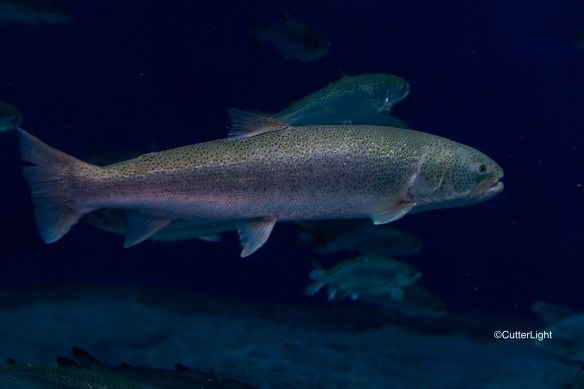
Rare and endangered, Itou (Japanese Huchen) are a close relative of taimen – the world’s largest salmonid species. Growing to over a meter in length, there are still fishable populations in some of Hokkaido’s waters, though catch and release is strongly encouraged if not the law of the land. 

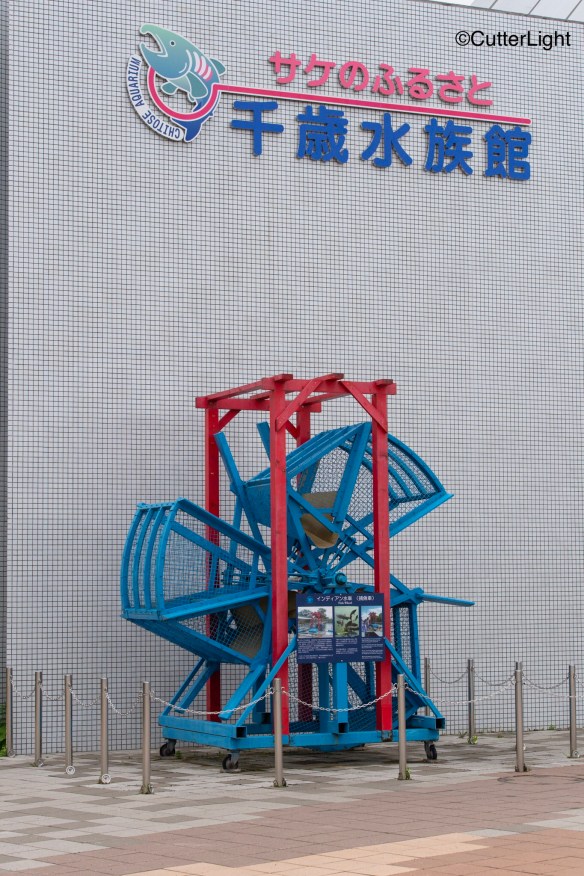
The Chitose River is remarkably clean and clear despite running through an urban area. It receives a strong run of Chum Salmon, which each fall are caprtured by this Pacific Northwest style fish wheel for the local hatchery. In late spring and early summer, visitors to the aquarium can participate by releasing a cup’s worth of salmon fry into the Chitose River, giving them a bit of ownership in maintaining healthy populations of salmon and a healthy river.

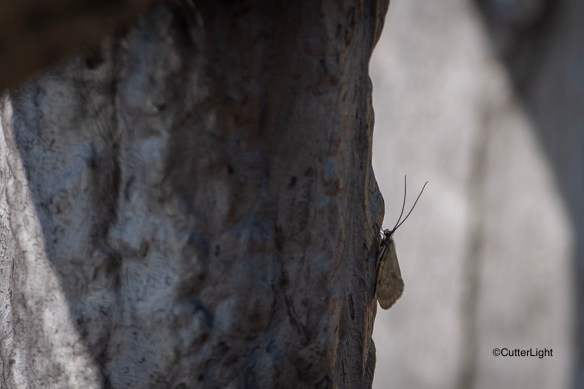
Caddisflies and May Flies were coming off the river the morning we walked its banks.

These angles caught a brown trout – right in the heart of the city!

While this colorful finch sang his heart out.

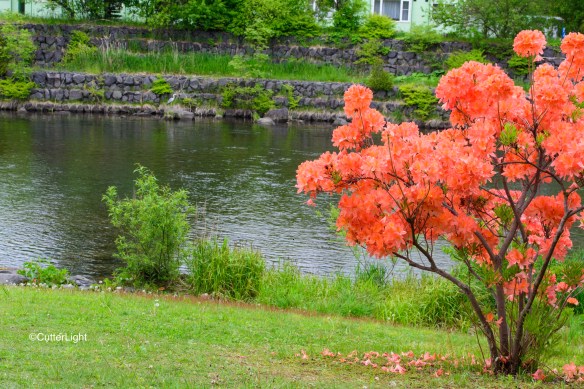
Although the cherry blossom were finished, Azeleas were still in glorious bloom – including colors we’d never before seen. Across the river, an aosagi (gray heron) is perched on a rock, no doubt anticipating making a meal of the many Japanese Dace that populate the river.

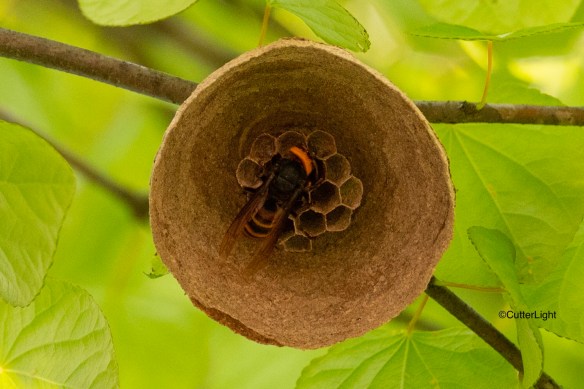
Although the Japanese express great concern regarding the several hundred higuma (brown bears) that inhabit the island, of far greater danger are the huge suzumebachi (Japanese Giant Hornet) which account for a number of deaths each year in Japan. We found this one beginning a nest and uneasily got this capture before backing off.

We enjoyed a wonderful, stress-free stay at the Ana Crowne Hotel in Chitose. Hotel staff were extremely accommodating to our unusual needs – even allowing us to store our large bicycle boxes with them until our return in August. 

A Little Glitch & a Lotta Help: Welcome to Japan (and Murray is not your friend)

Just south of Sapporo, the beautiful city of Chitose was our entry point into Hokkaido.

Having lived in Japan both as a 7th Fleet sailor stationed in Yokosuka onboard USS Blue Ridge and as an English language teacher after that, I’m familiar with Japan – its ins and outs, the aspects of life here that make it fascinating and wonderful as well as – at times – puzzling and frustrating. In selling Barbra on the idea of doing our first bike tour in Hokkaido, I’d pretty much painted for her a picture of paradise. I described a land of exceptionally low crime, cleanliness, every modern convenience conceivable, incredibly kind people, great camping spots, and a culture different enough from our own to keep things interesting. There might even be some decent fishing, I offered. She already knew about the food – some of the best seafood, beef, pork and noodle dishes in the world. Given that Hokkaido is the least populated and least visited part of Japan, we probably wouldn’t even have to deal with the crowds that often plague other parts of the country. In fact, the only con I conceded was that Japan can be quite expensive; but even that deficit could be offset by the inexpensive (sometimes free) camping I anticipated.

However, as the trip got closer I began to have a tiny, nagging doubt. Maybe I’d oversold Japan. After all, it had been awhile since I’d lived there. In the interim, Japan had experienced a bubble economy collapse, a disastrous nuclear energy plant melt down, and the passing of time along with the challenges an ever changing world presents to all of us. And then there are the tricks our own memories play on us. What if it turned out to not be as good as I remembered it?

Anchorage to Seattle to San Francisco marked the first leg of our flight schedule, and it wasn’t until the final stop on that leg, San Francisco, that we realized we had not allowed enough time between landing at Haneda Airport, Tokyo and our connecting flight to Chitose, Hokkaido. An optimistic Japan Airlines ticketing agent in San Francisco assured us we’d make our connection – but I was fairly certain we’d made a mistake.

Upon arriving in Haneda we scurried to baggage claim where I had my first opportunity to dust off my never-was-very-good Japanese and explain our situation. Incredibly – and impressively – the baggage handler at the luggage carousel already knew about us and our bikes. He smiled and nodded in their direction as a baggage handler approached pushing a handtruck loaded with three boxes – our two bikes and our bike trailer. Almost simultaneously, our two “luggage” boxes with their brilliant orange duck tape emerged onto the carousel. Phew! Next…

A woman in a JAL uniform seemed to materialize out of thin air. While Yamamoto-San (Ms. Yamamoto) explained to us that we needed to get over to the domestic flights air terminal as quickly as possible. Meanwhile, two baggage handlers helped us load our luggage onto two smaller hand carts – which, by the way, are free in Japan. The race was on.

We followed Yamamoto-San to the baggage check-in counter where she consulted with other JAL agents, and then she made what appeared to be a “command decision” to circumvent normal baggage check-in procedures and get us and our luggage directly over to the boarding gate. With the perfectly quaffed, calm Yamamoto-San alternately leading the way and helping to load these huge boxes onto the elevator to the train shuttle platform, we were all perspiring a little. Arriving on the shuttle deck it looked like we just might make it. Yamamoto-San was on a radio, talking urgently and quickly enough that I could understand almost nothing…

…until she mentioned Murray. Murray… Murray… The word sounded so familiar and yet I couldn’t quite recall its meaning. And then, with what sounded like disappointment in her voice, she said the word again. Muri. 

Muri! As language sometimes does, the meaning suddenly came back to me. Muri means impossible. 

We were not going to make our connecting flight. Despite our assurances that we weren’t really bothered by this turn of events, Yamamoto-San seemed truly disappointed. Back at the baggage check-in counter, she offered to book us into a hotel. I explained that the glitch was really our fault for not allowing sufficient time between flights, but she insisted that, no, it was her airline’s responsibility. In all of my glowing descriptions to Barbra regarding Japan, I had probably not payed sufficient homage to the legendary customer service the Japanese people are known for. 

In the end, we declined the hotel, reasoning it would be simpler to spend the night stretched out on the comfortable seats in the waiting area, grab a cup of coffee in the morning and board a flight that would get us into Chitose at a time coinciding with check-in at our hotel. Our hotel in Chitose, by the way, did not charge us for the cancelled reservation.

Udon & Iced Coffee – our first breakfast in Japan!

And so, rather than arriving in Chitose on the night of May 29 as planned, we spent the night in Haneda Airport, sleeping relatively soundly in the seating area. The floors were so clean they gleamed. The restrooms were spotless. The coffee and bowl of udon we had for breakfast were excellent. And when we finally arrived at our modestly-priced hotel in Chitose, our room, though perhaps a bit small by American standards, was utterly immaculate, appointed with an excellent bathroom (including a nice, deep tub and more features on the toilet than either one of us is likely to ever use), a comfortable bed and truly plush bathrobes. 

Welcome to Japan.

Almost There, or… Who Does This? Hokkaido Bicycle Trek 2018

Made it to Haneda! Bicycles, trailer, gear & clothing. On to Chitose!

Planning a bike trek around Hokkaido, Japan has been quite a challenge. People travel abroad. We’ve traveled abroad. People go on fishing sojourns. We’ve gone on fishing sojourns. People undertake photography safaris. We’ve undertaken photo safaris. People bike trek. We’ve… ridden our bikes. The challenge has been that people don’t typically do all these things in one, long, self-guided camping trip. Nor do they normally wait until they’re in their 50’s to attempt their first foray into something like this. 

To prepare, we read books on bike trekking – from words of wisdom on ultra light traveling to advice from folks who tote along babies and dogs. We watched countless videos on how people pack and camp with their bikes. Along the way we feathered in fishing. And photography. And pack-rafting. And camp cooking. And backpacking. And bird watching. And then there was the fitness training schedule to help us get into shape for this adventure. With as many people in the world who have already pioneered all of these different adventures, no one seems to have attempted the catch-all combination of what we are hoping to embark on. 

During the planning phase, we practice-packed several times. Each time, we realized another layer of equipment had to be fine-tuned. Without bringing a pack mule or a SAG wagon, we weren’t going to be able to carry along everything that we wanted to. 

The pack raft was the first thing to go. Our rafts compact into fairly small bags, but they necessitate paddles and PFDs. The amount of space and additional weight all of that entails wasn’t going to work. A subsequent trial packing made it clear that our plan to backpack and camp in the back country of the Shiretoko Peninsula, a world heritage site, also required too much stuff – mainly the backpacks themselves. We still plan to explore a backpacking trip, but we’ll look into renting backpacks. 

The next activity to get a hard look was fishing. Hokkaido is reported to have good populations of trout and char and even some salmon fishing as well as opportunities to ply ocean beaches and rocky shorelines for a variety of species. While we considered getting into at least some fishing to be a non-negotiable, we desperately had to figure out how to skinny down our equipment to one rod tube and one waist pouch. The compromise we settled was sharing gear instead of bringing two of everything. Additionally, we modified our lone fly rod to double as a spinning rod. (If it works, we’ll tell you all about it.) In the end, we packed a fly reel, a spinning reel, an 8-weight rod, a tenkara rod, a few small boxes of flies and lures and a small assortment of leaders and tippet material.

The next nonnegotiable was photography gear. Last summer, we limped through with substitute equipment and felt handicapped the entire summer. When we returned home and finally got our photos up on the computer screen for editing, they left us disappointed with the quality. So, our preparation for this summer involved numerous discussions and field tests regarding what gear would best capture the sights and experiences of our journey. What made the cut may seem like a lot to some, but we feel confident that we’ve streamlined our gear without sacrificing too much versatility.

The guiding question in all of this was, What kind of experiences do we most want to have? And the not-so-surprising lesson has been that if the trip is to be about going and doing rather than simply going and seeing, a certain amount of specialty gear is necessary. We know, for example, that we can enjoy first-rate food experiences while keeping our budget reasonably low by visiting markets and cooking for ourselves. But this strategy necessitates carrying with us cookware up to the task. Even birding pretty much requires that we take along a decent pair of compact binoculars and a field guide (which Jack went through with a box cutter and pared down to the bare essentials).

With our gear as fine-tuned as possible, we flew to Anchorage where Paramount bike shop took over the bike-packing – otherwise known as breaking down the bikes and packing them into big cardboard boxes. Meanwhile, we filled two much smaller cardboard moving boxes with the rest of our gear – boxes we’ll discard once we arrive in Hokkaido. And so, ready or not we’ve begun this summer’s adventure with three bicycle boxes and two moving boxes colorfully decorated with neon orange duck tape, packed to withstand the long journey down the West Coast and across the Pacific Ocean. 

At the Anchorage airport, a helpful Alaska Airlines ticket agent was ready to assist us with the puzzle of moving our over-sized bike boxes through the maze of four planes, four airports, two languages and two countries. We were nervous about our baggage surviving the journey or getting lost along the way. As unconventional as it is to travel with ducked-taped cardboard boxes, we are happy we did. At our San Francisco stop, we looked out the plane window and saw our boxes being loaded into the plane. And thanks to the day-glow orange tape, we quickly spotted our luggage as it hit the conveyor belt in Tokyo. Hi-vis tape was a great idea! By the way Big Kudos go out to Terrie at the Alaska Airlines desk-for-troubled-travelers. She was able to figure out how to check our bags all the way to Hokkaido from Anchorage. Amazingly, the cost for all of our baggage was a very-reasonable $200! (Go Club 49!)

As the nerve-wracking airplane travel segment of our journey comes to a happy conclusion, we can now focus on the next leg of the adventure: putting our bikes back together, finding stove fuel and purchasing a few groceries. And then we will answer the question that has been in the backs of our minds (and the pits of our stomachs) ever since we conceived this trip: Will we be able to balance, steer and propel these vehicles??? Stay tuned!

Intrepid Trepidations

Staring at my readied bike loaded with gear for this summer’s epic adventure, I am filled with… fear, excitement, anxiety, worry, nerves…

I’ve read so many articles and blogs and books about traveling. The common theme in these stories is excitement. The stories often have a dramatic edge. In the spirit of excitement, there is often reckless abandonment of caution and unplanned success. The stories are invigorating and inspiring – always with a happy ending. As my bike stares back at me, daring me … I find myself thinking that I’ve never read the version of the story that started with a daunting case of nerves. This seems to be my story.

The inspiration for this summer’s adventure began a few lifetimes ago. When I was young, my family used to camp. I remember watching bicyclists loaded with camping gear trekking along California blue roads from the window of our VW Camper. I loved to ride my bike. And I was instantly in love with the idea of being self-sufficient on two-wheels trekking anywhere I wanted to go.

Anyone who has known me over the past few decades could testify that I am an adventurous person. I have been known to get up and go do something based on very little information, sometimes on just an idea that something would be fun. I have had many happy endings to those stories, just like those I have read. So why worry now?

I stare at my bike. Its panniers and fork bags puffy with camping gear. As if in answer to my question, the front fork bag of my bike falls off and spills.

It’s the logistics of this trip that make it like no other. I’ve always been able to fill a backpack or a suitcase and go. But this summer, the adventure includes more than what can be packed in a backpack. We’ve planned a trip that involves bicycling around a foreign country for three months. The activities on the trip are to include sightseeing, culinary adventures, fishing, photography, backpacking and maybe even pack rafting. Aside from test packing and other activities we can do to get ready while in Alaska, the additional logistics are mind boggling. In order to get this trip started, there is the first leg – which seems to be the most daunting of the logistics – we need to maneuver all of our gear from our tiny village of Chignik Lake, through the city of Anchorage and all the way to the north island of Hokkaido, Japan. The other part of the logistics is planning for daily mileage and making sure we are in good enough shape to pull off this physical adventure.

All this planning is, of course, in theory. I have so many questions… How many miles can we realistically bike? Can we carry all the gear we want to carry? Are we over packing? Are we forgetting something critical? Will our gear be safe from thieves? Will we be able to find campgrounds as easily as we hope? Will the roads be safe to ride on? Are we going to have trouble transporting our gear with the airlines? Is this too big an undertaking?

So, Jack and I sat down to tackle, not the questions, but the psychology behind the questions. Our discussion centered around the question, “Do we really want to take on a trip so far outside of our comfort zone?” The answer, it turned out, was a resounding Yes!

So, plane tickets have been purchased. The first test packing has been completed. Our trip itinerary is coming together. The bike and treadmill workouts are underway. And the faith that we are resourceful people is the response to those questions that really can’t be answered until we begin the journey.

And now I propose a toast: Here’s to another summer of epic proportions living well off the beaten path. Cheers!