The View from the Boat Landing Chignik River, Dawn, September 10, 2018
Behind me from where I stood as I composed this photograph, a dirt and gravel road travels a winding path along steep hillsides for about three miles to the Chignik Lake airfield, a bouncy dirt airstrip capable of handling the nine-seat bush planes and smaller aircraft that regularly travel the Alaska Peninsula. For the first two-and-a-half miles from the boat landing the road hugs steep hills, often within view of the river. Traveling the road from June through November, it’s common – at times almost a given – that you’ll see one of more of the Chignik’s massive brown bears. Sandhill Cranes, Tundra Swans, eagles and any number of passerines are frequently encountered in summer, and at any time of year a glimpse of foxes, moose, wolves and even wolverines is possible. Take note of the local hares you might catch sight of – Tundra Hares, the largest hares in the world.
The road is the road… the road to The Pad… the Top Road. Three miles. On one end, unless you are on a Honda (an ATV), you would need to board a plane to travel further by vehicle. On the other end, you need a skiff. There is no overland connection with any other community. Mountains, rough terrain and jungle-thick alders make travel by foot even to the village of Chignik Lagoon – just six miles down the peninsula from Chignik Lake – impractical. Whether one travels by air or by sea, it is 353 miles to Homer, Alaska – the closest place a road connecting with the North American mainland can be joined.
Mumble Creek Brookie That Stream that Shall Not be Named, Pennsylvania, May 2021
A few weeks ago here on Cutterlight I published a tribute to a recently passed friend and mentor, Bill Kodrich. Concurrently, I sent the article to the fly-fishing zine Hatch Magazine hoping to get Bill a bit more ink and appreciation. The editor asked for a longer piece, which I was happy to supply. The article went live on Hatch this morning. I wrote the piece as not only a tribute to Bill, but as a reminder of two things to consider as we move through life: That mentorship matters; and that when we join with others and put our shoulders to the wheel, big change is possible. Here’s the link: Environmental Stewardship and a Good Piece of Pie
Harbor Seal and King Salmon Chignik River, September 9, 2018
Chinook Salmon begin entering the Chignik in late June. They continue spawning into August. By September, spawning has ended and the spent salmon begin giving into the current, death at hand the big fish slowly drifting back downriver – easy meals for the Chignik’s Harbor Seals.
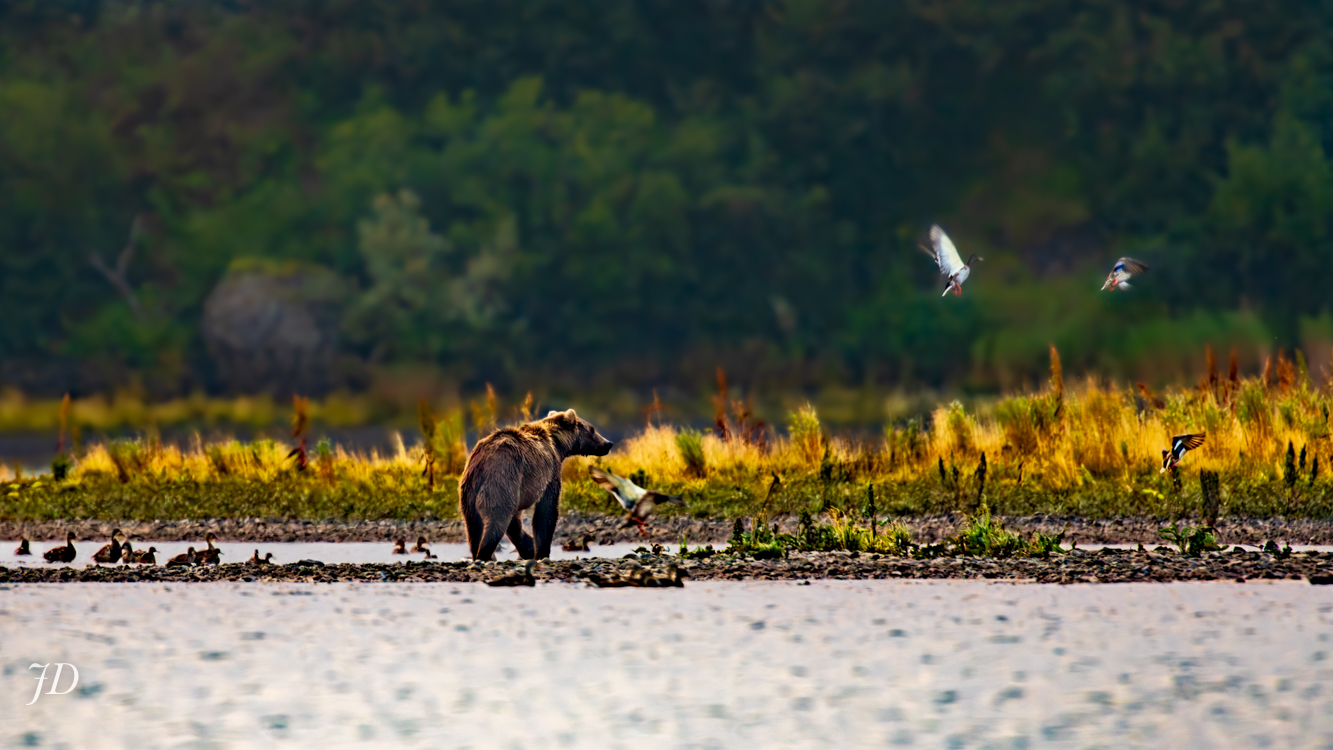
One Fine Morning – Paradise Bend on The Chignik River Ambling Bear, Mallards, Teal, White-fronted Geese, a splash of sunshine September 8, 2018
I went to the woods because I wished to live deliberately, to front only the essential facts of life, and see if I could not learn what it had to teach, and not, when I came to die, discover that I had not lived.Henry Thoreau, Walden
The Lake: Waning Crescent with Venus I captured this image from our living room window on September 8, 2018
Month by month, photo by photo I’m making progress with this daunting task, key-wording, culling, editing, retouching the tens of thousands of photographs we’ve accumulated. The collection goes back to old print photographs we scanned into Lightroom, continues through our years together in Sacrament and on into our years in Alaska which have been punctuated with travels elsewhere and a two-year span in Mongolia.
Usually I’ve drawn energy from this project as I revisit memories and track the progress we’ve made as photographers. My editing and retouching skills have dramatically improved, and that too has been satisfying. But there have been low periods as well. Recently I pitched a story to the editor of a magazine. He liked the draft I showed him and asked for more. I finished the piece, sent it in… and nothing. It’s as though I’ve been ghosted. Unpleasant.
And so I find myself revisiting old questions. Have I lost the touch? Usually editors are enthusiastic about my work. Does “lost the touch” really mean “gotten too old?” Which leads to a downward spiral into the really big question I find hanging over my head at times: What if nothing ever comes of all this? What if this late-in-life push is, ultimately, pointless?
Things can get dark. But, are you enjoying your life? Barbra asks, trying to be helpful and cheering. The answer to her question is (on most days) an unequivocal Yes. And yet… and yet…
Faith in the past as an indicator tells me this moment of doubt will pass. That same past tells me that the only way to know is to keep moving forward. I suppose I could construct a metaphor about moons waning, disappearing… and then finding themselves again and waxing into fullness.
Ermine (Short-tailed Weasel) Chignik Lake, Alaska Peninsula, August 2018
A Collared Lemming burst from a thicket of grass and swam across a narrow finger in the lake which was filled to the brim with recent rains. Just as the little rodent disappeared in a patch of thick grass on the opposite side of the water, an Ermine popped out from where the lemming had just come, paused, looked around, appeared to sniff the air, then also swam the same course. I was scrambling with my camera hoping to capture something of the surprise sighting and managed to capture the above image just before the Ermine dove into the grass.
We didn’t often encounter either of these species during our years at The Lake, but there was hardly a walk after a fresh snowfall that we didn’t come across small paired tracks left by Ermines bounding through snow, so they appeared to be fairly abundant. Cool animals. I would love to have made friends with one the way Sam made friends with Baron in My Side of the Mountain… The closest I came was when one ran across the toe of my boot and into the entrance of our house as I opened the door one morning.
Imperial Diver (Common Loon, Gavia Immer) Chignik Lake, Alaska Peninsula, August 2018
Upon publishing a photograph of a Wilson’s Warbler under the title Black Cap Jazz Singera few days ago, reader Tanja Britton (see Tanja’s blog here), left a note alerting me to the American Ornithological Society’s decision to revisit the common names of species within AOS’s jurisdiction that are predicated on the names of the people (white men) who “discovered” or “identified” the bird in question as well as appellatives assigned by the “discoverer” to “honor” others. This would mean the renaming… the reimagining of a number of birds and our relationships with them: Steller’s Jay, Wilson’s Snipe, Baird’s Sandpiper, Audubon’s Oriole, Bachman’s Sparrow, and so on.
Hurray and about time. This “dibs!” approach to naming the beings we share this planet with could hardly reflect a more juvenile mindset. We, all of us, have the right to choose our own names, to imagine ourselves as we wish to be, to present our own identities and not to be enslaved by someone else’s idea of who we should be. We believe the same dignity should be accorded to all beings. And in fact, even in the instance of an “inanimate” object – such as, say, a salmon pool on a river – if one is looking at that landscape and can think only of imposing a person’s name on it, one is not looking closely enough.
Our view at Cutterlight has long been that if one creates a piece of art such as writing, a painting, a piece of music and so forth and one chooses to attach one’s name to said piece of art, it is appropriate and just that the creator’s name live on with that art for as long as the art lives. But this vain nonsense in pursuit of the illusion of immortality wherein buildings, airports, highways, and birding organizations are arbitrarily named after this person or that has always struck us as one of the least attractive impulses in Euro-American culture. The practice is as divisive as it is arbitrary – a fact we seem to be slowly waking up to as a society.
It is often the attitude among indigenous peoples of the Pacific Northwest that the totem poles they’ve created should be allowed to naturally decay over time rather than preserved. Their view is that all beings and all things have a span in which they exist in a certain state, at the end of which they must be allowed to follow their natural path into the next state of existing.
Amen.
Turning back to the matter of our avian friends…
As the AOS embarks on the enlightened task of reimagining the gray, nondescript names of men attached to various species, let them take one further step and strike from vernacular names disrespectful monikers such as “least,” “dwarf,” “lesser,” “house,” and the sobriquet we find most grating – “common.”
The only thing “common” about Gavia immer, the bird in the above photograph, is the unimaginative minds of whomever agreed this regal being should be so reduced. This bird can reach a bill to tail length of three feet (90 cm), a wingspan of four feet (130cm) and is reported to dive up to 250 feet (76 meters). “Common Loon” my foot.
My favorite fish is the Coho Salmon. I am absolutely fascinated by Lady’s Slipper Orchids. It’s difficult to name a “favorite” anything, and as I reflect on the matter it becomes apparent that it might be even more difficult to explain Why a given something is a favorite. The phrase “an integral part of the journey” flashes in my mind. The species in the above photo is the reason I became a serious birder and threw myself into photography. Oncorhynchus, Cypropedium, Lanius…
What is it in your life that has pulled you into travel, adventure, personal growth, new understandings? JD
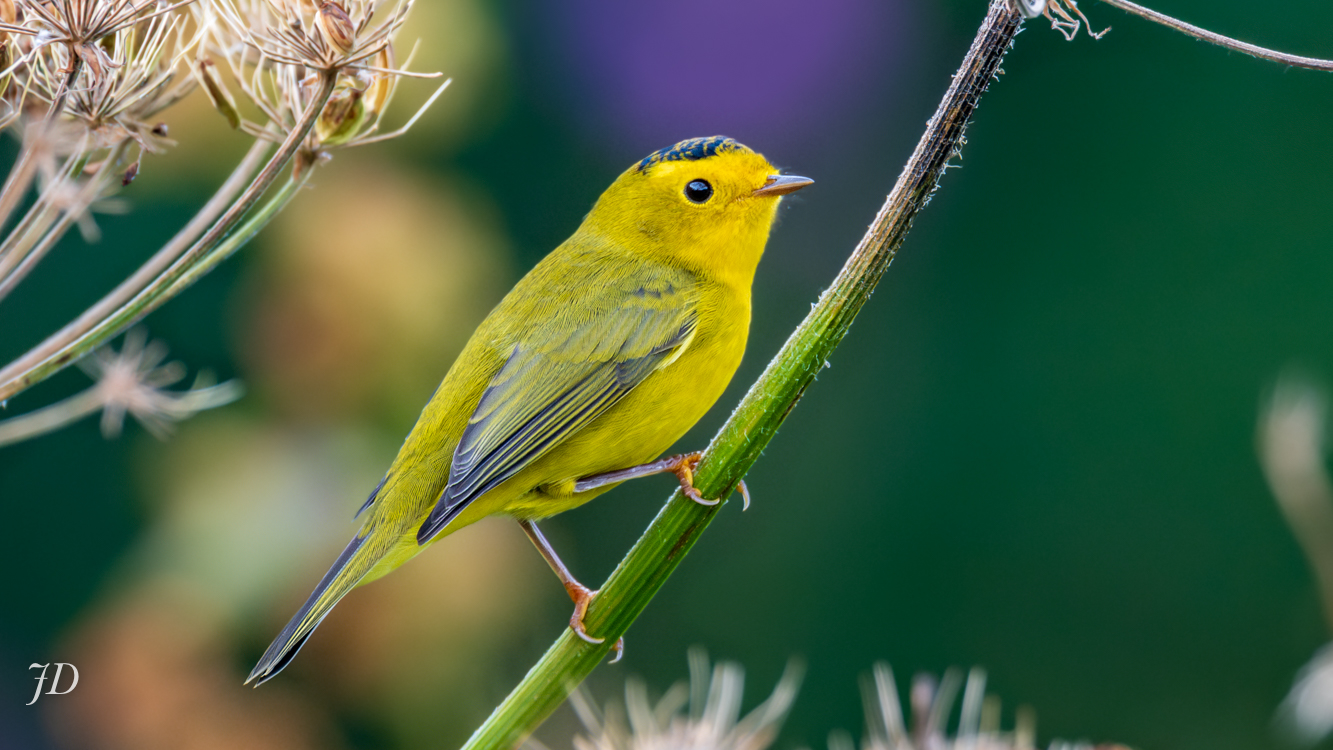
This beautiful bird is regrettably saddled with the name of the man credited with identifying him… a name with an apostrophe s… as though no one else ever knew this bird and that by “discovering” this fine fellow the man now owns him. So let’s not call this happy singer by some name of ownership. He is an artist in his own right, Black Cap Jazz Singer.(Chignik Lake, Alaska, August 2018)
Every being has the right to a dignified name. Every human has the right to choose a name and an identity for himself, herself, themself. JD