The Arctic Terns of Tern Lake: Artists that Redefine the Air

arctic tern hovering n

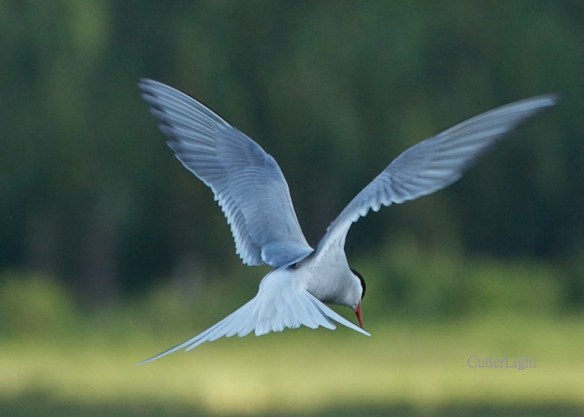
With a brood of chicks waiting to be fed, this Arctic tern (Sterna paradisaea) hovers above the water in search of small fish, its primary food source. Minute control over individual tail and wing feathers enables terns to be graceful, formidable hunters as well as inspiring to watch.

Making an annual round-trip of roughly 50,000 miles (80,000 km) between their breeding grounds in the Arctic and their summer feeding grounds in the Antarctic , Arctic terns are a species that fill one with awe and wonder. Unlike most of their cousins in the gull family, they are true seabirds as their migrations take them over vast oceans far from land. To stand on northern beach and watch terns fly is to watch an artist redefine the air.

arctic tern scouting n

Breeding pairs mate for life and most terns return year after year to the same grounds where they were hatched. There they scratch out a shallow depression in the earth and lay one to three eggs (sometimes more) the size and color of large, brown-flecked olives. Approximately three weeks later the eggs hatch and three to four weeks after that the young birds are fledged. In fall, they will join their parents in making the longest migration of any bird species.

arctic tern head on n

Inky black eyes almost disappear into a jet black cap. Although their legs seem impossibly short, terns are fairly adept on land. A specialized gland allows Arctic terns and other seabirds to extract the salt they ingest and expel it through their nasal cavities. 
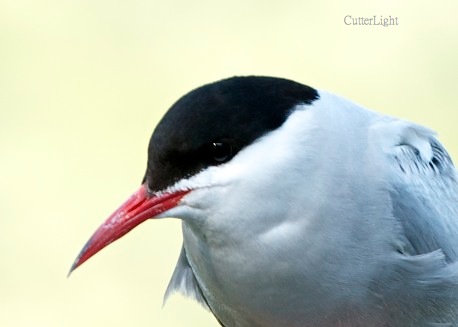
Arctic tern close nAlthough one individual is reported to have lived to the advanced age of 34, the average lifespan of an Arctic tern is about 20 years. Their preferred nesting sites are on islands where they’re relatively safe from predators such as foxes and domestic cats, although they lose some eggs and young to gulls and other birds. At one point the millinery trade took a heavy toll on tern populations, but in recent years the greatest threat appears to be decreasing food supplies due to human overfishing. At present, there are estimated to be about one million Arctic terns worldwide.
arctic tern soaring n

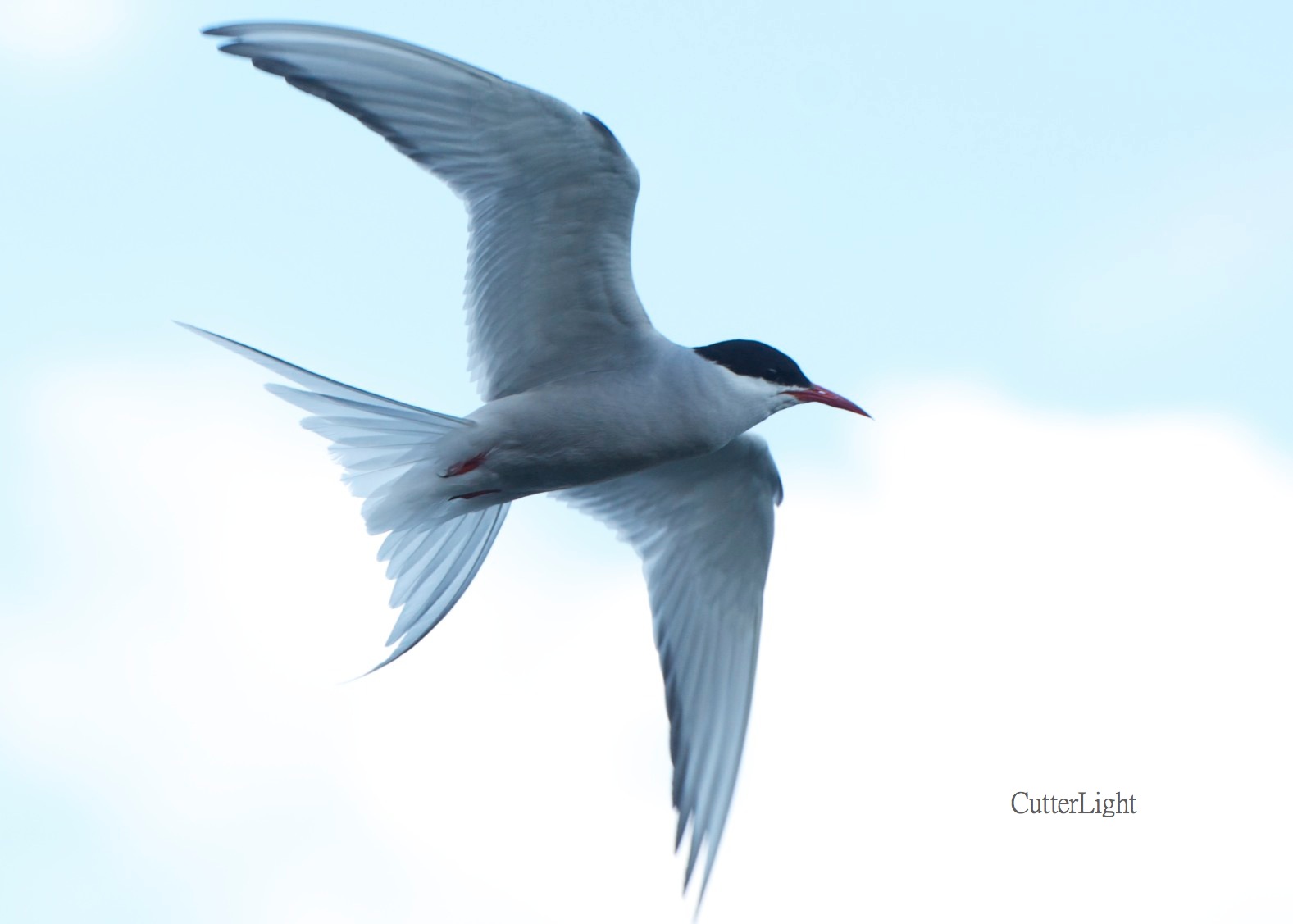
Above: An Arctic tern scans the water below for the tell-tale silvery flash of a school of small fish. 

tern showing scissored tail n

Often flying with a scissored tail and the ability to execute amazing aerial acrobatics – including backflips – account for the Arctic tern’s genus specific name paradisaea – paradise – reminiscent of birds of paradise.

arctic tern reflected n

He’s probably not really looking at his own reflection, but with a snappy red bell and a handsome black cap like that, who could blame him if he is?
Glaciers and Green: The Coastal Classic – A Five Star Train Ride from Seward to Anchorage

Coastal Classic sky reflection _n

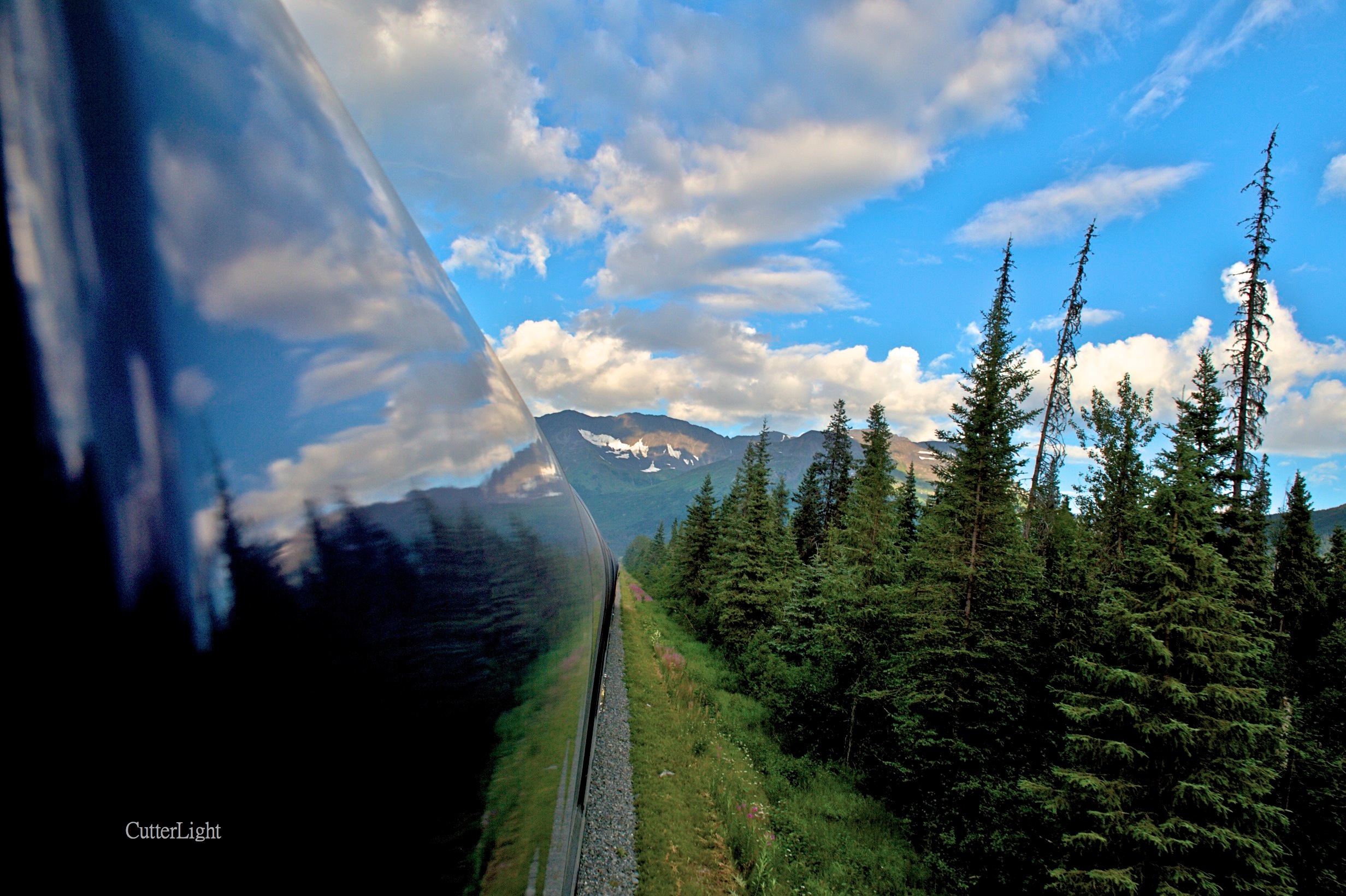
The mid-summer sky is reflected on one of Alaska Railroad’s GoldStar coaches on the Coastal Classic train. Mountainsides of magenta fireweed and, mixed forests, moose, Dall sheep, eagles and glaciers (and sometimes bears and caribou) were part of the 114 mile train trip between Seward and Anchorage.

Trains are magical. Whether we’re talking about Northern California’s quaint Skunk Train or Japan’s lightening fast, silky smooth shinkansen (bullet trains), we love the rhythm and glide of moving through the countryside on steel rails. As we brought our summer to a close this year, we decided to take the train from Seward. We departed at 6:00 PM and four hours later arrived in Anchorage energized and relaxed.

Alaska Train Coastal Classic_n

Fireweed, startling in its vibrance, lines the tracks along the Coastal Classics route through Kenai Peninsula forests and mountains.

Large windows and the freedom to get up and walk around are part of what make train travel so pleasant. After a very good meal of almond-crusted Alaskan cod accompanied by a glass of wine, we made our way to the rear of our GoldStar car where an open deck allowed us to take in the sights, converse with fellow passengers, and enjoy the warm (for Alaska) summer air.

coastal classic  bartlett glacier_n

The Coastal Classic passes by three large glaciers: Trail, Spencer and (above) Bartlett. 

Jack on coastal classic_n

Scanning the terrain for animals from the observation deck of one of the double-deck GoldStar cars, we saw moose, eagles, beaver lodges and Dall sheep. Bears – both grizzly and black – and caribou are also frequently sighted. We’re already looking forward to taking the train from Anchorage to Seward when we return in May next year. 

Coastal Classic sunlight through car_n

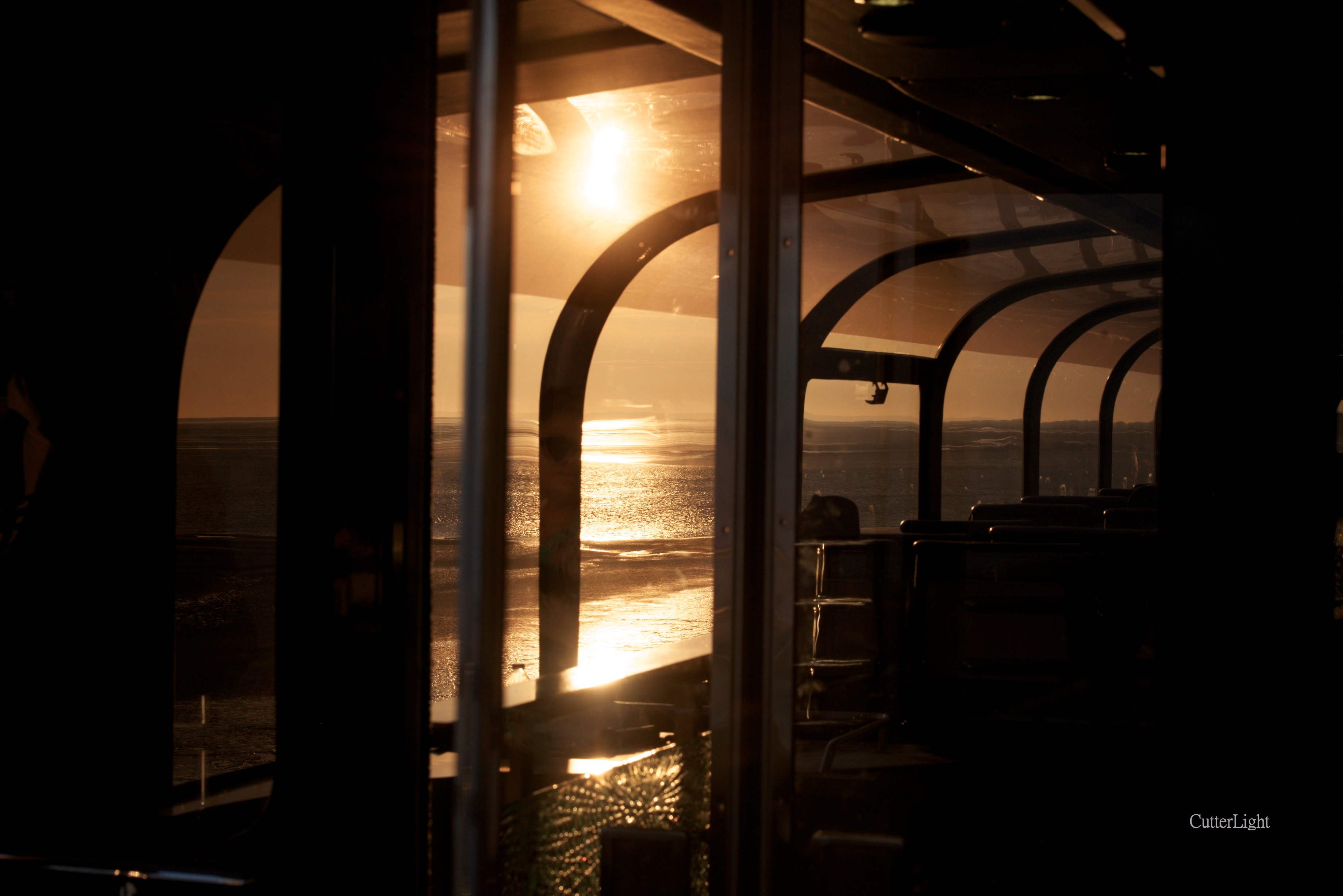
The evening sun reflects off Cook Inlet though the car’s upper deck windows. After a wonderful four-hour trip, the train pulled into the station at Anchorage. Early the following morning, we boarded a plane for the Alaskan bush and our other home.

Cedar-Planked Portabella Mushrooms Stuffed with Smoked Salmon and Manchego Cheese

mushroom 1_n

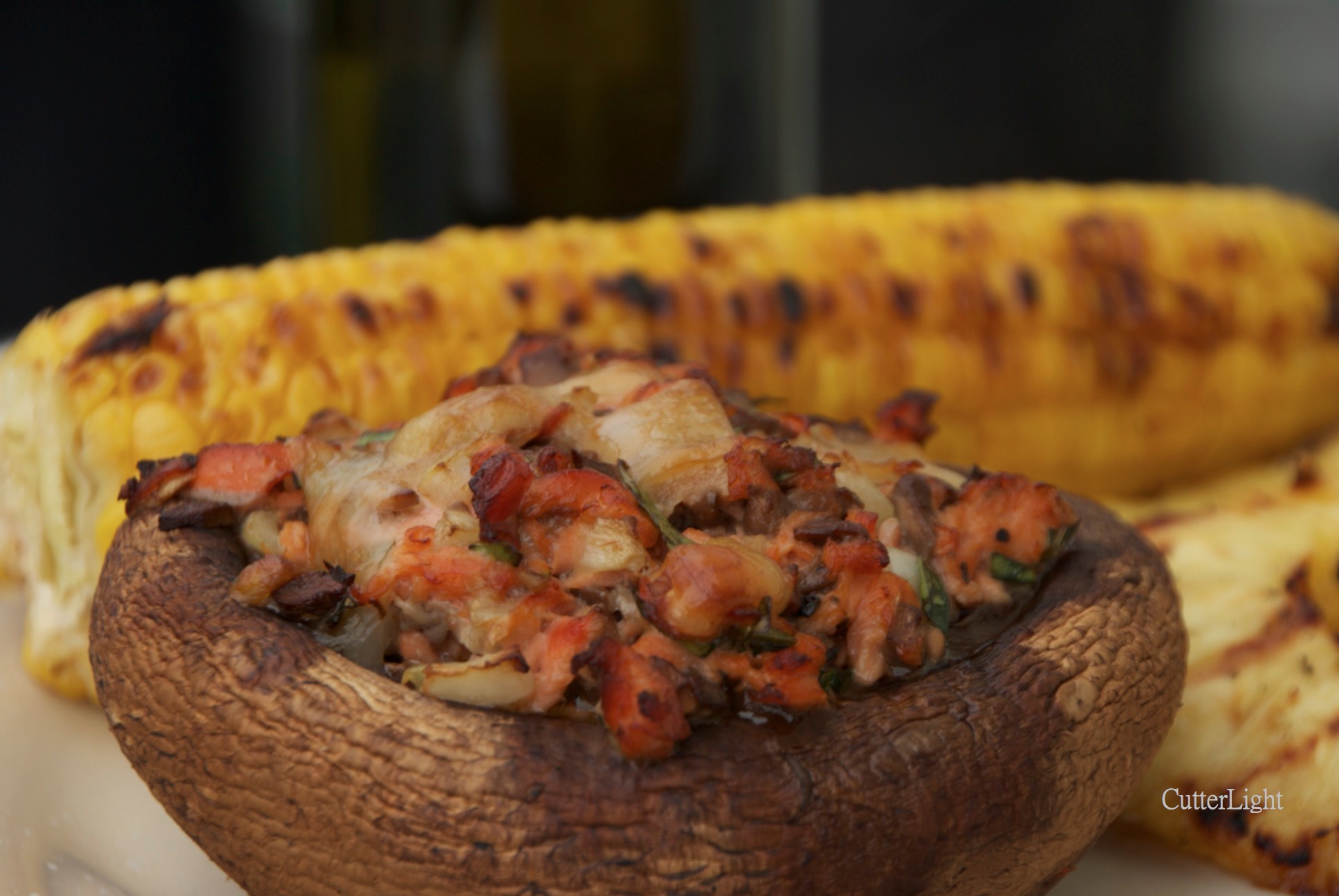
Simple and elegant, cedar plank cooking has been part of the Pacific Northwest since early native Americans first discovered this method. Food such as these these stuffed Portabella caps lend themselves to leisurely evenings complimented with good wine and good friends.

The most difficult thing in cedar plank grilling is remembering to soak the planks before you’re ready to fire up the  grill. Aluminum foil is the solution. Although it’s best to soak the planks hours in advance of cooking, they also work perfectly well soaked just a short time prior to going on the grill provided they’re placed in a shallow aluminum foil “boat” with a little liquid added. Fold up the corners of the foil, pour in a little water or water and white wine, and you’re ready! Grilled on cedar, salmon and other foods come out wonderfully moist and take on smokey, woodsy flavors.

mushroom 6_n

Grilled over charcoal, caramelized corn on the cob and pineapple rings go well with stuffed mushrooms.

cedar planked salmon_nRight: A split, whole king salmon self-bastes on cedar planks over hot charcoal.

Although cedar is popular, alder, hickory and boards from fruit trees work well too. Thoroughly cleaned, the boards can be used multiple times. Since plank cooking creates a barrier between the coals and the food, cooking time will be a little longer. In addition to preserving moistness and imbuing food with more complex flavors, planking typically results in more evenly cooked food than straight charcoal grilling.

Cedar-Planked Portabella Mushrooms Stuffed with Smoked Salmon and Manchego Cheese

Directions:

  1. Cut out the Portabella stems, chop course and place in a bowl. Add shredded or finely cubed Manchego cheese, finely chopped sweet onions, finely chopped garlic, tarragon, freshly cracked pepper, extra virgin olive oil, a small amount of sherry or white wine, and soy sauce or sea salt to taste. Mix thoroughly.
  2. Break up smoked salmon, cedar planked salmon, or any previously cooked salmon into small pieces and gently fold into the above mixture.
  3. Spoon mixture into mushroom caps and place on a cedar plank that has been well soaked. If desired, fashion a shallow aluminum foil boat slightly larger than the cedar plank and place 1/2 cup of water and white wine in the foil to help keep the plank moist.
  4. Grill over medium to medium-high heat for about 20 minutes, until a fork passes easily through the mushroom.

An Italian Amarone – a full-bodied red wine with lots of cherry – pairs especially well with a cedar-planked feast.

A Great Brine and Smoke – Soy Sauce, Brown Sugar and Seasonings for Salmon, Trout and other Fish

smoked salmon in rows_n

For the past couple of years, our brining and smoking method for salmon, trout, sturgeon and other fish has been the most popular article on our blog. Here it is again, with updated notes and photos.

If you’ve ever looked at those electric smokers sold in sporting goods stores and wondered if they did the job, the short answer is, “They do.” Our favorites are the Big Chief, Little Chief and Mini Chief models made by Smokehouse in Hood River Valley Oregon. Inexpensive, easy to use, easy to store and efficient, these smokers come with complete directions and a useful booklet that details the how-to of smoking and provides a number of recipes for fish, shellfish, poultry, meat, cheese, and even noodles, soup and breads.  My own most recent experiment with smoking was sea salt. It came out… smokey!

smoked salmon fillet_nTo obtain the best smoked fish, start with high-quality fish. Fresh fillets from bright fish make for a far better product than poorly cared for fillets from a badly handled fish. Also – and this is important -the method we use is not designed to kill parasites. It is recommended that fish be frozen at the lowest freezer setting possible for at least seven days before smoking them in order to ensure that they are parasite-free. You can read NOAA’s full recommendations here.

Below: A double batch of sockeye salmon in side-by-side Big Chief smokers.

smoking salmon double batch_n

For salmon, trout, sturgeon and similar fish with fairly firm meat, we marinate fillets in a wet brine for roughly six to 10 hours depending on the size and thickness of the fish or fillets. The fish can be brined in non-reactive glass, plastic or stainless steel (not aluminum) pans in the refrigerator or in a bucket or cooler with a couple of sealed Ziplock bags of ice thrown in to keep the mixture cool. Following are the step-by-step instructions we use for whole small trout and the fillets of salmon and other fish. The recipe can easily be modified to add other flavors or to finish the smoked fish with a sesame seed glaze.

Brine

Ingredients: For eight pounds of salmon, trout, sturgeon or other fish

  • 8 to 10 pounds fillets, skin on, rinsed, patted dry, cut into small pieces. A good size is about 3″ x 6″, but smaller or slightly larger is fine. Small trout can be cleaned and smoked whole.
  • 8 cups water
  • 2 cups soy sauce (Kikkoman is our favorite)
  • 1 1/2 cups brown sugar
  • 1/2 cup sea salt or kosher salt (Do not use iodized salt. It will impart an unpleasant flavor.)
  • 1 1/2 tbsp granulated garlic
  • 1 tbsp ginger

Directions:

  1. Mix brining ingredients together in a large bowl.
  2. Pour mixture over fillets, making sure they are covered, or until they float.
  3. Cover containers and marinate for about 8 hours (or overnight) in the refrigerator.
  4. Remove fillets from brine, pat dry with paper towels, and arrange on racks to dry for about an hour – until a glaze forms on the surface of the fish.
  5. Smoke fish according to your smoker’s directions with alder wood, mesquite, fruit tree or hickory chips. Check occasionally, keeping in mind that air temperature will influence smoking time. Typical smoking times range from 6 to 12 hours. A slightly wet product is best suited for many of the recipes we enjoy and for canning. For straight snacking, a drier product may be preferred.

Ghost Trees and Ghost Birds: Video and a Poem

At some point during my youth in western Pennsylvania, I read about a magnificent bird – the ivory bill woodpecker, the Lord God Bird. I wanted badly to see one and I knew that my dad – a naturalist – would know where to look. “They’re gone,” he said. I looked at him quizzically. “They’re extinct. They need big, old forests, and the big, old forests have all been cut down.” My dad was right. You should know that going into this film – a feature-length documentary that is powerful and sad and very much worth seeing.

.

Ghosts of Trees, Ghosts of Birds

People imagine they see them still,

ivory bills,

in remnant stands of virgin forests

too small to sustain these great birds.

In that way God Lord Birds are everywhere –

an image in burnt toast, a shadow pulling itself

into a triangular head,

a flash of red

as the late sun slants through the canopy,

or a fractured rock on a hillside gathering the feathered light

and darkness like a black and white diamond on a water oak trunk.

Ghosts of trees, ghosts of birds

Their nesting holes,

five inches across, 50 feet up –

hewn into hardwood with bone-chisel bill –

gone, too,

vanished with the ancient forests

into the humid air

above the endless spread of soy bean fields

Ghosts of trees, ghosts of birds

And so we pause

in the late morning

and set our paddles across the canoe’s gunwales

amidst the cypress knees, black gum and snags

as the mist lifts from this swamp

far enough away from all that

that it could be

the last place on earth

these birds exist

and strain our ears

and listen for double knocks

that rose and died 60 years ago.

Sautéed Salmon Roe

salmon roe sauteed_nOn the East Coast, shad roe is a celebrated springtime delicacy. In the Pacific Northwest, a similar side dish or an amuse bouche can be made from the immature eggs of ocean-caught salmon.

Fresh roe from ocean-caught salmon has a creamy texture and taste with an essence as fresh as the sea. At this stage the small, unripe eggs are firmly held together inside two separate egg sacs and lend themselves to being sautéed over low heat.

Once the egg sacs have been removed from the salmon and cleaned, preparation is easy. We like to keep it simple so that the delicate flavor of the eggs comes through: a little olive oil or butter, garlic clove sliced fine and a dash or two of salt is all you need. Keep the heat low so that the eggs don’t pop and cook the eggs through till they become opaque. Add a dash of sherry or white wine if desired.

A glass of Champagne, a sparkling wine from California, or an Italian Prosecco along with an amuse bouche featuring sautéed roe make an elegant start to to a special dinner. Larger roe sacs can be presented as an entrée similar to the manner in which shad roe is often served.

For an easy method for curing ripe salmon roe into beautiful, sushi-grade ikura, see Ikura: Curing Salmon Eggs

Sockeye Salmon: Earth-friendly Sashimi

sockeye sashimi removing pin bones_n

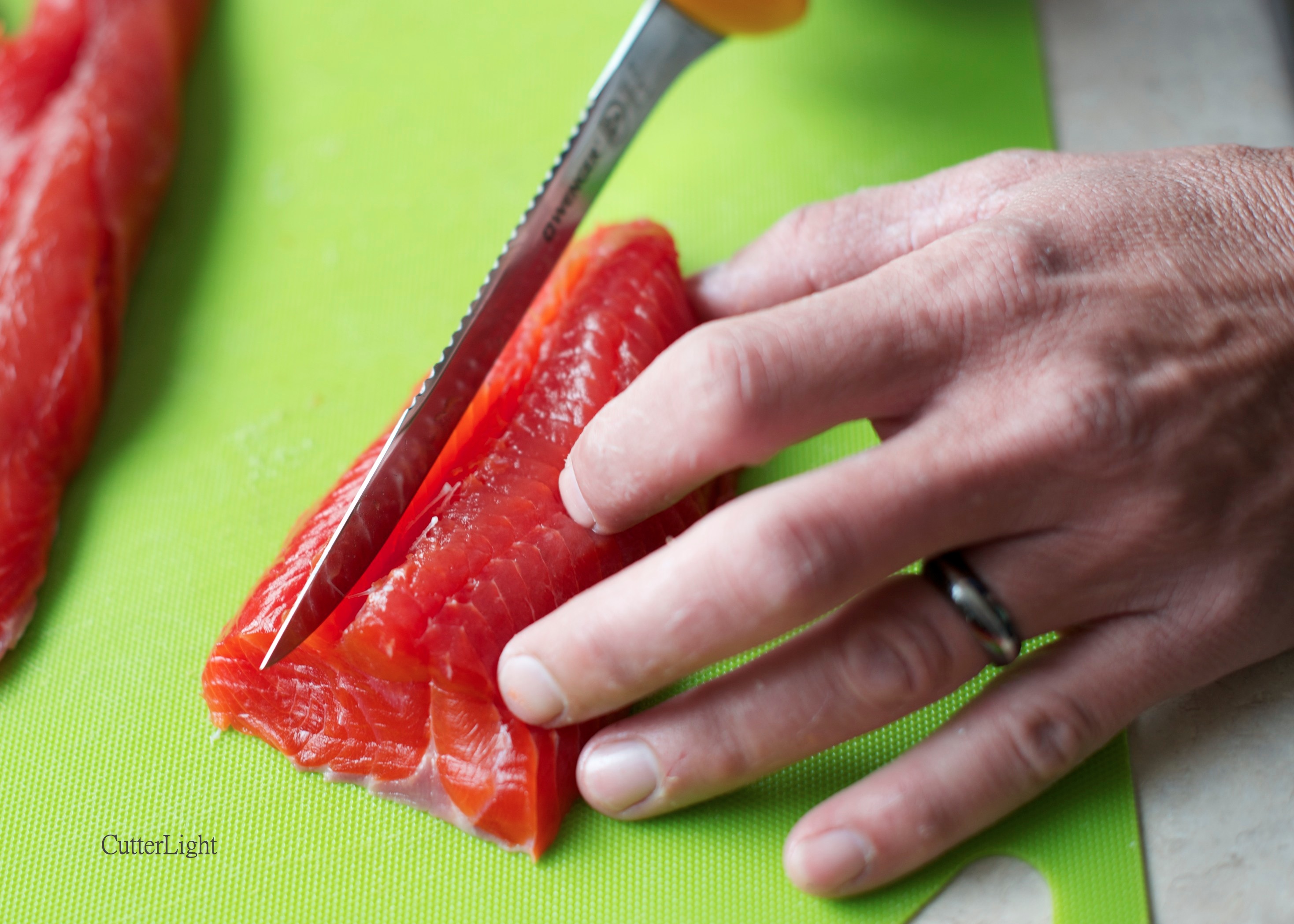
Above: Removing the pin bones from a Sockeye fillet. Of the eight species of Pacific salmon, Sockeye (red salmon) have the firmest flesh and are second only to Chinook in terms of fat content. These attributes make them a perfect choice for sashimi or seared tataki. 

Among Pacific salmon, there is a direct correlation between how far each species travels and how much fat or oil the meat contains. Chinook, which may run 100’s of miles up natal rivers, have meat so laced with fat eating a piece of an upriver bright can be akin to letting a piece of of light, fresh, creamery butter melt in your mouth. While sockeye aren’t quite that fatty, their relatively long spawning runs during which they don’t feed necessitate ample amounts of stored fat. Bluebacks (another name for Sockeye) have rich, oily meat – self-basting on the grill and ideal for sashimi.

sockeye with running tap_n

Marbled with fat, the belly meat of Sockeye is comparable to toro – the highly-esteemed belly meat of tuna.

The term “Sockeye” is derived from similar sounding native American words meaning “red” – which is both the color of sockeye meat and the color they take on during their spawning run. The fillets are beautiful, and given the relative abundance of wild Sockeye and their generally reasonable market price, it’s puzzling that they aren’t utilized more often by sushi restaurants. Unfortunately, most sushi restaurants serve farmed Atlantic salmon – a bland substitute for wild fish.

Chinook fillet on grill_n

Butterfly-filleted, seasoned with salt and pepper, and ready for the grill this ocean-caught king salmon (Chinook) shows this species’ characteristic orange color.

Since producers are permitted to dye farmed Atlantic salmon to match the color of wild fish, looks alone are not always a good way to determine whether or not you’re making a sustainable choice when you purchase a piece of salmon at the market or order salmon at a sushi-ya or other restaurant. Look and ask.  If the menu merely says “salmon,” it’s a sure bet the product came from a farm. Wild Chinook are highly prized and command a higher price than farmed fish; therefore anyone selling wild kings is going to accurately label them as such. The meat of sockeye has a distinctive red coloration and is noticeably firmer than that of other species. Sockeye, too, are highly prized and are almost certain to be accurately labeled.

sockeye sashimi_n

The upper part of Sockeye fillets, the back meat, is beautifully colored and wonderfully firm. 

Sockeye are primarily filter feeders. They have more gill rakers than other salmon, and these gill rakers help them sift out small crustaceans such as krill. These crustaceans are rich in carotene which give red salmon their red color. Krill are also loaded with oil, giving Sockeye their rich, oily flavor.

sockey sashimi with beaver wasabi_n

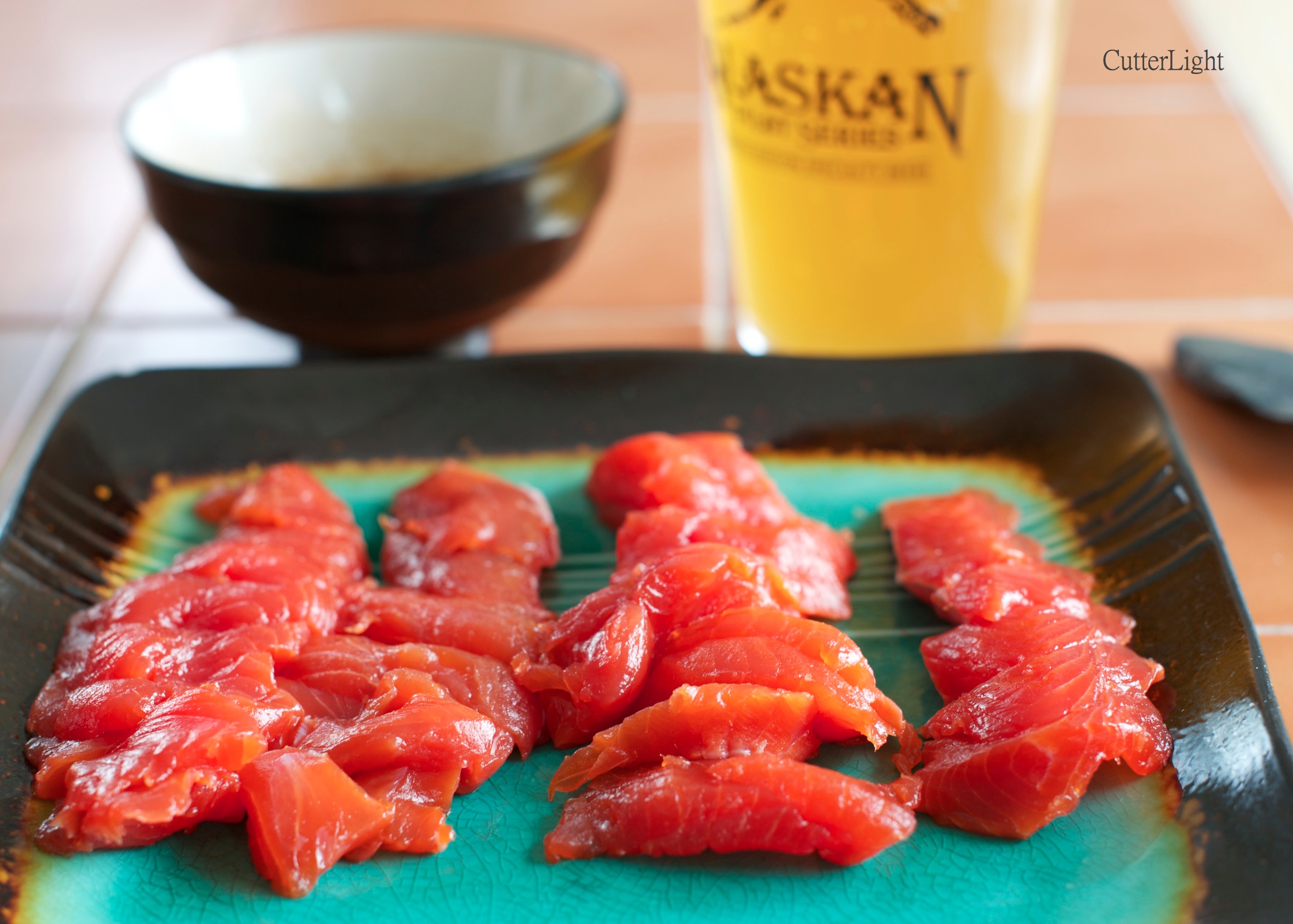
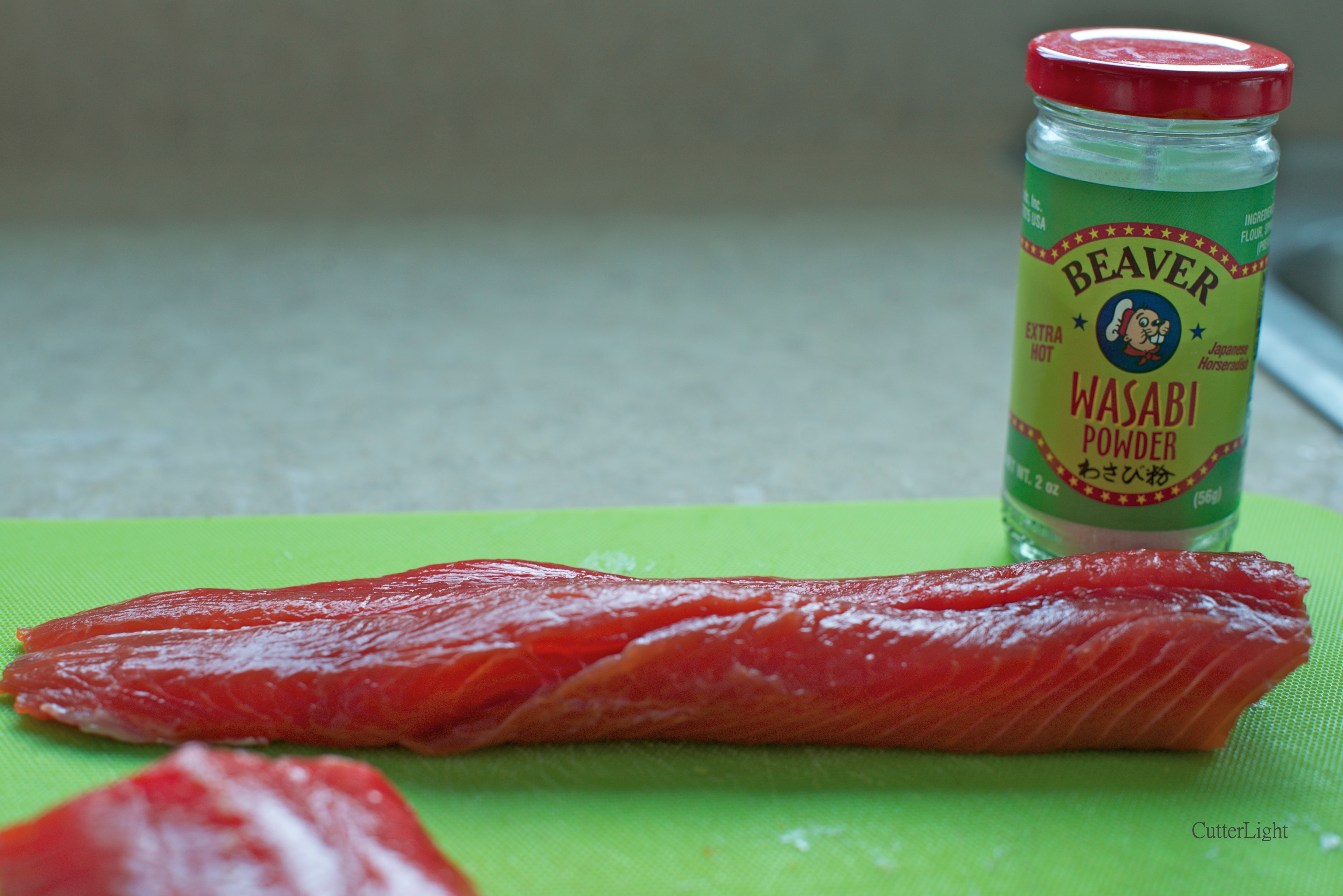
A sashimi-grade Sockeye fillet fresh from Alaska’s famed Copper River is ready to be sliced into thin, bite-sized pieces and dipped in soy sauce with just a hint of wasabi. Enjoy with a favorite craft beer, a good daiginjo sake, or a lightly-chilled Chablis. *We strongly advise readers to freeze salmon and other fish for at least 24 hours before serving raw in order to kill parasites. 

Sockeye Salmon off the Beaten Path: Dipnetting on Alaska’s Copper River

barbra dipnetting sockeye b and w_n

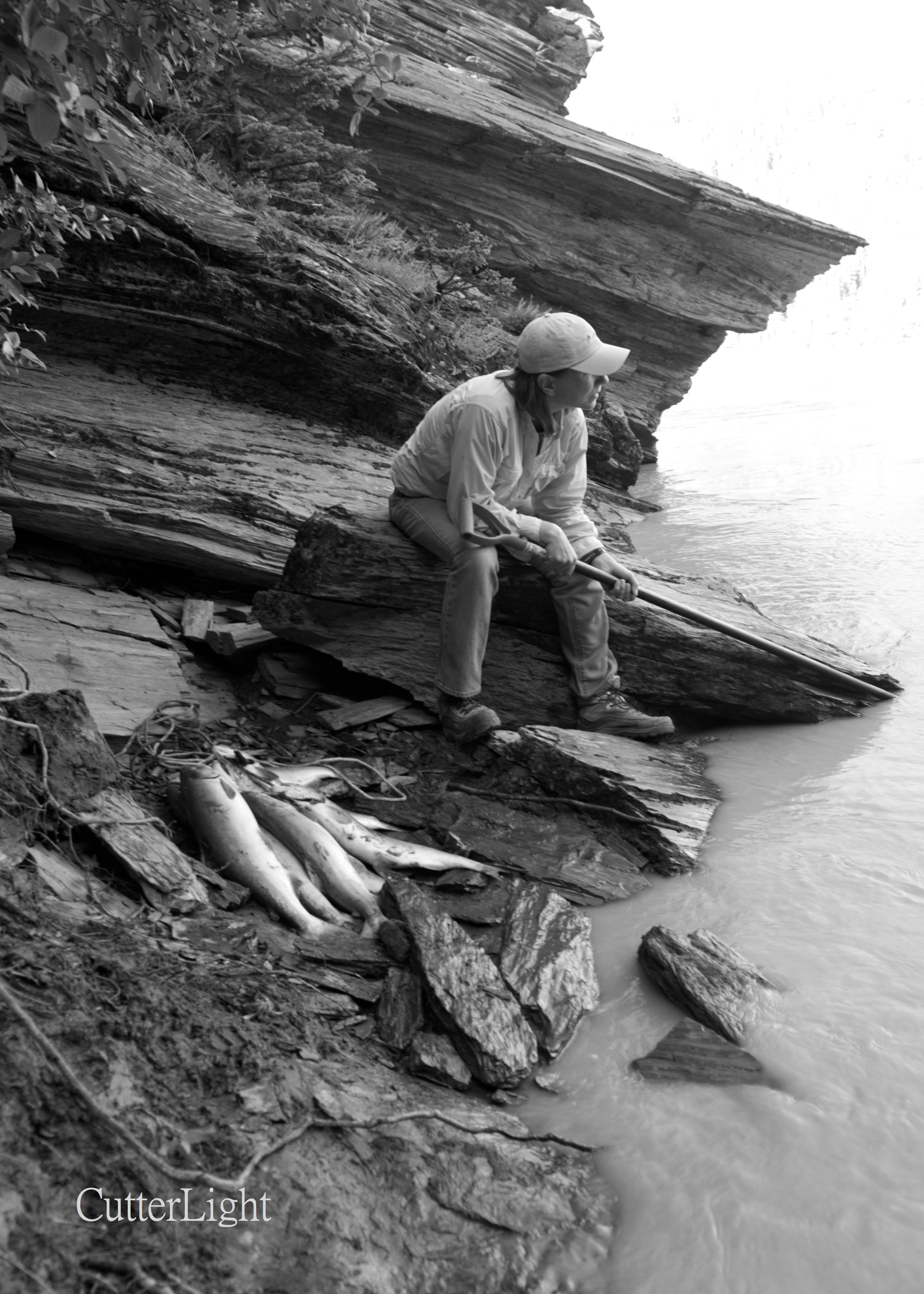
A two-mile hike into the canyon, a scramble down a steep bank, a piece of river with no one else in sight, and a run of red salmon hugging the shoreline, pushing upstream, heading home… 

Chalky-brown with glacial silt and bank erosion, the broad river sweeps by below, swift, powerful, wild. If we’ve timed it right, the piece of water we’ve chosen to fish will be full of sockeyes. Fireweed has just begun to bloom, and the forest trail above the river is lined with bluebells and pink wild roses.

barbra dipnetting sockeye_n

Barbra fishes an eddie where the fish swim close to the bank on their journey to spawning grounds further upstream.

This is not the fishing of hackle and thread carefully presented on graceful, arcing casts, nor even of Pixie spoons heaved out and fluttered through clear riffles. The net our friend Nathaniel Wilder has loaned us measures roughly three feet across and four feet long and is attached to a 12-foot handle. The rig is cumbersome, made more so by the surging tug of the current and we take turns bracing the handle against a slate rock outcropping to keep it steady in the river’s flow. When a fish hits, the net comes to life.

barbra dipnetting sockeye b_n

With a salmon in the net, the scramble for solid footing begins. 

sockeye in net_nLeft: On average the hens are smaller, but the roe is a delicacy. 

They come one, two and even three at a time and average six pounds apiece. The limit is 30, and it’s quickly apparent it won’t take long to put that many on the bank. A small, ice-cold stream cascading down the canyon wall provides the perfect place to clean the catch. We’re happy to have packed in a scrap of wood to serve as a filleting table.

The two-mile hike back to our camper, our backpacks loaded with 90 pounds of fish between the two of us is work, but a good kind of work. Back home, we’ll smoke and can the bright red fillets. The roe we’ve kept will be cured and made into ikura.

sockeye fillets_nBrilliant red-orange and marbled with fat, these sockeye fillets are ready to be brined and smoked, seasoned and broiled, grilled on a cedar plank, or sliced thin and served as sashimi. As per standard practice in Japanese sushi shops, we freeze salmon (and other fish) for at least 24 hours prior to preparing raw.

eagle in high water_n

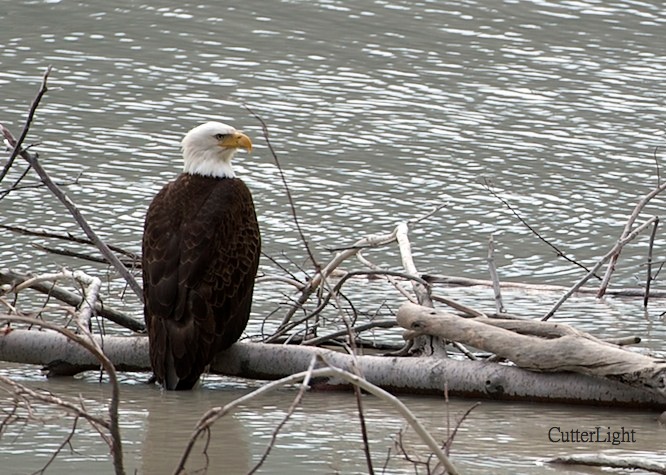
Warm weather in Alaska has meant quickly melting ice and high water. 

wild roses_n

blue bells and trestle ruins_n

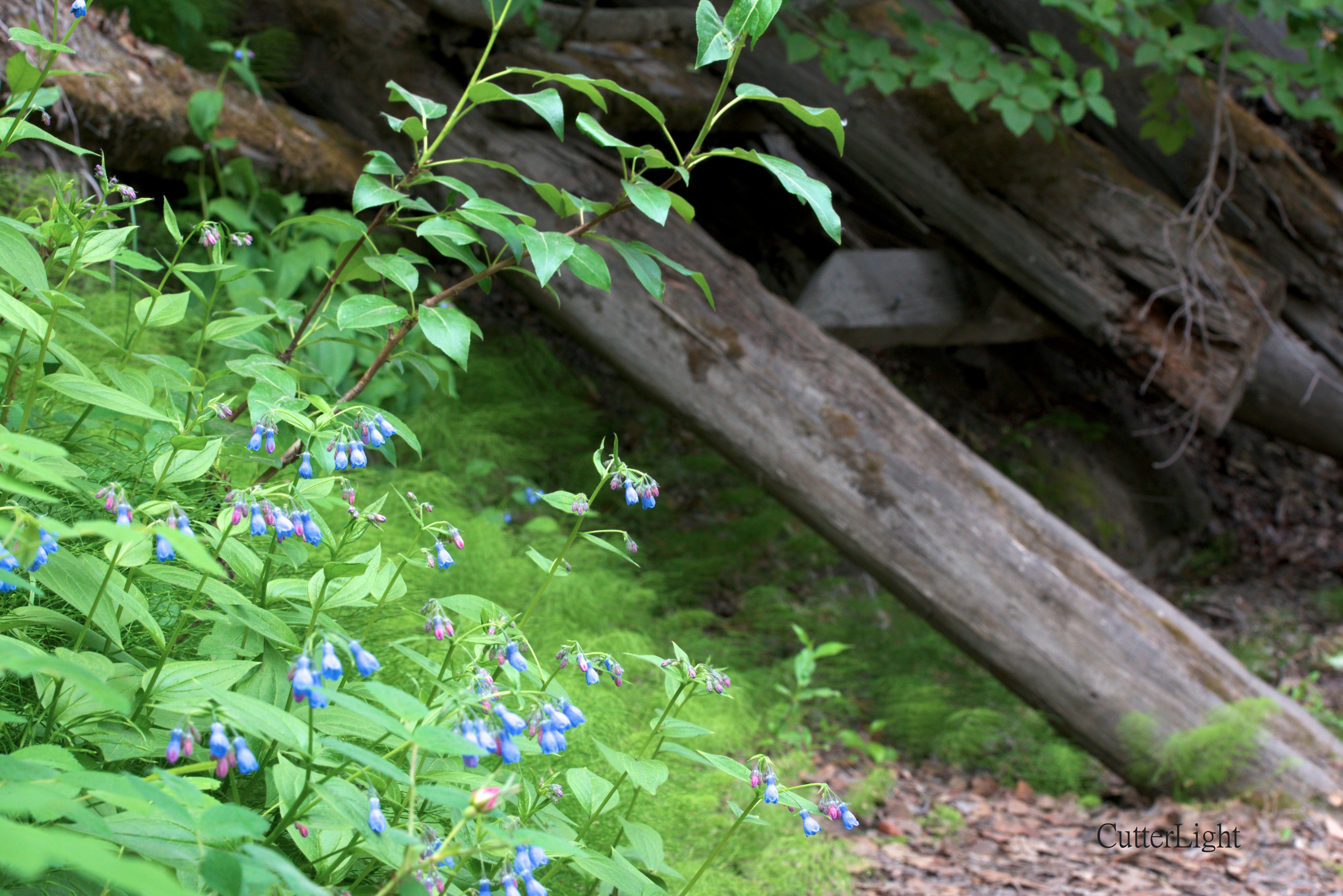
Above left: Bluebells, horsetail ferns and salmonberries take over the ruins of an old train trestle. Right: Dense patches of wild rose perfume the air along the trail. Below: We hiked out of the canyon at midnight, just as the Alaskan sun was setting.

copper river midnight sunset_n

For an excellent recipe for brining and smoking salmon, see: Smoked Salmon with Soy Sauce and Brown Sugar Brine

For an easy ikura curing method, see: Ikura: Curing Salmon Eggs

Eat Wild! Sautéed Fireweed Shoots and Fiddleheads with Freshly Caught Fish

fireweed and fiddleheads w rockfish_n

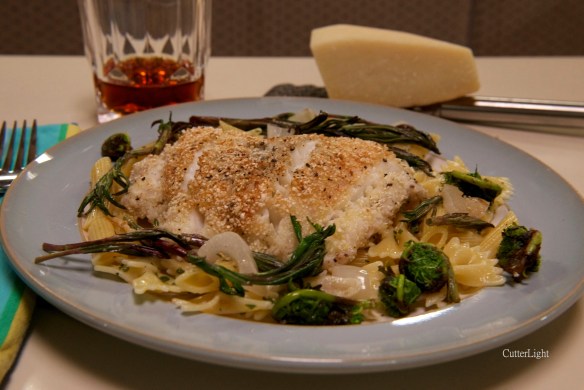
Lightly sautéed in olive oil with a pinch of salt, these tender fireweed shoots and fiddlehead ferns compliment fresh rockfish on a bed of pasta. 

With the beautiful warm weather we’ve been enjoying this summer in Seward, spring flew by before we knew it. So we had to do some climbing to harvest the purple-colored fireweed shoots and young fiddleheads we wanted for the rockfish dinner we had planned.

fireweed shoots_nEleven hundred feet up Mount Marathon, near the last patches of snow at the edge of the timberline where the cold had extended spring we found what we were looking for. We filled our stainless steel water bottle with a couple handful’s worth of these delicacies, added clear, icy water from a rivulet to keep the shoots cool and hiked back down the mountain.                                                             The perfect time to pick fireweed is when the young shoots are still purple. 
Mount Marathon mid June _n

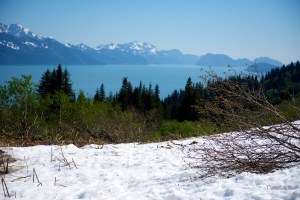
                                                                              Right: The town of Seward is a nearly vertical drop below the timberline of Mount Marathon. The day was sunny and shorts-and-t-shirt warm and even with a bit of haze in the air the view of mountain-rimmed Resurrection Bay was spectacular.

Below: This well concealed nest added to the sense that we had turned back the clock a few weeks to earlier in spring.

fox sparrow nest mt marathon_nBack aboard Bandon that evening, we poured out a little bourbon into a couple of tumblers, seasoned a fillet from a rockfish we’d caught the day before, and panfried it along with the fiddleheads and fireweed.

There is something incredibly satisfying about harvesting one’s own dining fare – whether from sea or river, garden or mountainside. If you are lucky enough to live where you can gather wild plants, we hope you will. Keep your best spots secret, leave plenty to sustain regeneration and a healthy population, and maybe pick up a little bit of the litter less considerate people have left behind on your way out. Bon appétit!

yelloweye rockfish_n

Bourbon and Vodka Vanilla Extract from Scratch: Do Not Open till Christmas!

vanilla w bourbon_n

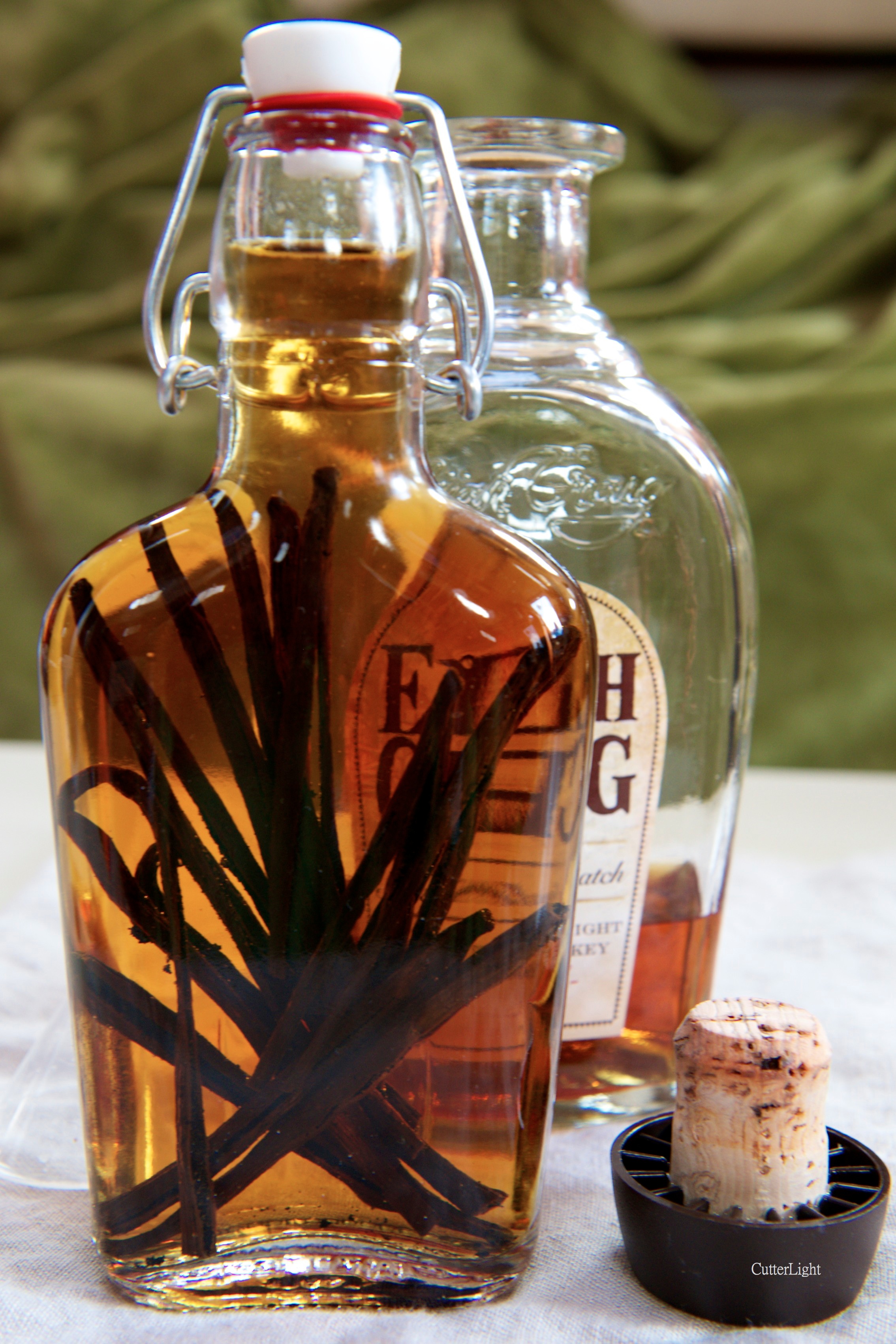
Quality Madagascar vanilla beans, bourbon in one bottle and vodka in the other, and the experiment begins. If all goes well, in six months we’ll have two excellent bottles of double-strength vanilla extract for our Christmas pies and confections.

Even when perfectly good store-bought products are available, we are fascinated by how various foods are actually made. For excellent vanilla extract, we know of no better than Penzeys Spices double strength. But we wanted to give making our own a go.

vanilla beans bourbon and vodka_n

We purchased our Madagascar vanilla beans from Penzeys. For the bourbon and vodka, we went with two well-known makers – a bourbon we enjoy sipping and a vodka that’s fine in our bloody Mary’s.

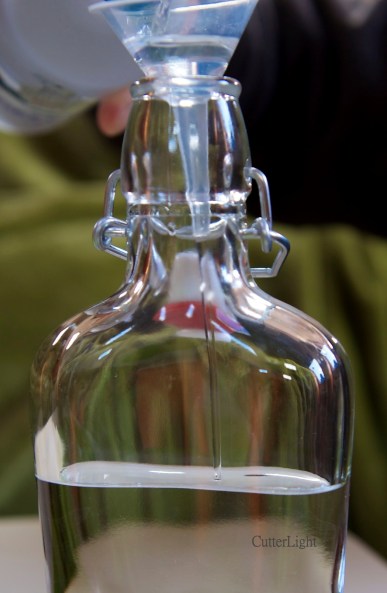
vodka pouring into bottle_n

There’s really nothing to creating your own vanilla extract. We had 15 long beans which we cut in half, split down the middle, and placed in old-fashioned bottles with tight seals.

Whether the subject is sherry for cooking or bourbon for vanilla extract, an oft-repeated axiom is “Don’t use anything you wouldn’t drink.” That’s good advice, on par with adding seasonings “to taste” in recipes. On one hand, this isn’t the place to use the finest bourbon one might drink; on the other hand, in our own experience we noticed a marked improvement in our sauces and sautés when we moved away from lower end sherries and upgraded to more drinkable varieties.

.

bourbon pouring into bottle_new

Once the vanilla beans and alcohol have been combined and sealed tight, it’s helpful to give the bottle a gentle shake from time to time to ensure mixing and full extraction. For the richest, most flavorful extract, allow six months to go by before opening.

For this batch, that means we’ll be able to break the seal for Christmastime chocolate orange meringue pie, pecan pralines and extra rich vanilla ice cream.