Birds of Chignik Lake: Semipalmated Plover

semipalmated plover alaska

Semipalmated Plover, male in his striking breeding plumage. The partial webbing between this bird’s toes is visible; it is this partial webbing from which the term “semipalmated” is derived. Denali Highway, Alaska

As I may have mentioned elsewhere, finally obtaining a small boat here on the Chignik opened up new worlds in terms of wildlife viewing in general, birding in particular, fishing and all around exploring. As to the birding, with the greater range the scow provided we immediately began cataloguing species new to us in the drainage, The little Semipalmated Plover, already a favorite from other birding ventures, was among the first of these new-to-us Chignik species.

semipalmated plover juvenile chignik river

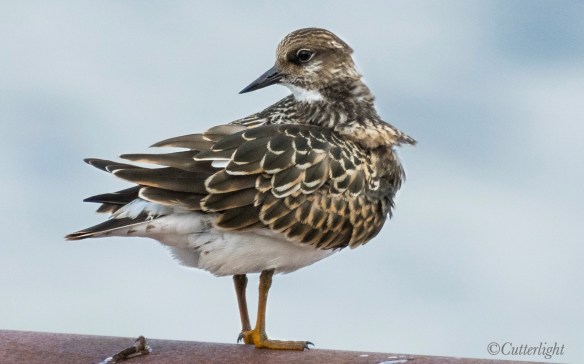
Semipalmated Plover juveniles, Chignik River, July 24, 2020. These plovers typically occurred on river gravel bars and shorelines in mixed flocks of Western and Least Sandpipers

As we didn’t acquire our scow until July, there is still documentation to be done. The Semipalmateds we encountered appeared to all be juveniles. According to Herbert K. Job, writing in Birds of America*, this isn’t unusual. He reported flocks of nothing but young birds migrating into the Atlantic seaboard in September, a month or so after adults had arrived from their northern breeding grounds. At any rate, we took lots of photos, searched through them carefully on the large screen of our computer, and found no adults. This coming spring, we will begin early searching the various shorelines, river bars and rocky islands for signs of adult birds and breeding.

semipalmated plover nest denali highway alaska

If you didn’t know they were there, you’d probably miss them, but even when you feel certain a nest may be nearby, the eggs can be quite difficult to locate. The nest itself is a barely discernible depression lined with twigs and leaves. The precocial young will leave the nest upon hatching and although the parents will stay close, the little ones will find their own food. There may be nothing in the avian world quite so cute as the scurrying ping-pong ball of fluff a young shore peep resembles. Approximately four weeks after hatching, they’ll be able to fly. (Denali Highway, Alaska)

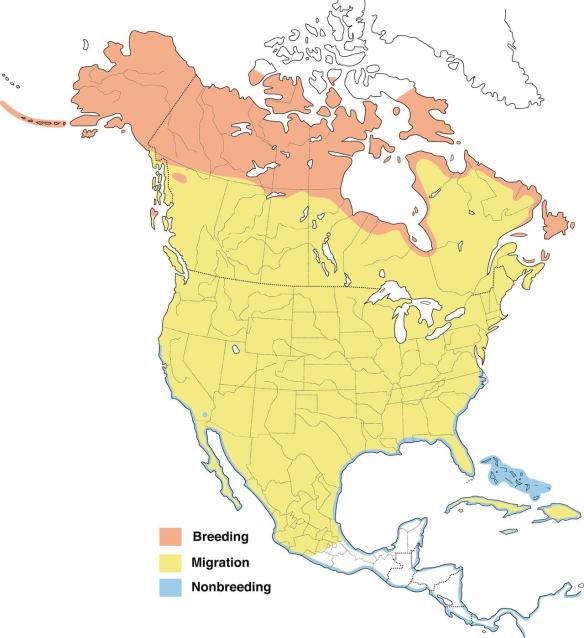
Semipalmated Plover Range Map: with permission from The Cornell Lab of Ornithology, Birds of the World

Semipalmated plover Charadrius semipalmatus
Order: Charadriiformes
CharadriusLatin derived from Greek kharadrios for a bird found in river valleys
semipalmatusLatin – semi = half + palmatus = palm – referring to this species’ partly webbed feet

Status at Chignik Lake: Occasional to Common in Summer; Status in Spring uncertain; Absent in Fall and Winter

David Narver, Birds of the Chignik River Drainage, summers 1960-63Occasional

Alaska Peninsula and Becharof National Wildlife Refuge Bird List, 2010:
Uncommon in Spring, Summer & Fall; Not Reported in Winter

Aniakchak National Monument and Preserve Bird List: Present

able of Contents and Complete List of Birds of Chignik Lake

© Photographs, images and text by Jack Donachy unless otherwise noted.

For a list of reference materials used in this project, see: Birds of Chignik Lake

Birds of Chignik Lake: Gyrfalcon – World’s Largest Falcon

Gyrfalcons Louis Agassiz Fuertes Birds of America

In the absence of a photo of my own of this magnificent species, here offered is Louis Agassiz Fuertes’ beautiful plate from the 1936 edition of the classic Birds of America*.

Twice this past fall a dark, bulky hawk-like shape quite unlike our resident Rough-legged Hawks and our occasional Peregrine Falcons flew close, directly over my head. In the first instance Barbra and I were cruising downriver in our scow, and although I had my camera with me, it was to no avail. “Gyrfalcon!” I shouted to Barbra over the noise of the two-stroke. We were fairly certain we’d seen this species at a distance in previous years, but this was by far our best look at one.

In the second instance I was by myself at the boat landing. With no camera along, I watched through my binoculars as the falcon cruised downriver along the far shoreline. Suddenly it veered my way, crossed the river, and for a few exciting seconds hovered low, directly over my head as though investigating me. I lowered my binoculars and, as Joel Sartore might say, simply enjoyed “petting the whale,” understanding that in that moment I was probably closer to a wild gyrfalcon than I ever again would be. As suddenly as it had changed direction to come my way, it was off again, this time heading for downriver islands where ducks and yellowlegs can often be found feeding in the shallows.

At a length of roughly two feet from beak to tail and bulkier even that most buteos, this is the world’s largest falcon. It is almost strictly a denizen of the far north where it typically preys heavily on ptarmigan. The “gyr” of gyrfalcon is pronounced “jer” according to the Cornell Lab of Ornithology’s Birds of the World. “Gyr” may have evolved from the Old High German or Norse for vulture, or it may have its roots in Greek and Latin indicating curving or circular flight bringing to mind the opening lines of Yeats’s poem The Second Coming:

Turning and turning, into the widening gyre
The falcon cannot hear the falconer…

It’s one of the most frequently quoted poems in the English language, various lines showing up in everything from book titles to folk and rock music to film. It was especially frequently drawn from in the year 2016, a fact which might pique interest…

Although Gyrfalcons occur in both a dark, gray plumage morph and in what must surely be a spectacular white morph, the handful of birds we have seen along the Chignik Drainage have all been of the darker variety. This is a fairly rare species; encountering one is always a thrill. Look for a bulky silhouette with much more rounded wings than the related Peregrine Falcon.

Gyrfalcon Range Map: with permission from The Cornell Lab of Ornithology, Birds of the World

Gyrfalcon Falco rusticolus
Order: Falconiformes
FalcoLatin for falcon – from falx, falcis – sickle, as in the shape of the falcon’s talons
rusticolus: Latin – rus = country + colere = to dwell; country dweller

Status at Chignik Lake: Rare

David Narver, Birds of the Chignik River Drainage, summers 1960-63Rare, near Black Lake

Alaska Peninsula and Becharof National Wildlife Refuge Bird List, 2010:
Rare in all seasons

Aniakchak National Monument and Preserve Bird List: Present

Table of Contents and Complete List of Birds of Chignik Lake

© Photographs, images and text by Jack Donachy unless otherwise noted.

*For a list of reference materials used in this project, see: Birds of Chignik Lake
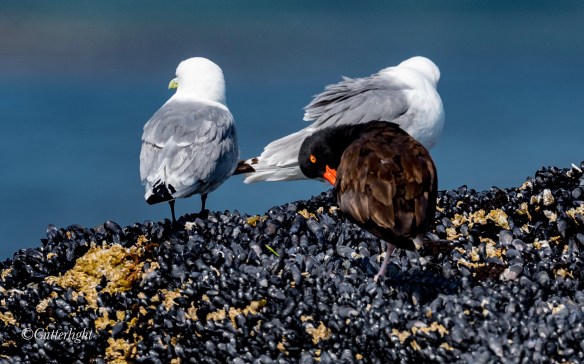
Birds of Chignik: Double-crested Cormorant

Chignik Double-crested cormorant

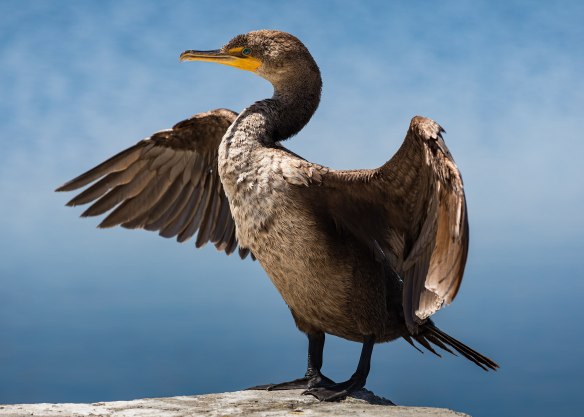
Next to Pelagic Cormorants (left), at first glance Double-cresteds are bulkier birds. The yellow lores and throat are diagnostic. As is also the case with Red-faced Cormorants, the coloration is due to bare skin, not plumage. Note, too, the Double-crested’s heavy, hooked bill.

From a distance, the Chignik’s three species of cormorants, like most cormorants worldwide, look pretty much the same: a gangly cross between a loon and a goose dressed in drab, brown-black plumage. But if you’re lucky enough to get near to a cormorant, you might find that they are actually quite striking.

Like our other cormorants, Double-cresteds are primarily piscivorous. They are far and away the most wide-spread and common of North America’s cormorants, and unlike our other species, Double-cresteds frequently nest in trees. This could account for the fact that they are more frequently seen in fresh water than Red-faced or Pelagic cormorants, though they are still at home on ocean waters.

“Mike” Michael L. Baird’s photograph captures the double crest of this Double-crested Cormorant in breeding plumage. CC BY 2.0, https://commons.wikimedia.org/w/index.php?curid=1995289

In non-breeding plumage, look for the yellow-orange skin around the Double-crested’s face. Photograph  © Frank Schulenburg, CC BY-SA 4.0, https://commons.wikimedia.org/w/index.php?curid=79611808

From a distance, this Japanese Cormorant looked as black and nondescript as any cormorant, but a closer look revealed a pallet of subtle hues..

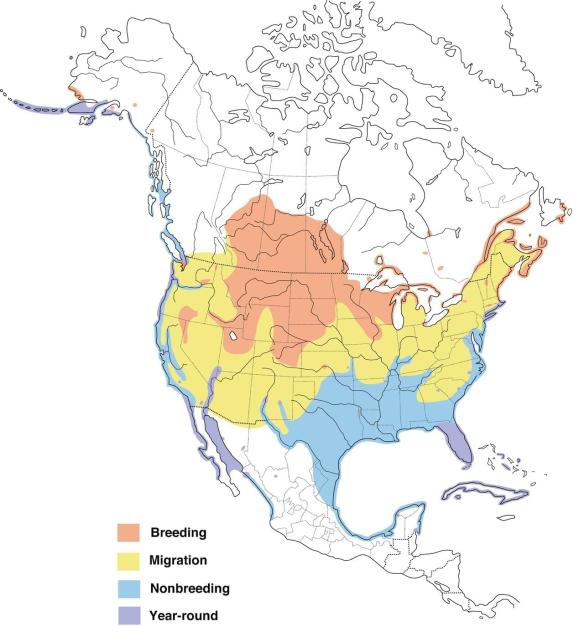
Double-crested Cormorant Range Map: with permission from The Cornell Lab of Ornithology, Birds of the World

Double Cormorant Phalacrocorax auritus
Order: Suliformes
PhalacrocoraxLatinized Ancient Greek = cormorant (from “bald” and “crow/raven”)
auritusLatin = eared (for its breeding plumage crests)

Status at Chignik Lake: Not observed in the freshwater drainage, but common in nearby coastal waters

David Narver, Birds of the Chignik River Drainage, summers 1960-63Not observed

Alaska Peninsula and Becharof National Wildlife Refuge Bird List, 2010:
Common in Summer; Uncommon in Spring & Fall; Rare in Winter

Aniakchak National Monument and Preserve Bird List: Present

Table of Contents for the Complete List of Birds of Chignik Lake
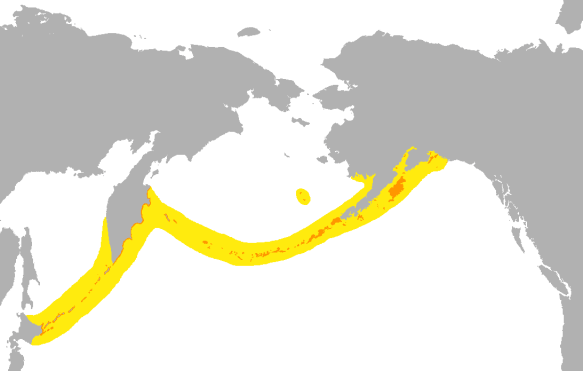
© Photographs, images and text by Jack Donachy unless otherwise noted.

Birds of Chignik: Red-faced Cormorant

Chignik red-faced cormorant

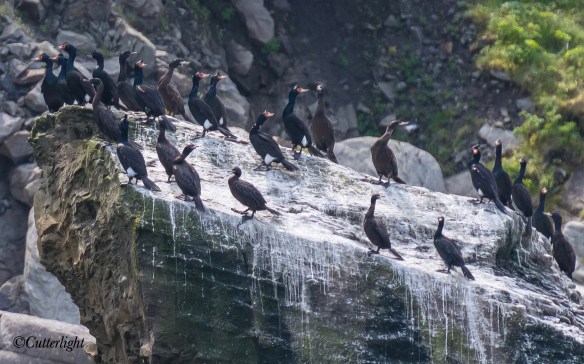
After a morning’s feeding, Red-faced Cormorants rest at a favorite roost near the outlet of Chignik Lagoon. 

Red-faced Cormorants are abundant in the sea near the villages of Chignik and Chignik Lagoon, and according to biologists their numbers appear to be increasing. They often roost and feed in mixed flocks alongside Pelagic and Double-crested Cormorants. Like other cormorants, they are primarily fish eaters, though they occasionally take crabs, shrimp and other marine invertebrates.

This beautifully colored Red-faced Cormorant was photographed by Lisa Hupp, USFWS, courtesy Wikipedia. The red face is actually bare skin which loses some of its color when the bird is not in breeding plumage.

Red-faced Cormorant Range Map: By Netzach, https://commons.wikimedia.org/w/index.php?curid=45316418

Red-faced Cormorant Phalacrocorax urile
Order: Suliformes
Phalacrocorax: Latinized Ancient Greek = cormorant
urile: ?

Status at Chignik Lake: Not observed in the freshwater drainage, but common in nearby coastal waters

David Narver, Birds of the Chignik River Drainage, summers 1960-63Not observed (This is a marine species.)

Alaska Peninsula and Becharof National Wildlife Refuge Bird List, 2010:
Common in Summer; Uncommon in Spring & Fall; Rare in Winter

Aniakchak National Monument and Preserve Bird List: Present

Table of Contents for the Complete List of Birds of Chignik Lake

© Photographs, images and text by Jack Donachy unless otherwise noted.

Birds of Chignik Lake: Great Blue Heron – a Rare Visitor to The Lake

Great Blue Heron

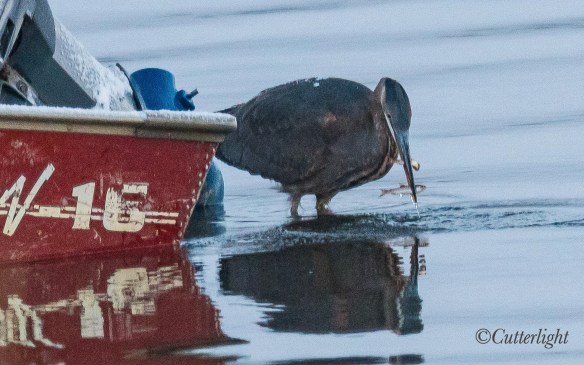
A young Great Blue Heron stalks the shadow cast by a skiff in search of Chignik Lake’s char. Although this bird stands three-and-a-half feet tall or perhaps somewhat taller, it probably weighs only five pounds or so. This is quite likely the first photographic documentation of this species on the Alaska Peninsula.

“A tiger – in Africa?!” The line is a favorite line from Monty Python’s The Meaning of Life, pointing out the improbability that it is a tiger that has bitten off the leg of Eric Idle (playing army officer Perkins) while he was sleeping. Nor is the Latin for tiger Felis horribilis as is proclaimed by Graham Chapman in his role as Dr. Livingstone. The film came to mind one cold November morning when in the predawn light beginning to illuminate the beach outside our window, I suddenly noticed the unmistakable silhouette of a heron.

(All) ” A heron?! At Chignik Lake?!”

Yes, Ardea herodias paid us a visit. In fact, as of this writing, I believe the bird is still here despite snow on the ground, freezing temperature and the imminent probability of the lake freezing in the next few days. I saw our new friend briefly perched on a utility pole near the lake last night, though this morning’s frigid 12° F temperature surely gave him pause. I use the pronoun “him” advisedly. Letting aside the fact that the English language’s “it” seems unduly impersonal in talking about living beings, it is generally young males of any given bird species that are the first to push the boundaries of range maps.

Great Blue Heron catching Dolly Varden

Two char in one grab! The overall dark, non-contrasting plumage indicates an immature bird. Despite its youth, this heron was nonetheless an efficient fisherman. We watched him work the shoreline taking one Dolly Varden after another. His best success came in the shadows of beached skiffs. The wary bird has been feeding in the twilight of dawn and dusk, which makes me grateful for a camera that will handle high ISO values.

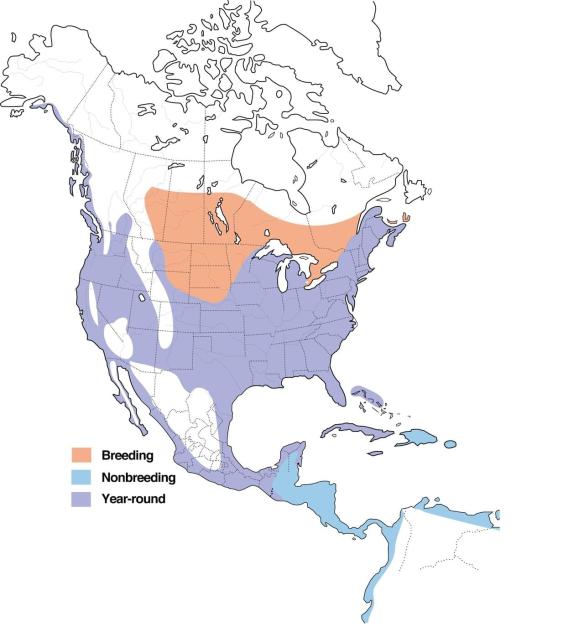
As can be seen on the map below, Great Blue Herons normally range as far north as coastal Southeast and South Central Alaska. With the population of this species growing in the lower 48 and as the climate continues to warm it will be interesting to see if herons become a more common part of the Alaska Peninsula’s avian fauna.

Great Blue Heron Range Map: with permission from The Cornell Lab of Ornithology, Birds of the World

Great Blue Heron Ardea herodias
Order: Pelecaniformes
ArdeaLatin = heron
herodiasAncient Greek erōdios = heron

Status at Chignik Lake: Rare to perhaps occasional visitor. Unconfirmed sightings have been reported by local residents of Chignik Lake as well as at Chignik Bay and, further down the Peninsula, Perryville. 

David Narver, Birds of the Chignik River Drainage, summers 1960-63Not observed

Alaska Peninsula and Becharof National Wildlife Refuge Bird List, 2010:
Not observed

Aniakchak National Monument and Preserve Bird List: Not observed

Table of Contents for the Complete List of Birds of Chignik Lake
© Photographs, images and text by Jack Donachy unless otherwise noted.


Birds of Chignik Lake: Water Dancer – the Fork-tailed Storm-Petrel

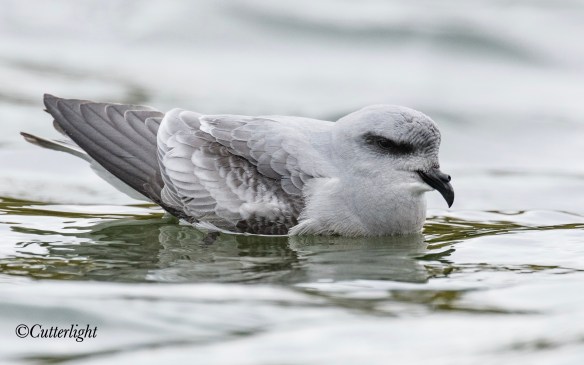
Truly akin to avian ballet dancers, Fork-tailed Storm Petrels patter across the water’s surface gleaning zooplankton and small fish as well as the oil from carcasses they might encounter.

The last of the huge winds that had been buffeting the peninsula were still putting heavy chop on the river as we surveyed the pool below the boat landing. These kinds of storms, often packing winds that would make the national news if they occurred elsewhere, can occur any time of year in the Chigniks. The very place name is, in fact, Alutiiq for “big winds.” Downriver towards the islands, shrill squawks drew our attention to a flock of small, grayish birds hovering, wheeling and diving. Some of them appeared to be running across the water’s surface.

Terns? I said to Barbra. Yeah. They must be some kind of tern. 

Even as I spoke, I knew what I was saying didn’t make sense. The Chignik’s Arctic Terns had long since fledged their young and migrated out. Besides, these birds didn’t really look like terns. Not like any I’d ever seen, anyway.

They’re not terns, Barbra replied. They can’t be terns. They’re cool. Look at them dance!

In that instant, it hit me. Petrels!

I’ve gotta get home and get my camera like, right now! I exclaimed. I’ve read about these! This might be my only chance to get them on the river! We hopped on our honda and sped the three-miles home over the hilly dirt and gravel road. I gathered up my tripod and the camera with the big lens attached, hurried into a pair of waders, and made haste back to the landing.

Fortunately the birds were still there. Better yet, they took little notice of me as I scurried down the shoreline and waded out into the river toward where they were foraging. There were perhaps 20 of these small, Purple-Martin-sized seabirds. The blue-gray cast of their plumage at times made them difficult to pick out against the blue-gray sky and river. These are going to be difficult, I thought to myself.

The birds would hover, descend, and then dance across the water. It very much put in mind a production of Swan Lake. Certainly it was one of the most beautiful foraging displays I’d ever witnessed. What little light was left in the cloud-covered late afternoon sky was going fast. But I stayed with it and eventually began making some decent photographs.

fork-tailed storm petrel

The foraging birds didn’t rest for but a blink. Storm-Petrels belong to a group of pelagic seabirds called Procellariiformes – tubenoses. The hollow atop the petrel’s beak aids in expelling excess salt.

I was lucky to encounter this species on the river. David Narver reported seeing this bird on the open seas just once on the Chignik, then too after a heavy storm.

Fork-tailed Storm-Petrel Range Map: with permission from The Cornell Lab of Ornithology, Birds of the World

Fork-tailed Storm Petrel Oceanodroma furcata
Order: Procellariiformes
Oceanodroma: from ancient Greek okeanos = ocean + dromos = runner
furcata: Latin meaning forked

Status at Chignik Lake: Rare in the freshwater drainage, but probably common in or near Alaska Gulf offshore ocean waters

David Narver, Birds of the Chignik River Drainage, summers 1960-63: One observation on Chignik Lake after a severe storm

Alaska Peninsula and Becharof National Wildlife Refuge Bird List, 2010:
Rare in Spring & Summer; Uncommon in Fall; Not Reported in Winter

Aniakchak National Monument and Preserve Bird List: Presence Documented

Table of Contents for the Complete List of Birds of Chignik Lake
© Photographs, images and text by Jack Donachy unless otherwise noted.

Salmon Cheddar Bisque with Morels

Salmon Cheddar Bisque with Morel Mushrooms

I’ve been making A. J. McClane’s Lobster Cheddar Bisque for quite a few years. The original recipe appears in my all-time favorite book on cooking fish, McClane’s North American Fish Cookery. Although by now I’ve strayed from the original recipe, spending time in the kitchen with an icon whose books and articles influenced me to seek the life I’m now living is invariably pleasant.

In addition to the connection with one of my personal culinary and angling heroes, I enjoy creating this bisque with ingredients that are in their own right touchstones. The Tillamook cheddar I use takes me back to the years I spent on the Oregon coast; the Coho salmon I used to catch in those days is replaced in this current iteration with Chignik River Sockeye. In Oregon, a friend’s gift of a large paper bag filled with freshly picked chanterelles inspired one version of this soup; the morels we recently came into from interior Alaska have inspired another.

The last time I published the recipe for this soup, I used lobster mushrooms. You can check out that recipe at: Salmon Cheddar Soup with Lobster Mushrooms

Here’s how I made it this time around.

Ingredients

  • 1/2 pound pan-fried Sockeye salmon, boned, skinned and flaked or cut into bite-sized pieces
  • *1¼ cups or so of morel mushrooms, cut so that a slice of morel and a chunk of salmon might both fit in a soup spoon
  • soy sauce
  • part of a red bell pepper, diced fairly fine. (I used a little over a tablespoon of Penzeys dried bell pepper.)
  • ¼ cup shallots, diced fine (I used Penzeys dried shallots.)
  • 2 tablespoons flower as a thickening agent. (White rice flower works best for this as it imparts very little flavor. But regular all purpose flower is fine.)
  • 1 tablespoon each olive oil and butter (for sautéing the mushrooms)
  • 3 cups milk
  • 1¾ cups shredded cheddar cheese
  • 1 or two tablespoons Better than Bouillon lobster base (optional). This is salty, so if you use it, be sure to taste as you go.
  • ⅛ teaspoon ground nutmeg
  • 1 teaspoon smokey mesquite seasoning
  • ½ teaspoon smoked paprika

*When sautéing the mushrooms, a splash of Sherry or Chardonnay and a dash of soy sauce can be nice. It’s up to you.

Directions

  1. Heat olive oil and butter in the pot or sauteuse pan you will use to make the bisque. Medium heat.
  2. When the butter mixture begins to bubble, add the sliced mushrooms and toss to coat. Sauté the mushrooms for about two minutes. Add the shallots, bell peppers, a splash of white wine and soy sauce to finish. Lower heat.
  3. Vigorously stir in flour. Add milk, seasonings and lobster base. Stir till mixture begins to thicken. Keep it hot, but don’t let it boil.
  4. Add salmon and cheddar cheese. Taste the soup and add additional seasonings as necessary.
  5. Garnish with a pinch of paprika. Serve piping hot with a favorite bread.

Provided the soup wasn’t allowed to boil, it refrigerates well.

Take a Honda Tour of Chignik Lake, Alaska

As part of a project we’ve been working on, we’ve decided to take interested readers on a tour of our village. So Barbra put a GoPro on her head, fired up her Honda, and we went on a short land cruise. I’ve feathered in a few photos to provide an idea of what The Lake looks like when it’s not an icy-cold, winter-brown November day (when we made the video).

Imagining something you love through another’s eyes can be… well, eye-opening. It struck us how “empty” our village might seem to folks who take things like stores, government buildings, traffic signs, and bustling sidewalks (or any sidewalks) for granted. So, rather than the vibrance of an urban community, imagine instead the rhythms and energy of a community where you know everyone – literally, everyone. Where, instead of watching for oncoming traffic, you watch for ambling brown bears. And where the small community store is a convenience, but in reality your freezer is stocked with salmon from the nearby river, halibut, cod and crab from the nearby sea, moose and caribou from the surrounding land, and gallon upon gallon of hand-picked blueberries, raspberries and wild cranberries.

Enjoy the video and let us know what you think! (Oh, by the way, did I mention we have a position open for a health aide?!)

The Chignik Jack: Panko Crusted Coho Jack Salmon Stuffed with Dungeness Crab

panko crusted salmon stuffed with Dungeness crab

The perfect marriage of River & Sea – Dungeness-stuffed whole jack salmon.

Each year we try to take a couple of char or salmon in the pound-and-a-half to three-pound range, the perfect size for presenting head and tail intact. When I lived in South Carolina, I sought Puppy Drum (small Red Drum), Speckled Sea Trout, Summer Flounder and keeper-sized Striped Bass for these dishes. If I lived in the American midwest, I’d target Walleye or bass from cold water. In Japan, small suzuki (Japanese Sea Bass), hirame (Olive Flounder) and kurodai (Black Porgy) fit the bill.

The salmon in the photo was about 17 or 18 inches in length and weighed just over a pound-and-a-half. Jack is the name given to precocial male salmon that mature early and return to the river after only a year at sea. Were I running a restaurant, I’d offer this dish as a special and call it The Chignik Jack, as in,

“What’ll it be, Mac?”
“I’ll have the Chignik Jack.”

The recipe here couldn’t be more straightforward. The stuffing is comprised of the back meat of a Dungeness Crab, steamed or boiled and lightly seasoned, perhaps a bit of fresh lemon juice added to the cleaned meat. Crab meat tends to be wet, so use paper towels to gently squeeze out excess moisture from the cooked meat. You might even heat the meat in a dry, non-stick skillet to remove additional moisture.

The fish is scaled, gilled, gutted and cleaned. Spritz the stomach cavity with lemon juice, rub in a little salt, add the crab meat and then roll the fish in panko that you’ve seasoned with salt and Italian-style herbs. This is a relatively light dish; you don’t need any batter, just the seasoned crumbs.

Meanwhile, set the oven to 400° F and put enough olive oil on a broiling sheet or pan to cover it and heat it on a center-positioned rack till the oil is hot. I use a heavy, rectangular, well-seasoned cast iron pan for this kind of cooking, but a thinner baking sheet will work. The fish should sizzle when you place it on the pan. After about 4 minutes, check the down side to make sure it’s not browning too quickly. Continue baking for a total of about 8 minutes, and then carefully turn the fish to the other side. It can help to have someone man an additional spatula to help with this.

Bake for another 8 minutes, again checking  halfway through to make sure the skin and panko are browning properly. In the above fish, I set the oven to broil for the final couple of minutes to further crisp the presentation side. The tail came out crunchy as a potato chip – a delicacy in its own right. And speaking of delicacies, don’t forget the cheek meat just in back of the jaw; the scallop-like morsel has a texture unlike any other part of the fish.

Paired with a buttery chardonnay, this is a lovely meal to enjoy with your best friend.