Seward Summers: Nesting Black-legged Kittiwakes – and the metaphor of the bookshelf

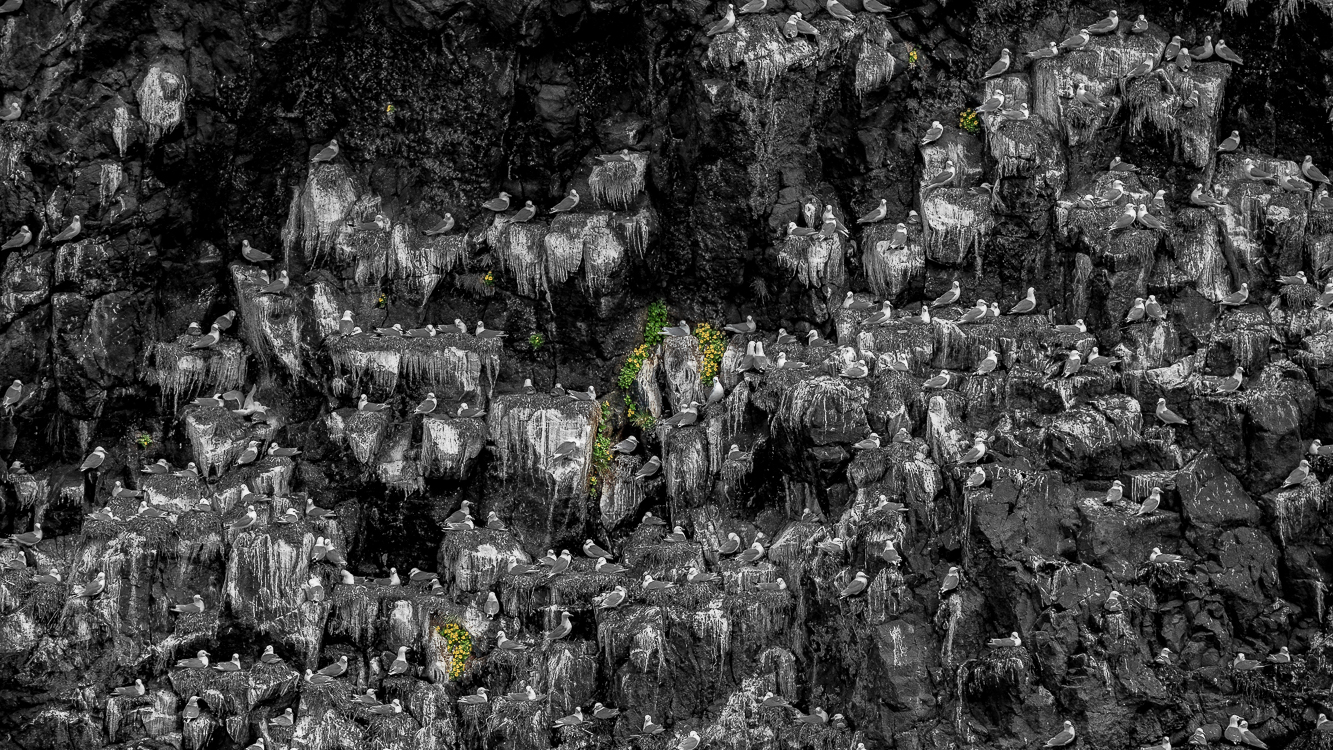
Nesting Black-legged Kittiwakes with Yellow Monkeyflower, Resurrection Bay, Gulf of Alaska, June 22, 2013. This is an example of spot-color photography.

We miss our C-dory. A lot. Photographs such as the one above can’t be made without a boat, not to mention the role Gillie played in filling our freezers with tasty halibut, lingcod and rockfish. And for a pleasurable day of leisure, it’s difficult to top fair weather on a calm sea.

While we lived on the Chignik River, we found a shallow-draft welded-aluminum scow to be more practical than the larger fiberglass dory, and so we sold Gillie. Regrets followed. She would be perfect here at our new home on the shores of Prince William Sound. In the peripatetic lives Barbra and I have lived both prior to and during our marriage, with each move we’ve effortlessly let items pass through our lives: beautifully crafted Christmas ornaments, artwork, cherished pieces of furniture, treasured books… even valued fishing tackle. The few items we take pains to keep in our possession mainly come down to cookware, photography gear and fly-fishing equipment. After all, most things are replaceable, and so the metaphor of the bookshelf constitutes an important element of our life philosophy.

The metaphor of the bookshelf is our way of thinking of… things… in a life where we find benefit in living slim and where we appreciate each move as an opportunity to pare down. The idea is to always leave room for the new, and if there is no room, to create it. So rather than fill up shelves with books we’re unlikely to read again, we don’t. Because if your shelves are full, there’s nowhere to add new items to your life – unless you keep adding shelves till your home is crammed full of shelves. It’s lovely to move to a new place and find that you have abundant blank spaces to populate with new treasures. Most things are easy to replace (a first edition copy of A River Runs Through It I allowed to slip through my possession being a noted exception).

Norman Maclean’s classic fly-fishing memoir, Gillie… it’s a short list. Art is replaced by other art. Souvenirs from one place have been let go of to make room for new keepsakes from new places.

We also let go of our aluminum scow when we left the Chignik, and so, taking the optimist’s view and embracing the metaphor of the bookshelf, it appears we now have a space in our life begging to be occupied by a new – or new to us – seaworthy vessel. Something to look forward to.

Seward Summers: Copper River Dipnetting

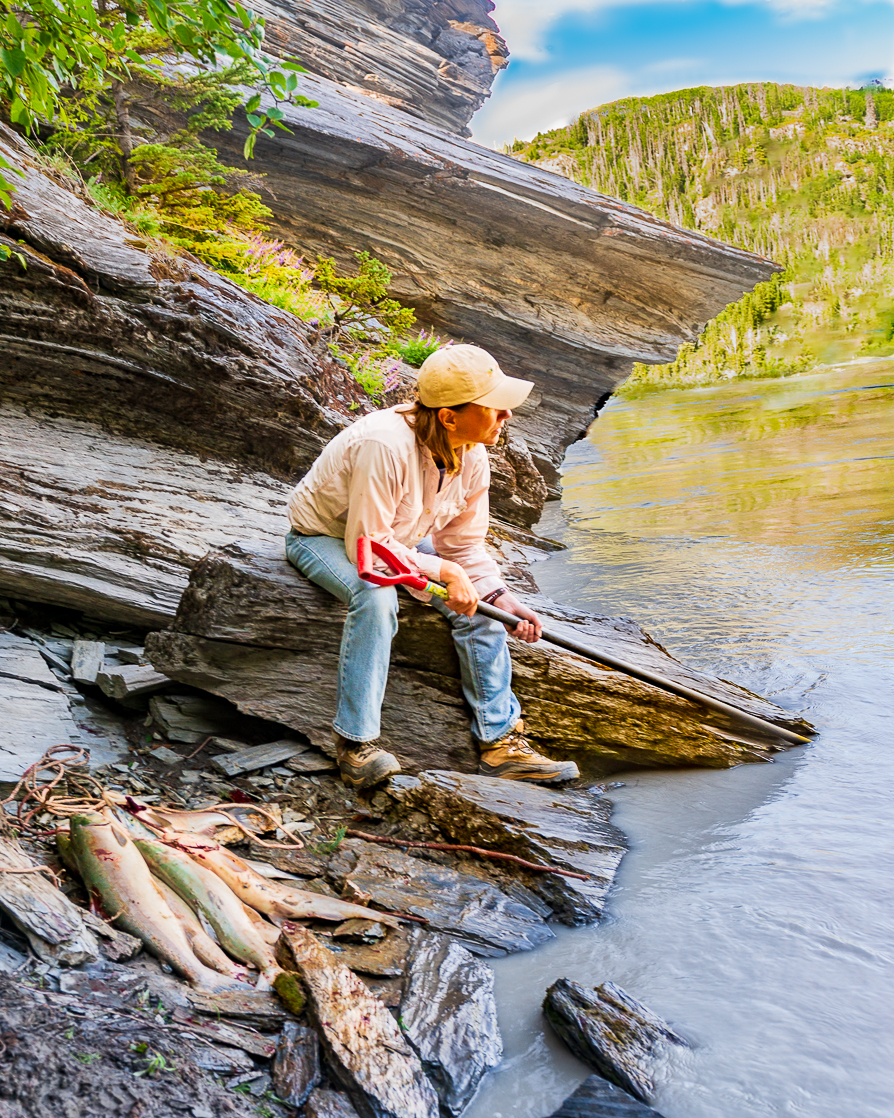
Barbra waiting for Sockeye Salmon to hit her net on the mighty Copper River near Chitina, June 22, 2012.

Iconic Alaska. Hike in along a canyon trail, then down a steep, more narrow trail to water’s edge. The river’s chalky, clay-colored glacial till reveals nothing. But the fish are there. Upwards of a million Sockeyes will ascend the Copper, and that’s after the commercial fishing fleet has taken a similar number from the sea near the river’s mouth. Armed with a net on a big hoop attached to a 15-foot pole, you find a fishable perch along the canyon wall and ease the net into an eddy. If you’ve timed it right, huge schools of fish are passing in front of you within feet of the shoreline. It doesn’t take long till you feel the morning’s first solid thump as a Red hits the net. If you’ve got the patience and don’t pull in right away, you might feel another thump, and then another – three fish in one scoop. And you feel a connection with people who have been fishing for salmon this way for thousands of years… grateful that there’s a place where it can still be done, not another person in sight except for the companion you’ve hiked in with. You get the feeling this isn’t going to last… which makes you appreciate it all the more. Iconic Alaska.

Heading Home: Grizzly Bear Crossing Harding Ice Field

Hard to say where this bear, a mere dot on this icefield, was coming from. Somewhere across that vastness, heading toward Exit Glacier, down to salmon rivers. To a place I suppose he thinks of as home. 6/13/2011

The hike to Harding Icefield is a little over four miles up a mountain trail, more or less following a ridge above Exit Glacier. Patches of snow, wildflower meadows, birds, bears, maybe other wildlife along the way. There are many vast landscapes in Alaska. The view out over the Harding Icefield, the great mother ice lake that feeds Exit and dozens other glaciers is… otherworldly. We were on a rock outcrop overlooking part of Harding’s eleven hundred square miles. I was preoccupied with alpine flowers when Barbra noticed a trail across the snow-covered ice. It didn’t make sense. Till we spotted the bear.

Moving on from the photos we took in Mongolia, I’m now going through “Alaska Summers.” Some of these catalogues predate our trip to Mongolia. As I come upon images I really like – such as the above composition – I’ll share them here and on Instagram. jackdonachy, if you’re interested in following there. I also put most of these photos on Facebook – Barbrajack.

I like this photograph for the way it recalls a quote by Bob Dylan that describes Barbra, and me, and maybe this bear, and maybe you.

I was born very far from where I’m supposed to be, and so, I’m on my way home

At The Gobi Desert’s Flaming Cliffs: a love of books – and the problem with bucket lists

A favorite “us” photo: At the Flaming Cliffs in Mongolia’s Gobi Desert. October 23, 2014

Growing up, I didn’t have many of what might properly be called “toys.” When I was young, friends would come over, look around, and complain, “There’s nothing to do.” And thereafter find reasons to not come over.

But I did have books. A few. And among those few were a handful of treasures I read over and over. They included Volume I of the Reader’s Digest Best Loved Books for Young Readers series. The volume was comprised of a four-story collection of abridged books which included Treasure Island and Call of the Wild, the latter tale so riveting I read it 13 consecutive times the year I was in third grade – with a flashlight under my blankets long after I was supposed to be asleep, in the backseat of the car, on my lap (second row, fourth seat) during Mrs. Dull’s third-grade math lessons. Other books included Our Amazing World of Nature, The Golden Book of The Civil War, a book titled something along the lines of George Washington and the Revolutionary War, all 20 volumes of the Pictorial Encyclopedia of American History, and Digging for Dinosaurs which included a Panorama slide show and a 33⅓ rpm vinyl record featuring Walter Cronkite’s resonant narration. Of course, there were other books, most treasured among them field guides for children – Golden Guides to fish and insects and a Peterson guide to seashells.

The funny thing – strange funny – is that for the most part these books either seemed to have always been there, on shelves in my room, or were presented to me with little ceremony. I never asked for any of them that I can recall, but they became a significant part of my world in a home in which I didn’t fit in and subsequently spent a great deal of time by myself in the forest that extended for limitless miles behind our home and upstairs in my bedroom stretched out on the bed or the floor, chin in palm, lost in the dream-world of a big-hearted dog going home to his wolf-roots in Alaska, battlefield maps, fascinating and fantastic stories about wild animals, pirates and their ships, and the lost world of dinosaurs. And whereas my parents subjected me – and themselves – to an unhappy annual ritual of ignoring whatever I’d asked for on Christmas and birthday wish lists, instead presenting me with things entirely unexpected, and then, after family friends and relatives saw that I had received a very fine gift indeed, taking away that gift when eyes were no longer on us, the books remained. Thus they were among the very few things I could think of as “mine” in a home where I was admonished by my father that “everything” belonged to him and to her, that nothing was mine, and that I needed to understand that “if you’re going to live here.” But the books were mine. None were ever taken back. They became a source of… safety. Peace. Comfort.

In the dinosaur book, there was a photo of fossilized eggs arranged as on desert earth as though in a nest – the first dinosaur eggs ever discovered, an incredibly important and exciting find. Text placed the nest in the Gobi Desert’s Flaming Cliffs. And so I grew up dreaming of sailing ships and seashells, of a world where, like Reddy, I might be freed from my present circumstances to go and live with my grandmother and know what love is. Alaska was mixed in with those dreams, along with a fascination with fish and insects, and though my interest in battlefields and wars has flagged, early reads in history brought with them an awareness of Native Americans, leading to my discovery of Dee Brown’s Bury My Heart at Wounded Knee on my parents’ shelves the year it was published. I was 12. I pored over the book, fueling dreams of experiencing life among Native Americans. Feathered in among all this was the thought that maybe one day I would go to the Gobi Desert and find fossils on my own.

And so it came to be. Not eggs. But we found fragile fossilized remains of something large and dinosaur-like.

Two thoughts:

There is nothing like a well-written book in the right hands and the good fortune of being left alone for shaping dreams.

and

The problem with so-called bucket lists – a list of this and that to be chased down or “accomplished” before one “kicks the bucket” – is that the very name makes too great a nod to death. Experiences should not be guided by sand funneling through an hourglass. So here’s a different way to look at our dreams and the experiences we might wish to have.

No lists, and none of the randomness and disconnection between items implied in the term “list.” Milk, celery, double AA batteries, nail polish… randomness is fine as a prompt when grocery shopping, but that’s no way to live a life. No grail-chasing. No doomed-to-failure race against mortality.

Instead, imagine the coolest version of yourself you can imagine… and then go be that person.

Herdsman, Mongolia: And the question, “Should I take a photography (or any subject) course?”

We came across this herdsman tending goats in Khustai National Park, Mongolia. August 7, 2013

I rendered this as both a monochrome and a color image – a coin flip as to which I prefer.

I’d been interested… very interested… in photography ever since my early teens, but I didn’t pick up a camera and use it in any meaningful way until we traveled to Arctic Alaska, four years prior to the above photograph. I could have benefitted – perhaps a great deal – from a formal course of study in the subject. I guess. I’m not sure. Generally speaking, there are both benefits and drawbacks imbedded in the process of learning from others; just as there are benefits and drawbacks to learning on one’s own. Despite four years of somewhat purposeful shooting in Alaska, when we arrived in Mongolia I still didn’t really understand how a camera works. Nor did I have a vision of what kind of images I hoped to make. But once in a while I saw something I liked and I did what I could to make a capture… camera settings often somewhat randomly chosen, insufficient thought and visualization as to what the final, retouched image might look like (or what I hoped it would look like)… and any time a human subject was involved, struggling to overcome what is at times almost crippling shyness and apprehension on my part in order to get the picture. Often failing to overcome that apprehension and letting the moment pass.

So the question remains: Would I have benefitted from, for example, attending formal classes in photography at a respected institution under the guidance of expert instructors? Well, yes, for certain in regards to speeding up my learning curve with respect to technical and scientific aspects as to how a camera works and how film or an image sensor interprets light, and to gain a better understanding of the interplay between camera bodies and lenses. I read, on my own, and viewed a number of instructional videos addressing these subjects… and can report that while they were somewhat helpful, there is a lot of misinformation, and incomplete information, and misleading information on these matters – much of it dispensed by experts and by people who present themselves as experts. People who perhaps know what they are talking about or writing about, but who are not teachers and who don’t know how to teach and who have a difficult time imagining or understanding what a student needs to know… or how a student will receive and apply a given piece of information. Setting that aside, I suppose the answer is probably “Yes,” I – or anyone new to photograph – would benefit from interactive instruction where the primary purpose is to acquire knowledge of how a camera works and how light works and how a camera interprets light.

I suspect such a course of study would be helpful in the same way that prior to writing a novel or a magazine article, it’s necessary to have acquired an understanding of punctuation, syntax, paragraph structure and plot. Understanding basic structures – in any endeavor – can spare one from a lot of fumbling around.

But I wonder if, after 10,000 hours of mindful practice (a concept toward mastery I fundamentally accept), the person who began the journey initially studying under a master doesn’t end up more or less at the same place as the person who embarked alone, and vice versa. After all, whether the matter at hand is photography, writing or fly-fishing, once basic skills are acquired it is left to each individual to determine their own path as to how they hope to develop those skills. Realistic or conceptual; poetry or prose; salmon rivers or saltwater flats.

A problem with instruction beyond basic concepts is that it can end up creating a box around the student.

So… I think that, if it’s an option, by all means find someone from whom to learn the fundamentals – in any endeavor. But don’t linger there. Get the basics. And then go out and put them to use… learning more basics along the way, but more importantly, freeing oneself to pursue one’s own passions and to thereby develop one’s own vision.

I suppose the main thing, in any endeavor, is simply to get started.

The sooner the better.

Tikigaq Sky with Horned Puffins and Thick-billed Murres

Looking out across the Chukchi Sea from the very tip of Tikigaq Peninsula.
Near Point Hope, Alaska, August 12, 2012.

It was a two-and-a-half mile walk from our home in Point Hope to the terminal point of Tikigaq Peninsula where it hooked into the Chukchi Sea. Cape Lisburne lay to the north; other rocky sea cliffs lay to the southeast. Dense colonies of seabirds – murres, puffins, various ducks, gulls and other birds – nested in these natural sanctuaries, and if you stood at the tip of the peninsula you could watch the adult birds fly back and forth all day long in the summer, in one direct bills and bellies empty, on the return their bellies crammed full of food and what they couldn’t fit in their bellies hanging from their bills. Sand Lances and other fish to be presented to nesting mates and offspring. It was a difficult hike out, a good bit of it along a pebbled beach. At that time in our lives we hadn’t yet made a study of wildflowers, but they were abundant and brightened the path. And you never new when you might come across an Arctic Fox, a Snowy Owl or something else of interest.

Hiking for any distance along a sand beach becomes work, and If you’ve ever walked far along a pebbled beach you know that pebbles make for an even more arduous hike. The ocean breeze was almost always cold at that latitude above the Arctic Circle.

Wishing at times to travel light, we did not always take camera gear.

Which was, of course, a mistake.

One morning in early fall, we arrived at the point and – not knowing what we were in for – found ourselves looking out at more birds than we had ever in our lives seen. Quite probably, more than we will ever see again. Wave upon wave of puffins, murres, kittiwakes, shearwaters and I don’t know what else were streaming out from the cliffs and capes, chicks fledged, the season over. Most of these seabirds would not return to land again until the following spring when they would begin a new nesting season. We had seen films depicting African migrations of wildebeests and other ungulates, and in Alaska of great herds of caribou, and those films were called to mind. I once, in Kentucky, found myself amidst a late spring migration of Box Turtles; I pulled my car to the shoulder and assisted over a dozen of them safely across the country road I was traveling. If I had that to do over, I’d have stayed for as long as it took and helped more…

Surely that morning on the tip of Tikigaq, Barbra and I were witness to one of the world’s greatest migration events. We felt, suddenly, a deep connection with… something… overwhelming. Thoreau’s contact, or a final couplet from Wordsworth:

To me the meanest flower that blooms can give
Thoughts that lie too deep for tears.

The Jar on Flattop Mountain

The Jar on Flattop Mountain
(after Wallace Stevens)

I found a jar upon a mountain
and thought to open it
it smelled of moonshine and spring winds
upon that mountain top
It gathered in the village below
the lake and river and distant sea

I found a jar upon a mountain
near the village where I lived
it caught the light a certain way
and seemed to hold it there
It gathered in the autumn day
the sky, the mountains, the distant sea

Jack Donachy

The Hike Up Flattop Mountain, Chignik Lake, Alaska – a short video

A landscape seen by fewer than 100 living people….

The Hike Up Flattop

There’s a small mountain behind our village. We call it Flattop, though once you reach the peak you find that it is somewhat rounded. Although reaching the summit constitutes an elevation gain of only about 1,200 feet (a quarter of a mile; four football fields), because it is the foreword-most mountain facing the village, the summit provides an unobstructed 180 degree view sweeping from the corner of Chignik Lake to one’s left where Clarks River enters, down the lake and through the village, and then down the Chignik River all the way across the estuary to the next village, Chignik Lagoon, a vista encompassing about 12 miles. But in fact, the view is more grand even than that, for one can see mountains 20 miles beyond Chignik Lagoon where a portion of the Alaska Peninsula curves out  into the Alaska Gulf, and while gazing across Chignik Lake the landscape disappears in haze over Bristol Bay. Keeping in mind that a few steps beyond the last house in the village one is entering a landscape fewer than 100 living people have seen, the view from Flattop is even more exclusive. 

The roundtrip hike from our home to the summit and back is fairly rigorous. We begin by following the community’s main thoroughfare, a dirt road that curves along the lakeshore, crosses a small, willow-crowded stream inhabited by char, and then branches off to the left past a few houses beyond which is a honda trail. For about two miles, the trail alternately cuts through stands of scrub alder and willow, open tundra, and shoulder-high grasses, fireweed, ferns and salmonberry brakes.

The trailhead leading up Flattop is easy to miss if you don’t know where to look. People – young men who are hard on their machines – very occasionally take their quads up the mountain, though scarcely often enough to beat back the jungle-thick vegetation waiting to reclaim any seldom-used path in this part of the world. Not long ago, a neighbor was lucky to get clear in time to avoid injury when the mountain took control of his honda. His quad is now somewhere on Flattop’s steep flanks, hung up in alders, unrecoverable. One’s own two feet are the more prudent – and satisfying – option for ascent.

In the early morning of September 17, we entered the trailhead through a field of tall grasses and fireweed gone to downy seed, colored with autumn, made dripping wet with low fog. As we gained elevation, the grasses, ferns and flower stalks gave way to thick stands of salmonberry bushes. It wasn’t long before our pants were soaked and our water-resistant boots were saturated through to squishy socks. Sunshine in the forecast promised dry clothing once we climbed beyond the vegetation.

Landmark by landmark, salmonberry brakes began to thin. Alders grew smaller and more wind-twisted. We ambled through openings where, back in early June, we’d come across patches of heathers and wildflowers – vaccinium, geranium, yarrow, paintbrush, candle orchid, fireweed. At times we lost the faint trail, the path buried in tall, thick grasses or barely discernible through tangled tunnels of gnarled alders. Just as the sun broke free from mist and crested the summit we emerged onto the first treeless scree, the sudden warmth and open landscape a joy, handfuls of lingonberries, tart, sweet, energizing.

As we continued up the slope, I studied the loose scree for signs of the Weasel Snout, lousewort, Alpine Azalea, Alp Lily, Pincushion, Moss Campion, Roseroot, avens, saxifrage and Purple Oxytrope I’d photographed in June, but aside from a few lupine still clinging to periwinkle-colored blooms, the rest were gone, the few remaining leaves various hues of yellow, red and orange. Near the top we were surprised to find blueberries, wind-stunted bushes hugging thin soil, leaves crimson, berries big and frost-nipped sweet. 

We had chosen a day when the forecast predicted calm air, offering the hope of mountains mirrored in a glassy lake and pleasant loafing at the top.  We scanned the lakeshore and flats for moose and other wildlife, but aside from a few Black-capped Chickadees, Pine Grosbeaks, a sparrow or three and clouds of midges dancing in filtered sunlight, animals were scarce, though near the summit my spirit bird, a Northern Shrike, materialized from out of nowhere to hover a few feet above my head in order to puzzle me out. Bear tracks all the way at the top. Moose tracks and fox tracks along the way. Lynx scat… maybe.

The video is best viewed on a large screen. As you watch, notice the round, snow-crowned summit just barely peaking out from behind foreground mountains in the view across the lake. That’s Mount Veniaminof, an occasionally active volcano 24 miles southwest of Chignik Lake. The earth’s curve over that distance causes it to appear to be only as tall as the closer 3,000 foot peaks. But in fact, Veniaminof touches the sky at 8,225 feet. We hear it rumble from time to time and have occasionally woken to a smoke-clouded sky or a fine dusting of volcanic ash on new snow in the village. 

The corner of the lake to the left, in front of those mountains, is where Clarks River debouches. A major salmon spawning tributary, in September Clarks offers spectacular, nearly untouched fly-fishing for returning Coho Salmon. 

Then, looking up the lake through the gap in the hills and mountains, the landscape disappears into haze. Black River flows into Chignik Lake here, beyond which is miles of Black River itself, and then the upper lake, Black Lake. Past that is a vast area of boggy tundra and kettle ponds all the way across the peninsula to the ghost village of Ilnik and the coast where sandy barrier islands, The Seal Islands, front Bristol Bay. 

Following the landscape to the right, the lake narrows as it flows past the village of Chignik Lake, a community of about 50 to 55 people, most of whom are of Alutiiq heritage. The large white buildings in the middle are the school gym (left) and the school itself (right) where Barbra teaches. Just as the village ends, the lake narrows further, picks up speed and becomes Chignik River. A narrow dirt road follows the river downstream and terminates at a boat landing across from the fish-counting weir, the buildings of which are just barely visible. There are no roads beyond this one, which terminates on its other end at the airfield. 

I included a photograph looking downriver and across the estuary, locally referred to as the lagoon. The image zooms in on the village of Chignik Lagoon, the community closest to Chignik Lake. With no roads nor even trails linking the communities, the river and estuary serve as the highway. Virtually everyone in The Chigniks owns a skiff or two. 

The end credits roll over a black and white photograph I made from Flattop’s summit in early June.

Hiking with us on this day were school faculty members new to The Lake: Melody Wiggins, Jacob Chapman and Melody’s son, Micah. Barbra is on the right in the group photo.

JD

Kita the Kitten: Welcome to a Life of Adventure, Chapter I

We’d been considering adding to our family for quite awhile, but the timing and the situation never seemed quite right. After having Buster in our life, we felt the urge even more strongly. He was such a great dog – an eager hiker, a terrific optimist and a joy to be around. We could easily imagine going on hikes and trips with a dog just like him. So, we began watching dog training videos. But when it came to envisioning how a dog might fit into our sometimes unpredictable lives, we had to conclude that now was not the right time.

Then there was the idea of a cat. We loved having Franny in our life back when we lived in Sacramento. She loved chatting, playing and being part of our lives. Her mischief was confined to unrolling toilet paper and pulling socks (only mine) out of drawers. Her lone drawback was that she hated being in a car. And so, her adventures were confined to our home.

Out of curiosity, I began doing some internet searches on pet adoption in Anchorage. There are a surplus of dogs and cats needing forever homes. I suppose this is true of most cities. Jack and I would “aww” over all sorts of pictures, all the while becoming more and more serious about adding a new family member. The more pictures we looked at, the more honed in we became on what sort of pet would fit into our family. This furry friend would need to be friendly, communicative, and happy to go on adventures.

After much deliberation, we decided a cat would make for the best fit. We thought we could find a kitten that we could leash train and also one that could be taught to understand that car noises are not scary. The hope is that one day she would be on the road with us, traveling around the country in our camper. Once our search began in earnest, as often is the case, things quickly fell into place.

There are several organizations in Anchorage that adopt out cats and kittens. My internet searches kept bringing me back to the Alaska Cat Adoption Team’s (ACAT) website. There was a picture of this one kitten… how can a picture tug at heartstrings, I’ll never know. But it did. I showed Jack. Same reaction. Love at first sight. In our conversations, we had already named her Kita, which means North in Japanese.

I contacted Kita’s foster care person, Terri, to see what the process was. Terri, of course, turned out to be a big-hearted lady with a commitment to helping the growing feral cat population in Anchorage. She told me stories of her recent rescues and about the kittens she was currently fostering. Then she broke the news that someone was coming to look at Kita that very day.

Oh no! ACAT has a strict policy about rehoming. They require the prospective owner to come and visit the adoptee in person to make sure there is a positive connection. ACAT is trying to ensure that their cats get placed in a forever home. Disappointed, I gave Terri my contact information and asked her to let me know if Kita’s adoption didn’t go through. Meanwhile, Terri offered to help me find another cat that might fit, so we left off our conversation on a positive note.

A few days later, I got a call from Terri. They guy who was going to adopt Kita kept missing his appointments, leaving her unsure that adoption was going to happen. Jack and I pounced on the opportunity. We were ready to happily commit to Kita’s adoption. We paid a reservation fee and I began organizing a trip to Anchorage. In the meanwhile, Terri called or emailed almost daily with reports and photos of our new little friend playing with her foster siblings, snoozing in different place, and generally being cute.

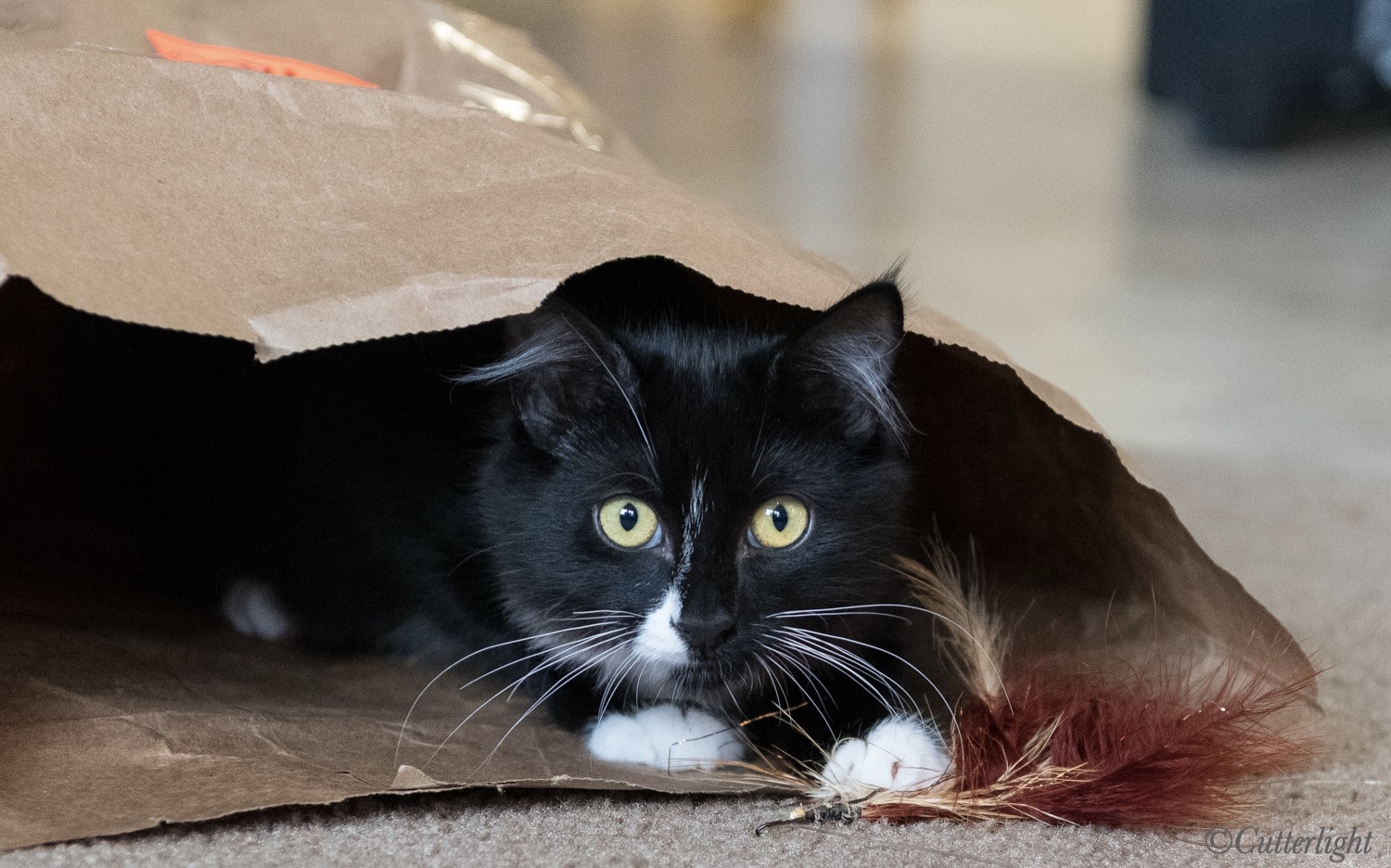
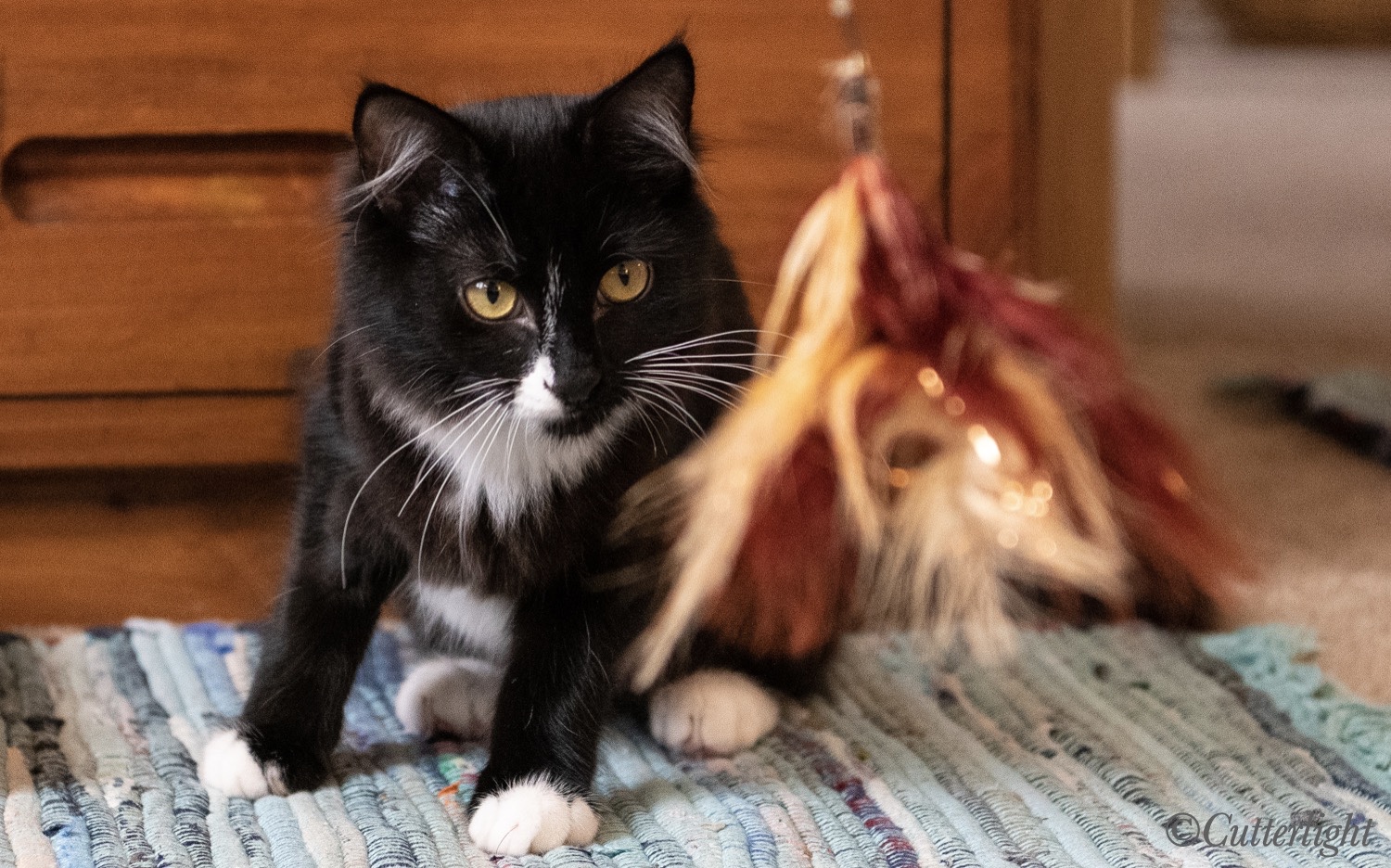
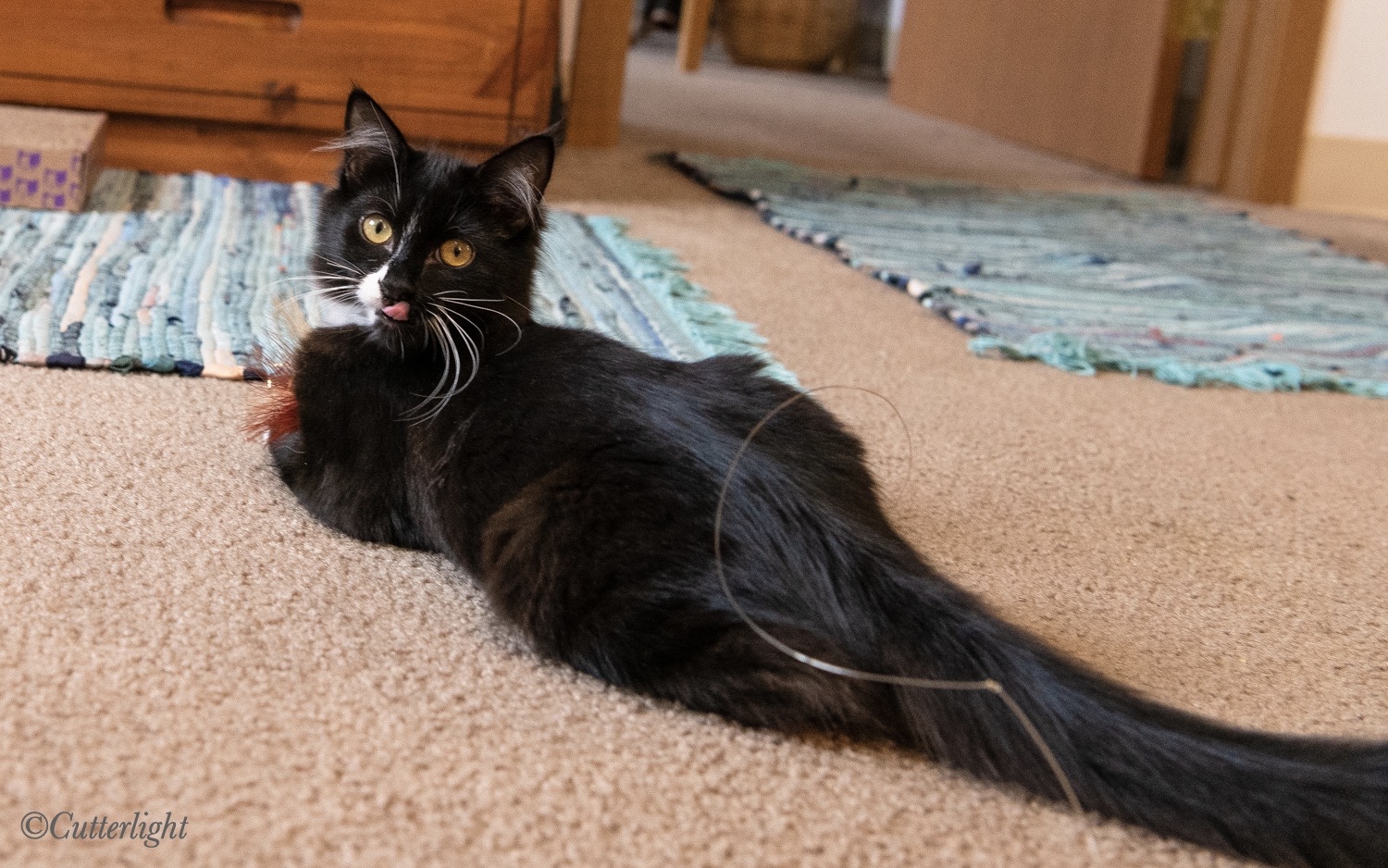
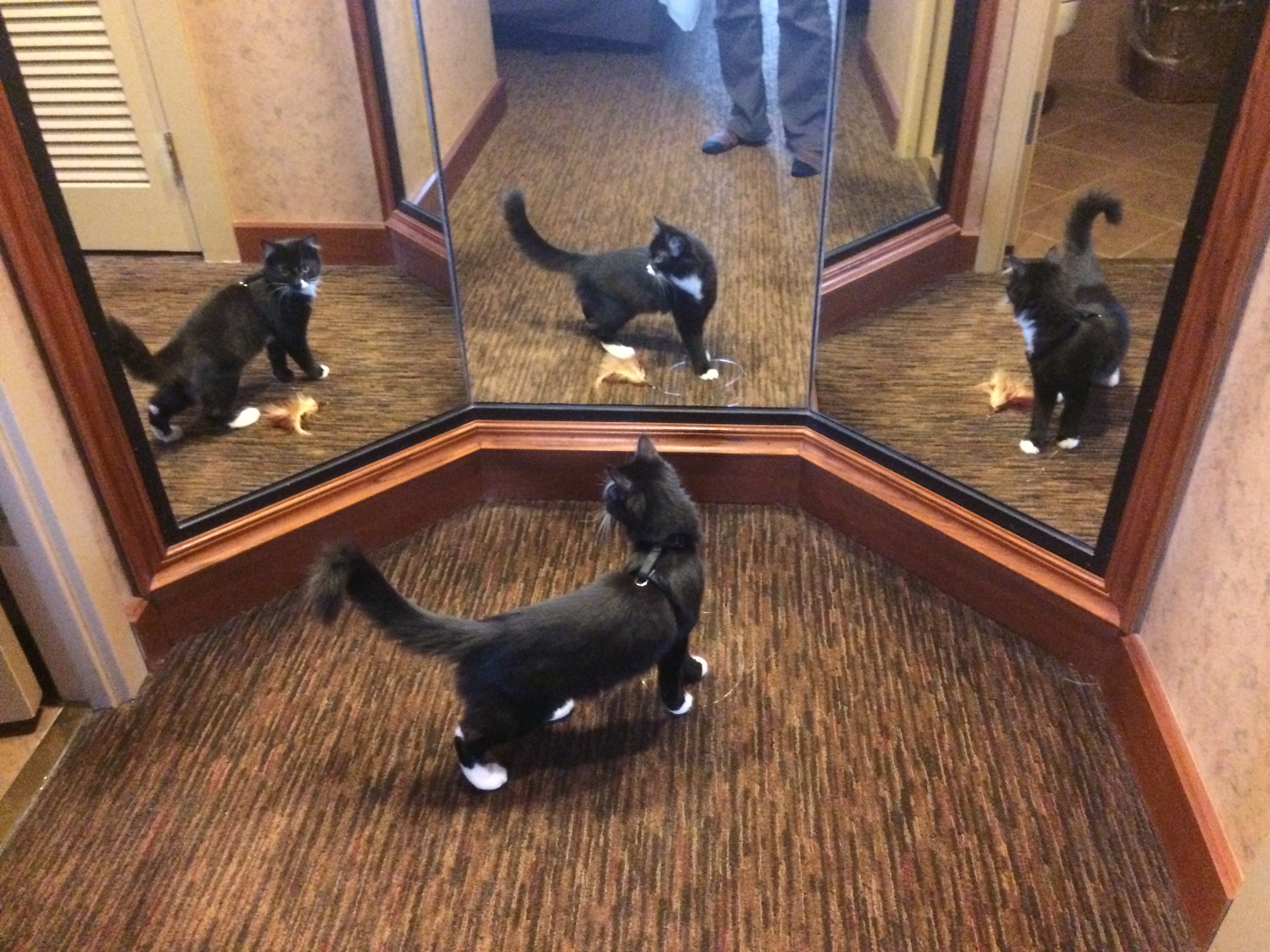
Kita is now in her new home, having survived her first adventure with her new family. I couldn’t tell the story as well as she can, so I’ll let her tell it.

Well, it’s been quite a couple of days! First, I went with my new owner to a hotel. It was a cool and strange scene. The place was almost devoid of smells and was humming with funny sounds. There were these curious glass panels with kittens behind them that looked just like me! By the time I was finished sussing out the place, night had fallen. I climbed up on a gigantic bed, nestled into a hundred pillows and proceeded to fall asleep. Then, all of a sudden, there were terrifying creaking sounds like the building was going to break. Fearing the worst and not knowing what to do, I jumped up and hid under the bed. A few minutes later a ringing sound made Barbra turn on the light and talk into a little machine. I heard her say “8.2 magnitude? Are you ok? I’m relieved to hear that.” She seemed worried for a bit. Finally, she quieted down, I climbed back onto the bed and we both fell asleep. A short time later, a loud alarm went off and scared both of us awake. Turns out it was a false alarm, maybe triggered by the earlier earthquake. At that point, both of us were too amped up to sleep. We turned our attention to playing games with the feather toy Barbra had brought for me.

Soon it was time to snuggle into my travel crate. I cuddled in with a blanket and a soft shirt that smelled just like Barbra. After a sleepy car ride, we waited in a warm building where kind people curiously peeked in at me. After a time, I noticed strange smells and some weird noises coming from other crates that looked kind of like mine but were much bigger. My crate was set atop these others and I was wheeled outside. One after another, we were loaded onto a plane. First the geese, then the pig, then a box of ducklings, and finally me. The smells coming from those crates were quite intense! I watched Barbra take a seat, the engine roared and we ascended into the air! When the plane stopped, all the smelly animals were disembarked and I got to sit right next to my friend, Barbra. This was much better.

The next time we landed, I met Jack. He put me into the truck cab and the three of us drove to my new home. Jack’s a very busy guy who likes to make noise in the kitchen. I could tell he loved me right away because he played with me and petted me very nicely. He even spoke to me in Japanese, which I couldn’t understand, but then he gave me some delicious salmon!

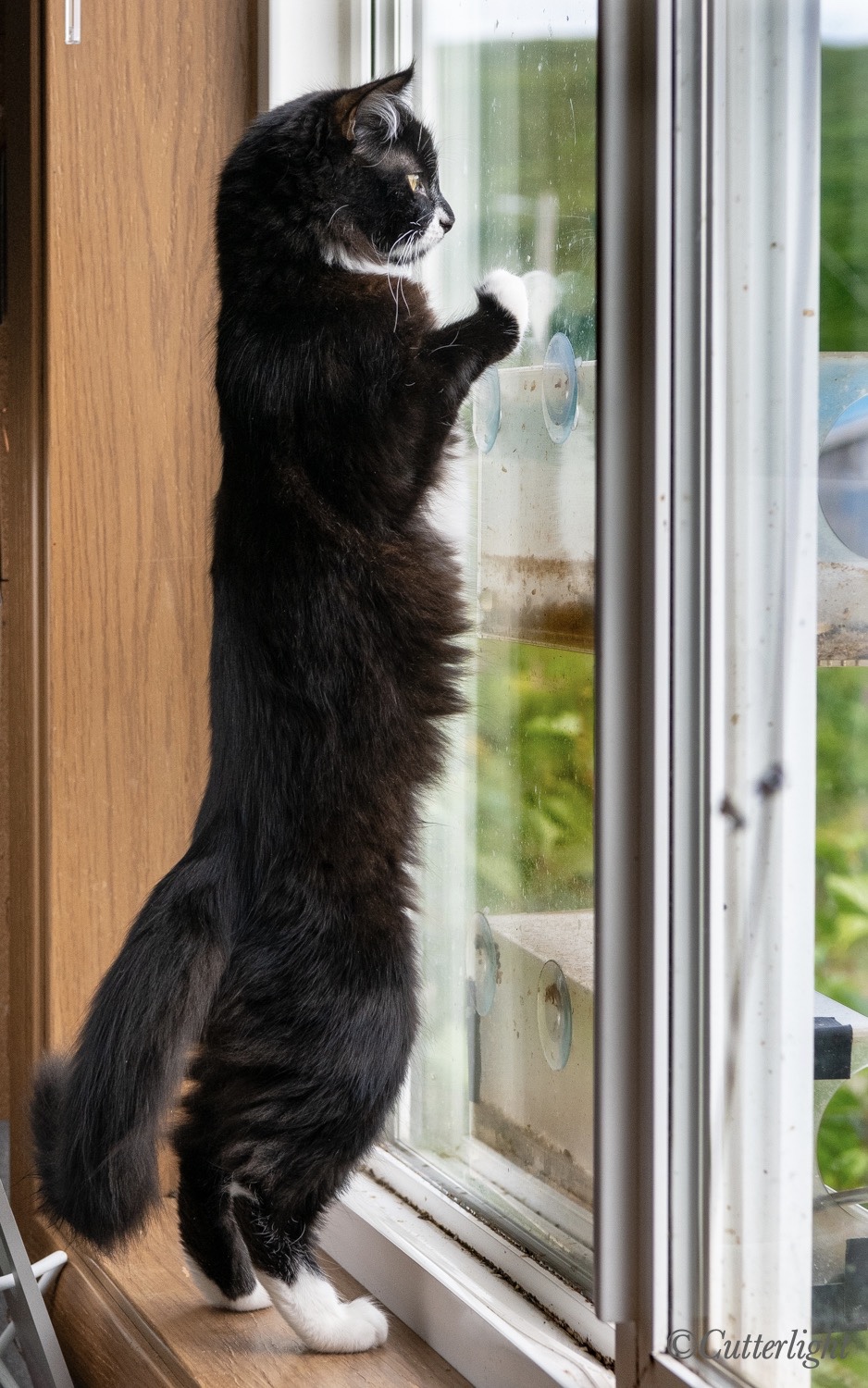
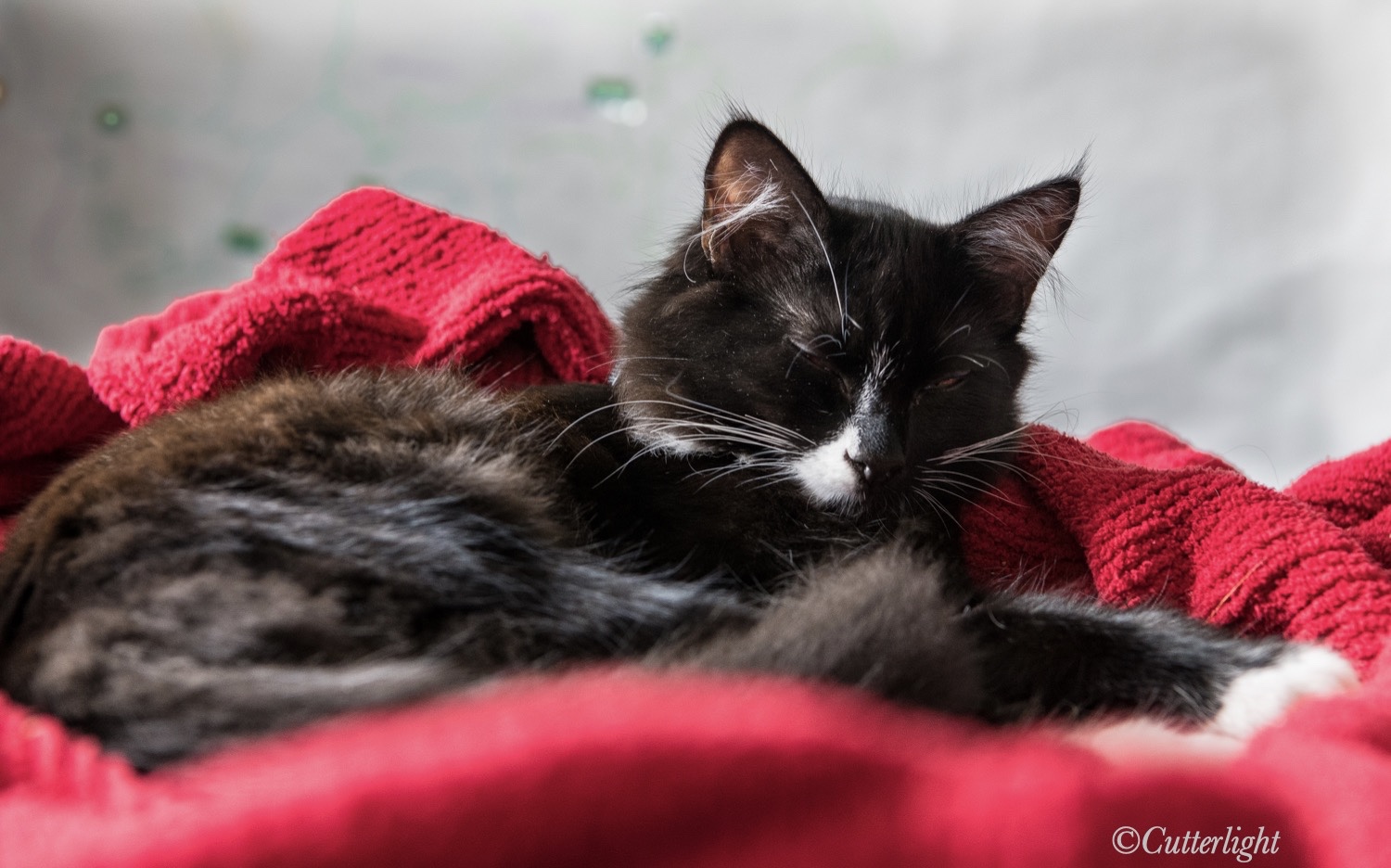
Let me tell you about my new home. It’s big and has very different noises than my foster home. I get all the attention from my two people. They love to play with me. They even made me some new toys. I love to sit on the windowsill and watch the birds at the window feeders. If I get tired, there are soft blankets for me to nap on. At nighttime, I get to share a bed with my new warm family. I think I’m going to have a great life with many fun adventures with these two.

Again to The Lake

It is good to be back. This was the view from our living room window this morning. If you look closely on the water, you can see the rings and dimples of salmon parr feeding on emerging midges.

May 22, Chignik Lake: After a day of glorious sunshine – which prompted us to go for a hike (a crane, two snipe, our first-of-the-year Savannah Sparrows, several other birds, wild violets) I woke this morning to drizzle with more in the forecast for the next few days. We’ll still get out. There’ll be sunbreaks, and we have rainwear. 
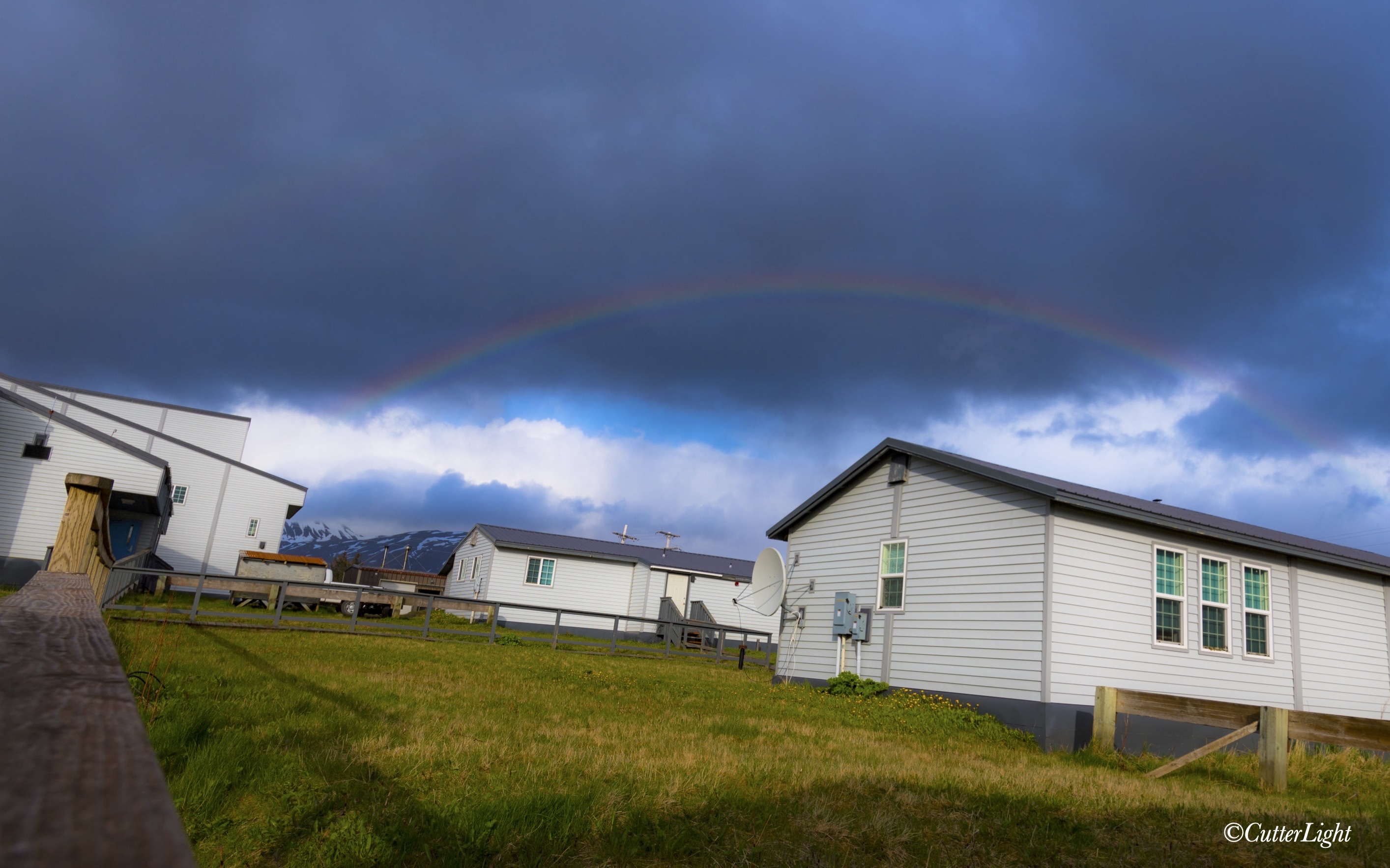
This rainbow arcing over the village featured in the view out our front door this morning. Our home is part of the school campus, to which these buildings also belong – additional housing (mostly vacant) to the right, the school itself to the left. Situated between the far house and the school is the diesel generator building, indicated by the two small smoke stacks. The mountains in the background received fresh snow just yesterday.

The department of Fish & Game will begin counting salmon on the first of June, just 10 days from this writing. A spate of small planes flying in personnel and supplies to the facility at the weir will occur any time now. Two friends set nets yesterday, but I haven’t yet had an opportunity to talk with them to see if they caught any early salmon. 

The landscape goes from brown to green with amazing rapidity this time of year. The lawn will be permitted to grow wild until after the dandelions have gone to down. Our finch population – Pine Grosbeaks, Pine Siskins and Common Redpolls – feast on the seeds. (See “Finches of the Dandelion Jungle.”)

The landscape is beginning to really green up. At 56.25° north (about the same as Edinburgh, Scotland), the climate here is perennially cool. First light, announced daily by a Golden-crowned Sparrow singing in earnest from the alders outside our bedroom window, came at 5:09 this morning. Last light won’t depart till 11:51 PM, so we’re already getting more than 19½ hours of daylight. Sunrise and Sunset times occurred at 6:04 AM and 10:56 PM – nearly 17 hours. Even obscured by clouds, that’s a lot of solar energy for plants rooted in rich volcanic soil and receiving abundant rainfall. During summer, the peninsula coast is as stunningly verdant (and the seaside cliffs, waterfalls sheeting from the tops, nearly as spectacular) as any imagination you might have of the Hawaiian Islands. Inland at The Lake, the summer’s deep and varied hues of green rival that of any emerald land. Already, the beginnings of Chocolate Lilies, Lupine, Wild Geranium, Iris, Horsetail, Cow Parsnip, ferns and more are pushing up… willows decorated with soft, fuzzy catkins, leaf buds on alders and salmonberry bushes near bursting.

I keep meaning to test my guitar against the Golden-crowned’s song – three notes, four if he begins with a slide on the first note. Coltrane, Davis and Armstrong had greater range, but for sheer clarity of tone these birds are masters. Blow, little sparrow! Blow!

We’ve been working each day to bring our home into shape. Having gathered in a couple of new interior decorating ideas while putting our place in Newhalen together and having had a year away to reimagine a few things in this house, we’ve got it looking better than ever. Yesterday, with Barbra’s help I hung 10 acrylic photographs I took in far flung places from Hokkaido to Mongolia to Alaska’s Kenai Fjords to here in the Chigniks. There’s even a favorite shot from a trout lake in Oregon. 
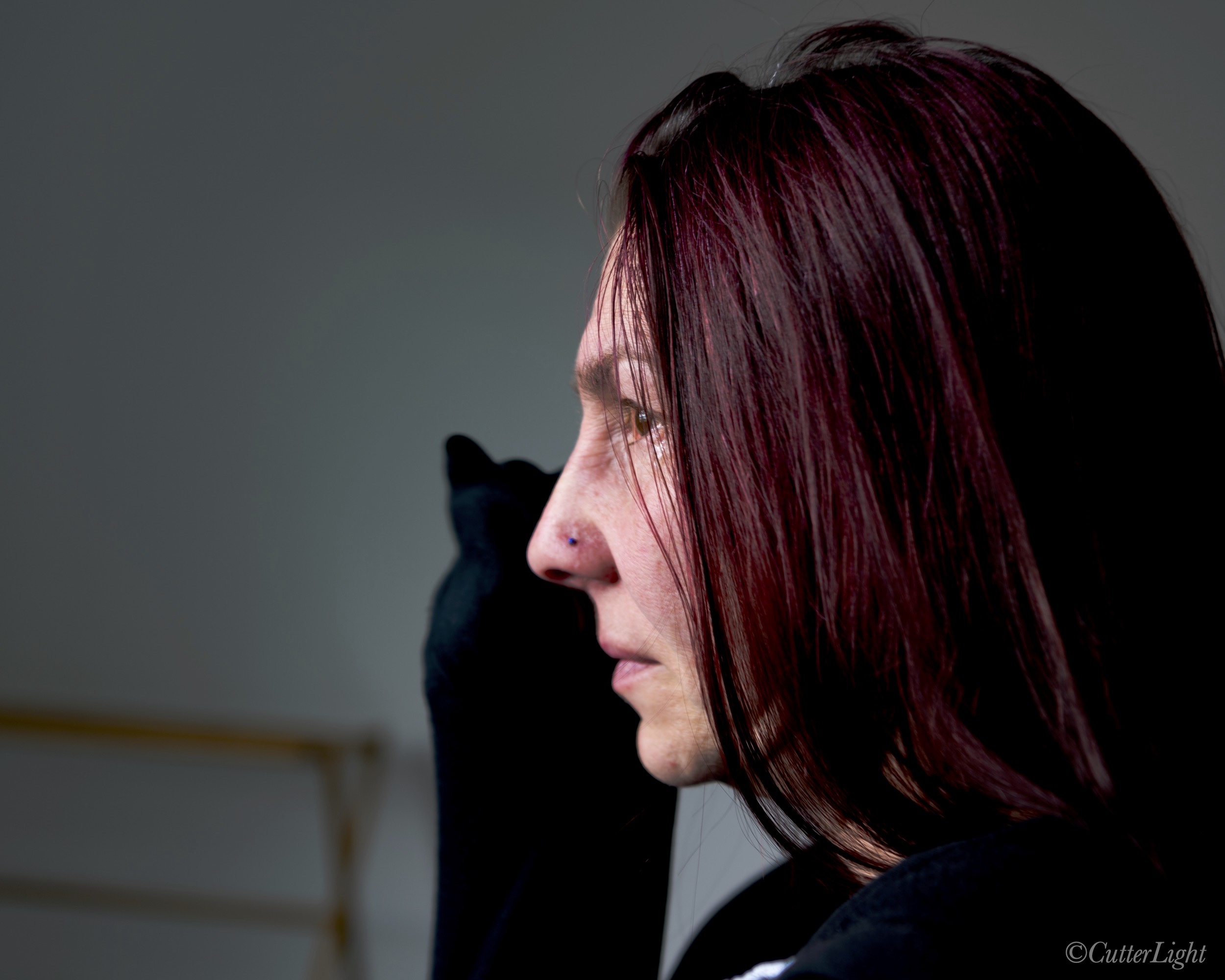
“Barbra!” a small boy cried out upon seeing us from a Covid-safe distance the other day. “Where did you go? Your whole class missed you!” Both of us were, in the words of Bob Dylan, “born a long way from home.” Amidst a peripatetic life, we finally found that place here at The Lake. Leaving when the school closed last year was difficult. The return has been stirring… at times overwhelming. 

Although the school district provides these rentals as “fully furnished,” at the modest prices they charge one would be correct in assuming that overall the furniture is pretty so-so. The beds are the exception; the mattresses are terrific!

Thinking that we’d be in Newhalen for several years, we acquired a few items – decent bookshelves, coffee and end tables, a small but elegant writing station that adjusts for working while either standing or sitting… even details such as nice throw pillows for the sofa… all of which have added up to make an appreciably more congenial living space. Perhaps our favorite item is a pub-style dining table – a high table with tall chairs. ”Up high” is more comfortable than “down low,” especially for us longer-legged types, and the additional six inches in height is just enough to enhance the vantage and view out the windows. 

A group of Greater Scaup has been showing up to dive for aquatic vegetation in a cove visible from our dining window and it was from that window that this photograph was taken. Into the breeding season now, most ducks have paired up and dispersed, but along with the scaup, we regularly see both White-winged and Black Scoters on the lake.

Upon returning to The Lake, we were asked to agree to self-quarantine for a period of 14 days. Thus far there have been no cases of Coronavirus in The Chigniks and everyone wants to keep it that way. The Lake is a village of 50 people, many of them elders. Right now, we don’t have a permanent health aid, so our tiny clinic isn’t regularly open. There are two positions available… 

Even by Alaska standards, Chignik Lake is truly tiny and remote. No restaurants. One small store that would just about fit inside an average living room. A short, bumpy, dirt airstrip. A shed with a pair of diesel-fueled generators that supply the village’s electricity and that can pretty much be counted on to cut out or to be shut down for maintenance periodically – (you’re well advised to frequently save any work you’re doing on the computer).

A stunningly plumaged Male Tree Swallow stands watch near a nesting box occupied by his mate. Each time I think I’ve counted all the boxes put up for swallows in this village, I notice a couple more tucked away under the eaves of a house or mounted on a utility pole. Suffice it to say there are dozens. Native Americans’ happy association with these birds goes back beyond recorded history. Having lived in communities that don’t extend such welcoming to these insectivores, we can testify that their presence makes a huge difference in the number of flying bugs. 

Just about anything we need – screws, batteries, wood for birdhouses, baking powder, clothing… everything, really – has to be planned for ahead of time, shopped for online, ordered, and its arrival patiently awaited. Though it’s not common, there have been times when even groceries have taken weeks to make it out here. (The record has been three weeks.) One learns to think about it before ordering anything perishable, and it pays to advise people shipping goods out here to package them with special care to accommodate multiple plane changes and the bumpy landing. A dentist and an eye doctor fly out once a year to spend a day doing examinations. I suppose I’ll take student portraits for the school this year…

You simply can’t be of a frame of mind of “needing” anything “right now.” This is a wonderful place to hone the arts of planning ahead, a mindful approach to living, taking joy in the moment, and patience.
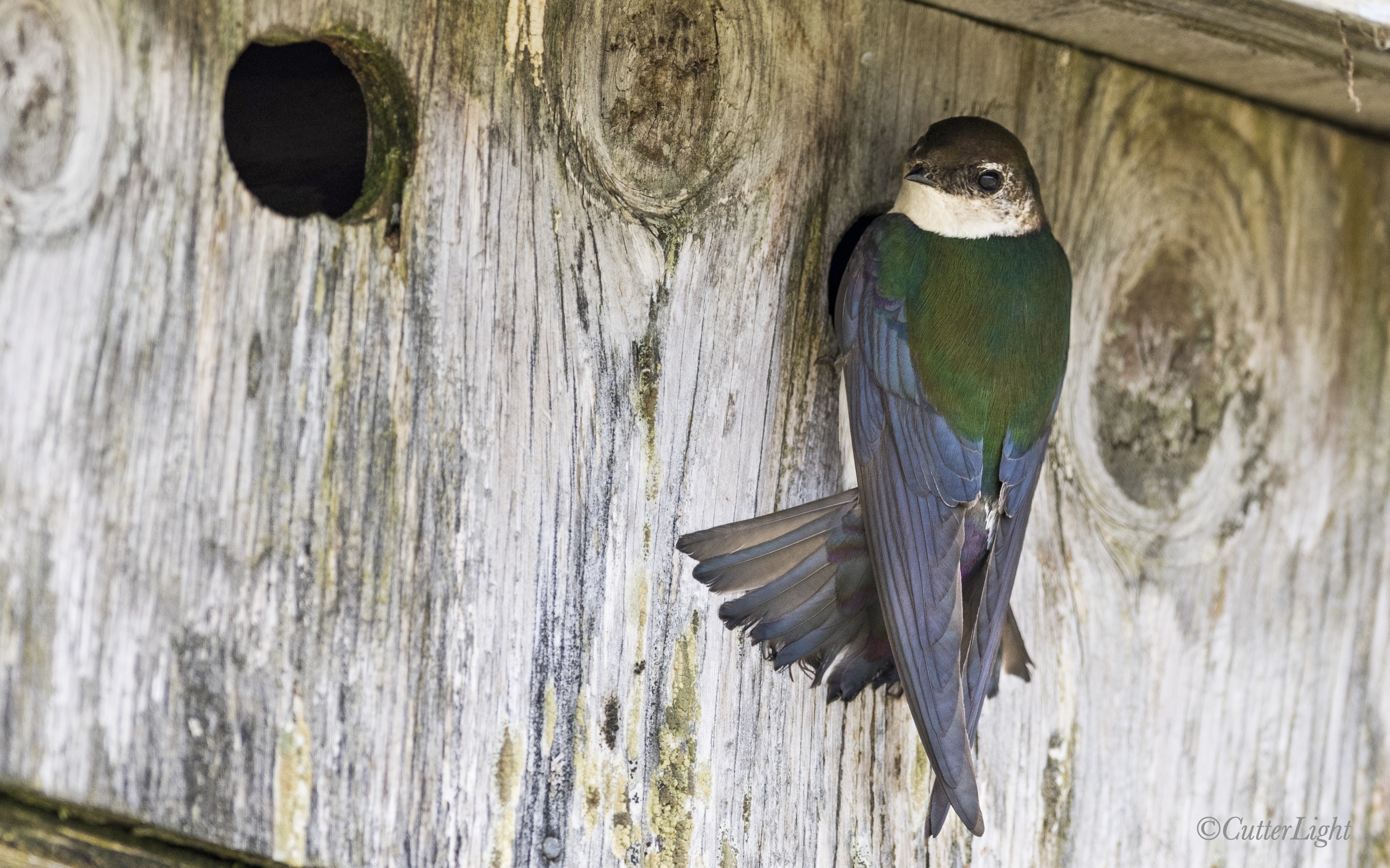
And here’s a male Violet-green Swallow. With midges hatching on the lake on and off throughout the day, the village is frequently filled with the chattering and aerial displays of these beautifully accomplished pilots that seem to redefine air.

There are, of course, difficulties associated with all this. While we do manage to usually have on hand fresh fruit and vegetables (potatoes, cabbage, carrots, parsnips, rutabaga, apples, avocados, grapefruit and Brussels sprouts ship well and can survive the typical two or three-day journey out; cauliflower, sweet corn, snap peas and pears are riskier. But forget about lettuce and most other fruits – those are city-visit foods unless a friend comes out and hand-carries them). Dried mushrooms take the place of fresh, and we go through canned diced tomatoes (and salsa!) like they’re goin’ out of style. 

Of course, we usually have some sort of wild berries on hand – fresh or fresh-frozen blueberries, lingonberries and salmonberries, and from time to time we make a salad of Fireweed shoots or Dandelion greens. We’re lucky in that we love salmon – which we take on flies we’ve tied – and are frequently gifted with moose meat, which we find superior to beef in most dishes. Every once in awhile we luck into some locally-gathered seafood: Tanner (Snow) Crab, clams, urchins, halibut, sea lettuce.

Getting other meat out here is expensive. If we go into town (into Anchorage), we bring back a tote filled with chicken, pork, beef and sometimes seafood such as scallops, shrimp and crab from Costco. Otherwise, we pay one of the bush airline employees to shop for us. She makes the purchases in the morning, gets our meat and and perhaps a few other delicate perishables on the plane that same day and with luck we have it by afternoon. We buy meat once or twice a year, repackage it into serving-sized portions, vacuum seal it and freeze it. 

We bake all our own bread – the best way of assuring fresh, quality loaves.

I took this photo, one of many tributaries in the Chignik drainage, as we flew into The Lake on May 12. One of these tributaries has a small run of Steelhead… and we finally figured out which one it is. So… If we can get up there…

There are other inconveniences. We’ve been waiting eagerly for our Hondas (ATV’s/quads) to ship out. Getting our boat out here is proving to be quite a logistical puzzle. Shopping online can be challenging. Often you’d just like to hold an item you’re thinking about purchasing in your hands – leaf through a few pages of a book, try on a pair of jeans, feel the grip of a kitchen utensil, evaluate fly-tying materials with your fingertips or see for yourself just how large or small a certain item is. But you can’t, so you make your best guess and hope whatever it is fits well enough or suits the purpose you have in mind.

You learn to look past some things. A shirt with slightly frayed cuffs still has “some good wear in it.” Something that could use a fresh coat of paint “can go awhile longer without one.” A window pane that has a bit of a problem is lived with, because getting the materials out here and figuring out how to make the repair… isn’t going to happen anytime soon.

There are benefits of making a mental contract to live with these inconveniences. (Many benefits, actually.) One of which is that none of the three Chignik villages have had cases of Coronavirus. A health team recently flew in and tested all three villages.

Of all the places I’ve lived, it is in this house that the rain falls on the roof like music and sometimes reminds me of similar music that lulled me to sleep in the Philippines and a small house where I lived in a quiet part of Japan. 

I’ve never lived any place where each morning begins with birdsong as it does here. In that regard, it’s like a permanent vacation on a favorite childhood lake – three far-too-short days in a tent or rented cabin supplanted by a life in a tidy, cozy lakeside home.

And there’s this… which only recently (upon moving back here) came to me. Imagine a sort of stock “beautiful view” from a window. An apartment high up in a skyscraper overlooking a city; a house commanding a view of a beach or a rocky coastline; or a window framing a vista of mountains – the Rockies, the Alps. 

All of these images are lovely.

Yet they are somewhat static. 

Except for the effect the relatively slow progression of seasonal change may bring to the view, or the changing light from day to day and hour to hour… to take in these views once is to take them in for the next several weeks or even months without much anticipation of change.

The view outside our windows is dynamic. The weather moving from sea to sea across this narrow peninsula is dramatic, the moods set by changing light sometimes stunning. There is wildlife – birds, bears, shoaling and leaping salmon, insect hatches, hungry seals, otters, foxes, an occasional wolf, eagles, owls… and there’s the comings and goings of friends (and everyone in this village is a friend) as they launch their boats or come in with the day’s catch, a freshly taken moose, or a shipment that was delivered to The Bay. 
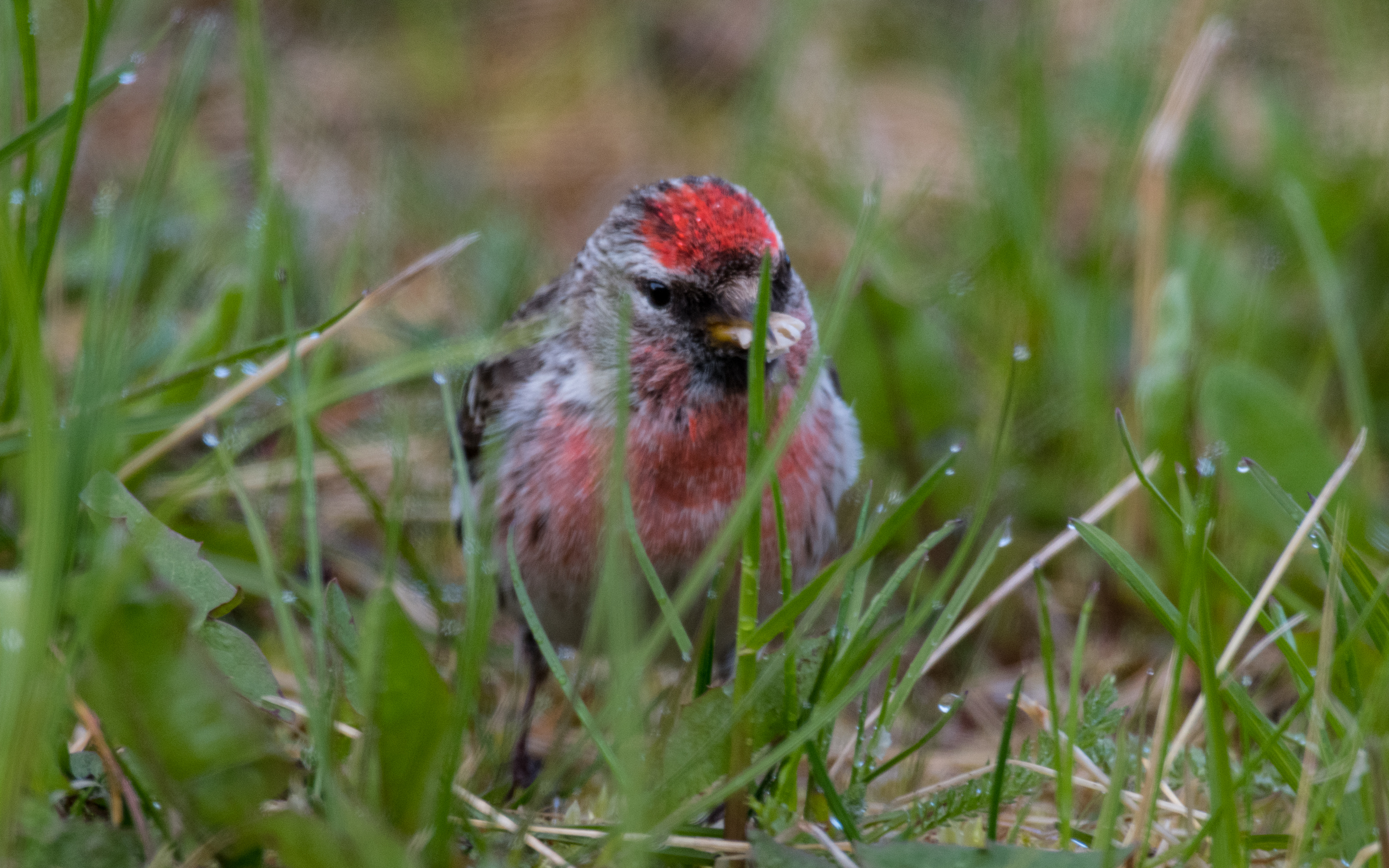
Male Common Redpoll outside our kitchen window.

This morning, as I was proofreading this piece of writing, I saw the season’s very first school of salmon heading up the lake. Between now and October, hundreds of thousands more will follow, mostly Reds but also Pinks, Silvers, Kings, a very few Steelhead, lots of sea run char and close to the ocean, Chums.

Pine Siskins (above), redpolls, Golden-crowned Sparrows, Pine Grosbeaks and magpies have been daily visitors to our yard to take advantage of the seeds I put out for them. Watching them as we wash dishes makes the chore go faster.

Quiet. The entire time I have been writing this morning, (both yesterday and  today) the only sounds have been the off and on hum of the refrigerator (sometimes at night, I unplug it for awhile… real, blessed quiet), the gentle whistle of water coming to boil in our coffee kettle, the songs and cries of birds – thrushes, swallows, warblers, sparrows, redpolls, siskins, magpies, ravens, ducks, gulls -, and the steady music of rain on the roof. 

Today we will tackle the organization of the fishing & photography room.

I’ve been striving to practice three hours a day on the guitar. 

          O snail,
          Climb Mount Fuji
          But slowly, slowly!
                                   Issa