Titanium Rings

July 14, Seward:

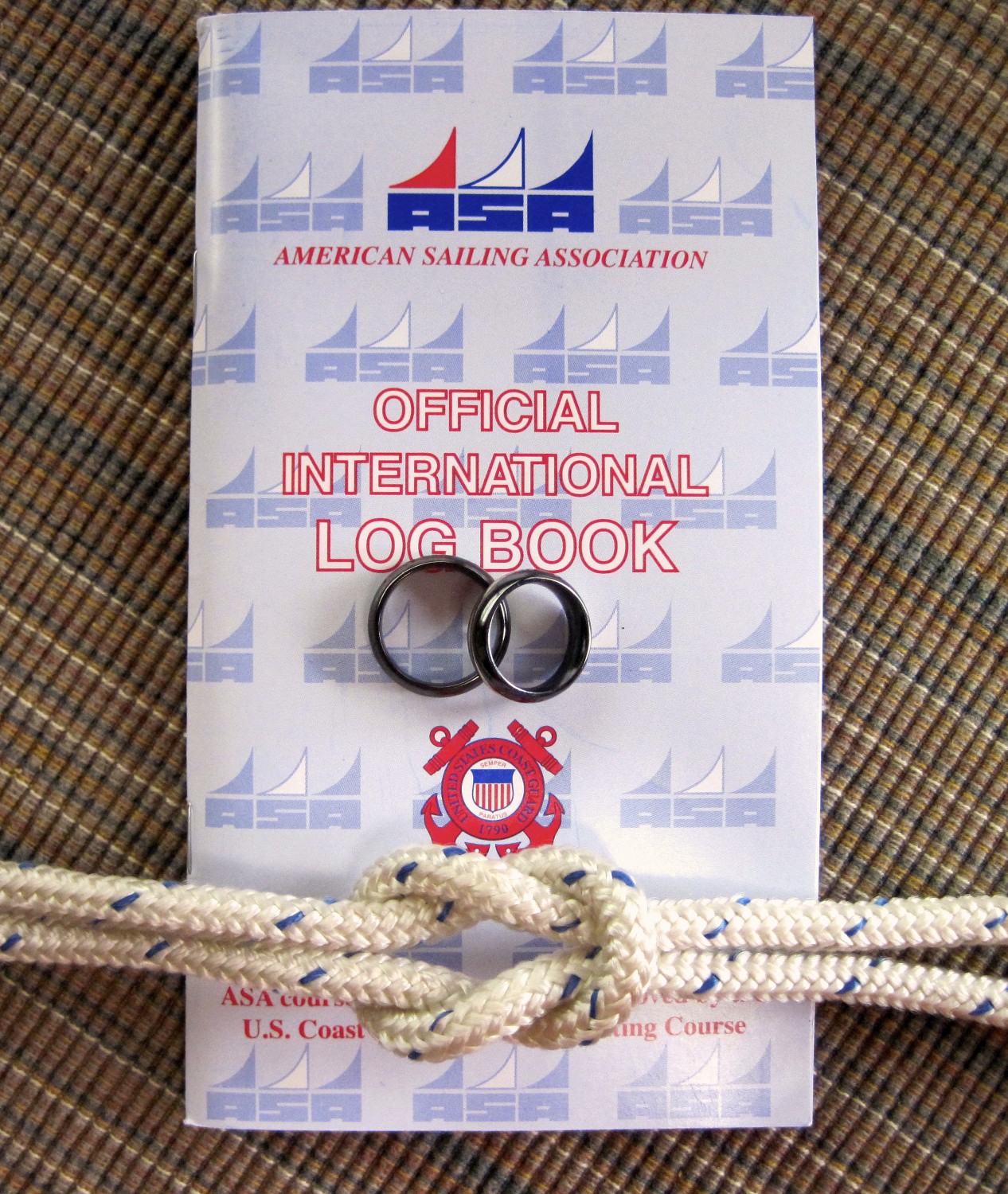
I don’t know why I want to go, but it has always been there. This restlessness. When I married Barbra, we exchanged titanium wedding bands with an inlay of white gold. The rings are incredibly light and strong and resistant to corrosion, characteristics sailors value in titanium. “Someday we will live on a boat,” we said.

A few months later we bought a small powerboat, a 22-foot C-Dory Angler. It is a beautiful craft, white with burgundy trim and lines pleasing enough that it regularly draws compliments. It’s 90 horsepower engine moves it along at 25 knots or so on flat seas. It’s got a pilot house to keep us out of the rain and cold, and enough open deck space for the two of us to comfortably fish from. We have spent many  nights sleeping in its cuddy cabin.

The first summer we trailered Gillie from California to Alaska, we slept on it 42 nights both on land and on the water. That summer we saw our first Dahl porpoises and our first glaciers, and we caught our first halibut and our first yelloweye rockfish. We made our first-ever longish run—90 miles from Valdez to Cordova. On another outing, we learned what it is like to lose the main engine 30 miles from port and what it feels like to limp home on the kicker engine with radar, depth finder and electronic charts all down. And we discovered that our little boat can handle fairly rough seas.

When the summer came to an end, we were left with two predominant  thoughts: We wanted to move to Alaska, and we wanted to get a bigger boat—one big enough to live aboard year-round.

The move from California was more easily accomplished than we anticipated. As it turned out, there is a demand for teachers in this state. We accepted jobs in the Arctic, hundreds of miles from roads. These jobs pay well enough to have allowed us to turn our attention to the passion of our lives: boats. There is scarcely a day that goes by that we don’t talk about them. How big? Power or sail? What kind? How much can we afford?

We read about them, we think about them, we dream about them…

We obsess about them.

These past two weeks we have been in Seward where we completed a six day sailing class during which we sailed 32 foot and 47 foot sloops.

Neither Barbra nor I had any previous experience with sailboats. But after six days of intensive instruction and learning, we now know how to use wind and cloth to make a fairly large boat move through the water.

And by acquiring that skill, we have at last come to an understanding of what we want in our next boat. I’m not going to put in caveats about the many things that could keep us from realizing our goal. We are mindful of those things.

But an important shift happened this past week. The pleasantly hazy “someday, somehow,” image of a dream has been replaced with the clarity and urgency and focus of a goal.

Our boat will be between 32 and 43 feet long. It will have a fiberglass hull, two staterooms, an efficient galley, and a cockpit designed for making ocean passages. It will probably be rigged as a cutter.

Our next boat will be comfortable, relatively easy to sail, and built tough enough to handle almost anything.

We will take it out on blue water, setting our course for places such as Hawaii, Japan, New Zealand and islands in the Pacific we don’t yet know. And Ireland and Greece and Belize and Argentina.

We think we can make ready in five years.

Get our finances in order, acquire a boat, improve our knowledge, hone our skills, set aside enough money to live off…

Cast off the stern line, cast of the bow line, unfurl the main and let her set, find the wind, and go.

This journey has begun.

Arctic Ocean

We put our fingers into the icy cold water during our walk along the beach. It reminded me of the cold waters of Lake Tahoe in the Sierras. I remember swimming in those waters as a child until my body went numb. Jack remembered taking a dip in the Merced River in Yosemite…the shortest dip of his life.

There is a woman in Barrow who will issue a Polar Dip certificate, officially proving that the bearer has fully immersed herself in the Arctic Ocean. No gracias.

Top of the World!


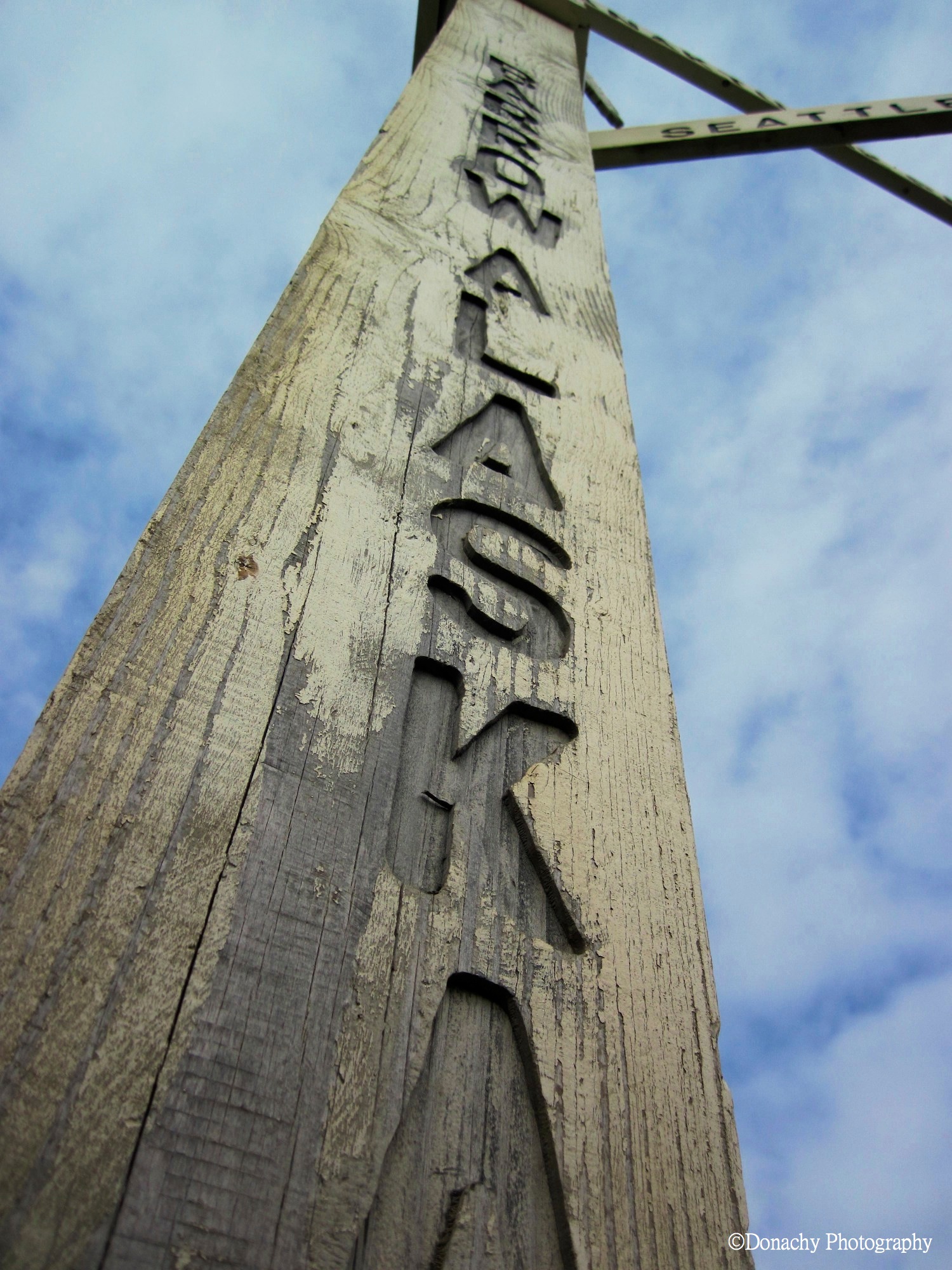
We are in Barrow, Alaska for a little over a week. It is the northernmost city in the United States.

As the crow flies, we are miles away from everywhere…

728 from Anchorage, Alaska

2,582 from Sacramento, California

3,040 from San Diego, California

4,290 from Key West, Florida

4,071 from Paris, France

(This data courtesy of the following link: http://www.findlocalweather.com/how_far_is_it/ak/barrow.html)

Seeking Silver Salmon

Coho Salmon

Trolling is boring, I thought. Two summers ago we drove around in our boat outside of Whittier at incredibly slow speeds dragging a couple of lures only one silly little pink salmon came to bite. Heck, you don’t even get hold the rod!

This was my impression.

That has changed.

This summer while in Seward, we heard the silver salmon (Coho) run on Resurrection Bay was hot. Out on the bay, Jack got gear ready for trolling; I was prepared to enjoy the scenery. But no sooner did he put a lure in the water and set the rod in the holder than we got hit! We quickly strategized–I drive, Jack tends rigs, fish hits, Jack shouts “FISH,” I drop the boat into neutral, Jack reels in the fish, I grab the net, and Voila–major fun! Then we switch–Jack drives, I reel in the fish, and Jack does honors on the net!

The limit for silver salmon in Resurrection Bay is six fish – which meant with two limits, we could keep 12.. The first 11 salmon came easily. Naturally, that last elusive fish took us a while to find. We took a break from trolling by catching other fish that day…halibut, lingcod, and rockfish. When we went back to trolling, a dime-bright silver was waiting for us. When we finally pulled up at the cleaning station at the marina with our beautiful catch (two Chinook, several large silvers, halibut and rockfish)…even the locals were impressed.

Clam Digger

Two hours before low water

the clam digger walks the pebbled beach and waits

clatter of rocks under each stride

eagles silhouetted against the morning sky

on the towering, sand-colored bluffs

the tide edges back slowly

exposing fist-sized rocks

red and veined with quartz

green rocks with speckles

look like eggs

the saltchuck laps at the last fringes of rock

till at last the sand beach begins to show

and dimples

and blinkers

and neckers…

Everywhere!

Grizzly

At the summit of the Exit Glacier trail, we put our packs down and let our eyes sweep across the Harding Ice Field. It looked like a vast lake of white, dotted here and there with the dark, bare rock of mountain peaks pushing up from the ice field like islands.

“What’s that out there?” Barbra asked, pointing far out on the ice field.

“Probably just some person,” I replied, barely looking up.

As the dark object continued to lumber toward us, Barbra finally picked up the binoculars. “It’s a bear!”

Sure enough. On the hike up the trail, we’d spotted a sow black bear with two cubs grazing in an alpine meadow. With the image of the black bear fresh in our minds, it was clear that what we were now looking at was a grizzly. A massive one with a large shoulder hump, probably a male.

We marveled at the speed with which it made it’s way across the frozen landscape, it’s tracks stretching out as far as the eye could see in its wake. He appeared to be heading straight for Exit Glacier, which, we imagined, he would follow until he came to a river where he could find spawning sockeye salmon.

Glaciers are like rivers of ice, pushed down mountains by the weight of the ice fields where they are born. It is not known for certain how deep—how thick—the Harding Ice Field is. Judging from the mountain peaks that surround it, it must surely be thousands of feet thick at its deepest places, and it spawns dozens of glaciers, each one carving its own path in the mountain rock as it flows. Exit Glacier moves at a rate of about one and a half feet each day, grinding out a valley under the tons of ice it carries.

One Hundred-twenty Clams

One-hundred and twenty clams

That’s a lot of razor clams. Back on the Oregon coast, the limit was thirty for the two of us. We love razors, they are THE best eating clams. Driven by our love of clams and the best clamming tide of the summer, we cruised down the Kenai coast to see what we could catch.

We got to the beach well before the peak low tide. The beach was suspiciously devoid of people and very rocky. The day before, a family of campers had told us that this beach was “loaded” with clams. Maybe we had been punked! Patience, Donachy’s, patience.

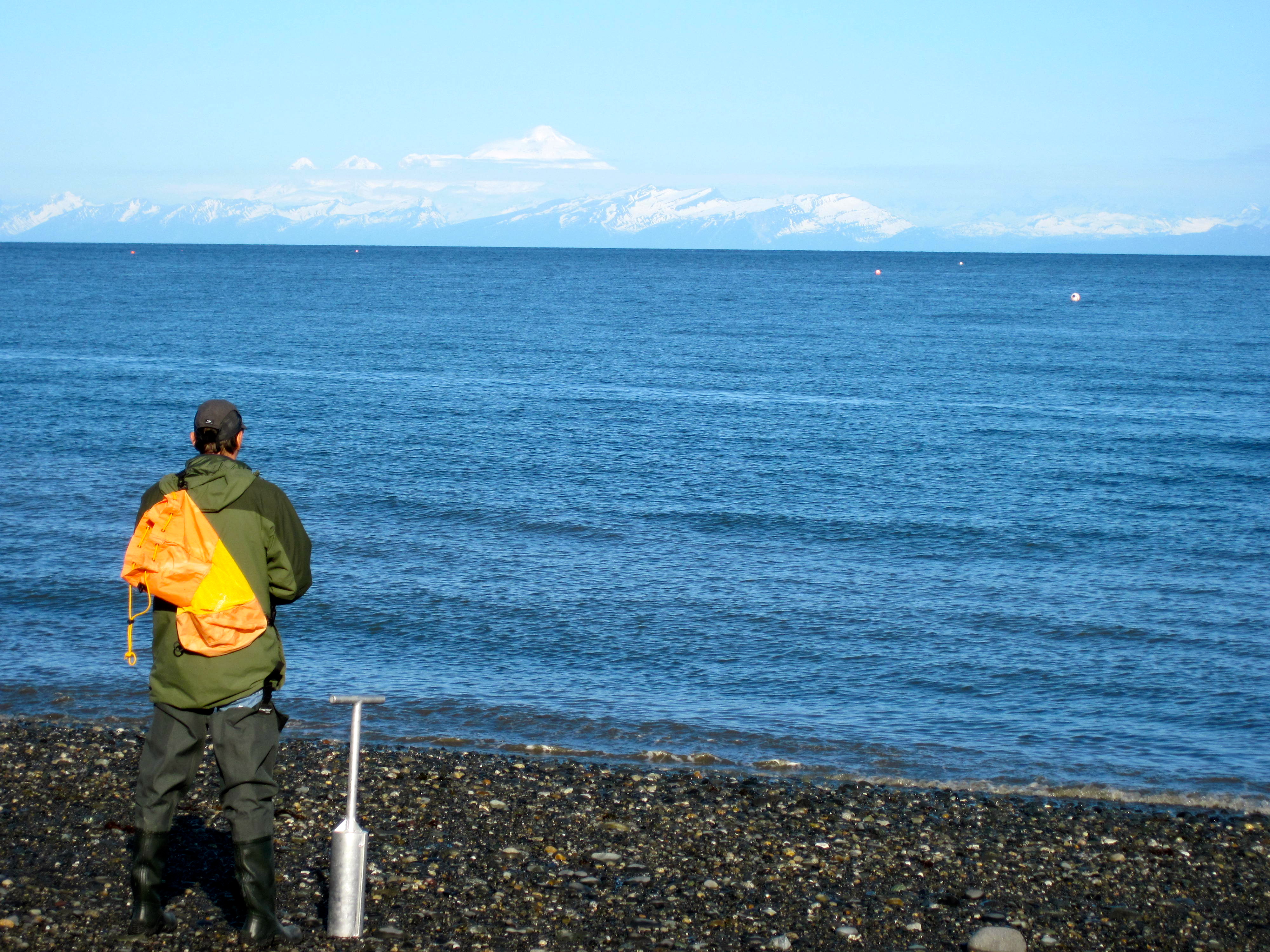
We walked south in hopes of finding sand or evidence of clams. The day was sunny, and the blue skies were reflected in the glassy waters of Cook Inlet. Shouldered with snow, Mount Iliamna loomed in the distance, catching clouds like wisps of cotton. Bald eagles seemed to be everywhere. We walked immersed in the beauty and stillness, the sun warming us.

As the tide continued to recede, here and there patches of sand began to show. And then, so did the people. Trucks and ATVs drove by and continued down the beach. A-ha! After a few more minutes of walking we joined the two dozen or so people who were beginning to dig. There were old, young, and in between. Dads were coaching kids. Groups of young girls were squealing and giggling with each clam they pulled from the wet sand.

As we joined the diggers, we were amazed at the quantity of shows—the tell-tale dimples in the sand made by each clam’s syphon. Two years earlier, we dug some clams at a nearby beach. They were huge, but we didn’t find many. On this beach, the clams were smaller, but still a good size for eating. After digging for a bit over an hour, we decided we’d better count and see where we were. We were shocked to find we had already dug one hundred clams! We were almost disappointed knowing that we only could dig twenty more.

The morning of clamming and walking the beach had been a blast! We knew we had our work cut out for us cleaning and prepping the razors for cooking. Armed with a six-pack of Alaskan White Ale and the high the two big bags of clams left us with, we went back to camp to finish the task.

Provisioning for a Year in the Bush

Above, Jack is zip-tying the lid to a Rubbermaid Roughneck tub at our storage unit in Anchorage.

Planning for a year in a remote village may seem like a daunting task. After two bush moves and two annual shopping experiences, I think we’ve nailed it.

In Walden, Thoreau lists everything he took with him to his life on the shores of Walden Pond. Fascinated and inspired by Thoreau’s list, we vigilantly documented all the provisions we sent out to Shishmaref last year and monitored what we used and didn’t use in order to prepare our shopping lists for this coming year.

Here’s what the advice of others and our own experiences have taught us.

1. Rubbermaid Roughneck. They come in a variety of sizes and are easy to stack and store. We label each tub and lid so all the holes we drill for the zip ties which keep them closed match up. The manufacturer says they are “unbreakable.” So far, they have been just that. Caution: most other tubs will break.

2. Cardboard boxes. The best boxes are reliable for only one use, and even then they are more difficult to ship and stack than the plastic tubs. We have gone away from using boxes.

3. Media mail. For books, CD’s, DVDs and other media, the post office gives a discount on their already inexpensive rates. Know that these items will be shipped on the slowest boat, at times will be stacked atop each other in huge piles, and will likely be tossed around. In our first move, just about the only boxes that were wrecked were those that had been sent at the media rate. This time around, we shipped our media in rubber tubs.

4. Dry goods. We think of food items in three categories: dry, refrigerated, and frozen. Our first advice is this: if you don’t have a Costco membership, get one! Costco has excellent prices and they seldom stock anything that isn’t of good quality. Unlike some other stores which, for a fee, will pack and ship your groceries for you, Costco is a “do-it-yourself” proposition. That’s fine with us. Not only do we save money by taking care of something we can do perfectly well ourselves, but in doing so we ensure that our items are properly packaged. And in addition to getting butcher-shop-quality meats and excellent produce, in shopping at Costco we are giving our hard-earned money to a business that is known for treating its employees and its customers fairly and ethically. We won’t name any businesses, but personally we can’t justify giving our money to a corporation that is constantly in the news fending off one law suit after another because they simply do not treat their employees ethically and with respect. Once we have purchased and packed our dry goods, we mail them at the parcel post rate of about 70 cents per pound.

5. Frozen goods. Alaska airlines as well as the the smaller airlines that provide service to the bush allow three checked items (50 pounds each) and one carry on item. We were advised to bring coolers as the checked items, so last year, we brought up three 58-quart coolers stuffed with frozen meat, juice, fruit, and vegetables. All the coolers ended up exceeding the airline’s weight limit by 20 to 25 pounds each, which irritated the employees at the ticket counter end cost as overage fees. This year, we are going to use Rubbermaid tubs instead of coolers. The tubs themselves are lighter than coolers, and by going with 14 gallon (56 quart) coolers and using crumpled newspaper for insulation and to take up some room, we should be able to stay within the weight limit. With items frozen solid (we have a chest freezer at our storage place), everything should hold up fine during travel. We’ll supplement what we buy at Costco with the razor clams, salmon, halibut and rockfish we harvest this summer. By the way, the large bags of frozen vegetables Costco carries are superb.

6. Refrigerated items. Last year, we really wanted cheese, yogurt, eggs, lettuce, apples, and tomatoes, and not knowing whether or not we could readily get these items in Shishmaref, we decided that we would pay the extra cost for “overnight” shipping. We knew that we wouldn’t actually get these things the next day, but we were hoping that our delivery would arrive in two or three days. Unfortunately, it took a full week for our items to arrive. As we unboxed our items, we were mentally preparing for the stench of rotten yogurt, cheese and lettuce. But amazingly, the only items we lost were the few small bags of frozen vegetables we had thrown in as ice bags. The vegetables had thawed and had begun turning to compost.

7. Items we forgot or ran out of. Our experience here is that if you forget something or something gets lost or ruined in transit, don’t worry. If the store in your bush community doesn’t carry something you need, you can pick up your phone and call the Fred Meyer store in Fairbanks. (Don’t bother with their online bush order service; it isn’t really set up to be practical.) Fred Meyer will mail or ship any item they carry in their store. They pack things well, their, customer service is excellent, and their prices are reasonable.

We’ve finished our shopping and packing chores for this year, and now we have the rest of the summer to camp, fish, boat, hike and play!

Little Diomede

This last weekend, we had a beautiful, clear flight home from Anchorage. Our leg from Nome went through two villages before the plane landed in Shishmaref. We’ve learned to go with the flow as far as air travel goes. Weather may cause a delay and also may cause an earlier flight. We may have a direct flight, or wind up on a multi-stop trip. Last Sunday was beautiful. It reminded me of taking a long Sunday drive just for the sake of driving and looking around. We saw peaks, and valleys. We saw snow and ice crusted rivers. We even saw some musk ox from the air!

When we landed in Wales, we noticed land surging up through frozen sea and asked the pilot what the land mass was. He told us it was Little Diomede. I was surprised to see that the island is so close to the mainland. In my mind’s eye, I thought it was way out there. If you look on a map, you will see Little Diomede (U.S. land) is next to Big Diomede (Russia). Now, we can say we have seen Russia!