The Chinggis Khan Equestrian Statue: An Impressive Monument to Mongolia’s Past and Future

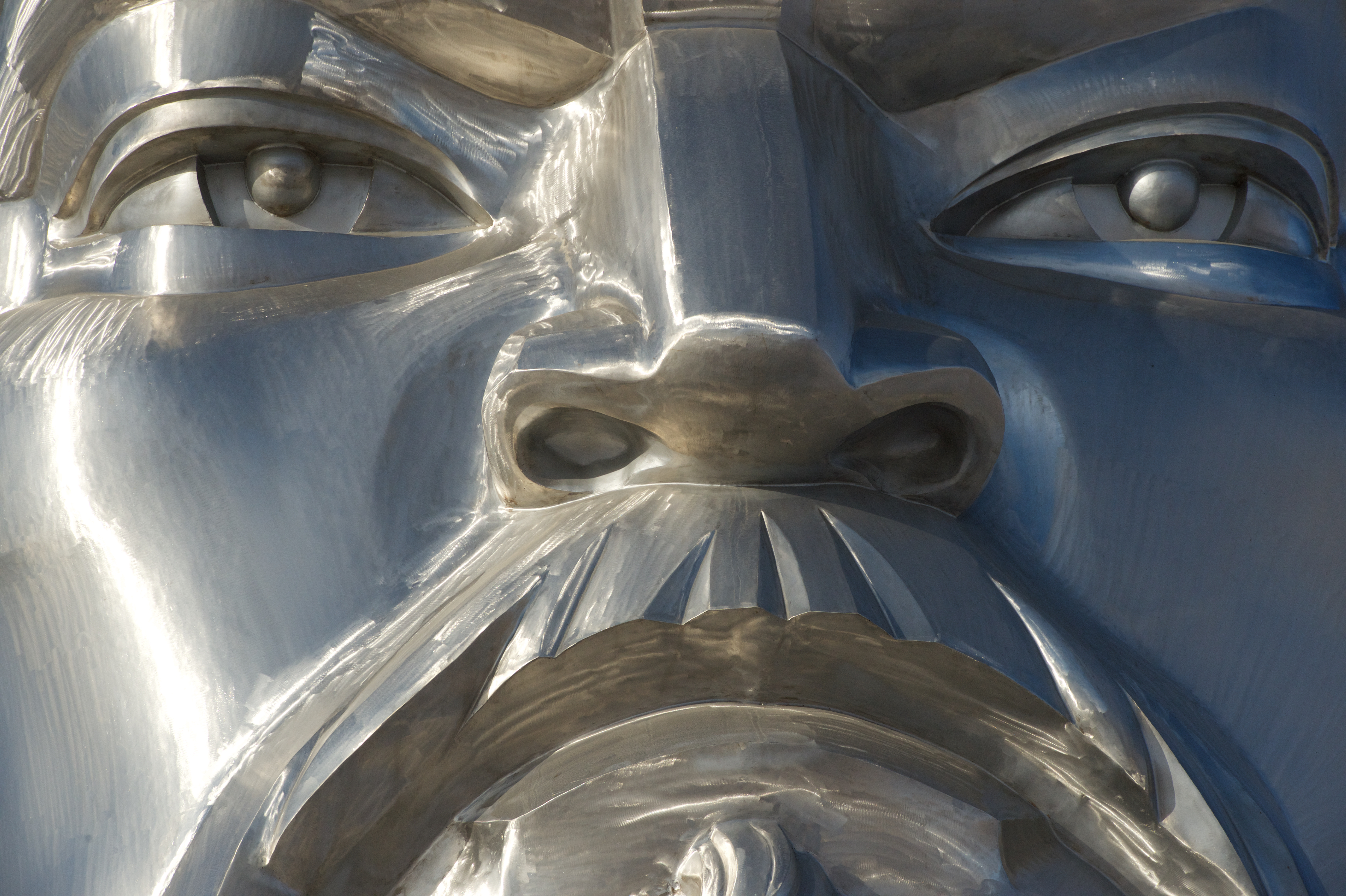
Chinggis statue face close n

There is no overstating the importance of Chinggis Khan – ruler of all who live in felt tents – to the Mongolian people. Revered in film and in statues such as this 40 meter (131 feet) tall monument , the founder of the Mongolian Empire is evoked in everything from currency to Ulaanbaatar’s international airport to vodka labels.

Sitting at an altitude of 4,429 feet above sea level, just over one million people live in Ulaanbaatar, Mongolia’s capital city. Another 1.7 million Mongolians live in the countryside, either in smaller communities or as nomadic herders on the highland steppe or vegetated regions of the desert. In former times, these grasslands and the nomadic herding culture that accompanied them stretched through Kazakhstan as far west as Hungary, so when Chinggis Kahn proclaimed himself ruler of all who live in the circular, felt-covered tents called gers that were the homes of these nomadic people, he was laying claim to the largest contiguous land mass ever to fall under one empire.

Chinggis Khan w landscape n

Looking east toward the place of his birth, Chinggis still dominates the rugged Mongolian steppe. Two hundred-fifty tons of stainless steel went into this statue which is situated at the location where a young Temüjin (Chinggis’s boyhood name) found a golden whip and took it mean that he was destined to become a great leader. 

At his birth in 1162(?), the land of Tumüjin’s childhood was occupied by numerous, often warring nomadic tribes. Part of Chinggis’s legacy includes uniting these tribes under one rule and in the process creating a national identity for the Mongolian people.

The nomadic culture has died out or essentially been extirpated elsewhere such as in Kazakstan and Hungary. Under Stalin, the Soviets waged an unrelenting campaign to wipe out or drive out nomadic herdsmen, in many locales turning former grazing lands into collective farms and bringing about mass starvation in the process.
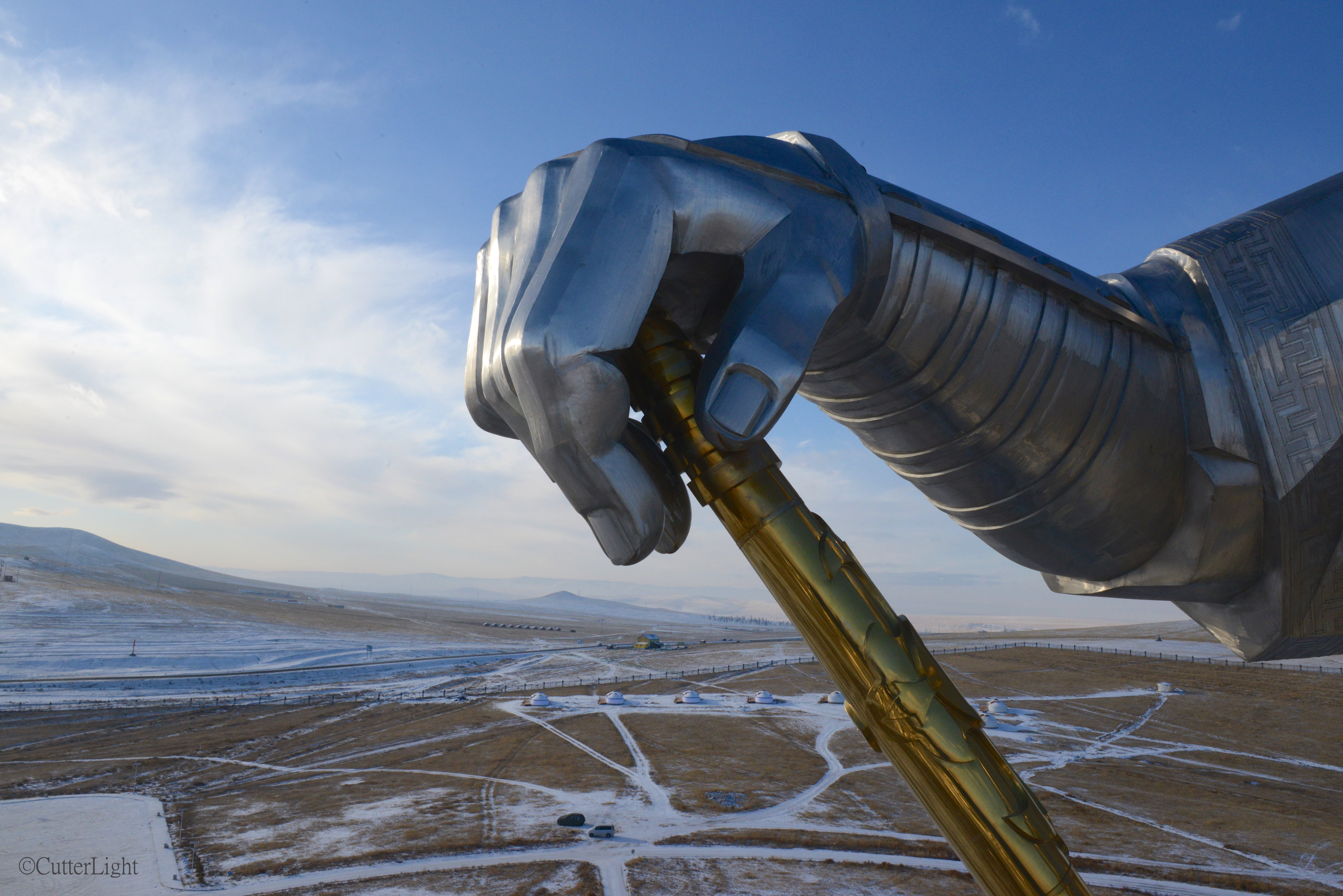
Chinggis statue hand over gers n

The name Chinggis Khan means “leader of all who live in felt tents.” 

But in Mongolia, a land sufficiently insulated and independent enough from both the Russians and the Chinese, hundreds of thousands of Mongolians still live much as they did in the 13th century when Chinggis rose to power. As such, they are the last truly nomadic people in the world.

Millennia of equestrian know-how passed down generation to generation is still showcased in annual tournaments where horse-mounted riders traveling at full gallop demonstrate an ability to pierce man-sized targets with arrows shot from simple bows. It is easy to imagine the terror such skilled, mounted warriors would have invoked in territories where horsemanship was all but unknown. In addition to enemy soldiers felled in battle, under the various Khans, Mongolian armies slaughtered tens of millions of civilians in locales where people had refused invitations to surrender.

At its zenith, the Mongolian Empire stretched from eastern Europe through much of China and Southeast Asia all the way to the shores of the Pacific Ocean. Present day Mongolia lies within the bean-shaped boundary partially covered by the map key. 

The positive aspects of Chinggis’s legacy include bringing political stability to the Silk Road and thus to regional commerce, establishing religious tolerance, fostering intellectual growth and greater communication throughout the empire, and quelling the region’s history of tribal and clan warfare by introducing meritocracy to government.

Chinggis leather boot njpg

This leather boot, located in the museum below the statue, is the same size as the stainless steel boots on Chinggis’s feet. The statue was completed in 2008 and is currently the largest equestrian statue in the world. 
soldier statues at chinggis statue n


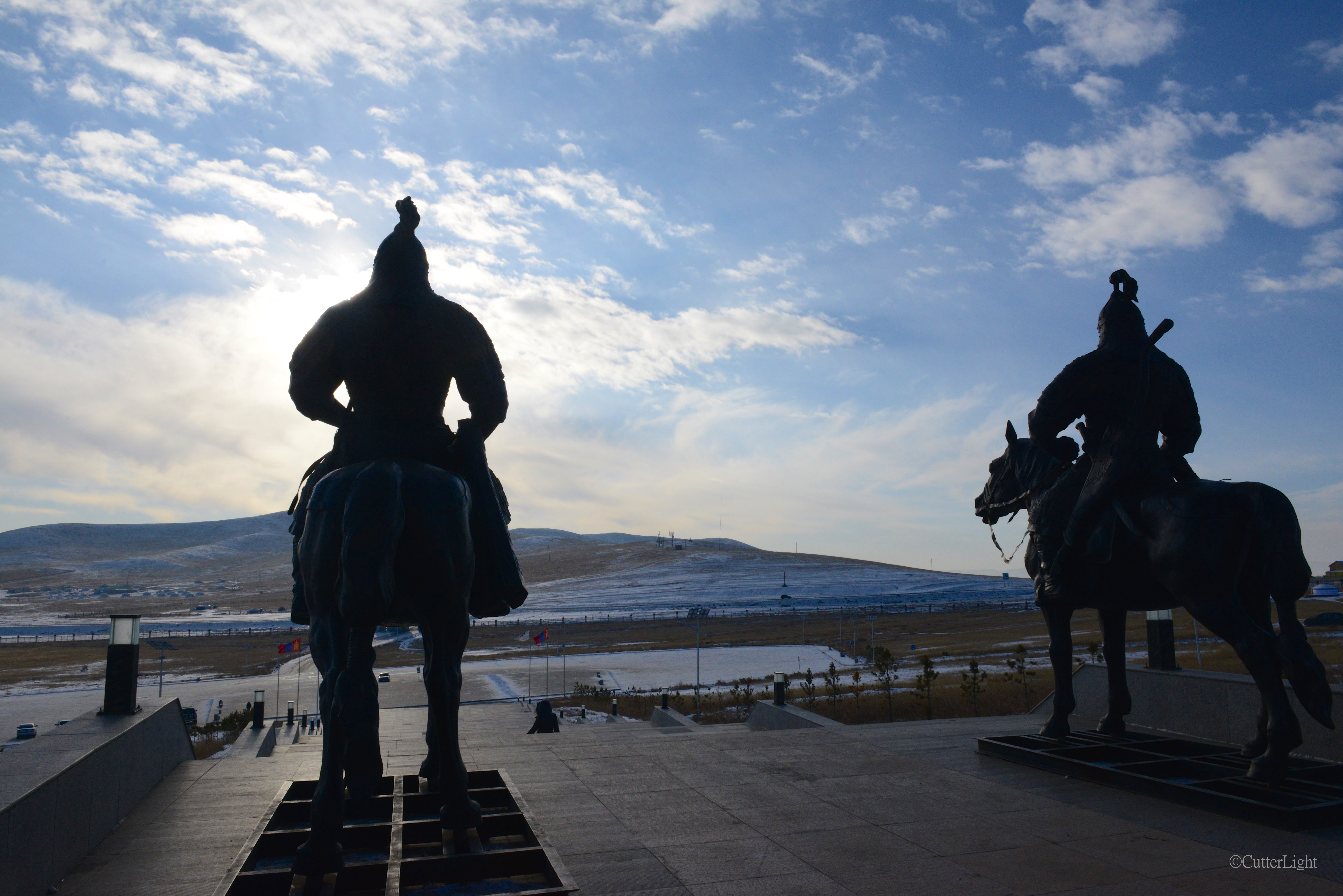
Reminiscent of the soldiers who rode with Chinggis, these vigilant horsemen face the rising January sun. The museum is a collection of period weaponry, jewelry, serving ware and other artifacts, as well as portraits of the 36 Khans who succeeded Chinggis and were appointed as heads of various regions of the empire. Chinggis Khan died in August, 1227. He was about 65 years old. Various accounts have him succumbing to an infected battle wound, a hunting accident, a fall from a horse and the dagger of a woman his army captured. Probably as protection from desecration by rivals, the whereabouts of his burial site remain shrouded in mystery as well…

From the end of the 17th century until 1911, Mongolia was under the control of China. Soon after that, they fell under Russian hegemony and in 1924 were declared a satellite state of the Soviet Empire. It wasn’t until 1989 that Russia withdrew it’s troops from Mongolia. In 1992, Mongolia created a new constitution and a multi-party democracy. Mongolia is thus at once a very young country, and a very old one.

OLYMPUS DIGITAL CAMERA

A Lincolnesque statue of Chinggis Khan overlooks Ulaanbaatar’s central square from the steps of the Government Building.

Change is happening quickly in this young democracy; just recently the capital city’s central square, Sükhbaatar Square, was officially renamed Chinggis Khan Square. With an abundance of valuable natural resources (gold, copper, uranium and molybdenum among them) and a resilient, well-educated, optimistic populace, Mongolia’s future looks bright.


The Night Sky at Point Hope (A Whaler to His Son)

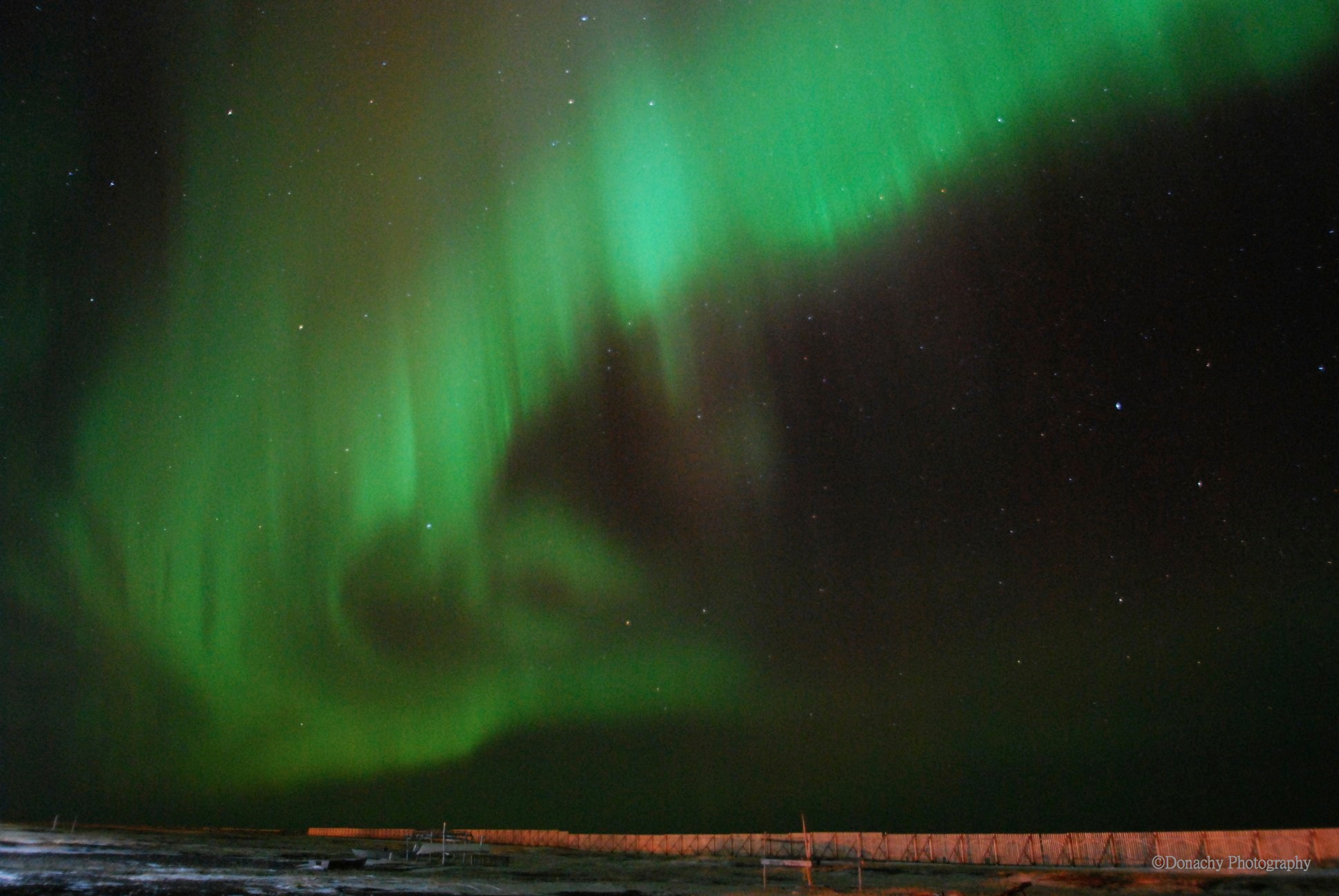
The northern lights have been out nearly every night lately. Here they frame two umiak – seal skin boats used for the spring whale hunts.

A Whaler to his Son

This poem is

an empty sigluaq

a seal skin boat

a lookout camp

on a new lead

This poem is

your grandfather’s parka

a snow squall on the horizon

a polar bear’s track

imprinted in the snow

This poem is

a fluke flipped and sounding

in a silk-white wake

like stars

washed over the Chukchi

This poem is

our village

carved like scrimshaw

on an ivory dawn

the dim Arctic sun

small and perfect

as a bowhead’s eye.

.

*A sigluaq is an ice cellar dug into the tundra used to store whale meat (and other meat)

Jiro Dreams of Sushi: A Philosophy of Life and Sushi

Yanagiba (sushi knife), ohashi (chopsticks) properly resting on an ivory spotted seal hashioki, and David Gelb’s documentary of world-renowned sushi chef Jiro Ono. Let the feast begin.

The shots of sushi will wow you. Segments depicting 85-year-old Jiro Ono magically transforming rice and fish into pieces of art that are at once too beautiful to be eaten and yet must be eaten will mesmerize you. The manner in which he and his 51-year-old son run Sukiayabashi Jiro, a 10-seat sushi restaurant in the underground subway system in Tokyo’s ritzy Ginza District will, perhaps, prompt you to make subtle (or not so subtle) changes in the way you run your own kitchen. At the very least, you are likely to come away from the film with a heightened appreciation of tamagoyaki – the grilled egg dish frequently served on nigiri sushi menus. Sukiabashi Jiro is the only sushi restaurant in the world to earn Michelin’s top rating – the coveted three stars. The simple definition of a three-star restaurant is this: a restaurant that by itself makes a trip to that country worthwhile.

As a self-taught chef, as a father, as a person who is seeking to perfect my own path in life, and as one who lived in Japan for nine years and came to deeply appreciate the Japanese sensibility toward life, this film profoundly moved me. Jiro Ono embodies the characteristics of the shokunin – a master craftsman or artisan who, while possessing superb technical skills in his field, is also aware of his responsibility to model an honorable life and to look out for the welfare of others. In the film, Masahiro Yamamoto, one of Japan’s leading food critics,  identifies the five attributes of a great chef. These attributes are no doubt valued by all shokunin.

1. A serious attitude toward one’s work

2. Aspiration to improve – to strive for perfection

3. Cleanliness (which includes a proper order in one’s life and work)

4. Lead rather than collaborate

5. Bring passion to one’s work, (and through that passion to discover moments of ecstasy)

I’m going to add a sixth element to Yamamoto’s list. If Jiro’s life is about striving for perfection, the question is begged, “Perfection to what end?” To what purpose are the above five attributes?

It is this: They are all aimed toward providing others with an ultimate experience. Jiro dreams of sushi, yes. But what he really dreams of is providing his customers with a perfect dining experience. That is the sixth attribute: The desire to provide others with a penultimate experience.

Some of these attributes are, perhaps, antithetical to current western thinking. Therein lies the core of the criticisms of this film. Aren’t we supposed to value collaboration? Is the emphasis on cleanliness really so important? Is Jiro truly interested in others, or is he merely a shallow, self-inflated ego with no meaningful connection to other human beings – including his wife and his two sons? Doesn’t taking one’s work too seriously lead to imbalance in life?

I think this much is fair to observe: The path Jiro Ono has chosen in life is not a path that would suit everyone. But it is a path I admire. In the director’s cut, it is mentioned that a regret is that Jiro’s wife was unable to be in the film. This seems to be owing to the health of a woman in her 80’s, not about a failed partnership. His sons are both key players in the film, and speak of their father with honor, respect and love. They have both chosen to follow in his line of work, to embrace his teaching and have become highly respected sushi chefs in their own right. In turn, Jiro speaks with pride and admiration of both of his sons. As a father, I can very much relate to Jiro’s philosophy regarding child-rearing. You spend your life teaching and guiding, and in the end you hope a good bit of it takes root. In both of Jiro’s sons, his teaching did stick, his guidance payed off, and because his sons worked for many years in his restaurant, he ultimately spent more time with them than most fathers ever spend with their children.

As to taking one’s work too seriously and carving out one’s own path rather than collaborating, I grew up in a family wherein, not just in my nuclear family but in all the uncles and aunts in my extended family, the life philosophy most frequently espoused was an admonition to not take work (or anything else) too seriously. It was a philosophy that did not work for me, and ultimately inspired an opposing philosophy.

At the age of 4o, I began the long, sometimes arduous, deeply satisfying process of remaking my life. Part of the remaking has been rooted in a newfound freedom – a self-given permission to pursue life with renewed passion, dedication and a commitment to honor and excellence.  As I move forward with this life as a sailor, chef, writer, photographer, father and husband, this film that so eloquently captures the life and spirt of a true shokunin resonates.

Alaska: Northern Lights in the Big Point Hope Sky

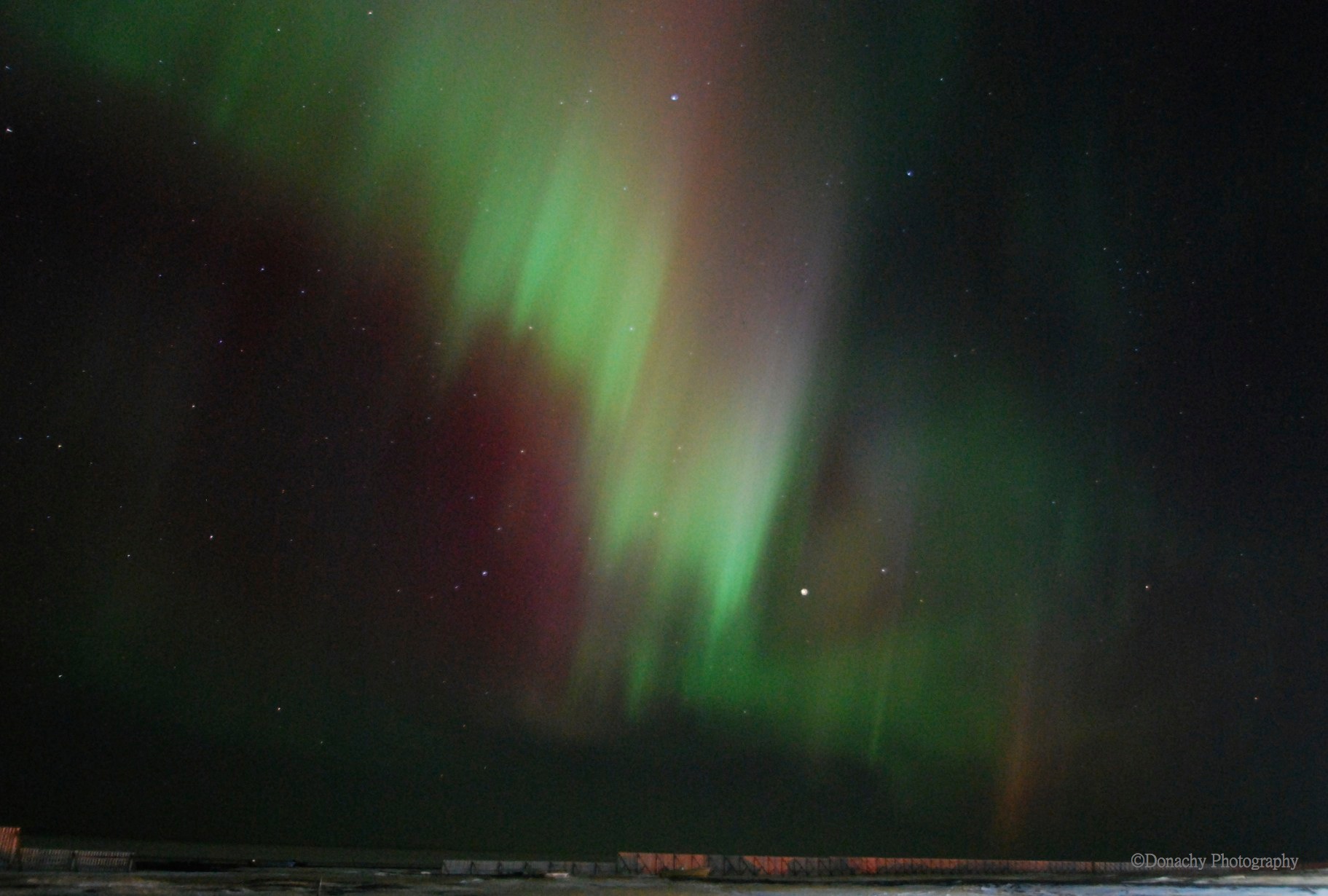
Named for the Roman Goddess of dawn, Aurora, and the Greek word for north wind, Boreas, Aurora Borealis events originate with the sun and are carried to Earth on solar winds.

Notice the seal skin boats in front of the snow fence in this photo looking northwest along the lagoon at Point Hope. The most common color for  Northern Lights is green – whitish green on nights of weak activity. Yellows, pinks, reds and purples are less common. Any color in the night sky is a thrill.

We have a phone tree set up so we can let each other know when the lights are out in force. When our phone woke us just after five AM this morning, we didn’t even pick up. We threw on warm clothes and coats (the windchill was below zero degrees Fahrenheit) put together the camera and tripod, and headed out the door. 

We walked away from the town’s lights, to the darkness near the lagoon, and set up. We took these shots with a 15 second exposure. When the lights are active, they move, constantly changing shape and color. 


A Ghost Town, Grizzlies, and the Best Fish and Chips Anywhere

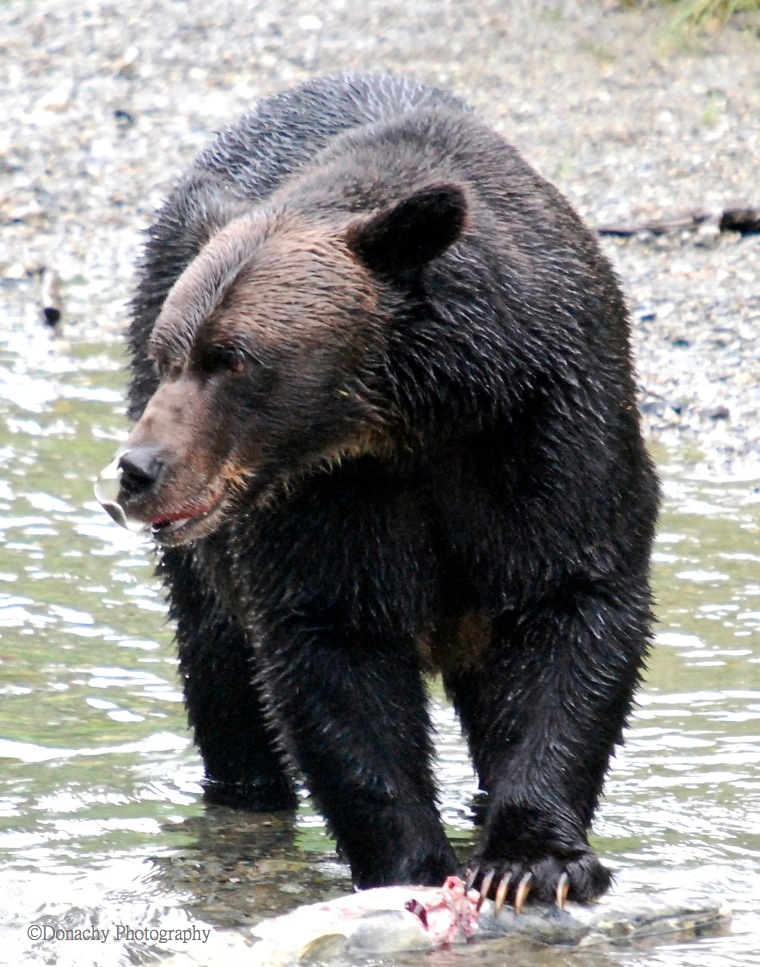
Patrolling Hyder, Alaska’s Fish Creek like she owns it, 600-pound Monica fattens up on a freshly subdued chum salmon.

With a population of fewer than 100 residents, Hyder, Alaska, bills itself as “The Friendliest Ghost Town in Alaska.” The town is one of those gems that is far enough off the beaten path to still be something of a secret, known mainly to the relatively few people who travel the Cassiar Highway in western British Columbia. Many of these travelers are on their way to or from Alaska, and not even all of these travelers are aware of what Hyder offers.

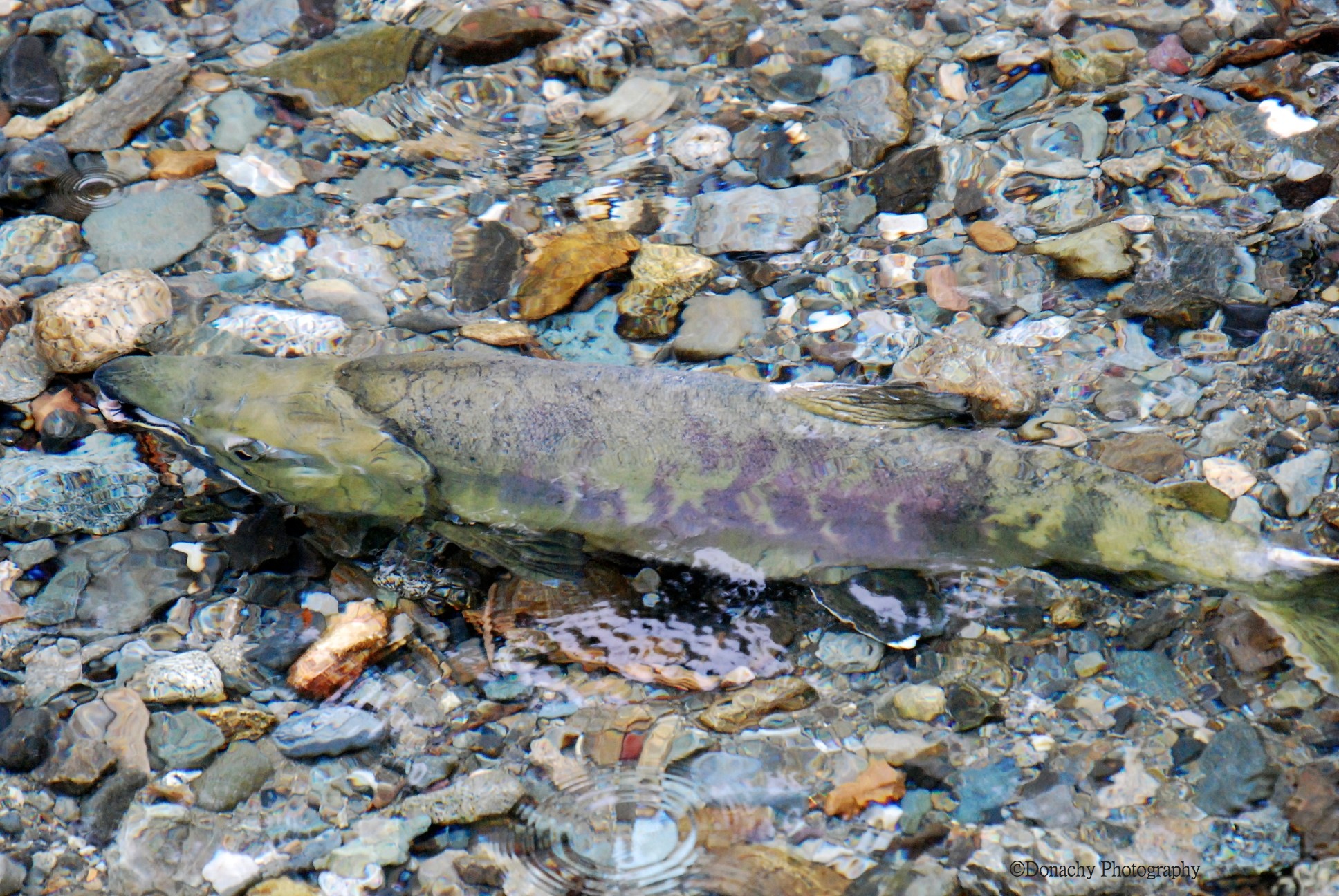
A prize for any grizzly, this beautifully marked chum salmon makes its way up the air-clear water of Fish Creek. 

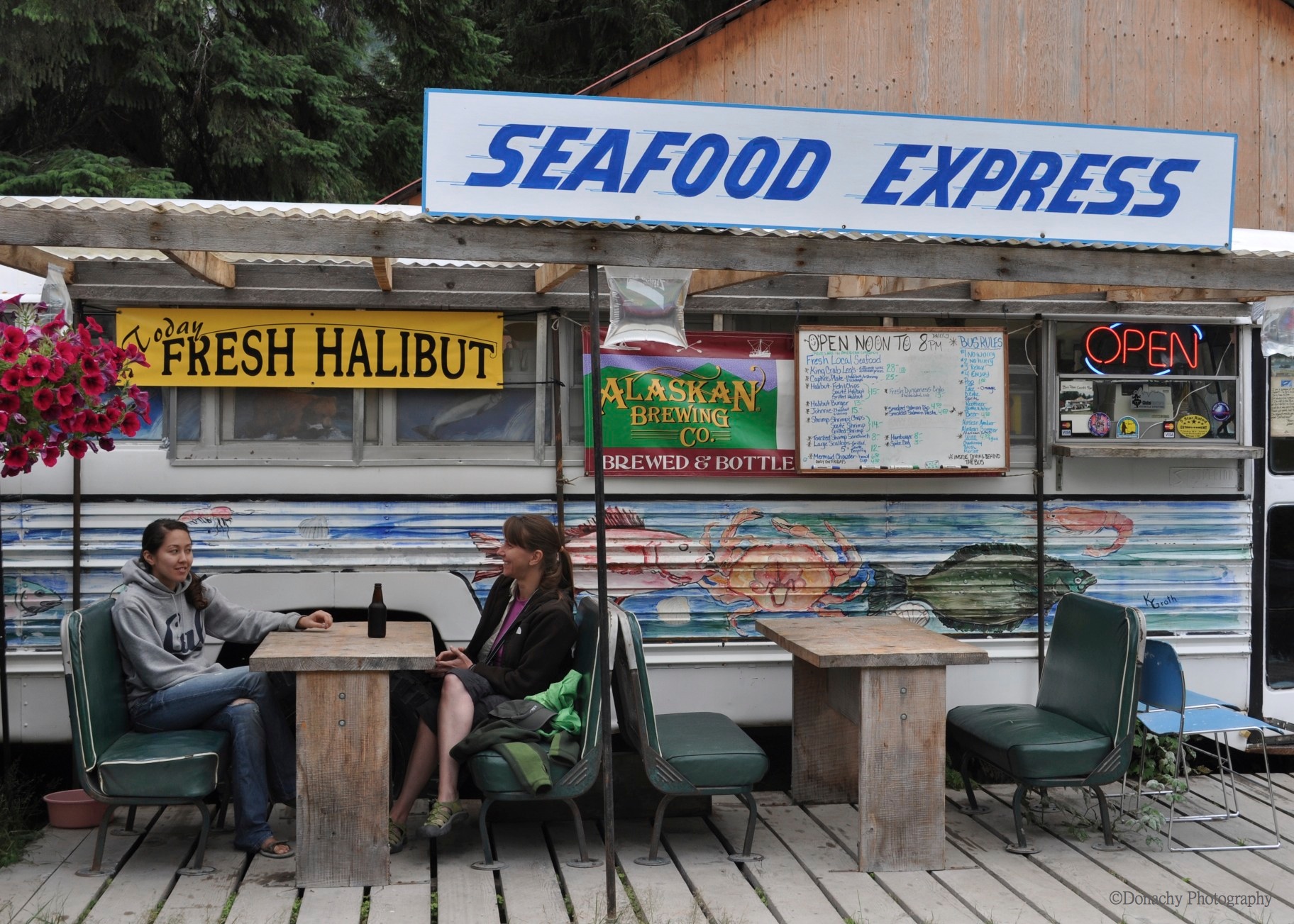
In addition to rare opportunities to watch and photograph grizzlies up close from a safe vantage point (an elevated viewing deck runs along a short portion of Fish Creek), Hyder boasts what is surely one of the world’s most unusual destination restaurants. We’ve written about the Seafood Express in a previous post. Established in 1998, the school bus Jim and Diana Simpson converted into a restaurant continues to turn out the very best fish and chips we’ve ever had. Even when the salmon and bears aren’t in, the restaurant alone makes taking the turnoff to Hyder worthwhile. Jim, a fisherman by trade, supplies the fresh salmon, halibut, shrimp and prawns Diana magically transforms into perfectly crispy, golden-brown, airily light creations that seem to disappear in one’s mouth. Complimented by a bottle of Alaskan Amber Ale, lingering over a meal there is the perfect way to relax after a morning of nature watching while Rufous Hummingbirds trill musically from the nearby spruce and fir forest.

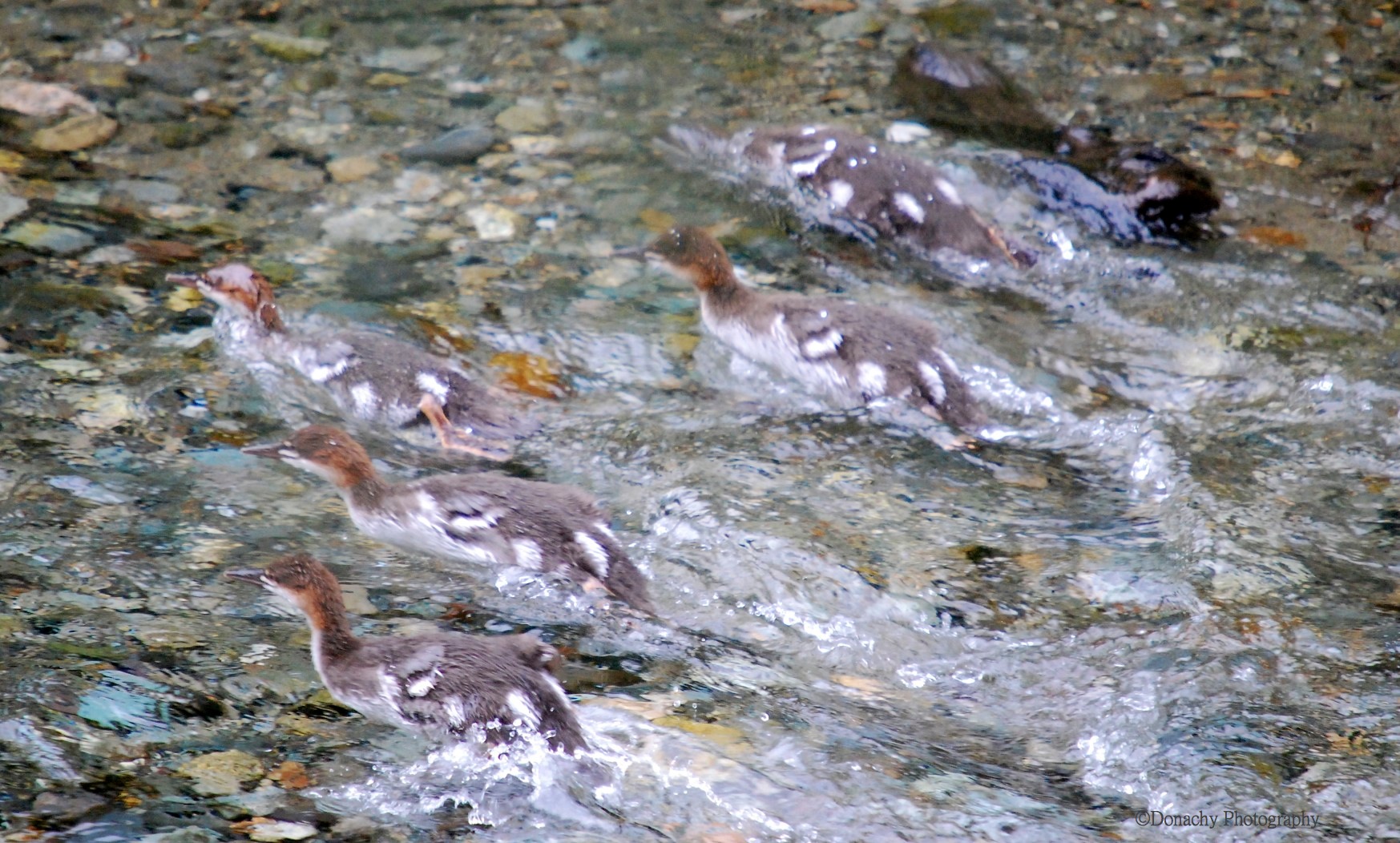
A female common merganser (Mergus merganser) leads her brood of chicks (next photo) down Fish Creek’s crystalline currents.

Merganser chicks scurry to keep up with their mother. This type of duck typically nests in tree cavities near water. They feed on small fish, insects and (I’m guessing) salmon eggs when they can find them.

Since 1998, the Seafood Express has been serving up gourmet-quality fish and chips

The viewing platform on Fish Creek provides one of the very few places in North America where people can routinely and safely view wild grizzlies from a fairly close distance. The platform is manned by knowledgable U. S. Forest Service Rangers. The best viewing is from late July through September.

A trip to Alaska through British Columbia by car, camper or motorhome is a trip of a lifetime. If your route takes you along the Cassiar Highway, Hyder should be a “must visit” destination!

For more, click here to see our iReport on CNN.

Seward Yacht Club – Swimming Pools, Movie Stars

Seward’s small boat harbor viewed from the second floor balcony of the William H. Seward Yacht Club.

For either one of us, if, back when we were in our teens or twenties and trying to figure out life, someone had told us we’d own a blue water capable sailboat and belong to a yacht club, we’d have thought to ourselves, “Sure. Can I have some of whatever you’re smoking?”

But the Seward Yacht Club fits. Upon becoming members, we were happy to set aside any preconceived notions about “yacht” owners and to simply fall in with a group of really great (generous, hard-working, helpful, welcoming) people who are bound together by a love of boats and water.

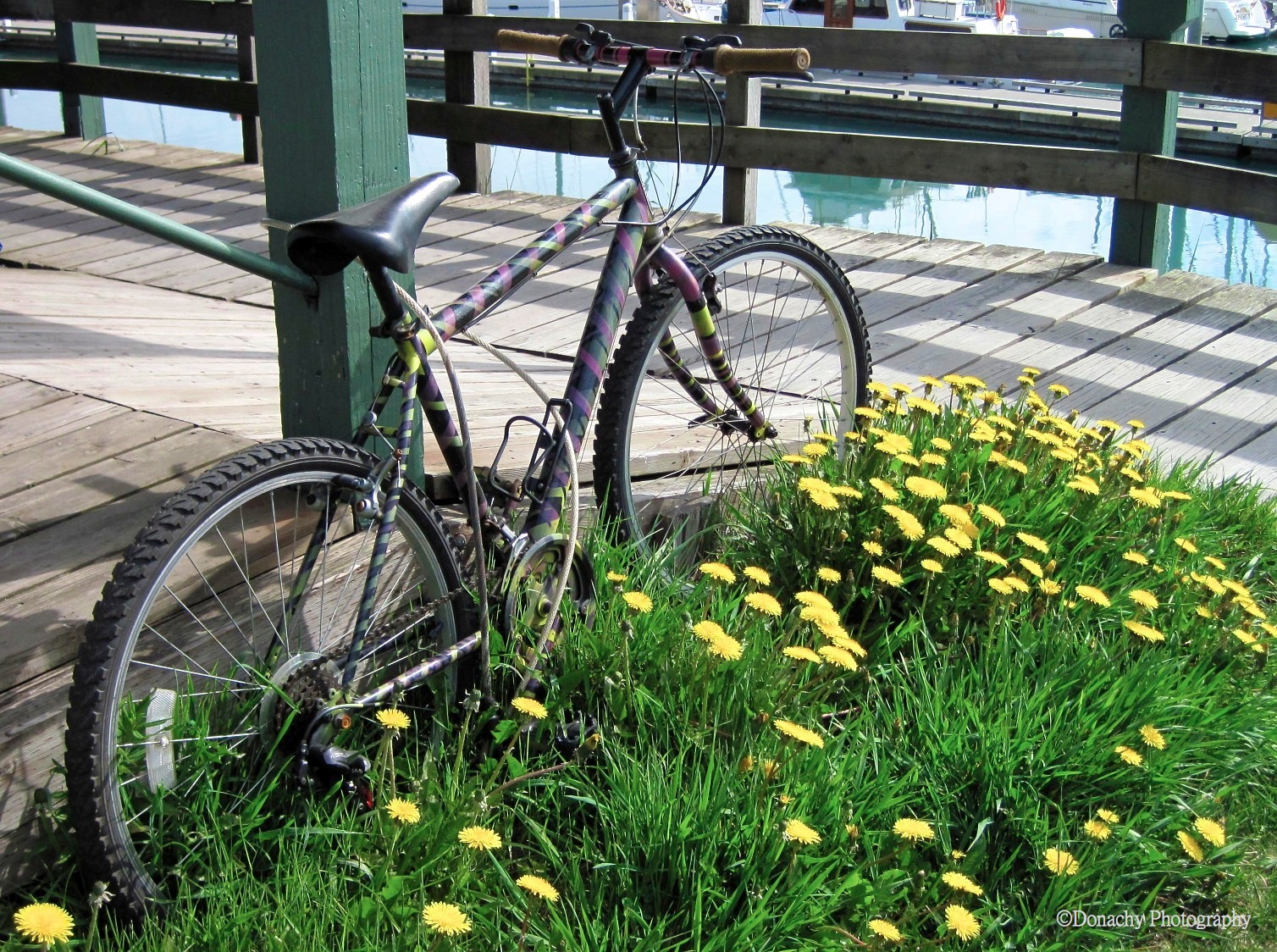
Bikes and the live-aboard lifestyle often go together – this one is parked at the Seward yacht club. It’s nice to belong to a club where the dandelions are left to grow.

In addition to camaraderie, the club provides its members and their guests with showers, a nice kitchen in which to cook a meal, and a fairly extensive library on things nautical.

The small boat harbor at Seward mirrors the yacht club. Boats of all sizes are docked here. A lot of them belong to working fisherman – both guides and commercial fishermen. A lot of the boats belong to people who just plain like water and boats and fishing and have worked hard and been careful with their money, anticipating the day when they could own a boat. It doesn’t seem to matter who you are, where you come from, what kind of boat you have, or what you do on it. People pass each other and most offer a friendly greeting. People take care of their own boats and keep an eye on their neighbors’. It’s a community. Reminds me of the best parts of the small town in western Pennsylvania where I grew up.

Wish there were more places like it.

Stanley and the Lance

Our home on wheels the past three summers – a Lance camper perched on a 3/4 ton Chevy Silverado, here parked for lunch with a gorgeous view of Resurrection Bay near Seward, Alaska. Note the hitch for towing our C-Dory 22 Angler. This photo was taken on May 21, 2012.

Our first summer in Alaska, we lived aboard our C-Dory 22 Angler, GillieGillie’s pilot house and cuddy cabin made for a cozy nest, and the spirited little Toyota Tacoma that did the pulling over the 8,000 plus miles we drove that summer was, simply, the most enjoyable vehicle either one of us has ever driven. The 43 days we spent traveling in that rig made for a summer for the books. In fact, we talked for some time about traveling all across North America in this rig: exploring blue highways both on land and on water, envisioning jaunts down to the Florida Keys, out to Martha’s Vineyard, across the country to Catalina Island and everywhere in between. We even talked about launching the C-Dory at Pittsburgh, Pennsylvania and cruising all the way down the Ohio and the Mississippi to New Orleans.

But when we made the decision to move to Alaska, rent out our home in Sacramento, and spend our summers on the Kenai Peninsula…

A carved wooden hummingbird given to us by our daughter, Maia, on a trip that passed through a First Nations village in British Columbia greets us each time we open the door. Framed artwork and other personal touches make our camper a home.

After months of comparative shopping and researching campers and trucks, we still felt like we didn’t know as much as we would have liked. On the other hand, we knew enough to be comfortable making a decision. We’ve been very happy with both the Lance Camper and the Chevy Silverado 2500 it sits on.

The camper has a queen-size bed, lots of windows and skylights providing natural lighting, a three-burner propane stove with oven, an air conditioner and heater, a good shower and flush toilet, a TV and sound system, a great refrigerator/freezer, lots of storage space and enough room overhead to be comfortable for a person of my height (I’m 6′ 1″). We added a solar panel, which we highly recommend; even on cloudy days the battery charges. We also have a generator which, although rarely used, has been much appreciated the couple of times we’ve needed it.

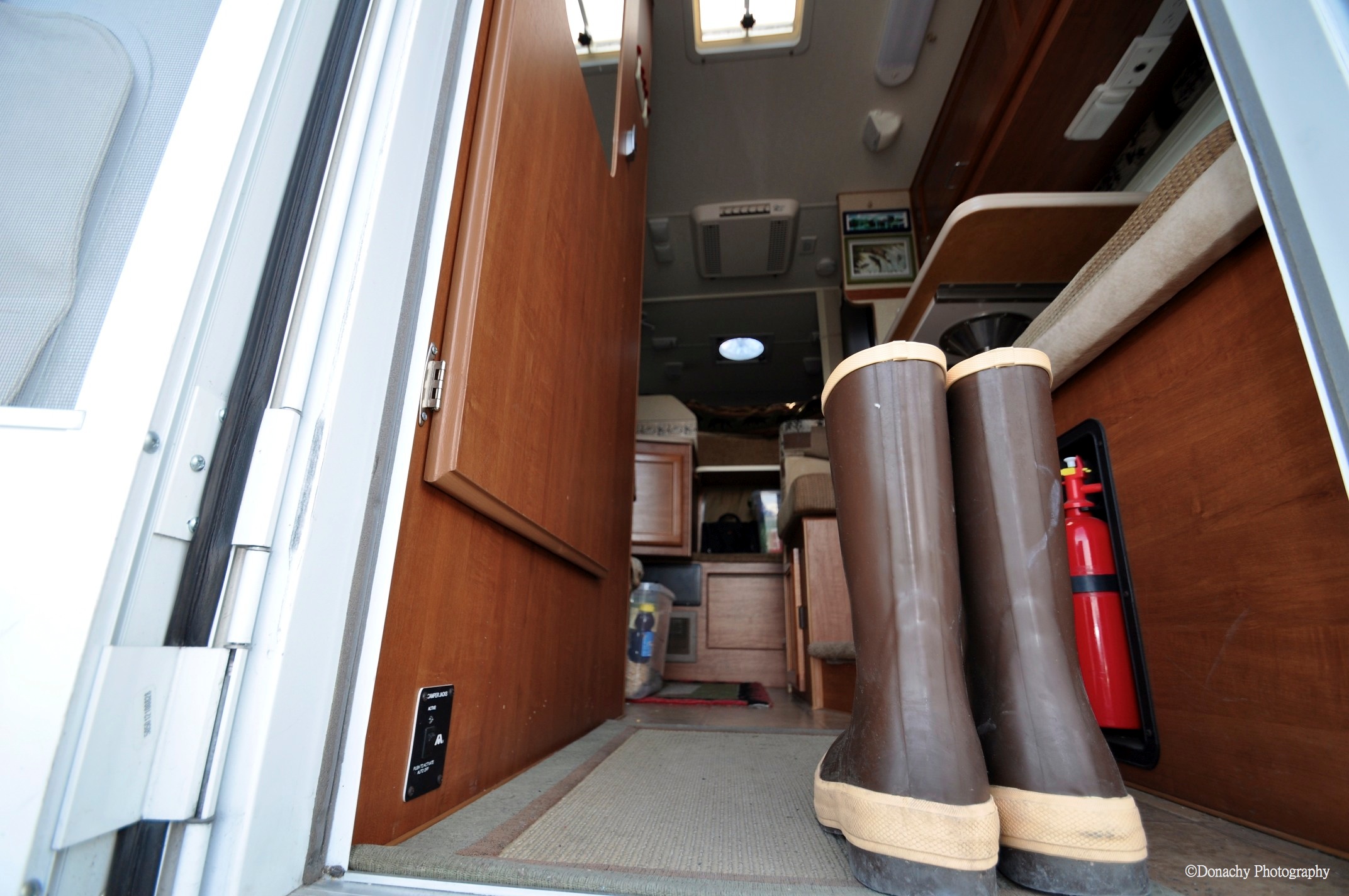
A pair of Xtratuff boots – iconic of Alaska anglers and boaters – is ready at the entrance. 

Stanley is a name conferring strength and dependability – like Stanley tools. Fitted with airbags (extra shock absorbers), our three-quarter ton Silverado has performed superbly carrying the camper and towing our 4,500 pound boat. Given a steep mountain grade, Stanley shifts down as if to say, “All right.” Nothing more. No groaning and straining, no needless extra shifting, just a simple, straightforward, “All right” and up the mountain we go. And kicked into four-wheel drive, this truck has the grit to power through even loose beach sand with the camper – a test we didn’t intend to put the truck through and won’t be repeating.

We went back and forth regarding two options: gas or diesel, and dual rear wheels or single. We opted for a gas engine and single wheels, and after three summers of putting this rig to the test we can say without hesitation that with the right tires, single wheels are fine. And we’re happy we don’t have to deal with the noise of a diesel engine (or impose that noise on our neighbors). That being said, the fact is we don’t put a lot of miles on our rig. A diesel engine offers some real advantages to campers engaged in extensive traveling.

To anyone contemplating a rig like this, we have one firm recommendation: Start by choosing the camper you want, then match it to the right truck. 

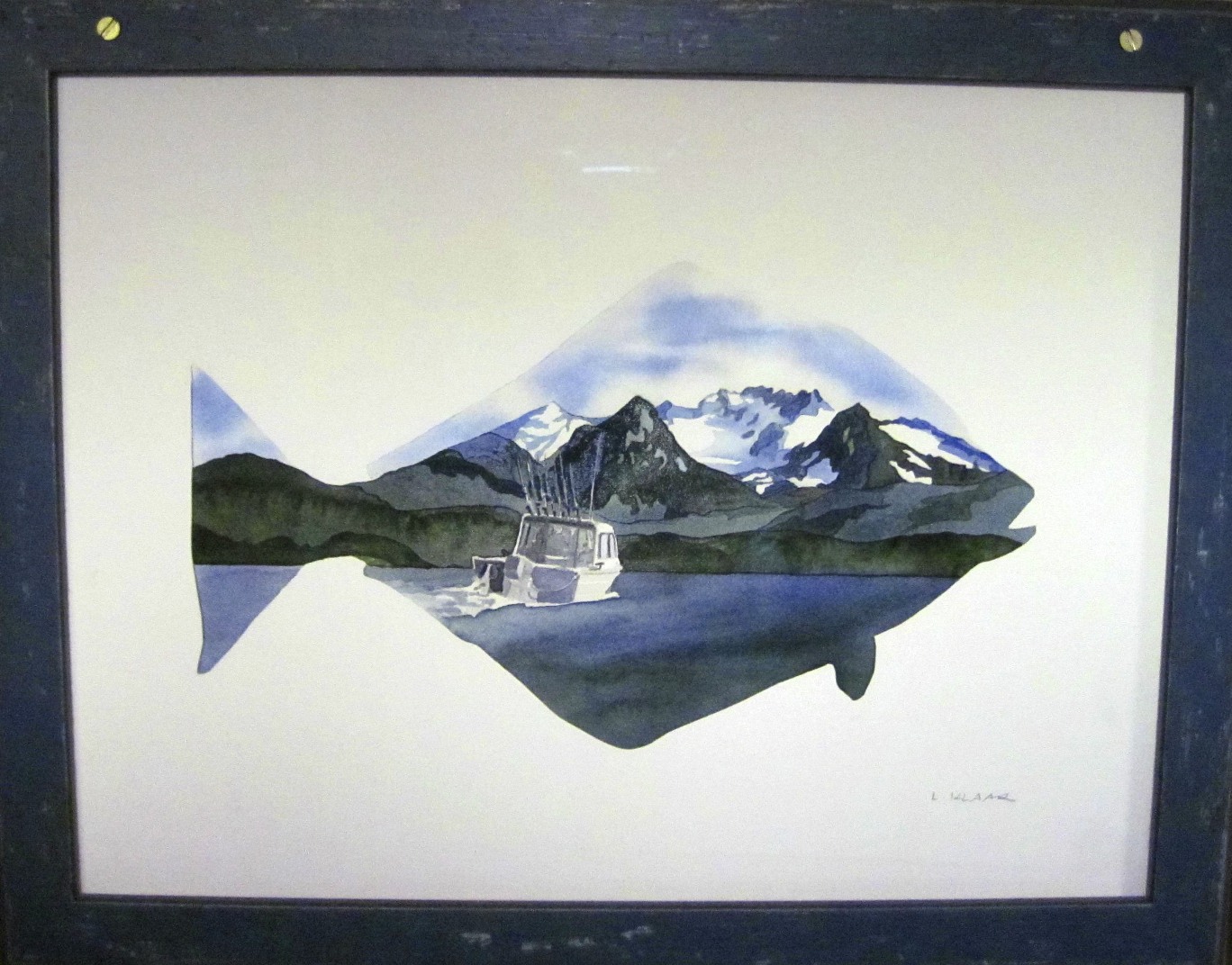
This watercolor by Homer, Alaska artist Leslie Klaar depicts a boat much like our C-Dory heading off for a day of fishing in the great Northwest. It hangs near the door of of our camper.

Livin’ in a Van down by the River

Seward Harbor, May 21: This is the view from the back widows of our pickup truck camper, our summer home while we work to get Bandon ready to live on and to sail. Mornings start early up here, the first sunlight slanting into the camper a little after 5:00 AM – and getting earlier each day. Warblers and other songbirds are the first to wake. Too early for us. By the time we roll out of bed, gulls are calling and scolding and the high chirps of eagles have taken over. The fishing season hasn’t come into full swing yet, though a few engines can be heard making ready for a morning or a day on the water. Blueberry pancakes with maple syrup and strips of bacon on the side some days, fried eggs others, cold cereal when we’re really eager to get moving, but always with a ruby red grapefruit, a glass of orange juice and a big mug of coffee made from freshly ground beans. Then the walk to the end of the dock and a full day of work. In the photo above, as you look down the open water between the docks, Bandon is the last mast on the left.

We’ve submitted the paperwork to the coast guard in order to change the name of our Island Packet 350 from Tarsus to Bandon.

This is a sound vessel, and she surveyed well, but there is always work. The first of it has begun with giving every square inch of her interior – from her beautiful teak-wood sole to her overhead – a good cleaning. Meanwhile, there’s sorting through all the items previous owners left behind. From can openers to canvas, much of it is useful, and much of it is not. All of it requires a decision: toss out, donate to the  local thrift shop, or clean and restow.

Everything we touch, clean, move off or bring aboard makes this boat that much more ours. Bandon will be our home. In the near-term, that means about three months out of the year. And so we are outfitting it as such. This means furnishing it with good dinnerware (we went with Denby for our plates, bowls and pasta bowls), stemware (we found Schott Zweisel Tritan crystal wine glasses that look and feel luxurious but are exceptionally break resistant), and quality bourbon/Scotch glasses.

We anticipate that Bandon will be a full-on sailing vessel in every sense, but we recognize that even the most serious sailing vessels spend most of their days at anchor or in port. We want those days to be comfortable and inviting.

Childs Glacier: When Ice Falls

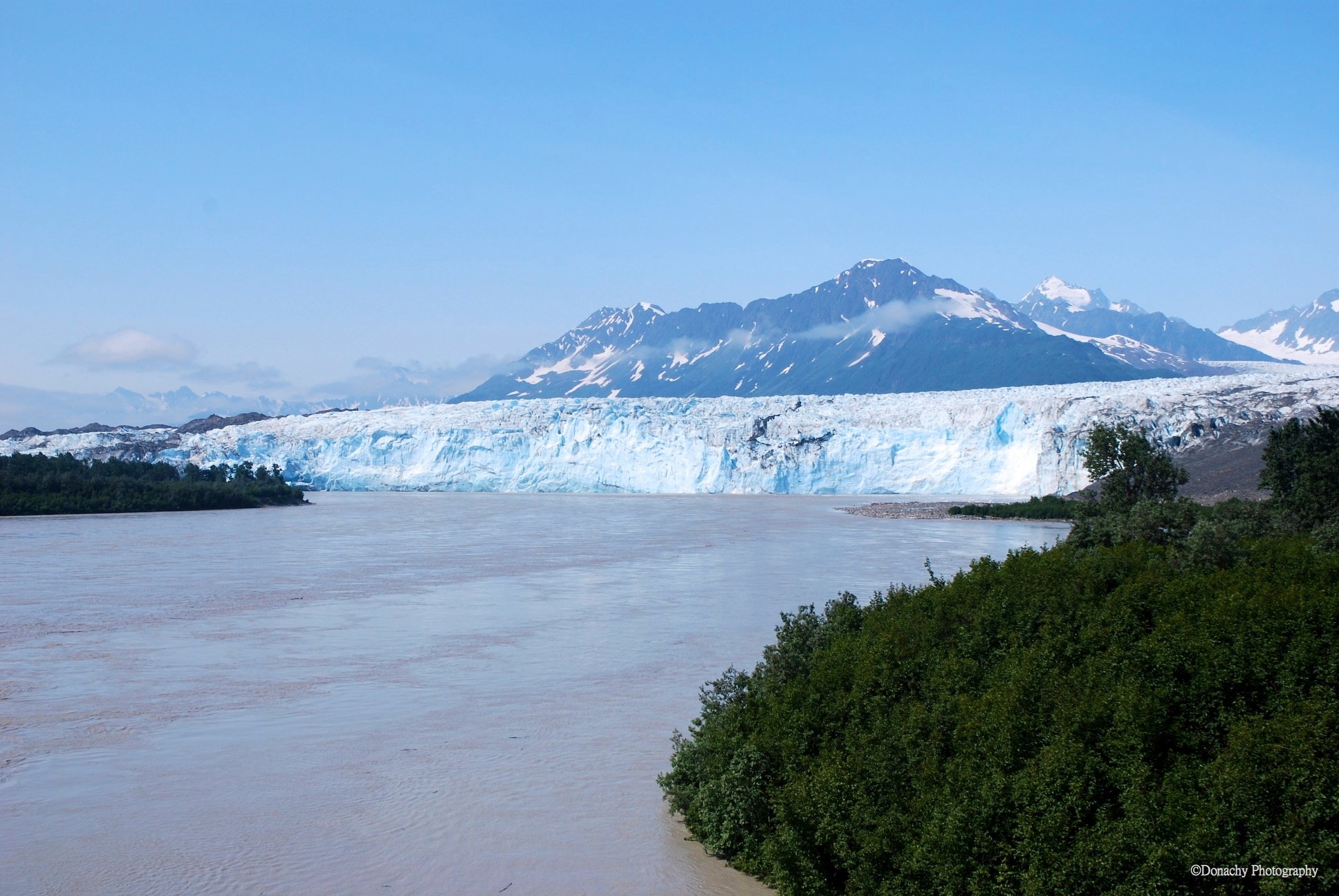
The face of Childs Glacier forms a bank on the Copper River near Cordova, Alaska. This is the same Copper River famed for its runs of wild salmon.

Two days prior, we’d launched our C-Dory in Valdez and made the 90-mile run across a section of Prince William Sound to Cordova – a fishing village accessible only by air or water. The livelihood of many of Cordova’s 2,000 or so inhabitants is connected to the massive runs of salmon that ascend the nearby Copper River. A running event, the Alaska Salmon Runs Marathon and Half-Marathon road races, had lured us to this idyllic village. We hadn’t even known about Childs Glacier when we first put together our travel plans.

Just 400 yards across the river is a picnic area offering excellent views of the glacier.

As often happens at running events, it wasn’t long after we’d finished the half-marathon that we fell into conversation with another couple. They were planning on renting a car and driving out to see the glacier the following day. When they asked if we’d be interested in splitting the rental car and joining them, we didn’t hesitate. This would be our first opportunity to get close to a glacier.

We figured we’d drive out, snap a few photos, have lunch at the picnic area, and drive back. If we were lucky, we might see a moose or a bear along the way. This was before we understood the dynamic nature of sea-level glaciers. We were completely unprepared for what we would experience.

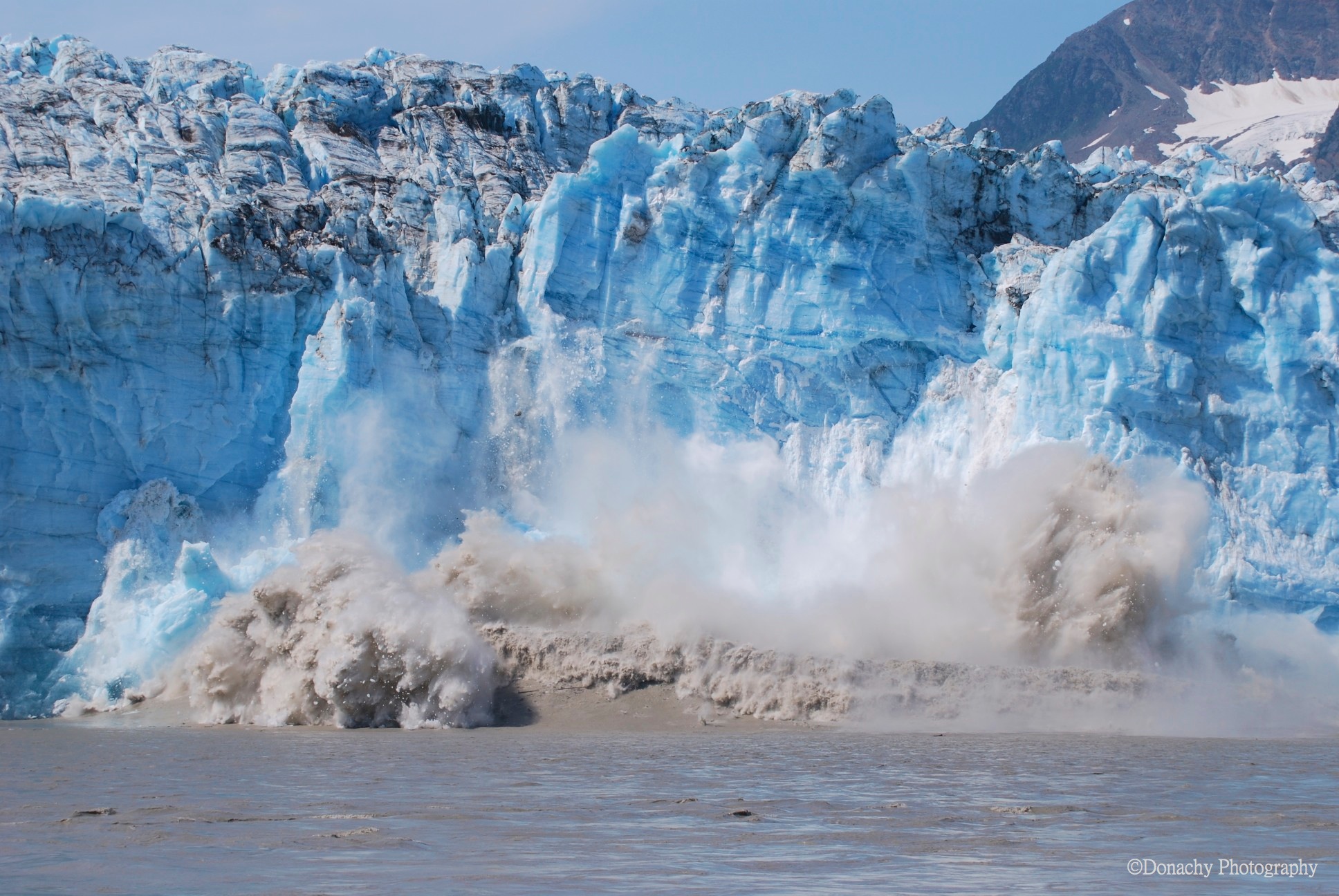
A shower of ice sloughs off the glacier’s face.

The width of the chalky-brown Copper River was all that separated the picnic area from this very active mass of slowly moving ice. Think of the cracking and popping sounds a couple of fresh ice cubes make in a glass of whisky. Now imagine those sounds magnified to amplitudes ranging from rifle fire to dynamite charges as ice almost continuously breaks away from the glacier’s face. We were mesmerized. The half-hour we’d planned on staying turned into an hour, then into two, and then into three.

We were witnessing yet another Alaskan phenomenon so large and full of energy that it is all but impossible to adequately capture on film or with words – an event you have to experience to comprehend, and we were here, experiencing it. Although neither Barbra nor I gave voice to the thought, it was probably on this day, watching and listening to this glacier, that the idea of moving up here began to root itself in us.

We sensed that something BIG was about to happen.

Suddenly, a massive section of ice below a seam we had been watching seemed to sag. A fraction of a second later a prolonged groaning, cracking explosion unlike any we’d heard before reached our ears as the face of the glacier fell away, collapsing into the water with a force that sent a small tidal wave curling toward us. The four of us looked at each other, eyes wide, jaws dropped, and quickly gathered our gear and scurried for higher ground. Seconds later, the wave hit the shore, inundating the area where we’d been standing only moments earlier. It was thrilling.

This large iceberg in Prince William Sound is the result of a glacier calving event in one of the sound’s fjords. Kittiwakes and gulls have claimed it as a roosting place.

Whaling Camp: Frozen Seas and Icescapes

Ball and Pyramid, Chukchi Sea, Alaska: This icescape, photographed with a Nikon D90 and a Sigma Bigma 50 – 500 mm lens, has been slightly processed to increase contrasts. The operative word here is “slightly.” Even to the naked eye, these frozen-sea icescapes are other-worldly.

Evocative, perhaps, of a scene from Star Trek, winter hikers venture across the frozen ocean out to a whaling camp. The gun the lead person is carrying is for protection. Although we saw no sign of polar bears on this day, friends of ours who took a slightly different path encountered fresh tracks.

Seal-skin boat at the ready, these men stand vigile for bowhead and beluga whales. Note the light blue block of ice they’ve cut out and positioned near their gear as a shield. These men are standing on sea ice just a few feet from the open sea. Last year was a good year for whaling in Point Hope, with three bowhead whales harvested. The hunt is dependent on the right ice conditions, which can be elusive. So far this year, no whales have been taken.

A well-equipped wall tent, complete with a supply of propane, serves as one of several whaling camps near the village. These camps are set up on sea ice, and may be anywhere from a few hundred yards to several miles offshore. The hunters travel out to leads – areas where the ice is open. Winds and currents can open and close leads quickly, underscoring the need for whaling crews to be constantly alert.

Sea ice seem to be lit from within by blue light. Heaved up in pressure ridges and broken into fragments weighing several tons, it is easy to appreciate the arduous work “breaking trail” entails as hunters go out onto the ice to set up camps. 

A black and white composition heightens the contrasts in these massive blocks of broken ice.

There’s a sense of being somewhere other than Earth…

And then a flock of common murres skims across a lead…