Chignik Lake in 29 Photos: Bursting

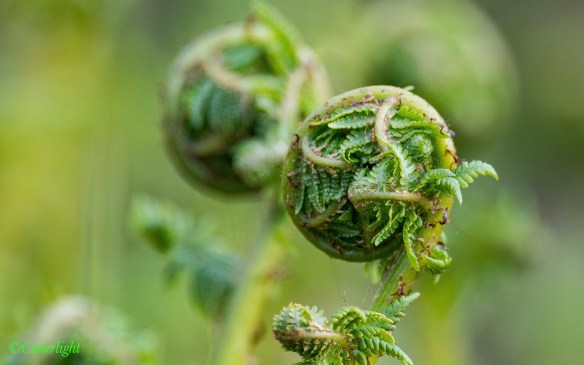
Chignik Lake Fiddlehead FernBursting

Seasonally, the Chignik calendar for spring, summer, winter and fall fits well with the actual dates of winter and summer solstice and spring and autumn equinox. So, while back in my native western Pennsylvania I thought of summertime as starting at the beginning of June, here at The Lake it doesn’t feel like summer until Chinook Salmon begin to enter the river in late June. The main exception to this view of seasonality at the Lake is that our summers are a bit truncated. Autumn comes early.

I made this photograph on June 4, 2019 on a hike to Clarks River – a trek made memorable by our first bear sighting of the year. With the school year having finished weeks ago, we had been going out every day, soaking up as much of our beloved countryside as possible before our scheduled move to Newhalen later in June. Chignik Lake’s school enrollment had dropped below 10 students; the school board had voted to close the school and transfer Barbra. A strange mix of springtime joy and melancholy stirred within our hearts. We did not want to move. But perhaps the understanding that we soon would be leaving created in us a deeper appreciation for the beauty we were surround by.

Willows had just begun to leaf out, and the year’s first flowers were emerging – salmonberries, wild geranium, pink lousewort, delicate purple violets, cinquefoil and lupine. Heavy buds hung from iris and chocolate lily stems. Fireweed was just beginning to push up through the soil in thin red shoots. Our avian spring migrants had returned, and the hike was alive with the songs and calls of swallows, thrushes, sparrows, warblers, yellowlegs, gulls and cranes. Just a few days prior, on May 28, Donny had caught the year’s first Sockeye Salmon in his net. Eagles had begun to post sentinels along the river, watching for more fish to arrive. My memory of the hike is of warmth, but I can see from a photo I took of Barbra that we were still wearing substantial coats and gloves.

While Barbra was photographing alder catkins, (the long, golden-yellow flowers that hang from male trees), I turned my attention to the tightly furled fiddlehead ferns in the above photo. My mind was more on birds than plants, so I had affixed my wildlife lens to my camera and had even attached a teleconverter. But when I looked through the viewfinder, I liked the image so I composed the shot. There’s nothing like a long lens for creating bokeh. (Nikon D850, Nikkor 600 mm + 2.0 TC = 1200 mm, 1/25 at f8, ISO 650)

Chignik Lake in 29 Photos: Spring Spruce

Great Horned Owl Chick Chignik Lake AlaskaSpring Spruce

Until about 70 years ago, the shores of Chignik Lake had only seasonally been occupied by humans. Historically, the present-day site of the village had been a hunting and fishing camp. The first census here was recorded in 1960. Since then, The Lake has primarily been inhabited by people connected to commercial salmon fishing. Most of the permanent residents, which now number about 55, are of Native Alutiiq heritage.

Many of the original permanent residents had close ties to Kodiak Island. At 2,388 square miles (9,293 km2), Kodiak is quite large – second in size only to the Big Island of Hawaii among U. S. Islands. Much of Kodiak Island is covered in spruce forests. So when people began to permanently settle Chignik Lake, they introduced White Spruce seedlings from Kodiak. The species thrived, and now scattered throughout the village the trees grow as majestic singles, in pairs and in copses of up to 20 trees. They are a testament to the positive impact planting a few trees can have for wildlife, particularly birds. Among the beneficiaries are Great Horned Owls, a pair of which nests in one of the spruce copses.

This past spring and summer, the owls successfully fledged two offspring. In the photo above, the younger of the two siblings is perched on a White Spruce bough. Despite the needle-like spruce leaves there is a softness to this image, underscored by the downy owlet and the gentle transitions among hues of green and aqua. The plumb-colored young cones are visually surprising, I think, in a pleasant way. Although I made this photograph on June 25 – five days after summer solstice – I felt it fit perfectly in the springtime collection. Soft evening light slightly backlit and sidelit the young owl which helped prevent blowing out the white plumage. The air was still, allowing me to shoot slow and keep the ISO low – an important consideration when it comes to cropping wildlife photos and lightening areas of heavy shadow.  (Nikon D850, Nikkor 600 mm f4.0, 1/200 at f6.3, ISO 200.)

Chignik Lake in 29 Photos: Ballet

Tundra Swans on Chignik River AlaskaBallet

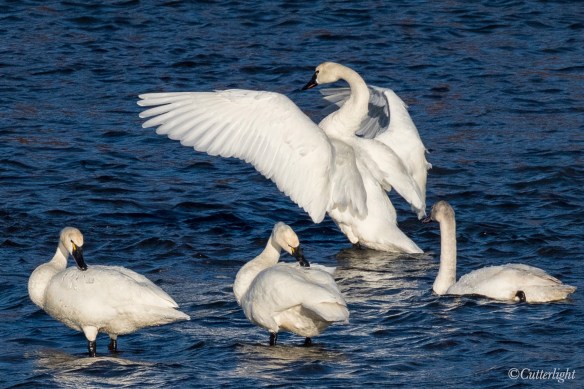
In spring, everyone begins watching for Tundra Swans on Chignik River and Chignik Lake. Their arrival is a sure harbinger of winter’s end. This was the scene on March 14, 2017. It had been a particularly cold winter. Ice still covered most of the lake and even the river was banked in snow and edged in ice. About a dozen swans gathered on the river at a shallow place about a mile below the lake. The location has a good bit of aquatic weeds. Along with the swans, there were Mallards, Red-breasted and Common Mergansers, Buffleheads, Common Goldeneyes, Ring-necked Ducks, Pintails and Greater Scaup.

Tundra Swans are hunted in Alaska. These swans were difficult to approach; the Mallards they were with were even more wary. The other challenge in making a photograph such as this is that by the time the sun was high enough above the surrounding mountains to provide sufficient light, it shone fairly harsh. Against the dark water, the white of the swans’ plumage was easily blown out. Although the D5 I used to take this photo is a very good camera, I hope I will get another opportunity with my D850. Even though I used a 2.0 teleconverter to achieve a focal length of 1200mm, the above image is cropped quite a bit. The capacity to crop in on wildlife images is one of the chief advantages of the D850, which has more than twice as many megapixels as the D5.

See all 29 photos at: Chignik Seasons: The Lake in 29 Photos

Chignik Lake in 29 Photos: Infinity Pool

Chignik Lake Clarks River BayInfinity
This was the view looking across the lake from the beach near the mouth of Clarks River on May 14, 2019. The lake seems to disappear in mist where sky and water meet. From the village of Chignik Lake, the hike to this location is about three miles.

In addition to the landscape, which can be stunning, this is also a good place to view wildlife such as River Otters, Harbor Seals, Brown Bears, Bald Eagles, gulls, mergansers and other ducks, loons and migrating salmon. (Nikon D850 1/200 at f/11, ISO 250, Nikkor 24-70 mm at 24 mm with a polarizing filter)

See all 29 photos at: Chignik Seasons: The Lake in 29 Photos

An Incalculable Loss: Tragedy at Chignik Lake

Fred Shangin and Nick Garner

Fred Shangin, left. Nick Garner, right. They don’t cut men from finer cloth. Watermen through and through, from the headwaters of the Chignik to the unpredictable Alaska Gulf and Bristol Bay, Fred and Nick were two of the most skilled boatmen in the world. We were honored to have them take us under wing and teach us. We are asking our readers to make a contribution in the name of Fred and Nick to the Alaska Dive Search Rescue and Recovery Team.*

Christmas Day here was wonderful. To imagine a holiday at The Lake – Halloween, Easter, The Fourth of July, Christmas – place yourself in a small town 50, 60, 70 years ago, in a gentler, quieter world, far less commercialized, less politicized, more intimate. It snowed all day. Multiple invitations were issued back and forth to come share food and cheer, and for those who felt uncomfortable visiting due to Covid… or for whom age has made going out on a snowy day difficult… heaping platters of turkey, ham, moose, beef, salmon, side dishes and desserts were delivered. The day was a snapshot of life in our tiny village.

How quickly a scene… or a small boat… can flip, leaving the world upside down.

Despite the prospect of incoming weather, the following day three of our men took a skiff up the lake, an eight mile run. The boat the men took was also carrying a snow-machine, the Alaska term for snowmobile. The plan was to look for moose or caribou to replenish the village’s stock of meat.

Weather was coming from the southeast. From that direction, winds have an unobstructed eight miles to build waves as they blow up the lake to the sometimes treacherous northwest corner. Near the lake’s outlet at the village of Chignik Lake, the water can be calm while up in the northwest corner messy, white-capped three footers seem to come from all directions as they bounce off the sheer mountains that crowd the shoreline. Sudden williwaws pouring down those same mountains can turn those three-foot waves into erratic four footers. That’s a lot of sea for a small boat – enough to upend such a vessel.

And so it is that the village lost two great men in the prime of their lives, and we lost two dear friends. Fred was a particularly close friend. In fact, he was much more than a friend. He was our nearest neighbor, our guardian angel and perhaps the most generous and capable man we’ve ever known – and the happiest, truly a man who had found his place in this life. Unbelievable that the guy Barbra sometimes called Superman had perished like that.

Fred was one of the guys who kept the diesel generators running that supply The Lake with electricity; the guy who texted and called me, relatives and friends every day to check in and see what we were up to or to invite us along on one of his adventures. He’d run his skiff down the river and out onto the ocean to set halibut skates (similar to trot lines) and crab pots (which he and Nick welded together from rebar and chicken wire); he was the guy who organized hunting trips for moose and caribou. He was the guy who set nets for salmon and liberally shared his catch. When Fred got halibut, everyone got halibut. When Fred got crab, everyone got crab. When Fred and his crew got a moose… well, you get the idea.

He taught us how to spot the caribou that go up on the ridges of the lower mountains on warm summer days, miles across the lake, mere specks we’d overlooked till Fred pointed them out. He appreciated my photographs, and so I’d regularly get texts and calls from him: Bear on the beach with 2 cubs, or Wolf on the airstrip or Looks like a dandy day there Jack. Good day to go out and take some pictures.

Nick, too, was a friend, though we were only just beginning to get to know each other well. Like Fred, he had a wide range of skills and we admired him greatly. Both were loving, devoted family men. To the village, they were excellent providers as well as the kinds of men who would do anything to help a friend or neighbor. Fred was 42. Nick was 39. In our village of Chignik Lake, a community of only 50 or 60 residents, the loss of these two great men is incalculable. The entire village is in a state of disbelief, shock and sadness.

A fitting tribute to these men would be a contribution to the Alaska Dive Search Rescue and Recovery Team.* Thank you so much for contributing whatever you can give.

*The Alaska Dive Search Rescue and Recovery Team is a donation funded, all volunteer, unpaid, 501(c)(3) Non-Profit Corporation. Donations are tax deductible.
   Only through charitable donations can their volunteers receive the specialized training needed to perform hazardous missions. It also ensures they can maintain their extensive rescue gear cache and equipment trailer that are required to perform missions around the state.

No Bananas! Our Project with B&H Photo is Up and Running!

Who knew that getting a minute and 29 seconds of film could be so much work!? But thanks to our friends at B&H Photo (the world’s largest camera store) it was a terrific experience. Initially (back in pre-Covid times) they were going to send a crew out to Chignik Lake. Well, as the epidemic took hold, that plan got nixed. Technology to the rescue!  The B&H team remotely coached us through the interview and getting the on-location footage they needed back in New York City.

In a skinny 1:29, we think the team did an excellent job of capturing some of the unique challenges (and very cool opportunities) that are part of our lives as photographers in this remote, spectacular part of the world.

Birds of Chignik: Double-crested Cormorant

Chignik Double-crested cormorant

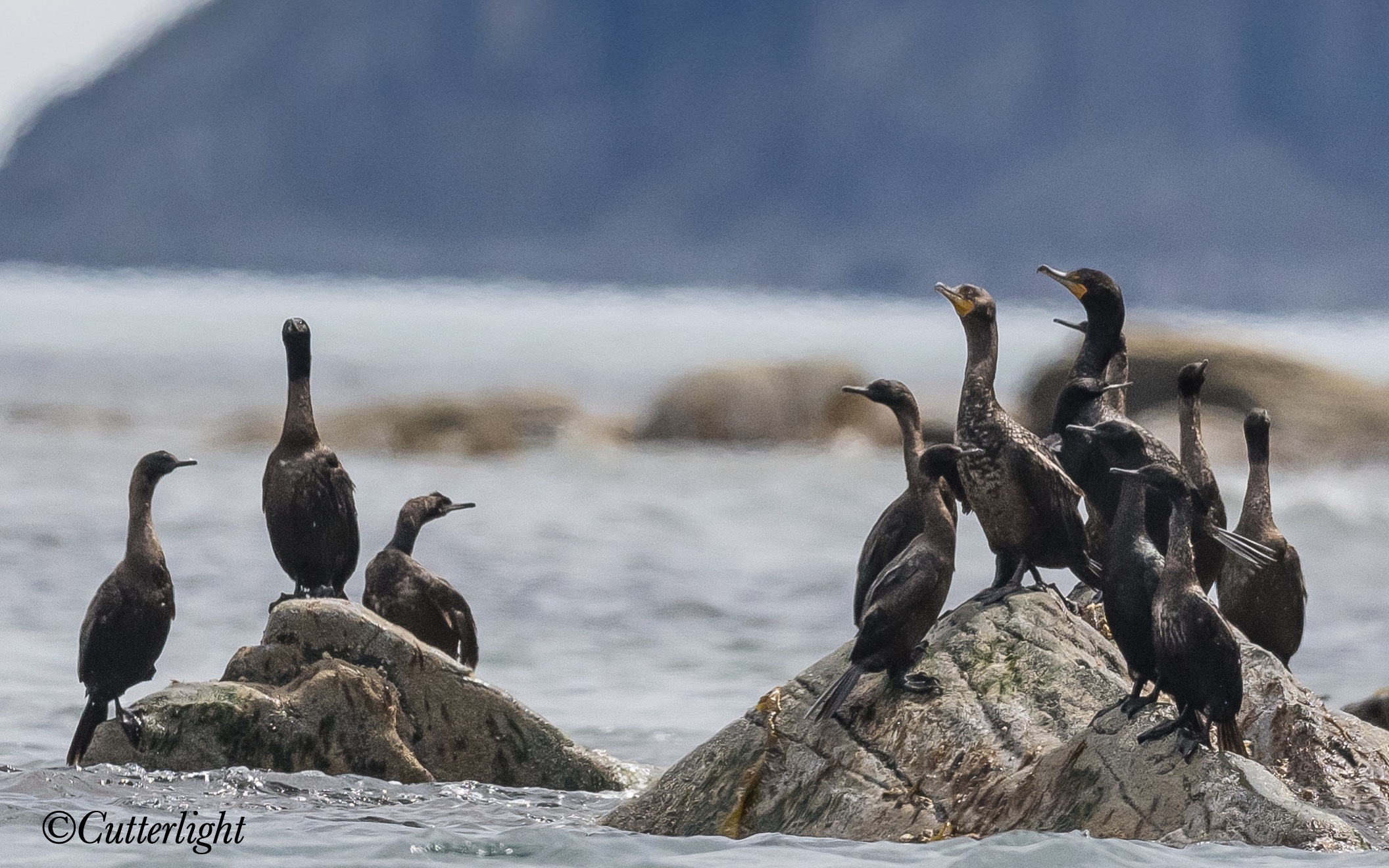
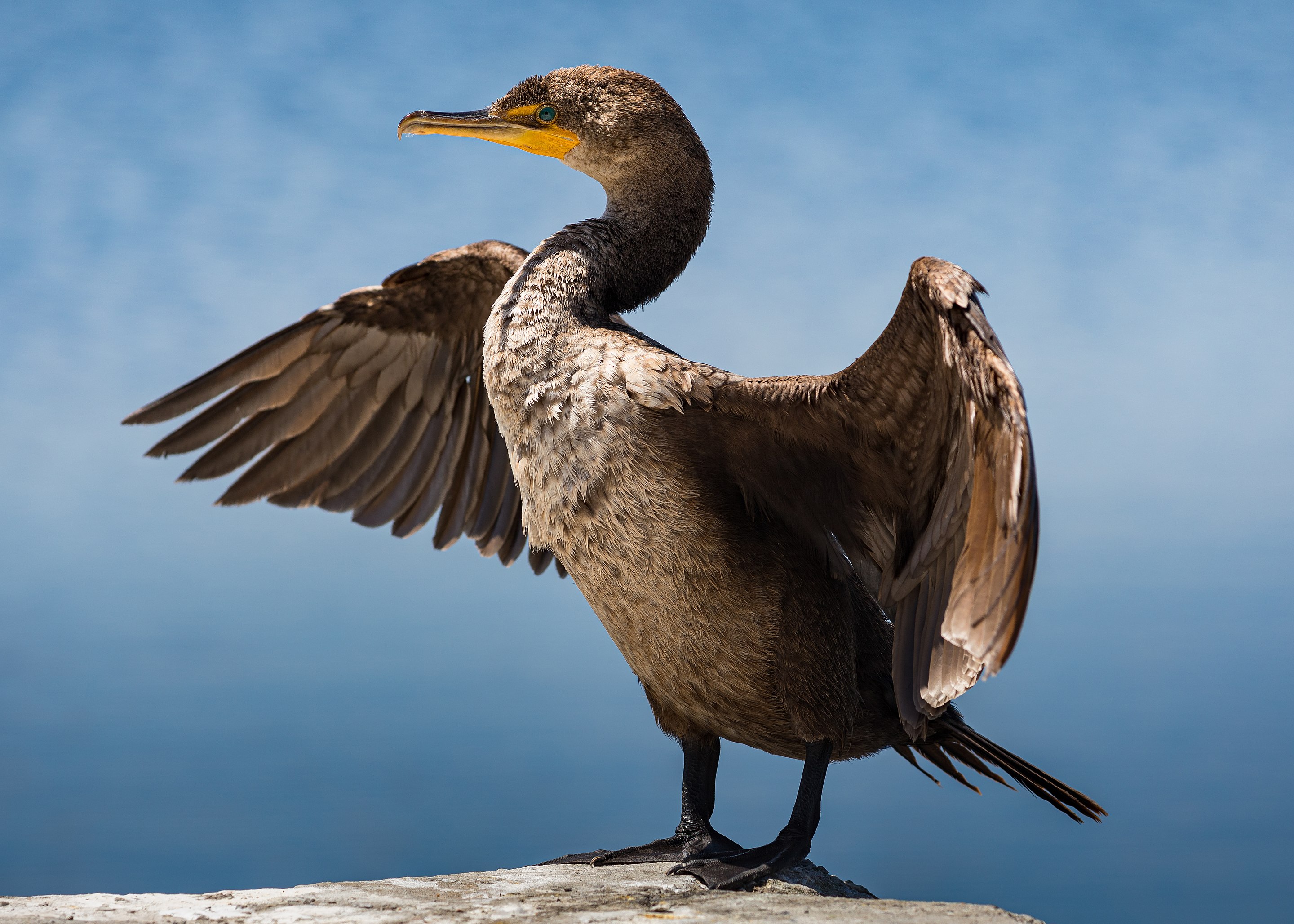
Next to Pelagic Cormorants (left), at first glance Double-cresteds are bulkier birds. The yellow lores and throat are diagnostic. As is also the case with Red-faced Cormorants, the coloration is due to bare skin, not plumage. Note, too, the Double-crested’s heavy, hooked bill.

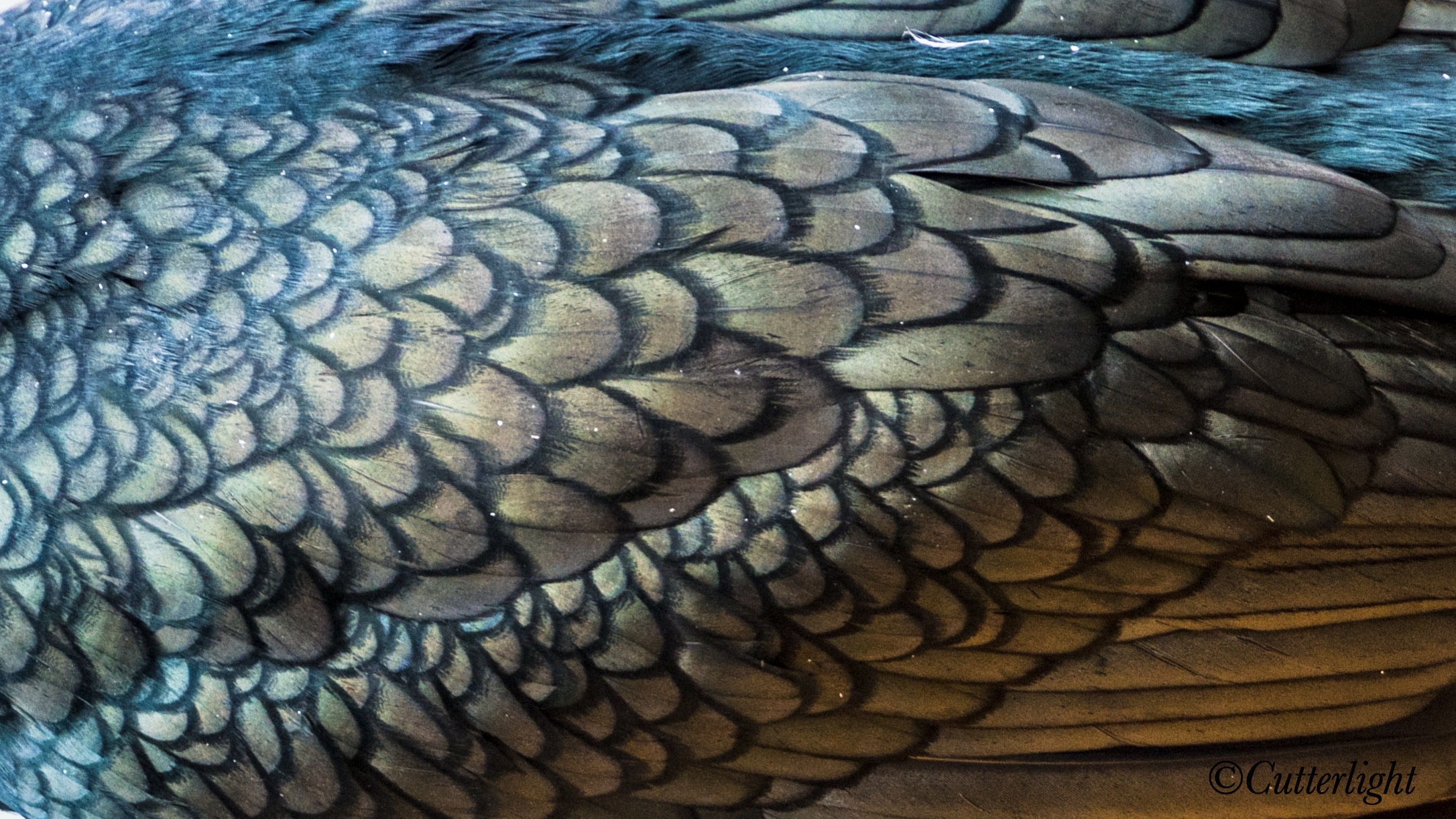
From a distance, the Chignik’s three species of cormorants, like most cormorants worldwide, look pretty much the same: a gangly cross between a loon and a goose dressed in drab, brown-black plumage. But if you’re lucky enough to get near to a cormorant, you might find that they are actually quite striking.

Like our other cormorants, Double-cresteds are primarily piscivorous. They are far and away the most wide-spread and common of North America’s cormorants, and unlike our other species, Double-cresteds frequently nest in trees. This could account for the fact that they are more frequently seen in fresh water than Red-faced or Pelagic cormorants, though they are still at home on ocean waters.

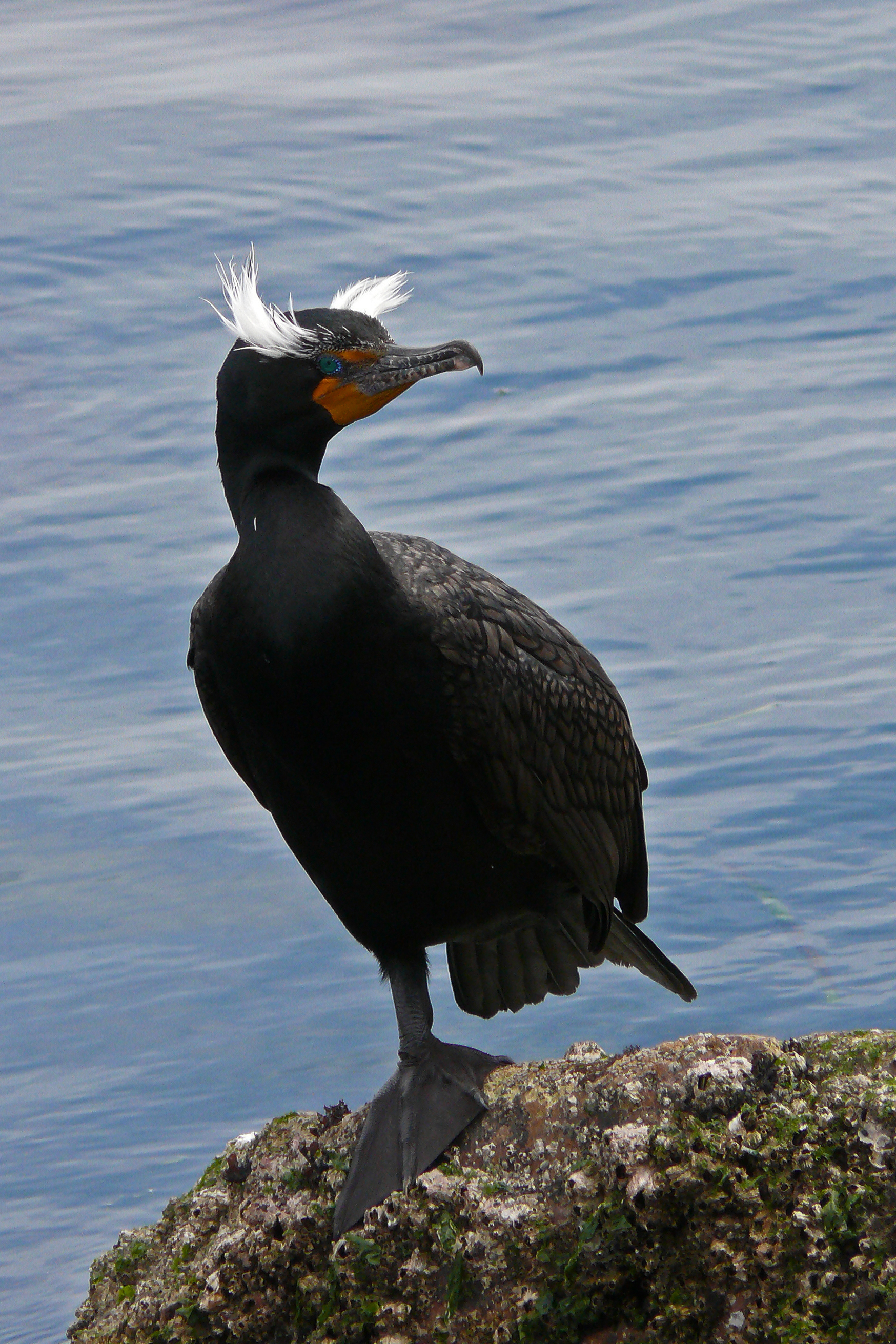
“Mike” Michael L. Baird’s photograph captures the double crest of this Double-crested Cormorant in breeding plumage. CC BY 2.0, https://commons.wikimedia.org/w/index.php?curid=1995289

In non-breeding plumage, look for the yellow-orange skin around the Double-crested’s face. Photograph  © Frank Schulenburg, CC BY-SA 4.0, https://commons.wikimedia.org/w/index.php?curid=79611808

From a distance, this Japanese Cormorant looked as black and nondescript as any cormorant, but a closer look revealed a pallet of subtle hues..

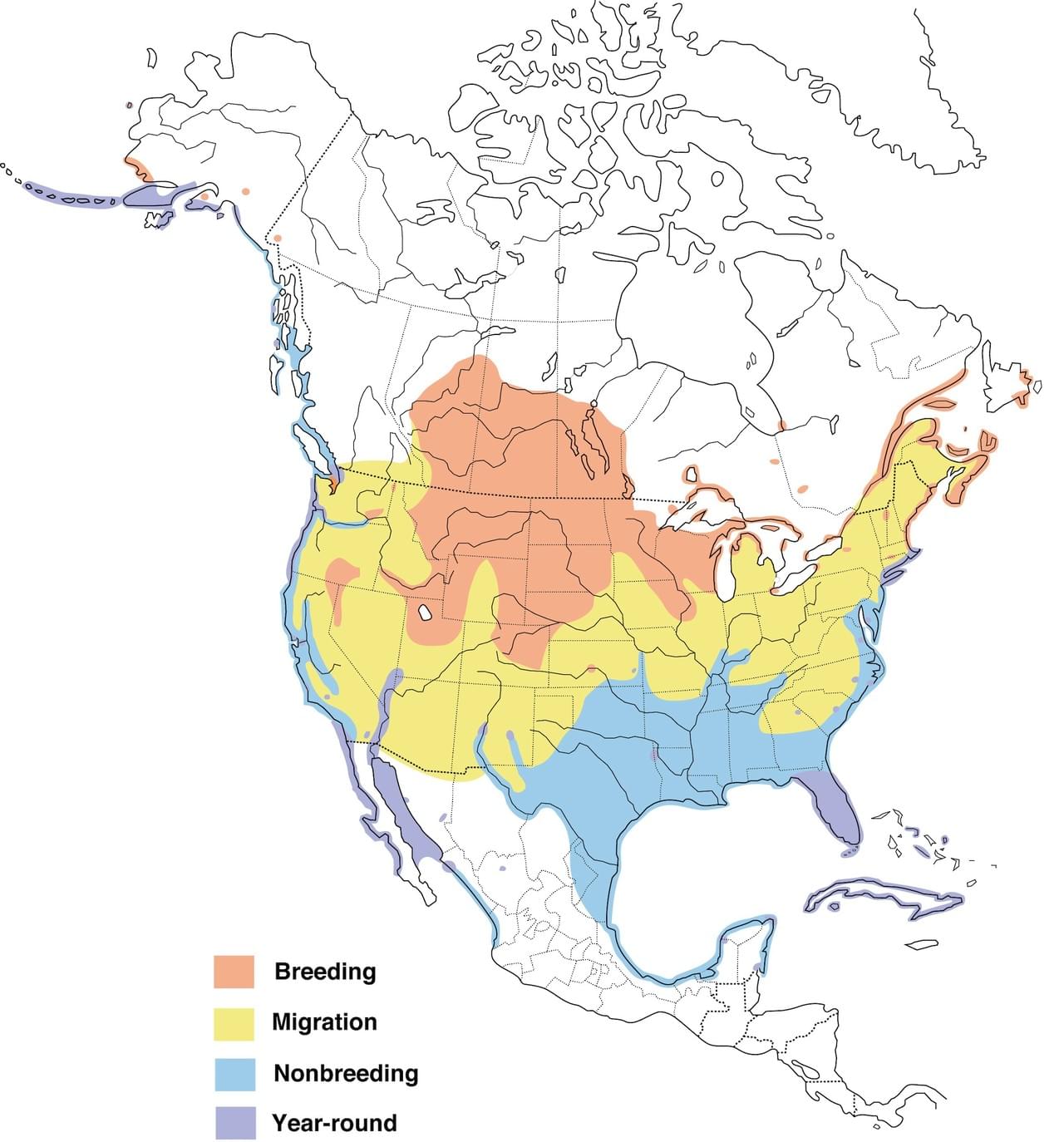
Double-crested Cormorant Range Map: with permission from The Cornell Lab of Ornithology, Birds of the World

Double Cormorant Phalacrocorax auritus
Order: Suliformes
PhalacrocoraxLatinized Ancient Greek = cormorant (from “bald” and “crow/raven”)
auritusLatin = eared (for its breeding plumage crests)

Status at Chignik Lake: Not observed in the freshwater drainage, but common in nearby coastal waters

David Narver, Birds of the Chignik River Drainage, summers 1960-63Not observed

Alaska Peninsula and Becharof National Wildlife Refuge Bird List, 2010:
Common in Summer; Uncommon in Spring & Fall; Rare in Winter

Aniakchak National Monument and Preserve Bird List: Present

Table of Contents for the Complete List of Birds of Chignik Lake

© Photographs, images and text by Jack Donachy unless otherwise noted.

River Heart

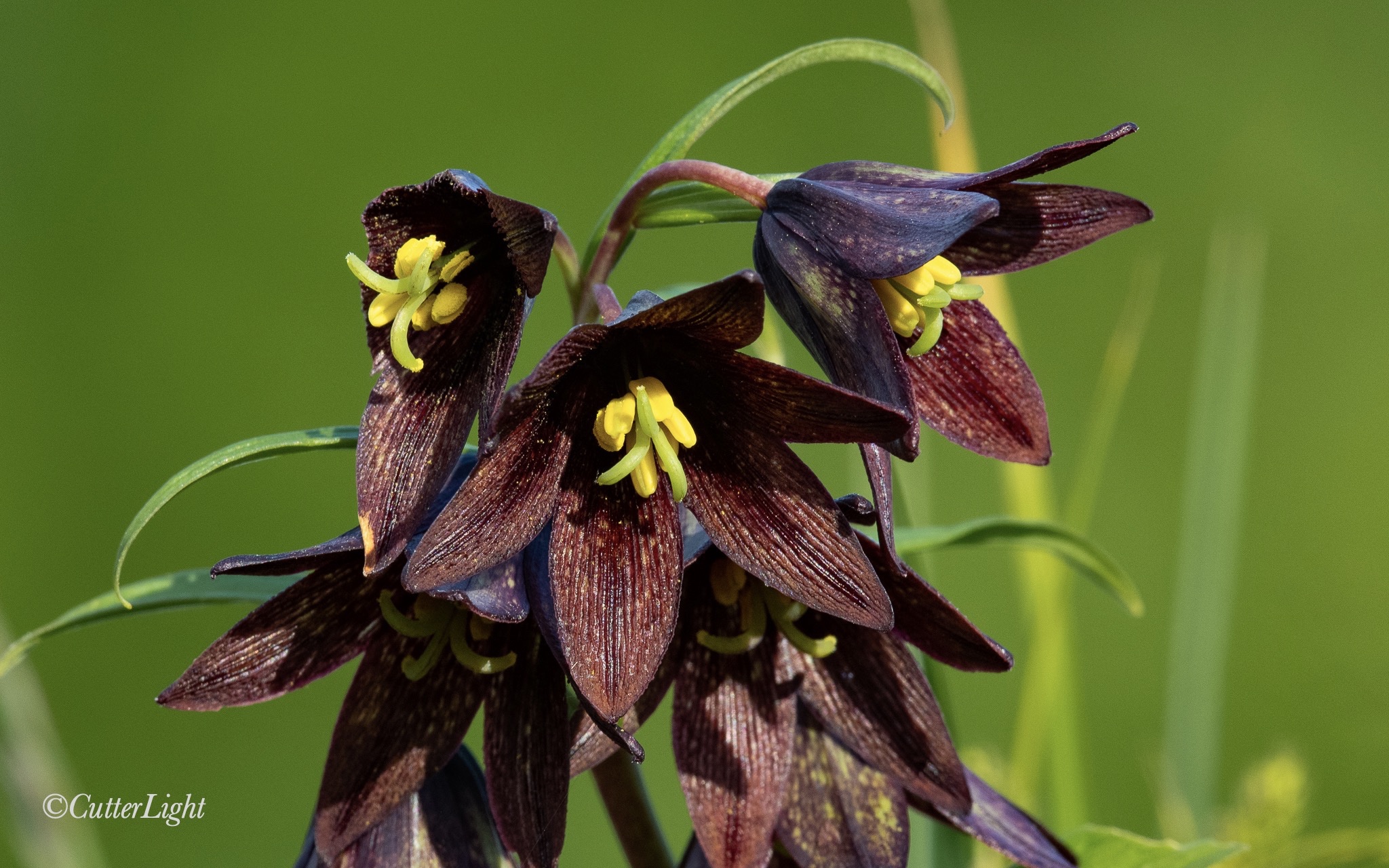
What a wonderful name – Chocolate Lily. They’re blooming everywhere, including right outside our door.

As a soft drizzle fell in the small hours this morning, I could hear bears on the beach outside our bedroom window, thick pads pressing into wet sand with subtle, sandy crunches. Salmon have begun showing up. Not in the numbers the river is accustomed to receiving – by now a couple of hundred thousand Sockeyes should have passed through the weir downriver -, but some. Tens of thousands. It won’t be enough to allow the local commercial fishermen to set their gear, but enough for friends and neighbors to set nets for subsistence fishing. Each day now when the tide is right they launch and then later return to the beach in their skiffs, 18-foot Lunds sporting faded maroon stripes around the hull. These days they bring back salmon and since a lot of those fish end up being cleaned right there at the lakeshore, eagles and a few gulls hang around during the day. The bears come at night, looking for heads, spawn sacs and other scraps. A mother and two cubs have been showing up almost every night. It’s not worth trying to make a picture in the dim light, but we get up to look anyway. “Petting the whale,” Joel Sartore calls it – setting cameras aside to simply watch and enjoy.

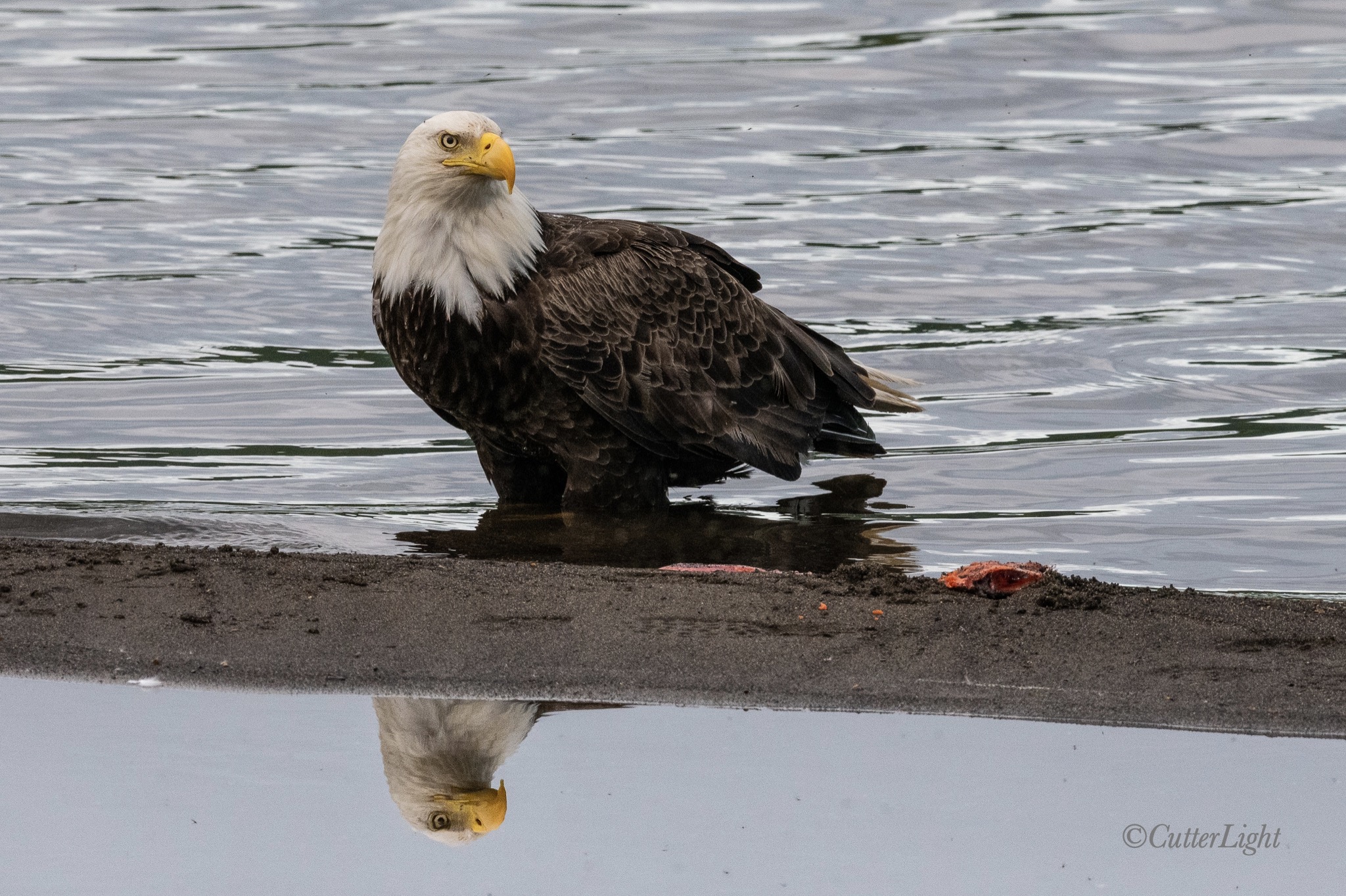
This mature bald eagle has been coming around to fill up on salmon scraps left on the beach. One of the things we’ve most enjoyed about our life at The Lake has been the live and let live attitude toward wildlife that generally prevails. A few moose and an occasional caribou are taken, but no one begrudges our eagles, bears and foxes what’s leftover after the salmon have been split for smoking and canning.

Our plane, the bush plane that will fly us away from this village we have called home to our new village in Newhalen, will arrive sometime this afternoon. At this point the cupboards and shelves in our house are empty and our voices echo – a hollow sound that reflects the hollowness in our chests. Twenty-six places. I listed them up the other day as I was writing to a friend. During my adult life, I’ve lived in 26 different communities for at least a month. I’ve rarely stayed anywhere longer than a couple of years. I like to see new places. I like change.

Cinquefoil, I think. More specifically, Norwegian Cinquefoil. Maybe. Most people around here don’t really have lawns. A palette of salmonberry brakes, lush wild grasses and wildflowers line the dirt and gravel thoroughfares and continue without interruption right up to porches and doorsteps. Our own house is surrounded by a thick growth of Horsetail Fern, Fireweed, Chocolate Lilies, Dandelions, grasses, Cinquefoil, Nootka Lupine and Wild Geranium.

This time is different. We wanted to stay. The simple story is that Chignik Lake School, where Barbra teaches, didn’t make the minimum enrollment of 10 students necessary to stay open. The school board voted to close the school and to transfer Barbra to another, larger school up the peninsula. It has been difficult to reconcile leaving this community, these mountains and this river.

Redpolls (above), Pine Siskins and Pine Grosbeaks have been visiting daily to feast on Dandelion seeds around the playground outside our door. We watch them out the window as we cook and wash dishes and have been heartened by their cheerful songs and chatter  throughout the day as we come and go. I cautiously eased open our front door and took this photograph from our kellydoor, the local nomenclature for mudroom. If you haven’t checked out our video of these Dandelion seed eating finches, you can find it here: Finches of the Dandelion Jungle

I grew up near the Clarion River, had favorite trout streams and lakes in Pennsylvania and went out into the world to find myself living within easy distance of other waters – close enough to certain rivers, streams, bays and beaches that I could duck out at halftime from watching a March Madness basketball game and be back before the game’s end with a couple of Sea Trout for dinner, hop on a bicycle and be on one of Japan’s top Sea Bass venues, walk up a small river to cast flies for Rainbow Trout after college classes, or watch Largemouth Bass chase smelt from the balcony of my apartment. There were other waters, too.

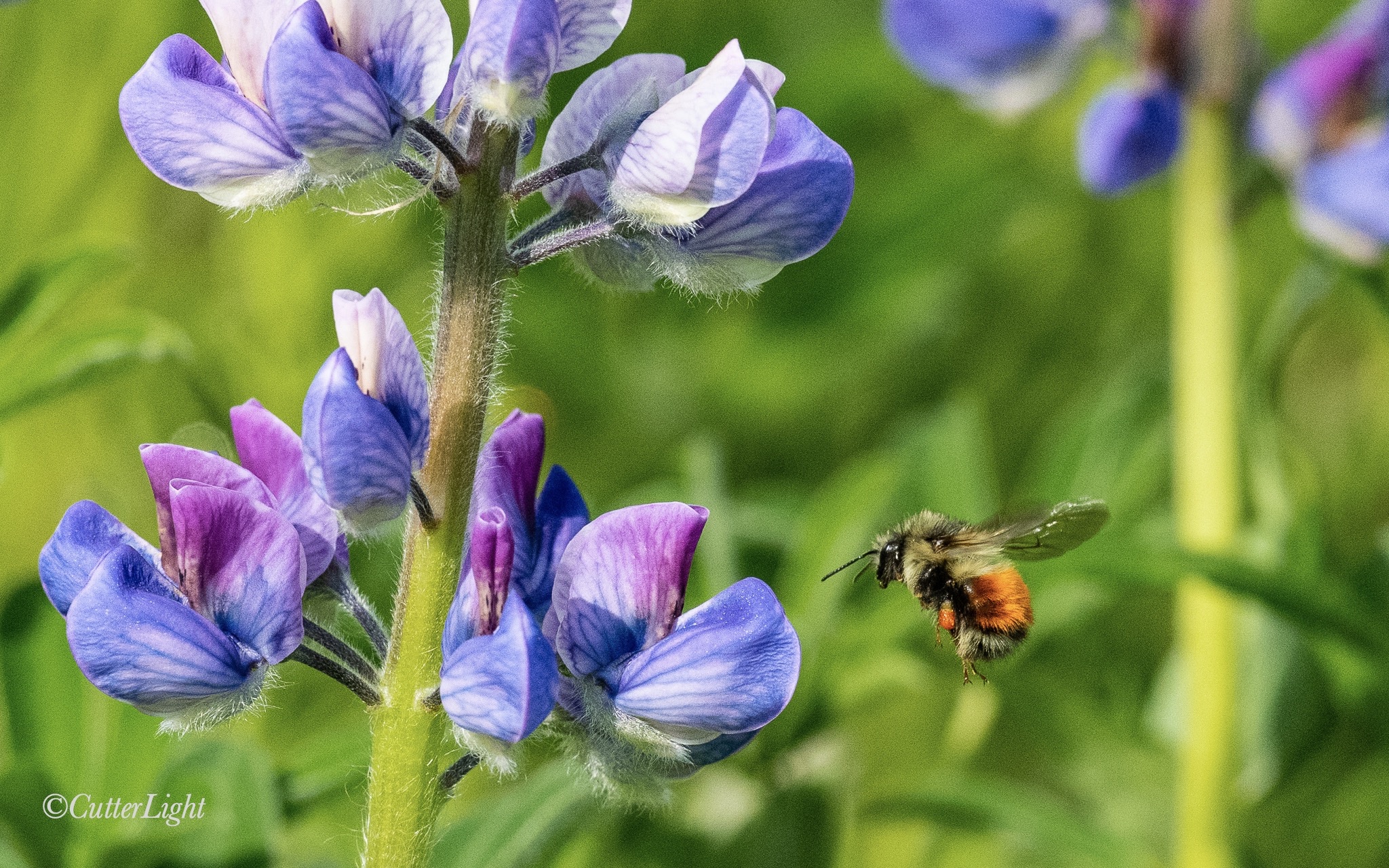
We love our big, orange and yellow Bumble Bees. And our Lupine.

But I’ve never had what I would call a home water. I don’t know how others might define such a thing, but Roderick Haig-Brown’s accounts of his life along Vancouver Island’s Campbell River used to tug at me with an emotion that lies somewhere between awe and envy, an I’d like to have that one day feeling.

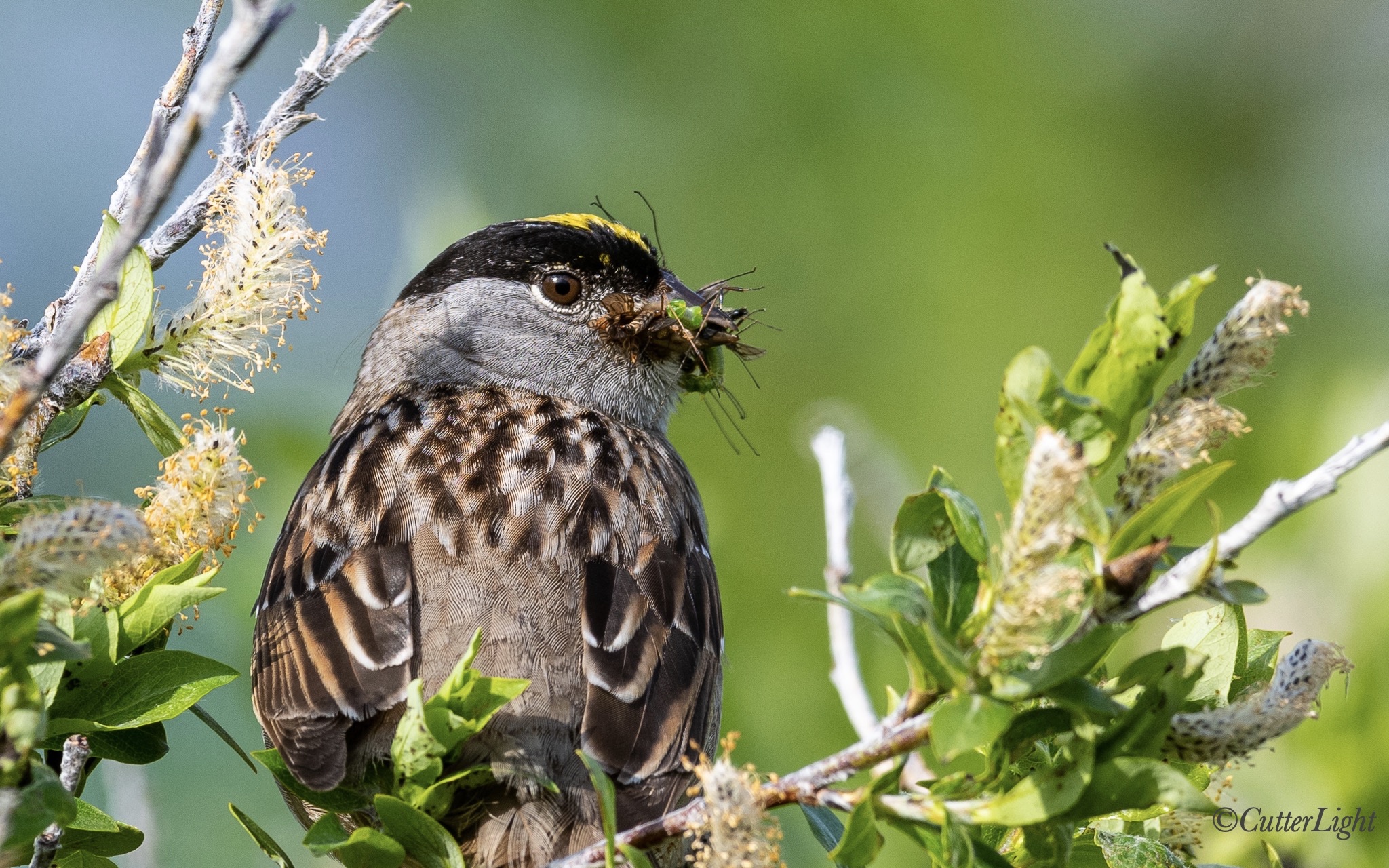
A pair of Golden-crowned Sparrows nested beneath a willow thicket right next to our home, and although we’ve heard the young ones chirping for food, we’ve never bothered to look too closely for the nest for fear of leading Magpies to the location. Keeping the little ones fed appears to be a full-time job. I got this photo yesterday morning.

The Chignik did not immediately fill the longing for a home water. We fished. We caught fish – a few char but mostly salmon, mostly Silvers – and it was very satisfying. That we could actually see fish coming up the lake from our dining room windows, lift our fly rods from their pegs on the wall and walk down to the water exceeded anything I’d ever expected to have. But this abundance and proximity by themselves did not make the water feel like home.

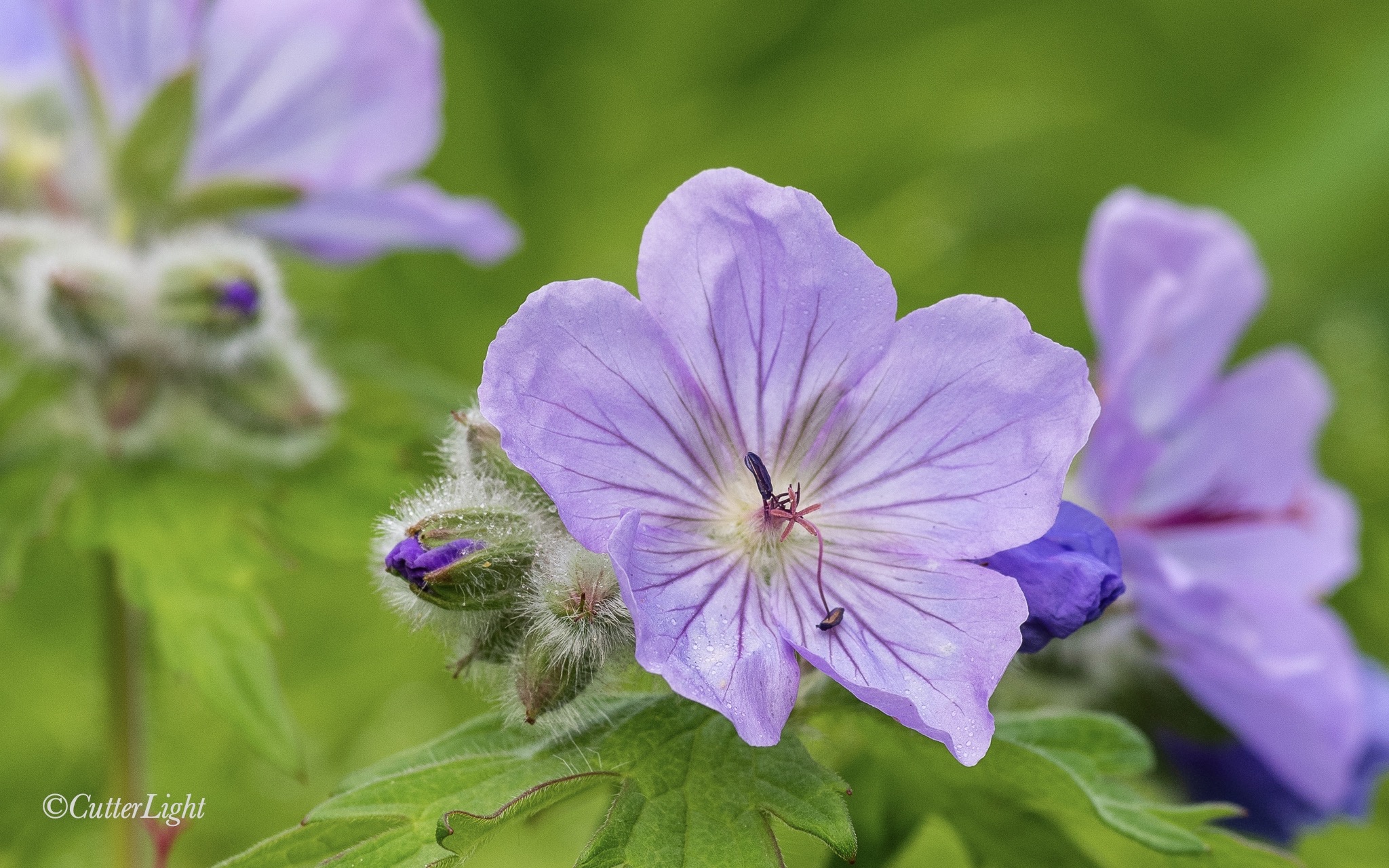
One of the first flowers to appear in spring, only Yarrow will still be blooming in autumn when the last pale purple Wild Geranium petals fall to the ground.

There were the otters we came to recognize, mink prints in wet sand, the bears we encountered and got to know, the eagles that watched us. There was the way that, over time, we came to know the river’s music – the flow of the river itself and the lapping of waves on the lake shore – but also the kingfisher’s rattle, ducks quacking, Tundra Swans bugling, the raucous music of Sandhill Cranes, the fierce Chignik winds that filled the valley and whistled and howled and sometimes shook the house, snipe winnowing softly in evenings, the startling sound of a salmon leaping and falling, unseen, back into a downstream pool. There were nights when we would like awake in our bed, listening quietly as Harbor Seals chased down freshly arrived Coho in the dark, catching them and hurling them into the air to chase down and catch again… evenings and dawns when the eerie, supremely wild howl of wolves echoed across the lake and up and down the river valley… bears grunting and splashing on the beach below our window… winter days when heavy, wet snow put a hush on the world. We came to know where the Great Horned Owls roosted in a grove of spruce trees at a bend on the river where we caught our first salmon, a place where Barbra found a perfectly knapped stone knife Native fisherman long before us had undoubtedly used to split salmon and where we picked berries by the gallon.

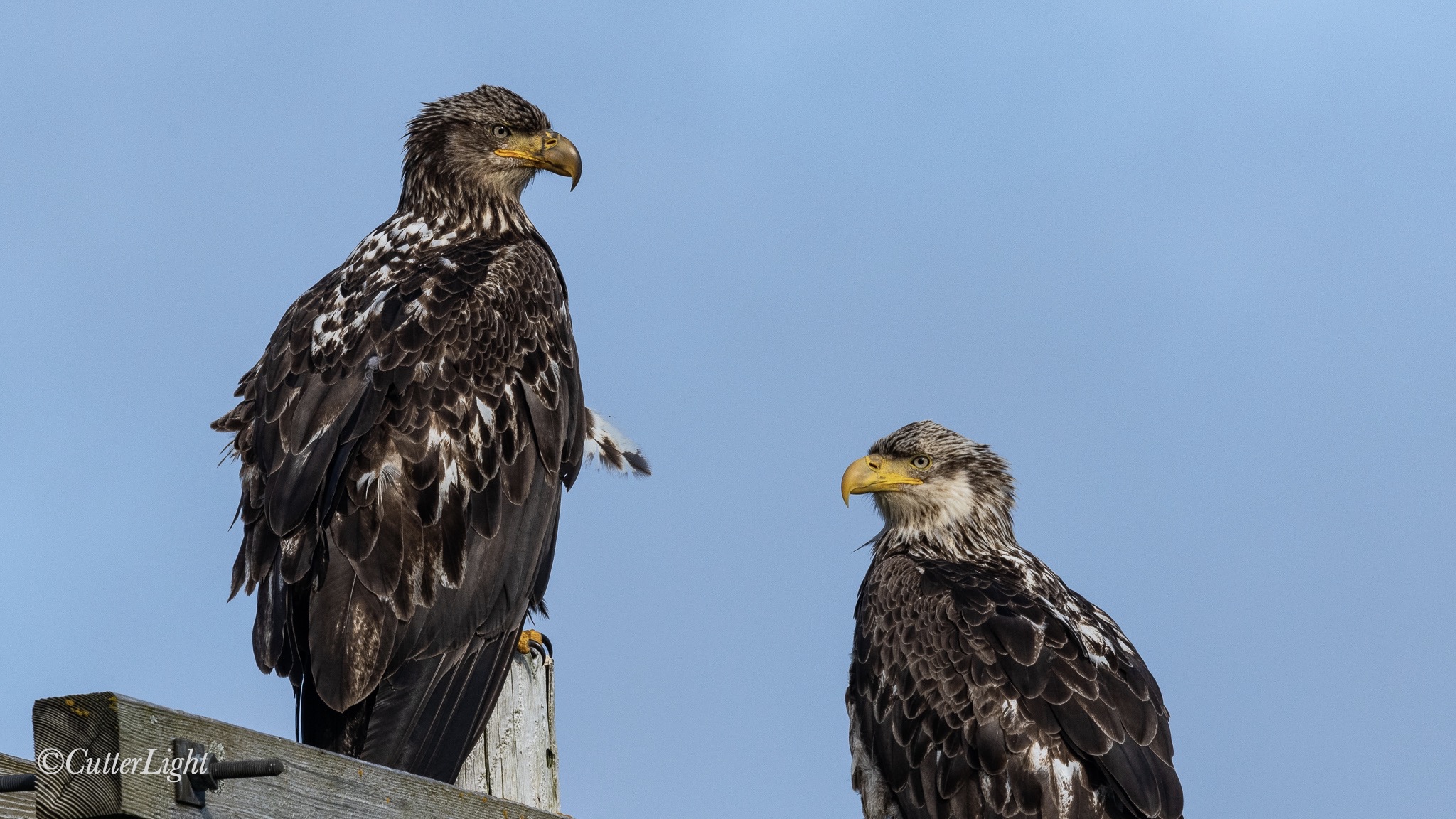
Young Eagles waiting for someone to come in with fish.

Through all of this and more, The Chignik came to feel like home, and while I could list many more of the river’s attributes and our experiences along its shores and on its waters, I suppose what it comes down to is love and I don’t have the words to explain that.

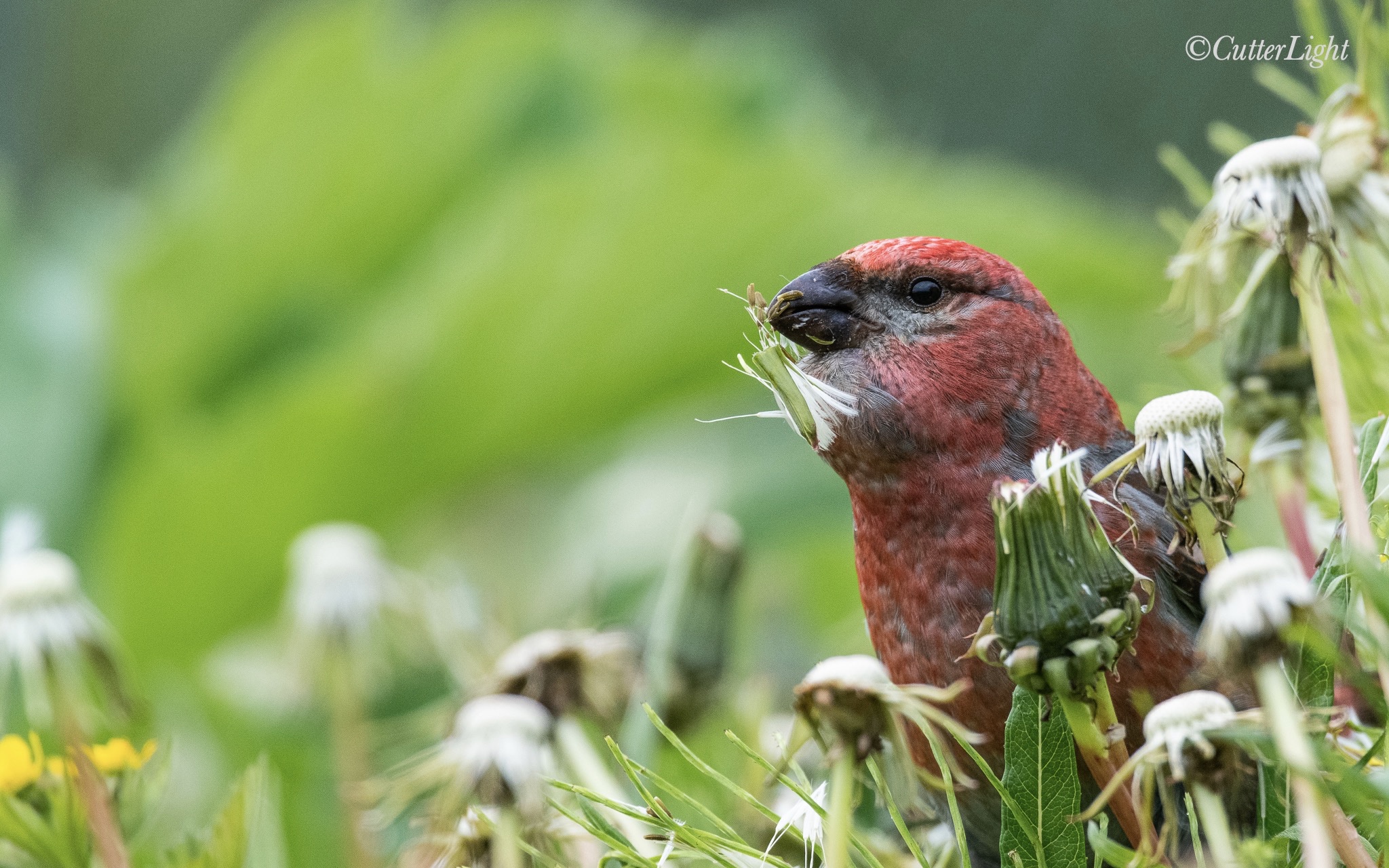
Just a few more seeds… Look at that swollen crop! This Pine Grosbeak seems determined to cram himself as full as he possibly can. One of the first things that struck us about our home on The Chignik was the shear abundance around us. Vegetation grows as thick and lush as in a jungle, local Brown Bears are some of the world’s largest and a season’s tally of salmon isn’t measured in thousands or even tens of thousands but in hundreds of thousands and millions. 

I suppose it is natural, upon leaving a place, to consider the things that were left unexplored, stones unturned, projects unfinished. I topped off at 75 the number of bird species I was able to identify in and near the village, but just two days ago I got a glimpse of something that may have been new – an Arctic Warbler? It would have been one of several “first documentations” for this area. I can’t say for certain, and so the matter must be left at that. It’s time to go. We were still learning about the fishing, still getting to know our friends and neighbors, still savoring every day here.

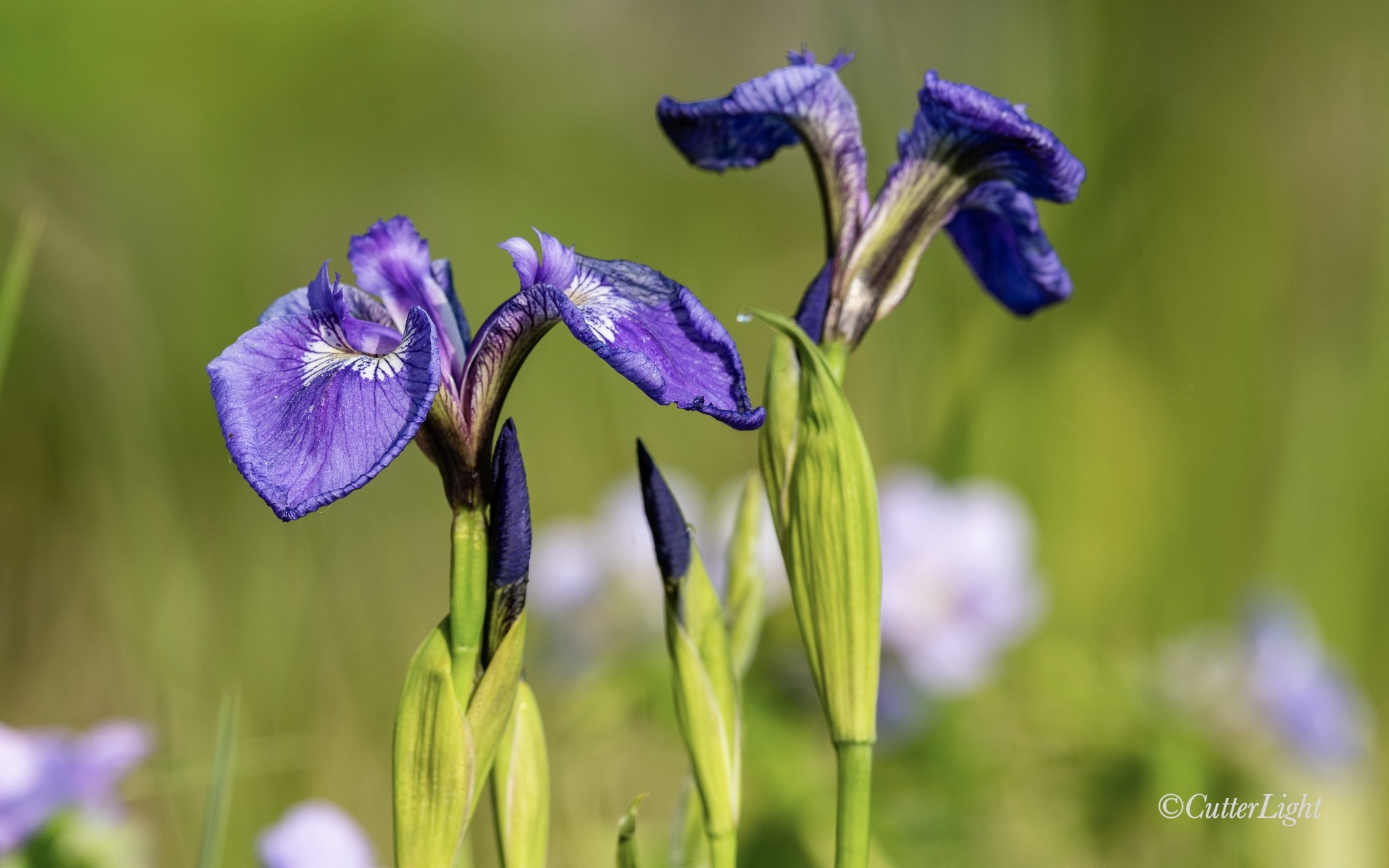
We thought we would have to leave before my favorite flower, wild Irises, came into bloom. But in these past few days, they’ve begun bursting open. We’re glad we got to see them. 

Morning Nature Walk, the Chigniks, Alaska: Landscapes, New Birds & the Season’s First Bear Photos

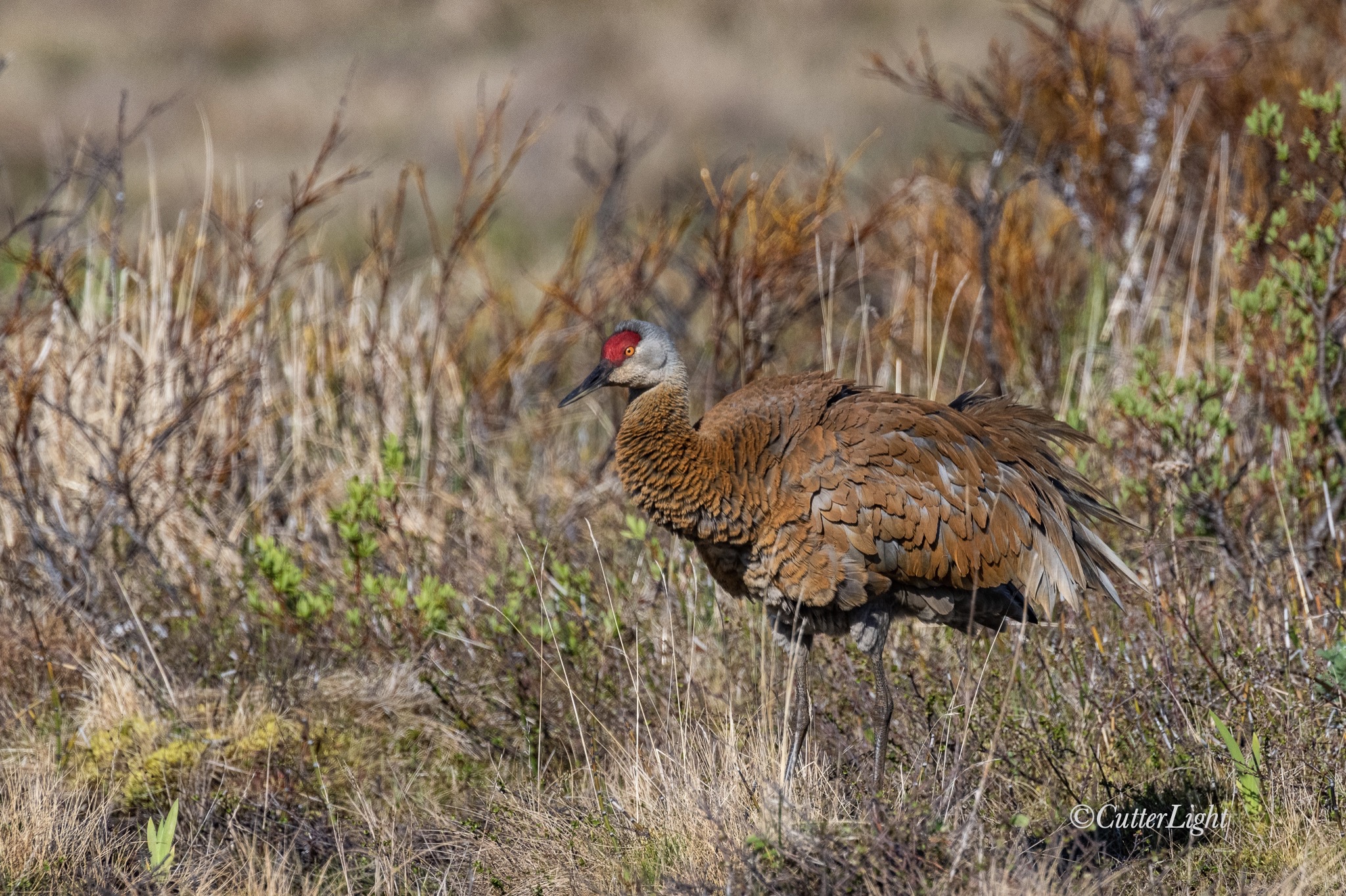
A Sandhill Crane fluffs his feathers on a patch of tundra and scrub a short hike from Chignik Lake. The photos accompanying this article were all taken on May 23, 2019 within 2½ miles of this village of about 50 residents.
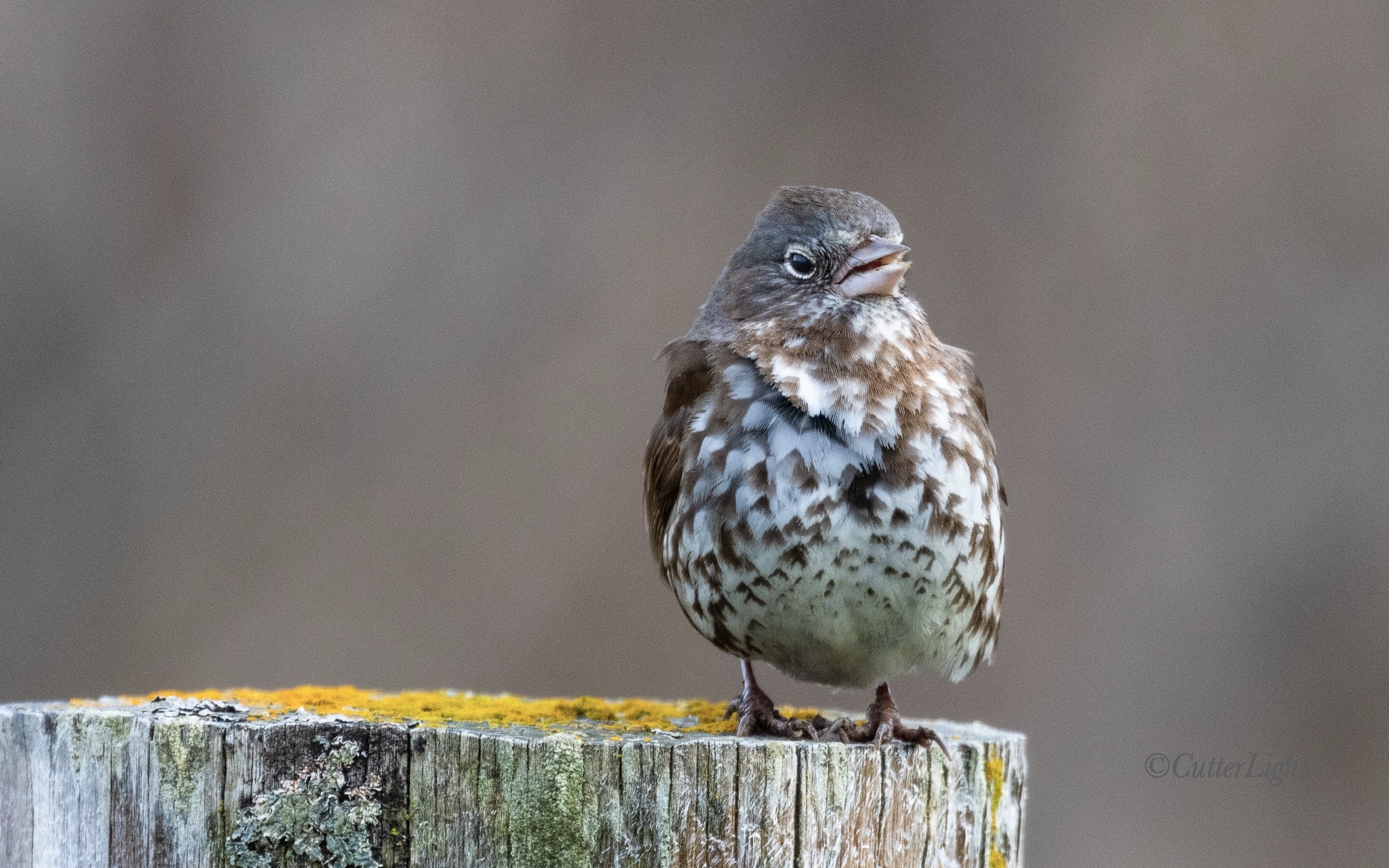
We got an early start and this chubby fellow or gal appears to be barely awake. Wonderful singers, Sooty Fox Sparrows might be the most abundant bird in and around the village right now. Their only rival in that regard are Wilson’s Warblers.
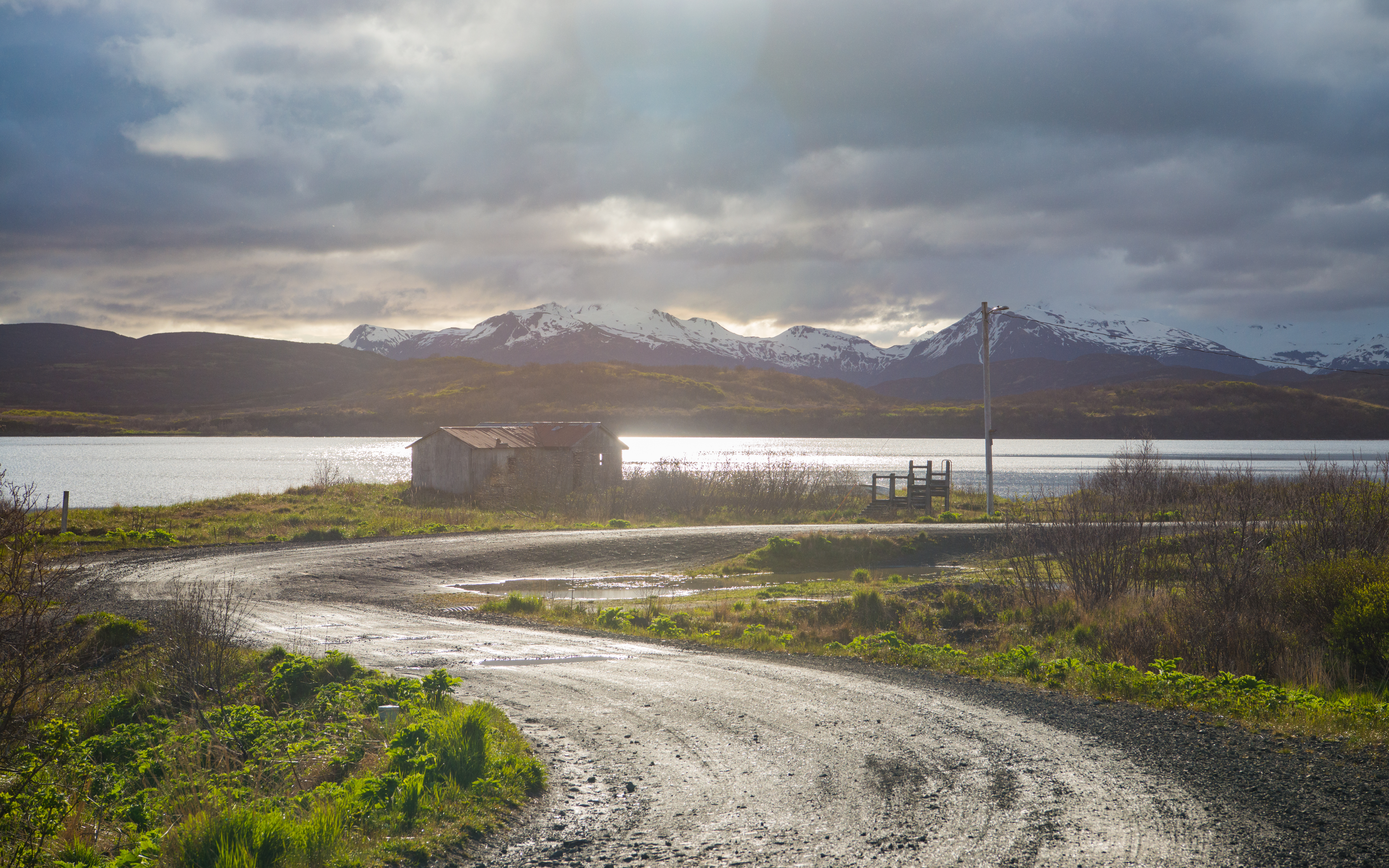
While I focused on a warbler singing near the creek, Barbra turned around and got this elegant frame looking back at one of the village’s abandoned houses and the wooden jungle gym at the old playground.

The weather doesn’t always cooperate. All last night it rained hard and blew a gale, the winds whistling around our snug little home on The Lake. I listened and listened for the little Saw Whet Owl that has been coming around to wake me the past few nights. I could hear waves slapping the sandy beach, the wind… but no owl. There’s light in the sky over the mountains across the lake to the east as I begin this piece of writing in the pre-dawn. Maybe it’ll clear up. After a winter of day after day of spot-on weather forecasts, Spring has returned such prognostication to its usual hit and miss spin of the roulette wheel. It’s supposed to be raining right now, but the sky is clearing. If it does I’ll go out and look for birds. With just four weeks remaining in our life at The Lake, we’re making every day count.

It’s spring and everyone is singing. One of the morning’s objectives was to photograph the Hermit Thrushes that came in with Wilson’s Warblers about a week ago. I’m still looking for a great shot, one with catchlight in the subject’s eye and the bird near enough to crop in portrait close, but this is a start.

Two days ago we woke to a sky that was broken but clearing. The faintest of breezes barely rippled the lake’s surface. We hurried through breakfast, got our camera gear in order, packed a small bag of trail mix and a water bottle, grabbed our binoculars and headed out. Bird song was everywhere and our recently-arrived Tree and Violet-green Swallows had already taken command of the skies. Three elements make for a good birding walk: little or no wind, nice light and birds. We had all three.

We weren’t sure if these Black-capped Chickadees were gleaning insects or gathering nesting material from the last of the catkins in this willow. Either way they didn’t sit still for a moment.

Before we even came to the edge of the village, about a quarter mile walk from our door, we identified 10 species of birds. (There’s a list of what we encountered at the end of this article.) With copses of White Spruce, thickets of alder and willow, salmonberry brakes, open patches of grasses and flowers, rolling terrain, a creek filled with small char and salmon parr and a large lake and river where midges and other insects are constantly hatching, the local landscape features diverse habitat and varied food sources. The dozens of nesting boxes established throughout the village further add to Chignik Lake as a bird paradise.

He’s up there! A tiny speck at the top of the tree on the right, you’d think this Wilson’s Warbler would feel safe from the gentle photographer far below. But I know from experience that as I’m not shooting from a blind, I’m already pushing the bird’s comfort zone. A step or two closer and he’ll disappear. 

Thus far in my ongoing project to document birds within a three-mile radius of The Lake, I’ve identified 76 species, the recent appearance of the Saw Whet Owl being the 76th. Because until recently Barbra’s school district didn’t allow teachers to remain in the district’s housing beyond the school year, this is the first summer we’ve been able to stay for summertime birding. Already this has allowed us to more thoroughly document the two species of swallows that visit The Lake each year, and we’re told that a short way down the river is a colony of Bank Swallows as well. We’re keenly interested to see what else might turn up over the next four weeks.

And there he is, all 4¾ inches of male Wilson’s Warbler, dapper in his jaunty black cap, king of his world overlooking Post Office Creek. In previous years we’ve had quite a few Yellow Warblers and a very few Orange-crowned Warblers as well, but no sign of either of those yet. 

Wilson’s Snipe nest right here in the village. Their vocalizations and winnowing can be heard throughout the day, but I can count on three fingers the times I’ve been close enough to a sitting snipe to get a decent photograph; I’m still looking for my first Chignik Lake shots.

At times, Golden-crowned Sparrows can be cooperative subjects. We have one that visits the lawn just outside our door multiple times a day and no longer pays much attention to our comings and goings. But the bird in this photo is less accustomed to human traffic and chose to eye us warily from inside a thicket of branches while I composed this shot. 

A lightly-traveled ATV trail begins at the Northwest edge of the village and winds its way over varied terrain through patches of crowberry and cranberry, stands of fireweed, willow and alder thickets, bog and tundra all the way to the mouth of Clarks River. We’ve hiked this path often, seldom encountering anyone along the way. Muddy places along the trail often have imprinted evidence of foxes, wolves, bears and moose. We pause often to listen and to look and even to use our noses.
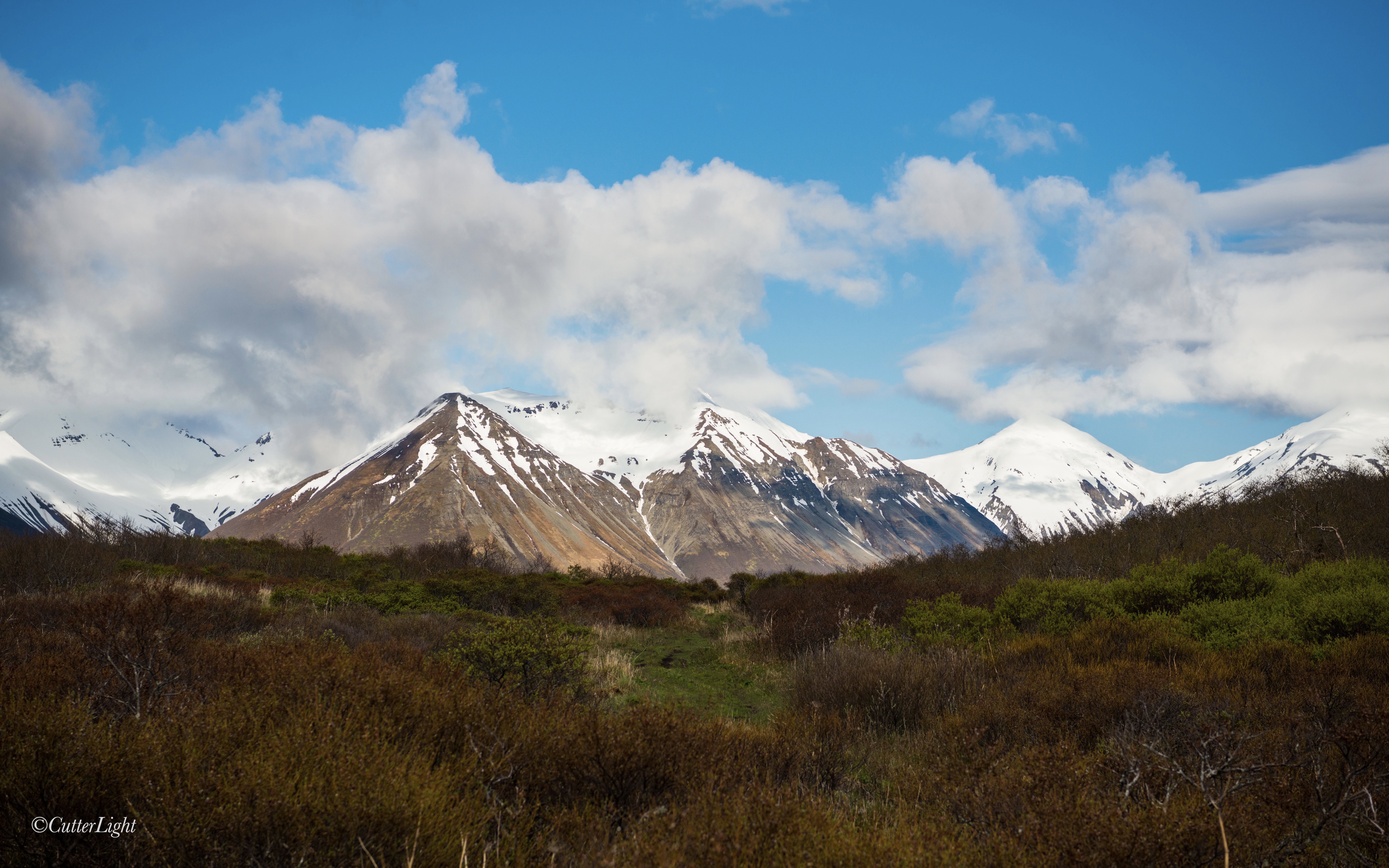
It is a landscape that invites a hike, and on a day like this… who can say “No?”

Every hike is different. The landscape changes from day to day, and with the shifting play of light sometimes the changes are from moment to moment. In the depths of winter, it is possible to hike this trail and encounter nothing save for perhaps a handful of chickadees – a species we’ve come to greatly admire for their intelligence and tenacity. The Native American wisdom that “Every animal knows more than you know,” sinks home when you’re out on a cold, blustery day and these little guys are going about their business, thriving. On this morning we took note of the receding snow line, budding alders, willows leafing out and new flowers, fresh shoots of all kinds of plants popping up everywhere – geranium, yarrow, fireweed, lupine, iris, cow parsnip, star gentian… Each of these plants is like a calendar of the summer, marking the days in different stages of growth.
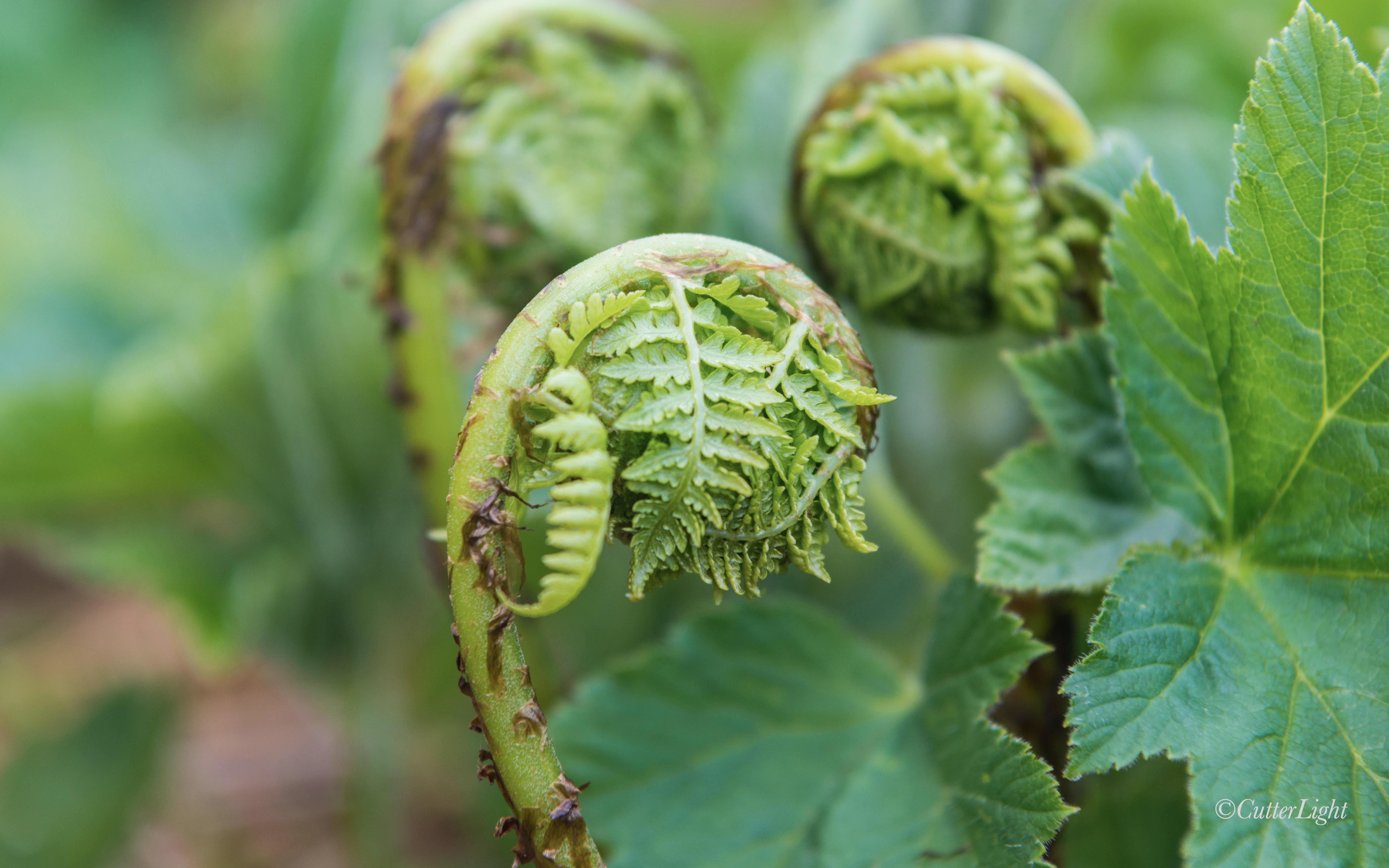
Is there any plant more graceful than a springtime fern unfurling?

The more you walk, the more you learn, until eventually the generalized mix of bird song is differentiated into individual voices – the chattering of a certain type of warbler, the melancholy Here I am… of a sparrow. What was once a wash of varicolored green becomes an intricate web of individual plants, each kind with its own name, lifecycle and place in this complex ecosystem. Over time you come to know where the owls roost, how to find the nests of ground-nesting sparrows, what kind of tracks have been left in the sand and perhaps how long ago they were placed there. A bird lets you have a glimpse of its form as it flits across the path and where many miles of walking ago you might have thought to yourself “a bird,” you now know precisely what kind of bird and where it might nest and what it likes to eat and you know all this without thinking much about it. It just is.

We have been coming across tracks for close to two weeks – tracks left by large bears, tracks left by sows and their cubs, tracks left by young adults perhaps embarking on their first full season alone. But these were the first two bears we’ve seen this year. Skinny from a dormant winter and quite likely from not having gotten as many salmon as they would have liked given the low return of salmon to the Chignik River last year, these spring bears will manage to begin to put on weight on a diet of grass and tubers. They’ll even eat insects this time of year.

Two miles up the trail a steep bluff provides a vantage point overlooking the lake and an adjacent savannah-like area. We always stop here to glass for wildlife – bears on the beaches, ducks on the water and anything that might happen to be out in the flat where we’ve seen foxes, cranes and signs of wolves, bears and moose. It’s a good place to look for Savannah Sparrows, another species that just recently arrived.
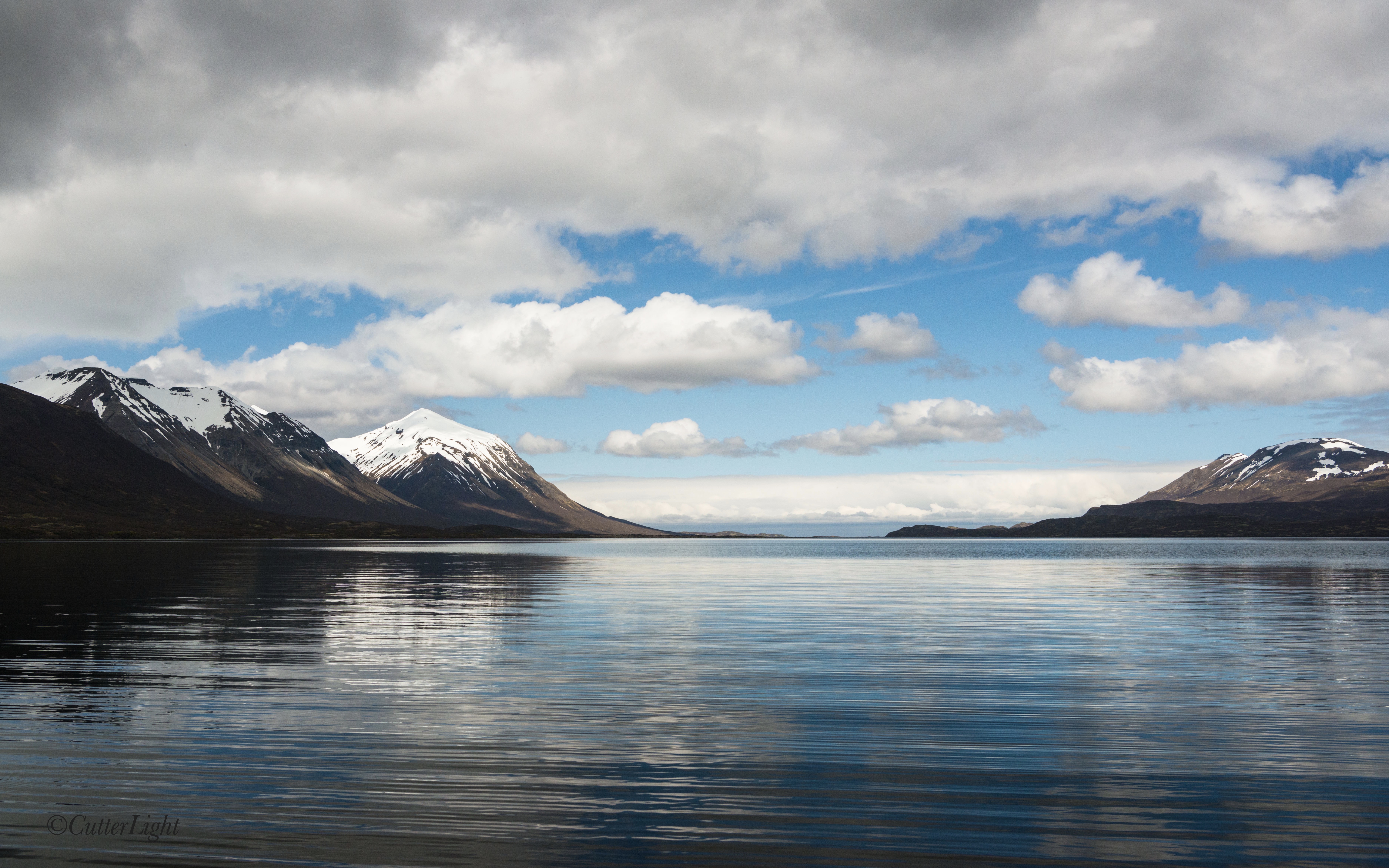
We’ve come to call this view of the lake The Infinity Pool.

Far out on the lake, a few Black Scoters were milling around, occasionally quacking. A young Harbor Seal, barely more than a pup, popped up to have give us a curious look. Three or four Bald Eagles and half a dozen Mew Gulls were resting on a sand spit at the mouth of Clarks. While Wilson’s Warblers and Fox and Golden-crowned Sparrows seemed to be everywhere, the Savannah Sparrows we’d hoped to photograph proved to be more elusive. Here and there we’d hear their distinctive, almost blackbird-like call, but aside from a couple of distant views through binoculars, we didn’t have much luck. We left the grassy area to follow the lake shore. As our boots crunched along the sandy beach, little schools of shore-hugging salmon parr skittering for deeper water.

This stickleback was so ripe with eggs she could barely swim. I cupped her in my hands for a quick photo and released her into a patch of filamentous algae where she tucked in. The Chignik watershed has two types of stickleback – Three-spined and Nine-spined. Slow swimmers, they are preyed upon by everything from River Otters to Mergansers. Most of the time when I see a duck with a fish, it’s a stickleback. 

Seeing young salmon along the lake shore and in the several small creeks feeding in the lake always puts a lightness in our hearts. Sockeyes and Coho and lots of them. When a midge hatch is on, the surface of the lake becomes dimpled as though rain is falling as these fish rise to intercept the insects. When I turned over a few rocks in one of the streams, to my surprise I found the undersides to be thick with mayfly nymphs. There were also a few stoneflies, which equally surprised me. In late summer we’ve been here for the heaviest midge hatches we’ve ever witnessed, but other than sporadic hatches of caddisflies we haven’t noticed much else, a very occasional stonefly and a few small mayflies notwithstanding. The undersides of lake rocks can be thick with caddis cases, so there must be significant hatches of those at some point. And if the feeder streams are home to mayflies, maybe we’ll be around for a hatch of those. There’s always something new to look forward to.

We call this stretch of the trail The Tunnel – a fitting name when it’s crowded in with leafed out alders. We’re usually quiet hikers, but in places such as this where you can’t see more than a few feet ahead, we make a little noise, not wishing to surprise or be surprised by any four-legged beings.

Well, the morning’s half gone. A big patch of blue has pushed its way through the clouds and although the best light is past, it might still be worth it to go out for a look around. Yellow Warblers should be showing up any time now, and I’m still looking for a photograph of a Hermit Thrush with a bit of catchlight in its eye.

Here’s the list of the birds we came across on this walk:

Black Scoter
Common Merganser
Tundra Swan
Greater Yellowlegs
Wilson’s Snipe
Sandhill Crane
Mew Gull
Bald Eagle
Black-billed Magpie
American Robin
Hermit Thrush
Black-capped Chickadee
Tree Swallow
Violet-green Swallow
Wilson’s Warbler
Savannah Sparrow
Golden-crowned Sparrow
Sooty Fox Sparrow
Redpoll
Pine Siskin