Vacancies at Chignik Lake’s New Nesting Boxes are Filling Fast: Tree Swallows have Arrived!

We knew that with Violet-greens having returned, Tree Swallows wouldn’t be far behind. This pair didn’t let much daylight burn before checking out a homesite. They may have used this same box last year. That’s the female perched on top of the box while the male, decked out in shimmering shades of blue, assesses the nesting quarters.

Just before leaving The Lake for our epic 65-day bicycle tour of Hokkaido last spring, we installed four new nesting boxes. We left just as the swallows were returning, but when we got back we were informed that our boxes had immediately attracted new tenants. So we’ve been keeping our eye on them, eager for the arrival of Violet-green and Tree Swallows this spring to see who might move in. Violet-greens first showed up on May 14 and headed straight for a set of older boxes at a neighbors’ house. But even with some 40 boxes in the village, we knew every available site would soon have a pair of nesting birds.

This morning when I stepped outside, I lifted my binoculars to scope out silhouettes on a power line near two of our boxes. Tree Swallows – the season’s first! With the early morning sun buried behind gray clouds, there wasn’t much light. But the office where I work on photos and writing has a view of one of our boxes, so I kept my eye on things. Within a couple of hours, new arrivals were checking out the two boxes closest to our home. And then the sun popped out, giving me an opportunity to make a couple of pictures of birds beginning to set up housekeeping at each box.

For awhile, several birds sallied back and forth around this box. Finally a female entered and stayed put for quite awhile. Here the male is checking up on her.

Interested in attracting your own mosquito-eating backyard friends? Check out our previous post on Violet-green swallows where you’ll find tips for putting up nesting boxes as well as the article below that for tips on placing your new boxes. Establishing nesting boxes is way more interesting (and way, way more ethical) than plugging in those nasty electric bug zappers. Click the links below!

Our Violet-greens are Back at The Lake!

New Homes Available! Swallow Nesting Boxes at Chignik Lake

Our Violet-greens are Back at The Lake!

A single Violet-green Swallow can consume hundreds of mosquitoes and midges a day. With 40 or so nesting box cavities scattered throughout the village of Chignik Lake (population 50), these iridescently-plumaged little fellows and their Tree Swallow cousins are local favorites.

Chignik Lake’s first swallows, multi-hued Violet-greens, made their seasonal debut yesterday, May 15. This morning we went out to get photos of these much anticipated first arrivals. Tree Swallows, which will also use the dozens of nesting boxes residents have put up, should be arriving any time now along with the Bank Swallows that have established a colony on a bluff a mile or so down the Chignik River.

The Native American tradition of hanging nesting cavities for swallows goes as far back as anyone knows. Writing in the 1800’s, John J. Audubon noted that:

The… Indian is also fond of the Martin’s company. He frequently hangs up a calabash on some twig near his camp, and in this cradle the bird keeps watch, and sallies forth to drive off the Vulture that might otherwise commit depredations on the deer-skins or pieces of venison exposed to the air to be dried. The slaves in the Southern States take more pains to accommodate this favourite bird. The calabash is neatly scooped out, and attached to the flexible top of a cane, brought from the swamp, where that plant usually grows, and placed close to their huts. Almost every country tavern has a Martin box on the upper part of its sign-board; and I have observed that the handsomer the box, the better does the inn generally prove to be. 

It’s sad to see those annoying, energy-wasting, indiscriminate electric bug zappers, which kill beautiful moths along with everything else, hung more often than nesting boxes in these modern times. A nesting pair of birds will do a better job keeping pests under control, add cheer to any property, and when the wooden box has seen its best days it can be be left to return to soil rather than discarded to fill our world with yet more plastic, toxic parts and slowly-decomposing metal.

If nesting boxes around our village are any indication, they need not be elaborate. All that’s needed is untreated wood, a saw, a means to cut a hole, nails or screws and the appropriate tool for securing that hardware. Although it is often recommended that boxes be cleaned out annually, we know of no one here who does so. The swallows themselves seem perfectly capable of spring cleaning when they arrive, as they have done with natural cavities for as long as swallows have been around. However, if you’d feel better about cleaning out the boxes once the nesting season is finished, by all means go for it; you’ll be creating a clean space for birds that use the boxes as overnight and foul weather shelters during wintertime.

Engaged in housekeeping (removing his offsprings’ excrement) this Violet-green and his mate made a nest behind a knothole in the side of a store in McCarthy, Alaska.  

Two additional tips for your own backyard nesting boxes:

  1. Do Not put any sort of ledge or peg in front of the hole. As you can see in the photo below, swallows and other cavity nesters don’t need a perch. Their claws are adapted to cling to the sides of trees. The only purpose a ledge or peg serves is to give nest-raiders such as magpies, crows and other predators a perch from which to get at eggs and nestlings.
  2. Give some thought to the species of bird you hope to attract, then research the size of entry hole and the size of the interior cavity that bird prefers.

To those tips, we’ll add a third. Invasive European Starlings and House Sparrows haven’t yet found us out here on the Alaska Peninsula. If they are a problem where you live, we urge that they be discouraged from nesting by any means necessary. Both of these birds represent a significant, growing threat to species diversity.

Don’t have the time or the right tools to build your own boxes? Consider purchasing. A cedar box will last a long time, making it an economical gift to birds for years or even decades to come. And don’t be discouraged if your boxes don’t attract guests right away. Sometimes it takes more than one season for birds to move in.

Flowers are blooming, insects are out, swallows are returning and salmon are beginning to stage in the bay for their annual spawning run up the Chignik River. It still feels like spring, but summer is just around the corner.

Sandhill Cranes Foraging and Vocalizing – Alaska Peninsula

Barbra’s school year ended on May 1st. With a new home waiting for us in Newhalen, Alaska, we could have left Chignik Lake the following day. But bears are waking, buds are bursting and springtime’s migrant birds have begun to return, so we’ll remain at The Lake till late June. We’ve been loving our decision. In the past few days we’ve scored photo upgrades of several Chignik species including Northern Pintails, American Widgeons and Harlequins. We just missed adding photos of a skittish dark morph Rough-legged Hawk as well, but we got nice American Robin photos (the ones that pass through the Chigniks are considerably more wary than the suburban birds we’ve known) and…

…our first really good photos of Chignik’s Sandhill Cranes.

The more we photograph birds, the more we appreciate how difficult it can be to predict their behavior. Years ago, we had a photo op with a pair of Sandhill Cranes foraging on a lawn in Homer. While Barbra crept around the yard with our “fledgling” camera gear snapping photos, the cranes very casually walked off a few paces to let her know when she got too close. After that, Barbra tucked in and shot away. We left before the birds did. We weren’t birders in those days. The encounter was one of our first with cranes, and so we concluded that cranes must not be particularly wary.

Years later and multiple mind’s eye images of Sandhills that saw us long before we saw them gliding off toward the horizon on six or seven foot wingspans have prompted revisions of our earlier ideas about these magnificent birds. Cranes are hunted, and like most species that are hunted, they can be exceedingly wary. Unless the cranes have located themselves in a refuge of some sort, it seems that your best chance of getting close enough for a decent look at them is to a) stay quiet and b) don’t look like a human.

The other day while birding, we lucked out. Using a truck as a blind, we were able to observe a pair of foraging cranes for about 15 minutes – plenty of time to add quality photographs to our library and to make a short video which, happily, caught them vocalizing. The male in this video stands over four feet tall. From now till September, their brassy, ratchety calls will echo through the Chigniks, carrying as much as two-and-a-half miles. In addition to the full-throated vocalizations, listen for the little croak the male gives early in the video. And incidentally, the songbird in the background is one of our recently-returned Sooty Fox Sparrows. (The chirping is the modified sound of Jack’s camera shutter.)

Have you Heard a Strange Bird Sound at Night? Snipe Returning

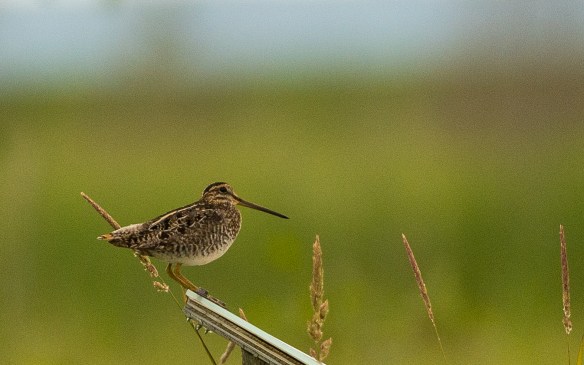
Most of the snipe I’ve seen have afforded only fleeting glances, but this Wilson’s Snipe sat still for a few moments in Alberta during a trip up the Alaska-Canada Highway. This is the same species we have here in Alaska.

I stepped outside at about 9:30 PM last night. From the willow and alder thickets near Post Office Creek, just a few dozen yards from my home, I could hear the unmistakable sound of migrating snipe winnowing – Spring’s first returning migrants here in Chignik Lake on the Alaska Peninsula. Made with their wings, it’s such a strange sound that once you’ve heard it you’ll never forget it.

Click the Wiki Commons link below for a listen.

Gallinago_gallinago.ogg ‎(Ogg Vorbis sound file, length 7.2 s, 134 kbps)

New Homes Available! Swallow Nesting Boxes at Chignik Lake

Construction Complete! Lovely one-room summer homes with lake and mountain views available now! Perfect for rearing a brood of chicks.

Reading John J. Audubon’s accounts of his journeys throughout the United States in search of every species of bird for his paintings, I’m always charmed by his portraits of communities and their abundant bird nesting boxes.

“Almost every Country tavern has a Martin box on the upper part of its signboard;” he wrote of 1840’s America, “and I have observed that the handsomer the box, the better does the inn generally prove to be.”

The prevalence of hollow gourds fashioned with holes and used as nesting sites in Native American villages is also well documented. Apparently the symbiotic relationship between swallows and humans goes back a long time and cuts across cultures. Virtually everyone seems to love these harbingers of spring, their artistic mastery of the air, and the serious damage they do to mosquito populations and to other annoying insects.

And so it is here in Chignik Lake. Upon moving here we were struck by the numerous swallow nesting boxes situated on posts, nailed to utility poles and affixed to buildings throughout the village. Here we have mostly Tree Swallows along with occasional Violet-green Swallows. In the absence of invasive species such as House Sparrows and Starlings – which take over nesting boxes -, and with a lake featuring copious hatches of midges and other insects, this is a perfect place for swallows to rear a brood of chicks. Magpies can be a scourge, so it’s important that nesting boxes not feature any sort of perch to allow them to access the eggs and chicks, but other than our Merlins, there are essentially no other serious threats to the swallows of Chignik Lake.

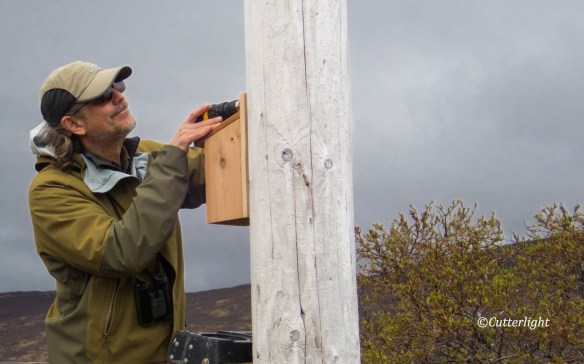
The major factor limiting the number of swallows Chignik Lake can accommodate is… accommodations. So this spring we did our part to help these birds out by putting up four new cedar nesting boxes. The first Tree Swallows showed up sometime around May 9, and the early birds have already begun choosing nesting sites. Our boxes may have gone up a bit late for this year’s birds, but after they’ve weathered for a year and the swallows have had an opportunity to check them out, we’re hopeful they’ll attract these welcome summer visitors in future years.

Location, location, location. High enough up, away from occupied buildings and busy roads, near a lake chock full of bugs, and a pesticide & herbicide-free environment. Heck, if we were Tree Swallows, we’d spend our summers here!

If you’d like to put up swallow nesting boxes in your area:

  • Place the boxes high enough off the ground to avoid predators
  • Although swallows like to feed and nest near water, position the boxes well back from the shore. Predators cruise shorelines.
  • Although swallows will at times happily nest in apartment-style boxes (a friend in Chignik Lake has a row of about a dozen boxes that fill up with residents every summer) it is generally recommended that for Tree Swallows and Violet-greens, boxes be placed at least 30 feet apart.
  • Do Not attach a roosting peg or ledge anywhere on the box. Swallows don’t need such a perch, but avian predators will use it to to prey on eggs and chicks.
  • Swallows prefer nesting boxes in open areas, at least 30 feet or so away from buildings. This is by no means a hard-and-fast rule, and don’t let a lack of open space prevent you from putting up nesting boxes. Boxes placed near shrubs and trees are likely to attract wrens, sparrows and other birds rather than swallows.
  • Do what you can to keep European Starlings and House Sparrows out of the boxes. These invasive species have had a negative impact on a number of native bird species. A hole diameter of 1⅛” – 1⅜” is said to be large enough for swallows but will keep starlings and sparrows out.
  • Keep cats indoors. This is a good general rule to protect wildlife, but is especially important if your aim is to attract birds. You don’t want to invite birds only to have them and their chicks fall prey to a pet.

Looking for Love

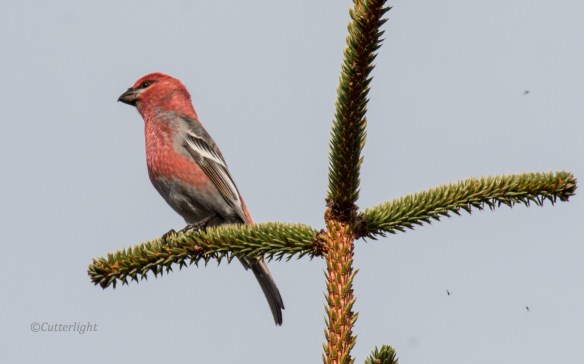
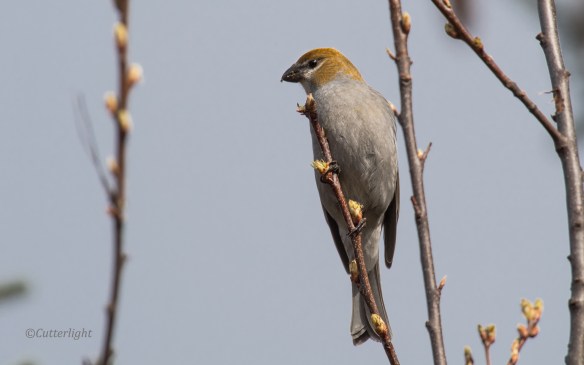
His colors will never be brighter than they are right now, nor his call more cheerful. Pine Grosbeaks tend to be irregular in their presence, but for the past two years in Chignik Lake they’ve been regular residents. For a look at a nearby female, which is very differently colored, see below. (Note the midges flying around to the right in the above photo. With big insect hatches coming off the lake and river, our swallows should be here any day!) 

Most days in the village the optimistic Peee-Peeet! of Pine Grosbeaks can be heard as they fly overhead or perch atop the tallest spruce trees. Always striking, the males are particularly colorful during springtime. Like their crossbill cousins, Pine Grosbeaks can be remarkably unwary. Move slowly around them, sit quietly, and they may forage on the ground practically at your feet. I’ve even had one perch on my head!

Female Pine Grosbeaks feature a rich olive-gold on their head, upper back, rump and often on their upper breast. This time of year, the leaf buds of deciduous trees figure heavily in Pine Grosbeaks’ diets. During wintertime they can be attracted to feeders featuring black oil sunflower seeds, suet or (I’m guessing) peanuts. They also love small fruit and during warmer months will include insects in their diet.

The “gros” of grosbeak is from the French gros, which means large. This is a species we’ll be looking for this summer in Hokkaido, Japan – part of their ranged across the Northern Hemisphere.

Two Thumbs Up – Meet the Alula

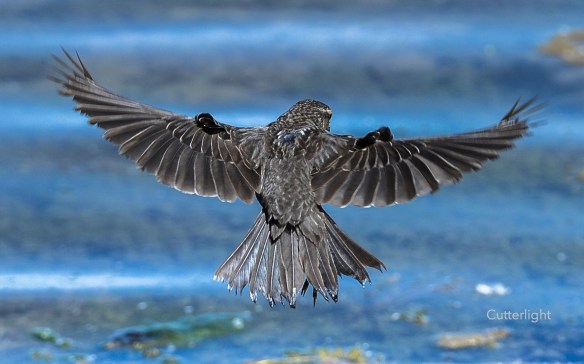
Hovering as she hunted for flying insects at a Montana pond, this female Red-winged Blackbird was able to keep from “stalling out” by redirecting air flow over her wings with her alulae, the tufts sticking up on the fore edge of her wings.

It’s easy to find oneself marveling at the ease and grace with which a raptor or songbird flies – the seamless changes of direction, the steep climbs, the ability to hover, the smooth landings. Aiding in these intricate maneuvers is a small tuft of tiny feathers that the bird can manipulate to create a pocket of whirling air – a vortex – which helps it finesse some of its most amazing moves.

It appears that the alula evolved approximately 130 million years ago during the Cretaceous Period, first in genus Protopteryx and a few million years later in Eoalulavis, or Dawn Bird. Earlier species such as the bird-like dinosaur Archaeopteryx, Old Wing, lacked alulae, indicating that while they probably were capable of gliding, they most likely did not fly in the sense that modern birds fly.


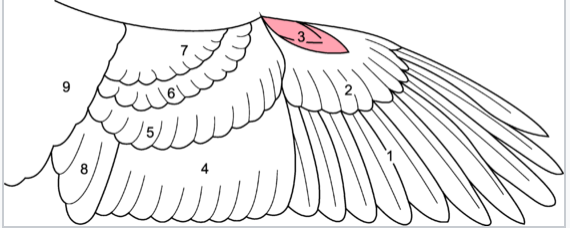
Bearing 3 to 5 small, asymmetrical flight feathers, the alula is found on modern bird species as well as on some pre-avian dinosaurs that were capable of flight. It’s the bird’s first digit, analogous to the human thumb. Illustrations courtesy of: Muriel Gottrop – https://commons.wikimedia.org/wiki/File:BirdWingFeatherSketch.png

Red Crossbill Feeding on White Spruce Cone Seeds, Chignik Lake, Alaska Peninsula

A young male Red Crossbill feeds on the seeds of a White Spruce cone it has picked up from the ground and carried to a nearby bough. In the background, the happy chattering of Redpolls and Pine Siskins can be heard. See below for a photo of this species’ unique bill.

In late fall, a mixed flock approximately 50 Pine Siskins and 15 Red Crossbills showed up at the White Spruce Grove here in Chignik Lake. As both species are rarely seen beyond coniferous forests of pine, hemlock, fir or spruce trees, we were surprised to find them one morning busily calling back and forth and feeding on spruce cone seeds in the stand of 20 White Spruce trees we call “The White Spruce Grove.” In fact, as best as I can determine, the photographs we’ve gotten of these birds are the first ever captures of either of these species in the Chigniks – or perhaps anywhere out on the Alaska Peninsula.

Crossbills and conifers have coevolved in a complex relationship in which different crossbill morphs (types of crossbills) have evolved bills specifically adapted to the particular type of cones they feed on. Thus one population of crossbills might have bills adapted for opening Ponderosa Pine cones, while another population might be adapted to open hemlock cones. White Spruce trees are not native to the Chigniks; they were planted here by residents decades ago when Chignik Village changed from existing as a hunting and fishing camp to a place of year-round residence. The original seedlings came from Kodiak Island. It is likely that the Red Crossbills that visited us made their way from Kodiak Island, or from some other White Spruce forest in Southwest Alaska. 

Although about 30 Pine Siskins remain as I write this, all but two of the Red Crossbills have vanished. Hopefully most have moved on to more suitable habitat on Kodiak Island or on the Alaska mainland, but with a Sharp-shinned Hawk and Northern Shrikes showing up from time to time and with resident Great Horned Owls ever on the lookout for an easy meal, given the lack of wariness most crossbills exhibit it is possible that some may have fallen to predators.

The feeding habits of these crossbills is fascinating. Their oddly configured bills are adapted specifically for prying open cones and pulling out the seeds. Although they frequently perch on the cones and feed in every position conceivable, including hanging upside down, crossbills often employ a more active feeding strategy. Foraging on the ground, they choose an especially seed-packed cone that has fallen from the tree. Taking this cone in their claws or bill, they fly to a nearby branch and dine on the seeds in the safety of the tree. When they’re finished, they drop it to the ground and search for another such cone. After a session of such feeding, they retreat deep into the safety of the tree to digest their meal at leisure.

So the next time you’re in a northern coniferous forest and a conifer cone drops to the ground, look up. You might catch a glimpse of a crossbill that has just finished its meal.

Reference: The Cornell Lab of Ornithology Handbook of Bird Biology, 3rd Ed, Lovette & Fitzpatrick

Common Merganser with Chicks, Tuul River, Ulaanbaatar

common merganser 2015 Tuul River n

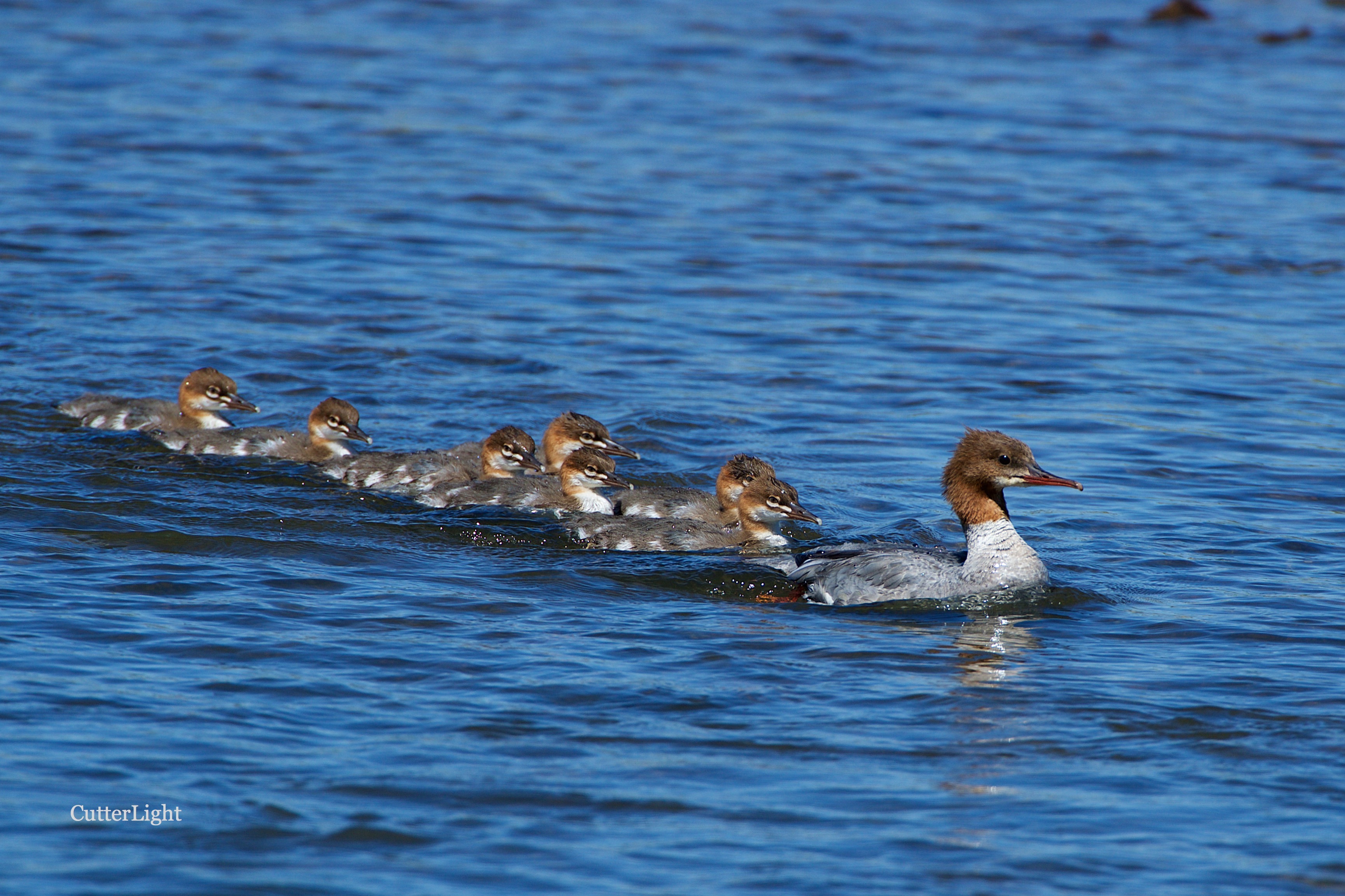
A healthy family of common mergansers (Mergus merganser) indicates an abundance of small fish in the Tuul River on the outskirts of Ulaanbaatar, Mongolia.

Mergansers are large diving ducks that subsist primarily on fish, although the young also fill up on aquatic insects such a the larva of mayflies and stoneflies. They make their nests in cavities in trees, sometimes a good distance from water. Less frequently, mergansers nest in holes in cliffs or high banks. They can be found on open water throughout the Northern Hemisphere, and are a good indicator of clean water and healthy populations of small fish.

Common Merganser hen 2015 n

If you look closely, you can make out the serrations on her bill – the perfect adaptation for holding onto fish. In contrast to the females, the drakes’ heads are dark green, their flanks are white and their backs are black. Although common mergansers are usually encountered on freshwater lakes and rivers, they are frequently seen in coastal bays and estuaries as well.

Common merganser family Tuul n

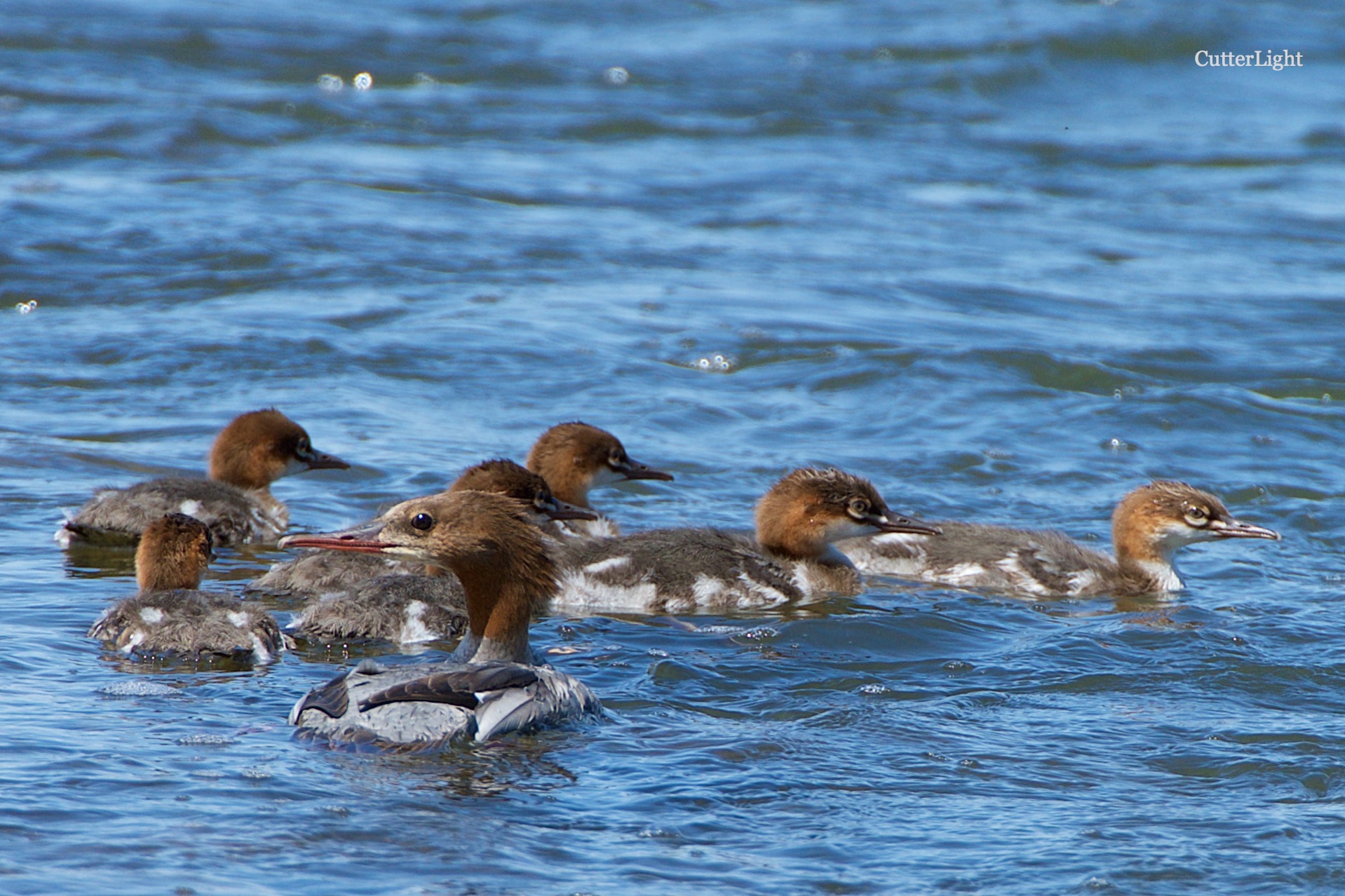
A baleful eye tells us we’ve approached close enough. Undisturbed this family went about their business, dipping their heads underwater in search of food as they paddled along the river’s current breaks.

Little Ringed Plover

Plover Little Ringed UB 2015 n

Little Ringed Plover, Charadrius dubius, Tuul River, Ulaanbaatar, Mongolia. Nikon D4, Nikkor 200-400mm lens, 1.4 teleconverter.

At about six inches (15 cm) from bill to tail and weighing just an ounce and a half or so (40 g), little ringed plovers are common along the Tuul River near Ulaanbaatar. Their small size, pale pink legs and bright yellow eye rings are diagnostic. These wary little birds seem to bob their heads and scurry back and forth along the shoreline constantly, hence the Latin “dubius” which means moving to and fro. They’re ground nesters. Among the shoreline rocks and pebbles, their light brown or grey speckled eggs are virtually invisible. As fall approaches, little ringed plovers migrate to Africa where they spend the winter.

We’re now at 40 species and counting in our urban birding adventures in and around Ulaanbaatar.