Chin Scratch

Chin Scratch
American Robin, Chignik Lake, Alaska Peninsula, May 20, 2019

Having long associated American Robins with manicured lawns in the Lower 48, I was mildly surprised the first time I encountered the species along the Chignik River. They were not reported in David Narver’s Birds of the Chignik River Drainage study based on his observations in the early 1960’s, and although they are considered common further up the peninsula, from Aniakchak National Monument and Preserve (which encompasses much of the Chignik Drainage) all the way to Izembek National Wildlife Refuge near the peninsula’s western tip, the species is either not documented at all or is listed as only an occasional migrant.

For the most part, that’s how we encountered them at and near The Lake – a few birds passing through in mid-spring, late summer and early fall. But, they seem to gradually be establishing themselves along the Chignik. In two years, at least one pair remained late into spring, well after the peak of the dandelion bloom. We thought that in at least one of those late springs a pair of robins had attempted to nest. However, the weather became persistently cold, rainy and windy and there was no indication of success.

Along with the weather, abundant magpies and ravens – well-known nest predators – might be limiting factors to breeding robins. Nonetheless, it is likely only a matter of time before American Robins become established as regular nesters on the peninsula, particularly in villages such as Chignik Lake where lawns provide easy access to the earthworms they like to forage on.

JD

Eagle with Spring Hillside

Eagle with Spring Hillside
Chignik Lake, Alaska Peninsula, May 20, 2019

Sam’s Boathouse, located along the shore of Chignik Lake and visible from our dining/living room windows, provided a favorite perch for eagles, ravens, magpies, gulls and occasional kingfishers. In the right light, the hillside across the lake could render a beautiful palette of colors.

Home: More Nesting Boxes than Human Houses

Female Violet-green Swallow
Chignik Lake, Alaska Peninsula, May 15, 2019

One of the most charming aspects of life at Chignik Lake is that scattered throughout the village there are more homes for swallows than for humans. Each spring the arrival of the first swallows is anticipated with almost as much enthusiasm as the arrival of the year’s first salmon.

The relationship between Native Americans and insect-eating birds such as Purple Martins and swallows precedes the arrival of Europeans on the North American continent. Audubon as well as observers who preceded him reported hollow gourds appointed with an opening hole and hung around camps and villages as nesting boxes for these birds. A single swallow or martin consumes about 2,000 small insects a day. That’s enough to make a real dent in populations of mosquitoes and biting midges. So, one could purchase a powered mosquito trap for several hundred dollars – thus emptying the air of the bugs nesting birds need to feed themselves and their offspring – or one could install nesting boxes, achieve the same bug-limiting effect, and create a sustainable cycle wherein swallows and martins return each year to mate, fill the air with their happy chirps, and clean out the bug population while raising a brood. The wooden boxes will long outlive the mechanical trap, and when the box does finally expire it won’t leave behind yet another plastic contraption to add to the local dump or landfill.

Three species of swallows inhabit the Chignik River drainage. The smallest are the little brown Bank Swallows. They make their nesting tunnels in sandy banks along or near the river and are fairly abundant. With the help of humans and nesting boxes, Tree Swallows, the largest of the three species, also thrive. Violet-greens are less common, perhaps outcompeted for boxes by the larger Tree Swallows. Barn Swallows, which can be found in villages further up the peninsula, haven’t yet made their way to The Lake.

There are good DIY nesting box designs available online and in books, and they can also be purchased ready-made. There is also good information available regarding controlling European Starlings and House Sparrows which can be a problem in some areas; these invasive species are infamous for taking over nesting boxes and even killing the desired swallows.

So… what are you waiting for? It’s probably too late in the season to attract new nesters this year, but if you hang a box or three now, a year from now they’ll be appropriately weathered and attractive to newly arriving migrants. A mated pair of birds happily rearing their chicks brings cheer to any property.

Waterbird

Waterbird
Greater Yellowlegs (Tringa melanoleuca)
Paradise Bend, Chignik River, Alaska Peninsula, May 17, 2019

May and June of 2019 became somewhat of a turning point both in terms of photography and our relationship with the Chignik. The school at Chignik Lake had failed to meet the state’s requirement for a minimum enrollment of 10 students from kindergarten through grade 12 and was therefore to be closed at the end of May. Barbra was reassigned to the school at Newhalen, 278 miles Northeast up the peninsula, above where the ball of the hip joint might be, on the mainland. We were heartbroken about the move. Artistically, I felt as though I was just beginning to figure out my relationship with the river. Emotionally, we were both deeply attached to the people and the landscape at The Lake.

With the move scheduled for late June (we flew ourselves and everything we owned out on a small plane chartered for us by the school district), I was doing my best to take advantage of good days… good light… and reimagining what our experience at The Lake had meant… what the essence of it had been. And so I began breaking away from strictly representational documentary, looking for images that captured not merely what things looked like, but how we would remember them. JD

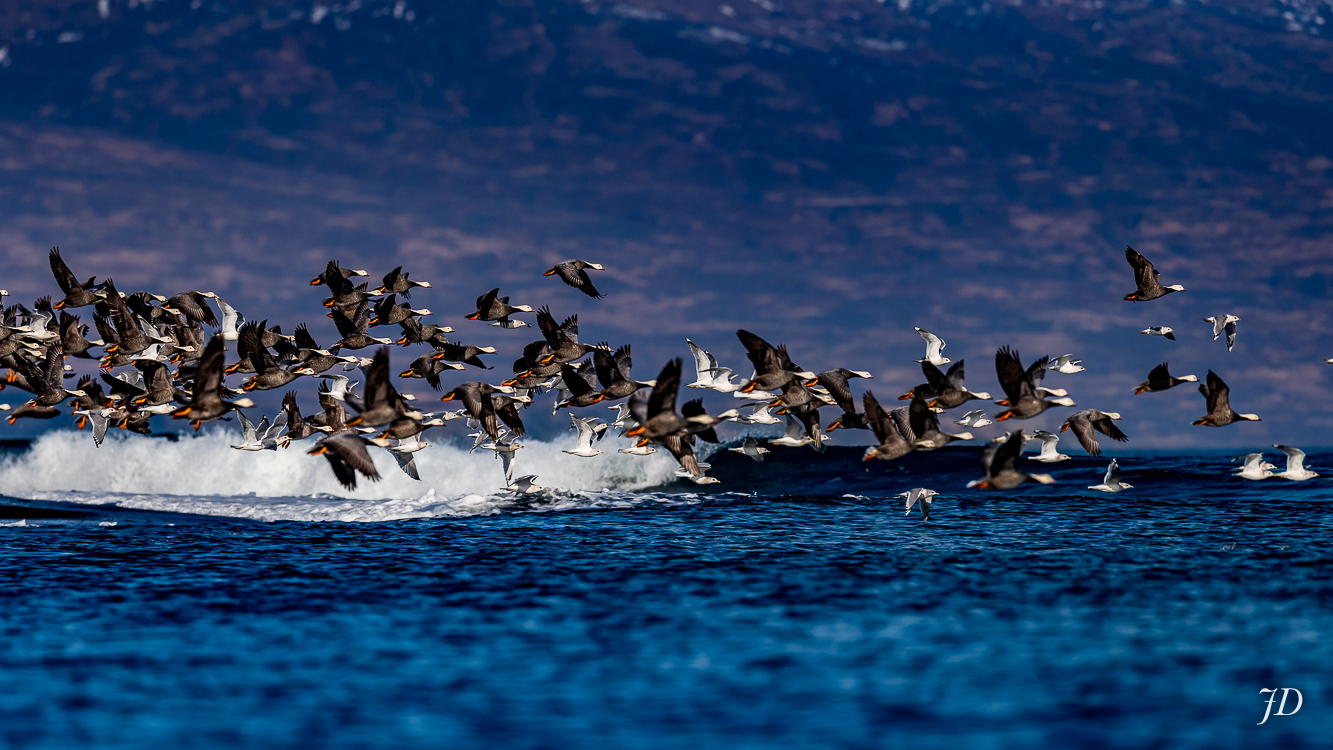
Painted Geese over Breaking Surf

Painted Geese over Breaking Surf
Emperor Geese, Chignik Lagoon, March 9, 2019

With the bright white head and nape reminiscent of the ermine capes European Royals of yore garbed themselves in, Emperor Geese (Anser canagicus) present a striking visage. But to catch a glimpse of these smallish, colorful, somewhat rare birds you have to go to coastal Western Alaska or Eastern Russia. A few dozen sometimes stop over at the sand spit at the mouth of Chignik Lagoon on the Alaska Peninsula. That’s where we found this flock, a few Glaucous-winged Gulls mixed in.

JD

Spring Rain

Spring Rain
Chignik Lake, Alaska Peninsula, May 7, 2019

Happy Friday everyone. Barbra and I hope you have an enjoyable Memorial Day Weekend. And take a moment to remember with gratitude…

JD

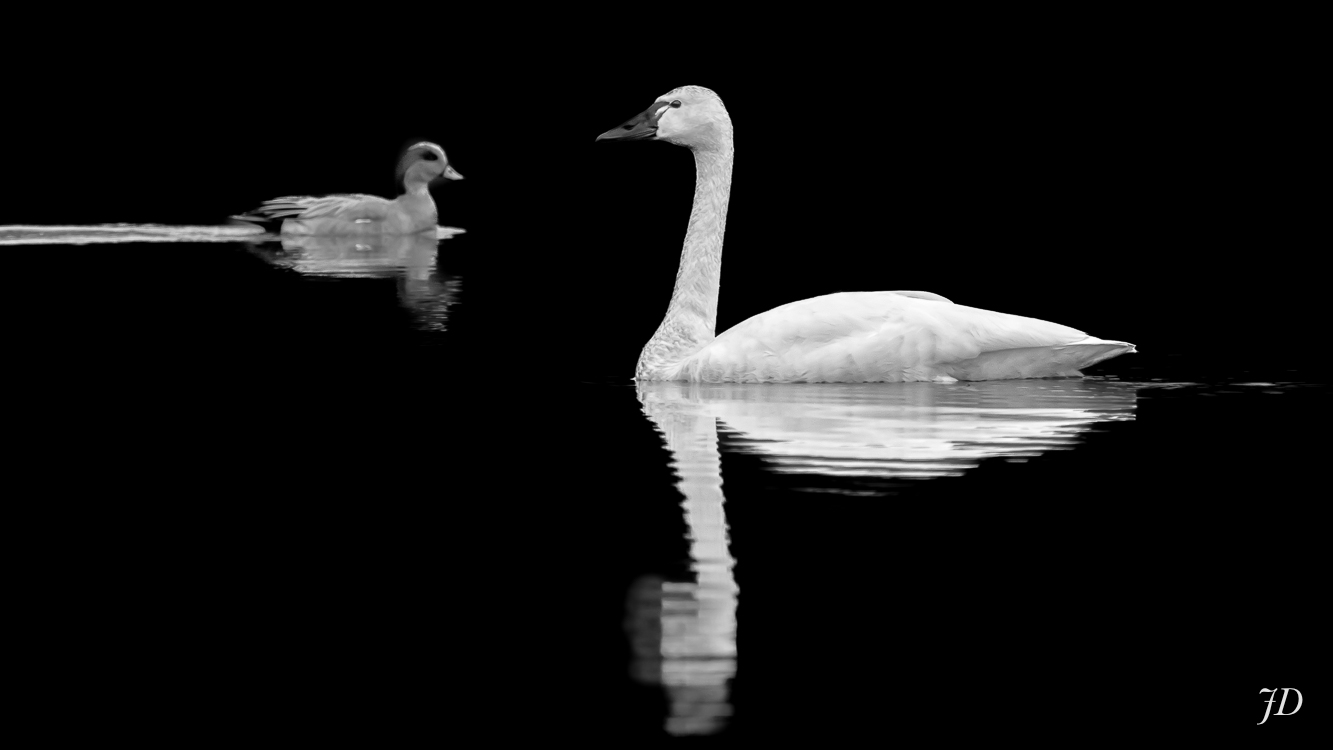
Tundra Swan with American Wigeon at Broad Pool

Tundra Swan with American Wigeon at Broad Pool
Broad Pool on Chignik River, Alaska Peninsula, May 4, 2019

The best place to look for returning Tundra Swans (Cygnus columbians) on the Chignik is at Broad Pool, about a mile downriver from the village. One evening the swans announce their arrival with far off, lonesome-sounding notes and by morning they’ve settled at the pool. There the slow-moving, weedy water provides food for the swans as well as for migrating dabbling ducks such as Mallards, Green-winged Teal, Northern Pintails and American Wigeons. Diving ducks, mostly Common Goldeneyes, Buffleheads, Greater Scaup and both Common and Red-breasted Mergansers are also likely to be present. At this time, the banks are covered in scraggly, winter-brown grasses, sedges, willows and alders and there may still by ice along the river’s edge. By the end of the month the ice is gone and the swans and most of the ducks will have dispersed to nesting areas further up the drainage, but at least one pair of Mallards and another of wigeons usually stay to nest along along the margins of Broad Pool. They are often joined there by a brood or two of Black Scoters.

Elegant Redpoll

Elegant Redpoll (Acanthis flammea)
Chignik Lake, Alaska Peninsula, April 25, 2019

Although peninsula checklists list redpolls as uncommon or rare, during our years at Chignik Lake they proved to be common, at times hanging around the village in flocks of dozens. The above bird is a male in brilliant breeding plumage. Although I photographed him in spruce trees and the original forest green background is pleasing, I like the way the black makes the red pop and brings out his eye.

Spring Portrait of Love

Mated pairs of Sandhill Cranes begin appearing on the Alaska Peninsula in late April, their loud calls trumpeting the arrival of spring. They depart in late summer or early fall. If they’ve been successful, a nearly full-grown offspring accompanies them on their journey back south. Note the heart-shaped red crown – a distinction that along with the fidelity mated adults show each other makes cranes a symbol of love in many cultures. Chignik Lake, May 4, 2019

The Redpoll X

The Redpoll X
Xanthochromic Redpoll, Chignik Lake on the Alaska Peninsula, April 25, 2019
Xanthochromism refers to yellowish pigmentation occuring where it is otherwise unexpected.

The bird in the above photo is a female Common Redpoll, Acanthis flammea. The eponymous poll – the colorful head cap – is typically bright red. Here the cap is yellow. This is a rare mutation which has been reported in other finches (Northern Cardinals, House Finches and others) as well as a variety of other animals. Whether the same individual or perhaps additional birds, we encountered xanthochromic redpolls in multiple years at The Lake.