
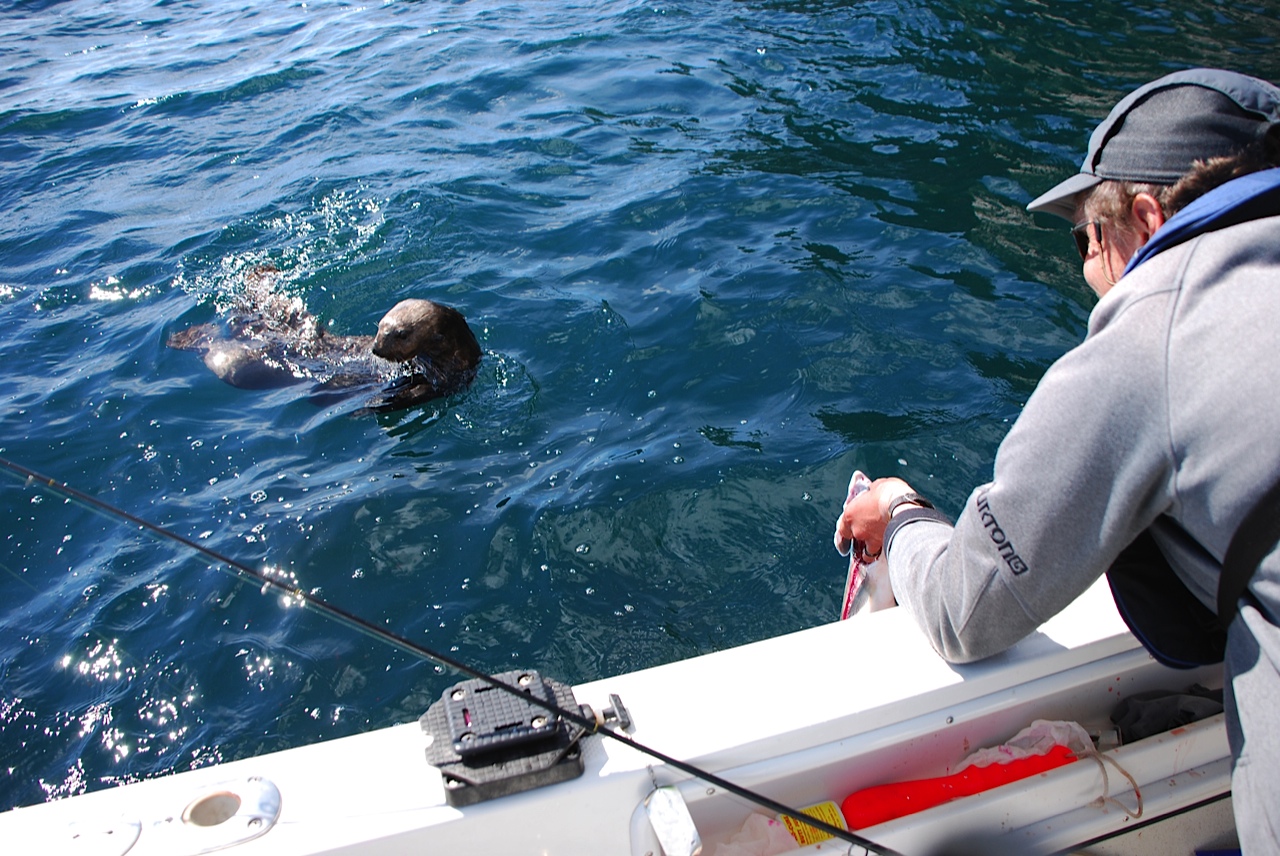
This curious fellow swam right up to our C-Dory, Gillie, to watch me rinse off a salmon Barbra had just caught.
Alaska. Every trip out on the water is a reminder that you could live here several lifetimes and never see it all. While sea otters are fairly common along the southern and central Alaskan coastline, we’ve never have one swim up to the boat. (Although, there were a trio that used to follow us as we walked the docks in Cordova.) This guy seemed genuinely curious – and maybe hopeful of a handout – as I rinsed off a Coho before putting it in the fish box on a recent excursion to Rugged Island in Resurrection Bay, near Seward. Meanwhile, floating on her back with a pup on her stomach, a mother otter watched us a little more guardedly and from a distance.
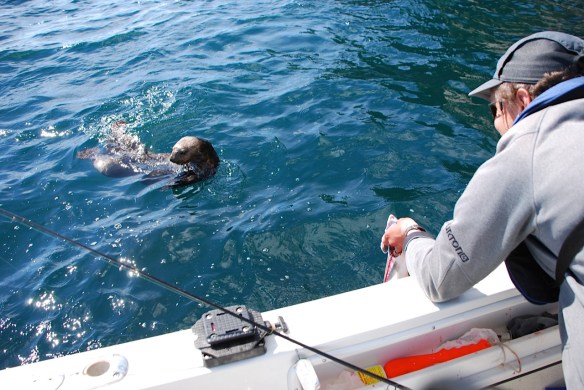
Fishing partner Bixler McClure got this shot of the otter coming over to investigate the boat.
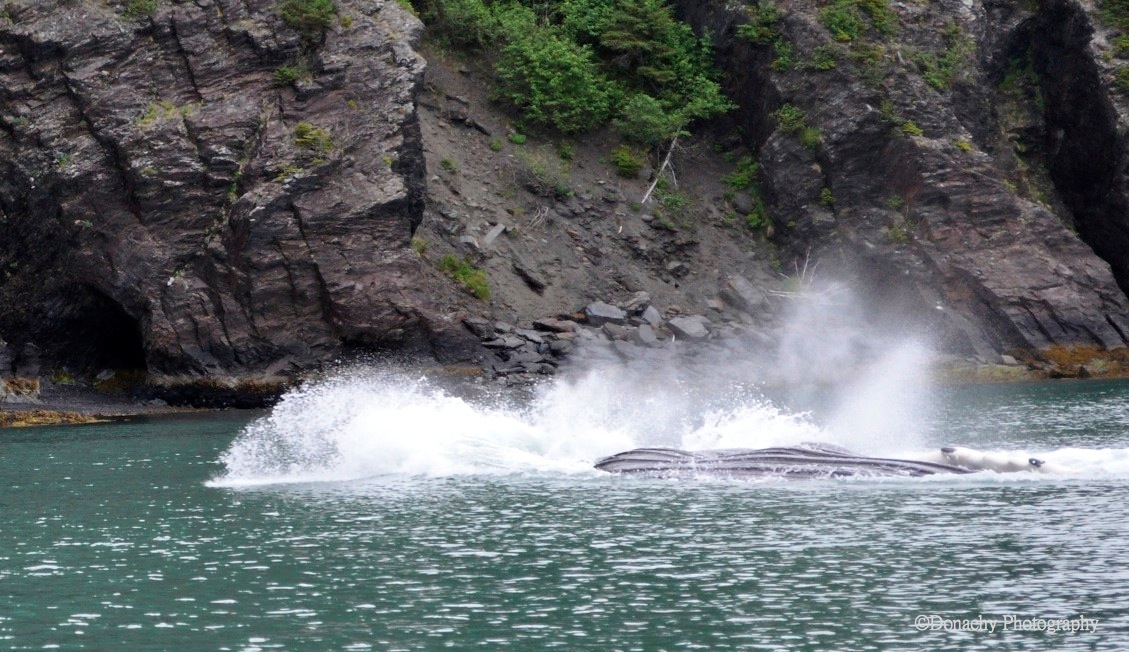
On any given sailing or boating trip out on the bay, you’re likely to encounter harbor porpoises, Dall porpoises, Orcas, whales, eagles, thousands of sea birds, leaping salmon, seals, sea lions and every once in a while you might spot the fin of a seven-foot salmon shark (they look very much like small great white sharks) cutting through the water. Bears come down to the beaches, and on rare occasions a wolverine might be glimpsed.
And, of course, there are the fish. Resurrection Bay lies between green-shouldered, snow-capped mountains – a dramatic backdrop. It extends over 10 miles before meeting the Alaska Gulf, and on many days the waters are nearly glass smooth, rippled only by a gentle breeze. On days such as these, the fishing is truly pleasant.
When the silvers (Coho salmon) show up – usually the run is in full swing by mid-July – the fishing is excellent, with six-salmon limits the norm. Skilled (or lucky) anglers often mix in a king or two, and after you’ve got salmon in the fish box you can switch tactics and target rockfish and halibut. There are bigger rockfish and halibut out in the Gulf – and more of them -, but if you stay with it you can find fish in the bay and you don’t have to deal with a long run.
The custom here is to take the fish out of your fish box and load them into a dock cart so you can wheel them up to one of the fish cleaning stations. Once we’ve filleted our fish, we take them to J-Dock to be vacuum packed and flash frozen. Fish cared for this way taste great even a year or more later.
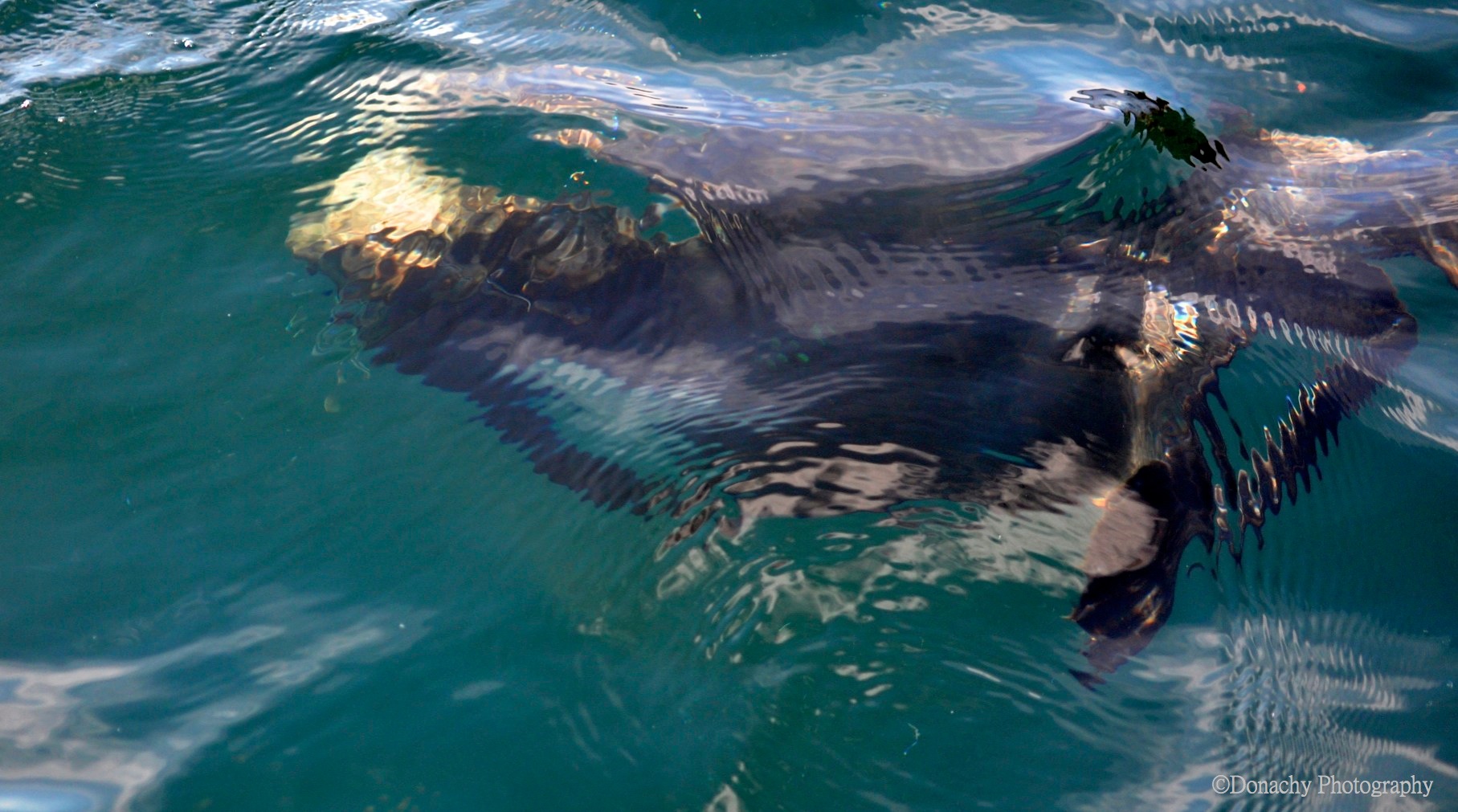
Below: Barbra got this watery photo of the otter swimming around Gillie.
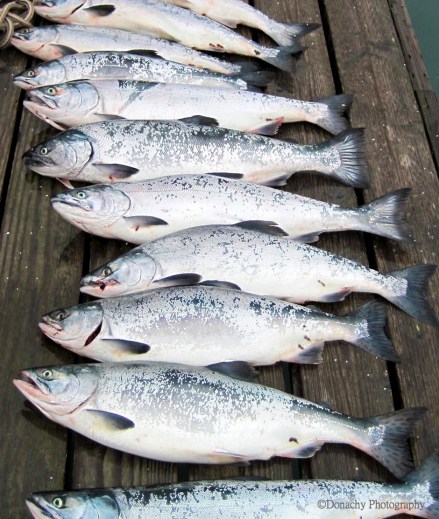
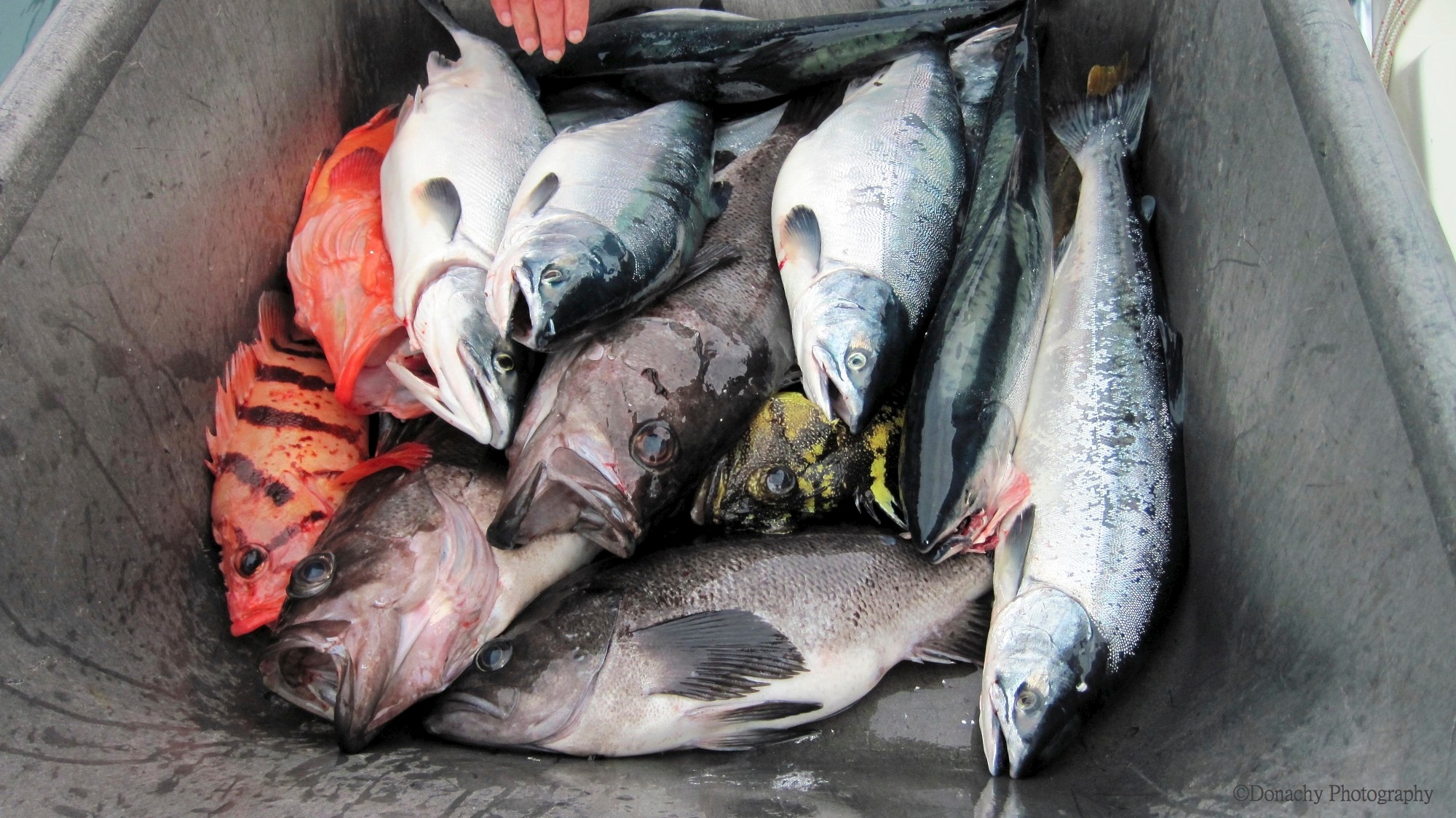
Below: Three limits of salmon and a couple of rockfish, laid out, rinsed off and ready to take up to the cleaning station. This winter in Point Hope, every meal these fish provide will be a memory of our summer in Seward. These are the good old days.
 It has been an excellent summer for wildlife viewing in Resurrection Bay and surrounding waters. Twice, recently, we have found our C-Dory in the midst of feeding and playing Orcas.
 It’s still great to be out. An occasional silver salmon breaks the monotony of otherwise fishless hours as we scan the water for whales, Orcas, dolphins and other wildlife. The other day, between patches of dense fog we suddenly found ourselves surrounded by about two dozen Orcas! Maybe they had found the salmon that were eluding us.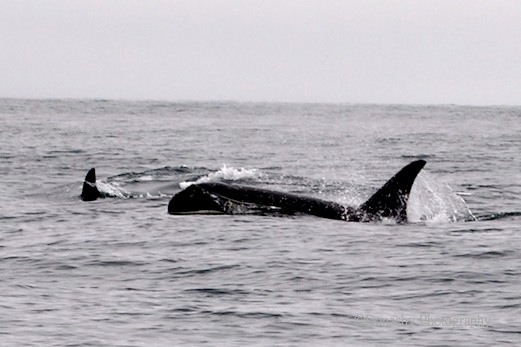








 CutterLight