Epic Storm Hits Point Hope, Alaska

Looking out a high school window, we watched our sturdy home strain against hurricane force winds.

Monday, November 7, 2011. We watched the NOAA reports as a violent storm was pounding the Aleutian chain on its way northeast up the Bering Strait. On Tuesday morning, we headed to school as usual. The storm was supposed to hit our village hard at 9 p.m. All in the village were abuzz with the coming storm. A double warning had been issued – hurricane force winds and storm surges. The last storm of this magnitude to hit Point Hope was in 1974. I’m not sure how much of the town had moved to the new site (our current site) by then, but we heard stories that the underground storage areas had been flooded and some of the surge waters had made their way into the village.

The students were asking all sorts of questions: Will it flood? What would a 15-foot wave look like? Have you ever been in a hurricane? We tackled all the questions and found a video to watch about weather as the wind picked up outside and near whiteout conditions obscured the post office from view just across the street from the school.

In the late morning, the decision was made that the students should be sent home. The school bus (yes, this small village has a school bus!) delivered the students safely home and our staff prepared to turn the school into an emergency shelter.

Later, Jack and I tucked in at home. In anticipation of losing power, we charged our phone and laptop, set out flashlights, candles and matches, and filled our water bottles.  By late afternoon, the wind had been whipping through the town. Since there are no trees, it was difficult to visually assess the wind speed. The internet said 23 mph, then 39 mph, then 53 mph, gusts were being reported to 90 mph. Our house began shaking as the gusts grew heavier, and framed pictures on the walls were moving. The heavy wooden doors on an outside cabinet that houses our propane tank began creaking on their hinges and banging open and shut. We could hear the wind roaring through the village.

Through the worsening conditions, our sturdy little house generated confidence. No matter how it shook and shuddered, we were sure it would hold together.

At 5:00 AM, we awoke to fierce winds and no power.

The school had officially become the village’s emergency shelter. Families streamed in with blankets and cots for the elders and sleeping bags and air mattresses for the young. Our school is fairly large. One wing houses the elementary, one wing houses the high school with the middle school,  a small gym (which also operates as a cafeteria) and a large gym in the center. There was ample room to house the 500 people who ended up in the school. Our terrific cafeteria staff worked diligently to feed all the guests breakfast, lunch and dinner. Some rooms became quiet rooms for elders. Other rooms held whole families including nursing mothers and pets.

It was reported that a transformer had been knocked out, utility poles had been snapped, and wires were hanging loose. The high winds precluded linemen from flying out to our village. No one panicked. I think people knew the storm would pass, the winds would calm, the ocean waters would recede and power would be restored.

This morning, when the winds had quieted, Jack and I walked to the coast. The ocean waters were still roiling and the waves were still crashing against the shore. But it was only in the way a tantrumming child beats his fists to the ground when he is nearly out of steam. A seven foot bank of snow was packed up against the berm. The waves hammered away at the bank, evidenced by floating chunks of snow in the waves.

With the winds nearly blown out, planes were finally able to land, delivering the linemen. With steady work from one end of the town to the other, power was restored in it’s own wave from east to west. By about 4:30 p.m. most of the village of Point Hope was lit and houses were warming–and luckily so at that because had the outage lasted longer, there surely would have been frozen and burst water pipes in the freezing cold. The epic storm of 2011 is officially over.
An Anniversary Gift

Today’s the day we are celebrating our anniversary. Jack made us an amazing breakfast of savory grits topped with buttered pecans, sour cream and maple syrup. He’s planning a feast for us tonight – I saw filet mignon, scallops, halibut cheeks, and shrimp defrosting on the counter. Mmmmm…

Hundreds of miles from everywhere, our gifts to each other are in kindnesses. It’s not that we are not kind on other days. Today is about extra kindness and extra effort. I really appreciate Jack. He is an amazing person. He is kind and generous and funny, of course. But what I appreciate most about him is how he always tries to leave a place better than he found it. The word “place” is literal and figurative. If we rent a cabin, it will be a little cleaner than we found it. If it is a relationship, it’s always better after Jack has been involved.

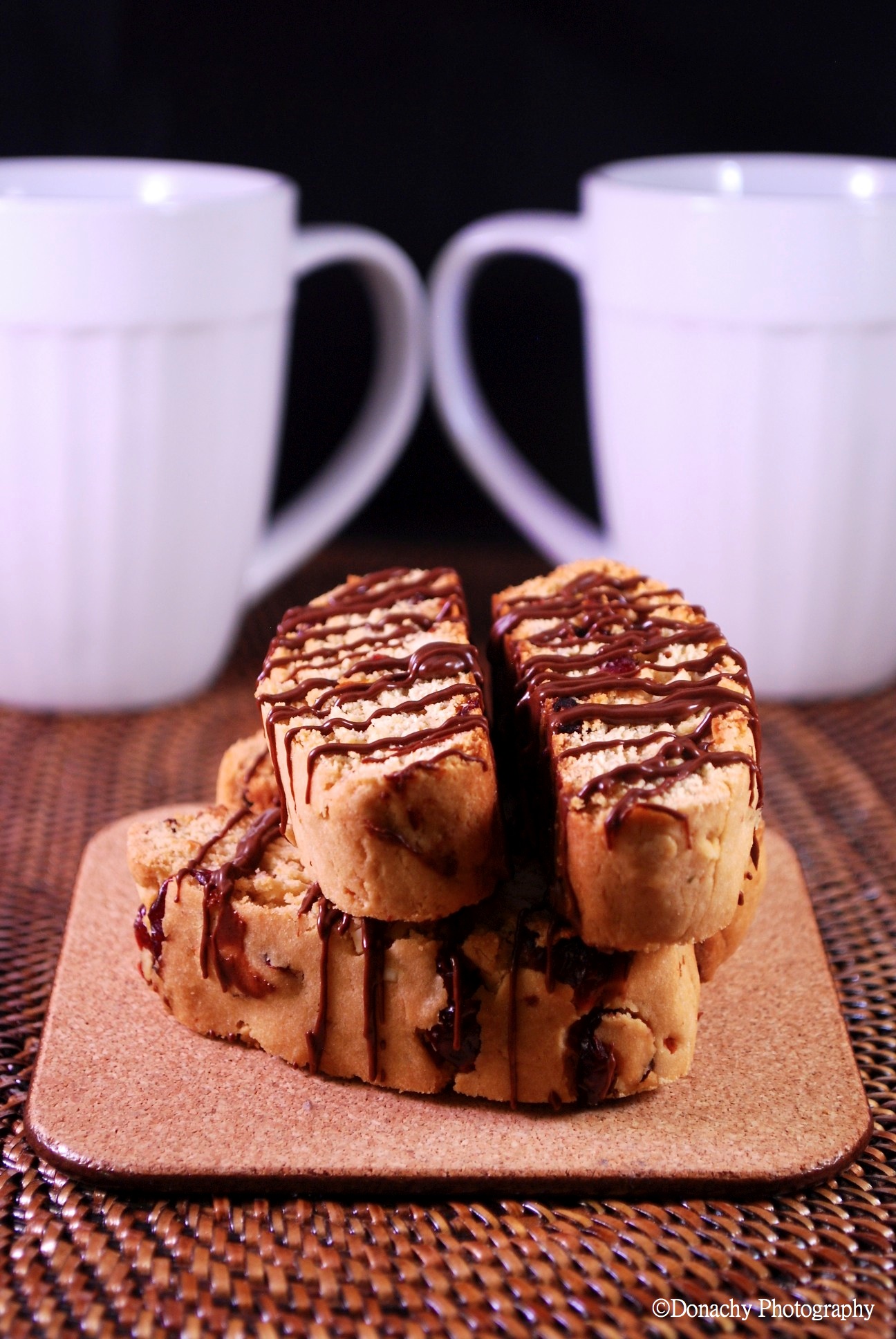
My gift to him is biscotti. I thought of biscotti today because it takes extra time and effort. I wanted a complex blend of flavors and thought of cranberry, orange and almond. A carefully zested orange was juiced. The zest was cut into tiny pieces. The almonds were toasted in a pan with butter.

Biscotti is labor intensive. It has to be baked in a loaf. Then cooled. Then baked again after it is cut into slices. Then baked once more to crisp the opposite side. My last touch is to drizzle it with a hint of white chocolate – just for looks. Every time the biscotti is baked or turned or drizzled, I think of the kindness I am doing for my best friend. Happy Anniversary, Jack!

Cranberry Orange Almond Biscotti

Ingredients:

2 1/2 cups all purpose flour

1 tsp. baking powder

1/2 tsp. salt

1/2 cup light brown sugar

1/2 cup white sugar

1 stick unsalted butter

2 eggs

1 tsp. almond syrup

1 tbsp. orange zest

juice of a small orange

1 cup dried cranberries

3/4 cup chopped almonds

optional white chocolate drizzle

Process:

Preheat oven to 350F. Line a baking sheet with parchment paper.

Combine flour, baking powder and salt in a medium bowl. Stir. Mix together sugar, butter, eggs and almond syrup until well blended in another bowl. Stir in orange zest and orange juice. Mix in flour mixture. Then mix in almonds and cranberries. Divide dough in half. With floured hands, shape dough into two long logs on the parchment papered baking sheet. They should be about 2 1/2 inches wide, 9 1/2 inches long and 1 inch tall.

Bake until golden brown, about 35 minutes. Cool until you can easily handle. Transfer to cutting board and cut logs into 1/2 inch wide slices. Discard parchment. Move slices back onto baking sheet, sliced side down. Bake for 10 minutes. Flip biscotti and bake for an additional 5 minutes. Biscotti should just start to color. Cool completely on cooling rack.

After biscotti is cool, drizzle with chocolate or dip for a finished look.

Buon Appetito!

Stuffed Cookies or What Do I Do With My Leftover Halloween Candy?

What to do with leftover Halloween candy? We could eat it. We could bring it to work and subject our co-workers to it. Both choices are possible, but not very original.

After searching around for recipes, I came across a blog where the author stuffed cookies with candy pieces. Hmmm… She provided no recipe, so I was on my own. One of the most classic and tested cookies is Nestle’s Tollhouse cookie recipe on the back of the morsel bag. As a matter of fact, I was just talking to a friend who told me her mother was putting together a family recipe book and was going to include the Nestle recipe because it was just the best. So I followed the Tollhouse recipe sans chocolate chips. I flattened one scoop of dough on a cookie sheet, inverted a miniature Reese’s Peanut Butter Cup, flattened another scoop on top and baked as directed.

These cookies came out fabulous! And now I’ve got a more original way of sharing left-over Halloween candy.

Alaska Cuisine–Moose Meat Lasagna!

As we were leaving a friend’s house the other night after dinner and a game of Scrabble, she opened the freezer near the front door of her house (up here lots of people keep a freezer in their “kunnituck”–the front mud room). “Here! Have some moose meat!” She put a two-pound roast and a package of ground moose in my hands. We’ll save the roast for daughter Maia’s visit in December. But the ground moose… I knew right away what I wanted to do with that.

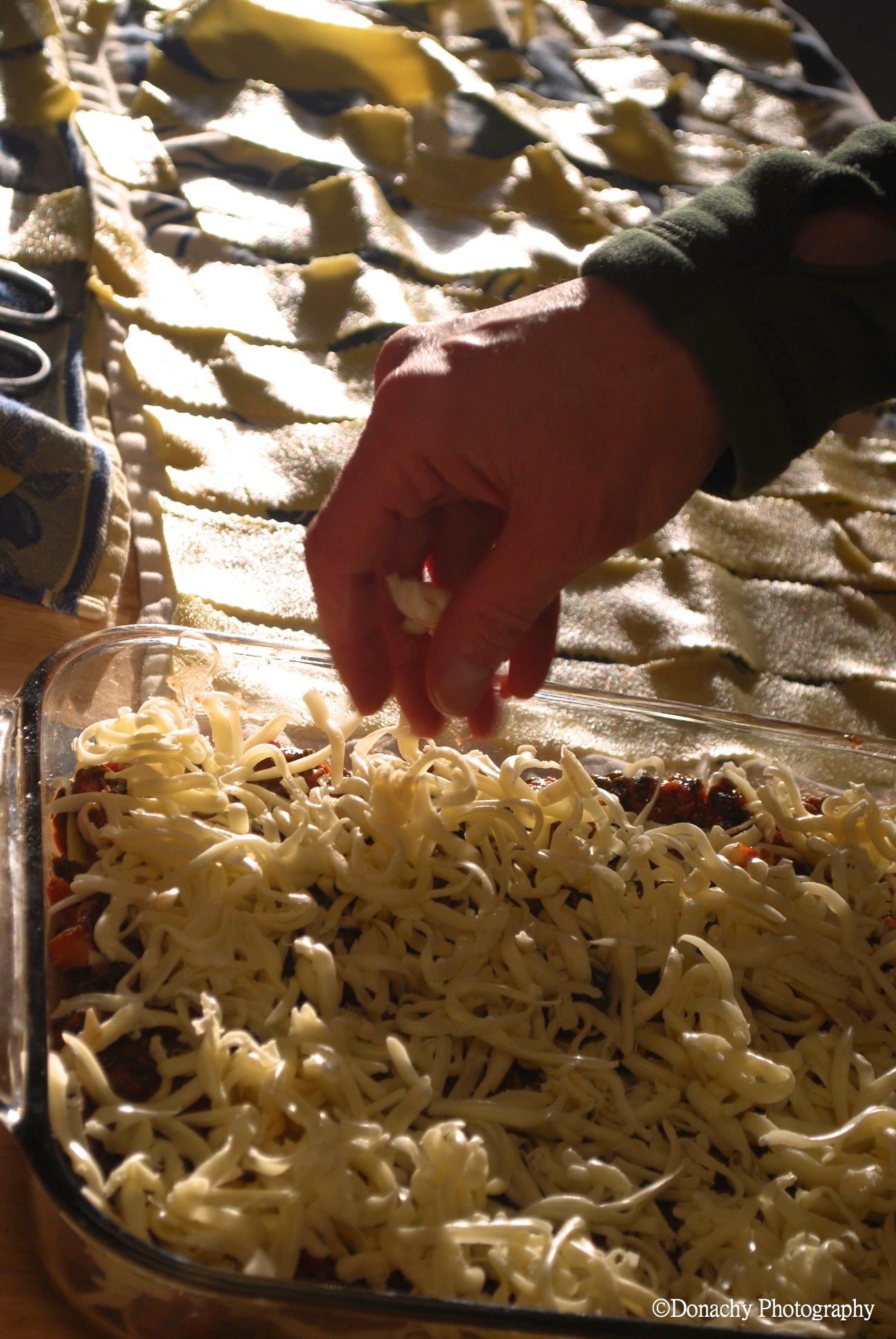
There’s some debate about whether or not lasagna is lasagna unless there’s ricotta cheese in it. Bush Alaska ain’t for purists. With plenty of mozzarella and parmesan on hand, we set about making our own version of Bush Lasagna. Tomato paste, diced tomatoes, garlic, onions, spinach (frozen), Italian herbs, ground pepper and olive oil laid down in layers amidst freshly made pasta and finished with a final layer of mozzarella, sprinkled with parmesan and topped off with Kalamata olives. Two big pans–one for now, one for the freezer.

Pine Nut Encrusted Halibut

A fillet of Resurrection Bay, Alaska halibut in a homemade mayonnaise and sour cream mixture, encrusted with chopped pine nuts and almonds and served on a bed of mixed brown and wild rice. Broccoli is one of the few vegetables we can consistently obtain in good shape in the bush.

I was recently looking around online for the next great place to call home. A top priority for both of us is a place where we can harvest our own fish. With that in mind, as I looked at coastal waters and lakes in other states, it was with a keen eye not only toward some of our preferred fish species (walleye, crappie, perch, striped bass, salmon), but also with an eye toward each state’s fish consumption advisories.

What a shock. In locale after locale, the advice from state departments of natural resources is to limit one’s consumption of local fish. Mercury and PCBs are the chief culprits, but in some places there are other chemicals in the stew. Even DDT remains a problem in some areas. The prospect of living in a place where warnings are to limit one’s consumption of fish to one meal a week–or a couple meals a month–is depressing. (We really hope they keep the Pebble Mine out of Alaska!)

Glad to live in a part of the world where the near-shore fish are still healthful enough to enjoy as often as one cares to. We generally have meals featuring salmon, rockfish or halibut two or three times a week.

There’s nothing to the above halibut dish. In a glass bowl I mixed together equal parts homemade mayonnaise and sour cream. I wanted to add a dash or two of cayenne pepper for a pleasant kick, but having none used a prepared Thai seasoning mix instead along with a couple of grinds of black pepper and a healthy squeeze of lemon juice. I spread this mixture on a halibut fillet, then covered the sauce with chopped pine nuts and almonds, and baked for 15 minutes at 375 degrees in a small, preheated casserole dish in which I had melted butter. Make sure to check while it’s baking to avoid scorching the nuts. Cover with a lid or aluminum foil if the nuts are becoming overly done.

By the way, if you’ve never made mayonnaise, it’s easy–and kind of magical. There are no shortage of instructional videos on the Internet.

Sod and Whalebone Home, Tikigaq

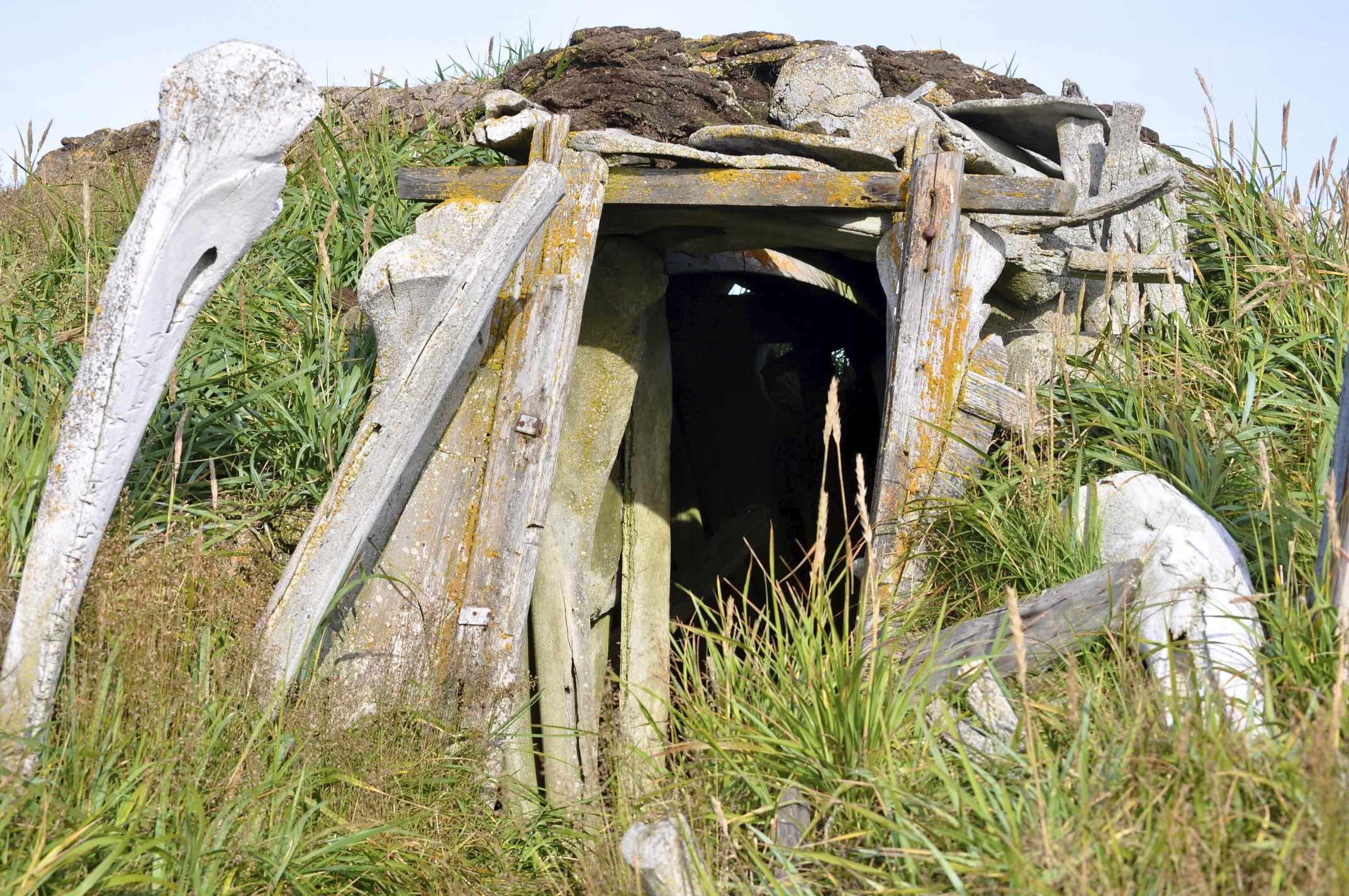
This semi-subteranian sod, driftwood and whalebone home was the last such structure to be inhabited in the old village of Tikigaq on Point Hope. It was abandoned in 1975, and by that time was hooked up to electricity. Prior to electricity, these homes were illuminated and heated with seal oil lamps and are reported to have been quite warm. Near the homes, people dug cellars which served as year-round deep freezers.

Caribou, seal, walrus and whale bones are scattered across the grassy tundra, and where people once lived now ground squirrels make their homes. Much of the land that was once inhabited has long since been washed away as generations of winter storms have eroded the peninsula. There have been times when polar bears have used structures in the old village as temporary winter dens. Snowy and short-eared owls, which hunt by day, along with marsh harriers keep the squirrels and voles in check.

Old Tikigaq–The Last Shaman


The last of the shamans of Point Hope, a man by the name of Masiin, lived in this house in the now-abandoned village of Tikigaq.

The history of shamans in Inupiat culture is a complex one. At the turn of the century, a man identified in texts as both a shaman and a chief, Atanjauraq, grew wealthy trading with the whale hunters of several nations who had settled near Point Hope in a polyglot village called Jabbertown. The ruins of this village are still discernible, albeit barely, as raised mounds a mile or so east of present day Point Hope. Atanjauraq’s increasing wealth was accompanied by a taste for alcohol. As he grasped for ever more power, he created enemies and ended up murdered by his own people while sleeping off a drunk.

Shaman Masiin, the last shaman of Tikigaq, died of natural causes in 1958. In his book The Things That Were Said of Them: Shaman Stories and Oral Histories of the Tikigaq People, Tom Lowenstein reports this story told by an individual named Asatchag.

“It was 1953, wintertime. My wife invited Masiin to supper. And after we had eaten, the old man told several stories. Then he called me by name and told us he’d been traveling last night. He’d been to Russia. And when he’d flown round for a while, he saw the Russian boss. ‘That’s a bad man,’ said Masiin, ‘so I killed him.’ Next day, at three o’clock–we had a battery radio–I listened at my coffee break. The news announcer said Stalin was dead.”

To add mystery to the above story, it is reported that Masiin did not listen to American radio, and knew no English.

Cooking in the Alaska Bush: Salmon Pesto Ravioli

Flash frozen just after being made, these ravioli are ready for a few brief minutes in boiling water.

Is it really worth making your own pasta?

That’s what we wanted to find out. So when we shipped staples up to our home in Point Hope this summer, we included a 25-pound bag of semolina flour and a CucinaPro manual pasta machine. And we eschewed buying the bags of dry pasta from Costco that have been standard in our kitchen for the past several years.

The verdict? It’s definitely worth it, provided one has the time–which, happily, we do. That being said, with each batch of linguini or ravioli we turn out, we are becoming more efficient. Two sets of hands make the work easier and faster, and the pasta itself is amazing! The flavor is superior to store-bought dried pasta, it cooks up in a fraction of the time, and the variations one can create are limitless.

Below is a salmon-based ravioli filling we recently created.

Salmon Pesto Ravioli

½ pound salmon, pan-fried in olive oil, skin on

1 tablespoon dried Italian seasoning. Morton & Bassett or Spice Hunter offer tasty mixes.

1 ½ tablespoon garlic, chopped fine

2 tablespoons finely chopped pine nuts

¼ cup mushrooms, chopped fairly fine

a few grinds of black pepper

¼ cup – 1/3 cup pesto

Olive oil

Sherry (optional–no sherry for us out in the bush)

1. Place cooked salmon in a glass bowl. (Remove skin and cut it into small pieces and add for maximum flavor.)

2. Combine chopped pine nuts, garlic and mushrooms in a small bowl and set aside.

3. Heat a little olive oil in a small frying pan. Add pine nut, garlic and mushroom mixture, and sauté until cooked through, stirring frequently–about 2 to 4 minutes. Add to salmon in bowl. Include the oil in the pan. (Add Sherry while cooking mixture, if desired.)

4. Add remaining ingredients to the bowl. Use a fork to mix thoroughly, breaking up the salmon. Add additional olive oil, if needed, so that mixture holds together. Cover and place in refrigerator for an hour or more.

5. Use mixture as ravioli filling.

6. Serve ravioli with a lightly seasoned marinara sauce or with an olive oil topping, such as onions and sun dried tomatoes sautéed in olive oil.

Finish with grated Parmesan cheese and perhaps a couple of grinds of black pepper. A Willamette Valley Pinot Noir would be the perfect complement. Another good choice would be Chardonnay.

Bush Alaska: Arctic Snow Fence


The first snow fell a few days ago. Brilliant sunshine melted it. Snow fell again yesterday. So far the sun is winning the battle. As the days are getting shorter, it is certain that the snow will win.

Our lagoon has iced over in large patches. There are short tracks on the ice where people have briefly ventured out but returned.

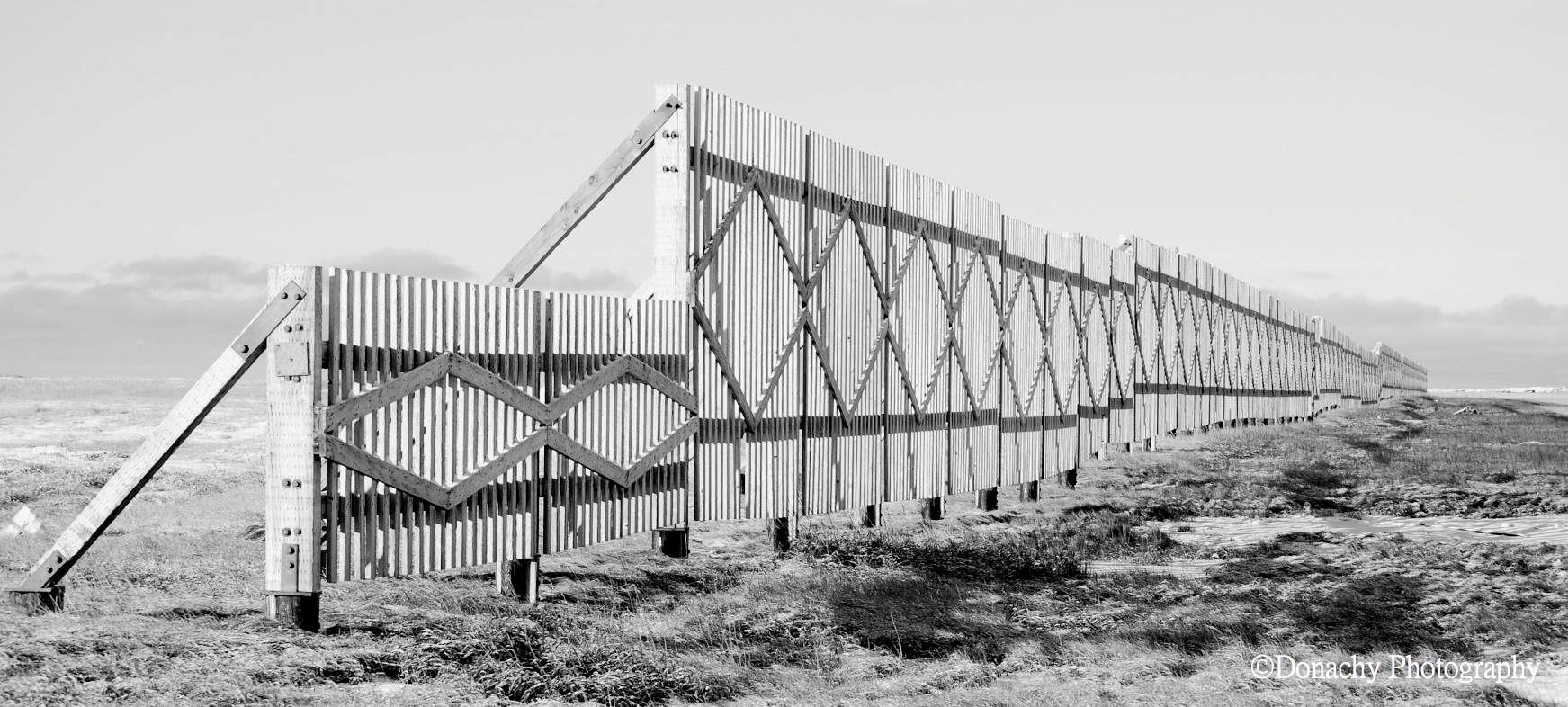
The snow fence stands ready for the winter. It looks strong and resilient having beaten back the drifts year after year.

The fence in Point Hope looks much sturdier compared to the fence in Shishmaref  (http://wp.me/p1305P-1T). This can only mean that we are ready for gale force winds.

Whalebone Graveyard Fence


Point Hope is a whaling community. The villagers primarily hunt bowhead whales. The jawbones of the bowheads are used to mark feasting areas and (above) the graveyard. The graveyard is completely surrounded by the jawbones, which average about seven feet tall. Some looked to be well over ten feet! It’s impressive to note that every two bones used in this unusual fence represents one whale.