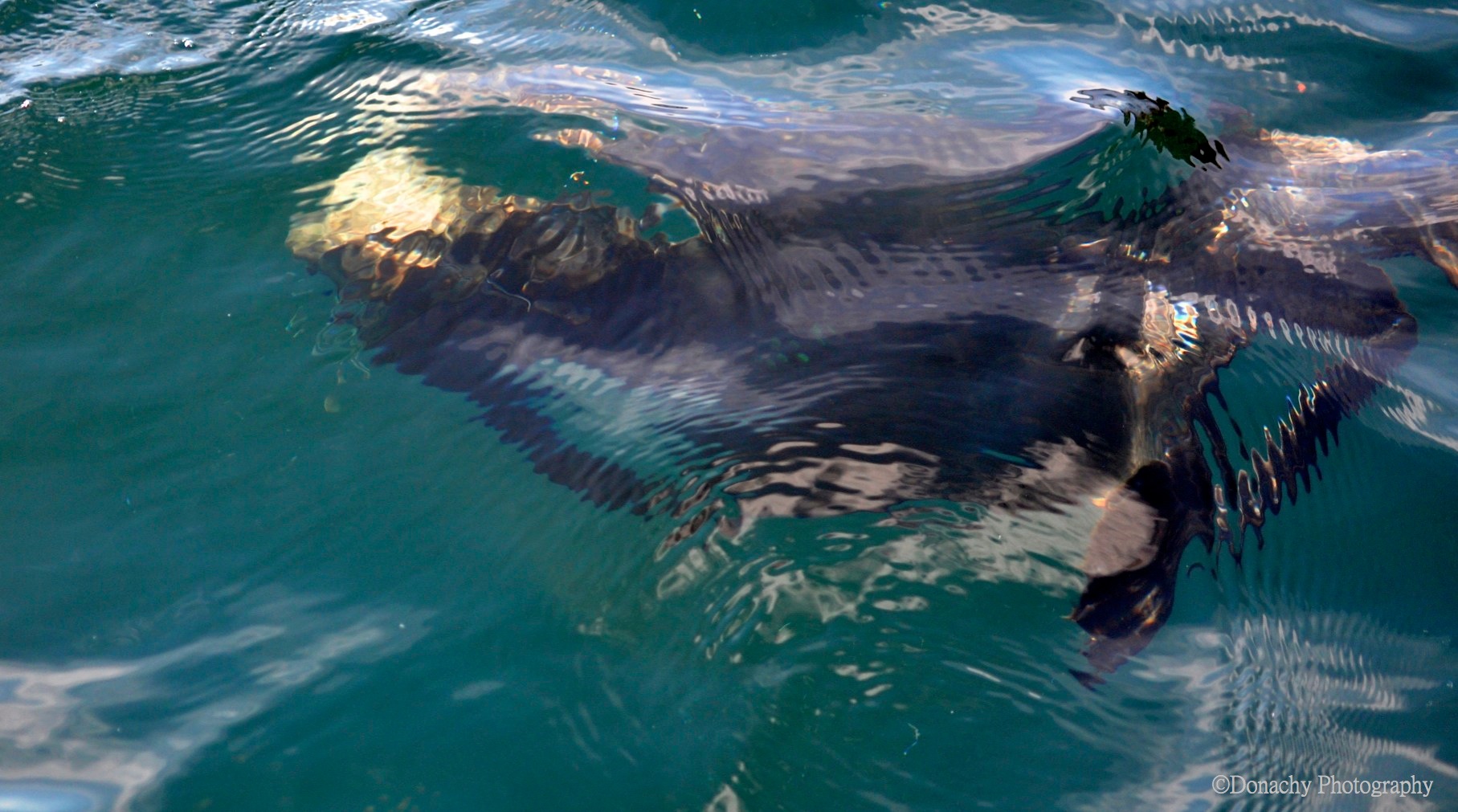
Eagle in Fog, Fishing

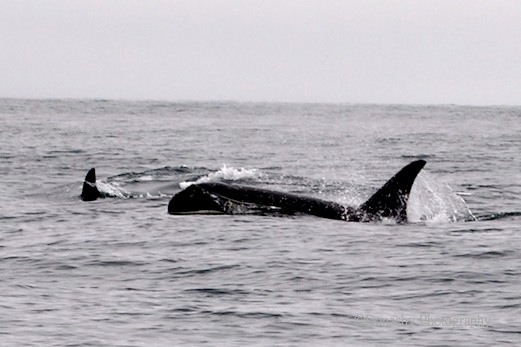
The fog was so dense we were apprehensive about even being out on the water. Besides, the fishing was slow. We’d just come through a large group of Orcas, (see Orcas Near Resurrection Bay )and, surmising that they were feeding on salmon, we figured the fish had to be there. But after an hour or so of drifting and not catching…

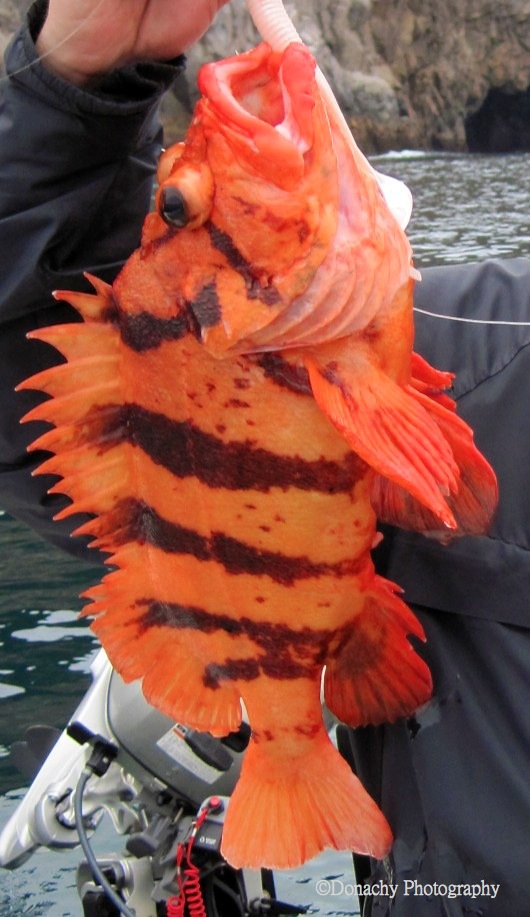
We decided to take a break from mooching for salmon and drop jigs to the bottom for rockfish. Barbra didn’t waste any time putting a fat five-pound black rockfish in the cooler, but that turned out to be the extent of our success. A brilliantly marked orange and black tiger rockfish hit my metal jig. The fish was small and we had been fishing shallow enough that I thought it would survive a release, so I let it go.

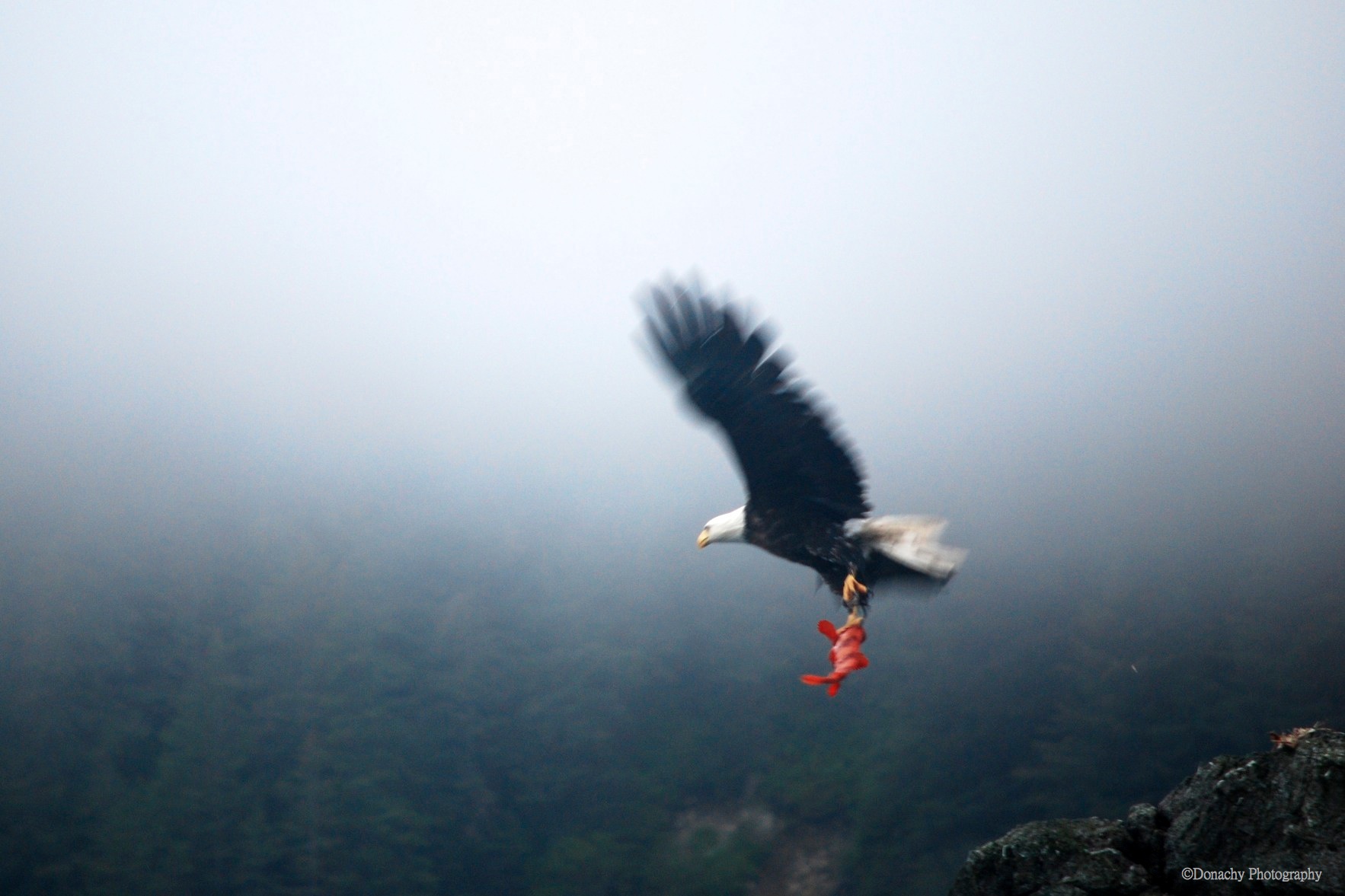
The tiger darted for the bottom, but a few moments later appeared on the surface several feet from our boat. That’s when an eagle that had been watching us lifted from its rocky perch and swooped in. You can tell from the photo above that he’s done this before; notice the tell-tale bones of another rockfish.

Orcas Near Resurrection Bay

It has been an excellent summer for wildlife viewing in Resurrection Bay and surrounding waters. Twice, recently, we have found our C-Dory in the midst of feeding and playing Orcas.

The fishing has been slow out of our homeport of Seward, Alaska lately. For days now, thick fog has blanketed the outer islands and waters beyond, and while boats making long runs are still coming back with fish, even some of the charter captains have been struggling. Nearer to Resurrection Bay, water that recently was teaming with salmon, rockfish and halibut seems to have become deserted, with only a few, scattered fish willing to bite.

It’s still great to be out. An occasional silver salmon breaks the monotony of otherwise fishless hours as we scan the water for whales, Orcas, dolphins and other wildlife. The other day, between patches of dense fog we suddenly found ourselves surrounded by about two dozen Orcas! Maybe they had found the salmon that were eluding us.

We slowed down and idled among these killer whales for awhile, and then motored off in search of fish.

The Gentleman Angler

Before we moved to Alaska, we’d never seen fog flowing down mountains. I’m sure it happens elsewhere… This was one of those days of sunshine and patchy fog. Fog encircling the horizon. Fog pouring like a river through mountain gaps on Resurrection Bay. 

I like foggy days. Fog means you can start late and not miss the bite. When it’s foggy, sometimes, big things happen late in the day.

By the time Barbra and I got our C-Dory fueled up and heading out into the bay, it was 10:30 A.M. Most of the fleet – both the charters and recreational boats – had long since left the docks. There was a time when I would have been with them – when I had to be on the water early. Dawn. Before dawn. Early early. Trout streams in Pennsylvania, striper rivers in South Carolina, sea bass beaches in Japan….

Most days, the early morning bite is the best.

Fog changes that.

Laid out on the dock are six silver salmon, eight rockfish, a couple of greenling, three small halibut, and a 35-pound lingcod. A couple of the salmon and the halibut didn’t make it into this photo. All of the fish were filleted, vacuum-packed and flash-frozen, ready to travel with us to Point Hope. I asked Barbra to name her favorite on the dinner table. “The variety,” she answered, without missing a beat. We didn’t get up early for these fish, and we didn’t run far.

We could get up earlier. We could run further. We could catch more fish and larger fish.

We know that.

At some point in my life, numbers and size stopped mattering so much. I still like to fish. But most of the time, most days, the fish that interest me the most are the ones that are still biting after I’ve had a good night’s sleep, breakfast, a leisurely mug of coffee (not in a to-go mug, but in my favorite mug at my breakfast table) and have read the news.

“We’re gentleman anglers,” my older friend and mentor Bill Kodrich explained to me. Forty years ago, we were in a cafe, me with a slice of blueberry pie, Bill with a slice of apple pie and a cup of coffee. It was about ten in the morning. We were headed for Spring Creek. I’d never been. I was eager to go. I thought we should have been there four hours ago.

“We don’t need to hurry,” Bill said with a characteristic smile. “There’ll still be trout in the stream when we get there.”

I get it now.

Rockfish Meunière on Whole Wheat Pasta

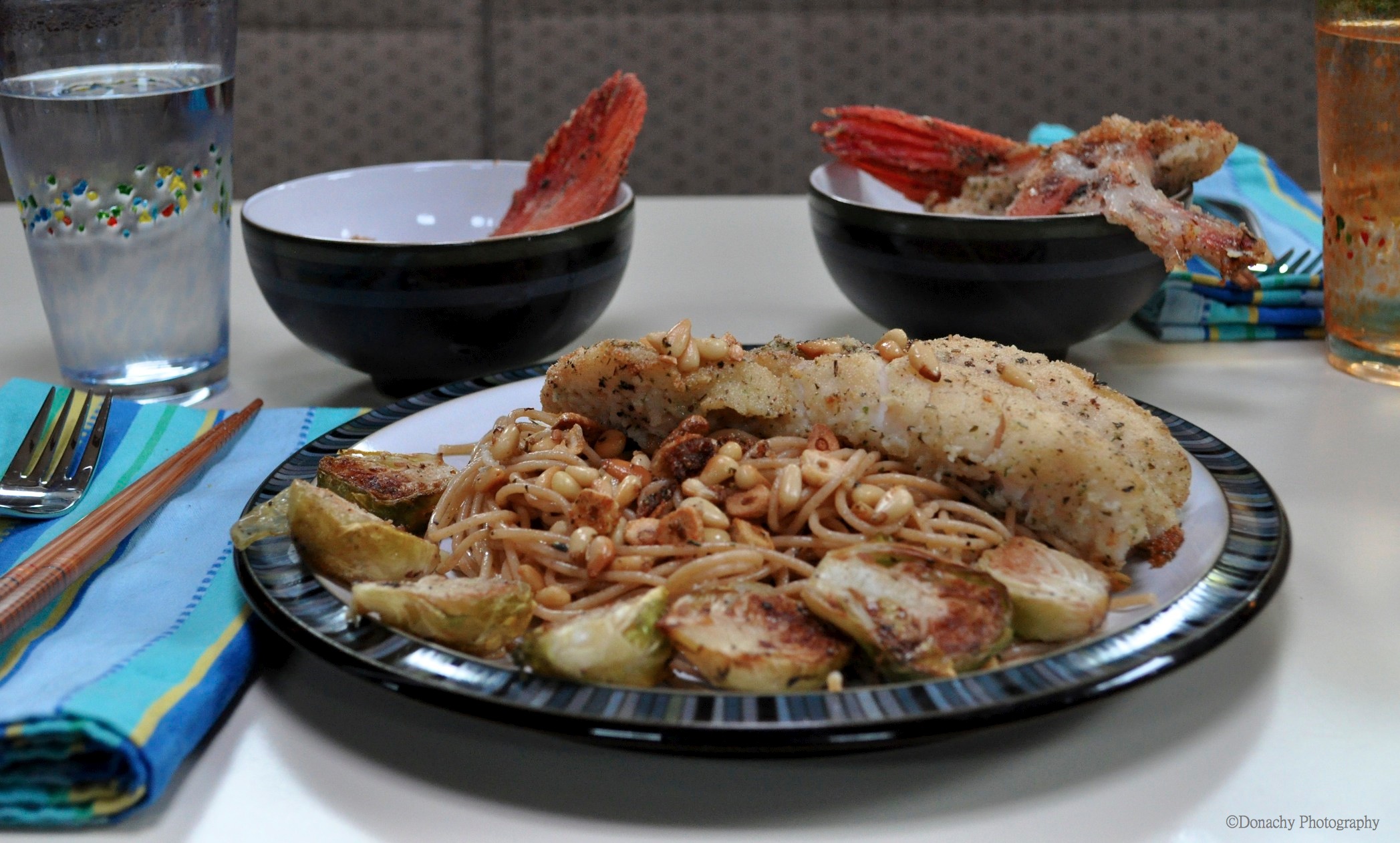
A fillet prepared à la meunière and served on pasta is one of our favorites when cooking with firm, delicately flavored white fish. We modify the traditional recipe, which means “miller’s wife” (descriptive of the flour this method employs) by using olive oil instead of butter and by skipping the lemon and butter finishing sauce.

Our three favorite methods for preparing fish, in no particular order, are as follows: sashimi – raw, thinly sliced fish dipped in a soy sauce and wasabi mixture; shioyaki – fish salted and then broiled or grilled; and à la meunière – dredged in seasoned flour and pan fried. These three preparation methods are the epitome of simplicity, emphasizing the freshness of the fish rather than sauces or seasonings, and can be accomplished in even the most bare-bones of kitchens. While they won’t adequately cover every species of fish (some species do well only when poached, and a few others shine best when deep fried), they are good methods to have in one’s repertoire.

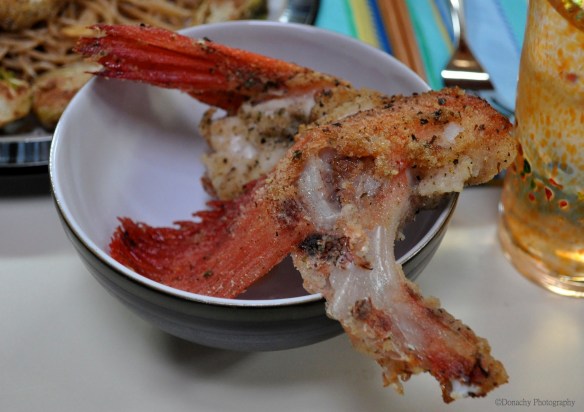
A collar – the meat just behind the fish’s head, including the pectoral and ventral fins – is a good candidate for meunière. Pictured is the collar from a two to three pound yelloweye rockfish.

Each cooking method works particularly well with certain species of fish. Chinook salmon, for example, is a superb fish for shioyaki and a much underutilized sashimi fish. Yellowtail and other tuna are excellent served as sashimi. When you think of meunière, think of fish that is white, firm but not dense, and mildly or even delicately flavored. Some of the best candidates are sole, flounder, greenling and Pacific rockfish in the genus Sebastes such as black rockfish, copper rockfish, yelloweye and so forth.

Rockfish à la Meunière on Pasta for Two

Ingredients:

  • two fish fillets 1/4 to 1/2 pounds each (110 to 230 grams), cleaned, skin removed, rinsed and patted dry with paper towels. Do not use a thick cut of fish for this. The fillets should be fairly thin – less than an inch thick (2.5 cm) as opposed to using part of a fillet from a large fish.
  • 1/3 cup semolina flour. (All-purpose or other flour is fine, but semolina will result in a very pleasant additional crunch and fuller texture to the finished fillet.)
  • 1/2 tablespoon herbs de Provence, plus 1 teaspoon herbs de Provence, separate
  • 1/8 teaspoon sea salt
  • 1/2 teaspoon freshly cracked pepper
  • 3 to 6 cloves of garlic, sliced thin
  • 2 tablespoons pine nuts (optional)
  • 1 tablespoon extra virgin olive oil
  • olive oil for frying
  • enough pasta for two servings
Directions:
  1. Cook pasta according to directions. Drain off water, return to pot and toss with about 1 tablespoon of extra virgin olive oil and 1 teaspoon herbs de Provence. Set aside. (Or do this simultaneously while cooking the fish.)
  2. In a plastic Ziplock bag, or in a mixing bowl or on a plate, mix together the flour, 1/2 tablespoons herbs de Provence, salt and freshly ground pepper.
  3. Thoroughly dredge the fillets in the flour mixture and set aside on a plate or cutting board. Left over flour can be used as a bed for the fillets.
  4. In a frying pan large enough to hold both fillets, add olive oil to about 1/8 inch depth. Heat over medium to medium-low until oil causes a pinch of flour to sizzle.
  5. Position fillets in pan making sure they do not touch. Cook uncovered over medium to medium-low heat for about 3 to 5 minutes.
  6. Carefully turn the fillets over. Add garlic slices and pine nuts and continue cooking for 3 to 5 minutes. The first few times you cook fish this way, you may have to break the fillets apart to check for doneness as it will vary depending on thickness, type of fish and cooking temperature.
  7. Place pasta on dinner plates. Remove fillets from pan and place on pasta. Use a slotted spoon to separate garlic and pine nuts from oil and sprinkle on fish and pasta.
  8. Serve hot with freshly grated Parmesan cheese.

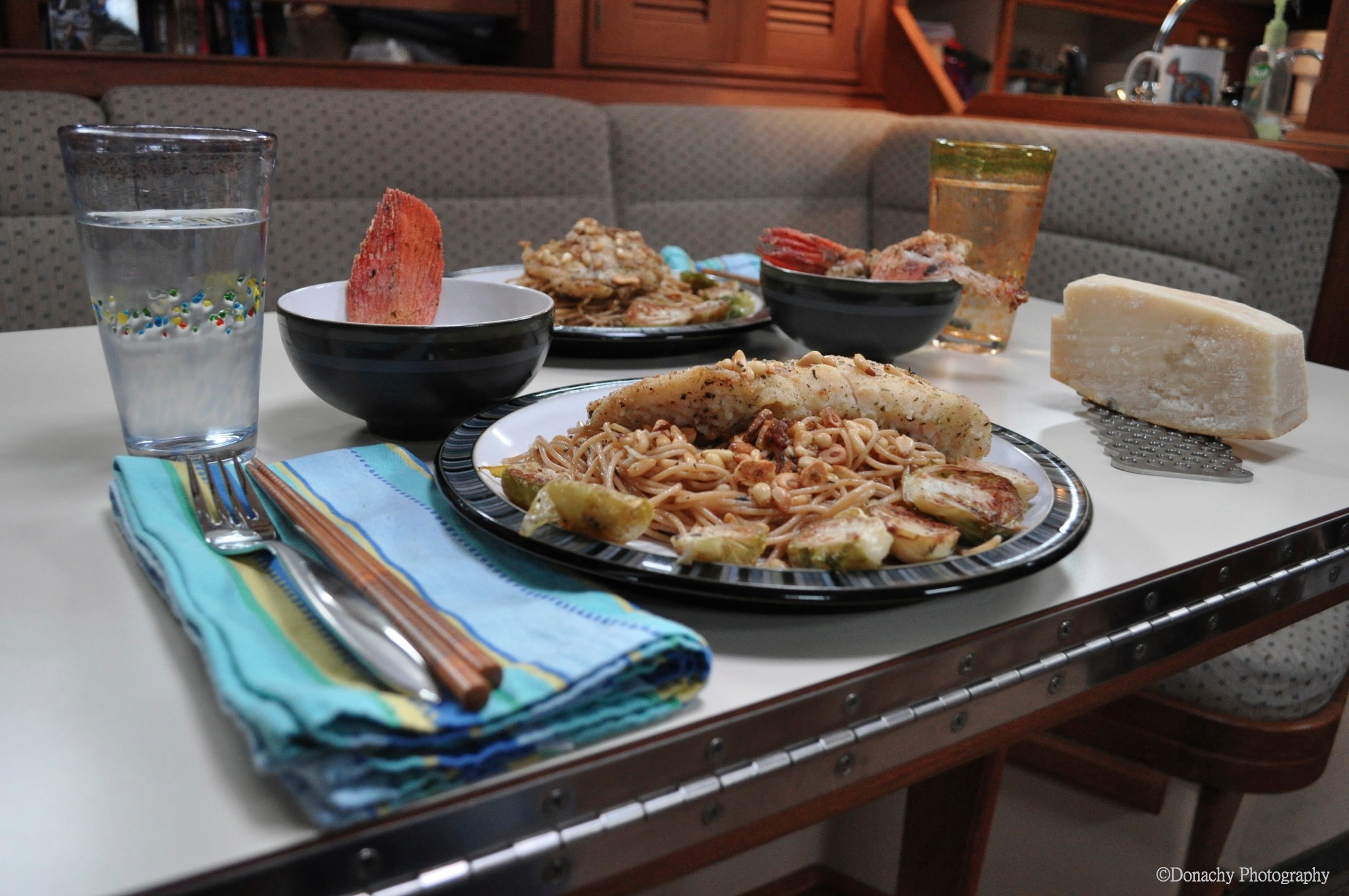
We served the pasta and fillet with a side of fish collars, also prepared à la meunière, and brussels sprouts sliced in half, seasoned with salt and pepper, and pan roasted. This is a simple yet elegant meal that can be prepared in a galley, on a camp stove, or in virtually any kitchen.

Silvers and Pinks (And Otters)!

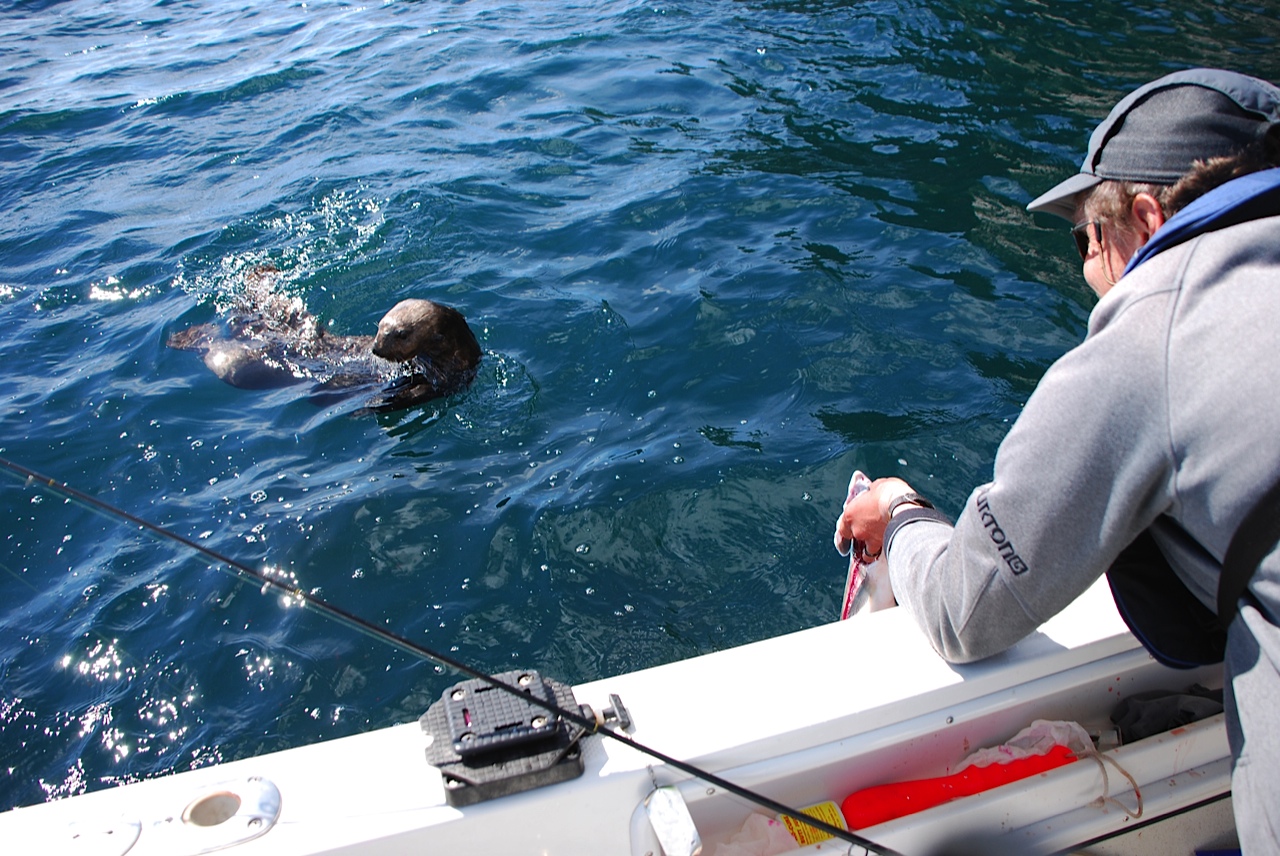
This curious fellow swam right up to our C-Dory, Gillie, to watch me rinse off a salmon Barbra had just caught.

Alaska. Every trip out on the water is a reminder that you could live here several lifetimes and never see it all. While sea otters are fairly common along the southern and central Alaskan coastline, we’ve never have one swim up to the boat. (Although, there were a trio that used to follow us as we walked the docks in Cordova.) This guy seemed genuinely curious – and maybe hopeful of a handout – as I rinsed off a Coho before putting it in the fish box on a recent excursion to Rugged Island in Resurrection Bay, near Seward. Meanwhile, floating on her back with a pup on her stomach, a mother otter watched us a little more guardedly and from a distance.

Fishing partner Bixler McClure got this shot of the otter coming over to investigate the boat. 

On any given sailing or boating trip out on the bay, you’re likely to encounter harbor porpoises, Dall porpoises, Orcas, whales, eagles, thousands of sea birds, leaping salmon, seals, sea lions and every once in a while you might spot the fin of a seven-foot salmon shark (they look very much like small great white sharks) cutting through the water. Bears come down to the beaches, and on rare occasions a wolverine might be glimpsed.

And, of course, there are the fish. Resurrection Bay lies between green-shouldered, snow-capped mountains – a dramatic backdrop. It extends over 10 miles before meeting the Alaska Gulf, and on many days the waters are nearly glass smooth, rippled only by a gentle breeze. On days such as these, the fishing is truly pleasant.
When the silvers (Coho salmon) show up – usually the run is in full swing by mid-July – the fishing is excellent, with six-salmon limits the norm. Skilled (or lucky) anglers often mix in a king or two, and after you’ve got salmon in the fish box you can switch tactics and target rockfish and halibut. There are bigger rockfish and halibut out in the Gulf – and more of them -, but if you stay with it you can find fish in the bay and you don’t have to deal with a long run.
The custom here is to take the fish out of your fish box and load them into a dock cart so you can wheel them up to one of the fish cleaning stations. Once we’ve filleted our fish, we take them to J-Dock to be vacuum packed and flash frozen. Fish cared for this way taste great even a year or more later.
 Below: Barbra got this watery photo of the otter swimming around Gillie.
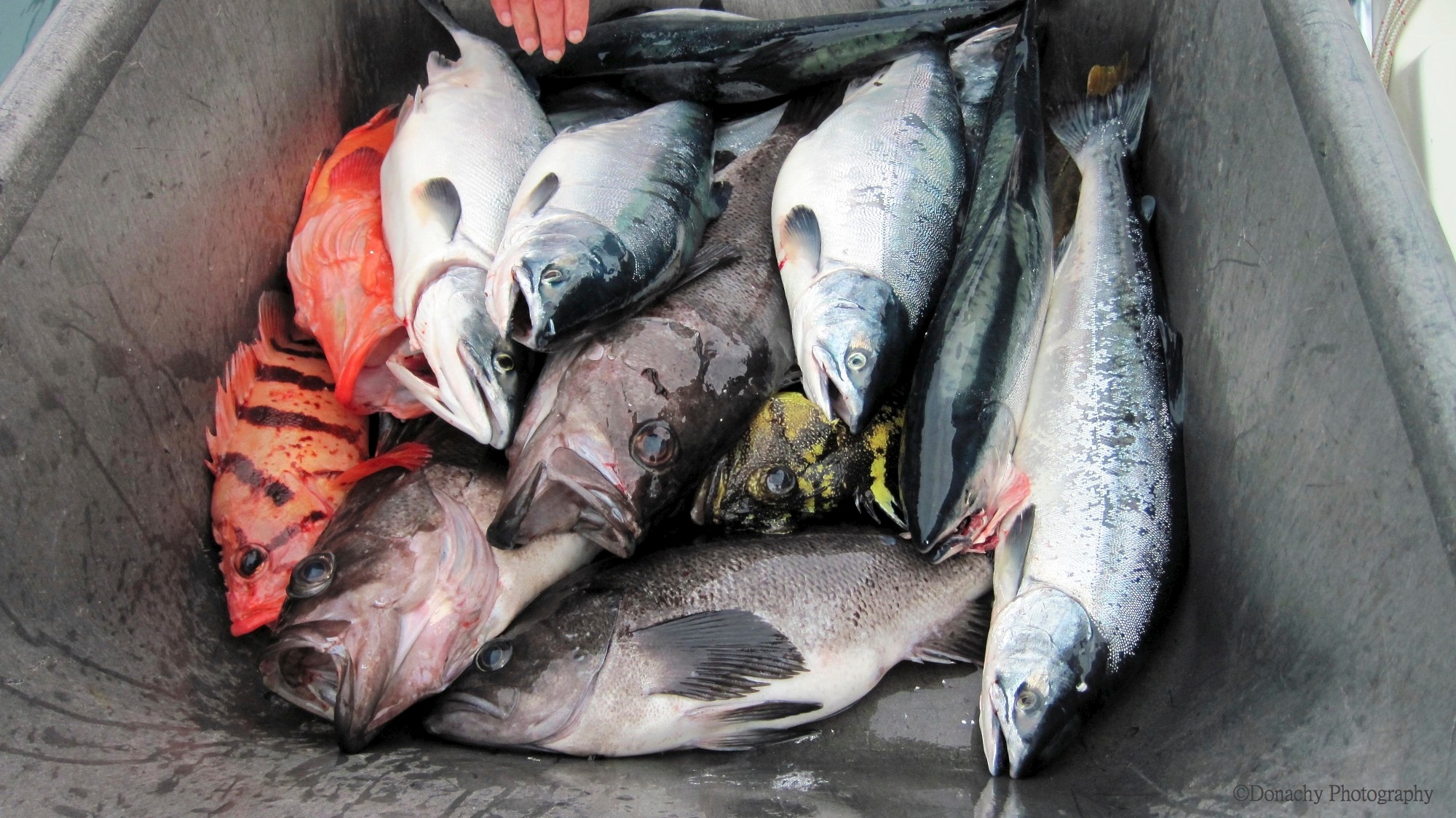
Below: Three limits of salmon and a couple of rockfish, laid out, rinsed off and ready to take up to the cleaning station. This winter in Point Hope, every meal these fish provide will be a memory of our summer in Seward. These are the good old days.

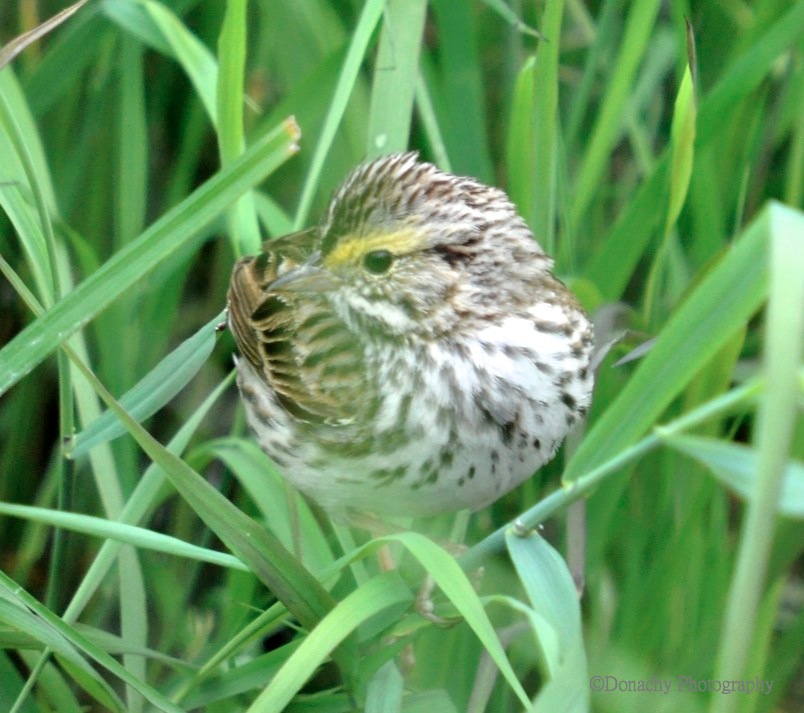
Savannah Sparrow

Savannah sparrows (Passerculus sandwichensis) are common and widely distributed in North America. The distinctive yellow lores (eye stripe) is the best way to distinguish savannah’s from other sparrows with streaked plumage.

All across North America – including all over Alaska – savannah sparrows are a common sight in open fields and marshes and in low brushy areas. Mainly seed eaters most of the year, they include insects in their diet as well, particularly during the breeding season. Their song has been described as “insect like,” and although it has a buzz to it, the description doesn’t really do it justice. Listen for the notes of the savannah’s high, buzzy song next time you’re in an open area. They can be hard to spot in the low brush and ground cover they call home, but when flushed, they usually fly just a short distance and may perch to take a look around. About five to six inches from beak to tail, savannah’s nest on or near the ground, laying  four to six blue-green eggs speckled with dark brown in cup shaped nests. The sexes are similar.

Incidentally, the species name sandwichensis comes from Sandwich Bay in Unalaska, Alaska. This photos was taken at Potter Marsh, near Anchorage.

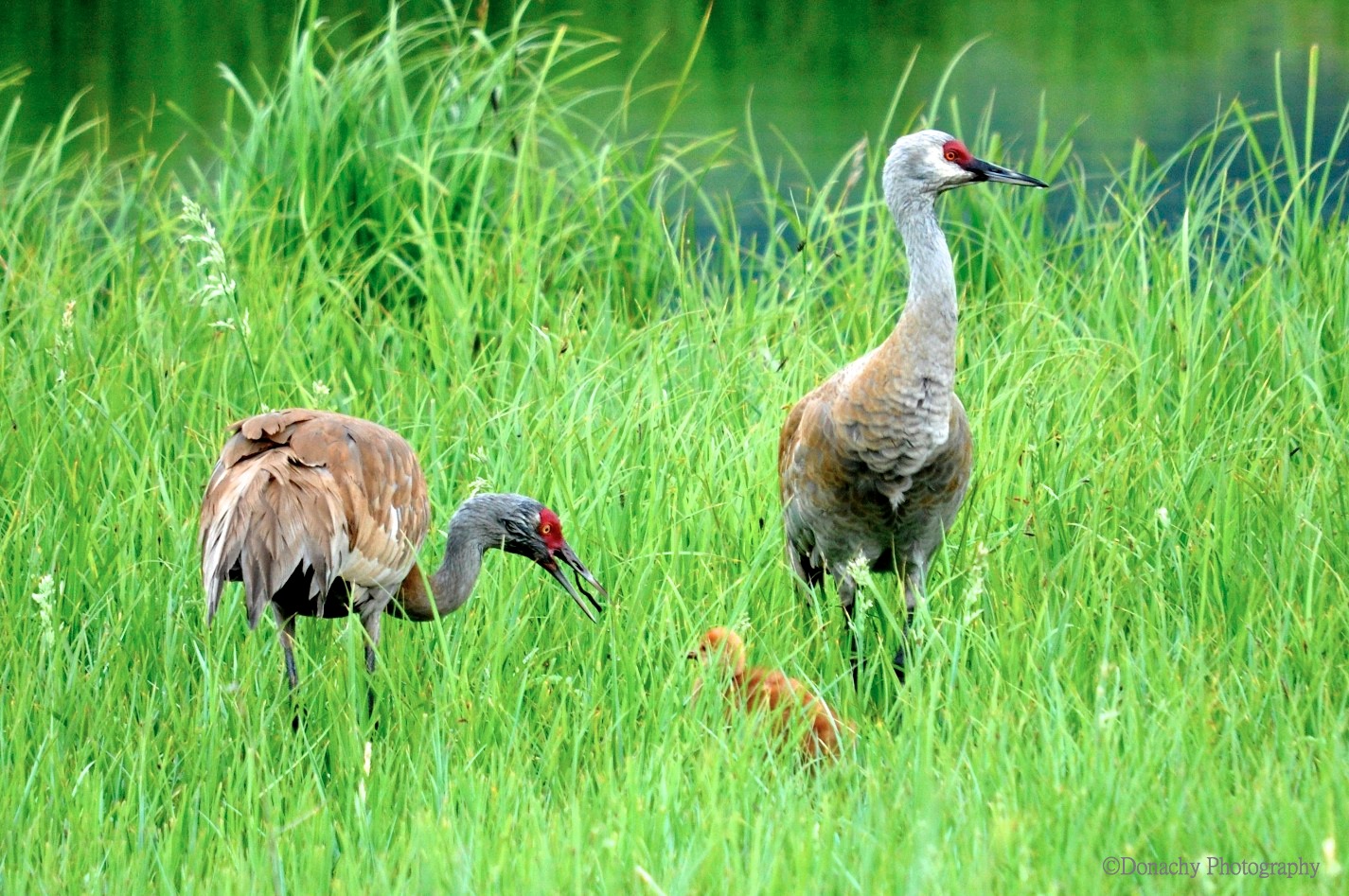
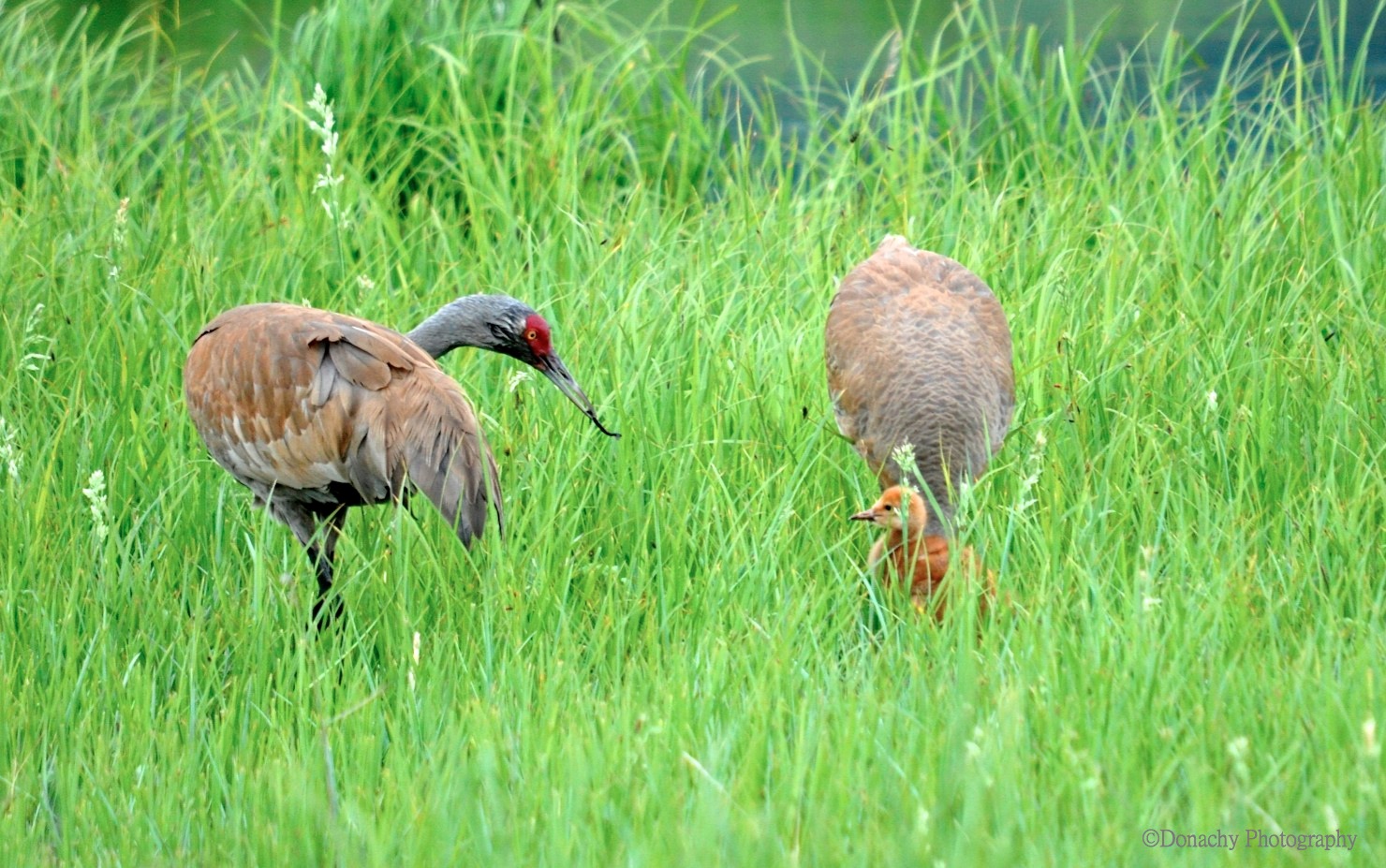
Sandhill Cranes with Chick: Potter Marsh, Alaska

Driving to Anchorage from Seward recently, we spotted these sandhill cranes at Potter Marsh and decided to park the truck and walk out onto the boardwalk for a closer look.

Large birds are cool, and in North America, there aren’t many birds larger than Grus canadensis, sandhill cranes. Adults typically weight 8 to 10 pounds. The stand four to five feet tall and have wingspans of five-and-a-half feet to nearly seven feet. Sandhills are fairly common in the west, and in a few places can be viewed by the hundreds or even thousands. More frequently, they are seen here and there in pairs, in small groups, or as individuals.

The sexes are similar. Plumage ranges from drab gray to rusty brown. Aside from size, the most distinguishing characteristic is the red crown. (Click the photos for a larger view.)

We couldn’t quite make out what the adult bird is feeding the chick. Cranes are catholic in diet. Berries and seeds make up a large portion of their diet, but insects and other small animals figure in as well.

This chick will stay with its parents for 10 months or so – until just before next year’s breeding season when the parents will lay one to three eggs. Sandhills have a life expectancy of about seven years in the wild, but may live up to three times that long. Several subspecies occur throughout the U.S. and across the Pacific to Siberia. Accidentals have been reported in Europe.

Orange-crowned Warbler, Potter Marsh near Anchorage

Oranged-crowned warblers (Vermivora celata) are fairly common, but it’s rare to get a good look at these tiny, active birds. Even less common is finding an individual with an identifiably orange crown. 

Color is often the first thing we go to when attempting to differentiate among like species. The perplexing thing is that color is often misleading.

The orange-crowned warbler’s orange crown is seldom visible. What birders typically see is a small, greenish-yellow-brown bird flitting through alders and willows. A warbler. But which warbler?

If you don’t see an orange crown, another tell is the complete absences of barring on the wings.

Orange-crowned warblers feed on insects, worms, nectar and berries. They’re ground nesters. What a thrill it would be to find a nest, tucked away beneath low-growing willows. When summer ends in Canada and Alaska and the Western United States, orange-crowns migrate to the southern U.S. and Central America.

We were lucky to catch this guy preening on an open branch at the edge of Potter Marsh, on the southern edge of Anchorage, Alaska. He stayed long enough for several photos. Before flitting off into the underbrush, he gave us one final view of his seldom-seen orange crown.

Seward Yacht Club – Swimming Pools, Movie Stars

Seward’s small boat harbor viewed from the second floor balcony of the William H. Seward Yacht Club.

For either one of us, if, back when we were in our teens or twenties and trying to figure out life, someone had told us we’d own a blue water capable sailboat and belong to a yacht club, we’d have thought to ourselves, “Sure. Can I have some of whatever you’re smoking?”

But the Seward Yacht Club fits. Upon becoming members, we were happy to set aside any preconceived notions about “yacht” owners and to simply fall in with a group of really great (generous, hard-working, helpful, welcoming) people who are bound together by a love of boats and water.

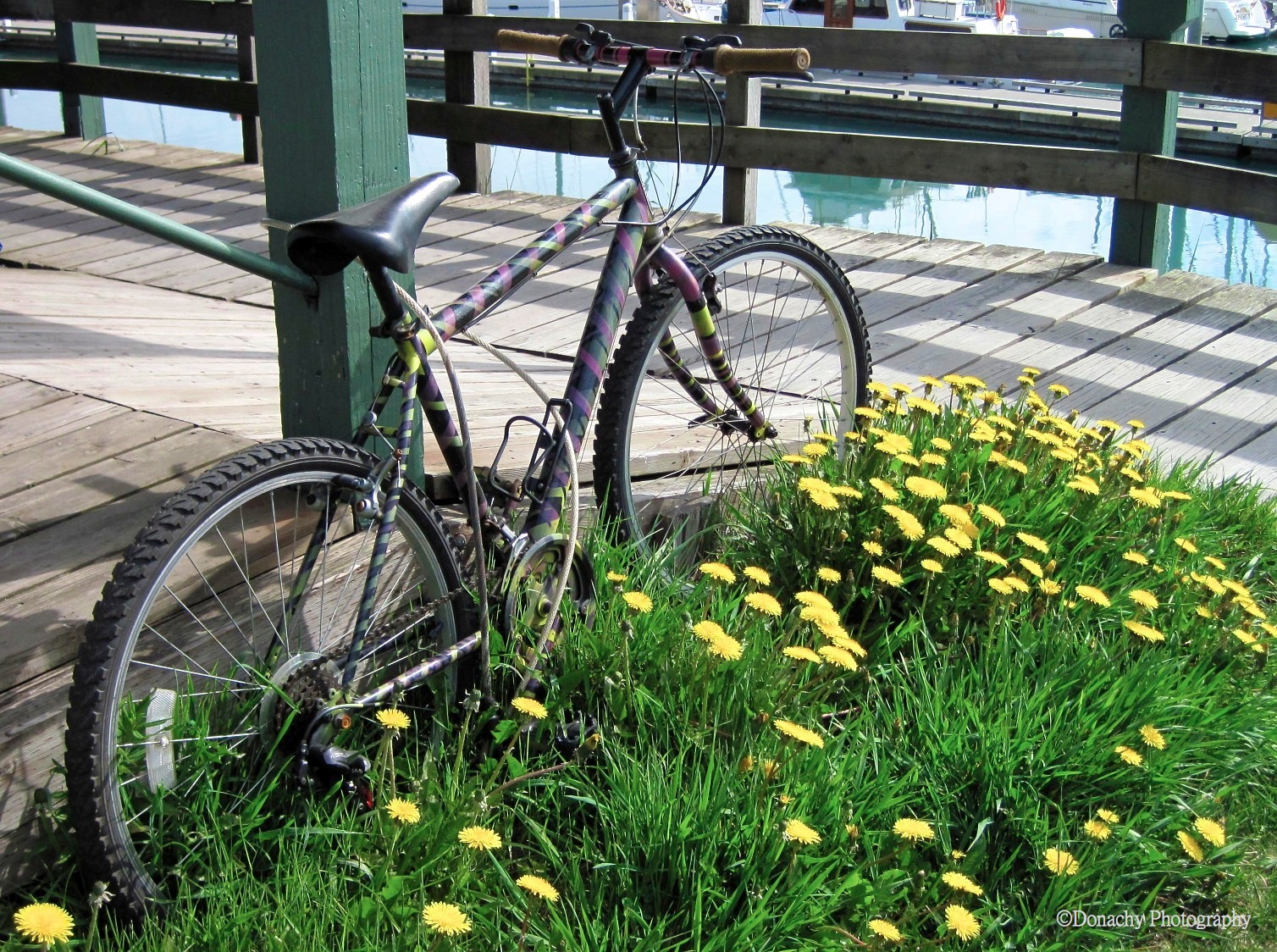
Bikes and the live-aboard lifestyle often go together – this one is parked at the Seward yacht club. It’s nice to belong to a club where the dandelions are left to grow.

In addition to camaraderie, the club provides its members and their guests with showers, a nice kitchen in which to cook a meal, and a fairly extensive library on things nautical.

The small boat harbor at Seward mirrors the yacht club. Boats of all sizes are docked here. A lot of them belong to working fisherman – both guides and commercial fishermen. A lot of the boats belong to people who just plain like water and boats and fishing and have worked hard and been careful with their money, anticipating the day when they could own a boat. It doesn’t seem to matter who you are, where you come from, what kind of boat you have, or what you do on it. People pass each other and most offer a friendly greeting. People take care of their own boats and keep an eye on their neighbors’. It’s a community. Reminds me of the best parts of the small town in western Pennsylvania where I grew up.

Wish there were more places like it.

Getting Wasted on Cheap Vodka

“Higher! Lift it higher!” Barbra strains to hoist a lingcod of about 30 pounds that fell to a jig in 100 feet of water. 

Six-thirty AM and virtually no wind. Gaff – check. Rods rigged and ready – check. Plenty of knife jigs, lead-heads, twister tails – check. A fifth of cheap vodka in a plastic bottle…

Check.
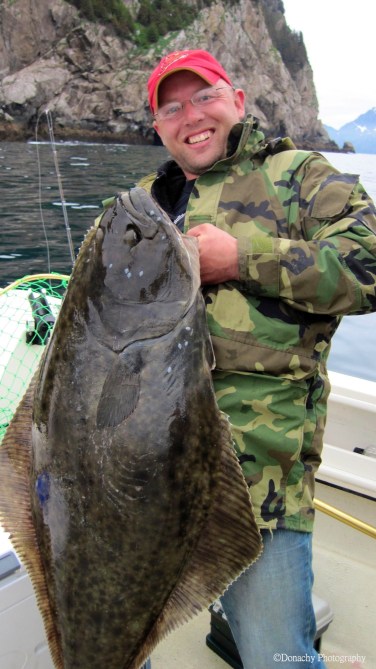
It was our friend Jerry’s last day in Seward, and he had just enough time for a quick out-and-back morning trip. We were looking for his first-ever halibut, along with whatever else might be interested in our jigs.

With Barbra at the helm of our C-Dory, cruising between 15 and 20 knots over calm seas it took us about an hour to get to a place we knew would offer a chance to pick up halibut without running all the way out into the Gulf of Alaska.

Sea birds, vast shoals of herring, porpoises, seals and off in the distance the misty spout of a whale – all against a dramatic Alaskan background of green-sloped, snow-shouldered mountains, glaciers and  rugged, rocky – make any trip out onto the bay a good one.

We got a few fish, too. Jerry nailed his first-ever halibut (not to mention a 50-pound-class lingcod – also a first), Barbra got her hands on her first 30-pound lingcod, and I hooked another nice halibut. In three hours of fishing, we caught maybe half-a-dozen lings, the halibut, Pacific cod, greenling, a brilliantly colored sculpin and over a dozen assorted rockfish including blacks, yelloweye, quillbacks, and a beautifully marked tiger.
We kept a yelloweye, the tiger (photo on the left), and a halibut.

Since the lings have to be released (the season doesn’t open till July 1, and it is permanently closed within Resurrection Bay), the only one we pulled out of the water for a quick photo was Barbra’s 30-pounder.

But she brought an even larger fish to the boat that day, and the way she caught it was a first for us – one that gave new meaning to the exclamation “Color!” fishermen often call out when they get the first glimpse of a fish coming up from the depths.

Laid across the mouth of one of the most beautifully marked lings we’ve ever seen – a 40 pounder with striking, amber-brown spots – was a bright orange yelloweye rockfish! The jig hook was planted firmly in the yelloweye’s mouth, but had no purchase on the lingcod. The ling’s jaws were simply clamped down on its meal – and  it was giving every bit as good of a fight  as if it had been securely hooked.
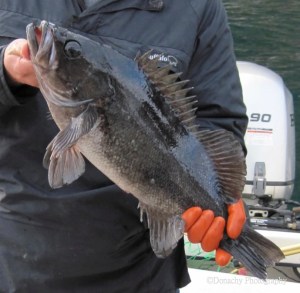
We released several nice black rockfish, such as this one Jerry caught.

I knew, based on reading about events like this, that as long as we didn’t raise the ling’s head above water, he’d continue to hold onto the rockfish like a dog playing tug-of-war with a rope. So what did I do? I grabbed Barbra’s leader and lifted the ling’s head above water, causing it to instantly drop the yelloweye and sink back into the depths. Oops…

We thus missed a chance for a really great photo – the bright orange of the yelloweye lying lengthwise across the jaws of a massive lingcod. Ahh… next time!

Interestingly enough, the yelloweye didn’t look particularly damaged. When we released it, it scurried straight for the bottom.

And the vodka?

Jerry and I had read about fishermen using cheap booze – not a .22 rifle, not a .410 shotgun, not a billy – cheap booze to subdue fish. Halibut are notorious for going crazy once they’re on the deck of a boat. They’ve been known to bust up tackle, wreck coolers and even injure their captors. But with a shot or two of alcohol on their gills…

When Jerry got his fish up on the surface, I gaffed it right behind the cheek and pulled its head up out of water. As soon as the fish opened its mouth, Jerry poured a couple shots of vodka down its hatch. The affect was amazing. The fish slumped like an overserved patron passing out on a bar, and we slid it over the gunwale without a struggle . Once we had it on the deck of the C-Dory, we splashed its gills with another shot of vodka for good measure and then hung it over the side of the boat to bleed it out.

Easiest time of it I’ve ever had with a halibut.

Even the little fish are cool: Barbra with a brilliantly marked Pacific sculpin that tried to eat a jig nearly as large as itself.