Razor Clam Fry

Jack has put the finishing touches on our kitchen in our new home and is already feeding us well. The above razor clams were dusted with seasoned flour, dipped in beaten eggs, and rolled in cracker crumbs in preparation for frying in olive oil. Having been frozen fresh, they tasted like they were just dug. Every bite evoked the wonderful memories of digging those clams just weeks ago.

I’m grateful that our school not only has a pool, but also a weight room this year!

Barge Delivery

During the summer, the ice on the sea is gone and barges have access to coastal communities. We understand it is cheaper to send goods up by barge versus the alternative, plane. It is quite a spectacle to see a barge loaded with what looks to be lego blocks from a distance, only to realize the shiny objects on the top are full-sized tanker trucks!

The newest addition to our community is a set of brand new garbage dumpsters conveniently placed throughout the town. (The city empties these bins daily.) We also noticed a brand new Chevy Suburban in front of the school…

Provisioning for a Year in the Bush

Above, Jack is zip-tying the lid to a Rubbermaid Roughneck tub at our storage unit in Anchorage.

Planning for a year in a remote village may seem like a daunting task. After two bush moves and two annual shopping experiences, I think we’ve nailed it.

In Walden, Thoreau lists everything he took with him to his life on the shores of Walden Pond. Fascinated and inspired by Thoreau’s list, we vigilantly documented all the provisions we sent out to Shishmaref last year and monitored what we used and didn’t use in order to prepare our shopping lists for this coming year.

Here’s what the advice of others and our own experiences have taught us.

1. Rubbermaid Roughneck. They come in a variety of sizes and are easy to stack and store. We label each tub and lid so all the holes we drill for the zip ties which keep them closed match up. The manufacturer says they are “unbreakable.” So far, they have been just that. Caution: most other tubs will break.

2. Cardboard boxes. The best boxes are reliable for only one use, and even then they are more difficult to ship and stack than the plastic tubs. We have gone away from using boxes.

3. Media mail. For books, CD’s, DVDs and other media, the post office gives a discount on their already inexpensive rates. Know that these items will be shipped on the slowest boat, at times will be stacked atop each other in huge piles, and will likely be tossed around. In our first move, just about the only boxes that were wrecked were those that had been sent at the media rate. This time around, we shipped our media in rubber tubs.

4. Dry goods. We think of food items in three categories: dry, refrigerated, and frozen. Our first advice is this: if you don’t have a Costco membership, get one! Costco has excellent prices and they seldom stock anything that isn’t of good quality. Unlike some other stores which, for a fee, will pack and ship your groceries for you, Costco is a “do-it-yourself” proposition. That’s fine with us. Not only do we save money by taking care of something we can do perfectly well ourselves, but in doing so we ensure that our items are properly packaged. And in addition to getting butcher-shop-quality meats and excellent produce, in shopping at Costco we are giving our hard-earned money to a business that is known for treating its employees and its customers fairly and ethically. We won’t name any businesses, but personally we can’t justify giving our money to a corporation that is constantly in the news fending off one law suit after another because they simply do not treat their employees ethically and with respect. Once we have purchased and packed our dry goods, we mail them at the parcel post rate of about 70 cents per pound.

5. Frozen goods. Alaska airlines as well as the the smaller airlines that provide service to the bush allow three checked items (50 pounds each) and one carry on item. We were advised to bring coolers as the checked items, so last year, we brought up three 58-quart coolers stuffed with frozen meat, juice, fruit, and vegetables. All the coolers ended up exceeding the airline’s weight limit by 20 to 25 pounds each, which irritated the employees at the ticket counter end cost as overage fees. This year, we are going to use Rubbermaid tubs instead of coolers. The tubs themselves are lighter than coolers, and by going with 14 gallon (56 quart) coolers and using crumpled newspaper for insulation and to take up some room, we should be able to stay within the weight limit. With items frozen solid (we have a chest freezer at our storage place), everything should hold up fine during travel. We’ll supplement what we buy at Costco with the razor clams, salmon, halibut and rockfish we harvest this summer. By the way, the large bags of frozen vegetables Costco carries are superb.

6. Refrigerated items. Last year, we really wanted cheese, yogurt, eggs, lettuce, apples, and tomatoes, and not knowing whether or not we could readily get these items in Shishmaref, we decided that we would pay the extra cost for “overnight” shipping. We knew that we wouldn’t actually get these things the next day, but we were hoping that our delivery would arrive in two or three days. Unfortunately, it took a full week for our items to arrive. As we unboxed our items, we were mentally preparing for the stench of rotten yogurt, cheese and lettuce. But amazingly, the only items we lost were the few small bags of frozen vegetables we had thrown in as ice bags. The vegetables had thawed and had begun turning to compost.

7. Items we forgot or ran out of. Our experience here is that if you forget something or something gets lost or ruined in transit, don’t worry. If the store in your bush community doesn’t carry something you need, you can pick up your phone and call the Fred Meyer store in Fairbanks. (Don’t bother with their online bush order service; it isn’t really set up to be practical.) Fred Meyer will mail or ship any item they carry in their store. They pack things well, their, customer service is excellent, and their prices are reasonable.

We’ve finished our shopping and packing chores for this year, and now we have the rest of the summer to camp, fish, boat, hike and play!

The Next Chapter…

This is our last day in Shishmaref. The sun is out in full force, and already the morning air is warm. Here and there, buntings and other birds are gathering nesting material.

The people of Shishmaref have been incredibly kind and generous with us. We’ve made friends here. The number of boxes we have just finished packing reminds us that we had intended to live here for years, not months. This was our home, and we are taking with us many good memories.

Life moves forward and happily it looks like the move to Point Hope will be positive for us in terms of career, adventure and just learning about new places, people and new customs. We are excited to live in another Inupiat village, and we have heard from many people  that Point Hope is much like Shishmaref. As our boxes make their way 200 miles north, we find ourselves eagerly anticipating the next chapter.

Rhythms

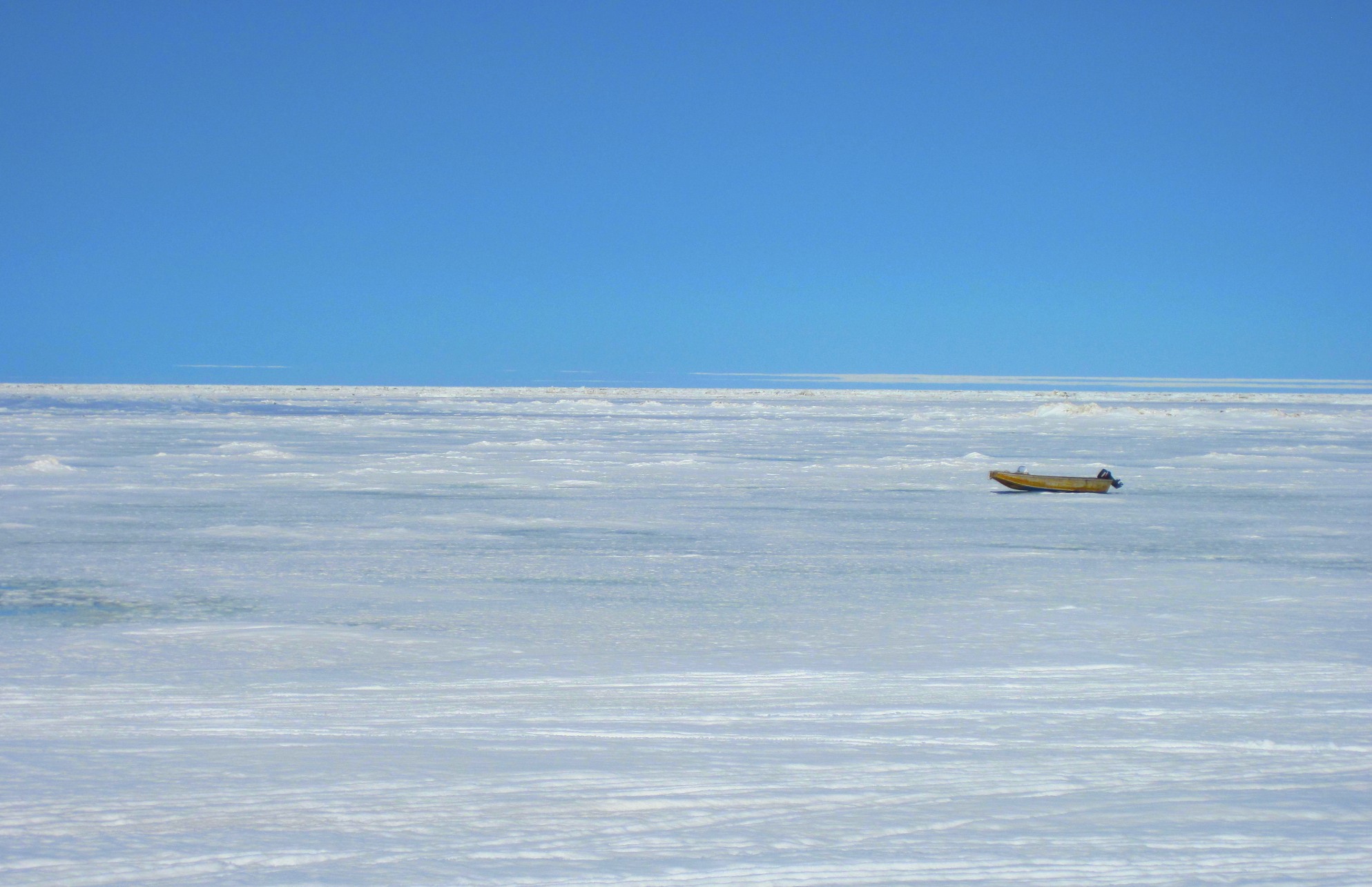
School has been out for a week. The sun is up all day. Children are playing. People are out socializing. Hunters have their boats on the sea ready for the ice to open enough to hunt oogruk (bearded seals). The birds are mating and nesting. Soon it will be time to gather eggs.

The rhythms of Sarichef island hum along.

Adoration

The kids here are really sweet in the most sincere and loving way.

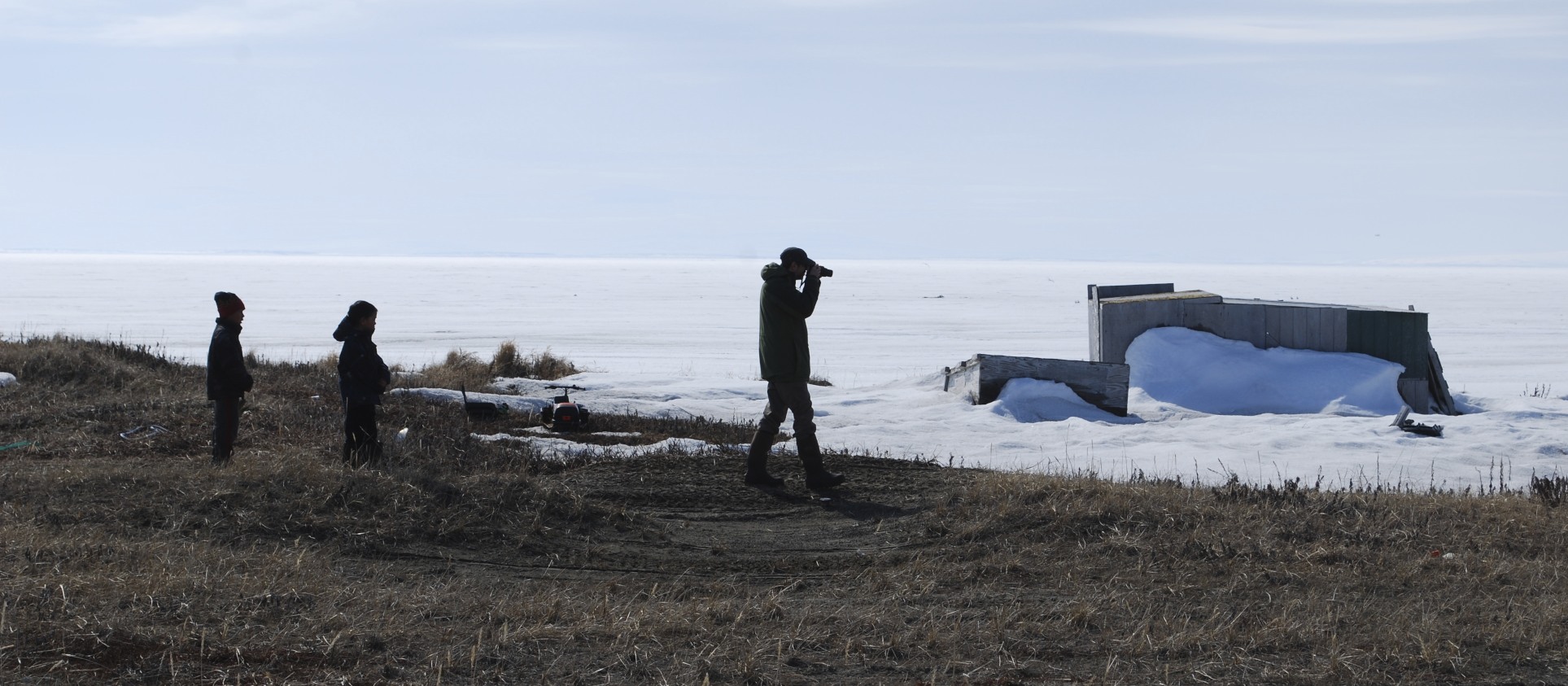
Yesterday, we grabbed our cameras and went walking toward the west channel (the west end of the island). On the way, we ran into three students. On most walks, we might have a couple of kids join us. They usually stay with us part of our long walks. Not today. These guys hung on for the entire walk.

These students in particular LOVE us (especially Jack). They treat Jack like a rock star. It’s very cute and sweet. They would probably follow us to Point Hope! The photo above represents these boys well. They want to know about everything Jack does. Jack crept up on some birds to photograph them. The boys crept behind him to learn and watch.

We hope that the kids up in Point Hope are just like our young friends in Shishmaref.

Melting and More Melting

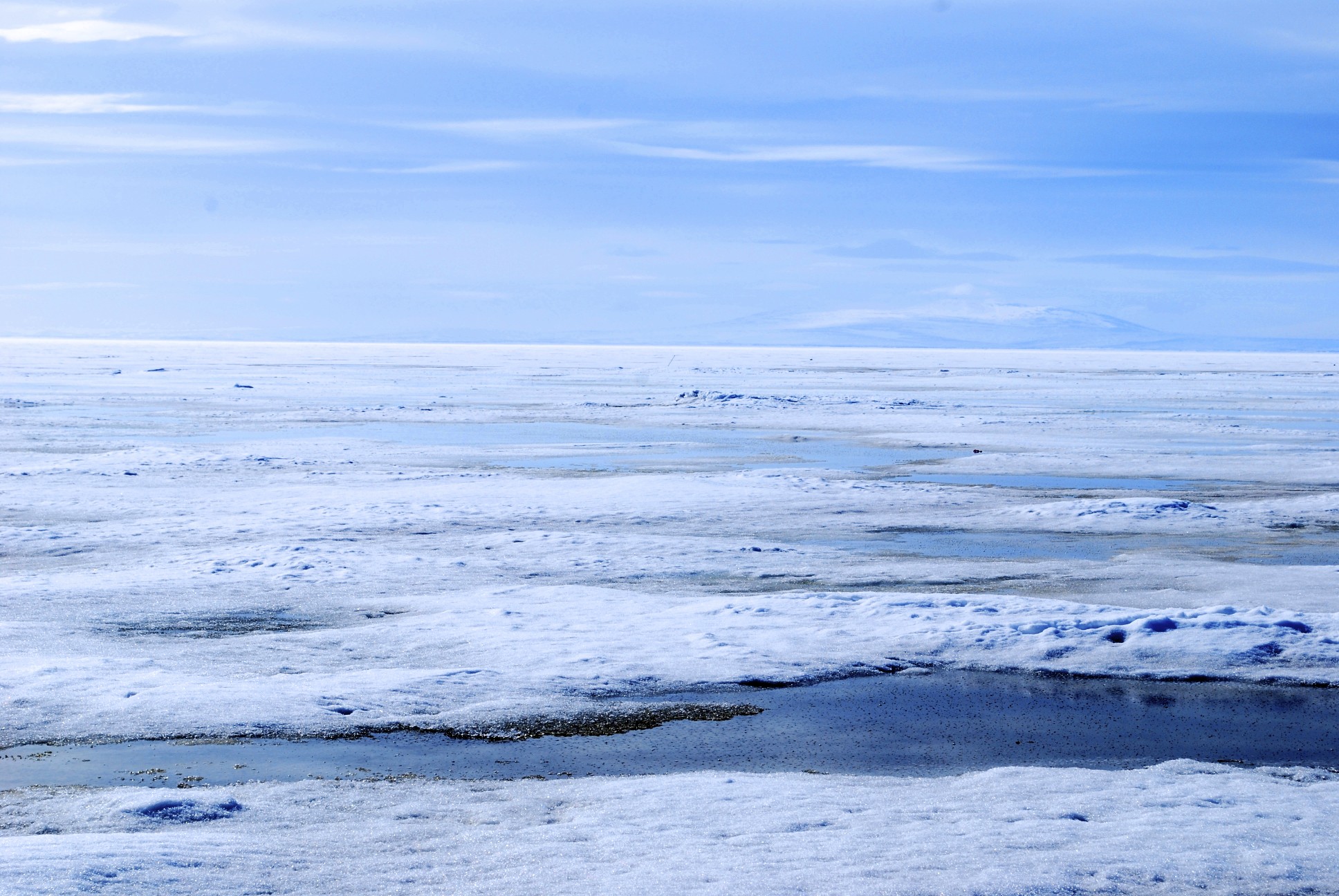
One side of Sarichef Island is bordered by the Chukchi Sea. One the opposite side is what the locals call the lagoon. It’s about five miles to land over this water. During the winter, there are snowmachine trails over the frozen water. Once the lagoon opens up, boats will be launched and used to travel across the lagoon and up the Serpentine River.

While waiting for the ice to melt on the lagoon, some brave souls will run their snowmachines. I say brave because the ice is melting on the surface, due to warmer weather and longer sunlit hours. At the same time, the ice is melting underneath due to the increasing river flow from land. Thin ice is referred to as bad or rotten ice.

One of my students told me that you could use a snowmachine in water. Remember, my students are six years old…and not always reliable. I told my students that couldn’t be. I asked my aide, and sure enough, if you drive fast enough, you can ski a snowmachine across water! Interestingly, a couple of days later, I saw a TV show about people who modified their snowmachines by taking as much weight off of them as possible in order to ski across the water.

People will ride across the lagoon on their snowmachines as long as they can. If they hit rotten ice, they gun it like heck to safety. I will leave this adventure to them.

Snow Fence, once more

The snow fence is a constant. A comment on a previous photo of the fence was that it was lonely. After seeing the snow fence live through the seasons, I see it as a steadfast guardian. It is a protector. It stands through high winds and snow drifts. It holds its ground as the tundra softens around its feet.

The Photographer at Work

A nice long walk today resulted in some interesting sights. It was in the 30s. Amazing how former Californians can adjust so easily to the weather up here. At the beginning of our walk, we were swaddled in hats, parkas, and gloves. By the end, our jackets were tied around our waists. Hats and gloves were stowed.

It is phenomenally beautiful here. The sun warms our souls. The skies are wide open and expansive. Spring is beginning to shoot up in the grass giving thoughts to newness, growth, and promise.

Northern Hawk Owl

Northern hawk owls (Surnia ulula) are typically found in boreal forests but are visitors to open land as well. Although primarily visual hunters, their keen sense of hearing allows them to locate prey up to a foot below the snow. Lots of voles here on Sarichef Island. Day by day, more new species of birds are arriving–gulls, geese, ducks, sandpipers, songbirds. Here and there amidst the snow melt and winter-brown vegetation, a few shoots of green are poking up.