Wild Alaskan Salmon Lox

Something like necessity inspired us to try our hand at making lox, although “necessity” might be a bit strong. On the other hand, there is no kosher deli in Point Hope… so where to obtain a freshly baked bagel topped with cream cheese and deliciously salty cold-cured salmon? Growing up, it was always a treat on those rare occasions we could afford it. Someone had to know how to make it at home, right? To the internet!

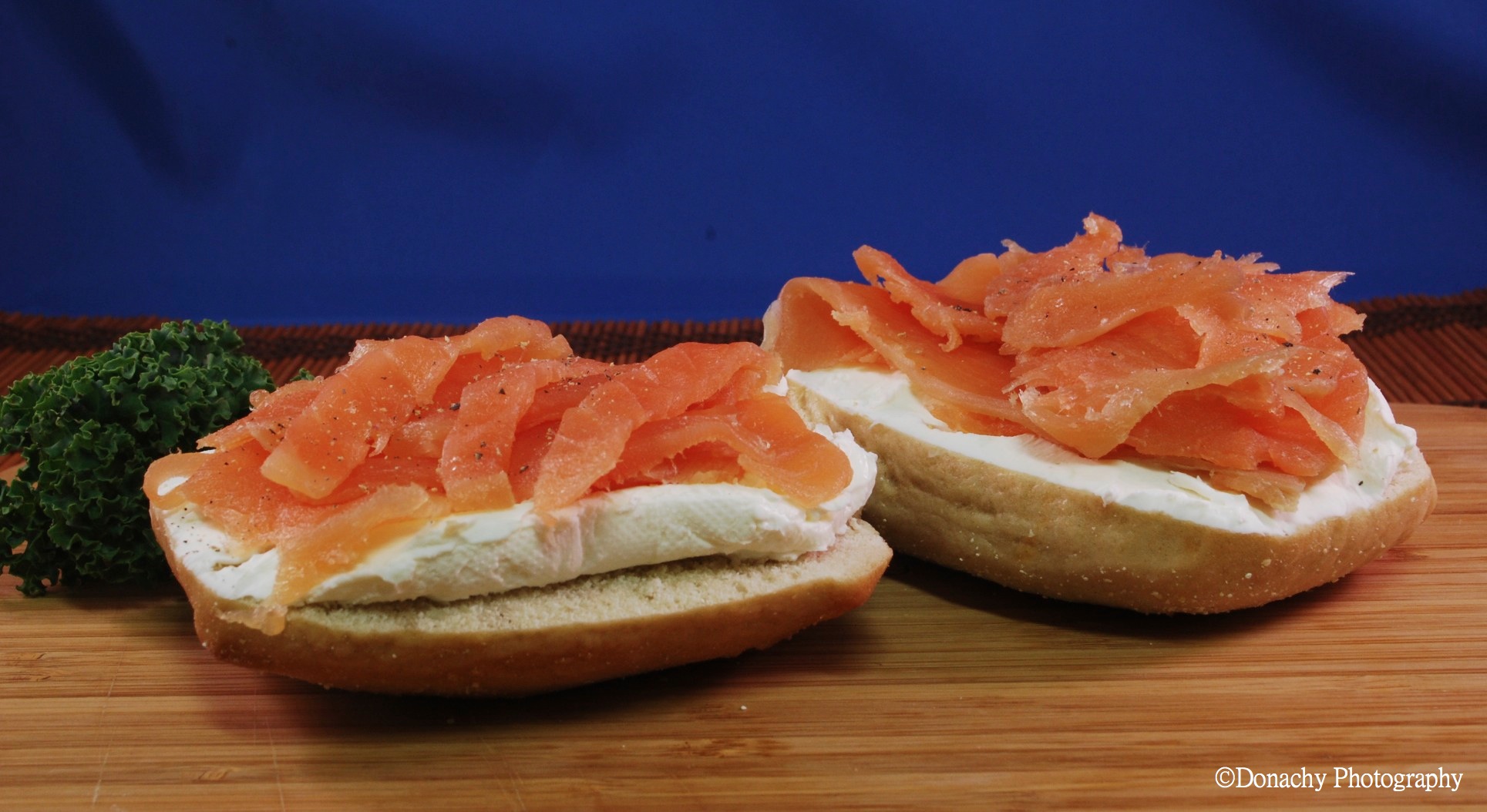
After perusing foodie blogs, recipe pages and YouTube videos, we were ready to give it a try. Jack put together a blend of natural coarse sea salt, smoked sea salt, brown sugar and cracked pepper which we then packed onto the fillets before pressing them together and placing them in the refrigerator. At the allotted five days of curing time, we were thrilled  at how our first lox came out. Cut thin, the beautifully translucent slices of wild salmon were appropriately dense, salty and imbued with the freshness of the Alaskan sea. Although Internet recipes cautioned against using frozen fish, ours came out nicely, probably because our fish had been kept on ice before being filleted and then vacuum packed and flash-frozen shortly thereafter. In that regard, our frozen fish is fresher than most “fresh” fish.

We made cream-cheese-and-lox-roll-ups for a party (they vanished in no time),  scrambled some into eggs, and have been enjoying it on crackers and cream cheese. As satisfying as each of these dishes have been, we both craved bagels for our new delicacy.

I accepted the mission and searched out different recipes and techniques. I started the dough in the bread machine–a wonderful tool for making sure the temperature is right–and after shaping the dough into bagels I finished them on the stove and in the oven. The first batch turned out eight beautiful bagels–golden brown on the outside, agreeably chewy, and the perfect texture on the inside.

The thing we like most about living off the beaten path is the time we have (and take) to do things we would have been unlikely to do in our previous lifestyle. There’s a sense of accomplishment that has become a regular part of our lives… lox and bagels…from scratch! When it comes time to move back to a road system–whether we end up on the Kenai Peninsula, Oregon, Washington, California, Belize or some place we haven’t fully considered yet–, I can’t imagine that we will go back to buying the things we’ve learned to make. We agree we don’t ever again want to be so busy that we don’t have time to make things ourselves.

P.S. In an ironic turn of events, our little Native Store in Point Hope recently got lox! I didn’t even bother to look at the price. I did see people go in with gold bars and polar bear furs to trade. Ha ha.

New Traditions

Our driftwood Christmas tree and all the decorations–including the German-made blown glass ornaments–made it to Point Hope intact. 

There’s a lot about living up here that is decidedly not easy. It’s cold and dark and although we fill our days with work and  projects, we miss things like bike rides downtown, walks through forests, evenings out and daughter Maia and  friends. On the other hand, living up here has led us to new ways of doing things that we’ve come to fully embrace. I can’t imagine us ever again buying store-made bread or baked goods with any regularity. (We’re trying our hand at our first-ever homemade bagels as I write this.) The same goes for pasta–doubling the amount of semolina flour we brought with us this year is already on the list for next year. The best lox we’ve ever had is the lox we made ourselves from the Chinook we caught this past summer. And we can imagine that there will always be a place in our home for the Christmas tree we made from driftwood we found on the shores of Sarichef Island when we lived in Shishmaref.

Sunday Brunch

Sunday Brunch

Eggs scrambled with English cheddar, crimini mushrooms, pan roasted tomatoes & shallots, topped with homemade wild Alaskan salmon lox

Oven roasted brussels sprouts

Hearty rustic Italian bread, toasted and topped with butter and cloudberry jam

Satsuma mandarin slices

Orange juice & hand poured French roast coffee

(We recently benefitted from friends cleaning out their refrigerators as they head south for the holidays.)

A Point Hope Thanksgiving or Do You Have Turkeys North of the Arctic Circle?

Translucent pink Muktuk (whale skin and blubber), whale meat, and whole Arctic grayling were passed out to guests at the Point Hope Thanksgiving feast.

Like Shishmaref, the residence of Point Hope generally don’t have big family Thanksgiving celebrations at home. It is a community event. Turkeys and hams flood into the village in preparation for the big feast. (Yes, we do get turkeys north of the Arctic Circle.) Anyone who volunteered an oven received either a turkey or a ham to prepare. We received a 22 pound ham which we cooked and delivered to the school gym. Large quantities of traditional dishes such as stuffing, candied yams, corn and cranberry sauce were brought in to the school pot-luck style. By 4 p.m., volunteers had carved turkeys and hams and all the side dishes were readied to be served.

After key community members gave speeches expressing thanks, the village was ready to share the meal. The first course? Muktuk (the layer of whale skin attached to the pink blubber shown in the above photo) and chunks of frozen whale meat. Many people brought out sharp knives and small containers of seasoned salt and immediately carved into their frozen chunks of whale. Others, like us, had brought Ziplock bags in order to save the pieces to eat later at home. Both muktuk and whale meat are traditionally eaten raw, boiled, or fried. We talked to the owner of the local restaurant who suggested slow cooking the whale meat in a stew. Sounds like a good idea. Tune in later for that culinary feat. The community also shared whole frozen grayling, dolly varden, and big chunks of salmon. Of course, the elders were served first, but there was plenty to go around to everyone.

The next course featured platefuls of traditional Thanksgiving fare. Seated around the perimeter of the school gym on the floor and in chairs brought from home families and friends engaged in conversations. There were probably 500 people altogether. At one end of the gym, tables covered with huge sheet cakes were waiting to be cut and served for dessert.

Obviously, Thanksgiving is not a traditional Inupiat celebration. In our readings of Alaska history and in conversations with history buffs, we’ve learned that the Inupiat people had celebrations and traditions similar to many of the traditions that the missionaries introduced several decades ago. The similarities made it easy for the Inupiat to adopt new holidays. For example, the divvying up of whale meat was already a fall tradition. Folding Thanksgiving into this tradition was logical.

Roasted Garlic and Squash Gnocchi

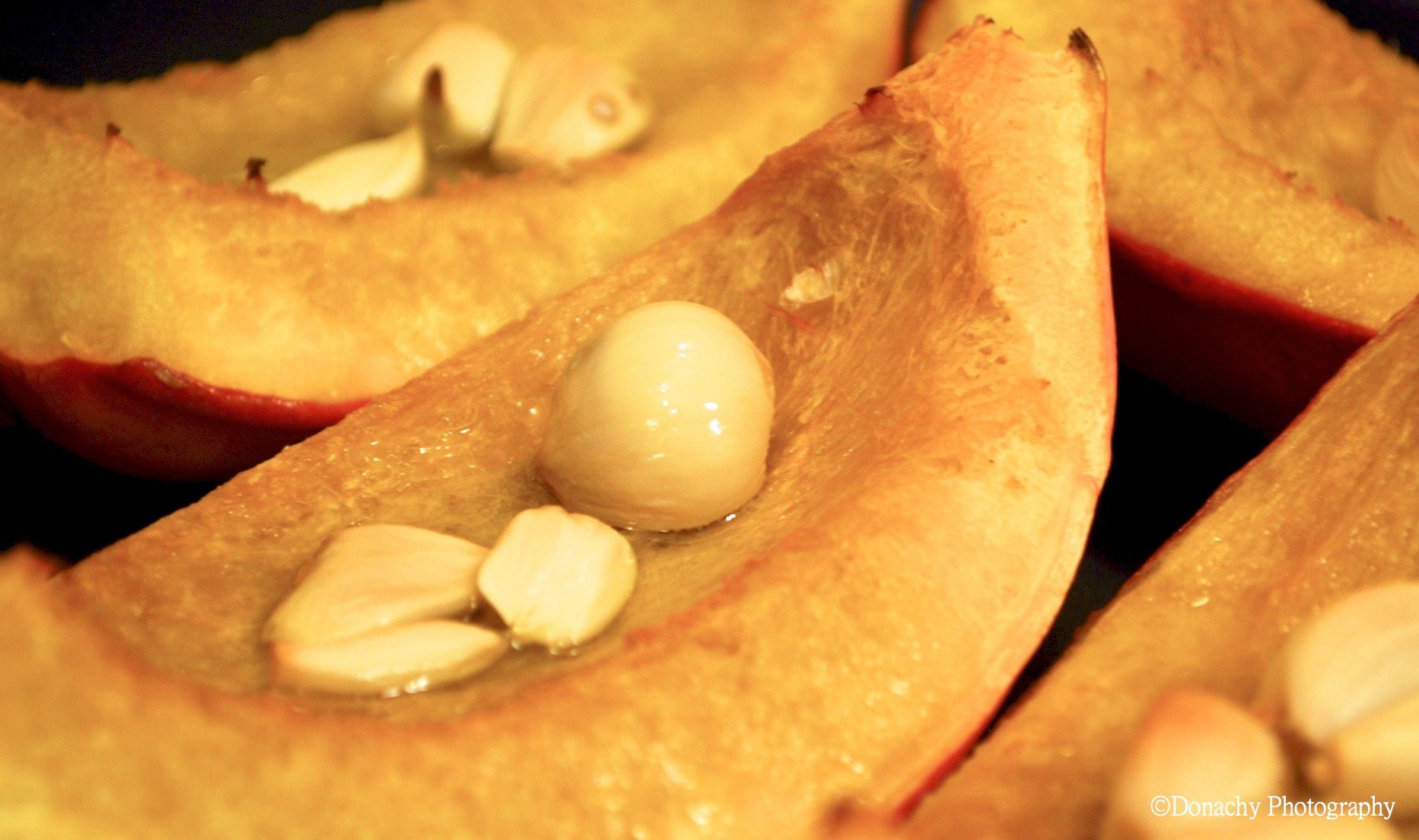
 Acorn squash and garlic, roasted and ready to become part of a batch of gnocchi.

This was my first attempt at homemade gnocchi, a form of pasta I really enjoy. The recipe I came up with today wasn’t difficult, but it was somewhat time consuming. I oven-roasted the acorn squash and the garlic for about 45 minutes. I then squeezed the soft, roasted contents out of each garlic skin (not the husks, but the skin itself) and mashed the garlic together with the squash once it was cool enough to handle. Then, I rolled the gnocchi dough into long, thin logs and chopped them into bite-sized pieces. I used a fork to make the traditional marks on the gnocchi–these slight indentations help sauce stick to the pasta.

Roasted Garlic and Acorn Squash Gnocchi

one acorn squash

one head of garlic

enough olive oil to coat a baking sheet with additional olive oil brushed onto the squash

3 cups all purpose flour (and more to coat rolling surface)

one egg

dash salt

Preheat oven to 350 degrees. Coat baking sheet with olive oil. Cut squash in half and remove seeds. Cut squash halves into 3 or 4 pieces. Brush olive oil onto squash pieces and place them skin side down. Place garlic cloves onto squash. Bake for 40 minutes or until squash and garlic are soft (a fork should go easily through the squash). Remove from oven and allow to cool.

When cooled, squeeze roasted garlic out of its skin into a bowl. Scoop soft squash meat out of its skin and place into same bowl. Mix thoroughly. Then mix in flour, egg and salt. You may need to add in more flour if mixture is too sticky. Dough should form into a nice ball.

Slice off an inch or so of the ball and roll it with the palm of your hands into a long “worm” no more than an inch in diameter. Make sure your surface is well floured. Cut off  pieces that are a little smaller than bite-sized. If you would like to make gnocchi with the fork indents, go to youtube and check out one of the videos. As they say, a picture is worth a thousand words. Once the gnocchi are formed, cook them in a pot of boiling water until they float to the top.

Serve with butter or olive oil and parmesan cheese or with a light tomato sauce. The gnocchi can also be fried in olive oil or butter and served with parmesan cheese.

This recipe makes about 200 gnocchi. Extras can be frozen.

Warm Memories of Savory Stuffed Cabbages

Food memories have a huge positive impact on people’s lives. I once wrote a ten page essay titled “Soul Food”  to challenge a college English class. It was an analysis of foods from my past and how they have influenced the person I am now. I loved certain dinners my mom made…cheese pies and apple pies, beef burgundy stew over mashed potatoes, raclette. It’s obvious why, during the winter months, this blog turns most of its attention to food.

One of my strongest food memories is of my grandmother’s stuffed cabbages. We didn’t get to see my Nana very much as we lived 3,000 miles away. She would always spend hours in the kitchen, preparing for our visits. Sometimes, when she would visit us, she would cook cabbage rolls at our house. I especially loved the sweetness of the meat enveloped in the slow-cooked cabbage leaves. We asked her for the recipe but for whatever reason she never shared it. Maybe she thought it was her special gift to us to make it, not to teach us how to make it. After she died, I thought I would never taste Nana’s cabbage rolls again.

Several years ago, I bought  a crock pot and an accompanying recipe book. The book was an ordinary crock pot book. I cooked my way through it until I got to the stuffed cabbage recipe. My expectations were low. I was surprised and pleased (surpreased) to taste the results of the recipe which were nearly identical to my Nana’s cabbages!

I wound up selling the recipe book when I moved to Alaska. I did keep the one cabbage recipe in the event I wanted to recreate this delicious dish. Turns out at $7 a head, cabbage is not a depression era vegetable in the bush. It is gold…too rich for my blood. As luck would have it, a friend had most of a cabbage head she no longer wanted and traded me for granny smith apples she needed for a pie. Barter is still alive and well in bush Alaska!

From Crock-Pot Specialties

Spicy Cabbage Rolls

6 large cabbage leaves

2 tbsp water

1/4 cup minced onion

1/2 lb. lean ground beef

1 tbsp ketchup

1 small egg, lightly beaten

2 tbsp raw long grain rice

1/2 tsp salt

1/8 tsp pepper

8 oz. stewed tomatoes

2 tbsp raisins

2 tbsp cider vinegar

2 tbsp brown sugar

2 tbsp dark corn syrup

In a saucepan, immerse cabbage leaves in enough boiling water to cover and simmer for about 5 minutes or until pliable. Remove from water carefully and drain. In bowl, make stuffing by combining water, onion, ground beef, ketchup, egg, rice, salt, and pepper. Cut out heavy ribs from the cabbage leaves. Divide stuffing into 6 equal portions; place a portion in center of each cabbage leaf and fold the leaf around it. Secure with a wooden toothpick. Place the rolls seam side down in the crock-pot.

Combine remaining ingredients and pour over cabbage rolls. Cover and cook on Low setting for 8 – 10 hours.

Remove rolls to warm serving platter. Spoon sauce over rolls before serving.

2 or 3 servings (about 1 1/2 quarts)

Smacznego!

Arctic Sunset

At 2:21 p.m. on December 6, 2011 the sun will set in Point Hope. Of course, in most places, the sun will rise again the next day. This is not the case here. The sun will not rise again until 1:56 p.m. on January 7, 2012.

This afternoon, I could see the most beautiful pink and orange reflection out my kitchen window. The sunset and the ocean called to me. It was 12 degrees out with just a light wind, tolerable with my down jacket, mittens, face mask, and snow boots. The colors in the sky were magical. Swatches of blues and pinks hovered above the icy sea washed with an electric orange glow. The snow leading to the beach was pristine except for scattered caribou prints. Seven foot cliffs of packed snow loomed over the eroded beach. The edge of the ocean was covered in undulating sheets of ice showing only patches of open sea. The frozen crust lifted and fell slowly as the ocean below it was beginning its winter slumber.

In California, I used to visit the coast in order to replenish my energy. The foaming and crashing sea along the West Coast always rejuvenated me, especially when my spirits were low. The Arctic Ocean imbues a person with a sense of calm and peace. As I looked to my left and right up and down the icy beach, others, too, were taking in the view.

Epic Storm Hits Point Hope, Alaska

Looking out a high school window, we watched our sturdy home strain against hurricane force winds.

Monday, November 7, 2011. We watched the NOAA reports as a violent storm was pounding the Aleutian chain on its way northeast up the Bering Strait. On Tuesday morning, we headed to school as usual. The storm was supposed to hit our village hard at 9 p.m. All in the village were abuzz with the coming storm. A double warning had been issued – hurricane force winds and storm surges. The last storm of this magnitude to hit Point Hope was in 1974. I’m not sure how much of the town had moved to the new site (our current site) by then, but we heard stories that the underground storage areas had been flooded and some of the surge waters had made their way into the village.

The students were asking all sorts of questions: Will it flood? What would a 15-foot wave look like? Have you ever been in a hurricane? We tackled all the questions and found a video to watch about weather as the wind picked up outside and near whiteout conditions obscured the post office from view just across the street from the school.

In the late morning, the decision was made that the students should be sent home. The school bus (yes, this small village has a school bus!) delivered the students safely home and our staff prepared to turn the school into an emergency shelter.

Later, Jack and I tucked in at home. In anticipation of losing power, we charged our phone and laptop, set out flashlights, candles and matches, and filled our water bottles.  By late afternoon, the wind had been whipping through the town. Since there are no trees, it was difficult to visually assess the wind speed. The internet said 23 mph, then 39 mph, then 53 mph, gusts were being reported to 90 mph. Our house began shaking as the gusts grew heavier, and framed pictures on the walls were moving. The heavy wooden doors on an outside cabinet that houses our propane tank began creaking on their hinges and banging open and shut. We could hear the wind roaring through the village.

Through the worsening conditions, our sturdy little house generated confidence. No matter how it shook and shuddered, we were sure it would hold together.

At 5:00 AM, we awoke to fierce winds and no power.

The school had officially become the village’s emergency shelter. Families streamed in with blankets and cots for the elders and sleeping bags and air mattresses for the young. Our school is fairly large. One wing houses the elementary, one wing houses the high school with the middle school,  a small gym (which also operates as a cafeteria) and a large gym in the center. There was ample room to house the 500 people who ended up in the school. Our terrific cafeteria staff worked diligently to feed all the guests breakfast, lunch and dinner. Some rooms became quiet rooms for elders. Other rooms held whole families including nursing mothers and pets.

It was reported that a transformer had been knocked out, utility poles had been snapped, and wires were hanging loose. The high winds precluded linemen from flying out to our village. No one panicked. I think people knew the storm would pass, the winds would calm, the ocean waters would recede and power would be restored.

This morning, when the winds had quieted, Jack and I walked to the coast. The ocean waters were still roiling and the waves were still crashing against the shore. But it was only in the way a tantrumming child beats his fists to the ground when he is nearly out of steam. A seven foot bank of snow was packed up against the berm. The waves hammered away at the bank, evidenced by floating chunks of snow in the waves.

With the winds nearly blown out, planes were finally able to land, delivering the linemen. With steady work from one end of the town to the other, power was restored in it’s own wave from east to west. By about 4:30 p.m. most of the village of Point Hope was lit and houses were warming–and luckily so at that because had the outage lasted longer, there surely would have been frozen and burst water pipes in the freezing cold. The epic storm of 2011 is officially over.

An Anniversary Gift

Today’s the day we are celebrating our anniversary. Jack made us an amazing breakfast of savory grits topped with buttered pecans, sour cream and maple syrup. He’s planning a feast for us tonight – I saw filet mignon, scallops, halibut cheeks, and shrimp defrosting on the counter. Mmmmm…

Hundreds of miles from everywhere, our gifts to each other are in kindnesses. It’s not that we are not kind on other days. Today is about extra kindness and extra effort. I really appreciate Jack. He is an amazing person. He is kind and generous and funny, of course. But what I appreciate most about him is how he always tries to leave a place better than he found it. The word “place” is literal and figurative. If we rent a cabin, it will be a little cleaner than we found it. If it is a relationship, it’s always better after Jack has been involved.

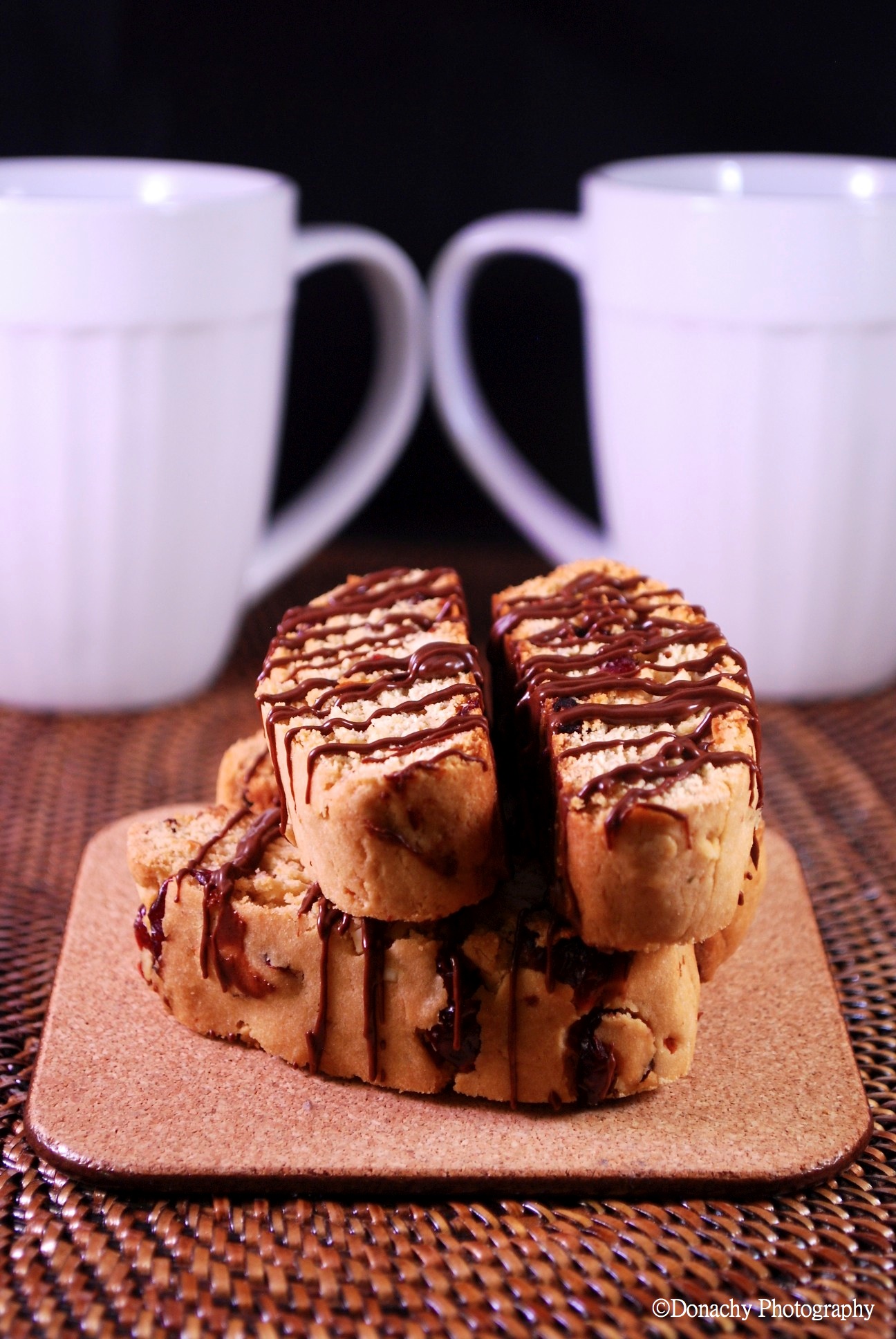
My gift to him is biscotti. I thought of biscotti today because it takes extra time and effort. I wanted a complex blend of flavors and thought of cranberry, orange and almond. A carefully zested orange was juiced. The zest was cut into tiny pieces. The almonds were toasted in a pan with butter.

Biscotti is labor intensive. It has to be baked in a loaf. Then cooled. Then baked again after it is cut into slices. Then baked once more to crisp the opposite side. My last touch is to drizzle it with a hint of white chocolate – just for looks. Every time the biscotti is baked or turned or drizzled, I think of the kindness I am doing for my best friend. Happy Anniversary, Jack!

Cranberry Orange Almond Biscotti

Ingredients:

2 1/2 cups all purpose flour

1 tsp. baking powder

1/2 tsp. salt

1/2 cup light brown sugar

1/2 cup white sugar

1 stick unsalted butter

2 eggs

1 tsp. almond syrup

1 tbsp. orange zest

juice of a small orange

1 cup dried cranberries

3/4 cup chopped almonds

optional white chocolate drizzle

Process:

Preheat oven to 350F. Line a baking sheet with parchment paper.

Combine flour, baking powder and salt in a medium bowl. Stir. Mix together sugar, butter, eggs and almond syrup until well blended in another bowl. Stir in orange zest and orange juice. Mix in flour mixture. Then mix in almonds and cranberries. Divide dough in half. With floured hands, shape dough into two long logs on the parchment papered baking sheet. They should be about 2 1/2 inches wide, 9 1/2 inches long and 1 inch tall.

Bake until golden brown, about 35 minutes. Cool until you can easily handle. Transfer to cutting board and cut logs into 1/2 inch wide slices. Discard parchment. Move slices back onto baking sheet, sliced side down. Bake for 10 minutes. Flip biscotti and bake for an additional 5 minutes. Biscotti should just start to color. Cool completely on cooling rack.

After biscotti is cool, drizzle with chocolate or dip for a finished look.

Buon Appetito!

Stuffed Cookies or What Do I Do With My Leftover Halloween Candy?

What to do with leftover Halloween candy? We could eat it. We could bring it to work and subject our co-workers to it. Both choices are possible, but not very original.

After searching around for recipes, I came across a blog where the author stuffed cookies with candy pieces. Hmmm… She provided no recipe, so I was on my own. One of the most classic and tested cookies is Nestle’s Tollhouse cookie recipe on the back of the morsel bag. As a matter of fact, I was just talking to a friend who told me her mother was putting together a family recipe book and was going to include the Nestle recipe because it was just the best. So I followed the Tollhouse recipe sans chocolate chips. I flattened one scoop of dough on a cookie sheet, inverted a miniature Reese’s Peanut Butter Cup, flattened another scoop on top and baked as directed.

These cookies came out fabulous! And now I’ve got a more original way of sharing left-over Halloween candy.