
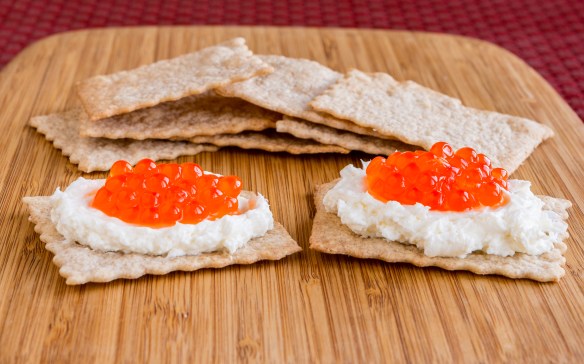
Delightfully crispy and packed with flavor: cheese-like tang, garlic, onion, with a hit of salt. You’ll never discard your discard starter again.
One day, I noticed a friend had posted on a community webpage that she had extra sourdough starter if anyone wanted it. It made me wonder about extra starter – a problem I don’t seem to encounter. Due to a combination of where we live and our predisposition to avoid waste, we generally don’t have “extra.” Of course, shortly after coming to the conclusion that we’d never have extra starter, I had a week where I skipped making sourdough loaves and wound up with “extra starter.” One of my recipe books recommended discarding the extra. What?! I decided to taste it, to see if the flavor would inspire a recipe. Tasting raw starter was a bad idea. Yuck!
After a bit of research, I decided to tinker with a cracker recipe I found on the King Arthur Flour website. My first batch came out wonderfully flavored, but too soft. The problem was the thickness. My rolling pin and I could not get the dough thin enough. The solution came to me after rolling lasagna noodles – the pasta machine! If you’ve only ever thought of your pasta machine as a noodle machine, think again. Besides wonderfully flavored and textured linguini and spaghetti, I’ve also cranked out perfect bowties, ravioli and even wonton wrappers. This seemingly single-purposed machine helps perfectly roll sourdough to make satisfyingly crunchy crackers.
If you don’t have a pasta machine, I highly recommend the Atlas model we have. It is a heavy beast, but it is a kitchen tool that’s made the cut every time we’ve had to pack up and move. If you don’t want to add another item to your cupboards, a rolling pin will still work with this recipe. Be patient and aim to roll a thickness of about 1/16”.
The finished crackers have a tangy cheese-like flavor from the sourdough starter. This in combination with a mixture of onion and garlic and a hit of grey sea salt make these crackers very addicting. Serve with the complementary topping of your choice. Or enjoy their flavor unadorned, as I usually do.
Don’t Discard the Discard Sourdough Crackers
Ingredients
- 1 cup whole wheat flour
- 1/2 tsp sea salt
- 1 tsp granulated shallots (onion powder would work, too)
- 1 tsp granulated garlic
- 1 cup sourdough starter, unfed
- 4 tbsp unsalted butter, melted
- olive oil for brushing
- coarse salt for sprinkling on top (I like grey sea salt)
Directions
- Mix first 6 ingredients to form a smooth dough.
- Tightly cover in plastic and refrigerate for at least 30 minutes. I often refrigerate for several days.
- Preheat oven to 350 degrees F.
- Cover a baking sheet with parchment paper or reusable liner.
- Cut off 1/4th of refrigerated dough and roll until it’s about 1/16” thick. I roll it like it is pasta on the pasta machine down to the 5th setting.
- Placed rolled dough on prepared baking sheet.
- Using a knife, or pastry roller, cut dough into cracker shapes. There is no need to move the crackers apart.
- Brush dough with olive oil.
- Sprinkle with coarse sea salt.
- Bake for 9 minutes.
- Crackers will be lightly browned when done.
- Let cool on wire rack. Store cooled crackers in an airtight container at room temperature.
- Repeat with remaining dough.

 CutterLight