Chignik Lake in 29 Photos: Orbs

Chignik Lake Spider Web
Orbs

Some years they are abundant. Other years less so. But the appearance of small, brown spiders and the circular webs they weave are a seasonal marker indicating the transition from summer to fall at The Lake. These webs, often spun among the dry, gray-brown stalks of Cow Parsnip, are yet another sign Barbra and I have come to associate with Silver Salmon season on the Chignik.

I made this image on September 21, 2016, the day before the autumnal equinox. It had been not quite two months since we’d first arrived at The Lake. As is true of many other photographs I took back then, there are technical and compositional shortcomings in this capture. And yet, there are elements in this picture that I like, and it brings back memories of a beautiful fall day and a pleasant hike along the trail to Clarks River. Looking at this image, I can almost see the clouds of midges that hung in the air that morning as the sun rose, the air warmed and iced over puddles began to thaw. There was color everywhere – scarlet geranium leaves, fat blueberries sugary with frost, perfectly ripe cranberries against the green of their foliage and fireweed leaves in all the colors of an autumn forest in western Pennsylvania. I took a picture of an icy bear track that morning, and of a frost-bitten shrew, perhaps caught and discarded by a shrike or a fox, discarded on the path. There was wolf scat on the trail, clumped with hair, fresh. On the way home, a flock of southern-bound robins landed in a copse of alders – a surprise, the first of that species I’d seen at Chignik Lake.

It was a good day. I think it is this power that has alway drawn me to still images… that a single photograph can cause one to smile, and in a moment the tension is released from one’s shoulders and a little sigh of contentment passes from one’s chest.

Chignik Lake in 29 Photos: Fireweed

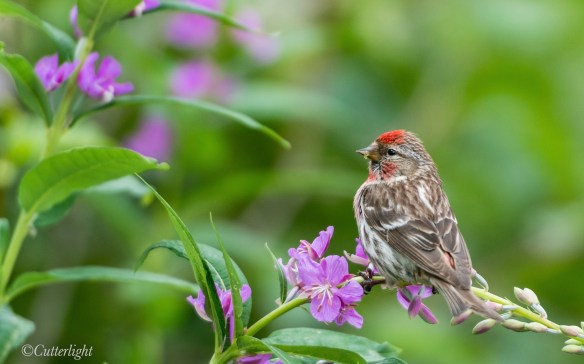
Redpoll Fireweed Chignik Lake
Fireweed

The first Fireweed shoots emerge in late May or early June. At that time, the dew-soaked four or five inch shoots are crimson red with a touch of purple, perhaps showing a hint of tangerine when backlit by the morning sun. This is the perfect time to clip a few at the base and sauté them as you would asparagus to be served with the evening’s grilled halibut.

From the moment those first crimson leaves emerge, we watch, marking spring, summer and fall by the stages of the Fireweed’s growth. By the end of June the plants have grown tall enough to brush against the tops of our Muck Boots as we follow bear trails to the river in search of Sockeyes, but they are flowerless and inconspicuous, overshadowed by Yellow Paintbrush, Nootka Lupine, Yellow Monkeyflower and Wild Geranium. A sister species, River Beauty, is already splashing gravel bars with fuchsia, reminding us that it is time to start searching the Chignik’s deeper pools for Chinook. The world is alive with activity. There will be fuzzy-headed Rough-legged Hawk chicks peaking out over their nest at The Bluffs, swallows gliding above the lake and bears which emerged winter-skinny from hibernation will be filling out on fat Red Salmon. The summertime sun barely sets; it is difficult to force oneself to turn in at night.

Come mid-late July, Fireweed crowns are nodding with buds. Any day now, the blossoms will burst into four-petaled, magenta-pink flowers. High summer at The Lake. Skiffin’ season.* From this point on, we will mark time not so much by clocks and calendar dates, but by whether or not we’re hungry or tired, how many salmon have been counted at the weir, how much the year’s new bear cubs have grown and the ascension of Fireweed blossoms as they progress to the top of the crown.

Toward the end of August, only a few petals cling to the tops of the plants. Below those petals is a progression of slim, red, bean-shaped seed pods growing heavier each day. Silvers have begun entering the river en force, marking the start of two months of remarkable fly-fishing. The newly arrived salmon are thick with muscle, spirited and dime-bright. But by mid-September, they will begin to show hints of autumn’s reds, golds and muted greens. The first fireweed seeds ride fall breezes on cottony parachutes – “Fireweed snow” we call it. Looking to the mountains, it is at about this time that we will see termination dust powdering the peaks.*

Summer’s end.
—————————————-

I made the above photography on August 6, 2020 shooting from my living room window. The house itself serves as a blind. The photo shows how Fireweed blossoms begin blooming at the base of the crown, buds yet to bloom further up the stalk. The bird is a Common Redpoll.  (Nikon D800, 70-200mm f/2.8 with 2.0 TC, 1/1250 at f/6.3, 400mm, ISO 1,000.

*skiffin’ – skiffing; boat-riding.

*Termination Dust is an Alaskan term referring to the first snow in the mountains, signifying the end of summer and the beginning of fall.

Chignik Lake in 29 Photos: There is a river…

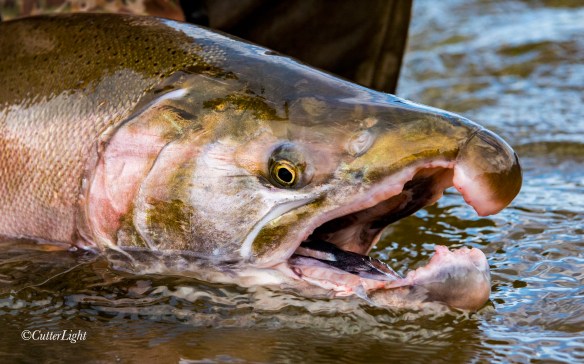
Chinook King Salmon Chignik River
There is a river…

T-shirt and jeans, belly down, bare elbows on scratchy, crazy-red carpet my mother had insisted on, chin propped in cupped hands, I pored yet again over one of the articles in the magazines my grandfather had given to me and that were permanently scattered across my bedroom floor. I had, once again, escaped… to a world barely touched, to wilderness rivers, large fish, peace, calm… quiet.

All of it was fascinating, enthralling to my young mind. It was only 50 years ago, but the world was a different place. Less explored. Less trammeled. Discovery on a grand scale was still  possible. And so whether I was reading for the fourth, fifth or 11th time an article about fishing for the exotic Mahseer of India, skittish Bonefish in the Bahamas, ginormous Northern Pike in a seldom seen Canadian lake or mammoth Striped Bass in the Massachusetts surf, I found myself absorbed in the mystery of possibility and promise.

Early in life, I joined a fraternity whose members’ first contact with Latin was the binomial Salmo salar – “Salmon leaper,” Atlantic Salmon. Back then, there were still lots of Atlantics in the Canadian maritime provinces. They thrived in rivers with magical names: Miramichi, Grand Cascapedia, Restigouche… Scenes brought to life by writers such as A. J. McClane and Lee Wulff.

At the same time, Pacific Coho and Chinook in staggering numbers ranged all the way from northern California to sub-Arctic Alaska. A guy with a car, gumption and gas money could explore the West Coast fishing on his own, following in the steps of legends like Zane Grey and Bill Schaadt. I’d show my dad the articles, the photos of big fish – bass, pike, muskies, salmon, all of it. He’d rattle his Pittsburgh Press newspaper with a shake, look up for a moment, and absently say something like “That looks interesting,” in the way people say something looks interesting when, in fact, they have little interest in it.

Years passed by. Years became decades. As time slipped away, so did the salmon fishing I’d read of. Dams, development, timbering practices, pollution, overfishing, salmon farming, hatcheries… The 70s, 80s, 90s and the first two decades of the 21st century have visited a thousand cuts on salmon and their rivers. Throughout the world, from the Pacific Northwest to the Gaspé Peninsula to Scotland, Norway and beyond, the fish have responded by retreating. As rivers with strong runs of salmon have been pared down, the water that remains generally falls into one of two categories: those accessible only through outfitters, lodge owners and guides; and those where you can expect to fish among a crowd.

Neither option holds much appeal beside the dreams of exploration, adventure and discovery inspired by copies of Field and Stream, Outdoor Life and Sports Afield read in boyhood.

It has been a long, winding, unpredictable path that has brought me to this river. Most days Barbra and I have the fishing to ourselves, save for bears, otters, seals and eagles. We know it is unlikely to last… But for now, we are here and there are fish and there is quiet and solitude and dreams and dreams come true. (Barbra made this lovely photo on August 24, 2020. Tackle: Orvis Helios II 8-weight, Galvan T-8, WF floating line, 10′ leader w/ 20lb tippet, Chartreuse Rocket Man #2. Nikon D800, 24-70mm f/2.8, 1/640 at 7.1, 48mm, ISO 800)


Chignik Lake in 29 Photos: Triplets

Chignik Lake Brown Bear Cubs
Triplets

The hundreds of thousands of salmon ascending the Chignik River each year nourish everything from bears to birds to berries. Each gleaming Pink, Red, Silver, Chum and King returning to its natal spawning grounds might be thought of as a nutritional brick – keystones to the fecundity and biodiversity of the Chignik drainage. All of us can support healthy salmon ecosystems – and the bears, eagles, orcas and other wildlife that depend on wild salmon – by making a commitment to not consume farmed salmon and to instead purchase wild-caught salmon. While it is true that wild-caught salmon generally costs more than farmed salmon, by purchasing wild fish value is accorded to the clean, free-flowing rivers they need in order to thrive. Think of the extra money spent as a contribution to these triplets and similar wildlife. And remember: If it doesn’t say “wild” on the market label or restaurant menu, the salmon is farmed. Almost all Atlantic Salmon in the marketplace – certainly all that is sold in the U. S. – is farmed.

The living room, dining room and bedroom windows of our home sit just 30 yards from a sandy beach on Chignik Lake. From June through September, Brown Bear sightings are virtually daily events. Even on the few days when we don’t actually see any Brownies on this bear thoroughfare, we find evidence of them in the form of freshly cast footprints. With so many bears in such close proximity to our house, Barbra and I can often get good photographic captures from our windows – safe for us and safe for the bears. Such was the case on June 22, 2020 when we noticed a familiar sow with her triplets on the beach. (Nikon D850, 600mm f/4, 1/250 at f/6.3, ISO 500)

Chignik Lake in 29 Photos: Bursting

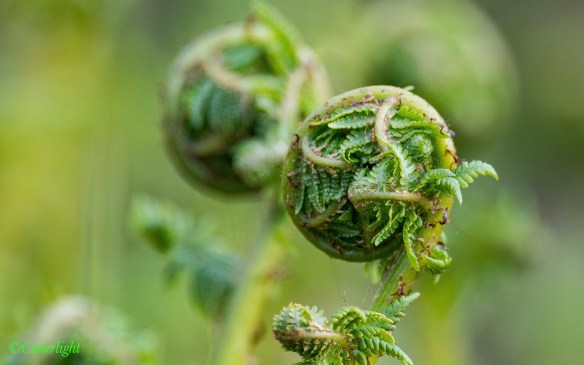
Chignik Lake Fiddlehead FernBursting

Seasonally, the Chignik calendar for spring, summer, winter and fall fits well with the actual dates of winter and summer solstice and spring and autumn equinox. So, while back in my native western Pennsylvania I thought of summertime as starting at the beginning of June, here at The Lake it doesn’t feel like summer until Chinook Salmon begin to enter the river in late June. The main exception to this view of seasonality at the Lake is that our summers are a bit truncated. Autumn comes early.

I made this photograph on June 4, 2019 on a hike to Clarks River – a trek made memorable by our first bear sighting of the year. With the school year having finished weeks ago, we had been going out every day, soaking up as much of our beloved countryside as possible before our scheduled move to Newhalen later in June. Chignik Lake’s school enrollment had dropped below 10 students; the school board had voted to close the school and transfer Barbra. A strange mix of springtime joy and melancholy stirred within our hearts. We did not want to move. But perhaps the understanding that we soon would be leaving created in us a deeper appreciation for the beauty we were surround by.

Willows had just begun to leaf out, and the year’s first flowers were emerging – salmonberries, wild geranium, pink lousewort, delicate purple violets, cinquefoil and lupine. Heavy buds hung from iris and chocolate lily stems. Fireweed was just beginning to push up through the soil in thin red shoots. Our avian spring migrants had returned, and the hike was alive with the songs and calls of swallows, thrushes, sparrows, warblers, yellowlegs, gulls and cranes. Just a few days prior, on May 28, Donny had caught the year’s first Sockeye Salmon in his net. Eagles had begun to post sentinels along the river, watching for more fish to arrive. My memory of the hike is of warmth, but I can see from a photo I took of Barbra that we were still wearing substantial coats and gloves.

While Barbra was photographing alder catkins, (the long, golden-yellow flowers that hang from male trees), I turned my attention to the tightly furled fiddlehead ferns in the above photo. My mind was more on birds than plants, so I had affixed my wildlife lens to my camera and had even attached a teleconverter. But when I looked through the viewfinder, I liked the image so I composed the shot. There’s nothing like a long lens for creating bokeh. (Nikon D850, Nikkor 600 mm + 2.0 TC = 1200 mm, 1/25 at f8, ISO 650)

Birds of Chignik Lake: Willow Ptarmigan – Once Abundant at The Lake; Now Nearly a Cryptid

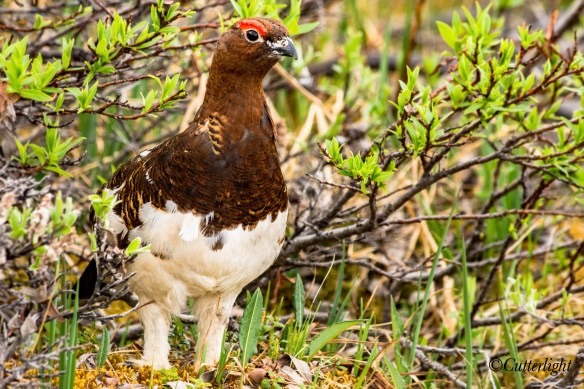
Willow Ptarmigan male

Hmm… I wore white slacks something like these to my high school senior prom. I think they are better suited to this dapper male Willow Ptarmigan. While on a backcountry backpacking excursion in Denali National Park a few years ago, we had an opportunity to observe and photograph Willows in frame-filling portraits like this. The male’s “potato! potato! potato!” call woke us each morning in a breathtaking landscape we shared with carpets of wildflowers, rushing glacial rivers, Grizzlies, Dall’s Sheep, Caribou, Moose, Wolves and Wolverines. (Denali National Park, June 9, 2017)

In choosing photographs for this project, I try to use pictures taken of local birds and, to the extent possible, to use my own captures. At the same time, I strive to select at least one photo for the article that clearly depicts characteristic markings and coloration of that species. Sometimes that’s not possible. I have yet to get any photograph at all of the Gyrfalcons that occasionally cruise through our valley. Clear captures of a few other species I’ve positively ID’d have eluded me as well – Northern Harriers gliding in an unphotographable distance, a Saw-whet Owl who evaded being photographed through high winds and rainstorms and his own secretive habits during a brief visit to our village being among examples.

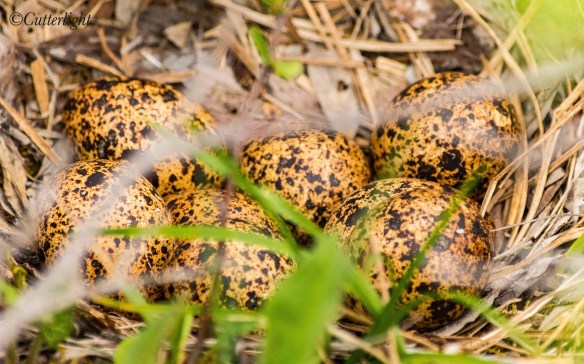
Willow Ptarmigan nest eggs

We startled ptarmigan from their nests several times while hiking through willow thickets in Denali. The best procedure is to give the nest a respectable berth and continue hiking, but on this occasion I took the opportunity to snap a quick photo – with a telephoto lens and not disturbing the vegetation surrounding the well-concealed eggs. The hen soon returned. Willows may lay as few as four or as many as 14 inch-and-a-half to two-inch eggs. (Denali National Park, June 7, 2017)

The Willow Ptarmigan presents a somewhat different challenge.

We’ve never seen one here at The Lake. Or anywhere near The Lake.

Nor heard one, though we are familiar with their calls.

Nor found their scat, though we know what that looks like and have searched likely places for it.

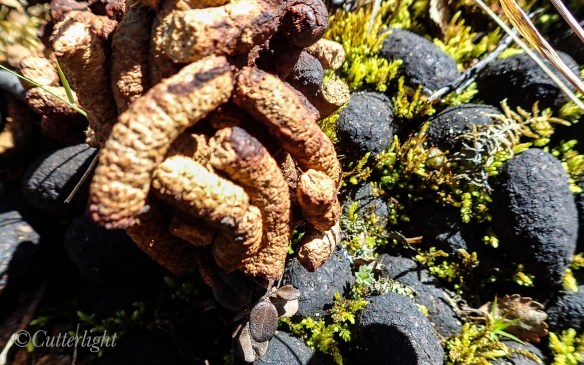
willow ptarmigan scat

Willow Ptarmigan scat… in case you were wondering… (Denali National Park, June 14, 2017)

No one else has seen a clue of this species around here in recent years either, though everyone agrees that they were once abundant. “We used to sometimes find them in the swamp (marsh) right in the center of the village,” a guy my age told me. “Yeah, they used to be everywhere,” another friend observed. “Especially around Black River and Upper Lake.”

Not anymore. Whether they were locally shot out (they are famously unwary), overcome by  disease or simply no longer find the habitat here suitable is uncertain. In recent years they have been absent, and there are enough eyes looking out for them that if any were around, it would be known.

Willow Ptarmigan unwary

They’re not guarding nests. They’re not tame. They haven’t been baited. They’re just Willow Ptarmigan being Willow Ptarmigan, and as Barbra could as easily be approaching with a 20 gauge shotgun as with a camera, they’re illustrating a susceptibility to being locally extirpated by hunters. They aren’t merely “dumb.” Ptarmigan have been known to exhibit playful behavior with each other and they’re well adapted to the harsh environments they thrive in. But perhaps they trust the camouflaging qualities of their plumage – which becomes white during wintertime – a little too much. (Point Hope, Alaska, September 2, 2013)

And then, just a few weeks ago one morning while Barbra and I were out exploring after a fresh carpet of snow had been lain down, there they were. Not the birds themselves, but tracks. Unmistakable. Miniature three-toed snowshoes gently pressed into the powdery snow. Ptarmigan. No cryptozoologist on the trail of Bigfoot could have felt their heart soar higher than did ours at the finding. We stood rock still and listened. We watched, our eyes peering as far up the trail as we could see and into every little pocket and open space along the way searching for movement, a dark eyeball, anything. We quietly followed the tracks, not even daring to whisper till they abruptly disappeared. We continued our hunt in ever broadening circles, eyes sharp for a bird we knew would be as white as the snow itself this time of year.

No birds.

Yet.

But maybe they’re coming back. Oh, happy day!*

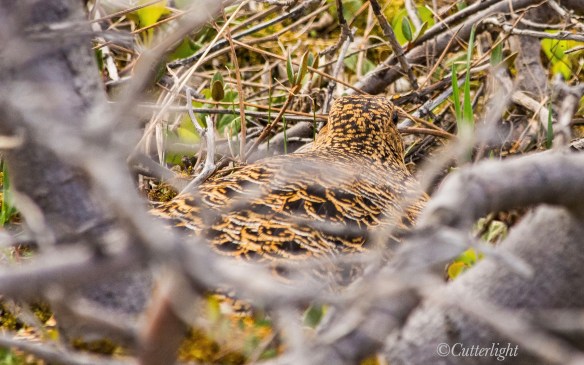
Willow Ptarmigan hen on nest

The portent of good things to come – and a scene we’d like to find near The Lake: a Willow hen brooding her eggs. Members of the grouse family, Willows are the only grouse species in which the males regularly assist in raising the young. (Denali National Park, June 8, 2017)

Willow Ptarmigan Range Map: with permission from The Cornell Lab of Ornithology, Birds of the World

Willow Ptarmigan Lagopus lagopus
Order: Galliformes
Lagopus: Ancient Greek Lagos = hare + pous = foot: hare foot, for its heavily feathered feet which, as with hares, allows the ptarmigan to more easily walk on snow
lagopus: as per genus definition above

Status at Chignik Lake: Now rare, but as Willow Ptarmigan are seen elsewhere on the Alaska Peninsula, could repopulate in the future

David Narver, Birds of the Chignik River Drainage, summers 1960-63: Common around Chignik Lake; Abundant around Black Lake

Alaska Peninsula and Becharof National Wildlife Refuge Bird List, 2010:
Common in Spring, Summer & Fall; Uncommon in Winter

Aniakchak National Monument and Preserve Bird List: Present

*From Shakespeare’s Henry IV, Part 2. Bardolph: “Oh Happy Day! I wouldn’t even trade a knighthood for my new, good fortune.”

Table of Contents and Complete List of Birds of Chignik Lake

© Photographs, images and text by Jack Donachy unless otherwise noted.

For a list of reference materials used in this project, see: Birds of Chignik Lake

Birds of Chignik: Western Sandpiper – Elegance in a Tiny Being

Rufous scapulars and golden-brown highlights make the Western Sandpiper among our prettiest little shorebirds. Check out the tiny spoon at the tip of this little sandpiper’s down-curved bill. Such elegant detail in a tiny being. (Chignik River, July 24, 2020)

We had irregularly been encountering flocks of anywhere from dozens to perhaps a couple hundred small shorebirds on fishing trips to Devil’s Flats. Obsessed with putting flies in front of salmon and char, I had difficulty breaking away to attempt photographs of the little peeps. But as days passed and July headed toward August, I knew I’d better get with it before the visitors migrated out.

Chignik River Western Sandpiper

I am occasionally taken aback with photographic evidence of just how modest some of my field estimations of numbers in flocks can be. I’d been saying “dozens” when we encountered these sandpipers, but there are well over 100 birds spilling out of this frame and there are still more birds in a separate flock nearby. If you’ve got a screen large enough to not result in eyestrain, it might be interesting to see how many birds you come up with in the above picture. (Photo by Barbra Donachy, Chignik River, July 24, 2020)

Yet, even equipped with the right photographic equipment and good intentions, it wasn’t until the evening of a day late in July that Barbra and I finally got our shots. The fishing had been good, but the birds had been no-shows. We’d called it a day and were heading back to the skiff when the peeps finally arrived. Suddenly 200 or so birds were winging their way up the river, heading straight for the gravel shores of the island where we’d beached Buster. We immediately dropped our fishing gear into a loose pile and began setting up to shoot as the birds lit down along the rocky shoreline.

western sandpipers chignik river

At an average length of just 6½ inches – only a quarter of an inch larger than a junco – these birds presented us with the usual challenges in photographing, wary, tiny, ever-moving wild birds. We found that by crawling slowly and keeping vegetation between ourselves and the feeding sandpipers – tufts of tall grass, burdock, willows – we could approach fairly close without disturbing them. For a short while, they scurried through the river shallows and rocks bobbing their heads and feeding frenetically. At times they appeared to be using their bills to pick something minute from the water’s surface; at other times they jabbed and probed between rocks; and at still other times they seemed to use their bills as a small plows, pushing them forward to stir up the silty bottom, chirping and cheeping with enthusiasm at the smorgasbord they were finding. For a little while, there was quite a lot of busy activity.

And then they did something that astonished us. Almost as one, the feeding stopped, the chattering quieted, and the little birds seemed to disappear. Before we knew it, most of them had nestled into comfortable places among the rocks, tucked their bills beneath a wing, and closed their eyes. I’d never considered shorebirds roosting after a meal as do other birds, but of course they must. Had we not known the birds were there, I doubt we’d have noticed them. Suddenly, the many times I’d been walking along a shoreline and was startled by a flock of peeps exploding into flight practically under my feet came into focus. Even a falcon passing overhead might miss these birds at rest. It is their movement that gives them away.

western sandpiper sleeping Chignik River

Of course, not all of the birds slept at once. Always a few remained vigilant, continuing to feed and looking about them as they did. However, we’d learned something that day, and on subsequent outings we tested ourselves by carefully looking over the ground near any actively feeding birds. At times we were able to find additional birds that were roosting, birds that in the past we would have missed.

Western Sandpipers flight Chignik River

We stayed with the shoot as long as we could, but by the end the sunlight had gone from this part of the river and a chill was seeping into the air. Who knows what prompts avian decisions? At some point the sandpipers lifted into the air and flew back downriver. I read a short essay on how it is that they manage to fly together, banking and turning in unison without colliding into each other. But I still don’t really understand it, which is well enough.

All things come to an end, and so it was with this day. Our Sockeyes for the year had already been caught, cleaned, filleted and freezer-packed, so on this day we had successfully cast to the river’s Dolly Varden Char and Pink Salmon, and whether foul-hooked or fair, a few Reds had found our flies as well. It was early still for Silvers, but we searched anyway and in so doing took note of a few King Salmon which we failed to entice. Jacob’s Ladder, Yellow Monkeyflower and River Beauty were near their peak, signs of active bears were everywhere, and on the way home I got nice photos of our fledgling Rough-legged Hawks.

The range map indicates that these sandpipers are migrants, on their way south after nesting further north. As we’ll be able to begin skiffing the river as early as we want to this coming year, an objective will be to keep a keen eye out for when these birds arrive on The Chignik.

Western Sandpiper Range Map: with permission from The Cornell Lab of Ornithology, Birds of the World

Western Sandpiper Calidris mauri
Order: Charadriiformes
Calidris: from Ancient Greek kalidris or skalidris, a term Aristotle used for some gray-colored shorebirds1
mauri: for the Italian botanist Ernesto Mauri

Status at Chignik Lake: Common on Chignik River gravel shorelines and bars for a few weeks in summer

David Narver, Birds of the Chignik River Drainage, summers 1960-63: Not Reported

Alaska Peninsula and Becharof National Wildlife Refuge Bird List, 2010:
Common in Spring & Fall; Uncommon in Summer; Not reported in Winter

Aniakchak National Monument and Preserve Bird List: Present

Click here for the: Table of Contents and Complete List of Birds of Chignik Lake

© Photographs, images and text by Jack Donachy unless otherwise noted.

1From the article “Calidris” in Wikipedia, which sites Jobling, James A (2010). The Helm Dictionary of Scientific Bird Names. London: Christopher Helm. p. 84. ISBN 978-1-4081-2501-4.

For a list of reference materials used in this project, see: Birds of Chignik Lake

Birds of Chignik: Ruddy Turnstone – Birding, Boating & Procuring Fuel in the Alaska Bush

ruddy turnstone chignikThe Ruddy Turnstone’s harlequinesque plumage might seem impractical – until one finds them in a scene such as this, seamlessly blending in with an array of varicolored seaweeds. (Chignik Lagoon, July 27, 2020)

The village of Chignik Lake was out of gas. It happens from time to time, one of the generally minor inconveniences living in this remote community entails. All of our fuel, gasoline as well as diesel and propane, must be barged or boated upriver from The Bay or The Lagoon. When a handwritten cardboard sign on the village’s lone gasoline pump says “Out,” it’s out. There is nothing to do for it but pick a day when the weather is fair and a high tide makes the river navigable and make a fuel run. With gloriously long summer days upon us and all kinds of wildlife viewing, berry picking, fishing and general exploring beckoning, we needed gas for our hondas and the scow. And so on a favorable daytime tide, we packed the back of the scow with bright red plastic jerry cans and skiffed the six-miles downriver to Chignik Lagoon. And since you never know what you might see along the way, we brought along cameras as well.

It was just before high slack-water when we beached our boat at The Lagoon. Barbra and I carried the first of our jerry cans the short walk up a little slope where we were met at the gas pump by Jeremy. He turned on the pump for us, Barbra phoned our credit card information over to the village office, and after a few trips back and forth we had the tank on our boat as well as all the spare cans filled. No problem.

But you’ve got to keep an eye on the tide.

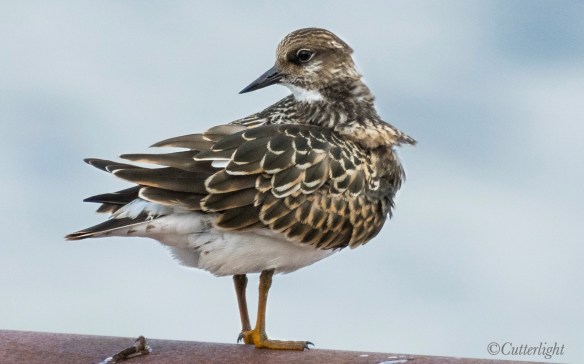
Chignik Lagoon Ruddy Turnstone

Ruddy Turnstone in non-breeding plumage – possibly a juvenile. (Chignik Lagoon, July 27, 2020)

With our chore behind us, we set about attempting to photograph the shorebirds we’d been noticing. A pair of dippers were flitting in and out from under the hull of a rusty barge on the beach and a few Least Sandpipers were working the shoreline, but a group of shorebirds with rich plumage and brilliant orange legs drew my attention. Although the tide was now dropping, with a jet-drive engine powering our little boat we were confident we’d have no problem making it back upriver. Nonetheless, we should have thought to push it off the beach as the tide pulled away. The double-hulled boat is deceptively heavy; if it doesn’t have water beneath it, it is a bear to move.

I didn’t quite get the photographs I wanted of the Ruddy Turnstones, but I managed some nice documentation shots. It was Barbra who thought of the scow. “We need to get going!” she exclaimed with some alarm in her voice. “Look at the boat!”

It was almost, but not quite, high and dry. Oh boy. This was going to be work. Fortunately a passerby happened along on his honda. As is almost always the case around here, upon seeing our plight he jumped off and lent a hand. Inch by inch we swung the bow seaward. We said thanks, pushed off, and Barbra assumed the steering wheel, fired up the engine and we began the return trip toward home, another “learned by error” piece of savvy acquired as we expand our skill-set in this way of life.

Ruddy Turnstone Chignik LagoonAfter a brief stopover at the lagoon, these birds will be on their way south again. New Zealand? Australia? Some seldom seen Pacific Island? The migrations shorebirds and terns undertake boggle the mind… (Chignik Lagoon)

Based on the range map (below), it appears to have been happenstance that we ran into the Ruddy and Black Turnstones we encountered that day. Ruddy Turnstones that breed in Alaska and Siberia migrate northward from Australia and Pacific islands in spring, then return south via Alaska’s Pribilof Islands, the Aleutians and the Alaska Peninsula. So these were post-breeding migrants. As is the case with Semipalmated Plovers, the adults embark on the southerly migration first; the chicks don’t fledge until after the adults have departed and are therefore left to make the journey over many thousands of miles of the vast Pacific Ocean on their own.

How do they know where to go?

As their name indicates, turnstones employ their wedge-shaped bills to upend pebbles and other debris as they search for invertebrates. When nesting, insects, particularly mosquitoes and midges, figure heavily in their diet, but they also consume berries, vegetation and even carrion and the eggs of other birds.

This is a species in decline. Coastal development, plastic pollution and overfished horseshoe crab populations (some turnstones rely on horseshoe crab eggs as a major food source during migration) are among the culprits. The horseshoe crabs, in case you’re wondering, are used as conch and eel bait by commercial fishermen. Seems a waste… as are plastic bags, plastic bottles, and discarded cigarette butts.

Ruddy Turnstone Range Map: with permission from The Cornell Lab of Ornithology, Birds of the World

Ruddy Turnstone Arenaria interpres
Order: Charadriiformes
Arenaria: Latin arenarius. arena = sand; inhabiting sand
interpres: Latin for messenger

Status at Chignik Lake: Occasional as a post-breeding migrant along the shorelines of Chignik Lagoon and Chignik Bay

David Narver, Birds of the Chignik River Drainage, summers 1960-63: Not reported

Alaska Peninsula and Becharof National Wildlife Refuge Bird List, 2010:
Uncommon in Spring & Fall; Rare in Summer; Not reported in Winter

Aniakchak National Monument and Preserve Bird List: Present

Table of Contents and Complete List of Birds of Chignik Lake

© Photographs, images and text by Jack Donachy unless otherwise noted.

For a list of reference materials used in this project, see: Birds of Chignik Lake

Take a Honda Tour of Chignik Lake, Alaska

As part of a project we’ve been working on, we’ve decided to take interested readers on a tour of our village. So Barbra put a GoPro on her head, fired up her Honda, and we went on a short land cruise. I’ve feathered in a few photos to provide an idea of what The Lake looks like when it’s not an icy-cold, winter-brown November day (when we made the video).

Imagining something you love through another’s eyes can be… well, eye-opening. It struck us how “empty” our village might seem to folks who take things like stores, government buildings, traffic signs, and bustling sidewalks (or any sidewalks) for granted. So, rather than the vibrance of an urban community, imagine instead the rhythms and energy of a community where you know everyone – literally, everyone. Where, instead of watching for oncoming traffic, you watch for ambling brown bears. And where the small community store is a convenience, but in reality your freezer is stocked with salmon from the nearby river, halibut, cod and crab from the nearby sea, moose and caribou from the surrounding land, and gallon upon gallon of hand-picked blueberries, raspberries and wild cranberries.

Enjoy the video and let us know what you think! (Oh, by the way, did I mention we have a position open for a health aide?!)

Silver to Gold: October Fly-fishing on the Chignik

male Coho Salmon Chignik River Alaska

Sea-green shoulders gone to bronze, sliver flanks tinted rose – October on the Chignik

Chignik River Alaska

Found the hint of a honda trail overgrown with willow, alder. Hacked it open with anvil loppers and a handsaw, rode in as far as possible, parked, hiked to the crest of a hill blanketed in moss-like crowberry and ankle-high low-bush blueberry, tiny leaves candy-apple crimson, took in the view. Bear trail worn deep into the berry flat. Centuries? Millennia? Willow and alder thick, had to stoop, then crawl. Small creek, nearly hidden, then the bear trail again. Bear scat packed with berries, disc-like salmon vertebrae. Paw prints. Large, medium, small cubs. Otter scat. Fox scat. The river. Gulls crying, eagles gliding, kingfishers rattling, so many salmon ascending the shallow riffles, their splashing like a cataract. Retraced steps. Hacked out the trail thinking of fly rods, camera gear, companions. Fresh bear pile at the trailhead – must’ve heard or smelled this human and turned back. Morning’s work.

Fireweed Cotton

Next morning. Frost, fly rods, icy fingers. We pause on the hill crest, listen for bears, watch the brush below for movement. Breathe deeply. Sift the damp air in cold noses for bear scent, tap cans of pepper spray secured in wading belt holsters. Mist curling, rising, sun peeking over mountains. Gulls, kingfishers, magpies, chickadees, downy woodpecker. Thin, wispy murmurings… kinglets? Interludes of silence. Near silence. Always the gentle language of the river, primal score to everything here, song. New bear scat, prints punctuated by five sharp claw marks piercing ice-laced mud by the creek.
   Creek mouth, muddy cove. More bear tracks a foot under water. Wade in, cross the channel behind Dolly Island, shoals of startled salmon wake the water into soft, liquid surface folds ahead of us, gulls cry and lift from a rocky bar.

Salmon & Fall Reflection Chignik River Alaska

We follow a bear trail among a maze of bear trails across the island, through fireweed gone to cotton, yellow grasses, russet burdock husks, gray-brown cow parsnip seed crowns sunlit, wet with dew, glistening spider silk. Steamy breaths precede us as we stride toward our place along the stony shoreline. Yellowing cottonwood leaves. We have come here before, always by scow, noisy engine. Different hiking in. Quiet. Intimate. Assemble rods, thread line through guides, choose flies. Looking intently at the water, at first only reflections appear. We relax our vision to see past the surface, into the water, finding bottom. Stones. Then salmon. Lots. Males flanked in crimson, pink, maroon; females tarnished silver, blue metal, coppery backs.
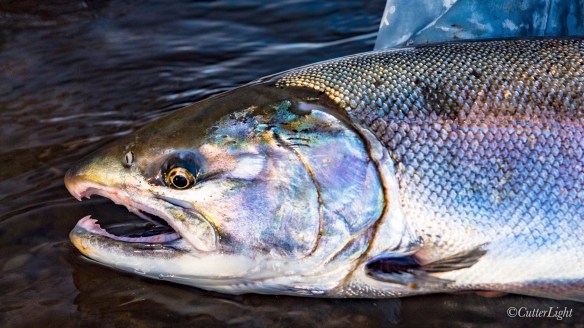
female Coho Salmon Chignik River Alaska

The salmon are plentiful, but catching is not a given. Lifeless, finger-sized fish scattered here and there across algae-slick orange-brown bottom rubble – char, salmon parr, sculpins, sticklebacks. Some bitten through. Most whole. Salmon no longer feeding sometimes snap at small fish in their path, each day in the river teeth growing longer, sharper. Annoyance? Testosterone aggression? Memory of joy cutting through schools of anchovies, sand lances, herring? Or is it something more practical yet more mysterious… an instinct to eliminate whatever might later prey upon the salmon’s progeny, an itch in their jaws only scratched by the snap of a small fish’s spine, a tiny skull crushed?
   Flies are chosen with these thoughts in mind. We lack the decades – or centuries – of accumulated experience some possess. Our choices are guesses. Bright flies. Flies that pulse enticingly in current. Pink, chartreuse, strawberry, plum, marine blues and greens, streamers that sparkle and dart like panicked fish, flies that breathe with rhythm and the illusion of life even when held steady against the current. Double check knots. Flatten barbs. Step into the river as quietly as deer.

Coho Salmon in Fall Color Chignik River Alaska

From the silver of summertime to the colors of autumn… they’re gorgeous fish. It may be true that pound for pound, no species of salmon fights harder than Chinook. Hard to say. The kype-jawed buck Coho in this photo made five spectacular, cartwheeling leaps and two long, blistering runs.

Coho Salmon Pink Popper Fly

Streamers are most effective, but small wet flies and even poppers take fish.

Fly Fishing Coho Salmon Chignik River Alaska

In this, our fourth year on the river, the flats above Devil’s Nose have drawn us. Sockeyes in June and July, Pinks and Kings in July and August, Silvers from August through October. Dolly Varden char whenever salmon are present. Steelhead pass through here. A few. The river is the road connecting the three Chignik Villages; an occasional boat cruises by. Seldom another fisherman, even in summer. In fall seldom becomes rarely.
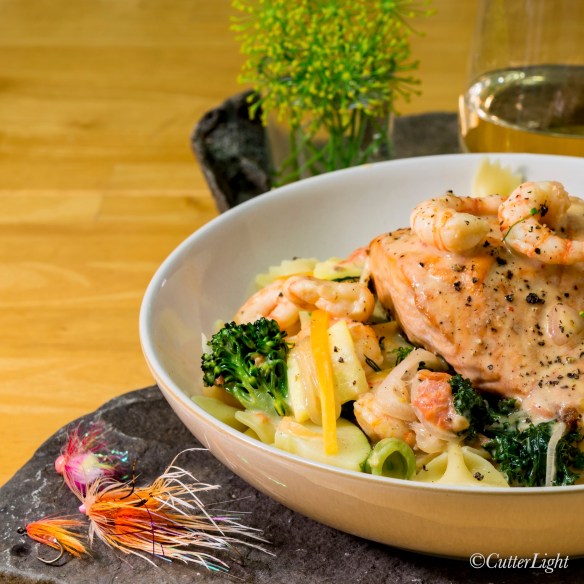
Coho Salmon Dill Sauce Chignik River Alaska

Winter soon. Months of dark and absence. Fly-fishing days of summer and fall relived over meals of salmon and bottles of wine… It is a time when speculation, plans, hopes for future seasons begin to take form. Newly fledged hawks, baby owls, sows and cubs, massive male bears chasing down spawning Reds, upcountry hikes and flowers, the wolverine at the mouth of Bear Creek, the big Chinook we saw lace reflections together.

Fly Fishing Salmon Chignik River

Terminal dust – summit snow marking the end of summer. A cloud you might surf, if only… Alders clinging to green, willows giving themselves to gold. Shafts of sunlight illuminate a shaded pool. Illuminating salmon. False cast to measure the distance. Back cast to load the rod as a powerful spring, then the forward cast. Quick, calm upriver mend. Strip, strip, strip… Eyes searching for the bit of purple and flash pulsing at the end of the leader. Scarlet flank catches the light as a buck salmon turns to follow. Anticipation pulls knees into a crouch. Lean forward, hopeful. Line abruptly taut. Quick strip followed by another to be sure, rod lifted into a satisfying arc, alive, water erupting in a geyser. Mind suddenly empty, free, thought vanished except for this moment of being. October on the Chignik.
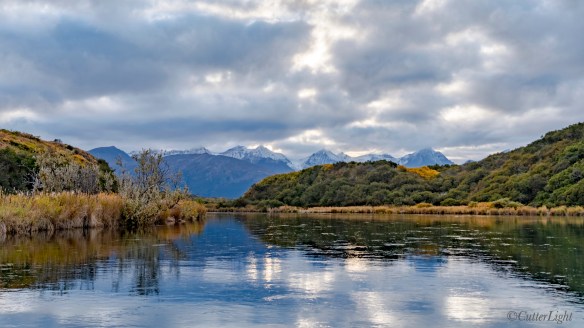
Devil's Flats Chignik River

*   Upriver   *