Epic Storm Hits Point Hope, Alaska

Looking out a high school window, we watched our sturdy home strain against hurricane force winds.

Monday, November 7, 2011. We watched the NOAA reports as a violent storm was pounding the Aleutian chain on its way northeast up the Bering Strait. On Tuesday morning, we headed to school as usual. The storm was supposed to hit our village hard at 9 p.m. All in the village were abuzz with the coming storm. A double warning had been issued – hurricane force winds and storm surges. The last storm of this magnitude to hit Point Hope was in 1974. I’m not sure how much of the town had moved to the new site (our current site) by then, but we heard stories that the underground storage areas had been flooded and some of the surge waters had made their way into the village.

The students were asking all sorts of questions: Will it flood? What would a 15-foot wave look like? Have you ever been in a hurricane? We tackled all the questions and found a video to watch about weather as the wind picked up outside and near whiteout conditions obscured the post office from view just across the street from the school.

In the late morning, the decision was made that the students should be sent home. The school bus (yes, this small village has a school bus!) delivered the students safely home and our staff prepared to turn the school into an emergency shelter.

Later, Jack and I tucked in at home. In anticipation of losing power, we charged our phone and laptop, set out flashlights, candles and matches, and filled our water bottles.  By late afternoon, the wind had been whipping through the town. Since there are no trees, it was difficult to visually assess the wind speed. The internet said 23 mph, then 39 mph, then 53 mph, gusts were being reported to 90 mph. Our house began shaking as the gusts grew heavier, and framed pictures on the walls were moving. The heavy wooden doors on an outside cabinet that houses our propane tank began creaking on their hinges and banging open and shut. We could hear the wind roaring through the village.

Through the worsening conditions, our sturdy little house generated confidence. No matter how it shook and shuddered, we were sure it would hold together.

At 5:00 AM, we awoke to fierce winds and no power.

The school had officially become the village’s emergency shelter. Families streamed in with blankets and cots for the elders and sleeping bags and air mattresses for the young. Our school is fairly large. One wing houses the elementary, one wing houses the high school with the middle school,  a small gym (which also operates as a cafeteria) and a large gym in the center. There was ample room to house the 500 people who ended up in the school. Our terrific cafeteria staff worked diligently to feed all the guests breakfast, lunch and dinner. Some rooms became quiet rooms for elders. Other rooms held whole families including nursing mothers and pets.

It was reported that a transformer had been knocked out, utility poles had been snapped, and wires were hanging loose. The high winds precluded linemen from flying out to our village. No one panicked. I think people knew the storm would pass, the winds would calm, the ocean waters would recede and power would be restored.

This morning, when the winds had quieted, Jack and I walked to the coast. The ocean waters were still roiling and the waves were still crashing against the shore. But it was only in the way a tantrumming child beats his fists to the ground when he is nearly out of steam. A seven foot bank of snow was packed up against the berm. The waves hammered away at the bank, evidenced by floating chunks of snow in the waves.

With the winds nearly blown out, planes were finally able to land, delivering the linemen. With steady work from one end of the town to the other, power was restored in it’s own wave from east to west. By about 4:30 p.m. most of the village of Point Hope was lit and houses were warming–and luckily so at that because had the outage lasted longer, there surely would have been frozen and burst water pipes in the freezing cold. The epic storm of 2011 is officially over.
Point Hope Storm, Nov 9

Just a quick note to friends and followers who may be looking at the national weather news:

Although it’s blowing hard up here and we’re without power, all is well. The school is running on a generator and is a safe haven if we or others need to go there.

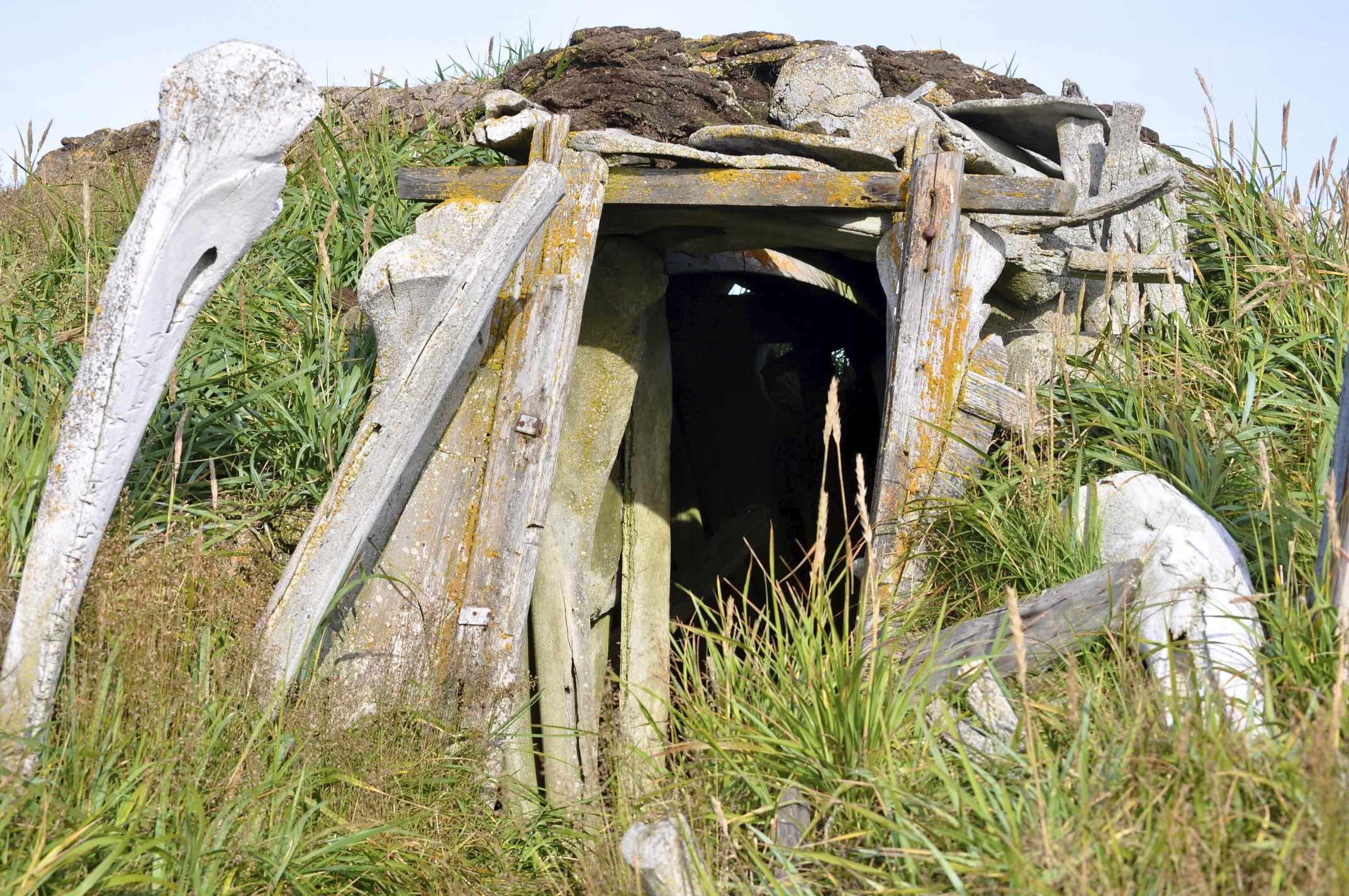
Sod and Whalebone Home, Tikigaq

This semi-subteranian sod, driftwood and whalebone home was the last such structure to be inhabited in the old village of Tikigaq on Point Hope. It was abandoned in 1975, and by that time was hooked up to electricity. Prior to electricity, these homes were illuminated and heated with seal oil lamps and are reported to have been quite warm. Near the homes, people dug cellars which served as year-round deep freezers.

Caribou, seal, walrus and whale bones are scattered across the grassy tundra, and where people once lived now ground squirrels make their homes. Much of the land that was once inhabited has long since been washed away as generations of winter storms have eroded the peninsula. There have been times when polar bears have used structures in the old village as temporary winter dens. Snowy and short-eared owls, which hunt by day, along with marsh harriers keep the squirrels and voles in check.

Old Tikigaq–The Last Shaman


The last of the shamans of Point Hope, a man by the name of Masiin, lived in this house in the now-abandoned village of Tikigaq.

The history of shamans in Inupiat culture is a complex one. At the turn of the century, a man identified in texts as both a shaman and a chief, Atanjauraq, grew wealthy trading with the whale hunters of several nations who had settled near Point Hope in a polyglot village called Jabbertown. The ruins of this village are still discernible, albeit barely, as raised mounds a mile or so east of present day Point Hope. Atanjauraq’s increasing wealth was accompanied by a taste for alcohol. As he grasped for ever more power, he created enemies and ended up murdered by his own people while sleeping off a drunk.

Shaman Masiin, the last shaman of Tikigaq, died of natural causes in 1958. In his book The Things That Were Said of Them: Shaman Stories and Oral Histories of the Tikigaq People, Tom Lowenstein reports this story told by an individual named Asatchag.

“It was 1953, wintertime. My wife invited Masiin to supper. And after we had eaten, the old man told several stories. Then he called me by name and told us he’d been traveling last night. He’d been to Russia. And when he’d flown round for a while, he saw the Russian boss. ‘That’s a bad man,’ said Masiin, ‘so I killed him.’ Next day, at three o’clock–we had a battery radio–I listened at my coffee break. The news announcer said Stalin was dead.”

To add mystery to the above story, it is reported that Masiin did not listen to American radio, and knew no English.

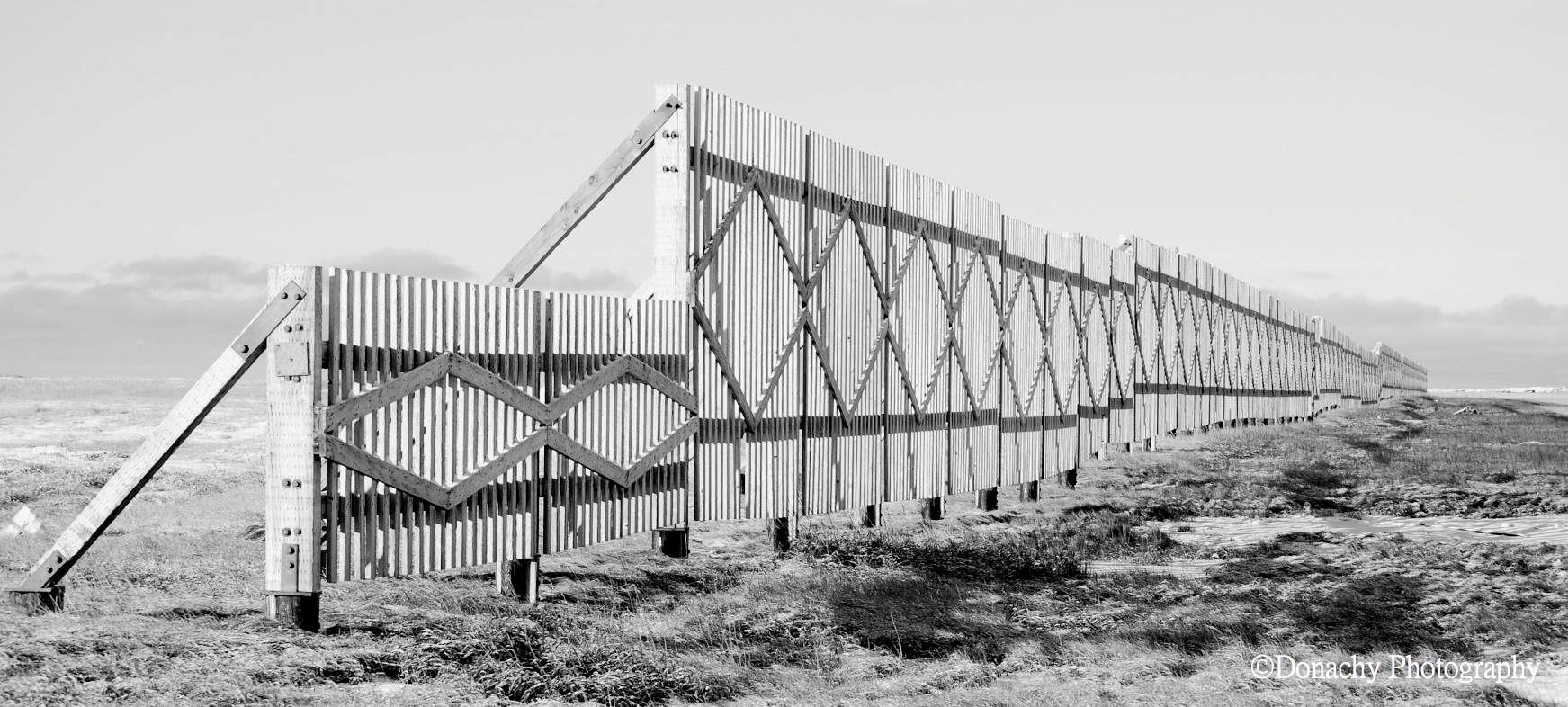
Bush Alaska: Arctic Snow Fence


The first snow fell a few days ago. Brilliant sunshine melted it. Snow fell again yesterday. So far the sun is winning the battle. As the days are getting shorter, it is certain that the snow will win.

Our lagoon has iced over in large patches. There are short tracks on the ice where people have briefly ventured out but returned.

The snow fence stands ready for the winter. It looks strong and resilient having beaten back the drifts year after year.

The fence in Point Hope looks much sturdier compared to the fence in Shishmaref  (http://wp.me/p1305P-1T). This can only mean that we are ready for gale force winds.

Whalebone Graveyard Fence


Point Hope is a whaling community. The villagers primarily hunt bowhead whales. The jawbones of the bowheads are used to mark feasting areas and (above) the graveyard. The graveyard is completely surrounded by the jawbones, which average about seven feet tall. Some looked to be well over ten feet! It’s impressive to note that every two bones used in this unusual fence represents one whale.

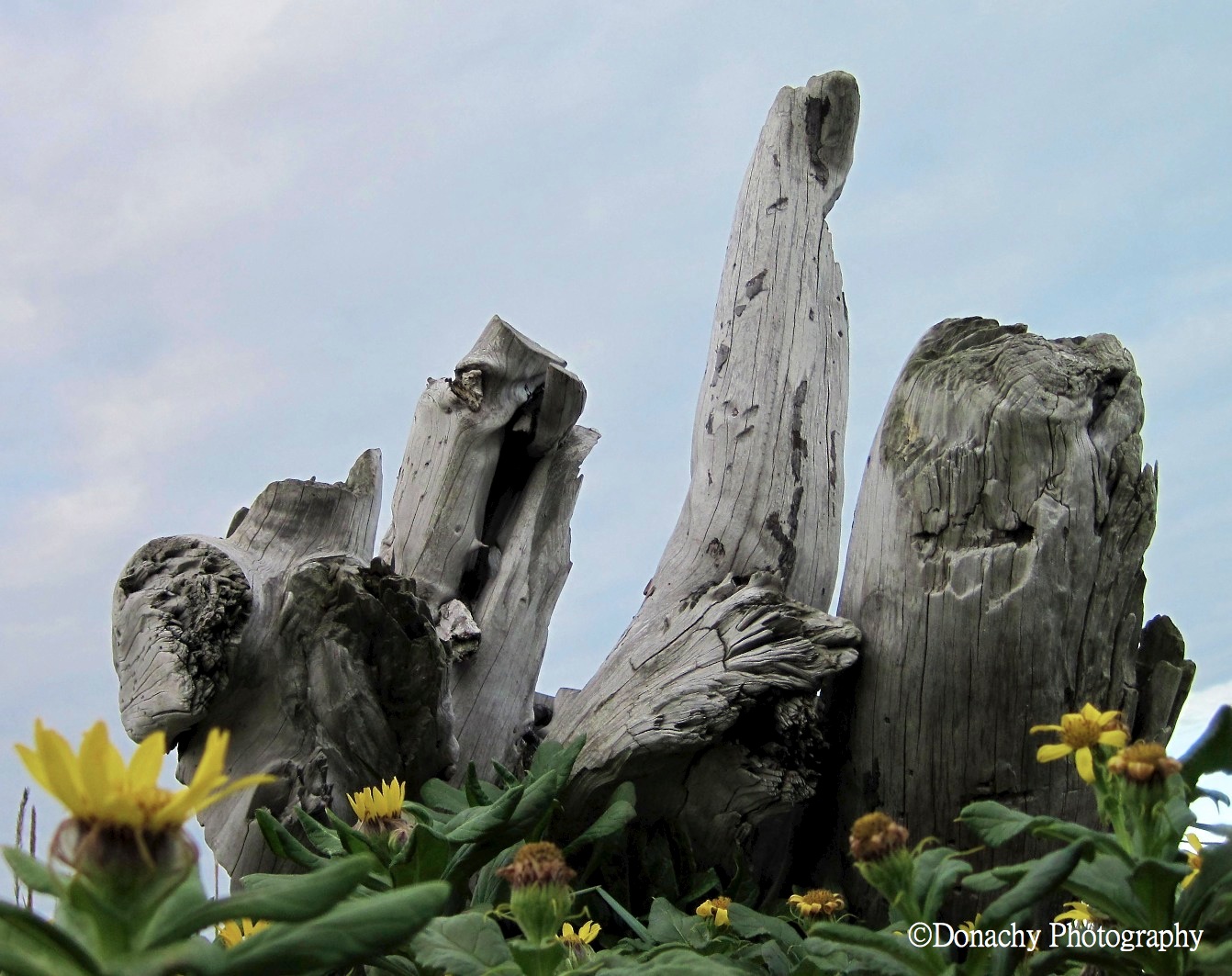
Drifting and Dancing Wood


There are beautiful pieces of driftwood on our beaches here in Point Hope. The piece above looked like ocean animals doing a dance among the summer flowers. I never really thought about where driftwood might travel from until yesterday. I realized that this wood traveled in from the ocean, maybe hundreds or thousands of miles from my village. There are no trees here. The closest trees are small willows that grow up river some ways away. Each piece of driftwood, some as small as sticks and some as large as entire tree trunks, has a story. Maybe they came from Japan or Russia? Where have they come from? How did they come to be on this beach? What caused them to drift? What did they experience along the way?

The Bones of a Village

New enough to reveal steel and aluminum nails, old enough to be well-weathered by the Arctic climate, the bones of this seal-skin whaling boat were left behind when Point Hope (Tikigaq) relocated two-and-a-half miles inland in the 1970s. Point Hope is one of the longest continuously inhabited places in North America.

The Inupiaq name for Point Hope Village, Tikigaq (tick-ee-yahk) means index finger and described the way the gravel point once hooked into the Chukchi Sea. Time and tide long ago washed away the crook of the finger, leaving behind a triangular point near enough to deep water that the whales that first drew the Inupiat people here thousands of years ago still swim close to shore. The 2.3 mile hike from the current town out to the point gets a little tough once the road ends and the pea-to-chunk-size gravel begins, but it is well worth the effort. In addition to bowhead and other whales, which are frequently sighted, the collision of currents at the point holds large schools of finger-sized baitfish, which in turn draw flocks of Arctic terns, gulls, murres, puffins, jaegers, guillemots and ducks while various sandpipers patrol the shore. At times, the sea and sky are filled with hundreds–if not thousands–of birds. The small fish also attract roving schools of pink, silver and Chinook salmon and sea-run Dolly Varden which in turn are followed by spotted, common and bearded seals. Walruses show up from time to time as well.

The walk to the point passes through the Old Village, a ghost town of semi-subetranean homes made from sod, whale bone and driftwood as well as more modern, wood and metal houses. It’s fascinating to walk through the Old Village and contemplate what life would have been like up here before electricity, running water, guns and gasoline engines–when the only “grocery stores” were the great herds of caribou 25 or more miles to the east, bowhead whales swimming in the freezing Arctic Ocean, and the various fish, seals, berries and plants gathered in their seasons.

To Anchorage, or Not To Anchorage

(Our Shishmaref kids)

That was the question.

Jack and I spent the weekend in Anchorage attending the Alaska Teacher Placement job fair. A fascinating experience better left to its own blog post…

Anyway…

We left Shishmaref Thursday morning and had a layover in Nome on the way to Anchorage. The weather was bright and sunny. It was around zero when we left Shish. We arrived in Nome and walked into town for lunch. It was chilly, but we were comfortable in our parkas. We spent the next few days in balmy 50 degree weather. It was amazingly warm.

So Anchorage is warmer than the Arctic Circle. Duh.

We started really selling ourselves…or trying to… on Anchorage. Its central location. Its activities.

After driving from the airport to the hotel, we were convinced that we are not ready to leave the bush. We love the friendly waves hello from everyone we pass in our village. We love the pace of village life. We love learning about the people we live amongst.

We really like experiencing a life that is extraordinary.

This summer, we will go hang out on the Kenai. There we can get our fill of roads, big crowds, and restaurants. Knowing us, I’m sure we’ll find many off the beaten track things to do, as well.

For now, the answer is Not To Anchorage.

We have just signed on with another bush school about 200 miles north of here (yes, you read correctly) in another Inupiat village. We are eager to get to know another community and their history and practices. We hope to put down roots for a little while and accomplish some personal and professional goals.

We are excited to start the next Alaska chapter in Point Hope.

To be continued…