
Studio Fox
2


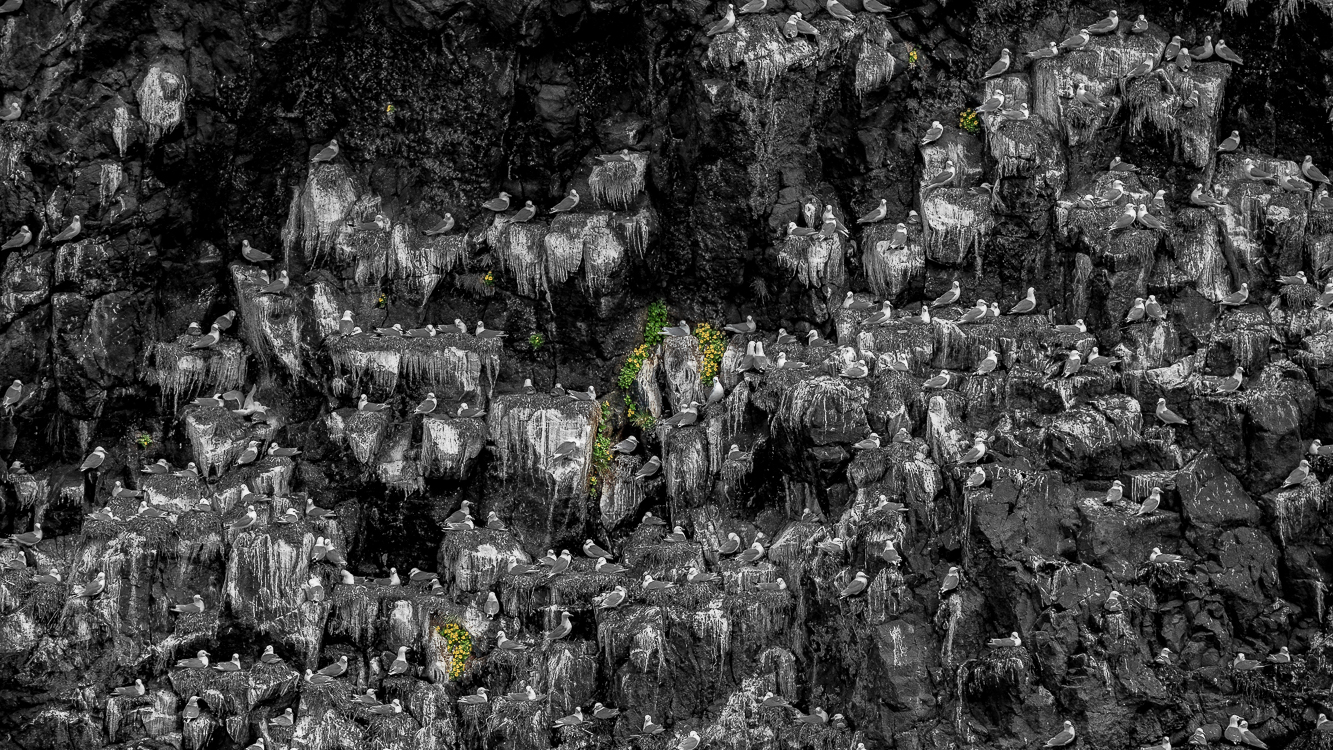
We miss our C-dory. A lot. Photographs such as the one above can’t be made without a boat, not to mention the role Gillie played in filling our freezers with tasty halibut, lingcod and rockfish. And for a pleasurable day of leisure, it’s difficult to top fair weather on a calm sea.
While we lived on the Chignik River, we found a shallow-draft welded-aluminum scow to be more practical than the larger fiberglass dory, and so we sold Gillie. Regrets followed. She would be perfect here at our new home on the shores of Prince William Sound. In the peripatetic lives Barbra and I have lived both prior to and during our marriage, with each move we’ve effortlessly let items pass through our lives: beautifully crafted Christmas ornaments, artwork, cherished pieces of furniture, treasured books… even valued fishing tackle. The few items we take pains to keep in our possession mainly come down to cookware, photography gear and fly-fishing equipment. After all, most things are replaceable, and so the metaphor of the bookshelf constitutes an important element of our life philosophy.
The metaphor of the bookshelf is our way of thinking of… things… in a life where we find benefit in living slim and where we appreciate each move as an opportunity to pare down. The idea is to always leave room for the new, and if there is no room, to create it. So rather than fill up shelves with books we’re unlikely to read again, we don’t. Because if your shelves are full, there’s nowhere to add new items to your life – unless you keep adding shelves till your home is crammed full of shelves. It’s lovely to move to a new place and find that you have abundant blank spaces to populate with new treasures. Most things are easy to replace (a first edition copy of A River Runs Through It I allowed to slip through my possession being a noted exception).
Norman Maclean’s classic fly-fishing memoir, Gillie… it’s a short list. Art is replaced by other art. Souvenirs from one place have been let go of to make room for new keepsakes from new places.
We also let go of our aluminum scow when we left the Chignik, and so, taking the optimist’s view and embracing the metaphor of the bookshelf, it appears we now have a space in our life begging to be occupied by a new – or new to us – seaworthy vessel. Something to look forward to.
Moose roast and root vegetables in a bath of mushroom broth, red wine, cream and fresh herbs slow-cooking in the oven, pumpkin cheese cake setting. Lots to be grateful for on this Thanksgiving Day… and every day. Barbra and I hope all is well in your world.
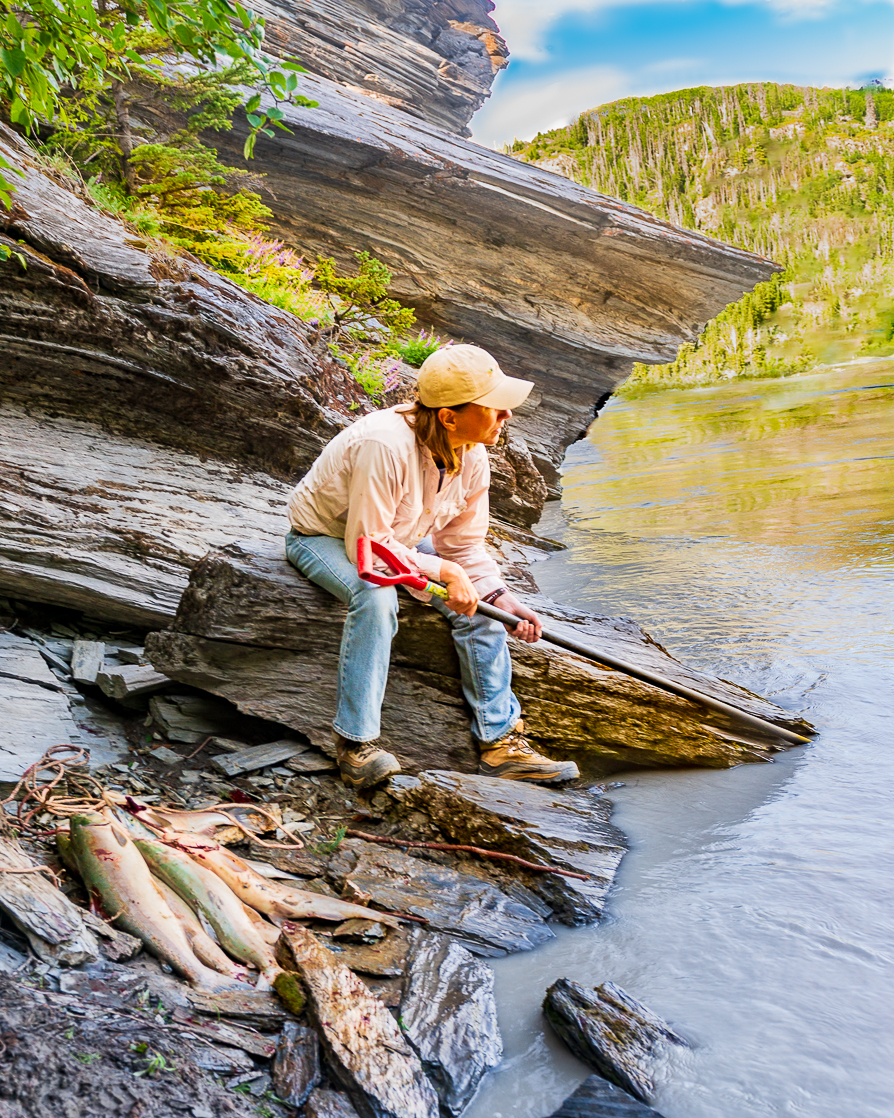
Iconic Alaska. Hike in along a canyon trail, then down a steep, more narrow trail to water’s edge. The river’s chalky, clay-colored glacial till reveals nothing. But the fish are there. Upwards of a million Sockeyes will ascend the Copper, and that’s after the commercial fishing fleet has taken a similar number from the sea near the river’s mouth. Armed with a net on a big hoop attached to a 15-foot pole, you find a fishable perch along the canyon wall and ease the net into an eddy. If you’ve timed it right, huge schools of fish are passing in front of you within feet of the shoreline. It doesn’t take long till you feel the morning’s first solid thump as a Red hits the net. If you’ve got the patience and don’t pull in right away, you might feel another thump, and then another – three fish in one scoop. And you feel a connection with people who have been fishing for salmon this way for thousands of years… grateful that there’s a place where it can still be done, not another person in sight except for the companion you’ve hiked in with. You get the feeling this isn’t going to last… which makes you appreciate it all the more. Iconic Alaska.

Although colloquially called “wild” it is a misnomer, technically speaking, to refer to the free-roaming mustangs of North Carolina’s Outer Banks and the American West as such. In both cases, the horses in question are escapees from from domestic stocks and therefore, biologically speaking, are feral, not wild. But neither a 10-year-old boy nor a 64-year-old man is as likely to eagerly crane his neck from a car window to look at merely “feral” horses as for a glimpse of wild horses, and so in most cases the colloquial “wild” stands. In any regard, the distinction matters to some, less so to others.
The word “takhi” translates to spirit or spiritual in English, a fitting appellation for these noble beings – far more so than the alternative, Przewalki’s horse, applied as though the person who “discovered” them for Western Europe has the right to enslave them with his clunky name in perpetuity in an illusory pursuit of his own immortality. Just as all humans have a right to a name of their own choosing, should not all beings be distinguished with their own, unique, noble title.
The above having been accounted for, there is in fact one truly wild species of Equus still remaining in our world – the Takhi of Mongolia. The species was on the very brink of extinction by the 20th century and in fact became extinct in the wild by mid-century, having been hunted for meat. The few remaining Takhi were scattered in zoos in Europe and the United States, their outlook bleak. But in 1990, at the same time Mongolia became a Democracy, a breeding program was established and a few horses were reintroduced to Mongolia’s steppelands – perhaps the world’s greatest remaining uninterrupted grasslands.
And so now, in the year 2023, one can travel to Mongolia’s Khustai National Park and to a few other places and see for themselves these beautiful animals.

There are several examples of singing sands around the world. Not to be confused with the pleasant squeak sand sometimes makes as one walks along a beach, these dunes really do sing, producing a range of eerie, harmonious and lovely tones as the wind reshapes the peaks and ridges, causing individual grains of sand to rub against each other. Even the mini avalanches of sand caused by walking can produce music.
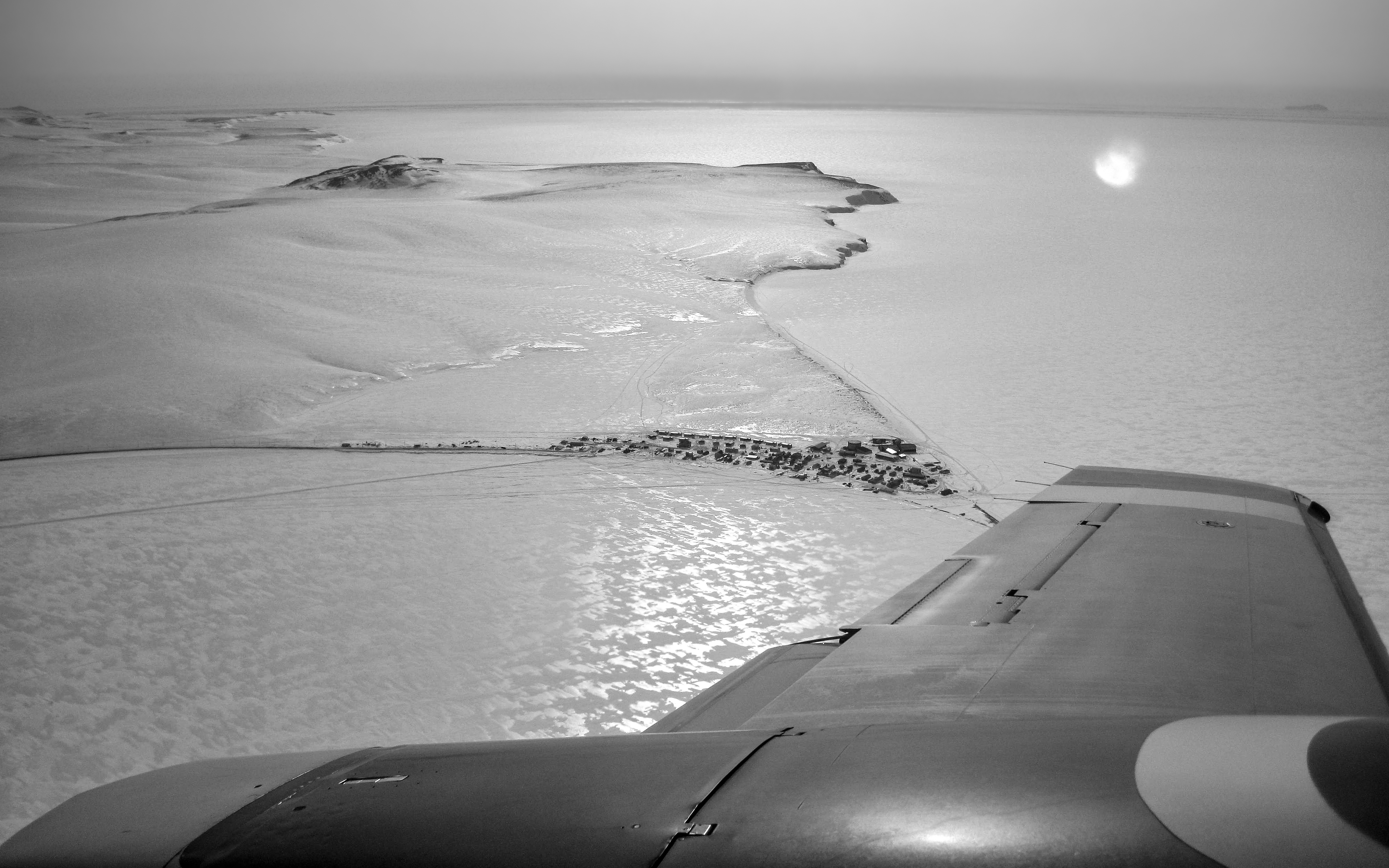
Flying into the village of Shishmaref for the first time was an unforgettable thrill. This wintertime photograph, in which the barrier island upon which Shishmaref is located appears to be connected to land, belies the village’s isolation. That is ice, not terra firma, surrounding Sarichef Island which encompasses only 2.8 square miles and rises no higher than 13 feet above the surrounding sea. The village itself is home to fewer than 600 mostly Inupiat residents. Tucked up against the ever encroaching Chukchi Sea, Shishmaref lies a mere 20 miles below the Arctic Circle, 105 miles from the Siberian coastline across the Bering Strait, 601 miles from Anchorage and 2,939 miles from L.A. The wintertime winds, with a fetch of perhaps thousands of miles across frozen northern seas, blew at times with terrifying ferocity and cold, on one memorable occasion all but burying the village in snow.
In the next few photos to come, I will try to show a bit about life in this remote village which is perhaps best known as being on the vanguard of the impacts of climate warming, but where also there is beautifully crafted artwork and a spirit of resilience. As always, your comments are welcome.
 CutterLight