Leftover S’mores Ingredients? Bake a S’mores Cheesecake!

After grilling s’mores for ourselves and our dock neighbors, we were still left with half a bag of marshmallows, a box of graham crackers, and a whole bar of dark chocolate. Such problems… Cheesecake was the answer to this problem!

Our galley kitchen is small. The counter space is measured in inches. Our pantry has just the basics. Our cookware and dishes are on the multifunctional and minimal side. We did outfit our little home with Denby dishes, which can be baked in. So, forget about the springform pan and the food processor in this preparation. What follows is how I made S’mores Cheesecake, galley style.

S’mores Cheesecake

Ingredients

Crust-

  • a little more than 1 cup of ground graham crackers. I ground the graham crackers using our coffee grinder.
  • 3 tbsp brown sugar
  • 1/4 cup melted unsalted butter
Cheesecake Filling
  • 8 oz. cream cheese, brought to room temperature
  • 2 eggs, also room temperature
  • 4 tbsp brown sugar
  • 1/4 cup of coarsely chopped dark chocolate bar

Topping

  • Marshmallows, quartered
  • 1/4 cup of coarsely chopped dark chocolate bar

Directions

  1. Mix graham cracker crumbs with 3 tbsp brown sugar and butter.
  2. Press into a well-buttered pasta bowl that can be baked (or springform pan if you are in a standard kitchen).
  3. In a medium-sized pot, beat eggs and remaining 4 tbsp. of brown sugar. I used brown sugar to add flavor in lieu of vanilla extract.
  4. Whisk in cream cheese until smooth. A mixer would have come in handy for this step. My arm was a little tired here.
  5. Mix in 1/4 cup of chopped dark chocolate. I did experiment with using a vegetable peeler to curl pieces of chocolate. Using a cutting board and a chopping knife was easier and turned out with equally good results.
  6. Pour cream cheese mixture into graham cracker crust and bake in a 320 degree F oven. My little oven may bake a little warmer than yours, so you may need to increase the temperature a bit.
  7. Bake for about 40 minutes, until the center is almost set.
  8. Evenly place marshmallows on top of cheesecake. Sprinkle with remaining 1/4 cup of chocolate. Bake for another 5 minutes, marshmallows should just be tanning.
  9. Remove from oven and let cool for about an hour. No matter how much Jack begs, tell him he can’t have any cheesecake until tomorrow.
  10. Refrigerate overnight. Fortunately, our camper is parked in the harbor parking lot and is equipped with a nice little fridge.

I was pleasantly surprised that we could pop the cheesecake out of the pasta bowl. I thought we were going to have to enjoy this dessert spoonful by spoonful. Who needs springform pans?!

Strawberry-Port Gallette with Sliced Almonds

Delicious first baking experience in the galley of our boat, Bandon. Strawberries marinated in brown sugar and port wine stuffed into a simple crust filled our little home with delicious smells and satisfied my need to bake.

Our boat is equipped with a gimbaled stove, which pivots and swings to remain level in spite of waves and wind in the harbor. The stove houses a tiny oven, which is perfect for baking for two. I love to bake and have had an itch to make something with the  beautiful strawberries I kept seeing at the store. We hadn’t had strawberries since last summer! After thirty minutes of baking, the first experiment emerged from the oven a success. The only thing that would have improved this dessert was a couple of scoops of  vanilla ice cream. Next time…

Strawberry Port Gallette

Ingredients

  • 1 cup all-purpose flour
  • 2 tbsp granulated sugar
  • 1/4 tsp salt
  • 3 tbsp unsalted butter
  • 2 cups sliced strawberries
  • 1/4 cup brown sugar
  • 2 tbsp port wine

Directions

  1. In a small bowl, stir together strawberries, brown sugar, and port. Set aside.
  2. In a medium bowl, mix flour, granulated sugar, and salt.
  3. Cut in butter to flour mixture. I mixed this by hand, literally, until the butter was well incorporated.
  4. Add a bit of water to form flour mixture into a dough ball (I used about 2 tbsp).
  5. Roll out dough to an 8″ circle. I didn’t have a rolling pin, so I pressed out the dough into 8″ circle onto a well-buttered cookie sheet.
  6. Place berries in a mound on the circle, leaving a 1-2″ border. I reserved some of the sugar-port juice to sauté the sliced almonds.
  7. Fold the 1-2″ border over fruit, leaving the strawberries exposed in the center.
  8. Bake at 375 degrees F until golden, about 30 minutes.
  9. While gallette is baking, sauté almonds in reserved sugar-port juice.
  10. When baking is complete, remove gallette from oven and sprinkle with sautéed almonds.

Rockfish in Sweet & Spicy Beans with Miso

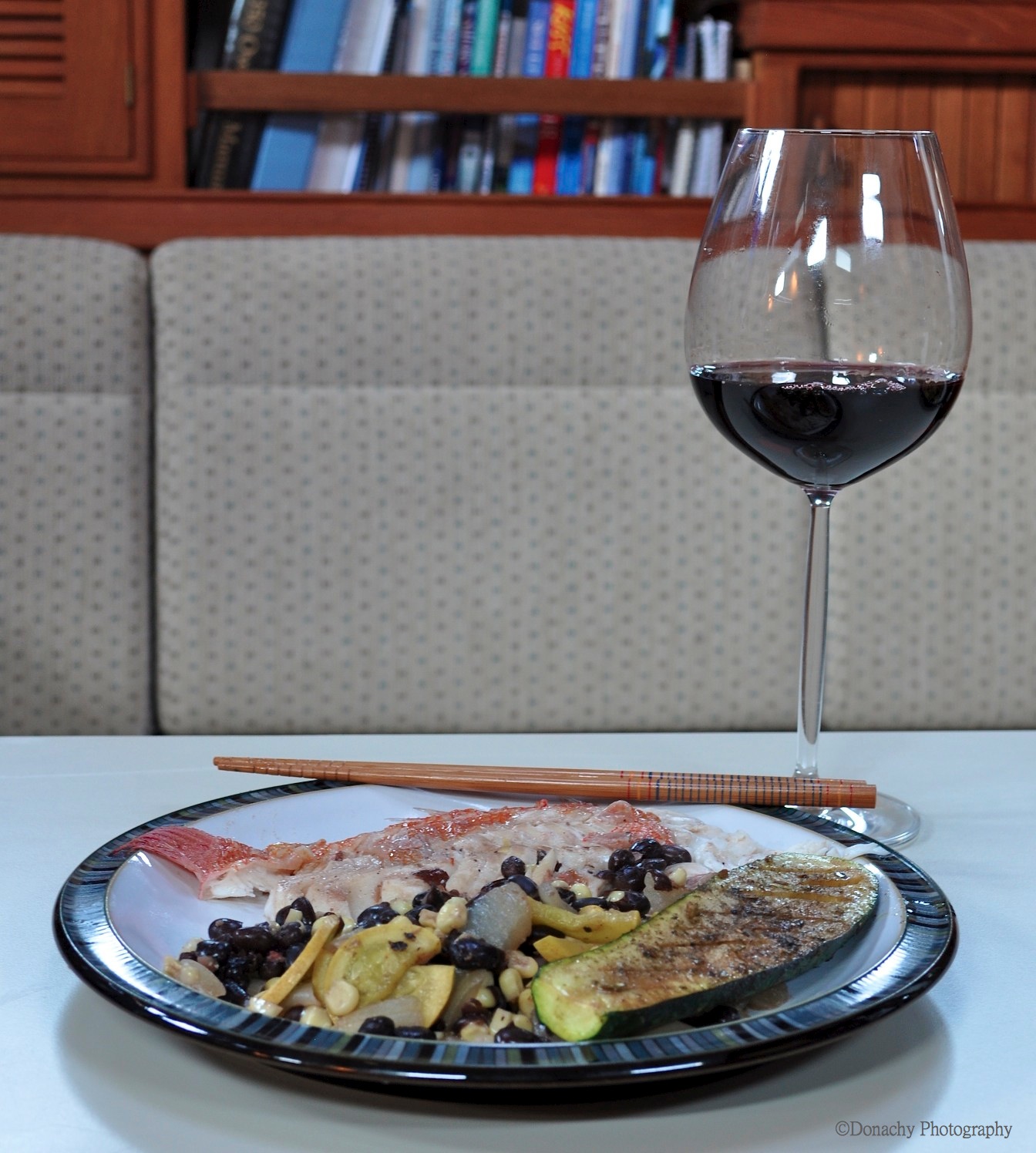
Yelloweye rockfish poached in miso soup with black beens, sweet corn and summer squash. The broth is sweetened with honey and spiced with a Jamaican-style rub for a little heat to balance out the sweet.

In Japan, I was served a dish featuring carp cooked in sweetened beans. It was good, though a bit sweet to my tastes. Later, I began catching kurosoi, a black rockfish (genus Sebastes) common in northern Japan. After broiling a couple of them, I knew I had a good candidate to try in a spicier bean dish.

Two pound rockfish such as this yelloweye are perfect for a whole-fish-for-two dinner. A small zucchini, cut in half, scored, drizzled with olive oil and seasoned with herbs de provence, makes a nice side dish. 

A variety of firm, white-meated fish work well in this dish. Any of the rockfishes in genus Sebastes, black seabass, small stripers, snappers and porgy (sea bream) would be good choices. Any leftover broth from this dish can be served the following day as an excellent soup.

Rockfish in Sweet and Spicy Beans with Miso

For two diners…

Ingredients:

  • One rockfish (or other fish with firm, white meat) weighing about 1 1/2 to 2  pounds with scales, gills and entrails removed.
  • 1 pound of black beans
  • 1 cup of red miso soup broth (make it a little stronger than usual)
  • 1/2 tbsp Jamaican rub or other spicy seasoning featuring hot peppers. Cumin and oregano may be included in the seasoning, or may be added separately.
  • Several cloves of garlic, chopped coarse
  • 1/2 sweet onion, chopped coarse
  • sweet corn (one ear’s worth – about 1 cup)
  • 1 yellow squash (summer squash), sliced into circles, circles cut in half (optional)
  • sea salt to taste (the miso will add quite a bit of salt)
  • freshly ground black pepper, to taste
  • hot chili pepper, sliced thin or chopped fine – just a little for additional heat (optional)
  • two tablespoons honey
  • two tablespoons olive oil
Directions:
  1. Thoroughly clean the fish, pat dry with paper towels, and set aside.
  2. Over medium-low heat, prepare the miso broth in a pan large enough to hold the whole fish (an oblong poacher works best for this, but any large, round pan that has a lid will do).
  3. Stir in the honey until dissolved.
  4. Add the beans, onions, corn, spices (including slices of chili pepper), olive oil and freshly ground pepper. Taste. Add salt and more spices, if desired. Cover with a lid and bring to a simmer.
  5. Add the fish, working it down into the broth.
  6. Cover with a lid and maintain a simmer, reducing heat if necessary, and cook for about 7 minutes. Using two spatulas, carefully turn the fish so that both sides are cooked in the broth. Add the summer squash at this time. Continue simmering on low heat for another 10 to 13 minutes. The fish will be all but falling apart when done. (Cooking the first side for a shorter time before turning the fish will mean that the fish is firmer and therefore easier to turn over.)
  7. Carefully remove the fish to a serving platter. Arrange beans and vegetables around the fish and serve piping hot.
We enjoyed this fish with a red table wine from the state of Washington. Syrah, Malbec, or Merlot would pair well with this dish.

And don’t forget a colorful seasonal salad!

Yelloweye Rockfish Benedict: Alaskan Breakfast of Champions

Freshly cracked pepper, sea salt and maybe a dash of soy sauce are all the seasoning freshly caught yelloweye want. Topped with hollandaise sauce and served on pan-toasted English muffins with sides of thick bacon, summer squash, ruby red grapefruit and ruby red mimosas, this is the kind of breakfast that makes you happy you’re a fisherman – or married to one! 

Like single malt Scotch and country drives in autumn, when it comes to table fare there are no bad rockfish. But within genus Sebastes, some cook up better than others. In Japan, small but tasty mebaru (Sebastes inermis) are among the most highly prized fish wherever they are found. Here in Alaska, yelloweye (Sebastes ruberrimus), which can grow to over 30 inches (80 centimeters) and 20 pounds (9 kilograms) are the stars. The sweet, delicately flavored meat puffs up slightly when cooked and flakes off in large, firm chunks for a taste and texture that is unparalleled among rockfish.

.

When preparing fillets this way, a good rule of thumb is nine minutes per one inch of thickness, thus a fillet one inch thick will be cooked for about nine minutes.

I pan toast English muffins (or any other toast) by using about three parts olive oil to one part butter (or no butter at all) over low to medium-low heat in a heavy frying pan. Heat the oil, add the bread, toast, flip and do the other side. This produces tasty toast, and you can do it in any kitchen, over a Coleman stove, or in a galley.

Yelloweye Rockfish Benedict

Ingredients:

  • 1 rockfish fillet about 3/4 lb to 1 lb, cut in half to serve 2 people. We generally prefer our fillets scaled, skin on. (Skin removed is fine.)
  • salt
  • pepper
  • soy sauce (optional)
  • olive oil
  • 3 egg yolks
  • 4 tbsp butter
  • 1 tbsp lemon juice
  • healthy pinch or two of cayenne pepper (or mildly fiery chili-based seasoning such as the Southwestern rubs made by Penzys or Dean & Deluca)
  • 2 English muffins, sliced in half, toasted

Directions:

For Hollandaise:

  1. Melt butter in a small pan over low heat.
  2. Set up a double boiler by putting some water in a pot and bring it to boil. In a smaller pot, place egg yolks and lemon juice. Place this smaller pan in the larger pot, but not in the water. The steam will heat the smaller pot.
  3. Vigorously whisk the egg and lemon mixture until it increases in volume.
  4. Slowly drizzle the melted butter into the whisked egg mixture, add a pinch of slat, and continue to whisk until everything is blended.
  5. Set aside. This mixture can be warmed again, if necessary. If it’s too thick, whisk in a few drops of water. Too thin, cook more, being sure to continue whisking/stirring.

To cook the rockfish:

  1. Rinse the fillets, pat dry with paper towels, and place on a cutting board, skin side down. Add freshly cracked pepper and sea salt and set aside.
  2. In a skillet large enough to hold the fillets so that they don’t touch, place enough olive oil to liberally cover the bottom of the pan and heat over medium-low heat.
  3. When the oil is hot enough to make the fish sizzle, add the fillets skin side down. Cook for 5 minutes.
  4. Turn the fillets and sprinkle with salt and freshly cracked pepper. Add about 1/2 tablespoon of soy sauce (optional) and continue cooking for 4 minutes.

To serve:

Place toasted English muffins on plates, place the fillets on the muffins, and spoon on the Hollandaise. Sprinkle on a dusting of cayenne pepper or a similarly fiery pepper-based rub. Serve with seasonal vegetables.  We enjoyed this meal with mimosas made with freshly-squeezed ruby red grapefruit.

Under Pressure: Delicious, Fast, Green Cooking

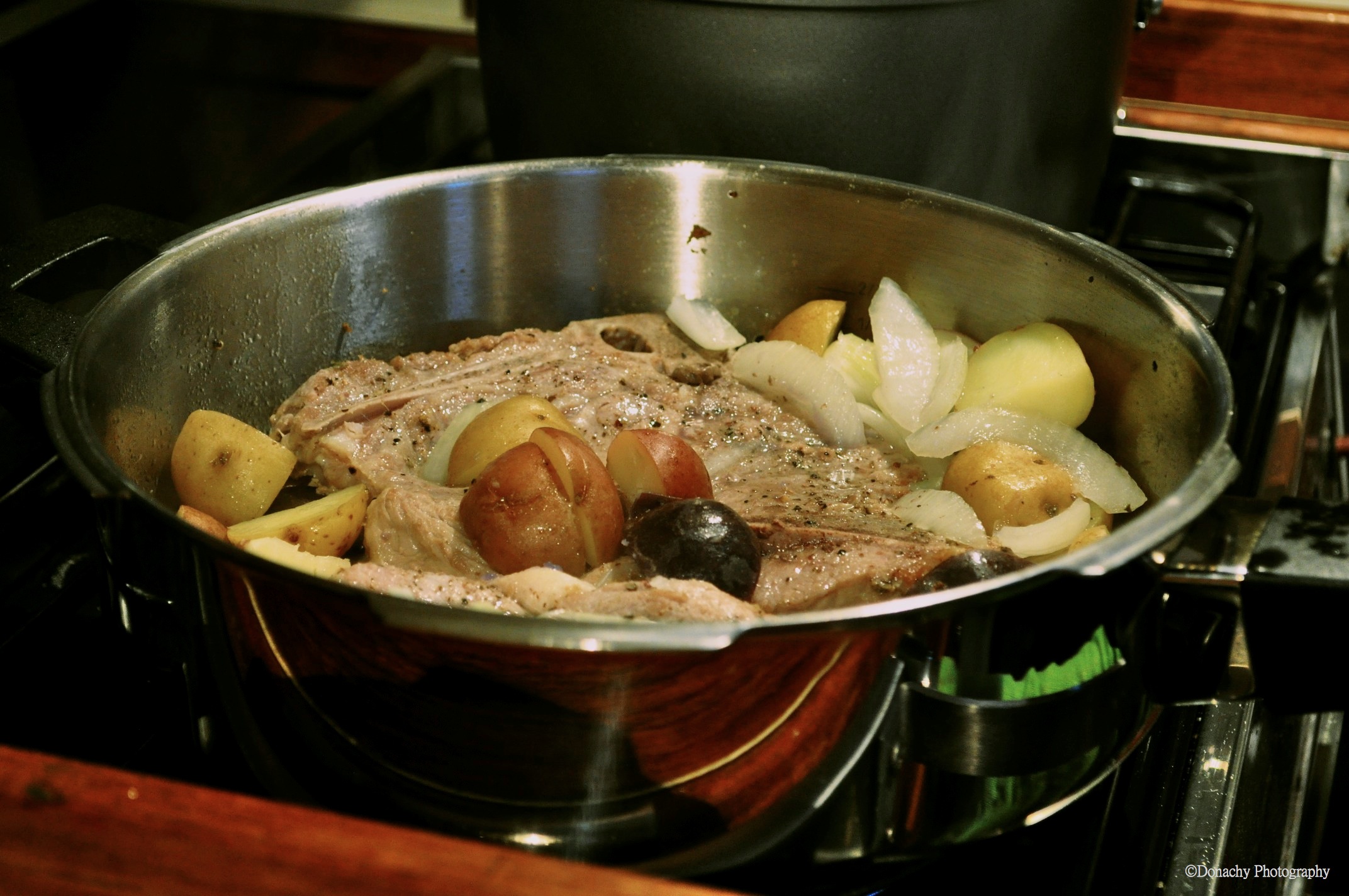
Pressure cooking is new to us, but we’re fast becoming converts. We made this one-pot-meal of two large pork chops, Peruvian potatoes and onions in about half the time the same meal would have taken in frying pan. In addition to cutting cooking time, pressure cooking requires less fuel than traditional methods.


Our first foray into pressure cooking involved one of our breakfast staples: steel cut oats. This is a new food for us, and now that we know what they are, it’s been a little tough to go back to quick rolled oats. But the time required is a deal-breaker on workdays. From start to finish, it takes about 35 minutes to cook up a couple servings of steel cut oats.

Enter the pressure cooker. These are not at all like crock pots or slow cookers – just the opposite. By sealing in steam pressure, these pans and pots speed up cooking time. As pressure rises, so does heat inside the pan. After some trial and error, I now have the preparation time for steel cut oats cut down to 17 minutes – and I think I may be able to bring the time down even further. Not only is the time cut in half, so is fuel consumption. Once the cooker is pressurized, the cooking flame can be cut back to low or even turned off altogether for up to 70% fuel savings over traditional cooking methods.

Also, since very little steam escapes during the cooking process, less water is required. This could prove to be valuable when sailing or boondocking. Less oil or cooking fat is required, too, and cooked under pressure, meats and certain vegetables that can be a little tough come out tender without being overcooked.

Years ago, I had heard that pressure cooking could be dangerous. Makes sense: hot steam, very high temperatures, pressure. I had an image of pan lids rocketing through kitchen ceilings. But whatever the risks involved with this cooking method may have been in the past, modern pressure cookers have addressed them. We purchased a two-and-a-half quart pan made by Kuhn Rikon, a Swiss company known for quality cookware. Engineered with safety in mind, the pan is made from heavy gauge stainless steel and features multiple pressure release systems to prevent over-pressurizing.

The real test came the other night when I attempted a one-pan meal for the two of us. I had two nice pork chops, some small red, white and purple Peruvian potatoes, and half a sweet onion chopped coarse. I seasoned all this with good old salt and pepper, heated a little olive oil over high heat in the pressure cooker, browned the chops for a minute on each side and then added a quarter cup of water (for steam). Then the potatoes and onions went in, I locked the lid in place, and…

Voila!

Seven minutes later we had a beautifully cooked meal. The meat was cooked through and juicy, the potatoes were just right, and we had just one pan to clean up! (And nothing was stuck to the pan.)

The meat lacked the crispy outer texture straight pan-fyring gives, but searing the meat prior to pressurizing it seemed to seal it well enough. Once pressure had built in the pan, I was able to lower the flame to low and then to turn off the heat altogether, so I’m guessing I used only two-thirds to one-half the propane I’d have used had I prepared the meal in a frying pan.

Zaru Soba with Alaskan Scallops and Shrimp

Zaru soba (chilled buckwheat noodles) dressed up with fresh seafood makes for a quick but elegant meal. 


A challenge inherent to preparing meals onboard a boat or in a camper is that the stovetops tend to be small, and while this doesn’t necessitate limiting preparation to one or two pans, it steers a cook in that direction. Meals featuring something on a bed of noodles really shine, and one of our favorite types of noodles are soba – which is the Japanese word for buckwheat. Being thin, soba cooks quickly, and since zaru soba is served chilled, it’s no problem to rinse the noodles and set them aside while other food is prepared.

In the past, I’ve made this dish with salmon, halibut and rockfish. On this more recent occasion, I had large Alaskan scallops and fresh Alaskan shrimp on hand. Instead of serving the dish on traditional bamboo (the origin of the word zaru), I opted for pasta bowls.

Zaru Soba with Alaskan Scallops and Shrimp

Ingredients:

  • soba for two people
  • 1/4 pound shrimp, peeled
  • 1/4 pound sea scallops
  • 1/2 cup tsuyu (a dipping sauce available in the Asian section of most grocery stores). Divide into equal parts.
  • 1 sheet of nori (dried seaweed), cut into thin strips
  • 1/4 cup dry sherry or sake
  • olive oil
  • salt
  • 1/2 tbsp Thai seasoning
  • 1 tbsp fresh tarragon chopped course or 1 tsp dried tarragon (optional)
  • 1 green onions, sliced thin

Directions:

  1. Place scallops and shrimp in a mixing bowl. Add Thai seasoning and tarragon and toss together. Set aside.
  2. Boil soba according to the directions on the package. I use much less water than most directions call for and the noodles come out fine, but do salt the water.
  3. When the noodles are finished, pour them into a colander to drain and then rinse with cold water.
  4. Place noodles in pasta bowls. Add tsuyu to each bowl, tossing the noodles in the sauce.
  5. Heat a little olive oil in a large frying pan over medium heat. When oil is hot, add the seasoned scallops and shrimp. Add sherry or sake. Cook for about 1 minute, using a spatula to briskly stir and turn seafood.
  6. Place seafood on noodles. Top with sliced green onions and nori strips and serve. Alternatively, the cooked seafood can be chilled prior to adding to the noodles.

This dish and its variations has become a family favorite. It pairs beautifully with a Willamette Valley Pinot Gris or a crisp Sauvignon Blanc.